Search

Bava Batra 164

Want to dedicate learning? Get started here:

podcast placeholder

0:00
0:00


Summary

If, as Rav holds, a document comes before the court that has been completely erased and written over and signed, it is acceptable, why is there not a concern that the text was erased a second time and the signatures of the witness were on a version that was erased? The reason is that it is noticeable if a document is erased once or twice. To answer a follow-up question about another concern for forgery, Abaye also explains that if witnesses are to sign on an erased document, they must also be present when the document is erased. A difficulty is raised against Rav’s ruling from a braita, but is resolved. However, two difficulties are raised against the resolution but are resolved as well.

On a tied document (get mekushar) the dating system differed from a regular document. Based on that, Rabbi Chanina ben Gamliel’s opinion in the Mishna is questioned by Rabbi Yehuda haNasi as he said that a tied document can be turned into a straight one and if the dating system is different, that could lead to issues of one collecting a debt that has already been repaid. How can this be resolved? Other issues regarding the dating system are discussed which include references to the Greek numbering system.

In the context of a story showing that Rabbi Yehuda haNasi was not familiar with a tied document, he reprimands his son for speaking lashon hara. The Gemara digresses to discuss different types of lashon hara, some of which include just speaking about a person, not even saying something negative, or even complimenting someone. This is called avak lashon hara, as it can lead to lashon hara. Rav Amram in the name of Rav explains that three sins are unavoidable daily – having sinful thoughts, thoughts during prayer, and lashon hara. As it is difficult to say that people daily speak negatively about others, Rav’s words are explained to be referring to avak lashon hara.

Today’s daily daf tools:

Bava Batra 164

וְאִם תֹּאמַר: מוֹחֵק וְחוֹזֵר וּמוֹחֵק! אֵינוֹ דּוֹמֶה נִמְחַק פַּעַם אַחַת, לְנִמְחַק שְׁתֵּי פְעָמִים.

And if you say: There is a possibility of forgery with such a document, as the holder of the document can erase the original writing on the paper, then write the text of the document and have witnesses sign on the part that had been erased, then erase the document text once again, substituting for it a text that is more to his advantage, leaving the original signatures in place, this is not a valid argument. Paper that has been erased once is not similar in appearance to paper that has been erased twice. It will be seen that the signatures are on a place that had been erased once and that the text is written on a place that had been erased twice, and the forgery will be noticed.

וְלֵיחוּשׁ דִּלְמָא שָׁדֵי דְּיוֹתָא אַמְּקוֹם עֵדִים מֵעִיקָּרָא, וּמָחֵיק לֵיהּ – דְּכִי הָדַר מָחֵיק לֵיהּ לְהַאי, הָוֵה לֵיהּ אִידֵּי וְאִידֵּי נִמְחַק שְׁתֵּי פְעָמִים!

The Gemara suggests: But let there be a concern that perhaps the holder of the document will initially, after the entire original document, including the signatures, has been erased, but before the second one is written, throw some ink on the place where the witnesses are to sign under the text of the second document, and then erase that ink. He will do this so that when, after the witnesses have signed, he then erases the document text and writes a false text, it will emerge that both this, the new document’s text, and that, the signatures, will be on paper that had been erased twice.

אָמַר אַבָּיֵי, קָסָבַר רַב: אֵין הָעֵדִים חוֹתְמִין עַל הַמְּחָק, אֶלָּא אִם כֵּן נִמְחַק בִּפְנֵיהֶם.

Abaye said in response: Rav holds that witnesses may not sign a document written over an erasure unless the paper was erased in their presence, i.e., unless they saw the paper after its old text had been erased, before the new text was written. They will then see that the place where they are to sign has been erased twice, while the place where the document is to be written has been erased only once. They will realize that this leaves open an opportunity of subsequent erasing and falsification, and they will refrain from signing.

מֵיתִיבִי: הוּא עַל הַנְּיָיר וְעֵדָיו עַל הַמְּחָק – כָּשֵׁר. וְנֵיחוּשׁ דִּלְמָא מָחֵיק לֵיהּ, וְכָתֵיב מַאי דְּבָעֵי, וְהָוֵי לֵיהּ הוּא וְעֵדָיו עַל הַמְּחָק!

The Gemara raises an objection to the opinion of Rav from a baraita: A document in which its text is on a part of the paper that has never had writing erased and the signatures of its witnesses are on an erasure is valid. The Gemara suggests: But let us be concerned that perhaps the holder of the document will erase the text and write in its place whatever he wants, and it will then be a document where both its text and the signatures of its witnesses are on an erasure. Since Rav maintains that such a document is valid, it is easily forgeable in this manner.

דְּכָתְבִי הָכִי: ״אֲנַחְנָא סָהֲדֵי – חֲתַמְנָא עַל מְחָקָא, וּשְׁטָרָא – כְּתִב עַל נְיָירָא״.

The Gemara answers: Such a document is valid only in a case where the witnesses write this: We, the witnesses, signed on an erasure, but the document text was written on a part of the paper that never had writing erased. If the holder of the document then tries to erase the original text and write new text in its place, the forgery will be noticed.

דְּכָתְבִי הֵיכָא? אִי מִלְּתַחַת – גָּיֵיז לֵיהּ; אִי עִילַּאי – מָחֵיק לֵיהּ! דְּכָתְבִי בֵּין סָהֲדָא לְסָהֲדָא.

The Gemara asks: Where do the witnesses write this declaration? If they write it underneath their signatures, the holder of the document can simply excise it. And if they write it above their signatures, the holder of the document can erase it along with the text of the document. The Gemara answers: They write the declaration between the signature of one witness and the signature of the other witness.

אִי הָכִי, אֵימָא סֵיפָא: הוּא עַל הַמְּחָק, וְעֵדָיו עַל הַנְּיָיר – פָּסוּל. אַמַּאי פָּסוּל? הָכָא נָמֵי, נִכְתְּבוּ הָכִי: ״אֲנַחְנָא סָהֲדֵי – חֲתַמְנָא עַל נְיָירָא, וּשְׁטָרָא – עַל מְחָקָא״!

The Gemara asks: If that is so, that the baraita is discussing a case in which the witnesses write a declaration about the circumstances of the document’s condition, say the latter clause of the baraita: A document in which its text is on an erasure and the signatures of its witnesses are on a part of the paper that never had writing erased is not valid. The Gemara presents its question: Why is such a document not valid? Here, too, let the witnesses write this: We, the witnesses, signed on paper that never had writing erased, but the document text was written on an erasure.

[הַשְׁתָּא נָמֵי] מַאי אָמְרַתְּ – מוֹחֵק חוֹזֵר וּמוֹחֵק? הָא אָמְרַתְּ: אֵינוֹ דּוֹמֶה נִמְחַק פַּעַם אַחַת, לְנִמְחַק שְׁתֵּי פְעָמִים! הָנֵי מִילֵּי – הֵיכָא דַּחֲתִימִי סָהֲדֵי אַמְּחָקָא; הֵיכָא דְּלָא חֲתִימִי סָהֲדֵי אַמְּחָקָא אֶלָּא אַנְּיָירָא – לָא יְדִיעַ.

Now in this case as well it should be valid, as what can you say to argue that it is a forgeable document? If you say that the holder of the document, having erased the original document, can erase the writing once again and write a new, false document, this is not a concern, as didn’t you say that paper that has been erased once is not similar in appearance to paper that has been erased twice? It would therefore be noticeable that the document had been erased a second time, and the forgery would be noticeable. The Gemara answers: That statement applies only when the witnesses are signed on an erasure, and the appearance of that erasure can be compared with the appearance of a double erasure. But in a case where the witnesses are signed not on an erasure but on paper that has not had its writing erased, so that there is no contrast between a single erasure and a double erasure, the forgery would not be known.

וְלַיְתֵי מְגִילְּתָא אַחֲרִיתִי, וְלִמְחוֹק וְלִידַמֵּי! לָא דָּמֵי מְחָקָא דְּהָא מְגִילְּתָא, לִמְחָקָא דְּהָא מְגִילְּתָא.

The Gemara suggests: But let the court bring another parchment, write something on it and erase it, and then compare this single erasure with the erasure on the document in question. If the document were erased twice, a contrast would be seen between a single erasure and a double erasure. The Gemara answers: The erasure of this parchment is not necessarily similar to the erasure of that parchment. A single erasure on one parchment might resemble a double erasure on a different parchment.

וּלְקַבְּלַהּ לַחֲתִימוּת יְדָא דְּסָהֲדִי בְּבֵי דִינָא, וְלִמְחוֹק וְלִידַמֵּי! אָמַר רַב הוֹשַׁעְיָא: אֵינוֹ דּוֹמֶה נִמְחַק בֶּן יוֹמוֹ, לְנִמְחַק בֶּן שְׁנֵי יָמִים.

The Gemara continues to suggest: But let us accept, i.e., verify, the signatures of the witnesses on the document in court, after which they may safely be erased; and then erase the signatures and compare that erasure to the erasure of the document text, to see if it was erased once or twice. In response to this question Rav Hoshaya says: That which is erased on the same day that it was written is not necessarily similar to that which was erased two days ago, i.e., more than a day after it was written. An older erasure looks different from a new one, so the comparison might not show that there was a double erasure in the document.

וְלִישַׁהֲיֵיהּ! אָמַר רַבִּי יִרְמְיָה: חָיְישִׁינַן לְבֵית דִּין טוֹעִין.

The Gemara suggests: But let us retain the document for an extra day, at which point both erasures will be old and can be compared. Rabbi Yirmeya said in response: We are concerned for the possibility of an erring court. If such complicated procedures were used in order to declare a document valid, there would be a chance that a particular court would not apply them properly, and that court would end up ratifying a document that was not valid.

רַבִּי חֲנִינָא בֶּן גַּמְלִיאֵל אוֹמֵר: מְקוּשָּׁר וְכוּ׳. הֵשִׁיב רַבִּי לְדִבְרֵי רַבִּי חֲנִינָא בֶּן גַּמְלִיאֵל:

§ The mishna teaches that Rabbi Ḥanina ben Gamliel says: A tied document whose witnesses wrote their signatures inside of it is valid, because one can transform it into an ordinary document by untying it. Rabbi Yehuda HaNasi raised an objection to the statement of Rabbi Ḥanina ben Gamliel:

וַהֲלֹא אֵינוֹ דּוֹמֶה זְמַנּוֹ שֶׁל זֶה לִזְמַנּוֹ שֶׁל זֶה! פָּשׁוּט; מָלַךְ שָׁנָה – מוֹנִין לוֹ שָׁנָה, שְׁתַּיִם – מוֹנִין לוֹ שְׁתַּיִם. מְקוּשָּׁר; מָלַךְ שָׁנָה – מוֹנִין לוֹ שְׁתַּיִם, שְׁתַּיִם – מוֹנִין לוֹ שָׁלֹשׁ.

But the date of this one, a tied document, is not the same as the date of that one, an ordinary document. In an ordinary document, when the king has reigned for one year, one year is counted for him, and when he has reigned for two years, two years are counted for him. By contrast, in a tied document, when the king has reigned for one year, two years are counted for him, and when he has reigned for two years, three years are counted for him. If a tied document is simply opened up and used as an ordinary document, then it will emerge that it is postdated by a year.

וְזִימְנִין דְּיָזֵיף מִינֵּיהּ זוּזֵי בִּמְקוּשָּׁר, וּמִיתְרְמֵי לֵיהּ זוּזֵי בֵּינֵי בֵּינֵי וּפָרַע לֵיהּ; וְאָמַר לֵיהּ: הַב לִי שְׁטָרַאי, וְאָמַר לֵיהּ: אִירְכַס לִי; וְכָתֵב לֵיהּ תְּבָרָא;

Rabbi Yehuda HaNasi continues: And there are times this can be problematic, as in a case where the debtor borrows money from the creditor, and the details of the loan are written in a tied document. And the debtor chances upon some money in the interim, i.e., during the first year after the document was written, and he repays the creditor, and says to him: Give me back my promissory note, as I have just repaid you. And the creditor says to the debtor: I lost the document and cannot give it to you. And in lieu of returning the promissory note, the creditor writes a receipt for the debtor, as protection against a second collection.

וְכִי מָטֵי זִמְנֵיהּ, מְשַׁוֵּי לֵיהּ פָּשׁוּט, וְאָמַר לֵיהּ: הָנֵי הַשְׁתָּא דִּיזַפְתְּ מִינַּאי!

Rabbi Yehuda HaNasi continues: And then, when the time for repayment written in the promissory note arrives, the creditor will make it into an ordinary document by undoing its stitches and opening it up, and he can then say to the debtor: It is now that you borrowed this money from me, as attested in this promissory note, and the receipt you have in your possession is for a previous debt, as its date precedes the date on my document.

קָא סָבַר: אֵין כּוֹתְבִין שׁוֹבָר.

The Gemara answers: Rabbi Ḥanina ben Gamliel holds that one does not write a receipt in such cases. If a creditor loses his promissory note, the debtor need not pay him at all, out of concern that the debt may one day be collected again when the promissory note is found. He is not required to pay the debt and accept only a receipt, which he will then have to guard permanently to protect himself against a second collection.

וּמִי בָּקִי רַבִּי בִּמְקוּשָּׁר? וְהָא הָהוּא מְקוּשָּׁר דַּאֲתָא לְקַמֵּיהּ דְּרַבִּי, וְאָמַר רַבִּי: שְׁטָר מְאוּחָר זֶה! וְאָמַר לוֹ זוּנִין לְרַבִּי: כָּךְ מִנְהָגָהּ שֶׁל אוּמָּה זוֹ; מָלַךְ שָׁנָה – מוֹנִין לוֹ שְׁתַּיִם, שְׁתַּיִם – מוֹנִין לוֹ שָׁלֹשׁ!

The Gemara asks with regard to the previous discussion: And was Rabbi Yehuda HaNasi expert in the halakhot of tied documents? But wasn’t there a certain tied document that came before Rabbi Yehuda HaNasi, and when Rabbi Yehuda HaNasi saw the date he said: This is a postdated document. And a Sage named Zunin said to Rabbi Yehuda HaNasi: Such is the custom of this nation; when the king has reigned for one year, two years are counted for him, and when he has reigned for two years, three years are counted for him. The document is therefore not postdated. From this anecdote it is clear that Rabbi Yehuda HaNasi himself had not been familiar with this practice.

בָּתַר דְּשַׁמְעַהּ מִזּוּנִין, סַבְרַהּ.

The Gemara answers: After Rabbi Yehuda HaNasi heard it from Zunin he accepted the explanation and held this way himself, and that is what prompted him to raise his objection.

הָהוּא שְׁטָרָא דַּהֲוָה כְּתִב בֵּיהּ: ״בִּשְׁנַת פְּלוֹנִי אַרְכָן״. אָמַר רַבִּי חֲנִינָא: יִבְדֹּק אֵימָתַי עָמַד אַרְכָן בְּאַרְכָנוּתֵיהּ.

§ There was a certain document on which was written, as its date: In the year of so-and-so, Archon [Arkhan], a title for a ruler, without stating any particular year of his reign. Rabbi Ḥanina said: Let it be investigated when it was that this Archon rose to his position of archon, i.e., find out the year he came to power, and the validity of the document is established from that year.

וְדִלְמָא דַּאֲרִיךְ מַלְכוּתֵיהּ! אָמַר רַב הוֹשַׁעְיָא: כָּךְ מִנְהָגָהּ שֶׁל אוּמָּה זוֹ; שָׁנָה רִאשׁוֹנָה – קוֹרִין לוֹ ״אַרְכָן״, שְׁנִיָּה – קוֹרִין לוֹ דִּיגוֹן.

The Gemara suggests: But perhaps the writer of the document was using an Aramaic or Hebrew term, and intended to say that the reign of so-and-so had already extended [arikh] for several years. Rav Hoshaya says: Such is the custom of this nation where the document was written: In the first year of the king’s reign they refer to him with the title Archon; in his second year they refer to him with the title Digon.

וְדִלְמָא עַבּוֹרֵי עַבְּרוּהוּ, וַהֲדַר אוֹקְמוּהוּ! אָמַר רַבִּי יִרְמְיָה: הָהוּא ״אַרְכָן דִּיגוֹן״ קָרְאוּ לֵיהּ.

The Gemara suggests: But perhaps the people deposed the ruler and then reinstated him, and the document was written in the first year of his second reign. Rabbi Yirmeya said: In that case, they would refer to him with the title Archon Digon.

תָּנוּ רַבָּנַן: ״הֲרֵינִי נָזִיר הֵינָא״ – סוֹמְכוֹס אָמַר: ״הֵינָא״ – אַחַת. ״דִּיגוֹן״ – שְׁתַּיִם. ״טְרִיגוֹן״ – שָׁלֹשׁ. ״טֶטְרִיגוֹן״ – אַרְבַּע. ״פֶּנְטִיגוֹן״ – חָמֵשׁ.

§ Apropos these Greek terms, the Gemara cites two baraitot that mention them. The Sages taught (Tosefta, Nazir 1:2) that if one said: I am hereby a nazirite heina, or stated a similar expression with other comparable Greek terms, Sumakhos said that his status depends on which term he used. If he used the word heina, he is a nazirite for one term of naziriteship, i.e., thirty days; if he said digon, he is a nazirite for two terms of thirty days each; if he said terigon, he is a nazirite for three terms; tetrigon, for four terms; pentigon, for five terms.

תָּנוּ רַבָּנַן: בַּיִת עָגוֹל; דִּיגוֹן; טְרִיגוֹן; פֶּנְטִיגוֹן – אֵינוֹ מִטַּמֵּא בִּנְגָעִים. טֶטְרִיגוֹן – מִטַּמֵּא בִּנְגָעִים.

The Sages taught in another baraita (Tosefta, Nega’im 6:3): A round house, or one that is shaped like a digon, i.e., it has two walls, one straight and one curved, or one that is shaped like a terigon, i.e., a triangle, or one that is shaped like a pentagon, does not become susceptible to the ritual impurity of leprous spots. If it is shaped like a tetrigon, i.e., a quadrilateral, it becomes susceptible to the ritual impurity of leprous spots.

מְנָא הָנֵי מִילֵּי? דְּתָנוּ רַבָּנַן, לְמַעְלָה אוֹמֵר: ״קִיר–קִירֹת״ – שְׁתַּיִם; לְמַטָּה אוֹמֵר: ״קִיר–קִירֹת״ – שְׁתַּיִם; הֲרֵי כָּאן אַרְבַּע.

The Gemara asks: From where are these matters derived? The Gemara answers: It is as the Sages taught in a baraita: The Torah states above: “If the plague be in the walls of the house” (Leviticus 14:37). The verse did not state: A wall, but “walls,” indicating that the house in question has at least two walls. And where it states below: “If the plague has spread in the walls of the house” (Leviticus 14:39), instead of stating: A wall, the verse states “walls,” indicating another two walls. There are a total of four walls mentioned here in order to indicate that a house can become impure through leprous spots only if it has four sides.

הָהוּא מְקוּשָּׁר דַּאֲתָא לְקַמֵּיהּ דְּרַבִּי, וְאָמַר רַבִּי: אֵין זְמַן בָּזֶּה?! אֲמַר לֵיהּ רַבִּי שִׁמְעוֹן בַּר רַבִּי לְרַבִּי: שֶׁמָּא בֵּין קְשָׁרָיו מוּבְלָע? פַּלְיֵיהּ, וְחַזְיֵיהּ. הֲדַר חֲזָא בֵּיהּ רַבִּי בְּבִישׁוּת. אֲמַר לֵיהּ: לָאו אֲנָא כְּתַבְתֵּיהּ, רַבִּי יְהוּדָה חַיָּיטָא כַּתְבֵיהּ. אֲמַר לֵיהּ: כְּלָךְ מִלָּשׁוֹן הָרָע הַזֶּה.

§ The Gemara relates: There was a certain tied document that came before Rabbi Yehuda HaNasi, and Rabbi Yehuda HaNasi, not realizing it was a folded document, said: There is no date on this document, so it is not valid. Rabbi Shimon, son of Rabbi Yehuda HaNasi, said to Rabbi Yehuda HaNasi: Perhaps the date is hidden between its tied folds. Rabbi Yehuda HaNasi opened it and saw that the date was in fact between the tied folds. Afterward, Rabbi Yehuda HaNasi looked at his son disapprovingly, as he held that one should not write a tied document. His son said to him: I did not write it; Rabbi Yehuda Ḥayyata wrote it. Rabbi Yehuda HaNasi said to his son: Turn away from uttering this kind of malicious speech.

זִימְנִין הֲוָה יָתֵיב קַמֵּיהּ, וְקָא פָסֵיק סִידְרָא בְּסֵפֶר תְּהִלִּים; אָמַר רַבִּי: כַּמָּה מְיוּשָּׁר כְּתָב זֶה! אֲמַר לֵיהּ: לָאו אֲנָא כְּתַבְתֵּיהּ, יְהוּדָה חַיָּיטָא כַּתְבֵיהּ. אֲמַר לֵיהּ: כְּלָךְ מִלָּשׁוֹן הָרָע הַזֶּה.

Another time, Rabbi Shimon was sitting before his father and reciting a section of the book of Psalms. Rabbi Yehuda HaNasi said to him: How straight and neat is this writing in this book from which you are reading. Rabbi Shimon said to him: I did not write it; Yehuda Ḥayyata wrote it. Rabbi Yehuda HaNasi told his son: Turn away from uttering this kind of malicious speech.

בִּשְׁלָמָא הָתָם, אִיכָּא לָשׁוֹן הָרָע; אֶלָּא הָכָא, מַאי לָשׁוֹן הָרָע אִיכָּא? מִשּׁוּם דְּרַב דִּימִי – דְּתָנֵי רַב דִּימִי אֲחוּהּ דְּרַב סָפְרָא: לְעוֹלָם אַל יְסַפֵּר אָדָם בְּטוֹבָתוֹ שֶׁל חֲבֵירוֹ, שֶׁמִּתּוֹךְ טוֹבָתוֹ בָּא לִידֵי רָעָתוֹ.

The Gemara asks: Granted, there, in the first episode, there is malicious speech involved, since Rabbi Yehuda HaNasi was displeased with the writer of the document, but here, in the second episode, what malicious speech is there? Rabbi Yehuda HaNasi was complimenting the writer of the book of Psalms, not criticizing him. The Gemara answers: It is because of what Rav Dimi teaches. As Rav Dimi, the brother of Rav Safra, teaches: A person should never speak the praises of another, as out of the praise spoken about him someone may come to speak to his detriment.

אָמַר רַב עַמְרָם אָמַר רַב: שָׁלֹשׁ עֲבֵירוֹת אֵין אָדָם נִיצּוֹל מֵהֶן בְּכׇל יוֹם – הִרְהוּר עֲבֵירָה, וְעִיּוּן תְּפִלָּה, וְלָשׁוֹן הָרָע. לָשׁוֹן הָרָע סָלְקָא דַּעְתָּךְ?!

Rav Amram says that Rav says: There are three sins from which a person is not spared each day. They are: Having sinful thoughts, and committing sins concerning deliberation in prayer, and uttering malicious speech. The Gemara asks: Can it enter your mind that a person cannot go through the day without uttering malicious speech?

Today’s daily daf tools:

Delve Deeper

Broaden your understanding of the topics on this daf with classes and podcasts from top women Talmud scholars.

For the Beyond the Daf shiurim offered in Hebrew, see here.

New to Talmud?

Check out our resources designed to help you navigate a page of Talmud – and study at the pace, level and style that fits you. 

The Hadran Women’s Tapestry

Meet the diverse women learning Gemara at Hadran and hear their stories. 

Ive been learning Gmara since 5th grade and always loved it. Have always wanted to do Daf Yomi and now with Michelle Farber’s online classes it made it much easier to do! Really enjoying the experience thank you!!

Lisa Lawrence
Lisa Lawrence

Neve Daniel, Israel

Hadran entered my life after the last Siyum Hashaas, January 2020. I was inspired and challenged simultaneously, having never thought of learning Gemara. With my family’s encouragement, I googled “daf yomi for women”. A perfecr fit!
I especially enjoy when Rabbanit Michelle connects the daf to contemporary issues to share at the shabbat table e.g: looking at the Kohen during duchaning. Toda rabba

Marsha Wasserman
Marsha Wasserman

Jerusalem, Israel

I began to learn this cycle of Daf Yomi after my husband passed away 2 1/2 years ago. It seemed a good way to connect to him. Even though I don’t know whether he would have encouraged women learning Gemara, it would have opened wonderful conversations. It also gives me more depth for understanding my frum children and grandchildren. Thank you Hadran and Rabbanit Michelle Farber!!

Harriet Hartman
Harriet Hartman

Tzur Hadassah, Israel

I never thought I’d be able to do Daf Yomi till I saw the video of Hadran’s Siyum HaShas. Now, 2 years later, I’m about to participate in Siyum Seder Mo’ed with my Hadran community. It has been an incredible privilege to learn with Rabbanit Michelle and to get to know so many caring, talented and knowledgeable women. I look forward with great anticipation and excitement to learning Seder Nashim.

Caroline-Ben-Ari-Tapestry
Caroline Ben-Ari

Karmiel, Israel

With Rabbanit Dr. Naomi Cohen in the Women’s Talmud class, over 30 years ago. It was a “known” class and it was accepted, because of who taught. Since then I have also studied with Avigail Gross-Gelman and Dr. Gabriel Hazut for about a year). Years ago, in a shiur in my shul, I did know about Persians doing 3 things with their clothes on. They opened the shiur to woman after that!

Sharon Mink
Sharon Mink

Haifa, Israel

When I began learning Daf Yomi at the beginning of the current cycle, I was preparing for an upcoming surgery and thought that learning the Daf would be something positive I could do each day during my recovery, even if I accomplished nothing else. I had no idea what a lifeline learning the Daf would turn out to be in so many ways.

Laura Shechter
Laura Shechter

Lexington, MA, United States

I learned daf more off than on 40 years ago. At the beginning of the current cycle, I decided to commit to learning daf regularly. Having Rabanit Michelle available as a learning partner has been amazing. Sometimes I learn with Hadran, sometimes with my husband, and sometimes on my own. It’s been fun to be part of an extended learning community.

Miriam Pollack
Miriam Pollack

Honolulu, Hawaii, United States

A beautiful world of Talmudic sages now fill my daily life with discussion and debate.
bringing alive our traditions and texts that has brought new meaning to my life.
I am a מגילת אסתר reader for women . the words in the Mishna of מסכת megillah 17a
הקורא את המגילה למפרע לא יצא were powerful to me.
I hope to have the zchut to complete the cycle for my 70th birthday.

Sheila Hauser
Sheila Hauser

Jerusalem, Israel

I started learning Daf Yomi because my sister, Ruth Leah Kahan, attended Michelle’s class in person and suggested I listen remotely. She always sat near Michelle and spoke up during class so that I could hear her voice. Our mom had just died unexpectedly and it made me feel connected to hear Ruth Leah’s voice, and now to know we are both listening to the same thing daily, continents apart.
Jessica Shklar
Jessica Shklar

Philadelphia, United States

Margo
I started my Talmud journey in 7th grade at Akiba Jewish Day School in Chicago. I started my Daf Yomi journey after hearing Erica Brown speak at the Hadran Siyum about marking the passage of time through Daf Yomi.

Carolyn
I started my Talmud journey post-college in NY with a few classes. I started my Daf Yomi journey after the Hadran Siyum, which inspired both my son and myself.

Carolyn Hochstadter and Margo Kossoff Shizgal

Merion Station,  USA

Beit Shemesh, Israel

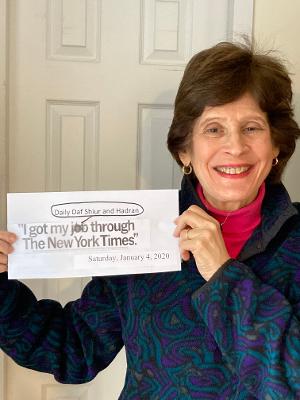
“I got my job through the NY Times” was an ad campaign when I was growing up. I can headline “I got my daily Daf shiur and Hadran through the NY Times”. I read the January 4, 2020 feature on Reb. Michelle Farber and Hadran and I have been participating ever since. Thanks NY Times & Hadran!
Deborah Aschheim
Deborah Aschheim

New York, United States

I started learning Talmud with R’ Haramati in Yeshivah of Flatbush. But after a respite of 60 years, Rabbanit Michelle lit my fire – after attending the last three world siyumim in Miami Beach, Meadowlands and Boca Raton, and now that I’m retired, I decided – “I can do this!” It has been an incredible journey so far, and I look forward to learning Daf everyday – Mazal Tov to everyone!

Roslyn Jaffe
Roslyn Jaffe

Florida, United States

I began daf yomi in January 2020 with Brachot. I had made aliya 6 months before, and one of my post-aliya goals was to complete a full cycle. As a life-long Tanach teacher, I wanted to swim from one side of the Yam shel Torah to the other. Daf yomi was also my sanity through COVID. It was the way to marking the progression of time, and feel that I could grow and accomplish while time stopped.

Leah Herzog
Leah Herzog

Givat Zev, Israel

I started learning at the start of this cycle, and quickly fell in love. It has become such an important part of my day, enriching every part of my life.

Naomi Niederhoffer
Naomi Niederhoffer

Toronto, Canada

A friend mentioned that she was starting Daf Yomi in January 2020. I had heard of it and thought, why not? I decided to try it – go day by day and not think about the seven plus year commitment. Fast forward today, over two years in and I can’t imagine my life without Daf Yomi. It’s part of my morning ritual. If I have a busy day ahead of me I set my alarm to get up early to finish the day’s daf
Debbie Fitzerman
Debbie Fitzerman

Ontario, Canada

I started learning with rabbis. I needed to know more than the stories. My first teacher to show me “the way of the Talmud” as well as the stories was Samara Schwartz.
Michelle Farber started the new cycle 2 yrs ago and I jumped on for the ride.
I do not look back.

Jenifer Nech
Jenifer Nech

Houston, United States

My curiosity was peaked after seeing posts about the end of the last cycle. I am always looking for opportunities to increase my Jewish literacy & I am someone that is drawn to habit and consistency. Dinnertime includes a “Guess what I learned on the daf” segment for my husband and 18 year old twins. I also love the feelings of connection with my colleagues who are also learning.

Diana Bloom
Diana Bloom

Tampa, United States

Shortly after the death of my father, David Malik z”l, I made the commitment to Daf Yomi. While riding to Ben Gurion airport in January, Siyum HaShas was playing on the radio; that was the nudge I needed to get started. The “everyday-ness” of the Daf has been a meaningful spiritual practice, especial after COVID began & I was temporarily unable to say Kaddish at daily in-person minyanim.

Lisa S. Malik
Lisa S. Malik

Wynnewood, United States

The first month I learned Daf Yomi by myself in secret, because I wasn’t sure how my husband would react, but after the siyyum on Masechet Brachot I discovered Hadran and now sometimes my husband listens to the daf with me. He and I also learn mishnayot together and are constantly finding connections between the different masechtot.

Laura Warshawsky
Laura Warshawsky

Silver Spring, Maryland, United States

I heard about the syium in January 2020 & I was excited to start learning then the pandemic started. Learning Daf became something to focus on but also something stressful. As the world changed around me & my family I had to adjust my expectations for myself & the world. Daf Yomi & the Hadran podcast has been something I look forward to every day. It gives me a moment of centering & Judaism daily.

Talia Haykin
Talia Haykin

Denver, United States

Bava Batra 164

וְאִם תֹּאמַר: מוֹחֵק וְחוֹזֵר וּמוֹחֵק! אֵינוֹ דּוֹמֶה נִמְחַק פַּעַם אַחַת, לְנִמְחַק שְׁתֵּי פְעָמִים.

And if you say: There is a possibility of forgery with such a document, as the holder of the document can erase the original writing on the paper, then write the text of the document and have witnesses sign on the part that had been erased, then erase the document text once again, substituting for it a text that is more to his advantage, leaving the original signatures in place, this is not a valid argument. Paper that has been erased once is not similar in appearance to paper that has been erased twice. It will be seen that the signatures are on a place that had been erased once and that the text is written on a place that had been erased twice, and the forgery will be noticed.

וְלֵיחוּשׁ דִּלְמָא שָׁדֵי דְּיוֹתָא אַמְּקוֹם עֵדִים מֵעִיקָּרָא, וּמָחֵיק לֵיהּ – דְּכִי הָדַר מָחֵיק לֵיהּ לְהַאי, הָוֵה לֵיהּ אִידֵּי וְאִידֵּי נִמְחַק שְׁתֵּי פְעָמִים!

The Gemara suggests: But let there be a concern that perhaps the holder of the document will initially, after the entire original document, including the signatures, has been erased, but before the second one is written, throw some ink on the place where the witnesses are to sign under the text of the second document, and then erase that ink. He will do this so that when, after the witnesses have signed, he then erases the document text and writes a false text, it will emerge that both this, the new document’s text, and that, the signatures, will be on paper that had been erased twice.

אָמַר אַבָּיֵי, קָסָבַר רַב: אֵין הָעֵדִים חוֹתְמִין עַל הַמְּחָק, אֶלָּא אִם כֵּן נִמְחַק בִּפְנֵיהֶם.

Abaye said in response: Rav holds that witnesses may not sign a document written over an erasure unless the paper was erased in their presence, i.e., unless they saw the paper after its old text had been erased, before the new text was written. They will then see that the place where they are to sign has been erased twice, while the place where the document is to be written has been erased only once. They will realize that this leaves open an opportunity of subsequent erasing and falsification, and they will refrain from signing.

מֵיתִיבִי: הוּא עַל הַנְּיָיר וְעֵדָיו עַל הַמְּחָק – כָּשֵׁר. וְנֵיחוּשׁ דִּלְמָא מָחֵיק לֵיהּ, וְכָתֵיב מַאי דְּבָעֵי, וְהָוֵי לֵיהּ הוּא וְעֵדָיו עַל הַמְּחָק!

The Gemara raises an objection to the opinion of Rav from a baraita: A document in which its text is on a part of the paper that has never had writing erased and the signatures of its witnesses are on an erasure is valid. The Gemara suggests: But let us be concerned that perhaps the holder of the document will erase the text and write in its place whatever he wants, and it will then be a document where both its text and the signatures of its witnesses are on an erasure. Since Rav maintains that such a document is valid, it is easily forgeable in this manner.

דְּכָתְבִי הָכִי: ״אֲנַחְנָא סָהֲדֵי – חֲתַמְנָא עַל מְחָקָא, וּשְׁטָרָא – כְּתִב עַל נְיָירָא״.

The Gemara answers: Such a document is valid only in a case where the witnesses write this: We, the witnesses, signed on an erasure, but the document text was written on a part of the paper that never had writing erased. If the holder of the document then tries to erase the original text and write new text in its place, the forgery will be noticed.

דְּכָתְבִי הֵיכָא? אִי מִלְּתַחַת – גָּיֵיז לֵיהּ; אִי עִילַּאי – מָחֵיק לֵיהּ! דְּכָתְבִי בֵּין סָהֲדָא לְסָהֲדָא.

The Gemara asks: Where do the witnesses write this declaration? If they write it underneath their signatures, the holder of the document can simply excise it. And if they write it above their signatures, the holder of the document can erase it along with the text of the document. The Gemara answers: They write the declaration between the signature of one witness and the signature of the other witness.

אִי הָכִי, אֵימָא סֵיפָא: הוּא עַל הַמְּחָק, וְעֵדָיו עַל הַנְּיָיר – פָּסוּל. אַמַּאי פָּסוּל? הָכָא נָמֵי, נִכְתְּבוּ הָכִי: ״אֲנַחְנָא סָהֲדֵי – חֲתַמְנָא עַל נְיָירָא, וּשְׁטָרָא – עַל מְחָקָא״!

The Gemara asks: If that is so, that the baraita is discussing a case in which the witnesses write a declaration about the circumstances of the document’s condition, say the latter clause of the baraita: A document in which its text is on an erasure and the signatures of its witnesses are on a part of the paper that never had writing erased is not valid. The Gemara presents its question: Why is such a document not valid? Here, too, let the witnesses write this: We, the witnesses, signed on paper that never had writing erased, but the document text was written on an erasure.

[הַשְׁתָּא נָמֵי] מַאי אָמְרַתְּ – מוֹחֵק חוֹזֵר וּמוֹחֵק? הָא אָמְרַתְּ: אֵינוֹ דּוֹמֶה נִמְחַק פַּעַם אַחַת, לְנִמְחַק שְׁתֵּי פְעָמִים! הָנֵי מִילֵּי – הֵיכָא דַּחֲתִימִי סָהֲדֵי אַמְּחָקָא; הֵיכָא דְּלָא חֲתִימִי סָהֲדֵי אַמְּחָקָא אֶלָּא אַנְּיָירָא – לָא יְדִיעַ.

Now in this case as well it should be valid, as what can you say to argue that it is a forgeable document? If you say that the holder of the document, having erased the original document, can erase the writing once again and write a new, false document, this is not a concern, as didn’t you say that paper that has been erased once is not similar in appearance to paper that has been erased twice? It would therefore be noticeable that the document had been erased a second time, and the forgery would be noticeable. The Gemara answers: That statement applies only when the witnesses are signed on an erasure, and the appearance of that erasure can be compared with the appearance of a double erasure. But in a case where the witnesses are signed not on an erasure but on paper that has not had its writing erased, so that there is no contrast between a single erasure and a double erasure, the forgery would not be known.

וְלַיְתֵי מְגִילְּתָא אַחֲרִיתִי, וְלִמְחוֹק וְלִידַמֵּי! לָא דָּמֵי מְחָקָא דְּהָא מְגִילְּתָא, לִמְחָקָא דְּהָא מְגִילְּתָא.

The Gemara suggests: But let the court bring another parchment, write something on it and erase it, and then compare this single erasure with the erasure on the document in question. If the document were erased twice, a contrast would be seen between a single erasure and a double erasure. The Gemara answers: The erasure of this parchment is not necessarily similar to the erasure of that parchment. A single erasure on one parchment might resemble a double erasure on a different parchment.

וּלְקַבְּלַהּ לַחֲתִימוּת יְדָא דְּסָהֲדִי בְּבֵי דִינָא, וְלִמְחוֹק וְלִידַמֵּי! אָמַר רַב הוֹשַׁעְיָא: אֵינוֹ דּוֹמֶה נִמְחַק בֶּן יוֹמוֹ, לְנִמְחַק בֶּן שְׁנֵי יָמִים.

The Gemara continues to suggest: But let us accept, i.e., verify, the signatures of the witnesses on the document in court, after which they may safely be erased; and then erase the signatures and compare that erasure to the erasure of the document text, to see if it was erased once or twice. In response to this question Rav Hoshaya says: That which is erased on the same day that it was written is not necessarily similar to that which was erased two days ago, i.e., more than a day after it was written. An older erasure looks different from a new one, so the comparison might not show that there was a double erasure in the document.

וְלִישַׁהֲיֵיהּ! אָמַר רַבִּי יִרְמְיָה: חָיְישִׁינַן לְבֵית דִּין טוֹעִין.

The Gemara suggests: But let us retain the document for an extra day, at which point both erasures will be old and can be compared. Rabbi Yirmeya said in response: We are concerned for the possibility of an erring court. If such complicated procedures were used in order to declare a document valid, there would be a chance that a particular court would not apply them properly, and that court would end up ratifying a document that was not valid.

רַבִּי חֲנִינָא בֶּן גַּמְלִיאֵל אוֹמֵר: מְקוּשָּׁר וְכוּ׳. הֵשִׁיב רַבִּי לְדִבְרֵי רַבִּי חֲנִינָא בֶּן גַּמְלִיאֵל:

§ The mishna teaches that Rabbi Ḥanina ben Gamliel says: A tied document whose witnesses wrote their signatures inside of it is valid, because one can transform it into an ordinary document by untying it. Rabbi Yehuda HaNasi raised an objection to the statement of Rabbi Ḥanina ben Gamliel:

וַהֲלֹא אֵינוֹ דּוֹמֶה זְמַנּוֹ שֶׁל זֶה לִזְמַנּוֹ שֶׁל זֶה! פָּשׁוּט; מָלַךְ שָׁנָה – מוֹנִין לוֹ שָׁנָה, שְׁתַּיִם – מוֹנִין לוֹ שְׁתַּיִם. מְקוּשָּׁר; מָלַךְ שָׁנָה – מוֹנִין לוֹ שְׁתַּיִם, שְׁתַּיִם – מוֹנִין לוֹ שָׁלֹשׁ.

But the date of this one, a tied document, is not the same as the date of that one, an ordinary document. In an ordinary document, when the king has reigned for one year, one year is counted for him, and when he has reigned for two years, two years are counted for him. By contrast, in a tied document, when the king has reigned for one year, two years are counted for him, and when he has reigned for two years, three years are counted for him. If a tied document is simply opened up and used as an ordinary document, then it will emerge that it is postdated by a year.

וְזִימְנִין דְּיָזֵיף מִינֵּיהּ זוּזֵי בִּמְקוּשָּׁר, וּמִיתְרְמֵי לֵיהּ זוּזֵי בֵּינֵי בֵּינֵי וּפָרַע לֵיהּ; וְאָמַר לֵיהּ: הַב לִי שְׁטָרַאי, וְאָמַר לֵיהּ: אִירְכַס לִי; וְכָתֵב לֵיהּ תְּבָרָא;

Rabbi Yehuda HaNasi continues: And there are times this can be problematic, as in a case where the debtor borrows money from the creditor, and the details of the loan are written in a tied document. And the debtor chances upon some money in the interim, i.e., during the first year after the document was written, and he repays the creditor, and says to him: Give me back my promissory note, as I have just repaid you. And the creditor says to the debtor: I lost the document and cannot give it to you. And in lieu of returning the promissory note, the creditor writes a receipt for the debtor, as protection against a second collection.

וְכִי מָטֵי זִמְנֵיהּ, מְשַׁוֵּי לֵיהּ פָּשׁוּט, וְאָמַר לֵיהּ: הָנֵי הַשְׁתָּא דִּיזַפְתְּ מִינַּאי!

Rabbi Yehuda HaNasi continues: And then, when the time for repayment written in the promissory note arrives, the creditor will make it into an ordinary document by undoing its stitches and opening it up, and he can then say to the debtor: It is now that you borrowed this money from me, as attested in this promissory note, and the receipt you have in your possession is for a previous debt, as its date precedes the date on my document.

קָא סָבַר: אֵין כּוֹתְבִין שׁוֹבָר.

The Gemara answers: Rabbi Ḥanina ben Gamliel holds that one does not write a receipt in such cases. If a creditor loses his promissory note, the debtor need not pay him at all, out of concern that the debt may one day be collected again when the promissory note is found. He is not required to pay the debt and accept only a receipt, which he will then have to guard permanently to protect himself against a second collection.

וּמִי בָּקִי רַבִּי בִּמְקוּשָּׁר? וְהָא הָהוּא מְקוּשָּׁר דַּאֲתָא לְקַמֵּיהּ דְּרַבִּי, וְאָמַר רַבִּי: שְׁטָר מְאוּחָר זֶה! וְאָמַר לוֹ זוּנִין לְרַבִּי: כָּךְ מִנְהָגָהּ שֶׁל אוּמָּה זוֹ; מָלַךְ שָׁנָה – מוֹנִין לוֹ שְׁתַּיִם, שְׁתַּיִם – מוֹנִין לוֹ שָׁלֹשׁ!

The Gemara asks with regard to the previous discussion: And was Rabbi Yehuda HaNasi expert in the halakhot of tied documents? But wasn’t there a certain tied document that came before Rabbi Yehuda HaNasi, and when Rabbi Yehuda HaNasi saw the date he said: This is a postdated document. And a Sage named Zunin said to Rabbi Yehuda HaNasi: Such is the custom of this nation; when the king has reigned for one year, two years are counted for him, and when he has reigned for two years, three years are counted for him. The document is therefore not postdated. From this anecdote it is clear that Rabbi Yehuda HaNasi himself had not been familiar with this practice.

בָּתַר דְּשַׁמְעַהּ מִזּוּנִין, סַבְרַהּ.

The Gemara answers: After Rabbi Yehuda HaNasi heard it from Zunin he accepted the explanation and held this way himself, and that is what prompted him to raise his objection.

הָהוּא שְׁטָרָא דַּהֲוָה כְּתִב בֵּיהּ: ״בִּשְׁנַת פְּלוֹנִי אַרְכָן״. אָמַר רַבִּי חֲנִינָא: יִבְדֹּק אֵימָתַי עָמַד אַרְכָן בְּאַרְכָנוּתֵיהּ.

§ There was a certain document on which was written, as its date: In the year of so-and-so, Archon [Arkhan], a title for a ruler, without stating any particular year of his reign. Rabbi Ḥanina said: Let it be investigated when it was that this Archon rose to his position of archon, i.e., find out the year he came to power, and the validity of the document is established from that year.

וְדִלְמָא דַּאֲרִיךְ מַלְכוּתֵיהּ! אָמַר רַב הוֹשַׁעְיָא: כָּךְ מִנְהָגָהּ שֶׁל אוּמָּה זוֹ; שָׁנָה רִאשׁוֹנָה – קוֹרִין לוֹ ״אַרְכָן״, שְׁנִיָּה – קוֹרִין לוֹ דִּיגוֹן.

The Gemara suggests: But perhaps the writer of the document was using an Aramaic or Hebrew term, and intended to say that the reign of so-and-so had already extended [arikh] for several years. Rav Hoshaya says: Such is the custom of this nation where the document was written: In the first year of the king’s reign they refer to him with the title Archon; in his second year they refer to him with the title Digon.

וְדִלְמָא עַבּוֹרֵי עַבְּרוּהוּ, וַהֲדַר אוֹקְמוּהוּ! אָמַר רַבִּי יִרְמְיָה: הָהוּא ״אַרְכָן דִּיגוֹן״ קָרְאוּ לֵיהּ.

The Gemara suggests: But perhaps the people deposed the ruler and then reinstated him, and the document was written in the first year of his second reign. Rabbi Yirmeya said: In that case, they would refer to him with the title Archon Digon.

תָּנוּ רַבָּנַן: ״הֲרֵינִי נָזִיר הֵינָא״ – סוֹמְכוֹס אָמַר: ״הֵינָא״ – אַחַת. ״דִּיגוֹן״ – שְׁתַּיִם. ״טְרִיגוֹן״ – שָׁלֹשׁ. ״טֶטְרִיגוֹן״ – אַרְבַּע. ״פֶּנְטִיגוֹן״ – חָמֵשׁ.

§ Apropos these Greek terms, the Gemara cites two baraitot that mention them. The Sages taught (Tosefta, Nazir 1:2) that if one said: I am hereby a nazirite heina, or stated a similar expression with other comparable Greek terms, Sumakhos said that his status depends on which term he used. If he used the word heina, he is a nazirite for one term of naziriteship, i.e., thirty days; if he said digon, he is a nazirite for two terms of thirty days each; if he said terigon, he is a nazirite for three terms; tetrigon, for four terms; pentigon, for five terms.

תָּנוּ רַבָּנַן: בַּיִת עָגוֹל; דִּיגוֹן; טְרִיגוֹן; פֶּנְטִיגוֹן – אֵינוֹ מִטַּמֵּא בִּנְגָעִים. טֶטְרִיגוֹן – מִטַּמֵּא בִּנְגָעִים.

The Sages taught in another baraita (Tosefta, Nega’im 6:3): A round house, or one that is shaped like a digon, i.e., it has two walls, one straight and one curved, or one that is shaped like a terigon, i.e., a triangle, or one that is shaped like a pentagon, does not become susceptible to the ritual impurity of leprous spots. If it is shaped like a tetrigon, i.e., a quadrilateral, it becomes susceptible to the ritual impurity of leprous spots.

מְנָא הָנֵי מִילֵּי? דְּתָנוּ רַבָּנַן, לְמַעְלָה אוֹמֵר: ״קִיר–קִירֹת״ – שְׁתַּיִם; לְמַטָּה אוֹמֵר: ״קִיר–קִירֹת״ – שְׁתַּיִם; הֲרֵי כָּאן אַרְבַּע.

The Gemara asks: From where are these matters derived? The Gemara answers: It is as the Sages taught in a baraita: The Torah states above: “If the plague be in the walls of the house” (Leviticus 14:37). The verse did not state: A wall, but “walls,” indicating that the house in question has at least two walls. And where it states below: “If the plague has spread in the walls of the house” (Leviticus 14:39), instead of stating: A wall, the verse states “walls,” indicating another two walls. There are a total of four walls mentioned here in order to indicate that a house can become impure through leprous spots only if it has four sides.

הָהוּא מְקוּשָּׁר דַּאֲתָא לְקַמֵּיהּ דְּרַבִּי, וְאָמַר רַבִּי: אֵין זְמַן בָּזֶּה?! אֲמַר לֵיהּ רַבִּי שִׁמְעוֹן בַּר רַבִּי לְרַבִּי: שֶׁמָּא בֵּין קְשָׁרָיו מוּבְלָע? פַּלְיֵיהּ, וְחַזְיֵיהּ. הֲדַר חֲזָא בֵּיהּ רַבִּי בְּבִישׁוּת. אֲמַר לֵיהּ: לָאו אֲנָא כְּתַבְתֵּיהּ, רַבִּי יְהוּדָה חַיָּיטָא כַּתְבֵיהּ. אֲמַר לֵיהּ: כְּלָךְ מִלָּשׁוֹן הָרָע הַזֶּה.

§ The Gemara relates: There was a certain tied document that came before Rabbi Yehuda HaNasi, and Rabbi Yehuda HaNasi, not realizing it was a folded document, said: There is no date on this document, so it is not valid. Rabbi Shimon, son of Rabbi Yehuda HaNasi, said to Rabbi Yehuda HaNasi: Perhaps the date is hidden between its tied folds. Rabbi Yehuda HaNasi opened it and saw that the date was in fact between the tied folds. Afterward, Rabbi Yehuda HaNasi looked at his son disapprovingly, as he held that one should not write a tied document. His son said to him: I did not write it; Rabbi Yehuda Ḥayyata wrote it. Rabbi Yehuda HaNasi said to his son: Turn away from uttering this kind of malicious speech.

זִימְנִין הֲוָה יָתֵיב קַמֵּיהּ, וְקָא פָסֵיק סִידְרָא בְּסֵפֶר תְּהִלִּים; אָמַר רַבִּי: כַּמָּה מְיוּשָּׁר כְּתָב זֶה! אֲמַר לֵיהּ: לָאו אֲנָא כְּתַבְתֵּיהּ, יְהוּדָה חַיָּיטָא כַּתְבֵיהּ. אֲמַר לֵיהּ: כְּלָךְ מִלָּשׁוֹן הָרָע הַזֶּה.

Another time, Rabbi Shimon was sitting before his father and reciting a section of the book of Psalms. Rabbi Yehuda HaNasi said to him: How straight and neat is this writing in this book from which you are reading. Rabbi Shimon said to him: I did not write it; Yehuda Ḥayyata wrote it. Rabbi Yehuda HaNasi told his son: Turn away from uttering this kind of malicious speech.

בִּשְׁלָמָא הָתָם, אִיכָּא לָשׁוֹן הָרָע; אֶלָּא הָכָא, מַאי לָשׁוֹן הָרָע אִיכָּא? מִשּׁוּם דְּרַב דִּימִי – דְּתָנֵי רַב דִּימִי אֲחוּהּ דְּרַב סָפְרָא: לְעוֹלָם אַל יְסַפֵּר אָדָם בְּטוֹבָתוֹ שֶׁל חֲבֵירוֹ, שֶׁמִּתּוֹךְ טוֹבָתוֹ בָּא לִידֵי רָעָתוֹ.

The Gemara asks: Granted, there, in the first episode, there is malicious speech involved, since Rabbi Yehuda HaNasi was displeased with the writer of the document, but here, in the second episode, what malicious speech is there? Rabbi Yehuda HaNasi was complimenting the writer of the book of Psalms, not criticizing him. The Gemara answers: It is because of what Rav Dimi teaches. As Rav Dimi, the brother of Rav Safra, teaches: A person should never speak the praises of another, as out of the praise spoken about him someone may come to speak to his detriment.

אָמַר רַב עַמְרָם אָמַר רַב: שָׁלֹשׁ עֲבֵירוֹת אֵין אָדָם נִיצּוֹל מֵהֶן בְּכׇל יוֹם – הִרְהוּר עֲבֵירָה, וְעִיּוּן תְּפִלָּה, וְלָשׁוֹן הָרָע. לָשׁוֹן הָרָע סָלְקָא דַּעְתָּךְ?!

Rav Amram says that Rav says: There are three sins from which a person is not spared each day. They are: Having sinful thoughts, and committing sins concerning deliberation in prayer, and uttering malicious speech. The Gemara asks: Can it enter your mind that a person cannot go through the day without uttering malicious speech?

Want to follow content and continue where you left off?

Create an account today to track your progress, mark what you’ve learned, and follow the shiurim that speak to you.

Clear all items from this list?

This will remove ALL the items in this section. You will lose any progress or history connected to them. This is irreversible.

Cancel
Yes, clear all

Are you sure you want to delete this item?

You will lose any progress or history connected to this item.

Cancel
Yes, delete