








Rabbi Yochanan and Reish Lakish disagree regarding the nature of the reason for one’s liability for damage caused by fire. Is the damage caused by the fire similar to a person shooting arrows or is it like damage caused by their property, i.e. the fire is seen as the property of the one who lit it and therefore similar to a person’s ox or pit damaging? The Gemara attempts, unsuccessfully, to prove Rabbi Yochanan’s approach – fire is like a person shooting an arrow.
Bava Kamma 22

11.24.2023 | י״א בכסלו תשפ״ד
Share this shiur:
Bava Kamma
Masechet Bava Kamma is sponsored by the Futornick Family in loving memory of their fathers and grandfathers, Phillip Kaufman and David Futornick.
This week’s learning is sponsored by Robert and Paula Cohen in loving memory of Joseph Cohen, Yosef ben Moshe HaCohen, z”l. “He was hard working, loved to sing, esp. as a chazan, and was very dedicated to his family and community.”
Want to dedicate learning? Get started here:
English
עברית

0:00
0:00
0:00
0:00
Today’s daily daf tools:
Bava Kamma
Masechet Bava Kamma is sponsored by the Futornick Family in loving memory of their fathers and grandfathers, Phillip Kaufman and David Futornick.
This week’s learning is sponsored by Robert and Paula Cohen in loving memory of Joseph Cohen, Yosef ben Moshe HaCohen, z”l. “He was hard working, loved to sing, esp. as a chazan, and was very dedicated to his family and community.”
Bava Kamma 22
וְהָתַנְיָא: הַכֶּלֶב וְהַגְּדִי שֶׁדִּילְּגוּ; בֵּין מִלְּמַעְלָה לְמַטָּה, בֵּין מִלְּמַטָּה לְמַעְלָה – פְּטוּרִין! תַּרְגְּמַאּ רַב פָּפָּא: דְּאָפֵיךְ מֵיפָךְ – כַּלְבָּא בִּזְקִירָא וְגַדְיָא בִּסְרִיכָא. אִי הָכִי, אַמַּאי פְּטוּרִים? פָּטוּר מִנֶּזֶק שָׁלֵם, וְחַיָּיבִין בַּחֲצִי נֶזֶק.
The Gemara asks: But isn’t it taught in a baraita: If a dog or a goat jumped, regardless of whether they jumped from above to below or from below to above, their owners are exempt from all liability? Rav Pappa interpreted it in the following way: Their manners of movement were changed from the typical manner of movement for their species. The dog moved by leaping [bizkira], while the goat moved by climbing [bisrikha]. The Gemara asks: If that is so, why are the owners exempt from liability? After all, they still caused damage. The Gemara answers: The baraita does not intend to say that they are completely exempt, but that they are exempt from paying the full cost of the damage; they are, however, liable to pay half the cost of the damage, as is the halakha in any case of damage caused by atypical behavior, as such acts are classified as Goring.
הַכֶּלֶב שֶׁנָּטַל.
§ The mishna teaches: With regard to a dog that took a cake that had been baked directly on hot coals, and went to a stack of grain to eat it, and it ate the cake and at the same time ignited the stack of grain with a coal that it had taken along with the cake, the owner of the dog must pay the full cost of the damage for the cake, and he must pay for half the cost of the damage to the stack of grain.
אִתְּמַר, רַבִּי יוֹחָנָן אָמַר: אִשּׁוֹ – מִשּׁוּם חִצָּיו. וְרֵישׁ לָקִישׁ אָמַר: אִשּׁוֹ – מִשּׁוּם מָמוֹנוֹ.
With regard to damage caused by a fire lit by one person spreading to a location other than where it was lit, the Gemara cites a dispute among the amora’im: It was stated: Rabbi Yoḥanan says: His liability for damage caused by his fire is due to its similarity to his arrows, meaning that damage caused by a fire in a location other than where it was lit is comparable to damage caused by an arrow shot at a distant target. And Reish Lakish says: His liability for the damage caused by his fire is due to its similarity to his property; he is responsible for this damage just as he is responsible for damage caused elsewhere by any of his possessions, e.g., one of his animals.
וְרֵישׁ לָקִישׁ – מַאי טַעְמָא לָא אָמַר כְּרַבִּי יוֹחָנָן? אָמַר לָךְ: חִצָּיו – מִכֹּחוֹ קָאָזְלִי, הַאי – לָא מִכֹּחוֹ קָאָזֵיל. וְרַבִּי יוֹחָנָן – מַאי טַעְמָא לָא אָמַר כְּרֵישׁ לָקִישׁ? אָמַר לָךְ: מָמוֹנָא – אִית בֵּיהּ מַמָּשָׁא, הָא – לֵית בֵּיהּ מַמָּשָׁא.
The Gemara asks: And what is the reason that Reish Lakish did not state his opinion in accordance with the opinion of Rabbi Yoḥanan? The Gemara answers: He could have said to you that fire is not comparable to an arrow, as an arrow proceeds as a result of his direct force, while this fire does not proceed as a result of his direct force, but requires a wind to carry it from the location where it was lit to the location of the damage. The Gemara asks about the other opinion: And what is the reason that Rabbi Yoḥanan did not state his opinion in accordance with the opinion of Reish Lakish? The Gemara answers: He could have said to you that one’s fire is not comparable to his possessions, as property is a tangible substance but this fire is not a tangible substance.
תְּנַן: הַכֶּלֶב שֶׁנָּטַל חֲרָרָה כּוּ׳. בִּשְׁלָמָא לְמַאן דְּאָמַר: אִשּׁוֹ מִשּׁוּם חִצָּיו – חִצָּיו דְּכֶלֶב הוּא;
The Gemara attempts to settle the dispute: We learned in the mishna: With regard to a dog that took a cake that had been baked directly on hot coals, and went to a stack of grain to eat it, and it ate the cake and at the same time ignited the stack of grain with a coal that it had taken along with the cake, the owner of the dog must pay the full cost of the damage for the cake, and he must pay for half the cost of the damage to the stack of grain. Granted, according to the one who says that one’s liability for damage caused by his fire is due to its similarity to his arrows, this fire is similar to the arrows of the dog, and therefore he must pay for half the cost of the damage caused by the dog’s force, as in a case of pebbles.
אֶלָּא לְמַאן דְּאָמַר: אִשּׁוֹ מִשּׁוּם מָמוֹנוֹ – הַאי אֵשׁ, לָאו מָמוֹנוֹ דְּבַעַל כֶּלֶב הוּא!
But according to the one who says that one’s liability for damage caused by his fire is due to its similarity to his property, this fire is not the property of the owner of the dog; rather, it is the property of the owner of the cake, so why is the owner of the dog liable?
אָמַר לָךְ רֵישׁ לָקִישׁ: הָכָא בְּמַאי עָסְקִינַן – דְּאַדְּיֵיהּ אַדּוֹיֵי; דְּעַל חֲרָרָה מְשַׁלֵּם נֶזֶק שָׁלֵם, וְעַל מָקוֹם גַּחֶלֶת מְשַׁלֵּם חֲצִי נֶזֶק, וְעַל גָּדִישׁ כּוּלֵּהּ פָּטוּר.
The Gemara answers: Reish Lakish could have said to you: With what are we dealing here? We are dealing with a case where the dog took the coal and did not place the cake on the stack, rather it threw it onto the stack. The ruling of the mishna is: For the cake which the dog ate, the owner must pay the full cost of the damage, and for the specific spot on the stack of grain that was damaged by the throwing of the coal there, the owner must pay for half the cost of the damage as in a case of pebbles. And for the stack of grain as a whole, he is exempt, because his liability for damage caused by the spread of the fire is due to its similarity to his property, and in this case it was not his property.
וְרַבִּי יוֹחָנָן – דְּאַנְּחַהּ אַנּוֹחֵי; עַל חֲרָרָה וְעַל מְקוֹם גַּחֶלֶת מְשַׁלֵּם נֶזֶק שָׁלֵם, וְעַל הַגָּדִישׁ מְשַׁלֵּם חֲצִי נֶזֶק.
But Rabbi Yoḥanan can explain the mishna in a more straightforward manner. It is discussing a case where the dog placed the cake with the coal directly on the stack of grain in order to eat the cake. Accordingly, the owner of the dog must pay the full cost of the damage for the cake and for the specific spot where the coal was put down, as these cases of damage were caused directly by the dog. And for the rest of the stack of grain, he must pay for half the cost of the damage, because in Rabbi Yoḥanan’s opinion one is liable for the damage caused by fire due to its similarity to arrows shot by his force. The damage to the rest of the stack of grain is an indirect result of the dog’s force, and therefore his liability is according the halakhot of pebbles.
תָּא שְׁמַע: גָּמָל טָעוּן פִּשְׁתָּן וְעָבַר בִּרְשׁוּת הָרַבִּים; נִכְנְסָה פִּשְׁתָּנוֹ לְתוֹךְ הַחֲנוּת (וְדָלְקוּ), [וְדָלְקָה] בְּנֵרוֹ שֶׁל חֶנְווֹנִי, וְהִדְלִיק אֶת הַבִּירָה – בַּעַל גָּמָל חַיָּיב. הִנִּיחַ חֶנְווֹנִי נֵרוֹ מִבַּחוּץ – חֶנְווֹנִי חַיָּיב. רַבִּי יְהוּדָה אוֹמֵר: בְּנֵר חֲנוּכָּה – פָּטוּר.
The Gemara suggests: Come and hear a proof from a mishna (62b): In the case of a camel that was laden with flax and was passing through the public domain, and its flax extended into a store at the edge of the public domain, and the flax caught fire from a lamp in the store belonging to the storekeeper, and as a result of the burning flax the camel set fire to the building together with all its contents, the owner of the camel is liable for the damage. But if the storekeeper placed his lamp outside in the public domain, thereby causing the flax on the camel to catch fire, and consequently the building was set on fire, the storekeeper is liable. Rabbi Yehuda says: In a case where the lamp placed outside was a Hanukkah lamp, the storekeeper is exempt from liability, as there is a mitzva to place a Hanukkah lamp outside.
בִּשְׁלָמָא לְמַאן דְּאָמַר אִשּׁוֹ מִשּׁוּם חִצָּיו – חִצָּיו דְּגָמָל הוּא. אֶלָּא לְמַאן דְּאָמַר מִשּׁוּם מָמוֹנוֹ – הַאי אֵשׁ, לָאו מָמוֹנָא דְּבַעַל גָּמָל הוּא! אָמַר לָךְ רֵישׁ לָקִישׁ: הָכָא בְּמַאי עָסְקִינַן – בִּמְסַכְסֶכֶת כׇּל הַבִּירָה כּוּלָּהּ.
Granted, according to the one who says that one’s liability for the damage caused by his fire is due to its similarity to his arrows, the fire in the store is similar to the arrows of the camel, and that is why the camel’s owner is liable. But according to the one who says that liability for the damage is due to its similarity to his property, this fire is not the property of the owner of the camel. The Gemara answers: Reish Lakish could have said to you: With what are we dealing here? We are dealing with a case where the camel moved the burning flax around and ignited the entire building, lighting one spot after another. The fire did not need to spread since the camel directly set the building on fire in each of those spots, and therefore this case is comparable to that of a dog who moved the coal around from place to place.
אִי הָכִי, אֵימָא סֵיפָא: אִם הִנִּיחַ חֶנְווֹנִי נֵרוֹ מִבַּחוּץ – חֶנְווֹנִי חַיָּיב. וְאִי בִּמְסַכְסֶכֶת – אַמַּאי חַיָּיב? בְּשֶׁעָמְדָה.
The Gemara asks: If that is so, say the latter clause of the mishna: If the storekeeper placed his lamp outside, the storekeeper is liable. And if the case is one where the camel ignited the entire building, spot by spot, why is the storekeeper liable? His fire did not spread through the building; it was the camel that moved it around from one place to another. The Gemara answers: The case is one where the camel did not move around, but rather stood still, but since there was an extremely large load of flax on its back, once it caught fire it ignited the entire building simultaneously.
עָמְדָה וְסִכְסְכָה – כׇּל שֶׁכֵּן דְּחֶנְווֹנִי פָּטוּר וּבַעַל גָּמָל חַיָּיב! אָמַר רַב הוּנָא בַּר מָנוֹחַ מִשְּׁמֵיהּ דְּרַב אִיקָא: הָכָא בְּמַאי עָסְקִינַן – כְּגוֹן שֶׁעָמְדָה לְהַטִּיל מֵימֶיהָ;
The Gemara asks: If the camel stood without moving from place to place, but did shift the load on its back and thereby ignited the entire building, all the more so it should be that the storekeeper should be exempt from any liability and the owner of the camel should be liable, as it was his responsibility to move the camel away from there. Rav Huna bar Manoah said in the name of Rav Ika: With what are we dealing here? We are dealing with a case where the camel stood still in order to urinate and while doing so set the building ablaze; in that case the incident is deemed an accident as the owner could not have moved the camel from the spot.
רֵישָׁא – בַּעַל גָּמָל חַיָּיב, דְּלָא אִיבְּעִי לֵיהּ לְאַפּוֹשֵׁי בִּטְעִינָה. סֵיפָא – חֶנְווֹנִי חַיָּיב, דְּלָא אִיבְּעִי לֵיהּ לְאַנּוֹחֵי נֵרוֹ מֵאַבָּרַאי.
Consequently, in the first clause, the owner of the camel is liable, as he should not have overloaded the camel with flax to such a degree that it extended out so far from the sides that it could catch fire and ignite the store. But in the latter clause, the storekeeper is liable, as he should not have placed the lamp outside.
תָּא שְׁמַע: הַמַּדְלִיק אֶת הַגָּדִישׁ, וְהָיָה גְּדִי כָּפוּת לוֹ, וְעֶבֶד סָמוּךְ לוֹ וְנִשְׂרַף עִמּוֹ – חַיָּיב. עֶבֶד כָּפוּת לוֹ, וּגְדִי סָמוּךְ לוֹ וְנִשְׂרַף עִמּוֹ – פָּטוּר.
The Gemara attempts again to resolve the dispute: Come and hear a mishna (61b): With regard to one who ignites a stack of grain, and there was a goat tied to the stack, and there was also a Canaanite slave adjacent to it who was not tied to it, and both the goat and the slave were burned together with the stack of grain and killed, the one who ignited the fire is liable to pay compensation for both the stack and the goat, but he is exempt from paying for the slave because the slave should have run from the fire. Conversely, if the slave was tied to the stack and there was a goat adjacent to it that was not tied to it, and the slave and the goat were burned together with the stack of grain, the one who ignited the fire is completely exempt from payment for damage because he is liable to receive capital punishment for murder, and he is punished only for the greater transgression.
בִּשְׁלָמָא לְמַאן דְּאָמַר אִשּׁוֹ מִשּׁוּם חִצָּיו – מִשּׁוּם הָכִי פָּטוּר. אֶלָּא לְמַאן דְּאָמַר אִשּׁוֹ מִשּׁוּם מָמוֹנוֹ, אַמַּאי פָּטוּר? אִילּוּ קְטַל תּוֹרֵיהּ עַבְדָּא, הָכִי נָמֵי דְּלָא מִיחַיַּיב?!
The Gemara clarifies: Granted, according to the one who says that one’s liability for the damage caused by his fire is due to its similarity to his arrows, due to that reasoning he is exempt for the damage to the stack of grain in the second case, because it is as if he killed the slave with his arrows and consequently became subject to receive court-imposed capital punishment, and one who is subject to the death penalty is not liable to pay monetary compensation for the same act, as he receives the greater punishment of the two. But according to the one who says that liability for damage caused by his fire is due to its similarity to his property, why is he exempt? If his ox, which is his possession, were to kill a slave, would he also not be liable to pay for the damage?
אָמַר לְךָ רַבִּי שִׁמְעוֹן בֶּן לָקִישׁ: הָכָא בְּמַאי עָסְקִינַן – כְּשֶׁהִצִּית בְּגוּפוֹ שֶׁל עֶבֶד, דְּקָם לֵיהּ בִּדְרַבָּה מִינֵּיהּ.
The Gemara answers: Rabbi Shimon ben Lakish could have said to you: With what are we dealing here? We are dealing with a case where he lit the body of the slave on fire, consequently becoming subject to the death penalty as would anyone who kills a slave, and therefore he receives the greater punishment, the death penalty, but he does not also have to pay for the damage.
אִי הָכִי, מַאי לְמֵימְרָא? לָא צְרִיכָא – בִּגְדִי דְּחַד, וְעֶבֶד דְּחַד.
The Gemara asks: If that is so, what is the purpose of stating this; what novel idea is it supposed to teach? One who lit a slave on fire is most certainly a murderer, and a murderer is exempt from paying for damage caused while committing the murder. The Gemara answers: No, it is necessary to state this halakha for the case where the goat belonged to one person and the slave belonged to a different person; in that case one might have thought that since payment is due to someone other than the owner of the murdered slave, he would be required to pay the owner of the goat, despite being subject to the death penalty for killing the slave. Therefore, this mishna teaches that since he committed one act, for which he is liable to receive the death penalty, he is exempt from paying compensation to anyone as a result of that act.
תָּא שְׁמַע: הַשּׁוֹלֵחַ אֶת הַבְּעֵירָה בְּיַד חֵרֵשׁ שׁוֹטֶה וְקָטָן – פָּטוּר מִדִּינֵי אָדָם, וְחַיָּיב בְּדִינֵי שָׁמַיִם.
The Gemara attempts another resolution: Come and hear a mishna (59b): One who sends a fire, i.e., places a burning object, in the hand of a deaf-mute, an imbecile, or a minor is exempt for any damage later caused by the fire according to human laws but liable according to the laws of Heaven, meaning that he would not be held liable in court, but nevertheless he remains responsible to pay for what he has done.
בִּשְׁלָמָא לְמַאן דְּאָמַר אִשּׁוֹ מִשּׁוּם חִצָּיו – חִצָּיו דְּחֵרֵשׁ הוּא. אֶלָּא לְמַאן דְּאָמַר אִשּׁוֹ מִשּׁוּם מָמוֹנוֹ – אִילּוּ מָסַר שׁוֹרוֹ לְחֵרֵשׁ שׁוֹטֶה וְקָטָן, הָכִי נָמֵי דְּלָא מִיחַיַּיב?!
The Gemara clarifies: Granted, according to the one who says that one’s liability for the damage caused by his fire is due to its similarity to his arrows, this case is similar to the damage caused by the arrows of a deaf-mute or an imbecile or a minor, and this is why the one who gave them the fire is exempt from liability. But according to the one who says that one’s liability for the damage caused by his fire is due to its similarity to his property, if he were to convey his ox to a deaf-mute, an imbecile, or a minor, would he also not be liable? That is impossible, as there is an explicit statement in a baraita (10a) saying that he would be liable.
הָא אִתְּמַר עֲלַהּ, אָמַר רֵישׁ לָקִישׁ מִשְּׁמֵיהּ דְּחִזְקִיָּה: לֹא שָׁנוּ אֶלָּא כְּשֶׁמָּסַר לוֹ גַּחֶלֶת, וְלִיבָּהּ; אֲבָל מָסַר לוֹ שַׁלְהֶבֶת – חַיָּיב. מַאי טַעְמָא? בָּרִי הֶיזֵּקָא.
The Gemara answers: But it was stated already about this that Reish Lakish says in the name of Ḥizkiyya: They taught that one is exempt from the damage caused by a fire that he had entrusted in the care of a deaf-mute, an imbecile, or a minor only in a case where he conveyed a coal to him and the deaf-mute fanned the coal into a flame, which then caused damage. But if he conveyed an open flame to him and it caused damage, the one who gave him the flame is liable. What is the reason for this? This is because the damage is self-evident, i.e., it is clear that damage will ensue, and it is as if he placed a goring ox under his care. Therefore, if one’s liability for damage classified as Fire is due to its similarity to damage caused by one’s property, he would be liable in this case.
וְרַבִּי יוֹחָנָן אָמַר: אֲפִילּוּ שַׁלְהֶבֶת – פָּטוּר, קָסָבַר: צְבָתָא דְחֵרֵשׁ קָא גָרֵים; לָא מִיחַיַּיב עַד דְּמָסַר לֵיהּ גְּווֹזָא, סִילְתָּא וּשְׁרָגָא.
And Rabbi Yoḥanan, who holds that one’s liability for damage caused by fire is due to its similarity to one’s arrows, says that he is exempt even if he conveyed an open flame to him, because he holds that it is the deaf-mute’s handling of the flame that causes the blaze, and it is therefore not similar to a case of arrows shot; the one who conveys a fire to the deaf-mute does not become liable for the damage until he hands the deaf-mute chopped wood, kindling chips, and a lamp, as in that case, the damage that will ensue is self-evident and it is as if he started the blaze himself.
אָמַר רָבָא: קְרָא וּמַתְנִיתָא מְסַיַּיע לֵיהּ לְרַבִּי יוֹחָנָן. קְרָא – דִּכְתִיב: ״כִּי תֵצֵא אֵשׁ״ – תֵּצֵא מֵעַצְמָהּ, ״יְשַׁלֵּם הַמַּבְעִר אֶת הַבְּעֵרָה״ – שְׁמַע מִינַּהּ אִשּׁוֹ מִשּׁוּם חִצָּיו.
Rava said: A verse and a baraita both support Rabbi Yoḥanan’s opinion. The verse supporting his opinion is as it is written: “If fire breaks out” (Exodus 22:5), indicating that the fire breaks out on its own; yet the verse continues, “the one who ignited the fire shall pay,” indicating that the fire was ignited by a person. Conclude from the verse that one’s liability for the damage caused by his fire is due to its similarity to damage caused by his arrows, as the resolution of the apparent inconsistency in the verse is that it relates to the individual as if he had himself started the blaze, and that is why he is obligated to pay for the damage.
מַתְנִיתָא – דְּתַנְיָא: פָּתַח הַכָּתוּב
The baraita supporting his opinion is as it is taught: The verse concerning liability for a fire opened
Follow 
Today’s daily daf tools:
Delve Deeper
Broaden your understanding of the topics on this daf with classes and podcasts from top women Talmud scholars.

Reasonable Foreseeability and Bava Kamma: A Lawyer’s Perspective with Terri Krivosha
03.03.2024 | כ״ג באדר א׳ תשפ״ד
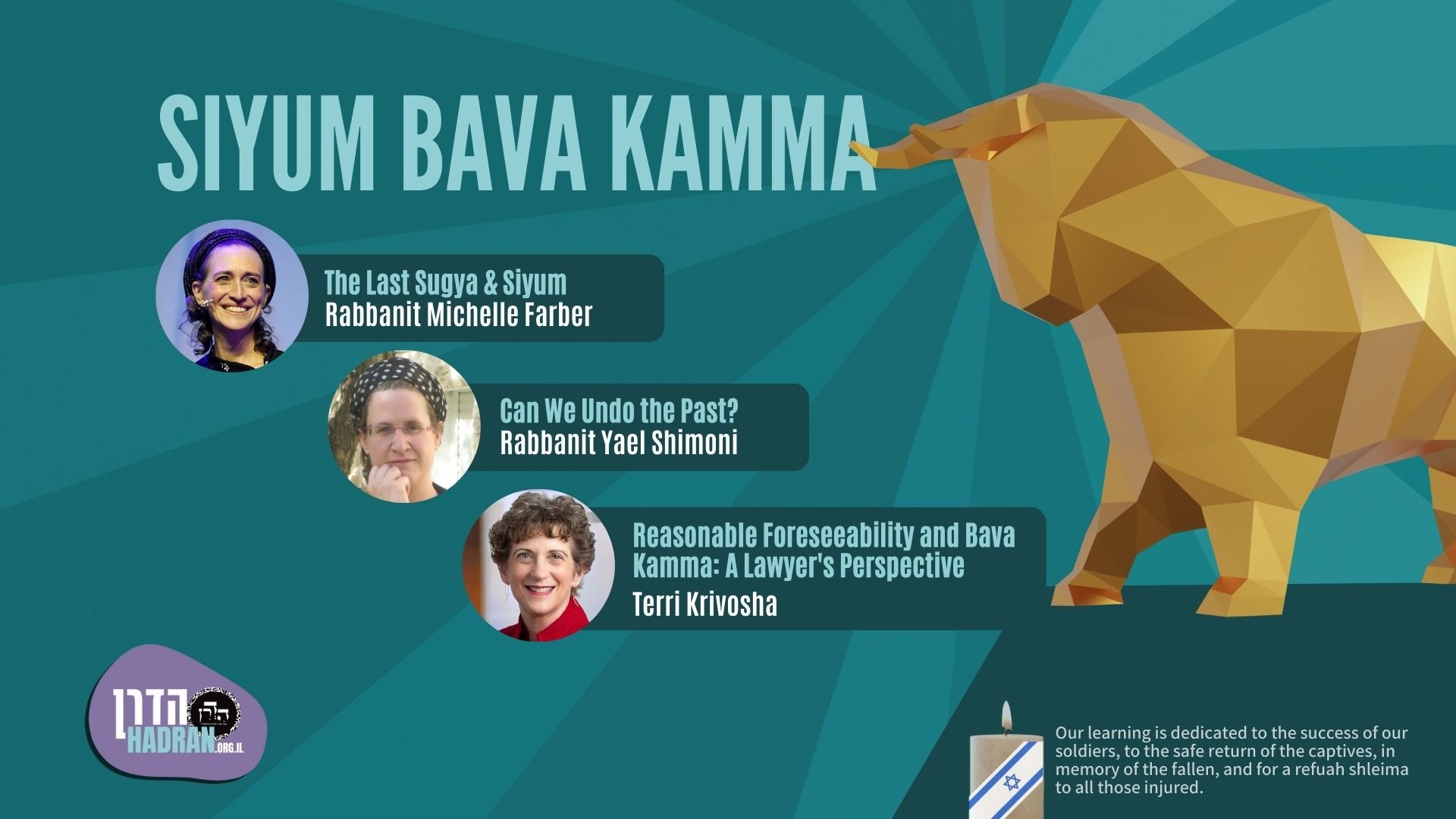

Bava Kamma: 112-119 + Siyum – Daf Yomi One Week at a Time
02.29.2024 | כ׳ באדר א׳ תשפ״ד
Bava Kamma 117: Comeuppance for R. Yochanan and the Resurrection of R. Kahana
02.27.2024 | י״ח באדר א׳ תשפ״ד

Bava Kamma: 105-111 – Daf Yomi: One Week at a Time
02.25.2024 | ט״ז באדר א׳ תשפ״ד
New to Talmud?
Check out our resources designed to help you navigate a page of Talmud – and study at the pace, level and style that fits you.
The Hadran Women’s Tapestry
Meet the diverse women learning Gemara at Hadran and hear their stories.
The first month I learned Daf Yomi by myself in secret, because I wasn’t sure how my husband would react, but after the siyyum on Masechet Brachot I discovered Hadran and now sometimes my husband listens to the daf with me. He and I also learn mishnayot together and are constantly finding connections between the different masechtot.

Laura Warshawsky
Silver Spring, Maryland, United States
I learned Mishnayot more than twenty years ago and started with Gemara much later in life. Although I never managed to learn Daf Yomi consistently, I am learning since some years Gemara in depth and with much joy. Since last year I am studying at the International Halakha Scholars Program at the WIHL. I often listen to Rabbanit Farbers Gemara shiurim to understand better a specific sugyiah. I am grateful for the help and inspiration!

Shoshana Ruerup
Berlin, Germany
I heard the new Daf Yomi cycle was starting and I was curious, so I searched online for a women’s class and was pleasently surprised to find Rabanit Michelle’s great class reviews in many online articles. It has been a splendid journey. It is a way to fill my days with Torah, learning so many amazing things I have never heard before during my Tanach learning at High School. Thanks so much .

Martha Tarazi
Panama, Panama
My first Talmud class experience was a weekly group in 1971 studying Taanit. In 2007 I resumed Talmud study with a weekly group I continue learning with. January 2020, I was inspired to try learning Daf Yomi. A friend introduced me to Daf Yomi for Women and Rabbanit Michelle Farber, I have kept with this program and look forward, G- willing, to complete the entire Shas with Hadran.
Lorri Lewis
Palo Alto, CA, United States
I learned daf more off than on 40 years ago. At the beginning of the current cycle, I decided to commit to learning daf regularly. Having Rabanit Michelle available as a learning partner has been amazing. Sometimes I learn with Hadran, sometimes with my husband, and sometimes on my own. It’s been fun to be part of an extended learning community.

Miriam Pollack
Honolulu, Hawaii, United States
I attended the Siyum so that I could tell my granddaughter that I had been there. Then I decided to listen on Spotify and after the siyum of Brachot, Covid and zoom began. It gave structure to my day. I learn with people from all over the world who are now my friends – yet most of us have never met. I can’t imagine life without it. Thank you Rabbanit Michelle.
Emma Rinberg
Raanana, Israel
I have joined the community of daf yomi learners at the start of this cycle. I have studied in different ways – by reading the page, translating the page, attending a local shiur and listening to Rabbanit Farber’s podcasts, depending on circumstances and where I was at the time. The reactions have been positive throughout – with no exception!

Silke Goldberg
Guildford, United Kingdom
I started learning Dec 2019 after reading “If all the Seas Were Ink”. I found
Daily daf sessions of Rabbanit Michelle in her house teaching, I then heard about the siyum and a new cycle starting wow I am in! Afternoon here in Sydney, my family and friends know this is my sacred time to hide away to live zoom and learn. Often it’s hard to absorb and relate then a gem shines touching my heart.

Dianne Kuchar
Dover Heights, Australia
I learned Talmud as a student in Yeshivat Ramaz and felt at the time that Talmud wasn’t for me. After reading Ilana Kurshan’s book I was intrigued and after watching the great siyum in Yerushalayim it ignited the spark to begin this journey. It has been a transformative life experience for me as a wife, mother, Savta and member of Klal Yisrael.

Elana Storch
Phoenix, Arizona, United States
I started learning daf yomi at the beginning of this cycle. As the pandemic evolved, it’s been so helpful to me to have this discipline every morning to listen to the daf podcast after I’ve read the daf; learning about the relationships between the rabbis and the ways they were constructing our Jewish religion after the destruction of the Temple. I’m grateful to be on this journey!

Mona Fishbane
Teaneck NJ, United States
When the new cycle began, I thought, If not now, when? I’d just turned 72. I feel like a tourist on a tour bus passing astonishing scenery each day. Rabbanit Michelle is my beloved tour guide. When the cycle ends, I’ll be 80. I pray that I’ll have strength and mind to continue the journey to glimpse a little more. My grandchildren think having a daf-learning savta is cool!

Wendy Dickstein
Jerusalem, Israel
When we heard that R. Michelle was starting daf yomi, my 11-year-old suggested that I go. Little did she know that she would lose me every morning from then on. I remember standing at the Farbers’ door, almost too shy to enter. After that first class, I said that I would come the next day but couldn’t commit to more. A decade later, I still look forward to learning from R. Michelle every morning.

Ruth Leah Kahan
Ra’anana, Israel
I started learning Daf Yomi inspired by תָּפַסְתָּ מְרוּבֶּה לֹא תָּפַסְתָּ, תָּפַסְתָּ מוּעָט תָּפַסְתָּ. I thought I’d start the first page, and then see. I was swept up into the enthusiasm of the Hadran Siyum, and from there the momentum kept building. Rabbanit Michelle’s shiur gives me an anchor, a connection to an incredible virtual community, and an energy to face whatever the day brings.

Medinah Korn
בית שמש, Israel
I started learning Gemara at the Yeshivah of Flatbush. And I resumed ‘ברוך ה decades later with Rabbanit Michele at Hadran. I started from Brachot and have had an exciting, rewarding experience throughout seder Moed!

Anne Mirsky
Maale Adumim, Israel
Hadran entered my life after the last Siyum Hashaas, January 2020. I was inspired and challenged simultaneously, having never thought of learning Gemara. With my family’s encouragement, I googled “daf yomi for women”. A perfecr fit!
I especially enjoy when Rabbanit Michelle connects the daf to contemporary issues to share at the shabbat table e.g: looking at the Kohen during duchaning. Toda rabba

Marsha Wasserman
Jerusalem, Israel
I started learning Jan 2020 when I heard the new cycle was starting. I had tried during the last cycle and didn’t make it past a few weeks. Learning online from old men didn’t speak to my soul and I knew Talmud had to be a soul journey for me. Enter Hadran! Talmud from Rabbanit Michelle Farber from a woman’s perspective, a mother’s perspective and a modern perspective. Motivated to continue!

Keren Carter
Brentwood, California, United States
I heard about the syium in January 2020 & I was excited to start learning then the pandemic started. Learning Daf became something to focus on but also something stressful. As the world changed around me & my family I had to adjust my expectations for myself & the world. Daf Yomi & the Hadran podcast has been something I look forward to every day. It gives me a moment of centering & Judaism daily.

Talia Haykin
Denver, United States
I started learning at the start of this cycle, and quickly fell in love. It has become such an important part of my day, enriching every part of my life.

Naomi Niederhoffer
Toronto, Canada
I attended the Siyum so that I could tell my granddaughter that I had been there. Then I decided to listen on Spotify and after the siyum of Brachot, Covid and zoom began. It gave structure to my day. I learn with people from all over the world who are now my friends – yet most of us have never met. I can’t imagine life without it. Thank you Rabbanit Michelle.
Emma Rinberg
Raanana, Israel
Last cycle, I listened to parts of various מסכתות. When the הדרן סיום was advertised, I listened to Michelle on נידה. I knew that בע”ה with the next cycle I was in (ב”נ). As I entered the סיום (early), I saw the signs and was overcome with emotion. I was randomly seated in the front row, and I cried many times that night. My choice to learn דף יומי was affirmed. It is one of the best I have made!

Miriam Tannenbaum
אפרת, Israel
Bava Kamma 22
וְהָתַנְיָא: הַכֶּלֶב וְהַגְּדִי שֶׁדִּילְּגוּ; בֵּין מִלְּמַעְלָה לְמַטָּה, בֵּין מִלְּמַטָּה לְמַעְלָה – פְּטוּרִין! תַּרְגְּמַאּ רַב פָּפָּא: דְּאָפֵיךְ מֵיפָךְ – כַּלְבָּא בִּזְקִירָא וְגַדְיָא בִּסְרִיכָא. אִי הָכִי, אַמַּאי פְּטוּרִים? פָּטוּר מִנֶּזֶק שָׁלֵם, וְחַיָּיבִין בַּחֲצִי נֶזֶק.
The Gemara asks: But isn’t it taught in a baraita: If a dog or a goat jumped, regardless of whether they jumped from above to below or from below to above, their owners are exempt from all liability? Rav Pappa interpreted it in the following way: Their manners of movement were changed from the typical manner of movement for their species. The dog moved by leaping [bizkira], while the goat moved by climbing [bisrikha]. The Gemara asks: If that is so, why are the owners exempt from liability? After all, they still caused damage. The Gemara answers: The baraita does not intend to say that they are completely exempt, but that they are exempt from paying the full cost of the damage; they are, however, liable to pay half the cost of the damage, as is the halakha in any case of damage caused by atypical behavior, as such acts are classified as Goring.
הַכֶּלֶב שֶׁנָּטַל.
§ The mishna teaches: With regard to a dog that took a cake that had been baked directly on hot coals, and went to a stack of grain to eat it, and it ate the cake and at the same time ignited the stack of grain with a coal that it had taken along with the cake, the owner of the dog must pay the full cost of the damage for the cake, and he must pay for half the cost of the damage to the stack of grain.
אִתְּמַר, רַבִּי יוֹחָנָן אָמַר: אִשּׁוֹ – מִשּׁוּם חִצָּיו. וְרֵישׁ לָקִישׁ אָמַר: אִשּׁוֹ – מִשּׁוּם מָמוֹנוֹ.
With regard to damage caused by a fire lit by one person spreading to a location other than where it was lit, the Gemara cites a dispute among the amora’im: It was stated: Rabbi Yoḥanan says: His liability for damage caused by his fire is due to its similarity to his arrows, meaning that damage caused by a fire in a location other than where it was lit is comparable to damage caused by an arrow shot at a distant target. And Reish Lakish says: His liability for the damage caused by his fire is due to its similarity to his property; he is responsible for this damage just as he is responsible for damage caused elsewhere by any of his possessions, e.g., one of his animals.
וְרֵישׁ לָקִישׁ – מַאי טַעְמָא לָא אָמַר כְּרַבִּי יוֹחָנָן? אָמַר לָךְ: חִצָּיו – מִכֹּחוֹ קָאָזְלִי, הַאי – לָא מִכֹּחוֹ קָאָזֵיל. וְרַבִּי יוֹחָנָן – מַאי טַעְמָא לָא אָמַר כְּרֵישׁ לָקִישׁ? אָמַר לָךְ: מָמוֹנָא – אִית בֵּיהּ מַמָּשָׁא, הָא – לֵית בֵּיהּ מַמָּשָׁא.
The Gemara asks: And what is the reason that Reish Lakish did not state his opinion in accordance with the opinion of Rabbi Yoḥanan? The Gemara answers: He could have said to you that fire is not comparable to an arrow, as an arrow proceeds as a result of his direct force, while this fire does not proceed as a result of his direct force, but requires a wind to carry it from the location where it was lit to the location of the damage. The Gemara asks about the other opinion: And what is the reason that Rabbi Yoḥanan did not state his opinion in accordance with the opinion of Reish Lakish? The Gemara answers: He could have said to you that one’s fire is not comparable to his possessions, as property is a tangible substance but this fire is not a tangible substance.
תְּנַן: הַכֶּלֶב שֶׁנָּטַל חֲרָרָה כּוּ׳. בִּשְׁלָמָא לְמַאן דְּאָמַר: אִשּׁוֹ מִשּׁוּם חִצָּיו – חִצָּיו דְּכֶלֶב הוּא;
The Gemara attempts to settle the dispute: We learned in the mishna: With regard to a dog that took a cake that had been baked directly on hot coals, and went to a stack of grain to eat it, and it ate the cake and at the same time ignited the stack of grain with a coal that it had taken along with the cake, the owner of the dog must pay the full cost of the damage for the cake, and he must pay for half the cost of the damage to the stack of grain. Granted, according to the one who says that one’s liability for damage caused by his fire is due to its similarity to his arrows, this fire is similar to the arrows of the dog, and therefore he must pay for half the cost of the damage caused by the dog’s force, as in a case of pebbles.
אֶלָּא לְמַאן דְּאָמַר: אִשּׁוֹ מִשּׁוּם מָמוֹנוֹ – הַאי אֵשׁ, לָאו מָמוֹנוֹ דְּבַעַל כֶּלֶב הוּא!
But according to the one who says that one’s liability for damage caused by his fire is due to its similarity to his property, this fire is not the property of the owner of the dog; rather, it is the property of the owner of the cake, so why is the owner of the dog liable?
אָמַר לָךְ רֵישׁ לָקִישׁ: הָכָא בְּמַאי עָסְקִינַן – דְּאַדְּיֵיהּ אַדּוֹיֵי; דְּעַל חֲרָרָה מְשַׁלֵּם נֶזֶק שָׁלֵם, וְעַל מָקוֹם גַּחֶלֶת מְשַׁלֵּם חֲצִי נֶזֶק, וְעַל גָּדִישׁ כּוּלֵּהּ פָּטוּר.
The Gemara answers: Reish Lakish could have said to you: With what are we dealing here? We are dealing with a case where the dog took the coal and did not place the cake on the stack, rather it threw it onto the stack. The ruling of the mishna is: For the cake which the dog ate, the owner must pay the full cost of the damage, and for the specific spot on the stack of grain that was damaged by the throwing of the coal there, the owner must pay for half the cost of the damage as in a case of pebbles. And for the stack of grain as a whole, he is exempt, because his liability for damage caused by the spread of the fire is due to its similarity to his property, and in this case it was not his property.
וְרַבִּי יוֹחָנָן – דְּאַנְּחַהּ אַנּוֹחֵי; עַל חֲרָרָה וְעַל מְקוֹם גַּחֶלֶת מְשַׁלֵּם נֶזֶק שָׁלֵם, וְעַל הַגָּדִישׁ מְשַׁלֵּם חֲצִי נֶזֶק.
But Rabbi Yoḥanan can explain the mishna in a more straightforward manner. It is discussing a case where the dog placed the cake with the coal directly on the stack of grain in order to eat the cake. Accordingly, the owner of the dog must pay the full cost of the damage for the cake and for the specific spot where the coal was put down, as these cases of damage were caused directly by the dog. And for the rest of the stack of grain, he must pay for half the cost of the damage, because in Rabbi Yoḥanan’s opinion one is liable for the damage caused by fire due to its similarity to arrows shot by his force. The damage to the rest of the stack of grain is an indirect result of the dog’s force, and therefore his liability is according the halakhot of pebbles.
תָּא שְׁמַע: גָּמָל טָעוּן פִּשְׁתָּן וְעָבַר בִּרְשׁוּת הָרַבִּים; נִכְנְסָה פִּשְׁתָּנוֹ לְתוֹךְ הַחֲנוּת (וְדָלְקוּ), [וְדָלְקָה] בְּנֵרוֹ שֶׁל חֶנְווֹנִי, וְהִדְלִיק אֶת הַבִּירָה – בַּעַל גָּמָל חַיָּיב. הִנִּיחַ חֶנְווֹנִי נֵרוֹ מִבַּחוּץ – חֶנְווֹנִי חַיָּיב. רַבִּי יְהוּדָה אוֹמֵר: בְּנֵר חֲנוּכָּה – פָּטוּר.
The Gemara suggests: Come and hear a proof from a mishna (62b): In the case of a camel that was laden with flax and was passing through the public domain, and its flax extended into a store at the edge of the public domain, and the flax caught fire from a lamp in the store belonging to the storekeeper, and as a result of the burning flax the camel set fire to the building together with all its contents, the owner of the camel is liable for the damage. But if the storekeeper placed his lamp outside in the public domain, thereby causing the flax on the camel to catch fire, and consequently the building was set on fire, the storekeeper is liable. Rabbi Yehuda says: In a case where the lamp placed outside was a Hanukkah lamp, the storekeeper is exempt from liability, as there is a mitzva to place a Hanukkah lamp outside.
בִּשְׁלָמָא לְמַאן דְּאָמַר אִשּׁוֹ מִשּׁוּם חִצָּיו – חִצָּיו דְּגָמָל הוּא. אֶלָּא לְמַאן דְּאָמַר מִשּׁוּם מָמוֹנוֹ – הַאי אֵשׁ, לָאו מָמוֹנָא דְּבַעַל גָּמָל הוּא! אָמַר לָךְ רֵישׁ לָקִישׁ: הָכָא בְּמַאי עָסְקִינַן – בִּמְסַכְסֶכֶת כׇּל הַבִּירָה כּוּלָּהּ.
Granted, according to the one who says that one’s liability for the damage caused by his fire is due to its similarity to his arrows, the fire in the store is similar to the arrows of the camel, and that is why the camel’s owner is liable. But according to the one who says that liability for the damage is due to its similarity to his property, this fire is not the property of the owner of the camel. The Gemara answers: Reish Lakish could have said to you: With what are we dealing here? We are dealing with a case where the camel moved the burning flax around and ignited the entire building, lighting one spot after another. The fire did not need to spread since the camel directly set the building on fire in each of those spots, and therefore this case is comparable to that of a dog who moved the coal around from place to place.
אִי הָכִי, אֵימָא סֵיפָא: אִם הִנִּיחַ חֶנְווֹנִי נֵרוֹ מִבַּחוּץ – חֶנְווֹנִי חַיָּיב. וְאִי בִּמְסַכְסֶכֶת – אַמַּאי חַיָּיב? בְּשֶׁעָמְדָה.
The Gemara asks: If that is so, say the latter clause of the mishna: If the storekeeper placed his lamp outside, the storekeeper is liable. And if the case is one where the camel ignited the entire building, spot by spot, why is the storekeeper liable? His fire did not spread through the building; it was the camel that moved it around from one place to another. The Gemara answers: The case is one where the camel did not move around, but rather stood still, but since there was an extremely large load of flax on its back, once it caught fire it ignited the entire building simultaneously.
עָמְדָה וְסִכְסְכָה – כׇּל שֶׁכֵּן דְּחֶנְווֹנִי פָּטוּר וּבַעַל גָּמָל חַיָּיב! אָמַר רַב הוּנָא בַּר מָנוֹחַ מִשְּׁמֵיהּ דְּרַב אִיקָא: הָכָא בְּמַאי עָסְקִינַן – כְּגוֹן שֶׁעָמְדָה לְהַטִּיל מֵימֶיהָ;
The Gemara asks: If the camel stood without moving from place to place, but did shift the load on its back and thereby ignited the entire building, all the more so it should be that the storekeeper should be exempt from any liability and the owner of the camel should be liable, as it was his responsibility to move the camel away from there. Rav Huna bar Manoah said in the name of Rav Ika: With what are we dealing here? We are dealing with a case where the camel stood still in order to urinate and while doing so set the building ablaze; in that case the incident is deemed an accident as the owner could not have moved the camel from the spot.
רֵישָׁא – בַּעַל גָּמָל חַיָּיב, דְּלָא אִיבְּעִי לֵיהּ לְאַפּוֹשֵׁי בִּטְעִינָה. סֵיפָא – חֶנְווֹנִי חַיָּיב, דְּלָא אִיבְּעִי לֵיהּ לְאַנּוֹחֵי נֵרוֹ מֵאַבָּרַאי.
Consequently, in the first clause, the owner of the camel is liable, as he should not have overloaded the camel with flax to such a degree that it extended out so far from the sides that it could catch fire and ignite the store. But in the latter clause, the storekeeper is liable, as he should not have placed the lamp outside.
תָּא שְׁמַע: הַמַּדְלִיק אֶת הַגָּדִישׁ, וְהָיָה גְּדִי כָּפוּת לוֹ, וְעֶבֶד סָמוּךְ לוֹ וְנִשְׂרַף עִמּוֹ – חַיָּיב. עֶבֶד כָּפוּת לוֹ, וּגְדִי סָמוּךְ לוֹ וְנִשְׂרַף עִמּוֹ – פָּטוּר.
The Gemara attempts again to resolve the dispute: Come and hear a mishna (61b): With regard to one who ignites a stack of grain, and there was a goat tied to the stack, and there was also a Canaanite slave adjacent to it who was not tied to it, and both the goat and the slave were burned together with the stack of grain and killed, the one who ignited the fire is liable to pay compensation for both the stack and the goat, but he is exempt from paying for the slave because the slave should have run from the fire. Conversely, if the slave was tied to the stack and there was a goat adjacent to it that was not tied to it, and the slave and the goat were burned together with the stack of grain, the one who ignited the fire is completely exempt from payment for damage because he is liable to receive capital punishment for murder, and he is punished only for the greater transgression.
בִּשְׁלָמָא לְמַאן דְּאָמַר אִשּׁוֹ מִשּׁוּם חִצָּיו – מִשּׁוּם הָכִי פָּטוּר. אֶלָּא לְמַאן דְּאָמַר אִשּׁוֹ מִשּׁוּם מָמוֹנוֹ, אַמַּאי פָּטוּר? אִילּוּ קְטַל תּוֹרֵיהּ עַבְדָּא, הָכִי נָמֵי דְּלָא מִיחַיַּיב?!
The Gemara clarifies: Granted, according to the one who says that one’s liability for the damage caused by his fire is due to its similarity to his arrows, due to that reasoning he is exempt for the damage to the stack of grain in the second case, because it is as if he killed the slave with his arrows and consequently became subject to receive court-imposed capital punishment, and one who is subject to the death penalty is not liable to pay monetary compensation for the same act, as he receives the greater punishment of the two. But according to the one who says that liability for damage caused by his fire is due to its similarity to his property, why is he exempt? If his ox, which is his possession, were to kill a slave, would he also not be liable to pay for the damage?
אָמַר לְךָ רַבִּי שִׁמְעוֹן בֶּן לָקִישׁ: הָכָא בְּמַאי עָסְקִינַן – כְּשֶׁהִצִּית בְּגוּפוֹ שֶׁל עֶבֶד, דְּקָם לֵיהּ בִּדְרַבָּה מִינֵּיהּ.
The Gemara answers: Rabbi Shimon ben Lakish could have said to you: With what are we dealing here? We are dealing with a case where he lit the body of the slave on fire, consequently becoming subject to the death penalty as would anyone who kills a slave, and therefore he receives the greater punishment, the death penalty, but he does not also have to pay for the damage.
אִי הָכִי, מַאי לְמֵימְרָא? לָא צְרִיכָא – בִּגְדִי דְּחַד, וְעֶבֶד דְּחַד.
The Gemara asks: If that is so, what is the purpose of stating this; what novel idea is it supposed to teach? One who lit a slave on fire is most certainly a murderer, and a murderer is exempt from paying for damage caused while committing the murder. The Gemara answers: No, it is necessary to state this halakha for the case where the goat belonged to one person and the slave belonged to a different person; in that case one might have thought that since payment is due to someone other than the owner of the murdered slave, he would be required to pay the owner of the goat, despite being subject to the death penalty for killing the slave. Therefore, this mishna teaches that since he committed one act, for which he is liable to receive the death penalty, he is exempt from paying compensation to anyone as a result of that act.
תָּא שְׁמַע: הַשּׁוֹלֵחַ אֶת הַבְּעֵירָה בְּיַד חֵרֵשׁ שׁוֹטֶה וְקָטָן – פָּטוּר מִדִּינֵי אָדָם, וְחַיָּיב בְּדִינֵי שָׁמַיִם.
The Gemara attempts another resolution: Come and hear a mishna (59b): One who sends a fire, i.e., places a burning object, in the hand of a deaf-mute, an imbecile, or a minor is exempt for any damage later caused by the fire according to human laws but liable according to the laws of Heaven, meaning that he would not be held liable in court, but nevertheless he remains responsible to pay for what he has done.
בִּשְׁלָמָא לְמַאן דְּאָמַר אִשּׁוֹ מִשּׁוּם חִצָּיו – חִצָּיו דְּחֵרֵשׁ הוּא. אֶלָּא לְמַאן דְּאָמַר אִשּׁוֹ מִשּׁוּם מָמוֹנוֹ – אִילּוּ מָסַר שׁוֹרוֹ לְחֵרֵשׁ שׁוֹטֶה וְקָטָן, הָכִי נָמֵי דְּלָא מִיחַיַּיב?!
The Gemara clarifies: Granted, according to the one who says that one’s liability for the damage caused by his fire is due to its similarity to his arrows, this case is similar to the damage caused by the arrows of a deaf-mute or an imbecile or a minor, and this is why the one who gave them the fire is exempt from liability. But according to the one who says that one’s liability for the damage caused by his fire is due to its similarity to his property, if he were to convey his ox to a deaf-mute, an imbecile, or a minor, would he also not be liable? That is impossible, as there is an explicit statement in a baraita (10a) saying that he would be liable.
הָא אִתְּמַר עֲלַהּ, אָמַר רֵישׁ לָקִישׁ מִשְּׁמֵיהּ דְּחִזְקִיָּה: לֹא שָׁנוּ אֶלָּא כְּשֶׁמָּסַר לוֹ גַּחֶלֶת, וְלִיבָּהּ; אֲבָל מָסַר לוֹ שַׁלְהֶבֶת – חַיָּיב. מַאי טַעְמָא? בָּרִי הֶיזֵּקָא.
The Gemara answers: But it was stated already about this that Reish Lakish says in the name of Ḥizkiyya: They taught that one is exempt from the damage caused by a fire that he had entrusted in the care of a deaf-mute, an imbecile, or a minor only in a case where he conveyed a coal to him and the deaf-mute fanned the coal into a flame, which then caused damage. But if he conveyed an open flame to him and it caused damage, the one who gave him the flame is liable. What is the reason for this? This is because the damage is self-evident, i.e., it is clear that damage will ensue, and it is as if he placed a goring ox under his care. Therefore, if one’s liability for damage classified as Fire is due to its similarity to damage caused by one’s property, he would be liable in this case.
וְרַבִּי יוֹחָנָן אָמַר: אֲפִילּוּ שַׁלְהֶבֶת – פָּטוּר, קָסָבַר: צְבָתָא דְחֵרֵשׁ קָא גָרֵים; לָא מִיחַיַּיב עַד דְּמָסַר לֵיהּ גְּווֹזָא, סִילְתָּא וּשְׁרָגָא.
And Rabbi Yoḥanan, who holds that one’s liability for damage caused by fire is due to its similarity to one’s arrows, says that he is exempt even if he conveyed an open flame to him, because he holds that it is the deaf-mute’s handling of the flame that causes the blaze, and it is therefore not similar to a case of arrows shot; the one who conveys a fire to the deaf-mute does not become liable for the damage until he hands the deaf-mute chopped wood, kindling chips, and a lamp, as in that case, the damage that will ensue is self-evident and it is as if he started the blaze himself.
אָמַר רָבָא: קְרָא וּמַתְנִיתָא מְסַיַּיע לֵיהּ לְרַבִּי יוֹחָנָן. קְרָא – דִּכְתִיב: ״כִּי תֵצֵא אֵשׁ״ – תֵּצֵא מֵעַצְמָהּ, ״יְשַׁלֵּם הַמַּבְעִר אֶת הַבְּעֵרָה״ – שְׁמַע מִינַּהּ אִשּׁוֹ מִשּׁוּם חִצָּיו.
Rava said: A verse and a baraita both support Rabbi Yoḥanan’s opinion. The verse supporting his opinion is as it is written: “If fire breaks out” (Exodus 22:5), indicating that the fire breaks out on its own; yet the verse continues, “the one who ignited the fire shall pay,” indicating that the fire was ignited by a person. Conclude from the verse that one’s liability for the damage caused by his fire is due to its similarity to damage caused by his arrows, as the resolution of the apparent inconsistency in the verse is that it relates to the individual as if he had himself started the blaze, and that is why he is obligated to pay for the damage.
מַתְנִיתָא – דְּתַנְיָא: פָּתַח הַכָּתוּב
The baraita supporting his opinion is as it is taught: The verse concerning liability for a fire opened
Follow

