Search

Bava Metzia 100

Want to dedicate learning? Get started here:

podcast placeholder

0:00
0:00


Summary

Today’s daf is sponsored by Lesley Glassberg Nadel in loving memory of her mother, Theresa Glassberg, Tova bat Tzvi Hirsch and Bayla on her 20th yahrzeit, on Rosh Chodesh Sivan. “May her memory be for a blessing.”

If one traded animals or slaves and the animal/slave gave birth and each side claimed the offspring as their own (born before or after the sale), the offspring is split between the buyer and the owner. If one had two animals or slaves – one small and one large and each side claims they bought/sold the bigger/smaller one, what is the law? The Mishna delineates different possibilities depending on whether each side brought a definitive claim (bari) or a non-definitive claim (shema) and rules in each case. In the case of the animal/slave, why is it divided? Why does it not remain where it is presently? After resolving this question by assuming the case is where it is not in the hands of either side, the Gemara raises another question – why does it not remain in the original owner’s possession where is the last place where it had presumptive ownership? The Mishna must be according to Sumchus who holds that money in doubt is split without swearing. But, there is a debate about whether Sumchus held that position even in a case where both cases have definitive claims. Therefore, the Mishna is explained according to each position – either they have non-definitive or definitive claims. Two difficulties are raised against Raba bar Rav Huna’s explanation of the Mishna. In the case of the two slaves/two pieces of land, if each claims definitively which slave/piece of land they bought/sold, why do they take an oath? There are three reasons why there should not be an oath in this case. To resolve this, they suggest four possible answers and analyze whether these answers are feasible.

Today’s daily daf tools:

Bava Metzia 100

מַתְנִי׳ הַמַּחְלִיף פָּרָה בַּחֲמוֹר וְיָלְדָה, וְכֵן הַמּוֹכֵר שִׁפְחָתוֹ וְיָלְדָה, זֶה אוֹמֵר: עַד שֶׁלֹּא מָכַרְתִּי, וְזֶה אוֹמֵר: מִשֶּׁלָּקַחְתִּי – יַחְלוֹקוּ.

MISHNA: With regard to one who exchanges a cow for a donkey, such that by virtue of the cow owner’s act of acquisition on the donkey, the donkey’s erstwhile owner simultaneously acquires the cow, wherever it happens to be located, and afterward the cow is found to have calved; and similarly, with regard to one who sells his Canaanite maidservant, with the acquisition effected by the buyer giving him money, and afterward she is found to have given birth to a child, who will be a slave belonging to his mother’s master, at times it is uncertain whether the offspring was born before or after the transaction. If this seller says: The birth occurred before I sold the cow or maidservant, and so the offspring belongs to me, and that buyer says: The birth occurred after I purchased the cow or maidservant, and so the offspring belongs to me, they divide the value of the offspring between them.

הָיוּ לוֹ שְׁנֵי עֲבָדִים, אֶחָד גָּדוֹל וְאֶחָד קָטָן, וְכֵן שְׁתֵּי שָׂדוֹת, אַחַת גְּדוֹלָה וְאַחַת קְטַנָּה.

The mishna continues: There is a case of one who had two Canaanite slaves, one large, worth more on the slave market, and one small, worth less on the slave market, and similarly, one who had two fields, one large and one small. He sold one of them, and there was a dispute between the buyer and the seller concerning which one was sold.

הַלּוֹקֵחַ אוֹמֵר: גָּדוֹל לָקַחְתִּי, וְהַלָּה אוֹמֵר: אֵינִי יוֹדֵעַ – זָכָה בַּגָּדוֹל.

If the buyer says: I purchased the large one, and the other one, i.e., the seller, says: I do not know which I sold; the buyer is entitled to take the large one.

הַמּוֹכֵר אוֹמֵר: קָטָן מָכַרְתִּי, וְהַלָּה אוֹמֵר: אֵינִי יוֹדֵעַ – אֵין לוֹ אֶלָּא קָטָן.

If the seller says: I sold the small one, and the other one, i.e., the buyer, says: I do not know which one I purchased; the buyer is entitled to take only the small one.

זֶה אוֹמֵר גָּדוֹל וְזֶה אוֹמֵר קָטָן – יִשָּׁבַע הַמּוֹכֵר שֶׁהַקָּטָן מָכַר.

If this one says: The large one was sold, and that one says: The small one was sold, then the seller takes an oath that it was the small one that he sold, and then the buyer takes the small one.

זֶה אוֹמֵר: אֵינִי יוֹדֵעַ, וְזֶה אוֹמֵר: אֵינִי יוֹדֵעַ – יַחְלוֹקוּ.

If this one says: I do not know which one was sold, and that one says: I do not know which one was sold, they divide the disputed amount between them.

גְּמָ׳ אַמַּאי יַחְלוֹקוּ? וְלִיחְזֵי בִּרְשׁוּת דְּמַאן קָיְימָא, וְלֶהֱוֵי אִידַּךְ הַמּוֹצִיא מֵחֲבֵירוֹ עָלָיו הָרְאָיָה!

GEMARA: The Gemara asks: In the first clause of the mishna, why do the two parties divide the value of the offspring between them? Instead, let us see in whose domain the offspring currently is. That person has presumptive ownership of the offspring, and the other person will be considered to be the one who is exacting property from another, and accordingly, the burden of proof rests upon him. Since he cannot prove his claim, he is not entitled to take the offspring.

אָמַר רַב חִיָּיא בַּר אָבִין אָמַר שְׁמוּאֵל: בְּעוֹמֶדֶת בַּאֲגַם. שִׁפְחָה נָמֵי דְּקָיְימָא בְּסִימְטָא.

The Gemara answers: Rabbi Ḥiyya bar Avin says that Shmuel says: The mishna is referring to a case where the calf is standing in the marsh, i.e., it is in the domain of neither the buyer nor the seller, and so neither one has presumptive ownership. And with regard to the maidservant also, this is a case where the child is found in an alley which does not belong to either the buyer or the seller.

וְנוֹקְמַהּ אַחֲזָקָה דְּמָרַהּ קַמָּא, וְלִיהְוֵי אִידַּךְ הַמּוֹצִיא מֵחֲבֵירוֹ עָלָיו הָרְאָיָה!

The Gemara asks further: But even if the offspring is not in either party’s domain, establish it to be in the presumptive ownership of its original owner, i.e., the seller, as he certainly owned the offspring when it was still a fetus. And so the other person will be considered to be the one who is exacting property from another, and accordingly, the burden of proof rests upon him. Since he cannot prove his claim, he is not entitled to take the offspring.

הָא מַנִּי – סוֹמְכוֹס הִיא, דְּאָמַר: מָמוֹן הַמּוּטָּל בְּסָפֵק חוֹלְקִין בְּלֹא שְׁבוּעָה.

The Gemara answers: In accordance with whose opinion is the ruling of this mishna, that the parties divide the value of the offspring equally? It is in accordance with the opinion of Sumakhos, who says: When there is property of uncertain ownership, the parties divide it equally without the need to take an oath.

אֵימוֹר דְּאָמַר סוֹמְכוֹס בְּשֶׁמָּא וְשֶׁמָּא, בְּבָרִי וּבָרִי מִי אָמַר?

The Gemara challenges this: Say that Sumakhos says his ruling when there is a conflict between an uncertain claim and an uncertain claim, as each party admits that his claim to the property is uncertain, but did he say his ruling when there is a conflict between a certain claim and a certain claim, as each party claims to be certain that the property belongs to him?

אָמַר רַבָּה בַּר רַב הוּנָא: אִין, אָמַר סוֹמְכוֹס אֲפִילּוּ בְּבָרִי וּבָרִי.

The Gemara offers two opinions concerning the ruling of Sumakhos. Rabba bar Rav Huna said: Yes, Sumakhos says his ruling even when there is a conflict between a certain claim and a certain claim.

רָבָא אָמַר: לְעוֹלָם כִּי אָמַר סוֹמְכוֹס שֶׁמָּא וְשֶׁמָּא, אֲבָל בָּרִי וּבָרִי לָא אָמַר. וּתְנִי: זֶה אוֹמֵר שֶׁמָּא עַד שֶׁלֹּא מָכַרְתִּי, וְזֶה אוֹמֵר שֶׁמָּא מִשֶּׁלָּקַחְתִּי.

Another opinion: Rava said: Actually, when Sumakhos said his ruling, it applies only where there is a conflict between an uncertain claim and an uncertain claim, but when there is a conflict between a certain claim and a certain claim, he did not say his ruling. And in order that the mishna not pose a difficulty, emend it to refer to uncertain claims and teach: This seller says: Perhaps the birth occurred before I sold the cow or maidservant, and that buyer says: Perhaps the birth occurred after I purchased the cow or maidservant.

תְּנַן: זֶה אוֹמֵר אֵינִי יוֹדֵעַ וְזֶה אוֹמֵר אֵינִי יוֹדֵעַ – יַחְלוֹקוּ.

The Gemara challenges Rabba bar Rav Huna’s opinion: We learned in the mishna: If this one says: I do not know which one was sold, and that one says: I do not know which one was sold, they divide the disputed amount between them.

בִּשְׁלָמָא לְרָבָא מִדְּסֵיפָא שֶׁמָּא וְשֶׁמָּא – רֵישָׁא נָמֵי שֶׁמָּא וְשֶׁמָּא. אֶלָּא לְרַבָּה בַּר רַב הוּנָא, דְּאָמַר: אִין, אָמַר סוֹמְכוֹס אֲפִילּוּ בָּרִי וּבָרִי, הַשְׁתָּא בָּרִי וּבָרִי אָמַר יַחְלוֹקוּ, שֶׁמָּא וְשֶׁמָּא מִיבַּעְיָא?

Granted, according to the opinion of Rava, from the fact that the last clause of the mishna is referring to a case where there is a conflict between an uncertain claim and an uncertain claim, one can say that the first clause as well is referring to a case in which there is a conflict between an uncertain claim and an uncertain claim. But according to the opinion of Rabba bar Rav Huna, who said: Yes, Sumakhos says his ruling even when there is a conflict between a certain claim and a certain claim, there is the following difficulty: Now that the mishna teaches that even when there is a conflict between a certain claim and a certain claim Sumakhos says that the parties divide the disputed amount between them, is it necessary for the mishna to state that where there is a conflict between an uncertain claim and an uncertain claim the parties divide the disputed amount between them?

אִי מִשּׁוּם הָא – לָא אִירְיָא: תְּנָא סֵיפָא לְגַלּוֹיֵי רֵישָׁא, שֶׁלֹּא תֹּאמַר רֵישָׁא שֶׁמָּא וְשֶׁמָּא, אֲבָל בָּרִי וּבָרִי לָא. תְּנָא סֵיפָא: שֶׁמָּא וְשֶׁמָּא, מִכְּלָל דְּרֵישָׁא בָּרִי וּבָרִי, וַאֲפִילּוּ הָכִי יַחְלוֹקוּ.

The Gemara rejects the question: If the difficulty is due only to that reason, there is no conclusive argument. One can say that the mishna taught the latter clause to shed light on the first clause, so that you will not say that the ruling in the first clause applies only where there is a conflict between an uncertain claim and an uncertain claim, but where there is a conflict between a certain claim and a certain claim the ruling in the first clause does not apply, and the disputed amount is not divided. To dispel this notion, the mishna teaches the last clause, which is referring to a conflict between an uncertain claim and an uncertain claim; and then by inference, the first clause must refer to a case where there is a conflict between a certain claim and a certain claim, and nevertheless, the parties divide the disputed amount between them.

תְּנַן: זֶה אוֹמֵר גָּדוֹל וְזֶה אוֹמֵר קָטָן – יִשָּׁבַע הַמּוֹכֵר שֶׁקָּטָן מָכַר.

The Gemara again challenges Rabba bar Rav Huna’s opinion: We learned in the mishna: If this one says: The large one was sold, and that one says: The small one was sold, then the seller takes an oath that it was the small one that he sold, and then the buyer takes the small one.

בִּשְׁלָמָא לְרָבָא דְּאָמַר: כִּי אָמַר סוֹמְכוֹס שֶׁמָּא וְשֶׁמָּא, אֲבָל בָּרִי וּבָרִי לָא אָמַר – מִשּׁוּם הָכִי יִשָּׁבַע. אֶלָּא לְרַבָּה בַּר רַב הוּנָא דְּאָמַר: אִין, אָמַר סוֹמְכוֹס אֲפִילּוּ בָּרִי וּבָרִי – אַמַּאי יִשָּׁבַע מוֹכֵר? יַחְלוֹקוּ מִיבְּעֵי לֵיהּ!

Granted, according to the opinion of Rava, who said that when Sumakhos says his ruling it applies only where there is a conflict between an uncertain claim and an uncertain claim, but when there is a conflict between a certain claim and a certain claim he did not say his ruling, it is due to that reason that in the clause in the mishna in which each party offers a certain claim, the seller takes an oath. But according to the opinion of Rabba bar Rav Huna, who said: Yes, Sumakhos says his ruling even when there is a conflict between a certain claim and a certain claim, why does the mishna rule that the seller takes an oath; the mishna should have ruled that they divide the disputed amount between them.

מוֹדֶה סוֹמְכוֹס הֵיכָא דְּאִיכָּא שְׁבוּעָה דְאוֹרָיְיתָא, כִּדְבָעֵינַן לְמֵימַר לְקַמַּן.

The Gemara answers: Sumakhos concedes that where there is a requirement for one of the parties to take an oath required by Torah law the disputed amount is not divided, as we will need to say below to resolve another challenge to Sumakhos’ opinion.

הָיוּ לוֹ שְׁנֵי עֲבָדִים אֶחָד גָּדוֹל וְאֶחָד קָטָן (וְכוּ׳). אַמַּאי יִשָּׁבַע? מַה שֶּׁטְּעָנוֹ לֹא הוֹדָה לוֹ, וּמַה שֶּׁהוֹדָה לוֹ לֹא טְעָנוֹ!

§ The mishna teaches: In a case of one who had two Canaanite slaves, one large, worth more on the slave market, and one small, worth less on the slave market, and the buyer and seller disagree as to whether it was the large slave or the small slave that was sold, the seller takes an oath that it was the small one that he sold, and then the buyer takes the small one. The Gemara asks: Why does the seller take an oath? An oath is required only when a defendant admits to part of the claim made against him, but in this case, that which the buyer claimed from the seller, i.e., the larger slave, the seller did not admit to at all, and that which the seller admitted to, i.e., the smaller slave, the buyer had not claimed from him.

וְעוֹד: הֵילָךְ הוּא.

And furthermore, with regard to the small slave, this is a case of: Here you are. The seller is not merely admitting that he is liable to give the slave in the future, but allows the buyer to take possession of the slave immediately. As Rav Sheshet explains on 4a, one who offers the disputed item immediately is not considered to be one who admits to part of a claim, and is exempt by Torah law from taking an oath.

וְעוֹד: אֵין נִשְׁבָּעִין עַל הָעֲבָדִים!

And furthermore, one does not take an oath concerning a claim about slaves, but only concerning claims about movable property. For these three reasons, there should be no requirement to take an oath.

אָמַר רַב: בְּטוֹעֲנוֹ דָּמִים, דְּמֵי עֶבֶד גָּדוֹל, דְּמֵי עֶבֶד קָטָן. דְּמֵי שָׂדֶה גְּדוֹלָה, דְּמֵי שָׂדֶה קְטַנָּה.

Rav said: The mishna is referring to a case where the buyer claims money from the seller, not a slave or a field; the buyer claims that he gave the seller money equal to the value of a large slave and the seller admits to having received money equal to the value of a small slave. And in the case of the field, the buyer claims that he gave the seller money equal to the value of a large field, and the seller admits to having received money equal to the value of a small field.

וּשְׁמוּאֵל אָמַר: בְּטוֹעֲנוֹ כְּסוּת עֶבֶד גָּדוֹל, כְּסוּת עֶבֶד קָטָן. עוֹמְרֵי שָׂדֶה גְּדוֹלָה, עוֹמְרֵי שָׂדֶה קְטַנָּה.

And Shmuel said: The mishna is referring to a case where the buyer claims he purchased a garment of a large slave, and the seller admits to having sold him a garment of a small slave. And in the case of the field, the buyer claims he purchased the sheaves yielded by a large field, and the seller admits to having sold him the sheaves yielded by a small field.

כְּסוּת, מַה שֶּׁטְּעָנוֹ לֹא הוֹדָה לוֹ, וּמַה שֶּׁהוֹדָה לוֹ לֹא טְעָנוֹ. כִּדְאָמַר רַב פָּפָּא בִּדְלַיְיפִי – הָכָא נָמֵי בִּדְלַיְיפִי.

The Gemara challenges Shmuel’s interpretation: If the dispute is over which size garment was sold, the seller should not be required to take an oath, as that which the buyer claimed from him, the seller did not admit to at all, and that which the seller admitted to, the buyer had not claimed from him. The Gemara answers: Shmuel was referring to a case like that which Rav Pappa said below: The dispute is with regard to a garment that was formed from several pieces of cloth that were attached together. Here too, the dispute is with regard to a garment that was formed from several pieces of cloth that were attached together, and the disagreement was about how much of that garment was actually sold.

קַשְׁיָא לֵיהּ לְרַבִּי הוֹשַׁעְיָא: מִידֵּי ״כְּסוּת״ קָתָנֵי? ״עֶבֶד״ קָתָנֵי!

Rabbi Hoshaya found Shmuel’s interpretation difficult: Does the mishna teach: A garment? No, it teaches: A slave. How can Shmuel claim the dispute was about a garment?

אֶלָּא אָמַר רַבִּי הוֹשַׁעְיָא: כְּגוֹן שֶׁטְּעָנוֹ עֶבֶד בִּכְסוּתוֹ וְשָׂדֶה בָּעוֹמָרֶיהָ. וְאַכַּתִּי כְּסוּת, מַה שֶּׁטְּעָנוֹ – לֹא הוֹדָה לוֹ, וּמַה שֶּׁהוֹדָה לוֹ – לֹא טְעָנוֹ! אָמַר רַב פָּפָּא: בִּדְלַיְיפִי.

Rather, Rabbi Hoshaya said: The mishna is referring to a case where the buyer claimed a large slave along with his garment, or where he claimed a large field along with its sheaves. Since the seller admits to the part of the claim about the garment or sheaves, he is required to take an oath about them. Once he is required to take that oath, it can be extended to require him to take an oath even concerning the claim about the slave or field itself. The Gemara asks: But still, in the dispute over which type of garment was sold, that which the buyer claimed from him, the seller did not admit to at all, and that which the seller admitted to, the buyer had not claimed from him. The Gemara answers: Rav Pappa said: The dispute is with regard to a garment that was formed from several pieces of cloth that were attached together, and the dispute concerns how much of that garment was actually sold.

קַשְׁיָא לֵיהּ לְרַב שֵׁשֶׁת: זוֹקְקִין אֲתָא לְאַשְׁמוֹעִינַן?! תְּנֵינָא: זוֹקְקִין הַנְּכָסִים שֶׁאֵין לָהֶן אַחְרָיוּת אֶת הַנְּכָסִים שֶׁיֵּשׁ לָהֶן אַחְרָיוּת לִישָּׁבַע עֲלֵיהֶן.

Rav Sheshet found Rabbi Hoshaya’s interpretation difficult: Does the mishna come only to teach us the halakha of binding? But we already learned that halakha in a mishna (Kiddushin 26a): Generally, one is not obligated to take an oath concerning the denial of a claim with regard to land. In a legal dispute involving both land and movable property, if the defendant admits to part of the claim with regard to the movable property, thereby rendering himself obligated to take an oath denying any responsibility for the remaining property, the movable property binds the property that serves as a guarantee, i.e., the land, so that he is forced to take an oath concerning the land as well.

אֶלָּא אָמַר רַב שֵׁשֶׁת: הָא מַנִּי – רַבִּי מֵאִיר הִיא, דְּאָמַר: עַבְדָּא כְּמִטַּלְטְלִין דָּמֵי.

Rather, Rav Sheshet said: In accordance with whose opinion is this mishna? It is Rabbi Meir, who said: The legal status of a slave is like that of movable property. Even if the dispute is over the slave alone, the seller can be required to take an oath.

וְאַכַּתִּי: מַה שֶּׁטְּעָנוֹ – לֹא הוֹדָה לוֹ, וּמַה שֶּׁהוֹדָה לוֹ – לֹא טְעָנוֹ! סָבַר לַהּ כְּרַבָּן גַּמְלִיאֵל. דִּתְנַן: טְעָנוֹ חִטִּים וְהוֹדָה שְׂעוֹרִים – פָּטוּר, רַבָּן גַּמְלִיאֵל מְחַיֵּיב.

The Gemara asks: But still, if the dispute is over which slave was sold, then that which the buyer claimed from him, the seller did not admit to at all, and that which the seller admitted to, the buyer had not claimed from him. The seller should not therefore be required to take an oath. The Gemara answers: The tanna of the mishna holds in accordance with the opinion of Rabban Gamliel, as we learned in a mishna (Shevuot 38b): If one claimed wheat from another, and the defendant admitted only to owing him barley, the defendant is exempt from having to take an oath; but Rabban Gamliel deems him liable.

אַכַּתִּי הֵילָךְ הוּא! אָמַר רָבָא: עַבְדָּא דִּקְטַע לִידֵיהּ, וְשָׂדֶה שֶׁחָפַר בָּהּ בּוֹרוֹת שִׁיחִין וּמְעָרוֹת.

The Gemara asks: Still, with regard to the small slave, this is a case of: Here you are, as the slave is immediately available to be taken. The small slave is not considered part of the buyer’s claim, as his claim is limited to the difference between the values of the slaves, and that amount is being entirely denied. Consequently, there should be no requirement to take an oath. To resolve this difficulty, Rava said: In the case of the slave, the mishna is referring to a case where, after the sale, the seller severed the slave’s hand, and in the case of the field, it is a case where, after the sale, the seller dug pits, ditches and caves in it, and therefore he cannot say: Here you are.

וְהָא רַבִּי מֵאִיר אִיפְּכָא שָׁמְעִינַן לֵיהּ, דִּתְנַן: גָּזַל בְּהֵמָה וְהִזְקִינָה, עֲבָדִים וְהִזְקִינוּ – מְשַׁלֵּם כִּשְׁעַת הַגְּזֵילָה. רַבִּי מֵאִיר אוֹמֵר: בַּעֲבָדִים אוֹמֵר לוֹ ״הֲרֵי שֶׁלְּךָ לְפָנֶיךָ״!

The Gemara offers another challenge to Rav Sheshet’s interpretation: But didn’t Rabbi Meir teach us the opposite? As we learned in a mishna (Bava Kamma 96b): If one robbed another of an animal and it aged and declined in value while in his possession, or if one robbed another of Canaanite slaves and they aged, since they are no longer in the condition that they were in when he robbed them, he cannot return them in their current state to his victim; rather, he pays according to their value at the time of the robbery. Rabbi Meir says: With regard to slaves, he says to the victim: That which is yours is before you and no compensation is required. Apparently, Rabbi Meir holds that the legal status of a slave is like that of land, and not, as Rav Sheshet said, like that of movable property.

הָא לָא קַשְׁיָא, כִּדְמַחְלֵיף רַבָּה בַּר אֲבוּהּ וְתָנֵי, רַבִּי מֵאִיר אוֹמֵר: מְשַׁלֵּם כִּשְׁעַת הַגְּזֵילָה, וַחֲכָמִים אוֹמְרִים: אוֹמֵר לוֹ בַּעֲבָדִים ״הֲרֵי שֶׁלְּךָ לְפָנֶיךָ״.

The Gemara answers: That is not difficult. Rav Sheshet apparently holds like Rabba bar Avuh, who reverses the attribution of the opinions in that mishna and teaches: Rabbi Meir says: He pays according to their value at the time of the robbery. And the Rabbis say: With regard to slaves, he says to the victim: That which is yours is before you and no compensation is required.

אֶלָּא מִמַּאי דְּסָבַר רַבִּי מֵאִיר מַקְּשִׁינַן קַרְקַע לְעֶבֶד: מָה עֶבֶד נִשְׁבָּעִין – אַף קַרְקַע נִשְׁבָּעִין? דִּלְמָא אַעֶבֶד הוּא דְּנִשְׁבָּעִין, אֲבָל אַקַּרְקַע לָא!

Since Rav Sheshet interprets the mishna as referring to a case where the dispute is over the slave alone and interprets it to be in accordance with the opinion of Rabbi Meir, he apparently also assumes that Rabbi Meir holds that an oath is taken even with regard to a claim of land, as his explanation would need to account for the case in the mishna concerning a dispute over the small or large field. The Gemara questions this assumption: But given that Rabbi Meir said only that the legal status of a slave is like that of movable property, from where does Rav Sheshet learn that Rabbi Meir holds that we compare land to a slave, so that just as for a claim about a slave, an oath is taken, so too, for a claim about land, an oath is taken? Perhaps Rabbi Meir holds that an oath is taken only on a claim about a slave but not on a claim about land.

לָא סָלְקָא דַּעְתָּךְ, דְּתַנְיָא: הַמַּחְלִיף פָּרָה בַּחֲמוֹר וְיָלְדָה, וְכֵן הַמּוֹכֵר שִׁפְחָתוֹ וְיָלְדָה,

The Gemara answers: It should not enter your mind that Rabbi Meir makes a distinction between slaves and land in this regard, as it is taught in a baraita: With regard to one who exchanges a cow for a donkey, such that by virtue of the cow owner’s act of acquisition on the donkey, the donkey’s erstwhile owner simultaneously acquires the cow, wherever it happens to be located, and afterward the cow is found to have calved; and similarly, with regard to one who sells his Canaanite maidservant, with the acquisition effected by the buyer giving him money, and afterward she is found to have given birth to a child, who will be a slave belonging to his mother’s master, at times it is uncertain whether the offspring was born before or after the transaction.

זֶה אוֹמֵר: בִּרְשׁוּתִי, וְזֶה שׁוֹתֵק – זָכָה.

If this seller says: The birth occurred while the cow or maidservant was still in my possession, and that buyer remains silent, the seller is entitled to take the offspring.

זֶה אוֹמֵר: ״אֵינִי יוֹדֵעַ״, וְזֶה אוֹמֵר: ״אֵינִי יוֹדֵעַ״ – יַחְלוֹקוּ.

If this one says: I do not know what happened, and that one says: I do not know what happened, they divide the value of the offspring between them.

זֶה אוֹמֵר: ״בִּרְשׁוּתִי״, וְזֶה אוֹמֵר: ״בִּרְשׁוּתִי״ – יִשָּׁבַע הַמּוֹכֵר שֶׁבִּרְשׁוּתוֹ יָלְדָה, לְפִי שֶׁכׇּל הַנִּשְׁבָּעִין שֶׁבַּתּוֹרָה נִשְׁבָּעִין וְלֹא מְשַׁלְּמִין, דִּבְרֵי רַבִּי מֵאִיר. וַחֲכָמִים אוֹמְרִים: אֵין נִשְׁבָּעִין לֹא עַל הָעֲבָדִים וְלֹא עַל הַקַּרְקָעוֹת.

If this seller says: The birth occurred while the cow or maidservant was still in my possession, and that buyer says: The birth occurred after the cow or maidservant was already in my possession, then the seller takes an oath stating that the cow or maidservant gave birth in his possession and he is then entitled to take the offspring. This is because for anyone who takes an oath required by Torah law, he takes the oath and does not have to pay. This is the statement of Rabbi Meir. And the Rabbis say: One does not take an oath, not on a claim concerning slaves and not on a claim concerning land.

לָאו מִכְּלָל דְּרַבִּי מֵאִיר סָבַר נִשְׁבָּעִין!

The Gemara explains its proof from this baraita: Since the Rabbis replied to Rabbi Meir that an oath is not taken on a claim concerning slaves or land, is it not correct that by inference, Rabbi Meir holds that one can take an oath on a claim concerning either slaves or land?

מִמַּאי? דִּלְמָא ״כְּשֵׁם״ קָאָמְרוּ לֵיהּ: כִּי הֵיכִי דְּאוֹדֵית לַן בְּקַרְקָעוֹת – אוֹדִי לַן נָמֵי בַּעֲבָדִים.

The Gemara rejects this inference: But from where is this inferred? Perhaps the Rabbis are speaking to him utilizing the style of: Just as, and they are saying as follows: Just as you concede to us with regard to land, concede to us also with regard to slaves.

תִּדַּע, דִּתְנַן, רַבִּי מֵאִיר אוֹמֵר: יֵשׁ דְּבָרִים שֶׁהֵן כַּקַּרְקַע וְאֵינָן כַּקַּרְקַע. וְאֵין חֲכָמִים מוֹדִים לוֹ. כֵּיצַד? עֶשֶׂר גְּפָנִים טְעוּנוֹת מָסַרְתִּי לָךְ, וְהַלָּה אוֹמֵר: אֵינָן אֶלָּא חָמֵשׁ, רַבִּי מֵאִיר מְחַיֵּיב. וַחֲכָמִים אוֹמְרִים: כׇּל הַמְחוּבָּר לַקַּרְקַע – הֲרֵי הוּא כַּקַּרְקַע.

The Gemara adds: Know that Rabbi Meir holds that one does not take an oath for a claim concerning land, as we learned in a mishna (Shevuot 42b): Rabbi Meir says: There are some matters that have a legal status like that of land, but nevertheless, with regard to oaths they are not treated like land and so one takes an oath with regard to them. But the Rabbis do not concede to Rabbi Meir that this is the halakha. How so? If one claims: I delivered ten vines laden with grapes to you, and the other says: There were only five; Rabbi Meir deems him liable to take an oath of one who admits to part of a claim. But the Rabbis say: Anything that is attached to the ground has a legal status like that of land, so no oath is taken with regard to them.

וְאָמַר רַבִּי יוֹסֵי בַּר חֲנִינָא: עֲנָבִים הָעוֹמְדוֹת לִיבָּצֵר אִיכָּא בֵּינַיְיהוּ. דְּמָר סָבַר: כִּבְצוּרוֹת דָּמְיָין, וּמָר סָבַר: לָאו כִּבְצוּרוֹת דָּמְיָין.

The Gemara clarifies the scope of the dispute: And Rabbi Yosei bar Ḥanina says: The difference between them is only in a case of grapes that are ready to be picked, as one Sage, Rabbi Meir, holds: They are considered as though they were already harvested, meaning that they are regarded as movable property, with regard to which an oath is taken. And the other Sage, the Rabbis, holds: They are not considered as though they were about to be picked, meaning that they are regarded as land, with regard to which an oath is not taken. Evidently, Rabbi Meir agrees that an oath is not taken concerning land.

אֶלָּא לְעוֹלָם כִּדְרַבִּי הוֹשַׁעְיָא, וּדְקַשְׁיָא לָךְ זוֹקְקִין? אִיצְטְרִיךְ: סָלְקָא דַּעְתָּךְ אָמֵינָא כְּסוּת עֶבֶד כְּעֶבֶד דָּמֵי, עוֹמְרֵי שָׂדֶה כְּשָׂדֶה דָּמֵי, קָא מַשְׁמַע לַן.

Rather, actually the mishna can be explained only in accordance with the interpretation of Rabbi Hoshaya, cited above. And with regard to that which posed a difficulty to you, namely that according to his explanation, the novelty of the mishna is only that movable property binds land so that one can be required to take an oath with regard to it, and that halakha is already taught in the mishna in tractate Kiddushin, one can explain that it was necessary to also teach this in the mishna here, because it might enter your mind to say that the garment of a slave is like the slave himself, or that sheaves of a field are like the field itself. If so, there would be no basis to require an oath, even one based on the claims about the garment and sheaves themselves. Therefore, the mishna teaches us that they are considered distinct items and the claims concerning them require the seller to take an oath which can then be extended to require an oath for the claim concerning the slave or land.

זֶה אוֹמֵר: ״אֵינִי יוֹדֵעַ״, וְזֶה אוֹמֵר: ״אֵינִי יוֹדֵעַ״ – יַחְלוֹקוּ. הָא מַנִּי – סוֹמְכוֹס הִיא, דְּאָמַר: מָמוֹן הַמּוּטָּל בְּסָפֵק – חוֹלְקִין.

§ The Gemara analyzes one of the clauses of the baraita cited above: In a case in which it is unclear when the cow or maidservant gave birth, if this one says: I do not know what happened, and that one says: I do not know what happened, they divide the value of the offspring between them. The Gemara asks: In accordance with whose opinion is this? It is in accordance with the opinion of Sumakhos, who says: When there is property of uncertain ownership, the parties divide it equally between them.

אֵימָא סֵיפָא: זֶה אוֹמֵר ״בִּרְשׁוּתִי״ וְזֶה אוֹמֵר ״בִּרְשׁוּתִי״ – יִשָּׁבַע הַמּוֹכֵר שֶׁבִּרְשׁוּתוֹ יָלְדָה, וּלְרַבָּה בַּר רַב הוּנָא, דְּאָמַר: אִין, אָמַר סוֹמְכוֹס אֲפִילּוּ בָּרִי וּבָרִי, אַמַּאי יִשָּׁבַע מוֹכֵר? ״יַחְלוֹקוּ״ מִיבַּעְיָא!

The Gemara questions this attribution: If so, say and try to explain accordingly the latter clause of that baraita: If this seller says: The birth occurred while the cow or maidservant was still in my possession, and that buyer says: The birth occurred after the cow or maidservant was already in my possession, then the seller takes an oath stating that it gave birth in his possession, and he is then entitled to take the offspring. The Gemara explains the difficulty: But according to the opinion of Rabba bar Rav Huna, who says: Yes, Sumakhos said his ruling even in a case in which there is a conflict between a certain claim and a certain claim, why does the mishna rule that the seller takes an oath; the mishna should have ruled that they divide the value of the disputed offspring between them.

מוֹדֶה סוֹמְכוֹס הֵיכָא דְּאִיכָּא שְׁבוּעָה דְּאוֹרָיְיתָא, וּדְקַטְעַהּ לִידַהּ כִּדְרָבָא.

The Gemara answers: Sumakhos concedes that where there is a requirement for one of the parties to take an oath required by Torah law, that the disputed amount is not divided. And furthermore, this is not a case in which the seller could say: Here you are, because the case is where after the sale, the seller severed the slave’s hand, just like in the explanation of Rava above.

מַתְנִי׳ הַמּוֹכֵר זֵיתָיו לְעֵצִים, וְעָשׂוּ פָּחוֹת מֵרְבִיעִית לַסְּאָה – הֲרֵי אֵלּוּ שֶׁל בַּעַל הַזֵּיתִים.

MISHNA: In the case of one who sells his olive trees to another so he can chop them down and use them for their wood, and before he chopped them down they yielded olives, if the olives are of a quality that could provide the value of less than a quarterlog of oil per se’a of olives, these olives are the property of the new owner of the olive trees, i.e., the buyer.

עָשׂוּ רְבִיעִית לַסְּאָה, זֶה אוֹמֵר: ״זֵיתַי גִּדֵּלוּ״, וְזֶה אוֹמֵר: ״אַרְצִי גִּדֵּלָה״ – יַחְלוֹקוּ.

If they yielded olives that could provide the value of a quarterlog or more of oil per se’a of olives, and this one, the buyer, says: My olive trees yielded the olives and so I have a right to them, and that one, the seller, says: The nourishment from my land yielded the olives and so I have a right to them, then they divide the olives between them.

שָׁטַף נָהָר זֵיתָיו וּנְתָנָם לְתוֹךְ שְׂדֵה חֲבֵירוֹ, זֶה אוֹמֵר: ״זֵיתַי גִּדֵּלוּ״, וְזֶה אוֹמֵר: ״אַרְצִי גִּדֵּלָה״ – יַחְלוֹקוּ.

In the event that a river swept away one’s olive trees and deposited them in the field of another, and they took root there and yielded olives, this one, i.e., the owner of the trees, says: My olive trees yielded the olives and so I have a right to them, and that one, i.e., the owner of the field, says: The nourishment from my land yielded the olives and so I have a right to them, then they divide the olives between them.

גְּמָ׳ הֵיכִי דָּמֵי? אִי דַּאֲמַר לֵיהּ קוֹץ לְאַלְתַּר – אֲפִילּוּ פָּחוֹת מֵרְבִיעִית נָמֵי לְבַעַל הַקַּרְקַע. אִי דַּאֲמַר לֵיהּ כֹּל אֵימַת דְּבָעֵית קוֹץ – אֲפִילּוּ רְבִיעִית נָמֵי לְבַעַל זֵיתִים!

GEMARA: The Gemara asks: What are the circumstances of the sale? If this is a case where before the sale the seller said to the buyer: Cut down the trees immediately, then clearly he is particular that the buyer not derive benefit from the nourishment provided by his land. Therefore, even if the olives yielded could provide less than the value of a quarterlog of oil per se’a of olives, they will belong to the owner of the land, i.e., the seller. Conversely, if the case is where he said to him: Cut down the trees whenever you want, then it is clear that he is not particular about the buyer deriving benefit from the nourishment provided by his land. Therefore, even if the olives yielded could provide the value of a quarterlog or more of oil per se’a of olives, they will belong to the owner of the olive trees, i.e., the buyer.

לָא צְרִיכָא, דַּאֲמַר לֵיהּ סְתָמָא: פָּחוֹת מֵרְבִיעִית – לָא קָפְדִי אִינָשֵׁי, רְבִיעִית – קָפְדִי אִינָשֵׁי.

The Gemara explains: No, the ruling is necessary in a case where the seller said to him to cut down the trees, without specification about when he should do so. Accordingly, if the olives yielded produce less than the value of a quarterlog of oil per se’a of olives, then since people are generally not particular to receive their share of such olives, the buyer may keep them. But where the olives yielded produce the value of a quarterlog or more of oil per se’a of olives, people are generally particular to receive their share of such olives; consequently, they divide the olives between them.

אָמַר רַבִּי שִׁמְעוֹן בֶּן פַּזִּי: וּרְבִיעִית שֶׁאָמְרוּ –

Rabbi Shimon ben Pazi says: And the value of the quarterlog that they mentioned in the mishna

Today’s daily daf tools:

Delve Deeper

Broaden your understanding of the topics on this daf with classes and podcasts from top women Talmud scholars.

For the Beyond the Daf shiurim offered in Hebrew, see here.

New to Talmud?

Check out our resources designed to help you navigate a page of Talmud – and study at the pace, level and style that fits you. 

The Hadran Women’s Tapestry

Meet the diverse women learning Gemara at Hadran and hear their stories. 

I started learning Gemara at the Yeshivah of Flatbush. And I resumed ‘ברוך ה decades later with Rabbanit Michele at Hadran. I started from Brachot and have had an exciting, rewarding experience throughout seder Moed!

Anne Mirsky (1)
Anne Mirsky

Maale Adumim, Israel

In January 2020 on a Shabbaton to Baltimore I heard about the new cycle of Daf Yomi after the siyum celebration in NYC stadium. I started to read “ a daily dose of Talmud “ and really enjoyed it . It led me to google “ do Orthodox women study Talmud? “ and found HADRAN! Since then I listen to the podcast every morning, participate in classes and siyum. I love to learn, this is amazing! Thank you

Sandrine Simons
Sandrine Simons

Atlanta, United States

I had no formal learning in Talmud until I began my studies in the Joint Program where in 1976 I was one of the few, if not the only, woman talmud major. It was superior training for law school and enabled me to approach my legal studies with a foundation . In 2018, I began daf yomi listening to Rabbanit MIchelle’s pod cast and my daily talmud studies are one of the highlights of my life.

Krivosha_Terri_Bio
Terri Krivosha

Minneapolis, United States

I started learning after the siyum hashas for women and my daily learning has been a constant over the last two years. It grounded me during the chaos of Corona while providing me with a community of fellow learners. The Daf can be challenging but it’s filled with life’s lessons, struggles and hope for a better world. It’s not about the destination but rather about the journey. Thank you Hadran!

Dena Lehrman
Dena Lehrman

אפרת, Israel

I started to listen to Michelle’s podcasts four years ago. The minute I started I was hooked. I’m so excited to learn the entire Talmud, and think I will continue always. I chose the quote “while a woman is engaged in conversation she also holds the spindle”. (Megillah 14b). It reminds me of all of the amazing women I learn with every day who multi-task, think ahead and accomplish so much.

Julie Mendelsohn
Julie Mendelsohn

Zichron Yakov, Israel

The first month I learned Daf Yomi by myself in secret, because I wasn’t sure how my husband would react, but after the siyyum on Masechet Brachot I discovered Hadran and now sometimes my husband listens to the daf with me. He and I also learn mishnayot together and are constantly finding connections between the different masechtot.

Laura Warshawsky
Laura Warshawsky

Silver Spring, Maryland, United States

When the new cycle began, I thought, If not now, when? I’d just turned 72. I feel like a tourist on a tour bus passing astonishing scenery each day. Rabbanit Michelle is my beloved tour guide. When the cycle ends, I’ll be 80. I pray that I’ll have strength and mind to continue the journey to glimpse a little more. My grandchildren think having a daf-learning savta is cool!

Wendy Dickstein
Wendy Dickstein

Jerusalem, Israel

I read Ilana Kurshan’s “If All the Seas Were Ink” which inspired me. Then the Women’s Siyum in Jerusalem in 2020 convinced me, I knew I had to join! I have loved it- it’s been a constant in my life daily, many of the sugiyot connect to our lives. My family and friends all are so supportive. It’s incredible being part of this community and love how diverse it is! I am so excited to learn more!

Shira Jacobowitz
Shira Jacobowitz

Jerusalem, Israel

A Gemara shiur previous to the Hadran Siyum, was the impetus to attend it.It was highly inspirational and I was smitten. The message for me was התלמוד בידינו. I had decided along with my Chahsmonaim group to to do the daf and take it one daf at time- without any expectations at all. There has been a wealth of information, insights and halachik ideas. It is truly exercise of the mind, heart & Soul

Phyllis Hecht.jpeg
Phyllis Hecht

Hashmonaim, Israel

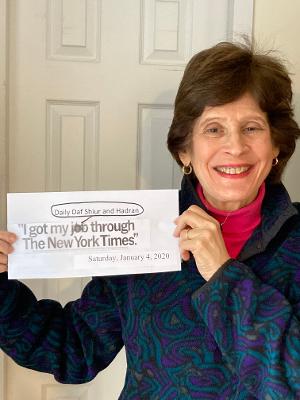
“I got my job through the NY Times” was an ad campaign when I was growing up. I can headline “I got my daily Daf shiur and Hadran through the NY Times”. I read the January 4, 2020 feature on Reb. Michelle Farber and Hadran and I have been participating ever since. Thanks NY Times & Hadran!
Deborah Aschheim
Deborah Aschheim

New York, United States

I’ve been learning since January 2020, and in June I started drawing a phrase from each daf. Sometimes it’s easy (e.g. plants), sometimes it’s very hard (e.g. korbanot), and sometimes it’s loads of fun (e.g. bird racing) to find something to draw. I upload my pictures from each masechet to #DafYomiArt. I am enjoying every step of the journey.

Gila Loike
Gila Loike

Ashdod, Israel

Geri Goldstein got me started learning daf yomi when I was in Israel 2 years ago. It’s been a challenge and I’ve learned a lot though I’m sure I miss a lot. I quilt as I listen and I want to share what I’ve been working on.

Rebecca Stulberg
Rebecca Stulberg

Ottawa, Canada

In January 2020, my teaching partner at IDC suggested we do daf yomi. Thanks to her challenge, I started learning daily from Rabbanit Michelle. It’s a joy to be part of the Hadran community. (It’s also a tikkun: in 7th grade, my best friend and I tied for first place in a citywide gemara exam, but we weren’t invited to the celebration because girls weren’t supposed to be learning gemara).

Sara-Averick-photo-scaled
Sara Averick

Jerusalem, Israel

I started learning at the start of this cycle, and quickly fell in love. It has become such an important part of my day, enriching every part of my life.

Naomi Niederhoffer
Naomi Niederhoffer

Toronto, Canada

My Daf journey began in August 2012 after participating in the Siyum Hashas where I was blessed as an “enabler” of others.  Galvanized into my own learning I recited the Hadran on Shas in January 2020 with Rabbanit Michelle. That Siyum was a highlight in my life.  Now, on round two, Daf has become my spiritual anchor to which I attribute manifold blessings.

Rina Goldberg
Rina Goldberg

Englewood NJ, United States

I began my journey with Rabbanit Michelle more than five years ago. My friend came up with a great idea for about 15 of us to learn the daf and one of us would summarize weekly what we learned.
It was fun but after 2-3 months people began to leave. I have continued. Since the cycle began Again I have joined the Teaneck women.. I find it most rewarding in so many ways. Thank you

Dena Heller
Dena Heller

New Jersey, United States

After enthusing to my friend Ruth Kahan about how much I had enjoyed remote Jewish learning during the earlier part of the pandemic, she challenged me to join her in learning the daf yomi cycle. I had always wanted to do daf yomi but now had no excuse. The beginning was particularly hard as I had never studied Talmud but has become easier, as I have gained some familiarity with it.

Susan-Vishner-Hadran-photo-scaled
Susan Vishner

Brookline, United States

I started learning Dec 2019 after reading “If all the Seas Were Ink”. I found
Daily daf sessions of Rabbanit Michelle in her house teaching, I then heard about the siyum and a new cycle starting wow I am in! Afternoon here in Sydney, my family and friends know this is my sacred time to hide away to live zoom and learn. Often it’s hard to absorb and relate then a gem shines touching my heart.

Dianne Kuchar
Dianne Kuchar

Dover Heights, Australia

A few years back, after reading Ilana Kurshan’s book, “If All The Seas Were Ink,” I began pondering the crazy, outlandish idea of beginning the Daf Yomi cycle. Beginning in December, 2019, a month before the previous cycle ended, I “auditioned” 30 different podcasts in 30 days, and ultimately chose to take the plunge with Hadran and Rabbanit Michelle. Such joy!

Cindy Dolgin
Cindy Dolgin

HUNTINGTON, United States

After all the hype on the 2020 siyum I became inspired by a friend to begin learning as the new cycle began.with no background in studying Talmud it was a bit daunting in the beginning. my husband began at the same time so we decided to study on shabbat together. The reaction from my 3 daughters has been fantastic. They are very proud. It’s been a great challenge for my brain which is so healthy!

Stacey Goodstein Ashtamker

Modi’in, Israel

Bava Metzia 100

מַתְנִי׳ הַמַּחְלִיף פָּרָה בַּחֲמוֹר וְיָלְדָה, וְכֵן הַמּוֹכֵר שִׁפְחָתוֹ וְיָלְדָה, זֶה אוֹמֵר: עַד שֶׁלֹּא מָכַרְתִּי, וְזֶה אוֹמֵר: מִשֶּׁלָּקַחְתִּי – יַחְלוֹקוּ.

MISHNA: With regard to one who exchanges a cow for a donkey, such that by virtue of the cow owner’s act of acquisition on the donkey, the donkey’s erstwhile owner simultaneously acquires the cow, wherever it happens to be located, and afterward the cow is found to have calved; and similarly, with regard to one who sells his Canaanite maidservant, with the acquisition effected by the buyer giving him money, and afterward she is found to have given birth to a child, who will be a slave belonging to his mother’s master, at times it is uncertain whether the offspring was born before or after the transaction. If this seller says: The birth occurred before I sold the cow or maidservant, and so the offspring belongs to me, and that buyer says: The birth occurred after I purchased the cow or maidservant, and so the offspring belongs to me, they divide the value of the offspring between them.

הָיוּ לוֹ שְׁנֵי עֲבָדִים, אֶחָד גָּדוֹל וְאֶחָד קָטָן, וְכֵן שְׁתֵּי שָׂדוֹת, אַחַת גְּדוֹלָה וְאַחַת קְטַנָּה.

The mishna continues: There is a case of one who had two Canaanite slaves, one large, worth more on the slave market, and one small, worth less on the slave market, and similarly, one who had two fields, one large and one small. He sold one of them, and there was a dispute between the buyer and the seller concerning which one was sold.

הַלּוֹקֵחַ אוֹמֵר: גָּדוֹל לָקַחְתִּי, וְהַלָּה אוֹמֵר: אֵינִי יוֹדֵעַ – זָכָה בַּגָּדוֹל.

If the buyer says: I purchased the large one, and the other one, i.e., the seller, says: I do not know which I sold; the buyer is entitled to take the large one.

הַמּוֹכֵר אוֹמֵר: קָטָן מָכַרְתִּי, וְהַלָּה אוֹמֵר: אֵינִי יוֹדֵעַ – אֵין לוֹ אֶלָּא קָטָן.

If the seller says: I sold the small one, and the other one, i.e., the buyer, says: I do not know which one I purchased; the buyer is entitled to take only the small one.

זֶה אוֹמֵר גָּדוֹל וְזֶה אוֹמֵר קָטָן – יִשָּׁבַע הַמּוֹכֵר שֶׁהַקָּטָן מָכַר.

If this one says: The large one was sold, and that one says: The small one was sold, then the seller takes an oath that it was the small one that he sold, and then the buyer takes the small one.

זֶה אוֹמֵר: אֵינִי יוֹדֵעַ, וְזֶה אוֹמֵר: אֵינִי יוֹדֵעַ – יַחְלוֹקוּ.

If this one says: I do not know which one was sold, and that one says: I do not know which one was sold, they divide the disputed amount between them.

גְּמָ׳ אַמַּאי יַחְלוֹקוּ? וְלִיחְזֵי בִּרְשׁוּת דְּמַאן קָיְימָא, וְלֶהֱוֵי אִידַּךְ הַמּוֹצִיא מֵחֲבֵירוֹ עָלָיו הָרְאָיָה!

GEMARA: The Gemara asks: In the first clause of the mishna, why do the two parties divide the value of the offspring between them? Instead, let us see in whose domain the offspring currently is. That person has presumptive ownership of the offspring, and the other person will be considered to be the one who is exacting property from another, and accordingly, the burden of proof rests upon him. Since he cannot prove his claim, he is not entitled to take the offspring.

אָמַר רַב חִיָּיא בַּר אָבִין אָמַר שְׁמוּאֵל: בְּעוֹמֶדֶת בַּאֲגַם. שִׁפְחָה נָמֵי דְּקָיְימָא בְּסִימְטָא.

The Gemara answers: Rabbi Ḥiyya bar Avin says that Shmuel says: The mishna is referring to a case where the calf is standing in the marsh, i.e., it is in the domain of neither the buyer nor the seller, and so neither one has presumptive ownership. And with regard to the maidservant also, this is a case where the child is found in an alley which does not belong to either the buyer or the seller.

וְנוֹקְמַהּ אַחֲזָקָה דְּמָרַהּ קַמָּא, וְלִיהְוֵי אִידַּךְ הַמּוֹצִיא מֵחֲבֵירוֹ עָלָיו הָרְאָיָה!

The Gemara asks further: But even if the offspring is not in either party’s domain, establish it to be in the presumptive ownership of its original owner, i.e., the seller, as he certainly owned the offspring when it was still a fetus. And so the other person will be considered to be the one who is exacting property from another, and accordingly, the burden of proof rests upon him. Since he cannot prove his claim, he is not entitled to take the offspring.

הָא מַנִּי – סוֹמְכוֹס הִיא, דְּאָמַר: מָמוֹן הַמּוּטָּל בְּסָפֵק חוֹלְקִין בְּלֹא שְׁבוּעָה.

The Gemara answers: In accordance with whose opinion is the ruling of this mishna, that the parties divide the value of the offspring equally? It is in accordance with the opinion of Sumakhos, who says: When there is property of uncertain ownership, the parties divide it equally without the need to take an oath.

אֵימוֹר דְּאָמַר סוֹמְכוֹס בְּשֶׁמָּא וְשֶׁמָּא, בְּבָרִי וּבָרִי מִי אָמַר?

The Gemara challenges this: Say that Sumakhos says his ruling when there is a conflict between an uncertain claim and an uncertain claim, as each party admits that his claim to the property is uncertain, but did he say his ruling when there is a conflict between a certain claim and a certain claim, as each party claims to be certain that the property belongs to him?

אָמַר רַבָּה בַּר רַב הוּנָא: אִין, אָמַר סוֹמְכוֹס אֲפִילּוּ בְּבָרִי וּבָרִי.

The Gemara offers two opinions concerning the ruling of Sumakhos. Rabba bar Rav Huna said: Yes, Sumakhos says his ruling even when there is a conflict between a certain claim and a certain claim.

רָבָא אָמַר: לְעוֹלָם כִּי אָמַר סוֹמְכוֹס שֶׁמָּא וְשֶׁמָּא, אֲבָל בָּרִי וּבָרִי לָא אָמַר. וּתְנִי: זֶה אוֹמֵר שֶׁמָּא עַד שֶׁלֹּא מָכַרְתִּי, וְזֶה אוֹמֵר שֶׁמָּא מִשֶּׁלָּקַחְתִּי.

Another opinion: Rava said: Actually, when Sumakhos said his ruling, it applies only where there is a conflict between an uncertain claim and an uncertain claim, but when there is a conflict between a certain claim and a certain claim, he did not say his ruling. And in order that the mishna not pose a difficulty, emend it to refer to uncertain claims and teach: This seller says: Perhaps the birth occurred before I sold the cow or maidservant, and that buyer says: Perhaps the birth occurred after I purchased the cow or maidservant.

תְּנַן: זֶה אוֹמֵר אֵינִי יוֹדֵעַ וְזֶה אוֹמֵר אֵינִי יוֹדֵעַ – יַחְלוֹקוּ.

The Gemara challenges Rabba bar Rav Huna’s opinion: We learned in the mishna: If this one says: I do not know which one was sold, and that one says: I do not know which one was sold, they divide the disputed amount between them.

בִּשְׁלָמָא לְרָבָא מִדְּסֵיפָא שֶׁמָּא וְשֶׁמָּא – רֵישָׁא נָמֵי שֶׁמָּא וְשֶׁמָּא. אֶלָּא לְרַבָּה בַּר רַב הוּנָא, דְּאָמַר: אִין, אָמַר סוֹמְכוֹס אֲפִילּוּ בָּרִי וּבָרִי, הַשְׁתָּא בָּרִי וּבָרִי אָמַר יַחְלוֹקוּ, שֶׁמָּא וְשֶׁמָּא מִיבַּעְיָא?

Granted, according to the opinion of Rava, from the fact that the last clause of the mishna is referring to a case where there is a conflict between an uncertain claim and an uncertain claim, one can say that the first clause as well is referring to a case in which there is a conflict between an uncertain claim and an uncertain claim. But according to the opinion of Rabba bar Rav Huna, who said: Yes, Sumakhos says his ruling even when there is a conflict between a certain claim and a certain claim, there is the following difficulty: Now that the mishna teaches that even when there is a conflict between a certain claim and a certain claim Sumakhos says that the parties divide the disputed amount between them, is it necessary for the mishna to state that where there is a conflict between an uncertain claim and an uncertain claim the parties divide the disputed amount between them?

אִי מִשּׁוּם הָא – לָא אִירְיָא: תְּנָא סֵיפָא לְגַלּוֹיֵי רֵישָׁא, שֶׁלֹּא תֹּאמַר רֵישָׁא שֶׁמָּא וְשֶׁמָּא, אֲבָל בָּרִי וּבָרִי לָא. תְּנָא סֵיפָא: שֶׁמָּא וְשֶׁמָּא, מִכְּלָל דְּרֵישָׁא בָּרִי וּבָרִי, וַאֲפִילּוּ הָכִי יַחְלוֹקוּ.

The Gemara rejects the question: If the difficulty is due only to that reason, there is no conclusive argument. One can say that the mishna taught the latter clause to shed light on the first clause, so that you will not say that the ruling in the first clause applies only where there is a conflict between an uncertain claim and an uncertain claim, but where there is a conflict between a certain claim and a certain claim the ruling in the first clause does not apply, and the disputed amount is not divided. To dispel this notion, the mishna teaches the last clause, which is referring to a conflict between an uncertain claim and an uncertain claim; and then by inference, the first clause must refer to a case where there is a conflict between a certain claim and a certain claim, and nevertheless, the parties divide the disputed amount between them.

תְּנַן: זֶה אוֹמֵר גָּדוֹל וְזֶה אוֹמֵר קָטָן – יִשָּׁבַע הַמּוֹכֵר שֶׁקָּטָן מָכַר.

The Gemara again challenges Rabba bar Rav Huna’s opinion: We learned in the mishna: If this one says: The large one was sold, and that one says: The small one was sold, then the seller takes an oath that it was the small one that he sold, and then the buyer takes the small one.

בִּשְׁלָמָא לְרָבָא דְּאָמַר: כִּי אָמַר סוֹמְכוֹס שֶׁמָּא וְשֶׁמָּא, אֲבָל בָּרִי וּבָרִי לָא אָמַר – מִשּׁוּם הָכִי יִשָּׁבַע. אֶלָּא לְרַבָּה בַּר רַב הוּנָא דְּאָמַר: אִין, אָמַר סוֹמְכוֹס אֲפִילּוּ בָּרִי וּבָרִי – אַמַּאי יִשָּׁבַע מוֹכֵר? יַחְלוֹקוּ מִיבְּעֵי לֵיהּ!

Granted, according to the opinion of Rava, who said that when Sumakhos says his ruling it applies only where there is a conflict between an uncertain claim and an uncertain claim, but when there is a conflict between a certain claim and a certain claim he did not say his ruling, it is due to that reason that in the clause in the mishna in which each party offers a certain claim, the seller takes an oath. But according to the opinion of Rabba bar Rav Huna, who said: Yes, Sumakhos says his ruling even when there is a conflict between a certain claim and a certain claim, why does the mishna rule that the seller takes an oath; the mishna should have ruled that they divide the disputed amount between them.

מוֹדֶה סוֹמְכוֹס הֵיכָא דְּאִיכָּא שְׁבוּעָה דְאוֹרָיְיתָא, כִּדְבָעֵינַן לְמֵימַר לְקַמַּן.

The Gemara answers: Sumakhos concedes that where there is a requirement for one of the parties to take an oath required by Torah law the disputed amount is not divided, as we will need to say below to resolve another challenge to Sumakhos’ opinion.

הָיוּ לוֹ שְׁנֵי עֲבָדִים אֶחָד גָּדוֹל וְאֶחָד קָטָן (וְכוּ׳). אַמַּאי יִשָּׁבַע? מַה שֶּׁטְּעָנוֹ לֹא הוֹדָה לוֹ, וּמַה שֶּׁהוֹדָה לוֹ לֹא טְעָנוֹ!

§ The mishna teaches: In a case of one who had two Canaanite slaves, one large, worth more on the slave market, and one small, worth less on the slave market, and the buyer and seller disagree as to whether it was the large slave or the small slave that was sold, the seller takes an oath that it was the small one that he sold, and then the buyer takes the small one. The Gemara asks: Why does the seller take an oath? An oath is required only when a defendant admits to part of the claim made against him, but in this case, that which the buyer claimed from the seller, i.e., the larger slave, the seller did not admit to at all, and that which the seller admitted to, i.e., the smaller slave, the buyer had not claimed from him.

וְעוֹד: הֵילָךְ הוּא.

And furthermore, with regard to the small slave, this is a case of: Here you are. The seller is not merely admitting that he is liable to give the slave in the future, but allows the buyer to take possession of the slave immediately. As Rav Sheshet explains on 4a, one who offers the disputed item immediately is not considered to be one who admits to part of a claim, and is exempt by Torah law from taking an oath.

וְעוֹד: אֵין נִשְׁבָּעִין עַל הָעֲבָדִים!

And furthermore, one does not take an oath concerning a claim about slaves, but only concerning claims about movable property. For these three reasons, there should be no requirement to take an oath.

אָמַר רַב: בְּטוֹעֲנוֹ דָּמִים, דְּמֵי עֶבֶד גָּדוֹל, דְּמֵי עֶבֶד קָטָן. דְּמֵי שָׂדֶה גְּדוֹלָה, דְּמֵי שָׂדֶה קְטַנָּה.

Rav said: The mishna is referring to a case where the buyer claims money from the seller, not a slave or a field; the buyer claims that he gave the seller money equal to the value of a large slave and the seller admits to having received money equal to the value of a small slave. And in the case of the field, the buyer claims that he gave the seller money equal to the value of a large field, and the seller admits to having received money equal to the value of a small field.

וּשְׁמוּאֵל אָמַר: בְּטוֹעֲנוֹ כְּסוּת עֶבֶד גָּדוֹל, כְּסוּת עֶבֶד קָטָן. עוֹמְרֵי שָׂדֶה גְּדוֹלָה, עוֹמְרֵי שָׂדֶה קְטַנָּה.

And Shmuel said: The mishna is referring to a case where the buyer claims he purchased a garment of a large slave, and the seller admits to having sold him a garment of a small slave. And in the case of the field, the buyer claims he purchased the sheaves yielded by a large field, and the seller admits to having sold him the sheaves yielded by a small field.

כְּסוּת, מַה שֶּׁטְּעָנוֹ לֹא הוֹדָה לוֹ, וּמַה שֶּׁהוֹדָה לוֹ לֹא טְעָנוֹ. כִּדְאָמַר רַב פָּפָּא בִּדְלַיְיפִי – הָכָא נָמֵי בִּדְלַיְיפִי.

The Gemara challenges Shmuel’s interpretation: If the dispute is over which size garment was sold, the seller should not be required to take an oath, as that which the buyer claimed from him, the seller did not admit to at all, and that which the seller admitted to, the buyer had not claimed from him. The Gemara answers: Shmuel was referring to a case like that which Rav Pappa said below: The dispute is with regard to a garment that was formed from several pieces of cloth that were attached together. Here too, the dispute is with regard to a garment that was formed from several pieces of cloth that were attached together, and the disagreement was about how much of that garment was actually sold.

קַשְׁיָא לֵיהּ לְרַבִּי הוֹשַׁעְיָא: מִידֵּי ״כְּסוּת״ קָתָנֵי? ״עֶבֶד״ קָתָנֵי!

Rabbi Hoshaya found Shmuel’s interpretation difficult: Does the mishna teach: A garment? No, it teaches: A slave. How can Shmuel claim the dispute was about a garment?

אֶלָּא אָמַר רַבִּי הוֹשַׁעְיָא: כְּגוֹן שֶׁטְּעָנוֹ עֶבֶד בִּכְסוּתוֹ וְשָׂדֶה בָּעוֹמָרֶיהָ. וְאַכַּתִּי כְּסוּת, מַה שֶּׁטְּעָנוֹ – לֹא הוֹדָה לוֹ, וּמַה שֶּׁהוֹדָה לוֹ – לֹא טְעָנוֹ! אָמַר רַב פָּפָּא: בִּדְלַיְיפִי.

Rather, Rabbi Hoshaya said: The mishna is referring to a case where the buyer claimed a large slave along with his garment, or where he claimed a large field along with its sheaves. Since the seller admits to the part of the claim about the garment or sheaves, he is required to take an oath about them. Once he is required to take that oath, it can be extended to require him to take an oath even concerning the claim about the slave or field itself. The Gemara asks: But still, in the dispute over which type of garment was sold, that which the buyer claimed from him, the seller did not admit to at all, and that which the seller admitted to, the buyer had not claimed from him. The Gemara answers: Rav Pappa said: The dispute is with regard to a garment that was formed from several pieces of cloth that were attached together, and the dispute concerns how much of that garment was actually sold.

קַשְׁיָא לֵיהּ לְרַב שֵׁשֶׁת: זוֹקְקִין אֲתָא לְאַשְׁמוֹעִינַן?! תְּנֵינָא: זוֹקְקִין הַנְּכָסִים שֶׁאֵין לָהֶן אַחְרָיוּת אֶת הַנְּכָסִים שֶׁיֵּשׁ לָהֶן אַחְרָיוּת לִישָּׁבַע עֲלֵיהֶן.

Rav Sheshet found Rabbi Hoshaya’s interpretation difficult: Does the mishna come only to teach us the halakha of binding? But we already learned that halakha in a mishna (Kiddushin 26a): Generally, one is not obligated to take an oath concerning the denial of a claim with regard to land. In a legal dispute involving both land and movable property, if the defendant admits to part of the claim with regard to the movable property, thereby rendering himself obligated to take an oath denying any responsibility for the remaining property, the movable property binds the property that serves as a guarantee, i.e., the land, so that he is forced to take an oath concerning the land as well.

אֶלָּא אָמַר רַב שֵׁשֶׁת: הָא מַנִּי – רַבִּי מֵאִיר הִיא, דְּאָמַר: עַבְדָּא כְּמִטַּלְטְלִין דָּמֵי.

Rather, Rav Sheshet said: In accordance with whose opinion is this mishna? It is Rabbi Meir, who said: The legal status of a slave is like that of movable property. Even if the dispute is over the slave alone, the seller can be required to take an oath.

וְאַכַּתִּי: מַה שֶּׁטְּעָנוֹ – לֹא הוֹדָה לוֹ, וּמַה שֶּׁהוֹדָה לוֹ – לֹא טְעָנוֹ! סָבַר לַהּ כְּרַבָּן גַּמְלִיאֵל. דִּתְנַן: טְעָנוֹ חִטִּים וְהוֹדָה שְׂעוֹרִים – פָּטוּר, רַבָּן גַּמְלִיאֵל מְחַיֵּיב.

The Gemara asks: But still, if the dispute is over which slave was sold, then that which the buyer claimed from him, the seller did not admit to at all, and that which the seller admitted to, the buyer had not claimed from him. The seller should not therefore be required to take an oath. The Gemara answers: The tanna of the mishna holds in accordance with the opinion of Rabban Gamliel, as we learned in a mishna (Shevuot 38b): If one claimed wheat from another, and the defendant admitted only to owing him barley, the defendant is exempt from having to take an oath; but Rabban Gamliel deems him liable.

אַכַּתִּי הֵילָךְ הוּא! אָמַר רָבָא: עַבְדָּא דִּקְטַע לִידֵיהּ, וְשָׂדֶה שֶׁחָפַר בָּהּ בּוֹרוֹת שִׁיחִין וּמְעָרוֹת.

The Gemara asks: Still, with regard to the small slave, this is a case of: Here you are, as the slave is immediately available to be taken. The small slave is not considered part of the buyer’s claim, as his claim is limited to the difference between the values of the slaves, and that amount is being entirely denied. Consequently, there should be no requirement to take an oath. To resolve this difficulty, Rava said: In the case of the slave, the mishna is referring to a case where, after the sale, the seller severed the slave’s hand, and in the case of the field, it is a case where, after the sale, the seller dug pits, ditches and caves in it, and therefore he cannot say: Here you are.

וְהָא רַבִּי מֵאִיר אִיפְּכָא שָׁמְעִינַן לֵיהּ, דִּתְנַן: גָּזַל בְּהֵמָה וְהִזְקִינָה, עֲבָדִים וְהִזְקִינוּ – מְשַׁלֵּם כִּשְׁעַת הַגְּזֵילָה. רַבִּי מֵאִיר אוֹמֵר: בַּעֲבָדִים אוֹמֵר לוֹ ״הֲרֵי שֶׁלְּךָ לְפָנֶיךָ״!

The Gemara offers another challenge to Rav Sheshet’s interpretation: But didn’t Rabbi Meir teach us the opposite? As we learned in a mishna (Bava Kamma 96b): If one robbed another of an animal and it aged and declined in value while in his possession, or if one robbed another of Canaanite slaves and they aged, since they are no longer in the condition that they were in when he robbed them, he cannot return them in their current state to his victim; rather, he pays according to their value at the time of the robbery. Rabbi Meir says: With regard to slaves, he says to the victim: That which is yours is before you and no compensation is required. Apparently, Rabbi Meir holds that the legal status of a slave is like that of land, and not, as Rav Sheshet said, like that of movable property.

הָא לָא קַשְׁיָא, כִּדְמַחְלֵיף רַבָּה בַּר אֲבוּהּ וְתָנֵי, רַבִּי מֵאִיר אוֹמֵר: מְשַׁלֵּם כִּשְׁעַת הַגְּזֵילָה, וַחֲכָמִים אוֹמְרִים: אוֹמֵר לוֹ בַּעֲבָדִים ״הֲרֵי שֶׁלְּךָ לְפָנֶיךָ״.

The Gemara answers: That is not difficult. Rav Sheshet apparently holds like Rabba bar Avuh, who reverses the attribution of the opinions in that mishna and teaches: Rabbi Meir says: He pays according to their value at the time of the robbery. And the Rabbis say: With regard to slaves, he says to the victim: That which is yours is before you and no compensation is required.

אֶלָּא מִמַּאי דְּסָבַר רַבִּי מֵאִיר מַקְּשִׁינַן קַרְקַע לְעֶבֶד: מָה עֶבֶד נִשְׁבָּעִין – אַף קַרְקַע נִשְׁבָּעִין? דִּלְמָא אַעֶבֶד הוּא דְּנִשְׁבָּעִין, אֲבָל אַקַּרְקַע לָא!

Since Rav Sheshet interprets the mishna as referring to a case where the dispute is over the slave alone and interprets it to be in accordance with the opinion of Rabbi Meir, he apparently also assumes that Rabbi Meir holds that an oath is taken even with regard to a claim of land, as his explanation would need to account for the case in the mishna concerning a dispute over the small or large field. The Gemara questions this assumption: But given that Rabbi Meir said only that the legal status of a slave is like that of movable property, from where does Rav Sheshet learn that Rabbi Meir holds that we compare land to a slave, so that just as for a claim about a slave, an oath is taken, so too, for a claim about land, an oath is taken? Perhaps Rabbi Meir holds that an oath is taken only on a claim about a slave but not on a claim about land.

לָא סָלְקָא דַּעְתָּךְ, דְּתַנְיָא: הַמַּחְלִיף פָּרָה בַּחֲמוֹר וְיָלְדָה, וְכֵן הַמּוֹכֵר שִׁפְחָתוֹ וְיָלְדָה,

The Gemara answers: It should not enter your mind that Rabbi Meir makes a distinction between slaves and land in this regard, as it is taught in a baraita: With regard to one who exchanges a cow for a donkey, such that by virtue of the cow owner’s act of acquisition on the donkey, the donkey’s erstwhile owner simultaneously acquires the cow, wherever it happens to be located, and afterward the cow is found to have calved; and similarly, with regard to one who sells his Canaanite maidservant, with the acquisition effected by the buyer giving him money, and afterward she is found to have given birth to a child, who will be a slave belonging to his mother’s master, at times it is uncertain whether the offspring was born before or after the transaction.

זֶה אוֹמֵר: בִּרְשׁוּתִי, וְזֶה שׁוֹתֵק – זָכָה.

If this seller says: The birth occurred while the cow or maidservant was still in my possession, and that buyer remains silent, the seller is entitled to take the offspring.

זֶה אוֹמֵר: ״אֵינִי יוֹדֵעַ״, וְזֶה אוֹמֵר: ״אֵינִי יוֹדֵעַ״ – יַחְלוֹקוּ.

If this one says: I do not know what happened, and that one says: I do not know what happened, they divide the value of the offspring between them.

זֶה אוֹמֵר: ״בִּרְשׁוּתִי״, וְזֶה אוֹמֵר: ״בִּרְשׁוּתִי״ – יִשָּׁבַע הַמּוֹכֵר שֶׁבִּרְשׁוּתוֹ יָלְדָה, לְפִי שֶׁכׇּל הַנִּשְׁבָּעִין שֶׁבַּתּוֹרָה נִשְׁבָּעִין וְלֹא מְשַׁלְּמִין, דִּבְרֵי רַבִּי מֵאִיר. וַחֲכָמִים אוֹמְרִים: אֵין נִשְׁבָּעִין לֹא עַל הָעֲבָדִים וְלֹא עַל הַקַּרְקָעוֹת.

If this seller says: The birth occurred while the cow or maidservant was still in my possession, and that buyer says: The birth occurred after the cow or maidservant was already in my possession, then the seller takes an oath stating that the cow or maidservant gave birth in his possession and he is then entitled to take the offspring. This is because for anyone who takes an oath required by Torah law, he takes the oath and does not have to pay. This is the statement of Rabbi Meir. And the Rabbis say: One does not take an oath, not on a claim concerning slaves and not on a claim concerning land.

לָאו מִכְּלָל דְּרַבִּי מֵאִיר סָבַר נִשְׁבָּעִין!

The Gemara explains its proof from this baraita: Since the Rabbis replied to Rabbi Meir that an oath is not taken on a claim concerning slaves or land, is it not correct that by inference, Rabbi Meir holds that one can take an oath on a claim concerning either slaves or land?

מִמַּאי? דִּלְמָא ״כְּשֵׁם״ קָאָמְרוּ לֵיהּ: כִּי הֵיכִי דְּאוֹדֵית לַן בְּקַרְקָעוֹת – אוֹדִי לַן נָמֵי בַּעֲבָדִים.

The Gemara rejects this inference: But from where is this inferred? Perhaps the Rabbis are speaking to him utilizing the style of: Just as, and they are saying as follows: Just as you concede to us with regard to land, concede to us also with regard to slaves.

תִּדַּע, דִּתְנַן, רַבִּי מֵאִיר אוֹמֵר: יֵשׁ דְּבָרִים שֶׁהֵן כַּקַּרְקַע וְאֵינָן כַּקַּרְקַע. וְאֵין חֲכָמִים מוֹדִים לוֹ. כֵּיצַד? עֶשֶׂר גְּפָנִים טְעוּנוֹת מָסַרְתִּי לָךְ, וְהַלָּה אוֹמֵר: אֵינָן אֶלָּא חָמֵשׁ, רַבִּי מֵאִיר מְחַיֵּיב. וַחֲכָמִים אוֹמְרִים: כׇּל הַמְחוּבָּר לַקַּרְקַע – הֲרֵי הוּא כַּקַּרְקַע.

The Gemara adds: Know that Rabbi Meir holds that one does not take an oath for a claim concerning land, as we learned in a mishna (Shevuot 42b): Rabbi Meir says: There are some matters that have a legal status like that of land, but nevertheless, with regard to oaths they are not treated like land and so one takes an oath with regard to them. But the Rabbis do not concede to Rabbi Meir that this is the halakha. How so? If one claims: I delivered ten vines laden with grapes to you, and the other says: There were only five; Rabbi Meir deems him liable to take an oath of one who admits to part of a claim. But the Rabbis say: Anything that is attached to the ground has a legal status like that of land, so no oath is taken with regard to them.

וְאָמַר רַבִּי יוֹסֵי בַּר חֲנִינָא: עֲנָבִים הָעוֹמְדוֹת לִיבָּצֵר אִיכָּא בֵּינַיְיהוּ. דְּמָר סָבַר: כִּבְצוּרוֹת דָּמְיָין, וּמָר סָבַר: לָאו כִּבְצוּרוֹת דָּמְיָין.

The Gemara clarifies the scope of the dispute: And Rabbi Yosei bar Ḥanina says: The difference between them is only in a case of grapes that are ready to be picked, as one Sage, Rabbi Meir, holds: They are considered as though they were already harvested, meaning that they are regarded as movable property, with regard to which an oath is taken. And the other Sage, the Rabbis, holds: They are not considered as though they were about to be picked, meaning that they are regarded as land, with regard to which an oath is not taken. Evidently, Rabbi Meir agrees that an oath is not taken concerning land.

אֶלָּא לְעוֹלָם כִּדְרַבִּי הוֹשַׁעְיָא, וּדְקַשְׁיָא לָךְ זוֹקְקִין? אִיצְטְרִיךְ: סָלְקָא דַּעְתָּךְ אָמֵינָא כְּסוּת עֶבֶד כְּעֶבֶד דָּמֵי, עוֹמְרֵי שָׂדֶה כְּשָׂדֶה דָּמֵי, קָא מַשְׁמַע לַן.

Rather, actually the mishna can be explained only in accordance with the interpretation of Rabbi Hoshaya, cited above. And with regard to that which posed a difficulty to you, namely that according to his explanation, the novelty of the mishna is only that movable property binds land so that one can be required to take an oath with regard to it, and that halakha is already taught in the mishna in tractate Kiddushin, one can explain that it was necessary to also teach this in the mishna here, because it might enter your mind to say that the garment of a slave is like the slave himself, or that sheaves of a field are like the field itself. If so, there would be no basis to require an oath, even one based on the claims about the garment and sheaves themselves. Therefore, the mishna teaches us that they are considered distinct items and the claims concerning them require the seller to take an oath which can then be extended to require an oath for the claim concerning the slave or land.

זֶה אוֹמֵר: ״אֵינִי יוֹדֵעַ״, וְזֶה אוֹמֵר: ״אֵינִי יוֹדֵעַ״ – יַחְלוֹקוּ. הָא מַנִּי – סוֹמְכוֹס הִיא, דְּאָמַר: מָמוֹן הַמּוּטָּל בְּסָפֵק – חוֹלְקִין.

§ The Gemara analyzes one of the clauses of the baraita cited above: In a case in which it is unclear when the cow or maidservant gave birth, if this one says: I do not know what happened, and that one says: I do not know what happened, they divide the value of the offspring between them. The Gemara asks: In accordance with whose opinion is this? It is in accordance with the opinion of Sumakhos, who says: When there is property of uncertain ownership, the parties divide it equally between them.

אֵימָא סֵיפָא: זֶה אוֹמֵר ״בִּרְשׁוּתִי״ וְזֶה אוֹמֵר ״בִּרְשׁוּתִי״ – יִשָּׁבַע הַמּוֹכֵר שֶׁבִּרְשׁוּתוֹ יָלְדָה, וּלְרַבָּה בַּר רַב הוּנָא, דְּאָמַר: אִין, אָמַר סוֹמְכוֹס אֲפִילּוּ בָּרִי וּבָרִי, אַמַּאי יִשָּׁבַע מוֹכֵר? ״יַחְלוֹקוּ״ מִיבַּעְיָא!

The Gemara questions this attribution: If so, say and try to explain accordingly the latter clause of that baraita: If this seller says: The birth occurred while the cow or maidservant was still in my possession, and that buyer says: The birth occurred after the cow or maidservant was already in my possession, then the seller takes an oath stating that it gave birth in his possession, and he is then entitled to take the offspring. The Gemara explains the difficulty: But according to the opinion of Rabba bar Rav Huna, who says: Yes, Sumakhos said his ruling even in a case in which there is a conflict between a certain claim and a certain claim, why does the mishna rule that the seller takes an oath; the mishna should have ruled that they divide the value of the disputed offspring between them.

מוֹדֶה סוֹמְכוֹס הֵיכָא דְּאִיכָּא שְׁבוּעָה דְּאוֹרָיְיתָא, וּדְקַטְעַהּ לִידַהּ כִּדְרָבָא.

The Gemara answers: Sumakhos concedes that where there is a requirement for one of the parties to take an oath required by Torah law, that the disputed amount is not divided. And furthermore, this is not a case in which the seller could say: Here you are, because the case is where after the sale, the seller severed the slave’s hand, just like in the explanation of Rava above.

מַתְנִי׳ הַמּוֹכֵר זֵיתָיו לְעֵצִים, וְעָשׂוּ פָּחוֹת מֵרְבִיעִית לַסְּאָה – הֲרֵי אֵלּוּ שֶׁל בַּעַל הַזֵּיתִים.

MISHNA: In the case of one who sells his olive trees to another so he can chop them down and use them for their wood, and before he chopped them down they yielded olives, if the olives are of a quality that could provide the value of less than a quarterlog of oil per se’a of olives, these olives are the property of the new owner of the olive trees, i.e., the buyer.

עָשׂוּ רְבִיעִית לַסְּאָה, זֶה אוֹמֵר: ״זֵיתַי גִּדֵּלוּ״, וְזֶה אוֹמֵר: ״אַרְצִי גִּדֵּלָה״ – יַחְלוֹקוּ.

If they yielded olives that could provide the value of a quarterlog or more of oil per se’a of olives, and this one, the buyer, says: My olive trees yielded the olives and so I have a right to them, and that one, the seller, says: The nourishment from my land yielded the olives and so I have a right to them, then they divide the olives between them.

שָׁטַף נָהָר זֵיתָיו וּנְתָנָם לְתוֹךְ שְׂדֵה חֲבֵירוֹ, זֶה אוֹמֵר: ״זֵיתַי גִּדֵּלוּ״, וְזֶה אוֹמֵר: ״אַרְצִי גִּדֵּלָה״ – יַחְלוֹקוּ.

In the event that a river swept away one’s olive trees and deposited them in the field of another, and they took root there and yielded olives, this one, i.e., the owner of the trees, says: My olive trees yielded the olives and so I have a right to them, and that one, i.e., the owner of the field, says: The nourishment from my land yielded the olives and so I have a right to them, then they divide the olives between them.

גְּמָ׳ הֵיכִי דָּמֵי? אִי דַּאֲמַר לֵיהּ קוֹץ לְאַלְתַּר – אֲפִילּוּ פָּחוֹת מֵרְבִיעִית נָמֵי לְבַעַל הַקַּרְקַע. אִי דַּאֲמַר לֵיהּ כֹּל אֵימַת דְּבָעֵית קוֹץ – אֲפִילּוּ רְבִיעִית נָמֵי לְבַעַל זֵיתִים!

GEMARA: The Gemara asks: What are the circumstances of the sale? If this is a case where before the sale the seller said to the buyer: Cut down the trees immediately, then clearly he is particular that the buyer not derive benefit from the nourishment provided by his land. Therefore, even if the olives yielded could provide less than the value of a quarterlog of oil per se’a of olives, they will belong to the owner of the land, i.e., the seller. Conversely, if the case is where he said to him: Cut down the trees whenever you want, then it is clear that he is not particular about the buyer deriving benefit from the nourishment provided by his land. Therefore, even if the olives yielded could provide the value of a quarterlog or more of oil per se’a of olives, they will belong to the owner of the olive trees, i.e., the buyer.

לָא צְרִיכָא, דַּאֲמַר לֵיהּ סְתָמָא: פָּחוֹת מֵרְבִיעִית – לָא קָפְדִי אִינָשֵׁי, רְבִיעִית – קָפְדִי אִינָשֵׁי.

The Gemara explains: No, the ruling is necessary in a case where the seller said to him to cut down the trees, without specification about when he should do so. Accordingly, if the olives yielded produce less than the value of a quarterlog of oil per se’a of olives, then since people are generally not particular to receive their share of such olives, the buyer may keep them. But where the olives yielded produce the value of a quarterlog or more of oil per se’a of olives, people are generally particular to receive their share of such olives; consequently, they divide the olives between them.

אָמַר רַבִּי שִׁמְעוֹן בֶּן פַּזִּי: וּרְבִיעִית שֶׁאָמְרוּ –

Rabbi Shimon ben Pazi says: And the value of the quarterlog that they mentioned in the mishna

Want to follow content and continue where you left off?

Create an account today to track your progress, mark what you’ve learned, and follow the shiurim that speak to you.

Clear all items from this list?

This will remove ALL the items in this section. You will lose any progress or history connected to them. This is irreversible.

Cancel
Yes, clear all

Are you sure you want to delete this item?

You will lose any progress or history connected to this item.

Cancel
Yes, delete