







זה הדף של שבת. לצפייה בדף של שישי, לחצו כאן.
הלימוד החודש מוקדש ע”י מרכי גלזר לע”נ רחל אביבה בת דבורה חנה
רוצה להקדיש שיעור?
הלימוד החודש מוקדש ע”י מרכי גלזר לע”נ רחל אביבה בת דבורה חנה
עבודה זרה מה
מַתְנִי׳ הַגּוֹיִם הָעוֹבְדִים אֶת הֶהָרִים וְאֶת הַגְּבָעוֹת — הֵן מוּתָּרִין, וּמָה שֶׁעֲלֵיהֶן אֲסוּרִין, שֶׁנֶּאֱמַר: ״לֹא תַחְמֹד כֶּסֶף וְזָהָב עֲלֵיהֶם״.
MISHNA: With regard to the halakha in the case of the gentiles who worship the mountains and the hills, the mountains and hills are permitted, but what is upon them is forbidden. It is not prohibited to derive benefit from the mountains and hills themselves, and they can be used for planting, harvesting, and the like. But if gentiles coated them with gold or silver, it is prohibited to derive benefit from the coating, as it is stated: “The graven images of their gods shall you burn with fire; you shall not covet the silver or the gold that is on them, nor take it for yourself, lest you be snared by it; for it is an abomination to the Lord your God” (Deuteronomy 7:25).
רַבִּי יוֹסֵי הַגְּלִילִי אוֹמֵר: ״אֱלֹהֵיהֶם עַל הֶהָרִים״ — וְלֹא הֶהָרִים אֱלֹהֵיהֶם, ״אֱלֹהֵיהֶם עַל הַגְּבָעוֹת״ — וְלֹא הַגְּבָעוֹת אֱלֹהֵיהֶם.
Rabbi Yosei HaGelili says with regard to the verse: “You shall destroy all the places where the nations that you are to dispossess served their gods, upon the high mountains, and upon the hills, and under every leafy tree” (Deuteronomy 12:2): The mitzva to destroy objects of idol worship applies to “their gods, upon the high mountains,” but not to the mountains themselves that are their gods. Similarly it applies to “their gods…upon the hills,” but not to the hills themselves that are their gods.
וּמִפְּנֵי מָה אֲשֵׁירָה אֲסוּרָה? מִפְּנֵי שֶׁיֵּשׁ בָּהּ תְּפִיסַת יְדֵי אָדָם, וְכֹל שֶׁיֵּשׁ בָּהּ תְּפִיסַת יְדֵי אָדָם — אָסוּר.
The mishna asks: And for what reason, then, is an ashera forbidden? Doesn’t the verse also state: “And under every leafy tree,” which indicates that the mitzva to destroy objects of idol worship does not apply to the trees themselves? The mishna answers: It is because it is the product of human involvement and did not grow by itself, and the halakha is that anything that is the product of human involvement is forbidden.
אָמַר רַבִּי עֲקִיבָא: אֲנִי אוֹבִין וְאָדוּן לְפָנֶיךָ, כׇּל מָקוֹם שֶׁאַתָּה מוֹצֵא הַר גָּבוֹהַּ וְגִבְעָה נִשָּׂאָה וְעֵץ רַעֲנָן, דַּע שֶׁיֵּשׁ שָׁם עֲבוֹדָה זָרָה.
Rabbi Akiva says: I will explain and decide the matter before you. The verse does not indicate limitations to the halakhic definition of idols; rather, it is simply giving indicators of prevalent idolatrous practice: Everywhere that you find a high mountain, or an elevated hill, or a leafy tree, know that there is idol worship there.
גְּמָ׳ וְרַבִּי יוֹסֵי הַגְּלִילִי הַיְינוּ תַּנָּא קַמָּא! אָמַר רָמֵי בַּר חָמָא אָמַר רֵישׁ לָקִישׁ: צִפּוּי הַר כְּהַר אִיכָּא בֵּינַיְיהוּ, תַּנָּא קַמָּא סָבַר: צִפּוּי הַר אֵינוֹ כְּהַר וּמִיתְּסַר, וְרַבִּי יוֹסֵי הַגְּלִילִי סָבַר: צִפּוּי הַר הֲרֵי הוּא כְּהַר.
GEMARA: The Gemara asks: But isn’t the opinion of Rabbi Yosei HaGelili the same as that of the first tanna? Both of them indicate that what is on the mountain is forbidden, while the mountain itself is permitted. Rami bar Ḥama says that Reish Lakish says: The difference between them is the issue of whether the status of the coating of a mountain is like the status of the mountain itself. The first tanna holds that the status of the coating of a mountain is not like the mountain itself, and is therefore forbidden, and Rabbi Yosei HaGelili holds that the status of the coating of a mountain is like the mountain itself.
רַב שֵׁשֶׁת אָמַר: דְּכוּלֵּי עָלְמָא צִפּוּי הַר אֵינוֹ כְּהַר.
Rejecting this explanation, Rav Sheshet says: Everyone agrees that the status of the coating of a mountain is not like the mountain itself and is forbidden.
וְהָכָא בָּאִילָן שֶׁנְּטָעוֹ וּלְבַסּוֹף עֲבָדוֹ קָמִיפַּלְגִי, תַּנָּא קַמָּא סָבַר: אִילָן שֶׁנְּטָעוֹ וּלְבַסּוֹף עֲבָדוֹ — מוּתָּר, וְרַבִּי יוֹסֵי הַגְּלִילִי סָבַר: אִילָן שֶׁנְּטָעוֹ וּלְבַסּוֹף עֲבָדוֹ — אָסוּר.
And here, they disagree with regard to the status of a tree that one planted and only subsequently worshipped. The first tanna holds that a tree that one planted and subsequently worshipped is permitted, and Rabbi Yosei HaGelili holds that a tree that one planted and subsequently worshipped is forbidden.
מִמַּאי? מִדְּקָתָנֵי סֵיפָא: מִפְּנֵי מָה אֲשֵׁירָה אֲסוּרָה? מִפְּנֵי שֶׁיֵּשׁ בָּהּ תְּפִיסַת יְדֵי אָדָם, וְכֹל שֶׁיֵּשׁ בּוֹ תְּפִיסַת יְדֵי אָדָם אָסוּר. ״וְכֹל שֶׁיֵּשׁ בּוֹ תְּפִיסַת אָדָם״ לְאֵתוֹיֵי מַאי? לָאו לְאֵתוֹיֵי אִילָן שֶׁנְּטָעוֹ וּלְבַסּוֹף עֲבָדוֹ?
The Gemara asks: From where does Rav Sheshet infer that Rabbi Yosei HaGelili holds that such a tree is forbidden? It is from the fact that the mishna teaches in the last clause: For what reason is an ashera forbidden? It is because it is the product of human involvement and did not grow by itself, and the halakha is that anything that is the product of human involvement is forbidden. What is added by the generalization: And anything that is the product of human involvement is forbidden? Is it not added to include the case of a tree that one planted and subsequently worshipped?
וְאַף רַבִּי יוֹסֵי בְּרַבִּי יְהוּדָה סָבַר: אִילָן שֶׁנְּטָעוֹ וּלְבַסּוֹף עֲבָדוֹ — אָסוּר, דְּתַנְיָא: רַבִּי יוֹסֵי בְּרַבִּי יְהוּדָה אוֹמֵר, מִתּוֹךְ שֶׁנֶּאֱמַר: ״אֱלֹהֵיהֶם עַל הֶהָרִים״ — וְלֹא הֶהָרִים אֱלֹהֵיהֶם, ״אֱלֹהֵיהֶם עַל הַגְּבָעוֹת״ — וְלֹא גְּבָעוֹת אֱלֹהֵיהֶם, שׁוֹמֵעַ אֲנִי ״תַּחַת כׇּל עֵץ רַעֲנָן אֱלֹהֵיהֶם״ — וְלֹא רַעֲנָן אֱלֹהֵיהֶם?
The Gemara notes: And Rabbi Yosei, son of Rabbi Yehuda, also holds that a tree that one planted and subsequently worshipped is forbidden. As it is taught in a baraita with regard to the verse: “You shall destroy all the places where the nations that you are to dispossess served their gods, upon the high mountains, and upon the hills, and under every leafy tree” (Deuteronomy 12:2): Rabbi Yosei, son of Rabbi Yehuda, says: From that which is stated in the verse: “You shall destroy…their gods, upon the high mountains,” from which the Sages derived: But not the mountains themselves that are their gods, and: “You shall destroy…their gods…upon the hills,” but not the hills themselves if they are their gods, I would derive from the next clause in the verse: “Their gods…under every leafy tree,” that the mitzva to destroy an object of idol worship does not apply to the leafy trees themselves that are their gods.
תַּלְמוּד לוֹמַר: ״וַאֲשֵׁרֵיהֶם תִּשְׂרְפוּן בָּאֵשׁ״.
Therefore, the next verse states: “And you shall break down their altars, and dash in pieces their pillars, and burn their asherim with fire” (Deuteronomy 12:3). Even a tree that was worshipped only after it was planted is forbidden.
אֶלָּא ״תַּחַת כׇּל עֵץ רַעֲנָן״ לְמָה לִי? הָהוּא לְכִדְרַבִּי עֲקִיבָא הוּא דַּאֲתָא, דְּאָמַר רַבִּי עֲקִיבָא: אֲנִי אוֹבִין וְאָדוּן לְפָנֶיךָ, כׇּל מָקוֹם שֶׁאַתָּה מוֹצֵא הַר גָּבוֹהַּ וְגִבְעָה נִשָּׂאָה וְעֵץ רַעֲנָן, דַּע שֶׁיֵּשׁ שָׁם עֲבוֹדָה זָרָה.
Rather, if the trees themselves are forbidden, why do I need the phrase “under every leafy tree”? That phrase comes to teach a halakha in accordance with the opinion of Rabbi Akiva; as Rabbi Akiva says: I will explain and decide the matter before you. Everywhere that you find a high mountain, or an elevated hill, or a leafy tree, know that there is idol worship there. From the fact that Rabbi Yosei, son of Rabbi Yehuda, does not derive from the phrase “under every leafy tree” that a tree that was planted and only subsequently worshipped is still permitted, it is apparent that he holds that such a tree is forbidden. This is consistent with the opinion that Rav Sheshet ascribes to Rabbi Yosei HaGelili.
וְרַבָּנַן, הַאי ״וַאֲשֵׁרֵיהֶם תִּשְׂרְפוּן בָּאֵשׁ״ מַאי עָבְדִי לֵיהּ? מִיבְּעֵי לֵיהּ לְאִילָן שֶׁנְּטָעוֹ מִתְּחִילָּה לְכָךְ.
The Gemara asks: And as for the Rabbis, who maintain that a tree that was planted and subsequently worshipped is permitted, what do they do with this verse: “And burn their asherim with fire”? The Gemara answers: This verse is necessary with regard to the halakha of a tree that was initially planted for that idolatrous practice, which must be destroyed and from which deriving benefit is prohibited.
וְרַבִּי יוֹסֵי בְּרַבִּי יְהוּדָה נָמֵי מִיבְּעֵי לֵיהּ לְהָכִי? הָכִי נָמֵי. אֶלָּא אִילָן שֶׁנְּטָעוֹ וּלְבַסּוֹף עֲבָדוֹ מְנָא לֵיהּ? נָפְקָא לֵיהּ מִ״וַּאֲשֵׁרֵיהֶם תְּגַדֵּעוּן״, אֵיזֶהוּ עֵץ שֶׁגִּידּוּעוֹ אָסוּר וְעִיקָּרוֹ מוּתָּר? הֱוֵי אוֹמֵר: אִילָן שֶׁנְּטָעוֹ וּלְבַסּוֹף עֲבָדוֹ.
The Gemara asks: But doesn’t Rabbi Yosei, son of Rabbi Yehuda, also require this phrase to teach this? The Gemara answers. Indeed, he does. Rather, from where does he derive that a tree that one planted and subsequently worshipped is forbidden? He derives it from the following verse: “But so shall you deal with them: You shall break down their altars, and dash in pieces their pillars, and hew down their asherim, and burn their graven images with fire” (Deuteronomy 7:5). Now, which is the tree whose trunk is forbidden but its root is permitted, as the verse instructs one to hew it down? You must say that it is referring to a tree that one planted and subsequently worshipped.
וְהָא ״וַאֲשֵׁרֵיהֶם תִּשְׂרְפוּן בָּאֵשׁ״ קָא נָסֵיב לַהּ תַּלְמוּדָא!
The Gemara asks how that verse can be the source of the ruling of Rabbi Yosei, son of Rabbi Yehuda, for deeming forbidden a tree that was planted and only subsequently worshipped. But doesn’t the baraita state that he adduces the derivation prohibiting worshipped ashera trees from the verse: “And you shall break down their altars, and dash in pieces their pillars, and burn their asherim with fire”?
אִילּוּ לֹא נֶאֱמַר קָאָמַר: אִילּוּ לֹא נֶאֱמַר ״תִּשְׂרְפוּן בָּאֵשׁ״, הָיִיתִי אוֹמֵר ״אֲשֵׁרֵיהֶם תְּגַדֵּעוּן״ בְּאִילָן שֶׁנְּטָעוֹ מִתְּחִילָּה לְכָךְ, הַשְׁתָּא דִּכְתִיב ״וַאֲשֵׁרֵיהֶם תִּשְׂרְפוּן בָּאֵשׁ״, אִיַּיתַּר לֵיהּ ״וַאֲשֵׁרֵיהֶם תְּגַדֵּעוּן״ לְאִילָן שֶׁנְּטָעוֹ וּלְבַסּוֹף עֲבָדוֹ.
The Gemara answers: By deriving this halakha from the verse: “And burn their asherim with fire,” Rabbi Yosei, son of Rabbi Yehuda, is speaking utilizing the style of: If it were not stated. The Gemara explains: If the verse: “Burn their asherim with fire,” were not stated, I would have said that the verse: “And hew down their asherim,” is referring to a tree that was initially planted for idol worship. Now that it is written: “And burn their asherim with fire,” the verse: “And hew down their asherim,” is rendered superfluous and is consequently interpreted as referring to a tree that one planted and subsequently worshipped. Therefore, it is ultimately this latter verse that serves as the source for the implied ruling of Rabbi Yosei, son of Rabbi Yehuda, that it is prohibited to derive benefit from such a tree.
וְרַבָּנַן, הַאי ״וַאֲשֵׁרֵיהֶם תְּגַדֵּעוּן״ מַאי עָבְדִי לֵיהּ? לְכִדְרַבִּי יְהוֹשֻׁעַ בֶּן לֵוִי, דְּאָמַר רַבִּי יְהוֹשֻׁעַ בֶּן לֵוִי: גִּידּוּעֵי עֲבוֹדָה זָרָה קוֹדְמִין לְכִיבּוּשׁ אֶרֶץ יִשְׂרָאֵל, כִּיבּוּשׁ אֶרֶץ יִשְׂרָאֵל קוֹדֵם לְבִיעוּר עֲבוֹדָה זָרָה.
The Gemara asks: And as for the Rabbis, what do they do with this verse: “And hew down their asherim”? The Gemara answers: This verse is written in order to teach a halakha in accordance with the statement of Rabbi Yehoshua ben Levi; as Rabbi Yehoshua ben Levi says: The felling of trees dedicated to idol worship precedes the conquering of all of Eretz Yisrael, and conquering Eretz Yisrael precedes the eradication of all the objects of idol worship.
דְּתָנֵי רַב יוֹסֵף: ״וְנִתַּצְתֶּם אֶת מִזְבְּחֹתָם״ וְהַנַּח, ״וְשִׁבַּרְתֶּם אֶת מַצֵּבֹתָם״ וְהַנַּח.
As Rav Yosef teaches a baraita: The verse states: “And you shall break down their altars, and dash in pieces their pillars, and burn their asherim with fire.” Rav Yosef explains: “And you shall break down their altars,” and leave them, as the Torah does not prescribe that they be burned; “and dash in pieces their pillars” and leave them.
וְהַנַּח, סָלְקָא דַּעְתָּךְ? שְׂרֵיפָה בָּעֵי! אָמַר רַב הוּנָא: רְדוֹף, וְאַחַר כָּךְ שְׂרוֹף.
The Gemara asks: But does it enter your mind that the Torah is instructing one to leave them alone? Doesn’t an object of idol worship require burning, as it says at the end of the verse: “And burn their asherim with fire”? Rav Huna says: Pursue the enemy and then return to burn them. Meaning, first smash their objects of idol worship, then conquer the land, and then return to burn the smashed items.
וְרַבִּי יוֹסֵי בְּרַבִּי יְהוּדָה, הַאי סְבָרָא מְנָא לֵיהּ? נָפְקָא לֵיהּ מְ״אַבֵּד תְּאַבְּדוּן״ — ״אַבֵּד״, וְאַחַר כָּךְ ״תְּאַבֵּדוּן״.
The Gemara asks: And from where does Rabbi Yosei, son of Rabbi Yehuda, derive this opinion about the order of priorities in the process of conquering Eretz Yisrael? The Gemara answers: He derives it from the verse: “You shall destroy all the places where the nations that you are to dispossess served their gods, upon the high mountains, and upon the hills, and under every leafy tree.” From the double-verb form of the directive “you shall destroy [abbed te’abedun]” he derives that there are two stages to the destruction of their gods: First destroy them [abbed], i.e., smash them; then go and conquer the land, and only afterward you shall destroy [te’abedun] them completely, i.e., burn or eradicate them.
וְרַבָּנַן? הָא מִיבְּעֵי לֵיהּ לְעוֹקֵר עֲבוֹדָה זָרָה, שֶׁצָּרִיךְ לְשָׁרֵשׁ אַחֲרֶיהָ.
The Gemara asks: And what do the Rabbis derive from the double verb? The Gemara answers: This double verb is necessary to teach that when one deracinates an object of idol worship, he needs to root out all traces of it.
וְרַבִּי יוֹסֵי בְּרַבִּי יְהוּדָה, לְשָׁרֵשׁ אַחֲרֶיהָ מְנָא לֵיהּ? נָפְקָא לֵיהּ מִ״וְּאִבַּדְתֶּם אֶת שְׁמָם מִן הַמָּקוֹם הַהוּא״.
The Gemara asks: And from where does Rabbi Yosei, son of Rabbi Yehuda, derive the obligation to root out all traces of idol worship? The Gemara answers: He derives it from the verse: “And you shall break down their altars, and dash in pieces their pillars, and burn their asherim with fire; and you shall hew down the graven images of their gods; and you shall destroy their name out of that place” (Deuteronomy 12:3).
וְרַבָּנַן? הַהוּא לְכַנּוֹת לָהּ שֵׁם, דְּתַנְיָא: רַבִּי אֱלִיעֶזֶר אוֹמֵר: מִנַּיִן לְעוֹקֵר עֲבוֹדָה זָרָה שֶׁצָּרִיךְ לְשָׁרֵשׁ אַחֲרֶיהָ? תַּלְמוּד לוֹמַר: ״וְאִבַּדְתֶּם אֶת שְׁמָם״.
The Gemara asks: And what do the Rabbis derive from this verse? The Gemara answers: That verse teaches that it is a mitzva to give a derogatory nickname to an idol. As it is taught in a baraita that Rabbi Eliezer says: From where is it derived that when one deracinates an object of idol worship, he needs to root out all traces of it? The verse states: “And you shall destroy their name out of that place.”
לעקוב 
העמקה
רוצה להבין מה באמת קורה מתחת לפני השטח של הסוגיה?
שיעורים, פודקאסטים והרחבות של מיטב המורות שלנו יפתחו לך עוד זוויות וכיווני חשיבה.



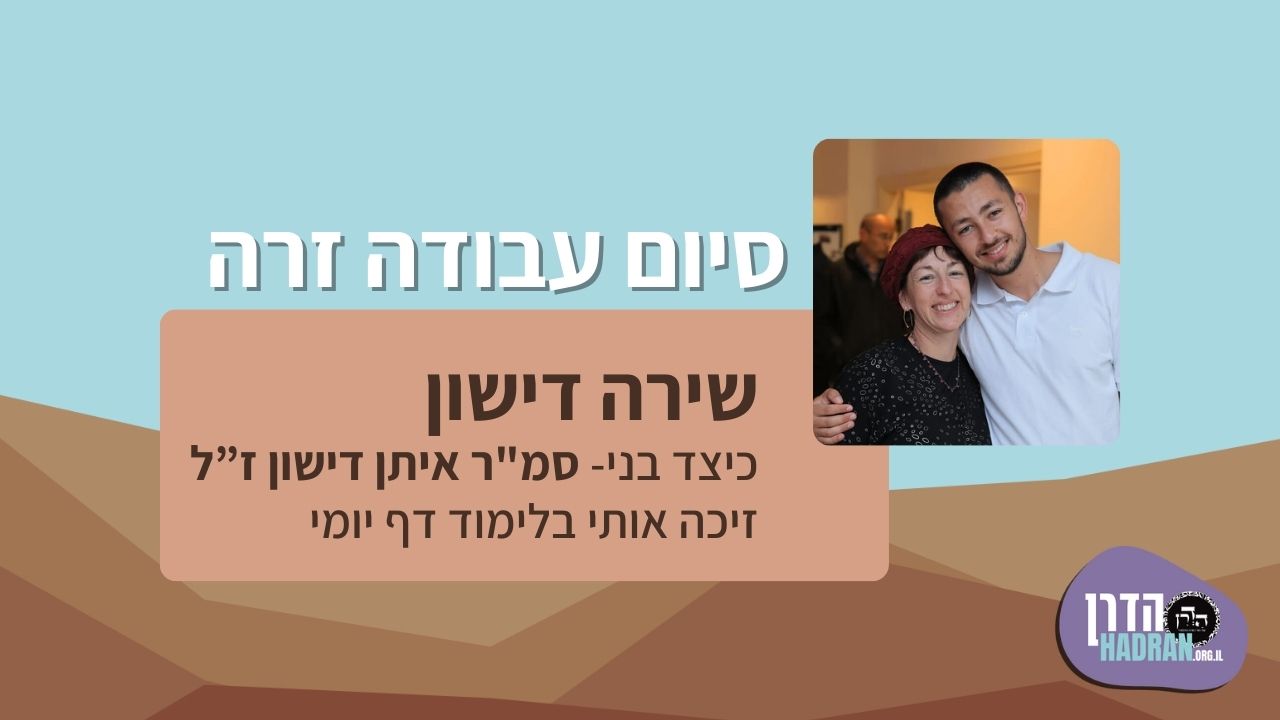
כיצד בני, סמ”ר איתן דישון ז”ל, זיכה אותי בלימוד דף יומי – שירה דישון
05.09.2025 | י״ב באלול תשפ״ה



חדשה בלימוד הגמרא?
זה הדף הראשון שלך? איזו התרגשות עצומה! יש לנו בדיוק את התכנים והכלים שיעזרו לך לעשות את הצעדים הראשונים ללמידה בקצב וברמה שלך, כך תוכלי להרגיש בנוח גם בתוך הסוגיות המורכבות ומאתגרות.
פסיפס הלומדות שלנו
גלי את קהילת הלומדות שלנו, מגוון נשים, רקעים וסיפורים. כולן חלק מתנועה ומסע מרגש ועוצמתי.
סיום השס לנשים נתן לי מוטביציה להתחיל ללמוד דף יומי. עד אז למדתי גמרא בשבתות ועשיתי כמה סיומים. אבל לימוד יומיומי זה שונה לגמרי ופתאום כל דבר שקורה בחיים מתקשר לדף היומי.

קרן פוגל
רתמים, ישראל
לצערי גדלתי בדור שבו לימוד גמרא לנשים לא היה דבר שבשגרה ושנים שאני חולמת להשלים את הפער הזה.. עד שלפני מספר שבועות, כמעט במקרה, נתקלתי במודעת פרסומת הקוראת להצטרף ללימוד מסכת תענית. כשקראתי את המודעה הרגשתי שהיא כאילו נכתבה עבורי – "תמיד חלמת ללמוד גמרא ולא ידעת איך להתחיל”, "בואי להתנסות במסכת קצרה וקלה” (רק היה חסר שהמודעה תיפתח במילים "מיכי שלום”..). קפצתי למים ו- ב”ה אני בדרך להגשמת החלום:)

מיכי קדוש
מורשת, ישראל
רציתי לקבל ידע בתחום שהרגשתי שהוא גדול וחשוב אך נעלם ממני. הלימוד מעניק אתגר וסיפוק ומעמיק את תחושת השייכות שלי לתורה וליהדות

רות עגיב
עלי זהב – לשם, ישראל
התחלתי בסיום הש”ס, יצאתי באורות. נשברתי פעמיים, ובשתיהם הרבנית מישל עודדה להמשיך איפה שכולם בסבב ולהשלים כשאוכל, וכך עשיתי וכיום השלמתי הכל. מדהים אותי שאני לומדת כל יום קצת, אפילו בחדר הלידה, בבידוד או בחו”ל. לאט לאט יותר נינוחה בסוגיות. לא כולם מבינים את הרצון, בפרט כפמניסטית. חשה סיפוק גדול להכיר את המושגים וצורת החשיבה. החלום זה להמשיך ולהתמיד ובמקביל ללמוד איך מהסוגיות נוצרה והתפתחה ההלכה.

קרן וינגרטן שרינגטון
מודיעין, ישראל
אמא שלי למדה איתי ש”ס משנה, והתחילה ללמוד דף יומי. אני החלטתי שאני רוצה ללמוד גם. בהתחלה למדתי איתה, אח”כ הצטרפתי ללימוד דף יומי שהרב דני וינט מעביר לנוער בנים בעתניאל. במסכת עירובין עוד חברה הצטרפה אלי וכשהתחלנו פסחים הרב דני פתח לנו שעור דף יומי לבנות. מאז אנחנו לומדות איתו קבוע כל יום את הדף היומי (ובשבת אבא שלי מחליף אותו). אני נהנית מהלימוד, הוא מאתגר ומעניין

רננה הלמן
עתניאל, ישראל
התחלתי ללמוד את הדף היומי מעט אחרי שבני הקטן נולד. בהתחלה בשמיעה ולימוד באמצעות השיעור של הרבנית שפרבר. ובהמשך העזתי וקניתי לעצמי גמרא. מאז ממשיכה יום יום ללמוד עצמאית, ולפעמים בעזרת השיעור של הרבנית, כל יום. כל סיום של מסכת מביא לאושר גדול וסיפוק. הילדים בבית נהיו חלק מהלימוד, אני משתפת בסוגיות מעניינות ונהנית לשמוע את דעתם.

אלירז בלאו
מעלה מכמש, ישראל
התחלתי ללמוד דף לפני קצת יותר מ-5 שנים, כשלמדתי רבנות בישיבת מהר”ת בניו יורק. בדיעבד, עד אז, הייתי בלימוד הגמרא שלי כמו מישהו שאוסף חרוזים משרשרת שהתפזרה, פה משהו ושם משהו, ומאז נפתח עולם ומלואו…. הדף נותן לי לימוד בצורה מאורגנת, שיטתית, יום-יומית, ומלמד אותי לא רק ידע אלא את השפה ודרך החשיבה שלנו. לשמחתי, יש לי סביבה תומכת וההרגשה שלי היא כמו בציטוט שבחרתי: הדף משפיע לטובה על כל היום שלי.

מיכל כהנא
חיפה, ישראל
התחלתי ללמוד דף יומי באמצע תקופת הקורונה, שאבא שלי סיפר לי על קבוצה של בנות שתיפתח ביישוב שלנו ותלמד דף יומי כל יום. הרבה זמן רציתי להצטרף לזה וזאת הייתה ההזדמנות בשבילי. הצטרפתי במסכת שקלים ובאמצע הייתה הפסקה קצרה. כיום אני כבר לומדת באולפנה ולומדת דף יומי לבד מתוך גמרא של טיינזלץ.

שבות בראלי
עתניאל, ישראל
אחי, שלומד דף יומי ממסכת ברכות, חיפש חברותא ללימוד מסכת ראש השנה והציע לי. החברותא היתה מאתגרת טכנית ורוב הזמן נעשתה דרך הטלפון, כך שבסיום המסכת נפרדו דרכינו. אחי חזר ללמוד לבד, אבל אני כבר נכבשתי בקסם הגמרא ושכנעתי את האיש שלי להצטרף אלי למסכת ביצה. מאז המשכנו הלאה, ועכשיו אנחנו מתרגשים לקראתו של סדר נשים!

שולמית סבן
נוקדים, ישראל
בתחילת הסבב הנוכחי הצטברו אצלי תחושות שאני לא מבינה מספיק מהי ההלכה אותה אני מקיימת בכל יום. כמו כן, כאמא לבנות רציתי לתת להן מודל נשי של לימוד תורה
שתי הסיבות האלו הובילו אותי להתחיל ללמוד. נתקלתי בתגובות מפרגנות וסקרניות איך אישה לומדת גמרא..
כמו שרואים בתמונה אני ממשיכה ללמוד גם היום ואפילו במחלקת יולדות אחרי לידת ביתי השלישית.

נועה שילה
רבבה, ישראל
התחלתי ללמוד בסבב הנוכחי לפני כשנתיים .הסביבה מתפעלת ותומכת מאוד. אני משתדלת ללמוד מכל ההסכתים הנוספים שיש באתר הדרן. אני עורכת כל סיום מסכת שיעור בביתי לכ20 נשים שמחכות בקוצר רוח למפגשים האלו.

יעל אשר
יהוד, ישראל
. לא תמיד נהניתי מלימוד גמרא כילדה.,בל כהתבגרתי התחלתי לאהוב את זה שוב. התחלתי ללמוד מסכת סוטה בדף היומי לפני כחמש עשרה שנה ואז הפסקתי.הגעתי לסיום הגדול של הדרן לפני שנתיים וזה נתן לי השראה. והתחלתי ללמוד למשך כמה ימים ואז היתה לי פריצת דיסק והפסקתי…עד אלול השנה. אז התחלתי עם מסכת ביצה וב”ה אני מצליחה לעמוד בקצב. המשפחה מאוד תומכת בי ויש כמה שגם לומדים את זה במקביל. אני אוהבת שיש עוגן כל יום.

רבקה דרשן
בית שמש, ישראל
התחלתי ללמוד דף יומי ממסכת נידה כי זה היה חומר הלימוד שלי אז. לאחר הסיום הגדול בבנייני האומה החלטתי להמשיך. וב”ה מאז עם הפסקות קטנות של קורונה ולידה אני משתדלת להמשיך ולהיות חלק.
זה משפיע מאוד על היום יום שלי ועל אף שאני עסוקה בלימודי הלכה ותורה כל יום, זאת המסגרת הקבועה והמחייבת ביותר שיש לי.

מוריה תעסן מיכאלי
גבעת הראל, ישראל
"התחלתי ללמוד דף יומי במחזור הזה, בח’ בטבת תש””ף. לקחתי על עצמי את הלימוד כדי ליצור תחום של התמדה יומיומית בחיים, והצטרפתי לקבוצת הלומדים בבית הכנסת בכפר אדומים. המשפחה והסביבה מתפעלים ותומכים.
בלימוד שלי אני מתפעלת בעיקר מכך שכדי ללמוד גמרא יש לדעת ולהכיר את כל הגמרא. זו מעין צבת בצבת עשויה שהיא עצומה בהיקפה.”

שרה פוּקס
כפר אדומים, ישראל
התחלתי ללמוד דף יומי בסבב הקודם. זכיתי לסיים אותו במעמד המרגש של הדרן. בסבב הראשון ליווה אותי הספק, שאולי לא אצליח לעמוד בקצב ולהתמיד. בסבב השני אני לומדת ברוגע, מתוך אמונה ביכולתי ללמוד ולסיים. בסבב הלימוד הראשון ליוותה אותי חוויה מסויימת של בדידות. הדרן העניקה לי קהילת לימוד ואחוות נשים. החוויה של סיום הש”ס במעמד כה גדול כשנשים שאינן מכירות אותי, שמחות ומתרגשות עבורי , היתה חוויה מרוממת נפש

אילנית ווייל
קיבוץ מגדל עוז, ישראל
התחלתי ללמוד לפני 4.5 שנים, כשהודיה חברה שלי פתחה קבוצת ווטסאפ ללימוד דף יומי בתחילת מסכת סנהדרין. מאז לימוד הדף נכנס לתוך היום-יום שלי והפך לאחד ממגדירי הזהות שלי ממש.

קרן רוזנברג
ירושלים, ישראל
רבנית מישל הציתה אש התלמוד בלבבות בביניני האומה ואני נדלקתי. היא פתחה פתח ותמכה במתחילות כמוני ואפשרה לנו להתקדם בצעדים נכונים וטובים. הקימה מערך שלם שמסובב את הלומדות בסביבה תומכת וכך נכנסתי למסלול לימוד מעשיר שאין כמוה. הדרן יצר קהילה גדולה וחזקה שמאפשרת התקדמות מכל נקודת מוצא. יש דיבוק לומדות שמחזק את ההתמדה של כולנו. כל פניה ושאלה נענית בזריזות ויסודיות. תודה גם למגי על כל העזרה.

שרה אבר
נתניה, ישראל
התחלתי ללמוד לפני כשנתיים בשאיפה לסיים לראשונה מסכת אחת במהלך חופשת הלידה.
אחרי מסכת אחת כבר היה קשה להפסיק…

נעה גלנט
ירוחם, ישראל
סיום השס לנשים נתן לי מוטביציה להתחיל ללמוד דף יומי. עד אז למדתי גמרא בשבתות ועשיתי כמה סיומים. אבל לימוד יומיומי זה שונה לגמרי ופתאום כל דבר שקורה בחיים מתקשר לדף היומי.
קרן פוגל
רתמים, ישראל
שמעתי על הסיום הענק של הדף היומי ע”י נשים בבנייני האומה. רציתי גם.
החלטתי להצטרף. התחלתי ושיכנעתי את בעלי ועוד שתי חברות להצטרף. עכשיו יש לי לימוד משותף איתו בשבת ומפגש חודשי איתן בנושא (והתכתבויות תדירות על דברים מיוחדים שקראנו). הצטרפנו לקבוצות שונות בווטסאפ. אנחנו ממש נהנות. אני שומעת את השיעור מידי יום (בד”כ מהרב יוני גוטמן) וקוראת ומצטרפת לסיומים של הדרן. גם מקפידה על דף משלהן (ונהנית מאד).

ליאת סיטרון
אפרת, ישראל
עבודה זרה מה
מַתְנִי׳ הַגּוֹיִם הָעוֹבְדִים אֶת הֶהָרִים וְאֶת הַגְּבָעוֹת — הֵן מוּתָּרִין, וּמָה שֶׁעֲלֵיהֶן אֲסוּרִין, שֶׁנֶּאֱמַר: ״לֹא תַחְמֹד כֶּסֶף וְזָהָב עֲלֵיהֶם״.
MISHNA: With regard to the halakha in the case of the gentiles who worship the mountains and the hills, the mountains and hills are permitted, but what is upon them is forbidden. It is not prohibited to derive benefit from the mountains and hills themselves, and they can be used for planting, harvesting, and the like. But if gentiles coated them with gold or silver, it is prohibited to derive benefit from the coating, as it is stated: “The graven images of their gods shall you burn with fire; you shall not covet the silver or the gold that is on them, nor take it for yourself, lest you be snared by it; for it is an abomination to the Lord your God” (Deuteronomy 7:25).
רַבִּי יוֹסֵי הַגְּלִילִי אוֹמֵר: ״אֱלֹהֵיהֶם עַל הֶהָרִים״ — וְלֹא הֶהָרִים אֱלֹהֵיהֶם, ״אֱלֹהֵיהֶם עַל הַגְּבָעוֹת״ — וְלֹא הַגְּבָעוֹת אֱלֹהֵיהֶם.
Rabbi Yosei HaGelili says with regard to the verse: “You shall destroy all the places where the nations that you are to dispossess served their gods, upon the high mountains, and upon the hills, and under every leafy tree” (Deuteronomy 12:2): The mitzva to destroy objects of idol worship applies to “their gods, upon the high mountains,” but not to the mountains themselves that are their gods. Similarly it applies to “their gods…upon the hills,” but not to the hills themselves that are their gods.
וּמִפְּנֵי מָה אֲשֵׁירָה אֲסוּרָה? מִפְּנֵי שֶׁיֵּשׁ בָּהּ תְּפִיסַת יְדֵי אָדָם, וְכֹל שֶׁיֵּשׁ בָּהּ תְּפִיסַת יְדֵי אָדָם — אָסוּר.
The mishna asks: And for what reason, then, is an ashera forbidden? Doesn’t the verse also state: “And under every leafy tree,” which indicates that the mitzva to destroy objects of idol worship does not apply to the trees themselves? The mishna answers: It is because it is the product of human involvement and did not grow by itself, and the halakha is that anything that is the product of human involvement is forbidden.
אָמַר רַבִּי עֲקִיבָא: אֲנִי אוֹבִין וְאָדוּן לְפָנֶיךָ, כׇּל מָקוֹם שֶׁאַתָּה מוֹצֵא הַר גָּבוֹהַּ וְגִבְעָה נִשָּׂאָה וְעֵץ רַעֲנָן, דַּע שֶׁיֵּשׁ שָׁם עֲבוֹדָה זָרָה.
Rabbi Akiva says: I will explain and decide the matter before you. The verse does not indicate limitations to the halakhic definition of idols; rather, it is simply giving indicators of prevalent idolatrous practice: Everywhere that you find a high mountain, or an elevated hill, or a leafy tree, know that there is idol worship there.
גְּמָ׳ וְרַבִּי יוֹסֵי הַגְּלִילִי הַיְינוּ תַּנָּא קַמָּא! אָמַר רָמֵי בַּר חָמָא אָמַר רֵישׁ לָקִישׁ: צִפּוּי הַר כְּהַר אִיכָּא בֵּינַיְיהוּ, תַּנָּא קַמָּא סָבַר: צִפּוּי הַר אֵינוֹ כְּהַר וּמִיתְּסַר, וְרַבִּי יוֹסֵי הַגְּלִילִי סָבַר: צִפּוּי הַר הֲרֵי הוּא כְּהַר.
GEMARA: The Gemara asks: But isn’t the opinion of Rabbi Yosei HaGelili the same as that of the first tanna? Both of them indicate that what is on the mountain is forbidden, while the mountain itself is permitted. Rami bar Ḥama says that Reish Lakish says: The difference between them is the issue of whether the status of the coating of a mountain is like the status of the mountain itself. The first tanna holds that the status of the coating of a mountain is not like the mountain itself, and is therefore forbidden, and Rabbi Yosei HaGelili holds that the status of the coating of a mountain is like the mountain itself.
רַב שֵׁשֶׁת אָמַר: דְּכוּלֵּי עָלְמָא צִפּוּי הַר אֵינוֹ כְּהַר.
Rejecting this explanation, Rav Sheshet says: Everyone agrees that the status of the coating of a mountain is not like the mountain itself and is forbidden.
וְהָכָא בָּאִילָן שֶׁנְּטָעוֹ וּלְבַסּוֹף עֲבָדוֹ קָמִיפַּלְגִי, תַּנָּא קַמָּא סָבַר: אִילָן שֶׁנְּטָעוֹ וּלְבַסּוֹף עֲבָדוֹ — מוּתָּר, וְרַבִּי יוֹסֵי הַגְּלִילִי סָבַר: אִילָן שֶׁנְּטָעוֹ וּלְבַסּוֹף עֲבָדוֹ — אָסוּר.
And here, they disagree with regard to the status of a tree that one planted and only subsequently worshipped. The first tanna holds that a tree that one planted and subsequently worshipped is permitted, and Rabbi Yosei HaGelili holds that a tree that one planted and subsequently worshipped is forbidden.
מִמַּאי? מִדְּקָתָנֵי סֵיפָא: מִפְּנֵי מָה אֲשֵׁירָה אֲסוּרָה? מִפְּנֵי שֶׁיֵּשׁ בָּהּ תְּפִיסַת יְדֵי אָדָם, וְכֹל שֶׁיֵּשׁ בּוֹ תְּפִיסַת יְדֵי אָדָם אָסוּר. ״וְכֹל שֶׁיֵּשׁ בּוֹ תְּפִיסַת אָדָם״ לְאֵתוֹיֵי מַאי? לָאו לְאֵתוֹיֵי אִילָן שֶׁנְּטָעוֹ וּלְבַסּוֹף עֲבָדוֹ?
The Gemara asks: From where does Rav Sheshet infer that Rabbi Yosei HaGelili holds that such a tree is forbidden? It is from the fact that the mishna teaches in the last clause: For what reason is an ashera forbidden? It is because it is the product of human involvement and did not grow by itself, and the halakha is that anything that is the product of human involvement is forbidden. What is added by the generalization: And anything that is the product of human involvement is forbidden? Is it not added to include the case of a tree that one planted and subsequently worshipped?
וְאַף רַבִּי יוֹסֵי בְּרַבִּי יְהוּדָה סָבַר: אִילָן שֶׁנְּטָעוֹ וּלְבַסּוֹף עֲבָדוֹ — אָסוּר, דְּתַנְיָא: רַבִּי יוֹסֵי בְּרַבִּי יְהוּדָה אוֹמֵר, מִתּוֹךְ שֶׁנֶּאֱמַר: ״אֱלֹהֵיהֶם עַל הֶהָרִים״ — וְלֹא הֶהָרִים אֱלֹהֵיהֶם, ״אֱלֹהֵיהֶם עַל הַגְּבָעוֹת״ — וְלֹא גְּבָעוֹת אֱלֹהֵיהֶם, שׁוֹמֵעַ אֲנִי ״תַּחַת כׇּל עֵץ רַעֲנָן אֱלֹהֵיהֶם״ — וְלֹא רַעֲנָן אֱלֹהֵיהֶם?
The Gemara notes: And Rabbi Yosei, son of Rabbi Yehuda, also holds that a tree that one planted and subsequently worshipped is forbidden. As it is taught in a baraita with regard to the verse: “You shall destroy all the places where the nations that you are to dispossess served their gods, upon the high mountains, and upon the hills, and under every leafy tree” (Deuteronomy 12:2): Rabbi Yosei, son of Rabbi Yehuda, says: From that which is stated in the verse: “You shall destroy…their gods, upon the high mountains,” from which the Sages derived: But not the mountains themselves that are their gods, and: “You shall destroy…their gods…upon the hills,” but not the hills themselves if they are their gods, I would derive from the next clause in the verse: “Their gods…under every leafy tree,” that the mitzva to destroy an object of idol worship does not apply to the leafy trees themselves that are their gods.
תַּלְמוּד לוֹמַר: ״וַאֲשֵׁרֵיהֶם תִּשְׂרְפוּן בָּאֵשׁ״.
Therefore, the next verse states: “And you shall break down their altars, and dash in pieces their pillars, and burn their asherim with fire” (Deuteronomy 12:3). Even a tree that was worshipped only after it was planted is forbidden.
אֶלָּא ״תַּחַת כׇּל עֵץ רַעֲנָן״ לְמָה לִי? הָהוּא לְכִדְרַבִּי עֲקִיבָא הוּא דַּאֲתָא, דְּאָמַר רַבִּי עֲקִיבָא: אֲנִי אוֹבִין וְאָדוּן לְפָנֶיךָ, כׇּל מָקוֹם שֶׁאַתָּה מוֹצֵא הַר גָּבוֹהַּ וְגִבְעָה נִשָּׂאָה וְעֵץ רַעֲנָן, דַּע שֶׁיֵּשׁ שָׁם עֲבוֹדָה זָרָה.
Rather, if the trees themselves are forbidden, why do I need the phrase “under every leafy tree”? That phrase comes to teach a halakha in accordance with the opinion of Rabbi Akiva; as Rabbi Akiva says: I will explain and decide the matter before you. Everywhere that you find a high mountain, or an elevated hill, or a leafy tree, know that there is idol worship there. From the fact that Rabbi Yosei, son of Rabbi Yehuda, does not derive from the phrase “under every leafy tree” that a tree that was planted and only subsequently worshipped is still permitted, it is apparent that he holds that such a tree is forbidden. This is consistent with the opinion that Rav Sheshet ascribes to Rabbi Yosei HaGelili.
וְרַבָּנַן, הַאי ״וַאֲשֵׁרֵיהֶם תִּשְׂרְפוּן בָּאֵשׁ״ מַאי עָבְדִי לֵיהּ? מִיבְּעֵי לֵיהּ לְאִילָן שֶׁנְּטָעוֹ מִתְּחִילָּה לְכָךְ.
The Gemara asks: And as for the Rabbis, who maintain that a tree that was planted and subsequently worshipped is permitted, what do they do with this verse: “And burn their asherim with fire”? The Gemara answers: This verse is necessary with regard to the halakha of a tree that was initially planted for that idolatrous practice, which must be destroyed and from which deriving benefit is prohibited.
וְרַבִּי יוֹסֵי בְּרַבִּי יְהוּדָה נָמֵי מִיבְּעֵי לֵיהּ לְהָכִי? הָכִי נָמֵי. אֶלָּא אִילָן שֶׁנְּטָעוֹ וּלְבַסּוֹף עֲבָדוֹ מְנָא לֵיהּ? נָפְקָא לֵיהּ מִ״וַּאֲשֵׁרֵיהֶם תְּגַדֵּעוּן״, אֵיזֶהוּ עֵץ שֶׁגִּידּוּעוֹ אָסוּר וְעִיקָּרוֹ מוּתָּר? הֱוֵי אוֹמֵר: אִילָן שֶׁנְּטָעוֹ וּלְבַסּוֹף עֲבָדוֹ.
The Gemara asks: But doesn’t Rabbi Yosei, son of Rabbi Yehuda, also require this phrase to teach this? The Gemara answers. Indeed, he does. Rather, from where does he derive that a tree that one planted and subsequently worshipped is forbidden? He derives it from the following verse: “But so shall you deal with them: You shall break down their altars, and dash in pieces their pillars, and hew down their asherim, and burn their graven images with fire” (Deuteronomy 7:5). Now, which is the tree whose trunk is forbidden but its root is permitted, as the verse instructs one to hew it down? You must say that it is referring to a tree that one planted and subsequently worshipped.
וְהָא ״וַאֲשֵׁרֵיהֶם תִּשְׂרְפוּן בָּאֵשׁ״ קָא נָסֵיב לַהּ תַּלְמוּדָא!
The Gemara asks how that verse can be the source of the ruling of Rabbi Yosei, son of Rabbi Yehuda, for deeming forbidden a tree that was planted and only subsequently worshipped. But doesn’t the baraita state that he adduces the derivation prohibiting worshipped ashera trees from the verse: “And you shall break down their altars, and dash in pieces their pillars, and burn their asherim with fire”?
אִילּוּ לֹא נֶאֱמַר קָאָמַר: אִילּוּ לֹא נֶאֱמַר ״תִּשְׂרְפוּן בָּאֵשׁ״, הָיִיתִי אוֹמֵר ״אֲשֵׁרֵיהֶם תְּגַדֵּעוּן״ בְּאִילָן שֶׁנְּטָעוֹ מִתְּחִילָּה לְכָךְ, הַשְׁתָּא דִּכְתִיב ״וַאֲשֵׁרֵיהֶם תִּשְׂרְפוּן בָּאֵשׁ״, אִיַּיתַּר לֵיהּ ״וַאֲשֵׁרֵיהֶם תְּגַדֵּעוּן״ לְאִילָן שֶׁנְּטָעוֹ וּלְבַסּוֹף עֲבָדוֹ.
The Gemara answers: By deriving this halakha from the verse: “And burn their asherim with fire,” Rabbi Yosei, son of Rabbi Yehuda, is speaking utilizing the style of: If it were not stated. The Gemara explains: If the verse: “Burn their asherim with fire,” were not stated, I would have said that the verse: “And hew down their asherim,” is referring to a tree that was initially planted for idol worship. Now that it is written: “And burn their asherim with fire,” the verse: “And hew down their asherim,” is rendered superfluous and is consequently interpreted as referring to a tree that one planted and subsequently worshipped. Therefore, it is ultimately this latter verse that serves as the source for the implied ruling of Rabbi Yosei, son of Rabbi Yehuda, that it is prohibited to derive benefit from such a tree.
וְרַבָּנַן, הַאי ״וַאֲשֵׁרֵיהֶם תְּגַדֵּעוּן״ מַאי עָבְדִי לֵיהּ? לְכִדְרַבִּי יְהוֹשֻׁעַ בֶּן לֵוִי, דְּאָמַר רַבִּי יְהוֹשֻׁעַ בֶּן לֵוִי: גִּידּוּעֵי עֲבוֹדָה זָרָה קוֹדְמִין לְכִיבּוּשׁ אֶרֶץ יִשְׂרָאֵל, כִּיבּוּשׁ אֶרֶץ יִשְׂרָאֵל קוֹדֵם לְבִיעוּר עֲבוֹדָה זָרָה.
The Gemara asks: And as for the Rabbis, what do they do with this verse: “And hew down their asherim”? The Gemara answers: This verse is written in order to teach a halakha in accordance with the statement of Rabbi Yehoshua ben Levi; as Rabbi Yehoshua ben Levi says: The felling of trees dedicated to idol worship precedes the conquering of all of Eretz Yisrael, and conquering Eretz Yisrael precedes the eradication of all the objects of idol worship.
דְּתָנֵי רַב יוֹסֵף: ״וְנִתַּצְתֶּם אֶת מִזְבְּחֹתָם״ וְהַנַּח, ״וְשִׁבַּרְתֶּם אֶת מַצֵּבֹתָם״ וְהַנַּח.
As Rav Yosef teaches a baraita: The verse states: “And you shall break down their altars, and dash in pieces their pillars, and burn their asherim with fire.” Rav Yosef explains: “And you shall break down their altars,” and leave them, as the Torah does not prescribe that they be burned; “and dash in pieces their pillars” and leave them.
וְהַנַּח, סָלְקָא דַּעְתָּךְ? שְׂרֵיפָה בָּעֵי! אָמַר רַב הוּנָא: רְדוֹף, וְאַחַר כָּךְ שְׂרוֹף.
The Gemara asks: But does it enter your mind that the Torah is instructing one to leave them alone? Doesn’t an object of idol worship require burning, as it says at the end of the verse: “And burn their asherim with fire”? Rav Huna says: Pursue the enemy and then return to burn them. Meaning, first smash their objects of idol worship, then conquer the land, and then return to burn the smashed items.
וְרַבִּי יוֹסֵי בְּרַבִּי יְהוּדָה, הַאי סְבָרָא מְנָא לֵיהּ? נָפְקָא לֵיהּ מְ״אַבֵּד תְּאַבְּדוּן״ — ״אַבֵּד״, וְאַחַר כָּךְ ״תְּאַבֵּדוּן״.
The Gemara asks: And from where does Rabbi Yosei, son of Rabbi Yehuda, derive this opinion about the order of priorities in the process of conquering Eretz Yisrael? The Gemara answers: He derives it from the verse: “You shall destroy all the places where the nations that you are to dispossess served their gods, upon the high mountains, and upon the hills, and under every leafy tree.” From the double-verb form of the directive “you shall destroy [abbed te’abedun]” he derives that there are two stages to the destruction of their gods: First destroy them [abbed], i.e., smash them; then go and conquer the land, and only afterward you shall destroy [te’abedun] them completely, i.e., burn or eradicate them.
וְרַבָּנַן? הָא מִיבְּעֵי לֵיהּ לְעוֹקֵר עֲבוֹדָה זָרָה, שֶׁצָּרִיךְ לְשָׁרֵשׁ אַחֲרֶיהָ.
The Gemara asks: And what do the Rabbis derive from the double verb? The Gemara answers: This double verb is necessary to teach that when one deracinates an object of idol worship, he needs to root out all traces of it.
וְרַבִּי יוֹסֵי בְּרַבִּי יְהוּדָה, לְשָׁרֵשׁ אַחֲרֶיהָ מְנָא לֵיהּ? נָפְקָא לֵיהּ מִ״וְּאִבַּדְתֶּם אֶת שְׁמָם מִן הַמָּקוֹם הַהוּא״.
The Gemara asks: And from where does Rabbi Yosei, son of Rabbi Yehuda, derive the obligation to root out all traces of idol worship? The Gemara answers: He derives it from the verse: “And you shall break down their altars, and dash in pieces their pillars, and burn their asherim with fire; and you shall hew down the graven images of their gods; and you shall destroy their name out of that place” (Deuteronomy 12:3).
וְרַבָּנַן? הַהוּא לְכַנּוֹת לָהּ שֵׁם, דְּתַנְיָא: רַבִּי אֱלִיעֶזֶר אוֹמֵר: מִנַּיִן לְעוֹקֵר עֲבוֹדָה זָרָה שֶׁצָּרִיךְ לְשָׁרֵשׁ אַחֲרֶיהָ? תַּלְמוּד לוֹמַר: ״וְאִבַּדְתֶּם אֶת שְׁמָם״.
The Gemara asks: And what do the Rabbis derive from this verse? The Gemara answers: That verse teaches that it is a mitzva to give a derogatory nickname to an idol. As it is taught in a baraita that Rabbi Eliezer says: From where is it derived that when one deracinates an object of idol worship, he needs to root out all traces of it? The verse states: “And you shall destroy their name out of that place.”
לעקוב

