







מניין לבית שמאי טבילות ולבית הלל במקרה שהאשה שוכחת מתי הפילה? למה לא הזכירו עוד טבילות אפשריות? האם יש הבדל בין זמן יצירת ולד נקבה ליצירת ולד זכר? האם אפשר להוכיח את זה מניסויים של קלאופטרא? הגמרא מתארת חיי העובר כאידיאל על בסיס פסוקים מאיוב. לעובר יש פרספקטיבה, שמירה, וגם לומד את כל התורה כולה וכשיוצא המלאך גורם לו לשכוח הכל ומשביע אותו לשמור מצוות.
הלימוד החודש מוקדש ע”י מרכי גלזר לע”נ רחל אביבה בת דבורה חנה.
לימוד החודש מוקדש ע”י מרכי גלזר לע”נ רחל אביבה בת דבורה חנה
רוצה להקדיש שיעור?
English
עברית

0:00
0:00
0:00
0:00
כלים
הלימוד החודש מוקדש ע”י מרכי גלזר לע”נ רחל אביבה בת דבורה חנה.
לימוד החודש מוקדש ע”י מרכי גלזר לע”נ רחל אביבה בת דבורה חנה
נדה ל
מִכְּדֵי יְמֵי טׇהֳרָה כַּמָּה הָווּ? שִׁתִּין וְשִׁיתָּא. דַּל שָׁבוּעַ שְׁלִישִׁי דְּאַטְבְּלִינַן לַהּ, פָּשׁוּ לְהוּ שִׁתִּין נְכֵי חֲדָא. שִׁתִּין נְכֵי חֲדָא וּתְלָתִין וַחֲמֵשׁ — תִּשְׁעִין וְאַרְבַּע הָוְיָין, תִּשְׁעִין וַחֲמֵשׁ מַאי עֲבִידְתַּיְיהוּ?
The Gemara asks: Now consider, how many days of purity are there, in the case of a woman who gave birth to a female? There are sixty-six days. Therefore, in order to account for all of the nights that might occur immediately after the woman’s period of purity, she must immerse on sixty-six nights, according to Beit Shammai. Remove from this sum the immersions of the third week, when we require the woman to immerse seven times, and sixty less one are left. These sixty-less-one times she immerses after the third week and the thirty-five times she immerses during the first three weeks are together ninety-four immersions. If so, those ninety-five immersions, required by Beit Shammai, what is their purpose? Why do they require an extra immersion?
אָמַר רַב יִרְמְיָה מִדִּפְתִּי: כְּגוֹן שֶׁבָּאת לְפָנֵינוּ בֵּין הַשְּׁמָשׁוֹת, דְּיָהֲבִינַן לַהּ טְבִילָה יַתִּירְתָּא.
Rav Yirmeya of Difti says: The baraita is referring to a case where the woman came before us, i.e., she returned from her journey, during twilight, when it is halakhically uncertain whether it is day or night. The ruling is that in this case we give her another immersion, i.e., she is obligated to immerse on an additional day, in case she completed her days of impurity on the day she arrived, and that night is the night she must immerse.
וּלְבֵית הִלֵּל, דְּאָמְרִי: טְבוּלַת יוֹם אָרוֹךְ לָא בָּעֵי טְבִילָה, תְּלָתִין וַחֲמֵשׁ מַאי עֲבִידְתַּיְיהוּ?
The Gemara asks: And according to Beit Hillel, who say that a woman who immersed that long day, i.e., a woman observing her period of purity after childbirth, does not require immersion once her period of purity is over, those thirty-five immersions that they require, what is their purpose?
עֶשְׂרִים וּתְמָנְיָא, כְּדַאֲמַרַן. הָךְ שָׁבוּעַ חֲמִישִׁי מַטְבְּלִינַן כֹּל לֵילְיָא וְלֵילְיָא, אֵימַר: סוֹף נִדָּה הִיא.
The Gemara answers: Twenty-eight immersions are required as we said above, i.e., due to the end of the period of impurity in case the woman gave birth to a male or to a female, and due to the completion of the woman’s seven clean days in case she gave birth as a zava. In addition, during this fifth week we require the woman to immerse each and every night, as one can say that it is the end of her seven-day period as a menstruating woman.
עַשְׂרָה שָׁבוּעִין לְמָה לִי? בִּתְמָנְיָא וּפַלְגָא סַגִּי!
The Gemara raises a further difficulty: Why do I need the baraita to state that after the woman did not experience any bleeding for the first three weeks after arriving, she alternated for ten weeks between experiencing bleeding every day for a week and not experiencing any bleeding for a week. How does this detail contribute to Beit Shammai’s ruling that the woman must immerse ninety-five times? After all, eight and a half weeks are sufficient. Combined with the first three weeks after the woman’s arrival, this period amounts to eighty days, which is the number of days on which the woman must immerse according to Beit Shammai, as each day might be the last of her period of purity.
אַיְּידֵי דִּתְנָא פַּלְגָא דְּשָׁבוּעַ, מַסֵּיק לֵיהּ, וְאַיְּידֵי דִּתְנָא ״שָׁבוּעַ טָמֵא״, תְּנָא נָמֵי ״שָׁבוּעַ טָהוֹר״.
The Gemara answers: Although eight and a half weeks are sufficient, since the baraita must teach half a week, it completes that week, for a total of nine weeks. And since the baraita teaches with regard to the ninth week that the woman is impure, it also taught with regard to the tenth week that the woman is pure, in accordance with the pattern of a week of purity following every week of impurity.
וְהָאִיכָּא טְבִילַת זָבָה!
With regard to the opinion of Beit Hillel that the woman immerses only thirty-five times, the Gemara asks: But isn’t there the immersion that the woman is obligated to perform due to the possibility that she is a zava? It is possible that by the fourth week, the woman’s period of purity after childbirth has already ended, and the bleeding she experiences that week is menstrual blood, in which case the next week that she sees blood renders her a zava. If so, she must immerse at the end of that week, after counting seven clean days. The same applies to all the other weeks on which she experiences bleeding, apart from the fourth. Consequently, there are additional immersions not counted by Beit Hillel.
דְּלִפְנֵי תַּשְׁמִישׁ קָחָשֵׁיב, דִּלְאַחַר תַּשְׁמִישׁ לָא קָחָשֵׁיב.
The Gemara answers: Beit Hillel count only the times that the woman is obligated to immerse before she is permitted to engage in intercourse with her husband, which amount to thirty-five. They do not count the times that she must immerse after she is permitted to engage in intercourse with her husband.
וּלְבֵית שַׁמַּאי, דְּחָשֵׁיב דִּלְאַחַר תַּשְׁמִישׁ, נִיחְשׁוֹב נָמֵי טְבִילַת זָבָה! בְּלֵידָה קָמַיְירֵי, בְּזִיבָה לָא קָמַיְירֵי.
The Gemara asks: But according to Beit Shammai, who count the times that the woman is obligated to immerse after she is permitted to engage in intercourse in their total of ninety-five immersions, let them also count those immersions in which the woman is obligated due to the possibility that she is a zava. The Gemara answers: Beit Shammai deal with immersions that are due to the woman’s childbirth; they do not deal with immersions that are due to the possibility of ziva.
וְהָאִיכָּא יוֹלֶדֶת בְּזוֹב? יוֹלֶדֶת בְּזוֹב קָחָשֵׁיב, זִיבָה גְּרֵידְתָּא לָא קָחָשֵׁיב.
The Gemara questions this response: But there are immersions counted by Beit Shammai that are due to the possibility that she is a woman who gave birth as a zava. These immersions serve to purify the woman from her status as a zava, not as a woman after childbirth. The Gemara answers: Beit Shammai count immersions that are due to the possibility that she is a woman who gave birth as a zava. In such a scenario, immersion is delayed due to the childbirth, and is performed when the woman’s impurity period of ziva following childbirth is over. Therefore, these immersions are considered as connected to the childbirth. But Beit Shammai do not count immersions that are due to ziva alone.
(שבועתא) [שָׁבוּעַ] קַמָּא דְּאָתְיָא לְקַמַּן, לַיטְבְּלַהּ בְּיוֹמָא, דִּילְמָא כֹּל יוֹמָא וְיוֹמָא שְׁלִימוּ לַהּ סְפוּרִים דִּידַהּ!
§ With regard to the statement of the baraita that the woman immerses on every night of the first week in case her period of impurity after childbirth just ended, the Gemara asks: Besides immersing on every night of the first week after she came before us, let the woman immerse during the daytime of every day of that week as well, as perhaps she is a zava, and on each and every day it is possible that her counting of clean days are completed, and she must therefore immerse that morning. Accordingly, seven more immersions should be added to the count.
הָא מַנִּי? רַבִּי עֲקִיבָא הִיא, דְּאָמַר: בָּעֵינַן סְפוּרִים בְּפָנֵינוּ.
The Gemara answers: In accordance with whose opinion is this statement? It is in accordance with the opinion of Rabbi Akiva, who said that we require that the seven clean days of a zava must be counted in our presence, i.e., they must actually be counted. Since she did not know she should count before she arrived, she did not begin counting prior to her arrival. Therefore, her seven clean days begin only once she arrives, and she cannot immerse from her status as a zava of uncertain status before the end of the first week.
סוֹף שָׁבוּעַ קַמָּא לַיטְבְּלַהּ! חַד בְּשָׁבוּעַ לָא קָמַיְירֵי.
The Gemara raises a further difficulty: Even so, let her immerse at the end of the first week, on the morning of the seventh day, after counting seven clean days following her return. This adds one more immersion to the count. The Gemara answers: The baraita is not dealing with immersions that the woman is obligated to perform once a week.
יוֹמָא קַמָּא דְּאָתְיָא לְקַמַּן לַיטְבְּלַהּ, דִּילְמָא שׁוֹמֶרֶת יוֹם כְּנֶגֶד יוֹם הִיא! בְּזָבָה גְּדוֹלָה קָמַיְירֵי, בְּזָבָה קְטַנָּה — לָא קָמַיְירֵי.
The Gemara further inquires: Let the woman immerse on the first day that she came before us, as perhaps she is a lesser zava, i.e., a woman who experienced a discharge of uterine blood after her menstrual period for one or two consecutive days, and who therefore observes a clean day for a day she experiences a discharge. The Gemara answers: The baraita is dealing with a greater zava alone, i.e., one who experienced a discharge for three consecutive days and must therefore count seven clean days before immersing; it is not dealing with a lesser zava.
שְׁמַע מִינַּהּ תְּלָת, שְׁמַע מִינַּהּ: רַבִּי עֲקִיבָא הִיא, דְּאָמַר: בָּעֵינַן סְפוּרִים בְּפָנֵינוּ.
§ The Gemara summarizes its analysis of the baraita: Conclude from it three conclusions. Conclude from it that the baraita is in accordance with the opinion of Rabbi Akiva, who said that we require that the seven clean days of a zava must be counted in our presence.
וּשְׁמַע מִינַּהּ: רַבִּי שִׁמְעוֹן הִיא, דְּאָמַר: אֲבָל אָמְרוּ חֲכָמִים אָסוּר לַעֲשׂוֹת כֵּן, שֶׁמָּא תָּבֹא לִידֵי סָפֵק.
And conclude from it that the baraita is in accordance with the opinion of Rabbi Shimon, who says that it is permitted in principle for a zava to engage in intercourse with her husband on her seventh clean day after immersing in a ritual bath, but that the Sages said that it is prohibited for her to do so, lest she come to a case of uncertainty, i.e., in case she experiences a discharge of blood after engaging in intercourse, which retroactively nullifies her entire seven clean days and renders her impure.
וּשְׁמַע מִינַּהּ: טְבִילָה בִּזְמַנָּהּ מִצְוָה, וְרַבִּי יוֹסֵי בְּרַבִּי יְהוּדָה אוֹמֵר: דַּיָּהּ לִטְבִילָה בָּאַחֲרוֹנָה, וְלָא אָמְרִינַן טְבִילָה בִּזְמַנָּהּ מִצְוָה.
And finally, conclude from it that immersion at its proper time is a mitzva, which is why the woman immerses every day despite the fact it remains prohibited for her to engage in intercourse. But Rabbi Yosei, son of Rabbi Yehuda, says: It is sufficient for the immersion to be at the end, and we do not say that immersion at its proper time is a mitzva in its own right. Consequently, the woman is obligated to perform only one immersion.
מַתְנִי’ הַמַּפֶּלֶת לְיוֹם אַרְבָּעִים — אֵינָהּ חוֹשֶׁשֶׁת לְוָלָד, לְיוֹם אַרְבָּעִים וְאֶחָד — תֵּשֵׁב לְזָכָר וְלִנְקֵבָה וּלְנִדָּה.
MISHNA: A woman who discharges on the fortieth day since she immersed herself and engaged in intercourse with her husband need not be concerned that it might have been an offspring and she became impure with its miscarriage, as the formation of the offspring in the womb occurs only forty days after conception. But in the case of a woman who discharges on the forty-first day after immersion, there is concern that perhaps it was an offspring. Since its sex is unknown, she shall observe the period of impurity for a woman who gave birth to a male and for a woman who gave birth to a female; and for any blood that she sees, she observes the halakhot of a menstruating woman.
רַבִּי יִשְׁמָעֵאל אוֹמֵר: יוֹם אַרְבָּעִים וְאֶחָד תֵּשֵׁב לְזָכָר וּלְנִדָּה, יוֹם שְׁמוֹנִים וְאֶחָד תֵּשֵׁב לְזָכָר וְלִנְקֵבָה וּלְנִדָּה, שֶׁהַזָּכָר נִגְמָר לְאַרְבָּעִים וְאֶחָד, וְהַנְּקֵבָה לִשְׁמוֹנִים וְאֶחָד. וַחֲכָמִים אוֹמְרִים: אֶחָד בְּרִיַּית הַזָּכָר וְאֶחָד בְּרִיַּית הַנְּקֵבָה — זֶה וָזֶה אַרְבָּעִים וְאֶחָד.
Rabbi Yishmael says: A woman who discharges on the forty-first day after immersion observes the seven days of impurity for a woman who gave birth to a male; and for any blood that she sees after seven days, she observes the halakhot of a menstruating woman. But a woman who discharges on the eighty-first day after immersion observes the strictures of a woman who gave birth both to a male and to a female, and also the strictures of a menstruating woman, as the formation of the male offspring concludes on the forty-first day and the formation of the female offspring concludes on the eighty-first day. And the Rabbis say: With regard to both the formation of the male and the formation of the female, this and that conclude on the forty-first day.
גְּמָ’ לָמָּה הוּזְכַּר זָכָר?
GEMARA: The Gemara discusses the statement of the mishna that a woman who discharges on the forty-first day after immersion observes the strictures of a woman who gave birth to both a male and a female, and the strictures of a menstruating woman. Why are the strictures of a woman who gave birth to a male mentioned in this statement? What additional strictures must the woman observe due to the possibility that she gave birth to a male, over and above those she observes for the birth of a female?
אִי לִימֵי טוּמְאָה — הָא קָתָנֵי נְקֵבָה, וְאִי לִימֵי טׇהֳרָה
If these strictures are mentioned due to the days of impurity that a woman who gave birth to a male must observe, doesn’t the mishna in any case teach that the woman observes the strictures of a woman who gave birth to a female? The seven days of impurity that are observed by a woman who gave birth to a male are included in the fourteen days of impurity that she observes for a female. And if these strictures are mentioned due to the days of purity that are observed by a woman who gave birth to a male, which are fewer than the days of purity that are observed for the birth of a female,
הָא קָתָנֵי נִדָּה!
doesn’t the mishna teach that the woman observes the strictures of a menstruating woman, i.e., she is considered ritually impure every time she experiences bleeding, and does not observe any period of purity at all?
שֶׁאִם תִּרְאֶה יוֹם שְׁלוֹשִׁים וְאַרְבָּעָה, וְתַחְזוֹר וְתִרְאֶה יוֹם אַרְבָּעִים וְאֶחָד — תְּהֵא מְקוּלְקֶלֶת עַד אַרְבָּעִים וּשְׁמוֹנָה.
The Gemara answers: The mishna mentions that the woman observes the strictures of a woman who gave birth to a male to teach that if she sees blood on the thirty-fourth day after her miscarriage and again sees blood on the forty-first day, her purity status shall be ruined, i.e., she shall be prohibited from engaging in intercourse, until the forty-eighth day. If she were not observing the strictures of a woman who gave birth to a male, but only those of a menstruating woman and one who gave birth to a female, she would not have to wait seven days after seeing blood on the forty-first day. Instead, she would wait only one day, as her possible seven-day period of menstruation began on the thirty-fourth day and ended on the fortieth. Yet, as she might have given birth to a male, the forty-first day might be the first day after her period of purity, and therefore the first of her seven days of menstruation. Consequently, she must consider herself impure until the forty-eighth day.
וְכֵן לְעִנְיַן נְקֵבָה, שֶׁאִם תִּרְאֶה יוֹם שִׁבְעִים וְאַרְבָּעָה, וְתַחְזוֹר וְתִרְאֶה יוֹם שְׁמוֹנִים וְאֶחָד, תְּהֵא מְקוּלְקֶלֶת עַד שְׁמוֹנִים וּשְׁמוֹנָה.
And similarly, with regard to the halakha that she observes the strictures of a woman who gave birth to a female, one ramification is that if she sees blood on the seventy-fourth day and again sees blood on the eighty-first day, her purity status shall be ruined until the eighty-eighth day. Although she observes ritual impurity after discovering bleeding on the seventy-fourth day, as perhaps she has the status of a menstruating woman, when she discovers bleeding on the eighty-first day she must begin the count of seven days of menstruation again, in case the seventy-fourth day was during her period of purity after having given birth to a female.
רַבִּי יִשְׁמָעֵאל אוֹמֵר: יוֹם אַרְבָּעִים וְאֶחָד תֵּשֵׁב לְזָכָר וּלְנִדָּה כּוּ׳. תַּנְיָא, רַבִּי יִשְׁמָעֵאל אוֹמֵר: טִימֵּא וְטִיהֵר בְּזָכָר, וְטִימֵּא וְטִיהֵר בִּנְקֵבָה.
§ The mishna teaches that Rabbi Yishmael says: A woman who discharges on the forty-first day after immersion observes both the strictures of a woman who gave birth to a male, and those of a menstruating woman, but not the strictures of a woman who gave birth to a female, as the formation of a male offspring takes forty-one days, whereas the formation of a female offspring takes eighty-one days. It is taught in a baraita that Rabbi Yishmael says, in explanation of his opinion: In the case of a woman who gave birth to a male, the verse deems her impure for seven days and deems her pure for an additional thirty-three days, for a total of forty days; and with regard to a woman who gave birth to a female, the verse deems her impure for fourteen days and deems her pure for another sixty-six days, for a total of eighty days.
מָה כְּשֶׁטִּימֵּא וְטִיהֵר בְּזָכָר יְצִירָתוֹ כְּיוֹצֵא בוֹ, אַף כְּשֶׁטִּימֵּא וְטִיהֵר בִּנְקֵבָה יְצִירָתָהּ כַּיּוֹצֵא בָּהּ. אָמְרוּ לוֹ: אֵין לְמֵדִין יְצִירָה מִטּוּמְאָה.
It can therefore be inferred that just as when the verse deems a woman impure and then deems her pure for a total of forty days in the case of a male, its amount of time is parallel to the time of the formation of a male embryo; so too, when the verse deems a woman impure and deems her pure for a total of eighty days in the case of a female, its amount of time is parallel to the time of the formation of a female embryo. Accordingly, the formation of a female ends on the eighty-first day after conception. The Rabbis said to Rabbi Yishmael in response: One cannot derive the amount of time of the formation of an embryo from the extent of a woman’s period of impurity after giving birth.
אָמְרוּ לוֹ לְרַבִּי יִשְׁמָעֵאל: מַעֲשֶׂה בִּקְלֵיאוֹפַּטְרָא מַלְכַּת אֲלֶכְּסַנְדְּרוֹס, שֶׁנִּתְחַיְּיבוּ שִׁפְחוֹתֶיהָ הֲרִיגָה לַמַּלְכוּת, וּבְדָקָן וּמְצָאָן זֶה וָזֶה לְאַרְבָּעִים וְאֶחָד! אָמַר לָהֶן: אֲנִי מֵבִיא לָכֶם רְאָיָיה מִן הַתּוֹרָה, וְאַתֶּם מְבִיאִין לִי רְאָיָיה מִן הַשּׁוֹטִים?!
Furthermore, the Rabbis said to Rabbi Yishmael that there is a proof against his opinion from an incident involving Cleopatra, Queen of Alexandria. Since her maidservants were sentenced to death by the government, she took advantage of the opportunity and experimented on them in order to examine the amount of time it takes for an embryo to develop. She had her maidservants engage in intercourse and operated on them following their execution in order to determine the stage at which an embryo is fully formed, and found that both in this case, when the embryo is male, and that case, when it is female, the formation is complete on the forty-first day after conception. Rabbi Yishmael said to them in response: I bring you proof from the Torah, and you bring me proof from the fools?
מַאי רְאָיָה מִן הַתּוֹרָה? אִילֵּימָא טִימֵּא וְטִיהֵר בְּזָכָר וְטִימֵּא וְטִיהֵר בִּנְקֵבָה כּוּ׳. הָא קָאָמְרִי לֵיהּ: אֵין דָּנִין יְצִירָה מִטּוּמְאָה!
The Gemara asks: What proof from the Torah does Rabbi Yishmael bring for his opinion? If we say that his proof is the aforementioned derivation that in the case of a woman who gave birth to a male, the verse deems her impure for seven days and deems her pure for an additional thirty-three days, for a total of forty days; and in the case of a female, the verse deems her impure for fourteen days and deems her pure for an additional sixty-six days, for a total of eighty days, didn’t the Rabbis say to him in response that one cannot derive the amount of time that the formation of an embryo takes from the extent of a woman’s period of impurity after giving birth?
אָמַר קְרָא ״תֵּלֵד״, הוֹסִיף לָהּ הַכָּתוּב לֵידָה אַחֶרֶת בִּנְקֵבָה.
The Gemara answers: Rabbi Yishmael’s derivation is that the verse states: “If a woman bears seed and gives birth to a male…and if she gives birth to a female” (Leviticus 12:2–5). The verse adds another explicit mention of childbirth with regard to a female, besides the mention of childbirth in the case of a male, when it could have simply stated: And if it is a female. Rabbi Yishmael derives from here that not only are the periods of ritual impurity and purity of one who gives birth to a female double those of a woman who gives birth to a male, but the formation of a female embryo also takes twice the time.
וּמַאי רְאָיָה מִן הַשּׁוֹטִים? אֵימַר: נְקֵבָה קְדִים, וְאִיעַבּוּר אַרְבְּעִין יוֹמִין קַמֵּי זָכָר.
The Gemara asks: And for what reason does Rabbi Yishmael refer to the proof that the Rabbis cited from Cleopatra’s experiment as a proof from the fools? The Gemara answers: One can say that the maidservant who was pregnant with a female embryo became pregnant first, forty days before the maidservant who was pregnant with a male embryo. Consequently, it took the female embryo eighty days to be develop, not forty.
וְרַבָּנַן: סַמָּא דְּנָפְצָא אַשְׁקִינְהוּ. וְרַבִּי יִשְׁמָעֵאל: אִיכָּא גּוּפָא דְּלָא מְקַבֵּל סַמָּא.
The Gemara asks: And how would the Rabbis respond to this claim? The Gemara answers: Cleopatra gave the maidservants a purgative medicine to drink before they engaged in intercourse, which would have terminated any previous pregnancy. And Rabbi Yishmael would respond that there are bodies that are not affected by this medicine, i.e., certain pregnancies are not terminated by the medicine. Consequently, the maidservant who was pregnant with a female embryo might have been pregnant prior to the experiment.
אָמַר לָהֶם רַבִּי יִשְׁמָעֵאל: מַעֲשֶׂה בִּקְלֵפַּטְרָא מַלְכַּת יְוָונִים, שֶׁנִּתְחַיְּיבוּ שִׁפְחוֹתֶיהָ הֲרִיגָה לַמַּלְכוּת, וּבְדָקָן וּמְצָאָן זָכָר לְאַרְבָּעִים וְאֶחָד, וּנְקֵבָה לִשְׁמוֹנִים וְאֶחָד. אָמְרוּ לוֹ: אֵין מְבִיאִין רְאָיָה מִן הַשּׁוֹטִים.
The Gemara cites another baraita that presents a different version of this exchange between Rabbi Yishmael and the Rabbis: Rabbi Yishmael said to the Rabbis that there is a proof for his opinion from an incident involving Cleopatra, the Greek queen, as her maidservants were sentenced to death by the government, and she experimented on them and found that a male embryo is fully formed on the forty-first day after conception, and a female embryo is formed on the eighty-first day. The Rabbis said to him: One does not bring proof from the fools.
מַאי טַעְמָא? הָךְ דִּנְקֵבָה אִיַּיתַּרָה אַרְבְּעִין יוֹמִין, וַהֲדַר אִיעַבַּר.
The Gemara explains: What is the reason the Rabbis consider this a proof from the fools? They claim that it is possible that this woman who was pregnant with a female embryo did not conceive when Cleopatra had her engage in intercourse; rather, she waited forty days, and then became pregnant when she again engaged in intercourse. Therefore, the embryo was formed in forty days.
וְרַבִּי יִשְׁמָעֵאל: לְשׁוֹמֵר מַסְרִינְהוּ. וְרַבָּנַן: אֵין אַפּוֹטְרוֹפּוֹס לַעֲרָיוֹת, אֵימָא שׁוֹמֵר גּוּפֵיהּ בָּא עָלֶיהָ.
And how would Rabbi Yishmael respond to this claim? He would claim that the maidservants could not have conceived on a later date, as Cleopatra transferred them to the custody of a steward, who made sure that they did not engage in intercourse during the experiment. And the Rabbis would say that there is no steward [apotropos] for restraining sexual intercourse, and therefore one can say that the warden himself engaged in intercourse with the maidservant.
וְדִילְמָא: אִי קַרְעוּהוּ לְהָךְ דִּנְקֵבָה בְּאַרְבְּעִין וְחַד, הֲוָה מִשְׁתַּכְחָא כְּזָכָר? אָמַר אַבָּיֵי: בְּסִימָנֵיהוֹן שָׁוִין.
The Gemara raises a difficulty with regard to Rabbi Yishmael’s proof: But how can one be sure that the female embryo was formed after eighty-one days? Perhaps if the womb of the woman carrying this female embryo would have been torn open on the forty-first day after conception, the female embryo would have already been found in it, just as in the case of a male embryo. Abaye says in response: It was a case where the indications of the ages of the two embryos, e.g., their hairs and fingernails, were identical. Evidently, the female embryo developed in eighty days to the same degree that the male embryo developed in forty days.
וַחֲכָמִים אוֹמְרִים: אֶחָד בְּרִיַּית זָכָר וְאֶחָד בְּרִיַּית נְקֵבָה וְכוּ׳. חֲכָמִים הַיְינוּ תַּנָּא קַמָּא!
§ The mishna teaches: And the Rabbis say: Both the formation of the male and the formation of the female conclude on the forty-first day. The Gemara asks: The statement of the Rabbis is identical to the statement of the first tanna. Why does the mishna repeat this opinion in the name of the Rabbis?
וְכִי תֵימָא לְמִסְתְּמַהּ רֵישָׁא כְּרַבָּנַן, וְיָחִיד וְרַבִּים — הֲלָכָה כְּרַבִּים, פְּשִׁיטָא!
And if you would say that the purpose is to teach that the unattributed opinion mentioned in the first clause of the mishna is in accordance with the opinion of the Rabbis, and therefore it is the halakha, as when there is a disagreement between an individual Sage and many Sages, the halakha is in accordance with the opinion of the many, this cannot be the reason. The Gemara explains: It is obvious that the halakha is in accordance with the unattributed opinion mentioned in the first clause of the mishna, as this is a general halakhic principle.
מַהוּ דְּתֵימָא: מִסְתַּבְּרָא טַעְמָא דְּרַבִּי יִשְׁמָעֵאל, (דקמסייע) [דְּקָמְסַיְּיעִי] לֵיהּ קְרָאֵי, קָא מַשְׁמַע לַן.
The Gemara answers: Lest you say that from the fact that the explanation of the opinion of Rabbi Yishmael stands to reason, as the verses apparently support it, the halakha should be in accordance with his opinion, therefore the mishna teaches us that the majority of Sages agree with the unattributed opinion mentioned in the first clause of the mishna.
דָּרֵשׁ רַבִּי שִׂמְלַאי: לְמָה הַוָּלָד דּוֹמֶה בִּמְעֵי אִמּוֹ — לְפִנְקָס שֶׁמְּקוּפָּל, וּמוּנָּח יָדָיו עַל שְׁתֵּי צְדָעָיו, שְׁתֵּי אֲצִילָיו עַל שְׁתֵּי אַרְכוּבּוֹתָיו, וּשְׁנֵי עֲקֵבָיו עַל שְׁתֵּי עַגְבוֹתָיו, וְרֹאשׁוֹ מוּנָּח לוֹ בֵּין בִּרְכָּיו, וּפִיו סָתוּם, וְטַבּוּרוֹ פָּתוּחַ. וְאוֹכֵל מִמַּה שֶּׁאִמּוֹ אוֹכֶלֶת, וְשׁוֹתָה מִמַּה שֶּׁאִמּוֹ שׁוֹתָה, וְאֵינוֹ מוֹצִיא רְעִי שֶׁמָּא יַהֲרוֹג אֶת אִמּוֹ. וְכֵיוָן שֶׁיָּצָא לַאֲוִיר הָעוֹלָם — נִפְתָּח הַסָּתוּם, וְנִסְתָּם הַפָּתוּחַ, שֶׁאִלְמָלֵא כֵּן אֵינוֹ יָכוֹל לִחְיוֹת אֲפִילּוּ שָׁעָה אַחַת.
§ Rabbi Samlai taught: To what is a fetus in its mother’s womb comparable? To a folded notebook [lefinkas]. And it rests with its hands on its two sides of its head, at the temples, its two arms [atzilav] on its two knees, and its two heels on its two buttocks, and its head rests between its knees, and its mouth is closed, and its umbilicus is open. And it eats from what its mother eats, and it drinks from what its mother drinks, and it does not emit excrement lest it kill its mother. But once it emerges into the airspace of the world, the closed limb, i.e., its mouth, opens, and the open limb, its umbilicus, closes, as otherwise it cannot live for even one hour.
וְנֵר דָּלוּק לוֹ עַל רֹאשׁוֹ, וְצוֹפֶה וּמַבִּיט מִסּוֹף הָעוֹלָם וְעַד סוֹפוֹ, שֶׁנֶּאֱמַר: ״בְּהִלּוֹ נֵרוֹ עֲלֵי רֹאשִׁי לְאוֹרוֹ אֵלֶךְ חֹשֶׁךְ״, וְאַל תִּתְמַהּ, שֶׁהֲרֵי אָדָם יָשֵׁן כָּאן וְרוֹאֶה חֲלוֹם בְּאַסְפַּמְיָא.
And a candle is lit for it above its head, and it gazes from one end of the world to the other, as it is stated: “When His lamp shined above my head, and by His light I walked through darkness” (Job 29:3). And do not wonder how one can see from one end of the world to the other, as a person can sleep here, in this location, and see a dream that takes place in a place as distant as Spain [beAspamya].
וְאֵין לְךָ יָמִים שֶׁאָדָם שָׁרוּי בְּטוֹבָה יוֹתֵר מֵאוֹתָן הַיָּמִים, שֶׁנֶּאֱמַר: ״מִי יִתְּנֵנִי כְיַרְחֵי קֶדֶם כִּימֵי אֱלוֹהַּ יִשְׁמְרֵנִי״, וְאֵיזֶהוּ יָמִים שֶׁיֵּשׁ בָּהֶם יְרָחִים וְאֵין בָּהֶם שָׁנִים? הֱוֵי אוֹמֵר: אֵלּוּ יַרְחֵי לֵידָה.
And there are no days when a person is in a more blissful state than those days when he is a fetus in his mother’s womb, as it is stated in the previous verse: “If only I were as in the months of old, as in the days when God watched over me” (Job 29:2). And the proof that this verse is referring to gestation is as follows: Which are the days that have months but do not have years? You must say that these are the months of gestation.
וּמְלַמְּדִין אוֹתוֹ כָּל הַתּוֹרָה כּוּלָּהּ, שֶׁנֶּאֱמַר: ״וַיּוֹרֵנִי וַיֹּאמֶר לִי יִתְמׇךְ דְּבָרַי לִבֶּךָ שְׁמוֹר מִצְוֹתַי וֶחְיֵה״, וְאוֹמֵר: ״בְּסוֹד אֱלוֹהַּ עֲלֵי אׇהֳלִי״.
And a fetus is taught the entire Torah while in the womb, as it is stated: “And He taught me and said to me: Let your heart hold fast My words; keep My commandments, and live” (Proverbs 4:4). And it also states: “As I was in the days of my youth, when the converse of God was upon my tent” (Job 29:4).
מַאי ״וְאוֹמֵר״? וְכִי תֵימָא נָבִיא הוּא דְּקָאָמַר, תָּא שְׁמַע ״בְּסוֹד אֱלוֹהַּ עֲלֵי אׇהֳלִי״.
The Gemara asks: What is the purpose of the statement: And it also states: “When the converse of God was upon my tent”? Why is it necessary to cite this verse in addition to the previously quoted verse from Proverbs? The Gemara explains: And if you would say that the verse in Proverbs is insufficient, as it is a prophet who is saying that he was taught the entire Torah in his mother’s womb, but this does not apply to ordinary people, come and hear the verse in Job: “When the converse of God was upon my tent.”
וְכֵיוָן שֶׁבָּא לַאֲוִיר הָעוֹלָם, בָּא מַלְאָךְ וְסֹטְרוֹ עַל פִּיו, וּמְשַׁכְּחוֹ כׇּל הַתּוֹרָה כּוּלָּהּ, שֶׁנֶּאֱמַר: ״לַפֶּתַח חַטָּאת רוֹבֵץ״.
And once the fetus emerges into the airspace of the world, an angel comes and slaps it on its mouth, causing it to forget the entire Torah, as it is stated: “Sin crouches at the entrance” (Genesis 4:7), i.e., when a person enters the world he is immediately liable to sin due to his loss of Torah knowledge.
וְאֵינוֹ יוֹצֵא מִשָּׁם עַד שֶׁמַּשְׁבִּיעִין אוֹתוֹ, שֶׁנֶּאֱמַר: ״כִּי לִי תִּכְרַע כׇּל בֶּרֶךְ תִּשָּׁבַע כׇּל לָשׁוֹן״. ״כִּי לִי תִּכְרַע כׇּל בֶּרֶךְ״ — זֶה יוֹם הַמִּיתָה, שֶׁנֶּאֱמַר: ״לְפָנָיו יִכְרְעוּ כׇּל יוֹרְדֵי עָפָר״. ״תִּשָּׁבַע כׇּל לָשׁוֹן״ — זֶה יוֹם הַלֵּידָה, שֶׁנֶּאֱמַר: ״נְקִי כַפַּיִם וּבַר לֵבָב אֲשֶׁר לֹא נָשָׂא לַשָּׁוְא נַפְשׁוֹ וְלֹא נִשְׁבַּע לְמִרְמָה״.
And a fetus does not leave the womb until the angels administer an oath to it, as it is stated: “That to Me every knee shall bow, every tongue shall swear” (Isaiah 45:23). The verse is interpreted as follows: “That to Me every knee shall bow”; this is referring to the day of one’s death, as it is stated: “All those who go down to the dust shall kneel before Him” (Psalms 22:30). “Every tongue shall swear”; this is referring to the day of one’s birth, as it is stated in description of a righteous person: “He who has clean hands, and a pure heart, who has not taken My name in vain, and has not sworn deceitfully” (Psalms 24:4), i.e., he has kept the oath that he took before he was born.
וּמָה הִיא הַשְּׁבוּעָה שֶׁמַּשְׁבִּיעִין אוֹתוֹ? תְּהִי צַדִּיק וְאַל תְּהִי רָשָׁע, וַאֲפִילּוּ כׇּל הָעוֹלָם כּוּלּוֹ אוֹמְרִים לְךָ ״צַדִּיק אַתָּה״ — הֱיֵה בְּעֵינֶיךָ כְּרָשָׁע. וֶהֱוֵי יוֹדֵעַ שֶׁהַקָּדוֹשׁ בָּרוּךְ הוּא טָהוֹר, וּמְשָׁרְתָיו טְהוֹרִים, וּנְשָׁמָה שֶׁנָּתַן בְּךָ טְהוֹרָה הִיא. אִם אַתָּה מְשַׁמְּרָהּ בְּטׇהֳרָה — מוּטָב, וְאִם לָאו — הֲרֵינִי נוֹטְלָהּ מִמְּךָ.
And what is the oath that the angels administer to the fetus? Be righteous and do not be wicked. And even if the entire world says to you: You are righteous, consider yourself wicked. And know that the Holy One, Blessed be He, is pure, and His ministers are pure, and the soul that He gave you is pure. If you preserve it in a state of purity, all is well, but if you do not keep it pure, I, the angel, shall take it from you.
תָּנָא דְּבֵי רַבִּי יִשְׁמָעֵאל: מָשָׁל לְכֹהֵן שֶׁמָּסַר תְּרוּמָה לְעַם הָאָרֶץ, וְאָמַר לוֹ: אִם אַתָּה מְשַׁמְּרָהּ בְּטׇהֳרָה — מוּטָב, וְאִם לָאו — הֲרֵינִי שׂוֹרְפָהּ לְפָנֶיךָ.
The school of Rabbi Yishmael taught a parable: This matter is comparable to a priest who gave teruma, the portion of the produce designated for the priest, to one who is unreliable with regard to ritual impurity [am ha’aretz], and therefore it is suspected that he might not maintain the purity of the teruma. And the priest said to him: If you keep it in a state of ritual purity, all is well, but if you do not keep it pure, I shall burn it before you.
אָמַר רַבִּי אֶלְעָזָר:
Rabbi Elazar said:
לעקוב 
כלים
העמקה
רוצה להבין מה באמת קורה מתחת לפני השטח של הסוגיה?
שיעורים, פודקאסטים והרחבות של מיטב המורות שלנו יפתחו לך עוד זוויות וכיווני חשיבה.














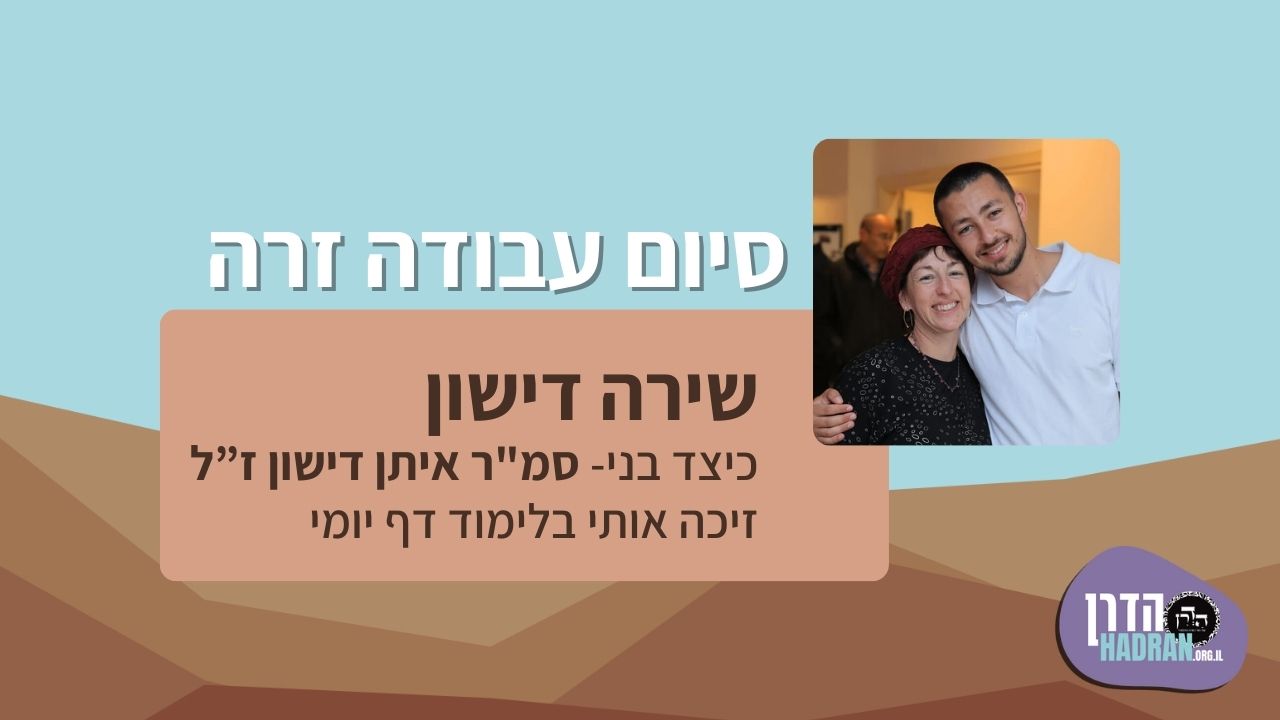
כיצד בני, סמ”ר איתן דישון ז”ל, זיכה אותי בלימוד דף יומי – שירה דישון
05.09.2025 | י״ב באלול תשפ״ה



חדשה בלימוד הגמרא?
זה הדף הראשון שלך? איזו התרגשות עצומה! יש לנו בדיוק את התכנים והכלים שיעזרו לך לעשות את הצעדים הראשונים ללמידה בקצב וברמה שלך, כך תוכלי להרגיש בנוח גם בתוך הסוגיות המורכבות ומאתגרות.
פסיפס הלומדות שלנו
גלי את קהילת הלומדות שלנו, מגוון נשים, רקעים וסיפורים. כולן חלק מתנועה ומסע מרגש ועוצמתי.
רציתי לקבל ידע בתחום שהרגשתי שהוא גדול וחשוב אך נעלם ממני. הלימוד מעניק אתגר וסיפוק ומעמיק את תחושת השייכות שלי לתורה וליהדות

רות עגיב
עלי זהב – לשם, ישראל
אחי, שלומד דף יומי ממסכת ברכות, חיפש חברותא ללימוד מסכת ראש השנה והציע לי. החברותא היתה מאתגרת טכנית ורוב הזמן נעשתה דרך הטלפון, כך שבסיום המסכת נפרדו דרכינו. אחי חזר ללמוד לבד, אבל אני כבר נכבשתי בקסם הגמרא ושכנעתי את האיש שלי להצטרף אלי למסכת ביצה. מאז המשכנו הלאה, ועכשיו אנחנו מתרגשים לקראתו של סדר נשים!

שולמית סבן
נוקדים, ישראל
בתחילת הסבב הנוכחי הצטברו אצלי תחושות שאני לא מבינה מספיק מהי ההלכה אותה אני מקיימת בכל יום. כמו כן, כאמא לבנות רציתי לתת להן מודל נשי של לימוד תורה
שתי הסיבות האלו הובילו אותי להתחיל ללמוד. נתקלתי בתגובות מפרגנות וסקרניות איך אישה לומדת גמרא..
כמו שרואים בתמונה אני ממשיכה ללמוד גם היום ואפילו במחלקת יולדות אחרי לידת ביתי השלישית.

נועה שילה
רבבה, ישראל
A friend in the SF Bay Area said in Dec 2019 that she might start listening on her morning drive to work. I mentioned to my husband and we decided to try the Daf when it began in Jan 2020 as part of our preparing to make Aliyah in the summer.

חנה פיוטרקובסקי
ירושלים, Israel
התחלתי מעט לפני תחילת הסבב הנוכחי. אני נהנית מהאתגר של להמשיך להתמיד, מרגעים של "אהה, מפה זה הגיע!” ומהאתגר האינטלקטואלי

אילת-חן ודלר
לוד, ישראל
אמא שלי למדה איתי ש”ס משנה, והתחילה ללמוד דף יומי. אני החלטתי שאני רוצה ללמוד גם. בהתחלה למדתי איתה, אח”כ הצטרפתי ללימוד דף יומי שהרב דני וינט מעביר לנוער בנים בעתניאל. במסכת עירובין עוד חברה הצטרפה אלי וכשהתחלנו פסחים הרב דני פתח לנו שעור דף יומי לבנות. מאז אנחנו לומדות איתו קבוע כל יום את הדף היומי (ובשבת אבא שלי מחליף אותו). אני נהנית מהלימוד, הוא מאתגר ומעניין

רננה הלמן
עתניאל, ישראל
בסוף הסבב הקודם ראיתי את השמחה הגדולה שבסיום הלימוד, בעלי סיים כבר בפעם השלישית וכמובן הסיום הנשי בבנייני האומה וחשבתי שאולי זו הזדמנות עבורי למשהו חדש.
למרות שאני שונה בסביבה שלי, מי ששומע על הלימוד שלי מפרגן מאוד.
אני מנסה ללמוד קצת בכל יום, גם אם לא את כל הדף ובסך הכל אני בדרך כלל עומדת בקצב.
הלימוד מעניק המון משמעות ליום יום ועושה סדר בלמוד תורה, שתמיד היה (ועדיין) שאיפה. אבל אין כמו קביעות

רחלי מנדלסון
טל מנשה, ישראל
הצטרפתי ללומדות בתחילת מסכת תענית. ההתרגשות שלי ושל המשפחה היתה גדולה מאוד, והיא הולכת וגוברת עם כל סיום שאני זוכה לו. במשך שנים רבות רציתי להצטרף ומשום מה זה לא קרה… ב”ה מצאתי לפני מספר חודשים פרסום של הדרן, ומיד הצטרפתי והתאהבתי. הדף היומי שינה את חיי ממש והפך כל יום- ליום של תורה. מודה לכן מקרב ליבי ומאחלת לכולנו לימוד פורה מתוך אהבת התורה ולומדיה.

נעה רוזן
חיספין רמת הגולן, ישראל
התחלתי ללמוד דף יומי אחרי שחזרתי בתשובה ולמדתי במדרשה במגדל עוז. הלימוד טוב ומספק חומר למחשבה על נושאים הלכתיים ”קטנים” ועד לערכים גדולים ביהדות. חשוב לי להכיר את הגמרא לעומק. והצעד הקטן היום הוא ללמוד אותה בבקיאות, בעזרת השם, ומי יודע אולי גם אגיע לעיון בנושאים מעניינים. נושאים בגמרא מתחברים לחגים, לתפילה, ליחסים שבין אדם לחברו ולמקום ולשאר הדברים שמלווים באורח חיים דתי 🙂

גאיה דיבו
מצפה יריחו, ישראל
לפני 15 שנה, אחרי עשרות שנים של "ג’ינגול” בין משפחה לקריירה תובענית בהייטק, הצטרפתי לשיעורי גמרא במתן רעננה. הלימוד המעמיק והייחודי של הרבנית אושרה קורן יחד עם קבוצת הנשים המגוונת הייתה חוויה מאלפת ומעשירה. לפני כשמונה שנים כאשר מחזור הדף היומי הגיע למסכת תענית הצטרפתי כ”חברותא” לבעלי. זו השעה היומית שלנו ביחד כאשר דפי הגמרא משתלבים בחיי היום יום, משפיעים ומושפעים, וכשלא מספיקים תמיד משלימים בשבת

יודי אסקוף
רעננה, ישראל
אני לומדת גמרא כעשור במסגרות שונות, ואת הדף היומי התחלתי כשחברה הציעה שאצטרף אליה לסיום בבנייני האומה. מאז אני לומדת עם פודקסט הדרן, משתדלת באופן יומי אך אם לא מספיקה, מדביקה פערים עד ערב שבת. בסבב הזה הלימוד הוא "ממעוף הציפור”, מקשיבה במהירות מוגברת תוך כדי פעילויות כמו בישול או נהיגה, וכך רוכשת היכרות עם הסוגיות ואופן ניתוחם על ידי חז”ל. בע”ה בסבב הבא, ואולי לפני, אצלול לתוכו באופן מעמיק יותר.

יעל ביר
רמת גן, ישראל
התחלתי ללמוד בסבב הנוכחי לפני כשנתיים .הסביבה מתפעלת ותומכת מאוד. אני משתדלת ללמוד מכל ההסכתים הנוספים שיש באתר הדרן. אני עורכת כל סיום מסכת שיעור בביתי לכ20 נשים שמחכות בקוצר רוח למפגשים האלו.

יעל אשר
יהוד, ישראל
שמעתי על הסיום הענק של הדף היומי ע”י נשים בבנייני האומה. רציתי גם.
החלטתי להצטרף. התחלתי ושיכנעתי את בעלי ועוד שתי חברות להצטרף. עכשיו יש לי לימוד משותף איתו בשבת ומפגש חודשי איתן בנושא (והתכתבויות תדירות על דברים מיוחדים שקראנו). הצטרפנו לקבוצות שונות בווטסאפ. אנחנו ממש נהנות. אני שומעת את השיעור מידי יום (בד”כ מהרב יוני גוטמן) וקוראת ומצטרפת לסיומים של הדרן. גם מקפידה על דף משלהן (ונהנית מאד).

ליאת סיטרון
אפרת, ישראל
לצערי גדלתי בדור שבו לימוד גמרא לנשים לא היה דבר שבשגרה ושנים שאני חולמת להשלים את הפער הזה.. עד שלפני מספר שבועות, כמעט במקרה, נתקלתי במודעת פרסומת הקוראת להצטרף ללימוד מסכת תענית. כשקראתי את המודעה הרגשתי שהיא כאילו נכתבה עבורי – "תמיד חלמת ללמוד גמרא ולא ידעת איך להתחיל”, "בואי להתנסות במסכת קצרה וקלה” (רק היה חסר שהמודעה תיפתח במילים "מיכי שלום”..). קפצתי למים ו- ב”ה אני בדרך להגשמת החלום:)

מיכי קדוש
מורשת, ישראל
התחלתי ללמוד דף יומי בסבב הקודם. זכיתי לסיים אותו במעמד המרגש של הדרן. בסבב הראשון ליווה אותי הספק, שאולי לא אצליח לעמוד בקצב ולהתמיד. בסבב השני אני לומדת ברוגע, מתוך אמונה ביכולתי ללמוד ולסיים. בסבב הלימוד הראשון ליוותה אותי חוויה מסויימת של בדידות. הדרן העניקה לי קהילת לימוד ואחוות נשים. החוויה של סיום הש”ס במעמד כה גדול כשנשים שאינן מכירות אותי, שמחות ומתרגשות עבורי , היתה חוויה מרוממת נפש

אילנית ווייל
קיבוץ מגדל עוז, ישראל
התחלתי בתחילת הסבב, והתמכרתי. זה נותן משמעות נוספת ליומיום ומאוד מחזק לתת לזה מקום בתוך כל שגרת הבית-עבודה השוטפת.

רעות אברהמי
בית שמש, ישראל
ראיתי את הסיום הגדול בבנייני האומה וכל כך התרשמתי ורציתי לקחת חלק.. אבל לקח לי עוד כשנה וחצי )באמצע מסיכת שבת להצטרף..
הלימוד חשוב לי מאוד.. אני תמיד במרדף אחרי הדף וגונבת כל פעם חצי דף כשהילדים עסוקים ומשלימה אח”כ אחרי שכולם הלכו לישון..

אולגה מזרחי
ירושלים, ישראל
התחלתי ללמוד דף יומי באמצע תקופת הקורונה, שאבא שלי סיפר לי על קבוצה של בנות שתיפתח ביישוב שלנו ותלמד דף יומי כל יום. הרבה זמן רציתי להצטרף לזה וזאת הייתה ההזדמנות בשבילי. הצטרפתי במסכת שקלים ובאמצע הייתה הפסקה קצרה. כיום אני כבר לומדת באולפנה ולומדת דף יומי לבד מתוך גמרא של טיינזלץ.

שבות בראלי
עתניאל, ישראל
אמא שלי למדה איתי ש”ס משנה, והתחילה ללמוד דף יומי. אני החלטתי שאני רוצה ללמוד גם. בהתחלה למדתי איתה, אח”כ הצטרפתי ללימוד דף יומי שהרב דני וינט מעביר לנוער בנים בעתניאל. במסכת עירובין עוד חברה הצטרפה אלי וכשהתחלנו פסחים הרב דני פתח לנו שעור דף יומי לבנות. מאז אנחנו לומדות איתו קבוע כל יום את הדף היומי (ובשבת אבא שלי מחליף אותו). אני נהנית מהלימוד, הוא מאתגר ומעניין
רננה הלמן
עתניאל, ישראל
הצטרפתי ללומדות בתחילת מסכת תענית. ההתרגשות שלי ושל המשפחה היתה גדולה מאוד, והיא הולכת וגוברת עם כל סיום שאני זוכה לו. במשך שנים רבות רציתי להצטרף ומשום מה זה לא קרה… ב”ה מצאתי לפני מספר חודשים פרסום של הדרן, ומיד הצטרפתי והתאהבתי. הדף היומי שינה את חיי ממש והפך כל יום- ליום של תורה. מודה לכן מקרב ליבי ומאחלת לכולנו לימוד פורה מתוך אהבת התורה ולומדיה.
נעה רוזן
חיספין רמת הגולן, ישראל
נדה ל
מִכְּדֵי יְמֵי טׇהֳרָה כַּמָּה הָווּ? שִׁתִּין וְשִׁיתָּא. דַּל שָׁבוּעַ שְׁלִישִׁי דְּאַטְבְּלִינַן לַהּ, פָּשׁוּ לְהוּ שִׁתִּין נְכֵי חֲדָא. שִׁתִּין נְכֵי חֲדָא וּתְלָתִין וַחֲמֵשׁ — תִּשְׁעִין וְאַרְבַּע הָוְיָין, תִּשְׁעִין וַחֲמֵשׁ מַאי עֲבִידְתַּיְיהוּ?
The Gemara asks: Now consider, how many days of purity are there, in the case of a woman who gave birth to a female? There are sixty-six days. Therefore, in order to account for all of the nights that might occur immediately after the woman’s period of purity, she must immerse on sixty-six nights, according to Beit Shammai. Remove from this sum the immersions of the third week, when we require the woman to immerse seven times, and sixty less one are left. These sixty-less-one times she immerses after the third week and the thirty-five times she immerses during the first three weeks are together ninety-four immersions. If so, those ninety-five immersions, required by Beit Shammai, what is their purpose? Why do they require an extra immersion?
אָמַר רַב יִרְמְיָה מִדִּפְתִּי: כְּגוֹן שֶׁבָּאת לְפָנֵינוּ בֵּין הַשְּׁמָשׁוֹת, דְּיָהֲבִינַן לַהּ טְבִילָה יַתִּירְתָּא.
Rav Yirmeya of Difti says: The baraita is referring to a case where the woman came before us, i.e., she returned from her journey, during twilight, when it is halakhically uncertain whether it is day or night. The ruling is that in this case we give her another immersion, i.e., she is obligated to immerse on an additional day, in case she completed her days of impurity on the day she arrived, and that night is the night she must immerse.
וּלְבֵית הִלֵּל, דְּאָמְרִי: טְבוּלַת יוֹם אָרוֹךְ לָא בָּעֵי טְבִילָה, תְּלָתִין וַחֲמֵשׁ מַאי עֲבִידְתַּיְיהוּ?
The Gemara asks: And according to Beit Hillel, who say that a woman who immersed that long day, i.e., a woman observing her period of purity after childbirth, does not require immersion once her period of purity is over, those thirty-five immersions that they require, what is their purpose?
עֶשְׂרִים וּתְמָנְיָא, כְּדַאֲמַרַן. הָךְ שָׁבוּעַ חֲמִישִׁי מַטְבְּלִינַן כֹּל לֵילְיָא וְלֵילְיָא, אֵימַר: סוֹף נִדָּה הִיא.
The Gemara answers: Twenty-eight immersions are required as we said above, i.e., due to the end of the period of impurity in case the woman gave birth to a male or to a female, and due to the completion of the woman’s seven clean days in case she gave birth as a zava. In addition, during this fifth week we require the woman to immerse each and every night, as one can say that it is the end of her seven-day period as a menstruating woman.
עַשְׂרָה שָׁבוּעִין לְמָה לִי? בִּתְמָנְיָא וּפַלְגָא סַגִּי!
The Gemara raises a further difficulty: Why do I need the baraita to state that after the woman did not experience any bleeding for the first three weeks after arriving, she alternated for ten weeks between experiencing bleeding every day for a week and not experiencing any bleeding for a week. How does this detail contribute to Beit Shammai’s ruling that the woman must immerse ninety-five times? After all, eight and a half weeks are sufficient. Combined with the first three weeks after the woman’s arrival, this period amounts to eighty days, which is the number of days on which the woman must immerse according to Beit Shammai, as each day might be the last of her period of purity.
אַיְּידֵי דִּתְנָא פַּלְגָא דְּשָׁבוּעַ, מַסֵּיק לֵיהּ, וְאַיְּידֵי דִּתְנָא ״שָׁבוּעַ טָמֵא״, תְּנָא נָמֵי ״שָׁבוּעַ טָהוֹר״.
The Gemara answers: Although eight and a half weeks are sufficient, since the baraita must teach half a week, it completes that week, for a total of nine weeks. And since the baraita teaches with regard to the ninth week that the woman is impure, it also taught with regard to the tenth week that the woman is pure, in accordance with the pattern of a week of purity following every week of impurity.
וְהָאִיכָּא טְבִילַת זָבָה!
With regard to the opinion of Beit Hillel that the woman immerses only thirty-five times, the Gemara asks: But isn’t there the immersion that the woman is obligated to perform due to the possibility that she is a zava? It is possible that by the fourth week, the woman’s period of purity after childbirth has already ended, and the bleeding she experiences that week is menstrual blood, in which case the next week that she sees blood renders her a zava. If so, she must immerse at the end of that week, after counting seven clean days. The same applies to all the other weeks on which she experiences bleeding, apart from the fourth. Consequently, there are additional immersions not counted by Beit Hillel.
דְּלִפְנֵי תַּשְׁמִישׁ קָחָשֵׁיב, דִּלְאַחַר תַּשְׁמִישׁ לָא קָחָשֵׁיב.
The Gemara answers: Beit Hillel count only the times that the woman is obligated to immerse before she is permitted to engage in intercourse with her husband, which amount to thirty-five. They do not count the times that she must immerse after she is permitted to engage in intercourse with her husband.
וּלְבֵית שַׁמַּאי, דְּחָשֵׁיב דִּלְאַחַר תַּשְׁמִישׁ, נִיחְשׁוֹב נָמֵי טְבִילַת זָבָה! בְּלֵידָה קָמַיְירֵי, בְּזִיבָה לָא קָמַיְירֵי.
The Gemara asks: But according to Beit Shammai, who count the times that the woman is obligated to immerse after she is permitted to engage in intercourse in their total of ninety-five immersions, let them also count those immersions in which the woman is obligated due to the possibility that she is a zava. The Gemara answers: Beit Shammai deal with immersions that are due to the woman’s childbirth; they do not deal with immersions that are due to the possibility of ziva.
וְהָאִיכָּא יוֹלֶדֶת בְּזוֹב? יוֹלֶדֶת בְּזוֹב קָחָשֵׁיב, זִיבָה גְּרֵידְתָּא לָא קָחָשֵׁיב.
The Gemara questions this response: But there are immersions counted by Beit Shammai that are due to the possibility that she is a woman who gave birth as a zava. These immersions serve to purify the woman from her status as a zava, not as a woman after childbirth. The Gemara answers: Beit Shammai count immersions that are due to the possibility that she is a woman who gave birth as a zava. In such a scenario, immersion is delayed due to the childbirth, and is performed when the woman’s impurity period of ziva following childbirth is over. Therefore, these immersions are considered as connected to the childbirth. But Beit Shammai do not count immersions that are due to ziva alone.
(שבועתא) [שָׁבוּעַ] קַמָּא דְּאָתְיָא לְקַמַּן, לַיטְבְּלַהּ בְּיוֹמָא, דִּילְמָא כֹּל יוֹמָא וְיוֹמָא שְׁלִימוּ לַהּ סְפוּרִים דִּידַהּ!
§ With regard to the statement of the baraita that the woman immerses on every night of the first week in case her period of impurity after childbirth just ended, the Gemara asks: Besides immersing on every night of the first week after she came before us, let the woman immerse during the daytime of every day of that week as well, as perhaps she is a zava, and on each and every day it is possible that her counting of clean days are completed, and she must therefore immerse that morning. Accordingly, seven more immersions should be added to the count.
הָא מַנִּי? רַבִּי עֲקִיבָא הִיא, דְּאָמַר: בָּעֵינַן סְפוּרִים בְּפָנֵינוּ.
The Gemara answers: In accordance with whose opinion is this statement? It is in accordance with the opinion of Rabbi Akiva, who said that we require that the seven clean days of a zava must be counted in our presence, i.e., they must actually be counted. Since she did not know she should count before she arrived, she did not begin counting prior to her arrival. Therefore, her seven clean days begin only once she arrives, and she cannot immerse from her status as a zava of uncertain status before the end of the first week.
סוֹף שָׁבוּעַ קַמָּא לַיטְבְּלַהּ! חַד בְּשָׁבוּעַ לָא קָמַיְירֵי.
The Gemara raises a further difficulty: Even so, let her immerse at the end of the first week, on the morning of the seventh day, after counting seven clean days following her return. This adds one more immersion to the count. The Gemara answers: The baraita is not dealing with immersions that the woman is obligated to perform once a week.
יוֹמָא קַמָּא דְּאָתְיָא לְקַמַּן לַיטְבְּלַהּ, דִּילְמָא שׁוֹמֶרֶת יוֹם כְּנֶגֶד יוֹם הִיא! בְּזָבָה גְּדוֹלָה קָמַיְירֵי, בְּזָבָה קְטַנָּה — לָא קָמַיְירֵי.
The Gemara further inquires: Let the woman immerse on the first day that she came before us, as perhaps she is a lesser zava, i.e., a woman who experienced a discharge of uterine blood after her menstrual period for one or two consecutive days, and who therefore observes a clean day for a day she experiences a discharge. The Gemara answers: The baraita is dealing with a greater zava alone, i.e., one who experienced a discharge for three consecutive days and must therefore count seven clean days before immersing; it is not dealing with a lesser zava.
שְׁמַע מִינַּהּ תְּלָת, שְׁמַע מִינַּהּ: רַבִּי עֲקִיבָא הִיא, דְּאָמַר: בָּעֵינַן סְפוּרִים בְּפָנֵינוּ.
§ The Gemara summarizes its analysis of the baraita: Conclude from it three conclusions. Conclude from it that the baraita is in accordance with the opinion of Rabbi Akiva, who said that we require that the seven clean days of a zava must be counted in our presence.
וּשְׁמַע מִינַּהּ: רַבִּי שִׁמְעוֹן הִיא, דְּאָמַר: אֲבָל אָמְרוּ חֲכָמִים אָסוּר לַעֲשׂוֹת כֵּן, שֶׁמָּא תָּבֹא לִידֵי סָפֵק.
And conclude from it that the baraita is in accordance with the opinion of Rabbi Shimon, who says that it is permitted in principle for a zava to engage in intercourse with her husband on her seventh clean day after immersing in a ritual bath, but that the Sages said that it is prohibited for her to do so, lest she come to a case of uncertainty, i.e., in case she experiences a discharge of blood after engaging in intercourse, which retroactively nullifies her entire seven clean days and renders her impure.
וּשְׁמַע מִינַּהּ: טְבִילָה בִּזְמַנָּהּ מִצְוָה, וְרַבִּי יוֹסֵי בְּרַבִּי יְהוּדָה אוֹמֵר: דַּיָּהּ לִטְבִילָה בָּאַחֲרוֹנָה, וְלָא אָמְרִינַן טְבִילָה בִּזְמַנָּהּ מִצְוָה.
And finally, conclude from it that immersion at its proper time is a mitzva, which is why the woman immerses every day despite the fact it remains prohibited for her to engage in intercourse. But Rabbi Yosei, son of Rabbi Yehuda, says: It is sufficient for the immersion to be at the end, and we do not say that immersion at its proper time is a mitzva in its own right. Consequently, the woman is obligated to perform only one immersion.
מַתְנִי’ הַמַּפֶּלֶת לְיוֹם אַרְבָּעִים — אֵינָהּ חוֹשֶׁשֶׁת לְוָלָד, לְיוֹם אַרְבָּעִים וְאֶחָד — תֵּשֵׁב לְזָכָר וְלִנְקֵבָה וּלְנִדָּה.
MISHNA: A woman who discharges on the fortieth day since she immersed herself and engaged in intercourse with her husband need not be concerned that it might have been an offspring and she became impure with its miscarriage, as the formation of the offspring in the womb occurs only forty days after conception. But in the case of a woman who discharges on the forty-first day after immersion, there is concern that perhaps it was an offspring. Since its sex is unknown, she shall observe the period of impurity for a woman who gave birth to a male and for a woman who gave birth to a female; and for any blood that she sees, she observes the halakhot of a menstruating woman.
רַבִּי יִשְׁמָעֵאל אוֹמֵר: יוֹם אַרְבָּעִים וְאֶחָד תֵּשֵׁב לְזָכָר וּלְנִדָּה, יוֹם שְׁמוֹנִים וְאֶחָד תֵּשֵׁב לְזָכָר וְלִנְקֵבָה וּלְנִדָּה, שֶׁהַזָּכָר נִגְמָר לְאַרְבָּעִים וְאֶחָד, וְהַנְּקֵבָה לִשְׁמוֹנִים וְאֶחָד. וַחֲכָמִים אוֹמְרִים: אֶחָד בְּרִיַּית הַזָּכָר וְאֶחָד בְּרִיַּית הַנְּקֵבָה — זֶה וָזֶה אַרְבָּעִים וְאֶחָד.
Rabbi Yishmael says: A woman who discharges on the forty-first day after immersion observes the seven days of impurity for a woman who gave birth to a male; and for any blood that she sees after seven days, she observes the halakhot of a menstruating woman. But a woman who discharges on the eighty-first day after immersion observes the strictures of a woman who gave birth both to a male and to a female, and also the strictures of a menstruating woman, as the formation of the male offspring concludes on the forty-first day and the formation of the female offspring concludes on the eighty-first day. And the Rabbis say: With regard to both the formation of the male and the formation of the female, this and that conclude on the forty-first day.
גְּמָ’ לָמָּה הוּזְכַּר זָכָר?
GEMARA: The Gemara discusses the statement of the mishna that a woman who discharges on the forty-first day after immersion observes the strictures of a woman who gave birth to both a male and a female, and the strictures of a menstruating woman. Why are the strictures of a woman who gave birth to a male mentioned in this statement? What additional strictures must the woman observe due to the possibility that she gave birth to a male, over and above those she observes for the birth of a female?
אִי לִימֵי טוּמְאָה — הָא קָתָנֵי נְקֵבָה, וְאִי לִימֵי טׇהֳרָה
If these strictures are mentioned due to the days of impurity that a woman who gave birth to a male must observe, doesn’t the mishna in any case teach that the woman observes the strictures of a woman who gave birth to a female? The seven days of impurity that are observed by a woman who gave birth to a male are included in the fourteen days of impurity that she observes for a female. And if these strictures are mentioned due to the days of purity that are observed by a woman who gave birth to a male, which are fewer than the days of purity that are observed for the birth of a female,
הָא קָתָנֵי נִדָּה!
doesn’t the mishna teach that the woman observes the strictures of a menstruating woman, i.e., she is considered ritually impure every time she experiences bleeding, and does not observe any period of purity at all?
שֶׁאִם תִּרְאֶה יוֹם שְׁלוֹשִׁים וְאַרְבָּעָה, וְתַחְזוֹר וְתִרְאֶה יוֹם אַרְבָּעִים וְאֶחָד — תְּהֵא מְקוּלְקֶלֶת עַד אַרְבָּעִים וּשְׁמוֹנָה.
The Gemara answers: The mishna mentions that the woman observes the strictures of a woman who gave birth to a male to teach that if she sees blood on the thirty-fourth day after her miscarriage and again sees blood on the forty-first day, her purity status shall be ruined, i.e., she shall be prohibited from engaging in intercourse, until the forty-eighth day. If she were not observing the strictures of a woman who gave birth to a male, but only those of a menstruating woman and one who gave birth to a female, she would not have to wait seven days after seeing blood on the forty-first day. Instead, she would wait only one day, as her possible seven-day period of menstruation began on the thirty-fourth day and ended on the fortieth. Yet, as she might have given birth to a male, the forty-first day might be the first day after her period of purity, and therefore the first of her seven days of menstruation. Consequently, she must consider herself impure until the forty-eighth day.
וְכֵן לְעִנְיַן נְקֵבָה, שֶׁאִם תִּרְאֶה יוֹם שִׁבְעִים וְאַרְבָּעָה, וְתַחְזוֹר וְתִרְאֶה יוֹם שְׁמוֹנִים וְאֶחָד, תְּהֵא מְקוּלְקֶלֶת עַד שְׁמוֹנִים וּשְׁמוֹנָה.
And similarly, with regard to the halakha that she observes the strictures of a woman who gave birth to a female, one ramification is that if she sees blood on the seventy-fourth day and again sees blood on the eighty-first day, her purity status shall be ruined until the eighty-eighth day. Although she observes ritual impurity after discovering bleeding on the seventy-fourth day, as perhaps she has the status of a menstruating woman, when she discovers bleeding on the eighty-first day she must begin the count of seven days of menstruation again, in case the seventy-fourth day was during her period of purity after having given birth to a female.
רַבִּי יִשְׁמָעֵאל אוֹמֵר: יוֹם אַרְבָּעִים וְאֶחָד תֵּשֵׁב לְזָכָר וּלְנִדָּה כּוּ׳. תַּנְיָא, רַבִּי יִשְׁמָעֵאל אוֹמֵר: טִימֵּא וְטִיהֵר בְּזָכָר, וְטִימֵּא וְטִיהֵר בִּנְקֵבָה.
§ The mishna teaches that Rabbi Yishmael says: A woman who discharges on the forty-first day after immersion observes both the strictures of a woman who gave birth to a male, and those of a menstruating woman, but not the strictures of a woman who gave birth to a female, as the formation of a male offspring takes forty-one days, whereas the formation of a female offspring takes eighty-one days. It is taught in a baraita that Rabbi Yishmael says, in explanation of his opinion: In the case of a woman who gave birth to a male, the verse deems her impure for seven days and deems her pure for an additional thirty-three days, for a total of forty days; and with regard to a woman who gave birth to a female, the verse deems her impure for fourteen days and deems her pure for another sixty-six days, for a total of eighty days.
מָה כְּשֶׁטִּימֵּא וְטִיהֵר בְּזָכָר יְצִירָתוֹ כְּיוֹצֵא בוֹ, אַף כְּשֶׁטִּימֵּא וְטִיהֵר בִּנְקֵבָה יְצִירָתָהּ כַּיּוֹצֵא בָּהּ. אָמְרוּ לוֹ: אֵין לְמֵדִין יְצִירָה מִטּוּמְאָה.
It can therefore be inferred that just as when the verse deems a woman impure and then deems her pure for a total of forty days in the case of a male, its amount of time is parallel to the time of the formation of a male embryo; so too, when the verse deems a woman impure and deems her pure for a total of eighty days in the case of a female, its amount of time is parallel to the time of the formation of a female embryo. Accordingly, the formation of a female ends on the eighty-first day after conception. The Rabbis said to Rabbi Yishmael in response: One cannot derive the amount of time of the formation of an embryo from the extent of a woman’s period of impurity after giving birth.
אָמְרוּ לוֹ לְרַבִּי יִשְׁמָעֵאל: מַעֲשֶׂה בִּקְלֵיאוֹפַּטְרָא מַלְכַּת אֲלֶכְּסַנְדְּרוֹס, שֶׁנִּתְחַיְּיבוּ שִׁפְחוֹתֶיהָ הֲרִיגָה לַמַּלְכוּת, וּבְדָקָן וּמְצָאָן זֶה וָזֶה לְאַרְבָּעִים וְאֶחָד! אָמַר לָהֶן: אֲנִי מֵבִיא לָכֶם רְאָיָיה מִן הַתּוֹרָה, וְאַתֶּם מְבִיאִין לִי רְאָיָיה מִן הַשּׁוֹטִים?!
Furthermore, the Rabbis said to Rabbi Yishmael that there is a proof against his opinion from an incident involving Cleopatra, Queen of Alexandria. Since her maidservants were sentenced to death by the government, she took advantage of the opportunity and experimented on them in order to examine the amount of time it takes for an embryo to develop. She had her maidservants engage in intercourse and operated on them following their execution in order to determine the stage at which an embryo is fully formed, and found that both in this case, when the embryo is male, and that case, when it is female, the formation is complete on the forty-first day after conception. Rabbi Yishmael said to them in response: I bring you proof from the Torah, and you bring me proof from the fools?
מַאי רְאָיָה מִן הַתּוֹרָה? אִילֵּימָא טִימֵּא וְטִיהֵר בְּזָכָר וְטִימֵּא וְטִיהֵר בִּנְקֵבָה כּוּ׳. הָא קָאָמְרִי לֵיהּ: אֵין דָּנִין יְצִירָה מִטּוּמְאָה!
The Gemara asks: What proof from the Torah does Rabbi Yishmael bring for his opinion? If we say that his proof is the aforementioned derivation that in the case of a woman who gave birth to a male, the verse deems her impure for seven days and deems her pure for an additional thirty-three days, for a total of forty days; and in the case of a female, the verse deems her impure for fourteen days and deems her pure for an additional sixty-six days, for a total of eighty days, didn’t the Rabbis say to him in response that one cannot derive the amount of time that the formation of an embryo takes from the extent of a woman’s period of impurity after giving birth?
אָמַר קְרָא ״תֵּלֵד״, הוֹסִיף לָהּ הַכָּתוּב לֵידָה אַחֶרֶת בִּנְקֵבָה.
The Gemara answers: Rabbi Yishmael’s derivation is that the verse states: “If a woman bears seed and gives birth to a male…and if she gives birth to a female” (Leviticus 12:2–5). The verse adds another explicit mention of childbirth with regard to a female, besides the mention of childbirth in the case of a male, when it could have simply stated: And if it is a female. Rabbi Yishmael derives from here that not only are the periods of ritual impurity and purity of one who gives birth to a female double those of a woman who gives birth to a male, but the formation of a female embryo also takes twice the time.
וּמַאי רְאָיָה מִן הַשּׁוֹטִים? אֵימַר: נְקֵבָה קְדִים, וְאִיעַבּוּר אַרְבְּעִין יוֹמִין קַמֵּי זָכָר.
The Gemara asks: And for what reason does Rabbi Yishmael refer to the proof that the Rabbis cited from Cleopatra’s experiment as a proof from the fools? The Gemara answers: One can say that the maidservant who was pregnant with a female embryo became pregnant first, forty days before the maidservant who was pregnant with a male embryo. Consequently, it took the female embryo eighty days to be develop, not forty.
וְרַבָּנַן: סַמָּא דְּנָפְצָא אַשְׁקִינְהוּ. וְרַבִּי יִשְׁמָעֵאל: אִיכָּא גּוּפָא דְּלָא מְקַבֵּל סַמָּא.
The Gemara asks: And how would the Rabbis respond to this claim? The Gemara answers: Cleopatra gave the maidservants a purgative medicine to drink before they engaged in intercourse, which would have terminated any previous pregnancy. And Rabbi Yishmael would respond that there are bodies that are not affected by this medicine, i.e., certain pregnancies are not terminated by the medicine. Consequently, the maidservant who was pregnant with a female embryo might have been pregnant prior to the experiment.
אָמַר לָהֶם רַבִּי יִשְׁמָעֵאל: מַעֲשֶׂה בִּקְלֵפַּטְרָא מַלְכַּת יְוָונִים, שֶׁנִּתְחַיְּיבוּ שִׁפְחוֹתֶיהָ הֲרִיגָה לַמַּלְכוּת, וּבְדָקָן וּמְצָאָן זָכָר לְאַרְבָּעִים וְאֶחָד, וּנְקֵבָה לִשְׁמוֹנִים וְאֶחָד. אָמְרוּ לוֹ: אֵין מְבִיאִין רְאָיָה מִן הַשּׁוֹטִים.
The Gemara cites another baraita that presents a different version of this exchange between Rabbi Yishmael and the Rabbis: Rabbi Yishmael said to the Rabbis that there is a proof for his opinion from an incident involving Cleopatra, the Greek queen, as her maidservants were sentenced to death by the government, and she experimented on them and found that a male embryo is fully formed on the forty-first day after conception, and a female embryo is formed on the eighty-first day. The Rabbis said to him: One does not bring proof from the fools.
מַאי טַעְמָא? הָךְ דִּנְקֵבָה אִיַּיתַּרָה אַרְבְּעִין יוֹמִין, וַהֲדַר אִיעַבַּר.
The Gemara explains: What is the reason the Rabbis consider this a proof from the fools? They claim that it is possible that this woman who was pregnant with a female embryo did not conceive when Cleopatra had her engage in intercourse; rather, she waited forty days, and then became pregnant when she again engaged in intercourse. Therefore, the embryo was formed in forty days.
וְרַבִּי יִשְׁמָעֵאל: לְשׁוֹמֵר מַסְרִינְהוּ. וְרַבָּנַן: אֵין אַפּוֹטְרוֹפּוֹס לַעֲרָיוֹת, אֵימָא שׁוֹמֵר גּוּפֵיהּ בָּא עָלֶיהָ.
And how would Rabbi Yishmael respond to this claim? He would claim that the maidservants could not have conceived on a later date, as Cleopatra transferred them to the custody of a steward, who made sure that they did not engage in intercourse during the experiment. And the Rabbis would say that there is no steward [apotropos] for restraining sexual intercourse, and therefore one can say that the warden himself engaged in intercourse with the maidservant.
וְדִילְמָא: אִי קַרְעוּהוּ לְהָךְ דִּנְקֵבָה בְּאַרְבְּעִין וְחַד, הֲוָה מִשְׁתַּכְחָא כְּזָכָר? אָמַר אַבָּיֵי: בְּסִימָנֵיהוֹן שָׁוִין.
The Gemara raises a difficulty with regard to Rabbi Yishmael’s proof: But how can one be sure that the female embryo was formed after eighty-one days? Perhaps if the womb of the woman carrying this female embryo would have been torn open on the forty-first day after conception, the female embryo would have already been found in it, just as in the case of a male embryo. Abaye says in response: It was a case where the indications of the ages of the two embryos, e.g., their hairs and fingernails, were identical. Evidently, the female embryo developed in eighty days to the same degree that the male embryo developed in forty days.
וַחֲכָמִים אוֹמְרִים: אֶחָד בְּרִיַּית זָכָר וְאֶחָד בְּרִיַּית נְקֵבָה וְכוּ׳. חֲכָמִים הַיְינוּ תַּנָּא קַמָּא!
§ The mishna teaches: And the Rabbis say: Both the formation of the male and the formation of the female conclude on the forty-first day. The Gemara asks: The statement of the Rabbis is identical to the statement of the first tanna. Why does the mishna repeat this opinion in the name of the Rabbis?
וְכִי תֵימָא לְמִסְתְּמַהּ רֵישָׁא כְּרַבָּנַן, וְיָחִיד וְרַבִּים — הֲלָכָה כְּרַבִּים, פְּשִׁיטָא!
And if you would say that the purpose is to teach that the unattributed opinion mentioned in the first clause of the mishna is in accordance with the opinion of the Rabbis, and therefore it is the halakha, as when there is a disagreement between an individual Sage and many Sages, the halakha is in accordance with the opinion of the many, this cannot be the reason. The Gemara explains: It is obvious that the halakha is in accordance with the unattributed opinion mentioned in the first clause of the mishna, as this is a general halakhic principle.
מַהוּ דְּתֵימָא: מִסְתַּבְּרָא טַעְמָא דְּרַבִּי יִשְׁמָעֵאל, (דקמסייע) [דְּקָמְסַיְּיעִי] לֵיהּ קְרָאֵי, קָא מַשְׁמַע לַן.
The Gemara answers: Lest you say that from the fact that the explanation of the opinion of Rabbi Yishmael stands to reason, as the verses apparently support it, the halakha should be in accordance with his opinion, therefore the mishna teaches us that the majority of Sages agree with the unattributed opinion mentioned in the first clause of the mishna.
דָּרֵשׁ רַבִּי שִׂמְלַאי: לְמָה הַוָּלָד דּוֹמֶה בִּמְעֵי אִמּוֹ — לְפִנְקָס שֶׁמְּקוּפָּל, וּמוּנָּח יָדָיו עַל שְׁתֵּי צְדָעָיו, שְׁתֵּי אֲצִילָיו עַל שְׁתֵּי אַרְכוּבּוֹתָיו, וּשְׁנֵי עֲקֵבָיו עַל שְׁתֵּי עַגְבוֹתָיו, וְרֹאשׁוֹ מוּנָּח לוֹ בֵּין בִּרְכָּיו, וּפִיו סָתוּם, וְטַבּוּרוֹ פָּתוּחַ. וְאוֹכֵל מִמַּה שֶּׁאִמּוֹ אוֹכֶלֶת, וְשׁוֹתָה מִמַּה שֶּׁאִמּוֹ שׁוֹתָה, וְאֵינוֹ מוֹצִיא רְעִי שֶׁמָּא יַהֲרוֹג אֶת אִמּוֹ. וְכֵיוָן שֶׁיָּצָא לַאֲוִיר הָעוֹלָם — נִפְתָּח הַסָּתוּם, וְנִסְתָּם הַפָּתוּחַ, שֶׁאִלְמָלֵא כֵּן אֵינוֹ יָכוֹל לִחְיוֹת אֲפִילּוּ שָׁעָה אַחַת.
§ Rabbi Samlai taught: To what is a fetus in its mother’s womb comparable? To a folded notebook [lefinkas]. And it rests with its hands on its two sides of its head, at the temples, its two arms [atzilav] on its two knees, and its two heels on its two buttocks, and its head rests between its knees, and its mouth is closed, and its umbilicus is open. And it eats from what its mother eats, and it drinks from what its mother drinks, and it does not emit excrement lest it kill its mother. But once it emerges into the airspace of the world, the closed limb, i.e., its mouth, opens, and the open limb, its umbilicus, closes, as otherwise it cannot live for even one hour.
וְנֵר דָּלוּק לוֹ עַל רֹאשׁוֹ, וְצוֹפֶה וּמַבִּיט מִסּוֹף הָעוֹלָם וְעַד סוֹפוֹ, שֶׁנֶּאֱמַר: ״בְּהִלּוֹ נֵרוֹ עֲלֵי רֹאשִׁי לְאוֹרוֹ אֵלֶךְ חֹשֶׁךְ״, וְאַל תִּתְמַהּ, שֶׁהֲרֵי אָדָם יָשֵׁן כָּאן וְרוֹאֶה חֲלוֹם בְּאַסְפַּמְיָא.
And a candle is lit for it above its head, and it gazes from one end of the world to the other, as it is stated: “When His lamp shined above my head, and by His light I walked through darkness” (Job 29:3). And do not wonder how one can see from one end of the world to the other, as a person can sleep here, in this location, and see a dream that takes place in a place as distant as Spain [beAspamya].
וְאֵין לְךָ יָמִים שֶׁאָדָם שָׁרוּי בְּטוֹבָה יוֹתֵר מֵאוֹתָן הַיָּמִים, שֶׁנֶּאֱמַר: ״מִי יִתְּנֵנִי כְיַרְחֵי קֶדֶם כִּימֵי אֱלוֹהַּ יִשְׁמְרֵנִי״, וְאֵיזֶהוּ יָמִים שֶׁיֵּשׁ בָּהֶם יְרָחִים וְאֵין בָּהֶם שָׁנִים? הֱוֵי אוֹמֵר: אֵלּוּ יַרְחֵי לֵידָה.
And there are no days when a person is in a more blissful state than those days when he is a fetus in his mother’s womb, as it is stated in the previous verse: “If only I were as in the months of old, as in the days when God watched over me” (Job 29:2). And the proof that this verse is referring to gestation is as follows: Which are the days that have months but do not have years? You must say that these are the months of gestation.
וּמְלַמְּדִין אוֹתוֹ כָּל הַתּוֹרָה כּוּלָּהּ, שֶׁנֶּאֱמַר: ״וַיּוֹרֵנִי וַיֹּאמֶר לִי יִתְמׇךְ דְּבָרַי לִבֶּךָ שְׁמוֹר מִצְוֹתַי וֶחְיֵה״, וְאוֹמֵר: ״בְּסוֹד אֱלוֹהַּ עֲלֵי אׇהֳלִי״.
And a fetus is taught the entire Torah while in the womb, as it is stated: “And He taught me and said to me: Let your heart hold fast My words; keep My commandments, and live” (Proverbs 4:4). And it also states: “As I was in the days of my youth, when the converse of God was upon my tent” (Job 29:4).
מַאי ״וְאוֹמֵר״? וְכִי תֵימָא נָבִיא הוּא דְּקָאָמַר, תָּא שְׁמַע ״בְּסוֹד אֱלוֹהַּ עֲלֵי אׇהֳלִי״.
The Gemara asks: What is the purpose of the statement: And it also states: “When the converse of God was upon my tent”? Why is it necessary to cite this verse in addition to the previously quoted verse from Proverbs? The Gemara explains: And if you would say that the verse in Proverbs is insufficient, as it is a prophet who is saying that he was taught the entire Torah in his mother’s womb, but this does not apply to ordinary people, come and hear the verse in Job: “When the converse of God was upon my tent.”
וְכֵיוָן שֶׁבָּא לַאֲוִיר הָעוֹלָם, בָּא מַלְאָךְ וְסֹטְרוֹ עַל פִּיו, וּמְשַׁכְּחוֹ כׇּל הַתּוֹרָה כּוּלָּהּ, שֶׁנֶּאֱמַר: ״לַפֶּתַח חַטָּאת רוֹבֵץ״.
And once the fetus emerges into the airspace of the world, an angel comes and slaps it on its mouth, causing it to forget the entire Torah, as it is stated: “Sin crouches at the entrance” (Genesis 4:7), i.e., when a person enters the world he is immediately liable to sin due to his loss of Torah knowledge.
וְאֵינוֹ יוֹצֵא מִשָּׁם עַד שֶׁמַּשְׁבִּיעִין אוֹתוֹ, שֶׁנֶּאֱמַר: ״כִּי לִי תִּכְרַע כׇּל בֶּרֶךְ תִּשָּׁבַע כׇּל לָשׁוֹן״. ״כִּי לִי תִּכְרַע כׇּל בֶּרֶךְ״ — זֶה יוֹם הַמִּיתָה, שֶׁנֶּאֱמַר: ״לְפָנָיו יִכְרְעוּ כׇּל יוֹרְדֵי עָפָר״. ״תִּשָּׁבַע כׇּל לָשׁוֹן״ — זֶה יוֹם הַלֵּידָה, שֶׁנֶּאֱמַר: ״נְקִי כַפַּיִם וּבַר לֵבָב אֲשֶׁר לֹא נָשָׂא לַשָּׁוְא נַפְשׁוֹ וְלֹא נִשְׁבַּע לְמִרְמָה״.
And a fetus does not leave the womb until the angels administer an oath to it, as it is stated: “That to Me every knee shall bow, every tongue shall swear” (Isaiah 45:23). The verse is interpreted as follows: “That to Me every knee shall bow”; this is referring to the day of one’s death, as it is stated: “All those who go down to the dust shall kneel before Him” (Psalms 22:30). “Every tongue shall swear”; this is referring to the day of one’s birth, as it is stated in description of a righteous person: “He who has clean hands, and a pure heart, who has not taken My name in vain, and has not sworn deceitfully” (Psalms 24:4), i.e., he has kept the oath that he took before he was born.
וּמָה הִיא הַשְּׁבוּעָה שֶׁמַּשְׁבִּיעִין אוֹתוֹ? תְּהִי צַדִּיק וְאַל תְּהִי רָשָׁע, וַאֲפִילּוּ כׇּל הָעוֹלָם כּוּלּוֹ אוֹמְרִים לְךָ ״צַדִּיק אַתָּה״ — הֱיֵה בְּעֵינֶיךָ כְּרָשָׁע. וֶהֱוֵי יוֹדֵעַ שֶׁהַקָּדוֹשׁ בָּרוּךְ הוּא טָהוֹר, וּמְשָׁרְתָיו טְהוֹרִים, וּנְשָׁמָה שֶׁנָּתַן בְּךָ טְהוֹרָה הִיא. אִם אַתָּה מְשַׁמְּרָהּ בְּטׇהֳרָה — מוּטָב, וְאִם לָאו — הֲרֵינִי נוֹטְלָהּ מִמְּךָ.
And what is the oath that the angels administer to the fetus? Be righteous and do not be wicked. And even if the entire world says to you: You are righteous, consider yourself wicked. And know that the Holy One, Blessed be He, is pure, and His ministers are pure, and the soul that He gave you is pure. If you preserve it in a state of purity, all is well, but if you do not keep it pure, I, the angel, shall take it from you.
תָּנָא דְּבֵי רַבִּי יִשְׁמָעֵאל: מָשָׁל לְכֹהֵן שֶׁמָּסַר תְּרוּמָה לְעַם הָאָרֶץ, וְאָמַר לוֹ: אִם אַתָּה מְשַׁמְּרָהּ בְּטׇהֳרָה — מוּטָב, וְאִם לָאו — הֲרֵינִי שׂוֹרְפָהּ לְפָנֶיךָ.
The school of Rabbi Yishmael taught a parable: This matter is comparable to a priest who gave teruma, the portion of the produce designated for the priest, to one who is unreliable with regard to ritual impurity [am ha’aretz], and therefore it is suspected that he might not maintain the purity of the teruma. And the priest said to him: If you keep it in a state of ritual purity, all is well, but if you do not keep it pure, I shall burn it before you.
אָמַר רַבִּי אֶלְעָזָר:
Rabbi Elazar said:
לעקוב

