Hadran: Advancing Talmud Study for Women
Hadran supports Jewish women of all ages, backgrounds and skill levels with resources and inspiration to engage in Talmud study.
Menachot 23
Rabbanit Michelle Farber
02.03.2026 | ט״ז בשבט תשפ״וStart Studying Talmud
Daf Yomi
Get ‘on the same page’ with Jews around the world on a daily basis.
Masechet
Select a section of the Talmud to suit your learning interests and schedule.
Beyond the Daf
Delve deep with weekly classes and podcasts from top women scholars.
Courses
Develop your Talmud study skills with self-paced online courses.
#MegillahChallenge!
🎉 Join the 2026/5786 #MegillahChallenge! 🎉
Discover Masechet Megillah in a powerful learning journey leading up to Purim. ✨
📅Starting Monday, January 12th, we’ll learn together 4 days a week at a steady, achievable pace.
📘 Why Megillah?
It’s accessible, meaningful, and only 31 dapim. With our 4‑day‑a‑week schedule, you’ll complete the entire masechet right in time for Purim! 🎭
📝 How it works:
👉Join our dedicated WhatsApp group
🎧 Receive a clear, engaging shiur each learning day
⏰ Watch or listen whenever it suits you
🌟 Stay motivated with a supportive community
🎉 Celebrate finishing a full masechet on Purim!
💙 Free of charge
👥 Open to women and men. Suitable for beginners and experienced learners

Resources
Talmud, Your Way
Experience Talmud with daily or weekly shiurim from top women scholars, each with a different focus and flavor. There’s something here for everyone.

Recently added
Daf Yomi
Beyond the Daf
Din & Daf
A Daf of Their Own
Flashback
Gefet
On Second Thought
Daf Yomi: One Week at a Time
Talking Talmud
Beyond the Daf (HE)
Suggested for you
Your history
Talmud, Your Way
Experience Talmud with daily or weekly shiurim from top women scholars, each with a different focus and flavor. There’s something here for everyone.

Daf Yomi
Menachot 23
Rabbi Yochanan and Reish Lakish disagree about a case where oil was placed on the kometz of a mincha of a sinner, which is not meant to be mixed with oil. Rabbi Yochanan disqualifies it, but Reish Lakish does not, as he holds that the oil should not be mixed with the mincha before the kometz is taken, but the kometz can (and ideally should) be mixed with a little bit of oil. Rabbi Yochanan brings a tannaitic source to raise a difficulty against Reish Lakish’s position, but it is resolved.
Rava asks a question about a kometz whose oil (some of it) was absorbed onto a piece of wood. Can both be burned together to ensure that all the oil of the kometz is burned, or would this not be effective as the wood is completely separate from the kometz? Ravina questions Rava as the issue is already known as a debate between Rabbi Yochanan and Reish Lakish. But they explain why the question can be asked according to each.
The Mishna explains what to do in three different cases of mixtures of meal offerings that were at various stages – either two minchas before the kometz was taken, or a kometz with a different mincha where the kometz was not yet taken, or a kometz mixed with the remainder.
Rav Chisda and Rabbi Chanina disagree within Rabbi Yehuda’s position of min b’mino (items of the same type) is not nullified, as understood by Rabbi Chiya, that items are considered the same if the status of one can change to be like the other. Rav Chisda says it is determined by the item trying to nullify, and Rabbi Chanina by the item being nullified. The three cases in our Mishna and a fourth source regarding matza are brought as difficulties to one or both of the opinions, but all are resolved.
Daf Yomi
Menachot 22
Rav Mordechai reinstates the original interpretation of Shmuel’s limitation on the Mishna in Shekalim 7:7 – namely, that the court permitted the kohanim to use Temple salt for salting their sacrifices (for burning on the altar) but not for salting the meat of the sacrifices for consumption. This ruling of the court follows Ben Buchri’s opinion that kohanim are not obligated to pay the half-shekel (machatzit hashekel) used to fund communal items in the Temple. Since they did not contribute to the fund, one might have assumed they were ineligible to benefit from Temple salt; therefore, the court issued a specific stipulation to permit it.
The Mishna in Shekalim also mentions that the kohanim could use wood from the Temple for their private sacrifices. The source for this is derived from Vayikra 1:8, which mentions the wood “which is on the fire on the altar.” The phrase “on the altar” is considered superfluous, indicating that the wood shares the same status as the altar itself; just as the altar is built from communal property, so too the wood must be communal. This teaching establishes that individuals are not required to bring wood from their own homes for their voluntary offerings. Rabbi Elazar ben Shamua defines the altar differently positing that the altar must be built using stones that have never been used. This requirement would also preclude individuals from bringing wood from their own homes. Consequently, the Gemara asks: what is the practical difference between these two opinions? The answer is that the latter opinion requires the wood to be brand new and never previously used, whereas the former does not.
If a kometz, which contains one log of oil, is mixed with the mincha of a kohen or a mincha of libations, which contains three log of oil, there is a debate between the rabbis and Rabbi Yehuda. They disagree on whether the mixture may be burned on the altar or if the blending disqualifies both offerings. The concern is that the oil from the mincha becomes added to the kometz, potentially disqualifying both; the kometz would then contain an excessive amount of oil, while the mincha would be left with an insufficient amount.
The Gemara cites a Mishna in Zevachim 77b featuring a debate between the rabbis and Rabbi Yehuda regarding whether two similar substances (min be’mino) can nullify one another. Rabbi Yochanan explains that both parties derive their respective positions from the Yom Kippur service, during which the blood of the bull and the blood of the goat are mixed together. Despite the volume of the bull’s blood being significantly greater than that of the goat, the Torah continues to refer to the mixture as both “the blood of the bull” and “the blood of the goat”—indicating that the goat’s blood remains distinct and is not nullified. The rabbis derive a broad principle from this: items designated for the altar never nullify one another, regardless of their type. Conversely, Rabbi Yehuda derives a different principle: blood does not nullify blood because they are the same type of substance (min be’mino). The Gemara raises challenges against both derivations, and they are left unresolved.
Rabbi Yehuda’s opinion in our Mishna appears to contradict his ruling in the Mishna in Zevachim; if two similar substances (min be’mino) do not nullify each other, then the oil of the mincha should not be nullified by (or absorbed into) the kometz. Rava resolves this contradiction by explaining that this case is an exception, as it is considered a situation where one substance “adds to” the other rather than merely mixing with it.
Daf Yomi
Menachot 21
The braita initially listed two items offered on the altar that do not require salting: wood and blood. However, the Gemara notes a difficulty: this braita appears to follow the position of Rebbi, yet Rebbi himself maintains that blood does require salting. Consequently, the Gemara emends the text, removing “wood” and replacing it with libations (wine). To support this, a second braita is cited which lists wine, blood, wood, and incense as exempt from salting. Yet, this proof-text presents its own challenge, as it aligns neither with Rebbi (who requires salting for blood) nor with the Rabbis (who require it for incense). Ultimately, the Gemara concludes that this braita follows Rabbi Yishmael the son of Rabbi Yochanan ben Beroka, who uses a different categorization based on the characteristics of a mincha (meal offering) to determine which items require salt.
A further challenge on the braita quoted in Menachot 20a is raised. The braita implies that blood is excluded from salting only because of a specific scriptural derivation (drasha). However, according to Zeiri, if blood is salted, it becomes disqualified for use on the altar regardless; if so, why is a drasha necessary to exclude it? To resolve this, the Gemara distinguishes between two levels of salting: a small amount of salt, which might not disqualify the blood but is still excluded by the verse, and a large amount, which renders the blood physically unfit for the altar. This leads to a discussion regarding the status of salted or coagulated blood: is it still considered “blood” enough to be valid for the altar, and conversely, does the prohibition against eating blood still apply to it?
A braita is then introduced expounding on the biblical verses regarding salting to derive various procedural laws. These include the type of salt required, the quantity used, and the specific method of application. Another braita clarifies the legal status of salt found in the sanctuary: if salt is found directly on a sacrificial limb, it is considered sanctified and subject to the laws of meila (misappropriation of sacred property). However, if the salt is found on the altar’s ramp or on the roof of the altar itself, it does not carry this sanctity.
A Mishna in Shekalim states that the rabbis allowed the kohanim to benefit from the salt of the Temple. Shmuel explains that this permission applies only to the kohanim’s offerings and not for eating. The Gemara analyzes whether Shmuel meant that salt is permitted only for the actual sacrifice on the altar but forbidden for the meat the kohanim eat, or if it is permitted for seasoning their sacrificial meat but forbidden for use with non-sacred food. The Gemara initially concludes that since the kohanim were even permitted to use Temple salt for tanning animal hides, they must certainly be allowed to use it to season the holy meat they consume. Under this view, Shmuel’s restriction only excludes using the salt for personal, non-sacred food. This is further supported by the logic that if even an Israelite’s sacrifice is salted with Temple salt, a kohen’s sacrifice surely would be as well, meaning the court’s special decree must have addressed something else. However, Rav Mordechai suggests an alternative reading that could reinstate the first possibility: that the court permitted salt only for the actual sacrifice on the altar but forbade it for the meat the kohanim eat. He explains that the Mishna’s decree was specifically necessary to account for the position of Ben Buchri, as will be explained further on.
Daf Yomi
Menachot 20
Rav explained that details that are essential (me’akev) are specifically those that are repeated (appear twice) in the text. Rav Huna raises a difficulty on this assertion from the requirement of salting the offering; both Rabbi Yehuda and Rabbi Shimon rule that salting is essential, yet the command does not appear twice. Two answers are suggested to resolve this. Rav Yosef suggests that Rav may hold like the Tanna of our Mishna, who holds that salting is actually not essential. Another possible answer is that salting is a unique exception to the rule because the word “covenant” (brit) appears in the verse, signifying its indispensable status regardless of repetition.
The Gemara then raises a difficulty with the premise of the original challenge, noting that the word for salt actually does appear twice in Vayikra 2:13. This is answered by explaining that the repetition in that verse is necessary for specific drashot found in a braita. The braita extrapolates from the verse to teach which sacrificial items require salt and which do not – concluding that while most offerings require it, wood and blood do not. After quoting the brraita in its entirety, the Gemara delves into the different sections of the text, analyzing each clause to better understand the underlying logic of these inclusions and exclusions.
Daf Yomi
Get ‘on the same page’ with Jews around the world on a daily basis.
Menachot 23
Menachot 22
Menachot 21
Menachot 20
Menachot 19
Menachot 18
Beyond the Daf
Explore relevant and thought-provoking topics that arise from the daf with fresh weekly Beyond the Daf content.
Menahot 19: Laws, Statutes, and Biblical Repetition
Menachot Daf 9-16- Daf Yomi: One Week at a Time
Menahot 18: Tannaitic Drama and 15 Tasks of the Menahot
Din & Daf
Conceptual Analysis of Halakha Through Case Study with Dr. Elana Stein Hain In each session, we will delve into conceptual explorations of halakhic phenomena.

Din & Daf: A Breakaway Mikdash in Egypt? Chazal’s take the Temple of Onias
Din & Daf: Aninut – Halakhah’s Immediate Response to Losing a Family Member
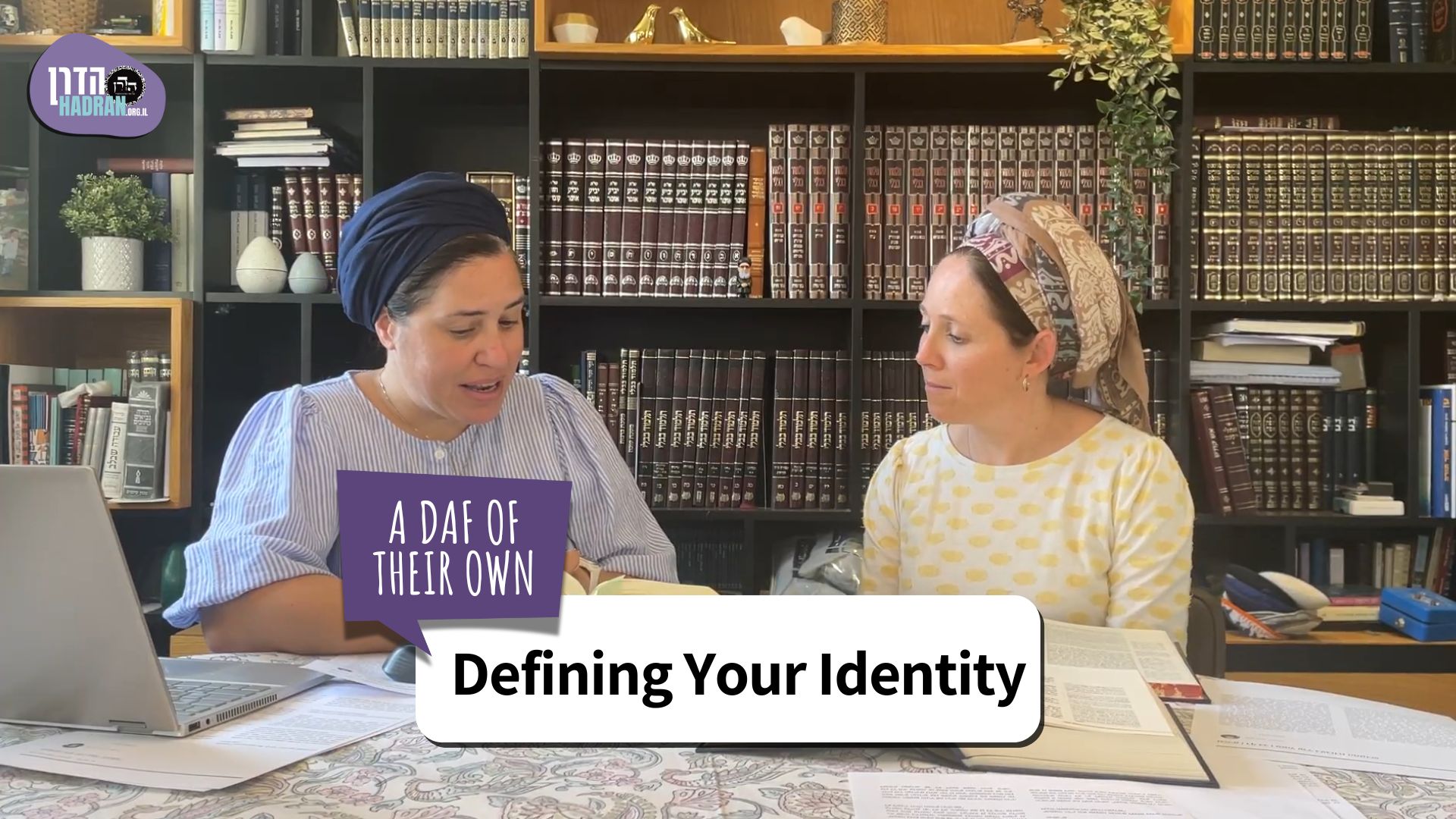
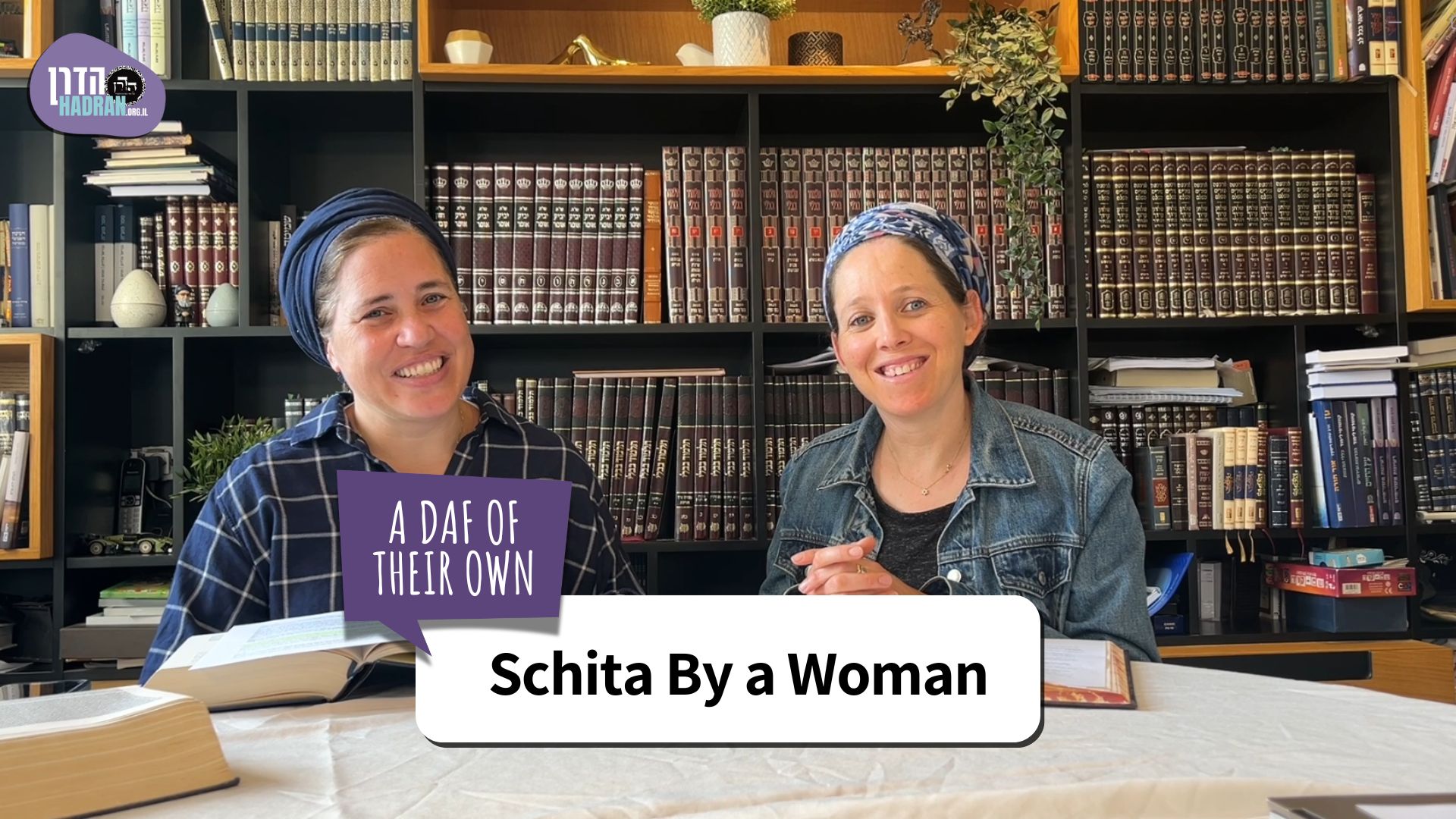
A Daf of Their Own
Thought-provoking Talmudic discussions in a friendly, accessible style with Rabbanit Shira Marili Mirvis and Rabbanit Hamutal Shoval
Flashback
Flashback: a look into the reality of the Talmud. What was the time of the Talmud really like? How were the experiences different?
Gefet
Gemara, Perushim and Tosfot An in-depth (Iyun) Gemara shiur with Rabbanit Yael Shimoni and Shalhevet Schwartz Disclaimers: you do not have to be a daf learner to study Gefet. The texts are in Hebrew, the class teaching is in English. *In collaboration with Yeshivat Drisha

On Second Thought
On Second Thought: Delving Into the Sugya with Rabbanit Yafit Clymer
The Tabernacle and the Temple – which is more desired?

The Essence of the Incense and the Secret of the People
Spiritual Aspects of Korbanot: The Permission To Eat Meat
Spiritual Aspects of Korbanot: All About Blood
Daf Yomi: One Week at a Time
This shiur will allow you to connect to the worldwide phenomenon of Daf Yomi study, whether you learn the daf each day or just want to gain an overview of the entire Gemara.

Menachot Daf 9-16- Daf Yomi: One Week at a Time
Menachot Daf 2-8- Daf Yomi: One Week at a Time
Zevachim Daf 115-120+ Siyum– Daf Yomi: One Week at a Time
Zevachim Daf 109-114– Daf Yomi: One Week at a Time
Zevachim Daf 102-108– Daf Yomi: One Week at a Time
Zevachim Daf 94-101– Daf Yomi: One Week at a Time
Talking Talmud
A conversation on the daf yomi with Anne Gordon and Yardaena Osband
Menahot 19: Laws, Statutes, and Biblical Repetition
Menahot 18: Tannaitic Drama and 15 Tasks of the Menahot
Menahot 16: Permitting Factors Mitigating against Pigul
Beyond the Daf (HE)
Explore weekly shiurim in Hebrew covering the most thought-provoking topics that arise from the daf.
Suggested for you
Your history
Courses
Take a Course
Develop your Talmud study skills with free, self-paced online courses by experienced Gemara teachers. All courses are designed to be relevant for beginners, as well as more advanced learners.
Masechtot
Learn a Masechet
Take a personalized, self-paced trip through Talmud study by choosing a masechet (tractate) that matches your interests and schedule.
Support Women’s Talmud Study
Your donation to Hadran enables us to create more resources and to reach and inspire more women all over the world.
The Hadran Learners’ Tapestry
Meet the diverse women learning Gemara with Hadran.
Read their stories and add your own.





Register your free learner account now
With your free Hadran account, you can keep track of your learning options, choices and progress.
Progress tracker
Keep track of where you are in courses and masechtot.
Content updates
Follow the teachers you like. Get notified when they release new content.
Learning reminders
Receive reminders to help you keep up with your learning goals.
Account settings
Update your user and contact information.