







אם יש כתם, האם יש דרכים לדעת אם זה דם או לא? אם מכבסים בשבע סמנין ספציפיים, וזה יורד, סימן שזה דם ואם לא, סימן שזה צבע. אחרי שהכתם יורד אפילו אם לא יורד באופן מלא, אפשר לטבול לטהרו כי הכתם מבוטל ומה שנשאר נחשב טומאה בלועה. מהן שבעת הסמנין והאם חשוב הסדר? אם הכתם לא יורד, אבל מנסים לכבס שנית וזה יורד, האם הטהרות שהשתמש בהם בין הכביסות טמאות? האם עצם הכיבוס השניה הוכיח שהוא הקפיד על הכתם והתייחס כאילו זה דם? למי שסובר שהפקדה שלו רלונטית, על בסיס מה סובר כך? מחלוקת ר’ יוחנן וריש לקיש לגבי טומאה בלועה שאינה מטמאה – האם זה כולל טומאה שיכול לצאת על ידי הדחק? האם זה משנה אם הדבר הוא בלוע הוא טומאה מדאורייתא (כמו מעיינות הזב) או דרבנן כמו מקשים טמאים רגילים שמטמאים כלים מדרבנן בלבד? ר’ יוחנן מביא שלוש קושיות נגד ריש לקיש וריש לקיש מקשה על ר’ יוחנן קושיה אחת. כדי לענות על הקושי נגד ר’ יונחן, רב פפא מסביר בדיוק באיזה מקרים הם חולקים ומה כל אחד סובר.
הלימוד השבוע מקודש ע”י רינה ספטי גולדשטיין ומרק גולדשטיין לע”נ מו ספטי.
רוצה להקדיש שיעור?

כלים
הלימוד השבוע מקודש ע”י רינה ספטי גולדשטיין ומרק גולדשטיין לע”נ מו ספטי.
נדה סב
קִמוֹנְיָא, וְאַשְׁלָג.
Cimolian earth [kamonya], and potash [eshlag].
הִטְבִּילוֹ וְעָשָׂה עַל גַּבָּיו טְהָרוֹת, הֶעֱבִיר עָלָיו שִׁבְעָה סַמָּנִין וְלֹא עָבַר — הֲרֵי זֶה צֶבַע, הַטְּהָרוֹת טְהוֹרוֹת וְאֵינוֹ צָרִיךְ לְהַטְבִּיל. עָבַר אוֹ שֶׁדֵּהָה — הֲרֵי זֶה כֶּתֶם, וְהַטְּהָרוֹת טְמֵאוֹת וְצָרִיךְ לְהַטְבִּיל.
If one immersed the garment with the stain whose nature is unknown and then handled ritually pure items with the garment, and then applied these seven substances to the stain and it did not disappear, that stain is presumably from a dye, and therefore the ritually pure items are pure, and he need not immerse the garment again, as there is no impurity. If the stain disappeared or if it faded, that is a blood stain, and the ritually pure items that he handled are impure, and he must immerse the garment again.
אֵיזֶהוּ רוֹק תָּפֵל? כֹּל שֶׁלֹּא טָעַם כְּלוּם. מֵי גְרִיסִין — לְעִיסַּת גְּרִיסִין שֶׁל פּוֹל חֲלוּקַת נֶפֶשׁ. מֵי רַגְלַיִם — שֶׁהֶחְמִיצוּ.
What is tasteless saliva? It is saliva that emerges from the mouth of any person who tasted nothing all night, when he first awakens in the morning. Liquid from split beans is created through the chewing of split beans that divided naturally, not by human hand, which is then applied to the stain. The urine that is an effective detergent is specifically urine that fermented for three days.
וְצָרִיךְ לְכַסְכֵּס שָׁלֹשׁ פְּעָמִים לְכׇל אֶחָד וְאֶחָד, הֶעֱבִירָן שֶׁלֹּא כְּסִדְרָן, אוֹ שֶׁהֶעֱבִיר שִׁבְעָה סַמָּנִין כְּאַחַת — לֹא עָשָׂה וְלֹא כְלוּם.
And one must rub each and every one of the substances three times over the stain, and one must apply them separately, and one must apply them in the order they are listed in the mishna. If one applied them in a manner that is not in their prescribed order, or if one applied all seven substances simultaneously, he has done nothing. One cannot determine by means of that examination whether it is blood or a dye.
גְּמָ’ תָּנָא: נֶתֶר אֲלֶכְּסַנְדְּרִית, וְלֹא נֶתֶר אַנְטִפַּטְרִית.
GEMARA: The Gemara clarifies the identities of the seven substances that remove blood stains. With regard to natron, a Sage taught in a baraita: This is referring to Alexandrian natron, i.e., from the city in Egypt, and not natron from Anpantrin, which is of a different quality.
בּוֹרִית. אָמַר רַב יְהוּדָה: זֶה אַהֲלָא. וְהָתַנְיָא: הַבּוֹרִית וְהָאָהָל! אֶלָּא מַאי בּוֹרִית? כַּבְרִיתָא.
The mishna lists borit as one of the seven substances. Rav Yehuda says: This is referring to ice plant. The Gemara raises an objection: But isn’t it taught in a baraita: Borit and ice plant, which indicates that they are two different substances? Rather, what is borit? Sulfur.
וּרְמִינְהִי: הוֹסִיפוּ עֲלֵיהֶן הַלְבֵּיצִין, וְהַלְּעוֹנִין, הַבּוֹרִית, וְהָאָהָל. וְאִי בּוֹרִית כַּבְרִיתָא, מִי אִית לֵיהּ שְׁבִיעִית? וְהָתְנַן: זֶה הַכְּלָל: כֹּל שֶׁיֵּשׁ לוֹ עִיקָּר — יֵשׁ לוֹ שְׁבִיעִית, וְכֹל שֶׁאֵין לוֹ עִיקָּר — אֵין לוֹ שְׁבִיעִית! אֶלָּא מַאי בּוֹרִית? אַהֲלָא. וְהָתַנְיָא: הַבּוֹרִית וְהָאָהָל! תְּרֵי גַּוְונֵי אַהֲלָא.
And the Gemara raises a contradiction from the baraita discussing the halakha of plants whose use is prohibited during the Sabbatical Year: They added to the list of such plants: Bulbs of ornithogalum, and wormwood, and borit, and ice plant. And if it would enter your mind to say that borit is sulfur, is there sulfur that is subject to the halakhot of the Sabbatical Year? But didn’t we learn in a baraita that this is the principle: Anything that has a root and grows is subject to the halakhot of the Sabbatical Year, and anything that does not have a root is not subject to the halakhot of the Sabbatical Year? Rather, what is borit? It is ice plant. But isn’t it taught in the baraita: And borit and ice plant? The Gemara explains that there are two types of ice plant, one of which is called borit.
קִמוֹנְיָא. אָמַר רַב יְהוּדָה: שְׁלוֹף דּוֹץ. וְאַשְׁלָג, אָמַר שְׁמוּאֵל: שְׁאֵלְתִּינְהוּ לְנָחוֹתֵי יַמָּא, וַאֲמַרוּ: אַשְׁלָגָא שְׁמֵיהּ, וּמִשְׁתְּכַח בֵּינֵי נִקְבֵי מַרְגָּנִיתָא, וּמַפְּקִי לֵהּ בְּרַמְצָא דְּפַרְזְלָא.
With regard to the Cimolian earth mentioned in the mishna, Rav Yehuda said: This is the earth referred to as: Pull out, stick in. And with regard to the eshlag mentioned in the mishna, Shmuel said: I asked all of the seafarers about the identity of eshlag, and they told me it is called ashlega, in Aramaic, and can be found in the shell of the pearl, and is removed with an iron skewer.
הִטְבִּילוֹ וְעָשָׂה [כּוּ׳]. תָּנוּ רַבָּנַן: הֶעֱבִיר עָלָיו שִׁבְעָה סַמָּנִין וְלֹא עָבַר, צַפּוֹן וְעָבַר — טׇהֳרוֹתָיו טְמֵאוֹת.
§ The mishna teaches: If one immersed the garment with the stain whose nature is unknown and then handled ritually pure items with the garment, and then applied these seven substances to the stain and it did not disappear, that stain is a dye, and therefore the ritually pure items are pure, and he need not immerse the garment again, as there is no impurity. The Sages taught in a baraita: If one applied these seven substances to the stain and it did not disappear, but he then applied soap [tzafon] and it disappeared, any ritually pure items that he handled with the garment are impure.
צַפּוֹן צֶבַע נָמֵי מְעַבַּר! אֶלָּא, הֶעֱבִיר עָלָיו שִׁשָּׁה סַמָּנִין וְלֹא עָבַר, הֶעֱבִיר עָלָיו צַפּוֹן וְעָבַר — טׇהֳרוֹתָיו טְמֵאוֹת, שֶׁאִם הֶעֱבִיר שְׁבִיעִי מִתְּחִילָּה, שֶׁמָּא עָבַר.
The Gemara raises an objection with regard to this ruling: But soap causes dye to disappear as well; why then should one assume that the stain was blood? Rather, the baraita means that if one applied only six of the seven substances to it and the stain did not disappear, and he then applied soap to the stain and it disappeared, any ritually pure items that he handled with the garment are impure. The reason is that if he had applied all seven substances initially, perhaps the stain would have disappeared, proving that it was blood. Consequently, the garment is rendered impure due to uncertainty.
תַּנְיָא אִידַּךְ: הֶעֱבִיר עָלָיו שִׁבְעָה סַמָּנִין וְלֹא עָבַר, שְׁנָאָן וְעָבַר — טׇהֳרוֹתָיו טְהוֹרוֹת.
It is taught in another baraita: If one applied the seven substances to the stain and it did not disappear, indicating that it is a dye, and he then repeated and applied the seven substances a second time and the stain disappeared, any ritually pure items that he handled with the garment remain ritually pure.
אָמַר רַבִּי זֵירָא: לֹא שָׁנוּ אֶלָּא הַטְּהָרוֹת שֶׁנַּעֲשׂוּ בֵּין תִּכְבּוֹסֶת רִאשׁוֹנָה לַשְּׁנִיָּה, אֲבָל טְהָרוֹת שֶׁנַּעֲשׂוּ אַחַר תִּכְבּוֹסֶת שְׁנִיָּה — טׇהֳרוֹתָיו טְמֵאוֹת, שֶׁהֲרֵי הִקְפִּיד עָלָיו וְעָבַר.
In explanation of this baraita, Rabbi Zeira says: They taught that the pure items remain pure only with regard to the ritually pure items that were handled between the first washing with the seven substances and the second washing. But with regard to any pure items that were handled with the garment after the second washing, these pure items become impure, as he was particular about it, i.e., by repeating the washing procedure he showed he was concerned that it might be blood, and the stain disappeared, demonstrating that it was in fact blood.
אֲמַר לֵיהּ רַבִּי אַבָּא לְרַב אָשֵׁי: מִידֵּי בִּקְפִידָא תַּלְיָא מִילְּתָא?
Rabbi Abba said to Rav Ashi, with regard to his statement: Does the matter of purity or impurity depend on whether or not one is particular about the blood stain? If the items he handled on the garment between the first and second washings are ritually pure, then any items he handled after the second washing should likewise be pure.
אֲמַר לֵיהּ: אִין, דְּתַנְיָא: רַבִּי חִיָּיא אוֹמֵר: דַּם הַנִּדָּה וַדַּאי — מַעֲבִיר עָלָיו שִׁבְעָה סַמָּנִין, וּמְבַטְּלוֹ.
Rav Ashi said to him: Yes, the status of purity depends upon whether or not the owner of the garment is particular about the stain. As it is taught in a baraita that Rabbi Ḥiyya says: If one finds blood on a garment that is certainly from a menstruating woman and therefore renders the garment impure, one may apply the seven substances listed in the mishna to it and thereby nullify it from being considered a blood stain at all, even if the stain is not completely removed. And he may then immerse the garment in a ritual bath and it is ritually pure.
וְאַמַּאי? הָא דַּם נִדָּה הוּא! אַלְמָא בִּקְפֵידָא תַּלְיָא מִילְּתָא, הָכִי נָמֵי בִּקְפֵידָא תַּלְיָא מִילְּתָא.
Rav Ashi analyzes this ruling: But why is the garment pure? After all, it has blood from a menstruating woman on it. Evidently, the matter of whether or not it is ritually pure depends upon whether or not the owner of the garment is particular about the blood stain. So too here, the matter of whether or not it is ritually pure depends upon whether or not the owner of the garment is particular about the blood stain.
תְּנַן הָתָם: חֲרָסִין שֶׁנִּשְׁתַּמֵּשׁ בָּהֶן זָב, שֶׁבָּלְעוּ מַשְׁקִין, וְנָפְלוּ לַאֲוִיר הַתַּנּוּר, וְהוּסַּק הַתַּנּוּר — הַתַּנּוּר טָמֵא, שֶׁסּוֹף מַשְׁקֶה לָצֵאת.
§ We learned in a mishna there (see Kelim 9:5): In a case of pottery, i.e., a chamber pot, that a man who experiences a gonorrhea-like discharge [zav] has used and that has absorbed impure liquids from the zav, and it then fell into the air of an oven, and the oven was subsequently heated, the oven is impure, as the impure liquid will eventually emerge from the chamber pot due to the heat of the oven.
אָמַר רֵישׁ לָקִישׁ: לֹא שָׁנוּ אֶלָּא מַשְׁקִין קַלִּים, אֲבָל מַשְׁקִין חֲמוּרִין — טָמֵא, אַף עַל פִּי שֶׁלֹּא הוּסַּק הַתַּנּוּר. רַבִּי יוֹחָנָן אָמַר: אֶחָד מַשְׁקִין קַלִּין וְאֶחָד מַשְׁקִין חֲמוּרִין, אִם הוּסַּק הַתַּנּוּר — אִין, אִי לָא — לָא.
The amora’im disagree with regard to the correct interpretation of this mishna. Reish Lakish says: They taught that the oven is impure once it is heated only with regard to liquids of lesser ritual impurity, i.e., that are not primary sources of impurity, such as the tears or urine of one who was rendered impure by contact with a corpse. But with regard to liquids of greater ritual impurity, e.g., urine of a zav or zava, the oven is impure even though the oven was not heated. Rabbi Yoḥanan says: With regard to both liquids of lesser ritual impurity and liquids of greater ritual impurity that fell into an oven, if the oven was heated, then yes, the oven is impure, but if the oven was not heated, it is not impure.
אֵיתִיבֵיהּ רַבִּי יוֹחָנָן לְרֵישׁ לָקִישׁ: הִטְבִּילוֹ, וְעָשָׂה עַל גַּבָּיו טְהָרוֹת, וְהֶעֱבִיר עָלָיו שִׁבְעָה סַמָּנִין וְלֹא עָבַר — הֲרֵי זֶה צֶבַע, וְטׇהֳרוֹתָיו טְהוֹרוֹת, וְאֵין צָרִיךְ לְהַטְבִּיל!
Rabbi Yoḥanan raised an objection to Reish Lakish from the mishna: If one immersed the garment with the stain whose nature is unknown, and then handled ritually pure items with the garment, and then applied these seven substances to the stain and it did not disappear, that stain is presumably from a dye, and therefore the ritually pure items are ritually pure, and he need not immerse the garment again, as there is no impurity. Rabbi Yoḥanan understands that the stain is not definitely from a dye; even if it is from blood, such blood that is absorbed into the garment to the degree that it does not come out after this process is performed, does not impart ritual impurity. The same should apply in the case of the oven, i.e., the liquids should impart impurity only when the oven is heated and they actually emerge.
אֲמַר לֵיהּ: הַנַּח לִכְתָמִים דְּרַבָּנַן.
Reish Lakish said to Rabbi Yoḥanan in response: Leave aside blood stains, i.e., one cannot cite a proof from them, as they impart impurity by rabbinic law, and for this reason the Sages were lenient and ruled that they do not impart impurity until they actually emerge. But with regard to liquids that are impure by Torah law, the halakha is different.
וְהָתָנֵי רַבִּי חִיָּיא: דַּם הַנִּדָּה וַדַּאי — מַעֲבִיר עָלָיו שִׁבְעָה סַמָּנִין וּמְבַטְּלוֹ!
Rabbi Yoḥanan raises another objection to Reish Lakish: But didn’t Rabbi Ḥiyya teach: If one finds blood on a garment that is certainly from a menstruating woman and therefore renders the garment impure, one may apply the seven substances listed in the mishna to it and nullify the stain from being considered a blood stain at all, even if the stain is not entirely removed; and he may then immerse the garment in a ritual bath and it is ritually pure?
אֲמַר לֵיהּ: רַבִּי לֹא שָׁנָה, רַבִּי חִיָּיא מְנָא לֵיהּ?
Reish Lakish said to Rabbi Yoḥanan in response: You cannot raise an objection to me from the baraita of Rabbi Ḥiyya, since if Rabbi Yehuda HaNasi did not teach this halakha in the Mishna, from where did Rabbi Ḥiyya learn it? Rabbi Ḥiyya was a student of Rabbi Yehuda HaNasi, and therefore he could not have included a halakha that contradicts the Mishna. Consequently, this statement in his name must be erroneous.
אֵיתִיבֵיהּ רַבִּי יוֹחָנָן לְרֵישׁ לָקִישׁ: רְבִיעִית דָּם שֶׁנִּבְלַע בַּבַּיִת — הַבַּיִת טָמֵא, וְאָמְרִי לַהּ: הַבַּיִת טָהוֹר. וְלָא פְּלִיגִי — הָא בְּכֵלִים דְּמֵעִיקָּרָא, הָא בְּכֵלִים דְּבַסּוֹף.
Rabbi Yoḥanan raised an objection to Reish Lakish from a mishna (Oholot 3:2): With regard to a quarter–log of blood from a corpse that was absorbed in the floor of a house, every vessel in the house is ritually impure by virtue of being under the same roof as the blood. The Gemara parenthetically notes: And some say that the mishna states that every vessel in the house is ritually pure. And these two statements do not disagree, as this first statement was issued in reference to vessels that were in the house at the outset, before the blood became absorbed; and this second statement was issued in reference to vessels that came into the house at the end, after the blood had already been absorbed.
נִבְלְעָה בִּכְסוּת, אִם מִתְכַּבֶּסֶת וְיוֹצֵא מִמֶּנָּה רְבִיעִית דָּם — טְמֵאָה, וְאִם לָאו — טְהוֹרָה!
The mishna continues: In a case where the blood was absorbed in a garment, it is examined. If the garment is washed and a quarter–log of blood emerges from it, it is ritually impure and it imparts impurity to the vessels in the house as well. But if not, then it is pure, and it does not impart impurity. Apparently, only blood that can be removed from a garment is considered blood, whereas blood absorbed in the garment is insignificant. This is in accordance with the opinion that an absorbed substance does not impart ritual impurity, even if it can be removed in some manner.
אָמַר רַב כָּהֲנָא: מִקּוּלֵּי רְבִיעִיּוֹת שָׁנוּ כָּאן, שָׁאנֵי דַּם תְּבוּסָה דְּרַבָּנַן.
Rav Kahana said in response: They taught here a halakha from among the leniencies that apply to the measurement of a quarter-log. That is, this case is different, as the mishna is referring to the blood of submission discharged from a body at the time of death, and such blood is ritually impure by rabbinic law. But in general, a ritually impure liquid that is absorbed into an item does impart impurity.
אֵיתִיבֵיהּ רֵישׁ לָקִישׁ לְרַבִּי יוֹחָנָן: כׇּל הַבָּלוּעַ שֶׁאֵינוֹ יָכוֹל לָצֵאת — טָהוֹר. הָא יָכוֹל לָצֵאת — טָמֵא, וְאַף עַל גַּב דְּלָא נָפֵיק!
Reish Lakish raised an objection to Rabbi Yoḥanan from a mishna (Oholot 3:2): Any liquid that is absorbed but that is unable to emerge is pure. Reish Lakish infers from this mishna that if it is able to emerge it is impure, and that this is the halakha even though it has not yet emerged.
אָמַר רַב פָּפָּא: כֹּל הֵיכָא דְּאֵין יָכוֹל לָצֵאת, וְלֹא הִקְפִּיד עָלָיו — דִּבְרֵי הַכֹּל טָהוֹר; יָכוֹל לָצֵאת וְהִקְפִּיד עָלָיו — דִּבְרֵי הַכֹּל טָמֵא.
Rav Pappa said in defense of Rabbi Yoḥanan’s opinion: Anywhere that the liquid is unable to emerge and the owner of the garment is not particular about it, i.e., he is not bothered that this liquid is absorbed within the garment, everyone, i.e., both Rabbi Yoḥanan and Reish Lakish, agrees that the garment is pure. If the liquid is able to emerge and the owner of the garment is particular about it and does not want it in his garment, everyone agrees that the garment is impure.
כִּי פְּלִיגִי דְּיָכוֹל לָצֵאת וְלֹא הִקְפִּיד עָלָיו, מָר סָבַר: כֵּיוָן דְּיָכוֹל לָצֵאת, אַף עַל גַּב דְּלֹא הִקְפִּיד עָלָיו, וּמָר סָבַר: אַף עַל גַּב דְּיָכוֹל לָצֵאת
They disagree when the liquid is able to emerge and the owner is not particular about it. One Sage, Reish Lakish, holds that since the liquid is able to emerge, even though the owner is not particular about it, the garment is impure. And one Sage, Rabbi Yoḥanan, holds that even though the liquid is able to emerge,

כלים
העמקה
רוצה להבין מה באמת קורה מתחת לפני השטח של הסוגיה?
שיעורים, פודקאסטים והרחבות של מיטב המורות שלנו יפתחו לך עוד זוויות וכיווני חשיבה.




סיום מסכת סוכה עם מוריה תעסן מיכאלי – ברכת שהחיינו והשמחה במצוות








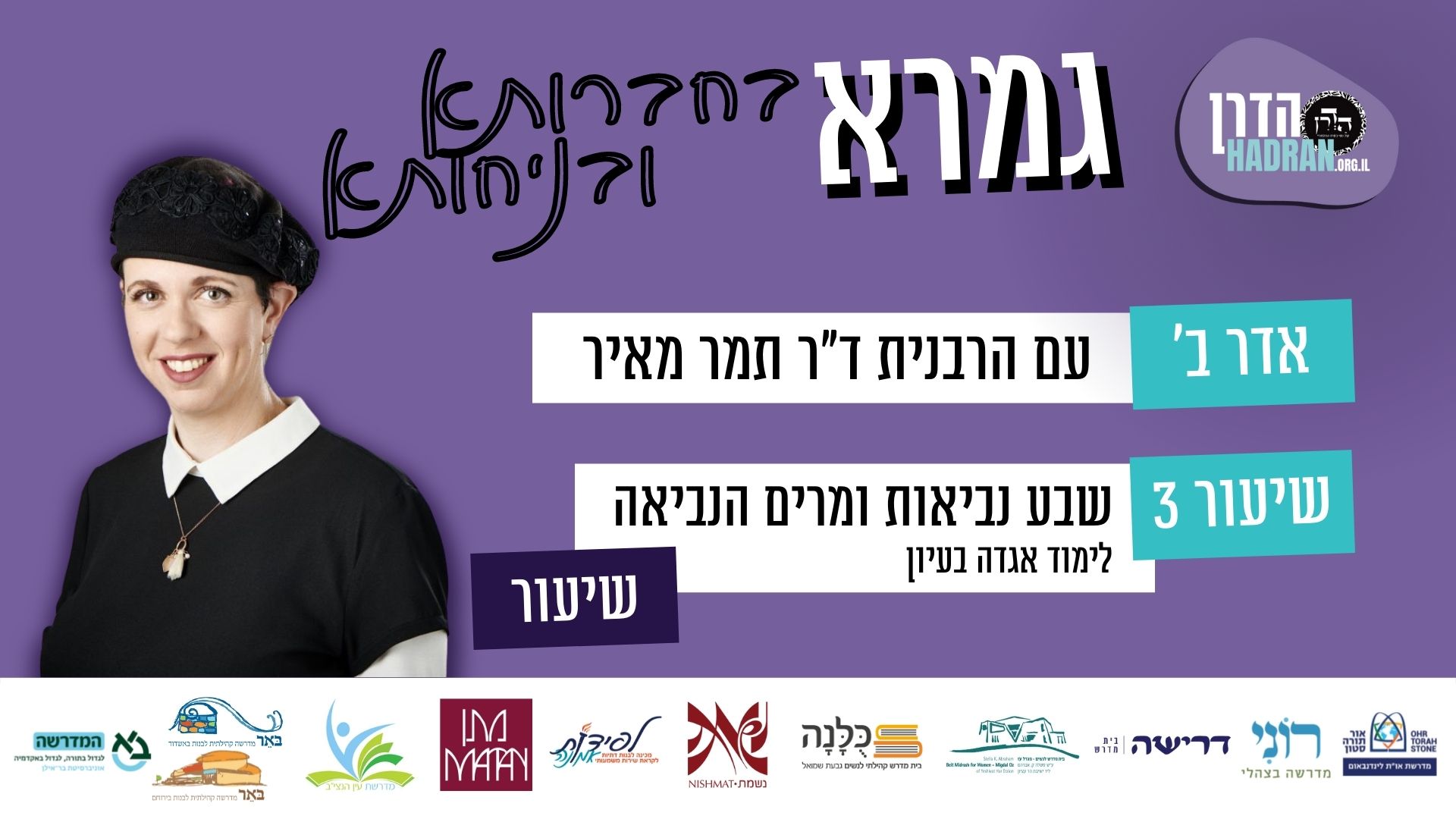
שבע נביאות ומרים הנביאה –סוגיות נבחרות (אדר ב’ שיעור ג)

חדשה בלימוד הגמרא?
זה הדף הראשון שלך? איזו התרגשות עצומה! יש לנו בדיוק את התכנים והכלים שיעזרו לך לעשות את הצעדים הראשונים ללמידה בקצב וברמה שלך, כך תוכלי להרגיש בנוח גם בתוך הסוגיות המורכבות ומאתגרות.
פסיפס הלומדות שלנו
גלי את קהילת הלומדות שלנו, מגוון נשים, רקעים וסיפורים. כולן חלק מתנועה ומסע מרגש ועוצמתי.
התחלתי ללמוד לפני כשנתיים בשאיפה לסיים לראשונה מסכת אחת במהלך חופשת הלידה.
אחרי מסכת אחת כבר היה קשה להפסיק…
ירוחם, ישראל
אחי, שלומד דף יומי ממסכת ברכות, חיפש חברותא ללימוד מסכת ראש השנה והציע לי. החברותא היתה מאתגרת טכנית ורוב הזמן נעשתה דרך הטלפון, כך שבסיום המסכת נפרדו דרכינו. אחי חזר ללמוד לבד, אבל אני כבר נכבשתי בקסם הגמרא ושכנעתי את האיש שלי להצטרף אלי למסכת ביצה. מאז המשכנו הלאה, ועכשיו אנחנו מתרגשים לקראתו של סדר נשים!

נוקדים, ישראל
התחלתי בסיום הש”ס, יצאתי באורות. נשברתי פעמיים, ובשתיהם הרבנית מישל עודדה להמשיך איפה שכולם בסבב ולהשלים כשאוכל, וכך עשיתי וכיום השלמתי הכל. מדהים אותי שאני לומדת כל יום קצת, אפילו בחדר הלידה, בבידוד או בחו”ל. לאט לאט יותר נינוחה בסוגיות. לא כולם מבינים את הרצון, בפרט כפמניסטית. חשה סיפוק גדול להכיר את המושגים וצורת החשיבה. החלום זה להמשיך ולהתמיד ובמקביל ללמוד איך מהסוגיות נוצרה והתפתחה ההלכה.

מודיעין, ישראל
התחלתי ללמוד דף יומי לפני שנתיים, עם מסכת שבת. בהתחלה ההתמדה היתה קשה אבל בזכות הקורונה והסגרים הצלחתי להדביק את הפערים בשבתות הארוכות, לסיים את מסכת שבת ולהמשיך עם המסכתות הבאות. עכשיו אני מסיימת בהתרגשות רבה את מסכת חגיגה וסדר מועד ומחכה לסדר הבא!

מודיעין, ישראל
התחלתי ללמוד דף יומי שהתחילו מסכת כתובות, לפני 7 שנים, במסגרת קבוצת לימוד שהתפרקה די מהר, ומשם המשכתי לבד בתמיכת האיש שלי. נעזרתי בגמרת שטיינזלץ ובשיעורים מוקלטים.
הסביבה מאד תומכת ואני מקבלת המון מילים טובות לאורך כל הדרך. מאז הסיום הגדול יש תחושה שאני חלק מדבר גדול יותר.
אני לומדת בשיטת ה”7 דפים בשבוע” של הרבנית תרצה קלמן – כלומר, לא נורא אם לא הצלחת ללמוד כל יום, העיקר שגמרת ארבעה דפים בשבוע

עתניאל, ישראל
אמא שלי למדה איתי ש”ס משנה, והתחילה ללמוד דף יומי. אני החלטתי שאני רוצה ללמוד גם. בהתחלה למדתי איתה, אח”כ הצטרפתי ללימוד דף יומי שהרב דני וינט מעביר לנוער בנים בעתניאל. במסכת עירובין עוד חברה הצטרפה אלי וכשהתחלנו פסחים הרב דני פתח לנו שעור דף יומי לבנות. מאז אנחנו לומדות איתו קבוע כל יום את הדף היומי (ובשבת אבא שלי מחליף אותו). אני נהנית מהלימוד, הוא מאתגר ומעניין

עתניאל, ישראל
בסוף הסבב הקודם ראיתי את השמחה הגדולה שבסיום הלימוד, בעלי סיים כבר בפעם השלישית וכמובן הסיום הנשי בבנייני האומה וחשבתי שאולי זו הזדמנות עבורי למשהו חדש.
למרות שאני שונה בסביבה שלי, מי ששומע על הלימוד שלי מפרגן מאוד.
אני מנסה ללמוד קצת בכל יום, גם אם לא את כל הדף ובסך הכל אני בדרך כלל עומדת בקצב.
הלימוד מעניק המון משמעות ליום יום ועושה סדר בלמוד תורה, שתמיד היה (ועדיין) שאיפה. אבל אין כמו קביעות

טל מנשה, ישראל
לפני 15 שנה, אחרי עשרות שנים של "ג’ינגול” בין משפחה לקריירה תובענית בהייטק, הצטרפתי לשיעורי גמרא במתן רעננה. הלימוד המעמיק והייחודי של הרבנית אושרה קורן יחד עם קבוצת הנשים המגוונת הייתה חוויה מאלפת ומעשירה. לפני כשמונה שנים כאשר מחזור הדף היומי הגיע למסכת תענית הצטרפתי כ”חברותא” לבעלי. זו השעה היומית שלנו ביחד כאשר דפי הגמרא משתלבים בחיי היום יום, משפיעים ומושפעים, וכשלא מספיקים תמיד משלימים בשבת

רעננה, ישראל
התחלתי בתחילת הסבב, והתמכרתי. זה נותן משמעות נוספת ליומיום ומאוד מחזק לתת לזה מקום בתוך כל שגרת הבית-עבודה השוטפת.
בית שמש, ישראל
התחלתי ללמוד את הדף היומי מעט אחרי שבני הקטן נולד. בהתחלה בשמיעה ולימוד באמצעות השיעור של הרבנית שפרבר. ובהמשך העזתי וקניתי לעצמי גמרא. מאז ממשיכה יום יום ללמוד עצמאית, ולפעמים בעזרת השיעור של הרבנית, כל יום. כל סיום של מסכת מביא לאושר גדול וסיפוק. הילדים בבית נהיו חלק מהלימוד, אני משתפת בסוגיות מעניינות ונהנית לשמוע את דעתם.

מעלה מכמש, ישראל
רציתי לקבל ידע בתחום שהרגשתי שהוא גדול וחשוב אך נעלם ממני. הלימוד מעניק אתגר וסיפוק ומעמיק את תחושת השייכות שלי לתורה וליהדות
עלי זהב – לשם, ישראל
A friend in the SF Bay Area said in Dec 2019 that she might start listening on her morning drive to work. I mentioned to my husband and we decided to try the Daf when it began in Jan 2020 as part of our preparing to make Aliyah in the summer.

ירושלים, Israel
אחרי שראיתי את הסיום הנשי של הדף היומי בבנייני האומה זה ריגש אותי ועורר בי את הרצון להצטרף. לא למדתי גמרא קודם לכן בכלל, אז הכל היה לי חדש, ולכן אני לומדת בעיקר מהשיעורים פה בהדרן, בשוטנשטיין או בחוברות ושיננתם.

בית שמש, ישראל
התחלתי ללמוד לפני כשנתיים בשאיפה לסיים לראשונה מסכת אחת במהלך חופשת הלידה.
אחרי מסכת אחת כבר היה קשה להפסיק…
ירוחם, ישראל
שמעתי על הסיום הענק של הדף היומי ע”י נשים בבנייני האומה. רציתי גם.
החלטתי להצטרף. התחלתי ושיכנעתי את בעלי ועוד שתי חברות להצטרף. עכשיו יש לי לימוד משותף איתו בשבת ומפגש חודשי איתן בנושא (והתכתבויות תדירות על דברים מיוחדים שקראנו). הצטרפנו לקבוצות שונות בווטסאפ. אנחנו ממש נהנות. אני שומעת את השיעור מידי יום (בד”כ מהרב יוני גוטמן) וקוראת ומצטרפת לסיומים של הדרן. גם מקפידה על דף משלהן (ונהנית מאד).

אפרת, ישראל
התחלתי בסיום הש”ס, יצאתי באורות. נשברתי פעמיים, ובשתיהם הרבנית מישל עודדה להמשיך איפה שכולם בסבב ולהשלים כשאוכל, וכך עשיתי וכיום השלמתי הכל. מדהים אותי שאני לומדת כל יום קצת, אפילו בחדר הלידה, בבידוד או בחו”ל. לאט לאט יותר נינוחה בסוגיות. לא כולם מבינים את הרצון, בפרט כפמניסטית. חשה סיפוק גדול להכיר את המושגים וצורת החשיבה. החלום זה להמשיך ולהתמיד ובמקביל ללמוד איך מהסוגיות נוצרה והתפתחה ההלכה.
מודיעין, ישראל
באירוע של הדרן בנייני האומה. בהשראתה של אמי שלי שסיימה את הש”ס בסבב הקודם ובעידוד מאיר , אישי, וילדיי וחברותיי ללימוד במכון למנהיגות הלכתית של רשת אור תורה סטון ומורתיי הרבנית ענת נובוסלסקי והרבנית דבורה עברון, ראש המכון למנהיגות הלכתית.
הלימוד מעשיר את יומי, מחזיר אותי גם למסכתות שכבר סיימתי וידוע שאינו דומה מי ששונה פרקו מאה לשונה פרקו מאה ואחת במיוחד מרתקים אותי החיבורים בין המסכתות

מודיעין, ישראל
My explorations into Gemara started a few days into the present cycle. I binged learnt and become addicted. I’m fascinated by the rich "tapestry” of intertwined themes, connections between Masechtot, conversations between generations of Rabbanim and learners past and present all over the world. My life has acquired a golden thread, linking generations with our amazing heritage.
Thank you.

חשמונאים, Israel
התחלתי ללמוד בשנת המדרשה במגדל עוז, בינתיים נהנית מאוד מהלימוד ומהגמרא, מעניין ומשמח מאוד!
משתדלת להצליח לעקוב כל יום, לפעמים משלימה קצת בהמשך השבוע.. מרגישה שיש עוגן מקובע ביום שלי והוא משמח מאוד!

חיפה , ישראל
התחלתי ללמוד דף יומי אחרי שחזרתי בתשובה ולמדתי במדרשה במגדל עוז. הלימוד טוב ומספק חומר למחשבה על נושאים הלכתיים ”קטנים” ועד לערכים גדולים ביהדות. חשוב לי להכיר את הגמרא לעומק. והצעד הקטן היום הוא ללמוד אותה בבקיאות, בעזרת השם, ומי יודע אולי גם אגיע לעיון בנושאים מעניינים. נושאים בגמרא מתחברים לחגים, לתפילה, ליחסים שבין אדם לחברו ולמקום ולשאר הדברים שמלווים באורח חיים דתי 🙂

מצפה יריחו, ישראל
נדה סב
קִמוֹנְיָא, וְאַשְׁלָג.
Cimolian earth [kamonya], and potash [eshlag].
הִטְבִּילוֹ וְעָשָׂה עַל גַּבָּיו טְהָרוֹת, הֶעֱבִיר עָלָיו שִׁבְעָה סַמָּנִין וְלֹא עָבַר — הֲרֵי זֶה צֶבַע, הַטְּהָרוֹת טְהוֹרוֹת וְאֵינוֹ צָרִיךְ לְהַטְבִּיל. עָבַר אוֹ שֶׁדֵּהָה — הֲרֵי זֶה כֶּתֶם, וְהַטְּהָרוֹת טְמֵאוֹת וְצָרִיךְ לְהַטְבִּיל.
If one immersed the garment with the stain whose nature is unknown and then handled ritually pure items with the garment, and then applied these seven substances to the stain and it did not disappear, that stain is presumably from a dye, and therefore the ritually pure items are pure, and he need not immerse the garment again, as there is no impurity. If the stain disappeared or if it faded, that is a blood stain, and the ritually pure items that he handled are impure, and he must immerse the garment again.
אֵיזֶהוּ רוֹק תָּפֵל? כֹּל שֶׁלֹּא טָעַם כְּלוּם. מֵי גְרִיסִין — לְעִיסַּת גְּרִיסִין שֶׁל פּוֹל חֲלוּקַת נֶפֶשׁ. מֵי רַגְלַיִם — שֶׁהֶחְמִיצוּ.
What is tasteless saliva? It is saliva that emerges from the mouth of any person who tasted nothing all night, when he first awakens in the morning. Liquid from split beans is created through the chewing of split beans that divided naturally, not by human hand, which is then applied to the stain. The urine that is an effective detergent is specifically urine that fermented for three days.
וְצָרִיךְ לְכַסְכֵּס שָׁלֹשׁ פְּעָמִים לְכׇל אֶחָד וְאֶחָד, הֶעֱבִירָן שֶׁלֹּא כְּסִדְרָן, אוֹ שֶׁהֶעֱבִיר שִׁבְעָה סַמָּנִין כְּאַחַת — לֹא עָשָׂה וְלֹא כְלוּם.
And one must rub each and every one of the substances three times over the stain, and one must apply them separately, and one must apply them in the order they are listed in the mishna. If one applied them in a manner that is not in their prescribed order, or if one applied all seven substances simultaneously, he has done nothing. One cannot determine by means of that examination whether it is blood or a dye.
גְּמָ’ תָּנָא: נֶתֶר אֲלֶכְּסַנְדְּרִית, וְלֹא נֶתֶר אַנְטִפַּטְרִית.
GEMARA: The Gemara clarifies the identities of the seven substances that remove blood stains. With regard to natron, a Sage taught in a baraita: This is referring to Alexandrian natron, i.e., from the city in Egypt, and not natron from Anpantrin, which is of a different quality.
בּוֹרִית. אָמַר רַב יְהוּדָה: זֶה אַהֲלָא. וְהָתַנְיָא: הַבּוֹרִית וְהָאָהָל! אֶלָּא מַאי בּוֹרִית? כַּבְרִיתָא.
The mishna lists borit as one of the seven substances. Rav Yehuda says: This is referring to ice plant. The Gemara raises an objection: But isn’t it taught in a baraita: Borit and ice plant, which indicates that they are two different substances? Rather, what is borit? Sulfur.
וּרְמִינְהִי: הוֹסִיפוּ עֲלֵיהֶן הַלְבֵּיצִין, וְהַלְּעוֹנִין, הַבּוֹרִית, וְהָאָהָל. וְאִי בּוֹרִית כַּבְרִיתָא, מִי אִית לֵיהּ שְׁבִיעִית? וְהָתְנַן: זֶה הַכְּלָל: כֹּל שֶׁיֵּשׁ לוֹ עִיקָּר — יֵשׁ לוֹ שְׁבִיעִית, וְכֹל שֶׁאֵין לוֹ עִיקָּר — אֵין לוֹ שְׁבִיעִית! אֶלָּא מַאי בּוֹרִית? אַהֲלָא. וְהָתַנְיָא: הַבּוֹרִית וְהָאָהָל! תְּרֵי גַּוְונֵי אַהֲלָא.
And the Gemara raises a contradiction from the baraita discussing the halakha of plants whose use is prohibited during the Sabbatical Year: They added to the list of such plants: Bulbs of ornithogalum, and wormwood, and borit, and ice plant. And if it would enter your mind to say that borit is sulfur, is there sulfur that is subject to the halakhot of the Sabbatical Year? But didn’t we learn in a baraita that this is the principle: Anything that has a root and grows is subject to the halakhot of the Sabbatical Year, and anything that does not have a root is not subject to the halakhot of the Sabbatical Year? Rather, what is borit? It is ice plant. But isn’t it taught in the baraita: And borit and ice plant? The Gemara explains that there are two types of ice plant, one of which is called borit.
קִמוֹנְיָא. אָמַר רַב יְהוּדָה: שְׁלוֹף דּוֹץ. וְאַשְׁלָג, אָמַר שְׁמוּאֵל: שְׁאֵלְתִּינְהוּ לְנָחוֹתֵי יַמָּא, וַאֲמַרוּ: אַשְׁלָגָא שְׁמֵיהּ, וּמִשְׁתְּכַח בֵּינֵי נִקְבֵי מַרְגָּנִיתָא, וּמַפְּקִי לֵהּ בְּרַמְצָא דְּפַרְזְלָא.
With regard to the Cimolian earth mentioned in the mishna, Rav Yehuda said: This is the earth referred to as: Pull out, stick in. And with regard to the eshlag mentioned in the mishna, Shmuel said: I asked all of the seafarers about the identity of eshlag, and they told me it is called ashlega, in Aramaic, and can be found in the shell of the pearl, and is removed with an iron skewer.
הִטְבִּילוֹ וְעָשָׂה [כּוּ׳]. תָּנוּ רַבָּנַן: הֶעֱבִיר עָלָיו שִׁבְעָה סַמָּנִין וְלֹא עָבַר, צַפּוֹן וְעָבַר — טׇהֳרוֹתָיו טְמֵאוֹת.
§ The mishna teaches: If one immersed the garment with the stain whose nature is unknown and then handled ritually pure items with the garment, and then applied these seven substances to the stain and it did not disappear, that stain is a dye, and therefore the ritually pure items are pure, and he need not immerse the garment again, as there is no impurity. The Sages taught in a baraita: If one applied these seven substances to the stain and it did not disappear, but he then applied soap [tzafon] and it disappeared, any ritually pure items that he handled with the garment are impure.
צַפּוֹן צֶבַע נָמֵי מְעַבַּר! אֶלָּא, הֶעֱבִיר עָלָיו שִׁשָּׁה סַמָּנִין וְלֹא עָבַר, הֶעֱבִיר עָלָיו צַפּוֹן וְעָבַר — טׇהֳרוֹתָיו טְמֵאוֹת, שֶׁאִם הֶעֱבִיר שְׁבִיעִי מִתְּחִילָּה, שֶׁמָּא עָבַר.
The Gemara raises an objection with regard to this ruling: But soap causes dye to disappear as well; why then should one assume that the stain was blood? Rather, the baraita means that if one applied only six of the seven substances to it and the stain did not disappear, and he then applied soap to the stain and it disappeared, any ritually pure items that he handled with the garment are impure. The reason is that if he had applied all seven substances initially, perhaps the stain would have disappeared, proving that it was blood. Consequently, the garment is rendered impure due to uncertainty.
תַּנְיָא אִידַּךְ: הֶעֱבִיר עָלָיו שִׁבְעָה סַמָּנִין וְלֹא עָבַר, שְׁנָאָן וְעָבַר — טׇהֳרוֹתָיו טְהוֹרוֹת.
It is taught in another baraita: If one applied the seven substances to the stain and it did not disappear, indicating that it is a dye, and he then repeated and applied the seven substances a second time and the stain disappeared, any ritually pure items that he handled with the garment remain ritually pure.
אָמַר רַבִּי זֵירָא: לֹא שָׁנוּ אֶלָּא הַטְּהָרוֹת שֶׁנַּעֲשׂוּ בֵּין תִּכְבּוֹסֶת רִאשׁוֹנָה לַשְּׁנִיָּה, אֲבָל טְהָרוֹת שֶׁנַּעֲשׂוּ אַחַר תִּכְבּוֹסֶת שְׁנִיָּה — טׇהֳרוֹתָיו טְמֵאוֹת, שֶׁהֲרֵי הִקְפִּיד עָלָיו וְעָבַר.
In explanation of this baraita, Rabbi Zeira says: They taught that the pure items remain pure only with regard to the ritually pure items that were handled between the first washing with the seven substances and the second washing. But with regard to any pure items that were handled with the garment after the second washing, these pure items become impure, as he was particular about it, i.e., by repeating the washing procedure he showed he was concerned that it might be blood, and the stain disappeared, demonstrating that it was in fact blood.
אֲמַר לֵיהּ רַבִּי אַבָּא לְרַב אָשֵׁי: מִידֵּי בִּקְפִידָא תַּלְיָא מִילְּתָא?
Rabbi Abba said to Rav Ashi, with regard to his statement: Does the matter of purity or impurity depend on whether or not one is particular about the blood stain? If the items he handled on the garment between the first and second washings are ritually pure, then any items he handled after the second washing should likewise be pure.
אֲמַר לֵיהּ: אִין, דְּתַנְיָא: רַבִּי חִיָּיא אוֹמֵר: דַּם הַנִּדָּה וַדַּאי — מַעֲבִיר עָלָיו שִׁבְעָה סַמָּנִין, וּמְבַטְּלוֹ.
Rav Ashi said to him: Yes, the status of purity depends upon whether or not the owner of the garment is particular about the stain. As it is taught in a baraita that Rabbi Ḥiyya says: If one finds blood on a garment that is certainly from a menstruating woman and therefore renders the garment impure, one may apply the seven substances listed in the mishna to it and thereby nullify it from being considered a blood stain at all, even if the stain is not completely removed. And he may then immerse the garment in a ritual bath and it is ritually pure.
וְאַמַּאי? הָא דַּם נִדָּה הוּא! אַלְמָא בִּקְפֵידָא תַּלְיָא מִילְּתָא, הָכִי נָמֵי בִּקְפֵידָא תַּלְיָא מִילְּתָא.
Rav Ashi analyzes this ruling: But why is the garment pure? After all, it has blood from a menstruating woman on it. Evidently, the matter of whether or not it is ritually pure depends upon whether or not the owner of the garment is particular about the blood stain. So too here, the matter of whether or not it is ritually pure depends upon whether or not the owner of the garment is particular about the blood stain.
תְּנַן הָתָם: חֲרָסִין שֶׁנִּשְׁתַּמֵּשׁ בָּהֶן זָב, שֶׁבָּלְעוּ מַשְׁקִין, וְנָפְלוּ לַאֲוִיר הַתַּנּוּר, וְהוּסַּק הַתַּנּוּר — הַתַּנּוּר טָמֵא, שֶׁסּוֹף מַשְׁקֶה לָצֵאת.
§ We learned in a mishna there (see Kelim 9:5): In a case of pottery, i.e., a chamber pot, that a man who experiences a gonorrhea-like discharge [zav] has used and that has absorbed impure liquids from the zav, and it then fell into the air of an oven, and the oven was subsequently heated, the oven is impure, as the impure liquid will eventually emerge from the chamber pot due to the heat of the oven.
אָמַר רֵישׁ לָקִישׁ: לֹא שָׁנוּ אֶלָּא מַשְׁקִין קַלִּים, אֲבָל מַשְׁקִין חֲמוּרִין — טָמֵא, אַף עַל פִּי שֶׁלֹּא הוּסַּק הַתַּנּוּר. רַבִּי יוֹחָנָן אָמַר: אֶחָד מַשְׁקִין קַלִּין וְאֶחָד מַשְׁקִין חֲמוּרִין, אִם הוּסַּק הַתַּנּוּר — אִין, אִי לָא — לָא.
The amora’im disagree with regard to the correct interpretation of this mishna. Reish Lakish says: They taught that the oven is impure once it is heated only with regard to liquids of lesser ritual impurity, i.e., that are not primary sources of impurity, such as the tears or urine of one who was rendered impure by contact with a corpse. But with regard to liquids of greater ritual impurity, e.g., urine of a zav or zava, the oven is impure even though the oven was not heated. Rabbi Yoḥanan says: With regard to both liquids of lesser ritual impurity and liquids of greater ritual impurity that fell into an oven, if the oven was heated, then yes, the oven is impure, but if the oven was not heated, it is not impure.
אֵיתִיבֵיהּ רַבִּי יוֹחָנָן לְרֵישׁ לָקִישׁ: הִטְבִּילוֹ, וְעָשָׂה עַל גַּבָּיו טְהָרוֹת, וְהֶעֱבִיר עָלָיו שִׁבְעָה סַמָּנִין וְלֹא עָבַר — הֲרֵי זֶה צֶבַע, וְטׇהֳרוֹתָיו טְהוֹרוֹת, וְאֵין צָרִיךְ לְהַטְבִּיל!
Rabbi Yoḥanan raised an objection to Reish Lakish from the mishna: If one immersed the garment with the stain whose nature is unknown, and then handled ritually pure items with the garment, and then applied these seven substances to the stain and it did not disappear, that stain is presumably from a dye, and therefore the ritually pure items are ritually pure, and he need not immerse the garment again, as there is no impurity. Rabbi Yoḥanan understands that the stain is not definitely from a dye; even if it is from blood, such blood that is absorbed into the garment to the degree that it does not come out after this process is performed, does not impart ritual impurity. The same should apply in the case of the oven, i.e., the liquids should impart impurity only when the oven is heated and they actually emerge.
אֲמַר לֵיהּ: הַנַּח לִכְתָמִים דְּרַבָּנַן.
Reish Lakish said to Rabbi Yoḥanan in response: Leave aside blood stains, i.e., one cannot cite a proof from them, as they impart impurity by rabbinic law, and for this reason the Sages were lenient and ruled that they do not impart impurity until they actually emerge. But with regard to liquids that are impure by Torah law, the halakha is different.
וְהָתָנֵי רַבִּי חִיָּיא: דַּם הַנִּדָּה וַדַּאי — מַעֲבִיר עָלָיו שִׁבְעָה סַמָּנִין וּמְבַטְּלוֹ!
Rabbi Yoḥanan raises another objection to Reish Lakish: But didn’t Rabbi Ḥiyya teach: If one finds blood on a garment that is certainly from a menstruating woman and therefore renders the garment impure, one may apply the seven substances listed in the mishna to it and nullify the stain from being considered a blood stain at all, even if the stain is not entirely removed; and he may then immerse the garment in a ritual bath and it is ritually pure?
אֲמַר לֵיהּ: רַבִּי לֹא שָׁנָה, רַבִּי חִיָּיא מְנָא לֵיהּ?
Reish Lakish said to Rabbi Yoḥanan in response: You cannot raise an objection to me from the baraita of Rabbi Ḥiyya, since if Rabbi Yehuda HaNasi did not teach this halakha in the Mishna, from where did Rabbi Ḥiyya learn it? Rabbi Ḥiyya was a student of Rabbi Yehuda HaNasi, and therefore he could not have included a halakha that contradicts the Mishna. Consequently, this statement in his name must be erroneous.
אֵיתִיבֵיהּ רַבִּי יוֹחָנָן לְרֵישׁ לָקִישׁ: רְבִיעִית דָּם שֶׁנִּבְלַע בַּבַּיִת — הַבַּיִת טָמֵא, וְאָמְרִי לַהּ: הַבַּיִת טָהוֹר. וְלָא פְּלִיגִי — הָא בְּכֵלִים דְּמֵעִיקָּרָא, הָא בְּכֵלִים דְּבַסּוֹף.
Rabbi Yoḥanan raised an objection to Reish Lakish from a mishna (Oholot 3:2): With regard to a quarter–log of blood from a corpse that was absorbed in the floor of a house, every vessel in the house is ritually impure by virtue of being under the same roof as the blood. The Gemara parenthetically notes: And some say that the mishna states that every vessel in the house is ritually pure. And these two statements do not disagree, as this first statement was issued in reference to vessels that were in the house at the outset, before the blood became absorbed; and this second statement was issued in reference to vessels that came into the house at the end, after the blood had already been absorbed.
נִבְלְעָה בִּכְסוּת, אִם מִתְכַּבֶּסֶת וְיוֹצֵא מִמֶּנָּה רְבִיעִית דָּם — טְמֵאָה, וְאִם לָאו — טְהוֹרָה!
The mishna continues: In a case where the blood was absorbed in a garment, it is examined. If the garment is washed and a quarter–log of blood emerges from it, it is ritually impure and it imparts impurity to the vessels in the house as well. But if not, then it is pure, and it does not impart impurity. Apparently, only blood that can be removed from a garment is considered blood, whereas blood absorbed in the garment is insignificant. This is in accordance with the opinion that an absorbed substance does not impart ritual impurity, even if it can be removed in some manner.
אָמַר רַב כָּהֲנָא: מִקּוּלֵּי רְבִיעִיּוֹת שָׁנוּ כָּאן, שָׁאנֵי דַּם תְּבוּסָה דְּרַבָּנַן.
Rav Kahana said in response: They taught here a halakha from among the leniencies that apply to the measurement of a quarter-log. That is, this case is different, as the mishna is referring to the blood of submission discharged from a body at the time of death, and such blood is ritually impure by rabbinic law. But in general, a ritually impure liquid that is absorbed into an item does impart impurity.
אֵיתִיבֵיהּ רֵישׁ לָקִישׁ לְרַבִּי יוֹחָנָן: כׇּל הַבָּלוּעַ שֶׁאֵינוֹ יָכוֹל לָצֵאת — טָהוֹר. הָא יָכוֹל לָצֵאת — טָמֵא, וְאַף עַל גַּב דְּלָא נָפֵיק!
Reish Lakish raised an objection to Rabbi Yoḥanan from a mishna (Oholot 3:2): Any liquid that is absorbed but that is unable to emerge is pure. Reish Lakish infers from this mishna that if it is able to emerge it is impure, and that this is the halakha even though it has not yet emerged.
אָמַר רַב פָּפָּא: כֹּל הֵיכָא דְּאֵין יָכוֹל לָצֵאת, וְלֹא הִקְפִּיד עָלָיו — דִּבְרֵי הַכֹּל טָהוֹר; יָכוֹל לָצֵאת וְהִקְפִּיד עָלָיו — דִּבְרֵי הַכֹּל טָמֵא.
Rav Pappa said in defense of Rabbi Yoḥanan’s opinion: Anywhere that the liquid is unable to emerge and the owner of the garment is not particular about it, i.e., he is not bothered that this liquid is absorbed within the garment, everyone, i.e., both Rabbi Yoḥanan and Reish Lakish, agrees that the garment is pure. If the liquid is able to emerge and the owner of the garment is particular about it and does not want it in his garment, everyone agrees that the garment is impure.
כִּי פְּלִיגִי דְּיָכוֹל לָצֵאת וְלֹא הִקְפִּיד עָלָיו, מָר סָבַר: כֵּיוָן דְּיָכוֹל לָצֵאת, אַף עַל גַּב דְּלֹא הִקְפִּיד עָלָיו, וּמָר סָבַר: אַף עַל גַּב דְּיָכוֹל לָצֵאת
They disagree when the liquid is able to emerge and the owner is not particular about it. One Sage, Reish Lakish, holds that since the liquid is able to emerge, even though the owner is not particular about it, the garment is impure. And one Sage, Rabbi Yoḥanan, holds that even though the liquid is able to emerge,

