חיפוש

פסחים קב

רוצה להקדיש שיעור?

podcast placeholder

0:00
0:00


תקציר

הדף היום מוקדש לרפואה שלמה ליהודית בת אלי שמחה נחמא ולבנימין זאב בן חיה מרים.

הגמרא מביאה ברייתא שמקשה על שיטת רב חסדא שסובר שאם אכל סעודת קבע ומשנה מקום, הרי לא צריך לברך ברכה אחרונה כשיוצא ולא ברכה ראשונה במקרה החדש. בברייתא מופיע שזה רק בתנאי שמשאיר אנשים בסעודה במקום הראשון. הגמרא מתרצת שהברייתא כפי שיטת ר’ יהודה ורב חסדא עומד בשיטת חכמים ומביאים ברייתא שבה חולקים בעניין הזה. מנסים להביא את הברייתא הזאת כקושי על ר’ יוחנן שאומר ששינוי מקום אין צריך לברך ומתרצים את הקושי. הגמרא חוזרת לעניין סעודה שנמשך לתוך שבת, האם צריכים להפסיק ולברך או לא? ר’ יהודה אומר שכן ור’ יוסי אומר שלא. לר’ יוסי, מביאים שני כוסות ומברכים על ברכת המזון בראשון וקידוש על השני. למה לא אומרים את שניהם על כוס אחד? בגלל שאין עושים מצוות חבילות חבילות. הגמרא מקשה על זה מכך שיש מצבים שאומרים קידוש והבדלה על כוס אחד. ולאחר שמנסים לתרץ בכייון אחד ולא מצליחים, מתרצים שיש הבדל בין קידוש והבדלה שהם בעצם חלק מאותה מצווה לבין ברכת המזון וקידוש שהם שני דברים נפרדים.


כלים

פסחים קב

מַאן תַּנָּא עֲקִירוֹת,

Who is the tanna that taught that even in cases of uprooting oneself from a meal that requires a blessing of significance afterward, one nevertheless is required to recite a new blessing before resuming his meal?

רַבִּי יְהוּדָה, דְּתַנְיָא: חֲבֵרִים שֶׁהָיוּ מְסוּבִּין, וְעָקְרוּ רַגְלֵיהֶם לֵילֵךְ לְבֵית הַכְּנֶסֶת אוֹ לְבֵית הַמִּדְרָשׁ, כְּשֶׁהֵן יוֹצְאִין — אֵין טְעוּנִין בְּרָכָה לְמַפְרֵעַ, וּכְשֶׁהֵן חוֹזְרִין — אֵין טְעוּנִין בְּרָכָה לְכַתְּחִלָּה. אָמַר רַבִּי יְהוּדָה: בַּמֶּה דְּבָרִים אֲמוּרִים — בִּזְמַן שֶׁהִנִּיחוּ שָׁם מִקְצָת חֲבֵרִים, אֲבָל לֹא הִנִּיחוּ שָׁם מִקְצָת חֲבֵרִים, כְּשֶׁהֵן יוֹצְאִין — טְעוּנִין בְּרָכָה לְמַפְרֵעַ, וּכְשֶׁהֵן חוֹזְרִין — טְעוּנִין בְּרָכָה לְכַתְּחִלָּה.

It is Rabbi Yehuda, as it was taught in a baraita: With regard to friends who were reclining and eating a meal and uprooted themselves to go to the synagogue or to the study hall, when they exit, these foods do not require a blessing to be recited afterward, and when they return, these foods do not require an introductory blessing before resuming eating. Rabbi Yehuda said: In what case is this statement said? When they left some of the friends there, at the meal. However, if they did not leave some of the friends there, when they exit, these foods require a blessing to be recited afterward, and when they return, these foods require an introductory blessing. According to Rav Naḥman bar Yitzḥak, the baraita that served as the basis of the Gemara’s objection to the explanation of Rav Ḥisda actually represents the minority opinion of Rabbi Yehuda, whereas Rav Ḥisda holds in accordance with the majority opinion of the Rabbis.

אֶלָּא טַעְמָא דְּבִדְבָרִים הַטְּעוּנִין בְּרָכָה לְאַחֲרֵיהֶן בִּמְקוֹמָן, דִּכְשֶׁהֵן יוֹצְאִין — אֵין טְעוּנִין בְּרָכָה לְמַפְרֵעַ, וּכְשֶׁהֵן חוֹזְרִין — אֵין טְעוּנִין בְּרָכָה לְכַתְּחִלָּה. אֲבָל דְּבָרִים שֶׁאֵין טְעוּנִין בְּרָכָה לְאַחֲרֵיהֶן בִּמְקוֹמָן, אֲפִילּוּ לְרַבָּנַן, כְּשֶׁהֵן יוֹצְאִין — טְעוּנִין בְּרָכָה לְמַפְרֵעַ, וּכְשֶׁהֵן חוֹזְרִין — טְעוּנִין בְּרָכָה לְכַתְּחִילָּה,

The Gemara infers from the above baraita: The reason for this halakha is that it is only with regard to items of food that require a blessing after them in their place, that when the people eating them exit, these foods do not require a blessing to be recited afterward, and when they return, these foods do not require an introductory blessing. However, if they ate items of food that do not require a blessing that must be recited specifically in their place, even according to the opinion of the Rabbis, who disagree with Rabbi Yehuda, when these people exit, these foods require a blessing to be recited afterward, and when they return these foods require an introductory blessing.

לֵימָא תֶּיהְוֵי תְּיוּבְתָּא דְּרַבִּי יוֹחָנָן! וְלָאו מִי אוֹתְבִינֵּיהּ חֲדָא זִימְנָא! נֵימָא מֵהָא נָמֵי תֶּיהְוֵי תְּיוּבְתָּא!

The Gemara suggests: Shall we say that this is a conclusive refutation of the opinion of Rabbi Yoḥanan, who holds that a change of location never obligates one to recite a new blessing? The Gemara expresses surprise at this proposition: But didn’t we already refute Rabbi Yoḥanan’s opinion once? Why is it necessary to refute his ruling yet again? The Gemara admits that this is true but adds: Nevertheless, let us say that this baraita is also a conclusive refutation of the opinion of Rabbi Yoḥanan.

אָמַר לָךְ רַבִּי יוֹחָנָן: הוּא הַדִּין דַּאֲפִילּוּ דְּבָרִים שֶׁאֵין טְעוּנִין בְּרָכָה לְאַחֲרֵיהֶם בִּמְקוֹמָן נָמֵי אֵין צְרִיכִין לְבָרֵךְ, וְהָא דְּקָתָנֵי ״עָקְרוּ רַגְלֵיהֶן״, לְהוֹדִיעֲךָ כֹּחוֹ דְּרַבִּי יְהוּדָה,

The Gemara responds that Rabbi Yoḥanan’s ruling cannot be definitively refuted from this baraita, as Rabbi Yoḥanan could have said to you: The same is true that even with regard to items of food that do not require a blessing afterward in their place, the people who ate them are also not required to recite a new blessing. And with regard to that which the baraita teaches: They uprooted themselves, from which it was inferred that the people were eating foods that require a blessing afterward in the place of eating, this phrase serves to convey the far-reaching nature of Rabbi Yehuda’s stringent opinion.

דַּאֲפִילּוּ דְּבָרִים שֶׁטְּעוּנִין בְּרָכָה לְאַחֲרֵיהֶן בִּמְקוֹמָן, טַעְמָא דְּהִנִּיחוּ מִקְצָת חֲבֵרִים, אֲבָל לֹא הִנִּיחוּ מִקְצָת חֲבֵרִים, כְּשֶׁהֵן יוֹצְאִין — טְעוּנִין בְּרָכָה לְמַפְרֵעַ, וּכְשֶׁהֵן חוֹזְרִין — טְעוּנִין בְּרָכָה לְכַתְּחִלָּה.

The Gemara explains the previous statement: According to Rabbi Yehuda, even if they were eating items of food that require a blessing after them in their place, and they will definitely return to the meal, the reason that these foods do not require a new blessing is that they left some of their friends at the meal. However, if they did not leave some of their friends, when they exit, these foods require a blessing to be recited afterward, and when they return, these foods require an introductory blessing. Nevertheless, it is possible that the Rabbis are lenient and do not obligate them to recite a new blessing, even if they are eating food that does not require a blessing afterward in the place in which they ate.

תַּנְיָא כְּווֹתֵיהּ דְּרַב חִסְדָּא: חֲבֵרִים שֶׁהָיוּ מְסוּבִּין לִשְׁתּוֹת יַיִן, וְעָקְרוּ רַגְלֵיהֶן וְחָזְרוּ — אֵין צְרִיכִין לְבָרֵךְ.

The Gemara points out that it was taught in a baraita in accordance with the opinion of Rav Ḥisda: With regard to friends who were reclining to drink wine together and uprooted themselves from their place and subsequently returned to their original location, they need not recite a new blessing. Wine is considered an important beverage that requires a concluding blessing in the place where it was consumed. This baraita explicitly supports the opinion of Rav Ḥisda, who rules with regard to items of this kind that if one left the place where he was drinking and later returned, no new blessing is necessary.

תָּנוּ רַבָּנַן: בְּנֵי חֲבוּרָה שֶׁהָיוּ מְסוּבִּין וְקִדֵּשׁ עֲלֵיהֶן הַיּוֹם — מְבִיאִין לוֹ כּוֹס שֶׁל יַיִן וְאוֹמֵר עָלָיו קְדוּשַּׁת הַיּוֹם, וְשֵׁנִי אוֹמֵר עָלָיו בִּרְכַּת הַמָּזוֹן, דִּבְרֵי רַבִּי יְהוּדָה. רַבִּי יוֹסֵי אוֹמֵר: אוֹכֵל וְהוֹלֵךְ עַד שֶׁתֶּחְשַׁךְ.

The Gemara returns to the subject of interrupting one’s meal to recite kiddush. The Sages taught: With regard to members of a group who were reclining and eating a meal, and the day of Shabbat was sanctified, they bring one of the diners a cup of wine and he recites over it the sanctification of the day, i.e., kiddush, and a second cup over which he recites Grace after Meals; this is the statement of Rabbi Yehuda. Rabbi Yosei says: One may continue eating the rest of his meal, even until dark.

גָּמְרוּ, כּוֹס רִאשׁוֹן מְבָרֵךְ עָלָיו בִּרְכַּת הַמָּזוֹן וְהַשֵּׁנִי אוֹמֵר עָלָיו קְדוּשַּׁת הַיּוֹם. אַמַּאי? וְנֵימְרִינְהוּ לְתַרְוַיְיהוּ אַחֲדָא כָּסָא!

Rabbi Yosei maintains that once they have finished their meal, they bring out two cups; over the first cup one recites the Grace after Meals, and over the second cup he recites the sanctification of the day. The Gemara asks: Why do they need two cups? And let them say both of them, Grace after Meals and kiddush, over one cup.

אָמַר רַב הוּנָא אָמַר רַב שֵׁשֶׁת: אֵין אוֹמְרִים שְׁתֵּי קְדוּשּׁוֹת עַל כּוֹס אֶחָד. מַאי טַעְמָא? אָמַר רַב נַחְמָן בַּר יִצְחָק: לְפִי שֶׁאֵין עוֹשִׂין מִצְוֹת חֲבִילוֹת חֲבִילוֹת.

Rav Huna said that Rav Sheshet said: One does not recite two sanctifications, i.e., for two mitzvot such as Grace after Meals and kiddush, over one cup. What is the reason for this halakha? Rav Naḥman bar Yitzḥak said: Because one does not perform mitzvot in bundles. If someone performs multiple mitzvot all in one go, he gives the impression that they are a burdensome obligation that he wants to complete as fast as possible.

וְלָא? וְהָא תַּנְיָא: הַנִּכְנָס לְבֵיתוֹ בְּמוֹצָאֵי שַׁבָּת מְבָרֵךְ עַל הַיַּיִן וְעַל הַמָּאוֹר וְעַל הַבְּשָׂמִים, וְאַחַר כָּךְ אוֹמֵר הַבְדָּלָה עַל הַכּוֹס. וְאִם אֵין לוֹ אֶלָּא כּוֹס אֶחָד — מַנִּיחוֹ לְאַחַר הַמָּזוֹן וּמְשַׁלְשְׁלָן כּוּלָּן לְאַחֲרָיו. אֵין לוֹ שָׁאנֵי.

And does one not perform multiple mitzvot together? But wasn’t it taught in a baraita: One who enters his home at the conclusion of Shabbat recites the blessing over the wine, and then over the light, and then over the spices, and thereafter he recites havdala over the cup of wine. And if he has only one cup of wine, he leaves it for after he eats his food, and uses it for Grace after Meals, and arranges all of the other blessings together thereafter. This baraita indicates that one may use the same cup both for Grace after Meals and havdala. The Gemara answers: We cannot prove anything from here, as a case where one does not have an additional cup is different. One who has two cups of wine is required to recite Grace after Meals over one of the cups and havdala over the other one.

וְהָא יוֹם טוֹב שֶׁחָל לִהְיוֹת אַחַר הַשַּׁבָּת, דְּאִית לֵיהּ, וְאָמַר רַב יַקְנֶ״ה!

The Gemara continues its line of questioning: But there is the case of a Festival that occurs after Shabbat, when presumably one has enough wine. And nevertheless, Rav said that the proper order of the blessings is according to the Hebrew acronym yod, kuf, nun, heh: The blessing over the wine [yayin], kiddush, the blessing over the candle [ner], and havdala. This ruling shows that one recites kiddush and havdala over the same cup of wine.

אָמְרִי: מִדְּלָא אָמַר זְמַן, מִכְּלָל דְּבִשְׁבִיעִי שֶׁל פֶּסַח עָסְקִינַן, דְּכׇל מַאי דַּהֲוָה לֵיהּ אָכֵיל לֵיהּ, וְלֵית לֵיהּ.

They say in answer to this question: From the fact that Rav did not say that one recites the blessing for time, Who has given us life [sheheḥiyanu], sustained us, and brought us to this time, this proves by inference that we are dealing with the seventh day of Passover, which is the only Festival day on which one does not recite the blessing for time. If so, it is possible that whatever wine this person had, he has already consumed over the course of the Festival, and he does not have enough wine left for two separate cups.

וְהָא יוֹם טוֹב רִאשׁוֹן דְּאִית לֵיהּ, וְאָמַר אַבָּיֵי: יַקְזְנָ״ה, וְרָבָא אָמַר: יַקְנְהָ״ז.

The Gemara asks: But there is the case of the first Festival night that occurs after Shabbat, when one has wine, and nevertheless Abaye said that the order of the blessings in this instance follows the Hebrew acronym yod, kuf, zayin, nun, heh: The blessing over wine [yayin]; kiddush; the blessing for time [zeman]; the blessing over the candle [ner]; and havdala. And Rava said that the order of the blessings is in accordance with the acronym yod, kuf, nun, heh, zayin: Wine [yayin]; kiddush; candle [ner]; havdala; and the blessing for time [zeman]. Although Abaye and Rava dispute the correct order of the blessings, they agree that one recites multiple blessings over a single cup of wine.

אֶלָּא: הַבְדָּלָה וְקִידּוּשׁ חֲדָא מִילְּתָא הִיא, בִּרְכַּת הַמָּזוֹן וְקִידּוּשׁ תְּרֵי מִילֵּי נִינְהוּ.

Rather, the Gemara rejects the previous explanation in favor of the following: Havdala and kiddush are one matter, as they both mark and draw attention to the sanctity of certain days. By contrast, Grace after Meals and kiddush are two entirely different matters. Therefore, one who recites both of them over the same cup of wine is combining two unrelated mitzvot, apparently so that he can be done with them as quickly as possible. Consequently, this practice is prohibited.

גּוּפָא. יוֹם טוֹב שֶׁחָל לִהְיוֹת אַחַר הַשַּׁבָּת, רַב אָמַר: יַקְנֶ״ה. וּשְׁמוּאֵל אָמַר: יִנְהַ״ק.

After raising the issue of the proper order of the blessings for kiddush on a Festival that occurs right after Shabbat, the Gemara addresses the matter itself. With regard to a Festival that occurs after Shabbat, Rav said that the proper order of the blessings follows the acronym yod, kuf, nun, heh: Wine [yayin], kiddush, candle [ner], and havdala; and Shmuel said the proper order is yod, nun, heh, kuf: Wine [yayin], candle [ner], havdala, and kiddush.

כלים

העמקה

רוצה להבין מה באמת קורה מתחת לפני השטח של הסוגיה?
שיעורים, פודקאסטים והרחבות של מיטב המורות שלנו יפתחו לך עוד זוויות וכיווני חשיבה.

לשיעורי עוד על הדף באנגלית, לחצי כאן

חדשה בלימוד הגמרא?

זה הדף הראשון שלך? איזו התרגשות עצומה! יש לנו בדיוק את התכנים והכלים שיעזרו לך לעשות את הצעדים הראשונים ללמידה בקצב וברמה שלך, כך תוכלי להרגיש בנוח גם בתוך הסוגיות המורכבות ומאתגרות.

פסיפס הלומדות שלנו

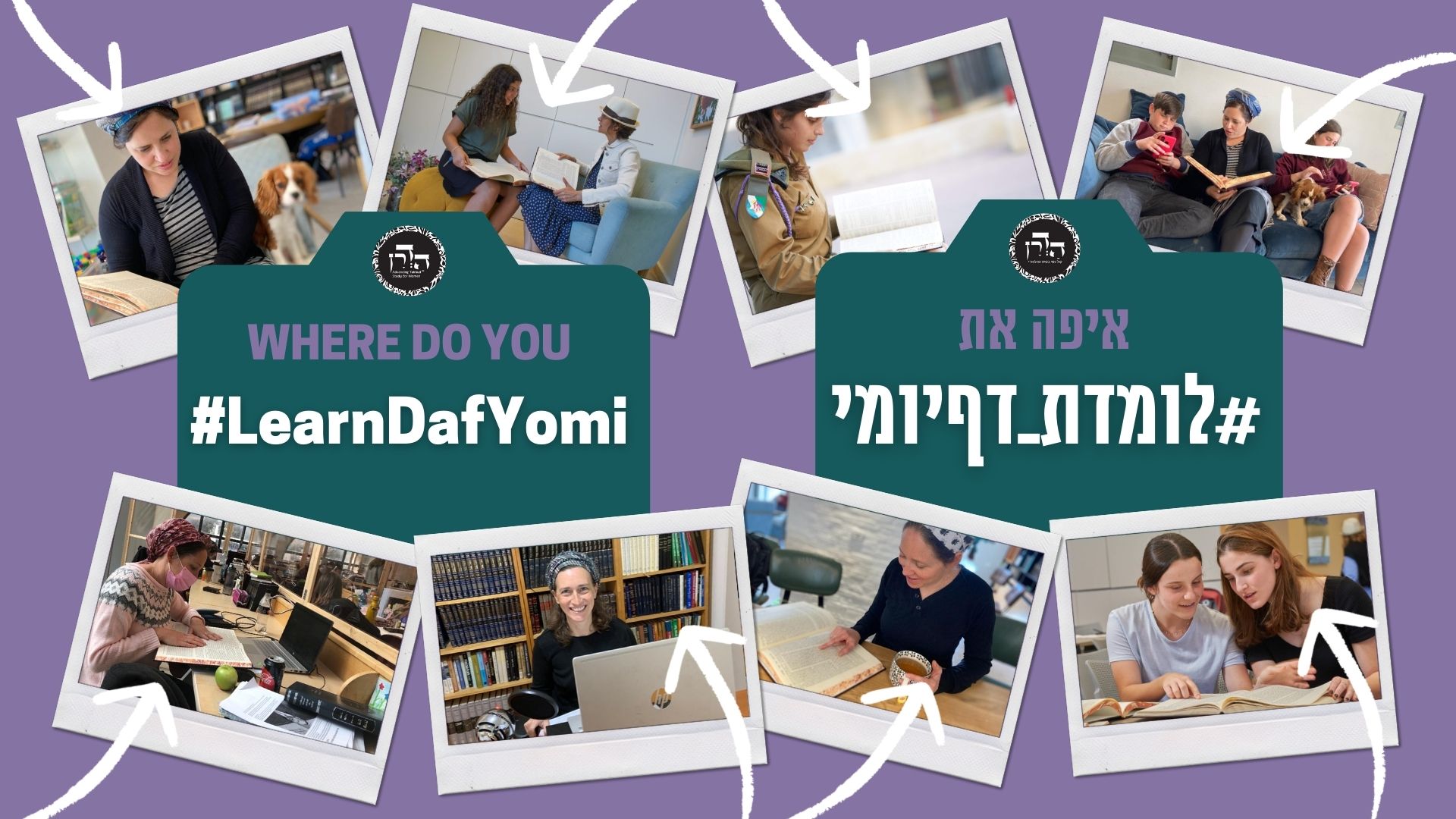
גלי את קהילת הלומדות שלנו, מגוון נשים, רקעים וסיפורים. כולן חלק מתנועה ומסע מרגש ועוצמתי.

התחלתי ללמוד לפני כשנתיים בשאיפה לסיים לראשונה מסכת אחת במהלך חופשת הלידה.
אחרי מסכת אחת כבר היה קשה להפסיק…

Noa Gallant
נעה גלנט

ירוחם, ישראל

התחלתי ללמוד גמרא בבית הספר בגיל צעיר והתאהבתי. המשכתי בכך כל חיי ואף היייתי מורה לגמרא בבית הספר שקד בשדה אליהו (בית הספר בו למדתי בילדותי)בתחילת מחזור דף יומי הנוכחי החלטתי להצטרף ובע”ה מקווה להתמיד ולהמשיך. אני אוהבת את המפגש עם הדף את "דרישות השלום ” שמקבלת מקשרים עם דפים אחרים שלמדתי את הסנכרון שמתחולל בין התכנים.

Ariela Bigman
אריאלה ביגמן

מעלה גלבוע, ישראל

אחי, שלומד דף יומי ממסכת ברכות, חיפש חברותא ללימוד מסכת ראש השנה והציע לי. החברותא היתה מאתגרת טכנית ורוב הזמן נעשתה דרך הטלפון, כך שבסיום המסכת נפרדו דרכינו. אחי חזר ללמוד לבד, אבל אני כבר נכבשתי בקסם הגמרא ושכנעתי את האיש שלי להצטרף אלי למסכת ביצה. מאז המשכנו הלאה, ועכשיו אנחנו מתרגשים לקראתו של סדר נשים!

Shulamit Saban
שולמית סבן

נוקדים, ישראל

התחלתי ללמוד בשנת המדרשה במגדל עוז, בינתיים נהנית מאוד מהלימוד ומהגמרא, מעניין ומשמח מאוד!
משתדלת להצליח לעקוב כל יום, לפעמים משלימה קצת בהמשך השבוע.. מרגישה שיש עוגן מקובע ביום שלי והוא משמח מאוד!

Uriah Kesner
אוריה קסנר

חיפה , ישראל

התחלתי מחוג במסכת קידושין שהעבירה הרבנית רייסנר במסגרת בית המדרש כלנה בגבעת שמואל; לאחר מכן התחיל סבב הדף היומי אז הצטרפתי. לסביבה לקח זמן לעכל אבל היום כולם תומכים ומשתתפים איתי. הלימוד לעתים מעניין ומעשיר ולעתים קשה ואף הזוי… אך אני ממשיכה קדימה. הוא משפיע על היומיום שלי קודם כל במרדף אחרי הדף, וגם במושגים הרבים שלמדתי ובידע שהועשרתי בו, חלקו ממש מעשי

Abigail Chrissy
אביגיל כריסי

ראש העין, ישראל

התחלתי ללמוד דף יומי אחרי שחזרתי בתשובה ולמדתי במדרשה במגדל עוז. הלימוד טוב ומספק חומר למחשבה על נושאים הלכתיים ”קטנים” ועד לערכים גדולים ביהדות. חשוב לי להכיר את הגמרא לעומק. והצעד הקטן היום הוא ללמוד אותה בבקיאות, בעזרת השם, ומי יודע אולי גם אגיע לעיון בנושאים מעניינים. נושאים בגמרא מתחברים לחגים, לתפילה, ליחסים שבין אדם לחברו ולמקום ולשאר הדברים שמלווים באורח חיים דתי 🙂

Gaia Divo
גאיה דיבו

מצפה יריחו, ישראל

התחלתי ללמוד דף יומי ממסכת נידה כי זה היה חומר הלימוד שלי אז. לאחר הסיום הגדול בבנייני האומה החלטתי להמשיך. וב”ה מאז עם הפסקות קטנות של קורונה ולידה אני משתדלת להמשיך ולהיות חלק.

זה משפיע מאוד על היום יום שלי ועל אף שאני עסוקה בלימודי הלכה ותורה כל יום, זאת המסגרת הקבועה והמחייבת ביותר שיש לי.

Moriah Taesan Michaeli
מוריה תעסן מיכאלי

גבעת הראל, ישראל

. לא תמיד נהניתי מלימוד גמרא כילדה.,בל כהתבגרתי התחלתי לאהוב את זה שוב. התחלתי ללמוד מסכת סוטה בדף היומי לפני כחמש עשרה שנה ואז הפסקתי.הגעתי לסיום הגדול של הדרן לפני שנתיים וזה נתן לי השראה. והתחלתי ללמוד למשך כמה ימים ואז היתה לי פריצת דיסק והפסקתי…עד אלול השנה. אז התחלתי עם מסכת ביצה וב”ה אני מצליחה לעמוד בקצב. המשפחה מאוד תומכת בי ויש כמה שגם לומדים את זה במקביל. אני אוהבת שיש עוגן כל יום.

Rebecca Darshan
רבקה דרשן

בית שמש, ישראל

התחלתי כשהייתי בחופש, עם הפרסומים על תחילת המחזור, הסביבה קיבלה את זה כמשהו מתמיד ומשמעותי ובהערכה, הלימוד זה עוגן יציב ביום יום, יש שבועות יותר ויש שפחות אבל זה משהו שנמצא שם אמין ובעל משמעות בחיים שלי….

Adi Diamant
עדי דיאמנט

גמזו, ישראל

בתחילת הסבב הנוכחי של לימוד הדף היומי, נחשפתי לחגיגות המרגשות באירועי הסיום ברחבי העולם. והבטחתי לעצמי שבקרוב אצטרף גם למעגל הלומדות. הסבב התחיל כאשר הייתי בתחילת דרכי בתוכנית קרן אריאל להכשרת יועצות הלכה של נשמ”ת. לא הצלחתי להוסיף את ההתחייבות לדף היומי על הלימוד האינטנסיבי של תוכנית היועצות. בבוקר למחרת המבחן הסופי בנשמ”ת, התחלתי את לימוד הדף במסכת סוכה ומאז לא הפסקתי.

Hana Shaham-Rozby (Dr.)
חנה שחם-רוזבי (ד”ר)

קרית גת, ישראל

למדתי גמרא מכיתה ז- ט ב Maimonides School ואחרי העליה שלי בגיל 14 לימוד הגמרא, שלא היה כל כך מקובל בימים אלה, היה די ספוראדי. אחרי "ההתגלות” בבנייני האומה התחלתי ללמוד בעיקר בדרך הביתה למדתי מפוקקטסים שונים. לאט לאט ראיתי שאני תמיד חוזרת לרבנית מישל פרבר. באיזה שהוא שלב התחלתי ללמוד בזום בשעה 7:10 .
היום "אין מצב” שאני אתחיל את היום שלי ללא לימוד עם הרבנית מישל עם כוס הקפה שלי!!

selfie-scaled
דבי גביר

חשמונאים, ישראל

"התחלתי ללמוד דף יומי במחזור הזה, בח’ בטבת תש””ף. לקחתי על עצמי את הלימוד כדי ליצור תחום של התמדה יומיומית בחיים, והצטרפתי לקבוצת הלומדים בבית הכנסת בכפר אדומים. המשפחה והסביבה מתפעלים ותומכים.
בלימוד שלי אני מתפעלת בעיקר מכך שכדי ללמוד גמרא יש לדעת ולהכיר את כל הגמרא. זו מעין צבת בצבת עשויה שהיא עצומה בהיקפה.”

Sarah Fox
שרה פוּקס

כפר אדומים, ישראל

התחלתי ללמוד דף יומי בסבב הקודם. זכיתי לסיים אותו במעמד המרגש של הדרן. בסבב הראשון ליווה אותי הספק, שאולי לא אצליח לעמוד בקצב ולהתמיד. בסבב השני אני לומדת ברוגע, מתוך אמונה ביכולתי ללמוד ולסיים. בסבב הלימוד הראשון ליוותה אותי חוויה מסויימת של בדידות. הדרן העניקה לי קהילת לימוד ואחוות נשים. החוויה של סיום הש”ס במעמד כה גדול כשנשים שאינן מכירות אותי, שמחות ומתרגשות עבורי , היתה חוויה מרוממת נפש

Ilanit Weil
אילנית ווייל

קיבוץ מגדל עוז, ישראל

התחלתי ללמוד דף יומי ממסכת נידה כי זה היה חומר הלימוד שלי אז. לאחר הסיום הגדול בבנייני האומה החלטתי להמשיך. וב”ה מאז עם הפסקות קטנות של קורונה ולידה אני משתדלת להמשיך ולהיות חלק.

זה משפיע מאוד על היום יום שלי ועל אף שאני עסוקה בלימודי הלכה ותורה כל יום, זאת המסגרת הקבועה והמחייבת ביותר שיש לי.

Moriah Taesan Michaeli
מוריה תעסן מיכאלי

גבעת הראל, ישראל

באירוע של הדרן בנייני האומה. בהשראתה של אמי שלי שסיימה את הש”ס בסבב הקודם ובעידוד מאיר , אישי, וילדיי וחברותיי ללימוד במכון למנהיגות הלכתית של רשת אור תורה סטון ומורתיי הרבנית ענת נובוסלסקי והרבנית דבורה עברון, ראש המכון למנהיגות הלכתית.
הלימוד מעשיר את יומי, מחזיר אותי גם למסכתות שכבר סיימתי וידוע שאינו דומה מי ששונה פרקו מאה לשונה פרקו מאה ואחת במיוחד מרתקים אותי החיבורים בין המסכתות

Roit Kalech
רוית קלך

מודיעין, ישראל

התחלתי בתחילת הסבב, והתמכרתי. זה נותן משמעות נוספת ליומיום ומאוד מחזק לתת לזה מקום בתוך כל שגרת הבית-עבודה השוטפת.

Reut Abrahami
רעות אברהמי

בית שמש, ישראל

אני לומדת גמרא כעשור במסגרות שונות, ואת הדף היומי התחלתי כשחברה הציעה שאצטרף אליה לסיום בבנייני האומה. מאז אני לומדת עם פודקסט הדרן, משתדלת באופן יומי אך אם לא מספיקה, מדביקה פערים עד ערב שבת. בסבב הזה הלימוד הוא "ממעוף הציפור”, מקשיבה במהירות מוגברת תוך כדי פעילויות כמו בישול או נהיגה, וכך רוכשת היכרות עם הסוגיות ואופן ניתוחם על ידי חז”ל. בע”ה בסבב הבא, ואולי לפני, אצלול לתוכו באופן מעמיק יותר.

Yael Bir
יעל ביר

רמת גן, ישראל

A friend in the SF Bay Area said in Dec 2019 that she might start listening on her morning drive to work. I mentioned to my husband and we decided to try the Daf when it began in Jan 2020 as part of our preparing to make Aliyah in the summer.

Hana Piotrkovsky
חנה פיוטרקובסקי

ירושלים, Israel

סיום השס לנשים נתן לי מוטביציה להתחיל ללמוד דף יומי. עד אז למדתי גמרא בשבתות ועשיתי כמה סיומים. אבל לימוד יומיומי זה שונה לגמרי ופתאום כל דבר שקורה בחיים מתקשר לדף היומי.

Fogel Foundation
קרן פוגל

רתמים, ישראל

בתחילת הסבב הנוכחי הצטברו אצלי תחושות שאני לא מבינה מספיק מהי ההלכה אותה אני מקיימת בכל יום. כמו כן, כאמא לבנות רציתי לתת להן מודל נשי של לימוד תורה
שתי הסיבות האלו הובילו אותי להתחיל ללמוד. נתקלתי בתגובות מפרגנות וסקרניות איך אישה לומדת גמרא..
כמו שרואים בתמונה אני ממשיכה ללמוד גם היום ואפילו במחלקת יולדות אחרי לידת ביתי השלישית.

Noa Shiloh
נועה שילה

רבבה, ישראל

פסחים קב

מַאן תַּנָּא עֲקִירוֹת,

Who is the tanna that taught that even in cases of uprooting oneself from a meal that requires a blessing of significance afterward, one nevertheless is required to recite a new blessing before resuming his meal?

רַבִּי יְהוּדָה, דְּתַנְיָא: חֲבֵרִים שֶׁהָיוּ מְסוּבִּין, וְעָקְרוּ רַגְלֵיהֶם לֵילֵךְ לְבֵית הַכְּנֶסֶת אוֹ לְבֵית הַמִּדְרָשׁ, כְּשֶׁהֵן יוֹצְאִין — אֵין טְעוּנִין בְּרָכָה לְמַפְרֵעַ, וּכְשֶׁהֵן חוֹזְרִין — אֵין טְעוּנִין בְּרָכָה לְכַתְּחִלָּה. אָמַר רַבִּי יְהוּדָה: בַּמֶּה דְּבָרִים אֲמוּרִים — בִּזְמַן שֶׁהִנִּיחוּ שָׁם מִקְצָת חֲבֵרִים, אֲבָל לֹא הִנִּיחוּ שָׁם מִקְצָת חֲבֵרִים, כְּשֶׁהֵן יוֹצְאִין — טְעוּנִין בְּרָכָה לְמַפְרֵעַ, וּכְשֶׁהֵן חוֹזְרִין — טְעוּנִין בְּרָכָה לְכַתְּחִלָּה.

It is Rabbi Yehuda, as it was taught in a baraita: With regard to friends who were reclining and eating a meal and uprooted themselves to go to the synagogue or to the study hall, when they exit, these foods do not require a blessing to be recited afterward, and when they return, these foods do not require an introductory blessing before resuming eating. Rabbi Yehuda said: In what case is this statement said? When they left some of the friends there, at the meal. However, if they did not leave some of the friends there, when they exit, these foods require a blessing to be recited afterward, and when they return, these foods require an introductory blessing. According to Rav Naḥman bar Yitzḥak, the baraita that served as the basis of the Gemara’s objection to the explanation of Rav Ḥisda actually represents the minority opinion of Rabbi Yehuda, whereas Rav Ḥisda holds in accordance with the majority opinion of the Rabbis.

אֶלָּא טַעְמָא דְּבִדְבָרִים הַטְּעוּנִין בְּרָכָה לְאַחֲרֵיהֶן בִּמְקוֹמָן, דִּכְשֶׁהֵן יוֹצְאִין — אֵין טְעוּנִין בְּרָכָה לְמַפְרֵעַ, וּכְשֶׁהֵן חוֹזְרִין — אֵין טְעוּנִין בְּרָכָה לְכַתְּחִלָּה. אֲבָל דְּבָרִים שֶׁאֵין טְעוּנִין בְּרָכָה לְאַחֲרֵיהֶן בִּמְקוֹמָן, אֲפִילּוּ לְרַבָּנַן, כְּשֶׁהֵן יוֹצְאִין — טְעוּנִין בְּרָכָה לְמַפְרֵעַ, וּכְשֶׁהֵן חוֹזְרִין — טְעוּנִין בְּרָכָה לְכַתְּחִילָּה,

The Gemara infers from the above baraita: The reason for this halakha is that it is only with regard to items of food that require a blessing after them in their place, that when the people eating them exit, these foods do not require a blessing to be recited afterward, and when they return, these foods do not require an introductory blessing. However, if they ate items of food that do not require a blessing that must be recited specifically in their place, even according to the opinion of the Rabbis, who disagree with Rabbi Yehuda, when these people exit, these foods require a blessing to be recited afterward, and when they return these foods require an introductory blessing.

לֵימָא תֶּיהְוֵי תְּיוּבְתָּא דְּרַבִּי יוֹחָנָן! וְלָאו מִי אוֹתְבִינֵּיהּ חֲדָא זִימְנָא! נֵימָא מֵהָא נָמֵי תֶּיהְוֵי תְּיוּבְתָּא!

The Gemara suggests: Shall we say that this is a conclusive refutation of the opinion of Rabbi Yoḥanan, who holds that a change of location never obligates one to recite a new blessing? The Gemara expresses surprise at this proposition: But didn’t we already refute Rabbi Yoḥanan’s opinion once? Why is it necessary to refute his ruling yet again? The Gemara admits that this is true but adds: Nevertheless, let us say that this baraita is also a conclusive refutation of the opinion of Rabbi Yoḥanan.

אָמַר לָךְ רַבִּי יוֹחָנָן: הוּא הַדִּין דַּאֲפִילּוּ דְּבָרִים שֶׁאֵין טְעוּנִין בְּרָכָה לְאַחֲרֵיהֶם בִּמְקוֹמָן נָמֵי אֵין צְרִיכִין לְבָרֵךְ, וְהָא דְּקָתָנֵי ״עָקְרוּ רַגְלֵיהֶן״, לְהוֹדִיעֲךָ כֹּחוֹ דְּרַבִּי יְהוּדָה,

The Gemara responds that Rabbi Yoḥanan’s ruling cannot be definitively refuted from this baraita, as Rabbi Yoḥanan could have said to you: The same is true that even with regard to items of food that do not require a blessing afterward in their place, the people who ate them are also not required to recite a new blessing. And with regard to that which the baraita teaches: They uprooted themselves, from which it was inferred that the people were eating foods that require a blessing afterward in the place of eating, this phrase serves to convey the far-reaching nature of Rabbi Yehuda’s stringent opinion.

דַּאֲפִילּוּ דְּבָרִים שֶׁטְּעוּנִין בְּרָכָה לְאַחֲרֵיהֶן בִּמְקוֹמָן, טַעְמָא דְּהִנִּיחוּ מִקְצָת חֲבֵרִים, אֲבָל לֹא הִנִּיחוּ מִקְצָת חֲבֵרִים, כְּשֶׁהֵן יוֹצְאִין — טְעוּנִין בְּרָכָה לְמַפְרֵעַ, וּכְשֶׁהֵן חוֹזְרִין — טְעוּנִין בְּרָכָה לְכַתְּחִלָּה.

The Gemara explains the previous statement: According to Rabbi Yehuda, even if they were eating items of food that require a blessing after them in their place, and they will definitely return to the meal, the reason that these foods do not require a new blessing is that they left some of their friends at the meal. However, if they did not leave some of their friends, when they exit, these foods require a blessing to be recited afterward, and when they return, these foods require an introductory blessing. Nevertheless, it is possible that the Rabbis are lenient and do not obligate them to recite a new blessing, even if they are eating food that does not require a blessing afterward in the place in which they ate.

תַּנְיָא כְּווֹתֵיהּ דְּרַב חִסְדָּא: חֲבֵרִים שֶׁהָיוּ מְסוּבִּין לִשְׁתּוֹת יַיִן, וְעָקְרוּ רַגְלֵיהֶן וְחָזְרוּ — אֵין צְרִיכִין לְבָרֵךְ.

The Gemara points out that it was taught in a baraita in accordance with the opinion of Rav Ḥisda: With regard to friends who were reclining to drink wine together and uprooted themselves from their place and subsequently returned to their original location, they need not recite a new blessing. Wine is considered an important beverage that requires a concluding blessing in the place where it was consumed. This baraita explicitly supports the opinion of Rav Ḥisda, who rules with regard to items of this kind that if one left the place where he was drinking and later returned, no new blessing is necessary.

תָּנוּ רַבָּנַן: בְּנֵי חֲבוּרָה שֶׁהָיוּ מְסוּבִּין וְקִדֵּשׁ עֲלֵיהֶן הַיּוֹם — מְבִיאִין לוֹ כּוֹס שֶׁל יַיִן וְאוֹמֵר עָלָיו קְדוּשַּׁת הַיּוֹם, וְשֵׁנִי אוֹמֵר עָלָיו בִּרְכַּת הַמָּזוֹן, דִּבְרֵי רַבִּי יְהוּדָה. רַבִּי יוֹסֵי אוֹמֵר: אוֹכֵל וְהוֹלֵךְ עַד שֶׁתֶּחְשַׁךְ.

The Gemara returns to the subject of interrupting one’s meal to recite kiddush. The Sages taught: With regard to members of a group who were reclining and eating a meal, and the day of Shabbat was sanctified, they bring one of the diners a cup of wine and he recites over it the sanctification of the day, i.e., kiddush, and a second cup over which he recites Grace after Meals; this is the statement of Rabbi Yehuda. Rabbi Yosei says: One may continue eating the rest of his meal, even until dark.

גָּמְרוּ, כּוֹס רִאשׁוֹן מְבָרֵךְ עָלָיו בִּרְכַּת הַמָּזוֹן וְהַשֵּׁנִי אוֹמֵר עָלָיו קְדוּשַּׁת הַיּוֹם. אַמַּאי? וְנֵימְרִינְהוּ לְתַרְוַיְיהוּ אַחֲדָא כָּסָא!

Rabbi Yosei maintains that once they have finished their meal, they bring out two cups; over the first cup one recites the Grace after Meals, and over the second cup he recites the sanctification of the day. The Gemara asks: Why do they need two cups? And let them say both of them, Grace after Meals and kiddush, over one cup.

אָמַר רַב הוּנָא אָמַר רַב שֵׁשֶׁת: אֵין אוֹמְרִים שְׁתֵּי קְדוּשּׁוֹת עַל כּוֹס אֶחָד. מַאי טַעְמָא? אָמַר רַב נַחְמָן בַּר יִצְחָק: לְפִי שֶׁאֵין עוֹשִׂין מִצְוֹת חֲבִילוֹת חֲבִילוֹת.

Rav Huna said that Rav Sheshet said: One does not recite two sanctifications, i.e., for two mitzvot such as Grace after Meals and kiddush, over one cup. What is the reason for this halakha? Rav Naḥman bar Yitzḥak said: Because one does not perform mitzvot in bundles. If someone performs multiple mitzvot all in one go, he gives the impression that they are a burdensome obligation that he wants to complete as fast as possible.

וְלָא? וְהָא תַּנְיָא: הַנִּכְנָס לְבֵיתוֹ בְּמוֹצָאֵי שַׁבָּת מְבָרֵךְ עַל הַיַּיִן וְעַל הַמָּאוֹר וְעַל הַבְּשָׂמִים, וְאַחַר כָּךְ אוֹמֵר הַבְדָּלָה עַל הַכּוֹס. וְאִם אֵין לוֹ אֶלָּא כּוֹס אֶחָד — מַנִּיחוֹ לְאַחַר הַמָּזוֹן וּמְשַׁלְשְׁלָן כּוּלָּן לְאַחֲרָיו. אֵין לוֹ שָׁאנֵי.

And does one not perform multiple mitzvot together? But wasn’t it taught in a baraita: One who enters his home at the conclusion of Shabbat recites the blessing over the wine, and then over the light, and then over the spices, and thereafter he recites havdala over the cup of wine. And if he has only one cup of wine, he leaves it for after he eats his food, and uses it for Grace after Meals, and arranges all of the other blessings together thereafter. This baraita indicates that one may use the same cup both for Grace after Meals and havdala. The Gemara answers: We cannot prove anything from here, as a case where one does not have an additional cup is different. One who has two cups of wine is required to recite Grace after Meals over one of the cups and havdala over the other one.

וְהָא יוֹם טוֹב שֶׁחָל לִהְיוֹת אַחַר הַשַּׁבָּת, דְּאִית לֵיהּ, וְאָמַר רַב יַקְנֶ״ה!

The Gemara continues its line of questioning: But there is the case of a Festival that occurs after Shabbat, when presumably one has enough wine. And nevertheless, Rav said that the proper order of the blessings is according to the Hebrew acronym yod, kuf, nun, heh: The blessing over the wine [yayin], kiddush, the blessing over the candle [ner], and havdala. This ruling shows that one recites kiddush and havdala over the same cup of wine.

אָמְרִי: מִדְּלָא אָמַר זְמַן, מִכְּלָל דְּבִשְׁבִיעִי שֶׁל פֶּסַח עָסְקִינַן, דְּכׇל מַאי דַּהֲוָה לֵיהּ אָכֵיל לֵיהּ, וְלֵית לֵיהּ.

They say in answer to this question: From the fact that Rav did not say that one recites the blessing for time, Who has given us life [sheheḥiyanu], sustained us, and brought us to this time, this proves by inference that we are dealing with the seventh day of Passover, which is the only Festival day on which one does not recite the blessing for time. If so, it is possible that whatever wine this person had, he has already consumed over the course of the Festival, and he does not have enough wine left for two separate cups.

וְהָא יוֹם טוֹב רִאשׁוֹן דְּאִית לֵיהּ, וְאָמַר אַבָּיֵי: יַקְזְנָ״ה, וְרָבָא אָמַר: יַקְנְהָ״ז.

The Gemara asks: But there is the case of the first Festival night that occurs after Shabbat, when one has wine, and nevertheless Abaye said that the order of the blessings in this instance follows the Hebrew acronym yod, kuf, zayin, nun, heh: The blessing over wine [yayin]; kiddush; the blessing for time [zeman]; the blessing over the candle [ner]; and havdala. And Rava said that the order of the blessings is in accordance with the acronym yod, kuf, nun, heh, zayin: Wine [yayin]; kiddush; candle [ner]; havdala; and the blessing for time [zeman]. Although Abaye and Rava dispute the correct order of the blessings, they agree that one recites multiple blessings over a single cup of wine.

אֶלָּא: הַבְדָּלָה וְקִידּוּשׁ חֲדָא מִילְּתָא הִיא, בִּרְכַּת הַמָּזוֹן וְקִידּוּשׁ תְּרֵי מִילֵּי נִינְהוּ.

Rather, the Gemara rejects the previous explanation in favor of the following: Havdala and kiddush are one matter, as they both mark and draw attention to the sanctity of certain days. By contrast, Grace after Meals and kiddush are two entirely different matters. Therefore, one who recites both of them over the same cup of wine is combining two unrelated mitzvot, apparently so that he can be done with them as quickly as possible. Consequently, this practice is prohibited.

גּוּפָא. יוֹם טוֹב שֶׁחָל לִהְיוֹת אַחַר הַשַּׁבָּת, רַב אָמַר: יַקְנֶ״ה. וּשְׁמוּאֵל אָמַר: יִנְהַ״ק.

After raising the issue of the proper order of the blessings for kiddush on a Festival that occurs right after Shabbat, the Gemara addresses the matter itself. With regard to a Festival that occurs after Shabbat, Rav said that the proper order of the blessings follows the acronym yod, kuf, nun, heh: Wine [yayin], kiddush, candle [ner], and havdala; and Shmuel said the proper order is yod, nun, heh, kuf: Wine [yayin], candle [ner], havdala, and kiddush.

רוצה לעקוב אחרי התכנים ולהמשיך ללמוד?

ביצירת חשבון עוד היום ניתן לעקוב אחרי ההתקדמות שלך, לסמן מה למדת, ולעקוב אחרי השיעורים שמעניינים אותך.

לנקות את כל הפריטים מהרשימה?

פעולה זו תסיר את כל הפריטים בחלק זה כולל ההתקדמות וההיסטוריה. שימי לב: לא ניתן לשחזר פעולה זו.

ביטול
מחיקה

האם את/ה בטוח/ה שברצונך למחוק פריט זה?

תאבד/י את כל ההתקדמות או ההיסטוריה הקשורות לפריט זה.

ביטול
מחיקה