יבמות פד
הַכִּלְאַיִם וּטְרֵפָה וְיוֹצֵא דּוֹפֶן, טוּמְטוּם וְאַנְדְּרוֹגִינוֹס — לֹא קְדוֹשִׁין וְלֹא מַקְדִּישִׁין.
Forbidden crossbred livestock, an animal with a condition that will cause it to die within twelve months [tereifa], an animal delivered through the abdominal wall, and an animal that is a tumtum or a hermaphrodite do not become sacred and do not render another animal sacred in their place.
וְאָמַר שְׁמוּאֵל: לֹא קְדוֹשִׁין — בִּתְמוּרָה. וְלֹא מַקְדִּישִׁין — בְּעוֹשֶׂה תְּמוּרָה. שְׁמַע מִינַּהּ.
And Shmuel said: They do not become sacred by way of substitution, i.e., if one had an animal that had been designated as an offering, and he wished to substitute one of these animals for it, the substituted animal does not become sacred. And they themselves do not render another animal sacred when it is made a substitute for them. If one designated one of these animals as an offering and he wished to substitute another animal for it, it does not become sacred. The Gemara concludes: Learn from this that Rabbi Eliezer does not consider a hermaphrodite to be a proper male.
רַבִּי אֱלִיעֶזֶר אוֹמֵר: חַיָּיבִין עָלָיו סְקִילָה כַּזָּכָר. תַּנְיָא, אָמַר רַבִּי: כְּשֶׁהָלַכְתִּי לִלְמוֹד תּוֹרָה אֵצֶל רַבִּי אֶלְעָזָר בֶּן שַׁמּוּעַ, חָבְרוּ עָלַי תַּלְמִידָיו כְּתַרְנְגוֹלִים שֶׁל בֵּית בּוּקְיָא, וְלֹא הִנִּיחוּנִי לִלְמוֹד אֶלָּא דָּבָר אֶחָד בְּמִשְׁנָתֵינוּ — רַבִּי אֱלִיעֶזֶר אוֹמֵר: אַנְדְּרוֹגִינוֹס חַיָּיבִין עָלָיו סְקִילָה כַּזָּכָר.
It is taught in the mishna that Rabbi Eliezer says: If one had intercourse with a hermaphrodite, one is liable to be punished with stoning on his account as if one had relations with a male. It is taught on this matter in a baraita that Rabbi Yehuda HaNasi says: When I went to learn Torah from Rabbi Elazar ben Shamua, his students joined together against me like the roosters of Beit Bukya, highly aggressive animals that do not allow other creatures to remain among them, and they did not let me learn there. Therefore, I managed to learn only one thing in our mishna, which is that Rabbi Eliezer says: If one had intercourse with a hermaphrodite, one is liable to be punished with stoning on his account as if one had relations with a male.
הֲדַרַן עֲלָךְ הֶעָרֵל
יֵשׁ מוּתָּרוֹת לְבַעְלֵיהֶן וַאֲסוּרוֹת לְיִבְמֵיהֶן, מוּתָּרוֹת לְיִבְמֵיהֶן וַאֲסוּרוֹת לְבַעְלֵיהֶן. מוּתָּרוֹת לָאֵלּוּ וְלָאֵלּוּ, וַאֲסוּרוֹת לָאֵלּוּ וְלָאֵלּוּ.
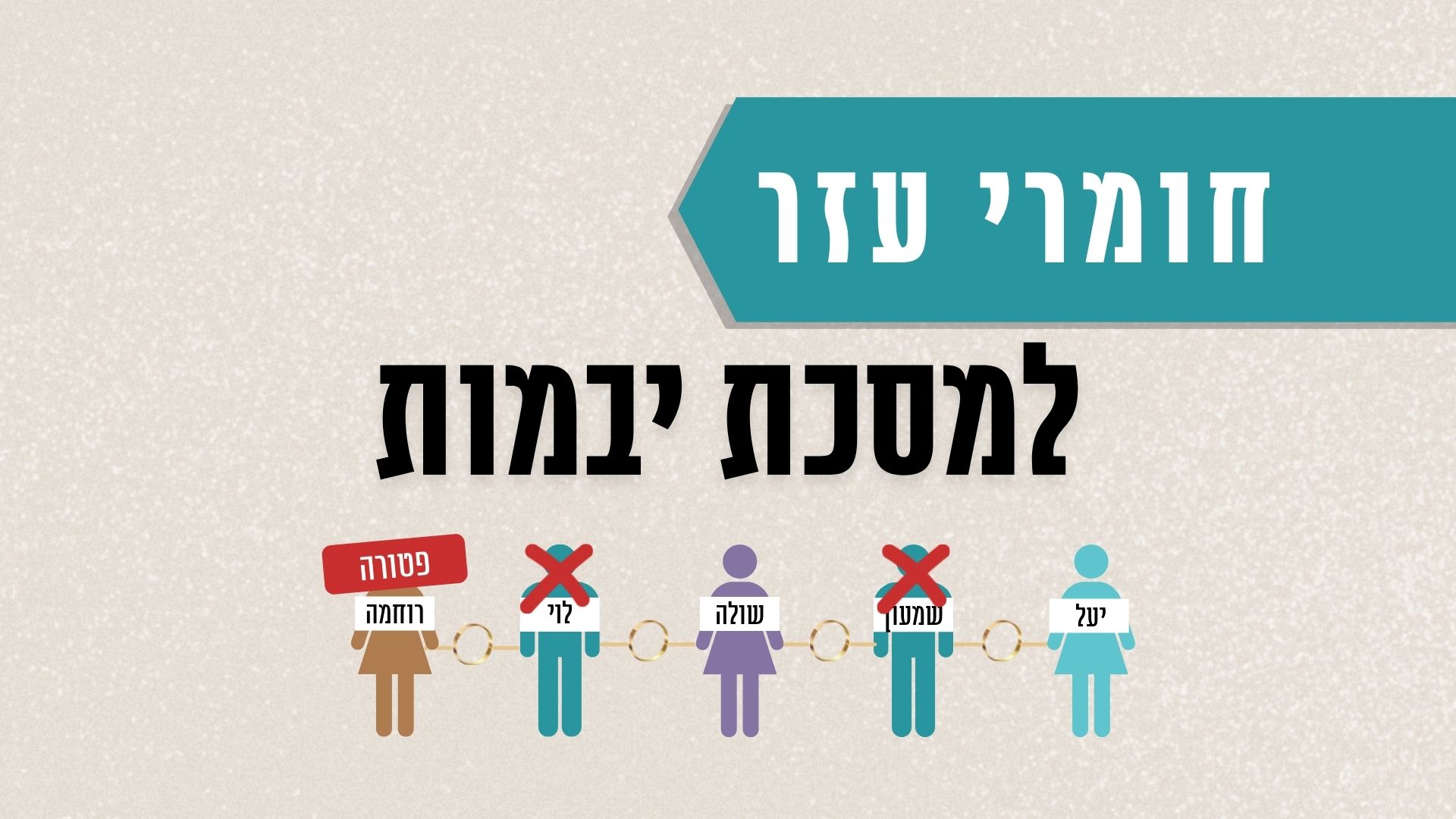
MISHNA: There are women who are permitted to their husbands and forbidden to their yevamin, while others are permitted to their yevamin and forbidden to their husbands. Certain women are permitted both to these and to those, and others are forbidden to both these and to those.
וְאֵלּוּ מוּתָּרוֹת לְבַעְלֵיהֶן וַאֲסוּרוֹת לְיִבְמֵיהֶן: כֹּהֵן הֶדְיוֹט שֶׁנָּשָׂא אֶת הָאַלְמָנָה, וְיֵשׁ לוֹ אָח כֹּהֵן גָּדוֹל; חָלָל שֶׁנָּשָׂא כְּשֵׁרָה, וְיֵשׁ לוֹ אָח כָּשֵׁר;
The mishna elaborates: And these are cases of women who are permitted to their husbands and forbidden to their yevamin: In the case of a common priest who married a widow, and he has a brother who is the High Priest, the widow, who was permitted to her husband, is forbidden to her yavam, as it is prohibited for the High Priest to marry a widow. The same is true in the case of a priest disqualified due to flawed lineage [ḥalal], e.g., the son of a priest and a divorcée, who married a woman fit to marry a priest, and he has a brother who is a priest fit for service. That woman was permitted to marry the ḥalal but is forbidden to his brother. Having engaged in intercourse with the ḥalal, she is rendered a ḥalala, a woman disqualified from marrying a priest.
יִשְׂרָאֵל שֶׁנָּשָׂא בַּת יִשְׂרָאֵל, וְיֵשׁ לוֹ אָח מַמְזֵר; מַמְזֵר שֶׁנָּשָׂא מַמְזֶרֶת, וְיֵשׁ לוֹ אָח יִשְׂרָאֵל — מוּתָּרוֹת לְבַעְלֵיהֶן וַאֲסוּרוֹת לְיִבְמֵיהֶן.
Another example is the case of an Israelite of unflawed lineage who married an Israelite woman of similar lineage, and he has a brother who is a son born from an incestuous or adulterous relationship [mamzer]; or a mamzer who married a daughter born from an incestuous or adulterous relationship [mamzeret], and he has a brother who is an Israelite of unflawed lineage. A mamzer is permitted to marry a mamzeret, but neither is permitted to a Jew of unflawed lineage. In each of these cases, these women are permitted to their husbands and forbidden to their yevamin.
וְאֵלּוּ מוּתָּרוֹת לְיִבְמֵיהֶן וַאֲסוּרוֹת לְבַעְלֵיהֶן: כֹּהֵן גָּדוֹל שֶׁקִּידֵּשׁ אֶת הָאַלְמָנָה, וְיֵשׁ לוֹ אָח כֹּהֵן הֶדְיוֹט; כָּשֵׁר שֶׁנָּשָׂא חֲלָלָה, וְיֵשׁ לוֹ אָח חָלָל; יִשְׂרָאֵל שֶׁנָּשָׂא מַמְזֶרֶת, וְיֵשׁ לוֹ אָח מַמְזֵר; מַמְזֵר שֶׁנָּשָׂא בַּת יִשְׂרָאֵל, וְיֵשׁ לוֹ אָח יִשְׂרָאֵל — מוּתָּרוֹת לְיִבְמֵיהֶן וַאֲסוּרוֹת לְבַעְלֵיהֶן.
And these are cases of women who are permitted to their yevamin and forbidden to their husbands: For example, there is the case of a High Priest who betrothed a widow, and he has a brother who is a common priest, whom she is permitted to marry. This is true only if the High Priest merely betrothed her. However, if he consummated the marriage, he rendered her a ḥalala forbidden to all priests, including her yavam. The additional cases are a priest fit for service who married a ḥalala and he has a brother who is a ḥalal; an Israelite of unflawed lineage who married a mamzeret, and he has a brother who is a mamzer; and a mamzer who married an Israelite woman of unflawed lineage, and he has a brother who is, similarly, an Israelite of unflawed lineage. All of these women are permitted to their yevamin and forbidden to their husbands.
וְאֵלּוּ אֲסוּרוֹת לָאֵלּוּ וְלָאֵלּוּ: כֹּהֵן גָּדוֹל שֶׁנָּשָׂא אֶת הָאַלְמָנָה, וְיֵשׁ לוֹ אָח כֹּהֵן גָּדוֹל; אוֹ כֹּהֵן הֶדְיוֹט כָּשֵׁר שֶׁנָּשָׂא חֲלָלָה, וְיֵשׁ לוֹ אָח כָּשֵׁר; יִשְׂרָאֵל שֶׁנָּשָׂא מַמְזֶרֶת, וְיֵשׁ לוֹ אָח יִשְׂרָאֵל; מַמְזֵר שֶׁנָּשָׂא בַּת יִשְׂרָאֵל, וְיֵשׁ לוֹ אָח מַמְזֵר — אֲסוּרוֹת לָאֵלּוּ וְלָאֵלּוּ, וּשְׁאָר כׇּל הַנָּשִׁים מוּתָּרוֹת לְבַעְלֵיהֶן וּלְיִבְמֵיהֶן.
And these are cases where women are forbidden both to these and to those: A High Priest who married a widow, and he has a brother who is a High Priest or a common priest; a priest fit for service who married a ḥalala, and he has a brother who is a priest fit for service; an Israelite of unflawed lineage who married a mamzeret, and he has a brother who is similarly an ordinary Israelite, or a mamzer who married an Israelite woman of unflawed lineage, and he has a brother who is a mamzer. All of these women are forbidden both to these and to those. And all other women are permitted to their husbands and to their yevamin.
שְׁנִיּוֹת מִדִּבְרֵי סוֹפְרִים, שְׁנִיָּיה לַבַּעַל וְלֹא שְׁנִיָּיה לַיָּבָם — אֲסוּרָה לַבַּעַל, וּמוּתֶּרֶת לַיָּבָם. שְׁנִיָּיה לַיָּבָם וְלֹא שְׁנִיָּיה לַבַּעַל — אֲסוּרָה לַיָּבָם וּמוּתֶּרֶת לַבַּעַל, שְׁנִיָּיה לָזֶה וְלָזֶה — אֲסוּרָה לָזֶה וְלָזֶה.
With regard to secondary relatives, who are forbidden by rabbinic law, if the woman is a secondary relative to the husband but not a secondary relative to the yavam, she is forbidden to the husband and permitted to the yavam. Conversely, if she is a secondary relative to the yavam but not a secondary relative to the husband, she is forbidden to the yavam and permitted to the husband. If she is a secondary relative both to this man and to that man, she is forbidden to this one and to that one.
אֵין לָהּ לֹא כְּתוּבָה וְלֹא פֵּירוֹת וְלֹא מְזוֹנוֹת וְלֹא בְּלָאוֹת. וְהַוָּלָד כָּשֵׁר, וְכוֹפִין אוֹתוֹ לְהוֹצִיא.
Furthermore, if a man marries a woman forbidden to him as a secondary relative, she does not have the right to receive payment for her marriage contract if divorced or widowed, nor is she entitled to payment from her husband for the produce of her property that he used, nor is she entitled to provisions for her sustenance from his estate, nor does she get back her worn clothes or other objects she brought with her to her marriage. And the lineage of the offspring is unflawed, and the court forces him to divorce her.
אַלְמָנָה לְכֹהֵן גָּדוֹל, גְּרוּשָׁה וַחֲלוּצָה לְכֹהֵן הֶדְיוֹט, מַמְזֶרֶת וּנְתִינָה לְיִשְׂרָאֵל, בַּת יִשְׂרָאֵל לְנָתִין וּלְמַמְזֵר — יֵשׁ לָהֶן כְּתוּבָּה.
In contrast, a widow married to a High Priest, a divorcée or a yevama who performed ḥalitza [ḥalutza] married to a common priest, a mamzeret or a Gibeonite woman married to an Israelite of unflawed lineage, and an Israelite woman of unflawed lineage married to a Gibeonite or to a mamzer all have the right to receive payment for their marriage contract, although it was prohibited for them to marry.
גְּמָ׳ מַאי אִירְיָא דְּתָנֵי ״נָשָׂא״? לִיתְנֵי ״קִידֵּשׁ״!
GEMARA: As an example of a woman who is permitted to her husband and forbidden to her yavam, the mishna cites the case of a widow married to a common priest whose brother was a High Priest. The Gemara asks: Why does the tanna specifically teach a case where the priest married the widow? Let him teach that he betrothed her, as even if she is widowed after betrothal she requires levirate marriage or ḥalitza.
וְכִי תֵּימָא: טַעְמָא דְּנָשָׂא — דְּהָוֵה לֵיהּ עֲשֵׂה וְלֹא תַעֲשֶׂה, אֲבָל קִידֵּשׁ — אָתֵי עֲשֵׂה וְדוֹחֶה לֹא תַעֲשֶׂה, וְהָא כּוּלֵּהּ פִּירְקִין עֲשֵׂה וְלֹא תַעֲשֶׂה הוּא, וְלָא אָתֵי עֲשֵׂה וְדָחֵי לֹא תַעֲשֶׂה!
And if you would say: The reason that the tanna cited the case where they were married is that in this case there is a positive mitzva that the High Priest marry a virgin and also a prohibition to marry a widow, and therefore she is forbidden to him. However, if he betrothed her, the positive mitzva of levirate marriage comes and overrides the prohibition against marrying a widow. To counter this argument, the tanna states: But that cannot be the case, as the entire chapter discusses cases involving the positive mitzva of levirate marriage and prohibitions, and in all those cases, the positive mitzva does not come and override the prohibition, even in the absence of an additional positive mitzva.
מִשּׁוּם דְּקָבָעֵי לְמִיתְנֵי סֵיפָא ״כֹּהֵן גָּדוֹל שֶׁנָּשָׂא אֶת הָאַלְמָנָה״, דַּוְקָא נָשָׂא — דְּשַׁוְּיַיהּ חֲלָלָהּ, אֲבָל קִידֵּשׁ — שַׁרְיָא לֵיהּ, תַּנָּא נָמֵי רֵישָׁא ״נָשָׂא״!
The Gemara answers: The mishna could have cited a case where the priest betrothed the widow. Instead, the mishna cites a case where the priest married a widow, due to the fact that the tanna wants to teach in the latter clause of the mishna the case of a High Priest who married a widow who has a brother who is a common priest. That case is specifically if he married her, because he thereby rendered her a ḥalala. However, if he only betrothed her, she is permitted to his brother who is a common priest, as it is permitted for him to marry a widow. Therefore, the tanna also taught in the first clause the case where the priest married her.
וְאַדְּתָנֵי מִשּׁוּם סֵיפָא, לִיתְנֵי מִשּׁוּם מְצִיעֲתָא: כֹּהֵן גָּדוֹל שֶׁקִּידֵּשׁ אֶת הָאַלְמָנָה וְיֵשׁ לוֹ אָח כֹּהֵן הֶדְיוֹט! אֶלָּא מִשּׁוּם בַּת בּוּקְתָּא, דְּקָבָעֵי לְמִיתְנֵי ״חָלָל שֶׁנָּשָׂא כְּשֵׁרָה״, טַעְמָא דְּנָשָׂא — דְּשַׁוְּיַיהּ חֲלָלָה, אֲבָל קִידֵּשׁ — שַׁרְיָא לֵיהּ, מִשּׁוּם הָכִי קָתָנֵי ״נָשָׂא״.
The Gemara asks: But rather than teaching a case where she was married in the first clause due to the latter clause of the mishna, let him teach a case where she was betrothed in the first clause due to the middle clause, which speaks of a High Priest who betrothed a widow, and he has a brother who is a common priest. The Gemara concludes: Rather, the reason the tanna taught the case where the priest married the widow is due to the halakha that is its neighbor [bat bukta], i.e., due to the fact that in the adjacent case he wants to teach the case of a ḥalal who married a woman fit to marry a priest. There, the reason that the woman is forbidden to his brother is specifically that the ḥalal married her, as he rendered her a ḥalala by consummating the marriage. However, if the ḥalal merely betrothed her, she is permitted to him. Due to that reason, the tanna teaches the case where the priest married the widow.
וּמַאי אִירְיָא דְּקָתָנֵי אַלְמָנָה? לִיתְנֵי בְּתוּלָה!
The Gemara asks: And why does the tanna specifically teach the case of a common priest who married a widow? Let him teach that the priest married a virgin. Since in any case she becomes a widow upon his death, what difference is there whether she was previously a widow?
וְכִי תֵּימָא: קָסָבַר הַאי תַּנָּא נִישּׂוּאִין הָרִאשׁוֹנִים מַפִּילִין — הֲרֵי חָלָל שֶׁנָּשָׂא כְּשֵׁרָה, וְלָא אָמְרִינַן נִישּׂוּאִין הָרִאשׁוֹנִים מַפִּילִין!
And if you would say that this tanna holds that it is her status at the time of the first marriage that determines her status when she happens before the yavam for levirate marriage, and not her status at the time of her husband’s death, and therefore if she had been a virgin when she married she would have been permitted to enter into levirate marriage with a High Priest, that cannot be so, as the mishna cites the case of a ḥalal who married a woman fit to marry a priest, in which case the woman is permitted to her husband and forbidden to her yavam. And in that case, we do not say that the first marriage determines her status when she happens before him for levirate marriage, as the woman was fit to marry the brother when she married the ḥalal and was rendered a ḥalala only as a result of her marriage.
הָא וַדַּאי מִשּׁוּם סֵיפָא, מִשּׁוּם דְּקָבָעֵי לְמִיתְנָא סֵיפָא: כֹּהֵן גָּדוֹל שֶׁנָּשָׂא אֶת הָאַלְמָנָה, וְיֵשׁ לוֹ אָח כֹּהֵן גָּדוֹל אוֹ כֹּהֵן הֶדְיוֹט. דַּוְקָא אַלְמָנָה — אֲבָל בְּתוּלָה חַזְיָא לֵיהּ, מִשּׁוּם הָכִי קָתָנֵי אַלְמָנָה.
The Gemara answers: That fact, that the mishna cited a case where the priest married a widow, is certainly due to the latter clause of the mishna, i.e., due to the fact that the tanna wants to teach in the latter clause: A High Priest who married a widow, and he has a brother who is the High Priest or a common priest. In the case where the yavam is a common priest, the widow is forbidden to him specifically if the High Priest married a widow, as by consummating the marriage he rendered her a ḥalala. However, had she been a virgin when the High Priest married her, he would not render her a ḥalala, and when the High Priest dies she would be fit for his brother. It is due to that reason that the tanna teaches the case of a widow in the first clause as well.
מַתְקֵיף לַהּ רַב פָּפָּא: אִם אִיתָא לְהָא דְּכִי אֲתָא רַב דִּימִי, אָמַר רַבִּי יוֹחָנָן: מִצְרִי שֵׁנִי שֶׁנָּשָׂא מִצְרִית רִאשׁוֹנָה — בְּנָהּ שֵׁנִי הָוֵי, לִתְנֵי נָמֵי:
§ Rav Pappa objects to the mishna: If it is so, that the halakha is in accordance with Rabbi Yoḥanan’s opinion, as when Rav Dimi came from Eretz Yisrael he reported that Rabbi Yoḥanan said that in the case of a second-generation Egyptian who married a first-generation Egyptian woman, her son is considered a second-generation Egyptian, as the child’s status in this matter is determined according to the mother, then let the tanna of the mishna also teach the following case:
מִצְרִי שֵׁנִי שֶׁנָּשָׂא שְׁתֵּי מִצְרִיּוֹת, אַחַת רִאשׁוֹנָה וְאַחַת שְׁנִיָּיה, וְהָיוּ לוֹ בָּנִים מֵרִאשׁוֹנָה וּשְׁנִיָּיה. אִי נְסוּב כִּי אוֹרְחַיְיהוּ — מוּתָּרוֹת לְבַעְלֵיהֶן וַאֲסוּרוֹת לְיִבְמֵיהֶן.
With regard to a second-generation Egyptian who married two Egyptian women, one of whom was a first-generation Egyptian convert and one of whom was from the second generation, and he had sons from both the first and second women, if these two sons married in their proper way, meaning that the third-generation Egyptian married an ordinary Jewish woman, and the second-generation convert married another second-generation Egyptian, then it is also true of these women that they are permitted to their husbands and forbidden to their yevamin. The second-generation Egyptian is forbidden to his Jewish yevama, while the third-generation Egyptian is an ordinary Jew and therefore prohibited to marry his yevama, who is a second-generation Egyptian woman.
וְאִי אֵיפוּךְ וּנְסוּב — מוּתָּרוֹת לְיִבְמֵיהֶן וַאֲסוּרוֹת לְבַעְלֵיהֶן. מוּתָּרוֹת לָאֵלּוּ וְלָאֵלּוּ — גִּיּוֹרוֹת. אֲסוּרוֹת לָאֵלּוּ וְלָאֵלּוּ — אַיְלוֹנִיּוֹת!
And if they married in the reverse manner, i.e., the third-generation convert married a second-generation Egyptian woman, and the second-generation man married an ordinary Jewish woman, they are permitted to their yevamin and forbidden to their husbands. Similarly, they are permitted both to these and to those if these sons married converts, for an Egyptian convert is permitted to marry a convert of a different nationality. And there is also a case in which they are forbidden to these and to those, namely if they married sexually underdeveloped women [ayloniot]. If an Egyptian married an aylonit, she is forbidden to him as a Jewish woman, and she is forbidden to his brother, a third-generation Egyptian convert who is permitted to marry a Jewish woman, because levirate marriage is prohibited with an aylonit. The fact that the mishna omits these cases appears to indicate that the halakha is not in accordance with Rabbi Yoḥanan.
תְּנָא וְשַׁיַּיר. מַאי שַׁיַּיר דְּהַאי שַׁיַּיר? שַׁיַּיר פְּצוּעַ דַּכָּא.
The Gemara answers: There is no proof from here with regard to the halakha, as the tanna of the mishna did not mention all possible examples. Rather, he taught certain cases and omitted others. The Gemara asks: What else did he omit that he omitted this? The tanna would not have omitted only one example. The Gemara answers: He omitted the case of a man with crushed testicles or with other wounds to his genitals. If the husband is such a man, the wife is forbidden to her husband and permitted to her yavam. If the yavam is such a man, the opposite is true.
אִי מִשּׁוּם פְּצוּעַ דַּכָּא — לָאו שִׁיּוּרָא, דְּהָא תְּנָא לֵיהּ חַיָּיבֵי לָאוִין!
The Gemara asks: If this mishna is determined to have taught certain cases and omitted others due to the omission of the case of a man with crushed testicles or other wounds to his genitals, this is not an omission, as in this mishna the tanna taught a principle that applies to all forbidden relationships for which one is liable for violating a prohibition. This category includes such a case, and therefore it was not omitted.
אַטּוּ חַיָּיבֵי לָאוִין מִי לָא קָתָנֵי וַהֲדַר תָּנֵי? וְהָא קָתָנֵי כֹּהֵן הֶדְיוֹט שֶׁנָּשָׂא אַלְמָנָה, וְחָלָל שֶׁנָּשָׂא כְּשֵׁרָה!
The Gemara answers: Is that to say that with regard to those relationships for which one is liable for violating a prohibition, he does not teach a principle and again teach them in detail? But this is not the case. He teaches the case of a common priest who married a widow and he had a brother who was a high priest, and the case of a ḥalal who married a woman fit to marry a priest and he had a brother who was a priest fit for service, both of whom are forbidden as they are liable for violating a prohibition. Therefore, since the tanna did not specifically teach the case of the man with crushed testicles, this constitutes an omission.
הָהוּא, אִיצְטְרִיכָא לֵיהּ לְאַשְׁמוֹעִינַן כִּדְרַב יְהוּדָה אָמַר רַב. דְּאָמַר רַב יְהוּדָה אָמַר רַב: לֹא הוּזְהֲרוּ כְּשֵׁרוֹת לְהִנָּשֵׂא לִפְסוּלִין.
The Gemara responds: That clause of the mishna is not merely a specification of the previous general halakha, as it was necessary for the tanna to mention these cases individually in order to teach us another halakha that Rav Yehuda said that Rav said, as Rav Yehuda said that Rav said: It is not prohibited for daughters of priests who are fit to marry priests to marry men who are disqualified from the priesthood, although this marriage disqualifies them from subsequently marrying a priest.
וְהָא קָתָנֵי: חָלָל שֶׁנָּשָׂא כְּשֵׁרָה, וְיִשְׂרָאֵל שֶׁנָּשָׂא בַּת יִשְׂרָאֵל וְיֵשׁ לוֹ אָח מַמְזֵר! הָא נָמֵי, לָא מִהְדָּר מִיתְנָא הִיא, דְּאִשְׁמוּעִינַן לָאו שֶׁאֵין שָׁוֶה בַּכֹּל, וְקָמַשְׁמַע לַן לָאו הַשָּׁוֶה בַּכֹּל.
The Gemara challenges that answer: But the mishna also teaches these cases: A ḥalal who married a woman fit to marry a priest; and an Israelite of unflawed lineage who married an Israelite woman of unflawed lineage, and he has a brother who is a mamzer. These are specifications that do not teach additional halakhot. The Gemara answers: This too is not a case of the tanna going back and teaching additional examples of the same halakha without adding anything, as he teaches us something new through each of these two examples. The first example is referring to a prohibition that is not equally applicable to all, such as one concerning priests, and the second example is referring to a prohibition that is equally applicable to all, such as one involving a mamzer.
הָא קָתָנֵי: יִשְׂרָאֵל שֶׁנָּשָׂא מַמְזֶרֶת וְיֵשׁ לוֹ אָח יִשְׂרָאֵל (וּמַמְזֵר שֶׁנָּשָׂא מַמְזֶרֶת וְיֵשׁ לוֹ אָח יִשְׂרָאֵל), אֶלָּא לָאו, שְׁמַע מִינַּהּ תְּנָא וְשַׁיַּיר. שְׁמַע מִינַּהּ.
The Gemara further challenges the answer: But the mishna also teaches the case of an Israelite of unflawed lineage who married a mamzeret and who has a brother who is an Israelite of similar lineage, and the example of a mamzer who married a mamzeret and he has a brother who is an Israelite of unflawed lineage. Consequently, the tanna does in fact teach the same halakha several times with regard to a prohibition that is equally applicable to all. Rather, isn’t it correct to conclude from it that he taught and omitted certain cases and did not list all possible examples? The Gemara concludes: Indeed, conclude from it that this is the case, and therefore there is no proof from here that the halakha is not in accordance with Rabbi Yoḥanan.
גּוּפָא. אָמַר רַב יְהוּדָה אָמַר רַב: לֹא הוּזְהֲרוּ כְּשֵׁרוֹת לְהִנָּשֵׂא לִפְסוּלִין. לֵימָא מְסַיַּיע לֵיהּ: חָלָל שֶׁנָּשָׂא כְּשֵׁרָה, מַאי לָאו כֹּהֶנֶת [הָרְאוּיָה לוֹ], וּמַאי ״כְּשֵׁרָה״ — כְּשֵׁרָה לִכְהוּנָּה?
§ The Gemara returns to a statement cited incidentally above, in order to discuss the matter itself: Rav Yehuda said that Rav said: It is not prohibited for daughters of priests who are fit to marry priests to marry men who are disqualified from the priesthood, although this marriage would disqualify them from subsequently marrying a priest, and they may do so even ab initio. The Gemara suggests: Let us say that the following statement of the mishna supports his opinion: A ḥalal who married a woman who is fit, and he has a brother who is a priest fit for service, this woman is permitted to her husband and forbidden to her yavam. What, is it not referring to a priestess, i.e., a priest’s daughter, who is appropriate to marry him? And what is the meaning of: Fit? This means that she is fit for the priesthood, and yet the mishna says she is permitted to her husband, the ḥalal.
לָא, יִשְׂרְאֵלִית. וּמַאי ״כְּשֵׁרָה״ — כְּשֵׁרָה לַקָּהָל.
The Gemara rejects this suggestion: No, it is possible that the mishna is speaking of an Israelite woman. And what is the meaning of: Fit? It means that she is fit to enter the congregation of the Jewish people, through marriage. According to this explanation, there is no proof from the mishna about daughters of priests.
אִי הָכִי: ״יֵשׁ לוֹ אָח כָּשֵׁר״, נָמֵי כָּשֵׁר לַקָּהָל, מִכְּלָל דְּהוּא פָּסוּל לַקָּהָל! אֶלָּא לָאו — כֹּהֵן, וּמִדְּהוּא כֹּהֵן, הִיא כֹּהֶנֶת! מִידֵּי אִירְיָא — הָא כִּדְאִיתָא וְהָא כִּדְאִיתָא.
The Gemara raises a difficulty: If so, consider the phrase: A ḥalal who married a woman fit to marry a priest, and he has a brother who is also fit. Consistency demands that here too it means that the brother is fit to enter the congregation. Can it not therefore be deduced by inference that he, the deceased ḥalal, was unfit to enter the congregation? But such an inference would be an error, as a ḥalal is disqualified only from the priesthood. Rather, is it not referring to a priest, and from the fact that he must be a priest, she too must be a priestess? The Gemara rejects this claim: Are the cases comparable? This case, of the ḥalal, is as it is, i.e., he is fit for the priesthood. And that case, of the woman, is as it is, i.e., she is fit to enter the congregation.
מֵתִיב רָבִין בַּר נַחְמָן: ״לֹא יִקָּחוּ … לֹא יִקָּחוּ״, מְלַמֵּד שֶׁהָאִשָּׁה מוּזְהֶרֶת עַל יְדֵי הָאִישׁ!
Ravin bar Naḥman raised an objection against Rav’s ruling from the following baraita: The verse states about priests: “They may not take a woman who is a harlot [zona], or profaned [ḥalala]” (Leviticus 21:7). The same verse says: “They also may not take a woman divorced from her husband.” This repetition of “they may not take” teaches us that the woman is also prohibited by means of the prohibition addressed to the man. Therefore, we can conclude that there is a prohibition for a daughter of a priest to marry a ḥalal.
אָמַר רָבָא: כֹּל הֵיכָא דְּהוּא מוּזְהָר — הִיא מוּזְהֶרֶת, וְכׇל הֵיכָא דְּהוּא לֹא מוּזְהָר — הִיא לֹא מוּזְהֶרֶת.
Rava said: Ravin bar Naḥman’s objection is not valid. All that the baraita teaches is that anywhere that a prohibition of sexual intercourse applies to him, i.e., to a man, the same prohibition applies to her, his female partner. And anywhere that a prohibition does not apply to him, the prohibition does not apply to her either. It does not, however, indicate that since it is prohibited for a priest to marry a ḥalala it is also prohibited for the daughter of a priest to marry a ḥalal.
וְהָא מֵהָכָא נָפְקָא? מִדְּרַב יְהוּדָה אָמַר רַב נָפְקָא! דְּאָמַר רַב יְהוּדָה אָמַר רַב, וְכֵן תָּנָא דְּבֵי רַבִּי יִשְׁמָעֵאל: ״אִישׁ אוֹ אִשָּׁה כִּי יַעֲשׂוּ מִכׇּל חַטֹּאת הָאָדָם״ — הִשְׁוָה הַכָּתוּב אִשָּׁה לְאִישׁ לְכׇל עוֹנָשִׁין שֶׁבַּתּוֹרָה!
The Gemara asks with regard to the baraita itself: And is this matter derived from here? It is derived from a different statement that Rav Yehuda said that Rav said, as Rav Yehuda said that Rav said, and the school of Rabbi Yishmael similarly taught: The verse states: “When a man or woman shall commit any sin that people commit” (Numbers 5:6). The verse here equates a woman to a man with regard to all punishments of the Torah. Consequently, the halakhot of forbidden marriages apply equally to women and to men. Why then do we need to learn the same thing from the repetition of “they may not take”?
אִי מֵהַהִיא, הֲוָה אָמֵינָא: לָאו הַשָּׁוֶה בַּכֹּל. אֲבָל לָאו שֶׁאֵינוֹ שָׁוֶה בַּכֹּל, לָא.
The Gemara answers: If it was derived only from that verse, I would say that this principle is true of a prohibition that is equally applicable to all, but with regard to a prohibition that is not equally applicable to all, such as the prohibitions pertaining to priests, this is not the case. Since these prohibitions only apply to priests, we might have thought that they do not extend to women. The verse therefore teaches that the prohibition applies to women in the same manner as men.