







להזמנת ערכת סימניות לסדר קדשים (ללא תשלום) לחצו כאן. ההזמנות נסגרות ביום ראשון 27 ביולי
הלימוד החודש מוקדש ע”י מרכי גלזר לע”נ רחל אביבה בת דבורה חנה
רוצה להקדיש שיעור?
כלים
הלימוד החודש מוקדש ע”י מרכי גלזר לע”נ רחל אביבה בת דבורה חנה
עבודה זרה לז
הוֹאִיל וְרָאוּי לְבִיאָה, מְטַמֵּא נָמֵי בְּזִיבָה. אָמַר רָבִינָא: הִלְכָּךְ, הָא תִּינוֹקֶת גּוֹיָה בַּת שָׁלֹשׁ שָׁנִים וְיוֹם אֶחָד, הוֹאִיל וּרְאוּיָה לְבִיאָה, מְטַמְּאָה נָמֵי בְּזִיבָה.
The Gemara explains the reason for this opinion: Since a nine-year-old boy is fit to engage in intercourse, he also imparts ritual impurity as one who experienced ziva. Ravina said: Therefore, with regard to a female gentile child who is three years and one day old, since she is fit to engage in intercourse at that age, she also imparts impurity as one who experienced ziva.
פְּשִׁיטָא! מַהוּ דְּתֵימָא: הַאי יָדַע לְאַרְגּוֹלֵי, וְהָא לָא יָדְעָה לְאַרְגּוֹלֵי? קָא מַשְׁמַע לַן.
The Gemara asks: Isn’t that obvious? The Gemara explains: It was necessary to state this ruling, lest you say that the halakha that a gentile who is suited for intercourse imparts impurity does not apply to a female. The possible difference between a male and female child is based on the fact that whereas that child, a nine-year-old male gentile, knows how to accustom others to sin by employing persuasion, this child, a three-year-old female gentile, does not know how to accustom others to sin until she matures. Therefore, Ravina teaches us that the halakha nevertheless applies to both male and female children.
מִיסְתְּמִיךְ וְאָזֵיל רַבִּי יְהוּדָה נְשִׂיאָה אַכַּתְפֵּיהּ דְּרַבִּי שִׂמְלַאי שַׁמָּעֵיהּ, אָמַר לוֹ: שִׂמְלַאי, לֹא הָיִיתָ אֶמֶשׁ בְּבֵית הַמִּדְרָשׁ כְּשֶׁהִתַּרְנוּ אֶת הַשֶּׁמֶן. אָמַר לוֹ: בְּיָמֵינוּ תַּתִּיר אַף אֶת הַפַּת! אָמַר לוֹ: אִם כֵּן קָרוּ לַן ״בֵּית דִּינָא שָׁרְיָא״! דִּתְנַן: הֵעִיד רַבִּי יוֹסֵי בֶּן יוֹעֶזֶר אִישׁ צְרֵידָה עַל אַיַּיל קַמְצָא דְּכַן, וְעַל מַשְׁקֵה בֵּית מַטְבְּחַיָּא דְּכַן, וְעַל דְּיִקְרַב לְמִיתָא מְסָאַב, וְקָרוּ לֵיהּ ״יוֹסֵף שָׁרְיָא״.
The Gemara relates a relevant incident: Rabbi Yehuda Nesia was traveling while leaning upon the shoulder of Rabbi Simlai, his attendant. Rabbi Yehuda Nesia said to him: Simlai, you were not in the study hall last night when we permitted the oil of gentiles. Rabbi Simlai said to him: In our days, you will permit bread of gentiles as well. Rabbi Yehuda Nesia said to him: If so, people will call us a permissive court. As we learned in a mishna (Eduyyot 8:4): Rabbi Yosei ben Yo’ezer of Tzereida testified with regard to the eil kamtza, a type of locust, that it is kosher, and with regard to the liquids of the slaughterhouse in the Temple that they are ritually pure, and with regard to one who touches a corpse that he is impure, as soon explained by the Gemara. And as a result, they called him: Yosef the Permissive.
אֲמַר לֵיהּ: הָתָם שְׁרָא תְּלָת, וּמַר שְׁרָא חֲדָא, וְאִי שָׁרֵי מָר חֲדָא אַחֲרִיתִי, אַכַּתִּי תַּרְתֵּין הוּא דְּהָוְיָין! אֲמַר לֵיהּ: אֲנָא [נָמֵי] שְׁרַאי אַחֲרִיתִי. מַאי הִיא?
Rabbi Simlai said to him: There, Yosei ben Yo’ezer permitted three matters, but the Master has permitted only one, and even if the Master permits one other matter, these will still constitute only two permissive rulings. Rabbi Yehuda Nesia said to him: I have already permitted another matter. The Gemara asks: What is the other matter that he permitted?
דִּתְנַן: זֶה גִּיטִּיךְ אִם לֹא בָּאתִי מִכָּאן עַד שְׁנֵים עָשָׂר חוֹדֶשׁ, וּמֵת בְּתוֹךְ שְׁנֵים עָשָׂר חוֹדֶשׁ — אֵינוֹ גֵּט, וְתָנֵי עֲלַהּ: וְרַבּוֹתֵינוּ הִתִּירוּהָ לִינָּשֵׂא, וְאָמְרִינַן: מַאן ״רַבּוֹתֵינוּ״? אָמַר רַב יְהוּדָה אָמַר שְׁמוּאֵל: בֵּית דִּינָא דִּשְׁרוֹ מִשְׁחָא.
The Gemara explains that this is as we learned in a mishna (Gittin 76b) that if one says to his wife: This is your bill of divorce if I do not arrive from now until twelve months’ time, and he died within twelve months, then it is not a valid bill of divorce because it would not take effect until after the husband’s death. And it is taught with regard to that mishna that our Rabbis nevertheless permitted her to marry. The Gemara continues: And we say: Who is the mishna referring to when it mentions our Rabbis? Rav Yehuda said that Shmuel said: This is referring to the court that permitted the oil of gentiles.
סָבְרִי לַהּ כְּרַבִּי יוֹסֵי, דְּאָמַר: זְמַנּוֹ שֶׁל שְׁטָר מוֹכִיחַ עָלָיו. וְאָמַר רַבִּי אַבָּא בְּרֵיהּ דְּרַבִּי חִיָּיא בַּר אַבָּא: רַבִּי יְהוּדָה הַנָּשִׂיא הוֹרָה, וְלֹא הוֹדוּ לוֹ כׇּל שְׁעָתוֹ, וְאָמְרִי לָהּ: כׇּל סִיעָתוֹ.
Tangentially, the Gemara examines the reason for the ruling of Rabbi Yehuda Nesia’s court concerning a bill of divorce. They hold in accordance with the opinion of Rabbi Yosei, who says: The date written in a document proves when it takes effect. In other words, the bill of divorce takes effect at the time written on it. Therefore, the divorce actually goes into effect before the husband’s death, because it is retroactively initiated on the day that the bill was issued. The Gemara adds: And Rabbi Abba, son of Rabbi Ḥiyya bar Abba, says: In an earlier period, Rabbi Yehuda HaNasi also ruled that the bill of divorce should be valid, but the other Sages did not concede to his opinion during his entire lifetime [sha’ato]. And some say that all of his colleagues [si’ato] did not concede to his opinion.
אֲמַר לֵיהּ רַבִּי (אֱלִיעֶזֶר) [אֶלְעָזָר] לְהָהוּא סָבָא: כִּי שְׁרִיתוּהָ — לְאַלְתַּר שְׁרִיתוּהָ, דְּלָא אָתֵי, אוֹ דִלְמָא לְאַחַר שְׁנֵים עָשָׂר חוֹדֶשׁ, דְּהָא אִיקַּיַּים לֵיהּ תְּנָאֵיהּ?
Rabbi Elazar said to a certain elderly man, who was a member of Rabbi Yehuda Nesia’s court: When you permitted this woman to remarry, did you permit her immediately after the husband died, as he certainly will not arrive within the twelve months, or perhaps you permitted her only after twelve months, because only then was the condition fulfilled?
וְתִיבְּעֵי לָךְ אַמַּתְנִיתִין, דִּתְנַן: ״הֲרֵי זֶה גִּיטִּיךְ מֵעַכְשָׁיו אִם לֹא בָּאתִי מִכָּאן עַד שְׁנֵים עָשָׂר חוֹדֶשׁ״, וּמֵת בְּתוֹךְ שְׁנֵים עָשָׂר חוֹדֶשׁ — הָוֵי גֵּט, דְּהָא אִיקַּיַּים לֵיהּ תְּנַאי.
That elderly man said to Rabbi Elazar: And let the dilemma be raised with regard to the mishna itself, as we learned in the next line of the mishna in Gittin: If one says to his wife: This is your bill of divorce from now if I do not arrive from now until twelve months have elapsed, and he died within twelve months, this is a valid bill of divorce. The reason is that its condition was fulfilled, as the husband stated explicitly that the bill takes effect immediately.
וְתִיבְּעֵי לָךְ: לְאַלְתַּר הָוֵי גִּיטָּא, דְּהָא לָא אֲתָא, אוֹ דִּלְמָא לְאַחַר שְׁנֵים עָשָׂר חוֹדֶשׁ, דְּהָא אִיקַּיַּים לֵיהּ תְּנָאֵיהּ? אִין הָכִי נָמֵי, אֶלָּא מִשּׁוּם דַּהֲוֵית בְּהָהוּא מִנְיָינָא.
He explains: And let the dilemma be raised with regard to this case: Is the bill of divorce valid immediately upon the husband’s death because he will certainly not arrive? Or perhaps the bill of divorce is valid only after twelve months have elapsed, because only then is his condition fulfilled? Rabbi Elazar answered: Yes, it is indeed so; this question can be asked with regard to the case of the mishna itself. The Gemara adds: But Rabbi Elazar asked that elder about the decision of Rabbi Yehuda Nesia’s court because he was present at that assembly, and therefore he could report on what had actually occurred.
אָמַר אַבָּיֵי: הַכֹּל מוֹדִים ״לִכְשֶׁתֵּצֵא חַמָּה מִנַּרְתִּיקָהּ״ — לְכִי נָפְקָא קָאָמַר לַהּ, וְכִי מָיֵית בְּלֵילְיָא — גֵּט לְאַחַר מִיתָה הוּא.
Abaye says: All concede that one who says that a bill of divorce will take effect once the sun emerges from its sheath is saying to his wife that it will be valid once the sun comes out in the morning. And therefore, if the husband dies during the night, before sunrise, it is a posthumous bill of divorce, which is invalid.
״עַל מְנָת שֶׁתֵּצֵא חַמָּה מִנַּרְתִּיקָהּ״ — מֵעַכְשָׁיו קָאָמַר לָהּ, וְכִי מָיֵית בְּלֵילְיָא — הָא וַדַּאי תְּנָאָה הָוֵי, וְגֵט מֵחַיִּים הוּא, כִּדְרַב הוּנָא, דְּאָמַר רַב הוּנָא: כׇּל הָאוֹמֵר ״עַל מְנָת״ כְּאוֹמֵר ״מֵעַכְשָׁיו״ דָּמֵי.
Furthermore, if he said to her: On the condition that the sun will come out of its sheath, then he is saying to his wife that the bill of divorce will take effect retroactively from now, on the condition that the sun emerges. And accordingly, if he dies during the night, this is certainly a fulfilled condition, and it is a bill of divorce which takes effect retroactively, while he is alive; in accordance with the statement of Rav Huna. As Rav Huna says: With regard to anyone who states a provision employing the language: On the condition, it is tantamount to his stating in the provision that the document takes effect retroactively from now.
לֹא נֶחְלְקוּ אֶלָּא בְּ״אִם תֵּצֵא״, רַבִּי יְהוּדָה הַנָּשִׂיא סָבַר לַהּ כְּרַבִּי יוֹסֵי, דְּאָמַר: זְמַנּוֹ שֶׁל שְׁטָר מוֹכִיחַ עָלָיו, וְהָוֵה לֵיהּ כְּ״מֵהַיּוֹם אִם מַתִּי״, כְּ״מֵעַכְשָׁיו אִם מַתִּי״, וְרַבָּנַן לֵית לְהוּ דְּרַבִּי יוֹסֵי, וְהָוֵה לֵיהּ כְּ״זֶה גִּיטִּיךְ אִם מַתִּי״ גְּרֵידָא.
They disagreed only in the case of one who said to his wife: This will be your bill of divorce if the sun emerges from its sheath, and the husband died during the night. Rabbi Yehuda HaNasi holds in accordance with the opinion of Rabbi Yosei, who says that the date written in a document proves when it takes effect, and it is therefore considered as though the husband said: From today if I die, or as though he said: From now if I die. And the Sages do not accept the opinion of Rabbi Yosei, and consequently they maintain that it is considered as though the husband said only: This is your bill of divorce if I die, in which case the bill of divorce is not valid, as it would take effect only after the husband’s death.
גּוּפָא: הֵעִיד יוֹסֵי בֶּן יוֹעֶזֶר אִישׁ צְרֵידָה עַל אַיַּיל קַמְצָא דְּכַן, וְעַל מַשְׁקֵה בֵּי מַטְבְּחַיָּא דְּכַן, וְעַל דְּיִקְרַב לְמִיתָא מְסָאַב, וְקָרוּ לֵיהּ ״יוֹסֵף שָׁרְיָא״. מַאי אַיַּיל קַמְצָא? רַב פָּפָּא אָמַר: שׁוֹשִׁיבָא, וְרַב חִיָּיא בַּר אַמֵּי מִשְּׁמֵיהּ דְּעוּלָּא אָמַר: סוּסְבִּיל.
§ The Gemara returns to the matter itself: Yosei ben Yo’ezer of Tzereida testified with regard to the eil kamtza that it is kosher, and with regard to the liquids of the slaughterhouse in the Temple that they are ritually pure, and with regard to one who touches a corpse that he is impure. And as a result, they called him: Yosef the Permissive. The Gemara asks: What is the eil kamtza? Rav Pappa says: It is a long-headed locust called shoshiva, and Rav Ḥiyya bar Ami says in the name of Ulla: It is a locust called susbil.
רַב פָּפָּא אָמַר: שׁוֹשִׁיבָא, וְקָמִיפַּלְגִי בְּרֹאשׁוֹ אָרוֹךְ. מָר סָבַר: רֹאשׁוֹ אָרוֹךְ אָסוּר, וּמָר סָבַר: רֹאשׁוֹ אָרוֹךְ מוּתָּר. רַב חִיָּיא בַּר אַמֵּי מִשְּׁמֵיהּ דְּעוּלָּא אָמַר:
The Gemara explains: Rav Pappa says it is a shoshiva, and accordingly Yosei ben Yo’ezer and the other Rabbis disagree with regard to a long-headed locust: One Sage, the Rabbis, holds that a long-headed locust is prohibited, and one Sage, Yosei ben Yo’ezer, holds that a long-headed locust is permitted. Rav Ḥiyya bar Ami says in the name of Ulla that
סוּסְבִּיל, בְּרֹאשׁוֹ אָרוֹךְ — כּוּלֵּי עָלְמָא לָא פְּלִיגִי דְּאָסוּר, וְהָכָא בִּכְנָפָיו חוֹפִין אֶת רוּבּוֹ עַל יְדֵי הַדְּחָק קָמִיפַּלְגִי: מָר סָבַר רוּבָּא כֹּל דְּהוּ בָּעֵינַן, וּמָר סָבַר רוּבָּא דְּמִנְּכַר בָּעֵינַן.
it is a susbil, and accordingly, with regard to a long-headed locust, everyone agrees that it is prohibited. And here they disagree with regard to a locust whose wings barely cover most of its body: One Sage, Yosei ben Yo’ezer, holds that we require only a minimal majority of the locust’s body to be covered by its wings, and one Sage, the Rabbis, holds that we require a noticeable majority of the body to be covered.
וְעַל מַשְׁקֵה בֵּי מַטְבְּחַיָּא דְּכַן. מַאי ״דְּכַן״? רַב אָמַר: דְּכַן מַמָּשׁ, וּשְׁמוּאֵל אָמַר: דְּכַן מִלְּטַמֵּא אֲחֵרִים, אֲבָל טוּמְאַת עַצְמָן יֵשׁ בָּהֶן.
§ It was stated above: And Yosei ben Yo’ezer testified with regard to the liquids of the slaughterhouse in the Temple that they are ritually pure. The Gemara asks: What did Yosei ben Yo’ezer mean when he said they are pure? Rav says: He meant that they are actually ritually pure. And Shmuel says: They are pure in the sense that they do not impart ritual impurity to other substances; but they themselves can contract impurity.
רַב אָמַר: ״דְּכַן מַמָּשׁ״, קָסָבַר: טוּמְאַת מַשְׁקִין דְּרַבָּנַן, וְכִי גְּזוּר רַבָּנַן טוּמְאָה בְּמַשְׁקִין דְּעָלְמָא, אֲבָל בְּמַשְׁקֵה בֵּי מַטְבְּחַיָּא לָא גְּזַרוּ רַבָּנַן.
The Gemara explains the reasons for these opinions. Rav says that these liquids are actually pure, as he maintains that the ritual impurity of liquids applies by rabbinic law, and when the Sages decreed impurity upon liquids, they did so only with regard to ordinary liquids. But the Sages did not issue their decree with regard to the liquids of the slaughterhouse in the Temple.
וּשְׁמוּאֵל אָמַר: דְּכַן מִלְּטַמֵּא אֲחֵרִים, אֲבָל טוּמְאַת עַצְמָן יֵשׁ בָּהֶן, קָסָבַר: טוּמְאַת מַשְׁקִין דְּאוֹרָיְיתָא לְטַמֵּא אֲחֵרִים דְּרַבָּנַן, וְכִי גְּזַרוּ רַבָּנַן בְּמַשְׁקִין דְּעָלְמָא, בְּמַשְׁקִין בֵּי מַטְבְּחַיָּא לָא גְּזַרוּ.
And Shmuel says: The liquids are ritually pure in the sense that they do not impart impurity to other substances; but they themselves can contract impurity, as Shmuel maintains that the ritual impurity of liquids themselves is by Torah law, whereas their capacity to impart impurity to other substances is by rabbinic law. And when the Sages issued this decree, they did so only with regard to ordinary liquids. But they did not issue their decree with regard to the liquids of the slaughterhouse in the Temple.
וְעַל דְּיִקְרַב לְמִיתָא מְסָאַב, וְקָרוּ לֵיהּ ״יוֹסֵף שָׁרְיָא״. ״יוֹסֵף אָסְרָא״ מִיבְּעֵי לֵיהּ! וְעוֹד, דְּאוֹרָיְיתָא הִיא, דִּכְתִיב: ״וְכֹל אֲשֶׁר יִגַּע עַל פְּנֵי הַשָּׂדֶה בַּחֲלַל חֶרֶב אוֹ בְמֵת וְגוֹ׳״!
§ It was stated: And Yosei ben Yo’ezer testified with regard to one who touches a corpse that he is impure, and as a result they called him: Yosef the Permissive. The Gemara questions this: Since he issued a stringent ruling, they should have called him: Yosef the Prohibiting. And furthermore, this halakha is explicitly written in the Torah, as it is written: “And whosoever in the open field touches one that is slain with a sword, or one that is dead, or a bone of a man, or a grave, shall be impure seven days” (Numbers 19:16).
דְּאוֹרָיְיתָא, דְּיִקְרַב — טָמֵא, דְּיִקְרַב בִּדְיִקְרַב — טָהוֹר, וַאֲתוֹ אִינְהוּ וּגְזוּר אֲפִילּוּ דְּיִקְרַב בִּדְיִקְרַב, וַאֲתָא אִיהוּ וְאוֹקְמַהּ אַדְּאוֹרָיְיתָא.
The Gemara explains: By Torah law one who touches a corpse is ritually impure, but one who touches another who has touched a corpse is pure. And the Sages came and decreed that even one who touches another who has touched a corpse is also impure. And Yosei ben Yo’ezer came and established the halakha in accordance with the original, more lenient Torah law.
דְּיִקְרַב בִּדְיִקְרַב נָמֵי דְּאוֹרָיְיתָא הוּא, דִּכְתִיב: ״וְכֹל אֲשֶׁר יִגַּע בּוֹ הַטָּמֵא יִטְמָא״!
The Gemara raises a difficulty: One who touches another who has touched a corpse is also rendered impure by Torah law, as it is written: “And whatsoever the impure person touches shall be impure” (Numbers 19:22).
אַמְרוּהָ רַבָּנַן קַמֵּיהּ דְּרָבָא, מִשְּׁמֵיהּ דְּמָר זוּטְרָא בְּרֵיהּ דְּרַב נַחְמָן, דְּאָמַר מִשְּׁמֵיהּ דְּרַב נַחְמָן: דְּאוֹרָיְיתָא דְּיִקְרַב בִּדְיִקְרַב, בְּחִיבּוּרִין — טוּמְאַת שִׁבְעָה, שֶׁלֹּא בְּחִיבּוּרִין — טוּמְאַת עֶרֶב, וַאֲתוֹ אִינְהוּ וּגְזוּר אֲפִילּוּ שֶׁלֹּא בְּחִיבּוּרִין טוּמְאַת שִׁבְעָה, וַאֲתָא אִיהוּ וְאוֹקְמַהּ אַדְּאוֹרָיְיתָא.
The Sages stated this difficulty before Rava in the name of Mar Zutra, the son of Rav Naḥman, who said a response in the name of Rav Naḥman: By Torah law, one who touches another who touches a corpse while the second individual is in concurrent contact with the corpse is impure with seven-day impurity. If this occurs while the second individual is not in concurrent contact with the corpse, he contracts impurity until the evening. And the Sages came and decreed that even where there is no concurrent contact, one still contracts seven-day impurity when he touches someone who touched a corpse. And subsequently Yosei ben Yo’ezer came and established the halakha in accordance with the original Torah law.
דְּאוֹרָיְיתָא מַאי הִיא? דִּכְתִיב: ״הַנֹּגֵעַ בְּמֵת לְכׇל נֶפֶשׁ אָדָם וְטָמֵא שִׁבְעַת יָמִים״, וּכְתִיב: ״וְכֹל אֲשֶׁר יִגַּע בּוֹ הַטָּמֵא יִטְמָא״, וּכְתִיב: ״וְהַנֶּפֶשׁ הַנֹּגַעַת תִּטְמָא עַד הָעָרֶב״, הָא כֵּיצַד?
The Gemara asks: What is the source of this halakha, prescribed by Torah law? As it is written: “He that touches the dead, even any man’s dead body, shall be impure seven days” (Numbers 19:11), and it is written: “And whatsoever the impure person touches shall be impure” (Numbers 19:22). These two verses indicate that one contracts ritual impurity for seven days. And yet it is also written: “And the soul that touches him shall be impure until evening” (Numbers 19:22). How can these texts be reconciled?
כָּאן בְּחִיבּוּרִין, כָּאן שֶׁלֹּא בְּחִיבּוּרִין.
The Gemara answers: Here, in the first two verses, the Torah is discussing concurrent contact, which results in impurity of seven days; there, in the last verse, it is discussing a case where there is no concurrent contact, and therefore the individual in question is impure only until the evening.
אֲמַר לְהוּ רָבָא: לָאו אָמֵינָא לְכוּ לָא תִּתְלוֹ בֵּיהּ בּוּקֵי סְרִיקֵי בְּרַב נַחְמָן? הָכִי אָמַר רַב נַחְמָן: סְפֵק טוּמְאָה בִּרְשׁוּת הָרַבִּים הִתִּיר לָהֶן.
Rava said to the Sages who suggested that explanation citing Rav Naḥman: Didn’t I tell you not to hang empty pitchers [bukei] upon Rav Naḥman, i.e., not to attribute incorrect statements to him? Rather, this is what Rav Naḥman said: Yosei ben Yo’ezer permitted for them a case of uncertain impurity contracted in a public domain. In other words, Yosei ben Yo’ezer ruled leniently that one who is unsure whether or not he came in contact with a corpse in the public domain is ritually pure.
וְהָא הִלְכְתָא מִסּוֹטָה גָּמְרִינַן לַהּ, מָה סוֹטָה רְשׁוּת הַיָּחִיד, אַף טוּמְאָה רְשׁוּת הַיָּחִיד!
The Gemara raises a difficulty: But didn’t we learn this halakha from the case of a woman suspected by her husband of having been unfaithful [sota]: Just as a sota can be made to drink the bitter waters only when she is suspected of engaging in adultery in a private domain, so too, uncertain ritual impurity is considered impure only when one suspects that he came into contact with it in a private domain? This shows that even by Torah law one who is unsure whether or not he touched a corpse in the public domain remains pure.
הָא אָמַר רַבִּי יוֹחָנָן: הֲלָכָה וְאֵין מוֹרִין כֵּן, וַאֲתָא אִיהוּ וְאוֹרִי לֵיהּ אוֹרוֹיֵי.
Rabbi Yoḥanan said in explanation: This is the halakha, but a public ruling is not issued to that effect. Consequently, the masses treated this matter with stringency. And Yosei ben Yo’ezer came and instructed the masses to follow the original instruction of the Torah. Therefore, his ruling was in fact a leniency.
תַּנְיָא נָמֵי הָכִי: רַבִּי יְהוּדָה אוֹמֵר, קוֹרוֹת נָעַץ לָהֶם, וְאָמַר: עַד כָּאן רְשׁוּת הָרַבִּים, עַד כָּאן רְשׁוּת הַיָּחִיד. כִּי אֲתוֹ לְקַמֵּיהּ דְּרַבִּי יַנַּאי, אֲמַר לְהוּ: הָא מַיָּא בְּשִׁיקַעְתָּא דִּבְנַהֲרָא, זִילוּ טְבוּלוּ.
The Gemara provides support for Rabbi Yoḥanan’s explanation. This is also taught in a baraita: Rabbi Yehuda says that Yosei ben Yo’ezer drove stakes into the ground for the people and said: Until here is the public domain, and until there is the private domain, so that they would know the halakha if they suspected that they had touched a corpse. The Gemara relates that when people came before Rabbi Yannai because they suspected that they might have come into contact with a source of impurity in the public domain, he said to them: Why involve yourselves in matters of uncertainty? There is deep water in the river; go immerse yourselves in it, and resolve the problem in this manner.
וְהַשְּׁלָקוֹת. מְנָהָנֵי מִילֵּי? אָמַר רַבִּי חִיָּיא בַּר אַבָּא אָמַר רַבִּי יוֹחָנָן: אָמַר קְרָא ״אֹכֶל בַּכֶּסֶף תַּשְׁבִּרֵנִי וְאָכַלְתִּי וּמַיִם בַּכֶּסֶף תִּתֶּן לִי וְשָׁתִיתִי״, כַּמָּיִם — מָה מַיִם שֶׁלֹּא נִשְׁתַּנּוּ, אַף אוֹכֶל שֶׁלֹּא נִשְׁתַּנָּה.
§ The mishna teaches: And boiled vegetables prepared by gentiles are prohibited. The Gemara asks: From where is this matter derived? Rabbi Ḥiyya bar Abba says that Rabbi Yoḥanan says: The verse states that when Moses asked Sihon, King of the Amorites, for passage through his land, he said: “You shall sell me food for money, that I may eat; and give me water for money, that I may drink” (Deuteronomy 2:28). By juxtaposing food and water, the verse teaches that food is like water: Just as Moses wished to purchase water that was unchanged, so too, he wished to purchase food that was unchanged, i.e., uncooked. Evidently, this is because foods cooked by gentiles are prohibited.
אֶלָּא מֵעַתָּה, חִטִּין וַעֲשָׂאָן קְלָיוֹת — הָכִי נָמֵי דַּאֲסוּרִין? וְכִי תֵּימָא הָכִי נָמֵי, וְהָתַנְיָא: חִיטִּין וַעֲשָׂאָן קְלָיוֹת — מוּתָּרִין! אֶלָּא, כְּמַיִם — מָה מַיִם שֶׁלֹּא נִשְׁתַּנּוּ מִבְּרִיָּיתָן, אַף אוֹכֶל שֶׁלֹּא נִשְׁתַּנָּה מִבְּרִיָּיתוֹ.
The Gemara raises a difficulty: If that is so, then in a case where a gentile had wheat and made it into roasted grains by roasting it in the oven, the wheat should also be prohibited, as it was cooked. And if you would say: Indeed that is so, this cannot be the halakha, as isn’t it taught in baraita: If a gentile had wheat and made it into roasted grains, it is permitted? The Gemara suggests a different explanation: Rather, food is like water in the following manner: Just as Moses wished to purchase water that was not altered from its original state, so too, he wished to purchase food that was not altered from its original state. Roasting wheat kernels does not alter their original state.
אֶלָּא מֵעַתָּה, חִיטִּין וּטְחָנָן הָכִי נָמֵי דַּאֲסוּרִין? וְכִי תֵּימָא הָכִי נָמֵי, וְהָתַנְיָא: חִיטִּין וַעֲשָׂאָן קְלָיוֹת, הַקְּמָחִים וְהַסְּלָתוֹת שֶׁלָּהֶן מוּתָּרִין! אֶלָּא כַּמָּיִם — מָה מַיִם שֶׁלֹּא נִשְׁתַּנּוּ מִבְּרִיָּיתָן עַל יְדֵי הָאוּר, אַף אוֹכֶל שֶׁלֹּא נִשְׁתַּנָּה מִבְּרִיָּיתוֹ עַל יְדֵי הָאוּר.
The Gemara raises another difficulty: If that is so, then if a gentile had wheat and ground it into flour, the flour should also be prohibited, as the wheat has been altered from its original state. And if you would say: Indeed that is so, this cannot be the case, as isn’t it taught in baraita: If a gentile had wheat and made it into roasted grains, it is permitted; similarly, flours and fine flours belonging to gentiles are permitted? Rather, food is like water in the following manner: Just as Moses wished to purchase water that was not altered from its original state by fire, so too, he wished to purchase food that was not altered from its original state by fire. Although wheat ground into flour is altered from its original state, this change is not accomplished by means of fire.
מִידֵּי אוּר כְּתִיב?
The Gemara raises a difficulty: Is fire written in the verse? There is no mention of fire in the verse at all. How can it be assumed that this is the similarity between water and food?
לעקוב 
כלים
העמקה
רוצה להבין מה באמת קורה מתחת לפני השטח של הסוגיה?
שיעורים, פודקאסטים והרחבות של מיטב המורות שלנו יפתחו לך עוד זוויות וכיווני חשיבה.


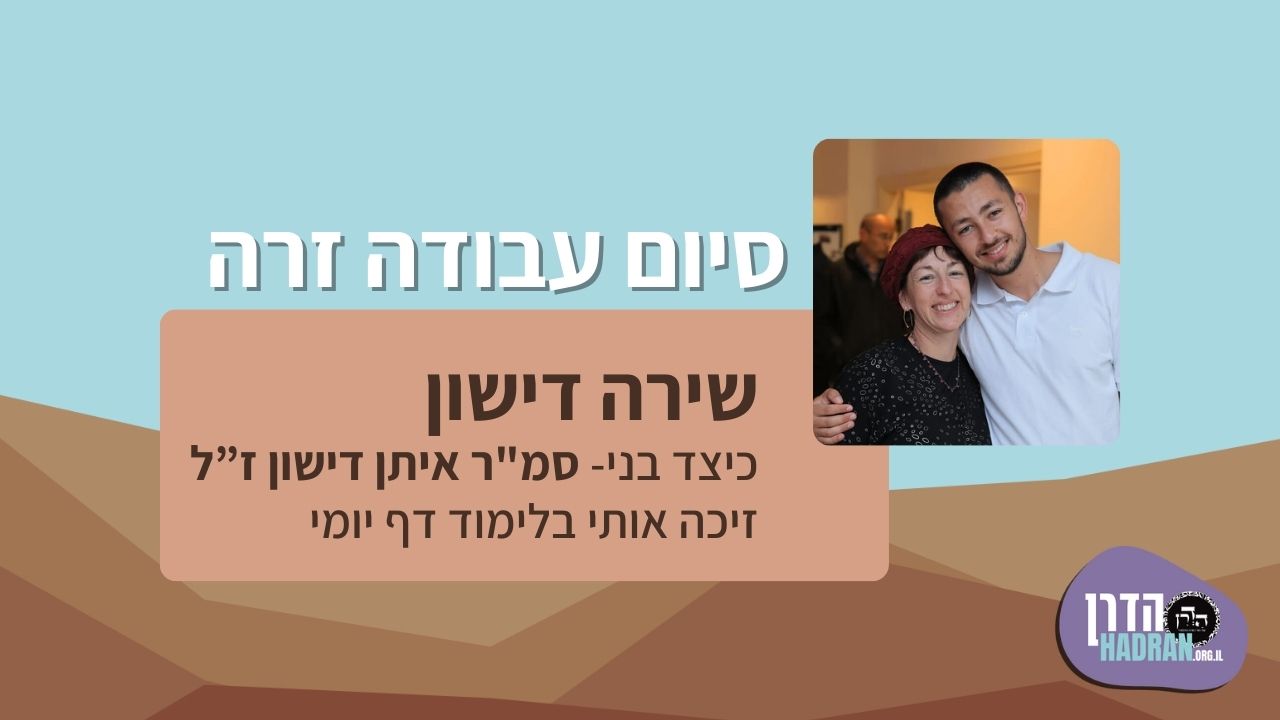
כיצד בני, סמ”ר איתן דישון ז”ל, זיכה אותי בלימוד דף יומי – שירה דישון
05.09.2025 | י״ב באלול תשפ״ה


חדשה בלימוד הגמרא?
זה הדף הראשון שלך? איזו התרגשות עצומה! יש לנו בדיוק את התכנים והכלים שיעזרו לך לעשות את הצעדים הראשונים ללמידה בקצב וברמה שלך, כך תוכלי להרגיש בנוח גם בתוך הסוגיות המורכבות ומאתגרות.
פסיפס הלומדות שלנו
גלי את קהילת הלומדות שלנו, מגוון נשים, רקעים וסיפורים. כולן חלק מתנועה ומסע מרגש ועוצמתי.
התחלתי ללמוד דף יומי באמצע תקופת הקורונה, שאבא שלי סיפר לי על קבוצה של בנות שתיפתח ביישוב שלנו ותלמד דף יומי כל יום. הרבה זמן רציתי להצטרף לזה וזאת הייתה ההזדמנות בשבילי. הצטרפתי במסכת שקלים ובאמצע הייתה הפסקה קצרה. כיום אני כבר לומדת באולפנה ולומדת דף יומי לבד מתוך גמרא של טיינזלץ.

שבות בראלי
עתניאל, ישראל
התחלתי מעט לפני תחילת הסבב הנוכחי. אני נהנית מהאתגר של להמשיך להתמיד, מרגעים של "אהה, מפה זה הגיע!” ומהאתגר האינטלקטואלי

אילת-חן ודלר
לוד, ישראל
התחלתי ללמוד דף יומי כאשר קיבלתי במייל ממכון שטיינזלץ את הדפים הראשונים של מסכת ברכות במייל. קודם לא ידעתי איך לקרוא אותם עד שנתתי להם להדריך אותי. הסביבה שלי לא מודעת לעניין כי אני לא מדברת על כך בפומבי. למדתי מהדפים דברים חדשים, כמו הקשר בין המבנה של בית המקדש והמשכן לגופו של האדם (יומא מה, ע”א) והקשר שלו למשפט מפורסם שמופיע בספר ההינדי "בהגוד-גיתא”. מתברר שזה רעיון כלל עולמי ולא רק יהודי

אלנה ארנבורג
נשר, ישראל
ראיתי את הסיום הגדול בבנייני האומה וכל כך התרשמתי ורציתי לקחת חלק.. אבל לקח לי עוד כשנה וחצי )באמצע מסיכת שבת להצטרף..
הלימוד חשוב לי מאוד.. אני תמיד במרדף אחרי הדף וגונבת כל פעם חצי דף כשהילדים עסוקים ומשלימה אח”כ אחרי שכולם הלכו לישון..

אולגה מזרחי
ירושלים, ישראל
אמא שלי למדה איתי ש”ס משנה, והתחילה ללמוד דף יומי. אני החלטתי שאני רוצה ללמוד גם. בהתחלה למדתי איתה, אח”כ הצטרפתי ללימוד דף יומי שהרב דני וינט מעביר לנוער בנים בעתניאל. במסכת עירובין עוד חברה הצטרפה אלי וכשהתחלנו פסחים הרב דני פתח לנו שעור דף יומי לבנות. מאז אנחנו לומדות איתו קבוע כל יום את הדף היומי (ובשבת אבא שלי מחליף אותו). אני נהנית מהלימוד, הוא מאתגר ומעניין

רננה הלמן
עתניאל, ישראל
התחלתי ללמוד בעידוד שתי חברות אתן למדתי בעבר את הפרק היומי במסגרת 929.
בבית מתלהבים מאוד ובשבת אני לומדת את הדף עם בעלי שזה מפתיע ומשמח מאוד! לימוד הדף הוא חלק בלתי נפרד מהיום שלי. לומדת בצהריים ומחכה לזמן הזה מידי יום…

מרים ונגרובר
אפרת, ישראל
הצטרפתי ללומדות בתחילת מסכת תענית. ההתרגשות שלי ושל המשפחה היתה גדולה מאוד, והיא הולכת וגוברת עם כל סיום שאני זוכה לו. במשך שנים רבות רציתי להצטרף ומשום מה זה לא קרה… ב”ה מצאתי לפני מספר חודשים פרסום של הדרן, ומיד הצטרפתי והתאהבתי. הדף היומי שינה את חיי ממש והפך כל יום- ליום של תורה. מודה לכן מקרב ליבי ומאחלת לכולנו לימוד פורה מתוך אהבת התורה ולומדיה.

נעה רוזן
חיספין רמת הגולן, ישראל
A friend in the SF Bay Area said in Dec 2019 that she might start listening on her morning drive to work. I mentioned to my husband and we decided to try the Daf when it began in Jan 2020 as part of our preparing to make Aliyah in the summer.

חנה פיוטרקובסקי
ירושלים, Israel
התחלתי ללמוד את הדף היומי מעט אחרי שבני הקטן נולד. בהתחלה בשמיעה ולימוד באמצעות השיעור של הרבנית שפרבר. ובהמשך העזתי וקניתי לעצמי גמרא. מאז ממשיכה יום יום ללמוד עצמאית, ולפעמים בעזרת השיעור של הרבנית, כל יום. כל סיום של מסכת מביא לאושר גדול וסיפוק. הילדים בבית נהיו חלק מהלימוד, אני משתפת בסוגיות מעניינות ונהנית לשמוע את דעתם.

אלירז בלאו
מעלה מכמש, ישראל
התחלתי ללמוד דף לפני קצת יותר מ-5 שנים, כשלמדתי רבנות בישיבת מהר”ת בניו יורק. בדיעבד, עד אז, הייתי בלימוד הגמרא שלי כמו מישהו שאוסף חרוזים משרשרת שהתפזרה, פה משהו ושם משהו, ומאז נפתח עולם ומלואו…. הדף נותן לי לימוד בצורה מאורגנת, שיטתית, יום-יומית, ומלמד אותי לא רק ידע אלא את השפה ודרך החשיבה שלנו. לשמחתי, יש לי סביבה תומכת וההרגשה שלי היא כמו בציטוט שבחרתי: הדף משפיע לטובה על כל היום שלי.

מיכל כהנא
חיפה, ישראל
בסוף הסבב הקודם ראיתי את השמחה הגדולה שבסיום הלימוד, בעלי סיים כבר בפעם השלישית וכמובן הסיום הנשי בבנייני האומה וחשבתי שאולי זו הזדמנות עבורי למשהו חדש.
למרות שאני שונה בסביבה שלי, מי ששומע על הלימוד שלי מפרגן מאוד.
אני מנסה ללמוד קצת בכל יום, גם אם לא את כל הדף ובסך הכל אני בדרך כלל עומדת בקצב.
הלימוד מעניק המון משמעות ליום יום ועושה סדר בלמוד תורה, שתמיד היה (ועדיין) שאיפה. אבל אין כמו קביעות

רחלי מנדלסון
טל מנשה, ישראל
התחלתי כשהייתי בחופש, עם הפרסומים על תחילת המחזור, הסביבה קיבלה את זה כמשהו מתמיד ומשמעותי ובהערכה, הלימוד זה עוגן יציב ביום יום, יש שבועות יותר ויש שפחות אבל זה משהו שנמצא שם אמין ובעל משמעות בחיים שלי….

עדי דיאמנט
גמזו, ישראל
התחלתי בתחילת הסבב, והתמכרתי. זה נותן משמעות נוספת ליומיום ומאוד מחזק לתת לזה מקום בתוך כל שגרת הבית-עבודה השוטפת.

רעות אברהמי
בית שמש, ישראל
התחלתי לפני 8 שנים במדרשה. לאחרונה סיימתי מסכת תענית בלמידה עצמית ועכשיו לקראת סיום מסכת מגילה.

דניאלה ברוכים
רעננה, ישראל
למדתי גמרא מכיתה ז- ט ב Maimonides School ואחרי העליה שלי בגיל 14 לימוד הגמרא, שלא היה כל כך מקובל בימים אלה, היה די ספוראדי. אחרי "ההתגלות” בבנייני האומה התחלתי ללמוד בעיקר בדרך הביתה למדתי מפוקקטסים שונים. לאט לאט ראיתי שאני תמיד חוזרת לרבנית מישל פרבר. באיזה שהוא שלב התחלתי ללמוד בזום בשעה 7:10 .
היום "אין מצב” שאני אתחיל את היום שלי ללא לימוד עם הרבנית מישל עם כוס הקפה שלי!!

דבי גביר
חשמונאים, ישראל
ראיתי את הסיום הגדול בבנייני האומה וכל כך התרשמתי ורציתי לקחת חלק.. אבל לקח לי עוד כשנה וחצי )באמצע מסיכת שבת להצטרף..
הלימוד חשוב לי מאוד.. אני תמיד במרדף אחרי הדף וגונבת כל פעם חצי דף כשהילדים עסוקים ומשלימה אח”כ אחרי שכולם הלכו לישון..
אולגה מזרחי
ירושלים, ישראל
התחלתי ללמוד דף יומי בסבב הקודם. זכיתי לסיים אותו במעמד המרגש של הדרן. בסבב הראשון ליווה אותי הספק, שאולי לא אצליח לעמוד בקצב ולהתמיד. בסבב השני אני לומדת ברוגע, מתוך אמונה ביכולתי ללמוד ולסיים. בסבב הלימוד הראשון ליוותה אותי חוויה מסויימת של בדידות. הדרן העניקה לי קהילת לימוד ואחוות נשים. החוויה של סיום הש”ס במעמד כה גדול כשנשים שאינן מכירות אותי, שמחות ומתרגשות עבורי , היתה חוויה מרוממת נפש

אילנית ווייל
קיבוץ מגדל עוז, ישראל
שמעתי על הסיום הענק של הדף היומי ע”י נשים בבנייני האומה. רציתי גם.
החלטתי להצטרף. התחלתי ושיכנעתי את בעלי ועוד שתי חברות להצטרף. עכשיו יש לי לימוד משותף איתו בשבת ומפגש חודשי איתן בנושא (והתכתבויות תדירות על דברים מיוחדים שקראנו). הצטרפנו לקבוצות שונות בווטסאפ. אנחנו ממש נהנות. אני שומעת את השיעור מידי יום (בד”כ מהרב יוני גוטמן) וקוראת ומצטרפת לסיומים של הדרן. גם מקפידה על דף משלהן (ונהנית מאד).

ליאת סיטרון
אפרת, ישראל
התחלתי ללמוד גמרא בבית הספר בגיל צעיר והתאהבתי. המשכתי בכך כל חיי ואף היייתי מורה לגמרא בבית הספר שקד בשדה אליהו (בית הספר בו למדתי בילדותי)בתחילת מחזור דף יומי הנוכחי החלטתי להצטרף ובע”ה מקווה להתמיד ולהמשיך. אני אוהבת את המפגש עם הדף את "דרישות השלום ” שמקבלת מקשרים עם דפים אחרים שלמדתי את הסנכרון שמתחולל בין התכנים.

אריאלה ביגמן
מעלה גלבוע, ישראל
אחרי שראיתי את הסיום הנשי של הדף היומי בבנייני האומה זה ריגש אותי ועורר בי את הרצון להצטרף. לא למדתי גמרא קודם לכן בכלל, אז הכל היה לי חדש, ולכן אני לומדת בעיקר מהשיעורים פה בהדרן, בשוטנשטיין או בחוברות ושיננתם.

רבקה שלוס
בית שמש, ישראל
עבודה זרה לז
הוֹאִיל וְרָאוּי לְבִיאָה, מְטַמֵּא נָמֵי בְּזִיבָה. אָמַר רָבִינָא: הִלְכָּךְ, הָא תִּינוֹקֶת גּוֹיָה בַּת שָׁלֹשׁ שָׁנִים וְיוֹם אֶחָד, הוֹאִיל וּרְאוּיָה לְבִיאָה, מְטַמְּאָה נָמֵי בְּזִיבָה.
The Gemara explains the reason for this opinion: Since a nine-year-old boy is fit to engage in intercourse, he also imparts ritual impurity as one who experienced ziva. Ravina said: Therefore, with regard to a female gentile child who is three years and one day old, since she is fit to engage in intercourse at that age, she also imparts impurity as one who experienced ziva.
פְּשִׁיטָא! מַהוּ דְּתֵימָא: הַאי יָדַע לְאַרְגּוֹלֵי, וְהָא לָא יָדְעָה לְאַרְגּוֹלֵי? קָא מַשְׁמַע לַן.
The Gemara asks: Isn’t that obvious? The Gemara explains: It was necessary to state this ruling, lest you say that the halakha that a gentile who is suited for intercourse imparts impurity does not apply to a female. The possible difference between a male and female child is based on the fact that whereas that child, a nine-year-old male gentile, knows how to accustom others to sin by employing persuasion, this child, a three-year-old female gentile, does not know how to accustom others to sin until she matures. Therefore, Ravina teaches us that the halakha nevertheless applies to both male and female children.
מִיסְתְּמִיךְ וְאָזֵיל רַבִּי יְהוּדָה נְשִׂיאָה אַכַּתְפֵּיהּ דְּרַבִּי שִׂמְלַאי שַׁמָּעֵיהּ, אָמַר לוֹ: שִׂמְלַאי, לֹא הָיִיתָ אֶמֶשׁ בְּבֵית הַמִּדְרָשׁ כְּשֶׁהִתַּרְנוּ אֶת הַשֶּׁמֶן. אָמַר לוֹ: בְּיָמֵינוּ תַּתִּיר אַף אֶת הַפַּת! אָמַר לוֹ: אִם כֵּן קָרוּ לַן ״בֵּית דִּינָא שָׁרְיָא״! דִּתְנַן: הֵעִיד רַבִּי יוֹסֵי בֶּן יוֹעֶזֶר אִישׁ צְרֵידָה עַל אַיַּיל קַמְצָא דְּכַן, וְעַל מַשְׁקֵה בֵּית מַטְבְּחַיָּא דְּכַן, וְעַל דְּיִקְרַב לְמִיתָא מְסָאַב, וְקָרוּ לֵיהּ ״יוֹסֵף שָׁרְיָא״.
The Gemara relates a relevant incident: Rabbi Yehuda Nesia was traveling while leaning upon the shoulder of Rabbi Simlai, his attendant. Rabbi Yehuda Nesia said to him: Simlai, you were not in the study hall last night when we permitted the oil of gentiles. Rabbi Simlai said to him: In our days, you will permit bread of gentiles as well. Rabbi Yehuda Nesia said to him: If so, people will call us a permissive court. As we learned in a mishna (Eduyyot 8:4): Rabbi Yosei ben Yo’ezer of Tzereida testified with regard to the eil kamtza, a type of locust, that it is kosher, and with regard to the liquids of the slaughterhouse in the Temple that they are ritually pure, and with regard to one who touches a corpse that he is impure, as soon explained by the Gemara. And as a result, they called him: Yosef the Permissive.
אֲמַר לֵיהּ: הָתָם שְׁרָא תְּלָת, וּמַר שְׁרָא חֲדָא, וְאִי שָׁרֵי מָר חֲדָא אַחֲרִיתִי, אַכַּתִּי תַּרְתֵּין הוּא דְּהָוְיָין! אֲמַר לֵיהּ: אֲנָא [נָמֵי] שְׁרַאי אַחֲרִיתִי. מַאי הִיא?
Rabbi Simlai said to him: There, Yosei ben Yo’ezer permitted three matters, but the Master has permitted only one, and even if the Master permits one other matter, these will still constitute only two permissive rulings. Rabbi Yehuda Nesia said to him: I have already permitted another matter. The Gemara asks: What is the other matter that he permitted?
דִּתְנַן: זֶה גִּיטִּיךְ אִם לֹא בָּאתִי מִכָּאן עַד שְׁנֵים עָשָׂר חוֹדֶשׁ, וּמֵת בְּתוֹךְ שְׁנֵים עָשָׂר חוֹדֶשׁ — אֵינוֹ גֵּט, וְתָנֵי עֲלַהּ: וְרַבּוֹתֵינוּ הִתִּירוּהָ לִינָּשֵׂא, וְאָמְרִינַן: מַאן ״רַבּוֹתֵינוּ״? אָמַר רַב יְהוּדָה אָמַר שְׁמוּאֵל: בֵּית דִּינָא דִּשְׁרוֹ מִשְׁחָא.
The Gemara explains that this is as we learned in a mishna (Gittin 76b) that if one says to his wife: This is your bill of divorce if I do not arrive from now until twelve months’ time, and he died within twelve months, then it is not a valid bill of divorce because it would not take effect until after the husband’s death. And it is taught with regard to that mishna that our Rabbis nevertheless permitted her to marry. The Gemara continues: And we say: Who is the mishna referring to when it mentions our Rabbis? Rav Yehuda said that Shmuel said: This is referring to the court that permitted the oil of gentiles.
סָבְרִי לַהּ כְּרַבִּי יוֹסֵי, דְּאָמַר: זְמַנּוֹ שֶׁל שְׁטָר מוֹכִיחַ עָלָיו. וְאָמַר רַבִּי אַבָּא בְּרֵיהּ דְּרַבִּי חִיָּיא בַּר אַבָּא: רַבִּי יְהוּדָה הַנָּשִׂיא הוֹרָה, וְלֹא הוֹדוּ לוֹ כׇּל שְׁעָתוֹ, וְאָמְרִי לָהּ: כׇּל סִיעָתוֹ.
Tangentially, the Gemara examines the reason for the ruling of Rabbi Yehuda Nesia’s court concerning a bill of divorce. They hold in accordance with the opinion of Rabbi Yosei, who says: The date written in a document proves when it takes effect. In other words, the bill of divorce takes effect at the time written on it. Therefore, the divorce actually goes into effect before the husband’s death, because it is retroactively initiated on the day that the bill was issued. The Gemara adds: And Rabbi Abba, son of Rabbi Ḥiyya bar Abba, says: In an earlier period, Rabbi Yehuda HaNasi also ruled that the bill of divorce should be valid, but the other Sages did not concede to his opinion during his entire lifetime [sha’ato]. And some say that all of his colleagues [si’ato] did not concede to his opinion.
אֲמַר לֵיהּ רַבִּי (אֱלִיעֶזֶר) [אֶלְעָזָר] לְהָהוּא סָבָא: כִּי שְׁרִיתוּהָ — לְאַלְתַּר שְׁרִיתוּהָ, דְּלָא אָתֵי, אוֹ דִלְמָא לְאַחַר שְׁנֵים עָשָׂר חוֹדֶשׁ, דְּהָא אִיקַּיַּים לֵיהּ תְּנָאֵיהּ?
Rabbi Elazar said to a certain elderly man, who was a member of Rabbi Yehuda Nesia’s court: When you permitted this woman to remarry, did you permit her immediately after the husband died, as he certainly will not arrive within the twelve months, or perhaps you permitted her only after twelve months, because only then was the condition fulfilled?
וְתִיבְּעֵי לָךְ אַמַּתְנִיתִין, דִּתְנַן: ״הֲרֵי זֶה גִּיטִּיךְ מֵעַכְשָׁיו אִם לֹא בָּאתִי מִכָּאן עַד שְׁנֵים עָשָׂר חוֹדֶשׁ״, וּמֵת בְּתוֹךְ שְׁנֵים עָשָׂר חוֹדֶשׁ — הָוֵי גֵּט, דְּהָא אִיקַּיַּים לֵיהּ תְּנַאי.
That elderly man said to Rabbi Elazar: And let the dilemma be raised with regard to the mishna itself, as we learned in the next line of the mishna in Gittin: If one says to his wife: This is your bill of divorce from now if I do not arrive from now until twelve months have elapsed, and he died within twelve months, this is a valid bill of divorce. The reason is that its condition was fulfilled, as the husband stated explicitly that the bill takes effect immediately.
וְתִיבְּעֵי לָךְ: לְאַלְתַּר הָוֵי גִּיטָּא, דְּהָא לָא אֲתָא, אוֹ דִּלְמָא לְאַחַר שְׁנֵים עָשָׂר חוֹדֶשׁ, דְּהָא אִיקַּיַּים לֵיהּ תְּנָאֵיהּ? אִין הָכִי נָמֵי, אֶלָּא מִשּׁוּם דַּהֲוֵית בְּהָהוּא מִנְיָינָא.
He explains: And let the dilemma be raised with regard to this case: Is the bill of divorce valid immediately upon the husband’s death because he will certainly not arrive? Or perhaps the bill of divorce is valid only after twelve months have elapsed, because only then is his condition fulfilled? Rabbi Elazar answered: Yes, it is indeed so; this question can be asked with regard to the case of the mishna itself. The Gemara adds: But Rabbi Elazar asked that elder about the decision of Rabbi Yehuda Nesia’s court because he was present at that assembly, and therefore he could report on what had actually occurred.
אָמַר אַבָּיֵי: הַכֹּל מוֹדִים ״לִכְשֶׁתֵּצֵא חַמָּה מִנַּרְתִּיקָהּ״ — לְכִי נָפְקָא קָאָמַר לַהּ, וְכִי מָיֵית בְּלֵילְיָא — גֵּט לְאַחַר מִיתָה הוּא.
Abaye says: All concede that one who says that a bill of divorce will take effect once the sun emerges from its sheath is saying to his wife that it will be valid once the sun comes out in the morning. And therefore, if the husband dies during the night, before sunrise, it is a posthumous bill of divorce, which is invalid.
״עַל מְנָת שֶׁתֵּצֵא חַמָּה מִנַּרְתִּיקָהּ״ — מֵעַכְשָׁיו קָאָמַר לָהּ, וְכִי מָיֵית בְּלֵילְיָא — הָא וַדַּאי תְּנָאָה הָוֵי, וְגֵט מֵחַיִּים הוּא, כִּדְרַב הוּנָא, דְּאָמַר רַב הוּנָא: כׇּל הָאוֹמֵר ״עַל מְנָת״ כְּאוֹמֵר ״מֵעַכְשָׁיו״ דָּמֵי.
Furthermore, if he said to her: On the condition that the sun will come out of its sheath, then he is saying to his wife that the bill of divorce will take effect retroactively from now, on the condition that the sun emerges. And accordingly, if he dies during the night, this is certainly a fulfilled condition, and it is a bill of divorce which takes effect retroactively, while he is alive; in accordance with the statement of Rav Huna. As Rav Huna says: With regard to anyone who states a provision employing the language: On the condition, it is tantamount to his stating in the provision that the document takes effect retroactively from now.
לֹא נֶחְלְקוּ אֶלָּא בְּ״אִם תֵּצֵא״, רַבִּי יְהוּדָה הַנָּשִׂיא סָבַר לַהּ כְּרַבִּי יוֹסֵי, דְּאָמַר: זְמַנּוֹ שֶׁל שְׁטָר מוֹכִיחַ עָלָיו, וְהָוֵה לֵיהּ כְּ״מֵהַיּוֹם אִם מַתִּי״, כְּ״מֵעַכְשָׁיו אִם מַתִּי״, וְרַבָּנַן לֵית לְהוּ דְּרַבִּי יוֹסֵי, וְהָוֵה לֵיהּ כְּ״זֶה גִּיטִּיךְ אִם מַתִּי״ גְּרֵידָא.
They disagreed only in the case of one who said to his wife: This will be your bill of divorce if the sun emerges from its sheath, and the husband died during the night. Rabbi Yehuda HaNasi holds in accordance with the opinion of Rabbi Yosei, who says that the date written in a document proves when it takes effect, and it is therefore considered as though the husband said: From today if I die, or as though he said: From now if I die. And the Sages do not accept the opinion of Rabbi Yosei, and consequently they maintain that it is considered as though the husband said only: This is your bill of divorce if I die, in which case the bill of divorce is not valid, as it would take effect only after the husband’s death.
גּוּפָא: הֵעִיד יוֹסֵי בֶּן יוֹעֶזֶר אִישׁ צְרֵידָה עַל אַיַּיל קַמְצָא דְּכַן, וְעַל מַשְׁקֵה בֵּי מַטְבְּחַיָּא דְּכַן, וְעַל דְּיִקְרַב לְמִיתָא מְסָאַב, וְקָרוּ לֵיהּ ״יוֹסֵף שָׁרְיָא״. מַאי אַיַּיל קַמְצָא? רַב פָּפָּא אָמַר: שׁוֹשִׁיבָא, וְרַב חִיָּיא בַּר אַמֵּי מִשְּׁמֵיהּ דְּעוּלָּא אָמַר: סוּסְבִּיל.
§ The Gemara returns to the matter itself: Yosei ben Yo’ezer of Tzereida testified with regard to the eil kamtza that it is kosher, and with regard to the liquids of the slaughterhouse in the Temple that they are ritually pure, and with regard to one who touches a corpse that he is impure. And as a result, they called him: Yosef the Permissive. The Gemara asks: What is the eil kamtza? Rav Pappa says: It is a long-headed locust called shoshiva, and Rav Ḥiyya bar Ami says in the name of Ulla: It is a locust called susbil.
רַב פָּפָּא אָמַר: שׁוֹשִׁיבָא, וְקָמִיפַּלְגִי בְּרֹאשׁוֹ אָרוֹךְ. מָר סָבַר: רֹאשׁוֹ אָרוֹךְ אָסוּר, וּמָר סָבַר: רֹאשׁוֹ אָרוֹךְ מוּתָּר. רַב חִיָּיא בַּר אַמֵּי מִשְּׁמֵיהּ דְּעוּלָּא אָמַר:
The Gemara explains: Rav Pappa says it is a shoshiva, and accordingly Yosei ben Yo’ezer and the other Rabbis disagree with regard to a long-headed locust: One Sage, the Rabbis, holds that a long-headed locust is prohibited, and one Sage, Yosei ben Yo’ezer, holds that a long-headed locust is permitted. Rav Ḥiyya bar Ami says in the name of Ulla that
סוּסְבִּיל, בְּרֹאשׁוֹ אָרוֹךְ — כּוּלֵּי עָלְמָא לָא פְּלִיגִי דְּאָסוּר, וְהָכָא בִּכְנָפָיו חוֹפִין אֶת רוּבּוֹ עַל יְדֵי הַדְּחָק קָמִיפַּלְגִי: מָר סָבַר רוּבָּא כֹּל דְּהוּ בָּעֵינַן, וּמָר סָבַר רוּבָּא דְּמִנְּכַר בָּעֵינַן.
it is a susbil, and accordingly, with regard to a long-headed locust, everyone agrees that it is prohibited. And here they disagree with regard to a locust whose wings barely cover most of its body: One Sage, Yosei ben Yo’ezer, holds that we require only a minimal majority of the locust’s body to be covered by its wings, and one Sage, the Rabbis, holds that we require a noticeable majority of the body to be covered.
וְעַל מַשְׁקֵה בֵּי מַטְבְּחַיָּא דְּכַן. מַאי ״דְּכַן״? רַב אָמַר: דְּכַן מַמָּשׁ, וּשְׁמוּאֵל אָמַר: דְּכַן מִלְּטַמֵּא אֲחֵרִים, אֲבָל טוּמְאַת עַצְמָן יֵשׁ בָּהֶן.
§ It was stated above: And Yosei ben Yo’ezer testified with regard to the liquids of the slaughterhouse in the Temple that they are ritually pure. The Gemara asks: What did Yosei ben Yo’ezer mean when he said they are pure? Rav says: He meant that they are actually ritually pure. And Shmuel says: They are pure in the sense that they do not impart ritual impurity to other substances; but they themselves can contract impurity.
רַב אָמַר: ״דְּכַן מַמָּשׁ״, קָסָבַר: טוּמְאַת מַשְׁקִין דְּרַבָּנַן, וְכִי גְּזוּר רַבָּנַן טוּמְאָה בְּמַשְׁקִין דְּעָלְמָא, אֲבָל בְּמַשְׁקֵה בֵּי מַטְבְּחַיָּא לָא גְּזַרוּ רַבָּנַן.
The Gemara explains the reasons for these opinions. Rav says that these liquids are actually pure, as he maintains that the ritual impurity of liquids applies by rabbinic law, and when the Sages decreed impurity upon liquids, they did so only with regard to ordinary liquids. But the Sages did not issue their decree with regard to the liquids of the slaughterhouse in the Temple.
וּשְׁמוּאֵל אָמַר: דְּכַן מִלְּטַמֵּא אֲחֵרִים, אֲבָל טוּמְאַת עַצְמָן יֵשׁ בָּהֶן, קָסָבַר: טוּמְאַת מַשְׁקִין דְּאוֹרָיְיתָא לְטַמֵּא אֲחֵרִים דְּרַבָּנַן, וְכִי גְּזַרוּ רַבָּנַן בְּמַשְׁקִין דְּעָלְמָא, בְּמַשְׁקִין בֵּי מַטְבְּחַיָּא לָא גְּזַרוּ.
And Shmuel says: The liquids are ritually pure in the sense that they do not impart impurity to other substances; but they themselves can contract impurity, as Shmuel maintains that the ritual impurity of liquids themselves is by Torah law, whereas their capacity to impart impurity to other substances is by rabbinic law. And when the Sages issued this decree, they did so only with regard to ordinary liquids. But they did not issue their decree with regard to the liquids of the slaughterhouse in the Temple.
וְעַל דְּיִקְרַב לְמִיתָא מְסָאַב, וְקָרוּ לֵיהּ ״יוֹסֵף שָׁרְיָא״. ״יוֹסֵף אָסְרָא״ מִיבְּעֵי לֵיהּ! וְעוֹד, דְּאוֹרָיְיתָא הִיא, דִּכְתִיב: ״וְכֹל אֲשֶׁר יִגַּע עַל פְּנֵי הַשָּׂדֶה בַּחֲלַל חֶרֶב אוֹ בְמֵת וְגוֹ׳״!
§ It was stated: And Yosei ben Yo’ezer testified with regard to one who touches a corpse that he is impure, and as a result they called him: Yosef the Permissive. The Gemara questions this: Since he issued a stringent ruling, they should have called him: Yosef the Prohibiting. And furthermore, this halakha is explicitly written in the Torah, as it is written: “And whosoever in the open field touches one that is slain with a sword, or one that is dead, or a bone of a man, or a grave, shall be impure seven days” (Numbers 19:16).
דְּאוֹרָיְיתָא, דְּיִקְרַב — טָמֵא, דְּיִקְרַב בִּדְיִקְרַב — טָהוֹר, וַאֲתוֹ אִינְהוּ וּגְזוּר אֲפִילּוּ דְּיִקְרַב בִּדְיִקְרַב, וַאֲתָא אִיהוּ וְאוֹקְמַהּ אַדְּאוֹרָיְיתָא.
The Gemara explains: By Torah law one who touches a corpse is ritually impure, but one who touches another who has touched a corpse is pure. And the Sages came and decreed that even one who touches another who has touched a corpse is also impure. And Yosei ben Yo’ezer came and established the halakha in accordance with the original, more lenient Torah law.
דְּיִקְרַב בִּדְיִקְרַב נָמֵי דְּאוֹרָיְיתָא הוּא, דִּכְתִיב: ״וְכֹל אֲשֶׁר יִגַּע בּוֹ הַטָּמֵא יִטְמָא״!
The Gemara raises a difficulty: One who touches another who has touched a corpse is also rendered impure by Torah law, as it is written: “And whatsoever the impure person touches shall be impure” (Numbers 19:22).
אַמְרוּהָ רַבָּנַן קַמֵּיהּ דְּרָבָא, מִשְּׁמֵיהּ דְּמָר זוּטְרָא בְּרֵיהּ דְּרַב נַחְמָן, דְּאָמַר מִשְּׁמֵיהּ דְּרַב נַחְמָן: דְּאוֹרָיְיתָא דְּיִקְרַב בִּדְיִקְרַב, בְּחִיבּוּרִין — טוּמְאַת שִׁבְעָה, שֶׁלֹּא בְּחִיבּוּרִין — טוּמְאַת עֶרֶב, וַאֲתוֹ אִינְהוּ וּגְזוּר אֲפִילּוּ שֶׁלֹּא בְּחִיבּוּרִין טוּמְאַת שִׁבְעָה, וַאֲתָא אִיהוּ וְאוֹקְמַהּ אַדְּאוֹרָיְיתָא.
The Sages stated this difficulty before Rava in the name of Mar Zutra, the son of Rav Naḥman, who said a response in the name of Rav Naḥman: By Torah law, one who touches another who touches a corpse while the second individual is in concurrent contact with the corpse is impure with seven-day impurity. If this occurs while the second individual is not in concurrent contact with the corpse, he contracts impurity until the evening. And the Sages came and decreed that even where there is no concurrent contact, one still contracts seven-day impurity when he touches someone who touched a corpse. And subsequently Yosei ben Yo’ezer came and established the halakha in accordance with the original Torah law.
דְּאוֹרָיְיתָא מַאי הִיא? דִּכְתִיב: ״הַנֹּגֵעַ בְּמֵת לְכׇל נֶפֶשׁ אָדָם וְטָמֵא שִׁבְעַת יָמִים״, וּכְתִיב: ״וְכֹל אֲשֶׁר יִגַּע בּוֹ הַטָּמֵא יִטְמָא״, וּכְתִיב: ״וְהַנֶּפֶשׁ הַנֹּגַעַת תִּטְמָא עַד הָעָרֶב״, הָא כֵּיצַד?
The Gemara asks: What is the source of this halakha, prescribed by Torah law? As it is written: “He that touches the dead, even any man’s dead body, shall be impure seven days” (Numbers 19:11), and it is written: “And whatsoever the impure person touches shall be impure” (Numbers 19:22). These two verses indicate that one contracts ritual impurity for seven days. And yet it is also written: “And the soul that touches him shall be impure until evening” (Numbers 19:22). How can these texts be reconciled?
כָּאן בְּחִיבּוּרִין, כָּאן שֶׁלֹּא בְּחִיבּוּרִין.
The Gemara answers: Here, in the first two verses, the Torah is discussing concurrent contact, which results in impurity of seven days; there, in the last verse, it is discussing a case where there is no concurrent contact, and therefore the individual in question is impure only until the evening.
אֲמַר לְהוּ רָבָא: לָאו אָמֵינָא לְכוּ לָא תִּתְלוֹ בֵּיהּ בּוּקֵי סְרִיקֵי בְּרַב נַחְמָן? הָכִי אָמַר רַב נַחְמָן: סְפֵק טוּמְאָה בִּרְשׁוּת הָרַבִּים הִתִּיר לָהֶן.
Rava said to the Sages who suggested that explanation citing Rav Naḥman: Didn’t I tell you not to hang empty pitchers [bukei] upon Rav Naḥman, i.e., not to attribute incorrect statements to him? Rather, this is what Rav Naḥman said: Yosei ben Yo’ezer permitted for them a case of uncertain impurity contracted in a public domain. In other words, Yosei ben Yo’ezer ruled leniently that one who is unsure whether or not he came in contact with a corpse in the public domain is ritually pure.
וְהָא הִלְכְתָא מִסּוֹטָה גָּמְרִינַן לַהּ, מָה סוֹטָה רְשׁוּת הַיָּחִיד, אַף טוּמְאָה רְשׁוּת הַיָּחִיד!
The Gemara raises a difficulty: But didn’t we learn this halakha from the case of a woman suspected by her husband of having been unfaithful [sota]: Just as a sota can be made to drink the bitter waters only when she is suspected of engaging in adultery in a private domain, so too, uncertain ritual impurity is considered impure only when one suspects that he came into contact with it in a private domain? This shows that even by Torah law one who is unsure whether or not he touched a corpse in the public domain remains pure.
הָא אָמַר רַבִּי יוֹחָנָן: הֲלָכָה וְאֵין מוֹרִין כֵּן, וַאֲתָא אִיהוּ וְאוֹרִי לֵיהּ אוֹרוֹיֵי.
Rabbi Yoḥanan said in explanation: This is the halakha, but a public ruling is not issued to that effect. Consequently, the masses treated this matter with stringency. And Yosei ben Yo’ezer came and instructed the masses to follow the original instruction of the Torah. Therefore, his ruling was in fact a leniency.
תַּנְיָא נָמֵי הָכִי: רַבִּי יְהוּדָה אוֹמֵר, קוֹרוֹת נָעַץ לָהֶם, וְאָמַר: עַד כָּאן רְשׁוּת הָרַבִּים, עַד כָּאן רְשׁוּת הַיָּחִיד. כִּי אֲתוֹ לְקַמֵּיהּ דְּרַבִּי יַנַּאי, אֲמַר לְהוּ: הָא מַיָּא בְּשִׁיקַעְתָּא דִּבְנַהֲרָא, זִילוּ טְבוּלוּ.
The Gemara provides support for Rabbi Yoḥanan’s explanation. This is also taught in a baraita: Rabbi Yehuda says that Yosei ben Yo’ezer drove stakes into the ground for the people and said: Until here is the public domain, and until there is the private domain, so that they would know the halakha if they suspected that they had touched a corpse. The Gemara relates that when people came before Rabbi Yannai because they suspected that they might have come into contact with a source of impurity in the public domain, he said to them: Why involve yourselves in matters of uncertainty? There is deep water in the river; go immerse yourselves in it, and resolve the problem in this manner.
וְהַשְּׁלָקוֹת. מְנָהָנֵי מִילֵּי? אָמַר רַבִּי חִיָּיא בַּר אַבָּא אָמַר רַבִּי יוֹחָנָן: אָמַר קְרָא ״אֹכֶל בַּכֶּסֶף תַּשְׁבִּרֵנִי וְאָכַלְתִּי וּמַיִם בַּכֶּסֶף תִּתֶּן לִי וְשָׁתִיתִי״, כַּמָּיִם — מָה מַיִם שֶׁלֹּא נִשְׁתַּנּוּ, אַף אוֹכֶל שֶׁלֹּא נִשְׁתַּנָּה.
§ The mishna teaches: And boiled vegetables prepared by gentiles are prohibited. The Gemara asks: From where is this matter derived? Rabbi Ḥiyya bar Abba says that Rabbi Yoḥanan says: The verse states that when Moses asked Sihon, King of the Amorites, for passage through his land, he said: “You shall sell me food for money, that I may eat; and give me water for money, that I may drink” (Deuteronomy 2:28). By juxtaposing food and water, the verse teaches that food is like water: Just as Moses wished to purchase water that was unchanged, so too, he wished to purchase food that was unchanged, i.e., uncooked. Evidently, this is because foods cooked by gentiles are prohibited.
אֶלָּא מֵעַתָּה, חִטִּין וַעֲשָׂאָן קְלָיוֹת — הָכִי נָמֵי דַּאֲסוּרִין? וְכִי תֵּימָא הָכִי נָמֵי, וְהָתַנְיָא: חִיטִּין וַעֲשָׂאָן קְלָיוֹת — מוּתָּרִין! אֶלָּא, כְּמַיִם — מָה מַיִם שֶׁלֹּא נִשְׁתַּנּוּ מִבְּרִיָּיתָן, אַף אוֹכֶל שֶׁלֹּא נִשְׁתַּנָּה מִבְּרִיָּיתוֹ.
The Gemara raises a difficulty: If that is so, then in a case where a gentile had wheat and made it into roasted grains by roasting it in the oven, the wheat should also be prohibited, as it was cooked. And if you would say: Indeed that is so, this cannot be the halakha, as isn’t it taught in baraita: If a gentile had wheat and made it into roasted grains, it is permitted? The Gemara suggests a different explanation: Rather, food is like water in the following manner: Just as Moses wished to purchase water that was not altered from its original state, so too, he wished to purchase food that was not altered from its original state. Roasting wheat kernels does not alter their original state.
אֶלָּא מֵעַתָּה, חִיטִּין וּטְחָנָן הָכִי נָמֵי דַּאֲסוּרִין? וְכִי תֵּימָא הָכִי נָמֵי, וְהָתַנְיָא: חִיטִּין וַעֲשָׂאָן קְלָיוֹת, הַקְּמָחִים וְהַסְּלָתוֹת שֶׁלָּהֶן מוּתָּרִין! אֶלָּא כַּמָּיִם — מָה מַיִם שֶׁלֹּא נִשְׁתַּנּוּ מִבְּרִיָּיתָן עַל יְדֵי הָאוּר, אַף אוֹכֶל שֶׁלֹּא נִשְׁתַּנָּה מִבְּרִיָּיתוֹ עַל יְדֵי הָאוּר.
The Gemara raises another difficulty: If that is so, then if a gentile had wheat and ground it into flour, the flour should also be prohibited, as the wheat has been altered from its original state. And if you would say: Indeed that is so, this cannot be the case, as isn’t it taught in baraita: If a gentile had wheat and made it into roasted grains, it is permitted; similarly, flours and fine flours belonging to gentiles are permitted? Rather, food is like water in the following manner: Just as Moses wished to purchase water that was not altered from its original state by fire, so too, he wished to purchase food that was not altered from its original state by fire. Although wheat ground into flour is altered from its original state, this change is not accomplished by means of fire.
מִידֵּי אוּר כְּתִיב?
The Gemara raises a difficulty: Is fire written in the verse? There is no mention of fire in the verse at all. How can it be assumed that this is the similarity between water and food?
לעקוב

