חיפוש

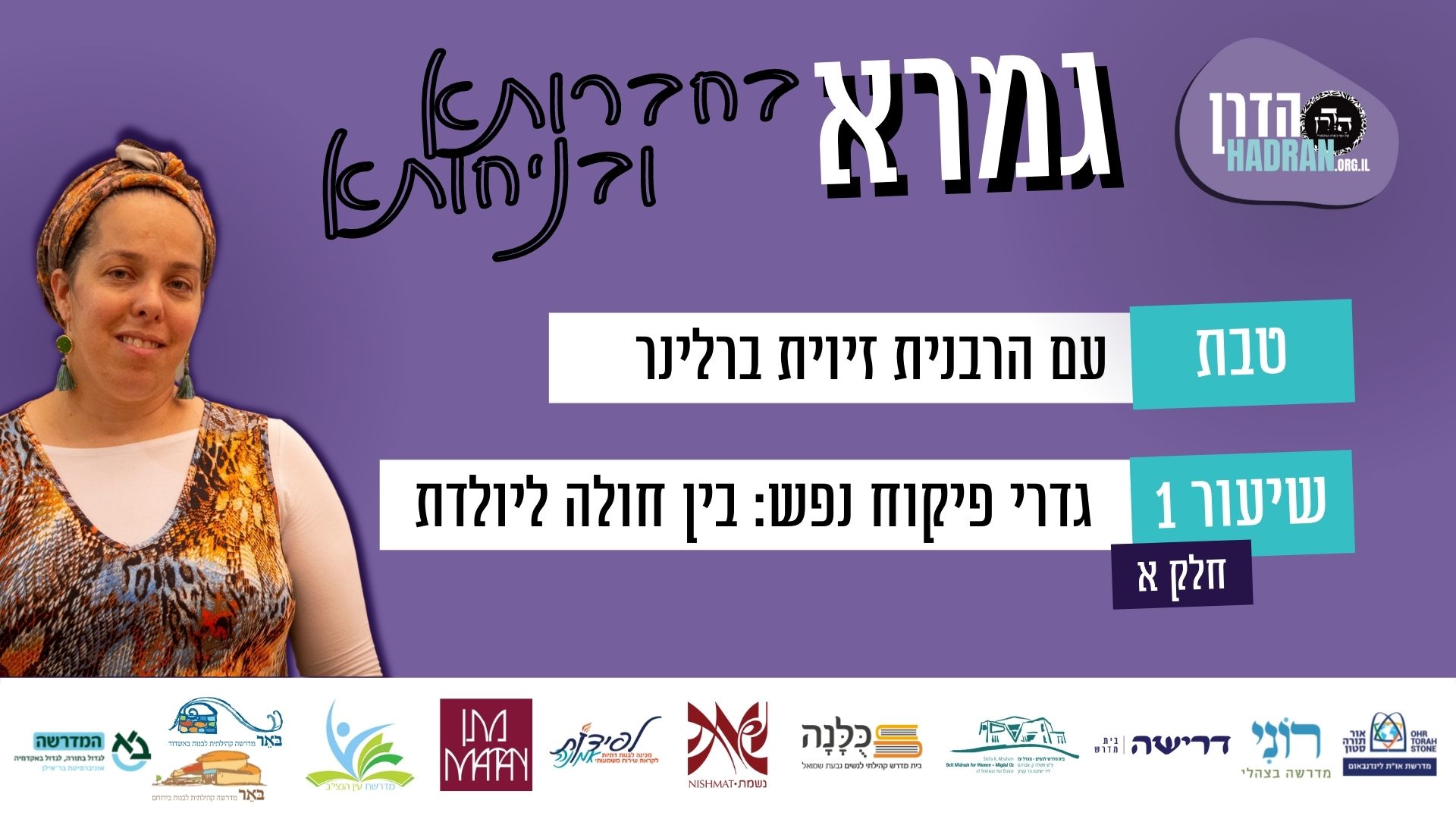
שבת מג

רוצה להקדיש שיעור?

podcast placeholder

0:00
0:00


תקציר

השיעור מוקדש לזכר נשמת דבורה ויימן מלונדון ז”ל שתמכה בהשתתפות נשים ביהדות. היא היתה מאוד שמחה אם היתה לה הזדמנות להשתתף בלימוד הדף.

הגמרא מביאה שתי הבנות של שיטת רב חסדא (של רבה ושל רב יוסף) בעניין הצלת ביצת תרנגול בשבת. למה אפשר לכפות כלי עליו אבל אסור לשים כלי כדי לתפוס ביצה שיוצא ממנה במדרון? התשובות הן שתי תפיסות שונות שמסבירות למה אסור לשים כלי תחת לנר בשבת. האם זה בגלל שמבטל כלי מהיכנו או שאסור לטלטל כלי לצורך כלי שאינו ניטל בשבת? אביי מקשה ממקורות תנאיים על שניהם ולשניהם יש תשובות לכל מקור. רבי יצחק חולק על רב חסדא וסובר שאי אפשר גם לכפות כלי על ביצה. סברתו בגלל שאין כלי ניטל לצורך כלי שאינו ניטל בשבת ואין היתר אלא אם כן כבר מטלטלים את הכלי לצורך מקומו. גם מביאים קושיות עליו ויש תירוצים לכל מקור. איך מטלטלים מת בשבת או מגינים עליו מהשמש?


כלים

שבת מג

אֵיתִיבֵיהּ: כּוֹפִין קְעָרָה עַל הַנֵּר שֶׁלֹּא יֵאָחֵז בַּקּוֹרָה? — בְּבָתֵּי גְּחִינִי דִּשְׁכִיחַ בְּהוּ דְּלֵיקָה.

Abaye raised another objection to Rabba’s opinion from a baraita: One may overturn a bowl on the oil lamp so that the flame will not set fire to the beam. Apparently, the Sages permitted moving a vessel, even though this is not a common case of preservation. Rabba answered him: This is a case of low-ceilinged houses in which fires are common.

וְכֵן קוֹרָה שֶׁנִּשְׁבְּרָה, סוֹמְכִין אוֹתָהּ בַּסַּפְסָל וּבַאֲרוּכּוֹת הַמִּטָּה! — בִּכְשׁוּרֵי חַדְתֵי דַּעֲבִידִי דְּפָקְעִי.

And it is likewise difficult from a mishna: The beam of a roof that broke, one may support it with a bench and with the lengths of a bed frame so that it will not fall. Even though this is an uncommon case of preservation, it is permitted. Rabba answered: This is a case of new beams, which commonly break. This too is a common case of preservation.

נוֹתְנִין כְּלִי תַּחַת הַדֶּלֶף בְּשַׁבָּת! — בְּבָתֵּי חַדְתִּי דִּשְׁכִיחִי דְּדָלְפִי.

And Abaye raised another objection from a mishna: One may place a vessel beneath a leak in the ceiling on Shabbat. Apparently, even an uncommon case of preservation is permitted. Rabba answered: This is a case of new houses, which frequently leak.

רַב יוֹסֵף אָמַר, הַיְינוּ טַעְמָא דְּרַב חִסְדָּא: מִשּׁוּם דְּקָא מְבַטֵּל כְּלִי מֵהֵיכָנוֹ.

Rav Yosef said: This is the reasoning of Rav Ḥisda, who allowed covering a hen’s egg, but not placing a vessel underneath the hen, in order to receive the egg when it is laid: Because by receiving the egg in the vessel, he negates a vessel’s preparedness. Initially, the vessel was available for any use. Since it now contains an egg that may neither be used nor moved, the vessel too may no longer be carried. It is tantamount to breaking the vessel.

אֵיתִיבֵיהּ אַבָּיֵי: חָבִית שֶׁל טֶבֶל שֶׁנִּשְׁבְּרָה — מֵבִיא כְּלִי אַחֵר וּמַנִּיחַ תַּחְתֶּיהָ! אֲמַר לֵיהּ: טֶבֶל מוּכָן הוּא אֵצֶל שַׁבָּת, שֶׁאִם עָבַר וְתִקְּנוֹ — מְתוּקָּן.

Abaye raised an objection to Rav Ḥisda’s opinion, just as he had to Rabba’s opinion, from the Tosefta: One whose barrel of untithed produce, which may not be eaten until it is tithed, broke on Shabbat, may bring another vessel and place it beneath the barrel so that the untithed produce is not lost. Even though eating untithed produce is prohibited on Shabbat, they permitted carrying a vessel to preserve it even in the uncommon case of a barrel that breaks. Apparently, one is permitted to negate the vessel’s preparedness. Rav Yosef said to him: This is not difficult. Fundamentally, untithed produce is available for use on Shabbat. As, if one sins and prepares it for use by tithing it on Shabbat, it is prepared and may be eaten and carried.

נוֹתְנִין כְּלִי תַּחַת הַנֵּר לְקַבֵּל נִיצוֹצוֹת! אָמַר רַב הוּנָא בְּרֵיהּ דְּרַב יְהוֹשֻׁעַ: נִיצוֹצוֹת אֵין בָּהֶן מַמָּשׁ.

Abaye raised another objection from a mishna: One may place a vessel underneath the oil lamp in order to receive the burning sparks of oil that drip from the wick. Once the vessel is filled with the drops of oil, it will no longer be available. Rav Huna, son of Rav Yehoshua, said: Sparks have no substance. They burn and dissolve as they fall into the bowl and do not accumulate. Therefore, the vessel may still be used.

וְכֵן קוֹרָה שֶׁנִּשְׁבְּרָה, סוֹמְכִין אוֹתָהּ בַּסַּפְסָל אוֹ בַּאֲרוּכּוֹת הַמִּטָּה! — דְּרָפִי, דְּאִי בָּעֵי שָׁקֵיל לֵיהּ.

And he also raised another objection from a mishna: A beam that broke, one may support it with a bench and with the lengths of a bed frame so that it will not fall. By doing so, he negates the preparedness of the bench or bed frame. He answered: This is a case in which the bench is loosely supporting the beam and not supporting its entire weight. If one wants to do so, he can take the bench. Therefore, the preparedness of the bench is not negated.

נוֹתְנִין כְּלִי תַּחַת הַדֶּלֶף בְּשַׁבָּת! — בְּדֶלֶף הָרָאוּי.

And he also raised another objection from a mishna: One may place a vessel beneath a leak that is dripping from the ceiling on Shabbat. The dripping water has no use and is set-aside; therefore, the water negates the vessel’s preparedness. He answered him: This is a case of a leak that is suitable for drinking. Since it has a use, one is permitted to carry the water that is in the vessel. Consequently, he does not negate the vessel’s preparedness by placing it beneath the leak.

כּוֹפִין אֶת הַסַּל לִפְנֵי הָאֶפְרוֹחִין שֶׁיַּעֲלוּ וְיֵרְדוּ! קָסָבַר מוּתָּר לְטַלְטְלוֹ. וְהָתַנְיָא, אָסוּר לְטַלְטְלוֹ? בְּעוֹדָן עָלָיו. וְהָתַנְיָא, אַף עַל פִּי שֶׁאֵין עוֹדָן עָלָיו — אָסוּר! אָמַר רַבִּי אֲבָהוּ: בְּעוֹדָן עָלָיו כׇּל בֵּין הַשְּׁמָשׁוֹת. מִיגּוֹ דְּאִיתְקְצַאי לְבֵין הַשְּׁמָשׁוֹת — אִיתְקְצַאי לְכוּלֵּי יוֹמָא.

And he also raised another objection from a Tosefta: One may overturn a basket in front of chicks so that they can climb on and climb off of it. By doing so, he negates the vessel’s preparedness due to the chicks, as moving them is prohibited on Shabbat. The Gemara answers: Rav Yosef holds that it is permitted to move the basket on Shabbat. The Gemara asks: Wasn’t it taught in a baraita that it is prohibited to move the basket? The Gemara replies: This prohibition was stated when they are still on it; however, once the chicks climbed off the basket, it may be carried immediately. The Gemara asks: Wasn’t it taught in a baraita that even though they are no longer on it, it is prohibited to move the basket? Consequently, the vessel’s preparedness is negated. Rabbi Abbahu said: That baraita is referring to the unique case where the chicks remained on top of the basket for the entire twilight period on Shabbat eve. This is in accordance with the principle: Since it was set aside from use during twilight of Shabbat eve, it was set aside for the entire day of Shabbat. The status of every vessel, i.e., whether or not it may be used on Shabbat, is determined at twilight.

אָמַר רַבִּי יִצְחָק: כְּשֵׁם שֶׁאֵין נוֹתְנִין כְּלִי תַּחַת תַּרְנְגוֹלֶת לְקַבֵּל בֵּיצָתָהּ — כָּךְ אֵין כּוֹפִין עָלֶיהָ כְּלִי בִּשְׁבִיל שֶׁלֹּא תִּשָּׁבֵר. קָסָבַר: אֵין כְּלִי נִיטָּל אֶלָּא לְדָבָר הַנִּיטָּל בְּשַׁבָּת. אֵיתִיבֵיהּ כׇּל הָנֵי תְּיוּבָתָא, וְשַׁנִּי: בְּצָרִיךְ לִמְקוֹמוֹ.

With regard to the basic halakha of a hen that lays an egg on Shabbat, Rabbi Yitzḥak said: Just as one may not place a vessel beneath a hen on Shabbat in order to receive its egg, so too, one may not overturn a vessel onto the egg so that it will not break. The Gemara explains that he holds: A vessel may only be carried on Shabbat for the sake of an object that may be carried on Shabbat. Since the egg may not be carried on Shabbat, it is prohibited to carry a vessel for its sake. The Gemara raises all of these objections that were raised to Rav Hisda’s opinion, which permitted doing so. And he answered: All of those halakhot are referring to cases where one needs to move the vessel that he is using for the set-aside item, because he requires its location. This is in accordance with the principle that once it is permitted, for whatever reason, to move any vessel, one may place it anywhere he chooses.

תָּא שְׁמַע: אַחַת בֵּיצָה שֶׁנּוֹלְדָה בְּשַׁבָּת, וְאַחַת בֵּיצָה שֶׁנּוֹלְדָה בְּיוֹם טוֹב אֵין מְטַלְטְלִין אוֹתָהּ לְכַסּוֹת בָּהּ אֶת הַכְּלִי וְלִסְמוֹךְ בָּהּ כַּרְעֵי הַמִּטָּה, אֲבָל כּוֹפֶה עָלֶיהָ כְּלִי בִּשְׁבִיל שֶׁלֹּא תִּשָּׁבֵר! — הָכָא נָמֵי בְּצָרִיךְ לִמְקוֹמוֹ.

To clarify whether or not the opinion of Rabbi Yitzḥak is valid, come and hear what was taught in a baraita: With regard to both an egg that was laid on Shabbat and an egg that was laid on a Festival, one may neither move it to cover a vessel with it, nor to support the legs of a bed with it. However, one may cover it with a vessel so that it does not break. This is contrary to Rabbi Yitzḥak’s opinion. Here too, it is referring to a vessel that one seeks to move because he requires its location. Since he was permitted to move it from its place, he is also permitted to cover an egg with it.

תָּא שְׁמַע: פּוֹרְסִין מַחְצָלוֹת עַל גַּבֵּי אֲבָנִים בְּשַׁבָּת! — בַּאֲבָנִים מְקוּרְזָלוֹת דְּחַזְיָין לְבֵית הַכִּסֵּא.

Come and hear an additional proof from that which we learned: One may spread mats on top of stones on Shabbat. Apparently, it is permissible to move a vessel for the sake of something that may not be moved on Shabbat. The Gemara responds: This is a case of rounded rocks that are suitable to be used in the bathroom. Therefore, it is permitted to carry them on Shabbat.

תָּא שְׁמַע: פּוֹרְסִין מַחְצָלוֹת עַל גַּבֵּי לְבֵנִים בְּשַׁבָּת! — דְּאִישְׁתַּיּוּר מִבִּנְיָנָא, דְּחַזְיָין לְמִיזְגָּא עֲלַיְיהוּ.

Come and hear another proof from that which we learned: One may spread mats on top of bricks on Shabbat. Bricks may not be used on Shabbat. Nevertheless, one is permitted to carry mats for the sake of bricks that are prohibited for use on Shabbat. The Gemara replies: This is referring to a case of bricks that are not set aside for construction, but are left over from a completed building and are suitable for people to lean on them. Consequently, they are like other household vessels, and moving them and moving mats to protect them is permitted.

תָּא שְׁמַע: פּוֹרְסִין מַחְצֶלֶת עַל גַּבֵּי כַּוֶּורֶת דְּבוֹרִים בְּשַׁבָּת, בַּחַמָּה — מִפְּנֵי הַחַמָּה, וּבַגְּשָׁמִים — מִפְּנֵי הַגְּשָׁמִים. וּבִלְבַד שֶׁלֹּא יִתְכַּוֵּין לָצוּד! הָכָא בְמַאי עָסְקִינַן — דְּאִיכָּא דְּבַשׁ. אֲמַר לֵיהּ רַב עוּקְבָא מִמִּישָׁן לְרַב אָשֵׁי: תִּינַח בִּימוֹת הַחַמָּה

Come and hear another proof for this from that which we learned: One may spread a mat over a beehive on Shabbat in the sun due to the need to protect it from the sun, and in the rain due to the need to protect it from the rain, as long as he does not intend to trap the bees by covering them. In any event, apparently it is permitted to move a mat for the sake of the beehive even though the beehive itself may not be moved on Shabbat. The Gemara rejects this: With what are we dealing here? With a case where there is honey in the beehive. He is permitted to cover it for the sake of the honey. Rav Ukva from Meishan said to Rav Ashi: Granted, you could say this in the summer,

דְּאִיכָּא דְּבַשׁ. בִּימוֹת הַגְּשָׁמִים דְּלֵיכָּא דְּבַשׁ, מַאי אִיכָּא לְמֵימַר? לֹא נִצְרְכָא אֶלָּא לְאוֹתָן שְׁתֵּי חַלּוֹת. וְהָא מוּקְצוֹת נִינְהוּ! — דְּחַשֵּׁיב עֲלַיְיהוּ. הָא לָא חַשֵּׁיב עֲלַיְיהוּ מַאי — אָסוּר?

as there is honey in the beehive during the summer. However, during the rainy season in which there is not honey in the beehive, what can be said according to Rabbi Yitzḥak to explain why it is permitted to cover the beehive at that time? The Gemara answers: This halakha is only applicable in order to permit covering the beehive for those two honeycombs that remain in the hive even during the rainy season so that the bees can feed off of them. The Gemara asks: Aren’t these honeycombs set aside for the bees alone? The Gemara responds: This is a case where one thought of them before Shabbat and, in his mind, prepared them to be eaten. The Gemara asks: By inference, if one did not think about them, what would be the ruling? It would be prohibited to cover the beehive.

אִי הָכִי, הָא דְתָנֵי: ״וּבִלְבַד שֶׁלֹּא יִתְכַּוֵּין לָצוּד״ — לִפְלוֹג וְלִתְנֵי בְּדִידַהּ: בַּמֶּה דְּבָרִים אֲמוּרִים — כְּשֶׁחִישֵּׁב עֲלֵיהֶן, אֲבָל לֹא חִישֵּׁב עֲלֵיהֶן — אָסוּר! הָא קָמַשְׁמַע לַן: אַף עַל פִּי שֶׁחִישֵּׁב עֲלֵיהֶן, וּבִלְבַד שֶׁלֹּא יִתְכַּוֵּין לָצוּד.

If so, this tanna who taught in that same baraita: As long as he does not intend to trap the bees, let him distinguish and teach with regard to that same halakha itself: In what case are these matters stated, that one is permitted to cover the hive? It is in a case where he thought of them before Shabbat. However, if he did not think of them, it is prohibited. The Gemara answers: This teaches us a novel understanding. Even though he thought of them before Shabbat, it is only permitted as long as he did not intend to trap them.

מַנִּי? אִי רַבִּי שִׁמְעוֹן — לֵית לֵיהּ מוּקְצֶה. אִי רַבִּי יְהוּדָה — כִּי לֹא מִתְכַּוֵּין מַאי הָוֵי? הָא דָּבָר שֶׁאֵין מִתְכַּוֵּין — אָסוּר! לְעוֹלָם רַבִּי יְהוּדָה. מַאי ״וּבִלְבַד שֶׁלֹּא יִתְכַּוֵּין לָצוּד״ — שֶׁלֹּא יַעֲשֶׂנָּה כִּמְצוּדָה, דְּלִישְׁבּוֹק לְהוּ רַוְוחָא כִּי הֵיכִי דְּלָא לִיתַּצְדוּ מִמֵּילָא.

With regard to the matter itself, the Gemara asks: In accordance with whose opinion is this baraita? If it is in accordance with the opinion of Rabbi Shimon, he does not hold that there is a prohibition of set-aside. Consequently, there is no distinction between the different beehives. If it is in accordance with the opinion of Rabbi Yehuda, when he does not have intention to trap the bees, what of it? Doesn’t Rabbi Yehuda hold that even an unintentional act is prohibited? The Gemara replies: Actually, this baraita is in accordance with the opinion of Rabbi Yehuda. What does: And as long as one does not intend to trap the bees, mean? It means that one should not make the mat like a trap. He must leave space so that the bees will not get trapped on their own.

רַב אָשֵׁי אָמַר: מִי קָתָנֵי ״בִּימוֹת הַחַמָּה וּבִימוֹת הַגְּשָׁמִים״? ״בַּחַמָּה מִפְּנֵי הַחַמָּה וּבַגְּשָׁמִים מִפְּנֵי הַגְּשָׁמִים״ קָתָנֵי, בְּיוֹמֵי נִיסָן וּבְיוֹמֵי תִּשְׁרֵי, דְּאִיכָּא חַמָּה וְאִיכָּא צִינָּה וְאִיכָּא גְּשָׁמִים וְאִיכָּא דְּבַשׁ.

Rav Ashi said that it can be resolved differently: Did the baraita teach: In the summer and in the rainy season? Actually, it taught: In the sun due to the sun and in the rain due to the rain. That can be interpreted as follows: In the days of Nisan and in the days of Tishrei, as then there is sun shining and there is also cold weather; and there is rain and there is honey in the beehives.

אֲמַר לְהוּ רַב שֵׁשֶׁת: פּוּקוּ וֶאֱמַרוּ לֵיהּ לְרַבִּי יִצְחָק: כְּבָר תַּרְגְּמַהּ רַב הוּנָא לִשְׁמַעְתָּיךְ בְּבָבֶל. דְּאָמַר רַב הוּנָא: עוֹשִׂין מְחִיצָה לְמֵת בִּשְׁבִיל חַי, וְאֵין עוֹשִׂין מְחִיצָה לְמֵת בִּשְׁבִיל מֵת.

Rav Sheshet said to the Sages: Go out and tell Rabbi Yitzḥak in Eretz Yisrael: Rav Huna already explained your halakha in Babylonia. There is nothing novel in the principle that you established that a vessel may only be moved for the sake of something that may be moved, as Rav Huna said: One may make a partition for the dead for the benefit of a living person, and one may not make a partition for the dead for the benefit of the dead person. It is prohibited to move objects for the sake of a corpse because it is prohibited to move the corpse itself on Shabbat.

מַאי הִיא? — דְּאָמַר רַב שְׁמוּאֵל בַּר יְהוּדָה, וְכֵן תָּנָא שֵׁילָא מָרִי: מֵת הַמּוּטָּל בַּחַמָּה, בָּאִים שְׁנֵי בְּנֵי אָדָם וְיוֹשְׁבִין בְּצִדּוֹ. חַם לָהֶם מִלְּמַטָּה, זֶה מֵבִיא מִטָּה וְיוֹשֵׁב עָלֶיהָ וְזֶה מֵבִיא מִטָּה וְיוֹשֵׁב עָלֶיהָ. חַם לָהֶם מִלְּמַעְלָה, מְבִיאִים מַחְצֶלֶת וּפוֹרְסִין עֲלֵיהֶן. זֶה זוֹקֵף מִטָּתוֹ וְנִשְׁמָט וְהוֹלֵךְ לוֹ, וְזֶה זוֹקֵף מִטָּתוֹ וְנִשְׁמָט וְהוֹלֵךְ לוֹ, וְנִמְצֵאת מְחִיצָה עֲשׂוּיָה מֵאֵלֶיהָ.

The Gemara asks: What is the practical application of this halakha? As Rav Shmuel bar Yehuda said, and likewise the Sage, Sheila Mari taught in a baraita: A corpse that is laid out in the sun and there is concern that it will putrefy and smell, what can be done? Two people come and sit beside it. After a while, when they feel hot from beneath them, this one brings a bed and sits on it and that one brings a bed and sits on it on either side of the corpse, as they are permitted to carry the beds for their own use. When they feel hot from above them, they bring a mat and spread it over their heads. Then, this one stands his bed up so the mat will remain resting atop it and slips away and leaves, and that one stands his bed up and slips away and leaves, and a partition is then created over the corpse as if on its own without erecting it directly for the sake of the corpse. Apparently, the Sages did not permit carrying a mat to cover a corpse for the sake of the corpse. They only permitted doing so in an indirect manner for the benefit of the living.

אִיתְּמַר, מֵת הַמּוּטָּל בַּחַמָּה. רַב יְהוּדָה אָמַר שְׁמוּאֵל: הוֹפְכוֹ מִמִּטָּה לְמִטָּה. רַב חֲנִינָא בַּר שֶׁלֶמְיָא מִשְּׁמֵיהּ דְּרַב אָמַר: מַנִּיחַ עָלָיו כִּכָּר אוֹ תִּינוֹק וּמְטַלְטְלוֹ. הֵיכָא דְּאִיכָּא כִּכָּר אוֹ תִּינוֹק כּוּלֵּי עָלְמָא לָא פְּלִיגִי דִּשְׁרֵי. כִּי פְּלִיגִי דְּלֵית לֵיהּ: מָר סָבַר טִלְטוּל מִן הַצַּד שְׁמֵיהּ טִלְטוּל, וּמָר סָבַר לָא שְׁמֵיהּ טִלְטוּל.

Incidental to the mention of halakhot related to a corpse on Shabbat, the Gemara cites an amoraic dispute in which it was stated: A corpse that was laid out in the sun, Rav Yehuda said that Shmuel said: One turns it over from bed to bed until it reaches the shade. Rav Hanina bar Shelamiyya said in the name of Rav: One places a loaf of bread or an infant on the corpse and moves it. The corpse becomes a base for an object that one is permitted to move on Shabbat and, consequently, one may move the corpse due to the permitted object. The Gemara adds: In a case where there is a loaf or an infant, everyone agrees that it is permitted to use that method to move the corpse. Where they argue is in a case where he does not have a loaf or an infant. One Sage, Rav, holds: Moving an object in an atypical manner is considered a bona fide act of moving. Therefore, one may not move the corpse by passing it from bed to bed. And the other Sage, Shmuel, holds that moving an object in an atypical manner is not considered moving. Therefore, it is permitted to move a corpse by passing it from bed to bed.

לֵימָא כְתַנָּאֵי: אֵין מַצִּילִין אֶת הַמֵּת מִפְּנֵי הַדְּלֵיקָה. אָמַר רַבִּי יְהוּדָה בֶּן לָקִישׁ: שָׁמַעְתִּי שֶׁמַּצִּילִין אֶת הַמֵּת מִפְּנֵי הַדְּלֵיקָה. הֵיכִי דָמֵי: אִי דְּאִיכָּא כִּכָּר אוֹ תִּינוֹק, מַאי טַעְמָא דְּתַנָּא קַמָּא? אִי דְּלֵיכָּא, מַאי טַעְמָא דְּרַבִּי יְהוּדָה בֶּן לָקִישׁ? אֶלָּא לָאו בְּטִלְטוּל מִן הַצַּד פְּלִיגִי. דְּמָר סָבַר טִלְטוּל מִן הַצַּד שְׁמֵיהּ טִלְטוּל, וּמָר סָבַר לָא שְׁמֵיהּ טִלְטוּל! לָא, דְּכוּלֵּי עָלְמָא טִלְטוּל מִן הַצַּד שְׁמֵיהּ טִלְטוּל, וְהַיְינוּ טַעְמָא דְּרַבִּי יְהוּדָה בֶּן לָקִישׁ: דְּמִתּוֹךְ שֶׁאָדָם בָּהוּל עַל מֵתוֹ

With regard to this dispute between Rav and Shmuel, the Gemara remarks: Let us say that this dispute is parallel to a dispute between tanna’im in the Tosefta. The Rabbis said: One may not rescue a corpse from a fire on Shabbat. Rabbi Yehuda ben Lakish said: I heard that one may rescue a corpse from a fire. The Gemara seeks to clarify the matter: What are the circumstances? If there is a loaf or an infant available, what is the rationale for the opinion of the first tanna, who prohibited rescuing the corpse from the fire? If there is not a loaf or an infant, what is the reason of Rabbi Yehuda ben Lakish who permits rescuing the corpse from the fire? Rather, is it not that they disagree over moving an object in an atypical manner? As this Sage, the first tanna, holds that moving an object in an atypical manner is considered moving. Therefore, it is prohibited to rescue the corpse in that manner. And this Sage, Rabbi Yehuda ben Lakish, holds that moving an object in an atypical manner is not considered moving. Therefore, it is permitted to rescue the corpse in this manner. The amoraic dispute deals with an issue already disputed by the tanna’im. The Gemara rejects this: No, everyone, both tanna’im, agrees that moving an object in an atypical manner is considered moving. Rather, this is the rationale for the opinion of Rabbi Yehuda ben Lakish: Since a person is agitated about his deceased relative and is concerned about maintaining the dignity of the dead,

כלים

העמקה

רוצה להבין מה באמת קורה מתחת לפני השטח של הסוגיה?
שיעורים, פודקאסטים והרחבות של מיטב המורות שלנו יפתחו לך עוד זוויות וכיווני חשיבה.

לשיעורי עוד על הדף באנגלית, לחצי כאן

חדשה בלימוד הגמרא?

זה הדף הראשון שלך? איזו התרגשות עצומה! יש לנו בדיוק את התכנים והכלים שיעזרו לך לעשות את הצעדים הראשונים ללמידה בקצב וברמה שלך, כך תוכלי להרגיש בנוח גם בתוך הסוגיות המורכבות ומאתגרות.

פסיפס הלומדות שלנו

גלי את קהילת הלומדות שלנו, מגוון נשים, רקעים וסיפורים. כולן חלק מתנועה ומסע מרגש ועוצמתי.

בסוף הסבב הקודם ראיתי את השמחה הגדולה שבסיום הלימוד, בעלי סיים כבר בפעם השלישית וכמובן הסיום הנשי בבנייני האומה וחשבתי שאולי זו הזדמנות עבורי למשהו חדש.
למרות שאני שונה בסביבה שלי, מי ששומע על הלימוד שלי מפרגן מאוד.
אני מנסה ללמוד קצת בכל יום, גם אם לא את כל הדף ובסך הכל אני בדרך כלל עומדת בקצב.
הלימוד מעניק המון משמעות ליום יום ועושה סדר בלמוד תורה, שתמיד היה (ועדיין) שאיפה. אבל אין כמו קביעות

Racheli-Mendelson
רחלי מנדלסון

טל מנשה, ישראל

בתחילת הסבב הנוכחי של לימוד הדף היומי, נחשפתי לחגיגות המרגשות באירועי הסיום ברחבי העולם. והבטחתי לעצמי שבקרוב אצטרף גם למעגל הלומדות. הסבב התחיל כאשר הייתי בתחילת דרכי בתוכנית קרן אריאל להכשרת יועצות הלכה של נשמ”ת. לא הצלחתי להוסיף את ההתחייבות לדף היומי על הלימוד האינטנסיבי של תוכנית היועצות. בבוקר למחרת המבחן הסופי בנשמ”ת, התחלתי את לימוד הדף במסכת סוכה ומאז לא הפסקתי.

Hana Shaham-Rozby (Dr.)
חנה שחם-רוזבי (ד”ר)

קרית גת, ישראל

התחלתי ללמוד דף יומי שהתחילו מסכת כתובות, לפני 7 שנים, במסגרת קבוצת לימוד שהתפרקה די מהר, ומשם המשכתי לבד בתמיכת האיש שלי. נעזרתי בגמרת שטיינזלץ ובשיעורים מוקלטים.
הסביבה מאד תומכת ואני מקבלת המון מילים טובות לאורך כל הדרך. מאז הסיום הגדול יש תחושה שאני חלק מדבר גדול יותר.
אני לומדת בשיטת ה”7 דפים בשבוע” של הרבנית תרצה קלמן – כלומר, לא נורא אם לא הצלחת ללמוד כל יום, העיקר שגמרת ארבעה דפים בשבוע

Rachel Goldstein
רחל גולדשטיין

עתניאל, ישראל

אחרי שראיתי את הסיום הנשי של הדף היומי בבנייני האומה זה ריגש אותי ועורר בי את הרצון להצטרף. לא למדתי גמרא קודם לכן בכלל, אז הכל היה לי חדש, ולכן אני לומדת בעיקר מהשיעורים פה בהדרן, בשוטנשטיין או בחוברות ושיננתם.

Rebecca Schloss
רבקה שלוס

בית שמש, ישראל

התחלתי ללמוד דף יומי לפני שנתיים, עם מסכת שבת. בהתחלה ההתמדה היתה קשה אבל בזכות הקורונה והסגרים הצלחתי להדביק את הפערים בשבתות הארוכות, לסיים את מסכת שבת ולהמשיך עם המסכתות הבאות. עכשיו אני מסיימת בהתרגשות רבה את מסכת חגיגה וסדר מועד ומחכה לסדר הבא!

Ilana-Shachnowitz
אילנה שכנוביץ

מודיעין, ישראל

התחלתי ללמוד דף לפני קצת יותר מ-5 שנים, כשלמדתי רבנות בישיבת מהר”ת בניו יורק. בדיעבד, עד אז, הייתי בלימוד הגמרא שלי כמו מישהו שאוסף חרוזים משרשרת שהתפזרה, פה משהו ושם משהו, ומאז נפתח עולם ומלואו…. הדף נותן לי לימוד בצורה מאורגנת, שיטתית, יום-יומית, ומלמד אותי לא רק ידע אלא את השפה ודרך החשיבה שלנו. לשמחתי, יש לי סביבה תומכת וההרגשה שלי היא כמו בציטוט שבחרתי: הדף משפיע לטובה על כל היום שלי.

Michal Kahana
מיכל כהנא

חיפה, ישראל

התחלתי ללמוד בעידוד שתי חברות אתן למדתי בעבר את הפרק היומי במסגרת 929.
בבית מתלהבים מאוד ובשבת אני לומדת את הדף עם בעלי שזה מפתיע ומשמח מאוד! לימוד הדף הוא חלק בלתי נפרד מהיום שלי. לומדת בצהריים ומחכה לזמן הזה מידי יום…

Miriam Wengerover
מרים ונגרובר

אפרת, ישראל

לפני 15 שנה, אחרי עשרות שנים של "ג’ינגול” בין משפחה לקריירה תובענית בהייטק, הצטרפתי לשיעורי גמרא במתן רעננה. הלימוד המעמיק והייחודי של הרבנית אושרה קורן יחד עם קבוצת הנשים המגוונת הייתה חוויה מאלפת ומעשירה. לפני כשמונה שנים כאשר מחזור הדף היומי הגיע למסכת תענית הצטרפתי כ”חברותא” לבעלי. זו השעה היומית שלנו ביחד כאשר דפי הגמרא משתלבים בחיי היום יום, משפיעים ומושפעים, וכשלא מספיקים תמיד משלימים בשבת

Yodi Askoff
יודי אסקוף

רעננה, ישראל

התחלתי ללמוד דף יומי בסבב הקודם. זכיתי לסיים אותו במעמד המרגש של הדרן. בסבב הראשון ליווה אותי הספק, שאולי לא אצליח לעמוד בקצב ולהתמיד. בסבב השני אני לומדת ברוגע, מתוך אמונה ביכולתי ללמוד ולסיים. בסבב הלימוד הראשון ליוותה אותי חוויה מסויימת של בדידות. הדרן העניקה לי קהילת לימוד ואחוות נשים. החוויה של סיום הש”ס במעמד כה גדול כשנשים שאינן מכירות אותי, שמחות ומתרגשות עבורי , היתה חוויה מרוממת נפש

Ilanit Weil
אילנית ווייל

קיבוץ מגדל עוז, ישראל

התחלתי ללמוד את הדף היומי מעט אחרי שבני הקטן נולד. בהתחלה בשמיעה ולימוד באמצעות השיעור של הרבנית שפרבר. ובהמשך העזתי וקניתי לעצמי גמרא. מאז ממשיכה יום יום ללמוד עצמאית, ולפעמים בעזרת השיעור של הרבנית, כל יום. כל סיום של מסכת מביא לאושר גדול וסיפוק. הילדים בבית נהיו חלק מהלימוד, אני משתפת בסוגיות מעניינות ונהנית לשמוע את דעתם.

Eliraz Blau
אלירז בלאו

מעלה מכמש, ישראל

התחלתי ללמוד לפני 4.5 שנים, כשהודיה חברה שלי פתחה קבוצת ווטסאפ ללימוד דף יומי בתחילת מסכת סנהדרין. מאז לימוד הדף נכנס לתוך היום-יום שלי והפך לאחד ממגדירי הזהות שלי ממש.

Rosenberg Foundation
קרן רוזנברג

ירושלים, ישראל

אחרי שראיתי את הסיום הנשי של הדף היומי בבנייני האומה זה ריגש אותי ועורר בי את הרצון להצטרף. לא למדתי גמרא קודם לכן בכלל, אז הכל היה לי חדש, ולכן אני לומדת בעיקר מהשיעורים פה בהדרן, בשוטנשטיין או בחוברות ושיננתם.

Rebecca Schloss
רבקה שלוס

בית שמש, ישראל

התחלתי ללמוד דף יומי באמצע תקופת הקורונה, שאבא שלי סיפר לי על קבוצה של בנות שתיפתח ביישוב שלנו ותלמד דף יומי כל יום. הרבה זמן רציתי להצטרף לזה וזאת הייתה ההזדמנות בשבילי. הצטרפתי במסכת שקלים ובאמצע הייתה הפסקה קצרה. כיום אני כבר לומדת באולפנה ולומדת דף יומי לבד מתוך גמרא של טיינזלץ.

Saturdays in Raleigh
שבות בראלי

עתניאל, ישראל

לצערי גדלתי בדור שבו לימוד גמרא לנשים לא היה דבר שבשגרה ושנים שאני חולמת להשלים את הפער הזה.. עד שלפני מספר שבועות, כמעט במקרה, נתקלתי במודעת פרסומת הקוראת להצטרף ללימוד מסכת תענית. כשקראתי את המודעה הרגשתי שהיא כאילו נכתבה עבורי – "תמיד חלמת ללמוד גמרא ולא ידעת איך להתחיל”, "בואי להתנסות במסכת קצרה וקלה” (רק היה חסר שהמודעה תיפתח במילים "מיכי שלום”..). קפצתי למים ו- ב”ה אני בדרך להגשמת החלום:)

Micah Kadosh
מיכי קדוש

מורשת, ישראל

הצטרפתי ללומדות בתחילת מסכת תענית. ההתרגשות שלי ושל המשפחה היתה גדולה מאוד, והיא הולכת וגוברת עם כל סיום שאני זוכה לו. במשך שנים רבות רציתי להצטרף ומשום מה זה לא קרה… ב”ה מצאתי לפני מספר חודשים פרסום של הדרן, ומיד הצטרפתי והתאהבתי. הדף היומי שינה את חיי ממש והפך כל יום- ליום של תורה. מודה לכן מקרב ליבי ומאחלת לכולנו לימוד פורה מתוך אהבת התורה ולומדיה.

Noa Rosen
נעה רוזן

חיספין רמת הגולן, ישראל

התחלתי ללמוד דף יומי לפני שנתיים, עם מסכת שבת. בהתחלה ההתמדה היתה קשה אבל בזכות הקורונה והסגרים הצלחתי להדביק את הפערים בשבתות הארוכות, לסיים את מסכת שבת ולהמשיך עם המסכתות הבאות. עכשיו אני מסיימת בהתרגשות רבה את מסכת חגיגה וסדר מועד ומחכה לסדר הבא!

Ilana-Shachnowitz
אילנה שכנוביץ

מודיעין, ישראל

בתחילת הסבב הנוכחי הצטברו אצלי תחושות שאני לא מבינה מספיק מהי ההלכה אותה אני מקיימת בכל יום. כמו כן, כאמא לבנות רציתי לתת להן מודל נשי של לימוד תורה
שתי הסיבות האלו הובילו אותי להתחיל ללמוד. נתקלתי בתגובות מפרגנות וסקרניות איך אישה לומדת גמרא..
כמו שרואים בתמונה אני ממשיכה ללמוד גם היום ואפילו במחלקת יולדות אחרי לידת ביתי השלישית.

Noa Shiloh
נועה שילה

רבבה, ישראל

התחלתי לפני 8 שנים במדרשה. לאחרונה סיימתי מסכת תענית בלמידה עצמית ועכשיו לקראת סיום מסכת מגילה.

Daniela Baruchim
דניאלה ברוכים

רעננה, ישראל

התחלתי ללמוד גמרא בבית הספר בגיל צעיר והתאהבתי. המשכתי בכך כל חיי ואף היייתי מורה לגמרא בבית הספר שקד בשדה אליהו (בית הספר בו למדתי בילדותי)בתחילת מחזור דף יומי הנוכחי החלטתי להצטרף ובע”ה מקווה להתמיד ולהמשיך. אני אוהבת את המפגש עם הדף את "דרישות השלום ” שמקבלת מקשרים עם דפים אחרים שלמדתי את הסנכרון שמתחולל בין התכנים.

Ariela Bigman
אריאלה ביגמן

מעלה גלבוע, ישראל

התחלתי בסיום הש”ס, יצאתי באורות. נשברתי פעמיים, ובשתיהם הרבנית מישל עודדה להמשיך איפה שכולם בסבב ולהשלים כשאוכל, וכך עשיתי וכיום השלמתי הכל. מדהים אותי שאני לומדת כל יום קצת, אפילו בחדר הלידה, בבידוד או בחו”ל. לאט לאט יותר נינוחה בסוגיות. לא כולם מבינים את הרצון, בפרט כפמניסטית. חשה סיפוק גדול להכיר את המושגים וצורת החשיבה. החלום זה להמשיך ולהתמיד ובמקביל ללמוד איך מהסוגיות נוצרה והתפתחה ההלכה.

Weingarten Sherrington Foundation
קרן וינגרטן שרינגטון

מודיעין, ישראל

שבת מג

אֵיתִיבֵיהּ: כּוֹפִין קְעָרָה עַל הַנֵּר שֶׁלֹּא יֵאָחֵז בַּקּוֹרָה? — בְּבָתֵּי גְּחִינִי דִּשְׁכִיחַ בְּהוּ דְּלֵיקָה.

Abaye raised another objection to Rabba’s opinion from a baraita: One may overturn a bowl on the oil lamp so that the flame will not set fire to the beam. Apparently, the Sages permitted moving a vessel, even though this is not a common case of preservation. Rabba answered him: This is a case of low-ceilinged houses in which fires are common.

וְכֵן קוֹרָה שֶׁנִּשְׁבְּרָה, סוֹמְכִין אוֹתָהּ בַּסַּפְסָל וּבַאֲרוּכּוֹת הַמִּטָּה! — בִּכְשׁוּרֵי חַדְתֵי דַּעֲבִידִי דְּפָקְעִי.

And it is likewise difficult from a mishna: The beam of a roof that broke, one may support it with a bench and with the lengths of a bed frame so that it will not fall. Even though this is an uncommon case of preservation, it is permitted. Rabba answered: This is a case of new beams, which commonly break. This too is a common case of preservation.

נוֹתְנִין כְּלִי תַּחַת הַדֶּלֶף בְּשַׁבָּת! — בְּבָתֵּי חַדְתִּי דִּשְׁכִיחִי דְּדָלְפִי.

And Abaye raised another objection from a mishna: One may place a vessel beneath a leak in the ceiling on Shabbat. Apparently, even an uncommon case of preservation is permitted. Rabba answered: This is a case of new houses, which frequently leak.

רַב יוֹסֵף אָמַר, הַיְינוּ טַעְמָא דְּרַב חִסְדָּא: מִשּׁוּם דְּקָא מְבַטֵּל כְּלִי מֵהֵיכָנוֹ.

Rav Yosef said: This is the reasoning of Rav Ḥisda, who allowed covering a hen’s egg, but not placing a vessel underneath the hen, in order to receive the egg when it is laid: Because by receiving the egg in the vessel, he negates a vessel’s preparedness. Initially, the vessel was available for any use. Since it now contains an egg that may neither be used nor moved, the vessel too may no longer be carried. It is tantamount to breaking the vessel.

אֵיתִיבֵיהּ אַבָּיֵי: חָבִית שֶׁל טֶבֶל שֶׁנִּשְׁבְּרָה — מֵבִיא כְּלִי אַחֵר וּמַנִּיחַ תַּחְתֶּיהָ! אֲמַר לֵיהּ: טֶבֶל מוּכָן הוּא אֵצֶל שַׁבָּת, שֶׁאִם עָבַר וְתִקְּנוֹ — מְתוּקָּן.

Abaye raised an objection to Rav Ḥisda’s opinion, just as he had to Rabba’s opinion, from the Tosefta: One whose barrel of untithed produce, which may not be eaten until it is tithed, broke on Shabbat, may bring another vessel and place it beneath the barrel so that the untithed produce is not lost. Even though eating untithed produce is prohibited on Shabbat, they permitted carrying a vessel to preserve it even in the uncommon case of a barrel that breaks. Apparently, one is permitted to negate the vessel’s preparedness. Rav Yosef said to him: This is not difficult. Fundamentally, untithed produce is available for use on Shabbat. As, if one sins and prepares it for use by tithing it on Shabbat, it is prepared and may be eaten and carried.

נוֹתְנִין כְּלִי תַּחַת הַנֵּר לְקַבֵּל נִיצוֹצוֹת! אָמַר רַב הוּנָא בְּרֵיהּ דְּרַב יְהוֹשֻׁעַ: נִיצוֹצוֹת אֵין בָּהֶן מַמָּשׁ.

Abaye raised another objection from a mishna: One may place a vessel underneath the oil lamp in order to receive the burning sparks of oil that drip from the wick. Once the vessel is filled with the drops of oil, it will no longer be available. Rav Huna, son of Rav Yehoshua, said: Sparks have no substance. They burn and dissolve as they fall into the bowl and do not accumulate. Therefore, the vessel may still be used.

וְכֵן קוֹרָה שֶׁנִּשְׁבְּרָה, סוֹמְכִין אוֹתָהּ בַּסַּפְסָל אוֹ בַּאֲרוּכּוֹת הַמִּטָּה! — דְּרָפִי, דְּאִי בָּעֵי שָׁקֵיל לֵיהּ.

And he also raised another objection from a mishna: A beam that broke, one may support it with a bench and with the lengths of a bed frame so that it will not fall. By doing so, he negates the preparedness of the bench or bed frame. He answered: This is a case in which the bench is loosely supporting the beam and not supporting its entire weight. If one wants to do so, he can take the bench. Therefore, the preparedness of the bench is not negated.

נוֹתְנִין כְּלִי תַּחַת הַדֶּלֶף בְּשַׁבָּת! — בְּדֶלֶף הָרָאוּי.

And he also raised another objection from a mishna: One may place a vessel beneath a leak that is dripping from the ceiling on Shabbat. The dripping water has no use and is set-aside; therefore, the water negates the vessel’s preparedness. He answered him: This is a case of a leak that is suitable for drinking. Since it has a use, one is permitted to carry the water that is in the vessel. Consequently, he does not negate the vessel’s preparedness by placing it beneath the leak.

כּוֹפִין אֶת הַסַּל לִפְנֵי הָאֶפְרוֹחִין שֶׁיַּעֲלוּ וְיֵרְדוּ! קָסָבַר מוּתָּר לְטַלְטְלוֹ. וְהָתַנְיָא, אָסוּר לְטַלְטְלוֹ? בְּעוֹדָן עָלָיו. וְהָתַנְיָא, אַף עַל פִּי שֶׁאֵין עוֹדָן עָלָיו — אָסוּר! אָמַר רַבִּי אֲבָהוּ: בְּעוֹדָן עָלָיו כׇּל בֵּין הַשְּׁמָשׁוֹת. מִיגּוֹ דְּאִיתְקְצַאי לְבֵין הַשְּׁמָשׁוֹת — אִיתְקְצַאי לְכוּלֵּי יוֹמָא.

And he also raised another objection from a Tosefta: One may overturn a basket in front of chicks so that they can climb on and climb off of it. By doing so, he negates the vessel’s preparedness due to the chicks, as moving them is prohibited on Shabbat. The Gemara answers: Rav Yosef holds that it is permitted to move the basket on Shabbat. The Gemara asks: Wasn’t it taught in a baraita that it is prohibited to move the basket? The Gemara replies: This prohibition was stated when they are still on it; however, once the chicks climbed off the basket, it may be carried immediately. The Gemara asks: Wasn’t it taught in a baraita that even though they are no longer on it, it is prohibited to move the basket? Consequently, the vessel’s preparedness is negated. Rabbi Abbahu said: That baraita is referring to the unique case where the chicks remained on top of the basket for the entire twilight period on Shabbat eve. This is in accordance with the principle: Since it was set aside from use during twilight of Shabbat eve, it was set aside for the entire day of Shabbat. The status of every vessel, i.e., whether or not it may be used on Shabbat, is determined at twilight.

אָמַר רַבִּי יִצְחָק: כְּשֵׁם שֶׁאֵין נוֹתְנִין כְּלִי תַּחַת תַּרְנְגוֹלֶת לְקַבֵּל בֵּיצָתָהּ — כָּךְ אֵין כּוֹפִין עָלֶיהָ כְּלִי בִּשְׁבִיל שֶׁלֹּא תִּשָּׁבֵר. קָסָבַר: אֵין כְּלִי נִיטָּל אֶלָּא לְדָבָר הַנִּיטָּל בְּשַׁבָּת. אֵיתִיבֵיהּ כׇּל הָנֵי תְּיוּבָתָא, וְשַׁנִּי: בְּצָרִיךְ לִמְקוֹמוֹ.

With regard to the basic halakha of a hen that lays an egg on Shabbat, Rabbi Yitzḥak said: Just as one may not place a vessel beneath a hen on Shabbat in order to receive its egg, so too, one may not overturn a vessel onto the egg so that it will not break. The Gemara explains that he holds: A vessel may only be carried on Shabbat for the sake of an object that may be carried on Shabbat. Since the egg may not be carried on Shabbat, it is prohibited to carry a vessel for its sake. The Gemara raises all of these objections that were raised to Rav Hisda’s opinion, which permitted doing so. And he answered: All of those halakhot are referring to cases where one needs to move the vessel that he is using for the set-aside item, because he requires its location. This is in accordance with the principle that once it is permitted, for whatever reason, to move any vessel, one may place it anywhere he chooses.

תָּא שְׁמַע: אַחַת בֵּיצָה שֶׁנּוֹלְדָה בְּשַׁבָּת, וְאַחַת בֵּיצָה שֶׁנּוֹלְדָה בְּיוֹם טוֹב אֵין מְטַלְטְלִין אוֹתָהּ לְכַסּוֹת בָּהּ אֶת הַכְּלִי וְלִסְמוֹךְ בָּהּ כַּרְעֵי הַמִּטָּה, אֲבָל כּוֹפֶה עָלֶיהָ כְּלִי בִּשְׁבִיל שֶׁלֹּא תִּשָּׁבֵר! — הָכָא נָמֵי בְּצָרִיךְ לִמְקוֹמוֹ.

To clarify whether or not the opinion of Rabbi Yitzḥak is valid, come and hear what was taught in a baraita: With regard to both an egg that was laid on Shabbat and an egg that was laid on a Festival, one may neither move it to cover a vessel with it, nor to support the legs of a bed with it. However, one may cover it with a vessel so that it does not break. This is contrary to Rabbi Yitzḥak’s opinion. Here too, it is referring to a vessel that one seeks to move because he requires its location. Since he was permitted to move it from its place, he is also permitted to cover an egg with it.

תָּא שְׁמַע: פּוֹרְסִין מַחְצָלוֹת עַל גַּבֵּי אֲבָנִים בְּשַׁבָּת! — בַּאֲבָנִים מְקוּרְזָלוֹת דְּחַזְיָין לְבֵית הַכִּסֵּא.

Come and hear an additional proof from that which we learned: One may spread mats on top of stones on Shabbat. Apparently, it is permissible to move a vessel for the sake of something that may not be moved on Shabbat. The Gemara responds: This is a case of rounded rocks that are suitable to be used in the bathroom. Therefore, it is permitted to carry them on Shabbat.

תָּא שְׁמַע: פּוֹרְסִין מַחְצָלוֹת עַל גַּבֵּי לְבֵנִים בְּשַׁבָּת! — דְּאִישְׁתַּיּוּר מִבִּנְיָנָא, דְּחַזְיָין לְמִיזְגָּא עֲלַיְיהוּ.

Come and hear another proof from that which we learned: One may spread mats on top of bricks on Shabbat. Bricks may not be used on Shabbat. Nevertheless, one is permitted to carry mats for the sake of bricks that are prohibited for use on Shabbat. The Gemara replies: This is referring to a case of bricks that are not set aside for construction, but are left over from a completed building and are suitable for people to lean on them. Consequently, they are like other household vessels, and moving them and moving mats to protect them is permitted.

תָּא שְׁמַע: פּוֹרְסִין מַחְצֶלֶת עַל גַּבֵּי כַּוֶּורֶת דְּבוֹרִים בְּשַׁבָּת, בַּחַמָּה — מִפְּנֵי הַחַמָּה, וּבַגְּשָׁמִים — מִפְּנֵי הַגְּשָׁמִים. וּבִלְבַד שֶׁלֹּא יִתְכַּוֵּין לָצוּד! הָכָא בְמַאי עָסְקִינַן — דְּאִיכָּא דְּבַשׁ. אֲמַר לֵיהּ רַב עוּקְבָא מִמִּישָׁן לְרַב אָשֵׁי: תִּינַח בִּימוֹת הַחַמָּה

Come and hear another proof for this from that which we learned: One may spread a mat over a beehive on Shabbat in the sun due to the need to protect it from the sun, and in the rain due to the need to protect it from the rain, as long as he does not intend to trap the bees by covering them. In any event, apparently it is permitted to move a mat for the sake of the beehive even though the beehive itself may not be moved on Shabbat. The Gemara rejects this: With what are we dealing here? With a case where there is honey in the beehive. He is permitted to cover it for the sake of the honey. Rav Ukva from Meishan said to Rav Ashi: Granted, you could say this in the summer,

דְּאִיכָּא דְּבַשׁ. בִּימוֹת הַגְּשָׁמִים דְּלֵיכָּא דְּבַשׁ, מַאי אִיכָּא לְמֵימַר? לֹא נִצְרְכָא אֶלָּא לְאוֹתָן שְׁתֵּי חַלּוֹת. וְהָא מוּקְצוֹת נִינְהוּ! — דְּחַשֵּׁיב עֲלַיְיהוּ. הָא לָא חַשֵּׁיב עֲלַיְיהוּ מַאי — אָסוּר?

as there is honey in the beehive during the summer. However, during the rainy season in which there is not honey in the beehive, what can be said according to Rabbi Yitzḥak to explain why it is permitted to cover the beehive at that time? The Gemara answers: This halakha is only applicable in order to permit covering the beehive for those two honeycombs that remain in the hive even during the rainy season so that the bees can feed off of them. The Gemara asks: Aren’t these honeycombs set aside for the bees alone? The Gemara responds: This is a case where one thought of them before Shabbat and, in his mind, prepared them to be eaten. The Gemara asks: By inference, if one did not think about them, what would be the ruling? It would be prohibited to cover the beehive.

אִי הָכִי, הָא דְתָנֵי: ״וּבִלְבַד שֶׁלֹּא יִתְכַּוֵּין לָצוּד״ — לִפְלוֹג וְלִתְנֵי בְּדִידַהּ: בַּמֶּה דְּבָרִים אֲמוּרִים — כְּשֶׁחִישֵּׁב עֲלֵיהֶן, אֲבָל לֹא חִישֵּׁב עֲלֵיהֶן — אָסוּר! הָא קָמַשְׁמַע לַן: אַף עַל פִּי שֶׁחִישֵּׁב עֲלֵיהֶן, וּבִלְבַד שֶׁלֹּא יִתְכַּוֵּין לָצוּד.

If so, this tanna who taught in that same baraita: As long as he does not intend to trap the bees, let him distinguish and teach with regard to that same halakha itself: In what case are these matters stated, that one is permitted to cover the hive? It is in a case where he thought of them before Shabbat. However, if he did not think of them, it is prohibited. The Gemara answers: This teaches us a novel understanding. Even though he thought of them before Shabbat, it is only permitted as long as he did not intend to trap them.

מַנִּי? אִי רַבִּי שִׁמְעוֹן — לֵית לֵיהּ מוּקְצֶה. אִי רַבִּי יְהוּדָה — כִּי לֹא מִתְכַּוֵּין מַאי הָוֵי? הָא דָּבָר שֶׁאֵין מִתְכַּוֵּין — אָסוּר! לְעוֹלָם רַבִּי יְהוּדָה. מַאי ״וּבִלְבַד שֶׁלֹּא יִתְכַּוֵּין לָצוּד״ — שֶׁלֹּא יַעֲשֶׂנָּה כִּמְצוּדָה, דְּלִישְׁבּוֹק לְהוּ רַוְוחָא כִּי הֵיכִי דְּלָא לִיתַּצְדוּ מִמֵּילָא.

With regard to the matter itself, the Gemara asks: In accordance with whose opinion is this baraita? If it is in accordance with the opinion of Rabbi Shimon, he does not hold that there is a prohibition of set-aside. Consequently, there is no distinction between the different beehives. If it is in accordance with the opinion of Rabbi Yehuda, when he does not have intention to trap the bees, what of it? Doesn’t Rabbi Yehuda hold that even an unintentional act is prohibited? The Gemara replies: Actually, this baraita is in accordance with the opinion of Rabbi Yehuda. What does: And as long as one does not intend to trap the bees, mean? It means that one should not make the mat like a trap. He must leave space so that the bees will not get trapped on their own.

רַב אָשֵׁי אָמַר: מִי קָתָנֵי ״בִּימוֹת הַחַמָּה וּבִימוֹת הַגְּשָׁמִים״? ״בַּחַמָּה מִפְּנֵי הַחַמָּה וּבַגְּשָׁמִים מִפְּנֵי הַגְּשָׁמִים״ קָתָנֵי, בְּיוֹמֵי נִיסָן וּבְיוֹמֵי תִּשְׁרֵי, דְּאִיכָּא חַמָּה וְאִיכָּא צִינָּה וְאִיכָּא גְּשָׁמִים וְאִיכָּא דְּבַשׁ.

Rav Ashi said that it can be resolved differently: Did the baraita teach: In the summer and in the rainy season? Actually, it taught: In the sun due to the sun and in the rain due to the rain. That can be interpreted as follows: In the days of Nisan and in the days of Tishrei, as then there is sun shining and there is also cold weather; and there is rain and there is honey in the beehives.

אֲמַר לְהוּ רַב שֵׁשֶׁת: פּוּקוּ וֶאֱמַרוּ לֵיהּ לְרַבִּי יִצְחָק: כְּבָר תַּרְגְּמַהּ רַב הוּנָא לִשְׁמַעְתָּיךְ בְּבָבֶל. דְּאָמַר רַב הוּנָא: עוֹשִׂין מְחִיצָה לְמֵת בִּשְׁבִיל חַי, וְאֵין עוֹשִׂין מְחִיצָה לְמֵת בִּשְׁבִיל מֵת.

Rav Sheshet said to the Sages: Go out and tell Rabbi Yitzḥak in Eretz Yisrael: Rav Huna already explained your halakha in Babylonia. There is nothing novel in the principle that you established that a vessel may only be moved for the sake of something that may be moved, as Rav Huna said: One may make a partition for the dead for the benefit of a living person, and one may not make a partition for the dead for the benefit of the dead person. It is prohibited to move objects for the sake of a corpse because it is prohibited to move the corpse itself on Shabbat.

מַאי הִיא? — דְּאָמַר רַב שְׁמוּאֵל בַּר יְהוּדָה, וְכֵן תָּנָא שֵׁילָא מָרִי: מֵת הַמּוּטָּל בַּחַמָּה, בָּאִים שְׁנֵי בְּנֵי אָדָם וְיוֹשְׁבִין בְּצִדּוֹ. חַם לָהֶם מִלְּמַטָּה, זֶה מֵבִיא מִטָּה וְיוֹשֵׁב עָלֶיהָ וְזֶה מֵבִיא מִטָּה וְיוֹשֵׁב עָלֶיהָ. חַם לָהֶם מִלְּמַעְלָה, מְבִיאִים מַחְצֶלֶת וּפוֹרְסִין עֲלֵיהֶן. זֶה זוֹקֵף מִטָּתוֹ וְנִשְׁמָט וְהוֹלֵךְ לוֹ, וְזֶה זוֹקֵף מִטָּתוֹ וְנִשְׁמָט וְהוֹלֵךְ לוֹ, וְנִמְצֵאת מְחִיצָה עֲשׂוּיָה מֵאֵלֶיהָ.

The Gemara asks: What is the practical application of this halakha? As Rav Shmuel bar Yehuda said, and likewise the Sage, Sheila Mari taught in a baraita: A corpse that is laid out in the sun and there is concern that it will putrefy and smell, what can be done? Two people come and sit beside it. After a while, when they feel hot from beneath them, this one brings a bed and sits on it and that one brings a bed and sits on it on either side of the corpse, as they are permitted to carry the beds for their own use. When they feel hot from above them, they bring a mat and spread it over their heads. Then, this one stands his bed up so the mat will remain resting atop it and slips away and leaves, and that one stands his bed up and slips away and leaves, and a partition is then created over the corpse as if on its own without erecting it directly for the sake of the corpse. Apparently, the Sages did not permit carrying a mat to cover a corpse for the sake of the corpse. They only permitted doing so in an indirect manner for the benefit of the living.

אִיתְּמַר, מֵת הַמּוּטָּל בַּחַמָּה. רַב יְהוּדָה אָמַר שְׁמוּאֵל: הוֹפְכוֹ מִמִּטָּה לְמִטָּה. רַב חֲנִינָא בַּר שֶׁלֶמְיָא מִשְּׁמֵיהּ דְּרַב אָמַר: מַנִּיחַ עָלָיו כִּכָּר אוֹ תִּינוֹק וּמְטַלְטְלוֹ. הֵיכָא דְּאִיכָּא כִּכָּר אוֹ תִּינוֹק כּוּלֵּי עָלְמָא לָא פְּלִיגִי דִּשְׁרֵי. כִּי פְּלִיגִי דְּלֵית לֵיהּ: מָר סָבַר טִלְטוּל מִן הַצַּד שְׁמֵיהּ טִלְטוּל, וּמָר סָבַר לָא שְׁמֵיהּ טִלְטוּל.

Incidental to the mention of halakhot related to a corpse on Shabbat, the Gemara cites an amoraic dispute in which it was stated: A corpse that was laid out in the sun, Rav Yehuda said that Shmuel said: One turns it over from bed to bed until it reaches the shade. Rav Hanina bar Shelamiyya said in the name of Rav: One places a loaf of bread or an infant on the corpse and moves it. The corpse becomes a base for an object that one is permitted to move on Shabbat and, consequently, one may move the corpse due to the permitted object. The Gemara adds: In a case where there is a loaf or an infant, everyone agrees that it is permitted to use that method to move the corpse. Where they argue is in a case where he does not have a loaf or an infant. One Sage, Rav, holds: Moving an object in an atypical manner is considered a bona fide act of moving. Therefore, one may not move the corpse by passing it from bed to bed. And the other Sage, Shmuel, holds that moving an object in an atypical manner is not considered moving. Therefore, it is permitted to move a corpse by passing it from bed to bed.

לֵימָא כְתַנָּאֵי: אֵין מַצִּילִין אֶת הַמֵּת מִפְּנֵי הַדְּלֵיקָה. אָמַר רַבִּי יְהוּדָה בֶּן לָקִישׁ: שָׁמַעְתִּי שֶׁמַּצִּילִין אֶת הַמֵּת מִפְּנֵי הַדְּלֵיקָה. הֵיכִי דָמֵי: אִי דְּאִיכָּא כִּכָּר אוֹ תִּינוֹק, מַאי טַעְמָא דְּתַנָּא קַמָּא? אִי דְּלֵיכָּא, מַאי טַעְמָא דְּרַבִּי יְהוּדָה בֶּן לָקִישׁ? אֶלָּא לָאו בְּטִלְטוּל מִן הַצַּד פְּלִיגִי. דְּמָר סָבַר טִלְטוּל מִן הַצַּד שְׁמֵיהּ טִלְטוּל, וּמָר סָבַר לָא שְׁמֵיהּ טִלְטוּל! לָא, דְּכוּלֵּי עָלְמָא טִלְטוּל מִן הַצַּד שְׁמֵיהּ טִלְטוּל, וְהַיְינוּ טַעְמָא דְּרַבִּי יְהוּדָה בֶּן לָקִישׁ: דְּמִתּוֹךְ שֶׁאָדָם בָּהוּל עַל מֵתוֹ

With regard to this dispute between Rav and Shmuel, the Gemara remarks: Let us say that this dispute is parallel to a dispute between tanna’im in the Tosefta. The Rabbis said: One may not rescue a corpse from a fire on Shabbat. Rabbi Yehuda ben Lakish said: I heard that one may rescue a corpse from a fire. The Gemara seeks to clarify the matter: What are the circumstances? If there is a loaf or an infant available, what is the rationale for the opinion of the first tanna, who prohibited rescuing the corpse from the fire? If there is not a loaf or an infant, what is the reason of Rabbi Yehuda ben Lakish who permits rescuing the corpse from the fire? Rather, is it not that they disagree over moving an object in an atypical manner? As this Sage, the first tanna, holds that moving an object in an atypical manner is considered moving. Therefore, it is prohibited to rescue the corpse in that manner. And this Sage, Rabbi Yehuda ben Lakish, holds that moving an object in an atypical manner is not considered moving. Therefore, it is permitted to rescue the corpse in this manner. The amoraic dispute deals with an issue already disputed by the tanna’im. The Gemara rejects this: No, everyone, both tanna’im, agrees that moving an object in an atypical manner is considered moving. Rather, this is the rationale for the opinion of Rabbi Yehuda ben Lakish: Since a person is agitated about his deceased relative and is concerned about maintaining the dignity of the dead,

רוצה לעקוב אחרי התכנים ולהמשיך ללמוד?

ביצירת חשבון עוד היום ניתן לעקוב אחרי ההתקדמות שלך, לסמן מה למדת, ולעקוב אחרי השיעורים שמעניינים אותך.

לנקות את כל הפריטים מהרשימה?

פעולה זו תסיר את כל הפריטים בחלק זה כולל ההתקדמות וההיסטוריה. שימי לב: לא ניתן לשחזר פעולה זו.

ביטול
מחיקה

האם את/ה בטוח/ה שברצונך למחוק פריט זה?

תאבד/י את כל ההתקדמות או ההיסטוריה הקשורות לפריט זה.

ביטול
מחיקה