






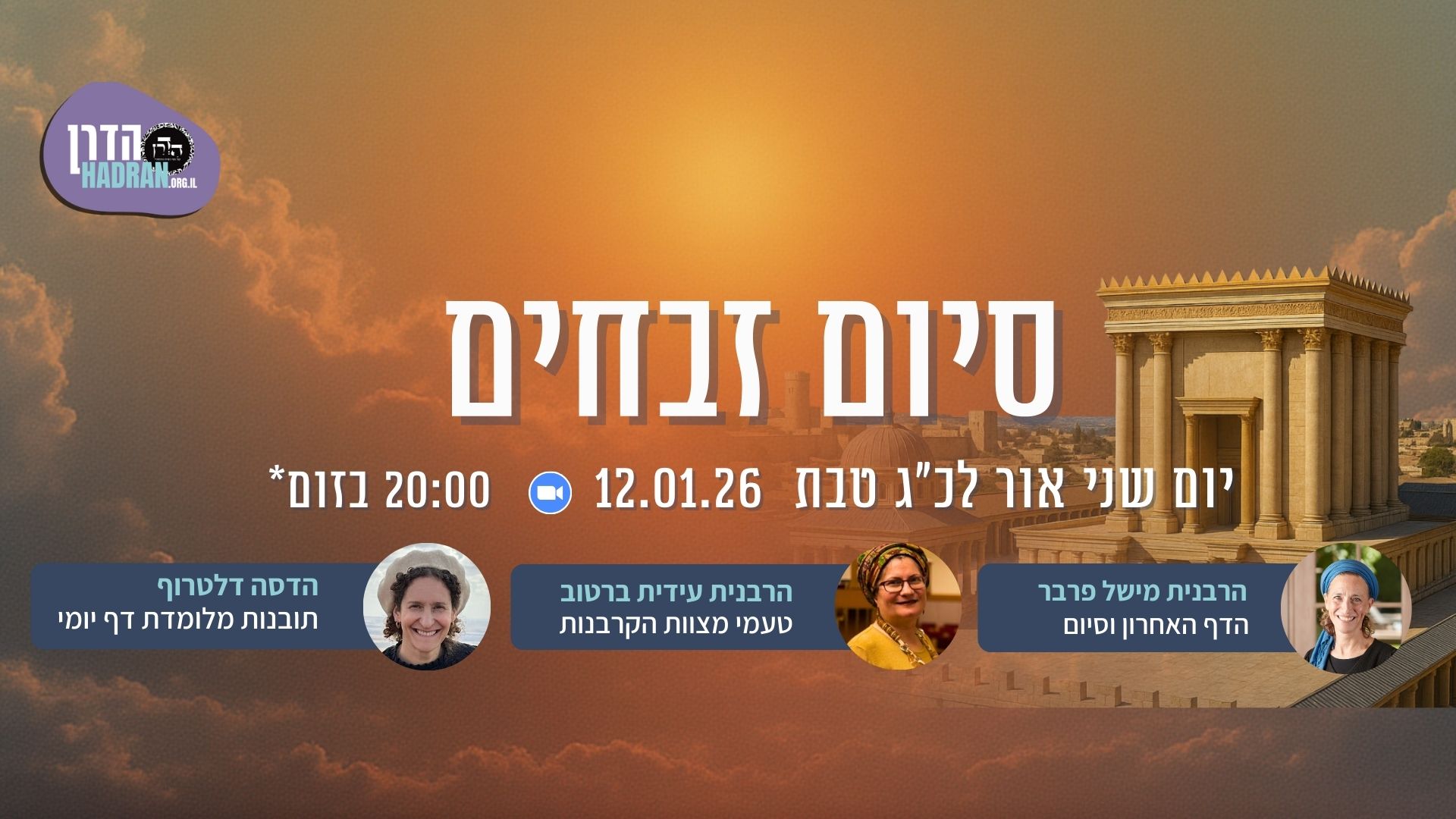
מסכת זבחים
מסכת זבחים מוקדש ע”י אסתר קרמר לע”נ אביה מני גרוס.
הלימוד החודש מוקדש ע”י מרכי גלזר לע”נ רחל אביבה בת דבורה חנה
רוצה להקדיש שיעור?

תקציר

הגמרא מסיימת את ההסבר כיצד, לפי רבי שמעון, ספק מצורע יכול להביא את השמן לתהליך טהרתו כקרבן בתנאי שזה או לטהרת המצורע או כנדבה של שמן, ומתמודדת עם הבעיות הרבות שעולים במצב זה.
רב רחומא אמר לרבינא שרב הונא בר תחליפא שאל מדוע רבי שמעון הציע שהספק מצורע יביא בהמה כקרבן אשם או כקרבן שלמי נדבה, ולא הציע להביא אותה כקרבן אשם או כקרבן אשם תלוי, ובכך להימנע מבעיה של פסילת קדשים. רב רחומא מסביר שניתן להסיק מכך שרבי שמעון חולק על רבי אליעזר וסובר שאין מביאים קרבן אשם תלוי בנדבה. אולם רבינא דוחה את ההסבר הזה, מפני שקרבן האשם של מצורע בא מכבש בן שנה, ואילו קרבן אשם תלוי בא מאיל בן שנתיים.
במשנה מובאת מחלוקת בין רבי אליעזר לחכמים לגבי תערובת אברים של חטאת ועולה – האם ניתן להקריבם על המזבח. הגמרא מביאה את יסוד המחלוקת, השורש בפירושים שונים של ויקרא ב:יא–יב, ולאחר מכן מביאה ברייתא בשם רבי יהודה שהייתה לו גרסה אחרת של המחלוקת. לפי רבי יהודה, הם נחלקו רק במקרה של תערובת אברים של בעלי מום עם שאינם בעלי מום. אבל שניהם מסכימים שתערובת של חטאת ועולה מותרת להקרבה על המזבח, ואילו אברים של בהמות שרבעו או נרבעו אסורים. מדוע רבי אליעזר הבחין בין בעלי מום לבין רובע ונרבע? רב הונא מסביר שמדובר במום קל, ועל פי דעת רבי עקיבא שמקל במקרה כזה. אך מאחר שרבי עקיבא התיר מום זה רק בדיעבד, רב פפא מוסיף שהמקרה הוא כשהאברים כבר הונחו על הכבש. הסבר זה נדחה, שכן אם כך – גם ללא תערובת היה מותר. לכן מובא הסבר חדש לדברי רבי אליעזר, הנלמד מדרשה על ויקרא כב:כה שמיעט תערובות של בעלי מומים עם תמימים.
המשנה מביאה מחלוקת נוספת בין רבי אליעזר לחכמים במקרה של בעלי מום שהתערבו עם בהמות אחרות. לדעת רבי אליעזר, אם אחד מהם הוקרב בשגגה – האחרים מותרים, מפני שאפשר להניח שזה היה בעל המום. רבי אלעזר מגביל את היתרו של רבי אליעזר רק למקרה שבו הקרבת האברים נעשית בזוגות.
אם דם נתערב במים או בחומר אחר – באילו מצבים ניתן עדיין להקריבו על המזבח?
כלים
מסכת זבחים
מסכת זבחים מוקדש ע”י אסתר קרמר לע”נ אביה מני גרוס.
הלימוד החודש מוקדש ע”י מרכי גלזר לע”נ רחל אביבה בת דבורה חנה
הדף היום מוקדש ע”י דיאנה בלום לע”נ סבתה, איטה רוזה סונבנד מרמורק.
זבחים עז
לְשֵׁם עֵצִים.
for the sake of wood, not as an offering. Here as well, the priest stipulates that if the man is not a confirmed leper, the sprinkling of the oil should not be viewed as a rite.
וְהָא אִיכָּא שִׁירַיִים דְּבָעֵי (מילינהו) [מֵיכְלִינְהוּ], וְאִיכָּא הָךְ פּוּרְתָּא דְּלָא קָמֵיץ עִילָּוֵיהּ! דְּפָרֵיק לֵיהּ.
The Gemara questions further: But even if the priest removes a handful from the oil and burns it, and also sprinkles from the oil, there is the matter of the remainder of the oil, which must be filled after the removal of the handful so that the priest can perform the sprinkling with a full log, and there is therefore that bit of oil that was added from which the priest did not remove the handful initially. If the one bringing the offering is not a leper, and the log of oil is a gift, it will turn out that there is a small portion of the oil that was not permitted by the removal of the handful. The Gemara explains that the priest redeems it, i.e., after the sprinklings of the oil have been performed, he stipulates that if the person who brought the offering is not a leper then the oil should be desacralized by his giving its value to the Temple treasury.
דְּפָרֵיק לֵיהּ הֵיכָא? אִי גַּוַּואי – קָא מְעַיֵּיל חוּלִּין לָעֲזָרָה, אִי אַבָּרַאי – אִיפְּסִיל לֵיהּ בְּיוֹצֵא! לְעוֹלָם גַּוַּואי; חוּלִּין מִמֵּילָא הָוְיָין.
The Gemara asks: If you say that he redeems it, where does he redeem it? If he redeems it when the oil is within the walls of the Temple, he would thereby be bringing non-sacred oil into the courtyard. If he redeems the oil outside the courtyard, before he can redeem the oil it would become disqualified due to the prohibition of a consecrated item leaving the courtyard. The Gemara answers: Actually, he redeems the oil when it is within the walls of the Temple. This is permitted because the non-sacred oil is then found in the Temple courtyard by itself, i.e., he did not bring a non-sacred item into the Temple courtyard.
וְהָא אָמַר רַבִּי שִׁמְעוֹן: אֵין מִתְנַדְּבִין שֶׁמֶן! תַּקּוֹנֵי גַּבְרָא שָׁאנֵי.
The Gemara asks a question with regard to the suggested resolution, according to the opinion of Rabbi Shimon, that one whose status as a leper is uncertain should bring a log of oil as a gift offering and state a stipulation. But doesn’t Rabbi Shimon say that one may not donate oil as a gift? The Gemara answers, as on 76b: The remedy of a person is different, i.e., Rabbi Shimon concedes that one may donate oil in this instance, as this is the only manner by which this person can undergo ritual purification.
יָתֵיב רַב רְחוּמִי קַמֵּיהּ רָבִינָא, וְיָתֵיב וְקָאָמַר מִשְּׁמֵיהּ דְּרַב הוּנָא בַּר תַּחְלִיפָא: וְנֵימָא, אָשָׁם זֶה יְהֵא אָשָׁם תָּלוּי!
The Gemara continues to discuss the opinion of Rabbi Shimon. It was stated above that according to Rabbi Shimon, one whose status as a leper is uncertain may bring a lamb as a gift for a peace offering and state a stipulation with regard to it. The Gemara relates that Rav Reḥumi was sitting before Ravina, and he was sitting and saying the following in the name of Rav Huna bar Taḥlifa: But why can’t he bring a lamb for a guilt offering and say that if he is not a leper then this guilt offering shall be a provisional guilt offering, brought by one who is uncertain whether he committed a sin that requires a sin offering? This guilt offering is eaten for one day and night, like the guilt offering of a leper, and therefore he would not be reducing the time for its consumption, unlike when he stipulates that it should be a peace offering.
שְׁמַע מִינַּהּ: מַאן תַּנָּא דִּפְלִיג עֲלֵיהּ דְּרַבִּי אֱלִיעֶזֶר – רַבִּי שִׁמְעוֹן הוּא, דְּאָמַר: אֵין מִתְנַדְּבִין אָשָׁם תָּלוּי? אֲמַר לֵיהּ: תּוֹרָה תּוֹרָה! אִימְּרֵי בְּדִיכְרֵי מִיחַלְּפִי לָךְ!
Rav Reḥumi continued: Since this option was not suggested, one can learn from here that who is the tanna who disagrees with the opinion of Rabbi Eliezer, who holds that one may donate a provisional guilt offering (Keritut 25a)? It is Rabbi Shimon, who says, by inference from his suggestion here, that one may not donate a provisional guilt offering. Ravina said to Rav Reḥumi: Torah, Torah! That is, where is the Torah of such a great man as yourself? You are confusing lambs with rams. The guilt offering of a leper is a lamb in its first year (see Leviticus 14:10), which cannot be brought as a provisional guilt offering because these must be rams (see Leviticus 5:15), i.e., they must be in their second year.
מַתְנִי׳ אֵיבְרֵי חַטָּאת שֶׁנִּתְעָרְבוּ בְּאֵיבְרֵי עוֹלָה – רַבִּי אֱלִיעֶזֶר אוֹמֵר: יִתֵּן לְמַעְלָה, וְרוֹאֶה אֲנִי אֶת בְּשַׂר הַחַטָּאת מִלְּמַעְלָה כְּאִילּוּ הֵן עֵצִים. וַחֲכָמִים אוֹמְרִים: תְּעוּבַּר צוּרָתָן וְיֵצְאוּ לְבֵית הַשְּׂרֵיפָה.
MISHNA: In the case of the limbs of a sin offering, which are eaten by priests and may not be burned on the altar, that were intermingled with the limbs of a burnt offering, which are burned on the altar, Rabbi Eliezer says: The priest shall place all the limbs above, on the altar, and I view the flesh of the limbs of the sin offering above on the altar as though they are pieces of wood burned on the altar, and not as though they are an offering. And the Rabbis say: One should wait until the form of all the intermingled limbs decays and they will all go out to the place of burning in the Temple courtyard, where all disqualified offerings of the most sacred order are burned.
גְּמָ׳ מַאי טַעְמָא דְּרַבִּי אֱלִיעֶזֶר? אָמַר קְרָא: ״וְאֶל הַמִּזְבֵּחַ לֹא יַעֲלוּ לְרֵיחַ נִיחֹחַ״ – לְרֵיחַ נִיחוֹחַ אִי אַתָּה מַעֲלֶה, אֲבָל אַתָּה מַעֲלֶה לְשֵׁם עֵצִים.
GEMARA: What is the reason of Rabbi Eliezer for deeming it permitted to burn the limbs of the sin offering on the altar as wood? The Gemara explains: The verse states: “No meal offering that you shall bring to the Lord shall be made with leaven; for you shall make no leaven, nor any honey, smoke as an offering made by fire to the Lord. As an offering of first fruits you may bring them to the Lord; but they shall not come up for a pleasing aroma on the altar” (Leviticus 2:11–12). This indicates that you may not offer up leaven and honey as a pleasing aroma, i.e., as an offering. But you may offer up leaven and honey and other substances that are prohibited to be sacrificed upon the altar, such as the limbs of a sin offering, for the sake of wood.
וְרַבָּנַן – מִיעֵט רַחֲמָנָא ״אֹתָם״; אוֹתָם הוּא דְּאִי אַתָּה מַעֲלֶה, אֲבָל אַתָּה מַעֲלֶה לְשֵׁם עֵצִים. אֲבָל מִידֵּי אַחֲרִינָא – לָא.
The Gemara asks: And the Rabbis, who disagree with Rabbi Eliezer, how do they respond to this reasoning? They claim that the Merciful One excludes other cases at the beginning of the verse: “As an offering of first fruits you may bring them.” This indicates that it is with regard to them, i.e., leaven and honey alone, that it is stated: You may not offer up as an offering, but you may offer up leaven and honey for the sake of wood. But with regard to any other substances that are prohibited to be brought on the altar, one may not offer them up to the altar at all.
וְרַבִּי אֱלִיעֶזֶר – אוֹתָם הוּא דְּרַבַּאי לָךְ כֶּבֶשׁ כְּמִזְבֵּחַ, אֲבָל מִידֵּי אַחֲרִינֵי – לָא.
The Gemara asks: And Rabbi Eliezer, what does he derive from this term of exclusion “them”? The Gemara explains: Rabbi Eliezer expounds this word as follows: It is only with regard to them, leaven and honey, that the verse includes a prohibition against bringing them up to the ramp of the altar like offering them up on the altar itself. But with regard to any other substances that are prohibited to be sacrificed upon the altar, bringing them up to the ramp is not considered like offering them up on the altar itself.
וְרַבָּנַן – תַּרְתֵּי שְׁמַע מִינַּהּ.
The Gemara further asks: And the Rabbis, from where do they derive this halakha? The Gemara answers that the Rabbis learn two halakhot from the word “them.” This term of emphasis teaches that all that is stated in this verse is referring only to leaven and honey, both the halakha that it is permitted to offer them up on the altar as wood, and the ruling that the ramp is considered like the altar with regard to this halakha.
מַתְנִיתִין דְּלָא כִּי הַאי תַּנָּא – דְּתַנְיָא, אָמַר רַבִּי יְהוּדָה: לֹא נֶחְלְקוּ רַבִּי אֱלִיעֶזֶר וַחֲכָמִים עַל אֵיבְרֵי חַטָּאת שֶׁנִּתְעָרְבוּ בְּאֵיבְרֵי עוֹלָה – שֶׁיִּקְרְבוּ; בְּרוֹבֵעַ וְנִרְבָּע – שֶׁלֹּא יִקְרְבוּ.
§ The Gemara comments: The mishna is not in accordance with the opinion of this following tanna, as it is taught in a baraita (Tosefta 8:15) that Rabbi Yehuda said: Rabbi Eliezer and the Rabbis did not disagree with regard to the limbs of a sin offering that were intermingled with the limbs of a burnt offering, as all agree that they shall be sacrificed. Likewise, they agree that if limbs that are fit to be burned on the altar became intermingled with the limbs of an animal that actively copulated with a person, or with the limbs of an animal that was the object of bestiality, which are prohibited to be sacrificed upon the altar, that they shall not be sacrificed, even according to the opinion of Rabbi Eliezer.
עַל מָה נֶחְלְקוּ? עַל אֵיבְרֵי עוֹלָה תְּמִימָה שֶׁנִּתְעָרְבוּ בְּאֵיבְרֵי בַּעֲלַת מוּם, שֶׁרַבִּי אֱלִיעֶזֶר אוֹמֵר: יִקְרְבוּ, וְרוֹאֶה אֲנִי לְמַעְלָה כְּאִילּוּ הֵן עֵצִים; וַחֲכָמִים אוֹמְרִים: לֹא יִקְרְבוּ.
Rabbi Yehuda continues: With regard to which case did Rabbi Eliezer and the Rabbis disagree? They disagreed with regard to the limbs of an unblemished burnt offering that were intermingled with the limbs of a blemished animal, which is disqualified from the altar. As in this case Rabbi Eliezer says: All the limbs shall be sacrificed, and I consider the flesh of the limbs of the sin offering above, on the altar, as though they are pieces of wood burned on the altar. And the Rabbis say: They shall not be sacrificed.
וְרַבִּי אֱלִיעֶזֶר, מַאי שְׁנָא רוֹבֵעַ וְנִרְבָּע – דְּלָא חֲזוּ? בַּעֲלַת מוּם נָמֵי לָא חֲזֵי!
The Gemara asks: And concerning the opinion of Rabbi Eliezer, what is different about the limbs of an animal that actively copulated with a person, or the limbs of an animal that was the object of bestiality, that they may not be sacrificed? If one says that the reason is that they are not fit for the altar, that cannot be the reason, as a blemished animal is not fit for the altar as well, and there he holds that the limbs are burned.
אָמַר רַב הוּנָא: בְּדוּקִּין שֶׁבָּעַיִן, וְאַלִּיבָּא דְּרַבִּי עֲקִיבָא – דְּאָמַר: אִם עָלוּ לֹא יֵרְדוּ. אֵימַר דְּאָמַר רַבִּי עֲקִיבָא – דְּאִי עֲבַד; לְכַתְּחִלָּה מִי אָמַר?!
Rav Huna says: When Rabbi Eliezer makes reference to a blemished animal, he is speaking of an unobtrusive blemish, e.g., one that is on the cornea of the eye. And his ruling is in accordance with the opinion of Rabbi Akiva, who says that in the case of an offering with such a blemish, if its sacrificial parts ascended the altar, they shall not descend from it, because it is not a disgrace to the altar for the sacrificial parts of such an offering to be burned on it. The Gemara raises a difficulty: Say that Rabbi Akiva says this is the halakha after the fact, meaning that if the priest already brought up the limbs of these blemished animals, they do not descend from the altar. Does Rabbi Akiva say that one may burn a mixture of these limbs ab initio?
אָמַר רַב פָּפָּא: הָכָא בְּמַאי עָסְקִינַן – כְּגוֹן שֶׁעָלוּ עַל גַּבֵּי כֶּבֶשׁ. אִי הָכִי, אֲפִילּוּ בְּעֵינַיְיהוּ!
Rav Pappa says: What are we dealing with here? We are dealing with a case where all the limbs in the mixture were brought up upon the ramp. Since they have been brought on the ramp and sanctified as offerings, it is considered after the fact. The Gemara raises a difficulty: If so, i.e., if we are dealing with a case in which the limbs were already carried to the ramp, then even if they were as is, and not intermingled, the limbs of the blemished animal should be burned, as claimed by Rabbi Akiva.
אֶלָּא טַעְמֵיהּ דְּרַבִּי אֱלִיעֶזֶר: מִיעֵט רַחֲמָנָא ״מוּם בָּם״ – הוּא דְּלֹא יֵרָצוּ, הָא עַל יְדֵי תַּעֲרוֹבֶת – יֵרָצוּ.
Rather, the reason of Rabbi Eliezer is that with regard to the prohibition against sacrificing a blemished animal upon the altar, the Merciful One excludes certain cases. After listing the various disqualifying blemishes, the verse states: “Neither from the hand of a foreigner shall you offer the bread of your God of any of these, because their corruption is in them, there is a blemish in them; they shall not be accepted for you” (Leviticus 22:25). This teaches that it is only if there is a blemish clearly in them that they shall not be accepted; but if they were sacrificed by means of a mixture they shall be accepted. This exclusion is stated only with regard to blemished animals, not with regard to animals that copulated with people, and consequently the limbs of these animals are not brought up to the altar even if they became intermingled with the limbs of fit offerings.
וְרַבָּנַן – ״מוּם בָּם״ הוּא דְּלֹא יֵרָצוּ, הָא עָבַר מוּם – יֵרָצוּ. וְרַבִּי אֱלִיעֶזֶר – מִ״בָּם״–״בָּהֶם״, וְרַבָּנַן – ״בָּם״–״בָּהֶם״ לָא דָּרְשִׁי.
The Gemara asks: And the Rabbis, how do they expound this verse? The Gemara explains that they expound it as follows: It is only if the blemish is still in them that they shall not be accepted; but if their blemish has passed, they shall be accepted. And Rabbi Eliezer derives this halakha from the previous clause in that same verse: “Because their corruption is in them [bahem].” Since the verse could have stated the shorter form of bam, and instead stated “bahem,” one derives from here that if the animal no longer is blemished it is accepted as an offering. And as for the Rabbis, they do not interpret anything from the variation between bam and “bahem”; they do not see this as a significant deviation from the standard language of the verse.
אִי הָכִי, ״רוֹאֶה״?! הָא רַחֲמָנָא אַכְשְׁרֵיהּ! לְדִבְרֵיהֶם קָאָמַר לְהוּ: לְדִידִי – רַחֲמָנָא אַכְשְׁרֵיהּ; לְדִידְכוּ – אוֹדוֹ לִי מִיהָא, בְּשַׂר בַּעֲלַת מוּם – כְּעֵצִים דָּמֵי, מִידֵּי דְּהָוֵה אַבְּשַׂר חַטָּאת!
The Gemara asks: If that is so, and Rabbi Eliezer permits the limbs of blemished animals to be sacrificed if they are in a mixture, why is it necessary for him to say: I view the flesh of the limbs of the blemished animals as though they are pieces of wood? After all, the Merciful One permits them as an offering. The Gemara explains that Rabbi Eliezer is speaking to the Rabbis in accordance with their statement, as follows: According to my opinion, the Merciful One permits these limbs to be sacrificed upon the altar. But even according to your opinion, at least agree with me that the flesh of a blemished animal that was intermingled with the flesh of a qualified offering is considered like wood, just as is the halakha of the flesh of a sin offering that became intermingled with the flesh of a burnt offering, as according to this baraita the Rabbis concede that the flesh of these two offerings should be sacrificed together.
וְרַבָּנַן – הָכָא מְאִיסִי, הָתָם לָא מְאִיסִי.
The Gemara asks: And the Rabbis, how do they respond to this claim of Rabbi Eliezer? The Gemara explains: According to the Rabbis there is a difference between the cases: Here, with regard to a mixture that includes limbs of blemished animals, these limbs are repulsive, and therefore they may not be brought upon the altar, even as wood. Conversely, there, in the case of a mixture of limbs of a sin offering and limbs of a burnt offering, the limbs of the sin offering are not repulsive in and of themselves, and consequently they may be sacrificed upon the altar as wood.
מַתְנִי׳ אֵבָרִין בְּאֵבָרִין בַּעֲלֵי מוּמִין – רַבִּי אֱלִיעֶזֶר אוֹמֵר: אִם קָרַב רֹאשׁ אֶחָד מֵהֶן – יִקְרְבוּ כׇּל הָרָאשִׁין. כְּרָעַיִם שֶׁל אֶחָד מֵהֶן – יִקְרְבוּ כָּל הַכְּרָעַיִם, וַחֲכָמִים אוֹמְרִים: אֲפִילּוּ קָרְבוּ כֻּלָּם חוּץ מֵאֶחָד מֵהֶן – יֵצֵא לְבֵית הַשְּׂרֵיפָה.
MISHNA: In a case where limbs of burnt offerings fit for sacrifice were intermingled with limbs of blemished burnt offerings, Rabbi Eliezer says: Although all the limbs are unfit for sacrifice, if the head of one of them was sacrificed all the heads shall be sacrificed, as the head that was sacrificed is assumed to have been that of the unfit animal in the mixture. Likewise, if one sacrificed the legs of one of them all the legs shall be sacrificed. And the Rabbis say: Even if all the limbs were sacrificed except for one of them, there is a concern that the remaining limb is the unfit limb, which may not be sacrificed. Rather, all of the limbs must go out to the place of burning in the Temple courtyard.
גְּמָ׳ אָמַר רַבִּי אֶלְעָזָר: לֹא הִכְשִׁיר רַבִּי אֱלִיעֶזֶר אֶלָּא שְׁנַיִם שְׁנַיִם, אֲבָל אֶחָד אֶחָד – לֹא. מֵתִיב רַבִּי יִרְמְיָה, וַחֲכָמִים אוֹמְרִים: אֲפִילּוּ קָרְבוּ כּוּלָּן חוּץ מֵאֶחָד מֵהֶן – יֵצֵא לְבֵית הַשְּׂרֵיפָה!
GEMARA: Rabbi Elazar says: Rabbi Eliezer permitted the sacrificing of all the heads only if they were sacrificed two by two, as at least one of each pair is certainly permitted; but he did not permit them to be sacrificed one by one, in case the priest may be sacrificing the prohibited head by itself. Rabbi Yirmeya raises an objection from the mishna, which states: And the Rabbis say: Even if all the limbs were sacrificed except for one of them, all the limbs must go out to the place of burning in the Temple courtyard. This indicates that even in this situation, where only one of the limbs remains, the dispute between Rabbi Eliezer and the Rabbis still applies, which means that Rabbi Eliezer permits it to be sacrificed despite the fact that it is only one limb.
אָמַר לוֹ רַבִּי יִרְמְיָה בַּר תַּחְלִיפָא, אַסְבְּרַהּ לָךְ: מַאי אֶחָד – זוּג אֶחָד.
Rabbi Yirmeya bar Taḥlifa said to Rabbi Yirmeya in response: I will explain the meaning of this statement to you: What does the mishna mean when it states: Except for one of them? It means except for one pair, i.e., two limbs, as even Rabbi Eliezer did not permit one to sacrifice the limbs individually.
מַתְנִי׳ דָּם שֶׁנִּתְעָרֵב בְּמַיִם, אִם יֵשׁ בּוֹ מַרְאִית דָּם – כָּשֵׁר. נִתְעָרֵב בְּיַיִן – רוֹאִין אוֹתוֹ כְּאִילּוּ הוּא מַיִם. נִתְעָרֵב בְּדַם בְּהֵמָה אוֹ בְּדַם הַחַיָּה – רוֹאִין אוֹתוֹ כְּאִילּוּ הוּא מַיִם.
MISHNA: In the case of blood of an offering fit for sacrifice that was mixed with water, if the mixture has the appearance of blood it is fit for sprinkling on the altar, even though the majority of the mixture is water. If the blood was mixed with red wine, one views the wine as though it is water. If that amount of water would leave the mixture with the appearance of blood it is fit for presentation. And likewise if the blood was mixed with the blood of a non-sacred domesticated animal or the blood of a non-sacred undomesticated animal, one considers the non-sacred blood as though it is water.

כלים
העמקה
רוצה להבין מה באמת קורה מתחת לפני השטח של הסוגיה?
שיעורים, פודקאסטים והרחבות של מיטב המורות שלנו יפתחו לך עוד זוויות וכיווני חשיבה.



חדשה בלימוד הגמרא?
זה הדף הראשון שלך? איזו התרגשות עצומה! יש לנו בדיוק את התכנים והכלים שיעזרו לך לעשות את הצעדים הראשונים ללמידה בקצב וברמה שלך, כך תוכלי להרגיש בנוח גם בתוך הסוגיות המורכבות ומאתגרות.
פסיפס הלומדות שלנו
גלי את קהילת הלומדות שלנו, מגוון נשים, רקעים וסיפורים. כולן חלק מתנועה ומסע מרגש ועוצמתי.
התחלתי ללמוד דף יומי ממסכת נידה כי זה היה חומר הלימוד שלי אז. לאחר הסיום הגדול בבנייני האומה החלטתי להמשיך. וב”ה מאז עם הפסקות קטנות של קורונה ולידה אני משתדלת להמשיך ולהיות חלק.
זה משפיע מאוד על היום יום שלי ועל אף שאני עסוקה בלימודי הלכה ותורה כל יום, זאת המסגרת הקבועה והמחייבת ביותר שיש לי.

גבעת הראל, ישראל
בסוף הסבב הקודם ראיתי את השמחה הגדולה שבסיום הלימוד, בעלי סיים כבר בפעם השלישית וכמובן הסיום הנשי בבנייני האומה וחשבתי שאולי זו הזדמנות עבורי למשהו חדש.
למרות שאני שונה בסביבה שלי, מי ששומע על הלימוד שלי מפרגן מאוד.
אני מנסה ללמוד קצת בכל יום, גם אם לא את כל הדף ובסך הכל אני בדרך כלל עומדת בקצב.
הלימוד מעניק המון משמעות ליום יום ועושה סדר בלמוד תורה, שתמיד היה (ועדיין) שאיפה. אבל אין כמו קביעות

טל מנשה, ישראל
אני לומדת גמרא כעשור במסגרות שונות, ואת הדף היומי התחלתי כשחברה הציעה שאצטרף אליה לסיום בבנייני האומה. מאז אני לומדת עם פודקסט הדרן, משתדלת באופן יומי אך אם לא מספיקה, מדביקה פערים עד ערב שבת. בסבב הזה הלימוד הוא "ממעוף הציפור”, מקשיבה במהירות מוגברת תוך כדי פעילויות כמו בישול או נהיגה, וכך רוכשת היכרות עם הסוגיות ואופן ניתוחם על ידי חז”ל. בע”ה בסבב הבא, ואולי לפני, אצלול לתוכו באופן מעמיק יותר.

רמת גן, ישראל
למדתי גמרא מכיתה ז- ט ב Maimonides School ואחרי העליה שלי בגיל 14 לימוד הגמרא, שלא היה כל כך מקובל בימים אלה, היה די ספוראדי. אחרי "ההתגלות” בבנייני האומה התחלתי ללמוד בעיקר בדרך הביתה למדתי מפוקקטסים שונים. לאט לאט ראיתי שאני תמיד חוזרת לרבנית מישל פרבר. באיזה שהוא שלב התחלתי ללמוד בזום בשעה 7:10 .
היום "אין מצב” שאני אתחיל את היום שלי ללא לימוד עם הרבנית מישל עם כוס הקפה שלי!!

חשמונאים, ישראל
רבנית מישל הציתה אש התלמוד בלבבות בביניני האומה ואני נדלקתי. היא פתחה פתח ותמכה במתחילות כמוני ואפשרה לנו להתקדם בצעדים נכונים וטובים. הקימה מערך שלם שמסובב את הלומדות בסביבה תומכת וכך נכנסתי למסלול לימוד מעשיר שאין כמוה. הדרן יצר קהילה גדולה וחזקה שמאפשרת התקדמות מכל נקודת מוצא. יש דיבוק לומדות שמחזק את ההתמדה של כולנו. כל פניה ושאלה נענית בזריזות ויסודיות. תודה גם למגי על כל העזרה.

נתניה, ישראל
My explorations into Gemara started a few days into the present cycle. I binged learnt and become addicted. I’m fascinated by the rich "tapestry” of intertwined themes, connections between Masechtot, conversations between generations of Rabbanim and learners past and present all over the world. My life has acquired a golden thread, linking generations with our amazing heritage.
Thank you.

חשמונאים, Israel
. לא תמיד נהניתי מלימוד גמרא כילדה.,בל כהתבגרתי התחלתי לאהוב את זה שוב. התחלתי ללמוד מסכת סוטה בדף היומי לפני כחמש עשרה שנה ואז הפסקתי.הגעתי לסיום הגדול של הדרן לפני שנתיים וזה נתן לי השראה. והתחלתי ללמוד למשך כמה ימים ואז היתה לי פריצת דיסק והפסקתי…עד אלול השנה. אז התחלתי עם מסכת ביצה וב”ה אני מצליחה לעמוד בקצב. המשפחה מאוד תומכת בי ויש כמה שגם לומדים את זה במקביל. אני אוהבת שיש עוגן כל יום.

בית שמש, ישראל
התחלתי כשהייתי בחופש, עם הפרסומים על תחילת המחזור, הסביבה קיבלה את זה כמשהו מתמיד ומשמעותי ובהערכה, הלימוד זה עוגן יציב ביום יום, יש שבועות יותר ויש שפחות אבל זה משהו שנמצא שם אמין ובעל משמעות בחיים שלי….

גמזו, ישראל
לצערי גדלתי בדור שבו לימוד גמרא לנשים לא היה דבר שבשגרה ושנים שאני חולמת להשלים את הפער הזה.. עד שלפני מספר שבועות, כמעט במקרה, נתקלתי במודעת פרסומת הקוראת להצטרף ללימוד מסכת תענית. כשקראתי את המודעה הרגשתי שהיא כאילו נכתבה עבורי – "תמיד חלמת ללמוד גמרא ולא ידעת איך להתחיל”, "בואי להתנסות במסכת קצרה וקלה” (רק היה חסר שהמודעה תיפתח במילים "מיכי שלום”..). קפצתי למים ו- ב”ה אני בדרך להגשמת החלום:)

מורשת, ישראל
התחלתי לפני כמה שנים אבל רק בסבב הזה זכיתי ללמוד יום יום ולסיים מסכתות

רעננה, ישראל
סיום השס לנשים נתן לי מוטביציה להתחיל ללמוד דף יומי. עד אז למדתי גמרא בשבתות ועשיתי כמה סיומים. אבל לימוד יומיומי זה שונה לגמרי ופתאום כל דבר שקורה בחיים מתקשר לדף היומי.

רתמים, ישראל
התחלתי ללמוד דף יומי באמצע תקופת הקורונה, שאבא שלי סיפר לי על קבוצה של בנות שתיפתח ביישוב שלנו ותלמד דף יומי כל יום. הרבה זמן רציתי להצטרף לזה וזאת הייתה ההזדמנות בשבילי. הצטרפתי במסכת שקלים ובאמצע הייתה הפסקה קצרה. כיום אני כבר לומדת באולפנה ולומדת דף יומי לבד מתוך גמרא של טיינזלץ.

עתניאל, ישראל
התחלתי ללמוד את הדף היומי מעט אחרי שבני הקטן נולד. בהתחלה בשמיעה ולימוד באמצעות השיעור של הרבנית שפרבר. ובהמשך העזתי וקניתי לעצמי גמרא. מאז ממשיכה יום יום ללמוד עצמאית, ולפעמים בעזרת השיעור של הרבנית, כל יום. כל סיום של מסכת מביא לאושר גדול וסיפוק. הילדים בבית נהיו חלק מהלימוד, אני משתפת בסוגיות מעניינות ונהנית לשמוע את דעתם.

מעלה מכמש, ישראל
בתחילת הסבב הנוכחי של לימוד הדף היומי, נחשפתי לחגיגות המרגשות באירועי הסיום ברחבי העולם. והבטחתי לעצמי שבקרוב אצטרף גם למעגל הלומדות. הסבב התחיל כאשר הייתי בתחילת דרכי בתוכנית קרן אריאל להכשרת יועצות הלכה של נשמ”ת. לא הצלחתי להוסיף את ההתחייבות לדף היומי על הלימוד האינטנסיבי של תוכנית היועצות. בבוקר למחרת המבחן הסופי בנשמ”ת, התחלתי את לימוד הדף במסכת סוכה ומאז לא הפסקתי.

קרית גת, ישראל
אחרי שראיתי את הסיום הנשי של הדף היומי בבנייני האומה זה ריגש אותי ועורר בי את הרצון להצטרף. לא למדתי גמרא קודם לכן בכלל, אז הכל היה לי חדש, ולכן אני לומדת בעיקר מהשיעורים פה בהדרן, בשוטנשטיין או בחוברות ושיננתם.

בית שמש, ישראל
התחלתי ללמוד דף יומי ממסכת נידה כי זה היה חומר הלימוד שלי אז. לאחר הסיום הגדול בבנייני האומה החלטתי להמשיך. וב”ה מאז עם הפסקות קטנות של קורונה ולידה אני משתדלת להמשיך ולהיות חלק.
זה משפיע מאוד על היום יום שלי ועל אף שאני עסוקה בלימודי הלכה ותורה כל יום, זאת המסגרת הקבועה והמחייבת ביותר שיש לי.
גבעת הראל, ישראל
My explorations into Gemara started a few days into the present cycle. I binged learnt and become addicted. I’m fascinated by the rich "tapestry” of intertwined themes, connections between Masechtot, conversations between generations of Rabbanim and learners past and present all over the world. My life has acquired a golden thread, linking generations with our amazing heritage.
Thank you.
חשמונאים, Israel
התחלתי ללמוד גמרא בבית הספר בגיל צעיר והתאהבתי. המשכתי בכך כל חיי ואף היייתי מורה לגמרא בבית הספר שקד בשדה אליהו (בית הספר בו למדתי בילדותי)בתחילת מחזור דף יומי הנוכחי החלטתי להצטרף ובע”ה מקווה להתמיד ולהמשיך. אני אוהבת את המפגש עם הדף את "דרישות השלום ” שמקבלת מקשרים עם דפים אחרים שלמדתי את הסנכרון שמתחולל בין התכנים.

מעלה גלבוע, ישראל
באירוע של הדרן בנייני האומה. בהשראתה של אמי שלי שסיימה את הש”ס בסבב הקודם ובעידוד מאיר , אישי, וילדיי וחברותיי ללימוד במכון למנהיגות הלכתית של רשת אור תורה סטון ומורתיי הרבנית ענת נובוסלסקי והרבנית דבורה עברון, ראש המכון למנהיגות הלכתית.
הלימוד מעשיר את יומי, מחזיר אותי גם למסכתות שכבר סיימתי וידוע שאינו דומה מי ששונה פרקו מאה לשונה פרקו מאה ואחת במיוחד מרתקים אותי החיבורים בין המסכתות

מודיעין, ישראל
כבר סיפרתי בסיום של מועד קטן.
הלימוד מאוד משפיעה על היום שלי כי אני לומדת עם רבנית מישל על הבוקר בזום. זה נותן טון לכל היום – בסיס למחשבות שלי .זה זכות גדול להתחיל את היום בלימוד ובתפילה. תודה רבה !

ירושלים, ישראל
זבחים עז
לְשֵׁם עֵצִים.
for the sake of wood, not as an offering. Here as well, the priest stipulates that if the man is not a confirmed leper, the sprinkling of the oil should not be viewed as a rite.
וְהָא אִיכָּא שִׁירַיִים דְּבָעֵי (מילינהו) [מֵיכְלִינְהוּ], וְאִיכָּא הָךְ פּוּרְתָּא דְּלָא קָמֵיץ עִילָּוֵיהּ! דְּפָרֵיק לֵיהּ.
The Gemara questions further: But even if the priest removes a handful from the oil and burns it, and also sprinkles from the oil, there is the matter of the remainder of the oil, which must be filled after the removal of the handful so that the priest can perform the sprinkling with a full log, and there is therefore that bit of oil that was added from which the priest did not remove the handful initially. If the one bringing the offering is not a leper, and the log of oil is a gift, it will turn out that there is a small portion of the oil that was not permitted by the removal of the handful. The Gemara explains that the priest redeems it, i.e., after the sprinklings of the oil have been performed, he stipulates that if the person who brought the offering is not a leper then the oil should be desacralized by his giving its value to the Temple treasury.
דְּפָרֵיק לֵיהּ הֵיכָא? אִי גַּוַּואי – קָא מְעַיֵּיל חוּלִּין לָעֲזָרָה, אִי אַבָּרַאי – אִיפְּסִיל לֵיהּ בְּיוֹצֵא! לְעוֹלָם גַּוַּואי; חוּלִּין מִמֵּילָא הָוְיָין.
The Gemara asks: If you say that he redeems it, where does he redeem it? If he redeems it when the oil is within the walls of the Temple, he would thereby be bringing non-sacred oil into the courtyard. If he redeems the oil outside the courtyard, before he can redeem the oil it would become disqualified due to the prohibition of a consecrated item leaving the courtyard. The Gemara answers: Actually, he redeems the oil when it is within the walls of the Temple. This is permitted because the non-sacred oil is then found in the Temple courtyard by itself, i.e., he did not bring a non-sacred item into the Temple courtyard.
וְהָא אָמַר רַבִּי שִׁמְעוֹן: אֵין מִתְנַדְּבִין שֶׁמֶן! תַּקּוֹנֵי גַּבְרָא שָׁאנֵי.
The Gemara asks a question with regard to the suggested resolution, according to the opinion of Rabbi Shimon, that one whose status as a leper is uncertain should bring a log of oil as a gift offering and state a stipulation. But doesn’t Rabbi Shimon say that one may not donate oil as a gift? The Gemara answers, as on 76b: The remedy of a person is different, i.e., Rabbi Shimon concedes that one may donate oil in this instance, as this is the only manner by which this person can undergo ritual purification.
יָתֵיב רַב רְחוּמִי קַמֵּיהּ רָבִינָא, וְיָתֵיב וְקָאָמַר מִשְּׁמֵיהּ דְּרַב הוּנָא בַּר תַּחְלִיפָא: וְנֵימָא, אָשָׁם זֶה יְהֵא אָשָׁם תָּלוּי!
The Gemara continues to discuss the opinion of Rabbi Shimon. It was stated above that according to Rabbi Shimon, one whose status as a leper is uncertain may bring a lamb as a gift for a peace offering and state a stipulation with regard to it. The Gemara relates that Rav Reḥumi was sitting before Ravina, and he was sitting and saying the following in the name of Rav Huna bar Taḥlifa: But why can’t he bring a lamb for a guilt offering and say that if he is not a leper then this guilt offering shall be a provisional guilt offering, brought by one who is uncertain whether he committed a sin that requires a sin offering? This guilt offering is eaten for one day and night, like the guilt offering of a leper, and therefore he would not be reducing the time for its consumption, unlike when he stipulates that it should be a peace offering.
שְׁמַע מִינַּהּ: מַאן תַּנָּא דִּפְלִיג עֲלֵיהּ דְּרַבִּי אֱלִיעֶזֶר – רַבִּי שִׁמְעוֹן הוּא, דְּאָמַר: אֵין מִתְנַדְּבִין אָשָׁם תָּלוּי? אֲמַר לֵיהּ: תּוֹרָה תּוֹרָה! אִימְּרֵי בְּדִיכְרֵי מִיחַלְּפִי לָךְ!
Rav Reḥumi continued: Since this option was not suggested, one can learn from here that who is the tanna who disagrees with the opinion of Rabbi Eliezer, who holds that one may donate a provisional guilt offering (Keritut 25a)? It is Rabbi Shimon, who says, by inference from his suggestion here, that one may not donate a provisional guilt offering. Ravina said to Rav Reḥumi: Torah, Torah! That is, where is the Torah of such a great man as yourself? You are confusing lambs with rams. The guilt offering of a leper is a lamb in its first year (see Leviticus 14:10), which cannot be brought as a provisional guilt offering because these must be rams (see Leviticus 5:15), i.e., they must be in their second year.
מַתְנִי׳ אֵיבְרֵי חַטָּאת שֶׁנִּתְעָרְבוּ בְּאֵיבְרֵי עוֹלָה – רַבִּי אֱלִיעֶזֶר אוֹמֵר: יִתֵּן לְמַעְלָה, וְרוֹאֶה אֲנִי אֶת בְּשַׂר הַחַטָּאת מִלְּמַעְלָה כְּאִילּוּ הֵן עֵצִים. וַחֲכָמִים אוֹמְרִים: תְּעוּבַּר צוּרָתָן וְיֵצְאוּ לְבֵית הַשְּׂרֵיפָה.
MISHNA: In the case of the limbs of a sin offering, which are eaten by priests and may not be burned on the altar, that were intermingled with the limbs of a burnt offering, which are burned on the altar, Rabbi Eliezer says: The priest shall place all the limbs above, on the altar, and I view the flesh of the limbs of the sin offering above on the altar as though they are pieces of wood burned on the altar, and not as though they are an offering. And the Rabbis say: One should wait until the form of all the intermingled limbs decays and they will all go out to the place of burning in the Temple courtyard, where all disqualified offerings of the most sacred order are burned.
גְּמָ׳ מַאי טַעְמָא דְּרַבִּי אֱלִיעֶזֶר? אָמַר קְרָא: ״וְאֶל הַמִּזְבֵּחַ לֹא יַעֲלוּ לְרֵיחַ נִיחֹחַ״ – לְרֵיחַ נִיחוֹחַ אִי אַתָּה מַעֲלֶה, אֲבָל אַתָּה מַעֲלֶה לְשֵׁם עֵצִים.
GEMARA: What is the reason of Rabbi Eliezer for deeming it permitted to burn the limbs of the sin offering on the altar as wood? The Gemara explains: The verse states: “No meal offering that you shall bring to the Lord shall be made with leaven; for you shall make no leaven, nor any honey, smoke as an offering made by fire to the Lord. As an offering of first fruits you may bring them to the Lord; but they shall not come up for a pleasing aroma on the altar” (Leviticus 2:11–12). This indicates that you may not offer up leaven and honey as a pleasing aroma, i.e., as an offering. But you may offer up leaven and honey and other substances that are prohibited to be sacrificed upon the altar, such as the limbs of a sin offering, for the sake of wood.
וְרַבָּנַן – מִיעֵט רַחֲמָנָא ״אֹתָם״; אוֹתָם הוּא דְּאִי אַתָּה מַעֲלֶה, אֲבָל אַתָּה מַעֲלֶה לְשֵׁם עֵצִים. אֲבָל מִידֵּי אַחֲרִינָא – לָא.
The Gemara asks: And the Rabbis, who disagree with Rabbi Eliezer, how do they respond to this reasoning? They claim that the Merciful One excludes other cases at the beginning of the verse: “As an offering of first fruits you may bring them.” This indicates that it is with regard to them, i.e., leaven and honey alone, that it is stated: You may not offer up as an offering, but you may offer up leaven and honey for the sake of wood. But with regard to any other substances that are prohibited to be brought on the altar, one may not offer them up to the altar at all.
וְרַבִּי אֱלִיעֶזֶר – אוֹתָם הוּא דְּרַבַּאי לָךְ כֶּבֶשׁ כְּמִזְבֵּחַ, אֲבָל מִידֵּי אַחֲרִינֵי – לָא.
The Gemara asks: And Rabbi Eliezer, what does he derive from this term of exclusion “them”? The Gemara explains: Rabbi Eliezer expounds this word as follows: It is only with regard to them, leaven and honey, that the verse includes a prohibition against bringing them up to the ramp of the altar like offering them up on the altar itself. But with regard to any other substances that are prohibited to be sacrificed upon the altar, bringing them up to the ramp is not considered like offering them up on the altar itself.
וְרַבָּנַן – תַּרְתֵּי שְׁמַע מִינַּהּ.
The Gemara further asks: And the Rabbis, from where do they derive this halakha? The Gemara answers that the Rabbis learn two halakhot from the word “them.” This term of emphasis teaches that all that is stated in this verse is referring only to leaven and honey, both the halakha that it is permitted to offer them up on the altar as wood, and the ruling that the ramp is considered like the altar with regard to this halakha.
מַתְנִיתִין דְּלָא כִּי הַאי תַּנָּא – דְּתַנְיָא, אָמַר רַבִּי יְהוּדָה: לֹא נֶחְלְקוּ רַבִּי אֱלִיעֶזֶר וַחֲכָמִים עַל אֵיבְרֵי חַטָּאת שֶׁנִּתְעָרְבוּ בְּאֵיבְרֵי עוֹלָה – שֶׁיִּקְרְבוּ; בְּרוֹבֵעַ וְנִרְבָּע – שֶׁלֹּא יִקְרְבוּ.
§ The Gemara comments: The mishna is not in accordance with the opinion of this following tanna, as it is taught in a baraita (Tosefta 8:15) that Rabbi Yehuda said: Rabbi Eliezer and the Rabbis did not disagree with regard to the limbs of a sin offering that were intermingled with the limbs of a burnt offering, as all agree that they shall be sacrificed. Likewise, they agree that if limbs that are fit to be burned on the altar became intermingled with the limbs of an animal that actively copulated with a person, or with the limbs of an animal that was the object of bestiality, which are prohibited to be sacrificed upon the altar, that they shall not be sacrificed, even according to the opinion of Rabbi Eliezer.
עַל מָה נֶחְלְקוּ? עַל אֵיבְרֵי עוֹלָה תְּמִימָה שֶׁנִּתְעָרְבוּ בְּאֵיבְרֵי בַּעֲלַת מוּם, שֶׁרַבִּי אֱלִיעֶזֶר אוֹמֵר: יִקְרְבוּ, וְרוֹאֶה אֲנִי לְמַעְלָה כְּאִילּוּ הֵן עֵצִים; וַחֲכָמִים אוֹמְרִים: לֹא יִקְרְבוּ.
Rabbi Yehuda continues: With regard to which case did Rabbi Eliezer and the Rabbis disagree? They disagreed with regard to the limbs of an unblemished burnt offering that were intermingled with the limbs of a blemished animal, which is disqualified from the altar. As in this case Rabbi Eliezer says: All the limbs shall be sacrificed, and I consider the flesh of the limbs of the sin offering above, on the altar, as though they are pieces of wood burned on the altar. And the Rabbis say: They shall not be sacrificed.
וְרַבִּי אֱלִיעֶזֶר, מַאי שְׁנָא רוֹבֵעַ וְנִרְבָּע – דְּלָא חֲזוּ? בַּעֲלַת מוּם נָמֵי לָא חֲזֵי!
The Gemara asks: And concerning the opinion of Rabbi Eliezer, what is different about the limbs of an animal that actively copulated with a person, or the limbs of an animal that was the object of bestiality, that they may not be sacrificed? If one says that the reason is that they are not fit for the altar, that cannot be the reason, as a blemished animal is not fit for the altar as well, and there he holds that the limbs are burned.
אָמַר רַב הוּנָא: בְּדוּקִּין שֶׁבָּעַיִן, וְאַלִּיבָּא דְּרַבִּי עֲקִיבָא – דְּאָמַר: אִם עָלוּ לֹא יֵרְדוּ. אֵימַר דְּאָמַר רַבִּי עֲקִיבָא – דְּאִי עֲבַד; לְכַתְּחִלָּה מִי אָמַר?!
Rav Huna says: When Rabbi Eliezer makes reference to a blemished animal, he is speaking of an unobtrusive blemish, e.g., one that is on the cornea of the eye. And his ruling is in accordance with the opinion of Rabbi Akiva, who says that in the case of an offering with such a blemish, if its sacrificial parts ascended the altar, they shall not descend from it, because it is not a disgrace to the altar for the sacrificial parts of such an offering to be burned on it. The Gemara raises a difficulty: Say that Rabbi Akiva says this is the halakha after the fact, meaning that if the priest already brought up the limbs of these blemished animals, they do not descend from the altar. Does Rabbi Akiva say that one may burn a mixture of these limbs ab initio?
אָמַר רַב פָּפָּא: הָכָא בְּמַאי עָסְקִינַן – כְּגוֹן שֶׁעָלוּ עַל גַּבֵּי כֶּבֶשׁ. אִי הָכִי, אֲפִילּוּ בְּעֵינַיְיהוּ!
Rav Pappa says: What are we dealing with here? We are dealing with a case where all the limbs in the mixture were brought up upon the ramp. Since they have been brought on the ramp and sanctified as offerings, it is considered after the fact. The Gemara raises a difficulty: If so, i.e., if we are dealing with a case in which the limbs were already carried to the ramp, then even if they were as is, and not intermingled, the limbs of the blemished animal should be burned, as claimed by Rabbi Akiva.
אֶלָּא טַעְמֵיהּ דְּרַבִּי אֱלִיעֶזֶר: מִיעֵט רַחֲמָנָא ״מוּם בָּם״ – הוּא דְּלֹא יֵרָצוּ, הָא עַל יְדֵי תַּעֲרוֹבֶת – יֵרָצוּ.
Rather, the reason of Rabbi Eliezer is that with regard to the prohibition against sacrificing a blemished animal upon the altar, the Merciful One excludes certain cases. After listing the various disqualifying blemishes, the verse states: “Neither from the hand of a foreigner shall you offer the bread of your God of any of these, because their corruption is in them, there is a blemish in them; they shall not be accepted for you” (Leviticus 22:25). This teaches that it is only if there is a blemish clearly in them that they shall not be accepted; but if they were sacrificed by means of a mixture they shall be accepted. This exclusion is stated only with regard to blemished animals, not with regard to animals that copulated with people, and consequently the limbs of these animals are not brought up to the altar even if they became intermingled with the limbs of fit offerings.
וְרַבָּנַן – ״מוּם בָּם״ הוּא דְּלֹא יֵרָצוּ, הָא עָבַר מוּם – יֵרָצוּ. וְרַבִּי אֱלִיעֶזֶר – מִ״בָּם״–״בָּהֶם״, וְרַבָּנַן – ״בָּם״–״בָּהֶם״ לָא דָּרְשִׁי.
The Gemara asks: And the Rabbis, how do they expound this verse? The Gemara explains that they expound it as follows: It is only if the blemish is still in them that they shall not be accepted; but if their blemish has passed, they shall be accepted. And Rabbi Eliezer derives this halakha from the previous clause in that same verse: “Because their corruption is in them [bahem].” Since the verse could have stated the shorter form of bam, and instead stated “bahem,” one derives from here that if the animal no longer is blemished it is accepted as an offering. And as for the Rabbis, they do not interpret anything from the variation between bam and “bahem”; they do not see this as a significant deviation from the standard language of the verse.
אִי הָכִי, ״רוֹאֶה״?! הָא רַחֲמָנָא אַכְשְׁרֵיהּ! לְדִבְרֵיהֶם קָאָמַר לְהוּ: לְדִידִי – רַחֲמָנָא אַכְשְׁרֵיהּ; לְדִידְכוּ – אוֹדוֹ לִי מִיהָא, בְּשַׂר בַּעֲלַת מוּם – כְּעֵצִים דָּמֵי, מִידֵּי דְּהָוֵה אַבְּשַׂר חַטָּאת!
The Gemara asks: If that is so, and Rabbi Eliezer permits the limbs of blemished animals to be sacrificed if they are in a mixture, why is it necessary for him to say: I view the flesh of the limbs of the blemished animals as though they are pieces of wood? After all, the Merciful One permits them as an offering. The Gemara explains that Rabbi Eliezer is speaking to the Rabbis in accordance with their statement, as follows: According to my opinion, the Merciful One permits these limbs to be sacrificed upon the altar. But even according to your opinion, at least agree with me that the flesh of a blemished animal that was intermingled with the flesh of a qualified offering is considered like wood, just as is the halakha of the flesh of a sin offering that became intermingled with the flesh of a burnt offering, as according to this baraita the Rabbis concede that the flesh of these two offerings should be sacrificed together.
וְרַבָּנַן – הָכָא מְאִיסִי, הָתָם לָא מְאִיסִי.
The Gemara asks: And the Rabbis, how do they respond to this claim of Rabbi Eliezer? The Gemara explains: According to the Rabbis there is a difference between the cases: Here, with regard to a mixture that includes limbs of blemished animals, these limbs are repulsive, and therefore they may not be brought upon the altar, even as wood. Conversely, there, in the case of a mixture of limbs of a sin offering and limbs of a burnt offering, the limbs of the sin offering are not repulsive in and of themselves, and consequently they may be sacrificed upon the altar as wood.
מַתְנִי׳ אֵבָרִין בְּאֵבָרִין בַּעֲלֵי מוּמִין – רַבִּי אֱלִיעֶזֶר אוֹמֵר: אִם קָרַב רֹאשׁ אֶחָד מֵהֶן – יִקְרְבוּ כׇּל הָרָאשִׁין. כְּרָעַיִם שֶׁל אֶחָד מֵהֶן – יִקְרְבוּ כָּל הַכְּרָעַיִם, וַחֲכָמִים אוֹמְרִים: אֲפִילּוּ קָרְבוּ כֻּלָּם חוּץ מֵאֶחָד מֵהֶן – יֵצֵא לְבֵית הַשְּׂרֵיפָה.
MISHNA: In a case where limbs of burnt offerings fit for sacrifice were intermingled with limbs of blemished burnt offerings, Rabbi Eliezer says: Although all the limbs are unfit for sacrifice, if the head of one of them was sacrificed all the heads shall be sacrificed, as the head that was sacrificed is assumed to have been that of the unfit animal in the mixture. Likewise, if one sacrificed the legs of one of them all the legs shall be sacrificed. And the Rabbis say: Even if all the limbs were sacrificed except for one of them, there is a concern that the remaining limb is the unfit limb, which may not be sacrificed. Rather, all of the limbs must go out to the place of burning in the Temple courtyard.
גְּמָ׳ אָמַר רַבִּי אֶלְעָזָר: לֹא הִכְשִׁיר רַבִּי אֱלִיעֶזֶר אֶלָּא שְׁנַיִם שְׁנַיִם, אֲבָל אֶחָד אֶחָד – לֹא. מֵתִיב רַבִּי יִרְמְיָה, וַחֲכָמִים אוֹמְרִים: אֲפִילּוּ קָרְבוּ כּוּלָּן חוּץ מֵאֶחָד מֵהֶן – יֵצֵא לְבֵית הַשְּׂרֵיפָה!
GEMARA: Rabbi Elazar says: Rabbi Eliezer permitted the sacrificing of all the heads only if they were sacrificed two by two, as at least one of each pair is certainly permitted; but he did not permit them to be sacrificed one by one, in case the priest may be sacrificing the prohibited head by itself. Rabbi Yirmeya raises an objection from the mishna, which states: And the Rabbis say: Even if all the limbs were sacrificed except for one of them, all the limbs must go out to the place of burning in the Temple courtyard. This indicates that even in this situation, where only one of the limbs remains, the dispute between Rabbi Eliezer and the Rabbis still applies, which means that Rabbi Eliezer permits it to be sacrificed despite the fact that it is only one limb.
אָמַר לוֹ רַבִּי יִרְמְיָה בַּר תַּחְלִיפָא, אַסְבְּרַהּ לָךְ: מַאי אֶחָד – זוּג אֶחָד.
Rabbi Yirmeya bar Taḥlifa said to Rabbi Yirmeya in response: I will explain the meaning of this statement to you: What does the mishna mean when it states: Except for one of them? It means except for one pair, i.e., two limbs, as even Rabbi Eliezer did not permit one to sacrifice the limbs individually.
מַתְנִי׳ דָּם שֶׁנִּתְעָרֵב בְּמַיִם, אִם יֵשׁ בּוֹ מַרְאִית דָּם – כָּשֵׁר. נִתְעָרֵב בְּיַיִן – רוֹאִין אוֹתוֹ כְּאִילּוּ הוּא מַיִם. נִתְעָרֵב בְּדַם בְּהֵמָה אוֹ בְּדַם הַחַיָּה – רוֹאִין אוֹתוֹ כְּאִילּוּ הוּא מַיִם.
MISHNA: In the case of blood of an offering fit for sacrifice that was mixed with water, if the mixture has the appearance of blood it is fit for sprinkling on the altar, even though the majority of the mixture is water. If the blood was mixed with red wine, one views the wine as though it is water. If that amount of water would leave the mixture with the appearance of blood it is fit for presentation. And likewise if the blood was mixed with the blood of a non-sacred domesticated animal or the blood of a non-sacred undomesticated animal, one considers the non-sacred blood as though it is water.

