







מהם סימנים של בהמות, חיות, עופות, חגבים, ודגים כשרים? איך מבדילים בין חיה לבהמה? ויכוח מעניין התקיים בין הקיסר הרומי לר’ יהושע.
הלימוד החודש מוקדש ע”י מרכי גלזר לע”נ רחל אביבה בת דבורה חנה
רוצה להקדיש שיעור?

0:00
0:00
כלים
הלימוד החודש מוקדש ע”י מרכי גלזר לע”נ רחל אביבה בת דבורה חנה
חולין נט
עִיקָּרָא דְּמָרִירְתָּא.
It is the root of a bitter vegetable.
אָמַר רַב יְהוּדָה: הַאי מַאן דַּאֲכַל תְּלָתָא תִּקְלֵי חִלְתִּית אַלִּיבָּא רֵיקָנָא – מִישְׁתְּלַח מַשְׁכֵיהּ. אָמַר רַבִּי אֲבָהוּ: בְּדִידִי הֲוָה עוֹבָדָא, וַאֲכַלִי חַד תִּקְלָא חִלְתִּיתָא, וְאִי לָא דִּיתַבִי בְּמַיָּא – מִישְׁתְּלַח מַשְׁכַאי, וְקִיַּימְתִּי בְּעַצְמִי ״הַחׇכְמָה תְּחַיֶּה בְעָלֶיהָ״.
Rav Yehuda says: This individual who eats the weight of three shekel of asafoetida on an empty heart, i.e., stomach, his skin sheds due to the fever he contracts. Rabbi Abbahu said: There was an incident in which I was involved, wherein I ate the weight of one shekel of asafoetida, and had I not immediately sat in water to cool off, my skin would have shed. And I thereby fulfilled with regard to myself that which the verse states: “Wisdom preserves the life of him that has it” (Ecclesiastes 7:12).
אָמַר רַב יוֹסֵף: הַאי מַאן דְּאָכֵיל שִׁיתַּסְרֵי בֵּיעֵי, וְאַרְבְּעֵי אַמְגּוֹזֵי, וְשַׁב בּוּטְיָתָא דְּפִרְחֵי, וְשָׁתֵי רְבִיעֵתָא דְּדוּבְשָׁא בִּתְקוּפַת תַּמּוּז, אַלִּיבָּא רֵיקָנָא – מִתְעֲקַר תַּלְיָא דְּלִיבֵּיהּ.
Rav Yosef says: This individual who eats sixteen eggs and forty nuts and seven fruits of the caper bush, and he drinks a quarter-log of honey in the season of Tammuz, i.e., summer, all on an empty heart, i.e., stomach, his heartstrings are uprooted.
הָהוּא בַּר טַבְיָא דַּאֲתָא לְבֵי רֵישׁ גָּלוּתָא, דַּהֲוָה (מפסק) [מְפַסְּקָן] כַּרְעִן בָּתְרָיָיתָא, בַּדְקֵיהּ רַב בְּצוֹמֶת הַגִּידִין וְאַכְשְׁרֵיהּ. סְבַר לְמֵיכַל מִינֵּיהּ בְּאוּמְצָא, אֲמַר לֵיהּ שְׁמוּאֵל: לָא חָיֵישׁ מָר לְנִיקּוּרֵי?
§ The mishna states that if an animal is bitten by a poisonous snake, it is not a tereifa, but it is nevertheless prohibited for consumption due to the hazard it poses. The Gemara recounts the case of a certain young deer that was brought to the house of the Exilarch after slaughter whose hind legs had been cut. Rav inspected it at the convergence of sinews in the thigh and found them intact, and he deemed it kosher. He thought to eat it rare, i.e., lightly roasted. Shmuel said to him: Is the Master not concerned for the possibility that it may have a snakebite?
אֲמַר לֵיהּ: מַאי תַּקַּנְתָּא? נוֹתְבֵיהּ בְּתַנּוּרָא דְּאִיהוּ בָּדֵיק נַפְשֵׁיהּ. אוֹתְבֵיהּ, נְפַל תִּילְחֵי תִּילְחֵי. קָרֵי שְׁמוּאֵל עֲלֵיהּ דְּרַב: ״לֹא יְאֻנֶּה לַצַּדִּיק כׇּל אָוֶן״. קָרֵי רַב עֲלֵיהּ דִּשְׁמוּאֵל: ״כׇּל רָז לָא אָנֵס לָךְ״.
Rav said to him: What is the rectification for such an uncertainty? Shmuel said to him: We shall set it in a hot oven, as it will then inspect itself. Shmuel set it in the oven on a spit, and the meat fell off the bone bit by bit, a sign that a snake had bitten the young deer. Shmuel recited about Rav the verse: “There shall no mischief befall the righteous” (Proverbs 12:21), since he was saved due to his righteousness. Rav recited about Shmuel the verse: “And no secret causes you trouble” (Daniel 4:6), since he was learned even with regard to such matters.
מַתְנִי׳ סִימָנֵי בְּהֵמָה וְחַיָּה נֶאֶמְרוּ מִן הַתּוֹרָה, וְסִימָנֵי הָעוֹף לֹא נֶאֶמְרוּ, אֲבָל אָמְרוּ חֲכָמִים: כׇּל עוֹף הַדּוֹרֵס – טָמֵא, כֹּל שֶׁיֵּשׁ לוֹ אֶצְבַּע יְתֵירָה וְזֶפֶק וְקוּרְקְבָנוֹ נִקְלָף – טָהוֹר. רַבִּי אֶלְעָזָר בְּרַבִּי צָדוֹק אוֹמֵר: כׇּל עוֹף הַחוֹלֵק אֶת רַגְלָיו – טָמֵא.
MISHNA: The signs that indicate that a domesticated animal and an undomesticated animal are kosher were stated in the Torah, and the signs of a kosher bird were not explicitly stated. But the Sages stated certain signs in a bird: Any bird that claws its prey and eats it is non-kosher. Any bird that has an extra digit behind the leg slightly elevated above the other digits, and a crop, which is a sack alongside the gullet in which food is stored prior to digestion, and for which the yellowish membrane inside its gizzard can be peeled, is kosher. Rabbi Elazar, son of Rabbi Tzadok, says: Any bird that splits the digits of its feet when standing on a string, placing two digits on one side of the string and two on the other, is non-kosher.
וּבַחֲגָבִים, כֹּל שֶׁיֵּשׁ לוֹ אַרְבַּע רַגְלַיִם, וְאַרְבַּע כְּנָפַיִם, וְקַרְצוּלַּיִם, וּכְנָפָיו חוֹפִין אֶת רוּבּוֹ. רַבִּי יוֹסֵי אוֹמֵר: וּשְׁמוֹ חָגָב. וּבַדָּגִים, כֹּל שֶׁיֵּשׁ לוֹ סְנַפִּיר וְקַשְׁקֶשֶׁת. רַבִּי יְהוּדָה אוֹמֵר: שְׁנֵי קַשְׂקַשִּׂין וּסְנַפִּיר אֶחָד. וְאֵלּוּ הֵן קַשְׂקַשִּׂין – הַקְּבוּעִין בּוֹ, וּסְנַפִּירִים – הַפּוֹרֵחַ בָּהֶן.
And with regard to grasshoppers, whose signs were also not stated in the Torah, the Sages stated: Any grasshopper that has four legs, and four wings, and two additional jumping legs, and whose wings cover most of its body, is kosher. Rabbi Yosei says: And this applies only if the name of its species is grasshopper. And with regard to fish, the signs are explicitly stated in the Torah: Any fish that has a fin and a scale is kosher; Rabbi Yehuda says: Two scales and one fin. And these are scales: Those that are fixed to its body; and fins are those with which the fish swims.
גְּמָ׳ תָּנוּ רַבָּנַן: אֵלּוּ הֵן סִימָנֵי בְּהֵמָה – ״כׇּל בְּהֵמָה מַפְרֶסֶת פַּרְסָה וְגוֹ׳״, כׇּל בְּהֵמָה שֶׁמַּעֲלַת גֵּרָה – בְּיָדוּעַ שֶׁאֵין לָהּ שִׁינַּיִם לְמַעְלָה, וּטְהוֹרָה.
GEMARA: The mishna states that the signs of a kosher domesticated animal are stated in the Torah. With regard to this, the Sages taught in a baraita: These are the signs of a kosher domesticated animal: “Whatsoever parts the hoof, and is wholly cloven-footed, and chews the cud, among the animals, that may you eat” (Leviticus 11:3). Any animal that chews the cud certainly has no upper front teeth, i.e., incisors, and is kosher.
וּכְלָלָא הוּא? וַהֲרֵי גָּמָל, דְּמַעֲלֵה גֵרָה הוּא, וְאֵין לוֹ שִׁינַּיִם לְמַעְלָה, וְטָמֵא! גָּמָל נִיבֵי אִית לֵיהּ.
The Gemara asks: And is this an established principle? But isn’t there a camel, which chews the cud, and has no upper front teeth, and it is still non-kosher (see Leviticus 11:4)? The Gemara responds: A camel has cuspid-like upper incisors, one on each side.
וַהֲרֵי בֶּן גָּמָל, דְּנִיבֵי נָמֵי לֵית לֵיהּ, וְתוּ, הֲרֵי שָׁפָן וְאַרְנֶבֶת דְּמַעֲלַת גֵּרָה הֵן וְיֵשׁ לָהֶן שִׁינַּיִם לְמַעְלָה, וּטְמֵאִין! וְעוֹד, שִׁינַּיִם מִי כְּתִיבִי בְּאוֹרָיְיתָא? אֶלָּא הָכִי קָאָמַר: כׇּל בְּהֵמָה שֶׁאֵין לָהּ שִׁינַּיִם לְמַעְלָה – בְּיָדוּעַ שֶׁהִיא מַעֲלַת גֵּרָה וּמַפְרֶסֶת פַּרְסָה, וּטְהוֹרָה.
The Gemara asks: But isn’t there a young camel, which does not even have cuspid-like upper incisors and is still non-kosher? And furthermore, aren’t there the hyrax and the hare, which chew the cud, and yet they have upper front teeth, and are non-kosher? And furthermore, one might ask: Are teeth written in the Torah with regard to the kosher status of an animal? Rather, this is what the tanna is saying: Any animal that does not have upper front teeth certainly chews the cud and parts the hoof and is kosher.
וְלִיבְדּוֹק בְּפַרְסוֹתֶיהָ! כְּגוֹן שֶׁהָיוּ פַּרְסוֹתֶיהָ חֲתוּכוֹת, וְכִדְרַב חִסְדָּא, דְּאָמַר רַב חִסְדָּא: הָיָה מְהַלֵּךְ בַּמִּדְבָּר וּמָצָא בְּהֵמָה שֶׁפַּרְסוֹתֶיהָ חֲתוּכוֹת – בּוֹדֵק בְּפִיהָ, אִם אֵין לָהּ שִׁינַּיִם לְמַעְלָה – בְּיָדוּעַ שֶׁהִיא טְהוֹרָה, אִם לָאו – בְּיָדוּעַ שֶׁהִיא טְמֵאָה, וּבִלְבַד שֶׁיַּכִּיר גָּמָל. גָּמָל נִיבֵי אִית לֵיהּ! אֶלָּא, וּבִלְבַד שֶׁיַּכִּיר בֶּן גָּמָל.
The Gemara asks: But why should one inspect the teeth? Let him simply inspect whether the hooves are cloven. The Gemara responds: One inspects the teeth in a case where its hooves were cut and one cannot tell whether they are cloven. And this is in accordance with the statement of Rav Ḥisda, as Rav Ḥisda says: If one was walking in the wilderness, and he found an animal whose hooves were cut, he may inspect its mouth. If it has no upper front teeth, it is certainly kosher; if that is not the case, it is certainly non-kosher, provided that he recognizes that this animal is not a camel, which is non-kosher even though it has no upper incisors. The Gemara asks: Why must one recognize that this is not a camel? A camel has cuspid-like upper incisors. Rather, say: Provided that one recognizes that it is not a young camel, which has no cuspid-like upper incisors.
לָאו אָמְרַתְּ אִיכָּא בֶּן גָּמָל? אִיכָּא נָמֵי מִינָא אַחֲרִינָא דְּדָמֵי לְבֶן גָּמָל! לָא סָלְקָא דַּעְתָּךְ, דְּתָנֵי דְּבֵי רַבִּי יִשְׁמָעֵאל: ״וְאֶת הַגָּמָל כִּי מַעֲלֵה גֵרָה הוּא״, שַׁלִּיט בְּעוֹלָמוֹ יוֹדֵעַ שֶׁאֵין לְךָ דָּבָר מַעֲלֵה גֵרָה וְטָמֵא אֶלָּא גָּמָל, לְפִיכָךְ פָּרַט בּוֹ הַכָּתוּב ״הוּא״.
The Gemara asks: How can one rely only on an inspection of the mouth? Did you not say that there is a young camel, which has no upper incisors but is still non-kosher? If so, perhaps there is also another species that is similar to a young camel and is non-kosher despite having no upper incisors. The Gemara responds that this possibility should not enter your mind, as the school of Rabbi Yishmael taught: The verse states: “The camel, because it chews the cud but parts not the hoof, it is unclean” (Leviticus 11:4). The Ruler of His world knows that nothing other than the camel chews the cud and is still non-kosher. Therefore, the verse singles it out with the word “it,” i.e., it and no other.
וְאָמַר רַב חִסְדָּא: הָיָה מְהַלֵּךְ בַּדֶּרֶךְ וּמָצָא בְּהֵמָה שֶׁפִּיהָ גָּמוּם, בּוֹדֵק בְּפַרְסוֹתֶיהָ: אִם פַּרְסוֹתֶיהָ סְדוּקוֹת – בְּיָדוּעַ שֶׁהִיא טְהוֹרָה, אִם לָאו – בְּיָדוּעַ שֶׁהִיא טְמֵאָה, וּבִלְבַד שֶׁיַּכִּיר חֲזִיר.
And Rav Ḥisda says: If one was walking on the road, and he found an animal whose mouth was mutilated, he may inspect its hooves. If its hooves are cloven, it is certainly kosher. If not, it is certainly non-kosher. This applies provided that he recognizes that it is not a pig, which is non-kosher even though it has cloven hooves.
לָאו אָמְרַתְּ אִיכָּא חֲזִיר? אִיכָּא נָמֵי מִינָא אַחֲרִינָא דְּדָמְיָא לַחֲזִיר! לָא סָלְקָא דַּעְתָּךְ, דְּתָנָא דְּבֵי רַבִּי יִשְׁמָעֵאל: ״וְאֶת הַחֲזִיר כִּי מַפְרִיס פַּרְסָה הוּא״ – שַׁלִּיט בְּעוֹלָמוֹ יוֹדֵעַ שֶׁאֵין לְךָ דָּבָר שֶׁמַּפְרִיס פַּרְסָה וְטָמֵא אֶלָּא חֲזִיר, לְפִיכָךְ פָּרַט בּוֹ הַכָּתוּב ״הוּא״.
The Gemara asks: But didn’t you say that there is a pig, which has cloven hooves but is still non-kosher? If so, perhaps there is also another species that is similar to a pig. The Gemara responds that this possibility should not enter your mind, as the school of Rabbi Yishmael taught: The verse states: “And the pig, because it parts the hoof, and is cloven-footed, but chews not the cud, it is unclean” (Leviticus 11:7). The Ruler of His world knows that nothing other than the pig parts the hoof and is still non-kosher. Therefore, the verse singles it out with the word “it.”
וְאָמַר רַב חִסְדָּא: הָיָה מְהַלֵּךְ בַּמִּדְבָּר, וּמָצָא בְּהֵמָה שֶׁפִּיהָ גָּמוּם וּפַרְסוֹתֶיהָ חֲתוּכוֹת – בּוֹדֵק בִּבְשָׂרָהּ, אִם מְהַלֵּךְ שְׁתִי וָעֵרֶב – בְּיָדוּעַ שֶׁהִיא טְהוֹרָה, וְאִם לָאו – בְּיָדוּעַ שֶׁהִיא טְמֵאָה, וּבִלְבַד שֶׁיַּכִּיר עַרְוָד.
And Rav Ḥisda says: If one was walking in the wilderness, and he found an animal whose mouth was mutilated and whose hooves were cut, he may inspect its flesh. If it runs like warp and woof, i.e., part of it stretches vertically and part of it horizontally, it is certainly kosher; and if not, it is certainly non-kosher, provided that one recognizes that this animal is not a wild donkey, which is non-kosher even though its flesh runs like warp and woof.
לָאו אָמְרַתְּ אִיכָּא עַרְוָד? אִיכָּא נָמֵי מִינָא אַחֲרִינָא דְּדָמֵיא לְעַרְוָד! גְּמִירִי דְּלֵיכָּא. וְהֵיכָא בּוֹדֵק? אָמַר אַבָּיֵי, וְאִיתֵּימָא רַב חִסְדָּא: בְּכַנְפֵי הָעוֹקֶץ.
The Gemara asks: Didn’t you say that there is a wild donkey, whose flesh runs like warp and woof but who is still non-kosher? If so, perhaps there is also another species that is similar to a wild donkey. The Gemara responds: It is learned as a tradition that there are no similar species. The Gemara asks: And where does one inspect the flesh? Abaye said, and some say that Rav Ḥisda said: At the edges of the tailbone, on the upper thighs.
סִימָנֵי חַיָּה. תָּנוּ רַבָּנַן: אֵלּוּ הֵן סִימָנֵי חַיָּה. חַיָּה בִּכְלַל בְּהֵמָה הִיא לְסִימָנִין! אָמַר רַבִּי זֵירָא:
§ The mishna states: The signs of an undomesticated animal were stated in the Torah. With regard to this, the Sages taught in a baraita: These are the signs of an undomesticated animal. The Gemara interjects: Why does one need signs for an undomesticated animal? An undomesticated animal [ḥayya] is included in the category of a domesticated animal [behema] with regard to signs, as the verse states: “These are the living things [ḥayya] which you may eat among all the animals [behema] that are on the earth. Whatsoever parts the hoof” (Leviticus 11:2–3). Rabbi Zeira said:
לְהַתִּיר חֶלְבָּהּ, וְהָכִי קָאָמַר: אֵלּוּ הֵן סִימָנֵי חַיָּה שֶׁחֶלְבָּהּ מוּתָּר – כֹּל שֶׁיֵּשׁ לָהּ קַרְנַיִם וּטְלָפַיִם.
The signs are given to permit its forbidden fat, i.e., to deem the animal undomesticated. Fat that is forbidden for consumption in domesticated animals is permitted in undomesticated animals. And this is what the tanna is saying: These are the signs of a kosher undomesticated animal, so that one will know that its fat is permitted: Any animal that has horns and cloven hooves is an undomesticated animal.
רַבִּי דּוֹסָא אוֹמֵר: יֵשׁ לָהּ קַרְנַיִם – אִי אַתָּה צָרִיךְ לַחֲזוֹר עַל טְלָפַיִם, יֵשׁ לָהּ טְלָפַיִם – צָרִיךְ אַתָּה לַחֲזוֹר עַל קַרְנַיִם, וְקֶרֶשׁ, אַף עַל פִּי שֶׁאֵין לוֹ אֶלָּא קֶרֶן אַחַת – מוּתָּר.
Rabbi Dosa says: If it has horns, it is certainly a kosher undomesticated animal, and you need not search for cloven hooves. But if it has cloven hooves, you must still search for horns. And with regard to the animal called a keresh, even though it has only one horn, its fat is permitted for consumption.
כְּלָלָא הוּא? וַהֲרֵי עֵז, דְּיֵשׁ לוֹ קַרְנַיִם וּטְלָפַיִם, וְחֶלְבּוֹ אָסוּר! כְּרוּכוֹת בָּעֵינַן. וַהֲרֵי שׁוֹר, דִּכְרוּכוֹת, וְחֶלְבּוֹ אָסוּר! חֲרוּקוֹת בָּעֵינַן.
The Gemara asks: Is this an established principle? But isn’t there a goat, which has horns and cloven hooves, and still its fat is forbidden, as it is a domesticated animal? The Gemara responds: We require horns that are layered to designate a kosher animal as undomesticated; a goat’s horns are not layered. The Gemara asks: But isn’t there a bull, which has layered horns, and still its fat is forbidden since it is domesticated? The Gemara responds: We require horns that are grooved; a bull’s horns are not grooved.
וַהֲרֵי עֵז, דַּחֲרוּקוֹת, וְחֶלְבּוֹ אָסוּר? מְפוּצָּלוֹת בָּעֵינַן! וַהֲרֵי צְבִי, דְּאֵין מְפוּצָּלוֹת, וְחֶלְבּוֹ מוּתָּר? חֲדוּרוֹת בָּעֵינַן.
The Gemara persists: But isn’t there a goat, which has grooved horns, and still its fat is forbidden? The Gemara responds: We require horns that are branched; a goat’s horns are not branched. The Gemara asks: But isn’t there a gazelle [tzevi], whose horns are not branched, and still its fat is permitted? The Gemara responds: We require horns that are rounded and not broad like those of a sheep.
הִלְכָּךְ, הֵיכָא דְּמִיפַּצְלָא – לָא דִּינָא וְלָא דַּיָּינָא; הֵיכָא דְּלָא מִיפַּצְלָא – בָּעֵינַן כְּרוּכוֹת, חֲדוּרוֹת, וַחֲרוּקוֹת, וְהוּא דְּמִיבְּלַע חִירְקַיְיהוּ.
The Gemara concludes: Therefore, where an animal’s horns are branched, there is neither judgment nor judge, and the animal is without a doubt undomesticated. Where they are not branched, we require that they be layered, rounded, and grooved. And it must be grooved in a pattern such that its grooves are absorbed into one another.
וְהַיְינוּ סְפֵיקָא דְּעִיזָּא כַּרְכּוּז. הָהִיא עִיזָּא כַּרְכּוּז דַּהֲוַאי בֵּי רֵישׁ גָּלוּתָא, דַּעֲקוּר מְלָא צַנָּא דְּתַרְבָּא מִינַּהּ. רַב אַחַאי אָסַר, רַב שְׁמוּאֵל בְּרֵיהּ דְּרַבִּי אֲבָהוּ אֲכַל מִינֵּיהּ, קָרֵי אַנַּפְשֵׁיהּ: ״מִפְּרִי פִי אִישׁ תִּשְׂבַּע בִּטְנוֹ״.
And this is the uncertainty that arose concerning the karkoz goat, i.e., whether it is considered a domesticated animal. As there was a certain karkoz goat that was in the house of the Exilarch, from which they removed a full basket of fat after slaughtering it. Rav Aḥai deemed the fat forbidden, because he considered it a domesticated animal. But Rav Shmuel, son of Rabbi Abbahu, ate of it. He read the verse about himself: “A man’s belly shall be filled with the fruit of his mouth” (Proverbs 18:20). In other words, due to his learning, he knew it was permitted to eat the fat of the karkoz goat.
שְׁלַחוּ מִתָּם: הִלְכְתָא כְּוָותֵיהּ דִּשְׁמוּאֵל בְּרֵיהּ דְּרַבִּי אֲבָהוּ, וְהִזָּהֲרוּ בְּרַבֵּינוּ אַחַאי, שֶׁמֵּאִיר עֵינֵי גּוֹלָה הוּא.
The Sages sent a message from there, Eretz Yisrael: The halakha is in accordance with the opinion of Rav Shmuel, son of Rabbi Abbahu, that a karkoz goat is an undomesticated animal and its fat is permitted; but nevertheless, be mindful of the honor of our teacher Aḥai who deems it forbidden, and do not partake of the fat in his presence, as he enlightens the eyes of the exile.
וְקֶרֶשׁ, אַף עַל פִּי שֶׁאֵין לוֹ אֶלָּא קֶרֶן אַחַת, מוּתָּר. אָמַר רַב יְהוּדָה: קֶרֶשׁ טַבְיָא דְּבֵי עִילַּאי, טִגְרִיס אַרְיָא דְּבֵי עִילַּאי. אָמַר רַב כָּהֲנָא: תְּשַׁע אַמְּהָתָא הָוֵי בֵּין אוּנָּא לְאוּנָּא דְּאַרְיָא דְּבֵי עִילַּאי. אָמַר רַב יוֹסֵף: שִׁיתְּסַר אַמְּהָתָא הָוֵי מַשְׁכֵיהּ דְּטַבְיָא דְּבֵי עִילַּאי.
§ The baraita states: And with regard to the animal called a keresh, even though it has only one horn, its fat is permitted for consumption. Rav Yehuda says: The keresh is the gazelle that is native to the area of Bei Ila’ei. The tagras mentioned by the Sages is the lion of Bei Ila’ei. Rav Kahana says: There are nine cubits between the ears of the lion of Bei Ila’ei. Rav Yosef says: The length of the gazelle of Bei Ila’ei is sixteen cubits.
אֲמַר לֵיהּ קֵיסָר לְרַבִּי יְהוֹשֻׁעַ בֶּן חֲנַנְיָה: אֱלֹהֵיכֶם כְּאַרְיָה מְתִיל, דִּכְתִיב ״אַרְיֵה שָׁאָג מִי לֹא יִירָא״, מַאי רְבוּתֵיהּ? פָּרָשָׁא קָטֵיל אַרְיָא! אֲמַר לֵיהּ: לָאו כְּהַאי אַרְיָא מְתִיל, כְּאַרְיָא דְּבֵי עִילַּאי מְתִיל. אֲמַר לֵיהּ: בָּעֵינָא דְּמַיחֲזֵית לֵיהּ נִיהֲלִי. אֲמַר לֵיהּ: לָא מָצֵית חָזֵית לֵיהּ. אֲמַר לֵיהּ: אִיבְרָא, חָזֵינָא לֵיהּ! בְּעָא רַחֲמֵי, אִתְעֲקַר מִדּוּכְתֵּיהּ,
The Gemara recounts: The Roman emperor said to Rabbi Yehoshua ben Ḥananya: Your God is compared to a lion, as it is written: “The lion has roared, who will not fear” (Amos 3:8). But if so, what is His greatness? A cavalryman can kill a lion. Rabbi Yehoshua said to him: God is not compared to that lion which a cavalryman can kill. Rather, God is compared to the lion of Bei Ila’ei. The emperor said to him: I ask that you show it to me. Rabbi Yehoshua said to him: You cannot see it. The emperor said to him: Truly, I wish to see it. Rabbi Yehoshua prayed for mercy, and the lion of Bei Ila’ei set off from its place of origin toward Rome.
כִּי הֲוָה מְרַחַיק אַרְבַּע מְאָה פַּרְסֵי, נַיהֵם חַד קָלָא, אַפִּילוּ כֹּל מְעַבְּרָתָא, וְשׁוּרָא דְּרוֹמִי נְפַל. אַדִּמְרַחַק תְּלָת מְאָה פַּרְסֵי, נַיהֵם קָלָא אַחֲרִינָא, נְתוּר כַּכֵּי וְשִׁינֵּי דְּגַבְרֵי, וְאַף הוּא נְפַל מִכּוּרְסְיָיא לְאַרְעָא. אֲמַר לֵיהּ: בְּמָטוּתָא מִינָּךְ, בְּעֵי רַחֲמֵי עֲלֵיהּ דְּלֶהְדַּר לְדוּכְתֵּיהּ. בְּעָא רַחֲמֵי עֲלֵיהּ, וְאַהְדַּר לֵיהּ לְאַתְרֵיהּ.
When it was four hundred parasangs away from Rome, it roared once, and all the pregnant women miscarried, and the wall of Rome fell. When it was three hundred parasangs away, it roared another time, and all the men’s front and back teeth fell out from fear. And even he, the emperor, fell from his throne to the ground. The emperor said to Rabbi Yehoshua: I beg you, pray for mercy with regard to it, that it should go back to the place from which it came. Rabbi Yehoshua prayed for mercy with regard to it, and it returned to the place from which it came.
אֲמַר לֵיהּ קֵיסָר לְרַבִּי יְהוֹשֻׁעַ בֶּן חֲנַנְיָה: בָּעֵינָא דְּאִיחְזֵי לֵאלָהַיְכוּ. אֲמַר לֵיהּ: לָא מָצֵית חָזֵית לֵיהּ. אֲמַר לֵיהּ: אִיבְרָא
§ The Gemara recounts: The emperor said to Rabbi Yehoshua ben Ḥananya: I wish to see your God. Rabbi Yehoshua said to him: You cannot see Him. The emperor said to him: Truly,
לעקוב 
כלים
העמקה
רוצה להבין מה באמת קורה מתחת לפני השטח של הסוגיה?
שיעורים, פודקאסטים והרחבות של מיטב המורות שלנו יפתחו לך עוד זוויות וכיווני חשיבה.

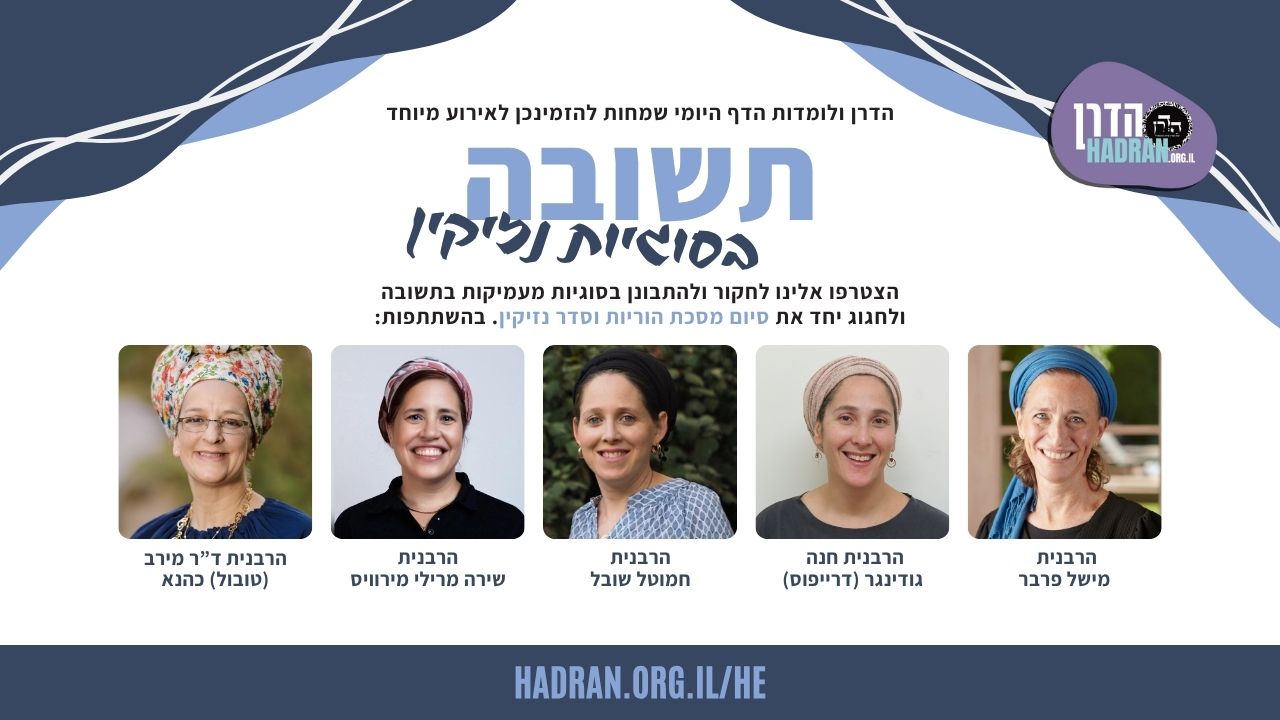
סיום מסכת הוריות וסדר נזיקין של הדרן- תשובה בסוגיות נזיקין
08.10.2025 | ט״ז בתשרי תשפ״ו






לימוד תורה לנשים: פסיקות האחרונים – הראי”ה והר עציון (ד) – נשים עם בפני עצמן: עולמן ההלכתי של נשים
08.07.2025 | י״ב בתמוז תשפ״ה







חדשה בלימוד הגמרא?
זה הדף הראשון שלך? איזו התרגשות עצומה! יש לנו בדיוק את התכנים והכלים שיעזרו לך לעשות את הצעדים הראשונים ללמידה בקצב וברמה שלך, כך תוכלי להרגיש בנוח גם בתוך הסוגיות המורכבות ומאתגרות.
פסיפס הלומדות שלנו
גלי את קהילת הלומדות שלנו, מגוון נשים, רקעים וסיפורים. כולן חלק מתנועה ומסע מרגש ועוצמתי.
התחלתי מחוג במסכת קידושין שהעבירה הרבנית רייסנר במסגרת בית המדרש כלנה בגבעת שמואל; לאחר מכן התחיל סבב הדף היומי אז הצטרפתי. לסביבה לקח זמן לעכל אבל היום כולם תומכים ומשתתפים איתי. הלימוד לעתים מעניין ומעשיר ולעתים קשה ואף הזוי… אך אני ממשיכה קדימה. הוא משפיע על היומיום שלי קודם כל במרדף אחרי הדף, וגם במושגים הרבים שלמדתי ובידע שהועשרתי בו, חלקו ממש מעשי

אביגיל כריסי
ראש העין, ישראל
My explorations into Gemara started a few days into the present cycle. I binged learnt and become addicted. I’m fascinated by the rich "tapestry” of intertwined themes, connections between Masechtot, conversations between generations of Rabbanim and learners past and present all over the world. My life has acquired a golden thread, linking generations with our amazing heritage.
Thank you.

סוזן כשדן
חשמונאים, Israel
התחלתי כשהייתי בחופש, עם הפרסומים על תחילת המחזור, הסביבה קיבלה את זה כמשהו מתמיד ומשמעותי ובהערכה, הלימוד זה עוגן יציב ביום יום, יש שבועות יותר ויש שפחות אבל זה משהו שנמצא שם אמין ובעל משמעות בחיים שלי….

עדי דיאמנט
גמזו, ישראל
התחלתי ללמוד בסבב הנוכחי לפני כשנתיים .הסביבה מתפעלת ותומכת מאוד. אני משתדלת ללמוד מכל ההסכתים הנוספים שיש באתר הדרן. אני עורכת כל סיום מסכת שיעור בביתי לכ20 נשים שמחכות בקוצר רוח למפגשים האלו.
יעל אשר
יהוד, ישראל
"התחלתי ללמוד דף יומי במחזור הזה, בח’ בטבת תש””ף. לקחתי על עצמי את הלימוד כדי ליצור תחום של התמדה יומיומית בחיים, והצטרפתי לקבוצת הלומדים בבית הכנסת בכפר אדומים. המשפחה והסביבה מתפעלים ותומכים.
בלימוד שלי אני מתפעלת בעיקר מכך שכדי ללמוד גמרא יש לדעת ולהכיר את כל הגמרא. זו מעין צבת בצבת עשויה שהיא עצומה בהיקפה.”

שרה פוּקס
כפר אדומים, ישראל
לצערי גדלתי בדור שבו לימוד גמרא לנשים לא היה דבר שבשגרה ושנים שאני חולמת להשלים את הפער הזה.. עד שלפני מספר שבועות, כמעט במקרה, נתקלתי במודעת פרסומת הקוראת להצטרף ללימוד מסכת תענית. כשקראתי את המודעה הרגשתי שהיא כאילו נכתבה עבורי – "תמיד חלמת ללמוד גמרא ולא ידעת איך להתחיל”, "בואי להתנסות במסכת קצרה וקלה” (רק היה חסר שהמודעה תיפתח במילים "מיכי שלום”..). קפצתי למים ו- ב”ה אני בדרך להגשמת החלום:)

מיכי קדוש
מורשת, ישראל
התחלתי להשתתף בשיעור נשים פעם בשבוע, תכננתי ללמוד רק דפים בודדים, לא האמנתי שאצליח יותר מכך.
לאט לאט נשאבתי פנימה לעולם הלימוד .משתדלת ללמוד כל בוקר ומתחילה את היום בתחושה של מלאות ומתוך התכווננות נכונה יותר.
הלימוד של הדף היומי ממלא אותי בתחושה של חיבור עמוק לעם היהודי ולכל הלומדים בעבר ובהווה.

נילי חיון
אפרת, ישראל
אחי, שלומד דף יומי ממסכת ברכות, חיפש חברותא ללימוד מסכת ראש השנה והציע לי. החברותא היתה מאתגרת טכנית ורוב הזמן נעשתה דרך הטלפון, כך שבסיום המסכת נפרדו דרכינו. אחי חזר ללמוד לבד, אבל אני כבר נכבשתי בקסם הגמרא ושכנעתי את האיש שלי להצטרף אלי למסכת ביצה. מאז המשכנו הלאה, ועכשיו אנחנו מתרגשים לקראתו של סדר נשים!

שולמית סבן
נוקדים, ישראל
לפני 15 שנה, אחרי עשרות שנים של "ג’ינגול” בין משפחה לקריירה תובענית בהייטק, הצטרפתי לשיעורי גמרא במתן רעננה. הלימוד המעמיק והייחודי של הרבנית אושרה קורן יחד עם קבוצת הנשים המגוונת הייתה חוויה מאלפת ומעשירה. לפני כשמונה שנים כאשר מחזור הדף היומי הגיע למסכת תענית הצטרפתי כ”חברותא” לבעלי. זו השעה היומית שלנו ביחד כאשר דפי הגמרא משתלבים בחיי היום יום, משפיעים ומושפעים, וכשלא מספיקים תמיד משלימים בשבת

יודי אסקוף
רעננה, ישראל
התחלתי ללמוד דף יומי ממסכת נידה כי זה היה חומר הלימוד שלי אז. לאחר הסיום הגדול בבנייני האומה החלטתי להמשיך. וב”ה מאז עם הפסקות קטנות של קורונה ולידה אני משתדלת להמשיך ולהיות חלק.
זה משפיע מאוד על היום יום שלי ועל אף שאני עסוקה בלימודי הלכה ותורה כל יום, זאת המסגרת הקבועה והמחייבת ביותר שיש לי.

מוריה תעסן מיכאלי
גבעת הראל, ישראל
הייתי לפני שנתיים בסיום הדרן נשים בבנייני האומה והחלטתי להתחיל. אפילו רק כמה דפים, אולי רק פרק, אולי רק מסכת… בינתיים סיימתי רבע שס ותכף את כל סדר מועד בה.
הסביבה תומכת ומפרגנת. אני בת יחידה עם ארבעה אחים שכולם לומדים דף יומי. מדי פעם אנחנו עושים סיומים יחד באירועים משפחתיים. ממש מרגש. מסכת שבת סיימנו כולנו יחד עם אבא שלנו!
אני שומעת כל יום פודקאסט בהליכה או בנסיעה ואחכ לומדת את הגמרא.

עדנה גרוס
מרכז שפירא, ישראל
התחלתי מעט לפני תחילת הסבב הנוכחי. אני נהנית מהאתגר של להמשיך להתמיד, מרגעים של "אהה, מפה זה הגיע!” ומהאתגר האינטלקטואלי

אילת-חן ודלר
לוד, ישראל
בתחילת הסבב הנוכחי הצטברו אצלי תחושות שאני לא מבינה מספיק מהי ההלכה אותה אני מקיימת בכל יום. כמו כן, כאמא לבנות רציתי לתת להן מודל נשי של לימוד תורה
שתי הסיבות האלו הובילו אותי להתחיל ללמוד. נתקלתי בתגובות מפרגנות וסקרניות איך אישה לומדת גמרא..
כמו שרואים בתמונה אני ממשיכה ללמוד גם היום ואפילו במחלקת יולדות אחרי לידת ביתי השלישית.

נועה שילה
רבבה, ישראל
התחלתי ללמוד דף יומי ממסכת נידה כי זה היה חומר הלימוד שלי אז. לאחר הסיום הגדול בבנייני האומה החלטתי להמשיך. וב”ה מאז עם הפסקות קטנות של קורונה ולידה אני משתדלת להמשיך ולהיות חלק.
זה משפיע מאוד על היום יום שלי ועל אף שאני עסוקה בלימודי הלכה ותורה כל יום, זאת המסגרת הקבועה והמחייבת ביותר שיש לי.
מוריה תעסן מיכאלי
גבעת הראל, ישראל
התחלתי לפני כמה שנים אבל רק בסבב הזה זכיתי ללמוד יום יום ולסיים מסכתות

סיגל טל
רעננה, ישראל
ראיתי את הסיום הגדול בבנייני האומה וכל כך התרשמתי ורציתי לקחת חלק.. אבל לקח לי עוד כשנה וחצי )באמצע מסיכת שבת להצטרף..
הלימוד חשוב לי מאוד.. אני תמיד במרדף אחרי הדף וגונבת כל פעם חצי דף כשהילדים עסוקים ומשלימה אח”כ אחרי שכולם הלכו לישון..
אולגה מזרחי
ירושלים, ישראל
התחלתי ללמוד בסבב הנוכחי לפני כשנתיים .הסביבה מתפעלת ותומכת מאוד. אני משתדלת ללמוד מכל ההסכתים הנוספים שיש באתר הדרן. אני עורכת כל סיום מסכת שיעור בביתי לכ20 נשים שמחכות בקוצר רוח למפגשים האלו.
יעל אשר
יהוד, ישראל
התחלתי ללמוד לפני 4.5 שנים, כשהודיה חברה שלי פתחה קבוצת ווטסאפ ללימוד דף יומי בתחילת מסכת סנהדרין. מאז לימוד הדף נכנס לתוך היום-יום שלי והפך לאחד ממגדירי הזהות שלי ממש.

קרן רוזנברג
ירושלים, ישראל
אמא שלי למדה איתי ש”ס משנה, והתחילה ללמוד דף יומי. אני החלטתי שאני רוצה ללמוד גם. בהתחלה למדתי איתה, אח”כ הצטרפתי ללימוד דף יומי שהרב דני וינט מעביר לנוער בנים בעתניאל. במסכת עירובין עוד חברה הצטרפה אלי וכשהתחלנו פסחים הרב דני פתח לנו שעור דף יומי לבנות. מאז אנחנו לומדות איתו קבוע כל יום את הדף היומי (ובשבת אבא שלי מחליף אותו). אני נהנית מהלימוד, הוא מאתגר ומעניין

רננה הלמן
עתניאל, ישראל
התחלתי ללמוד את הדף היומי מעט אחרי שבני הקטן נולד. בהתחלה בשמיעה ולימוד באמצעות השיעור של הרבנית שפרבר. ובהמשך העזתי וקניתי לעצמי גמרא. מאז ממשיכה יום יום ללמוד עצמאית, ולפעמים בעזרת השיעור של הרבנית, כל יום. כל סיום של מסכת מביא לאושר גדול וסיפוק. הילדים בבית נהיו חלק מהלימוד, אני משתפת בסוגיות מעניינות ונהנית לשמוע את דעתם.

אלירז בלאו
מעלה מכמש, ישראל
חולין נט
עִיקָּרָא דְּמָרִירְתָּא.
It is the root of a bitter vegetable.
אָמַר רַב יְהוּדָה: הַאי מַאן דַּאֲכַל תְּלָתָא תִּקְלֵי חִלְתִּית אַלִּיבָּא רֵיקָנָא – מִישְׁתְּלַח מַשְׁכֵיהּ. אָמַר רַבִּי אֲבָהוּ: בְּדִידִי הֲוָה עוֹבָדָא, וַאֲכַלִי חַד תִּקְלָא חִלְתִּיתָא, וְאִי לָא דִּיתַבִי בְּמַיָּא – מִישְׁתְּלַח מַשְׁכַאי, וְקִיַּימְתִּי בְּעַצְמִי ״הַחׇכְמָה תְּחַיֶּה בְעָלֶיהָ״.
Rav Yehuda says: This individual who eats the weight of three shekel of asafoetida on an empty heart, i.e., stomach, his skin sheds due to the fever he contracts. Rabbi Abbahu said: There was an incident in which I was involved, wherein I ate the weight of one shekel of asafoetida, and had I not immediately sat in water to cool off, my skin would have shed. And I thereby fulfilled with regard to myself that which the verse states: “Wisdom preserves the life of him that has it” (Ecclesiastes 7:12).
אָמַר רַב יוֹסֵף: הַאי מַאן דְּאָכֵיל שִׁיתַּסְרֵי בֵּיעֵי, וְאַרְבְּעֵי אַמְגּוֹזֵי, וְשַׁב בּוּטְיָתָא דְּפִרְחֵי, וְשָׁתֵי רְבִיעֵתָא דְּדוּבְשָׁא בִּתְקוּפַת תַּמּוּז, אַלִּיבָּא רֵיקָנָא – מִתְעֲקַר תַּלְיָא דְּלִיבֵּיהּ.
Rav Yosef says: This individual who eats sixteen eggs and forty nuts and seven fruits of the caper bush, and he drinks a quarter-log of honey in the season of Tammuz, i.e., summer, all on an empty heart, i.e., stomach, his heartstrings are uprooted.
הָהוּא בַּר טַבְיָא דַּאֲתָא לְבֵי רֵישׁ גָּלוּתָא, דַּהֲוָה (מפסק) [מְפַסְּקָן] כַּרְעִן בָּתְרָיָיתָא, בַּדְקֵיהּ רַב בְּצוֹמֶת הַגִּידִין וְאַכְשְׁרֵיהּ. סְבַר לְמֵיכַל מִינֵּיהּ בְּאוּמְצָא, אֲמַר לֵיהּ שְׁמוּאֵל: לָא חָיֵישׁ מָר לְנִיקּוּרֵי?
§ The mishna states that if an animal is bitten by a poisonous snake, it is not a tereifa, but it is nevertheless prohibited for consumption due to the hazard it poses. The Gemara recounts the case of a certain young deer that was brought to the house of the Exilarch after slaughter whose hind legs had been cut. Rav inspected it at the convergence of sinews in the thigh and found them intact, and he deemed it kosher. He thought to eat it rare, i.e., lightly roasted. Shmuel said to him: Is the Master not concerned for the possibility that it may have a snakebite?
אֲמַר לֵיהּ: מַאי תַּקַּנְתָּא? נוֹתְבֵיהּ בְּתַנּוּרָא דְּאִיהוּ בָּדֵיק נַפְשֵׁיהּ. אוֹתְבֵיהּ, נְפַל תִּילְחֵי תִּילְחֵי. קָרֵי שְׁמוּאֵל עֲלֵיהּ דְּרַב: ״לֹא יְאֻנֶּה לַצַּדִּיק כׇּל אָוֶן״. קָרֵי רַב עֲלֵיהּ דִּשְׁמוּאֵל: ״כׇּל רָז לָא אָנֵס לָךְ״.
Rav said to him: What is the rectification for such an uncertainty? Shmuel said to him: We shall set it in a hot oven, as it will then inspect itself. Shmuel set it in the oven on a spit, and the meat fell off the bone bit by bit, a sign that a snake had bitten the young deer. Shmuel recited about Rav the verse: “There shall no mischief befall the righteous” (Proverbs 12:21), since he was saved due to his righteousness. Rav recited about Shmuel the verse: “And no secret causes you trouble” (Daniel 4:6), since he was learned even with regard to such matters.
מַתְנִי׳ סִימָנֵי בְּהֵמָה וְחַיָּה נֶאֶמְרוּ מִן הַתּוֹרָה, וְסִימָנֵי הָעוֹף לֹא נֶאֶמְרוּ, אֲבָל אָמְרוּ חֲכָמִים: כׇּל עוֹף הַדּוֹרֵס – טָמֵא, כֹּל שֶׁיֵּשׁ לוֹ אֶצְבַּע יְתֵירָה וְזֶפֶק וְקוּרְקְבָנוֹ נִקְלָף – טָהוֹר. רַבִּי אֶלְעָזָר בְּרַבִּי צָדוֹק אוֹמֵר: כׇּל עוֹף הַחוֹלֵק אֶת רַגְלָיו – טָמֵא.
MISHNA: The signs that indicate that a domesticated animal and an undomesticated animal are kosher were stated in the Torah, and the signs of a kosher bird were not explicitly stated. But the Sages stated certain signs in a bird: Any bird that claws its prey and eats it is non-kosher. Any bird that has an extra digit behind the leg slightly elevated above the other digits, and a crop, which is a sack alongside the gullet in which food is stored prior to digestion, and for which the yellowish membrane inside its gizzard can be peeled, is kosher. Rabbi Elazar, son of Rabbi Tzadok, says: Any bird that splits the digits of its feet when standing on a string, placing two digits on one side of the string and two on the other, is non-kosher.
וּבַחֲגָבִים, כֹּל שֶׁיֵּשׁ לוֹ אַרְבַּע רַגְלַיִם, וְאַרְבַּע כְּנָפַיִם, וְקַרְצוּלַּיִם, וּכְנָפָיו חוֹפִין אֶת רוּבּוֹ. רַבִּי יוֹסֵי אוֹמֵר: וּשְׁמוֹ חָגָב. וּבַדָּגִים, כֹּל שֶׁיֵּשׁ לוֹ סְנַפִּיר וְקַשְׁקֶשֶׁת. רַבִּי יְהוּדָה אוֹמֵר: שְׁנֵי קַשְׂקַשִּׂין וּסְנַפִּיר אֶחָד. וְאֵלּוּ הֵן קַשְׂקַשִּׂין – הַקְּבוּעִין בּוֹ, וּסְנַפִּירִים – הַפּוֹרֵחַ בָּהֶן.
And with regard to grasshoppers, whose signs were also not stated in the Torah, the Sages stated: Any grasshopper that has four legs, and four wings, and two additional jumping legs, and whose wings cover most of its body, is kosher. Rabbi Yosei says: And this applies only if the name of its species is grasshopper. And with regard to fish, the signs are explicitly stated in the Torah: Any fish that has a fin and a scale is kosher; Rabbi Yehuda says: Two scales and one fin. And these are scales: Those that are fixed to its body; and fins are those with which the fish swims.
גְּמָ׳ תָּנוּ רַבָּנַן: אֵלּוּ הֵן סִימָנֵי בְּהֵמָה – ״כׇּל בְּהֵמָה מַפְרֶסֶת פַּרְסָה וְגוֹ׳״, כׇּל בְּהֵמָה שֶׁמַּעֲלַת גֵּרָה – בְּיָדוּעַ שֶׁאֵין לָהּ שִׁינַּיִם לְמַעְלָה, וּטְהוֹרָה.
GEMARA: The mishna states that the signs of a kosher domesticated animal are stated in the Torah. With regard to this, the Sages taught in a baraita: These are the signs of a kosher domesticated animal: “Whatsoever parts the hoof, and is wholly cloven-footed, and chews the cud, among the animals, that may you eat” (Leviticus 11:3). Any animal that chews the cud certainly has no upper front teeth, i.e., incisors, and is kosher.
וּכְלָלָא הוּא? וַהֲרֵי גָּמָל, דְּמַעֲלֵה גֵרָה הוּא, וְאֵין לוֹ שִׁינַּיִם לְמַעְלָה, וְטָמֵא! גָּמָל נִיבֵי אִית לֵיהּ.
The Gemara asks: And is this an established principle? But isn’t there a camel, which chews the cud, and has no upper front teeth, and it is still non-kosher (see Leviticus 11:4)? The Gemara responds: A camel has cuspid-like upper incisors, one on each side.
וַהֲרֵי בֶּן גָּמָל, דְּנִיבֵי נָמֵי לֵית לֵיהּ, וְתוּ, הֲרֵי שָׁפָן וְאַרְנֶבֶת דְּמַעֲלַת גֵּרָה הֵן וְיֵשׁ לָהֶן שִׁינַּיִם לְמַעְלָה, וּטְמֵאִין! וְעוֹד, שִׁינַּיִם מִי כְּתִיבִי בְּאוֹרָיְיתָא? אֶלָּא הָכִי קָאָמַר: כׇּל בְּהֵמָה שֶׁאֵין לָהּ שִׁינַּיִם לְמַעְלָה – בְּיָדוּעַ שֶׁהִיא מַעֲלַת גֵּרָה וּמַפְרֶסֶת פַּרְסָה, וּטְהוֹרָה.
The Gemara asks: But isn’t there a young camel, which does not even have cuspid-like upper incisors and is still non-kosher? And furthermore, aren’t there the hyrax and the hare, which chew the cud, and yet they have upper front teeth, and are non-kosher? And furthermore, one might ask: Are teeth written in the Torah with regard to the kosher status of an animal? Rather, this is what the tanna is saying: Any animal that does not have upper front teeth certainly chews the cud and parts the hoof and is kosher.
וְלִיבְדּוֹק בְּפַרְסוֹתֶיהָ! כְּגוֹן שֶׁהָיוּ פַּרְסוֹתֶיהָ חֲתוּכוֹת, וְכִדְרַב חִסְדָּא, דְּאָמַר רַב חִסְדָּא: הָיָה מְהַלֵּךְ בַּמִּדְבָּר וּמָצָא בְּהֵמָה שֶׁפַּרְסוֹתֶיהָ חֲתוּכוֹת – בּוֹדֵק בְּפִיהָ, אִם אֵין לָהּ שִׁינַּיִם לְמַעְלָה – בְּיָדוּעַ שֶׁהִיא טְהוֹרָה, אִם לָאו – בְּיָדוּעַ שֶׁהִיא טְמֵאָה, וּבִלְבַד שֶׁיַּכִּיר גָּמָל. גָּמָל נִיבֵי אִית לֵיהּ! אֶלָּא, וּבִלְבַד שֶׁיַּכִּיר בֶּן גָּמָל.
The Gemara asks: But why should one inspect the teeth? Let him simply inspect whether the hooves are cloven. The Gemara responds: One inspects the teeth in a case where its hooves were cut and one cannot tell whether they are cloven. And this is in accordance with the statement of Rav Ḥisda, as Rav Ḥisda says: If one was walking in the wilderness, and he found an animal whose hooves were cut, he may inspect its mouth. If it has no upper front teeth, it is certainly kosher; if that is not the case, it is certainly non-kosher, provided that he recognizes that this animal is not a camel, which is non-kosher even though it has no upper incisors. The Gemara asks: Why must one recognize that this is not a camel? A camel has cuspid-like upper incisors. Rather, say: Provided that one recognizes that it is not a young camel, which has no cuspid-like upper incisors.
לָאו אָמְרַתְּ אִיכָּא בֶּן גָּמָל? אִיכָּא נָמֵי מִינָא אַחֲרִינָא דְּדָמֵי לְבֶן גָּמָל! לָא סָלְקָא דַּעְתָּךְ, דְּתָנֵי דְּבֵי רַבִּי יִשְׁמָעֵאל: ״וְאֶת הַגָּמָל כִּי מַעֲלֵה גֵרָה הוּא״, שַׁלִּיט בְּעוֹלָמוֹ יוֹדֵעַ שֶׁאֵין לְךָ דָּבָר מַעֲלֵה גֵרָה וְטָמֵא אֶלָּא גָּמָל, לְפִיכָךְ פָּרַט בּוֹ הַכָּתוּב ״הוּא״.
The Gemara asks: How can one rely only on an inspection of the mouth? Did you not say that there is a young camel, which has no upper incisors but is still non-kosher? If so, perhaps there is also another species that is similar to a young camel and is non-kosher despite having no upper incisors. The Gemara responds that this possibility should not enter your mind, as the school of Rabbi Yishmael taught: The verse states: “The camel, because it chews the cud but parts not the hoof, it is unclean” (Leviticus 11:4). The Ruler of His world knows that nothing other than the camel chews the cud and is still non-kosher. Therefore, the verse singles it out with the word “it,” i.e., it and no other.
וְאָמַר רַב חִסְדָּא: הָיָה מְהַלֵּךְ בַּדֶּרֶךְ וּמָצָא בְּהֵמָה שֶׁפִּיהָ גָּמוּם, בּוֹדֵק בְּפַרְסוֹתֶיהָ: אִם פַּרְסוֹתֶיהָ סְדוּקוֹת – בְּיָדוּעַ שֶׁהִיא טְהוֹרָה, אִם לָאו – בְּיָדוּעַ שֶׁהִיא טְמֵאָה, וּבִלְבַד שֶׁיַּכִּיר חֲזִיר.
And Rav Ḥisda says: If one was walking on the road, and he found an animal whose mouth was mutilated, he may inspect its hooves. If its hooves are cloven, it is certainly kosher. If not, it is certainly non-kosher. This applies provided that he recognizes that it is not a pig, which is non-kosher even though it has cloven hooves.
לָאו אָמְרַתְּ אִיכָּא חֲזִיר? אִיכָּא נָמֵי מִינָא אַחֲרִינָא דְּדָמְיָא לַחֲזִיר! לָא סָלְקָא דַּעְתָּךְ, דְּתָנָא דְּבֵי רַבִּי יִשְׁמָעֵאל: ״וְאֶת הַחֲזִיר כִּי מַפְרִיס פַּרְסָה הוּא״ – שַׁלִּיט בְּעוֹלָמוֹ יוֹדֵעַ שֶׁאֵין לְךָ דָּבָר שֶׁמַּפְרִיס פַּרְסָה וְטָמֵא אֶלָּא חֲזִיר, לְפִיכָךְ פָּרַט בּוֹ הַכָּתוּב ״הוּא״.
The Gemara asks: But didn’t you say that there is a pig, which has cloven hooves but is still non-kosher? If so, perhaps there is also another species that is similar to a pig. The Gemara responds that this possibility should not enter your mind, as the school of Rabbi Yishmael taught: The verse states: “And the pig, because it parts the hoof, and is cloven-footed, but chews not the cud, it is unclean” (Leviticus 11:7). The Ruler of His world knows that nothing other than the pig parts the hoof and is still non-kosher. Therefore, the verse singles it out with the word “it.”
וְאָמַר רַב חִסְדָּא: הָיָה מְהַלֵּךְ בַּמִּדְבָּר, וּמָצָא בְּהֵמָה שֶׁפִּיהָ גָּמוּם וּפַרְסוֹתֶיהָ חֲתוּכוֹת – בּוֹדֵק בִּבְשָׂרָהּ, אִם מְהַלֵּךְ שְׁתִי וָעֵרֶב – בְּיָדוּעַ שֶׁהִיא טְהוֹרָה, וְאִם לָאו – בְּיָדוּעַ שֶׁהִיא טְמֵאָה, וּבִלְבַד שֶׁיַּכִּיר עַרְוָד.
And Rav Ḥisda says: If one was walking in the wilderness, and he found an animal whose mouth was mutilated and whose hooves were cut, he may inspect its flesh. If it runs like warp and woof, i.e., part of it stretches vertically and part of it horizontally, it is certainly kosher; and if not, it is certainly non-kosher, provided that one recognizes that this animal is not a wild donkey, which is non-kosher even though its flesh runs like warp and woof.
לָאו אָמְרַתְּ אִיכָּא עַרְוָד? אִיכָּא נָמֵי מִינָא אַחֲרִינָא דְּדָמֵיא לְעַרְוָד! גְּמִירִי דְּלֵיכָּא. וְהֵיכָא בּוֹדֵק? אָמַר אַבָּיֵי, וְאִיתֵּימָא רַב חִסְדָּא: בְּכַנְפֵי הָעוֹקֶץ.
The Gemara asks: Didn’t you say that there is a wild donkey, whose flesh runs like warp and woof but who is still non-kosher? If so, perhaps there is also another species that is similar to a wild donkey. The Gemara responds: It is learned as a tradition that there are no similar species. The Gemara asks: And where does one inspect the flesh? Abaye said, and some say that Rav Ḥisda said: At the edges of the tailbone, on the upper thighs.
סִימָנֵי חַיָּה. תָּנוּ רַבָּנַן: אֵלּוּ הֵן סִימָנֵי חַיָּה. חַיָּה בִּכְלַל בְּהֵמָה הִיא לְסִימָנִין! אָמַר רַבִּי זֵירָא:
§ The mishna states: The signs of an undomesticated animal were stated in the Torah. With regard to this, the Sages taught in a baraita: These are the signs of an undomesticated animal. The Gemara interjects: Why does one need signs for an undomesticated animal? An undomesticated animal [ḥayya] is included in the category of a domesticated animal [behema] with regard to signs, as the verse states: “These are the living things [ḥayya] which you may eat among all the animals [behema] that are on the earth. Whatsoever parts the hoof” (Leviticus 11:2–3). Rabbi Zeira said:
לְהַתִּיר חֶלְבָּהּ, וְהָכִי קָאָמַר: אֵלּוּ הֵן סִימָנֵי חַיָּה שֶׁחֶלְבָּהּ מוּתָּר – כֹּל שֶׁיֵּשׁ לָהּ קַרְנַיִם וּטְלָפַיִם.
The signs are given to permit its forbidden fat, i.e., to deem the animal undomesticated. Fat that is forbidden for consumption in domesticated animals is permitted in undomesticated animals. And this is what the tanna is saying: These are the signs of a kosher undomesticated animal, so that one will know that its fat is permitted: Any animal that has horns and cloven hooves is an undomesticated animal.
רַבִּי דּוֹסָא אוֹמֵר: יֵשׁ לָהּ קַרְנַיִם – אִי אַתָּה צָרִיךְ לַחֲזוֹר עַל טְלָפַיִם, יֵשׁ לָהּ טְלָפַיִם – צָרִיךְ אַתָּה לַחֲזוֹר עַל קַרְנַיִם, וְקֶרֶשׁ, אַף עַל פִּי שֶׁאֵין לוֹ אֶלָּא קֶרֶן אַחַת – מוּתָּר.
Rabbi Dosa says: If it has horns, it is certainly a kosher undomesticated animal, and you need not search for cloven hooves. But if it has cloven hooves, you must still search for horns. And with regard to the animal called a keresh, even though it has only one horn, its fat is permitted for consumption.
כְּלָלָא הוּא? וַהֲרֵי עֵז, דְּיֵשׁ לוֹ קַרְנַיִם וּטְלָפַיִם, וְחֶלְבּוֹ אָסוּר! כְּרוּכוֹת בָּעֵינַן. וַהֲרֵי שׁוֹר, דִּכְרוּכוֹת, וְחֶלְבּוֹ אָסוּר! חֲרוּקוֹת בָּעֵינַן.
The Gemara asks: Is this an established principle? But isn’t there a goat, which has horns and cloven hooves, and still its fat is forbidden, as it is a domesticated animal? The Gemara responds: We require horns that are layered to designate a kosher animal as undomesticated; a goat’s horns are not layered. The Gemara asks: But isn’t there a bull, which has layered horns, and still its fat is forbidden since it is domesticated? The Gemara responds: We require horns that are grooved; a bull’s horns are not grooved.
וַהֲרֵי עֵז, דַּחֲרוּקוֹת, וְחֶלְבּוֹ אָסוּר? מְפוּצָּלוֹת בָּעֵינַן! וַהֲרֵי צְבִי, דְּאֵין מְפוּצָּלוֹת, וְחֶלְבּוֹ מוּתָּר? חֲדוּרוֹת בָּעֵינַן.
The Gemara persists: But isn’t there a goat, which has grooved horns, and still its fat is forbidden? The Gemara responds: We require horns that are branched; a goat’s horns are not branched. The Gemara asks: But isn’t there a gazelle [tzevi], whose horns are not branched, and still its fat is permitted? The Gemara responds: We require horns that are rounded and not broad like those of a sheep.
הִלְכָּךְ, הֵיכָא דְּמִיפַּצְלָא – לָא דִּינָא וְלָא דַּיָּינָא; הֵיכָא דְּלָא מִיפַּצְלָא – בָּעֵינַן כְּרוּכוֹת, חֲדוּרוֹת, וַחֲרוּקוֹת, וְהוּא דְּמִיבְּלַע חִירְקַיְיהוּ.
The Gemara concludes: Therefore, where an animal’s horns are branched, there is neither judgment nor judge, and the animal is without a doubt undomesticated. Where they are not branched, we require that they be layered, rounded, and grooved. And it must be grooved in a pattern such that its grooves are absorbed into one another.
וְהַיְינוּ סְפֵיקָא דְּעִיזָּא כַּרְכּוּז. הָהִיא עִיזָּא כַּרְכּוּז דַּהֲוַאי בֵּי רֵישׁ גָּלוּתָא, דַּעֲקוּר מְלָא צַנָּא דְּתַרְבָּא מִינַּהּ. רַב אַחַאי אָסַר, רַב שְׁמוּאֵל בְּרֵיהּ דְּרַבִּי אֲבָהוּ אֲכַל מִינֵּיהּ, קָרֵי אַנַּפְשֵׁיהּ: ״מִפְּרִי פִי אִישׁ תִּשְׂבַּע בִּטְנוֹ״.
And this is the uncertainty that arose concerning the karkoz goat, i.e., whether it is considered a domesticated animal. As there was a certain karkoz goat that was in the house of the Exilarch, from which they removed a full basket of fat after slaughtering it. Rav Aḥai deemed the fat forbidden, because he considered it a domesticated animal. But Rav Shmuel, son of Rabbi Abbahu, ate of it. He read the verse about himself: “A man’s belly shall be filled with the fruit of his mouth” (Proverbs 18:20). In other words, due to his learning, he knew it was permitted to eat the fat of the karkoz goat.
שְׁלַחוּ מִתָּם: הִלְכְתָא כְּוָותֵיהּ דִּשְׁמוּאֵל בְּרֵיהּ דְּרַבִּי אֲבָהוּ, וְהִזָּהֲרוּ בְּרַבֵּינוּ אַחַאי, שֶׁמֵּאִיר עֵינֵי גּוֹלָה הוּא.
The Sages sent a message from there, Eretz Yisrael: The halakha is in accordance with the opinion of Rav Shmuel, son of Rabbi Abbahu, that a karkoz goat is an undomesticated animal and its fat is permitted; but nevertheless, be mindful of the honor of our teacher Aḥai who deems it forbidden, and do not partake of the fat in his presence, as he enlightens the eyes of the exile.
וְקֶרֶשׁ, אַף עַל פִּי שֶׁאֵין לוֹ אֶלָּא קֶרֶן אַחַת, מוּתָּר. אָמַר רַב יְהוּדָה: קֶרֶשׁ טַבְיָא דְּבֵי עִילַּאי, טִגְרִיס אַרְיָא דְּבֵי עִילַּאי. אָמַר רַב כָּהֲנָא: תְּשַׁע אַמְּהָתָא הָוֵי בֵּין אוּנָּא לְאוּנָּא דְּאַרְיָא דְּבֵי עִילַּאי. אָמַר רַב יוֹסֵף: שִׁיתְּסַר אַמְּהָתָא הָוֵי מַשְׁכֵיהּ דְּטַבְיָא דְּבֵי עִילַּאי.
§ The baraita states: And with regard to the animal called a keresh, even though it has only one horn, its fat is permitted for consumption. Rav Yehuda says: The keresh is the gazelle that is native to the area of Bei Ila’ei. The tagras mentioned by the Sages is the lion of Bei Ila’ei. Rav Kahana says: There are nine cubits between the ears of the lion of Bei Ila’ei. Rav Yosef says: The length of the gazelle of Bei Ila’ei is sixteen cubits.
אֲמַר לֵיהּ קֵיסָר לְרַבִּי יְהוֹשֻׁעַ בֶּן חֲנַנְיָה: אֱלֹהֵיכֶם כְּאַרְיָה מְתִיל, דִּכְתִיב ״אַרְיֵה שָׁאָג מִי לֹא יִירָא״, מַאי רְבוּתֵיהּ? פָּרָשָׁא קָטֵיל אַרְיָא! אֲמַר לֵיהּ: לָאו כְּהַאי אַרְיָא מְתִיל, כְּאַרְיָא דְּבֵי עִילַּאי מְתִיל. אֲמַר לֵיהּ: בָּעֵינָא דְּמַיחֲזֵית לֵיהּ נִיהֲלִי. אֲמַר לֵיהּ: לָא מָצֵית חָזֵית לֵיהּ. אֲמַר לֵיהּ: אִיבְרָא, חָזֵינָא לֵיהּ! בְּעָא רַחֲמֵי, אִתְעֲקַר מִדּוּכְתֵּיהּ,
The Gemara recounts: The Roman emperor said to Rabbi Yehoshua ben Ḥananya: Your God is compared to a lion, as it is written: “The lion has roared, who will not fear” (Amos 3:8). But if so, what is His greatness? A cavalryman can kill a lion. Rabbi Yehoshua said to him: God is not compared to that lion which a cavalryman can kill. Rather, God is compared to the lion of Bei Ila’ei. The emperor said to him: I ask that you show it to me. Rabbi Yehoshua said to him: You cannot see it. The emperor said to him: Truly, I wish to see it. Rabbi Yehoshua prayed for mercy, and the lion of Bei Ila’ei set off from its place of origin toward Rome.
כִּי הֲוָה מְרַחַיק אַרְבַּע מְאָה פַּרְסֵי, נַיהֵם חַד קָלָא, אַפִּילוּ כֹּל מְעַבְּרָתָא, וְשׁוּרָא דְּרוֹמִי נְפַל. אַדִּמְרַחַק תְּלָת מְאָה פַּרְסֵי, נַיהֵם קָלָא אַחֲרִינָא, נְתוּר כַּכֵּי וְשִׁינֵּי דְּגַבְרֵי, וְאַף הוּא נְפַל מִכּוּרְסְיָיא לְאַרְעָא. אֲמַר לֵיהּ: בְּמָטוּתָא מִינָּךְ, בְּעֵי רַחֲמֵי עֲלֵיהּ דְּלֶהְדַּר לְדוּכְתֵּיהּ. בְּעָא רַחֲמֵי עֲלֵיהּ, וְאַהְדַּר לֵיהּ לְאַתְרֵיהּ.
When it was four hundred parasangs away from Rome, it roared once, and all the pregnant women miscarried, and the wall of Rome fell. When it was three hundred parasangs away, it roared another time, and all the men’s front and back teeth fell out from fear. And even he, the emperor, fell from his throne to the ground. The emperor said to Rabbi Yehoshua: I beg you, pray for mercy with regard to it, that it should go back to the place from which it came. Rabbi Yehoshua prayed for mercy with regard to it, and it returned to the place from which it came.
אֲמַר לֵיהּ קֵיסָר לְרַבִּי יְהוֹשֻׁעַ בֶּן חֲנַנְיָה: בָּעֵינָא דְּאִיחְזֵי לֵאלָהַיְכוּ. אֲמַר לֵיהּ: לָא מָצֵית חָזֵית לֵיהּ. אֲמַר לֵיהּ: אִיבְרָא
§ The Gemara recounts: The emperor said to Rabbi Yehoshua ben Ḥananya: I wish to see your God. Rabbi Yehoshua said to him: You cannot see Him. The emperor said to him: Truly,
לעקוב

