







המשניות מתחילים למנות רלוונטיות של גילאים מסויימים להלכות מסויימות. לאיזה דברים יש הבדל בין עובר לבין ילד/ה בן יום אחד? מה הרלוונטיות לדיני טומאה, ייבום, נחלה, רצח, אבלות? בגיל שלוש שנים או שלוש שנים ויום אחד, ילדה נחשבת ראוי לביאה ויש לזה השפעה על קידושין, ייבום, עריות, וכו’. מהן חילוקי דעות בעניין הגיל הזה בין ר’ מאיר לחכמים?
הלימוד השבוע מוקדש ע”י טינה לם לרפואת מעין ליאורה בת שלומית פייגא
רוצה להקדיש שיעור?
English
עברית

0:00
0:00
0:00
0:00
כלים
הלימוד השבוע מוקדש ע”י טינה לם לרפואת מעין ליאורה בת שלומית פייגא
נדה מד
וְנוֹחֵל וּמַנְחִיל, וְהַהוֹרְגוֹ חַיָּיב, וַהֲרֵי הוּא לְאָבִיו וּלְאִמּוֹ וּלְכׇל קְרוֹבָיו כְּחָתָן שָׁלֵם.
and he inherits the estate of his mother if she died on the day of his birth; and if he dies, he bequeaths that inheritance to his paternal brothers; and one who kills him is liable for his murder, as it is written: “And he that smites any man mortally shall be put to death” (Leviticus 24:17), i.e., any man, including a child who is one day old; and if he dies, his status in relation to his father and to his mother and to all his relatives, in terms of the halakhot of mourning, is like that of a full-fledged groom [keḥatan shalem], whose death is deeply mourned.
גְּמָ’ מְנָהָנֵי מִילֵּי? דְּתָנוּ רַבָּנַן: ״אִשָּׁה״ — אֵין לִי אֶלָּא אִשָּׁה, בַּת יוֹם אֶחָד לְנִדָּה מִנַּיִן? תַּלְמוּד לוֹמַר: ״וְאִשָּׁה״.
GEMARA: The Gemara asks: From where is this matter, that the halakhot of menstruation apply even to a one-day-old baby girl, derived? As the Sages taught in a baraita: The verse states: “And if a woman has an issue, and her issue in her flesh is blood, she shall be in her impurity seven days” (Leviticus 15:19). When the verse states “a woman,” I have derived only that the halakhot of menstruation apply to an adult woman. From where do I derive that the impurity of a menstruating woman also applies to a one-day-old baby? The verse states: “And a woman,” to include even a baby girl.
בַּת עֲשָׂרָה יָמִים לְזִיבָה — מְנָא הָנֵי מִילֵּי? דְּתָנוּ רַבָּנַן: ״אִשָּׁה״ — אֵין לִי אֶלָּא אִשָּׁה, בַּת עֲשָׂרָה יָמִים לְזִיבָה מִנַּיִן? תַּלְמוּד לוֹמַר: ״וְאִשָּׁה״.
The mishna further teaches that a baby girl who is ten days old who experiences an emission of blood for three consecutive days after the conclusion of the seven days fit for menstruation, becomes impure with the impurity of ziva. Again, the Gemara asks: From where are these matters derived? As the Sages taught in a baraita: The verse states: “And if a woman has an issue of her blood many days not in the time of her menstruation…she shall be as in the days of her menstruation: She is impure” (Leviticus 15:25). When the verse states “a woman,” I have derived only that the halakhot of a zava apply to an adult woman. From where do I derive that the impurity of ziva also applies to a ten-day-old baby? The verse states: “And a woman,” to include even a baby girl.
תִּינוֹק בֶּן יוֹם אֶחָד כּוּ׳. מְנָא הָנֵי מִילֵּי? דְּתָנוּ רַבָּנַן: ״אִישׁ אִישׁ״ — מָה תַּלְמוּד לוֹמַר ״אִישׁ אִישׁ״? לְרַבּוֹת בֶּן יוֹם אֶחָד שֶׁמְּטַמֵּא בְּזִיבָה, דִּבְרֵי רַבִּי יְהוּדָה.
The mishna further teaches that a baby boy, even one who is one day old, can become impure with the impurity of ziva. Once again, the Gemara asks: From where are these matters derived? As the Sages taught in a baraita: The verse states with regard to a zav: “When any man has an issue out of his flesh, his issue is impure” (Leviticus 15:2). It would have been enough for the verse to state “a man.” Why must the verse state “any man”? It is in order to include even a one-day-old baby boy who has such a discharge, to teach that he becomes impure with the impurity of ziva. This is the statement of Rabbi Yehuda.
רַבִּי יִשְׁמָעֵאל בְּנוֹ שֶׁל רַבִּי יוֹחָנָן בֶּן בְּרוֹקָא אוֹמֵר: אֵינוֹ צָרִיךְ, הֲרֵי הוּא אוֹמֵר: ״וְהַזָּב אֶת זוֹבוֹ לַזָּכָר וְלַנְּקֵבָה״, ״לַזָּכָר״ — כֹּל שֶׁהוּא, בֵּין גָּדוֹל בֵּין קָטָן, ״לַנְּקֵבָה״ — כֹּל שֶׁהִיא, בֵּין גְּדוֹלָה בֵּין קְטַנָּה. אִם כֵּן מָה תַּלְמוּד לוֹמַר ״אִישׁ אִישׁ״? דִּבְּרָה תוֹרָה כִלְשׁוֹן בְּנֵי אָדָם.
Rabbi Yishmael, son of Rabbi Yoḥanan ben Beroka, says that this derivation is not necessary, as the verse states: “And of those who have an issue, whether it be a male or a female” (Leviticus 15:33). The phrase “whether it be a male” includes anyone who is a male, whether he is an adult or whether he is a minor; “or a female” includes anyone who is a female, whether she is an adult or whether she is a minor. If so, why must the earlier verse state “any man”? The Torah spoke in the language of people, i.e., this emphasis is not unusual and therefore one should not derive a halakha from the superfluous word.
וּמִטַּמֵּא בִּנְגָעִים. דִּכְתִיב: ״אָדָם כִּי יִהְיֶה בְעוֹר בְּשָׂרוֹ״ — ״אָדָם״, כֹּל שֶׁהוּ.
The mishna teaches: And a one-day-old baby becomes impure with the impurity of leprous marks. The Gemara explains that this is derived from that which is written with regard to leprous marks: “When a person shall have in the skin of his flesh” (Leviticus 13:2). This serves to include anyone who is a person, irrespective of age.
וּמְטַמֵּא בִּטְמֵא מֵת. דִּכְתִיב: ״וְעַל הַנְּפָשׁוֹת אֲשֶׁר הָיוּ שָׁם״ — נֶפֶשׁ כֹּל דְּהוּ.
The mishna further teaches: And a one-day-old baby becomes impure with impurity imparted by a corpse. The Gemara explains that this is derived from that which is written in the context of purification from impurity imparted by a corpse: “And a pure person shall take hyssop, and dip it in the water, and sprinkle it upon the tent, and upon all the vessels, and upon the people that were there” (Numbers 19:18). This apparently superfluous mention of “people” serves to include anyone who is a person, irrespective of age.
וְזוֹקֵק לְיִבּוּם. דִּכְתִיב: ״כִּי יֵשְׁבוּ אַחִים יַחְדָּו״ — אַחִים שֶׁהָיָה לָהֶם יְשִׁיבָה אַחַת בָּעוֹלָם.
The mishna also teaches: And a one-day-old baby creates a levirate bond requiring the widow of his childless brother to enter into levirate marriage with him. The Gemara explains that this is derived from that which is written: “If brothers dwell together and one of them dies, and he has no child, the wife of the dead man shall not be married outside of the family to one not of his kin. Her brother-in-law will have intercourse with her and take her to him to be his wife, and consummate the levirate marriage” (Deuteronomy 25:5). This verse is referring to brothers who had one dwelling in the world, i.e., who were alive at the same time, which includes a baby who was born the day his brother died.
וּפוֹטֵר מִן הַיִּבּוּם. ״וּבֵן אֵין לוֹ״ אָמַר רַחֲמָנָא, וְהָא אִית לֵיהּ.
The mishna teaches: And a one-day-old baby exempts his widowed mother from the obligation of levirate marriage. The Gemara explains the derivation: The Merciful One states: “And one of them dies, and he has no child” (Deuteronomy 25:5), and this late husband has a child, albeit one who is one day old.
וּמַאֲכִיל בִּתְרוּמָה. דִּכְתִיב: ״וִילִיד בֵּיתוֹ הֵם יֹאכְלוּ בְלַחְמוֹ״, קְרִי בֵיהּ: ״יַאֲכִילוּ בְּלַחְמוֹ״.
The mishna teaches: And a one-day-old baby enables his mother, an Israelite woman who is no longer married to his father, a priest, to continue to partake of teruma. The Gemara explains that this is as it is written, with regard to those who are entitled to partake of teruma on account of a priest: “And those who are born in his house, they may eat [yokhelu] of his bread” (Leviticus 22:11). Read into the verse: Those who are born in his house enable others to eat [ya’akhilu] of his bread, i.e., on account of her son the priest, the Israelite mother may continue to partake of teruma even after the death of his father.
וּפוֹסֵל מִן הַתְּרוּמָה. ״וְזֶרַע אֵין לָהּ״ אָמַר רַחֲמָנָא — וְהָא אִית לַהּ.
§ The mishna also teaches: And a one-day-old baby disqualifies his mother, the daughter of a priest who is no longer married to his father, an Israelite man, from continuing to partake of teruma. The Gemara explains that the reason is that the Merciful One states: “But if a priest’s daughter becomes a widow, or divorced, and has no child, and is returned to her father’s house, as in her youth, she may eat of her father’s bread” (Leviticus 22:13), and this daughter of a priest has a child.
מַאי אִירְיָא זֶרַע? אֲפִילּוּ עוּבָּר נָמֵי! דִּכְתִיב ״כִּנְעוּרֶיהָ״ — פְּרָט לִמְעוּבֶּרֶת.
The Gemara asks: Why state specifically that she has a child? Even if she has a fetus in her womb from an Israelite man, the same halakha applies, as it is written: “As in her youth,” which excludes a pregnant woman, since her pregnancy has changed her physical state from that of her youth.
וּצְרִיכִי, דְּאִי כְּתַב רַחֲמָנָא ״וְזֶרַע אֵין לָהּ״, מִשּׁוּם דְּמֵעִיקָּרָא חַד גּוּפָא וְהַשְׁתָּא תְּרֵי גּוּפֵי, אֲבָל הָכָא — דְּמֵעִיקָּרָא חַד גּוּפָא וְהַשְׁתָּא חַד גּוּפָא — אֵימָא תֵּיכוֹל, כְּתַב רַחֲמָנָא ״כִּנְעוּרֶיהָ״.
The Gemara answers that both derivations are necessary. As, if the Merciful One had written only: “And has no child,” I would say that the reason the daughter of a priest who has a child from an Israelite man may no longer partake of teruma is due to the fact that at the outset, before she married, she was one body, and now she has developed into two bodies, herself and her child. But here, in a case when she is merely pregnant, when at the outset she was one body and now she remains one body, one might say that she should be permitted to partake of teruma. Therefore, the Merciful One writes: “As in her youth.”
וְאִי כְּתַב רַחֲמָנָא ״כִּנְעוּרֶיהָ״, מִשּׁוּם דְּמֵעִיקָּרָא גּוּפָא סְרִיקָא וְהַשְׁתָּא גּוּפָא מַלְיָא, אֲבָל הָכָא — דְּמֵעִיקָּרָא גּוּפָא סְרִיקָא וְהַשְׁתָּא גּוּפָא סְרִיקָא, אֵימָא תֵּיכוֹל — צְרִיכָא.
And by contrast, if the Merciful One had written only: “As in her youth,” I would say that the reason that the daughter of a priest who is pregnant from an Israelite man may no longer partake of teruma is due to the fact that at the outset she had an empty body and now she has a full body, and consequently she is not returning to her father’s household in her initial state. But here, after she has given birth, where at the outset she had an empty body and now she still has an empty body, one might say that she should be permitted to partake of teruma. Therefore, the Merciful One writes: “And has no child.” Therefore, both derivations are necessary.
קְרָאֵי אִתָּרוּץ, אֶלָּא מַתְנִיתִין מַאי אִרְיָא ״בֶּן יוֹם אֶחָד״? אֲפִילּוּ עוּבָּר נָמֵי! אָמַר רַב שֵׁשֶׁת: הָכָא בְמַאי עָסְקִינַן? בְּכֹהֵן שֶׁיֵּשׁ לוֹ שְׁתֵּי נָשִׁים, אַחַת גְּרוּשָׁה וְאַחַת שֶׁאֵינָהּ גְּרוּשָׁה, וְיֵשׁ לוֹ בָּנִים מִשֶּׁאֵינָהּ גְּרוּשָׁה, וְיֵשׁ לוֹ בֶּן יוֹם אֶחָד מִן הַגְּרוּשָׁה.
The Gemara asks: The need for both verses has been resolved, but the mishna remains difficult: What is the reason the mishna is referring specifically to a baby who is one day old, when, as stated above, the same halakha applies even to a fetus? Rav Sheshet said: Here we are dealing with a priest who has two wives: One who is a divorcée, as she was previously divorced from another man, and who was therefore married to this priest in violation of halakha, and one who is not a divorcée. And he has sons from the wife who is not a divorcée, and he has a baby boy who is one day old from the wife who is a divorcée. This son is disqualified from the priesthood and may not partake of teruma.
דְּפוֹסֵל בְּעַבְדֵי אָבִיו מִלֶּאֱכוֹל בִּתְרוּמָה, וּלְאַפּוֹקֵי מִדְּרַבִּי יוֹסֵי, דְּאָמַר: עוּבָּר נָמֵי פּוֹסֵל, קָא מַשְׁמַע לַן: בֶּן יוֹם אֶחָד — אִין, עוּבָּר — לָא.
Rav Sheshet continues: The mishna is teaching that this baby disqualifies his father’s Canaanite slaves from partaking of teruma again. Since this child is entitled to a portion of his father’s inheritance, which includes his slaves, they may no longer partake of teruma due to his presence in the world. And the mishna teaches this to exclude the opinion of Rabbi Yosei, who said that a fetus also disqualifies his father’s slaves from partaking of teruma. For this reason, the tanna of the mishna teaches us that with regard to a one-day-old baby boy, yes, he disqualifies his father’s slaves from partaking of teruma, but a fetus does not.
נוֹחֵל וּמַנְחִיל. נוֹחֵל, מִמַּאן? מֵאָבִיו. וּמַנְחִיל, לְמַאן? לְאָחִיו מֵאָבִיו. אִי בָּעֵי מֵאֲבוּהּ (לֵירְתֵי) [לֵירְתוּ], וְאִי בָּעֵי מִינֵּיהּ (לֵירְתֵי) [לֵירְתוּ]!
§ The mishna teaches that this baby inherits and he bequeaths. The Gemara asks: From whom does he inherit? It must be from his father. And to whom does he bequeath? Presumably, he bequeaths to his paternal brother, in a case where the baby inherited his father’s property and then died on the same day, as maternal half-brothers do not inherit from each other. The Gemara raises a difficulty with regard to this interpretation: What is the novelty of the halakha that the brother of this one-day-old baby inherits from him? After all, if the surviving brother wants, let him inherit from his father, and if he wants, let him inherit from the one-day-old baby. Either way, he receives his late father’s property.
אָמַר רַב שֵׁשֶׁת: נוֹחֵל בְּנִכְסֵי הָאֵם לְהַנְחִיל לְאֶחָיו מִן הָאָב. וְדַוְקָא בֶּן יוֹם אֶחָד, אֲבָל עוּבָּר — לָא. מַאי טַעְמָא? דְּהוּא מָיֵית בְּרֵישָׁא, וְאֵין הַבֵּן יוֹרֵשׁ אֶת אִמּוֹ
Rav Sheshet said: The mishna is teaching that a one-day-old baby inherits his mother’s property if she died on the day he was born, so that he is able to bequeath it, even if he dies after a day, to his heirs who are not the mother’s heirs, e.g., a paternal half-brother. And in such a case it is specifically when he is at least one day old that he inherits from his mother and bequeaths the property to his paternal half-brothers, but a fetus, whose mother died before he emerged, does not inherit from his mother. What is the reason for this? The reason is that presumably the fetus died first, before its mother died, and there is a halakha that a son does not inherit from his mother
בַּקֶּבֶר לְהַנְחִיל לְאֶחָיו מִן הָאָב.
while in the grave, i.e., after death, in order to bequeath to his paternal half-brother.
אִינִי? וְהָא הֲוָה עוֹבָדָא, וּפַרְכֵּס עַד תְּלָת פִּרְכּוּסֵי! אָמַר מָר בְּרֵיהּ דְּרַב אָשֵׁי: מִידֵּי דְּהָוֵה אַזְּנַב הַלְּטָאָה דִּמְפַרְכֶּסֶת.
The Gemara asks: Is that so, that it is presumed that the fetus died before its mother? But wasn’t there an incident in which the mother died and the fetus made up to three spasmodic motions afterward? Mar, son of Rav Ashi, said: That is just as it is with the tail of the lizard, which twitches after being severed from the lizard, but it is merely a spasmodic motion which does not indicate that it is still alive.
מָר בְּרֵיהּ דְּרַב יוֹסֵף מִשְּׁמֵיהּ דְּרָבָא אָמַר: לוֹמַר שֶׁמְּמַעֵט בְּחֵלֶק בְּכוֹרָה, וְאָמַר מָר בְּרֵיהּ דְּרַב יוֹסֵף מִשְּׁמֵיהּ דְּרָבָא: בֵּן שֶׁנּוֹלַד אַחַר מִיתַת הָאָב אֵינוֹ מְמַעֵט בְּחֵלֶק בְּכוֹרָה, מַאי טַעְמָא? ״וְיָלְדוּ לוֹ״ בָּעֵינַן.
Mar, son of Rav Yosef, said a different explanation of the mishna’s ruling in the name of Rava: The mishna teaches that a one-day-old baby inherits in order to say that such a child reduces the portion of the firstborn. A firstborn is entitled to a double portion of the inheritance, which is calculated by taking into account the portion due to his dead brother. And Mar, son of Rav Yosef, further said in the name of Rava: A son who was born after his father’s death does not reduce the portion of the firstborn. Therefore, the halakha in the mishna does not apply to a fetus. What is the reason for this? We require fulfillment of the verse: “If a man has two wives, the one beloved, and the other hated, and they bore him children” (Deuteronomy 21:15), and this does not apply to a fetus not yet born at the time of the father’s death.
בְּסוּרָא מַתְנוּ הָכִי, בְּפוּמְבְּדִיתָא מַתְנוּ הָכִי: אָמַר מָר בְּרֵיהּ דְּרַב יוֹסֵף מִשְּׁמֵיהּ דְּרָבָא — בְּכוֹר שֶׁנּוֹלַד לְאַחַר מִיתַת אָבִיו אֵינוֹ נוֹטֵל פִּי שְׁנַיִם. מַאי טַעְמָא? ״יַכִּיר״ בָּעֵינַן, וְהָא לֵיכָּא.
The Gemara notes: In Sura they taught Mar’s statement that way, whereas in Pumbedita they taught it this way: Mar, son of Rav Yosef, said in the name of Rava: A firstborn who was born after his father’s death does not receive a double portion. What is the reason for this? We require fulfillment of the verse: “But he shall acknowledge the firstborn…by giving him a double portion” (Deuteronomy 21:17), and in this case the father is not there to acknowledge him.
וְהִלְכְתָא: כְּכֹל הָנֵי לִישָּׁנֵי דְּמָר בְּרֵיהּ דְּרַב יוֹסֵף מִשְּׁמֵיהּ דְּרָבָא.
The Gemara concludes: And the halakha is in accordance with all these versions of the statement of Mar, son of Rav Yosef, in the name of Rava, i.e., a one-day-old baby reduces the portion of the firstborn, a son born after his father’s death does not reduce the portion of the firstborn, and a firstborn born after his father’s death does not receive a double portion.
וְהַהוֹרְגוֹ חַיָּיב. דִּכְתִיב ״וְאִישׁ כִּי יַכֶּה כׇּל נֶפֶשׁ״ — מִכׇּל מָקוֹם.
§ The mishna teaches: And one who kills a one-day-old baby is liable for his murder. The Gemara explains that the reason for this is as it is written: “And he who smites any man mortally shall be put to death” (Leviticus 24:17), where the phrase “any man” indicates that this verse applies in any case, even in the case of a one-day-old baby.
וַהֲרֵי הוּא לְאָבִיו וּלְאִמּוֹ וּלְכׇל קְרוֹבָיו כְּחָתָן שָׁלֵם. לְמַאי הִלְכְתָא? אָמַר רַב פָּפָּא: לְעִנְיַן אֲבֵלוּת.
The mishna further teaches: And if a one-day-old baby dies, his status in relation to his father and to his mother and to all his relatives is like that of a full-fledged groom. The Gemara asks: With regard to what halakha is this stated? Rav Pappa said: With regard to mourning.
כְּמַאן? דְּלָא כְּרַבָּן שִׁמְעוֹן בֶּן גַּמְלִיאֵל, דְּאָמַר: כֹּל שֶׁשָּׁהָה שְׁלֹשִׁים יוֹם בָּאָדָם אֵינוֹ נֵפֶל. הָא לֹא שָׁהָה — סָפֵק הָוֵי! הָכָא בְמַאי עָסְקִינַן? דְּקִים לֵיהּ שֶׁכָּלוּ לוֹ חֳדָשָׁיו.
The Gemara comments: In accordance with whose opinion is this stated? It is not in accordance with the opinion of Rabban Shimon ben Gamliel, who said: With regard to humans, any child that remained alive thirty days after birth is not considered a non-viable newborn. It can be inferred from this statement that if he did not remain alive for thirty days after birth, he is of uncertain status. The Gemara refutes this proof: Here we are dealing with a case where one is certain that its months of gestation were completed, and therefore it is certainly a viable newborn.
מַתְנִי’ בַּת שָׁלֹשׁ שָׁנִים וְיוֹם אֶחָד — מִתְקַדֶּשֶׁת בְּבִיאָה, וְאִם בָּא עָלֶיהָ יָבָם — קְנָאָהּ, וְחַיָּיבִין עָלֶיהָ מִשּׁוּם אֵשֶׁת אִישׁ,
MISHNA: A girl who is three years and one day old, whose father arranged her betrothal, is betrothed through intercourse, as the halakhic status of intercourse with her is that of intercourse in all halakhic senses. And in a case where the childless husband of a girl three years and one day old dies, if his brother the yavam engages in intercourse with her, he acquires her as his wife; and if she is married, a man other than her husband is liable for engaging in intercourse with her due to violation of the prohibition against intercourse with a married woman.
וּמְטַמְּאָה אֶת בּוֹעֲלָהּ לְטַמֵּא מִשְׁכָּב תַּחְתּוֹן כָּעֶלְיוֹן.
And if she is impure due to menstruation, she imparts impurity to one who engages in intercourse with her who then renders impure all the layers of bedding beneath him, rendering them impure like the upper bedding covering a zav, in the sense that it assumes first-degree ritual impurity and does not become a primary source of ritual impurity, and it renders impure food and drink, but it does not render impure people and vessels.
נִשֵּׂאת לַכֹּהֵן — תֹּאכַל בִּתְרוּמָה; בָּא עָלֶיהָ אֶחָד מִן הַפְּסוּלִין — פְּסָלָהּ מִן הַכְּהוּנָּה; בָּא עָלֶיהָ אֶחָד מִכׇּל הָעֲרָיוֹת הָאֲמוּרוֹת בַּתּוֹרָה — מוּמָתִין עָלֶיהָ, וְהִיא פְּטוּרָה.
If she marries a priest, she may partake of teruma, like any other wife of a priest; if she is unmarried and one of the men who are unfit for the priesthood, e.g., a mamzer or ḥalal, engaged in intercourse with her, he disqualifies her from marrying into the priesthood, and if she is the daughter of a priest, she is disqualified from partaking of teruma. Finally, if one of all those with whom relations are forbidden, as stated in the Torah, e.g., her father or her husband’s father, engaged in intercourse with her, they are executed by the court for engaging in intercourse with her, and she is exempt, because she is a minor.
פָּחוֹת מִכֵּן — כְּנוֹתֵן אֶצְבַּע בָּעַיִן.
If the girl is less than that age, younger than three years and one day, the status of intercourse with her is not that of intercourse in all halakhic senses; rather, it is like placing a finger into the eye. Just as in that case, the eye constricts, sheds tears, and then returns to its original state, so too, in a girl younger than three years and one day old, the hymen returns to its original state.
גְּמָ’ תָּנוּ רַבָּנַן: בַּת שָׁלֹשׁ שָׁנִים מִתְקַדֶּשֶׁת בְּבִיאָה, דִּבְרֵי רַבִּי מֵאִיר. וַחֲכָמִים אוֹמְרִים: בַּת שָׁלֹשׁ שָׁנִים וְיוֹם אֶחָד. מַאי בֵּינַיְיהוּ? אָמְרִי דְּבֵי רַבִּי יַנַּאי: עֶרֶב רֹאשׁ הַשָּׁנָה אִיכָּא בֵּינַיְיהוּ.
GEMARA: The Sages taught in a baraita: A girl who is three years old is betrothed through intercourse; this is the statement of Rabbi Meir. And the Rabbis say: She must be three years and one day old. The Gemara asks: What is the difference between their opinions, as both agree that she cannot be betrothed before the age of three? The Sages of the school of Rabbi Yannai said: There is a difference between their opinions in the case of a girl on the eve of the first day of the fourth year of her life. According to Rabbi Meir, she can be betrothed through intercourse, as on this day three years are complete, whereas the Rabbis maintain that she cannot be betrothed in this manner, as she has not yet entered the first day of her fourth year.
וְרַבִּי יוֹחָנָן אָמַר: שְׁלֹשִׁים יוֹם בַּשָּׁנָה חֲשׁוּבִין שָׁנָה אִיכָּא בֵּינַיְיהוּ.
And Rabbi Yoḥanan said: There is a difference between their opinions with regard to the issue of whether thirty days in a year are considered equivalent to a year. Rabbi Meir maintains that thirty days in a year are considered equivalent to a year, and therefore a girl aged two years and thirty days is already considered like a three-year-old and may be betrothed through intercourse. By contrast, the Rabbis contend that thirty days in a year are not considered equivalent to a year, and she may be betrothed through intercourse only upon reaching the age of three years and one day.
מֵיתִיבִי: בַּת שָׁלֹשׁ שָׁנִים, וַאֲפִילּוּ בַּת שְׁתֵּי שָׁנִים וְיוֹם אֶחָד — מִתְקַדֶּשֶׁת בְּבִיאָה, דִּבְרֵי רַבִּי מֵאִיר. וַחֲכָמִים אוֹמְרִים: בַּת שָׁלֹשׁ שָׁנִים וְיוֹם אֶחָד.
The Gemara raises an objection against the explanation of Rabbi Yannai from a baraita: A girl who is three years old, and even one who is two years and one day old, is betrothed through intercourse; this is the statement of Rabbi Meir. And the Rabbis say: She must be three years and one day old.
לעקוב 
כלים
העמקה
רוצה להבין מה באמת קורה מתחת לפני השטח של הסוגיה?
שיעורים, פודקאסטים והרחבות של מיטב המורות שלנו יפתחו לך עוד זוויות וכיווני חשיבה.








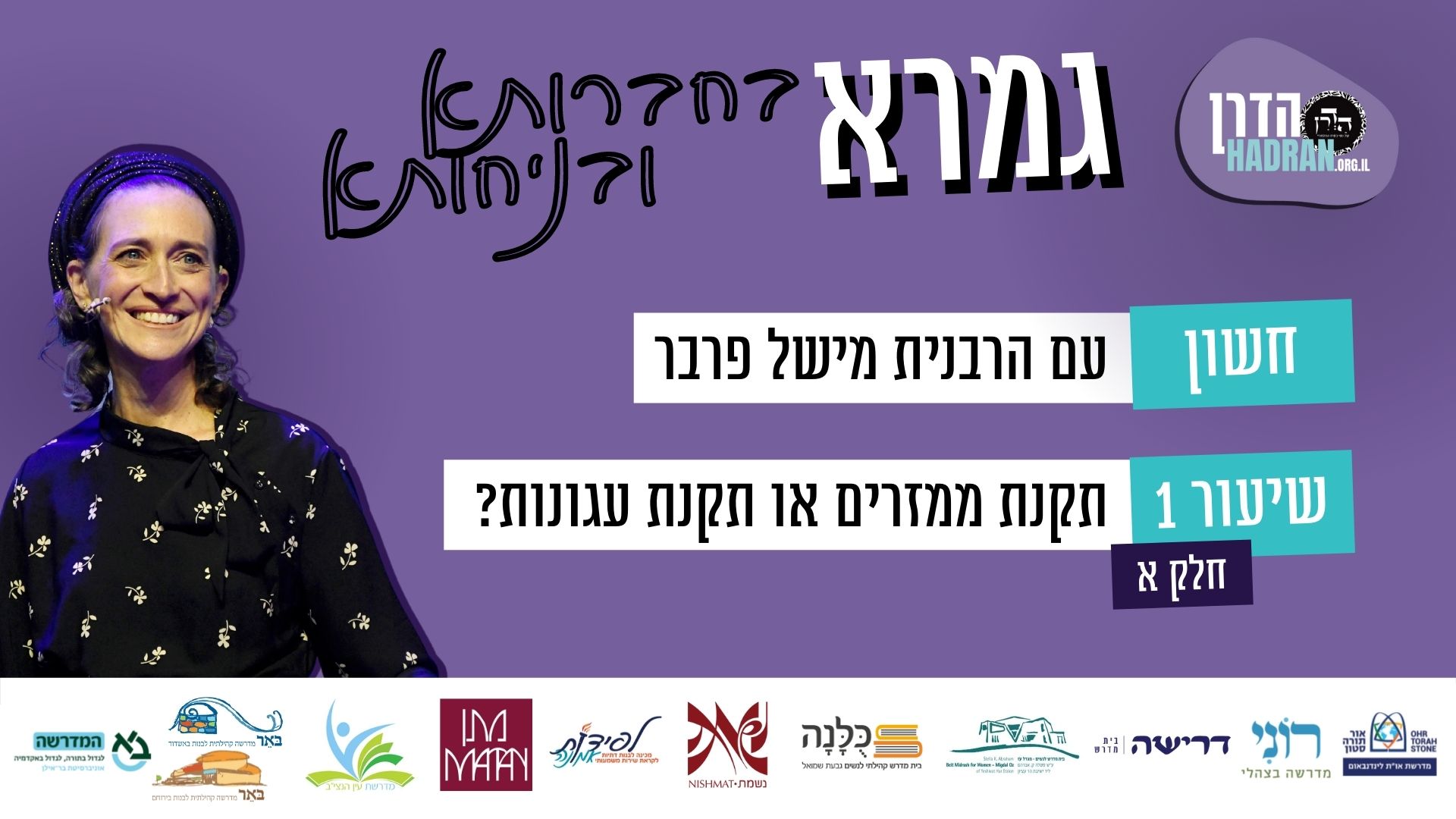
סוגיות נבחרות: חשון (שיעור א) – תקנת ממזרים או תקנת עגונות?
07.10.2021 | א׳ בחשון תשפ״ב

חדשה בלימוד הגמרא?
זה הדף הראשון שלך? איזו התרגשות עצומה! יש לנו בדיוק את התכנים והכלים שיעזרו לך לעשות את הצעדים הראשונים ללמידה בקצב וברמה שלך, כך תוכלי להרגיש בנוח גם בתוך הסוגיות המורכבות ומאתגרות.
פסיפס הלומדות שלנו
גלי את קהילת הלומדות שלנו, מגוון נשים, רקעים וסיפורים. כולן חלק מתנועה ומסע מרגש ועוצמתי.
התחלתי כשהייתי בחופש, עם הפרסומים על תחילת המחזור, הסביבה קיבלה את זה כמשהו מתמיד ומשמעותי ובהערכה, הלימוד זה עוגן יציב ביום יום, יש שבועות יותר ויש שפחות אבל זה משהו שנמצא שם אמין ובעל משמעות בחיים שלי….

עדי דיאמנט
גמזו, ישראל
לפני 15 שנה, אחרי עשרות שנים של "ג’ינגול” בין משפחה לקריירה תובענית בהייטק, הצטרפתי לשיעורי גמרא במתן רעננה. הלימוד המעמיק והייחודי של הרבנית אושרה קורן יחד עם קבוצת הנשים המגוונת הייתה חוויה מאלפת ומעשירה. לפני כשמונה שנים כאשר מחזור הדף היומי הגיע למסכת תענית הצטרפתי כ”חברותא” לבעלי. זו השעה היומית שלנו ביחד כאשר דפי הגמרא משתלבים בחיי היום יום, משפיעים ומושפעים, וכשלא מספיקים תמיד משלימים בשבת

יודי אסקוף
רעננה, ישראל
כבר סיפרתי בסיום של מועד קטן.
הלימוד מאוד משפיעה על היום שלי כי אני לומדת עם רבנית מישל על הבוקר בזום. זה נותן טון לכל היום – בסיס למחשבות שלי .זה זכות גדול להתחיל את היום בלימוד ובתפילה. תודה רבה !

שרה ברלוביץ
ירושלים, ישראל
התחלתי בתחילת הסבב, והתמכרתי. זה נותן משמעות נוספת ליומיום ומאוד מחזק לתת לזה מקום בתוך כל שגרת הבית-עבודה השוטפת.

רעות אברהמי
בית שמש, ישראל
התחלתי ללמוד בעידוד שתי חברות אתן למדתי בעבר את הפרק היומי במסגרת 929.
בבית מתלהבים מאוד ובשבת אני לומדת את הדף עם בעלי שזה מפתיע ומשמח מאוד! לימוד הדף הוא חלק בלתי נפרד מהיום שלי. לומדת בצהריים ומחכה לזמן הזה מידי יום…

מרים ונגרובר
אפרת, ישראל
אני לומדת גמרא כעשור במסגרות שונות, ואת הדף היומי התחלתי כשחברה הציעה שאצטרף אליה לסיום בבנייני האומה. מאז אני לומדת עם פודקסט הדרן, משתדלת באופן יומי אך אם לא מספיקה, מדביקה פערים עד ערב שבת. בסבב הזה הלימוד הוא "ממעוף הציפור”, מקשיבה במהירות מוגברת תוך כדי פעילויות כמו בישול או נהיגה, וכך רוכשת היכרות עם הסוגיות ואופן ניתוחם על ידי חז”ל. בע”ה בסבב הבא, ואולי לפני, אצלול לתוכו באופן מעמיק יותר.

יעל ביר
רמת גן, ישראל
למדתי גמרא מכיתה ז- ט ב Maimonides School ואחרי העליה שלי בגיל 14 לימוד הגמרא, שלא היה כל כך מקובל בימים אלה, היה די ספוראדי. אחרי "ההתגלות” בבנייני האומה התחלתי ללמוד בעיקר בדרך הביתה למדתי מפוקקטסים שונים. לאט לאט ראיתי שאני תמיד חוזרת לרבנית מישל פרבר. באיזה שהוא שלב התחלתי ללמוד בזום בשעה 7:10 .
היום "אין מצב” שאני אתחיל את היום שלי ללא לימוד עם הרבנית מישל עם כוס הקפה שלי!!

דבי גביר
חשמונאים, ישראל
התחלתי ללמוד לפני 4.5 שנים, כשהודיה חברה שלי פתחה קבוצת ווטסאפ ללימוד דף יומי בתחילת מסכת סנהדרין. מאז לימוד הדף נכנס לתוך היום-יום שלי והפך לאחד ממגדירי הזהות שלי ממש.

קרן רוזנברג
ירושלים, ישראל
התחלתי ללמוד דף יומי לפני שנתיים, עם מסכת שבת. בהתחלה ההתמדה היתה קשה אבל בזכות הקורונה והסגרים הצלחתי להדביק את הפערים בשבתות הארוכות, לסיים את מסכת שבת ולהמשיך עם המסכתות הבאות. עכשיו אני מסיימת בהתרגשות רבה את מסכת חגיגה וסדר מועד ומחכה לסדר הבא!

אילנה שכנוביץ
מודיעין, ישראל
אמא שלי למדה איתי ש”ס משנה, והתחילה ללמוד דף יומי. אני החלטתי שאני רוצה ללמוד גם. בהתחלה למדתי איתה, אח”כ הצטרפתי ללימוד דף יומי שהרב דני וינט מעביר לנוער בנים בעתניאל. במסכת עירובין עוד חברה הצטרפה אלי וכשהתחלנו פסחים הרב דני פתח לנו שעור דף יומי לבנות. מאז אנחנו לומדות איתו קבוע כל יום את הדף היומי (ובשבת אבא שלי מחליף אותו). אני נהנית מהלימוד, הוא מאתגר ומעניין

רננה הלמן
עתניאל, ישראל
התחלתי ללמוד דף יומי כאשר קיבלתי במייל ממכון שטיינזלץ את הדפים הראשונים של מסכת ברכות במייל. קודם לא ידעתי איך לקרוא אותם עד שנתתי להם להדריך אותי. הסביבה שלי לא מודעת לעניין כי אני לא מדברת על כך בפומבי. למדתי מהדפים דברים חדשים, כמו הקשר בין המבנה של בית המקדש והמשכן לגופו של האדם (יומא מה, ע”א) והקשר שלו למשפט מפורסם שמופיע בספר ההינדי "בהגוד-גיתא”. מתברר שזה רעיון כלל עולמי ולא רק יהודי

אלנה ארנבורג
נשר, ישראל
התחלתי ללמוד בסבב הנוכחי לפני כשנתיים .הסביבה מתפעלת ותומכת מאוד. אני משתדלת ללמוד מכל ההסכתים הנוספים שיש באתר הדרן. אני עורכת כל סיום מסכת שיעור בביתי לכ20 נשים שמחכות בקוצר רוח למפגשים האלו.

יעל אשר
יהוד, ישראל
התחלתי ללמוד דף יומי שהתחילו מסכת כתובות, לפני 7 שנים, במסגרת קבוצת לימוד שהתפרקה די מהר, ומשם המשכתי לבד בתמיכת האיש שלי. נעזרתי בגמרת שטיינזלץ ובשיעורים מוקלטים.
הסביבה מאד תומכת ואני מקבלת המון מילים טובות לאורך כל הדרך. מאז הסיום הגדול יש תחושה שאני חלק מדבר גדול יותר.
אני לומדת בשיטת ה”7 דפים בשבוע” של הרבנית תרצה קלמן – כלומר, לא נורא אם לא הצלחת ללמוד כל יום, העיקר שגמרת ארבעה דפים בשבוע

רחל גולדשטיין
עתניאל, ישראל
"
גם אני התחלתי בסבב הנוכחי וב””ה הצלחתי לסיים את רוב המסכתות . בזכות הרבנית מישל משתדלת לפתוח את היום בשיעור הזום בשעה 6:20 .הלימוד הפך להיות חלק משמעותי בחיי ויש ימים בהם אני מצליחה לחזור על הדף עם מלמדים נוספים ששיעוריהם נמצאים במרשתת. שמחה להיות חלק מקהילת לומדות ברחבי העולם. ובמיוחד לשמש דוגמה לנכדותיי שאי””ה יגדלו לדור שלימוד תורה לנשים יהיה משהו שבשגרה. "

רונית שביט
נתניה, ישראל
התחלתי בתחילת הסבב, והתמכרתי. זה נותן משמעות נוספת ליומיום ומאוד מחזק לתת לזה מקום בתוך כל שגרת הבית-עבודה השוטפת.
רעות אברהמי
בית שמש, ישראל
בתחילת הסבב הנוכחי של לימוד הדף היומי, נחשפתי לחגיגות המרגשות באירועי הסיום ברחבי העולם. והבטחתי לעצמי שבקרוב אצטרף גם למעגל הלומדות. הסבב התחיל כאשר הייתי בתחילת דרכי בתוכנית קרן אריאל להכשרת יועצות הלכה של נשמ”ת. לא הצלחתי להוסיף את ההתחייבות לדף היומי על הלימוד האינטנסיבי של תוכנית היועצות. בבוקר למחרת המבחן הסופי בנשמ”ת, התחלתי את לימוד הדף במסכת סוכה ומאז לא הפסקתי.

חנה שחם-רוזבי (ד”ר)
קרית גת, ישראל
התחלתי להשתתף בשיעור נשים פעם בשבוע, תכננתי ללמוד רק דפים בודדים, לא האמנתי שאצליח יותר מכך.
לאט לאט נשאבתי פנימה לעולם הלימוד .משתדלת ללמוד כל בוקר ומתחילה את היום בתחושה של מלאות ומתוך התכווננות נכונה יותר.
הלימוד של הדף היומי ממלא אותי בתחושה של חיבור עמוק לעם היהודי ולכל הלומדים בעבר ובהווה.

נילי חיון
אפרת, ישראל
"התחלתי ללמוד דף יומי במחזור הזה, בח’ בטבת תש””ף. לקחתי על עצמי את הלימוד כדי ליצור תחום של התמדה יומיומית בחיים, והצטרפתי לקבוצת הלומדים בבית הכנסת בכפר אדומים. המשפחה והסביבה מתפעלים ותומכים.
בלימוד שלי אני מתפעלת בעיקר מכך שכדי ללמוד גמרא יש לדעת ולהכיר את כל הגמרא. זו מעין צבת בצבת עשויה שהיא עצומה בהיקפה.”

שרה פוּקס
כפר אדומים, ישראל
הצטרפתי ללומדות בתחילת מסכת תענית. ההתרגשות שלי ושל המשפחה היתה גדולה מאוד, והיא הולכת וגוברת עם כל סיום שאני זוכה לו. במשך שנים רבות רציתי להצטרף ומשום מה זה לא קרה… ב”ה מצאתי לפני מספר חודשים פרסום של הדרן, ומיד הצטרפתי והתאהבתי. הדף היומי שינה את חיי ממש והפך כל יום- ליום של תורה. מודה לכן מקרב ליבי ומאחלת לכולנו לימוד פורה מתוך אהבת התורה ולומדיה.

נעה רוזן
חיספין רמת הגולן, ישראל
אמא שלי למדה איתי ש”ס משנה, והתחילה ללמוד דף יומי. אני החלטתי שאני רוצה ללמוד גם. בהתחלה למדתי איתה, אח”כ הצטרפתי ללימוד דף יומי שהרב דני וינט מעביר לנוער בנים בעתניאל. במסכת עירובין עוד חברה הצטרפה אלי וכשהתחלנו פסחים הרב דני פתח לנו שעור דף יומי לבנות. מאז אנחנו לומדות איתו קבוע כל יום את הדף היומי (ובשבת אבא שלי מחליף אותו). אני נהנית מהלימוד, הוא מאתגר ומעניין
רננה הלמן
עתניאל, ישראל
נדה מד
וְנוֹחֵל וּמַנְחִיל, וְהַהוֹרְגוֹ חַיָּיב, וַהֲרֵי הוּא לְאָבִיו וּלְאִמּוֹ וּלְכׇל קְרוֹבָיו כְּחָתָן שָׁלֵם.
and he inherits the estate of his mother if she died on the day of his birth; and if he dies, he bequeaths that inheritance to his paternal brothers; and one who kills him is liable for his murder, as it is written: “And he that smites any man mortally shall be put to death” (Leviticus 24:17), i.e., any man, including a child who is one day old; and if he dies, his status in relation to his father and to his mother and to all his relatives, in terms of the halakhot of mourning, is like that of a full-fledged groom [keḥatan shalem], whose death is deeply mourned.
גְּמָ’ מְנָהָנֵי מִילֵּי? דְּתָנוּ רַבָּנַן: ״אִשָּׁה״ — אֵין לִי אֶלָּא אִשָּׁה, בַּת יוֹם אֶחָד לְנִדָּה מִנַּיִן? תַּלְמוּד לוֹמַר: ״וְאִשָּׁה״.
GEMARA: The Gemara asks: From where is this matter, that the halakhot of menstruation apply even to a one-day-old baby girl, derived? As the Sages taught in a baraita: The verse states: “And if a woman has an issue, and her issue in her flesh is blood, she shall be in her impurity seven days” (Leviticus 15:19). When the verse states “a woman,” I have derived only that the halakhot of menstruation apply to an adult woman. From where do I derive that the impurity of a menstruating woman also applies to a one-day-old baby? The verse states: “And a woman,” to include even a baby girl.
בַּת עֲשָׂרָה יָמִים לְזִיבָה — מְנָא הָנֵי מִילֵּי? דְּתָנוּ רַבָּנַן: ״אִשָּׁה״ — אֵין לִי אֶלָּא אִשָּׁה, בַּת עֲשָׂרָה יָמִים לְזִיבָה מִנַּיִן? תַּלְמוּד לוֹמַר: ״וְאִשָּׁה״.
The mishna further teaches that a baby girl who is ten days old who experiences an emission of blood for three consecutive days after the conclusion of the seven days fit for menstruation, becomes impure with the impurity of ziva. Again, the Gemara asks: From where are these matters derived? As the Sages taught in a baraita: The verse states: “And if a woman has an issue of her blood many days not in the time of her menstruation…she shall be as in the days of her menstruation: She is impure” (Leviticus 15:25). When the verse states “a woman,” I have derived only that the halakhot of a zava apply to an adult woman. From where do I derive that the impurity of ziva also applies to a ten-day-old baby? The verse states: “And a woman,” to include even a baby girl.
תִּינוֹק בֶּן יוֹם אֶחָד כּוּ׳. מְנָא הָנֵי מִילֵּי? דְּתָנוּ רַבָּנַן: ״אִישׁ אִישׁ״ — מָה תַּלְמוּד לוֹמַר ״אִישׁ אִישׁ״? לְרַבּוֹת בֶּן יוֹם אֶחָד שֶׁמְּטַמֵּא בְּזִיבָה, דִּבְרֵי רַבִּי יְהוּדָה.
The mishna further teaches that a baby boy, even one who is one day old, can become impure with the impurity of ziva. Once again, the Gemara asks: From where are these matters derived? As the Sages taught in a baraita: The verse states with regard to a zav: “When any man has an issue out of his flesh, his issue is impure” (Leviticus 15:2). It would have been enough for the verse to state “a man.” Why must the verse state “any man”? It is in order to include even a one-day-old baby boy who has such a discharge, to teach that he becomes impure with the impurity of ziva. This is the statement of Rabbi Yehuda.
רַבִּי יִשְׁמָעֵאל בְּנוֹ שֶׁל רַבִּי יוֹחָנָן בֶּן בְּרוֹקָא אוֹמֵר: אֵינוֹ צָרִיךְ, הֲרֵי הוּא אוֹמֵר: ״וְהַזָּב אֶת זוֹבוֹ לַזָּכָר וְלַנְּקֵבָה״, ״לַזָּכָר״ — כֹּל שֶׁהוּא, בֵּין גָּדוֹל בֵּין קָטָן, ״לַנְּקֵבָה״ — כֹּל שֶׁהִיא, בֵּין גְּדוֹלָה בֵּין קְטַנָּה. אִם כֵּן מָה תַּלְמוּד לוֹמַר ״אִישׁ אִישׁ״? דִּבְּרָה תוֹרָה כִלְשׁוֹן בְּנֵי אָדָם.
Rabbi Yishmael, son of Rabbi Yoḥanan ben Beroka, says that this derivation is not necessary, as the verse states: “And of those who have an issue, whether it be a male or a female” (Leviticus 15:33). The phrase “whether it be a male” includes anyone who is a male, whether he is an adult or whether he is a minor; “or a female” includes anyone who is a female, whether she is an adult or whether she is a minor. If so, why must the earlier verse state “any man”? The Torah spoke in the language of people, i.e., this emphasis is not unusual and therefore one should not derive a halakha from the superfluous word.
וּמִטַּמֵּא בִּנְגָעִים. דִּכְתִיב: ״אָדָם כִּי יִהְיֶה בְעוֹר בְּשָׂרוֹ״ — ״אָדָם״, כֹּל שֶׁהוּ.
The mishna teaches: And a one-day-old baby becomes impure with the impurity of leprous marks. The Gemara explains that this is derived from that which is written with regard to leprous marks: “When a person shall have in the skin of his flesh” (Leviticus 13:2). This serves to include anyone who is a person, irrespective of age.
וּמְטַמֵּא בִּטְמֵא מֵת. דִּכְתִיב: ״וְעַל הַנְּפָשׁוֹת אֲשֶׁר הָיוּ שָׁם״ — נֶפֶשׁ כֹּל דְּהוּ.
The mishna further teaches: And a one-day-old baby becomes impure with impurity imparted by a corpse. The Gemara explains that this is derived from that which is written in the context of purification from impurity imparted by a corpse: “And a pure person shall take hyssop, and dip it in the water, and sprinkle it upon the tent, and upon all the vessels, and upon the people that were there” (Numbers 19:18). This apparently superfluous mention of “people” serves to include anyone who is a person, irrespective of age.
וְזוֹקֵק לְיִבּוּם. דִּכְתִיב: ״כִּי יֵשְׁבוּ אַחִים יַחְדָּו״ — אַחִים שֶׁהָיָה לָהֶם יְשִׁיבָה אַחַת בָּעוֹלָם.
The mishna also teaches: And a one-day-old baby creates a levirate bond requiring the widow of his childless brother to enter into levirate marriage with him. The Gemara explains that this is derived from that which is written: “If brothers dwell together and one of them dies, and he has no child, the wife of the dead man shall not be married outside of the family to one not of his kin. Her brother-in-law will have intercourse with her and take her to him to be his wife, and consummate the levirate marriage” (Deuteronomy 25:5). This verse is referring to brothers who had one dwelling in the world, i.e., who were alive at the same time, which includes a baby who was born the day his brother died.
וּפוֹטֵר מִן הַיִּבּוּם. ״וּבֵן אֵין לוֹ״ אָמַר רַחֲמָנָא, וְהָא אִית לֵיהּ.
The mishna teaches: And a one-day-old baby exempts his widowed mother from the obligation of levirate marriage. The Gemara explains the derivation: The Merciful One states: “And one of them dies, and he has no child” (Deuteronomy 25:5), and this late husband has a child, albeit one who is one day old.
וּמַאֲכִיל בִּתְרוּמָה. דִּכְתִיב: ״וִילִיד בֵּיתוֹ הֵם יֹאכְלוּ בְלַחְמוֹ״, קְרִי בֵיהּ: ״יַאֲכִילוּ בְּלַחְמוֹ״.
The mishna teaches: And a one-day-old baby enables his mother, an Israelite woman who is no longer married to his father, a priest, to continue to partake of teruma. The Gemara explains that this is as it is written, with regard to those who are entitled to partake of teruma on account of a priest: “And those who are born in his house, they may eat [yokhelu] of his bread” (Leviticus 22:11). Read into the verse: Those who are born in his house enable others to eat [ya’akhilu] of his bread, i.e., on account of her son the priest, the Israelite mother may continue to partake of teruma even after the death of his father.
וּפוֹסֵל מִן הַתְּרוּמָה. ״וְזֶרַע אֵין לָהּ״ אָמַר רַחֲמָנָא — וְהָא אִית לַהּ.
§ The mishna also teaches: And a one-day-old baby disqualifies his mother, the daughter of a priest who is no longer married to his father, an Israelite man, from continuing to partake of teruma. The Gemara explains that the reason is that the Merciful One states: “But if a priest’s daughter becomes a widow, or divorced, and has no child, and is returned to her father’s house, as in her youth, she may eat of her father’s bread” (Leviticus 22:13), and this daughter of a priest has a child.
מַאי אִירְיָא זֶרַע? אֲפִילּוּ עוּבָּר נָמֵי! דִּכְתִיב ״כִּנְעוּרֶיהָ״ — פְּרָט לִמְעוּבֶּרֶת.
The Gemara asks: Why state specifically that she has a child? Even if she has a fetus in her womb from an Israelite man, the same halakha applies, as it is written: “As in her youth,” which excludes a pregnant woman, since her pregnancy has changed her physical state from that of her youth.
וּצְרִיכִי, דְּאִי כְּתַב רַחֲמָנָא ״וְזֶרַע אֵין לָהּ״, מִשּׁוּם דְּמֵעִיקָּרָא חַד גּוּפָא וְהַשְׁתָּא תְּרֵי גּוּפֵי, אֲבָל הָכָא — דְּמֵעִיקָּרָא חַד גּוּפָא וְהַשְׁתָּא חַד גּוּפָא — אֵימָא תֵּיכוֹל, כְּתַב רַחֲמָנָא ״כִּנְעוּרֶיהָ״.
The Gemara answers that both derivations are necessary. As, if the Merciful One had written only: “And has no child,” I would say that the reason the daughter of a priest who has a child from an Israelite man may no longer partake of teruma is due to the fact that at the outset, before she married, she was one body, and now she has developed into two bodies, herself and her child. But here, in a case when she is merely pregnant, when at the outset she was one body and now she remains one body, one might say that she should be permitted to partake of teruma. Therefore, the Merciful One writes: “As in her youth.”
וְאִי כְּתַב רַחֲמָנָא ״כִּנְעוּרֶיהָ״, מִשּׁוּם דְּמֵעִיקָּרָא גּוּפָא סְרִיקָא וְהַשְׁתָּא גּוּפָא מַלְיָא, אֲבָל הָכָא — דְּמֵעִיקָּרָא גּוּפָא סְרִיקָא וְהַשְׁתָּא גּוּפָא סְרִיקָא, אֵימָא תֵּיכוֹל — צְרִיכָא.
And by contrast, if the Merciful One had written only: “As in her youth,” I would say that the reason that the daughter of a priest who is pregnant from an Israelite man may no longer partake of teruma is due to the fact that at the outset she had an empty body and now she has a full body, and consequently she is not returning to her father’s household in her initial state. But here, after she has given birth, where at the outset she had an empty body and now she still has an empty body, one might say that she should be permitted to partake of teruma. Therefore, the Merciful One writes: “And has no child.” Therefore, both derivations are necessary.
קְרָאֵי אִתָּרוּץ, אֶלָּא מַתְנִיתִין מַאי אִרְיָא ״בֶּן יוֹם אֶחָד״? אֲפִילּוּ עוּבָּר נָמֵי! אָמַר רַב שֵׁשֶׁת: הָכָא בְמַאי עָסְקִינַן? בְּכֹהֵן שֶׁיֵּשׁ לוֹ שְׁתֵּי נָשִׁים, אַחַת גְּרוּשָׁה וְאַחַת שֶׁאֵינָהּ גְּרוּשָׁה, וְיֵשׁ לוֹ בָּנִים מִשֶּׁאֵינָהּ גְּרוּשָׁה, וְיֵשׁ לוֹ בֶּן יוֹם אֶחָד מִן הַגְּרוּשָׁה.
The Gemara asks: The need for both verses has been resolved, but the mishna remains difficult: What is the reason the mishna is referring specifically to a baby who is one day old, when, as stated above, the same halakha applies even to a fetus? Rav Sheshet said: Here we are dealing with a priest who has two wives: One who is a divorcée, as she was previously divorced from another man, and who was therefore married to this priest in violation of halakha, and one who is not a divorcée. And he has sons from the wife who is not a divorcée, and he has a baby boy who is one day old from the wife who is a divorcée. This son is disqualified from the priesthood and may not partake of teruma.
דְּפוֹסֵל בְּעַבְדֵי אָבִיו מִלֶּאֱכוֹל בִּתְרוּמָה, וּלְאַפּוֹקֵי מִדְּרַבִּי יוֹסֵי, דְּאָמַר: עוּבָּר נָמֵי פּוֹסֵל, קָא מַשְׁמַע לַן: בֶּן יוֹם אֶחָד — אִין, עוּבָּר — לָא.
Rav Sheshet continues: The mishna is teaching that this baby disqualifies his father’s Canaanite slaves from partaking of teruma again. Since this child is entitled to a portion of his father’s inheritance, which includes his slaves, they may no longer partake of teruma due to his presence in the world. And the mishna teaches this to exclude the opinion of Rabbi Yosei, who said that a fetus also disqualifies his father’s slaves from partaking of teruma. For this reason, the tanna of the mishna teaches us that with regard to a one-day-old baby boy, yes, he disqualifies his father’s slaves from partaking of teruma, but a fetus does not.
נוֹחֵל וּמַנְחִיל. נוֹחֵל, מִמַּאן? מֵאָבִיו. וּמַנְחִיל, לְמַאן? לְאָחִיו מֵאָבִיו. אִי בָּעֵי מֵאֲבוּהּ (לֵירְתֵי) [לֵירְתוּ], וְאִי בָּעֵי מִינֵּיהּ (לֵירְתֵי) [לֵירְתוּ]!
§ The mishna teaches that this baby inherits and he bequeaths. The Gemara asks: From whom does he inherit? It must be from his father. And to whom does he bequeath? Presumably, he bequeaths to his paternal brother, in a case where the baby inherited his father’s property and then died on the same day, as maternal half-brothers do not inherit from each other. The Gemara raises a difficulty with regard to this interpretation: What is the novelty of the halakha that the brother of this one-day-old baby inherits from him? After all, if the surviving brother wants, let him inherit from his father, and if he wants, let him inherit from the one-day-old baby. Either way, he receives his late father’s property.
אָמַר רַב שֵׁשֶׁת: נוֹחֵל בְּנִכְסֵי הָאֵם לְהַנְחִיל לְאֶחָיו מִן הָאָב. וְדַוְקָא בֶּן יוֹם אֶחָד, אֲבָל עוּבָּר — לָא. מַאי טַעְמָא? דְּהוּא מָיֵית בְּרֵישָׁא, וְאֵין הַבֵּן יוֹרֵשׁ אֶת אִמּוֹ
Rav Sheshet said: The mishna is teaching that a one-day-old baby inherits his mother’s property if she died on the day he was born, so that he is able to bequeath it, even if he dies after a day, to his heirs who are not the mother’s heirs, e.g., a paternal half-brother. And in such a case it is specifically when he is at least one day old that he inherits from his mother and bequeaths the property to his paternal half-brothers, but a fetus, whose mother died before he emerged, does not inherit from his mother. What is the reason for this? The reason is that presumably the fetus died first, before its mother died, and there is a halakha that a son does not inherit from his mother
בַּקֶּבֶר לְהַנְחִיל לְאֶחָיו מִן הָאָב.
while in the grave, i.e., after death, in order to bequeath to his paternal half-brother.
אִינִי? וְהָא הֲוָה עוֹבָדָא, וּפַרְכֵּס עַד תְּלָת פִּרְכּוּסֵי! אָמַר מָר בְּרֵיהּ דְּרַב אָשֵׁי: מִידֵּי דְּהָוֵה אַזְּנַב הַלְּטָאָה דִּמְפַרְכֶּסֶת.
The Gemara asks: Is that so, that it is presumed that the fetus died before its mother? But wasn’t there an incident in which the mother died and the fetus made up to three spasmodic motions afterward? Mar, son of Rav Ashi, said: That is just as it is with the tail of the lizard, which twitches after being severed from the lizard, but it is merely a spasmodic motion which does not indicate that it is still alive.
מָר בְּרֵיהּ דְּרַב יוֹסֵף מִשְּׁמֵיהּ דְּרָבָא אָמַר: לוֹמַר שֶׁמְּמַעֵט בְּחֵלֶק בְּכוֹרָה, וְאָמַר מָר בְּרֵיהּ דְּרַב יוֹסֵף מִשְּׁמֵיהּ דְּרָבָא: בֵּן שֶׁנּוֹלַד אַחַר מִיתַת הָאָב אֵינוֹ מְמַעֵט בְּחֵלֶק בְּכוֹרָה, מַאי טַעְמָא? ״וְיָלְדוּ לוֹ״ בָּעֵינַן.
Mar, son of Rav Yosef, said a different explanation of the mishna’s ruling in the name of Rava: The mishna teaches that a one-day-old baby inherits in order to say that such a child reduces the portion of the firstborn. A firstborn is entitled to a double portion of the inheritance, which is calculated by taking into account the portion due to his dead brother. And Mar, son of Rav Yosef, further said in the name of Rava: A son who was born after his father’s death does not reduce the portion of the firstborn. Therefore, the halakha in the mishna does not apply to a fetus. What is the reason for this? We require fulfillment of the verse: “If a man has two wives, the one beloved, and the other hated, and they bore him children” (Deuteronomy 21:15), and this does not apply to a fetus not yet born at the time of the father’s death.
בְּסוּרָא מַתְנוּ הָכִי, בְּפוּמְבְּדִיתָא מַתְנוּ הָכִי: אָמַר מָר בְּרֵיהּ דְּרַב יוֹסֵף מִשְּׁמֵיהּ דְּרָבָא — בְּכוֹר שֶׁנּוֹלַד לְאַחַר מִיתַת אָבִיו אֵינוֹ נוֹטֵל פִּי שְׁנַיִם. מַאי טַעְמָא? ״יַכִּיר״ בָּעֵינַן, וְהָא לֵיכָּא.
The Gemara notes: In Sura they taught Mar’s statement that way, whereas in Pumbedita they taught it this way: Mar, son of Rav Yosef, said in the name of Rava: A firstborn who was born after his father’s death does not receive a double portion. What is the reason for this? We require fulfillment of the verse: “But he shall acknowledge the firstborn…by giving him a double portion” (Deuteronomy 21:17), and in this case the father is not there to acknowledge him.
וְהִלְכְתָא: כְּכֹל הָנֵי לִישָּׁנֵי דְּמָר בְּרֵיהּ דְּרַב יוֹסֵף מִשְּׁמֵיהּ דְּרָבָא.
The Gemara concludes: And the halakha is in accordance with all these versions of the statement of Mar, son of Rav Yosef, in the name of Rava, i.e., a one-day-old baby reduces the portion of the firstborn, a son born after his father’s death does not reduce the portion of the firstborn, and a firstborn born after his father’s death does not receive a double portion.
וְהַהוֹרְגוֹ חַיָּיב. דִּכְתִיב ״וְאִישׁ כִּי יַכֶּה כׇּל נֶפֶשׁ״ — מִכׇּל מָקוֹם.
§ The mishna teaches: And one who kills a one-day-old baby is liable for his murder. The Gemara explains that the reason for this is as it is written: “And he who smites any man mortally shall be put to death” (Leviticus 24:17), where the phrase “any man” indicates that this verse applies in any case, even in the case of a one-day-old baby.
וַהֲרֵי הוּא לְאָבִיו וּלְאִמּוֹ וּלְכׇל קְרוֹבָיו כְּחָתָן שָׁלֵם. לְמַאי הִלְכְתָא? אָמַר רַב פָּפָּא: לְעִנְיַן אֲבֵלוּת.
The mishna further teaches: And if a one-day-old baby dies, his status in relation to his father and to his mother and to all his relatives is like that of a full-fledged groom. The Gemara asks: With regard to what halakha is this stated? Rav Pappa said: With regard to mourning.
כְּמַאן? דְּלָא כְּרַבָּן שִׁמְעוֹן בֶּן גַּמְלִיאֵל, דְּאָמַר: כֹּל שֶׁשָּׁהָה שְׁלֹשִׁים יוֹם בָּאָדָם אֵינוֹ נֵפֶל. הָא לֹא שָׁהָה — סָפֵק הָוֵי! הָכָא בְמַאי עָסְקִינַן? דְּקִים לֵיהּ שֶׁכָּלוּ לוֹ חֳדָשָׁיו.
The Gemara comments: In accordance with whose opinion is this stated? It is not in accordance with the opinion of Rabban Shimon ben Gamliel, who said: With regard to humans, any child that remained alive thirty days after birth is not considered a non-viable newborn. It can be inferred from this statement that if he did not remain alive for thirty days after birth, he is of uncertain status. The Gemara refutes this proof: Here we are dealing with a case where one is certain that its months of gestation were completed, and therefore it is certainly a viable newborn.
מַתְנִי’ בַּת שָׁלֹשׁ שָׁנִים וְיוֹם אֶחָד — מִתְקַדֶּשֶׁת בְּבִיאָה, וְאִם בָּא עָלֶיהָ יָבָם — קְנָאָהּ, וְחַיָּיבִין עָלֶיהָ מִשּׁוּם אֵשֶׁת אִישׁ,
MISHNA: A girl who is three years and one day old, whose father arranged her betrothal, is betrothed through intercourse, as the halakhic status of intercourse with her is that of intercourse in all halakhic senses. And in a case where the childless husband of a girl three years and one day old dies, if his brother the yavam engages in intercourse with her, he acquires her as his wife; and if she is married, a man other than her husband is liable for engaging in intercourse with her due to violation of the prohibition against intercourse with a married woman.
וּמְטַמְּאָה אֶת בּוֹעֲלָהּ לְטַמֵּא מִשְׁכָּב תַּחְתּוֹן כָּעֶלְיוֹן.
And if she is impure due to menstruation, she imparts impurity to one who engages in intercourse with her who then renders impure all the layers of bedding beneath him, rendering them impure like the upper bedding covering a zav, in the sense that it assumes first-degree ritual impurity and does not become a primary source of ritual impurity, and it renders impure food and drink, but it does not render impure people and vessels.
נִשֵּׂאת לַכֹּהֵן — תֹּאכַל בִּתְרוּמָה; בָּא עָלֶיהָ אֶחָד מִן הַפְּסוּלִין — פְּסָלָהּ מִן הַכְּהוּנָּה; בָּא עָלֶיהָ אֶחָד מִכׇּל הָעֲרָיוֹת הָאֲמוּרוֹת בַּתּוֹרָה — מוּמָתִין עָלֶיהָ, וְהִיא פְּטוּרָה.
If she marries a priest, she may partake of teruma, like any other wife of a priest; if she is unmarried and one of the men who are unfit for the priesthood, e.g., a mamzer or ḥalal, engaged in intercourse with her, he disqualifies her from marrying into the priesthood, and if she is the daughter of a priest, she is disqualified from partaking of teruma. Finally, if one of all those with whom relations are forbidden, as stated in the Torah, e.g., her father or her husband’s father, engaged in intercourse with her, they are executed by the court for engaging in intercourse with her, and she is exempt, because she is a minor.
פָּחוֹת מִכֵּן — כְּנוֹתֵן אֶצְבַּע בָּעַיִן.
If the girl is less than that age, younger than three years and one day, the status of intercourse with her is not that of intercourse in all halakhic senses; rather, it is like placing a finger into the eye. Just as in that case, the eye constricts, sheds tears, and then returns to its original state, so too, in a girl younger than three years and one day old, the hymen returns to its original state.
גְּמָ’ תָּנוּ רַבָּנַן: בַּת שָׁלֹשׁ שָׁנִים מִתְקַדֶּשֶׁת בְּבִיאָה, דִּבְרֵי רַבִּי מֵאִיר. וַחֲכָמִים אוֹמְרִים: בַּת שָׁלֹשׁ שָׁנִים וְיוֹם אֶחָד. מַאי בֵּינַיְיהוּ? אָמְרִי דְּבֵי רַבִּי יַנַּאי: עֶרֶב רֹאשׁ הַשָּׁנָה אִיכָּא בֵּינַיְיהוּ.
GEMARA: The Sages taught in a baraita: A girl who is three years old is betrothed through intercourse; this is the statement of Rabbi Meir. And the Rabbis say: She must be three years and one day old. The Gemara asks: What is the difference between their opinions, as both agree that she cannot be betrothed before the age of three? The Sages of the school of Rabbi Yannai said: There is a difference between their opinions in the case of a girl on the eve of the first day of the fourth year of her life. According to Rabbi Meir, she can be betrothed through intercourse, as on this day three years are complete, whereas the Rabbis maintain that she cannot be betrothed in this manner, as she has not yet entered the first day of her fourth year.
וְרַבִּי יוֹחָנָן אָמַר: שְׁלֹשִׁים יוֹם בַּשָּׁנָה חֲשׁוּבִין שָׁנָה אִיכָּא בֵּינַיְיהוּ.
And Rabbi Yoḥanan said: There is a difference between their opinions with regard to the issue of whether thirty days in a year are considered equivalent to a year. Rabbi Meir maintains that thirty days in a year are considered equivalent to a year, and therefore a girl aged two years and thirty days is already considered like a three-year-old and may be betrothed through intercourse. By contrast, the Rabbis contend that thirty days in a year are not considered equivalent to a year, and she may be betrothed through intercourse only upon reaching the age of three years and one day.
מֵיתִיבִי: בַּת שָׁלֹשׁ שָׁנִים, וַאֲפִילּוּ בַּת שְׁתֵּי שָׁנִים וְיוֹם אֶחָד — מִתְקַדֶּשֶׁת בְּבִיאָה, דִּבְרֵי רַבִּי מֵאִיר. וַחֲכָמִים אוֹמְרִים: בַּת שָׁלֹשׁ שָׁנִים וְיוֹם אֶחָד.
The Gemara raises an objection against the explanation of Rabbi Yannai from a baraita: A girl who is three years old, and even one who is two years and one day old, is betrothed through intercourse; this is the statement of Rabbi Meir. And the Rabbis say: She must be three years and one day old.
לעקוב

