







איך רבן גמליאל צלה את הפסח על אסכלא אם כתוב במשנה שאסור? אם מסיקים תנור בקליפי ערלה וגורפים אותם, ואופים פת בתנור, האם זה נחשב שנהנה מהערלה? לא! אבל איך זה מסתדר עם קרבן הפסח שבגלל שכתוב פעמיים צלי אש, לומדים שתנור שהסיקו וגרפו לא נחשב צלי אש. אילו לא היה כתוב פעמיים, לא היינו לומדים כך! הגמרא מביאה שני תירוצים. רבי אומר שאפשר לצלות את קרבן הפסח על גחלים.האם שימה על גחלים נחשב צלי אש? הגמרא מביאה ברייתא סותרת בעניין צרעת. יש שני תירוצים – אחד מבחינה בין גחלת של עץ לגחלת של מתכת ואז מקשים על זה משריפה במיתת בית דין שנעשה על ידי אבר (כמו גחלת של מתכת). והשני "מתקן” את הברייתא בצרעת לכלול את גחלת עם אש – שלפי זה גחלת כן כלול בתוך "אש”. רבא מביאה סתירה אחרת לדברי רבי מברייתא שגם משם משמע שגחלת לא נחשב אש והגמרא מביאה שני תירוצים שכל אחד מהם "מתקן” נוסח הברייתא.
הלימוד השבוע מוקדש ע”י טינה לם לרפואת מעין ליאורה בת שלומית פייגא
רוצה להקדיש שיעור?

כלים
הלימוד השבוע מוקדש ע”י טינה לם לרפואת מעין ליאורה בת שלומית פייגא
פסחים עה
לְקִיּוּהָא דְפֵירָא בְּעֵינֵיהּ. הָכָא — לֵיתָא לְקִיּוּהָא דְפֵירָא בְּעֵינֵיהּ.
sharpness of the fruit remains present in the vinegar in its pure, unadulterated form, despite the fact that the vinegar itself is not sharp. Here, the sharpness of the fruit does not remain present in the vinegar in its pure, unadulterated form because it has already been used with the meat. Therefore, the vinegar is no longer potent enough to keep the blood in the meat.
אֵין צוֹלִין אֶת הַפֶּסַח וְכוּ׳. מַעֲשֶׂה לִסְתּוֹר?! חַסּוֹרֵי מִיחַסְּרָא, וְהָכִי קָתָנֵי: וְאִם אַסְכָּלָא מְנוּקֶּבֶת — מוּתָּר. וְאָמַר רַבִּי צָדוֹק, מַעֲשֶׂה בְּרַבָּן גַּמְלִיאֵל שֶׁאָמַר לְטָבִי עַבְדּוֹ: צֵא וּצְלֵה לָנוּ אֶת הַפֶּסַח עַל הָאַסְכָּלָא מְנוּקֶּבֶת.
It was taught in the mishna that one may not roast the Paschal lamb on a grill. Subsequently, the mishna quotes an incident in which Rabban Gamliel instructed his servant to roast the Paschal lamb for him on a grill. The Gemara expresses surprise: Was an incident cited to contradict what was previously stated? The Gemara responds: The mishna is incomplete and is teaching the following: And if it is a perforated grill, so that the fire reaches each part of the meat and the animal will not be roasted from the heat of the grill itself, it is permitted. And with regard to this Rabbi Tzadok said that there was an incident with Rabban Gamliel, who said to his slave Tavi: Go and roast the Paschal lamb for us on the perforated grill.
בְּעָא מִינֵּיהּ רַב חִינָּנָא בַּר אִידִי מֵרַב אַדָּא בַּר אַהֲבָה: תַּנּוּר שֶׁהִסִּיקוֹ בִּקְלִיפֵּי עׇרְלָה וּגְרָפוֹ וְאָפָה בּוֹ אֶת הַפַּת, לְדִבְרֵי הָאוֹסֵר, מַהוּ? אֲמַר לֵיהּ: הַפַּת מוּתֶּרֶת.
The Gemara cites a discussion related to the subject of roasting the Paschal lamb. Rav Ḥinnana bar Idi raised a dilemma before Rav Adda bar Ahava: In the case of an oven that one fired with peels of fruit that are orla, i.e., fruit that grows on a tree the first three years after it was planted, from which one may not receive any benefit, if, after the oven became very hot, he swept it and removed the fuel and the ashes, and he baked bread in it, according to the opinion that prohibits bread baked directly with heat from orla fuel, what is the halakha with regard to this bread? It was baked with the heat trapped in the oven only after the fuel was removed. He said to him: The bread is permitted.
אֲמַר לֵיהּ: וְהָאָמַר רַב חִינָּנָא סָבָא אָמַר רַבִּי אַסִּי אָמַר רַבִּי יוֹחָנָן: תַּנּוּר שֶׁהִסִּיקוֹ וּגְרָפוֹ וְצָלָה בּוֹ אֶת הַפֶּסַח — אֵין זֶה צְלִי אֵשׁ, שֶׁנֶּאֱמַר ״צְלִי אֵשׁ … צְלִי אֵשׁ״, שְׁתֵּי פְעָמִים.
Rav Ḥinnana said to him: But didn’t Rav Ḥinnana the Elder say that Rabbi Asi said that Rabbi Yoḥanan said: If there is an oven that one fired and swept so that the heat remains but there is no longer any fire in the oven, and one then roasted the Paschal lamb in it, this is not a fulfillment of the Torah’s command that the Paschal lamb must be roasted in fire, as it is stated in the Torah: “And they shall eat the meat on that night, roasted in fire, and matzot; with bitter herbs they shall eat it. Do not eat of it raw, nor boiled in water, but roasted in fire; its head with its legs and with its inner parts” (Exodus 12:8–9), and since it says the phrase: Roasted in fire, two times, the verse emphasizes that the Paschal lamb must literally be roasted on the fire?
טַעְמָא דְּגַלִּי רַחֲמָנָא ״צְלִי אֵשׁ״ ״צְלִי אֵשׁ״ שְׁתֵּי פְעָמִים. הָא לָא גַּלִּי רַחֲמָנָא, הֲוֵי אָמֵינָא צְלִי אֵשׁ הוּא.
The following can now be inferred: The reason is specifically because the Merciful One reveals this halakha with regard to the Paschal lamb in the Torah by repeating: Roasted in fire, roasted in fire, twice. But if the Merciful One had not revealed this halakha by emphasizing the need to roast it directly on the fire, I would have said a Paschal lamb roasted in an oven that has already been swept is nonetheless considered roasted in fire. Therefore, in other situations in which something is roasted in an oven, even if it is not roasted directly from the heat of a fire, its status should be comparable to something that was roasted directly from the fuel. If the fuel is forbidden, the food should be forbidden.
אֲמַר לֵיהּ: גַּלִּי רַחֲמָנָא הָתָם, וְיָלְפִינַן מִינַּהּ.
Rav Adda bar Ahava said to Rav Ḥinnana bar Idi: The Merciful One reveals it there, with regard to the Paschal lamb, and we learn from it that even in other areas of halakha, only something that is roasted directly by a fire is considered roasted in fire.
וְאִי בָּעֵית אֵימָא: הָתָם טַעְמָא דִּכְתַב רַחֲמָנָא ״צְלִי אֵשׁ״ שְׁתֵּי פְעָמִים, הָא לָא כְּתַב רַחֲמָנָא ״צְלִי אֵשׁ״ שְׁתֵּי פְעָמִים, הֲוָה אָמֵינָא: אַאֵשׁ קָפֵיד רַחֲמָנָא, וַאֲפִילּוּ גְּרָפוֹ נָמֵי — צְלִי אֵשׁ הוּא. אֲבָל הָכָא, אַעֵצִים דְּאִיסּוּרָא קָא קָפֵיד רַחֲמָנָא, וְהָא לֵיתַנְהוּ.
And if you wish, say a different answer instead: There, in the case of the Paschal lamb, the reason one may not roast the lamb if one has already swept out the oven is that the Merciful One writes “roasted in fire” twice. But if the Merciful One had not written “roasted in fire” twice, I would have said that the Merciful One is particular about fire, meaning that the source of the heat in the oven should be fire, and even if one swept it, it is still considered roasted in fire. It was therefore necessary to repeat the phrase “roasted in fire.” But here, in the case of orla, the Merciful One is particular about the prohibited fuel, and it is not here in the oven. Therefore, there is no reason to prohibit the bread.
תָּנוּ רַבָּנַן: חֲתָכוֹ, וּנְתָנוֹ עַל גַּבֵּי גֶּחָלִים. רַבִּי אוֹמֵר: אוֹמֵר אֲנִי שֶׁזֶּה צְלִי אֵשׁ. רָמֵי לֵיהּ רַב אַחָדְבוּי בַּר אַמֵּי לְרַב חִסְדָּא: מִי אָמַר רַבִּי גֶּחָלִים אֵשׁ נִינְהוּ?
The Sages taught: If one cuts the Paschal lamb superficially in several places and places it on coals, Rabbi Yehuda HaNasi says: I say that this is considered roasted in fire, as coals have the status of real fire. Rav Aḥadvoi bar Ami raised a contradiction to Rav Ḥisda: Did Rabbi Yehuda HaNasi actually say that coals are considered like fire?
וּרְמִינְהוּ ״מִכְוַת אֵשׁ״, אֵין לִי אֶלָּא שֶׁנִּכְוָה בְּאֵשׁ, נִכְוָה בְּגַחֶלֶת, בְּרֶמֶץ, בְּסִיד רוֹתֵחַ, בְּגִפְסִיס רוֹתֵחַ, וְכׇל דָּבָר הַבָּא מִן הָאוּר, לְאֵיתוֹיֵי חַמֵּי הָאוּר, מִנַּיִין? תַּלְמוּד לוֹמַר: ״מִכְוָה״ ״מִכְוָה״ רִיבָּה.
Rav Aḥadvoi bar Ami raised a contradiction based on the Torah’s statement with regard to the laws of leprosy: “Or flesh that shall have on its skin a burn from fire” (Leviticus 13:24). From the fact that it says a burn from fire, I have derived nothing other than a case in which it is burned by fire itself; if it is burned by a coal, by burning ash, by burning lime, by burning plaster [gipsis], or by anything else that is burning and whose source of heat comes from fire, to include also water heated by fire, from where is it derived that these are also considered a burn from fire? The verse states: A burn, a burn, twice. By repeating the term, it includes all these types of burns.
טַעְמָא דְּרַבִּי רַחֲמָנָא ״מִכְוָה״ ״מִכְוָה״, הָא לָא רַבִּי רַחֲמָנָא ״מִכְוָה״ ״מִכְוָה״, גֶּחָלִים לָאו אֵשׁ נִינְהוּ!
The following can now be inferred: The reason is that the Merciful One includes these types of burns in the Torah through the words: A burn, a burn. But if the Merciful One had not included them through the repetitive expression a burn, a burn, one would have assumed that coals are not considered fire, which contradicts the opinion of Rabbi Yehuda HaNasi that any usage of the term fire includes coals as well.
אֲמַר לֵיהּ: גַּחֶלֶת שֶׁל עֵץ לָא אִיצְטְרִיךְ קְרָא לְרַבּוֹיֵי. כִּי אִיצְטְרִיךְ קְרָא לְגַחֶלֶת שֶׁל מַתֶּכֶת.
He said to him: With regard to a red-hot wood coal, it is not necessary for the verse to include it. As long as it is burning, it is certainly considered a fire. Where a verse is necessary is with regard to a red-hot piece of metal that was heated by a fire. Without the verse, it would have been possible to think a person burned by hot metal it is not considered burned by fire.
וְגֶחָלִים שֶׁל מַתֶּכֶת לָאו אֵשׁ הוּא? וְהָא גַּבֵּי בַּת כֹּהֵן, דִּכְתִיב: ״בָּאֵשׁ תִּשָּׂרֵף״. וְאָמַר רַב מַתְנָה: פְּתִילָה שֶׁל אֲבָר הָיוּ עוֹשִׂין לָהּ!
The Gemara expresses surprise at the previous answer: And are red-hot pieces of metal not considered fire? But with regard to a daughter of a priest who committed adultery after betrothal, it is written: “And the daughter of a priest, if she profanes herself through adultery, she profanes her father; in fire she shall be burned” (Leviticus 21:9), and Rav Mattana said: They would not literally burn her in fire; rather, they would prepare for her a molten bar of lead. They would execute her by pouring molten lead down her throat. This proves that burning metal is considered fire.
שָׁאנֵי הָתָם, דְּאָמַר קְרָא: ״בָּאֵשׁ תִּשָּׂרֵף״, ״תִּשָּׂרֵף״ — לְרַבּוֹת כׇּל שְׂרֵיפוֹת הַבָּאוֹת מִן הָאֵשׁ.
The Gemara responds: It is different there, as the verse states not simply fire, but “in fire she shall be burned.” The expression “she shall be burned” comes to include all burnings that come from fire.
וְכׇל שֶׁכֵּן אֵשׁ עַצְמָהּ. וְנַקֵּיף לַהּ חֲבִילֵי זְמוֹרוֹת וְנִקְלַהּ! אָתְיָא ״שְׂרֵיפָה״ ״שְׂרֵיפָה״ מִבְּנֵי אַהֲרֹן. מָה לְהַלָּן — שְׂרֵיפַת נְשָׁמָה וְגוּף קַיָּים, אַף כָּאן — שְׂרֵיפַת נְשָׁמָה וְגוּף קַיָּים.
The Gemara suggests: If so, all the more so fire itself fulfills the requirement of burning. Let us surround her with bundles of branches and burn her with them. The Gemara responds: It comes from a verbal analogy between the word “burning” stated here and the word “burning” stated and in the context of the death of the sons of Aaron: Just as below, with regard to the sons of Aaron, the verse states that they were burned with fire (see Leviticus 10:2), and it was a burning of the soul and the body remained, as even their clothes were not burned, so too, here, with regard to the daughter of a priest, it means the burning of the soul and the body remains.
וְנַעְבֵּיד לַהּ חַמֵּי הָאוּר? מִשּׁוּם דְּרַב נַחְמָן, דְּאָמַר רַב נַחְמָן: אָמַר קְרָא: ״וְאָהַבְתָּ לְרֵעֲךָ כָּמוֹךָ״, בְּרוֹר לוֹ מִיתָה יָפָה.
The Gemara challenges: Let us execute her with boiling water heated by fire. The Gemara answers: It is due to the statement of Rav Naḥman, as Rav Naḥman said that the verse states: “And you shall love your fellow as yourself” (Leviticus 19:18). When executing someone, select for him a kind death. Even when someone must be executed, his dignity should be protected. He should be executed in the most comfortable way possible.
וְכִי מֵאַחַר דְּאִיכָּא רַב נַחְמָן, גְּזֵירָה שָׁוָה לְמָה לִי? אָמְרִי: אִי לָאו גְּזֵירָה שָׁוָה, הֲוָה אָמֵינָא: שְׂרֵיפַת נְשָׁמָה וְגוּף קַיָּים — לָאו שְׂרֵיפָה הִיא. וְאִי מִשּׁוּם דְּרַב נַחְמָן — נַיפֵּושׁ לַהּ חֲבִילֵי זְמוֹרוֹת טוּבָא, כִּי הֵיכִי דִּתְמוּת בַּעֲגָלָא, קָא מַשְׁמַע לַן.
The Gemara asks: Once there is the reason of Rav Naḥman, why do I need the verbal analogy derived from the sons of Aaron? Even without it, Rav Naḥman’s ruling requires the court to carry out the execution with molten lead, which provides an easier death. Say in answer to this question: If not for the verbal analogy, I would have said that burning the soul while the body remains is not considered burning. And if it were only due to the statement of Rav Naḥman that one must select a kind death, we should add many bundles of branches so that she would die quickly. Therefore, the verbal analogy teaches us that executing with molten lead is considered burning.
וְאֶלָּא ״בָּאֵשׁ״ לְמָה לִי? לְאַפּוֹקֵי אֲבָר מֵעִיקָּרוֹ.
But if it so that the verse says “she shall be burned” to include all methods of burning, for what do I need the expression “in fire”? The Gemara answers: To exclude lead from its source.
אֲמַר לֵיהּ רַבִּי יִרְמְיָה לְרַבִּי זֵירָא: וְכֹל הֵיכָא דִּכְתִיב ״בָּאֵשׁ תִּשָּׂרֵף״, לְרַבּוֹת כׇּל שְׂרֵיפוֹת הַבָּאוֹת מֵחֲמַת אֵשׁ הוּא? וְהָא גַּבֵּי פָּרִים הַנִּשְׂרָפִים, דִּכְתִיב בְּהוּ: ״וְשָׂרַף אֹתוֹ עַל עֵצִים בָּאֵשׁ״, וְתַנְיָא: ״בָּאֵשׁ״ וְלֹא בְּסִיד רוֹתֵחַ, וְלֹא בְּגִפְסִיס רוֹתֵחַ?
Rabbi Yirmeya said to Rabbi Zeira: Is it true that anywhere that it is written: “In fire she shall be burned” it comes to include all methods of burning that come from fire? But what of bulls that are burned, about which it is written: “And he shall burn it on wood in fire, where the ash is poured it shall be burned” (Leviticus 4:12), and it was taught in a baraita: In fire, and not in burning lime and not in burning plaster? Why aren’t all methods of burning permitted in this case as well?
אֲמַר לֵיהּ: הָכִי הַשְׁתָּא?! הָתָם כְּתִיב ״בָּאֵשׁ״ וַהֲדַר ״תִּשָּׂרֵף״ — לְרַבּוֹת כׇּל שְׂרֵיפוֹת הַבָּאוֹת מֵחֲמַת הָאֵשׁ. הָכָא כְּתִיב ״וְשָׂרַף אֹתוֹ עַל עֵצִים בָּאֵשׁ״ לְבַסּוֹף ״אֵשׁ״, לְמֵימְרָא דְּאֵשׁ — אִין, מִידֵּי אַחֲרִינָא — לָא.
He said to him: How can these cases be compared? There, in the case of the daughter of a priest, it is written: “In fire,” and the verse subsequently states that she shall be burned, which comes to include all methods of burning that come from fire. Here, in the case of a bull, it is written: “And he shall burn it on wood in fire.” At the end it says fire, to say that with regard to fire, yes, it may be used, but with regard to something else, no, it may not be used.
הָתָם נָמֵי כְּתִיבָא שְׂרֵיפָה לְבַסּוֹף, דִּכְתִיב:
The Gemara objects: There, too, with regard to bulls that are burned, burning is written at the end, as it is written at the end of that verse:
״עַל שֶׁפֶךְ הַדֶּשֶׁן יִשָּׂרֵף״! אָמְרִי: הָהוּא ״יִשָּׂרֵף״ מִיבְּעֵי לֵיהּ לְכִדְתַנְיָא: ״יִשָּׂרֵף״ — אַף עַל פִּי שֶׁאֵין שָׁם דֶּשֶׁן. ״יִשָּׂרֵף״ — אַף עַל פִּי שֶׁהִצִּית הָאוּר בְּרוּבּוֹ.
“Where the ash is poured it shall be burned” (Leviticus 4:12). The Gemara responds: Say: That usage of the expression “it shall be burned” is needed for that which was taught in a baraita: It shall be burned even though there is no ash there, as the presence of ash from the altar is not essential for burning the bulls. “It shall be burned” also teaches that although the fire has consumed most of it, that is not sufficient. One must take care to complete the burning process.
רָבִינָא אָמַר, כְּרוֹךְ וּתְנִי: ״מִכְוַת אֵשׁ״ — אֵין לִי אֶלָּא שֶׁנִּכְוָה בְּאֵשׁ וּבְגַחֶלֶת. נִכְוָה בְּרֶמֶץ, בְּסִיד רוֹתֵחַ, וּבְגִפְסִיס רוֹתֵחַ, וּבְכׇל דָּבָר הַבָּא מֵחֲמַת הָאוּר, לְאֵיתוֹיֵי חַמֵּי הָאוּר, מִנַּיִין? תַּלְמוּד לוֹמַר: ״מִכְוָה״ ״מִכְוָה״ רִיבָּה.
Ravina said that the contradiction cited earlier between Rabbi Yehuda HaNasi’s statement, that roasting over coal is considered roasting over fire, and the baraita, which requires a derivation to indicate that coal is considered fire with regard to leprosy, can be answered by changing the text of the baraita. Combine and teach the first two types of burns together. From the phrase “a burn from fire,” I have derived nothing other than a case in which one was burned by a fire or by a coal. With regard to one who is burned by hot ash, by burning lime, or by burning plaster, or by anything else that is burning and whose source of heat comes from fire, to include water heated by fire, from where is it derived that these cases are also considered a burn from fire? The verse states: A burn, a burn, twice. By repeating the term, it includes all these types of burns.
רָבָא רָמֵי. מִי אָמַר רַבִּי גֶּחָלִים אִיקְּרוּ אֵשׁ? וּרְמִינְהִי: ״גַּחֲלֵי״ — יָכוֹל עוֹמְמוֹת, תַּלְמוּד לוֹמַר: ״אֵשׁ״. אִי אֵשׁ — יָכוֹל שַׁלְהֶבֶת, תַּלְמוּד לוֹמַר: ״גַּחֲלֵי״. הָא כֵּיצַד? מֵבִיא מִן הַלּוֹחֲשׁוֹת. (אַלְמָא גֶּחָלִים לָא אִיקְּרִי אֵשׁ!
Rava raised a contradiction: Did Rabbi Yehuda HaNasi actually say that coals are called fire? And we raise a contradiction based on the verse: “And he shall take a pan full of burning coals from upon the altar before the Lord” (Leviticus 16:12). From the verse’s use of the word coals, I might have thought that one may bring smoldering coals, meaning that the fire is almost extinguished and is not noticeable from the outside. Therefore, the verse states: Fire. If it had stated only fire, I might have thought it was referring to a flame. Therefore, the verse states: Coals. How are these two requirements reconciled? One brings from the coals that are flickering, meaning that the fire is visible. Apparently, plain coals are not called fire.
אָמְרִי:) וְהָא גּוּפָא קַשְׁיָא, אָמְרַתְּ: ״גַּחֲלֵי״ — יָכוֹל עוֹמְמוֹת, אַלְמָא לוֹחֲשׁוֹת אֵשׁ נִינְהוּ, אֵימָא סֵיפָא: אִי אֵשׁ — יָכוֹל שַׁלְהֶבֶת, תַּלְמוּד לוֹמַר: ״גַּחֲלֵי״, אַלְמָא אֲפִילּוּ לוֹחֲשׁוֹת לָאו אֵשׁ נִינְהוּ.
Say in answer to this question: Isn’t this baraita itself difficult? You said: From the verse’s use of the word coals, I might have thought the verse is referring to coals that are smoldering. Apparently, it is clear that flickering coals are considered fire. Say the latter clause of that same baraita as follows: If it had stated only fire, I might have thought it was referring to a flame. Therefore, the verse states: Coals. Apparently, even flickering coals are not considered fire, and there is an internal contradiction in the baraita.
וְאָמַר רַב שֵׁשֶׁת, הָכִי קָתָנֵי: ״גַּחֲלֵי״ — יָכוֹל בֵּין עוֹמְמוֹת בֵּין לוֹחֲשׁוֹת, תַּלְמוּד לוֹמַר: ״אֵשׁ״. אִי אֵשׁ — יָכוֹל שַׁלְהֶבֶת, תַּלְמוּד לוֹמַר: ״גַּחֲלֵי״, הָא כֵּיצַד? מֵבִיא מִן הַלּוֹחֲשׁוֹת. מִכׇּל מָקוֹם גֶּחָלִים לָא אִיקְּרִי אֵשׁ, קַשְׁיָא לְרַבִּי!
And Rav Sheshet said, in order to resolve this contradiction: This is what the baraita is teaching: From the verse’s use of the word coals, I might have thought he can take whatever he wants, whether smoldering or flickering. Therefore, the Torah states: Fire. If it had stated only fire, I might have thought it was referring to a flame. Therefore, the verse states: Coals. How is this to be understood? He brings from the flickering coals. In any event, it is derived from here that coals, even if they are flickering, are not called fire. This poses a difficulty to the opinion of Rabbi Yehuda HaNasi, according to which coals are considered fire.
אָמַר אַבָּיֵי, תָּרֵיץ הָכִי: ״גַּחֲלֵי״ — יָכוֹל עוֹמְמוֹת וְלֹא לוֹחֲשׁוֹת, תַּלְמוּד לוֹמַר: ״אֵשׁ״. אִי אֵשׁ, יָכוֹל רָצָה שַׁלְהֶבֶת — יָבִיא, רָצָה גַּחֶלֶת — יָבִיא, תַּלְמוּד לוֹמַר: ״גַּחֲלֵי״. הָא כֵּיצַד? מֵבִיא מִן הַלּוֹחֲשׁוֹת.
Abaye said that the answer is as follows: Based on the word coals, I might have thought they must be smoldering and not flickering. Therefore, the verse states: Fire. If it had stated only fire, I might have thought that if one wanted a flame he may bring it, and if he wanted a coal he may bring it. Therefore, the Torah states: Coals. How is this to be understood? He brings from the flickering coals. According to this, it is clear that coals are considered fire, in accordance with the opinion of Rabbi Yehuda HaNasi.
אָמַר רַבָּה: רָצָה גַּחֶלֶת — יָבִיא, רָצָה שַׁלְהֶבֶת — יָבִיא. שַׁלְהֶבֶת בְּלֹא גַּחֶלֶת הֵיכִי מַשְׁכַּחַתְּ לַהּ? כְּגוֹן דְּשַׁפְיֵיהּ לְמָנָא מִשְׁחָא וְאַתְלִי בֵּיהּ נוּרָא. הָהוּא לְמָה לִי קְרָא לְמַעוֹטֵי, הַשְׁתָּא לִפְנֵי מֶלֶךְ בָּשָׂר וְדָם אֵין עוֹשִׂין כֵּן, לִפְנֵי מֶלֶךְ מַלְכֵי הַמְּלָכִים הַקָּדוֹשׁ בָּרוּךְ הוּא לֹא כׇּל שֶׁכֵּן!
Rabba said: In this last explanation, it was stated that one might have thought that if he wanted a coal he may bring it, and if he wanted a flame he may bring it. Under what circumstances can a flame without a coal be found? The Gemara answers: In a case where one smears a utensil with oil and lights it on fire. However, for a case like this, why do I need a verse to exclude it and indicate that one may not bring such a flame? Now, in front of a king of flesh and blood one does not do this, as it is considered disgraceful to bring such a flame before a king; in front of the King of kings, the Holy One, Blessed be He, is it not all the more so a disgrace? Therefore, the verse would not need to exclude this type of flame.
אֶלָּא אָמַר רָבָא, תָּרֵיץ הָכִי: ״גַּחֲלֵי״ — יָכוֹל עוֹמְמוֹת וְלֹא לוֹחֲשׁוֹת, תַּלְמוּד לוֹמַר: ״אֵשׁ״. אִי אֵשׁ — יָכוֹל יָבִיא מֶחֱצָה גַּחֶלֶת וּמֶחֱצָה שַׁלְהֶבֶת, אַדְּעָיֵיל לְגַוַּאי הָוֵי כּוּלֵּיהּ גַּחֶלֶת — תַּלְמוּד לוֹמַר: ״וְלָקַח מְלֹא הַמַּחְתָּה גַּחֲלֵי אֵשׁ מֵעַל הַמִּזְבֵּחַ״, מִשְּׁעַת לְקִיחָה נִיהְוֵי גֶּחָלִים.
Rather, Rava said that one should answer as follows: Based on the word coals, I might have thought they must be smoldering and not flickering; therefore, the verse states: Fire. If it had said only fire, I might have thought one should bring half coal and half fire, meaning that when one takes the coals from the altar they should be burning strongly and their flame should be visible, and by the time he enters the inside of the Holy of Holies the fire will die down and it will be all coal. Therefore, the verse states: “And he shall take a coal-pan full of burning coals from upon the altar” (Leviticus 16:12), which indicates that from the time of their taking they should be coals and not flames.
אִיבַּעְיָא לְהוּ: אוֹמְמוֹת אוֹ עוֹמְמוֹת? אָמַר רַבִּי יִצְחָק: ״אֲרָזִים לֹא עֲמָמֻהוּ בְּגַן אֱלֹהִים״.
Since the discussion until now has focused on smoldering coals, the Gemara mentions that a dilemma was raised before the Sages in the study hall about whether the word smoldering should be rendered omemot with an alef or omemot with an ayin. Rabbi Yitzḥak said: It should be rendered with an ayin, as it is stated: “The cedars in the garden of God could not hide it [amamuhu]” (Ezekiel 31:8), as the word amamuhu in the verse is spelled with an ayin.
מַתְנִי׳ נָגַע בְּחַרְסוֹ שֶׁל תַּנּוּר — יִקְלוֹף אֶת מְקוֹמוֹ. נָטַף מֵרוֹטְבּוֹ עַל הַחֶרֶס וְחָזַר אֵלָיו — יִטּוֹל אֶת מְקוֹמוֹ. נָטַף מֵרוֹטְבּוֹ עַל הַסּוֹלֶת — יִקְמוֹץ אֶת מְקוֹמוֹ.
MISHNA: If the Paschal lamb touched the earthenware surface of an oven, one must peel off its place on the Paschal lamb, as it was roasted by the heat of the oven and not by the fire itself. If some of the gravy of the Paschal lamb dripped on the earthenware and then returned to it, i.e., the gravy splattered back onto the meat, one must remove its place. Peeling off the outer layer is not enough, and one must remove some of the meat underneath the outer layer, because it is considered to have been cooked by the liquid rather than roasted by the fire. If some of the Paschal lamb’s gravy dripped onto hot flour, one must remove a handful of flour from its place, i.e., the place where the gravy landed in the flour, and destroy it.
סָכוֹ בְּשֶׁמֶן תְּרוּמָה, אִם חֲבוּרַת כֹּהֲנִים — יֹאכֵלוּ. אִם שֶׁל יִשְׂרָאֵל, אִם חַי הוּא — יְדִיחֶנּוּ. וְאִם צָלִי הוּא — יִקְלוֹף אֶת הַחִיצוֹן. סָכוֹ בְּשֶׁמֶן שֶׁל מַעֲשֵׂר שֵׁנִי — לֹא יַעֲשֶׂנּוּ דָּמִים עַל בְּנֵי חֲבוּרָה, שֶׁאֵין פּוֹדִין מַעֲשֵׂר שֵׁנִי בִּירוּשָׁלַיִם.
In a case where one smears the Paschal lamb with teruma oil, if the Paschal lamb belongs to a group of priests they may eat it, as they are permitted to eat teruma. If the Paschal lamb belongs to a group of Israelites, then if it is still raw, one must rinse it in order to remove the teruma oil; and if it is roasted, one must peel off the outer layer that has absorbed the oil, so that the Israelites do not eat the teruma, which is prohibited to them. If one smears the Paschal lamb with oil of the second tithe, he may not demand money for it from the members of the group, as one may not redeem second tithe in Jerusalem. Second-tithe produce that is in Jerusalem is meant to be eaten; it may be given as a gift to others, but may not be redeemed or sold.
גְּמָ׳ אִיתְּמַר: חַם לְתוֹךְ חַם — דִּבְרֵי הַכֹּל
GEMARA: Based on the mishna, the Gemara introduces a general discussion concerning the halakhot of forbidden foods that come into contact with other foods. It was stated that the amora’im disagreed with regard to these matters, but first the Gemara mentions the cases that are clear: If a hot food item falls into another hot item, e.g., hot meat falls into boiling milk or hot permitted meat falls into hot prohibited soup, all agree

כלים
העמקה
רוצה להבין מה באמת קורה מתחת לפני השטח של הסוגיה?
שיעורים, פודקאסטים והרחבות של מיטב המורות שלנו יפתחו לך עוד זוויות וכיווני חשיבה.



"נשים עצלניות הן” בדיקת חמץ – נשים עם בפני עצמן: עולמן ההלכתי של נשים
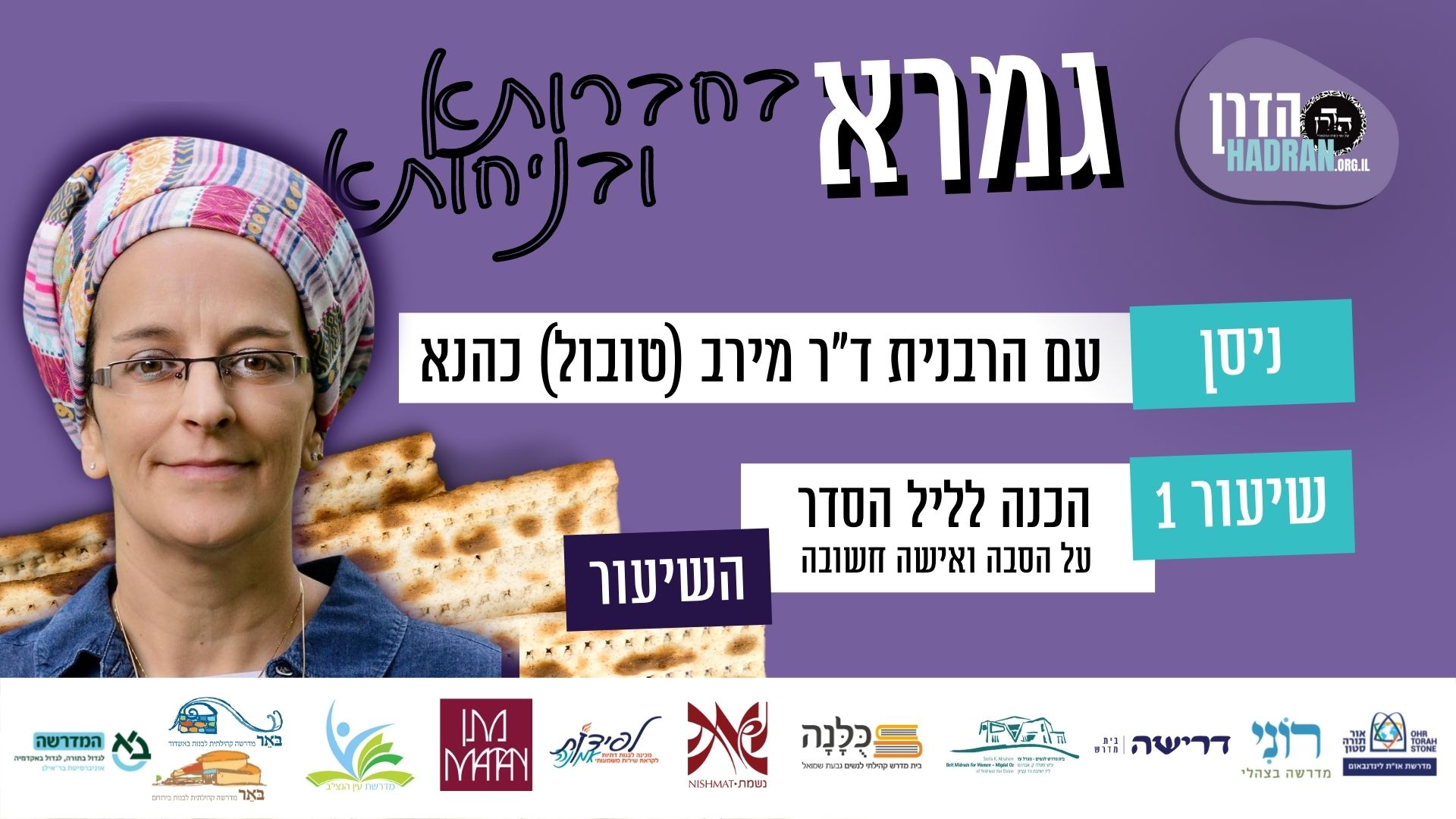
הכנה לליל הסדר: על הסבה ואישה חשובה- סוגיות נבחרות (ניסן שיעור א)













חדשה בלימוד הגמרא?
זה הדף הראשון שלך? איזו התרגשות עצומה! יש לנו בדיוק את התכנים והכלים שיעזרו לך לעשות את הצעדים הראשונים ללמידה בקצב וברמה שלך, כך תוכלי להרגיש בנוח גם בתוך הסוגיות המורכבות ומאתגרות.
פסיפס הלומדות שלנו
גלי את קהילת הלומדות שלנו, מגוון נשים, רקעים וסיפורים. כולן חלק מתנועה ומסע מרגש ועוצמתי.
סיום השס לנשים נתן לי מוטביציה להתחיל ללמוד דף יומי. עד אז למדתי גמרא בשבתות ועשיתי כמה סיומים. אבל לימוד יומיומי זה שונה לגמרי ופתאום כל דבר שקורה בחיים מתקשר לדף היומי.

רתמים, ישראל
שמעתי על הסיום הענק של הדף היומי ע”י נשים בבנייני האומה. רציתי גם.
החלטתי להצטרף. התחלתי ושיכנעתי את בעלי ועוד שתי חברות להצטרף. עכשיו יש לי לימוד משותף איתו בשבת ומפגש חודשי איתן בנושא (והתכתבויות תדירות על דברים מיוחדים שקראנו). הצטרפנו לקבוצות שונות בווטסאפ. אנחנו ממש נהנות. אני שומעת את השיעור מידי יום (בד”כ מהרב יוני גוטמן) וקוראת ומצטרפת לסיומים של הדרן. גם מקפידה על דף משלהן (ונהנית מאד).
אפרת, ישראל
התחלתי בסיום הש”ס, יצאתי באורות. נשברתי פעמיים, ובשתיהם הרבנית מישל עודדה להמשיך איפה שכולם בסבב ולהשלים כשאוכל, וכך עשיתי וכיום השלמתי הכל. מדהים אותי שאני לומדת כל יום קצת, אפילו בחדר הלידה, בבידוד או בחו”ל. לאט לאט יותר נינוחה בסוגיות. לא כולם מבינים את הרצון, בפרט כפמניסטית. חשה סיפוק גדול להכיר את המושגים וצורת החשיבה. החלום זה להמשיך ולהתמיד ובמקביל ללמוד איך מהסוגיות נוצרה והתפתחה ההלכה.

מודיעין, ישראל
התחלתי ללמוד דף יומי אחרי שחזרתי בתשובה ולמדתי במדרשה במגדל עוז. הלימוד טוב ומספק חומר למחשבה על נושאים הלכתיים ”קטנים” ועד לערכים גדולים ביהדות. חשוב לי להכיר את הגמרא לעומק. והצעד הקטן היום הוא ללמוד אותה בבקיאות, בעזרת השם, ומי יודע אולי גם אגיע לעיון בנושאים מעניינים. נושאים בגמרא מתחברים לחגים, לתפילה, ליחסים שבין אדם לחברו ולמקום ולשאר הדברים שמלווים באורח חיים דתי 🙂

מצפה יריחו, ישראל
התחלתי בתחילת הסבב, והתמכרתי. זה נותן משמעות נוספת ליומיום ומאוד מחזק לתת לזה מקום בתוך כל שגרת הבית-עבודה השוטפת.

בית שמש, ישראל
התחלתי ללמוד דף יומי כאשר קיבלתי במייל ממכון שטיינזלץ את הדפים הראשונים של מסכת ברכות במייל. קודם לא ידעתי איך לקרוא אותם עד שנתתי להם להדריך אותי. הסביבה שלי לא מודעת לעניין כי אני לא מדברת על כך בפומבי. למדתי מהדפים דברים חדשים, כמו הקשר בין המבנה של בית המקדש והמשכן לגופו של האדם (יומא מה, ע”א) והקשר שלו למשפט מפורסם שמופיע בספר ההינדי "בהגוד-גיתא”. מתברר שזה רעיון כלל עולמי ולא רק יהודי

נשר, ישראל
אני לומדת גמרא כעשור במסגרות שונות, ואת הדף היומי התחלתי כשחברה הציעה שאצטרף אליה לסיום בבנייני האומה. מאז אני לומדת עם פודקסט הדרן, משתדלת באופן יומי אך אם לא מספיקה, מדביקה פערים עד ערב שבת. בסבב הזה הלימוד הוא "ממעוף הציפור”, מקשיבה במהירות מוגברת תוך כדי פעילויות כמו בישול או נהיגה, וכך רוכשת היכרות עם הסוגיות ואופן ניתוחם על ידי חז”ל. בע”ה בסבב הבא, ואולי לפני, אצלול לתוכו באופן מעמיק יותר.

רמת גן, ישראל
באירוע של הדרן בנייני האומה. בהשראתה של אמי שלי שסיימה את הש”ס בסבב הקודם ובעידוד מאיר , אישי, וילדיי וחברותיי ללימוד במכון למנהיגות הלכתית של רשת אור תורה סטון ומורתיי הרבנית ענת נובוסלסקי והרבנית דבורה עברון, ראש המכון למנהיגות הלכתית.
הלימוד מעשיר את יומי, מחזיר אותי גם למסכתות שכבר סיימתי וידוע שאינו דומה מי ששונה פרקו מאה לשונה פרקו מאה ואחת במיוחד מרתקים אותי החיבורים בין המסכתות

מודיעין, ישראל
התחלתי ללמוד לפני 4.5 שנים, כשהודיה חברה שלי פתחה קבוצת ווטסאפ ללימוד דף יומי בתחילת מסכת סנהדרין. מאז לימוד הדף נכנס לתוך היום-יום שלי והפך לאחד ממגדירי הזהות שלי ממש.

ירושלים, ישראל
בתחילת הסבב הנוכחי הצטברו אצלי תחושות שאני לא מבינה מספיק מהי ההלכה אותה אני מקיימת בכל יום. כמו כן, כאמא לבנות רציתי לתת להן מודל נשי של לימוד תורה
שתי הסיבות האלו הובילו אותי להתחיל ללמוד. נתקלתי בתגובות מפרגנות וסקרניות איך אישה לומדת גמרא..
כמו שרואים בתמונה אני ממשיכה ללמוד גם היום ואפילו במחלקת יולדות אחרי לידת ביתי השלישית.

רבבה, ישראל
הייתי לפני שנתיים בסיום הדרן נשים בבנייני האומה והחלטתי להתחיל. אפילו רק כמה דפים, אולי רק פרק, אולי רק מסכת… בינתיים סיימתי רבע שס ותכף את כל סדר מועד בה.
הסביבה תומכת ומפרגנת. אני בת יחידה עם ארבעה אחים שכולם לומדים דף יומי. מדי פעם אנחנו עושים סיומים יחד באירועים משפחתיים. ממש מרגש. מסכת שבת סיימנו כולנו יחד עם אבא שלנו!
אני שומעת כל יום פודקאסט בהליכה או בנסיעה ואחכ לומדת את הגמרא.

מרכז שפירא, ישראל
בסוף הסבב הקודם ראיתי את השמחה הגדולה שבסיום הלימוד, בעלי סיים כבר בפעם השלישית וכמובן הסיום הנשי בבנייני האומה וחשבתי שאולי זו הזדמנות עבורי למשהו חדש.
למרות שאני שונה בסביבה שלי, מי ששומע על הלימוד שלי מפרגן מאוד.
אני מנסה ללמוד קצת בכל יום, גם אם לא את כל הדף ובסך הכל אני בדרך כלל עומדת בקצב.
הלימוד מעניק המון משמעות ליום יום ועושה סדר בלמוד תורה, שתמיד היה (ועדיין) שאיפה. אבל אין כמו קביעות

טל מנשה, ישראל
כבר סיפרתי בסיום של מועד קטן.
הלימוד מאוד משפיעה על היום שלי כי אני לומדת עם רבנית מישל על הבוקר בזום. זה נותן טון לכל היום – בסיס למחשבות שלי .זה זכות גדול להתחיל את היום בלימוד ובתפילה. תודה רבה !

ירושלים, ישראל
שמעתי על הסיום הענק של הדף היומי ע”י נשים בבנייני האומה. רציתי גם.
החלטתי להצטרף. התחלתי ושיכנעתי את בעלי ועוד שתי חברות להצטרף. עכשיו יש לי לימוד משותף איתו בשבת ומפגש חודשי איתן בנושא (והתכתבויות תדירות על דברים מיוחדים שקראנו). הצטרפנו לקבוצות שונות בווטסאפ. אנחנו ממש נהנות. אני שומעת את השיעור מידי יום (בד”כ מהרב יוני גוטמן) וקוראת ומצטרפת לסיומים של הדרן. גם מקפידה על דף משלהן (ונהנית מאד).
אפרת, ישראל
"התחלתי ללמוד דף יומי במחזור הזה, בח’ בטבת תש””ף. לקחתי על עצמי את הלימוד כדי ליצור תחום של התמדה יומיומית בחיים, והצטרפתי לקבוצת הלומדים בבית הכנסת בכפר אדומים. המשפחה והסביבה מתפעלים ותומכים.
בלימוד שלי אני מתפעלת בעיקר מכך שכדי ללמוד גמרא יש לדעת ולהכיר את כל הגמרא. זו מעין צבת בצבת עשויה שהיא עצומה בהיקפה.”

כפר אדומים, ישראל
אחי, שלומד דף יומי ממסכת ברכות, חיפש חברותא ללימוד מסכת ראש השנה והציע לי. החברותא היתה מאתגרת טכנית ורוב הזמן נעשתה דרך הטלפון, כך שבסיום המסכת נפרדו דרכינו. אחי חזר ללמוד לבד, אבל אני כבר נכבשתי בקסם הגמרא ושכנעתי את האיש שלי להצטרף אלי למסכת ביצה. מאז המשכנו הלאה, ועכשיו אנחנו מתרגשים לקראתו של סדר נשים!

נוקדים, ישראל
התחלתי ללמוד גמרא בבית הספר בגיל צעיר והתאהבתי. המשכתי בכך כל חיי ואף היייתי מורה לגמרא בבית הספר שקד בשדה אליהו (בית הספר בו למדתי בילדותי)בתחילת מחזור דף יומי הנוכחי החלטתי להצטרף ובע”ה מקווה להתמיד ולהמשיך. אני אוהבת את המפגש עם הדף את "דרישות השלום ” שמקבלת מקשרים עם דפים אחרים שלמדתי את הסנכרון שמתחולל בין התכנים.

מעלה גלבוע, ישראל
התחלתי כשהייתי בחופש, עם הפרסומים על תחילת המחזור, הסביבה קיבלה את זה כמשהו מתמיד ומשמעותי ובהערכה, הלימוד זה עוגן יציב ביום יום, יש שבועות יותר ויש שפחות אבל זה משהו שנמצא שם אמין ובעל משמעות בחיים שלי….

גמזו, ישראל
התחלתי ללמוד דף יומי שהתחילו מסכת כתובות, לפני 7 שנים, במסגרת קבוצת לימוד שהתפרקה די מהר, ומשם המשכתי לבד בתמיכת האיש שלי. נעזרתי בגמרת שטיינזלץ ובשיעורים מוקלטים.
הסביבה מאד תומכת ואני מקבלת המון מילים טובות לאורך כל הדרך. מאז הסיום הגדול יש תחושה שאני חלק מדבר גדול יותר.
אני לומדת בשיטת ה”7 דפים בשבוע” של הרבנית תרצה קלמן – כלומר, לא נורא אם לא הצלחת ללמוד כל יום, העיקר שגמרת ארבעה דפים בשבוע

עתניאל, ישראל
התחלתי בתחילת הסבב, והתמכרתי. זה נותן משמעות נוספת ליומיום ומאוד מחזק לתת לזה מקום בתוך כל שגרת הבית-עבודה השוטפת.
בית שמש, ישראל
פסחים עה
לְקִיּוּהָא דְפֵירָא בְּעֵינֵיהּ. הָכָא — לֵיתָא לְקִיּוּהָא דְפֵירָא בְּעֵינֵיהּ.
sharpness of the fruit remains present in the vinegar in its pure, unadulterated form, despite the fact that the vinegar itself is not sharp. Here, the sharpness of the fruit does not remain present in the vinegar in its pure, unadulterated form because it has already been used with the meat. Therefore, the vinegar is no longer potent enough to keep the blood in the meat.
אֵין צוֹלִין אֶת הַפֶּסַח וְכוּ׳. מַעֲשֶׂה לִסְתּוֹר?! חַסּוֹרֵי מִיחַסְּרָא, וְהָכִי קָתָנֵי: וְאִם אַסְכָּלָא מְנוּקֶּבֶת — מוּתָּר. וְאָמַר רַבִּי צָדוֹק, מַעֲשֶׂה בְּרַבָּן גַּמְלִיאֵל שֶׁאָמַר לְטָבִי עַבְדּוֹ: צֵא וּצְלֵה לָנוּ אֶת הַפֶּסַח עַל הָאַסְכָּלָא מְנוּקֶּבֶת.
It was taught in the mishna that one may not roast the Paschal lamb on a grill. Subsequently, the mishna quotes an incident in which Rabban Gamliel instructed his servant to roast the Paschal lamb for him on a grill. The Gemara expresses surprise: Was an incident cited to contradict what was previously stated? The Gemara responds: The mishna is incomplete and is teaching the following: And if it is a perforated grill, so that the fire reaches each part of the meat and the animal will not be roasted from the heat of the grill itself, it is permitted. And with regard to this Rabbi Tzadok said that there was an incident with Rabban Gamliel, who said to his slave Tavi: Go and roast the Paschal lamb for us on the perforated grill.
בְּעָא מִינֵּיהּ רַב חִינָּנָא בַּר אִידִי מֵרַב אַדָּא בַּר אַהֲבָה: תַּנּוּר שֶׁהִסִּיקוֹ בִּקְלִיפֵּי עׇרְלָה וּגְרָפוֹ וְאָפָה בּוֹ אֶת הַפַּת, לְדִבְרֵי הָאוֹסֵר, מַהוּ? אֲמַר לֵיהּ: הַפַּת מוּתֶּרֶת.
The Gemara cites a discussion related to the subject of roasting the Paschal lamb. Rav Ḥinnana bar Idi raised a dilemma before Rav Adda bar Ahava: In the case of an oven that one fired with peels of fruit that are orla, i.e., fruit that grows on a tree the first three years after it was planted, from which one may not receive any benefit, if, after the oven became very hot, he swept it and removed the fuel and the ashes, and he baked bread in it, according to the opinion that prohibits bread baked directly with heat from orla fuel, what is the halakha with regard to this bread? It was baked with the heat trapped in the oven only after the fuel was removed. He said to him: The bread is permitted.
אֲמַר לֵיהּ: וְהָאָמַר רַב חִינָּנָא סָבָא אָמַר רַבִּי אַסִּי אָמַר רַבִּי יוֹחָנָן: תַּנּוּר שֶׁהִסִּיקוֹ וּגְרָפוֹ וְצָלָה בּוֹ אֶת הַפֶּסַח — אֵין זֶה צְלִי אֵשׁ, שֶׁנֶּאֱמַר ״צְלִי אֵשׁ … צְלִי אֵשׁ״, שְׁתֵּי פְעָמִים.
Rav Ḥinnana said to him: But didn’t Rav Ḥinnana the Elder say that Rabbi Asi said that Rabbi Yoḥanan said: If there is an oven that one fired and swept so that the heat remains but there is no longer any fire in the oven, and one then roasted the Paschal lamb in it, this is not a fulfillment of the Torah’s command that the Paschal lamb must be roasted in fire, as it is stated in the Torah: “And they shall eat the meat on that night, roasted in fire, and matzot; with bitter herbs they shall eat it. Do not eat of it raw, nor boiled in water, but roasted in fire; its head with its legs and with its inner parts” (Exodus 12:8–9), and since it says the phrase: Roasted in fire, two times, the verse emphasizes that the Paschal lamb must literally be roasted on the fire?
טַעְמָא דְּגַלִּי רַחֲמָנָא ״צְלִי אֵשׁ״ ״צְלִי אֵשׁ״ שְׁתֵּי פְעָמִים. הָא לָא גַּלִּי רַחֲמָנָא, הֲוֵי אָמֵינָא צְלִי אֵשׁ הוּא.
The following can now be inferred: The reason is specifically because the Merciful One reveals this halakha with regard to the Paschal lamb in the Torah by repeating: Roasted in fire, roasted in fire, twice. But if the Merciful One had not revealed this halakha by emphasizing the need to roast it directly on the fire, I would have said a Paschal lamb roasted in an oven that has already been swept is nonetheless considered roasted in fire. Therefore, in other situations in which something is roasted in an oven, even if it is not roasted directly from the heat of a fire, its status should be comparable to something that was roasted directly from the fuel. If the fuel is forbidden, the food should be forbidden.
אֲמַר לֵיהּ: גַּלִּי רַחֲמָנָא הָתָם, וְיָלְפִינַן מִינַּהּ.
Rav Adda bar Ahava said to Rav Ḥinnana bar Idi: The Merciful One reveals it there, with regard to the Paschal lamb, and we learn from it that even in other areas of halakha, only something that is roasted directly by a fire is considered roasted in fire.
וְאִי בָּעֵית אֵימָא: הָתָם טַעְמָא דִּכְתַב רַחֲמָנָא ״צְלִי אֵשׁ״ שְׁתֵּי פְעָמִים, הָא לָא כְּתַב רַחֲמָנָא ״צְלִי אֵשׁ״ שְׁתֵּי פְעָמִים, הֲוָה אָמֵינָא: אַאֵשׁ קָפֵיד רַחֲמָנָא, וַאֲפִילּוּ גְּרָפוֹ נָמֵי — צְלִי אֵשׁ הוּא. אֲבָל הָכָא, אַעֵצִים דְּאִיסּוּרָא קָא קָפֵיד רַחֲמָנָא, וְהָא לֵיתַנְהוּ.
And if you wish, say a different answer instead: There, in the case of the Paschal lamb, the reason one may not roast the lamb if one has already swept out the oven is that the Merciful One writes “roasted in fire” twice. But if the Merciful One had not written “roasted in fire” twice, I would have said that the Merciful One is particular about fire, meaning that the source of the heat in the oven should be fire, and even if one swept it, it is still considered roasted in fire. It was therefore necessary to repeat the phrase “roasted in fire.” But here, in the case of orla, the Merciful One is particular about the prohibited fuel, and it is not here in the oven. Therefore, there is no reason to prohibit the bread.
תָּנוּ רַבָּנַן: חֲתָכוֹ, וּנְתָנוֹ עַל גַּבֵּי גֶּחָלִים. רַבִּי אוֹמֵר: אוֹמֵר אֲנִי שֶׁזֶּה צְלִי אֵשׁ. רָמֵי לֵיהּ רַב אַחָדְבוּי בַּר אַמֵּי לְרַב חִסְדָּא: מִי אָמַר רַבִּי גֶּחָלִים אֵשׁ נִינְהוּ?
The Sages taught: If one cuts the Paschal lamb superficially in several places and places it on coals, Rabbi Yehuda HaNasi says: I say that this is considered roasted in fire, as coals have the status of real fire. Rav Aḥadvoi bar Ami raised a contradiction to Rav Ḥisda: Did Rabbi Yehuda HaNasi actually say that coals are considered like fire?
וּרְמִינְהוּ ״מִכְוַת אֵשׁ״, אֵין לִי אֶלָּא שֶׁנִּכְוָה בְּאֵשׁ, נִכְוָה בְּגַחֶלֶת, בְּרֶמֶץ, בְּסִיד רוֹתֵחַ, בְּגִפְסִיס רוֹתֵחַ, וְכׇל דָּבָר הַבָּא מִן הָאוּר, לְאֵיתוֹיֵי חַמֵּי הָאוּר, מִנַּיִין? תַּלְמוּד לוֹמַר: ״מִכְוָה״ ״מִכְוָה״ רִיבָּה.
Rav Aḥadvoi bar Ami raised a contradiction based on the Torah’s statement with regard to the laws of leprosy: “Or flesh that shall have on its skin a burn from fire” (Leviticus 13:24). From the fact that it says a burn from fire, I have derived nothing other than a case in which it is burned by fire itself; if it is burned by a coal, by burning ash, by burning lime, by burning plaster [gipsis], or by anything else that is burning and whose source of heat comes from fire, to include also water heated by fire, from where is it derived that these are also considered a burn from fire? The verse states: A burn, a burn, twice. By repeating the term, it includes all these types of burns.
טַעְמָא דְּרַבִּי רַחֲמָנָא ״מִכְוָה״ ״מִכְוָה״, הָא לָא רַבִּי רַחֲמָנָא ״מִכְוָה״ ״מִכְוָה״, גֶּחָלִים לָאו אֵשׁ נִינְהוּ!
The following can now be inferred: The reason is that the Merciful One includes these types of burns in the Torah through the words: A burn, a burn. But if the Merciful One had not included them through the repetitive expression a burn, a burn, one would have assumed that coals are not considered fire, which contradicts the opinion of Rabbi Yehuda HaNasi that any usage of the term fire includes coals as well.
אֲמַר לֵיהּ: גַּחֶלֶת שֶׁל עֵץ לָא אִיצְטְרִיךְ קְרָא לְרַבּוֹיֵי. כִּי אִיצְטְרִיךְ קְרָא לְגַחֶלֶת שֶׁל מַתֶּכֶת.
He said to him: With regard to a red-hot wood coal, it is not necessary for the verse to include it. As long as it is burning, it is certainly considered a fire. Where a verse is necessary is with regard to a red-hot piece of metal that was heated by a fire. Without the verse, it would have been possible to think a person burned by hot metal it is not considered burned by fire.
וְגֶחָלִים שֶׁל מַתֶּכֶת לָאו אֵשׁ הוּא? וְהָא גַּבֵּי בַּת כֹּהֵן, דִּכְתִיב: ״בָּאֵשׁ תִּשָּׂרֵף״. וְאָמַר רַב מַתְנָה: פְּתִילָה שֶׁל אֲבָר הָיוּ עוֹשִׂין לָהּ!
The Gemara expresses surprise at the previous answer: And are red-hot pieces of metal not considered fire? But with regard to a daughter of a priest who committed adultery after betrothal, it is written: “And the daughter of a priest, if she profanes herself through adultery, she profanes her father; in fire she shall be burned” (Leviticus 21:9), and Rav Mattana said: They would not literally burn her in fire; rather, they would prepare for her a molten bar of lead. They would execute her by pouring molten lead down her throat. This proves that burning metal is considered fire.
שָׁאנֵי הָתָם, דְּאָמַר קְרָא: ״בָּאֵשׁ תִּשָּׂרֵף״, ״תִּשָּׂרֵף״ — לְרַבּוֹת כׇּל שְׂרֵיפוֹת הַבָּאוֹת מִן הָאֵשׁ.
The Gemara responds: It is different there, as the verse states not simply fire, but “in fire she shall be burned.” The expression “she shall be burned” comes to include all burnings that come from fire.
וְכׇל שֶׁכֵּן אֵשׁ עַצְמָהּ. וְנַקֵּיף לַהּ חֲבִילֵי זְמוֹרוֹת וְנִקְלַהּ! אָתְיָא ״שְׂרֵיפָה״ ״שְׂרֵיפָה״ מִבְּנֵי אַהֲרֹן. מָה לְהַלָּן — שְׂרֵיפַת נְשָׁמָה וְגוּף קַיָּים, אַף כָּאן — שְׂרֵיפַת נְשָׁמָה וְגוּף קַיָּים.
The Gemara suggests: If so, all the more so fire itself fulfills the requirement of burning. Let us surround her with bundles of branches and burn her with them. The Gemara responds: It comes from a verbal analogy between the word “burning” stated here and the word “burning” stated and in the context of the death of the sons of Aaron: Just as below, with regard to the sons of Aaron, the verse states that they were burned with fire (see Leviticus 10:2), and it was a burning of the soul and the body remained, as even their clothes were not burned, so too, here, with regard to the daughter of a priest, it means the burning of the soul and the body remains.
וְנַעְבֵּיד לַהּ חַמֵּי הָאוּר? מִשּׁוּם דְּרַב נַחְמָן, דְּאָמַר רַב נַחְמָן: אָמַר קְרָא: ״וְאָהַבְתָּ לְרֵעֲךָ כָּמוֹךָ״, בְּרוֹר לוֹ מִיתָה יָפָה.
The Gemara challenges: Let us execute her with boiling water heated by fire. The Gemara answers: It is due to the statement of Rav Naḥman, as Rav Naḥman said that the verse states: “And you shall love your fellow as yourself” (Leviticus 19:18). When executing someone, select for him a kind death. Even when someone must be executed, his dignity should be protected. He should be executed in the most comfortable way possible.
וְכִי מֵאַחַר דְּאִיכָּא רַב נַחְמָן, גְּזֵירָה שָׁוָה לְמָה לִי? אָמְרִי: אִי לָאו גְּזֵירָה שָׁוָה, הֲוָה אָמֵינָא: שְׂרֵיפַת נְשָׁמָה וְגוּף קַיָּים — לָאו שְׂרֵיפָה הִיא. וְאִי מִשּׁוּם דְּרַב נַחְמָן — נַיפֵּושׁ לַהּ חֲבִילֵי זְמוֹרוֹת טוּבָא, כִּי הֵיכִי דִּתְמוּת בַּעֲגָלָא, קָא מַשְׁמַע לַן.
The Gemara asks: Once there is the reason of Rav Naḥman, why do I need the verbal analogy derived from the sons of Aaron? Even without it, Rav Naḥman’s ruling requires the court to carry out the execution with molten lead, which provides an easier death. Say in answer to this question: If not for the verbal analogy, I would have said that burning the soul while the body remains is not considered burning. And if it were only due to the statement of Rav Naḥman that one must select a kind death, we should add many bundles of branches so that she would die quickly. Therefore, the verbal analogy teaches us that executing with molten lead is considered burning.
וְאֶלָּא ״בָּאֵשׁ״ לְמָה לִי? לְאַפּוֹקֵי אֲבָר מֵעִיקָּרוֹ.
But if it so that the verse says “she shall be burned” to include all methods of burning, for what do I need the expression “in fire”? The Gemara answers: To exclude lead from its source.
אֲמַר לֵיהּ רַבִּי יִרְמְיָה לְרַבִּי זֵירָא: וְכֹל הֵיכָא דִּכְתִיב ״בָּאֵשׁ תִּשָּׂרֵף״, לְרַבּוֹת כׇּל שְׂרֵיפוֹת הַבָּאוֹת מֵחֲמַת אֵשׁ הוּא? וְהָא גַּבֵּי פָּרִים הַנִּשְׂרָפִים, דִּכְתִיב בְּהוּ: ״וְשָׂרַף אֹתוֹ עַל עֵצִים בָּאֵשׁ״, וְתַנְיָא: ״בָּאֵשׁ״ וְלֹא בְּסִיד רוֹתֵחַ, וְלֹא בְּגִפְסִיס רוֹתֵחַ?
Rabbi Yirmeya said to Rabbi Zeira: Is it true that anywhere that it is written: “In fire she shall be burned” it comes to include all methods of burning that come from fire? But what of bulls that are burned, about which it is written: “And he shall burn it on wood in fire, where the ash is poured it shall be burned” (Leviticus 4:12), and it was taught in a baraita: In fire, and not in burning lime and not in burning plaster? Why aren’t all methods of burning permitted in this case as well?
אֲמַר לֵיהּ: הָכִי הַשְׁתָּא?! הָתָם כְּתִיב ״בָּאֵשׁ״ וַהֲדַר ״תִּשָּׂרֵף״ — לְרַבּוֹת כׇּל שְׂרֵיפוֹת הַבָּאוֹת מֵחֲמַת הָאֵשׁ. הָכָא כְּתִיב ״וְשָׂרַף אֹתוֹ עַל עֵצִים בָּאֵשׁ״ לְבַסּוֹף ״אֵשׁ״, לְמֵימְרָא דְּאֵשׁ — אִין, מִידֵּי אַחֲרִינָא — לָא.
He said to him: How can these cases be compared? There, in the case of the daughter of a priest, it is written: “In fire,” and the verse subsequently states that she shall be burned, which comes to include all methods of burning that come from fire. Here, in the case of a bull, it is written: “And he shall burn it on wood in fire.” At the end it says fire, to say that with regard to fire, yes, it may be used, but with regard to something else, no, it may not be used.
הָתָם נָמֵי כְּתִיבָא שְׂרֵיפָה לְבַסּוֹף, דִּכְתִיב:
The Gemara objects: There, too, with regard to bulls that are burned, burning is written at the end, as it is written at the end of that verse:
״עַל שֶׁפֶךְ הַדֶּשֶׁן יִשָּׂרֵף״! אָמְרִי: הָהוּא ״יִשָּׂרֵף״ מִיבְּעֵי לֵיהּ לְכִדְתַנְיָא: ״יִשָּׂרֵף״ — אַף עַל פִּי שֶׁאֵין שָׁם דֶּשֶׁן. ״יִשָּׂרֵף״ — אַף עַל פִּי שֶׁהִצִּית הָאוּר בְּרוּבּוֹ.
“Where the ash is poured it shall be burned” (Leviticus 4:12). The Gemara responds: Say: That usage of the expression “it shall be burned” is needed for that which was taught in a baraita: It shall be burned even though there is no ash there, as the presence of ash from the altar is not essential for burning the bulls. “It shall be burned” also teaches that although the fire has consumed most of it, that is not sufficient. One must take care to complete the burning process.
רָבִינָא אָמַר, כְּרוֹךְ וּתְנִי: ״מִכְוַת אֵשׁ״ — אֵין לִי אֶלָּא שֶׁנִּכְוָה בְּאֵשׁ וּבְגַחֶלֶת. נִכְוָה בְּרֶמֶץ, בְּסִיד רוֹתֵחַ, וּבְגִפְסִיס רוֹתֵחַ, וּבְכׇל דָּבָר הַבָּא מֵחֲמַת הָאוּר, לְאֵיתוֹיֵי חַמֵּי הָאוּר, מִנַּיִין? תַּלְמוּד לוֹמַר: ״מִכְוָה״ ״מִכְוָה״ רִיבָּה.
Ravina said that the contradiction cited earlier between Rabbi Yehuda HaNasi’s statement, that roasting over coal is considered roasting over fire, and the baraita, which requires a derivation to indicate that coal is considered fire with regard to leprosy, can be answered by changing the text of the baraita. Combine and teach the first two types of burns together. From the phrase “a burn from fire,” I have derived nothing other than a case in which one was burned by a fire or by a coal. With regard to one who is burned by hot ash, by burning lime, or by burning plaster, or by anything else that is burning and whose source of heat comes from fire, to include water heated by fire, from where is it derived that these cases are also considered a burn from fire? The verse states: A burn, a burn, twice. By repeating the term, it includes all these types of burns.
רָבָא רָמֵי. מִי אָמַר רַבִּי גֶּחָלִים אִיקְּרוּ אֵשׁ? וּרְמִינְהִי: ״גַּחֲלֵי״ — יָכוֹל עוֹמְמוֹת, תַּלְמוּד לוֹמַר: ״אֵשׁ״. אִי אֵשׁ — יָכוֹל שַׁלְהֶבֶת, תַּלְמוּד לוֹמַר: ״גַּחֲלֵי״. הָא כֵּיצַד? מֵבִיא מִן הַלּוֹחֲשׁוֹת. (אַלְמָא גֶּחָלִים לָא אִיקְּרִי אֵשׁ!
Rava raised a contradiction: Did Rabbi Yehuda HaNasi actually say that coals are called fire? And we raise a contradiction based on the verse: “And he shall take a pan full of burning coals from upon the altar before the Lord” (Leviticus 16:12). From the verse’s use of the word coals, I might have thought that one may bring smoldering coals, meaning that the fire is almost extinguished and is not noticeable from the outside. Therefore, the verse states: Fire. If it had stated only fire, I might have thought it was referring to a flame. Therefore, the verse states: Coals. How are these two requirements reconciled? One brings from the coals that are flickering, meaning that the fire is visible. Apparently, plain coals are not called fire.
אָמְרִי:) וְהָא גּוּפָא קַשְׁיָא, אָמְרַתְּ: ״גַּחֲלֵי״ — יָכוֹל עוֹמְמוֹת, אַלְמָא לוֹחֲשׁוֹת אֵשׁ נִינְהוּ, אֵימָא סֵיפָא: אִי אֵשׁ — יָכוֹל שַׁלְהֶבֶת, תַּלְמוּד לוֹמַר: ״גַּחֲלֵי״, אַלְמָא אֲפִילּוּ לוֹחֲשׁוֹת לָאו אֵשׁ נִינְהוּ.
Say in answer to this question: Isn’t this baraita itself difficult? You said: From the verse’s use of the word coals, I might have thought the verse is referring to coals that are smoldering. Apparently, it is clear that flickering coals are considered fire. Say the latter clause of that same baraita as follows: If it had stated only fire, I might have thought it was referring to a flame. Therefore, the verse states: Coals. Apparently, even flickering coals are not considered fire, and there is an internal contradiction in the baraita.
וְאָמַר רַב שֵׁשֶׁת, הָכִי קָתָנֵי: ״גַּחֲלֵי״ — יָכוֹל בֵּין עוֹמְמוֹת בֵּין לוֹחֲשׁוֹת, תַּלְמוּד לוֹמַר: ״אֵשׁ״. אִי אֵשׁ — יָכוֹל שַׁלְהֶבֶת, תַּלְמוּד לוֹמַר: ״גַּחֲלֵי״, הָא כֵּיצַד? מֵבִיא מִן הַלּוֹחֲשׁוֹת. מִכׇּל מָקוֹם גֶּחָלִים לָא אִיקְּרִי אֵשׁ, קַשְׁיָא לְרַבִּי!
And Rav Sheshet said, in order to resolve this contradiction: This is what the baraita is teaching: From the verse’s use of the word coals, I might have thought he can take whatever he wants, whether smoldering or flickering. Therefore, the Torah states: Fire. If it had stated only fire, I might have thought it was referring to a flame. Therefore, the verse states: Coals. How is this to be understood? He brings from the flickering coals. In any event, it is derived from here that coals, even if they are flickering, are not called fire. This poses a difficulty to the opinion of Rabbi Yehuda HaNasi, according to which coals are considered fire.
אָמַר אַבָּיֵי, תָּרֵיץ הָכִי: ״גַּחֲלֵי״ — יָכוֹל עוֹמְמוֹת וְלֹא לוֹחֲשׁוֹת, תַּלְמוּד לוֹמַר: ״אֵשׁ״. אִי אֵשׁ, יָכוֹל רָצָה שַׁלְהֶבֶת — יָבִיא, רָצָה גַּחֶלֶת — יָבִיא, תַּלְמוּד לוֹמַר: ״גַּחֲלֵי״. הָא כֵּיצַד? מֵבִיא מִן הַלּוֹחֲשׁוֹת.
Abaye said that the answer is as follows: Based on the word coals, I might have thought they must be smoldering and not flickering. Therefore, the verse states: Fire. If it had stated only fire, I might have thought that if one wanted a flame he may bring it, and if he wanted a coal he may bring it. Therefore, the Torah states: Coals. How is this to be understood? He brings from the flickering coals. According to this, it is clear that coals are considered fire, in accordance with the opinion of Rabbi Yehuda HaNasi.
אָמַר רַבָּה: רָצָה גַּחֶלֶת — יָבִיא, רָצָה שַׁלְהֶבֶת — יָבִיא. שַׁלְהֶבֶת בְּלֹא גַּחֶלֶת הֵיכִי מַשְׁכַּחַתְּ לַהּ? כְּגוֹן דְּשַׁפְיֵיהּ לְמָנָא מִשְׁחָא וְאַתְלִי בֵּיהּ נוּרָא. הָהוּא לְמָה לִי קְרָא לְמַעוֹטֵי, הַשְׁתָּא לִפְנֵי מֶלֶךְ בָּשָׂר וְדָם אֵין עוֹשִׂין כֵּן, לִפְנֵי מֶלֶךְ מַלְכֵי הַמְּלָכִים הַקָּדוֹשׁ בָּרוּךְ הוּא לֹא כׇּל שֶׁכֵּן!
Rabba said: In this last explanation, it was stated that one might have thought that if he wanted a coal he may bring it, and if he wanted a flame he may bring it. Under what circumstances can a flame without a coal be found? The Gemara answers: In a case where one smears a utensil with oil and lights it on fire. However, for a case like this, why do I need a verse to exclude it and indicate that one may not bring such a flame? Now, in front of a king of flesh and blood one does not do this, as it is considered disgraceful to bring such a flame before a king; in front of the King of kings, the Holy One, Blessed be He, is it not all the more so a disgrace? Therefore, the verse would not need to exclude this type of flame.
אֶלָּא אָמַר רָבָא, תָּרֵיץ הָכִי: ״גַּחֲלֵי״ — יָכוֹל עוֹמְמוֹת וְלֹא לוֹחֲשׁוֹת, תַּלְמוּד לוֹמַר: ״אֵשׁ״. אִי אֵשׁ — יָכוֹל יָבִיא מֶחֱצָה גַּחֶלֶת וּמֶחֱצָה שַׁלְהֶבֶת, אַדְּעָיֵיל לְגַוַּאי הָוֵי כּוּלֵּיהּ גַּחֶלֶת — תַּלְמוּד לוֹמַר: ״וְלָקַח מְלֹא הַמַּחְתָּה גַּחֲלֵי אֵשׁ מֵעַל הַמִּזְבֵּחַ״, מִשְּׁעַת לְקִיחָה נִיהְוֵי גֶּחָלִים.
Rather, Rava said that one should answer as follows: Based on the word coals, I might have thought they must be smoldering and not flickering; therefore, the verse states: Fire. If it had said only fire, I might have thought one should bring half coal and half fire, meaning that when one takes the coals from the altar they should be burning strongly and their flame should be visible, and by the time he enters the inside of the Holy of Holies the fire will die down and it will be all coal. Therefore, the verse states: “And he shall take a coal-pan full of burning coals from upon the altar” (Leviticus 16:12), which indicates that from the time of their taking they should be coals and not flames.
אִיבַּעְיָא לְהוּ: אוֹמְמוֹת אוֹ עוֹמְמוֹת? אָמַר רַבִּי יִצְחָק: ״אֲרָזִים לֹא עֲמָמֻהוּ בְּגַן אֱלֹהִים״.
Since the discussion until now has focused on smoldering coals, the Gemara mentions that a dilemma was raised before the Sages in the study hall about whether the word smoldering should be rendered omemot with an alef or omemot with an ayin. Rabbi Yitzḥak said: It should be rendered with an ayin, as it is stated: “The cedars in the garden of God could not hide it [amamuhu]” (Ezekiel 31:8), as the word amamuhu in the verse is spelled with an ayin.
מַתְנִי׳ נָגַע בְּחַרְסוֹ שֶׁל תַּנּוּר — יִקְלוֹף אֶת מְקוֹמוֹ. נָטַף מֵרוֹטְבּוֹ עַל הַחֶרֶס וְחָזַר אֵלָיו — יִטּוֹל אֶת מְקוֹמוֹ. נָטַף מֵרוֹטְבּוֹ עַל הַסּוֹלֶת — יִקְמוֹץ אֶת מְקוֹמוֹ.
MISHNA: If the Paschal lamb touched the earthenware surface of an oven, one must peel off its place on the Paschal lamb, as it was roasted by the heat of the oven and not by the fire itself. If some of the gravy of the Paschal lamb dripped on the earthenware and then returned to it, i.e., the gravy splattered back onto the meat, one must remove its place. Peeling off the outer layer is not enough, and one must remove some of the meat underneath the outer layer, because it is considered to have been cooked by the liquid rather than roasted by the fire. If some of the Paschal lamb’s gravy dripped onto hot flour, one must remove a handful of flour from its place, i.e., the place where the gravy landed in the flour, and destroy it.
סָכוֹ בְּשֶׁמֶן תְּרוּמָה, אִם חֲבוּרַת כֹּהֲנִים — יֹאכֵלוּ. אִם שֶׁל יִשְׂרָאֵל, אִם חַי הוּא — יְדִיחֶנּוּ. וְאִם צָלִי הוּא — יִקְלוֹף אֶת הַחִיצוֹן. סָכוֹ בְּשֶׁמֶן שֶׁל מַעֲשֵׂר שֵׁנִי — לֹא יַעֲשֶׂנּוּ דָּמִים עַל בְּנֵי חֲבוּרָה, שֶׁאֵין פּוֹדִין מַעֲשֵׂר שֵׁנִי בִּירוּשָׁלַיִם.
In a case where one smears the Paschal lamb with teruma oil, if the Paschal lamb belongs to a group of priests they may eat it, as they are permitted to eat teruma. If the Paschal lamb belongs to a group of Israelites, then if it is still raw, one must rinse it in order to remove the teruma oil; and if it is roasted, one must peel off the outer layer that has absorbed the oil, so that the Israelites do not eat the teruma, which is prohibited to them. If one smears the Paschal lamb with oil of the second tithe, he may not demand money for it from the members of the group, as one may not redeem second tithe in Jerusalem. Second-tithe produce that is in Jerusalem is meant to be eaten; it may be given as a gift to others, but may not be redeemed or sold.
גְּמָ׳ אִיתְּמַר: חַם לְתוֹךְ חַם — דִּבְרֵי הַכֹּל
GEMARA: Based on the mishna, the Gemara introduces a general discussion concerning the halakhot of forbidden foods that come into contact with other foods. It was stated that the amora’im disagreed with regard to these matters, but first the Gemara mentions the cases that are clear: If a hot food item falls into another hot item, e.g., hot meat falls into boiling milk or hot permitted meat falls into hot prohibited soup, all agree

