






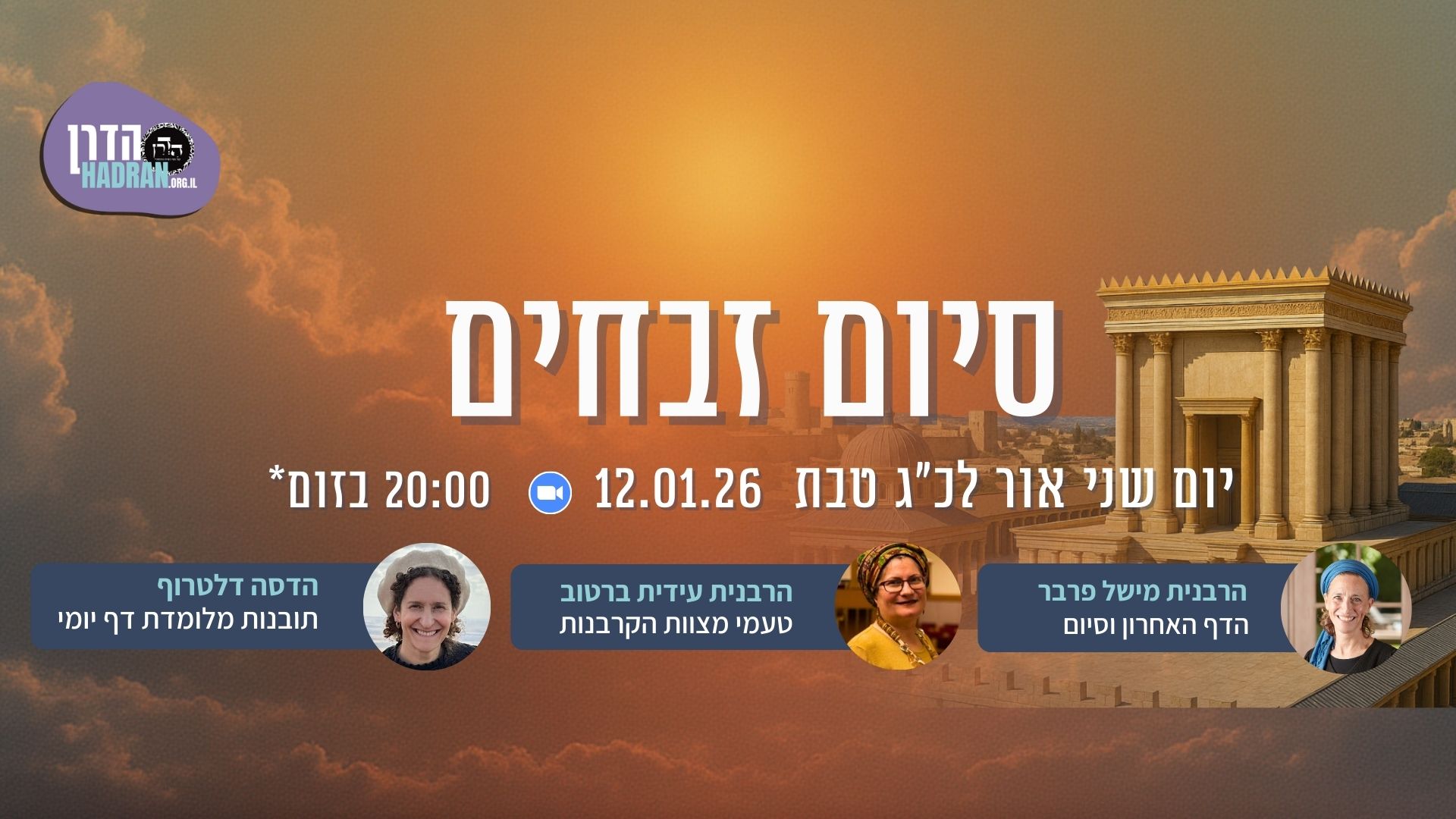
מסכת זבחים
מסכת זבחים מוקדש ע”י אסתר קרמר לע”נ אביה מני גרוס.
רוצה להקדיש שיעור?

תקציר

רבי זירא מעלה שאלה על קרבן שהוקדש עבור במת יחיד: אם הוא נשחט בבמת יחיד, הובא לאחר מכן למשכן, ואז הוצא שוב החוצה – האם מוטלת עליו כעת החובה להחזירו למשכן ולהתייחס אליו כקרבן של במה גדולה על כל דרישותיו הנלוות? בתחילה, הגמרא מציעה שנושא זה עשוי להיות תלוי במחלוקת בין רבה לרב יוסף בנוגע לקדשי קדשים שנשחטו בדרום (במקום בצפון כנדרש) והועלו בטעות למזבח. בסופו של דבר, הגמרא מבחינה בין שני המקרים ודוחה את ההשוואה ביניהם.
דיון נוסף עוסק בקרבן שנשחט בלילה בבמת יחיד. רב ושמואל חלוקים בשאלה האם קרבן כזה כשר.
רב ורבי יוחנן חלוקים אף הם בשאלה האם עולות המובאות בבמות יחיד טעונות הפשט וניתוח כפי שהן טעונות במזבח הציבורי. מה הבסיס למחלוקת שלהם?
למרות שבמות יחיד פועלות תחת פחות הגבלות, מספר חוקים חלים באופן שווה הן על קרבנות יחיד והן על קרבנות ציבור. ברייתא מעלה את האפשרות שפסולי זמן לא יחולו על זבחי במת יחיד, כשם שפסולי מקום אינם חלים עליהם. עם זאת, מובא פסוק כדי להוכיח כי מגבלות הזמן נותרות מחייבות גם עבור קרבנות המובאים בבמות יחיד.
כלים
מסכת זבחים
מסכת זבחים מוקדש ע”י אסתר קרמר לע”נ אביה מני גרוס.
זבחים קכ
שֶׁהִכְנִיסָהּ לִפְנִים וְהוֹצִיאָהּ לַחוּץ – מַהוּ? מִי אָמְרִינַן: כֵּיוָן דַּעֲיַילָא – קָלְטָה לַהּ מְחִיצְתָּא; אוֹ דִלְמָא, כֵּיוָן דַּהֲדַר – הֲדַר?
that one brought inside and subsequently took outside, what is the halakha? Does it have the status of a sacrificial item of a public altar? The Gemara clarifies the question: Do we say that once it was brought in the partition has already absorbed it, and all halakhot of sacrificial items of a public altar apply; or perhaps once it returns, i.e., was taken outside again, it returns to its prior status as an offering of a private altar?
לָאו הַיְינוּ פְּלוּגְתָּא דְּרַבָּה וְרַב יוֹסֵף? דִּתְנַן: קׇדְשֵׁי קָדָשִׁים שֶׁשְּׁחָטָן בַּדָּרוֹם – מוֹעֲלִין בָּהֶן, וְאִם עָלוּ לֹא יֵרְדוּ.
The Gemara asks: Isn’t this issue a disagreement between Rabba and Rav Yosef? As we learned in a mishna (Me’ila 2a): With regard to offerings of the most sacred order, e.g., a sin offering or a guilt offering, that were slaughtered in the south of the Temple courtyard, and not in the north as dictated by halakha, and are therefore disqualified, one who derives benefit from them is liable for misuse of consecrated property, and despite the fact that they should not ascend the altar, if they ascended they shall not descend.
וְאִיבַּעְיָא לְהוּ: יָרְדוּ, מַהוּ שֶׁיַּעֲלוּ? רַבָּה אָמַר: לֹא יַעֲלוּ, וְרַב יוֹסֵף אָמַר: יַעֲלוּ.
And a dilemma was raised before the Sages: If they did descend the altar, what is the halakha with regard to ascending again? Rabba says: They shall not ascend, and Rav Yosef says: They shall ascend. Consequently, they disagree with regard to the issue of whether an item that is not fit to be sacrificed in a consecrated area acquires the sanctity of that area even if it is removed from there.
תִּיבְּעֵי לְרַבָּה, תִּיבְּעֵי לְרַב יוֹסֵף. תִּיבְּעֵי לְרַבָּה: עַד כָּאן לָא קָאָמַר רַבָּה – אֶלָּא בְּמִזְבֵּחַ; דַּחֲזֵי לֵיהּ מְקַדֵּשׁ, דְּלָא חֲזֵי לָא מְקַדֵּשׁ; אֲבָל מְחִיצָה, אַף עַל גַּב דְּלָא חֲזֵי לַיהּ – קָלְטָה.
The Gemara responds: The disagreements are not identical, as the dilemma can be raised according to the opinion of Rabba, and the dilemma can be raised according to the opinion of Rav Yosef. The Gemara elaborates: It is possible to raise the dilemma according to the opinion of Rabba, as Rabba says his statement: Offerings of the most sacred order that were slaughtered in the south shall not descend if they ascended, only with regard to the altar, as the altar consecrates that which is fit for it, while it does not consecrate that which is not fit for it. But with regard to the partition of the public altar, even though an offering that was consecrated for a private altar is not fit for that altar, the partition nevertheless absorbs the offering and it is sacrificed there. Consequently, all the halakhot of the public altar apply to that offering, even if it is taken outside.
אוֹ דִלְמָא, אֲפִילּוּ לְרַב יוֹסֵף – עַד כָּאן לָא קָאָמַר רַב יוֹסֵף הָתָם, אֶלָּא דְּחַד מָקוֹם הוּא; אֲבָל הָכָא, דִּתְרֵי מְקוֹמוֹת נִינְהוּ – לָא. אוֹ דִלְמָא לָא שְׁנָא? תֵּיקוּ.
Or perhaps the dilemma of the burnt offering of a private altar can be raised even according to the opinion of Rav Yosef. Rav Yosef states his opinion there, that offerings of the most sacred order that were slaughtered in the south of the Temple courtyard and descended the altar shall ascend again, only because the altar and the offering are both located in one place, i.e., the Temple courtyard. But here in Rabbi Zeira’s case, where the private altar and public altar are two separate places, the halakhot of the public altar do not apply if the offering was taken outside the designated location. Or perhaps there is no difference, and the opinions of Rabba and Rav Yosef in one case are identical to their opinions in the other. The Gemara concludes: The dilemma shall stand unresolved.
מִילְּתָא דִּפְשִׁיטָא לֵיהּ לְרַבָּה בְּחַד גִּיסָא, וּלְרַב יוֹסֵף בְּחַד גִּיסָא – מִיבְּעֵי לֵיהּ לְרַבִּי יַנַּאי. דְּבָעֵי רַבִּי יַנַּאי: אֵבְרֵי עוֹלַת בָּמַת יָחִיד, שֶׁעָלוּ לַמִּזְבֵּחַ וְיָרְדוּ – מַהוּ? הֵיכָא דְּלֹא מָשְׁלָה בָּהֶן הָאוּר – לָא תִּיבְּעֵי לָךְ; כִּי תִּיבְּעֵי לָךְ – הֵיכָא דְּמָשְׁלָה בָּהֶן הָאוּר. מַאי? תֵּיקוּ.
The Gemara notes that a matter that is obvious to Rabba on one side, i.e., that these offerings shall not ascend the altar again, and to Rav Yosef on the other side, i.e., that they shall ascend again, was raised as a dilemma by Rabbi Yannai. As Rabbi Yannai raises a dilemma: What is the halakha with regard to the limbs of a burnt offering of a private altar that ascended the altar and descended? The Gemara notes: In a case where the fire has not yet taken hold of them, do not raise the dilemma, as they certainly shall not ascend again. When should you raise the dilemma? Raise it in a case where the fire has taken hold of them: What is the halakha? The Gemara concludes: The dilemma shall stand unresolved.
אִיתְּמַר: שְׁחִיטַת לַיְלָה בְּבָמַת יָחִיד – רַב וּשְׁמוּאֵל; חַד אָמַר: כְּשֵׁרָה, וְחַד אָמַר: פְּסוּלָה. וְקָא מִיפַּלְגִי בִּדְרַבִּי אֶלְעָזָר;
§ Additionally, with regard to a private altar it was stated: With regard to the slaughter of offerings at night on a private altar, Rav and Shmuel disagree: One says that it is valid, and one says that it is not valid. The Gemara explains: And they disagree with regard to the resolution to a contradiction that was raised by Rabbi Elazar.
דְּרַבִּי אֶלְעָזָר רָמֵי קְרָאֵי אַהֲדָדֵי – כְּתִיב: ״וַיֹּאמֶר בְּגַדְתֶּם גֹּלּוּ אֵלַי הַיּוֹם אֶבֶן גְּדוֹלָה״,
As Rabbi Elazar raised a contradiction between two verses: It is written in the context of Saul’s war with the Philistines: “And the people flew upon the spoil and took sheep and cattle and calves and slew them on the ground; and the people ate them with the blood. Then they told Saul, saying: ‘Behold, the people sin against the Lord in that they eat with the blood. And he said: You have dealt treacherously; roll a great stone to me this day” (I Samuel 14:32–33). That stone was made into a private altar upon which offerings could be slaughtered and sacrificed. Evidently, Saul was particular about slaughtering offerings during the day and not at night, despite the fact that it was a private altar and not a public altar.
וּכְתִיב: ״וַיֹּאמֶר שָׁאוּל פֻּצוּ בָעָם וַאֲמַרְתֶּם לָהֶם הַגִּישׁוּ אֵלַי אִישׁ שׁוֹרוֹ וְאִישׁ שְׂיֵהוּ, וּשְׁחַטְתֶּם בָּזֶה וַאֲכַלְתֶּם, וְלֹא תֶחֶטְאוּ לַה׳ לֶאֱכוֹל עַל הַדָּם. וַיַּגִּשׁוּ כׇל הָעָם אִישׁ שׁוֹרוֹ בְיָדוֹ הַלַּיְלָה, וַיִּשְׁחֲטוּ שָׁם״.
And immediately thereafter it is written: “And Saul said: Disperse yourselves among the people and say to them: Bring me here every man his ox and every man his sheep, and slay them here and eat and sin not against the Lord in eating with the blood. And all the people brought every man his ox with him that night, and slew them there” (I Samuel 14:34). This verse states explicitly that the slaughter took place at night and not during the day.
מָר מְשַׁנֵּי: כָּאן בְּחוּלִּין, כָּאן בְּקָדָשִׁים. וּמַר מְשַׁנֵּי: כָּאן בְּקׇדְשֵׁי בָּמָה גְּדוֹלָה, כָּאן בְּקׇדְשֵׁי בָּמָה קְטַנָּה.
Rav and Shmuel disagree with regard to the resolution of this contradiction: One Sage answers that here, i.e., when the slaughter took place at night, it was of non-sacred animals, while there, i.e., when Saul was particular about slaughtering during the day, it was the slaughter of sacrificial animals. According to this opinion, the sacrificial service was performed only during the day, even on a private altar. And the other Sage answers that both verses are referring to the slaughter of offerings: Here, in the verse that states that Saul was particular about slaughtering during the day, it is referring to the sacrificial animals of a great public altar, while there, in the verse that states that the slaughter took place at night, it is referring to sacrificial animals of a small private altar.
אִיתְּמַר: עוֹלַת בָּמַת יָחִיד – רַב אָמַר: אֵין טְעוּנָה הֶפְשֵׁט וְנִיתּוּחַ, וְרַבִּי יוֹחָנָן אָמַר: טְעוּנָה הֶפְשֵׁט וְנִיתּוּחַ. וְקָא מִיפַּלְגִי בִּדְרַבִּי יוֹסֵי הַגְּלִילִי – דְּתַנְיָא, רַבִּי יוֹסֵי הַגְּלִילִי אוֹמֵר: עוֹלָה שֶׁהִקְרִיבוּ יִשְׂרָאֵל בַּמִּדְבָּר – אֵין טְעוּנָה הֶפְשֵׁט וְנִיתּוּחַ; שֶׁאֵין הֶפְשֵׁט וְנִיתּוּחַ אֶלָּא מֵאֹהֶל מוֹעֵד וְאֵילָךְ.
§ It was stated that with regard to the burnt offering of a private altar, Rav says: It does not require flaying and cutting into pieces, which the Torah requires of a burnt offering (see Leviticus 1:6), and Rabbi Yoḥanan says: It does require flaying and cutting into pieces. The Gemara explains: And they disagree with regard to the meaning of a statement of Rabbi Yosei HaGelili. As it is taught in a baraita that Rabbi Yosei HaGelili says: The burnt offering that the Jewish people sacrificed in the wilderness, i.e., at Mount Sinai before the establishment of the Tabernacle, did not require flaying and cutting into pieces, because the requirement of flaying and cutting into pieces applied only from the Tent of Meeting and onward, as this halakha was first taught in the Tent of Meeting.
מָר סָבַר: מֵאֹהֶל מוֹעֵד וְאֵילָךְ – לָא שְׁנָא בָּמָה גְּדוֹלָה, וְלָא שְׁנָא בָּמָה קְטַנָּה. וּמָר סָבַר: בְּבָמָה גְּדוֹלָה אִין, בְּבָמָה קְטַנָּה לָא.
One Sage, Rabbi Yoḥanan, holds that from the Tent of Meeting and onward there is a requirement of flaying and cutting into pieces, and there is no difference whether the offering is brought upon a great public altar, and there is no difference whether it is brought upon a small private altar. And one Sage, Rav, holds that with regard to a great public altar, yes, flaying and cutting are required, but with regard to a small private altar they are not.
תַּנְיָא כְּוָתֵיהּ דְּרַבִּי יוֹחָנָן: דְּבָרִים שֶׁבֵּין בָּמָה גְּדוֹלָה לְבָמָה קְטַנָּה – קֶרֶן וְכֶבֶשׁ וִיסוֹד וְרִיבּוּעַ בְּבָמָה גְּדוֹלָה, וְאֵין קֶרֶן וִיסוֹד וְכֶבֶשׁ וְרִיבּוּעַ בְּבָמָה קְטַנָּה. כִּיּוֹר וְכַנּוֹ בְּבָמָה גְּדוֹלָה, וְאֵין כִּיּוֹר וְכַנּוֹ בְּבָמָה קְטַנָּה. חָזֶה וָשׁוֹק בְּבָמָה גְּדוֹלָה, וְאֵין חָזֶה וָשׁוֹק בְּבָמָה קְטַנָּה.
It is taught in a baraita in accordance with the opinion of Rabbi Yoḥanan: What are the matters that are different between a great public altar and a small private altar? The corner of the altar, the ramp, the base of the altar, and the square shape are required in a great public altar, but the corner, the base, the ramp, and the square shape are not required in a small private altar. The Basin and its base are required in a great public altar, but the Basin and its base are not required in a small private altar. The breast and thigh of a peace offering, which are given to a priest, are waved at a great public altar, but the breast and thigh are not waved at a small private altar.
דְּבָרִים שֶׁשָּׁוְותָה בָּמָה גְּדוֹלָה לְבָמָה קְטַנָּה: שְׁחִיטָה בְּבָמָה גְּדוֹלָה וּקְטַנָּה, הֶפְשֵׁט וְנִיתּוּחַ בִּגְדוֹלָה וּקְטַנָּה, דָּם מַתִּיר וּמְפַגֵּל בִּגְדוֹלָה וּקְטַנָּה, מוּמִין וּזְמַן בִּגְדוֹלָה וּקְטַנָּה.
And there are other matters in which a great public altar is identical to a small private altar: Slaughter is required at both a great public altar and a small private altar. Flaying a burnt offering and cutting it into pieces is required at both a great public altar and a small private altar. Sprinkling the blood permits the meat to be eaten, and if at that time the priest thought of eating or sacrificing this offering outside its appropriate time, this renders the offering piggul both at a great public altar and at a small private altar. Likewise, the halakha that blemishes disqualify an offering and the halakha that there is a limited time for eating offerings are in effect at both a great public altar and a small private altar.
אֲבָל נוֹתָר וְהַזְּמַן וְהַטָּמֵא – שָׁוִין בָּזֶה וּבָזֶה.
§ Following the detailing of the differences between a communal altar and a private altar, the mishna teaches: But the halakha that portions of the offering left over [notar] beyond the time it is permitted must be burned and that one who eats them incurs karet, and the halakha that intent to sacrifice or partake of the offering beyond its designated time renders the offering piggul, and the prohibition against performing the sacrificial service or eating consecrated meat while ritually impure are equal in this, i.e., a private altar, and that, i.e., a public altar.
תָּנוּ רַבָּנַן: מִנַּיִן לַעֲשׂוֹת זְמַן בְּבָמָה קְטַנָּה כְּבָמָה גְּדוֹלָה? אָמְרָה תּוֹרָה: לָן יִשָּׂרֵף, וּפִיגּוּל יִשָּׂרֵף; מָה פִּיגּוּל – פָּסוּל בְּבָמָה, אַף לָן – פָּסוּל בְּבָמָה.
With regard to this the Sages taught in a baraita: From where is it derived that time, i.e., the halakha that an offering left over beyond its designated time is disqualified, in the case of a small private altar should be made equivalent to the halakha in the case of a great public altar? The Torah stated: An offering that was left overnight must be burned, and likewise the Torah stated that an offering that was sacrificed with the intent to consume it after its designated time [piggul] must be burned. Therefore, another parallel may be drawn between them: Just as piggul is disqualified in the case of a private altar, so too, an offering that was left overnight is disqualified in the case of a private altar.
אוֹ כְּלָךְ לְדֶרֶךְ זוֹ – דְּהָא אָמְרָה תּוֹרָה: לָן יִשָּׂרֵף, וְיוֹצֵא יִשָּׂרֵף; מָה יוֹצֵא – כָּשֵׁר בְּבָמָה, אַף לָן – כָּשֵׁר בְּבָמָה. וְלָאו קַל וָחוֹמֶר הוּא מֵעוֹפוֹת:
Or go this way, and say that because the Torah stated: An offering that was left overnight must be burned, and likewise, the Torah stated that an offering that leaves the Temple courtyard must be burned, the following conclusion may be drawn: Just as an offering that leaves the Temple courtyard is valid in the case of a private altar because it has no set perimeter, so too, an offering that was left overnight is valid in the case of a private altar, and it may therefore be concluded that the halakha of time does not apply to offerings on a private altar. The Gemara asks: And is it not an a fortiori inference from the halakha of bird offerings that in the case of a private altar, time should render an offering disqualified?
מָה עוֹפוֹת, שֶׁאֵין הַמּוּם פּוֹסֵל בָּהֶן – זְמַן פּוֹסֵל בָּהֶן; קׇדְשֵׁי בָּמָה קְטַנָּה, שֶׁהַמּוּם פּוֹסֵל בָּהֶן – אֵינוֹ דִּין שֶׁזְּמַן פּוֹסֵל בָּהֶן?!
If bird offerings, whose halakhot are more lenient in that a blemish does not disqualify them, are nevertheless disqualified by time, then with regard to sacrificial animals of a small private altar, which are disqualified by a blemish, is it not logical that they should be disqualified by time?
מָה לְעוֹפוֹת – שֶׁכֵּן אֵין הַזָּר כָּשֵׁר בָּהֶן; תֹּאמַר בְּבָמָה קְטַנָּה, שֶׁהַזָּר כָּשֵׁר בָּהּ – לֹא יְהֵא זְמַן פָּסוּל בָּהּ?! תַּלְמוּד לוֹמַר: ״וְזֹאת תּוֹרַת זֶבַח הַשְּׁלָמִים״ – לַעֲשׂוֹת זְמַן בָּמָה קְטַנָּה כִּזְמַן בָּמָה גְּדוֹלָה.
The Gemara questions the inference: What is notable about bird offerings? They are notable in that a non-priest is not fit to sacrifice them. Shall you say the same with regard to offerings sacrificed on a small private altar, where a non-priest is fit? No, and consequently they should not be disqualified by time. Therefore, the verse states: “And this is the law of the sacrifice of peace offerings” (Leviticus 7:11), which equates all peace offerings, to render the halakha of time with regard to a small private altar identical to the halakha of time with regard to a great public altar.
הֲדַרַן עֲלָךְ פָּרַת חַטָּאת, וּסְלִיקָא לַהּ מַסֶּכֶת זְבָחִים

כלים
העמקה
רוצה להבין מה באמת קורה מתחת לפני השטח של הסוגיה?
שיעורים, פודקאסטים והרחבות של מיטב המורות שלנו יפתחו לך עוד זוויות וכיווני חשיבה.
חדשה בלימוד הגמרא?
זה הדף הראשון שלך? איזו התרגשות עצומה! יש לנו בדיוק את התכנים והכלים שיעזרו לך לעשות את הצעדים הראשונים ללמידה בקצב וברמה שלך, כך תוכלי להרגיש בנוח גם בתוך הסוגיות המורכבות ומאתגרות.
פסיפס הלומדות שלנו
גלי את קהילת הלומדות שלנו, מגוון נשים, רקעים וסיפורים. כולן חלק מתנועה ומסע מרגש ועוצמתי.
"התחלתי ללמוד דף יומי במחזור הזה, בח’ בטבת תש””ף. לקחתי על עצמי את הלימוד כדי ליצור תחום של התמדה יומיומית בחיים, והצטרפתי לקבוצת הלומדים בבית הכנסת בכפר אדומים. המשפחה והסביבה מתפעלים ותומכים.
בלימוד שלי אני מתפעלת בעיקר מכך שכדי ללמוד גמרא יש לדעת ולהכיר את כל הגמרא. זו מעין צבת בצבת עשויה שהיא עצומה בהיקפה.”

כפר אדומים, ישראל
התחלתי לפני כמה שנים אבל רק בסבב הזה זכיתי ללמוד יום יום ולסיים מסכתות

רעננה, ישראל
התחלתי כשהייתי בחופש, עם הפרסומים על תחילת המחזור, הסביבה קיבלה את זה כמשהו מתמיד ומשמעותי ובהערכה, הלימוד זה עוגן יציב ביום יום, יש שבועות יותר ויש שפחות אבל זה משהו שנמצא שם אמין ובעל משמעות בחיים שלי….

גמזו, ישראל
באירוע של הדרן בנייני האומה. בהשראתה של אמי שלי שסיימה את הש”ס בסבב הקודם ובעידוד מאיר , אישי, וילדיי וחברותיי ללימוד במכון למנהיגות הלכתית של רשת אור תורה סטון ומורתיי הרבנית ענת נובוסלסקי והרבנית דבורה עברון, ראש המכון למנהיגות הלכתית.
הלימוד מעשיר את יומי, מחזיר אותי גם למסכתות שכבר סיימתי וידוע שאינו דומה מי ששונה פרקו מאה לשונה פרקו מאה ואחת במיוחד מרתקים אותי החיבורים בין המסכתות

מודיעין, ישראל
התחלתי ללמוד דף יומי באמצע תקופת הקורונה, שאבא שלי סיפר לי על קבוצה של בנות שתיפתח ביישוב שלנו ותלמד דף יומי כל יום. הרבה זמן רציתי להצטרף לזה וזאת הייתה ההזדמנות בשבילי. הצטרפתי במסכת שקלים ובאמצע הייתה הפסקה קצרה. כיום אני כבר לומדת באולפנה ולומדת דף יומי לבד מתוך גמרא של טיינזלץ.

עתניאל, ישראל
התחלתי ללמוד בשנת המדרשה במגדל עוז, בינתיים נהנית מאוד מהלימוד ומהגמרא, מעניין ומשמח מאוד!
משתדלת להצליח לעקוב כל יום, לפעמים משלימה קצת בהמשך השבוע.. מרגישה שיש עוגן מקובע ביום שלי והוא משמח מאוד!

חיפה , ישראל
בתחילת הסבב הנוכחי הצטברו אצלי תחושות שאני לא מבינה מספיק מהי ההלכה אותה אני מקיימת בכל יום. כמו כן, כאמא לבנות רציתי לתת להן מודל נשי של לימוד תורה
שתי הסיבות האלו הובילו אותי להתחיל ללמוד. נתקלתי בתגובות מפרגנות וסקרניות איך אישה לומדת גמרא..
כמו שרואים בתמונה אני ממשיכה ללמוד גם היום ואפילו במחלקת יולדות אחרי לידת ביתי השלישית.

רבבה, ישראל
התחלתי ללמוד בסבב הנוכחי לפני כשנתיים .הסביבה מתפעלת ותומכת מאוד. אני משתדלת ללמוד מכל ההסכתים הנוספים שיש באתר הדרן. אני עורכת כל סיום מסכת שיעור בביתי לכ20 נשים שמחכות בקוצר רוח למפגשים האלו.

יהוד, ישראל
התחלתי ללמוד דף יומי שהתחילו מסכת כתובות, לפני 7 שנים, במסגרת קבוצת לימוד שהתפרקה די מהר, ומשם המשכתי לבד בתמיכת האיש שלי. נעזרתי בגמרת שטיינזלץ ובשיעורים מוקלטים.
הסביבה מאד תומכת ואני מקבלת המון מילים טובות לאורך כל הדרך. מאז הסיום הגדול יש תחושה שאני חלק מדבר גדול יותר.
אני לומדת בשיטת ה”7 דפים בשבוע” של הרבנית תרצה קלמן – כלומר, לא נורא אם לא הצלחת ללמוד כל יום, העיקר שגמרת ארבעה דפים בשבוע

עתניאל, ישראל
שמעתי על הסיום הענק של הדף היומי ע”י נשים בבנייני האומה. רציתי גם.
החלטתי להצטרף. התחלתי ושיכנעתי את בעלי ועוד שתי חברות להצטרף. עכשיו יש לי לימוד משותף איתו בשבת ומפגש חודשי איתן בנושא (והתכתבויות תדירות על דברים מיוחדים שקראנו). הצטרפנו לקבוצות שונות בווטסאפ. אנחנו ממש נהנות. אני שומעת את השיעור מידי יום (בד”כ מהרב יוני גוטמן) וקוראת ומצטרפת לסיומים של הדרן. גם מקפידה על דף משלהן (ונהנית מאד).

אפרת, ישראל
התחלתי לפני 8 שנים במדרשה. לאחרונה סיימתי מסכת תענית בלמידה עצמית ועכשיו לקראת סיום מסכת מגילה.

רעננה, ישראל
התחלתי בתחילת הסבב, והתמכרתי. זה נותן משמעות נוספת ליומיום ומאוד מחזק לתת לזה מקום בתוך כל שגרת הבית-עבודה השוטפת.

בית שמש, ישראל
התחלתי ללמוד דף לפני קצת יותר מ-5 שנים, כשלמדתי רבנות בישיבת מהר”ת בניו יורק. בדיעבד, עד אז, הייתי בלימוד הגמרא שלי כמו מישהו שאוסף חרוזים משרשרת שהתפזרה, פה משהו ושם משהו, ומאז נפתח עולם ומלואו…. הדף נותן לי לימוד בצורה מאורגנת, שיטתית, יום-יומית, ומלמד אותי לא רק ידע אלא את השפה ודרך החשיבה שלנו. לשמחתי, יש לי סביבה תומכת וההרגשה שלי היא כמו בציטוט שבחרתי: הדף משפיע לטובה על כל היום שלי.

חיפה, ישראל
התחלתי ללמוד לפני כשנתיים בשאיפה לסיים לראשונה מסכת אחת במהלך חופשת הלידה.
אחרי מסכת אחת כבר היה קשה להפסיק…

ירוחם, ישראל
התחלתי ללמוד בשנת המדרשה במגדל עוז, בינתיים נהנית מאוד מהלימוד ומהגמרא, מעניין ומשמח מאוד!
משתדלת להצליח לעקוב כל יום, לפעמים משלימה קצת בהמשך השבוע.. מרגישה שיש עוגן מקובע ביום שלי והוא משמח מאוד!
חיפה , ישראל
התחלתי מחוג במסכת קידושין שהעבירה הרבנית רייסנר במסגרת בית המדרש כלנה בגבעת שמואל; לאחר מכן התחיל סבב הדף היומי אז הצטרפתי. לסביבה לקח זמן לעכל אבל היום כולם תומכים ומשתתפים איתי. הלימוד לעתים מעניין ומעשיר ולעתים קשה ואף הזוי… אך אני ממשיכה קדימה. הוא משפיע על היומיום שלי קודם כל במרדף אחרי הדף, וגם במושגים הרבים שלמדתי ובידע שהועשרתי בו, חלקו ממש מעשי

ראש העין, ישראל
בסוף הסבב הקודם ראיתי את השמחה הגדולה שבסיום הלימוד, בעלי סיים כבר בפעם השלישית וכמובן הסיום הנשי בבנייני האומה וחשבתי שאולי זו הזדמנות עבורי למשהו חדש.
למרות שאני שונה בסביבה שלי, מי ששומע על הלימוד שלי מפרגן מאוד.
אני מנסה ללמוד קצת בכל יום, גם אם לא את כל הדף ובסך הכל אני בדרך כלל עומדת בקצב.
הלימוד מעניק המון משמעות ליום יום ועושה סדר בלמוד תורה, שתמיד היה (ועדיין) שאיפה. אבל אין כמו קביעות

טל מנשה, ישראל
למדתי גמרא מכיתה ז- ט ב Maimonides School ואחרי העליה שלי בגיל 14 לימוד הגמרא, שלא היה כל כך מקובל בימים אלה, היה די ספוראדי. אחרי "ההתגלות” בבנייני האומה התחלתי ללמוד בעיקר בדרך הביתה למדתי מפוקקטסים שונים. לאט לאט ראיתי שאני תמיד חוזרת לרבנית מישל פרבר. באיזה שהוא שלב התחלתי ללמוד בזום בשעה 7:10 .
היום "אין מצב” שאני אתחיל את היום שלי ללא לימוד עם הרבנית מישל עם כוס הקפה שלי!!

חשמונאים, ישראל
A life-changing journey started with a Chanukah family tiyul to Zippori, home of the Sanhedrin 2 years ago and continued with the Syum in Binanei Hauma where I was awed by the energy of 3000 women dedicated to learning daf Yomi. Opening my morning daily with a fresh daf, I am excited with the new insights I find enriching my life and opening new and deeper horizons for me.

Elazar gush etzion, Israel
אני לומדת גמרא כעשור במסגרות שונות, ואת הדף היומי התחלתי כשחברה הציעה שאצטרף אליה לסיום בבנייני האומה. מאז אני לומדת עם פודקסט הדרן, משתדלת באופן יומי אך אם לא מספיקה, מדביקה פערים עד ערב שבת. בסבב הזה הלימוד הוא "ממעוף הציפור”, מקשיבה במהירות מוגברת תוך כדי פעילויות כמו בישול או נהיגה, וכך רוכשת היכרות עם הסוגיות ואופן ניתוחם על ידי חז”ל. בע”ה בסבב הבא, ואולי לפני, אצלול לתוכו באופן מעמיק יותר.

רמת גן, ישראל
זבחים קכ
שֶׁהִכְנִיסָהּ לִפְנִים וְהוֹצִיאָהּ לַחוּץ – מַהוּ? מִי אָמְרִינַן: כֵּיוָן דַּעֲיַילָא – קָלְטָה לַהּ מְחִיצְתָּא; אוֹ דִלְמָא, כֵּיוָן דַּהֲדַר – הֲדַר?
that one brought inside and subsequently took outside, what is the halakha? Does it have the status of a sacrificial item of a public altar? The Gemara clarifies the question: Do we say that once it was brought in the partition has already absorbed it, and all halakhot of sacrificial items of a public altar apply; or perhaps once it returns, i.e., was taken outside again, it returns to its prior status as an offering of a private altar?
לָאו הַיְינוּ פְּלוּגְתָּא דְּרַבָּה וְרַב יוֹסֵף? דִּתְנַן: קׇדְשֵׁי קָדָשִׁים שֶׁשְּׁחָטָן בַּדָּרוֹם – מוֹעֲלִין בָּהֶן, וְאִם עָלוּ לֹא יֵרְדוּ.
The Gemara asks: Isn’t this issue a disagreement between Rabba and Rav Yosef? As we learned in a mishna (Me’ila 2a): With regard to offerings of the most sacred order, e.g., a sin offering or a guilt offering, that were slaughtered in the south of the Temple courtyard, and not in the north as dictated by halakha, and are therefore disqualified, one who derives benefit from them is liable for misuse of consecrated property, and despite the fact that they should not ascend the altar, if they ascended they shall not descend.
וְאִיבַּעְיָא לְהוּ: יָרְדוּ, מַהוּ שֶׁיַּעֲלוּ? רַבָּה אָמַר: לֹא יַעֲלוּ, וְרַב יוֹסֵף אָמַר: יַעֲלוּ.
And a dilemma was raised before the Sages: If they did descend the altar, what is the halakha with regard to ascending again? Rabba says: They shall not ascend, and Rav Yosef says: They shall ascend. Consequently, they disagree with regard to the issue of whether an item that is not fit to be sacrificed in a consecrated area acquires the sanctity of that area even if it is removed from there.
תִּיבְּעֵי לְרַבָּה, תִּיבְּעֵי לְרַב יוֹסֵף. תִּיבְּעֵי לְרַבָּה: עַד כָּאן לָא קָאָמַר רַבָּה – אֶלָּא בְּמִזְבֵּחַ; דַּחֲזֵי לֵיהּ מְקַדֵּשׁ, דְּלָא חֲזֵי לָא מְקַדֵּשׁ; אֲבָל מְחִיצָה, אַף עַל גַּב דְּלָא חֲזֵי לַיהּ – קָלְטָה.
The Gemara responds: The disagreements are not identical, as the dilemma can be raised according to the opinion of Rabba, and the dilemma can be raised according to the opinion of Rav Yosef. The Gemara elaborates: It is possible to raise the dilemma according to the opinion of Rabba, as Rabba says his statement: Offerings of the most sacred order that were slaughtered in the south shall not descend if they ascended, only with regard to the altar, as the altar consecrates that which is fit for it, while it does not consecrate that which is not fit for it. But with regard to the partition of the public altar, even though an offering that was consecrated for a private altar is not fit for that altar, the partition nevertheless absorbs the offering and it is sacrificed there. Consequently, all the halakhot of the public altar apply to that offering, even if it is taken outside.
אוֹ דִלְמָא, אֲפִילּוּ לְרַב יוֹסֵף – עַד כָּאן לָא קָאָמַר רַב יוֹסֵף הָתָם, אֶלָּא דְּחַד מָקוֹם הוּא; אֲבָל הָכָא, דִּתְרֵי מְקוֹמוֹת נִינְהוּ – לָא. אוֹ דִלְמָא לָא שְׁנָא? תֵּיקוּ.
Or perhaps the dilemma of the burnt offering of a private altar can be raised even according to the opinion of Rav Yosef. Rav Yosef states his opinion there, that offerings of the most sacred order that were slaughtered in the south of the Temple courtyard and descended the altar shall ascend again, only because the altar and the offering are both located in one place, i.e., the Temple courtyard. But here in Rabbi Zeira’s case, where the private altar and public altar are two separate places, the halakhot of the public altar do not apply if the offering was taken outside the designated location. Or perhaps there is no difference, and the opinions of Rabba and Rav Yosef in one case are identical to their opinions in the other. The Gemara concludes: The dilemma shall stand unresolved.
מִילְּתָא דִּפְשִׁיטָא לֵיהּ לְרַבָּה בְּחַד גִּיסָא, וּלְרַב יוֹסֵף בְּחַד גִּיסָא – מִיבְּעֵי לֵיהּ לְרַבִּי יַנַּאי. דְּבָעֵי רַבִּי יַנַּאי: אֵבְרֵי עוֹלַת בָּמַת יָחִיד, שֶׁעָלוּ לַמִּזְבֵּחַ וְיָרְדוּ – מַהוּ? הֵיכָא דְּלֹא מָשְׁלָה בָּהֶן הָאוּר – לָא תִּיבְּעֵי לָךְ; כִּי תִּיבְּעֵי לָךְ – הֵיכָא דְּמָשְׁלָה בָּהֶן הָאוּר. מַאי? תֵּיקוּ.
The Gemara notes that a matter that is obvious to Rabba on one side, i.e., that these offerings shall not ascend the altar again, and to Rav Yosef on the other side, i.e., that they shall ascend again, was raised as a dilemma by Rabbi Yannai. As Rabbi Yannai raises a dilemma: What is the halakha with regard to the limbs of a burnt offering of a private altar that ascended the altar and descended? The Gemara notes: In a case where the fire has not yet taken hold of them, do not raise the dilemma, as they certainly shall not ascend again. When should you raise the dilemma? Raise it in a case where the fire has taken hold of them: What is the halakha? The Gemara concludes: The dilemma shall stand unresolved.
אִיתְּמַר: שְׁחִיטַת לַיְלָה בְּבָמַת יָחִיד – רַב וּשְׁמוּאֵל; חַד אָמַר: כְּשֵׁרָה, וְחַד אָמַר: פְּסוּלָה. וְקָא מִיפַּלְגִי בִּדְרַבִּי אֶלְעָזָר;
§ Additionally, with regard to a private altar it was stated: With regard to the slaughter of offerings at night on a private altar, Rav and Shmuel disagree: One says that it is valid, and one says that it is not valid. The Gemara explains: And they disagree with regard to the resolution to a contradiction that was raised by Rabbi Elazar.
דְּרַבִּי אֶלְעָזָר רָמֵי קְרָאֵי אַהֲדָדֵי – כְּתִיב: ״וַיֹּאמֶר בְּגַדְתֶּם גֹּלּוּ אֵלַי הַיּוֹם אֶבֶן גְּדוֹלָה״,
As Rabbi Elazar raised a contradiction between two verses: It is written in the context of Saul’s war with the Philistines: “And the people flew upon the spoil and took sheep and cattle and calves and slew them on the ground; and the people ate them with the blood. Then they told Saul, saying: ‘Behold, the people sin against the Lord in that they eat with the blood. And he said: You have dealt treacherously; roll a great stone to me this day” (I Samuel 14:32–33). That stone was made into a private altar upon which offerings could be slaughtered and sacrificed. Evidently, Saul was particular about slaughtering offerings during the day and not at night, despite the fact that it was a private altar and not a public altar.
וּכְתִיב: ״וַיֹּאמֶר שָׁאוּל פֻּצוּ בָעָם וַאֲמַרְתֶּם לָהֶם הַגִּישׁוּ אֵלַי אִישׁ שׁוֹרוֹ וְאִישׁ שְׂיֵהוּ, וּשְׁחַטְתֶּם בָּזֶה וַאֲכַלְתֶּם, וְלֹא תֶחֶטְאוּ לַה׳ לֶאֱכוֹל עַל הַדָּם. וַיַּגִּשׁוּ כׇל הָעָם אִישׁ שׁוֹרוֹ בְיָדוֹ הַלַּיְלָה, וַיִּשְׁחֲטוּ שָׁם״.
And immediately thereafter it is written: “And Saul said: Disperse yourselves among the people and say to them: Bring me here every man his ox and every man his sheep, and slay them here and eat and sin not against the Lord in eating with the blood. And all the people brought every man his ox with him that night, and slew them there” (I Samuel 14:34). This verse states explicitly that the slaughter took place at night and not during the day.
מָר מְשַׁנֵּי: כָּאן בְּחוּלִּין, כָּאן בְּקָדָשִׁים. וּמַר מְשַׁנֵּי: כָּאן בְּקׇדְשֵׁי בָּמָה גְּדוֹלָה, כָּאן בְּקׇדְשֵׁי בָּמָה קְטַנָּה.
Rav and Shmuel disagree with regard to the resolution of this contradiction: One Sage answers that here, i.e., when the slaughter took place at night, it was of non-sacred animals, while there, i.e., when Saul was particular about slaughtering during the day, it was the slaughter of sacrificial animals. According to this opinion, the sacrificial service was performed only during the day, even on a private altar. And the other Sage answers that both verses are referring to the slaughter of offerings: Here, in the verse that states that Saul was particular about slaughtering during the day, it is referring to the sacrificial animals of a great public altar, while there, in the verse that states that the slaughter took place at night, it is referring to sacrificial animals of a small private altar.
אִיתְּמַר: עוֹלַת בָּמַת יָחִיד – רַב אָמַר: אֵין טְעוּנָה הֶפְשֵׁט וְנִיתּוּחַ, וְרַבִּי יוֹחָנָן אָמַר: טְעוּנָה הֶפְשֵׁט וְנִיתּוּחַ. וְקָא מִיפַּלְגִי בִּדְרַבִּי יוֹסֵי הַגְּלִילִי – דְּתַנְיָא, רַבִּי יוֹסֵי הַגְּלִילִי אוֹמֵר: עוֹלָה שֶׁהִקְרִיבוּ יִשְׂרָאֵל בַּמִּדְבָּר – אֵין טְעוּנָה הֶפְשֵׁט וְנִיתּוּחַ; שֶׁאֵין הֶפְשֵׁט וְנִיתּוּחַ אֶלָּא מֵאֹהֶל מוֹעֵד וְאֵילָךְ.
§ It was stated that with regard to the burnt offering of a private altar, Rav says: It does not require flaying and cutting into pieces, which the Torah requires of a burnt offering (see Leviticus 1:6), and Rabbi Yoḥanan says: It does require flaying and cutting into pieces. The Gemara explains: And they disagree with regard to the meaning of a statement of Rabbi Yosei HaGelili. As it is taught in a baraita that Rabbi Yosei HaGelili says: The burnt offering that the Jewish people sacrificed in the wilderness, i.e., at Mount Sinai before the establishment of the Tabernacle, did not require flaying and cutting into pieces, because the requirement of flaying and cutting into pieces applied only from the Tent of Meeting and onward, as this halakha was first taught in the Tent of Meeting.
מָר סָבַר: מֵאֹהֶל מוֹעֵד וְאֵילָךְ – לָא שְׁנָא בָּמָה גְּדוֹלָה, וְלָא שְׁנָא בָּמָה קְטַנָּה. וּמָר סָבַר: בְּבָמָה גְּדוֹלָה אִין, בְּבָמָה קְטַנָּה לָא.
One Sage, Rabbi Yoḥanan, holds that from the Tent of Meeting and onward there is a requirement of flaying and cutting into pieces, and there is no difference whether the offering is brought upon a great public altar, and there is no difference whether it is brought upon a small private altar. And one Sage, Rav, holds that with regard to a great public altar, yes, flaying and cutting are required, but with regard to a small private altar they are not.
תַּנְיָא כְּוָתֵיהּ דְּרַבִּי יוֹחָנָן: דְּבָרִים שֶׁבֵּין בָּמָה גְּדוֹלָה לְבָמָה קְטַנָּה – קֶרֶן וְכֶבֶשׁ וִיסוֹד וְרִיבּוּעַ בְּבָמָה גְּדוֹלָה, וְאֵין קֶרֶן וִיסוֹד וְכֶבֶשׁ וְרִיבּוּעַ בְּבָמָה קְטַנָּה. כִּיּוֹר וְכַנּוֹ בְּבָמָה גְּדוֹלָה, וְאֵין כִּיּוֹר וְכַנּוֹ בְּבָמָה קְטַנָּה. חָזֶה וָשׁוֹק בְּבָמָה גְּדוֹלָה, וְאֵין חָזֶה וָשׁוֹק בְּבָמָה קְטַנָּה.
It is taught in a baraita in accordance with the opinion of Rabbi Yoḥanan: What are the matters that are different between a great public altar and a small private altar? The corner of the altar, the ramp, the base of the altar, and the square shape are required in a great public altar, but the corner, the base, the ramp, and the square shape are not required in a small private altar. The Basin and its base are required in a great public altar, but the Basin and its base are not required in a small private altar. The breast and thigh of a peace offering, which are given to a priest, are waved at a great public altar, but the breast and thigh are not waved at a small private altar.
דְּבָרִים שֶׁשָּׁוְותָה בָּמָה גְּדוֹלָה לְבָמָה קְטַנָּה: שְׁחִיטָה בְּבָמָה גְּדוֹלָה וּקְטַנָּה, הֶפְשֵׁט וְנִיתּוּחַ בִּגְדוֹלָה וּקְטַנָּה, דָּם מַתִּיר וּמְפַגֵּל בִּגְדוֹלָה וּקְטַנָּה, מוּמִין וּזְמַן בִּגְדוֹלָה וּקְטַנָּה.
And there are other matters in which a great public altar is identical to a small private altar: Slaughter is required at both a great public altar and a small private altar. Flaying a burnt offering and cutting it into pieces is required at both a great public altar and a small private altar. Sprinkling the blood permits the meat to be eaten, and if at that time the priest thought of eating or sacrificing this offering outside its appropriate time, this renders the offering piggul both at a great public altar and at a small private altar. Likewise, the halakha that blemishes disqualify an offering and the halakha that there is a limited time for eating offerings are in effect at both a great public altar and a small private altar.
אֲבָל נוֹתָר וְהַזְּמַן וְהַטָּמֵא – שָׁוִין בָּזֶה וּבָזֶה.
§ Following the detailing of the differences between a communal altar and a private altar, the mishna teaches: But the halakha that portions of the offering left over [notar] beyond the time it is permitted must be burned and that one who eats them incurs karet, and the halakha that intent to sacrifice or partake of the offering beyond its designated time renders the offering piggul, and the prohibition against performing the sacrificial service or eating consecrated meat while ritually impure are equal in this, i.e., a private altar, and that, i.e., a public altar.
תָּנוּ רַבָּנַן: מִנַּיִן לַעֲשׂוֹת זְמַן בְּבָמָה קְטַנָּה כְּבָמָה גְּדוֹלָה? אָמְרָה תּוֹרָה: לָן יִשָּׂרֵף, וּפִיגּוּל יִשָּׂרֵף; מָה פִּיגּוּל – פָּסוּל בְּבָמָה, אַף לָן – פָּסוּל בְּבָמָה.
With regard to this the Sages taught in a baraita: From where is it derived that time, i.e., the halakha that an offering left over beyond its designated time is disqualified, in the case of a small private altar should be made equivalent to the halakha in the case of a great public altar? The Torah stated: An offering that was left overnight must be burned, and likewise the Torah stated that an offering that was sacrificed with the intent to consume it after its designated time [piggul] must be burned. Therefore, another parallel may be drawn between them: Just as piggul is disqualified in the case of a private altar, so too, an offering that was left overnight is disqualified in the case of a private altar.
אוֹ כְּלָךְ לְדֶרֶךְ זוֹ – דְּהָא אָמְרָה תּוֹרָה: לָן יִשָּׂרֵף, וְיוֹצֵא יִשָּׂרֵף; מָה יוֹצֵא – כָּשֵׁר בְּבָמָה, אַף לָן – כָּשֵׁר בְּבָמָה. וְלָאו קַל וָחוֹמֶר הוּא מֵעוֹפוֹת:
Or go this way, and say that because the Torah stated: An offering that was left overnight must be burned, and likewise, the Torah stated that an offering that leaves the Temple courtyard must be burned, the following conclusion may be drawn: Just as an offering that leaves the Temple courtyard is valid in the case of a private altar because it has no set perimeter, so too, an offering that was left overnight is valid in the case of a private altar, and it may therefore be concluded that the halakha of time does not apply to offerings on a private altar. The Gemara asks: And is it not an a fortiori inference from the halakha of bird offerings that in the case of a private altar, time should render an offering disqualified?
מָה עוֹפוֹת, שֶׁאֵין הַמּוּם פּוֹסֵל בָּהֶן – זְמַן פּוֹסֵל בָּהֶן; קׇדְשֵׁי בָּמָה קְטַנָּה, שֶׁהַמּוּם פּוֹסֵל בָּהֶן – אֵינוֹ דִּין שֶׁזְּמַן פּוֹסֵל בָּהֶן?!
If bird offerings, whose halakhot are more lenient in that a blemish does not disqualify them, are nevertheless disqualified by time, then with regard to sacrificial animals of a small private altar, which are disqualified by a blemish, is it not logical that they should be disqualified by time?
מָה לְעוֹפוֹת – שֶׁכֵּן אֵין הַזָּר כָּשֵׁר בָּהֶן; תֹּאמַר בְּבָמָה קְטַנָּה, שֶׁהַזָּר כָּשֵׁר בָּהּ – לֹא יְהֵא זְמַן פָּסוּל בָּהּ?! תַּלְמוּד לוֹמַר: ״וְזֹאת תּוֹרַת זֶבַח הַשְּׁלָמִים״ – לַעֲשׂוֹת זְמַן בָּמָה קְטַנָּה כִּזְמַן בָּמָה גְּדוֹלָה.
The Gemara questions the inference: What is notable about bird offerings? They are notable in that a non-priest is not fit to sacrifice them. Shall you say the same with regard to offerings sacrificed on a small private altar, where a non-priest is fit? No, and consequently they should not be disqualified by time. Therefore, the verse states: “And this is the law of the sacrifice of peace offerings” (Leviticus 7:11), which equates all peace offerings, to render the halakha of time with regard to a small private altar identical to the halakha of time with regard to a great public altar.
הֲדַרַן עֲלָךְ פָּרַת חַטָּאת, וּסְלִיקָא לַהּ מַסֶּכֶת זְבָחִים

