






הלימוד השבוע מוקדש ע”י טינה לם לרפואת מעין ליאורה בת שלומית פייגא
רוצה להקדיש שיעור?

כלים
הלימוד השבוע מוקדש ע”י טינה לם לרפואת מעין ליאורה בת שלומית פייגא
עבודה זרה נז
דְּאִי מַשְׁכַּחְנָא תַּנָּא דְּאָסַר כְּרַבִּי נָתָן, אוֹסְרִינֵּיהּ אֲפִילּוּ בַּהֲנָאָה. דְּתַנְיָא: מְדָדוֹ, בֵּין בַּיָּד בֵּין בָּרֶגֶל — יִמָּכֵר. רַבִּי נָתָן אוֹמֵר: בַּיָּד — אָסוּר, בָּרֶגֶל — מוּתָּר.
I should delay my ruling, as if I find a tanna who prohibits the wine in accordance with the opinion of Rabbi Natan, I will prohibit even deriving benefit from it; this is difficult. Rabbi Natan prohibits one from deriving benefit from wine that was touched by a gentile, as it is taught in a baraita: If a gentile measured a Jew’s wine, whether he measured it with his hand or with his foot, it may be sold. Rabbi Natan says: If he measured it with his hand it is prohibited, but if he measured it with his foot it is permitted.
אֵימַר דְּאָמַר רַבִּי נָתָן בַּיָּד, בָּרֶגֶל מִי אָמַר? אֶלָּא דְּאִי מַשְׁכַּחְנָא תַּנָּא דְּשָׁרֵי כְּרַבִּי שִׁמְעוֹן, אֶישְׁרְיֵיהּ אֲפִילּוּ בִּשְׁתִיָּיה.
The Gemara explains why the suggestion that Shmuel delayed his ruling because of the opinion of Rabbi Natan is difficult: Say that Rabbi Natan said that the wine is forbidden when the gentile measured it with his hand. Did he say that the wine is forbidden if he measured it with his foot? Rather, Shmuel delayed ruling on the matter because he thought to himself: If I find another tanna who permits the wine in accordance with the opinion of Rabbi Shimon, who holds that if a gentile touches wine without intending to render it a libation, it is permitted, I will permit the wine even for drinking.
הָהוּא עוֹבָדָא דַּהֲוָה בְּבֵירָם, דְּהָהוּא גּוֹי דַּהֲוָה קָא סָלֵיק בְּדִיקְלָא וְאַיְיתִי לוּלִיבָּא, בַּהֲדֵי דְּקָא נָחֵית נְגַע בְּרֵאשֵׁהּ דְּלוּלִיבָּא בְּחַמְרָא שֶׁלֹּא בְּכַוָּונָה, שַׁרְיֵיהּ רַב לְזַבּוֹנֵיהּ לְגוֹיִם.
There was a certain incident in Biram that occurred as follows: There was a certain gentile who was climbing a palm tree and he brought down with him a palm branch. While he was descending from the tree he unintentionally touched some wine with the tip of the palm branch. Rav permitted the owners to sell the wine to gentiles.
אֲמַרוּ לֵיהּ רַב כָּהֲנָא וְרַב אַסִּי לְרַב, וְהָא מָר הוּא דְּאָמַר: תִּינוֹק בֶּן יוֹמוֹ הוּא עוֹשֶׂה יֵין נֶסֶךְ! אֲמַר לְהוּ: אֵימוֹר דַּאֲמַרִי אֲנָא בִּשְׁתִיָּיה, בַּהֲנָאָה מִי אֲמַרִי?
Rav Kahana and Rav Asi said to Rav: But wasn’t it you, Master, who said: If a gentile baby who is one day old touches wine, he renders it wine used for a libation, even though he lacks any intent? Rav said to them: Say that I said that the baby renders the wine prohibited for drinking. Did I say that it is prohibited to derive benefit from it? It is therefore permitted to sell the wine.
גּוּפָא, אָמַר רַב: תִּינוֹק בֶּן יוֹמוֹ עוֹשֶׂה יֵין נֶסֶךְ.
§ The Gemara cites Rav’s statement in order to discuss the matter itself: Rav says: If a gentile baby who is one day old touches wine, he renders it wine used for a libation, even though he lacks any intent.
אֵיתִיבֵיהּ רַב שִׁימִי בַּר חִיָּיא לְרַב: הַלּוֹקֵחַ עֲבָדִים מִן הַגּוֹיִם, שֶׁמָּלוּ וְלֹא טָבְלוּ, וְכֵן בְּנֵי הַשְּׁפָחוֹת, שֶׁמָּלוּ וְלֹא טָבְלוּ — רוּקָּן וּמִדְרָסָן בַּשּׁוּק טָמֵא, וְאָמְרִי לַהּ: טָהוֹר.
Rav Shimi bar Ḥiyya raised an objection to the statement of Rav from a baraita: With regard to one who purchases from the gentiles slaves who have been circumcised but have not immersed in a ritual bath, and also with regard to the sons of the gentile maidservants who grew up in a Jew’s home and were circumcised but did not immerse in a ritual bath, their conversion is not yet valid. They have the legal status of gentiles, who transmit impurity like a zav, a man who experiences a gonorrhea-like discharge. Their spittle and objects upon which they tread, even if they are found in the marketplace, are ritually impure. But some say that they are ritually pure.
יֵינָן — גְּדוֹלִים עוֹשִׂים יֵין נֶסֶךְ, קְטַנִּים אֵין עוֹשִׂים יֵין נֶסֶךְ. וְאֵלּוּ הֵן גְּדוֹלִים וְאֵלּוּ הֵן קְטַנִּים? גְּדוֹלִים — יוֹדְעִין בְּטִיב עֲבוֹדָה זָרָה וּמְשַׁמְּשֶׁיהָ, קְטַנִּים — אֵינָם יוֹדְעִין בְּטִיב עֲבוֹדָה זָרָה וּמְשַׁמְּשֶׁיהָ.
The baraita continues: With regard to their wine, the adults render the wine that they touch wine used for a libation, but the minors do not render the wine that they touch wine used for a libation. And which slaves are considered adults, and which slaves are considered minors? The adults are those who know the nature of idol worship and its accessories, and the minors are those who do not know the nature of idol worship and its accessories.
קָתָנֵי מִיהַת גְּדוֹלִים — אִין, קְטַנִּים — לָא! תַּרְגְּמַהּ אַבְּנֵי שְׁפָחוֹת.
In any event, the baraita teaches that with regard to adults, yes, the wine they touch is rendered prohibited, but with regard to minors, no, the wine they touch is not rendered prohibited. This contradicts the statement of Rav. The Gemara replies: Interpret the distinction between adults and minors as referring to the sons of maidservants. Since they were raised in a Jewish home, there is less reason for concern lest they render the wine an idolatrous libation, and therefore the Sages did not prohibit wine touched by minors. This distinction does not apply in the case of slaves that were purchased from gentiles.
הָא ״וְכֵן״ קָאָמַר! אַרוּקָּן וּמִדְרָסָן.
The Gemara asks: Doesn’t the baraita say that the halakha applies to slaves purchased from gentiles and also to the sons of gentile maidservants, indicating that there is no differentiation between them? The Gemara replies: The baraita equates the two cases only with regard to the impurity of their spittle and of the objects upon which they tread.
הָנִיחָא לְמַאן דְּאָמַר טָמֵא, אֶלָּא לְמַאן דְּאָמַר טָהוֹר, מַאי אִיכָּא לְמֵימַר?
The Gemara asks: This works out well according to the one who says that their spittle and the objects upon which they tread are impure. But according to the one who says that they are pure, what can be said? If the spittle of the slaves and the objects upon which they tread are pure, clearly the halakha is the same in the case of the sons of maidservants, and it is unnecessary to state this. One may therefore conclude that the baraita equated the two cases with regard to the status of the wine that they touch.
הָא קָא מַשְׁמַע לַן, עֲבָדִים דֻּומְיָא דִּבְנֵי שְׁפָחוֹת, מָה בְּנֵי שְׁפָחוֹת מָלוּ וְלֹא טָבְלוּ הוּא דְּעוֹשִׂין יֵין נֶסֶךְ, מָלוּ וְטָבְלוּ לָא, אַף עֲבָדִים כֵּן.
The Gemara replies: Even if the baraita is equating the two cases with regard to the status of the wine that they touch, it is not equating them with regard to the distinction between adults and minors. Rather, this teaches us that the halakha with regard to slaves is similar to the halakha with regard to the sons of maidservants. Just as in the case of the sons of maidservants, it is only those who were circumcised but did not immerse who render the wine that they touch wine used for a libation, but those who were circumcised and immersed do not; so too in the case of slaves, once they have immersed in a ritual bath they do not render wine prohibited.
לְאַפּוֹקֵי מִדְּרַב נַחְמָן אָמַר שְׁמוּאֵל, דְּאָמַר רַב נַחְמָן אָמַר שְׁמוּאֵל: הַלּוֹקֵחַ עֲבָדִים מִן הַגּוֹיִם, אַף עַל פִּי שֶׁמָּלוּ וְטָבְלוּ — עוֹשִׂין יֵין נֶסֶךְ עַד שֶׁתִּשְׁקַע עֲבוֹדָה זָרָה מִפִּיהֶם, קָא מַשְׁמַע לַן דְּלָא.
This halakha is to the exclusion of that which Rav Naḥman says that Shmuel says, as Rav Naḥman says that Shmuel says: In the case of one who purchases slaves from the gentiles, even though the slaves were circumcised and immersed in a ritual bath, they still render the wine that they touch wine used for a libation, as they are accustomed to idolatrous practices, until reference to idol worship disappears from their mouths. The baraita teaches us that their wine is not prohibited.
גּוּפָא, אָמַר רַב נַחְמָן אָמַר שְׁמוּאֵל: הַלּוֹקֵחַ עֲבָדִים מִן הַגּוֹיִם, אַף עַל פִּי שֶׁמָּלוּ וְטָבְלוּ — עוֹשִׂין יֵין נֶסֶךְ עַד שֶׁתִּשְׁקַע עֲבוֹדָה זָרָה מִפִּיהֶם. וְכַמָּה? אָמַר רַבִּי יְהוֹשֻׁעַ בֶּן לֵוִי: עַד שְׁנֵים עָשָׂר חֹדֶשׁ.
§ The Gemara cites the aforementioned statement in order to discuss the matter itself: Rav Naḥman says that Shmuel says: In the case of one who purchases slaves from the gentiles, even though the slaves were circumcised and immersed in a ritual bath, they still render the wine that they touch wine used for a libation, as they are accustomed to idolatrous practices, until reference to idol worship disappears from their mouths. And how much time does this take? Rabbi Yehoshua ben Levi says: One does not assume that the slave has forgotten his idolatrous worship until twelve months have passed.
אֵיתִיבֵיהּ רַבָּה לְרַב נַחְמָן: הַלּוֹקֵחַ עֲבָדִים מִן הַגּוֹיִם שֶׁמָּלוּ וְלֹא טָבְלוּ, וְכֵן בְּנֵי הַשְּׁפָחוֹת שֶׁמָּלוּ וְלֹא טָבְלוּ — רוּקָּן וּמִדְרָסָן
Rabba raised an objection to Rav Naḥman from the aforementioned baraita: With regard to one who purchases from the gentiles slaves that have been circumcised but have not immersed in a ritual bath, and also with regard to the sons of the gentile maidservants who grew up in a Jew’s home and were circumcised but did not immerse in a ritual bath, their conversion is not valid and they have the legal status of gentiles. Their spittle and objects upon which they tread,
בַּשּׁוּק טָמֵא, וְאָמְרִי לַהּ: טָהוֹר. יֵינָן — גְּדוֹלִים עוֹשִׂין יֵין נֶסֶךְ, קְטַנִּים אֵין עוֹשִׂין יֵין נֶסֶךְ. אֵלּוּ הֵן גְּדוֹלִים וְאֵלּוּ הֵן קְטַנִּים? גְּדוֹלִים — שֶׁיּוֹדְעִין בְּטִיב עֲבוֹדָה זָרָה וּמְשַׁמְּשֶׁיהָ, קְטַנִּים — שֶׁאֵין יוֹדְעִין בְּטִיב עֲבוֹדָה זָרָה וּמְשַׁמְּשֶׁיהָ.
even if they are found in the marketplace, are ritually impure. But some say that they are ritually pure. With regard to their wine, the adults render the wine that they touch wine used for a libation, but the minors do not render the wine that they touch wine used for a libation. Which slaves are considered adults, and which slaves are considered minors? The adults are those who know the nature of idol worship and its accessories, and the minors are those who do not know the nature of idol worship and its accessories.
קָתָנֵי מִיהַת: מָלוּ וְלֹא טָבְלוּ — אִין, מָלוּ וְטָבְלוּ — לָא! תַּרְגְּמַהּ אַבְּנֵי שְׁפָחוֹת.
In any event, the baraita teaches that with regard to those slaves who were circumcised but did not immerse, yes, the wine they touch is prohibited, but with regard to those who were circumcised and immersed, no, the wine they touch is not prohibited, even if they have not yet forgotten their idolatrous worship. The Gemara replies: Interpret this halakha as referring only to the sons of maidservants who were raised in a Jewish home and never engaged in idolatrous worship, but not to slaves who were acquired from gentiles.
הָא ״וְכֵן״ קָתָנֵי! אַרוּקָּן וּמִדְרָסָן.
The Gemara asks: Doesn’t the baraita teach that the halakha applies to slaves purchased from gentiles and also to the sons of gentile maidservants, indicating that there is no differentiation between them? The Gemara replies: The baraita equates the two cases only with regard to the impurity of their spittle and of the objects upon which they tread.
הָנִיחָא לְמַאן דְּאָמַר טָמֵא, אֶלָּא לְמַאן דְּאָמַר טָהוֹר, מַאי אִיכָּא לְמֵימַר?
The Gemara asks: This works out well according to the one who says that their spittle and the objects upon which they tread are impure. But according to the one who says that they are pure, what can be said? If the spittle of the slaves and the objects upon which they tread are pure, clearly the same halakha applies in the case of the sons of maidservants, and it is unnecessary to state this. One may therefore conclude that the baraita equated the two cases with regard to the status of the wine that they touch.
הָא קָא מַשְׁמַע לַן: עֲבָדִים דֻּומְיָא דִּבְנֵי שְׁפָחוֹת, מָה בְּנֵי שְׁפָחוֹת — גְּדוֹלִים הוּא דְּעוֹשִׂין יֵין נֶסֶךְ, קְטַנִּים אֵין עוֹשִׂין יֵין נֶסֶךְ, אַף עֲבָדִים נָמֵי — גְּדוֹלִים עוֹשִׂין יֵין נֶסֶךְ, קְטַנִּים אֵין עוֹשִׂין יֵין נֶסֶךְ.
The Gemara answers: Even if the baraita equates the slaves and the sons of maidservants with regard to the status of their wine, it does not intend to compare their status once they have immersed. Rather, this teaches us that the halakha with regard to slaves is similar to the halakha with regard to the sons of maidservants. Just as in the case of the sons of maidservants, it is only the adults who render the wine that they touch wine used for a libation, but minors do not render the wine they touch wine used for a libation, so too in the case of slaves, the adults render the wine that they touch wine used for a libation, but minors do not render the wine they touch wine used for a libation.
לְאַפּוֹקֵי מִדְּרַב, דְּאָמַר רַב: תִּינוֹק בֶּן יוֹמוֹ עוֹשֶׂה יֵין נֶסֶךְ, קָא מַשְׁמַע לַן דְּלָא.
This halakha is to the exclusion of that which Rav says, as Rav says: If a gentile baby who is one day old touches wine, he renders it wine used for a libation. The baraita teaches us that this is not the case.
הָהוּא עוֹבָדָא דַּהֲוָה בְּמָחוֹזָא, אֲתָא גּוֹי עָייל לְחָנוּתָא דְּיִשְׂרָאֵל, אֲמַר לְהוּ: אִית לְכוּ חַמְרָא לְזַבּוֹנֵי? אֲמַרוּ לֵיהּ: לָא. הֲוָה יָתֵיב חַמְרָא בְּדַוְולָא, שְׁדָא בֵּיהּ יְדֵיהּ שַׁיכְשֵׁךְ בֵּיהּ, אֲמַר לְהוּ: הַאי לָאו חַמְרָא הוּא? שַׁקְלֵיהּ הַאיְךְ בְּרִיתְחֵיהּ שַׁדְיֵיהּ לְדַנָּא.
§ The Gemara relates: There was a certain incident in Meḥoza in which a gentile came and entered the store of a Jew. The gentile said to the owners: Do you have any wine to sell? They said to him: No. There was wine sitting in a bucket. The gentile put his hand in it and stirred the wine around. The gentile said to them: This, is it not wine? The other person, i.e., the storeowner, took the bucket and, in his anger, threw its contents into a barrel of wine.
שַׁרְיֵיהּ רָבָא לְזַבּוֹנֵי לְגוֹיִם, אִיפְּלִיג עֲלֵיהּ רַב הוּנָא בַּר חִינָּנָא וְרַב הוּנָא בְּרֵיהּ דְּרַב נַחְמָן. נָפְקִי שִׁיפּוּרֵי דְּרָבָא וְשָׁרוּ, וְנָפְקִי שִׁיפּוּרֵי דְּרַב הוּנָא בַּר חִינָּנָא וְרַב הוּנָא בַּר רַב נַחְמָן וְאָסְרִי.
This incident raised a dilemma with regard to the status of the wine in the barrel. Rava permitted the owner to sell the wine to gentiles, as he held that it is permitted to derive benefit from the wine. Rav Huna bar Ḥinnana and Rav Huna, son of Rav Naḥman, disagreed with him. Blasts of shofarot went out from the court of Rava promulgating his ruling, and they permitted the sale. And blasts of shofarot went out from the court of Rav Huna bar Ḥinnana and Rav Huna, son of Rav Naḥman, promulgating their ruling, and they prohibited the sale.

כלים
העמקה
רוצה להבין מה באמת קורה מתחת לפני השטח של הסוגיה?
שיעורים, פודקאסטים והרחבות של מיטב המורות שלנו יפתחו לך עוד זוויות וכיווני חשיבה.



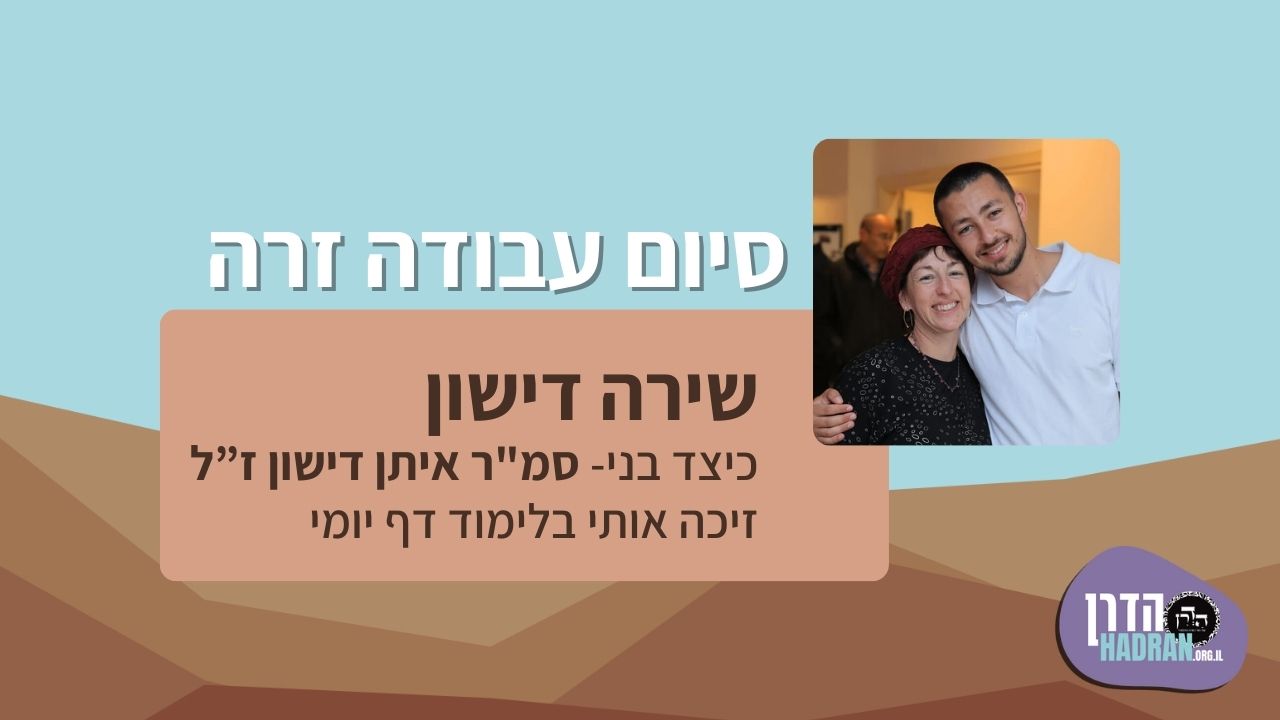
כיצד בני, סמ”ר איתן דישון ז”ל, זיכה אותי בלימוד דף יומי – שירה דישון



חדשה בלימוד הגמרא?
זה הדף הראשון שלך? איזו התרגשות עצומה! יש לנו בדיוק את התכנים והכלים שיעזרו לך לעשות את הצעדים הראשונים ללמידה בקצב וברמה שלך, כך תוכלי להרגיש בנוח גם בתוך הסוגיות המורכבות ומאתגרות.
פסיפס הלומדות שלנו
גלי את קהילת הלומדות שלנו, מגוון נשים, רקעים וסיפורים. כולן חלק מתנועה ומסע מרגש ועוצמתי.
A life-changing journey started with a Chanukah family tiyul to Zippori, home of the Sanhedrin 2 years ago and continued with the Syum in Binanei Hauma where I was awed by the energy of 3000 women dedicated to learning daf Yomi. Opening my morning daily with a fresh daf, I am excited with the new insights I find enriching my life and opening new and deeper horizons for me.

Elazar gush etzion, Israel
התחלתי ללמוד דף לפני קצת יותר מ-5 שנים, כשלמדתי רבנות בישיבת מהר”ת בניו יורק. בדיעבד, עד אז, הייתי בלימוד הגמרא שלי כמו מישהו שאוסף חרוזים משרשרת שהתפזרה, פה משהו ושם משהו, ומאז נפתח עולם ומלואו…. הדף נותן לי לימוד בצורה מאורגנת, שיטתית, יום-יומית, ומלמד אותי לא רק ידע אלא את השפה ודרך החשיבה שלנו. לשמחתי, יש לי סביבה תומכת וההרגשה שלי היא כמו בציטוט שבחרתי: הדף משפיע לטובה על כל היום שלי.

חיפה, ישראל
אחי, שלומד דף יומי ממסכת ברכות, חיפש חברותא ללימוד מסכת ראש השנה והציע לי. החברותא היתה מאתגרת טכנית ורוב הזמן נעשתה דרך הטלפון, כך שבסיום המסכת נפרדו דרכינו. אחי חזר ללמוד לבד, אבל אני כבר נכבשתי בקסם הגמרא ושכנעתי את האיש שלי להצטרף אלי למסכת ביצה. מאז המשכנו הלאה, ועכשיו אנחנו מתרגשים לקראתו של סדר נשים!

נוקדים, ישראל
לצערי גדלתי בדור שבו לימוד גמרא לנשים לא היה דבר שבשגרה ושנים שאני חולמת להשלים את הפער הזה.. עד שלפני מספר שבועות, כמעט במקרה, נתקלתי במודעת פרסומת הקוראת להצטרף ללימוד מסכת תענית. כשקראתי את המודעה הרגשתי שהיא כאילו נכתבה עבורי – "תמיד חלמת ללמוד גמרא ולא ידעת איך להתחיל”, "בואי להתנסות במסכת קצרה וקלה” (רק היה חסר שהמודעה תיפתח במילים "מיכי שלום”..). קפצתי למים ו- ב”ה אני בדרך להגשמת החלום:)

מורשת, ישראל
התחלתי ללמוד לפני 4.5 שנים, כשהודיה חברה שלי פתחה קבוצת ווטסאפ ללימוד דף יומי בתחילת מסכת סנהדרין. מאז לימוד הדף נכנס לתוך היום-יום שלי והפך לאחד ממגדירי הזהות שלי ממש.

ירושלים, ישראל
רציתי לקבל ידע בתחום שהרגשתי שהוא גדול וחשוב אך נעלם ממני. הלימוד מעניק אתגר וסיפוק ומעמיק את תחושת השייכות שלי לתורה וליהדות

עלי זהב – לשם, ישראל
התחלתי ללמוד בעידוד שתי חברות אתן למדתי בעבר את הפרק היומי במסגרת 929.
בבית מתלהבים מאוד ובשבת אני לומדת את הדף עם בעלי שזה מפתיע ומשמח מאוד! לימוד הדף הוא חלק בלתי נפרד מהיום שלי. לומדת בצהריים ומחכה לזמן הזה מידי יום…

אפרת, ישראל
כבר סיפרתי בסיום של מועד קטן.
הלימוד מאוד משפיעה על היום שלי כי אני לומדת עם רבנית מישל על הבוקר בזום. זה נותן טון לכל היום – בסיס למחשבות שלי .זה זכות גדול להתחיל את היום בלימוד ובתפילה. תודה רבה !

ירושלים, ישראל
התחלתי בסיום הש”ס, יצאתי באורות. נשברתי פעמיים, ובשתיהם הרבנית מישל עודדה להמשיך איפה שכולם בסבב ולהשלים כשאוכל, וכך עשיתי וכיום השלמתי הכל. מדהים אותי שאני לומדת כל יום קצת, אפילו בחדר הלידה, בבידוד או בחו”ל. לאט לאט יותר נינוחה בסוגיות. לא כולם מבינים את הרצון, בפרט כפמניסטית. חשה סיפוק גדול להכיר את המושגים וצורת החשיבה. החלום זה להמשיך ולהתמיד ובמקביל ללמוד איך מהסוגיות נוצרה והתפתחה ההלכה.

מודיעין, ישראל
התחלתי ללמוד דף יומי לפני שנתיים, עם מסכת שבת. בהתחלה ההתמדה היתה קשה אבל בזכות הקורונה והסגרים הצלחתי להדביק את הפערים בשבתות הארוכות, לסיים את מסכת שבת ולהמשיך עם המסכתות הבאות. עכשיו אני מסיימת בהתרגשות רבה את מסכת חגיגה וסדר מועד ומחכה לסדר הבא!

מודיעין, ישראל
התחלתי ללמוד גמרא בבית הספר בגיל צעיר והתאהבתי. המשכתי בכך כל חיי ואף היייתי מורה לגמרא בבית הספר שקד בשדה אליהו (בית הספר בו למדתי בילדותי)בתחילת מחזור דף יומי הנוכחי החלטתי להצטרף ובע”ה מקווה להתמיד ולהמשיך. אני אוהבת את המפגש עם הדף את "דרישות השלום ” שמקבלת מקשרים עם דפים אחרים שלמדתי את הסנכרון שמתחולל בין התכנים.

מעלה גלבוע, ישראל
באירוע של הדרן בנייני האומה. בהשראתה של אמי שלי שסיימה את הש”ס בסבב הקודם ובעידוד מאיר , אישי, וילדיי וחברותיי ללימוד במכון למנהיגות הלכתית של רשת אור תורה סטון ומורתיי הרבנית ענת נובוסלסקי והרבנית דבורה עברון, ראש המכון למנהיגות הלכתית.
הלימוד מעשיר את יומי, מחזיר אותי גם למסכתות שכבר סיימתי וידוע שאינו דומה מי ששונה פרקו מאה לשונה פרקו מאה ואחת במיוחד מרתקים אותי החיבורים בין המסכתות

מודיעין, ישראל
התחלתי מחוג במסכת קידושין שהעבירה הרבנית רייסנר במסגרת בית המדרש כלנה בגבעת שמואל; לאחר מכן התחיל סבב הדף היומי אז הצטרפתי. לסביבה לקח זמן לעכל אבל היום כולם תומכים ומשתתפים איתי. הלימוד לעתים מעניין ומעשיר ולעתים קשה ואף הזוי… אך אני ממשיכה קדימה. הוא משפיע על היומיום שלי קודם כל במרדף אחרי הדף, וגם במושגים הרבים שלמדתי ובידע שהועשרתי בו, חלקו ממש מעשי

ראש העין, ישראל
התחלתי לפני כמה שנים אבל רק בסבב הזה זכיתי ללמוד יום יום ולסיים מסכתות

רעננה, ישראל
כבר סיפרתי בסיום של מועד קטן.
הלימוד מאוד משפיעה על היום שלי כי אני לומדת עם רבנית מישל על הבוקר בזום. זה נותן טון לכל היום – בסיס למחשבות שלי .זה זכות גדול להתחיל את היום בלימוד ובתפילה. תודה רבה !
ירושלים, ישראל
שמעתי על הסיום הענק של הדף היומי ע”י נשים בבנייני האומה. רציתי גם.
החלטתי להצטרף. התחלתי ושיכנעתי את בעלי ועוד שתי חברות להצטרף. עכשיו יש לי לימוד משותף איתו בשבת ומפגש חודשי איתן בנושא (והתכתבויות תדירות על דברים מיוחדים שקראנו). הצטרפנו לקבוצות שונות בווטסאפ. אנחנו ממש נהנות. אני שומעת את השיעור מידי יום (בד”כ מהרב יוני גוטמן) וקוראת ומצטרפת לסיומים של הדרן. גם מקפידה על דף משלהן (ונהנית מאד).

אפרת, ישראל
התחלתי ללמוד בעידוד שתי חברות אתן למדתי בעבר את הפרק היומי במסגרת 929.
בבית מתלהבים מאוד ובשבת אני לומדת את הדף עם בעלי שזה מפתיע ומשמח מאוד! לימוד הדף הוא חלק בלתי נפרד מהיום שלי. לומדת בצהריים ומחכה לזמן הזה מידי יום…
אפרת, ישראל
התחלתי ללמוד דף יומי בסבב הקודם. זכיתי לסיים אותו במעמד המרגש של הדרן. בסבב הראשון ליווה אותי הספק, שאולי לא אצליח לעמוד בקצב ולהתמיד. בסבב השני אני לומדת ברוגע, מתוך אמונה ביכולתי ללמוד ולסיים. בסבב הלימוד הראשון ליוותה אותי חוויה מסויימת של בדידות. הדרן העניקה לי קהילת לימוד ואחוות נשים. החוויה של סיום הש”ס במעמד כה גדול כשנשים שאינן מכירות אותי, שמחות ומתרגשות עבורי , היתה חוויה מרוממת נפש

קיבוץ מגדל עוז, ישראל
התחלתי מעט לפני תחילת הסבב הנוכחי. אני נהנית מהאתגר של להמשיך להתמיד, מרגעים של "אהה, מפה זה הגיע!” ומהאתגר האינטלקטואלי

לוד, ישראל
התחלתי ללמוד דף יומי בתחילת מסכת ברכות, עוד לא ידעתי כלום. נחשפתי לסיום הש״ס, ובעצם להתחלה מחדש בתקשורת, הפתיע אותי לטובה שהיה מקום לעיסוק בתורה.
את המסכתות הראשונות למדתי, אבל לא סיימתי (חוץ מעירובין איכשהו). השנה כשהגעתי למדרשה, נכנסתי ללופ, ואני מצליחה להיות חלק, סיימתי עם החברותא שלי את כל המסכתות הקצרות, גם כשהיינו חולות קורונה ובבידודים, למדנו לבד, העיקר לא לצבור פער, ומחכות ליבמות 🙂

מזכרת בתיה, ישראל
עבודה זרה נז
דְּאִי מַשְׁכַּחְנָא תַּנָּא דְּאָסַר כְּרַבִּי נָתָן, אוֹסְרִינֵּיהּ אֲפִילּוּ בַּהֲנָאָה. דְּתַנְיָא: מְדָדוֹ, בֵּין בַּיָּד בֵּין בָּרֶגֶל — יִמָּכֵר. רַבִּי נָתָן אוֹמֵר: בַּיָּד — אָסוּר, בָּרֶגֶל — מוּתָּר.
I should delay my ruling, as if I find a tanna who prohibits the wine in accordance with the opinion of Rabbi Natan, I will prohibit even deriving benefit from it; this is difficult. Rabbi Natan prohibits one from deriving benefit from wine that was touched by a gentile, as it is taught in a baraita: If a gentile measured a Jew’s wine, whether he measured it with his hand or with his foot, it may be sold. Rabbi Natan says: If he measured it with his hand it is prohibited, but if he measured it with his foot it is permitted.
אֵימַר דְּאָמַר רַבִּי נָתָן בַּיָּד, בָּרֶגֶל מִי אָמַר? אֶלָּא דְּאִי מַשְׁכַּחְנָא תַּנָּא דְּשָׁרֵי כְּרַבִּי שִׁמְעוֹן, אֶישְׁרְיֵיהּ אֲפִילּוּ בִּשְׁתִיָּיה.
The Gemara explains why the suggestion that Shmuel delayed his ruling because of the opinion of Rabbi Natan is difficult: Say that Rabbi Natan said that the wine is forbidden when the gentile measured it with his hand. Did he say that the wine is forbidden if he measured it with his foot? Rather, Shmuel delayed ruling on the matter because he thought to himself: If I find another tanna who permits the wine in accordance with the opinion of Rabbi Shimon, who holds that if a gentile touches wine without intending to render it a libation, it is permitted, I will permit the wine even for drinking.
הָהוּא עוֹבָדָא דַּהֲוָה בְּבֵירָם, דְּהָהוּא גּוֹי דַּהֲוָה קָא סָלֵיק בְּדִיקְלָא וְאַיְיתִי לוּלִיבָּא, בַּהֲדֵי דְּקָא נָחֵית נְגַע בְּרֵאשֵׁהּ דְּלוּלִיבָּא בְּחַמְרָא שֶׁלֹּא בְּכַוָּונָה, שַׁרְיֵיהּ רַב לְזַבּוֹנֵיהּ לְגוֹיִם.
There was a certain incident in Biram that occurred as follows: There was a certain gentile who was climbing a palm tree and he brought down with him a palm branch. While he was descending from the tree he unintentionally touched some wine with the tip of the palm branch. Rav permitted the owners to sell the wine to gentiles.
אֲמַרוּ לֵיהּ רַב כָּהֲנָא וְרַב אַסִּי לְרַב, וְהָא מָר הוּא דְּאָמַר: תִּינוֹק בֶּן יוֹמוֹ הוּא עוֹשֶׂה יֵין נֶסֶךְ! אֲמַר לְהוּ: אֵימוֹר דַּאֲמַרִי אֲנָא בִּשְׁתִיָּיה, בַּהֲנָאָה מִי אֲמַרִי?
Rav Kahana and Rav Asi said to Rav: But wasn’t it you, Master, who said: If a gentile baby who is one day old touches wine, he renders it wine used for a libation, even though he lacks any intent? Rav said to them: Say that I said that the baby renders the wine prohibited for drinking. Did I say that it is prohibited to derive benefit from it? It is therefore permitted to sell the wine.
גּוּפָא, אָמַר רַב: תִּינוֹק בֶּן יוֹמוֹ עוֹשֶׂה יֵין נֶסֶךְ.
§ The Gemara cites Rav’s statement in order to discuss the matter itself: Rav says: If a gentile baby who is one day old touches wine, he renders it wine used for a libation, even though he lacks any intent.
אֵיתִיבֵיהּ רַב שִׁימִי בַּר חִיָּיא לְרַב: הַלּוֹקֵחַ עֲבָדִים מִן הַגּוֹיִם, שֶׁמָּלוּ וְלֹא טָבְלוּ, וְכֵן בְּנֵי הַשְּׁפָחוֹת, שֶׁמָּלוּ וְלֹא טָבְלוּ — רוּקָּן וּמִדְרָסָן בַּשּׁוּק טָמֵא, וְאָמְרִי לַהּ: טָהוֹר.
Rav Shimi bar Ḥiyya raised an objection to the statement of Rav from a baraita: With regard to one who purchases from the gentiles slaves who have been circumcised but have not immersed in a ritual bath, and also with regard to the sons of the gentile maidservants who grew up in a Jew’s home and were circumcised but did not immerse in a ritual bath, their conversion is not yet valid. They have the legal status of gentiles, who transmit impurity like a zav, a man who experiences a gonorrhea-like discharge. Their spittle and objects upon which they tread, even if they are found in the marketplace, are ritually impure. But some say that they are ritually pure.
יֵינָן — גְּדוֹלִים עוֹשִׂים יֵין נֶסֶךְ, קְטַנִּים אֵין עוֹשִׂים יֵין נֶסֶךְ. וְאֵלּוּ הֵן גְּדוֹלִים וְאֵלּוּ הֵן קְטַנִּים? גְּדוֹלִים — יוֹדְעִין בְּטִיב עֲבוֹדָה זָרָה וּמְשַׁמְּשֶׁיהָ, קְטַנִּים — אֵינָם יוֹדְעִין בְּטִיב עֲבוֹדָה זָרָה וּמְשַׁמְּשֶׁיהָ.
The baraita continues: With regard to their wine, the adults render the wine that they touch wine used for a libation, but the minors do not render the wine that they touch wine used for a libation. And which slaves are considered adults, and which slaves are considered minors? The adults are those who know the nature of idol worship and its accessories, and the minors are those who do not know the nature of idol worship and its accessories.
קָתָנֵי מִיהַת גְּדוֹלִים — אִין, קְטַנִּים — לָא! תַּרְגְּמַהּ אַבְּנֵי שְׁפָחוֹת.
In any event, the baraita teaches that with regard to adults, yes, the wine they touch is rendered prohibited, but with regard to minors, no, the wine they touch is not rendered prohibited. This contradicts the statement of Rav. The Gemara replies: Interpret the distinction between adults and minors as referring to the sons of maidservants. Since they were raised in a Jewish home, there is less reason for concern lest they render the wine an idolatrous libation, and therefore the Sages did not prohibit wine touched by minors. This distinction does not apply in the case of slaves that were purchased from gentiles.
הָא ״וְכֵן״ קָאָמַר! אַרוּקָּן וּמִדְרָסָן.
The Gemara asks: Doesn’t the baraita say that the halakha applies to slaves purchased from gentiles and also to the sons of gentile maidservants, indicating that there is no differentiation between them? The Gemara replies: The baraita equates the two cases only with regard to the impurity of their spittle and of the objects upon which they tread.
הָנִיחָא לְמַאן דְּאָמַר טָמֵא, אֶלָּא לְמַאן דְּאָמַר טָהוֹר, מַאי אִיכָּא לְמֵימַר?
The Gemara asks: This works out well according to the one who says that their spittle and the objects upon which they tread are impure. But according to the one who says that they are pure, what can be said? If the spittle of the slaves and the objects upon which they tread are pure, clearly the halakha is the same in the case of the sons of maidservants, and it is unnecessary to state this. One may therefore conclude that the baraita equated the two cases with regard to the status of the wine that they touch.
הָא קָא מַשְׁמַע לַן, עֲבָדִים דֻּומְיָא דִּבְנֵי שְׁפָחוֹת, מָה בְּנֵי שְׁפָחוֹת מָלוּ וְלֹא טָבְלוּ הוּא דְּעוֹשִׂין יֵין נֶסֶךְ, מָלוּ וְטָבְלוּ לָא, אַף עֲבָדִים כֵּן.
The Gemara replies: Even if the baraita is equating the two cases with regard to the status of the wine that they touch, it is not equating them with regard to the distinction between adults and minors. Rather, this teaches us that the halakha with regard to slaves is similar to the halakha with regard to the sons of maidservants. Just as in the case of the sons of maidservants, it is only those who were circumcised but did not immerse who render the wine that they touch wine used for a libation, but those who were circumcised and immersed do not; so too in the case of slaves, once they have immersed in a ritual bath they do not render wine prohibited.
לְאַפּוֹקֵי מִדְּרַב נַחְמָן אָמַר שְׁמוּאֵל, דְּאָמַר רַב נַחְמָן אָמַר שְׁמוּאֵל: הַלּוֹקֵחַ עֲבָדִים מִן הַגּוֹיִם, אַף עַל פִּי שֶׁמָּלוּ וְטָבְלוּ — עוֹשִׂין יֵין נֶסֶךְ עַד שֶׁתִּשְׁקַע עֲבוֹדָה זָרָה מִפִּיהֶם, קָא מַשְׁמַע לַן דְּלָא.
This halakha is to the exclusion of that which Rav Naḥman says that Shmuel says, as Rav Naḥman says that Shmuel says: In the case of one who purchases slaves from the gentiles, even though the slaves were circumcised and immersed in a ritual bath, they still render the wine that they touch wine used for a libation, as they are accustomed to idolatrous practices, until reference to idol worship disappears from their mouths. The baraita teaches us that their wine is not prohibited.
גּוּפָא, אָמַר רַב נַחְמָן אָמַר שְׁמוּאֵל: הַלּוֹקֵחַ עֲבָדִים מִן הַגּוֹיִם, אַף עַל פִּי שֶׁמָּלוּ וְטָבְלוּ — עוֹשִׂין יֵין נֶסֶךְ עַד שֶׁתִּשְׁקַע עֲבוֹדָה זָרָה מִפִּיהֶם. וְכַמָּה? אָמַר רַבִּי יְהוֹשֻׁעַ בֶּן לֵוִי: עַד שְׁנֵים עָשָׂר חֹדֶשׁ.
§ The Gemara cites the aforementioned statement in order to discuss the matter itself: Rav Naḥman says that Shmuel says: In the case of one who purchases slaves from the gentiles, even though the slaves were circumcised and immersed in a ritual bath, they still render the wine that they touch wine used for a libation, as they are accustomed to idolatrous practices, until reference to idol worship disappears from their mouths. And how much time does this take? Rabbi Yehoshua ben Levi says: One does not assume that the slave has forgotten his idolatrous worship until twelve months have passed.
אֵיתִיבֵיהּ רַבָּה לְרַב נַחְמָן: הַלּוֹקֵחַ עֲבָדִים מִן הַגּוֹיִם שֶׁמָּלוּ וְלֹא טָבְלוּ, וְכֵן בְּנֵי הַשְּׁפָחוֹת שֶׁמָּלוּ וְלֹא טָבְלוּ — רוּקָּן וּמִדְרָסָן
Rabba raised an objection to Rav Naḥman from the aforementioned baraita: With regard to one who purchases from the gentiles slaves that have been circumcised but have not immersed in a ritual bath, and also with regard to the sons of the gentile maidservants who grew up in a Jew’s home and were circumcised but did not immerse in a ritual bath, their conversion is not valid and they have the legal status of gentiles. Their spittle and objects upon which they tread,
בַּשּׁוּק טָמֵא, וְאָמְרִי לַהּ: טָהוֹר. יֵינָן — גְּדוֹלִים עוֹשִׂין יֵין נֶסֶךְ, קְטַנִּים אֵין עוֹשִׂין יֵין נֶסֶךְ. אֵלּוּ הֵן גְּדוֹלִים וְאֵלּוּ הֵן קְטַנִּים? גְּדוֹלִים — שֶׁיּוֹדְעִין בְּטִיב עֲבוֹדָה זָרָה וּמְשַׁמְּשֶׁיהָ, קְטַנִּים — שֶׁאֵין יוֹדְעִין בְּטִיב עֲבוֹדָה זָרָה וּמְשַׁמְּשֶׁיהָ.
even if they are found in the marketplace, are ritually impure. But some say that they are ritually pure. With regard to their wine, the adults render the wine that they touch wine used for a libation, but the minors do not render the wine that they touch wine used for a libation. Which slaves are considered adults, and which slaves are considered minors? The adults are those who know the nature of idol worship and its accessories, and the minors are those who do not know the nature of idol worship and its accessories.
קָתָנֵי מִיהַת: מָלוּ וְלֹא טָבְלוּ — אִין, מָלוּ וְטָבְלוּ — לָא! תַּרְגְּמַהּ אַבְּנֵי שְׁפָחוֹת.
In any event, the baraita teaches that with regard to those slaves who were circumcised but did not immerse, yes, the wine they touch is prohibited, but with regard to those who were circumcised and immersed, no, the wine they touch is not prohibited, even if they have not yet forgotten their idolatrous worship. The Gemara replies: Interpret this halakha as referring only to the sons of maidservants who were raised in a Jewish home and never engaged in idolatrous worship, but not to slaves who were acquired from gentiles.
הָא ״וְכֵן״ קָתָנֵי! אַרוּקָּן וּמִדְרָסָן.
The Gemara asks: Doesn’t the baraita teach that the halakha applies to slaves purchased from gentiles and also to the sons of gentile maidservants, indicating that there is no differentiation between them? The Gemara replies: The baraita equates the two cases only with regard to the impurity of their spittle and of the objects upon which they tread.
הָנִיחָא לְמַאן דְּאָמַר טָמֵא, אֶלָּא לְמַאן דְּאָמַר טָהוֹר, מַאי אִיכָּא לְמֵימַר?
The Gemara asks: This works out well according to the one who says that their spittle and the objects upon which they tread are impure. But according to the one who says that they are pure, what can be said? If the spittle of the slaves and the objects upon which they tread are pure, clearly the same halakha applies in the case of the sons of maidservants, and it is unnecessary to state this. One may therefore conclude that the baraita equated the two cases with regard to the status of the wine that they touch.
הָא קָא מַשְׁמַע לַן: עֲבָדִים דֻּומְיָא דִּבְנֵי שְׁפָחוֹת, מָה בְּנֵי שְׁפָחוֹת — גְּדוֹלִים הוּא דְּעוֹשִׂין יֵין נֶסֶךְ, קְטַנִּים אֵין עוֹשִׂין יֵין נֶסֶךְ, אַף עֲבָדִים נָמֵי — גְּדוֹלִים עוֹשִׂין יֵין נֶסֶךְ, קְטַנִּים אֵין עוֹשִׂין יֵין נֶסֶךְ.
The Gemara answers: Even if the baraita equates the slaves and the sons of maidservants with regard to the status of their wine, it does not intend to compare their status once they have immersed. Rather, this teaches us that the halakha with regard to slaves is similar to the halakha with regard to the sons of maidservants. Just as in the case of the sons of maidservants, it is only the adults who render the wine that they touch wine used for a libation, but minors do not render the wine they touch wine used for a libation, so too in the case of slaves, the adults render the wine that they touch wine used for a libation, but minors do not render the wine they touch wine used for a libation.
לְאַפּוֹקֵי מִדְּרַב, דְּאָמַר רַב: תִּינוֹק בֶּן יוֹמוֹ עוֹשֶׂה יֵין נֶסֶךְ, קָא מַשְׁמַע לַן דְּלָא.
This halakha is to the exclusion of that which Rav says, as Rav says: If a gentile baby who is one day old touches wine, he renders it wine used for a libation. The baraita teaches us that this is not the case.
הָהוּא עוֹבָדָא דַּהֲוָה בְּמָחוֹזָא, אֲתָא גּוֹי עָייל לְחָנוּתָא דְּיִשְׂרָאֵל, אֲמַר לְהוּ: אִית לְכוּ חַמְרָא לְזַבּוֹנֵי? אֲמַרוּ לֵיהּ: לָא. הֲוָה יָתֵיב חַמְרָא בְּדַוְולָא, שְׁדָא בֵּיהּ יְדֵיהּ שַׁיכְשֵׁךְ בֵּיהּ, אֲמַר לְהוּ: הַאי לָאו חַמְרָא הוּא? שַׁקְלֵיהּ הַאיְךְ בְּרִיתְחֵיהּ שַׁדְיֵיהּ לְדַנָּא.
§ The Gemara relates: There was a certain incident in Meḥoza in which a gentile came and entered the store of a Jew. The gentile said to the owners: Do you have any wine to sell? They said to him: No. There was wine sitting in a bucket. The gentile put his hand in it and stirred the wine around. The gentile said to them: This, is it not wine? The other person, i.e., the storeowner, took the bucket and, in his anger, threw its contents into a barrel of wine.
שַׁרְיֵיהּ רָבָא לְזַבּוֹנֵי לְגוֹיִם, אִיפְּלִיג עֲלֵיהּ רַב הוּנָא בַּר חִינָּנָא וְרַב הוּנָא בְּרֵיהּ דְּרַב נַחְמָן. נָפְקִי שִׁיפּוּרֵי דְּרָבָא וְשָׁרוּ, וְנָפְקִי שִׁיפּוּרֵי דְּרַב הוּנָא בַּר חִינָּנָא וְרַב הוּנָא בַּר רַב נַחְמָן וְאָסְרִי.
This incident raised a dilemma with regard to the status of the wine in the barrel. Rava permitted the owner to sell the wine to gentiles, as he held that it is permitted to derive benefit from the wine. Rav Huna bar Ḥinnana and Rav Huna, son of Rav Naḥman, disagreed with him. Blasts of shofarot went out from the court of Rava promulgating his ruling, and they permitted the sale. And blasts of shofarot went out from the court of Rav Huna bar Ḥinnana and Rav Huna, son of Rav Naḥman, promulgating their ruling, and they prohibited the sale.

