חיפוש

קידושין מג

רוצה להקדיש שיעור?

podcast placeholder

0:00
0:00


תקציר

הדף היום מוקדש ע”י גיטה ודוד ניופלד לע”נ מאיר בן אריה לייב הלוי.

מדוע אנו אומרים שאין שליח לדבר עבירה, ז”א אם שולחים שליח לעשות עבירה, השליח נענש ולא המשלח? למרות שיש מקרים שבהם המשלח חייב, אנחנו לא בונים מאותם מקרים בניין אב כדי ללמוד מהם על כל שאר המצוות – למה לא? לשמאי הזקן יש גישה אחרת. ישנן שלוש פרשנויות שונות המסבירות את דעתו. האם שליח יכול לתפקד גם כעד במקרה שבו הוא היה גם השליח? רב רבי שילה חלוקים בשאלה זו. מה עומד בבסיס המחלוקת ביניהם? מועלית שאלה נגד עמדתו של רב מדיון בין בית שמאי ובית הלל, אך היא נפתרת. הפסיקה היא שהשליח יכולים לתפקד כעד. רב נחמן פוסק כך בנישואין, בגירושין ובדיני ממונות. מדוע היה צורך לפרט לגבי כל אחד? מדוע לא היה מודאג בדיני ממונות שהעד הוא נוגע בדבר? איך זה השתנה ברגע שהחכמים דרשו שבועת היסט? האם נערהיכולה לקבל גט לגירושין או לקבל קידושין או שרק אביה יכול? באיזה מקרה יש מחלוקת?

קידושין מג

נֵילַף מִינֵּיהּ! מִשּׁוּם דְּהָוֵה מְעִילָה טְבִיחָה וּמְכִירָה שְׁנֵי כְתוּבִים הַבָּאִים כְּאֶחָד, וְכֹל שְׁנֵי כְתוּבִים הַבָּאִים כְּאֶחָד אֵין מְלַמְּדִין. מְעִילָה – הָא דַּאֲמַרַן, טְבִיחָה וּמְכִירָה מַאי הִיא? אָמַר קְרָא: ״וּטְבָחוֹ אוֹ מְכָרוֹ״ – מָה מְכִירָה עַל יְדֵי אַחֵר, אַף טְבִיחָה עַל יְדֵי אַחֵר.

let us derive a principle from misuse of consecrated property, that an agent can be appointed to perform a transgression. The Gemara answers: This is not done, because misuse of consecrated property and the slaughter or sale of a stolen cow or sheep are two verses that come as one, and any two verses that come as one do not teach their common aspect to apply to other cases. The Gemara clarifies: The verse pertaining to misuse of consecrated property is that which we said, but what is the verse with regard to slaughter or sale? The verse states: “And he slaughters it or sells it” (Exodus 21:37), juxtaposing selling to slaughtering: Just as a sale is necessarily performed by means of another, since every transaction involves two parties, so too slaughter can likewise be performed by means of another, and the thief is liable even if the act of slaughtering is performed by his agent.

דְּבֵי רַבִּי יִשְׁמָעֵאל תָּנָא: ״אוֹ״ – לְרַבּוֹת אֶת הַשָּׁלִיחַ. דְּבֵי חִזְקִיָּה תָּנָא: ״תַּחַת״ – לְרַבּוֹת אֶת הַשָּׁלִיחַ.

The Gemara quotes two other explanations. The school of Rabbi Yishmael taught that the word “or” in the verse “and he slaughters it or sells it,” serves to include an agent. The school of Ḥizkiyya taught: When the verse states with regard to sale or slaughter: “He shall pay five oxen for an ox, and four sheep for a sheep” (Exodus 21:37), repetition of the word “for” is superfluous and serves to include an agent. It teaches that the one who appointed the agent is liable for the action of the agent.

הָנִיחָא לְמַאן דְּאָמַר שְׁנֵי כְתוּבִים הַבָּאִים כְּאֶחָד אֵין מְלַמְּדִין. אֶלָּא לְמַאן דְּאָמַר מְלַמְּדִין, מַאי אִיכָּא לְמֵימַר? גַּלִּי רַחֲמָנָא בִּשְׁחוּטֵי חוּץ, ״דָּם יֵחָשֵׁב לָאִישׁ הַהוּא דָּם שָׁפָךְ״ – הוּא וְלֹא שְׁלוּחוֹ.

The Gemara asks: This works out well according to the one who said that two verses that come as one do not teach a precedent that applies to other cases, but according to the one who said that two verses do teach a precedent, what can be said? Why not derive from the case of misuse of consecrated property and that of slaughter or sale that an agent can be appointed to perform a transgression? The Gemara answers: The Merciful One reveals in the Torah that an agent cannot be appointed to perform a transgression in the case of an offering slaughtered outside the Temple, as it states: “It shall be considered blood for that [hahu] man; he has spilled blood” (Leviticus 17:4). The emphasis of “that man” teaches that he is liable for his actions, but he is not liable for the actions of his agent.

אַשְׁכְּחַן גַּבֵּי שְׁחוּטֵי חוּץ, בְּכׇל הַתּוֹרָה מְנָלַן? דְּיָלֵיף מִשְּׁחוּטֵי חוּץ.

The Gemara asks: We found a source for the halakha that an agent cannot be appointed to perform a transgression with regard to the prohibition of offerings slaughtered outside. From where do we derive that this halakha applies to the entire Torah? The Gemara answers: It is derived as a principle from the case of offerings slaughtered outside, by means of analogy.

אַדְּיָלֵיף מִשְּׁחוּטֵי חוּץ, נֵילַיף מֵהָנָךְ! הֲדַר כְּתַב רַחֲמָנָא: ״וְנִכְרַת הָאִישׁ הַהוּא״ – אִם אֵינוֹ עִנְיָן לְגוּפוֹ, תְּנֵהוּ עִנְיָן לְכׇל הַתּוֹרָה כּוּלָּהּ.

The Gemara asks: But before deriving that an agent cannot be appointed to perform a transgression from the case of offerings slaughtered outside, let us derive the halakha from these other cases, i.e., misuse of consecrated property and slaughter or sale, where the halakha is that an agent can be appointed to perform a transgression. The Gemara answers: The Merciful One again writes in that same verse in connection to the prohibition of slaughtering offerings outside the Temple: “And that [hahu] man shall be cut off from among his people” (Leviticus 17:4). If the halakha derived from the emphasis of the word hahu written in this part of the verse is not needed for this matter itself, since the verse already taught that he is liable only for his own act and not for that of his agent, apply it to the matter of the entire Torah, so that one is held liable only for one’s own actions and not for those of an agent.

וּלְמַאן דְּאָמַר שְׁנֵי כְתוּבִים הַבָּאִים כְּאֶחָד אֵין מְלַמְּדִים, הָנֵי ״הָהוּא״ ״הָהוּא״ מַאי דָּרֵישׁ בְּהוּ? חַד, לְמַעוֹטֵי שְׁנַיִם שֶׁאוֹחֲזִים בְּסַכִּין וְשׁוֹחֲטִים, וְחַד, ״הוּא״ – וְלֹא אָנוּס, ״הוּא״ – וְלֹא שׁוֹגֵג, ״הוּא״ – וְלֹא מוּטְעֶה.

The Gemara asks: And according to the one who says that two verses that come as one do not teach a precedent, and there is no reason to learn from the misuse of consecrated property and slaughter or sale that one can appoint an agent to perform a transgression, what does he interpret those terms: “That man” and: “That man” to be teaching? Since he does not need to counter a derivation from the two verses, he should not require them to teach that one cannot appoint an agent to perform a transgression. The Gemara answers: One of them serves to exclude from liability the case of two who hold a knife and slaughter an offering outside together. And the other one emphasizes: “That man” is liable, but not one who is compelled to slaughter the animal; “that man” is liable, but not one who does so unwittingly; and “that man” is liable, and not one who was mistaken, e.g., one who did not know that the animal was an offering. In order to be liable one must have acted with full awareness and completely willingly.

וְאִידָּךְ? מֵ״הוּא״ ״הָהוּא״. וְאִידָּךְ? ״הוּא״ ״הַהוּא״ לָא דָּרֵישׁ.

The Gemara asks: And how does the other opinion, i.e., the one who holds that two verses that come as one do teach a precedent, which derives from the word “that [hahu]” that an agent cannot be appointed to perform a transgression, derive these halakhot? The Gemara answers: He derives them from the fact that the pronoun “hahu” is composed of two parts, the article ha, meaning: The, and the pronoun hu, meaning: He. He derives halakhot both from “hu and from the additional article in hahu.” Therefore, he is able to derive both the principle that an agent cannot be appointed to perform a transgression and the halakhot of two that slaughter and one who acts without full awareness. And the other opinion, i.e., the one who holds that two verses that come as one do not teach a precedent, which derives these halakhot from the entire word “hahu,” does not interpret the variation from hu to hahu.” He holds that one cannot derive separate halakhot from each part of this word.

וְהָא דְּתָנֵי: הָאוֹמֵר לִשְׁלוּחוֹ: ״צֵא הֲרוֹג אֶת הַנֶּפֶשׁ״, הוּא – חַיָּיב, וְשׁוֹלְחָיו – פָּטוּר. שַׁמַּאי הַזָּקֵן אוֹמֵר מִשּׁוּם חַגַּי הַנָּבִיא: שׁוֹלְחָיו חַיָּיב, שֶׁנֶּאֱמַר: ״אֹתוֹ הָרַגְתָּ בְּחֶרֶב בְּנֵי עַמּוֹן״.

The Gemara questions the statement that there is no agency for transgressions: But there is that which is taught in a baraita: One who says to his agent: Go kill a person, he, the killer, is liable if he kills, and the one who appointed him is exempt. Shammai the Elder says in the name of Haggai the prophet: The one who appointed him is liable, as it stated with regard to David, who directed Joab to kill Uriah: “Him you have slain with the sword of the children of Ammon” (II Samuel 12:9). David was held responsible for the death of Uriah.

מַאי טַעְמֵיהּ דְּשַׁמַּאי הַזָּקֵן? קָסָבַר: שְׁנֵי כְתוּבִים הַבָּאִים כְּאֶחָד מְלַמְּדִין, וְ״הוּא״ ״הַהוּא״ לָא דָּרֵישׁ. וְאִיבָּעֵית אֵימָא: לְעוֹלָם דָּרֵישׁ, וּמַאי חַיָּיב – חַיָּיב בְּדִינֵי שָׁמַיִם.

The Gemara asks: What is the reason of Shammai the Elder? How can he say that there is agency for transgression? The Gemara answers: He holds that two verses that come as one do teach a precedent, and therefore he learns from the two cases of misuse of consecrated property and slaughter or sale that there is agency for transgression. And as for the derivation from one who slaughters an offering outside the Temple, which teaches that there is no agent for transgression, Shammai does not interpret the variation from hu to hahu.” And if you wish, say instead: Actually it is possible that he does interpret the variation, and he agrees that there is no agent for transgression. And what is the meaning of Shammai’s statement that the one who appoints him is liable? It means he is liable according to the laws of Heaven, although he cannot be punished by a human court.

מִכְּלָל דְּתַנָּא קַמָּא סָבַר: אֲפִילּוּ מִדִּינֵי שָׁמַיִם נָמֵי פָּטוּר?! אֶלָּא: דִּינָא רַבָּה וְדִינָא זוּטָא אִיכָּא בֵּינַיְיהוּ.

The Gemara asks: By inference, does this mean that the first tanna holds that he is exempt even according to the laws of Heaven? The one who appointed him must bear some responsibility. Rather, the first tanna also agrees that the one who appointed the killer is liable according to the laws of Heaven, and the difference between them pertains to a great judgment and a small judgment. According to Shammai, his liability is great, to the extent that Heaven considers him fully responsible, whereas the first tanna holds that his liability is of a lesser degree.

וְאִיבָּעֵית אֵימָא: שָׁאנֵי הָתָם דְּגַלִּי רַחֲמָנָא: ״אֹתוֹ הָרַגְתָּ בְּחֶרֶב בְּנֵי עַמּוֹן״.

And if you wish, say instead: Everyone agrees that there is no agent for transgression. Nevertheless, Shammai holds that there, with regard to killing, it is different, since the Merciful One reveals: “Him you have slain with the sword of the children of Ammon,” explicitly rendering David accountable for this transgression and indicating that killing is different from all other transgressions.

וְאִידַּךְ: הֲרֵי לְךָ כְּחֶרֶב בְּנֵי עַמּוֹן, מָה חֶרֶב בְּנֵי עַמּוֹן – אֵין אַתָּה נֶעֱנָשׁ עָלָיו, אַף אוּרִיָּה הַחִתִּי – אִי אַתָּה נֶעֱנָשׁ עָלָיו. מַאי טַעְמָא – מוֹרֵד בַּמַּלְכוּת הֲוָה, דְּקָאָמַר לֵיהּ: ״וַאדֹנִי יוֹאָב וְעַבְדֵי אֲדֹנִי עַל פְּנֵי הַשָּׂדֶה חֹנִים״.

And the other opinion, i.e., the first tanna, who holds that the one who appoints the killer is exempt, explains the verse as follows: Behold this killing is for you like the sword of Ammon. Just as you are not punished for those killed by the sword of Ammon in the course of the war, so too you are not punished for the death of Uriah the Hittite, not even according to the laws of Heaven. What is the reason for this? Uriah was a rebel against the monarchy and was consequently liable to the death penalty, as he said to King David: “And my lord Joab, and the servants of my lord, are encamped in the open field” (II Samuel 11:11). By referring to Joab as his lord in front of the king, he indicated that he answered to Joab rather than to the king, which is tantamount to rebellion.

אָמַר רָבָא: אִם תִּמְצֵי לוֹמַר סָבַר שַׁמַּאי שְׁנֵי כְתוּבִים הַבָּאִים כְּאֶחָד מְלַמְּדִין, וְ״הוּא״ ״הַהוּא״ לָא דָּרֵישׁ, מוֹדֶה בְּאוֹמֵר לִשְׁלוּחוֹ ״צֵא בְּעוֹל אֶת הָעֶרְוָה״ וֶ״אֱכוֹל אֶת הַחֵלֶב״ שֶׁהוּא חַיָּיב, וְשׁוֹלְחָיו פָּטוּר. שֶׁלֹּא מָצִינוּ בְּכׇל הַתּוֹרָה כּוּלָּהּ זֶה נֶהֱנֶה וְזֶה מִתְחַיֵּיב.

Rava said: If you say that Shammai holds that two verses that come as one do teach a precedent, and he does not interpret the variation from hu to hahu,” the combination of which would result in him holding that there is agency for transgression in all cases, even he concedes with regard to one who says to his agent: Go and engage in sexual intercourse with a forbidden relative, or: Go and eat forbidden fat, that the agent is liable and the one who appointed him is exempt, as we have not found in the entire Torah a case where this person physically benefits from the transgression but that one becomes liable.

אִיתְּמַר, רַב אָמַר: שָׁלִיחַ נַעֲשֶׂה עֵד. דְּבֵי רַבִּי שֵׁילָא אָמְרִי: אֵין שָׁלִיחַ נַעֲשֶׂה עֵד. מַאי טַעְמָא דְּבֵי רַבִּי שֵׁילָא? אִילֵּימָא מִשּׁוּם דְּלָא אֲמַר לֵיהּ: ״הֱוֵי לִי עֵד״ – אֶלָּא מֵעַתָּה קִידֵּשׁ אִשָּׁה בִּפְנֵי שְׁנַיִם וְלָא אָמַר לָהֶם: ״אַתֶּם עֵדַיי״ – הָכִי נָמֵי דְּלָא הָווּ קִידּוּשֵׁי?

§ It was stated that amora’im engaged in a dispute concerning the following issue: Rav says: An agent can become a witness. If one was appointed as an agent to perform a certain task, he can then serve as a witness that the action was performed. In the school of Rabbi Sheila they say: An agent cannot become a witness. The Gemara asks: What is the reason of the school of Rabbi Sheila? If we say it is because the one who appointed him did not say to the agent: Be a witness for me, and appointed him only as an agent; if that is so, if one betrothed a woman in the presence of two people and did not say to them: You are my witnesses, so too would they hold that it is not a betrothal? It is not necessary to explicitly appoint witnesses.

אֶלָּא, רַב אָמַר: שָׁלִיחַ נַעֲשֶׂה עֵד – אַלּוֹמֵי קָא מְאַלֵּימְנָא לְמִילְּתֵיהּ. דְּבֵי רַבִּי שֵׁילָא אָמְרִי: אֵין שָׁלִיחַ נַעֲשֶׂה עֵד – כֵּיוָן דְּאָמַר מָר: ״שְׁלוּחוֹ שֶׁל אָדָם כְּמוֹתוֹ״ – הָוֵה לֵיהּ כְּגוּפֵיהּ.

Rather, the dispute is as follows. Rav says: An agent can become a witness, since we strengthen his words of testimony because he attests to a matter of which he is certain, as he is the one that performed the action. In the school of Rabbi Sheila they say: An agent cannot become a witness. Since the Master said that the legal status of a person’s agent is like that of himself, the agent is considered like the one who appointed him himself. Just as one cannot testify with regard to a matter that concerns himself, the same applies to one’s agent.

מֵיתִיבִי: אָמַר לִשְׁלֹשָׁה ״צְאוּ וְקַדְּשׁוּ לִי הָאִשָּׁה״ – אֶחָד שָׁלִיחַ וּשְׁנַיִם עֵדִים, דִּבְרֵי בֵּית שַׁמַּאי. וּבֵית הִלֵּל אוֹמְרִים: כּוּלָּם שְׁלוּחִין הֵן, וְאֵין שָׁלִיחַ נַעֲשֶׂה עֵד. עַד כָּאן לָא פְּלִיגִי אֶלָּא בִּשְׁלֹשָׁה, אֲבָל בִּשְׁנַיִם – דִּבְרֵי הַכֹּל לָא!

The Gemara raises an objection from a baraita to the statement of Rav: If one said to three people: Go out and betroth the woman for me, then one of them is the agent for the betrothal and two of them serve as witnesses; this is the statement of Beit Shammai. And Beit Hillel say: They are all potential agents, and as an agent cannot become a witness none of them can be witnesses. Beit Shammai and Beit Hillel disagree only with regard to a case where one said this to three people. But with regard to two people, all agree that agents are not able to serve as witnesses.

הוּא דְּאָמַר כִּי הַאי תַּנָּא, דְּתַנְיָא: רַבִּי נָתָן אוֹמֵר, בֵּית שַׁמַּאי אוֹמְרִים: שָׁלִיחַ וְעֵד אֶחָד. וּבֵית הִלֵּל אוֹמְרִים: שָׁלִיחַ וּשְׁנֵי עֵדִים. וְרַב כְּבֵית שַׁמַּאי?! אֵיפוֹךְ. וְרַב אַחָא בְּרֵיהּ דְּרָבָא מַתְנִי אִיפְּכָא: רַב אָמַר: אֵין שָׁלִיחַ נַעֲשֶׂה עֵד, דְּבֵי רַבִּי שֵׁילָא אָמְרִי: שָׁלִיחַ נַעֲשֶׂה עֵד. וְהִילְכְתָא: שָׁלִיחַ נַעֲשֶׂה עֵד.

The Gemara answers: It was he, Rav, who said his ruling in accordance with the opinion of that tanna, i.e., the version of Beit Shammai as presented by Rabbi Natan. As it is taught in a baraita: Rabbi Natan says: Beit Shammai say that the agent and one witness are sufficient to carry out the agency and testify, and Beit Hillel say: The agent and two witnesses are needed. The Gemara questions this explanation: And would Rav rule in accordance with the opinion of Beit Shammai? The Gemara answers: Reverse the opinions, so that it is Beit Hillel who said that the agent and one witness suffice. And Rav Aḥa, son of Rava, taught the dispute of the amora’im in the opposite manner. Rav says: An agent cannot become a witness, and in the school of Rabbi Sheila they say: An agent can become a witness. The Gemara concludes: And the halakha is that an agent can become a witness.

אָמַר רָבָא אָמַר רַב נַחְמָן: אָמַר לִשְׁנַיִם: ״צְאוּ וְקַדְּשׁוּ לִי אֶת הָאִשָּׁה״ – הֵן הֵן שְׁלוּחָיו, הֵן הֵן עֵדָיו. וְכֵן בְּגֵירוּשִׁין,

Rava says that Rav Naḥman says: It follows that if one said to two people: Go and betroth the woman for me, the very same people who are his agents for the betrothal are his witnesses. And a similar halakha is true with regard to divorce: If a man sent a bill of divorce to his wife with two people, they serve both as agents of delivery and as witnesses to the divorce.

וְכֵן בְּדִינֵי מָמוֹנוֹת.

And a similar halakha applies with regard to cases of monetary law. If one appoints agents to perform a transaction for him, e.g., paying a debt to his creditor, they can testify that he has paid.

וּצְרִיכָא דְּאִי אַשְׁמְעִינַן בְּקִידּוּשִׁין – מִשּׁוּם דִּלְמֵיסְרַהּ קָאָתֵי, אֲבָל גֵּירוּשִׁין – נֵיחוּשׁ שֶׁמָּא עֵינָיו נָתַן בָּהּ.

The Gemara comments: And it is necessary for Rav Naḥman to teach this halakha in each of these legal domains, as had he taught us this halakha only in the case of betrothal one could say that the agents can serve as witnesses because they are coming to render her forbidden to everyone else, and therefore there is no reason to suspect them of lying, as their testimony renders her forbidden to them as well. But with regard to divorce, we should be concerned that perhaps the agent cast his eyes upon her and is testifying falsely so that he can marry her.

וְאִי אַשְׁמְעִינַן גֵּירוּשִׁין – מִשּׁוּם דְּאִיתְּתָא לְבֵי תְרֵי לָא חַזְיָא, אֲבָל מָמוֹנָא – אֵימָא: הָנֵי מִיפְלָג פָּלְגִי. צְרִיכִי.

And had Rav Naḥman taught us this halakha only in the case of divorce, it could have been said that the agents are not suspected of lying because a woman is not fit for marrying two people, and since they testify as a pair there is no concern that they both might have designs upon her. But with regard to money, one might say that these two can divide it between them, and perhaps they never paid the debt but kept the money themselves. Therefore, all the examples are necessary.

מַאי קָסָבַר? אִי קָסָבַר הַמַּלְוֶה חֲבֵירוֹ בְּעֵדִים צָרִיךְ לְפוֹרְעוֹ בְּעֵדִים – הָנֵי נוֹגְעִים בְּעֵדוּת נִינְהוּ, דְּאִי אָמְרִי: ״לָא פְּרַעְנֵיהּ״ אָמַר לְהוּ: ״פְּרָעוּנִי״!

The Gemara asks: What does Rav Naḥman hold? If he holds that in the case of one who lends money to another in the presence of witnesses, the debtor must repay him in the presence of witnesses, then these agents are affected by their testimony. As, if they say: We did not repay him but returned the money to the one who appointed us, then the one who appointed them will say to them: Pay me back the money I gave you to repay the debt. The agents are considered as the debtors of the one who appointed them, as they took money from him. They would not be deemed credible to state that they returned the money to the one who appointed them, as they do not have witnesses that they did so. Consequently, they have a financial incentive to testify falsely that they fulfilled their agency and repaid the debt.

אֶלָּא לְעוֹלָם קָסָבַר: הַמַּלְוֶה אֶת חֲבֵירוֹ בְּעֵדִים אֵין צָרִיךְ לְפוֹרְעוֹ בְּעֵדִים, וּמִגּוֹ דְּיָכְלִי לְמֵימַר: ״אַהְדְּרִינְהוּ לְלֹוֶה״, יְכוֹלִין לְמֵימַר: ״פְּרַעְנֵיהּ לְמַלְוֶה״.

Rather, Rav Naḥman actually holds that in the case of one who lends money to another in the presence of witnesses, the debtor does not need to repay him in the presence of witnesses. And since the agents are able to say: We returned the money to the debtor, even without there being witnesses to substantiate their claim, they can also be deemed credible to say: We repaid the creditor, as they have no financial incentive to lie.

וְהַשְׁתָּא דְּתַקּוּן רַבָּנַן שְׁבוּעַת הֶיסֵּת – מִשְׁתַּבְעִי הָנֵי עֵדִים דְּיָהֵיבְנָא לֵיהּ, וּמִשְׁתְּבַע מַלְוֶה דְּלָא שָׁקֵיל לֵיהּ, וּפָרַע לֵיהּ לֹוֶה לְמַלְוֶה.

The Gemara comments: And now, since the time of Rav Naḥman, when the Sages instituted an oath of inducement, an oath instituted by the Sages in a case where a defendant completely denies a claim, these witnesses are affected by their testimony. If they were to claim that they returned the money to the one who appointed them, they would be required to take an oath of inducement to that effect. Consequently, they have an incentive to lie and claim that they fulfilled their agency and repaid the loan. Therefore, their testimony that they fulfilled their agency is not deemed credible. Instead, these witnesses take an oath in court that they gave the money to him, i.e., the lender, and the lender in turn takes an oath that he did not take the money owed to him, and then the debtor pays the lender his debt a second time, as the Sages ruled in similar cases.

הָאִישׁ מְקַדֵּשׁ אֶת בִּתּוֹ. תְּנַן הָתָם: נַעֲרָה הַמְאוֹרָסָה – הִיא וְאָבִיהָ מְקַבְּלִין אֶת גִּיטָּהּ. אָמַר רַבִּי יְהוּדָה: אֵין שְׁתֵּי יָדַיִם זוֹכוֹת כְּאֶחָד, אֶלָּא אָבִיהָ מְקַבֵּל אֶת גִּיטָּהּ. וְכֹל שֶׁאֵין יְכוֹלָה לִשְׁמוֹר אֶת גִּיטָּהּ – אֵין יְכוֹלָה לְהִתְגָּרֵשׁ.

§ The mishna teaches that a man can betroth his daughter to a man when she is a young woman. We learned in a mishna there (Gittin 64b): With regard to a betrothed young woman, she and her father are each eligible to receive her bill of divorce. Rabbi Yehuda said: Two hands do not have the right to acquire an item on behalf of one person as one. If the young woman is able to acquire an item on her own, her father cannot receive her bill of divorce. Conversely, if she is not able to acquire an item on her own, only her father can receive the bill of divorce. Rather, her father alone receives her bill of divorce on her behalf. The mishna states another principle: And any female who is unable to safeguard her bill of divorce, either due to her young age or mental incompetence, is unable to be divorced, since a bill of divorce is effective only for one who understands the severing of ties that a divorce engenders.

אָמַר רֵישׁ לָקִישׁ: כְּמַחְלוֹקֶת לְגֵירוּשִׁין, כָּךְ מַחְלוֹקֶת לְקִידּוּשִׁין. וְרַבִּי יוֹחָנָן אָמַר: מַחְלוֹקֶת לְגֵירוּשִׁין, אֲבָל לְקִידּוּשִׁין – דִּבְרֵי הַכֹּל אָבִיהָ וְלֹא הִיא.

Reish Lakish says: Just as there is a dispute with regard to divorce, as to whether both a young woman and her father can accept her bill of divorce or only the father can do so, so too there is a dispute with regard to betrothal. And Rabbi Yoḥanan says: The dispute is with regard to divorce, but with regard to betrothal everyone agrees that her father has the right to accept it but not her.

וְאָמַר רַבִּי יוֹסֵי בְּרַבִּי חֲנִינָא: מַאי טַעְמֵיהּ דְּרַבִּי יוֹחָנָן אַלִּיבָּא דְּרַבָּנַן? גֵּירוּשִׁין, דְּמַכְנֶסֶת עַצְמָהּ לִרְשׁוּת אָבִיהָ – בֵּין הִיא וּבֵין אָבִיהָ. קִידּוּשִׁין, דְּמַפְקַעַת עַצְמָהּ מֵרְשׁוּת אָבִיהָ – אָבִיהָ וְלֹא הִיא.

And Rabbi Yosei, son of Rabbi Ḥanina, said: What is the reason of Rabbi Yoḥanan, in accordance with the opinion of the Rabbis, that there is a distinction between divorce and betrothal? In the case of divorce, when she brings herself back into her father’s authority by means of the bill of divorce, it is considered as though the father has obtained the bill of divorce via his daughter, and therefore either she or her father can receive it. In the case of betrothal, where she removes herself from her father’s authority, she cannot do this by herself. Consequently, only her father can accept the betrothal, but not her.

וַהֲרֵי מַאֲמָר, דְּמַפְקַעַת עַצְמָהּ מֵרְשׁוּת אָבִיהָ, וּתְנַן:

The Gemara asks: But isn’t there the case of levirate betrothal, where the yevama removes herself from her father’s authority, and yet we learned in a baraita:

העמקה

רוצה להבין מה באמת קורה מתחת לפני השטח של הסוגיה?
שיעורים, פודקאסטים והרחבות של מיטב המורות שלנו יפתחו לך עוד זוויות וכיווני חשיבה.

לשיעורי עוד על הדף באנגלית, לחצי כאן

חדשה בלימוד הגמרא?

זה הדף הראשון שלך? איזו התרגשות עצומה! יש לנו בדיוק את התכנים והכלים שיעזרו לך לעשות את הצעדים הראשונים ללמידה בקצב וברמה שלך, כך תוכלי להרגיש בנוח גם בתוך הסוגיות המורכבות ומאתגרות.

פסיפס הלומדות שלנו

גלי את קהילת הלומדות שלנו, מגוון נשים, רקעים וסיפורים. כולן חלק מתנועה ומסע מרגש ועוצמתי.

התחלתי ללמוד לפני כשנתיים בשאיפה לסיים לראשונה מסכת אחת במהלך חופשת הלידה.
אחרי מסכת אחת כבר היה קשה להפסיק…

Noa Gallant
נעה גלנט

ירוחם, ישראל

אחרי שראיתי את הסיום הנשי של הדף היומי בבנייני האומה זה ריגש אותי ועורר בי את הרצון להצטרף. לא למדתי גמרא קודם לכן בכלל, אז הכל היה לי חדש, ולכן אני לומדת בעיקר מהשיעורים פה בהדרן, בשוטנשטיין או בחוברות ושיננתם.

Rebecca Schloss
רבקה שלוס

בית שמש, ישראל

התחלתי ללמוד דף יומי אחרי שחזרתי בתשובה ולמדתי במדרשה במגדל עוז. הלימוד טוב ומספק חומר למחשבה על נושאים הלכתיים ”קטנים” ועד לערכים גדולים ביהדות. חשוב לי להכיר את הגמרא לעומק. והצעד הקטן היום הוא ללמוד אותה בבקיאות, בעזרת השם, ומי יודע אולי גם אגיע לעיון בנושאים מעניינים. נושאים בגמרא מתחברים לחגים, לתפילה, ליחסים שבין אדם לחברו ולמקום ולשאר הדברים שמלווים באורח חיים דתי 🙂

Gaia Divo
גאיה דיבו

מצפה יריחו, ישראל

התחלתי להשתתף בשיעור נשים פעם בשבוע, תכננתי ללמוד רק דפים בודדים, לא האמנתי שאצליח יותר מכך.
לאט לאט נשאבתי פנימה לעולם הלימוד .משתדלת ללמוד כל בוקר ומתחילה את היום בתחושה של מלאות ומתוך התכווננות נכונה יותר.
הלימוד של הדף היומי ממלא אותי בתחושה של חיבור עמוק לעם היהודי ולכל הלומדים בעבר ובהווה.

Neely Hayon
נילי חיון

אפרת, ישראל

התחלתי ללמוד דף יומי באמצע תקופת הקורונה, שאבא שלי סיפר לי על קבוצה של בנות שתיפתח ביישוב שלנו ותלמד דף יומי כל יום. הרבה זמן רציתי להצטרף לזה וזאת הייתה ההזדמנות בשבילי. הצטרפתי במסכת שקלים ובאמצע הייתה הפסקה קצרה. כיום אני כבר לומדת באולפנה ולומדת דף יומי לבד מתוך גמרא של טיינזלץ.

Saturdays in Raleigh
שבות בראלי

עתניאל, ישראל

התחלתי מחוג במסכת קידושין שהעבירה הרבנית רייסנר במסגרת בית המדרש כלנה בגבעת שמואל; לאחר מכן התחיל סבב הדף היומי אז הצטרפתי. לסביבה לקח זמן לעכל אבל היום כולם תומכים ומשתתפים איתי. הלימוד לעתים מעניין ומעשיר ולעתים קשה ואף הזוי… אך אני ממשיכה קדימה. הוא משפיע על היומיום שלי קודם כל במרדף אחרי הדף, וגם במושגים הרבים שלמדתי ובידע שהועשרתי בו, חלקו ממש מעשי

Abigail Chrissy
אביגיל כריסי

ראש העין, ישראל

התחלתי ללמוד בשנת המדרשה במגדל עוז, בינתיים נהנית מאוד מהלימוד ומהגמרא, מעניין ומשמח מאוד!
משתדלת להצליח לעקוב כל יום, לפעמים משלימה קצת בהמשך השבוע.. מרגישה שיש עוגן מקובע ביום שלי והוא משמח מאוד!

Uriah Kesner
אוריה קסנר

חיפה , ישראל

התחלתי לפני 8 שנים במדרשה. לאחרונה סיימתי מסכת תענית בלמידה עצמית ועכשיו לקראת סיום מסכת מגילה.

Daniela Baruchim
דניאלה ברוכים

רעננה, ישראל

התחלתי מעט לפני תחילת הסבב הנוכחי. אני נהנית מהאתגר של להמשיך להתמיד, מרגעים של "אהה, מפה זה הגיע!” ומהאתגר האינטלקטואלי

Eilat-Chen and Deller
אילת-חן ודלר

לוד, ישראל

הצטרפתי ללומדות בתחילת מסכת תענית. ההתרגשות שלי ושל המשפחה היתה גדולה מאוד, והיא הולכת וגוברת עם כל סיום שאני זוכה לו. במשך שנים רבות רציתי להצטרף ומשום מה זה לא קרה… ב”ה מצאתי לפני מספר חודשים פרסום של הדרן, ומיד הצטרפתי והתאהבתי. הדף היומי שינה את חיי ממש והפך כל יום- ליום של תורה. מודה לכן מקרב ליבי ומאחלת לכולנו לימוד פורה מתוך אהבת התורה ולומדיה.

Noa Rosen
נעה רוזן

חיספין רמת הגולן, ישראל

בסוף הסבב הקודם ראיתי את השמחה הגדולה שבסיום הלימוד, בעלי סיים כבר בפעם השלישית וכמובן הסיום הנשי בבנייני האומה וחשבתי שאולי זו הזדמנות עבורי למשהו חדש.
למרות שאני שונה בסביבה שלי, מי ששומע על הלימוד שלי מפרגן מאוד.
אני מנסה ללמוד קצת בכל יום, גם אם לא את כל הדף ובסך הכל אני בדרך כלל עומדת בקצב.
הלימוד מעניק המון משמעות ליום יום ועושה סדר בלמוד תורה, שתמיד היה (ועדיין) שאיפה. אבל אין כמו קביעות

Racheli-Mendelson
רחלי מנדלסון

טל מנשה, ישראל

. לא תמיד נהניתי מלימוד גמרא כילדה.,בל כהתבגרתי התחלתי לאהוב את זה שוב. התחלתי ללמוד מסכת סוטה בדף היומי לפני כחמש עשרה שנה ואז הפסקתי.הגעתי לסיום הגדול של הדרן לפני שנתיים וזה נתן לי השראה. והתחלתי ללמוד למשך כמה ימים ואז היתה לי פריצת דיסק והפסקתי…עד אלול השנה. אז התחלתי עם מסכת ביצה וב”ה אני מצליחה לעמוד בקצב. המשפחה מאוד תומכת בי ויש כמה שגם לומדים את זה במקביל. אני אוהבת שיש עוגן כל יום.

Rebecca Darshan
רבקה דרשן

בית שמש, ישראל

הצטרפתי ללומדות בתחילת מסכת תענית. ההתרגשות שלי ושל המשפחה היתה גדולה מאוד, והיא הולכת וגוברת עם כל סיום שאני זוכה לו. במשך שנים רבות רציתי להצטרף ומשום מה זה לא קרה… ב”ה מצאתי לפני מספר חודשים פרסום של הדרן, ומיד הצטרפתי והתאהבתי. הדף היומי שינה את חיי ממש והפך כל יום- ליום של תורה. מודה לכן מקרב ליבי ומאחלת לכולנו לימוד פורה מתוך אהבת התורה ולומדיה.

Noa Rosen
נעה רוזן

חיספין רמת הגולן, ישראל

בתחילת הסבב הנוכחי הצטברו אצלי תחושות שאני לא מבינה מספיק מהי ההלכה אותה אני מקיימת בכל יום. כמו כן, כאמא לבנות רציתי לתת להן מודל נשי של לימוד תורה
שתי הסיבות האלו הובילו אותי להתחיל ללמוד. נתקלתי בתגובות מפרגנות וסקרניות איך אישה לומדת גמרא..
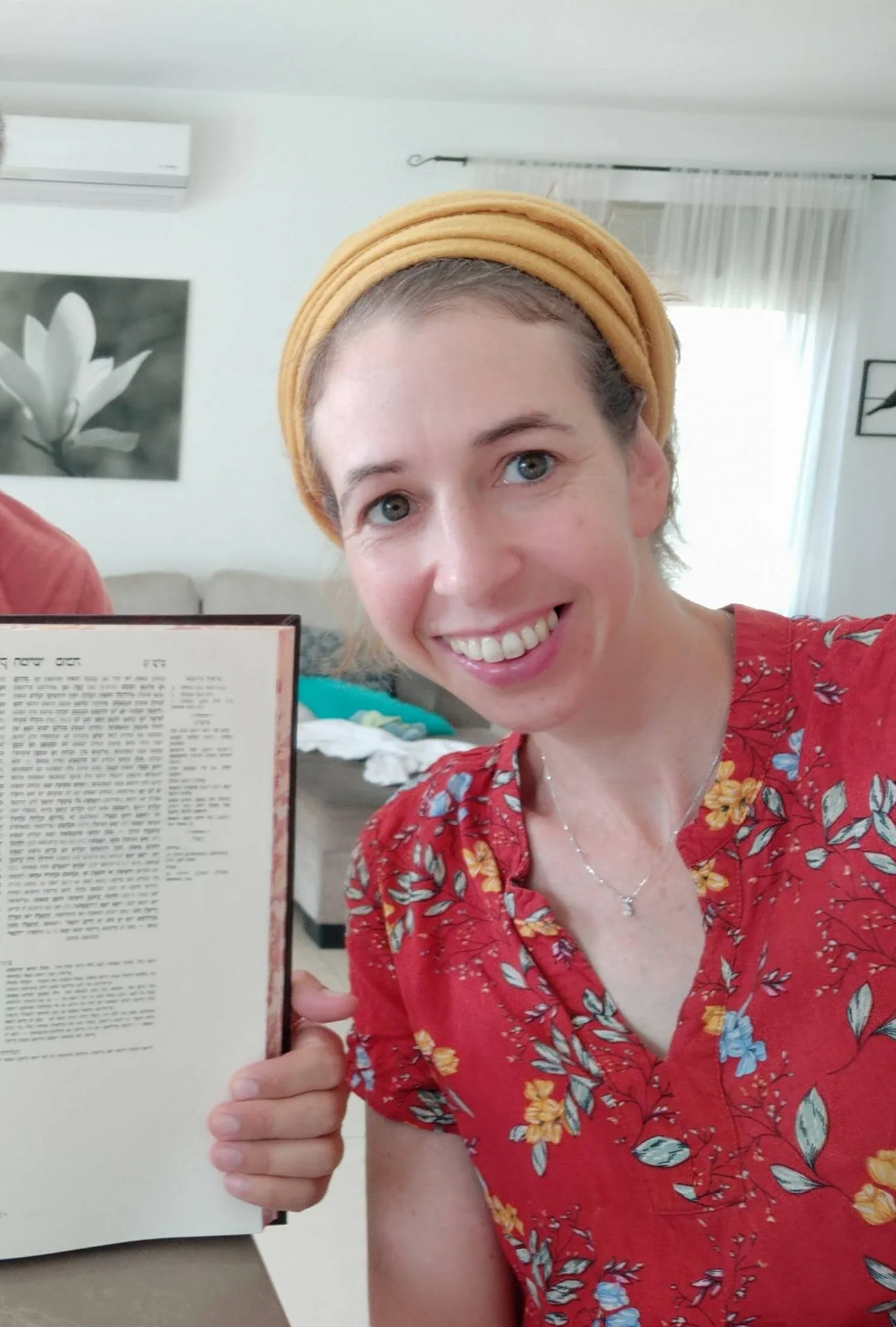
כמו שרואים בתמונה אני ממשיכה ללמוד גם היום ואפילו במחלקת יולדות אחרי לידת ביתי השלישית.

Noa Shiloh
נועה שילה

רבבה, ישראל

הייתי לפני שנתיים בסיום הדרן נשים בבנייני האומה והחלטתי להתחיל. אפילו רק כמה דפים, אולי רק פרק, אולי רק מסכת… בינתיים סיימתי רבע שס ותכף את כל סדר מועד בה.
הסביבה תומכת ומפרגנת. אני בת יחידה עם ארבעה אחים שכולם לומדים דף יומי. מדי פעם אנחנו עושים סיומים יחד באירועים משפחתיים. ממש מרגש. מסכת שבת סיימנו כולנו יחד עם אבא שלנו!
אני שומעת כל יום פודקאסט בהליכה או בנסיעה ואחכ לומדת את הגמרא.

Edna Gross
עדנה גרוס

מרכז שפירא, ישראל

בתחילת הסבב הנוכחי של לימוד הדף היומי, נחשפתי לחגיגות המרגשות באירועי הסיום ברחבי העולם. והבטחתי לעצמי שבקרוב אצטרף גם למעגל הלומדות. הסבב התחיל כאשר הייתי בתחילת דרכי בתוכנית קרן אריאל להכשרת יועצות הלכה של נשמ”ת. לא הצלחתי להוסיף את ההתחייבות לדף היומי על הלימוד האינטנסיבי של תוכנית היועצות. בבוקר למחרת המבחן הסופי בנשמ”ת, התחלתי את לימוד הדף במסכת סוכה ומאז לא הפסקתי.

Hana Shaham-Rozby (Dr.)
חנה שחם-רוזבי (ד”ר)

קרית גת, ישראל

התחלתי כשהייתי בחופש, עם הפרסומים על תחילת המחזור, הסביבה קיבלה את זה כמשהו מתמיד ומשמעותי ובהערכה, הלימוד זה עוגן יציב ביום יום, יש שבועות יותר ויש שפחות אבל זה משהו שנמצא שם אמין ובעל משמעות בחיים שלי….

Adi Diamant
עדי דיאמנט

גמזו, ישראל

התחלתי ללמוד דף יומי בתחילת מסכת ברכות, עוד לא ידעתי כלום. נחשפתי לסיום הש״ס, ובעצם להתחלה מחדש בתקשורת, הפתיע אותי לטובה שהיה מקום לעיסוק בתורה.
את המסכתות הראשונות למדתי, אבל לא סיימתי (חוץ מעירובין איכשהו). השנה כשהגעתי למדרשה, נכנסתי ללופ, ואני מצליחה להיות חלק, סיימתי עם החברותא שלי את כל המסכתות הקצרות, גם כשהיינו חולות קורונה ובבידודים, למדנו לבד, העיקר לא לצבור פער, ומחכות ליבמות 🙂

Eden Yeshuron
עדן ישורון

מזכרת בתיה, ישראל

רבנית מישל הציתה אש התלמוד בלבבות בביניני האומה ואני נדלקתי. היא פתחה פתח ותמכה במתחילות כמוני ואפשרה לנו להתקדם בצעדים נכונים וטובים. הקימה מערך שלם שמסובב את הלומדות בסביבה תומכת וכך נכנסתי למסלול לימוד מעשיר שאין כמוה. הדרן יצר קהילה גדולה וחזקה שמאפשרת התקדמות מכל נקודת מוצא. יש דיבוק לומדות שמחזק את ההתמדה של כולנו. כל פניה ושאלה נענית בזריזות ויסודיות. תודה גם למגי על כל העזרה.

Sarah Aber
שרה אבר

נתניה, ישראל

כבר סיפרתי בסיום של מועד קטן.
הלימוד מאוד משפיעה על היום שלי כי אני לומדת עם רבנית מישל על הבוקר בזום. זה נותן טון לכל היום – בסיס למחשבות שלי .זה זכות גדול להתחיל את היום בלימוד ובתפילה. תודה רבה !

שרה-ברלוביץ
שרה ברלוביץ

ירושלים, ישראל

קידושין מג

נֵילַף מִינֵּיהּ! מִשּׁוּם דְּהָוֵה מְעִילָה טְבִיחָה וּמְכִירָה שְׁנֵי כְתוּבִים הַבָּאִים כְּאֶחָד, וְכֹל שְׁנֵי כְתוּבִים הַבָּאִים כְּאֶחָד אֵין מְלַמְּדִין. מְעִילָה – הָא דַּאֲמַרַן, טְבִיחָה וּמְכִירָה מַאי הִיא? אָמַר קְרָא: ״וּטְבָחוֹ אוֹ מְכָרוֹ״ – מָה מְכִירָה עַל יְדֵי אַחֵר, אַף טְבִיחָה עַל יְדֵי אַחֵר.

let us derive a principle from misuse of consecrated property, that an agent can be appointed to perform a transgression. The Gemara answers: This is not done, because misuse of consecrated property and the slaughter or sale of a stolen cow or sheep are two verses that come as one, and any two verses that come as one do not teach their common aspect to apply to other cases. The Gemara clarifies: The verse pertaining to misuse of consecrated property is that which we said, but what is the verse with regard to slaughter or sale? The verse states: “And he slaughters it or sells it” (Exodus 21:37), juxtaposing selling to slaughtering: Just as a sale is necessarily performed by means of another, since every transaction involves two parties, so too slaughter can likewise be performed by means of another, and the thief is liable even if the act of slaughtering is performed by his agent.

דְּבֵי רַבִּי יִשְׁמָעֵאל תָּנָא: ״אוֹ״ – לְרַבּוֹת אֶת הַשָּׁלִיחַ. דְּבֵי חִזְקִיָּה תָּנָא: ״תַּחַת״ – לְרַבּוֹת אֶת הַשָּׁלִיחַ.

The Gemara quotes two other explanations. The school of Rabbi Yishmael taught that the word “or” in the verse “and he slaughters it or sells it,” serves to include an agent. The school of Ḥizkiyya taught: When the verse states with regard to sale or slaughter: “He shall pay five oxen for an ox, and four sheep for a sheep” (Exodus 21:37), repetition of the word “for” is superfluous and serves to include an agent. It teaches that the one who appointed the agent is liable for the action of the agent.

הָנִיחָא לְמַאן דְּאָמַר שְׁנֵי כְתוּבִים הַבָּאִים כְּאֶחָד אֵין מְלַמְּדִין. אֶלָּא לְמַאן דְּאָמַר מְלַמְּדִין, מַאי אִיכָּא לְמֵימַר? גַּלִּי רַחֲמָנָא בִּשְׁחוּטֵי חוּץ, ״דָּם יֵחָשֵׁב לָאִישׁ הַהוּא דָּם שָׁפָךְ״ – הוּא וְלֹא שְׁלוּחוֹ.

The Gemara asks: This works out well according to the one who said that two verses that come as one do not teach a precedent that applies to other cases, but according to the one who said that two verses do teach a precedent, what can be said? Why not derive from the case of misuse of consecrated property and that of slaughter or sale that an agent can be appointed to perform a transgression? The Gemara answers: The Merciful One reveals in the Torah that an agent cannot be appointed to perform a transgression in the case of an offering slaughtered outside the Temple, as it states: “It shall be considered blood for that [hahu] man; he has spilled blood” (Leviticus 17:4). The emphasis of “that man” teaches that he is liable for his actions, but he is not liable for the actions of his agent.

אַשְׁכְּחַן גַּבֵּי שְׁחוּטֵי חוּץ, בְּכׇל הַתּוֹרָה מְנָלַן? דְּיָלֵיף מִשְּׁחוּטֵי חוּץ.

The Gemara asks: We found a source for the halakha that an agent cannot be appointed to perform a transgression with regard to the prohibition of offerings slaughtered outside. From where do we derive that this halakha applies to the entire Torah? The Gemara answers: It is derived as a principle from the case of offerings slaughtered outside, by means of analogy.

אַדְּיָלֵיף מִשְּׁחוּטֵי חוּץ, נֵילַיף מֵהָנָךְ! הֲדַר כְּתַב רַחֲמָנָא: ״וְנִכְרַת הָאִישׁ הַהוּא״ – אִם אֵינוֹ עִנְיָן לְגוּפוֹ, תְּנֵהוּ עִנְיָן לְכׇל הַתּוֹרָה כּוּלָּהּ.

The Gemara asks: But before deriving that an agent cannot be appointed to perform a transgression from the case of offerings slaughtered outside, let us derive the halakha from these other cases, i.e., misuse of consecrated property and slaughter or sale, where the halakha is that an agent can be appointed to perform a transgression. The Gemara answers: The Merciful One again writes in that same verse in connection to the prohibition of slaughtering offerings outside the Temple: “And that [hahu] man shall be cut off from among his people” (Leviticus 17:4). If the halakha derived from the emphasis of the word hahu written in this part of the verse is not needed for this matter itself, since the verse already taught that he is liable only for his own act and not for that of his agent, apply it to the matter of the entire Torah, so that one is held liable only for one’s own actions and not for those of an agent.

וּלְמַאן דְּאָמַר שְׁנֵי כְתוּבִים הַבָּאִים כְּאֶחָד אֵין מְלַמְּדִים, הָנֵי ״הָהוּא״ ״הָהוּא״ מַאי דָּרֵישׁ בְּהוּ? חַד, לְמַעוֹטֵי שְׁנַיִם שֶׁאוֹחֲזִים בְּסַכִּין וְשׁוֹחֲטִים, וְחַד, ״הוּא״ – וְלֹא אָנוּס, ״הוּא״ – וְלֹא שׁוֹגֵג, ״הוּא״ – וְלֹא מוּטְעֶה.

The Gemara asks: And according to the one who says that two verses that come as one do not teach a precedent, and there is no reason to learn from the misuse of consecrated property and slaughter or sale that one can appoint an agent to perform a transgression, what does he interpret those terms: “That man” and: “That man” to be teaching? Since he does not need to counter a derivation from the two verses, he should not require them to teach that one cannot appoint an agent to perform a transgression. The Gemara answers: One of them serves to exclude from liability the case of two who hold a knife and slaughter an offering outside together. And the other one emphasizes: “That man” is liable, but not one who is compelled to slaughter the animal; “that man” is liable, but not one who does so unwittingly; and “that man” is liable, and not one who was mistaken, e.g., one who did not know that the animal was an offering. In order to be liable one must have acted with full awareness and completely willingly.

וְאִידָּךְ? מֵ״הוּא״ ״הָהוּא״. וְאִידָּךְ? ״הוּא״ ״הַהוּא״ לָא דָּרֵישׁ.

The Gemara asks: And how does the other opinion, i.e., the one who holds that two verses that come as one do teach a precedent, which derives from the word “that [hahu]” that an agent cannot be appointed to perform a transgression, derive these halakhot? The Gemara answers: He derives them from the fact that the pronoun “hahu” is composed of two parts, the article ha, meaning: The, and the pronoun hu, meaning: He. He derives halakhot both from “hu and from the additional article in hahu.” Therefore, he is able to derive both the principle that an agent cannot be appointed to perform a transgression and the halakhot of two that slaughter and one who acts without full awareness. And the other opinion, i.e., the one who holds that two verses that come as one do not teach a precedent, which derives these halakhot from the entire word “hahu,” does not interpret the variation from hu to hahu.” He holds that one cannot derive separate halakhot from each part of this word.

וְהָא דְּתָנֵי: הָאוֹמֵר לִשְׁלוּחוֹ: ״צֵא הֲרוֹג אֶת הַנֶּפֶשׁ״, הוּא – חַיָּיב, וְשׁוֹלְחָיו – פָּטוּר. שַׁמַּאי הַזָּקֵן אוֹמֵר מִשּׁוּם חַגַּי הַנָּבִיא: שׁוֹלְחָיו חַיָּיב, שֶׁנֶּאֱמַר: ״אֹתוֹ הָרַגְתָּ בְּחֶרֶב בְּנֵי עַמּוֹן״.

The Gemara questions the statement that there is no agency for transgressions: But there is that which is taught in a baraita: One who says to his agent: Go kill a person, he, the killer, is liable if he kills, and the one who appointed him is exempt. Shammai the Elder says in the name of Haggai the prophet: The one who appointed him is liable, as it stated with regard to David, who directed Joab to kill Uriah: “Him you have slain with the sword of the children of Ammon” (II Samuel 12:9). David was held responsible for the death of Uriah.

מַאי טַעְמֵיהּ דְּשַׁמַּאי הַזָּקֵן? קָסָבַר: שְׁנֵי כְתוּבִים הַבָּאִים כְּאֶחָד מְלַמְּדִין, וְ״הוּא״ ״הַהוּא״ לָא דָּרֵישׁ. וְאִיבָּעֵית אֵימָא: לְעוֹלָם דָּרֵישׁ, וּמַאי חַיָּיב – חַיָּיב בְּדִינֵי שָׁמַיִם.

The Gemara asks: What is the reason of Shammai the Elder? How can he say that there is agency for transgression? The Gemara answers: He holds that two verses that come as one do teach a precedent, and therefore he learns from the two cases of misuse of consecrated property and slaughter or sale that there is agency for transgression. And as for the derivation from one who slaughters an offering outside the Temple, which teaches that there is no agent for transgression, Shammai does not interpret the variation from hu to hahu.” And if you wish, say instead: Actually it is possible that he does interpret the variation, and he agrees that there is no agent for transgression. And what is the meaning of Shammai’s statement that the one who appoints him is liable? It means he is liable according to the laws of Heaven, although he cannot be punished by a human court.

מִכְּלָל דְּתַנָּא קַמָּא סָבַר: אֲפִילּוּ מִדִּינֵי שָׁמַיִם נָמֵי פָּטוּר?! אֶלָּא: דִּינָא רַבָּה וְדִינָא זוּטָא אִיכָּא בֵּינַיְיהוּ.

The Gemara asks: By inference, does this mean that the first tanna holds that he is exempt even according to the laws of Heaven? The one who appointed him must bear some responsibility. Rather, the first tanna also agrees that the one who appointed the killer is liable according to the laws of Heaven, and the difference between them pertains to a great judgment and a small judgment. According to Shammai, his liability is great, to the extent that Heaven considers him fully responsible, whereas the first tanna holds that his liability is of a lesser degree.

וְאִיבָּעֵית אֵימָא: שָׁאנֵי הָתָם דְּגַלִּי רַחֲמָנָא: ״אֹתוֹ הָרַגְתָּ בְּחֶרֶב בְּנֵי עַמּוֹן״.

And if you wish, say instead: Everyone agrees that there is no agent for transgression. Nevertheless, Shammai holds that there, with regard to killing, it is different, since the Merciful One reveals: “Him you have slain with the sword of the children of Ammon,” explicitly rendering David accountable for this transgression and indicating that killing is different from all other transgressions.

וְאִידַּךְ: הֲרֵי לְךָ כְּחֶרֶב בְּנֵי עַמּוֹן, מָה חֶרֶב בְּנֵי עַמּוֹן – אֵין אַתָּה נֶעֱנָשׁ עָלָיו, אַף אוּרִיָּה הַחִתִּי – אִי אַתָּה נֶעֱנָשׁ עָלָיו. מַאי טַעְמָא – מוֹרֵד בַּמַּלְכוּת הֲוָה, דְּקָאָמַר לֵיהּ: ״וַאדֹנִי יוֹאָב וְעַבְדֵי אֲדֹנִי עַל פְּנֵי הַשָּׂדֶה חֹנִים״.

And the other opinion, i.e., the first tanna, who holds that the one who appoints the killer is exempt, explains the verse as follows: Behold this killing is for you like the sword of Ammon. Just as you are not punished for those killed by the sword of Ammon in the course of the war, so too you are not punished for the death of Uriah the Hittite, not even according to the laws of Heaven. What is the reason for this? Uriah was a rebel against the monarchy and was consequently liable to the death penalty, as he said to King David: “And my lord Joab, and the servants of my lord, are encamped in the open field” (II Samuel 11:11). By referring to Joab as his lord in front of the king, he indicated that he answered to Joab rather than to the king, which is tantamount to rebellion.

אָמַר רָבָא: אִם תִּמְצֵי לוֹמַר סָבַר שַׁמַּאי שְׁנֵי כְתוּבִים הַבָּאִים כְּאֶחָד מְלַמְּדִין, וְ״הוּא״ ״הַהוּא״ לָא דָּרֵישׁ, מוֹדֶה בְּאוֹמֵר לִשְׁלוּחוֹ ״צֵא בְּעוֹל אֶת הָעֶרְוָה״ וֶ״אֱכוֹל אֶת הַחֵלֶב״ שֶׁהוּא חַיָּיב, וְשׁוֹלְחָיו פָּטוּר. שֶׁלֹּא מָצִינוּ בְּכׇל הַתּוֹרָה כּוּלָּהּ זֶה נֶהֱנֶה וְזֶה מִתְחַיֵּיב.

Rava said: If you say that Shammai holds that two verses that come as one do teach a precedent, and he does not interpret the variation from hu to hahu,” the combination of which would result in him holding that there is agency for transgression in all cases, even he concedes with regard to one who says to his agent: Go and engage in sexual intercourse with a forbidden relative, or: Go and eat forbidden fat, that the agent is liable and the one who appointed him is exempt, as we have not found in the entire Torah a case where this person physically benefits from the transgression but that one becomes liable.

אִיתְּמַר, רַב אָמַר: שָׁלִיחַ נַעֲשֶׂה עֵד. דְּבֵי רַבִּי שֵׁילָא אָמְרִי: אֵין שָׁלִיחַ נַעֲשֶׂה עֵד. מַאי טַעְמָא דְּבֵי רַבִּי שֵׁילָא? אִילֵּימָא מִשּׁוּם דְּלָא אֲמַר לֵיהּ: ״הֱוֵי לִי עֵד״ – אֶלָּא מֵעַתָּה קִידֵּשׁ אִשָּׁה בִּפְנֵי שְׁנַיִם וְלָא אָמַר לָהֶם: ״אַתֶּם עֵדַיי״ – הָכִי נָמֵי דְּלָא הָווּ קִידּוּשֵׁי?

§ It was stated that amora’im engaged in a dispute concerning the following issue: Rav says: An agent can become a witness. If one was appointed as an agent to perform a certain task, he can then serve as a witness that the action was performed. In the school of Rabbi Sheila they say: An agent cannot become a witness. The Gemara asks: What is the reason of the school of Rabbi Sheila? If we say it is because the one who appointed him did not say to the agent: Be a witness for me, and appointed him only as an agent; if that is so, if one betrothed a woman in the presence of two people and did not say to them: You are my witnesses, so too would they hold that it is not a betrothal? It is not necessary to explicitly appoint witnesses.

אֶלָּא, רַב אָמַר: שָׁלִיחַ נַעֲשֶׂה עֵד – אַלּוֹמֵי קָא מְאַלֵּימְנָא לְמִילְּתֵיהּ. דְּבֵי רַבִּי שֵׁילָא אָמְרִי: אֵין שָׁלִיחַ נַעֲשֶׂה עֵד – כֵּיוָן דְּאָמַר מָר: ״שְׁלוּחוֹ שֶׁל אָדָם כְּמוֹתוֹ״ – הָוֵה לֵיהּ כְּגוּפֵיהּ.

Rather, the dispute is as follows. Rav says: An agent can become a witness, since we strengthen his words of testimony because he attests to a matter of which he is certain, as he is the one that performed the action. In the school of Rabbi Sheila they say: An agent cannot become a witness. Since the Master said that the legal status of a person’s agent is like that of himself, the agent is considered like the one who appointed him himself. Just as one cannot testify with regard to a matter that concerns himself, the same applies to one’s agent.

מֵיתִיבִי: אָמַר לִשְׁלֹשָׁה ״צְאוּ וְקַדְּשׁוּ לִי הָאִשָּׁה״ – אֶחָד שָׁלִיחַ וּשְׁנַיִם עֵדִים, דִּבְרֵי בֵּית שַׁמַּאי. וּבֵית הִלֵּל אוֹמְרִים: כּוּלָּם שְׁלוּחִין הֵן, וְאֵין שָׁלִיחַ נַעֲשֶׂה עֵד. עַד כָּאן לָא פְּלִיגִי אֶלָּא בִּשְׁלֹשָׁה, אֲבָל בִּשְׁנַיִם – דִּבְרֵי הַכֹּל לָא!

The Gemara raises an objection from a baraita to the statement of Rav: If one said to three people: Go out and betroth the woman for me, then one of them is the agent for the betrothal and two of them serve as witnesses; this is the statement of Beit Shammai. And Beit Hillel say: They are all potential agents, and as an agent cannot become a witness none of them can be witnesses. Beit Shammai and Beit Hillel disagree only with regard to a case where one said this to three people. But with regard to two people, all agree that agents are not able to serve as witnesses.

הוּא דְּאָמַר כִּי הַאי תַּנָּא, דְּתַנְיָא: רַבִּי נָתָן אוֹמֵר, בֵּית שַׁמַּאי אוֹמְרִים: שָׁלִיחַ וְעֵד אֶחָד. וּבֵית הִלֵּל אוֹמְרִים: שָׁלִיחַ וּשְׁנֵי עֵדִים. וְרַב כְּבֵית שַׁמַּאי?! אֵיפוֹךְ. וְרַב אַחָא בְּרֵיהּ דְּרָבָא מַתְנִי אִיפְּכָא: רַב אָמַר: אֵין שָׁלִיחַ נַעֲשֶׂה עֵד, דְּבֵי רַבִּי שֵׁילָא אָמְרִי: שָׁלִיחַ נַעֲשֶׂה עֵד. וְהִילְכְתָא: שָׁלִיחַ נַעֲשֶׂה עֵד.

The Gemara answers: It was he, Rav, who said his ruling in accordance with the opinion of that tanna, i.e., the version of Beit Shammai as presented by Rabbi Natan. As it is taught in a baraita: Rabbi Natan says: Beit Shammai say that the agent and one witness are sufficient to carry out the agency and testify, and Beit Hillel say: The agent and two witnesses are needed. The Gemara questions this explanation: And would Rav rule in accordance with the opinion of Beit Shammai? The Gemara answers: Reverse the opinions, so that it is Beit Hillel who said that the agent and one witness suffice. And Rav Aḥa, son of Rava, taught the dispute of the amora’im in the opposite manner. Rav says: An agent cannot become a witness, and in the school of Rabbi Sheila they say: An agent can become a witness. The Gemara concludes: And the halakha is that an agent can become a witness.

אָמַר רָבָא אָמַר רַב נַחְמָן: אָמַר לִשְׁנַיִם: ״צְאוּ וְקַדְּשׁוּ לִי אֶת הָאִשָּׁה״ – הֵן הֵן שְׁלוּחָיו, הֵן הֵן עֵדָיו. וְכֵן בְּגֵירוּשִׁין,

Rava says that Rav Naḥman says: It follows that if one said to two people: Go and betroth the woman for me, the very same people who are his agents for the betrothal are his witnesses. And a similar halakha is true with regard to divorce: If a man sent a bill of divorce to his wife with two people, they serve both as agents of delivery and as witnesses to the divorce.

וְכֵן בְּדִינֵי מָמוֹנוֹת.

And a similar halakha applies with regard to cases of monetary law. If one appoints agents to perform a transaction for him, e.g., paying a debt to his creditor, they can testify that he has paid.

וּצְרִיכָא דְּאִי אַשְׁמְעִינַן בְּקִידּוּשִׁין – מִשּׁוּם דִּלְמֵיסְרַהּ קָאָתֵי, אֲבָל גֵּירוּשִׁין – נֵיחוּשׁ שֶׁמָּא עֵינָיו נָתַן בָּהּ.

The Gemara comments: And it is necessary for Rav Naḥman to teach this halakha in each of these legal domains, as had he taught us this halakha only in the case of betrothal one could say that the agents can serve as witnesses because they are coming to render her forbidden to everyone else, and therefore there is no reason to suspect them of lying, as their testimony renders her forbidden to them as well. But with regard to divorce, we should be concerned that perhaps the agent cast his eyes upon her and is testifying falsely so that he can marry her.

וְאִי אַשְׁמְעִינַן גֵּירוּשִׁין – מִשּׁוּם דְּאִיתְּתָא לְבֵי תְרֵי לָא חַזְיָא, אֲבָל מָמוֹנָא – אֵימָא: הָנֵי מִיפְלָג פָּלְגִי. צְרִיכִי.

And had Rav Naḥman taught us this halakha only in the case of divorce, it could have been said that the agents are not suspected of lying because a woman is not fit for marrying two people, and since they testify as a pair there is no concern that they both might have designs upon her. But with regard to money, one might say that these two can divide it between them, and perhaps they never paid the debt but kept the money themselves. Therefore, all the examples are necessary.

מַאי קָסָבַר? אִי קָסָבַר הַמַּלְוֶה חֲבֵירוֹ בְּעֵדִים צָרִיךְ לְפוֹרְעוֹ בְּעֵדִים – הָנֵי נוֹגְעִים בְּעֵדוּת נִינְהוּ, דְּאִי אָמְרִי: ״לָא פְּרַעְנֵיהּ״ אָמַר לְהוּ: ״פְּרָעוּנִי״!

The Gemara asks: What does Rav Naḥman hold? If he holds that in the case of one who lends money to another in the presence of witnesses, the debtor must repay him in the presence of witnesses, then these agents are affected by their testimony. As, if they say: We did not repay him but returned the money to the one who appointed us, then the one who appointed them will say to them: Pay me back the money I gave you to repay the debt. The agents are considered as the debtors of the one who appointed them, as they took money from him. They would not be deemed credible to state that they returned the money to the one who appointed them, as they do not have witnesses that they did so. Consequently, they have a financial incentive to testify falsely that they fulfilled their agency and repaid the debt.

אֶלָּא לְעוֹלָם קָסָבַר: הַמַּלְוֶה אֶת חֲבֵירוֹ בְּעֵדִים אֵין צָרִיךְ לְפוֹרְעוֹ בְּעֵדִים, וּמִגּוֹ דְּיָכְלִי לְמֵימַר: ״אַהְדְּרִינְהוּ לְלֹוֶה״, יְכוֹלִין לְמֵימַר: ״פְּרַעְנֵיהּ לְמַלְוֶה״.

Rather, Rav Naḥman actually holds that in the case of one who lends money to another in the presence of witnesses, the debtor does not need to repay him in the presence of witnesses. And since the agents are able to say: We returned the money to the debtor, even without there being witnesses to substantiate their claim, they can also be deemed credible to say: We repaid the creditor, as they have no financial incentive to lie.

וְהַשְׁתָּא דְּתַקּוּן רַבָּנַן שְׁבוּעַת הֶיסֵּת – מִשְׁתַּבְעִי הָנֵי עֵדִים דְּיָהֵיבְנָא לֵיהּ, וּמִשְׁתְּבַע מַלְוֶה דְּלָא שָׁקֵיל לֵיהּ, וּפָרַע לֵיהּ לֹוֶה לְמַלְוֶה.

The Gemara comments: And now, since the time of Rav Naḥman, when the Sages instituted an oath of inducement, an oath instituted by the Sages in a case where a defendant completely denies a claim, these witnesses are affected by their testimony. If they were to claim that they returned the money to the one who appointed them, they would be required to take an oath of inducement to that effect. Consequently, they have an incentive to lie and claim that they fulfilled their agency and repaid the loan. Therefore, their testimony that they fulfilled their agency is not deemed credible. Instead, these witnesses take an oath in court that they gave the money to him, i.e., the lender, and the lender in turn takes an oath that he did not take the money owed to him, and then the debtor pays the lender his debt a second time, as the Sages ruled in similar cases.

הָאִישׁ מְקַדֵּשׁ אֶת בִּתּוֹ. תְּנַן הָתָם: נַעֲרָה הַמְאוֹרָסָה – הִיא וְאָבִיהָ מְקַבְּלִין אֶת גִּיטָּהּ. אָמַר רַבִּי יְהוּדָה: אֵין שְׁתֵּי יָדַיִם זוֹכוֹת כְּאֶחָד, אֶלָּא אָבִיהָ מְקַבֵּל אֶת גִּיטָּהּ. וְכֹל שֶׁאֵין יְכוֹלָה לִשְׁמוֹר אֶת גִּיטָּהּ – אֵין יְכוֹלָה לְהִתְגָּרֵשׁ.

§ The mishna teaches that a man can betroth his daughter to a man when she is a young woman. We learned in a mishna there (Gittin 64b): With regard to a betrothed young woman, she and her father are each eligible to receive her bill of divorce. Rabbi Yehuda said: Two hands do not have the right to acquire an item on behalf of one person as one. If the young woman is able to acquire an item on her own, her father cannot receive her bill of divorce. Conversely, if she is not able to acquire an item on her own, only her father can receive the bill of divorce. Rather, her father alone receives her bill of divorce on her behalf. The mishna states another principle: And any female who is unable to safeguard her bill of divorce, either due to her young age or mental incompetence, is unable to be divorced, since a bill of divorce is effective only for one who understands the severing of ties that a divorce engenders.

אָמַר רֵישׁ לָקִישׁ: כְּמַחְלוֹקֶת לְגֵירוּשִׁין, כָּךְ מַחְלוֹקֶת לְקִידּוּשִׁין. וְרַבִּי יוֹחָנָן אָמַר: מַחְלוֹקֶת לְגֵירוּשִׁין, אֲבָל לְקִידּוּשִׁין – דִּבְרֵי הַכֹּל אָבִיהָ וְלֹא הִיא.

Reish Lakish says: Just as there is a dispute with regard to divorce, as to whether both a young woman and her father can accept her bill of divorce or only the father can do so, so too there is a dispute with regard to betrothal. And Rabbi Yoḥanan says: The dispute is with regard to divorce, but with regard to betrothal everyone agrees that her father has the right to accept it but not her.

וְאָמַר רַבִּי יוֹסֵי בְּרַבִּי חֲנִינָא: מַאי טַעְמֵיהּ דְּרַבִּי יוֹחָנָן אַלִּיבָּא דְּרַבָּנַן? גֵּירוּשִׁין, דְּמַכְנֶסֶת עַצְמָהּ לִרְשׁוּת אָבִיהָ – בֵּין הִיא וּבֵין אָבִיהָ. קִידּוּשִׁין, דְּמַפְקַעַת עַצְמָהּ מֵרְשׁוּת אָבִיהָ – אָבִיהָ וְלֹא הִיא.

And Rabbi Yosei, son of Rabbi Ḥanina, said: What is the reason of Rabbi Yoḥanan, in accordance with the opinion of the Rabbis, that there is a distinction between divorce and betrothal? In the case of divorce, when she brings herself back into her father’s authority by means of the bill of divorce, it is considered as though the father has obtained the bill of divorce via his daughter, and therefore either she or her father can receive it. In the case of betrothal, where she removes herself from her father’s authority, she cannot do this by herself. Consequently, only her father can accept the betrothal, but not her.

וַהֲרֵי מַאֲמָר, דְּמַפְקַעַת עַצְמָהּ מֵרְשׁוּת אָבִיהָ, וּתְנַן:

The Gemara asks: But isn’t there the case of levirate betrothal, where the yevama removes herself from her father’s authority, and yet we learned in a baraita:

רוצה לעקוב אחרי התכנים ולהמשיך ללמוד?

ביצירת חשבון עוד היום ניתן לעקוב אחרי ההתקדמות שלך, לסמן מה למדת, ולעקוב אחרי השיעורים שמעניינים אותך.

לנקות את כל הפריטים מהרשימה?

פעולה זו תסיר את כל הפריטים בחלק זה כולל ההתקדמות וההיסטוריה. שימי לב: לא ניתן לשחזר פעולה זו.

ביטול
מחיקה

האם את/ה בטוח/ה שברצונך למחוק פריט זה?

תאבד/י את כל ההתקדמות או ההיסטוריה הקשורות לפריט זה.

ביטול
מחיקה