








Zevachim 88

Share this shiur:
Masechet Zevachim
Masechet Zevachim is sponsored by Esther Kremer in loving memory of her father, Manny Gross on his third yahrzeit. “He exemplified a path of holiness and purity, living with kedushah in his everyday life.”
This month’s learning is sponsored by Adam, Carolyn, Michal, Josh, Benny, Izzy, Gali, Shim, Zoe, Zachy and Yehuda in loving memory of Fred Hochstadter, Ephraim ben Kayla veBaruch on his 18th yahrzeit on ח׳ אלול. “We continue to be inspired by his dedication to daily learning, from the Daf and beyond, to its surrounding philosophical, historical and legal nuances. We miss him greatly and can only strive to emulate his wise, kind and elegant ways.”
Want to dedicate learning? Get started here:

Summary

The Gemara makes one final attempt to answer the question of whether the airspace of the altar can sanctify disqualified items just as the altar does. The attempt is rejected.
The Mishna teaches that liquid sacred vessels sanctify liquids, and vessels used for dry ingredients sanctify dry items. Liquid vessels cannot sanctify dry items, nor vice versa. If sacred vessels are punctured, they only sanctify if they can still perform their original function and remain whole. All sanctification occurs only within the Azara.
Shmuel limits the first ruling of the Mishna to measuring utensils, but bowls and similar items can sanctify even dry ingredients. His proof is a verse regarding flour mixed with oil that was placed into a bowl generally used for liquids (Bamidbar 7:13). Rav Acha questions this proof since flour mixed with oil is not exactly a solid, and Shmuel provides two possible answers.
Shmuel further rules that sacred vessels sanctify only when they are whole, filled with the entire amount needed for the offering, and can only sanctify items from within. Variants of this teaching differ slightly, as one version reads “from inside the Azara” instead of “from within the vessel” and another includes both. The difference between two of these versions is whether overflow is sanctified. Rabbi Yohanan qualifies the ruling that if there is not a complete amount, the item inside will not be sanctified. He explains that this applies only when there was no intent to reach the full amount, but if one intends to add enough to reach the requisite measure, each portion becomes sanctified as it is placed inside. A braita is brought to support this.
Rav or Rav Asi qualifies the Mishna’s ruling that dry vessels do not sanctify liquids and vice versa. This applies to sanctification for offering on the altar, but they are sanctified to the extent that the contents can become disqualified. Some say his statement was made regarding a different braita about meal offerings brought from orla and diverse kinds.
A braita teaches that damaged sacred vessels cannot be repaired by melting or patching. Similarly, knives with defects cannot be sharpened to remove the blemish, and if a blade slips out, it cannot be reattached. This ruling reflects the principle that there is “no poverty in a place of affluence,” referring to the Temple as a place of affluence. Abba Shaul recalls a defective knife in the Temple that was buried so that is would not be used.
Another braita, based on the same principle, explains that the clothes of the kohanim must be woven, not stitched, and if they become soiled, they cannot be washed with cleaning agents such as natron or soap. Abaye clarifies that they can be laundered if only mildly dirty, but if cleaning them would require agents, they cannot be cleaned even with water alone. Some say they may never be washed at all.
A braita describes the kohen gadol’s robe as entirely blue, with hem decorations resembling unopened pomegranates and children’s buttons. Bells were attached, either seventy‑two in total or thirty‑six according to differing opinions. Rabbi Anani bar Sasson notes that this dispute parallels disagreements about the number of shades in leprous afflictions.
Rabbi Anani bar Sasson explains that the Torah juxtaposes sacrifices with priestly garments to teach that just as sacrifices atone, so too do the garments. Each garment corresponds to atonement for a specific sin: the tunic for murder, the pants for sexual immorality, the turban for arrogance, the belt for improper thoughts, the breastplate for judicial errors, the ephod for idolatry, the robe for lashon hara, and the tzitz for brazenness.
The Gemara raises a difficulty from the statement of Rabbi Yehoshua ben Levi, who taught that murder and lashon hara have no atonement through sacrifices, only through other means – egla arufa for murder and ketoret, incense, for slander. The difficulty is resolved by distinguishing between situations: when the murderer is known, the tunic atones; when unknown, the egla arufa atones. Regarding lashon hara, they distinguish between public lashon hara, which is atoned by the robe with its bells, and private lashon hara, atoned by the ketoret, which is offered in the sanctuary, a private space.
Today’s daily daf tools:
Masechet Zevachim
Masechet Zevachim is sponsored by Esther Kremer in loving memory of her father, Manny Gross on his third yahrzeit. “He exemplified a path of holiness and purity, living with kedushah in his everyday life.”
This month’s learning is sponsored by Adam, Carolyn, Michal, Josh, Benny, Izzy, Gali, Shim, Zoe, Zachy and Yehuda in loving memory of Fred Hochstadter, Ephraim ben Kayla veBaruch on his 18th yahrzeit on ח׳ אלול. “We continue to be inspired by his dedication to daily learning, from the Daf and beyond, to its surrounding philosophical, historical and legal nuances. We miss him greatly and can only strive to emulate his wise, kind and elegant ways.”
This week’s learning is sponsored by Audrey Mondrow in memory of Irving “Poppy” Mauskopf, Yechezkel ben Rachel and Avraham. “A man that exemplified complete emuna. He greeted everyone with a smile. We were all very privileged to have him in our lives. May his neshama have an aliya.”
Zevachim 88
חַטַּאת הָעוֹף פְּסוּלָה הֵיכִי מַזֶּה מִדָּמָהּ? הָוֵה לֵיהּ יָרוּד! שְׁאָר פְּסוּלִים הֵיכִי זָרֵיק לְהוּ מִדָּמָהּ?
then with regard to the case of a disqualified bird sin offering that was pinched at the top of the altar, how does one sprinkle from its blood on the wall of the altar? When the priest raises the bird in his hand in order to sprinkle its blood, the bird is considered to have descended from upon the altar and he cannot sprinkle its blood, as the halakha with regard to all disqualified items is that once they have descended from upon the altar they shall not ascend. Likewise, concerning the blood of other offerings that were disqualified that ascended upon the altar, how does he sprinkle from their blood, since it is sprinkled from the airspace above the altar? Rather, it must be that the airspace above the altar is considered as the altar.
דְּמַגַּע לְהוּ. הָא הַזָּאָה הִיא?! מִיצּוּי הִיא! הָא זְרִיקָה?! שְׁפִיכָה הִיא!
The Gemara rejects this proof: It is possible that in such cases one does not sprinkle the blood in its normal fashion, but in such a manner that he presses it against the wall of the altar immediately without the blood passing through the air. The Gemara rejects this suggestion: Is this considered sprinkling? It is squeezing, an act that is performed for a bird burnt offering, not for a bird sin offering. Likewise, if one sprinkles the blood of other disqualified offerings in this manner, is this sprinkling? It is pouring.
וְעוֹד, דֶּרֶךְ הַזָּאָה בְּכָךְ?! דֶּרֶךְ זְרִיקָה בְּכָךְ?!
And furthermore, with regard to a disqualified bird burnt offering, is the manner of sprinkling in such a fashion? And in the case of other disqualified offerings, is the manner of sprinkling in such a fashion? It is not. Rather, the airspace above the altar must be considered as the altar.
אָמַר רַב אָשֵׁי: אִי דְּנָקֵט לְהוּ בְּרֹאשׁ הַמִּזְבֵּחַ – הָכִי נָמֵי; כִּי קָאָמַר – דִּתְלָנְהוּ בְּקַנְיָא. מַאי? תֵּיקוּ.
Rav Ashi said: If the question concerns a case where the priest held the blood or limbs while standing at the top of the altar, they would indeed be considered as having ascended the altar, and shall not descend from it. But when the dilemma was stated with regard to the airspace above the altar, it was with regard to an instance where he suspended them with a pole above the altar, while he himself stood on the floor of the Temple courtyard. What is the halakha in such a case? The Gemara responds that the dilemma shall stand unresolved.
מַתְנִי׳ כְּלֵי הַלַּח מְקַדְּשִׁין אֶת הַלַּח, וּמִדּוֹת יָבֵשׁ מְקַדְּשׁוֹת אֶת הַיָּבֵשׁ. אֵין כְּלִי הַלַּח מְקַדֶּשֶׁת אֶת הַיָּבֵשׁ, וְלֹא יָבֵשׁ מְקַדֵּשׁ אֶת הַלַּח. כְּלֵי הַקּוֹדֶשׁ שֶׁנִּיקְּבוּ, אִם עוֹשִׂין בָּהֶן מֵעֵין מְלַאכְתָּן שֶׁהָיוּ עוֹשִׂין, וְהֵן שְׁלֵימִים – מְקַדְּשִׁין, וְאִם לָאו – אֵין מְקַדְּשִׁין. וְכוּלָּן אֵין מְקַדְּשִׁין אֶלָּא בַּקּוֹדֶשׁ.
MISHNA: The mishna elaborates on the halakha taught in the previous mishna (86a) that service vessels sanctify items placed in them. The service vessels used for liquids sanctify only liquids used in the service, and the service vessels that serve as dry measures sanctify only dry items used in the service. The service vessels used for liquids do not sanctify dry items, and the service vessels used for dry items do not sanctify liquids. With regard to sacred vessels that were perforated, if one continues to utilize them for a use similar to the use for which they would utilize them previously when they were whole, they continue to sanctify their contents. And if not, they do not sanctify their contents. And all of these vessels sanctify items only when they are in the sacred area, i.e., the Temple courtyard.
גְּמָ׳ אָמַר שְׁמוּאֵל: לֹא שָׁנוּ אֶלָּא מִדּוֹת, אֲבָל מִזְרָקוֹת – מְקַדְּשִׁין, שֶׁנֶּאֱמַר: ״שְׁנֵיהֶם מְלֵאִים סֹלֶת״.
GEMARA: With regard to the statement of the mishna that the vessels used for liquids do not sanctify dry items, Shmuel says: The Sages taught this halakha only with regard to measures used for liquids, i.e., wine or oil. But cups, which are used for collecting the blood of offerings, sanctify dry items as well, as it is stated in the verse: “One silver cup of seventy shekels, after the shekel of the sanctuary; both of them full of fine flour mingled with oil for a meal offering” (Numbers 7:13), indicating that the cups were also fashioned for use with flour, a dry item.
אֲמַר לֵיהּ רַב אַחָא מִדִּיפְתִּי לְרָבִינָא: מִנְחָה לַחָה הִיא! אֲמַר לֵיהּ: לֹא נִצְרְכָה אֶלָּא לַיָּבֵשׁ שֶׁבָּהּ. אִיבָּעֵית אֵימָא: מִנְחָה לְגַבֵּי דָּם – כְּיָבֵשׁ דָּמֵי.
Rav Aḥa of Difti said to Ravina: The meal offering of the verse is also considered a liquid, as it is mixed with oil, and one cannot derive from it the halakha with regard to items that are entirely dry. Ravina said to him: The verse cited by Shmuel was only necessary to derive the halakha of the dry portions of a meal offering, teaching that even flour that remained dry because it did not get thoroughly mixed with the oil is sanctified by the cups as well. If you wish, say instead: A meal offering, even though it is mixed with oil, is, in comparison to blood, considered as a dry item. Accordingly, one can derive from the verse that the cups sanctify all dry items.
אָמַר שְׁמוּאֵל: כְּלֵי שָׁרֵת – אֵין מְקַדְּשִׁין אֶלָּא שְׁלֵימִין, אֵין מְקַדְּשִׁין אֶלָּא מְלֵאִין, אֵין מְקַדְּשִׁין אֶלָּא מִתּוֹכָן. וְאָמְרִי לָהּ: אֵין מְקַדְּשִׁין אֶלָּא שְׁלֵימִין וּמְלֵאִים וּמִבִּפְנִים.
Additionally, Shmuel says: Service vessels sanctify items only when the vessels are whole, i.e., they do not have a hole; they sanctify only full measures, i.e., when they contain a measurement fit for offering; and they sanctify items only from within them and not items that merely touched their exterior. And some say there is another version of the statement of Shmuel: Service vessels sanctify items only when the vessels are whole, and when they contain full measures, and from inside.
מַאי בֵּינַיְיהוּ? אִיכָּא בֵּינַיְיהוּ בֵּירוּצֵי מִדּוֹת. בְּמַתְנִיתָא תָּנָא: אֵין מְקַדְּשִׁין אֶלָּא שְׁלֵימִין, וּמְלֵאִים, וּמִתּוֹכָן, וּבִפְנִים.
The Gemara asks: What is the difference between these two versions? The Gemara responds: The difference between them is with regard to heaping measures. According to the first version, that service vessels sanctify only items that are within them, nothing that overflows is included. The Gemara notes that it was taught in a baraita in accordance with both versions: Service vessels sanctify items only when they are whole, and only full measurements, and from within them, and inside.
אָמַר רַבִּי אַסִּי אָמַר רַבִּי יוֹחָנָן: לֹא שָׁנוּ אֶלָּא שֶׁאֵין דַּעְתּוֹ לְהוֹסִיף, אֲבָל דַּעְתּוֹ לְהוֹסִיף – רִאשׁוֹן רִאשׁוֹן קוֹדֶשׁ.
With regard to the halakha that service vessels sanctify only full measurements, Rabbi Asi says that Rabbi Yoḥanan says: They taught this halakha only when the priest’s initial intention was not to add to that which was already placed inside the vessel. But if his initial intention was to add, then each initial amount placed in the vessel becomes sacred, no matter how small.
תַּנְיָא נָמֵי הָכִי: מְלֵאִין – אֵין מְלֵאִין אֶלָּא שְׁלֵימִין. אָמַר רַבִּי יוֹסֵי: אֵימָתַי – בִּזְמַן שֶׁאֵין דַּעְתּוֹ לְהוֹסִיף; אֲבָל דַּעְתּוֹ לְהוֹסִיף – רִאשׁוֹן רִאשׁוֹן קוֹדֶשׁ.
This distinction is also taught in a baraita: With regard to the halakha that service vessels sanctify full measurements, full measurements are nothing other than whole measurements. Rabbi Yosei said: When are full measurements whole ones? It is at a time that the priest’s intention was not to add. But if his intention was to add, each initial amount is sacred.
אֵין כְּלִי הַלַּח מְקַדֵּשׁ [וְכוּ׳]. אָמַר רַב, וְאִיתֵּימָא רַב אַסִּי: אֵין מְקַדְּשִׁין לִיקְרַב, אֲבָל מְקַדְּשִׁין לִיפָּסֵל.
§ The mishna teaches that the service vessels used for liquids do not sanctify dry items. With regard to this halakha, Rav says, and some say that Rav Asi says: The service vessels used for liquids do not sanctify dry items to permit them for sacrifice upon the altar, but they sanctify dry items in order for the items to be disqualified by them, i.e., dry items placed in such vessels may be disqualified by that which disqualifies only sanctified items, e.g., if they are touched by one who immersed that day, or if they emerged from the Temple courtyard.
אִיכָּא דְּמַתְנֵי לַהּ אַהָא: אֵין מְבִיאִין מְנָחוֹת וּנְסָכִים וּמִנְחַת בְּהֵמָה וּבִיכּוּרִים מִן הַמְדוּמָּע, וְאֵין צָרִיךְ לוֹמַר מֵעׇרְלָה וְכִלְאֵי הַכֶּרֶם. וְאִם הֵבִיא – לֹא קִדֵּשׁ. אָמַר רַב, וְאִיתֵּימָא רַב אַסִּי: לֹא קִדֵּשׁ לִיקְרַב, אֲבָל קָדַשׁ לִיפָּסֵל.
There are those who teach this statement with regard to this halakha: One may not bring meal offerings, or libations, or meal offerings accompanying an animal, or first fruits, from a mixture containing teruma, since that which may not be consumed by all Jews may not be used for an offering. And needless to say, one may not bring these items from the fruit of a tree that is orla, i.e., a tree during the first three years after its planting, from which it is prohibited to eat, or from diverse kinds sown in a vineyard, both of which are prohibited for consumption to priests as well. And if he brought an offering from them, it is not sanctified. With regard to this issue, Rav says, and some say that Rav Asi says: It is not sanctified for sacrifice upon the altar, but it is sanctified in order to be disqualified.
תָּנוּ רַבָּנַן: כְּלֵי קֹדֶשׁ שֶׁנִּיקְּבוּ – אֵין מַתִּיכִין אוֹתָן, וְאֵין מַתִּיכִין לְתוֹכָן אֲבָר. נִפְגְּמוּ – אֵין מְתַקְּנִין אוֹתָן. סַכִּין שֶׁנִּפְגְּמָה – אֵין מַשְׁחִיזִין אֶת פְּגִימָתָהּ. נִשְׁמְטָה – אֵין מַחְזִירִין אוֹתָהּ. אַבָּא שָׁאוּל אוֹמֵר: סַכִּין מַטְרֶפֶת הָיְתָה בַּמִּקְדָּשׁ, וְנִמְנוּ עָלֶיהָ כֹּהֲנִים וּגְנָזוּהָ.
§ With regard to perforated vessels, the Sages taught: In the case of sacred vessels that were perforated, one may not melt them in order to seal the perforation, and one may not melt lead into them for such a purpose. If the vessels were damaged, one may not repair them. Concerning a knife that was damaged, one may not sharpen the spot of its damage. If the blade separated from the handle, one may not restore it. Abba Shaul says: There was a certain knife in the Temple whose metal was soft and easily damaged, such that when used it would often render animals prohibited, thereby disqualifying them. Accordingly, the priests voted concerning it, and elected to hide it.
תָּנוּ רַבָּנַן: בִּגְדֵי כְהוּנָּה, אֵין עוֹשִׂין אוֹתָם מַעֲשֵׂה מַחַט אֶלָּא מַעֲשֵׂה אוֹרֵג, שֶׁנֶּאֱמַר: ״מַעֲשֵׂה אֹרֵג״. נִתְגַּעֲלוּ, אֵין מְכַבְּסִין [אוֹתָן] לֹא בְּנֶתֶר וְלֹא בְּאָהָל.
The Sages taught: Priestly vestments are not fashioned by needlework, i.e., by stitching various parts together, but rather through woven work, whereby the entire garment is initially woven into one entity, as it is stated: “Woven work” (Exodus 28:32). If the garments were soiled one may not launder them, neither with natron nor with soap, two common detergents.
הָא בַּמַּיִם – מְכַבְּסִין?! אָמַר אַבָּיֵי, הָכִי קָאָמַר: הוּגְּעוּ בְּמַיִם – מְכַבְּסִין אוֹתָן בְּנֶתֶר וְאָהָל;
The Gemara asks: But may it be inferred from this that with water one may launder the priestly vestments? Abaye said: This is what the baraita is saying: If the dirtied garments have only reached the point where laundering them with water alone would suffice, one may launder them with natron and soap, as they are not considered soiled.
הוּגְּעוּ לְנֶתֶר וְאָהָל – אַף בְּמַיִם אֵין מְכַבְּסִים. וְיֵשׁ אוֹמְרִים: אֵין מְכַבְּסִין אוֹתָן כׇּל עִיקָּר, שֶׁאֵין עֲנִיּוּת בִּמְקוֹם עֲשִׁירוּת.
But if the garments became so dirty that they reached a point that laundering them would require the use of natron or soap, then one may not launder them, even with water. And some say: One may not launder the priestly vestments at all, even if laundering them with water would suffice, because there is no poverty in a place of wealth, i.e., only priestly vestments that were clean as new should be worn, as is befitting the Temple service, and those that were laundered should not be worn.
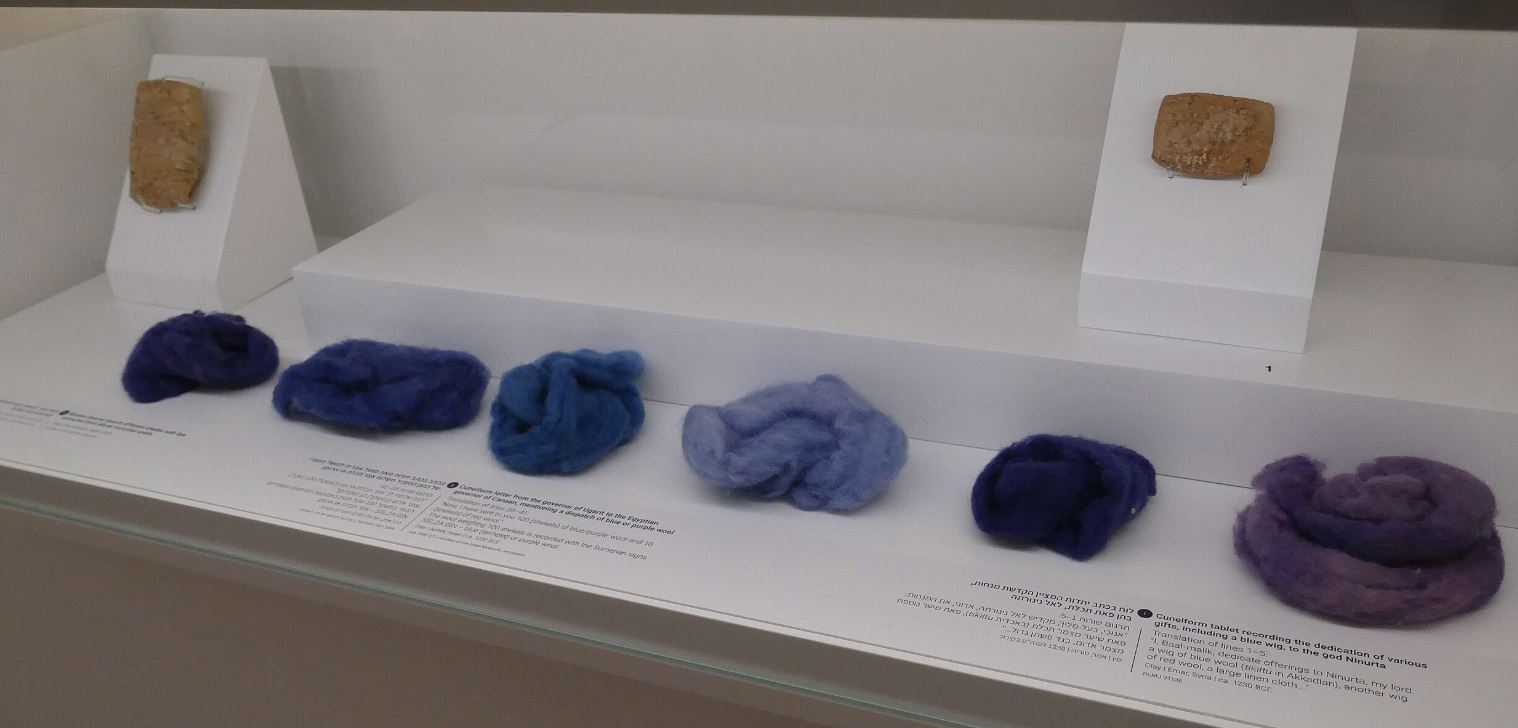
תָּנוּ רַבָּנַן: מְעִיל – כּוּלּוֹ שֶׁל תְּכֵלֶת הָיָה, שֶׁנֶּאֱמַר: ״וַיַּעַשׂ אֶת מְעִיל הָאֵפוֹד כְּלִיל תְּכֵלֶת״. שׁוּלָיו כֵּיצַד? מֵבִיא תְּכֵלֶת וְאַרְגָּמָן וְתוֹלַעַת שָׁנִי שְׁזוּרִין, וְעוֹשֶׂה אוֹתָן כְּמִין רִימּוֹנִים שֶׁלֹּא פִּיתְּחוּ פִּיהֶן, וּכְמִין קוֹנָאוֹת שֶׁל קְנָסוֹת שֶׁבְּרָאשֵׁי תִינוֹקוֹת.
§ With regard to the priestly vestments, the Sages taught in a baraita: The robe of the High Priest was sewn entirely of sky-blue wool, as it is stated: “And he made the robe of the ephod of woven work, all of sky-blue wool” (Exodus 39:22). With regard to its skirts, concerning which it states: “And they made upon the skirts of the robe pomegranates of sky blue, and purple, and scarlet, twined” (Exodus 39:24), how were they fashioned? The tailor brings sky-blue wool, and purple wool, and scarlet wool, which are twined together, and fashions them to appear as pomegranates that have not opened their mouths, i.e., they are sewn in the appearance of pomegranates that are not yet ripe enough for the crown on top to open, and as the cones [konaot] of the helmets [kenasot] that are found on the heads of children.
וּמֵבִיא שִׁבְעִים וּשְׁנַיִם זַגִּין שֶׁבָּהֶן שִׁבְעִים וּשְׁנַיִם עִינְבָּלִין, וְתוֹלֶה בָּהֶן שְׁלֹשִׁים וְשִׁשָּׁה בְּצַד זֶה וּשְׁלֹשִׁים וְשִׁשָּׁה מִצַּד זֶה. רַבִּי דּוֹסָא אוֹמֵר מִשּׁוּם רַבִּי יְהוּדָה: שְׁלֹשִׁים וְשִׁשָּׁה הָיוּ – שְׁמוֹנֶה עֶשְׂרֵה מִצַּד זֶה וּשְׁמֹנֶה עֶשְׂרֵה מִצַּד זֶה.
And in order to fulfill that which is stated: “And they made bells of pure gold, and put the bells between the pomegranates” (Exodus 39:25), he brings seventy-two bells, i.e., the outer part of bells, made from gold, that contain inside them seventy-two bell clappers, and he suspends them on the skirts: Thirty-six of each, i.e., pomegranates and bells, on this side of the robe, and thirty-six of each on that side, as the verse states: “A bell and a pomegranate, a bell and a pomegranate, upon the skirts of the robe around it” (Exodus 39:26). Rabbi Dosa says in the name of Rabbi Yehuda: There were thirty-six bells suspended around the skirt, eighteen from this side and eighteen from that side.
אָמַר רַבִּי עִינְיֹנִי בַּר שָׂשׂוֹן: כְּמַחְלוֹקֶת כָּאן כָּךְ מַחְלוֹקֶת בְּמַרְאוֹת נְגָעִים, דִּתְנַן: מַרְאוֹת נְגָעִים – רַבִּי דּוֹסָא בֶּן הַרְכִּינָס אוֹמֵר: שְׁלֹשִׁים וְשִׁשָּׁה, עֲקַבְיָא בֶּן מַהֲלַלְאֵל אוֹמֵר: שִׁבְעִים וּשְׁנַיִם.
Rabbi Inini bar Sason says: Just as there is a disagreement here between tanna’im with regard to the total number of bells suspended around the skirt of the robe of the High Priest, so is there a disagreement between tanna’im with regard to the total number of shades of leprous marks. As we learned in a mishna (Nega’im 1:4): With regard to the total number of shades of leprous marks, Rabbi Dosa ben Harkinas says: There are thirty-six, while Akavya ben Mahalalel says: There are seventy-two.
וְאָמַר רַבִּי עִינְיֹנִי בַּר שָׂשׂוֹן: לָמָּה נִסְמְכָה פָּרָשַׁת קׇרְבָּנוֹת לְפָרָשַׁת בִּגְדֵי כְהוּנָּה? לוֹמַר לָךְ: מָה קׇרְבָּנוֹת מְכַפְּרִין, אַף בִּגְדֵי כְהוּנָּה מְכַפְּרִין.
§ The Gemara cites another statement of this sage: And Rabbi Inini bar Sason says: Why was the passage in the Torah that discusses offerings (Leviticus, chapters 1–7) juxtaposed to the passage that discusses the priestly vestments (Leviticus, chapter 8)? It was juxtaposed to tell you that just as offerings effect atonement, so too, priestly vestments effect atonement.
כְּתוֹנֶת – מְכַפֶּרֶת עַל שְׁפִיכוּת (דם) [דָּמִים], שֶׁנֶּאֱמַר: ״וַיִּשְׁחֲטוּ שְׂעִיר עִזִּים וַיִּטְבְּלוּ אֶת הַכֻּתֹּנֶת בַּדָּם״. מִכְנָסַיִם – מְכַפֶּרֶת עַל גִּילּוּי עֲרָיוֹת, שֶׁנֶּאֱמַר: ״וַעֲשֵׂה לָהֶם מִכְנְסֵי בָד [לְכַסּוֹת (אֶת) בְּשַׂר עֶרְוָה]״. מִצְנֶפֶת – מְכַפֶּרֶת עַל גַּסֵּי הָרוּחַ. מִנַּיִן? אָמַר רַבִּי חֲנִינָא: יָבֹא דָּבָר שֶׁבַּגּוֹבַהּ, וִיכַפֵּר עַל גּוֹבַהּ.
The tunic atones for bloodshed, as it is stated with regard to the brothers of Joseph after they plotted to kill him: “And they killed a goat, and dipped the tunic in the blood” (Genesis 37:31). The trousers atone for forbidden sexual relations, as it is stated with regard to fashioning the priestly vestments: “And you shall make them linen trousers to cover the flesh of their nakedness” (Exodus 28:42). The mitre atones for the arrogant. From where is this derived? Rabbi Ḥanina says: It is logical that an item that is placed at an elevation, i.e., on the head of a priest, shall come and atone for the sin of an elevated heart.
אַבְנֵט – מְכַפֵּר עַל הִרְהוּר הַלֵּב, הֵיכָא דְּאִיתֵיהּ. חוֹשֶׁן – מְכַפֵּר עַל הַדִּינִין, שֶׁנֶּאֱמַר: ״וְעָשִׂיתָ חֹשֶׁן מִשְׁפָּט״. אֵפוֹד – מְכַפֵּר עַל עֲבוֹדָה זָרָה, שֶׁנֶּאֱמַר: ״אֵין אֵפוֹד וּתְרָפִים״.
Rabbi Inini bar Sason continues: The belt atones for thought of the heart. The Gemara elaborates: The belt atones for the sins occurring where it is situated, i.e., over the heart. The breastplate of the High Priest atones for improper judgments, as it is stated: “And you shall make a breastplate of judgment” (Exodus 28:15). The ephod of the High Priest atones for idol worship, as it is stated: “And without ephod or teraphim” (Hosea 3:4), meaning that when there is no ephod, the sin of teraphim, i.e., idol worship, is found. Therefore, it may be inferred that if there is an ephod, there is no sin of idol worship.
מְעִיל – מְכַפֵּר עַל לָשׁוֹן הָרָע. מִנַּיִן? אָמַר רַבִּי חֲנִינָא: יָבֹא דָּבָר שֶׁבַּקּוֹל, וִיכַפֵּר עַל קוֹל הָרָע. וְצִיץ – מְכַפֵּר עַל עַזּוּת פָּנִים; בְּצִיץ כְּתִיב: ״וְהָיָה עַל מֵצַח אַהֲרֹן״, וּבְעַזּוּת פָּנִים כְּתִיב: ״וּמֵצַח אִשָּׁה זוֹנָה הָיָה לָךְ״.
The robe of the High Priest atones for malicious speech. From where is this known? Rabbi Ḥanina says: It is logical that an item that produces sound, i.e., the robe, which has bells, shall come and atone for an evil sound. And the frontplate of the High Priest atones for brazenness. This is derived from the fact that with regard to the frontplate it is written: “And it shall be upon Aaron’s forehead” (Exodus 28:38), and with regard to brazenness it is written: “And you had a harlot’s forehead” (Jeremiah 3:3).
אִינִי?! וְהָא אָמַר רַבִּי יְהוֹשֻׁעַ בֶּן לֵוִי: שְׁנֵי דְּבָרִים לֹא מָצִינוּ לָהֶן כַּפָּרָה בְּקׇרְבָּנוֹת, וּמָצִינוּ לָהֶן כַּפָּרָה מִמָּקוֹם אַחֵר; וְאֵלּוּ הֵן: שְׁפִיכוּת דָּמִים וְלָשׁוֹן הָרָע!
The Gemara asks: Is that so, that the priestly vestments atone for these sins? But doesn’t Rabbi Yehoshua ben Levi say: There are two matters that we do not find for them an atonement with offerings, but we find for them an atonement from another place, and they are: Bloodshed and malicious speech.
שְׁפִיכוּת דָּמִים – מֵעֶגְלָה עֲרוּפָה, וְלָשׁוֹן הָרָע – מִקְּטֹרֶת. דְּתָנֵי רַב חֲנַנְיָה: מִנַּיִן לִקְטֹרֶת שֶׁמְּכַפֶּרֶת? שֶׁנֶּאֱמַר: ״וַיִּתֵּן אֶת הַקְּטֹרֶת וַיְכַפֵּר עַל הָעָם״.
With regard to bloodshed, its atonement comes from the heifer whose neck is broken. This is referring to a case where a murdered body is found but the identity of the murderer is not known. In such an instance, the Torah mandates that the neck of a heifer must be broken as an atonement for the murder. And with regard to malicious speech, its atonement comes from incense, as Rav Ḥananya teaches in a baraita: From where is it derived that the incense effects atonement? As it is stated after the Israelites spoke slanderously against Moses and Aaron and a plague was sent against them: “And he put on the incense, and made atonement for the people” (Numbers 17:12).
וְתָנֵי דְּבֵי רַבִּי יִשְׁמָעֵאל: עַל מָה קְטֹרֶת מְכַפֶּרֶת? עַל לָשׁוֹן הָרָע. יָבֹא דָּבָר שֶׁבַּחֲשַׁאי, וִיכַפֵּר עַל מַעֲשֶׂה חֲשַׁאי.
The Gemara continues: And similarly, the school of Rabbi Yishmael teaches: For what does incense effect atonement? It effects atonement for malicious speech, in order that an item that is offered in private, i.e., the incense, which is offered by a priest acting alone, shall come and atone for an action generally occurring in private, i.e., malicious speech.
קַשְׁיָא לָשׁוֹן הָרָע אַלָּשׁוֹן הָרָע, קַשְׁיָא שְׁפִיכוּת דָּמִים אַשְּׁפִיכוּת דָּמִים!
Accordingly, there is a difficulty between that which is stated with regard to malicious speech and that which is stated with regard to malicious speech, as according to Rabbi Inini bar Sason the robe atones for malicious speech, whereas according to the baraita it is only the incense that effects atonement for that transgression. Likewise, there is a difficulty between that which is stated with regard to bloodshed and that which is stated with regard to bloodshed, as according to Rabbi Inini bar Sason the tunic effects atonement for bloodshed, whereas according to the baraita only the heifer whose neck is broken effects atonement for it.
לָא קַשְׁיָא; הָא דִּידִיעַ מַאן קַטְלֵיהּ, הָא דְּלָא יְדִיעַ מַאן קַטְלֵיהּ. אִי דִּידִיעַ מַאן קַטְלֵיהּ – בַּר קְטָלָא הוּא! בְּמֵזִיד וְלָא אַתְרוֹ בֵּיהּ.
The Gemara answers: With regard to bloodshed, it is not difficult, as this, the tunic, effects atonement for bloodshed in an instance where it is known who killed the victim, and this, the heifer, effects atonement in an instance where it is not known who killed the victim. The Gemara challenges: If it is known who killed the victim, that man is deserving of death, and there is no atonement for the community otherwise, as it is stated: “And no atonement can be made for the land for the blood that is shed within it, but by the blood of him that shed it” (Numbers 35:33). The Gemara responds: It is referring to a case where he murdered intentionally but witnesses did not forewarn him of the consequences of committing murder. Therefore, the court may not execute him, as no earthly punishment may be administered without forewarning.
וְלָשׁוֹן הָרָע אַלָּשׁוֹן הָרָע נָמֵי לָא קַשְׁיָא – הָא בְּצִינְעָא, הָא בְּפַרְהֶסְיָא.
And with regard to the contradiction between that which is stated with regard to malicious speech and that which is stated with regard to malicious speech, it is also not difficult. This, the incense, effects atonement for malicious speech spoken in private, whereas this, the robe, on which the bells that produce noise are placed, effects atonement for malicious speech spoken in public.
הֲדַרַן עֲלָךְ הַמִּזְבֵּחַ מְקַדֵּשׁ

Today’s daily daf tools:
Delve Deeper
Broaden your understanding of the topics on this daf with classes and podcasts from top women Talmud scholars.

Zevachim Daf 87-93– Daf Yomi: One Week at a Time


New to Talmud?
Check out our resources designed to help you navigate a page of Talmud – and study at the pace, level and style that fits you.
The Hadran Women’s Tapestry
Meet the diverse women learning Gemara at Hadran and hear their stories.
In July, 2012 I wrote for Tablet about the first all women’s siyum at Matan in Jerusalem, with 100 women. At the time, I thought, I would like to start with the next cycle – listening to a podcast at different times of day makes it possible. It is incredible that after 10 years, so many women are so engaged!

Pittsburgh, United States
It’s hard to believe it has been over two years. Daf yomi has changed my life in so many ways and has been sustaining during this global sea change. Each day means learning something new, digging a little deeper, adding another lens, seeing worlds with new eyes. Daf has also fostered new friendships and deepened childhood connections, as long time friends have unexpectedly become havruta.

Northwest Washington, United States
I started learning daf in January, 2020, being inspired by watching the Siyyum Hashas in Binyanei Haumah. I wasn’t sure I would be able to keep up with the task. When I went to school, Gemara was not an option. Fast forward to March, 2022, and each day starts with the daf. The challenge is now learning the intricacies of delving into the actual learning. Hadran community, thank you!

Riverdale, NY, United States

Richmond, CA, United States
When I was working and taking care of my children, learning was never on the list. Now that I have more time I have two different Gemora classes and the nach yomi as well as the mishna yomi daily.

Jerusalem, Israel
תמיד רציתי. למדתי גמרא בבית ספר בטורונטו קנדה. עליתי ארצה ולמדתי שזה לא מקובל. הופתעתי.
יצאתי לגימלאות לפני שנתיים וזה מאפשר את המחוייבות לדף יומי.
עבורי ההתמדה בלימוד מעגן אותי בקשר שלי ליהדות. אני תמיד מחפשת ותמיד. מוצאת מקור לקשר. ללימוד חדש ומחדש. קשר עם נשים לומדות מעמיק את החוויה ומשמעותית מאוד.

מיתר, ישראל
When we heard that R. Michelle was starting daf yomi, my 11-year-old suggested that I go. Little did she know that she would lose me every morning from then on. I remember standing at the Farbers’ door, almost too shy to enter. After that first class, I said that I would come the next day but couldn’t commit to more. A decade later, I still look forward to learning from R. Michelle every morning.

Ra’anana, Israel
I began my journey two years ago at the beginning of this cycle of the daf yomi. It has been an incredible, challenging experience and has given me a new perspective of Torah Sh’baal Peh and the role it plays in our lives

Efrat, Israel
I have joined the community of daf yomi learners at the start of this cycle. I have studied in different ways – by reading the page, translating the page, attending a local shiur and listening to Rabbanit Farber’s podcasts, depending on circumstances and where I was at the time. The reactions have been positive throughout – with no exception!

Guildford, United Kingdom
In January 2020, my teaching partner at IDC suggested we do daf yomi. Thanks to her challenge, I started learning daily from Rabbanit Michelle. It’s a joy to be part of the Hadran community. (It’s also a tikkun: in 7th grade, my best friend and I tied for first place in a citywide gemara exam, but we weren’t invited to the celebration because girls weren’t supposed to be learning gemara).

Jerusalem, Israel
I started my Daf Yomi journey at the beginning of the COVID19 pandemic.

Los Angeles, United States

New York, United States
A few years back, after reading Ilana Kurshan’s book, “If All The Seas Were Ink,” I began pondering the crazy, outlandish idea of beginning the Daf Yomi cycle. Beginning in December, 2019, a month before the previous cycle ended, I “auditioned” 30 different podcasts in 30 days, and ultimately chose to take the plunge with Hadran and Rabbanit Michelle. Such joy!

HUNTINGTON, United States
I started learning Daf Yomi inspired by תָּפַסְתָּ מְרוּבֶּה לֹא תָּפַסְתָּ, תָּפַסְתָּ מוּעָט תָּפַסְתָּ. I thought I’d start the first page, and then see. I was swept up into the enthusiasm of the Hadran Siyum, and from there the momentum kept building. Rabbanit Michelle’s shiur gives me an anchor, a connection to an incredible virtual community, and an energy to face whatever the day brings.

בית שמש, Israel
Retirement and Covid converged to provide me with the opportunity to commit to daily Talmud study in October 2020. I dove into the middle of Eruvin and continued to navigate Seder Moed, with Rabannit Michelle as my guide. I have developed more confidence in my learning as I completed each masechet and look forward to completing the Daf Yomi cycle so that I can begin again!

San Diego, United States

Bronx, United States
I had tried to start after being inspired by the hadran siyum, but did not manage to stick to it. However, just before masechet taanit, our rav wrote a message to the shul WhatsApp encouraging people to start with masechet taanit, so I did! And this time, I’m hooked! I listen to the shiur every day , and am also trying to improve my skills.

Yad Binyamin, Israel

Minneapolis, MN, United States
Michelle has been an inspiration for years, but I only really started this cycle after the moving and uplifting siyum in Jerusalem. It’s been an wonderful to learn and relearn the tenets of our religion and to understand how the extraordinary efforts of a band of people to preserve Judaism after the fall of the beit hamikdash is still bearing fruits today. I’m proud to be part of the chain!

Raanana, Israel
After reading the book, “ If All The Seas Were Ink “ by Ileana Kurshan I started studying Talmud. I searched and studied with several teachers until I found Michelle Farber. I have been studying with her for two years. I look forward every day to learn from her.

Virginia, United States
Zevachim 88
חַטַּאת הָעוֹף פְּסוּלָה הֵיכִי מַזֶּה מִדָּמָהּ? הָוֵה לֵיהּ יָרוּד! שְׁאָר פְּסוּלִים הֵיכִי זָרֵיק לְהוּ מִדָּמָהּ?
then with regard to the case of a disqualified bird sin offering that was pinched at the top of the altar, how does one sprinkle from its blood on the wall of the altar? When the priest raises the bird in his hand in order to sprinkle its blood, the bird is considered to have descended from upon the altar and he cannot sprinkle its blood, as the halakha with regard to all disqualified items is that once they have descended from upon the altar they shall not ascend. Likewise, concerning the blood of other offerings that were disqualified that ascended upon the altar, how does he sprinkle from their blood, since it is sprinkled from the airspace above the altar? Rather, it must be that the airspace above the altar is considered as the altar.
דְּמַגַּע לְהוּ. הָא הַזָּאָה הִיא?! מִיצּוּי הִיא! הָא זְרִיקָה?! שְׁפִיכָה הִיא!
The Gemara rejects this proof: It is possible that in such cases one does not sprinkle the blood in its normal fashion, but in such a manner that he presses it against the wall of the altar immediately without the blood passing through the air. The Gemara rejects this suggestion: Is this considered sprinkling? It is squeezing, an act that is performed for a bird burnt offering, not for a bird sin offering. Likewise, if one sprinkles the blood of other disqualified offerings in this manner, is this sprinkling? It is pouring.
וְעוֹד, דֶּרֶךְ הַזָּאָה בְּכָךְ?! דֶּרֶךְ זְרִיקָה בְּכָךְ?!
And furthermore, with regard to a disqualified bird burnt offering, is the manner of sprinkling in such a fashion? And in the case of other disqualified offerings, is the manner of sprinkling in such a fashion? It is not. Rather, the airspace above the altar must be considered as the altar.
אָמַר רַב אָשֵׁי: אִי דְּנָקֵט לְהוּ בְּרֹאשׁ הַמִּזְבֵּחַ – הָכִי נָמֵי; כִּי קָאָמַר – דִּתְלָנְהוּ בְּקַנְיָא. מַאי? תֵּיקוּ.
Rav Ashi said: If the question concerns a case where the priest held the blood or limbs while standing at the top of the altar, they would indeed be considered as having ascended the altar, and shall not descend from it. But when the dilemma was stated with regard to the airspace above the altar, it was with regard to an instance where he suspended them with a pole above the altar, while he himself stood on the floor of the Temple courtyard. What is the halakha in such a case? The Gemara responds that the dilemma shall stand unresolved.
מַתְנִי׳ כְּלֵי הַלַּח מְקַדְּשִׁין אֶת הַלַּח, וּמִדּוֹת יָבֵשׁ מְקַדְּשׁוֹת אֶת הַיָּבֵשׁ. אֵין כְּלִי הַלַּח מְקַדֶּשֶׁת אֶת הַיָּבֵשׁ, וְלֹא יָבֵשׁ מְקַדֵּשׁ אֶת הַלַּח. כְּלֵי הַקּוֹדֶשׁ שֶׁנִּיקְּבוּ, אִם עוֹשִׂין בָּהֶן מֵעֵין מְלַאכְתָּן שֶׁהָיוּ עוֹשִׂין, וְהֵן שְׁלֵימִים – מְקַדְּשִׁין, וְאִם לָאו – אֵין מְקַדְּשִׁין. וְכוּלָּן אֵין מְקַדְּשִׁין אֶלָּא בַּקּוֹדֶשׁ.
MISHNA: The mishna elaborates on the halakha taught in the previous mishna (86a) that service vessels sanctify items placed in them. The service vessels used for liquids sanctify only liquids used in the service, and the service vessels that serve as dry measures sanctify only dry items used in the service. The service vessels used for liquids do not sanctify dry items, and the service vessels used for dry items do not sanctify liquids. With regard to sacred vessels that were perforated, if one continues to utilize them for a use similar to the use for which they would utilize them previously when they were whole, they continue to sanctify their contents. And if not, they do not sanctify their contents. And all of these vessels sanctify items only when they are in the sacred area, i.e., the Temple courtyard.
גְּמָ׳ אָמַר שְׁמוּאֵל: לֹא שָׁנוּ אֶלָּא מִדּוֹת, אֲבָל מִזְרָקוֹת – מְקַדְּשִׁין, שֶׁנֶּאֱמַר: ״שְׁנֵיהֶם מְלֵאִים סֹלֶת״.
GEMARA: With regard to the statement of the mishna that the vessels used for liquids do not sanctify dry items, Shmuel says: The Sages taught this halakha only with regard to measures used for liquids, i.e., wine or oil. But cups, which are used for collecting the blood of offerings, sanctify dry items as well, as it is stated in the verse: “One silver cup of seventy shekels, after the shekel of the sanctuary; both of them full of fine flour mingled with oil for a meal offering” (Numbers 7:13), indicating that the cups were also fashioned for use with flour, a dry item.
אֲמַר לֵיהּ רַב אַחָא מִדִּיפְתִּי לְרָבִינָא: מִנְחָה לַחָה הִיא! אֲמַר לֵיהּ: לֹא נִצְרְכָה אֶלָּא לַיָּבֵשׁ שֶׁבָּהּ. אִיבָּעֵית אֵימָא: מִנְחָה לְגַבֵּי דָּם – כְּיָבֵשׁ דָּמֵי.
Rav Aḥa of Difti said to Ravina: The meal offering of the verse is also considered a liquid, as it is mixed with oil, and one cannot derive from it the halakha with regard to items that are entirely dry. Ravina said to him: The verse cited by Shmuel was only necessary to derive the halakha of the dry portions of a meal offering, teaching that even flour that remained dry because it did not get thoroughly mixed with the oil is sanctified by the cups as well. If you wish, say instead: A meal offering, even though it is mixed with oil, is, in comparison to blood, considered as a dry item. Accordingly, one can derive from the verse that the cups sanctify all dry items.
אָמַר שְׁמוּאֵל: כְּלֵי שָׁרֵת – אֵין מְקַדְּשִׁין אֶלָּא שְׁלֵימִין, אֵין מְקַדְּשִׁין אֶלָּא מְלֵאִין, אֵין מְקַדְּשִׁין אֶלָּא מִתּוֹכָן. וְאָמְרִי לָהּ: אֵין מְקַדְּשִׁין אֶלָּא שְׁלֵימִין וּמְלֵאִים וּמִבִּפְנִים.
Additionally, Shmuel says: Service vessels sanctify items only when the vessels are whole, i.e., they do not have a hole; they sanctify only full measures, i.e., when they contain a measurement fit for offering; and they sanctify items only from within them and not items that merely touched their exterior. And some say there is another version of the statement of Shmuel: Service vessels sanctify items only when the vessels are whole, and when they contain full measures, and from inside.
מַאי בֵּינַיְיהוּ? אִיכָּא בֵּינַיְיהוּ בֵּירוּצֵי מִדּוֹת. בְּמַתְנִיתָא תָּנָא: אֵין מְקַדְּשִׁין אֶלָּא שְׁלֵימִין, וּמְלֵאִים, וּמִתּוֹכָן, וּבִפְנִים.
The Gemara asks: What is the difference between these two versions? The Gemara responds: The difference between them is with regard to heaping measures. According to the first version, that service vessels sanctify only items that are within them, nothing that overflows is included. The Gemara notes that it was taught in a baraita in accordance with both versions: Service vessels sanctify items only when they are whole, and only full measurements, and from within them, and inside.
אָמַר רַבִּי אַסִּי אָמַר רַבִּי יוֹחָנָן: לֹא שָׁנוּ אֶלָּא שֶׁאֵין דַּעְתּוֹ לְהוֹסִיף, אֲבָל דַּעְתּוֹ לְהוֹסִיף – רִאשׁוֹן רִאשׁוֹן קוֹדֶשׁ.
With regard to the halakha that service vessels sanctify only full measurements, Rabbi Asi says that Rabbi Yoḥanan says: They taught this halakha only when the priest’s initial intention was not to add to that which was already placed inside the vessel. But if his initial intention was to add, then each initial amount placed in the vessel becomes sacred, no matter how small.
תַּנְיָא נָמֵי הָכִי: מְלֵאִין – אֵין מְלֵאִין אֶלָּא שְׁלֵימִין. אָמַר רַבִּי יוֹסֵי: אֵימָתַי – בִּזְמַן שֶׁאֵין דַּעְתּוֹ לְהוֹסִיף; אֲבָל דַּעְתּוֹ לְהוֹסִיף – רִאשׁוֹן רִאשׁוֹן קוֹדֶשׁ.
This distinction is also taught in a baraita: With regard to the halakha that service vessels sanctify full measurements, full measurements are nothing other than whole measurements. Rabbi Yosei said: When are full measurements whole ones? It is at a time that the priest’s intention was not to add. But if his intention was to add, each initial amount is sacred.
אֵין כְּלִי הַלַּח מְקַדֵּשׁ [וְכוּ׳]. אָמַר רַב, וְאִיתֵּימָא רַב אַסִּי: אֵין מְקַדְּשִׁין לִיקְרַב, אֲבָל מְקַדְּשִׁין לִיפָּסֵל.
§ The mishna teaches that the service vessels used for liquids do not sanctify dry items. With regard to this halakha, Rav says, and some say that Rav Asi says: The service vessels used for liquids do not sanctify dry items to permit them for sacrifice upon the altar, but they sanctify dry items in order for the items to be disqualified by them, i.e., dry items placed in such vessels may be disqualified by that which disqualifies only sanctified items, e.g., if they are touched by one who immersed that day, or if they emerged from the Temple courtyard.
אִיכָּא דְּמַתְנֵי לַהּ אַהָא: אֵין מְבִיאִין מְנָחוֹת וּנְסָכִים וּמִנְחַת בְּהֵמָה וּבִיכּוּרִים מִן הַמְדוּמָּע, וְאֵין צָרִיךְ לוֹמַר מֵעׇרְלָה וְכִלְאֵי הַכֶּרֶם. וְאִם הֵבִיא – לֹא קִדֵּשׁ. אָמַר רַב, וְאִיתֵּימָא רַב אַסִּי: לֹא קִדֵּשׁ לִיקְרַב, אֲבָל קָדַשׁ לִיפָּסֵל.
There are those who teach this statement with regard to this halakha: One may not bring meal offerings, or libations, or meal offerings accompanying an animal, or first fruits, from a mixture containing teruma, since that which may not be consumed by all Jews may not be used for an offering. And needless to say, one may not bring these items from the fruit of a tree that is orla, i.e., a tree during the first three years after its planting, from which it is prohibited to eat, or from diverse kinds sown in a vineyard, both of which are prohibited for consumption to priests as well. And if he brought an offering from them, it is not sanctified. With regard to this issue, Rav says, and some say that Rav Asi says: It is not sanctified for sacrifice upon the altar, but it is sanctified in order to be disqualified.
תָּנוּ רַבָּנַן: כְּלֵי קֹדֶשׁ שֶׁנִּיקְּבוּ – אֵין מַתִּיכִין אוֹתָן, וְאֵין מַתִּיכִין לְתוֹכָן אֲבָר. נִפְגְּמוּ – אֵין מְתַקְּנִין אוֹתָן. סַכִּין שֶׁנִּפְגְּמָה – אֵין מַשְׁחִיזִין אֶת פְּגִימָתָהּ. נִשְׁמְטָה – אֵין מַחְזִירִין אוֹתָהּ. אַבָּא שָׁאוּל אוֹמֵר: סַכִּין מַטְרֶפֶת הָיְתָה בַּמִּקְדָּשׁ, וְנִמְנוּ עָלֶיהָ כֹּהֲנִים וּגְנָזוּהָ.
§ With regard to perforated vessels, the Sages taught: In the case of sacred vessels that were perforated, one may not melt them in order to seal the perforation, and one may not melt lead into them for such a purpose. If the vessels were damaged, one may not repair them. Concerning a knife that was damaged, one may not sharpen the spot of its damage. If the blade separated from the handle, one may not restore it. Abba Shaul says: There was a certain knife in the Temple whose metal was soft and easily damaged, such that when used it would often render animals prohibited, thereby disqualifying them. Accordingly, the priests voted concerning it, and elected to hide it.
תָּנוּ רַבָּנַן: בִּגְדֵי כְהוּנָּה, אֵין עוֹשִׂין אוֹתָם מַעֲשֵׂה מַחַט אֶלָּא מַעֲשֵׂה אוֹרֵג, שֶׁנֶּאֱמַר: ״מַעֲשֵׂה אֹרֵג״. נִתְגַּעֲלוּ, אֵין מְכַבְּסִין [אוֹתָן] לֹא בְּנֶתֶר וְלֹא בְּאָהָל.
The Sages taught: Priestly vestments are not fashioned by needlework, i.e., by stitching various parts together, but rather through woven work, whereby the entire garment is initially woven into one entity, as it is stated: “Woven work” (Exodus 28:32). If the garments were soiled one may not launder them, neither with natron nor with soap, two common detergents.
הָא בַּמַּיִם – מְכַבְּסִין?! אָמַר אַבָּיֵי, הָכִי קָאָמַר: הוּגְּעוּ בְּמַיִם – מְכַבְּסִין אוֹתָן בְּנֶתֶר וְאָהָל;
The Gemara asks: But may it be inferred from this that with water one may launder the priestly vestments? Abaye said: This is what the baraita is saying: If the dirtied garments have only reached the point where laundering them with water alone would suffice, one may launder them with natron and soap, as they are not considered soiled.
הוּגְּעוּ לְנֶתֶר וְאָהָל – אַף בְּמַיִם אֵין מְכַבְּסִים. וְיֵשׁ אוֹמְרִים: אֵין מְכַבְּסִין אוֹתָן כׇּל עִיקָּר, שֶׁאֵין עֲנִיּוּת בִּמְקוֹם עֲשִׁירוּת.
But if the garments became so dirty that they reached a point that laundering them would require the use of natron or soap, then one may not launder them, even with water. And some say: One may not launder the priestly vestments at all, even if laundering them with water would suffice, because there is no poverty in a place of wealth, i.e., only priestly vestments that were clean as new should be worn, as is befitting the Temple service, and those that were laundered should not be worn.
תָּנוּ רַבָּנַן: מְעִיל – כּוּלּוֹ שֶׁל תְּכֵלֶת הָיָה, שֶׁנֶּאֱמַר: ״וַיַּעַשׂ אֶת מְעִיל הָאֵפוֹד כְּלִיל תְּכֵלֶת״. שׁוּלָיו כֵּיצַד? מֵבִיא תְּכֵלֶת וְאַרְגָּמָן וְתוֹלַעַת שָׁנִי שְׁזוּרִין, וְעוֹשֶׂה אוֹתָן כְּמִין רִימּוֹנִים שֶׁלֹּא פִּיתְּחוּ פִּיהֶן, וּכְמִין קוֹנָאוֹת שֶׁל קְנָסוֹת שֶׁבְּרָאשֵׁי תִינוֹקוֹת.
§ With regard to the priestly vestments, the Sages taught in a baraita: The robe of the High Priest was sewn entirely of sky-blue wool, as it is stated: “And he made the robe of the ephod of woven work, all of sky-blue wool” (Exodus 39:22). With regard to its skirts, concerning which it states: “And they made upon the skirts of the robe pomegranates of sky blue, and purple, and scarlet, twined” (Exodus 39:24), how were they fashioned? The tailor brings sky-blue wool, and purple wool, and scarlet wool, which are twined together, and fashions them to appear as pomegranates that have not opened their mouths, i.e., they are sewn in the appearance of pomegranates that are not yet ripe enough for the crown on top to open, and as the cones [konaot] of the helmets [kenasot] that are found on the heads of children.
וּמֵבִיא שִׁבְעִים וּשְׁנַיִם זַגִּין שֶׁבָּהֶן שִׁבְעִים וּשְׁנַיִם עִינְבָּלִין, וְתוֹלֶה בָּהֶן שְׁלֹשִׁים וְשִׁשָּׁה בְּצַד זֶה וּשְׁלֹשִׁים וְשִׁשָּׁה מִצַּד זֶה. רַבִּי דּוֹסָא אוֹמֵר מִשּׁוּם רַבִּי יְהוּדָה: שְׁלֹשִׁים וְשִׁשָּׁה הָיוּ – שְׁמוֹנֶה עֶשְׂרֵה מִצַּד זֶה וּשְׁמֹנֶה עֶשְׂרֵה מִצַּד זֶה.
And in order to fulfill that which is stated: “And they made bells of pure gold, and put the bells between the pomegranates” (Exodus 39:25), he brings seventy-two bells, i.e., the outer part of bells, made from gold, that contain inside them seventy-two bell clappers, and he suspends them on the skirts: Thirty-six of each, i.e., pomegranates and bells, on this side of the robe, and thirty-six of each on that side, as the verse states: “A bell and a pomegranate, a bell and a pomegranate, upon the skirts of the robe around it” (Exodus 39:26). Rabbi Dosa says in the name of Rabbi Yehuda: There were thirty-six bells suspended around the skirt, eighteen from this side and eighteen from that side.
אָמַר רַבִּי עִינְיֹנִי בַּר שָׂשׂוֹן: כְּמַחְלוֹקֶת כָּאן כָּךְ מַחְלוֹקֶת בְּמַרְאוֹת נְגָעִים, דִּתְנַן: מַרְאוֹת נְגָעִים – רַבִּי דּוֹסָא בֶּן הַרְכִּינָס אוֹמֵר: שְׁלֹשִׁים וְשִׁשָּׁה, עֲקַבְיָא בֶּן מַהֲלַלְאֵל אוֹמֵר: שִׁבְעִים וּשְׁנַיִם.
Rabbi Inini bar Sason says: Just as there is a disagreement here between tanna’im with regard to the total number of bells suspended around the skirt of the robe of the High Priest, so is there a disagreement between tanna’im with regard to the total number of shades of leprous marks. As we learned in a mishna (Nega’im 1:4): With regard to the total number of shades of leprous marks, Rabbi Dosa ben Harkinas says: There are thirty-six, while Akavya ben Mahalalel says: There are seventy-two.
וְאָמַר רַבִּי עִינְיֹנִי בַּר שָׂשׂוֹן: לָמָּה נִסְמְכָה פָּרָשַׁת קׇרְבָּנוֹת לְפָרָשַׁת בִּגְדֵי כְהוּנָּה? לוֹמַר לָךְ: מָה קׇרְבָּנוֹת מְכַפְּרִין, אַף בִּגְדֵי כְהוּנָּה מְכַפְּרִין.
§ The Gemara cites another statement of this sage: And Rabbi Inini bar Sason says: Why was the passage in the Torah that discusses offerings (Leviticus, chapters 1–7) juxtaposed to the passage that discusses the priestly vestments (Leviticus, chapter 8)? It was juxtaposed to tell you that just as offerings effect atonement, so too, priestly vestments effect atonement.
כְּתוֹנֶת – מְכַפֶּרֶת עַל שְׁפִיכוּת (דם) [דָּמִים], שֶׁנֶּאֱמַר: ״וַיִּשְׁחֲטוּ שְׂעִיר עִזִּים וַיִּטְבְּלוּ אֶת הַכֻּתֹּנֶת בַּדָּם״. מִכְנָסַיִם – מְכַפֶּרֶת עַל גִּילּוּי עֲרָיוֹת, שֶׁנֶּאֱמַר: ״וַעֲשֵׂה לָהֶם מִכְנְסֵי בָד [לְכַסּוֹת (אֶת) בְּשַׂר עֶרְוָה]״. מִצְנֶפֶת – מְכַפֶּרֶת עַל גַּסֵּי הָרוּחַ. מִנַּיִן? אָמַר רַבִּי חֲנִינָא: יָבֹא דָּבָר שֶׁבַּגּוֹבַהּ, וִיכַפֵּר עַל גּוֹבַהּ.
The tunic atones for bloodshed, as it is stated with regard to the brothers of Joseph after they plotted to kill him: “And they killed a goat, and dipped the tunic in the blood” (Genesis 37:31). The trousers atone for forbidden sexual relations, as it is stated with regard to fashioning the priestly vestments: “And you shall make them linen trousers to cover the flesh of their nakedness” (Exodus 28:42). The mitre atones for the arrogant. From where is this derived? Rabbi Ḥanina says: It is logical that an item that is placed at an elevation, i.e., on the head of a priest, shall come and atone for the sin of an elevated heart.
אַבְנֵט – מְכַפֵּר עַל הִרְהוּר הַלֵּב, הֵיכָא דְּאִיתֵיהּ. חוֹשֶׁן – מְכַפֵּר עַל הַדִּינִין, שֶׁנֶּאֱמַר: ״וְעָשִׂיתָ חֹשֶׁן מִשְׁפָּט״. אֵפוֹד – מְכַפֵּר עַל עֲבוֹדָה זָרָה, שֶׁנֶּאֱמַר: ״אֵין אֵפוֹד וּתְרָפִים״.
Rabbi Inini bar Sason continues: The belt atones for thought of the heart. The Gemara elaborates: The belt atones for the sins occurring where it is situated, i.e., over the heart. The breastplate of the High Priest atones for improper judgments, as it is stated: “And you shall make a breastplate of judgment” (Exodus 28:15). The ephod of the High Priest atones for idol worship, as it is stated: “And without ephod or teraphim” (Hosea 3:4), meaning that when there is no ephod, the sin of teraphim, i.e., idol worship, is found. Therefore, it may be inferred that if there is an ephod, there is no sin of idol worship.
מְעִיל – מְכַפֵּר עַל לָשׁוֹן הָרָע. מִנַּיִן? אָמַר רַבִּי חֲנִינָא: יָבֹא דָּבָר שֶׁבַּקּוֹל, וִיכַפֵּר עַל קוֹל הָרָע. וְצִיץ – מְכַפֵּר עַל עַזּוּת פָּנִים; בְּצִיץ כְּתִיב: ״וְהָיָה עַל מֵצַח אַהֲרֹן״, וּבְעַזּוּת פָּנִים כְּתִיב: ״וּמֵצַח אִשָּׁה זוֹנָה הָיָה לָךְ״.
The robe of the High Priest atones for malicious speech. From where is this known? Rabbi Ḥanina says: It is logical that an item that produces sound, i.e., the robe, which has bells, shall come and atone for an evil sound. And the frontplate of the High Priest atones for brazenness. This is derived from the fact that with regard to the frontplate it is written: “And it shall be upon Aaron’s forehead” (Exodus 28:38), and with regard to brazenness it is written: “And you had a harlot’s forehead” (Jeremiah 3:3).
אִינִי?! וְהָא אָמַר רַבִּי יְהוֹשֻׁעַ בֶּן לֵוִי: שְׁנֵי דְּבָרִים לֹא מָצִינוּ לָהֶן כַּפָּרָה בְּקׇרְבָּנוֹת, וּמָצִינוּ לָהֶן כַּפָּרָה מִמָּקוֹם אַחֵר; וְאֵלּוּ הֵן: שְׁפִיכוּת דָּמִים וְלָשׁוֹן הָרָע!
The Gemara asks: Is that so, that the priestly vestments atone for these sins? But doesn’t Rabbi Yehoshua ben Levi say: There are two matters that we do not find for them an atonement with offerings, but we find for them an atonement from another place, and they are: Bloodshed and malicious speech.
שְׁפִיכוּת דָּמִים – מֵעֶגְלָה עֲרוּפָה, וְלָשׁוֹן הָרָע – מִקְּטֹרֶת. דְּתָנֵי רַב חֲנַנְיָה: מִנַּיִן לִקְטֹרֶת שֶׁמְּכַפֶּרֶת? שֶׁנֶּאֱמַר: ״וַיִּתֵּן אֶת הַקְּטֹרֶת וַיְכַפֵּר עַל הָעָם״.
With regard to bloodshed, its atonement comes from the heifer whose neck is broken. This is referring to a case where a murdered body is found but the identity of the murderer is not known. In such an instance, the Torah mandates that the neck of a heifer must be broken as an atonement for the murder. And with regard to malicious speech, its atonement comes from incense, as Rav Ḥananya teaches in a baraita: From where is it derived that the incense effects atonement? As it is stated after the Israelites spoke slanderously against Moses and Aaron and a plague was sent against them: “And he put on the incense, and made atonement for the people” (Numbers 17:12).
וְתָנֵי דְּבֵי רַבִּי יִשְׁמָעֵאל: עַל מָה קְטֹרֶת מְכַפֶּרֶת? עַל לָשׁוֹן הָרָע. יָבֹא דָּבָר שֶׁבַּחֲשַׁאי, וִיכַפֵּר עַל מַעֲשֶׂה חֲשַׁאי.
The Gemara continues: And similarly, the school of Rabbi Yishmael teaches: For what does incense effect atonement? It effects atonement for malicious speech, in order that an item that is offered in private, i.e., the incense, which is offered by a priest acting alone, shall come and atone for an action generally occurring in private, i.e., malicious speech.
קַשְׁיָא לָשׁוֹן הָרָע אַלָּשׁוֹן הָרָע, קַשְׁיָא שְׁפִיכוּת דָּמִים אַשְּׁפִיכוּת דָּמִים!
Accordingly, there is a difficulty between that which is stated with regard to malicious speech and that which is stated with regard to malicious speech, as according to Rabbi Inini bar Sason the robe atones for malicious speech, whereas according to the baraita it is only the incense that effects atonement for that transgression. Likewise, there is a difficulty between that which is stated with regard to bloodshed and that which is stated with regard to bloodshed, as according to Rabbi Inini bar Sason the tunic effects atonement for bloodshed, whereas according to the baraita only the heifer whose neck is broken effects atonement for it.
לָא קַשְׁיָא; הָא דִּידִיעַ מַאן קַטְלֵיהּ, הָא דְּלָא יְדִיעַ מַאן קַטְלֵיהּ. אִי דִּידִיעַ מַאן קַטְלֵיהּ – בַּר קְטָלָא הוּא! בְּמֵזִיד וְלָא אַתְרוֹ בֵּיהּ.
The Gemara answers: With regard to bloodshed, it is not difficult, as this, the tunic, effects atonement for bloodshed in an instance where it is known who killed the victim, and this, the heifer, effects atonement in an instance where it is not known who killed the victim. The Gemara challenges: If it is known who killed the victim, that man is deserving of death, and there is no atonement for the community otherwise, as it is stated: “And no atonement can be made for the land for the blood that is shed within it, but by the blood of him that shed it” (Numbers 35:33). The Gemara responds: It is referring to a case where he murdered intentionally but witnesses did not forewarn him of the consequences of committing murder. Therefore, the court may not execute him, as no earthly punishment may be administered without forewarning.
וְלָשׁוֹן הָרָע אַלָּשׁוֹן הָרָע נָמֵי לָא קַשְׁיָא – הָא בְּצִינְעָא, הָא בְּפַרְהֶסְיָא.
And with regard to the contradiction between that which is stated with regard to malicious speech and that which is stated with regard to malicious speech, it is also not difficult. This, the incense, effects atonement for malicious speech spoken in private, whereas this, the robe, on which the bells that produce noise are placed, effects atonement for malicious speech spoken in public.
הֲדַרַן עֲלָךְ הַמִּזְבֵּחַ מְקַדֵּשׁ

