







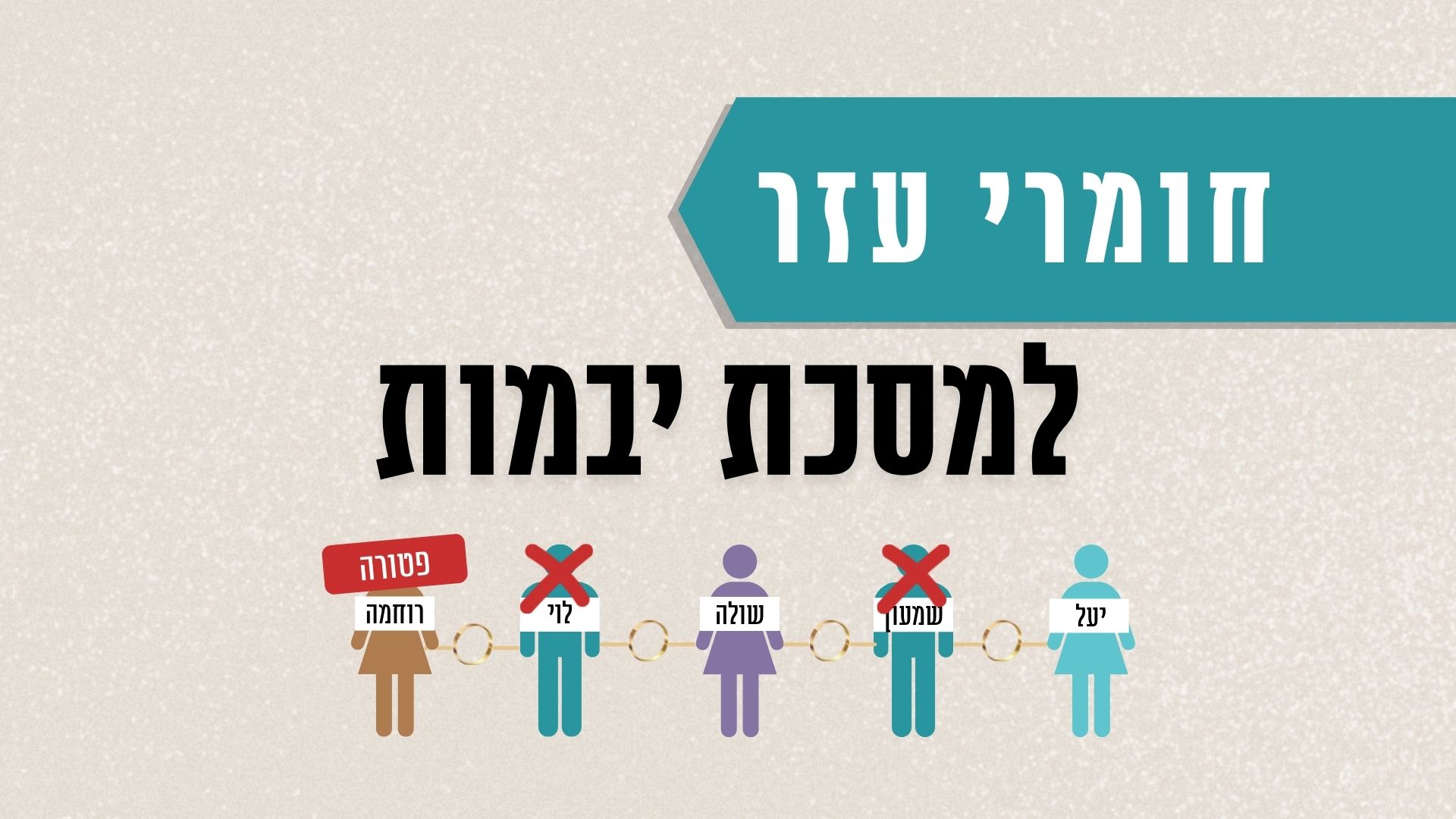
מה הדין אם שתי נשים שהן קרובות זו לזו (שגבר לא יכול לשאת את שתיהן) נופלות לאח אחד לייבום. האם הן פטורות או שצריכות חליצה? יש ויכוח במשנה. המשנה מפרטת מקרים אחרים על בסיס מקרה זה הדומות מאוד לאלו שבמשנת יבמות כו כגון אם אחד היתה ערוה או איסור מצוה. מדוע הם חוזרים כאן אם ההגיון והדין זה אותו דבר כמו במשנה הקודמת? בבית שמאי ובית הלל חולקים על תוקפה של מאמר, במיוחד במקרה של אחות זקוקתו. רבי אלעזר מנסה להבין עד כמה חזקה מאמר לפי בית שמאי – האם זה קנין גמור או שמא רק מספיק חזק כדי למנוע מאחותה של האשה שאיתה עשתה מאמר להיקשר אליו אם בעלה היה אחיו ומת? מובא גרסה אחרת של רבי אלעזר הרומזת שאולי אפילו לא מספיק להיפטר מהזיקה של אחותה. אולם הצעה זו נדחית בהתבסס על הדין במשנתנו. רבה שואל אם מאמר לפי בית שמאי הוא כמו אירוסין או נישואין. מה הרלוונטיות של השאלה שלו? הגמרא מנסה לענות על השאלה אך ללא הצלחה. אם לפי ר’ אלעזר, מאמר רק דוחה צרתה אך לא יותר, למה יכול הבעל להפר נדריה? שתי תשובות הובאו.
הלימוד החודש מוקדש לרפואת פיליס הכט, גיטל פעשא בת מאשה רחל על ידי חברותיה הרבות שאוהבות ומעריכות אותה.
הלימוד השבוע מוקדש ע”י משפחת מילר רוטנברג לע”נ טניאל מילר.
רוצה להקדיש שיעור?

הלימוד החודש מוקדש לרפואת פיליס הכט, גיטל פעשא בת מאשה רחל על ידי חברותיה הרבות שאוהבות ומעריכות אותה.
הלימוד השבוע מוקדש ע”י משפחת מילר רוטנברג לע”נ טניאל מילר.
יבמות כט
וְהָא אָמַר רַבִּי שִׁמְעוֹן: שְׁתֵּי אֲחָיוֹת לֹא חוֹלְצוֹת וְלֹא מִתְיַיבְּמוֹת!
This halakha was also taught in the previous mishna (26a), and it is cited in this mishna according to the opinion of Rabbi Shimon. The Gemara asks: But didn’t Rabbi Shimon say: Two sisters neither perform ḥalitza nor enter into levirate marriage? Because these women are eligible for levirate marriage according to Torah law, they are considered the sisters of a woman with whom he has a levirate bond. In this case, Rabbi Shimon exempts them from both ḥalitza and levirate marriage. Why, then, does the mishna require them to perform ḥalitza?
גְּזֵירָה מִשּׁוּם אִיסּוּר מִצְוָה דְּעָלְמָא.
The Gemara answers: It is a rabbinic decree due to the general case of a prohibition resulting from a mitzva. If they did not perform ḥalitza in this case, where they are sisters, there is a concern that people would assume that their exemption from ḥalitza stemmed not from their status as sisters but rather due to the prohibition. This would lead to the mistaken conclusion that women who are forbidden due to a mitzva do not require ḥalitza. Therefore, the Sages issued a rabbinic decree requiring ḥalitza in this case.
הָא תִּינַח אִיהִי, אֲחוֹתָהּ מַאי אִיכָּא לְמֵימַר? גְּזֵירָה אֲחוֹתָהּ מִשּׁוּם לַתָּא דִּידַהּ.
The Gemara asks: This works out well for her, as she is forbidden due to the prohibition resulting from a mitzva. It is appropriate to require ḥalitza with her, to demonstrate that ḥalitza is generally applied in cases where there is a prohibition resulting from a mitzva. But with regard to her sister, what is there to say? Why must she perform ḥalitza as well? The Gemara answers: There is a rabbinic decree with regard to her sister due to her.
וְהָא גַּבֵּי עֶרְוָה לָא גָּזְרִינַן? שָׁאנֵי עֶרְוָה דְּמִגְמָר גְּמִירִי לַהּ אִינָשֵׁי, וְקָלָא אִית לַהּ.
The Gemara asks: If Rabbi Shimon issues a decree in this case requiring ḥalitza for the sister, out of concern for confusion, then there is a difficulty: But, with regard to a forbidden relative we do not issue a decree requiring ḥalitza due to her sister; why does Rabbi Shimon issue a rabbinic decree requiring ḥalitza with a woman forbidden due to a prohibition resulting from a mitzva and not with a woman who is a forbidden relative? The Gemara answers: Forbidden relatives are different, as people learn the halakhot pertaining to them because they are stated explicitly in the Torah and are well known to all, and the ruling has publicity. Therefore, there is no concern lest people mistakenly confuse this case with cases of yevamot who are not sisters. Prohibitions resulting from mitzvot are not, however, explicit in the Torah, nor are they generally known.
מַתְנִי׳ שְׁלֹשָׁה אַחִין, שְׁנַיִם נְשׂוּאִים שְׁתֵּי אֲחָיוֹת וְאֶחָד מוּפְנֶה. מֵת אֶחָד מִבַּעֲלֵי אֲחָיוֹת, וְעָשָׂה בָּהּ מוּפְנֶה מַאֲמָר. וְאַחַר כָּךְ מֵת אָחִיו הַשֵּׁנִי —
MISHNA: In the case of three brothers, two of whom were married to two sisters, and one who was single, the following occurred: The husband of one of the sisters died childless, leaving behind his wife, and the single brother performed levirate betrothal [ma’amar] to this wife. The single brother performed an act of betrothal to the yevama but did not yet consummate the marriage by engaging in sexual intercourse. Afterward, the second brother died, and therefore the second brother’s wife, the sister of the betrothed, happened before the single brother for levirate marriage as well.
בֵּית שַׁמַּאי אוֹמְרִים: אִשְׁתּוֹ עִמּוֹ, וְהַלֵּזוּ תֵּצֵא מִשּׁוּם אֲחוֹת אִשָּׁה. וּבֵית הִלֵּל אוֹמְרִים: מוֹצִיא אֶת אִשְׁתּוֹ בְּגֵט וּבַחֲלִיצָה, וְאֵשֶׁת אָחִיו בַּחֲלִיצָה. זוֹ הִיא שֶׁאָמְרוּ: אוֹי לוֹ עַל אִשְׁתּוֹ, וְאוֹי לוֹ עַל אֵשֶׁת אָחִיו.
In this case, Beit Shammai say: His wife remains with him. The woman he betrothed is considered like his wife, and he is not required to divorce her. And this other woman leaves the yavam and is exempt from levirate marriage as the sister of a wife. Beit Hillel say: Being as he had not yet entered into marriage with the first woman, he is required to perform levirate marriage with both women. Therefore, he divorces his wife, i.e., the woman to whom he performed levirate betrothal, with a bill of divorce, which nullifies levirate betrothal, and by ḥalitza, which nullifies the levirate bond. And, he sends away the wife of his second brother with ḥalitza as well. They comment: This is the case that was referred to when the Sages said: Woe unto him for his wife and woe unto him for the wife of his brother. Due to the combination of circumstances, he loses them both.
גְּמָ׳ ״זוֹ הִיא״ לְמַעוֹטֵי מַאי? לְמַעוֹטֵי הָךְ דְּרַבִּי יְהוֹשֻׁעַ, דְּלָא עָבְדִינַן כְּווֹתֵיהּ. אֶלָּא אִי כְּרַבָּן גַּמְלִיאֵל, אִי כְּרַבִּי אֶלְעָזָר.
GEMARA: The Gemara asks: What does the mishna’s formulation of the term: This is, which indicates limitation and exactitude, come to exclude? The Gemara answers: It excludes that statement of Rabbi Yehoshua (109a). There, Rabbi Yehoshua holds that if a man is married to a minor when her sister happens before him for levirate marriage, he must send both of the women away. He said there: Woe unto him for his wife and woe unto him for the wife of his brother. From the language in the mishna here, we learn that we do not act in accordance with his opinion. Rather, we act either in accordance with the opinion of Rabban Gamliel or in accordance with the opinion of Rabbi Elazar. According to the opinion of both of these tanna’im in the mishna (109a), despite the conflict between the brother’s marriage to the minor and the levirate bond with her sister, there is still a way for him to marry one of the women.
אָמַר רַבִּי אֶלְעָזָר: לָא תֵּימָא מַאֲמָר לְבֵית שַׁמַּאי קוֹנֶה קִנְיָן גָּמוּר, דְּאִי בָּעֵי לְאַפּוֹקֵי סַגִּי לַהּ בְּגִיטָּא, אֶלָּא מַאֲמָר לְבֵית שַׁמַּאי אֵינוֹ קוֹנֶה אֶלָּא לִדְחוֹת בַּצָּרָה בִּלְבָד.
§ With regard to the main issue of levirate betrothal, it would seem from this mishna that Beit Shammai hold that levirate betrothal has the legal force of levirate marriage. However, Rabbi Elazar said: Do not say that levirate betrothal acquires the woman as a full-fledged acquisition according to the opinion of Beit Shammai, such that the first woman becomes his wife to the extent that if he wants to divorce her a bill of divorce would suffice without an act of ḥalitza. Rather, for Beit Shammai, levirate betrothal acquires the woman only insofar as it precludes a rival wife from entering levirate marriage. The legal force of levirate betrothal is limited to preventing the rival wife of the sister from performing levirate marriage; she is exempt from both levirate marriage and ḥalitza.
אָמַר רַבִּי אָבִין: אַף אֲנַן נָמֵי תְּנֵינָא, בֵּית שַׁמַּאי אוֹמְרִים: יְקַיְּימוּ. יְקַיְּימוּ אִין — לְכַתְּחִלָּה לָא.
Rabbi Avin said: We, too, learn in the mishna a proof that levirate betrothal is not a full-fledged act of acquisition, even according to Beit Shammai. The mishna at the beginning of this chapter (26a) teaches that when two sisters who are yevamot happen before two brothers for levirate marriage, if the brothers married their wives before consulting the court, then Beit Shammai say: They may maintain them as their wives. From here it can be deduced: If they already married them, yes, they may maintain them. However, marrying them ab initio, no, this is prohibited due to the prohibition against marrying the sister of a woman with whom one has a levirate bond.
וְאִי סָלְקָא דַּעְתָּךְ מַאֲמָר לְבֵית שַׁמַּאי קוֹנֶה קִנְיָן גָּמוּר: זֶה יַעֲשֶׂה מַאֲמָר וְיִקְנֶה, וְזֶה יַעֲשֶׂה מַאֲמָר וְיִקְנֶה.
And if it enters your mind that according to Beit Shammai levirate betrothal acquires the woman as a full-fledged acquisition, then this matter could potentially have been resolved ab initio: This brother should perform levirate betrothal and acquire one sister, and that brother should perform levirate betrothal and acquire the other sister. As there is no prohibition whatsoever involved in performing levirate betrothal, the concern for violating a prohibition by consummating the levirate marriage with a sister of a woman with whom he has a levirate bond is avoided; he only betroths her, but does not engage in sexual intercourse with her. After the betrothal, the levirate bond of her sister is dissolved and he can freely consummate the levirate marriage with her.
אֶלָּא מַאי? דּוֹחֶה דְּחִיָּיה גְּמוּרָה — זֶה יַעֲשֶׂה מַאֲמָר וְיִדְחֶה, וְזֶה יַעֲשֶׂה מַאֲמָר וְיִדְחֶה.
The Gemara objects: Rather, what then? If levirate betrothal does not serve to fully acquire the woman, what is the alternative? It must be that according to Beit Shammai levirate betrothal precludes the rival wife from entering levirate marriage with a complete preclusion. If so, there is an additional potential scenario: This one should perform levirate betrothal with one sister and preclude the second sister from entering levirate marriage, and that one should perform levirate betrothal with the second sister and preclude the first sister from entering levirate marriage. In this way, the yevamin can consummate the levirate marriage with the sisters ab initio as well. Yet the mishna does not allow for this possibility.
אֶלָּא מַאי אִית לָךְ לְמֵימַר: מַאֲמָר דְּהֶתֵּירָא — דָּחֵי, דְּאִיסּוּרָא — לָא דָּחֵי, הָכִי נָמֵי מַאֲמָר, אֲפִילּוּ לְמַאן דְּאָמַר מַאֲמָר קוֹנֶה קִנְיָן גָּמוּר: מַאֲמָר דְּהֶתֵּירָא קָנֵי, דְּאִיסּוּרָא לָא קָנֵי.
Rather, what have you to say? One must assert that levirate betrothal performed in circumstances where it is permitted to perform levirate marriage, i.e. where there is no prohibition with regard to the close relative of a woman with whom the yavam has a levirate bond, completely precludes the rival wife from entering levirate marriage. However, levirate betrothal performed in circumstances where it is forbidden to perform levirate marriage, does not preclude entering levirate marriage. Therefore, in the case of two sisters who happen simultaneously before two brothers for levirate marriage, the sisters cannot be precluded from entering levirate marriage via levirate betrothal. So too here, with regard to levirate betrothal performed by the third brother, the same distinction can be made. Even according to the one who said that levirate betrothal acquires a woman as a full-fledged acquisition, just like marriage, there is the following difference: Levirate betrothal under permitted circumstances acquires the woman, but levirate betrothal under forbidden circumstances does not acquire the woman. Therefore, there is no proof as to the nature of levirate betrothal according to the opinion of Beit Shammai from the first mishna in the chapter.
רַב אָשֵׁי מַתְנֵי הָכִי, אָמַר רַבִּי אֶלְעָזָר: לָא תֵּימָא מַאֲמָר לְבֵית שַׁמַּאי דָּחֵי דְּחִיָּיה גְּמוּרָה, וְצָרָתָהּ חֲלִיצָה נָמֵי לָא בָּעֲיָא, אֶלָּא דּוֹחֶה וּמְשַׁיֵּיר הוּא.
Rav Ashi teaches this discourse in this manner: Rabbi Elazar said: Do not say that according to Beit Shammai levirate betrothal precludes entering levirate marriage as a complete preclusion, so that the rival wife of the woman who received levirate betrothal does not require even ḥalitza. Rather, it precludes entering levirate marriage and yet leaves a remnant of the levirate bond in place. Accordingly, levirate betrothal precludes the rival wife’s entering levirate marriage to the degree that the yavam is not required to divorce the woman he betrothed, but the levirate bond with the rival wife remains to the extent that he must still perform ḥalitza with her.
אָמַר רַבִּי אָבִין, אַף אֲנַן נָמֵי תְּנֵינָא: בֵּית שַׁמַּאי אוֹמְרִים יְקַיְּימוּ. יְקַיְּימוּ — אִין, לְכַתְּחִלָּה — לָא. וְאִי סָלְקָא דַּעְתָּךְ מַאֲמָר לְבֵית שַׁמַּאי דּוֹחֶה דְּחִיָּיה גְּמוּרָה, זֶה יַעֲשֶׂה מַאֲמָר וְיִדְחֶה, וְזֶה יַעֲשֶׂה מַאֲמָר וְיִדְחֶה! וְאֶלָּא הָא קָתָנֵי בֵּית שַׁמַּאי אוֹמְרִים: אִשְׁתּוֹ עִמּוֹ, וְהַלֵּזוּ תֵּצֵא מִשּׁוּם אֲחוֹת אִשָּׁה.
Rabbi Avin said: We, too, learn this statement from the mishna, where it states: Beit Shammai say: They may maintain them as their wives. From here it can be deduced: Yes, they may maintain them as their wives after the fact; no, they are not allowed to marry them ab initio. And if it enters your mind to say that, according to Beit Shammai, levirate betrothal precludes entering levirate marriage as a complete preclusion, then this brother should perform levirate betrothal and preclude one sister from levirate marriage, and that brother should perform levirate betrothal and preclude the other sister from levirate marriage. The Gemara challenges this conclusion: But didn’t the mishna teach that Beit Shammai say: His wife remains with him, and this other is sent away due to her status as a sister of his wife? This indicates that she is exempt from levirate marriage and does not even require ḥalitza.
אֶלָּא: יְבָמָה דְּחַזְיָא לְכוּלְּהוּ — חַזְיָא לְמִקְצָתה, יְבָמָה דְּלָא חַזְיָא לְכוּלְּהוּ — לָא חַזְיָא לְמִקְצָתה.
Rather, one must resolve this by asserting that a yevama who is suitable for all of the aspects of levirate marriage is also suitable for part of it. If a yevama is eligible for both levirate marriage and ḥalitza when she happens before the brothers, as in the case cited in the present mishna where the woman who happened before the third brother was permitted to enter into levirate marriage, she is eligible for part of it. This indicates that if the yavam does not take her in levirate marriage but performs only levirate betrothal, the levirate betrothal has sufficient legal force to preclude the rival wife completely. However, a yevama who is not suitable for all of the aspects of levirate marriage is also not suitable for a part of it. If the yevama is not eligible for levirate marriage, such as in the case referred to in the first mishna of this chapter, where both women happened simultaneously so that the yavam is not permitted to consummate the levirate marriage with either woman, she is not suitable for part of it. In that case, if the yavam performs levirate betrothal, it does not have the legal force to affect a total preclusion.
בָּעֵי רַבָּה: מַאֲמָר לְבֵית שַׁמַּאי, נִישּׂוּאִין עוֹשֶׂה, אוֹ אֵירוּסִין עוֹשֶׂה? אָמַר לֵיהּ אַבָּיֵי: לְמַאי הִלְכְתָא?
§ With regard to Beit Shammai’s opinion about levirate betrothal, Rabba asks: Does levirate betrothal, according to the opinion of Beit Shammai, create a full-fledged marriage bond? Or, does it merely create betrothal, similar to all other acts of betrothal? Abaye said to him: With regard to what halakha do you ask this?
אִילֵּימָא לְיוֹרְשָׁהּ וְלִיטַמֵּא לָהּ וּלְהָפֵר נְדָרֶיהָ, הַשְׁתָּא אֲרוּסָה בְּעָלְמָא תָּנֵי רַבִּי חִיָּיא: אִשְׁתּוֹ אֲרוּסָה לֹא אוֹנֵן וְלֹא מִטַּמֵּא לַהּ, וְכֵן הִיא לֹא אוֹנֶנֶת וְלֹא מִטַּמֵּאת לוֹ, מֵתָה — אֵינוֹ יוֹרְשָׁהּ, מֵת הוּא — גּוֹבָה כְּתוּבָּתָהּ, עֲבַד בַּהּ מַאֲמָר מִיבַּעְיָא?
If we say it pertains to inheriting from her when she dies, and to becoming ritually impure for her if he is a priest, and to nullifying her vows, all of which are rights and obligations acquired by marriage, this is difficult. Now, with regard to a betrothed woman in general, i.e., a woman who was betrothed by Torah law, Rabbi Ḥiyya teaches in a baraita: One does not enter acute mourning on the day of the death of his betrothed wife, nor can he become ritually impure for her if she dies if he is a priest. Similarly, she does not enter acute mourning for him and is not obligated to become ritually impure for him. If she dies, he does not inherit from her; if he dies, she collects the payment of her marriage contract, In a case where he performed only levirate betrothal with her, is it necessary to say that he does not inherit from her, nor does he become ritually impure for her? Therefore, this halakha is obvious and Rabba’s question seems superfluous.
וְאֶלָּא לְעִנְיַן מְסִירָה לְחוּפָּה, מַאי? נִישּׂוּאִין עוֹשֶׂה — וְלָא בָּעֲיָא מְסִירָה לְחוּפָּה, אוֹ דִלְמָא אֵירוּסִין עוֹשֶׂה — וּבָעֲיָא מְסִירָה לְחוּפָּה?
Rather, the question must relate to the matter of delivery of the woman to the husband under a wedding canopy. What is the ruling with regard to this? Is the yavam obligated to enter the wedding canopy in the manner that he would with any other betrothed woman, or not? This is the dilemma: Does levirate betrothal create a full-fledged marriage bond, whereby the yevama would not require further delivery to a wedding canopy? Or, does levirate betrothal perhaps create only betrothal, whereby she would require delivery to a wedding canopy?
אֲמַר לֵיהּ: הַשְׁתָּא לָא עֲבַד בַּהּ מַאֲמָר, כְּתִיב: ״יְבָמָהּ יָבֹא עָלֶיהָ״ — בְּעַל כׇּרְחָהּ, עֲבַד בַּהּ מַאֲמָר מִיבַּעְיָא?
Abaye said to him that this question is not necessary, as well: Now, if he did not perform levirate betrothal with her at all, it is written: “Her brother-in-law will have intercourse with her” (Deuteronomy 25:5). It is deduced from this verse that he can take her even against her will. Is it necessary to say that if he performed levirate betrothal with her, even without a wedding canopy, that he is allowed to engage in sexual intercourse with her?
אֲמַר לֵיהּ, שֶׁאֲנִי אוֹמֵר: כׇּל הָעוֹשֶׂה מַאֲמָר בִּיבִמְתּוֹ פָּרְחָה מִמֶּנּוּ זִיקַּת יְבָמִין, וְחָלָה עָלָיו זִיקַּת אֵירוּסִין. מַאי?
Rabba said to him: This question is relevant, as I say that anyone who performs levirate betrothal with his yevama causes the levirate bond to be removed from him, and he is no longer considered subject to the halakhot of levirate marriage. Instead, a standard bond of betrothal applies to him. Therefore, it is appropriate to ask if this act of levirate betrothal is similar to a standard betrothal insofar as the wedding canopy is concerned, and consequently the woman would be required to enter the wedding canopy. Alternatively, perhaps the halakhot of levirate marriage still apply somewhat, in which case the woman would not be required to enter a wedding canopy in order to become married, similar to a standard yevama to whom levirate betrothal was not performed. Does the performance of levirate betrothal weaken the capacity of intercourse to establish levirate marriage on its own? What is the halakhic ruling here?
תָּא שְׁמַע: שׁוֹמֶרֶת יָבָם, בֵּין יָבָם אֶחָד בֵּין שְׁנֵי יְבָמִין — רַבִּי אֱלִיעֶזֶר אוֹמֵר: יָפֵר. רַבִּי יְהוֹשֻׁעַ אוֹמֵר: לְאֶחָד וְלֹא לִשְׁנַיִם. רַבִּי עֲקִיבָא אוֹמֵר: לֹא לְאֶחָד וְלֹא לִשְׁנַיִם.
The Gemara suggests: Come and hear an answer from what is taught in a mishna (Nedarim 74a): What is the ruling with regard to the nullification of vows for a widow who is waiting for her yavam, whether she is waiting for a single yavam or two yevamin? Rabbi Eliezer says: Let him nullify her vows. The yavam may nullify her vows as though he were her husband. Rabbi Yehoshua says: This holds true only if she is bonded to a single yavam, but not to two. Rabbi Akiva says: It does not hold true, neither to one yavam nor to two yevamin. They may not nullify her vows.
וְהָוֵינַן בַּהּ: בִּשְׁלָמָא, רַבִּי עֲקִיבָא סָבַר: אֵין זִיקָּה אֲפִילּוּ לְחַד. לְרַבִּי יְהוֹשֻׁעַ: לְחַד יֵשׁ זִיקָּה, לִתְרֵי אֵין זִיקָּה. אֶלָּא לְרַבִּי אֱלִיעֶזֶר, נְהִי נָמֵי דְּקָסָבַר יֵשׁ זִיקָּה, בִּשְׁלָמָא לְחַד מֵיפֵר, אֶלָּא לִתְרֵי אַמַּאי?
And we discussed this issue, interpreting the various opinions: Granted, Rabbi Akiva holds that the levirate bond is not substantial, even in the case of one yavam. In his opinion, the levirate obligation does not create a marriage bond at all, even if there is only a single yavam. And according to Rabbi Yehoshua, the levirate bond with one yavam is substantial. The yevama undoubtedly requires this yavam for levirate marriage, and therefore she is considered to be like his wife. But with two yevamin, the levirate bond is not substantial, since it is not clear which brother will consummate the levirate marriage with her. However, Rabbi Eliezer, if he indeed holds that the levirate bond is substantial, his opinion is difficult. Granted, if there is one yavam, he can nullify her vows, but if there are two, why should only one of them suffice to nullify her vows, as it is not yet clear which of them will eventually marry her?
וְאָמַר רַבִּי אַמֵּי (בַּר אַהֲבָה): הָכָא בְּמַאי עָסְקִינַן — כְּגוֹן דַּעֲבַד בַּהּ מַאֲמָר, וּבֵית שַׁמַּאי הִיא, דְּאָמַר: מַאֲמָר קוֹנֶה קִנְיָן גָּמוּר.
And Rabbi Ami bar Ahava said: With what are we dealing here? This is a case where one of them performed levirate betrothal with her, and this is in accordance with the opinion of Beit Shammai, who say: Levirate betrothal acquires her as a full-fledged acquisition.
אִי אָמְרַתְּ בִּשְׁלָמָא נִישּׂוּאִין עוֹשֶׂה — מִשּׁוּם הָכִי מֵיפֵר. אֶלָּא אִי אָמְרַתְּ אֵירוּסִין עוֹשֶׂה — הֵיכִי מָצֵי מֵיפֵר, וְהָתְנַן: נַעֲרָה הַמְאוֹרָסָה — אָבִיהָ וּבַעְלָהּ מְפִירִים נְדָרֶיהָ! אָמַר רַב נַחְמָן בַּר יִצְחָק: מַאי מֵיפֵר — מֵיפֵר בְּשׁוּתָּפוּת.
This interpretation can resolve Rabba’s question. Granted, if you say levirate betrothal creates a full-fledged marriage, it is due to that reason that the yavam can nullify her vows just as a full-fledged husband does. However, if you say that levirate betrothal merely creates betrothal, how can he nullify the vows? Even in standard cases of betrothal by Torah law the husband cannot nullify her vows, for didn’t we learn in a mishna: With regard to a betrothed young woman, only her father and her husband together can nullify her vows? How could a yavam nullify the vows without the father of the yevama, if he is not considered a full-fledged husband? Rav Naḥman bar Yitzḥak said that this proof can be rejected by interpreting the mishna as follows: What is the meaning of the phrase: He nullifies? That he nullifies her vows only in conjunction with her father.
וּלְרַבִּי אֶלְעָזָר, דְּאָמַר: מַאֲמָר לְבֵית שַׁמַּאי אֵינוֹ קוֹנֶה אֶלָּא לִדְחוֹת לַצָּרָה בִּלְבַד, אַמַּאי מֵיפֵר בְּשׁוּתָּפוּת? אָמַר לָךְ רַבִּי אֶלְעָזָר: אֵימַר דַּאֲמַרִי אֲנָא אֵינוֹ קוֹנֶה אֶלָּא לִדְחוֹת לַצָּרָה בִּלְבַד, דְּלָא סַגִּי לַהּ בְּגִיטָּא אֶלָּא בָּעֵי נָמֵי חֲלִיצָה, לְהָפֵר נְדָרֶיהָ מִי אָמְרִינַן?
The Gemara questions this reading of the mishna: And according to the opinion of Rabbi Elazar, who said that for Beit Shammai levirate betrothal acquires the woman only insofar as it precludes a rival wife from entering levirate marriage, and it is not a full-fledged acquisition, why should the yavam nullify her vows, even if he does so in conjunction with her father? The Gemara answers: Rabbi Eliezer could have said to you: One can say that when I said that levirate betrothal acquires the woman only insofar as it precludes the rival wife from entering levirate marriage, it was to emphasize that a bill of divorce would not suffice for her, but rather she also requires ḥalitza. However, with regard to the matter of nullifying her vows, do we say that levirate betrothal is not effective, and that he cannot nullify her vows alone?
וְאִיבָּעֵית אֵימָא, אָמַר לָךְ רַבִּי אֶלְעָזָר: וּלְרַב נַחְמָן בַּר יִצְחָק מִי נִיחָא? מִי קָתָנֵי ״יָפֵרוּ״? ״יָפֵר״ קָתָנֵי. אֶלָּא, הָכָא בְּמַאי עָסְקִינַן — שֶׁעָמְדָה בַּדִּין, וּפָסְקוּ לָהּ מְזוֹנוֹת מִשֶּׁלּוֹ,
And if you wish, say an alternate explanation: Rabbi Elazar could have said to you: And as for Rav Naḥman bar Yitzḥak, does this resolution that the mishna is only referring to a case where the father and the yavam can nullify her vows together work out well? Did the mishna teach that they can nullify her vows? It teaches that he can nullify her vows in the singular, implying that he nullifies the vows alone and not in conjunction with anyone else. Rather, the mishna must be explained differently: With what are we dealing here? It is a case where the yavam, regardless of whether or not he performed levirate betrothal, did not want to consummate the levirate marriage or perform ḥalitza. Therefore, the yevama stood in court so as to compel him to consummate the levirate marriage or perform ḥalitza, and it ruled that he must supply her sustenance. Because she is bound to him and cannot marry another, the court ruled that he was responsible for her livelihood.
וְכִדְרַב פִּנְחָס מִשְּׁמֵיהּ דְּרָבָא, דְּאָמַר רַב פִּנְחָס מִשְּׁמֵיהּ דְּרָבָא: כׇּל הַנּוֹדֶרֶת — עַל דַּעַת בַּעְלָהּ הִיא נוֹדֶרֶת.
And this is in accordance with the statement that Rav Pineḥas said in the name of Rava, as Rav Pineḥas said in the name of Rava: Any woman who makes a vow, makes her vow with the consent of her husband. Because she is dependent upon her husband for her livelihood, she does not act without his consent. In this case, because the yavam is responsible to supply the yevama with sustenance, it is assumed that her vows are also made with his consent. It is for this reason that he can nullify her vows without her father. Consequently, no conclusive proof can be derived from here with regard to the strength of acquisition through levirate betrothal.

העמקה
רוצה להבין מה באמת קורה מתחת לפני השטח של הסוגיה?
שיעורים, פודקאסטים והרחבות של מיטב המורות שלנו יפתחו לך עוד זוויות וכיווני חשיבה.



ייבום בשנת 1926 – הסיפור התורשתי של שרה וינברגר, לומדת דף יומי












חדשה בלימוד הגמרא?
זה הדף הראשון שלך? איזו התרגשות עצומה! יש לנו בדיוק את התכנים והכלים שיעזרו לך לעשות את הצעדים הראשונים ללמידה בקצב וברמה שלך, כך תוכלי להרגיש בנוח גם בתוך הסוגיות המורכבות ומאתגרות.
פסיפס הלומדות שלנו
גלי את קהילת הלומדות שלנו, מגוון נשים, רקעים וסיפורים. כולן חלק מתנועה ומסע מרגש ועוצמתי.
"התחלתי ללמוד דף יומי במחזור הזה, בח’ בטבת תש””ף. לקחתי על עצמי את הלימוד כדי ליצור תחום של התמדה יומיומית בחיים, והצטרפתי לקבוצת הלומדים בבית הכנסת בכפר אדומים. המשפחה והסביבה מתפעלים ותומכים.
בלימוד שלי אני מתפעלת בעיקר מכך שכדי ללמוד גמרא יש לדעת ולהכיר את כל הגמרא. זו מעין צבת בצבת עשויה שהיא עצומה בהיקפה.”

כפר אדומים, ישראל
התחלתי להשתתף בשיעור נשים פעם בשבוע, תכננתי ללמוד רק דפים בודדים, לא האמנתי שאצליח יותר מכך.
לאט לאט נשאבתי פנימה לעולם הלימוד .משתדלת ללמוד כל בוקר ומתחילה את היום בתחושה של מלאות ומתוך התכווננות נכונה יותר.
הלימוד של הדף היומי ממלא אותי בתחושה של חיבור עמוק לעם היהודי ולכל הלומדים בעבר ובהווה.

אפרת, ישראל
לפני 15 שנה, אחרי עשרות שנים של "ג’ינגול” בין משפחה לקריירה תובענית בהייטק, הצטרפתי לשיעורי גמרא במתן רעננה. הלימוד המעמיק והייחודי של הרבנית אושרה קורן יחד עם קבוצת הנשים המגוונת הייתה חוויה מאלפת ומעשירה. לפני כשמונה שנים כאשר מחזור הדף היומי הגיע למסכת תענית הצטרפתי כ”חברותא” לבעלי. זו השעה היומית שלנו ביחד כאשר דפי הגמרא משתלבים בחיי היום יום, משפיעים ומושפעים, וכשלא מספיקים תמיד משלימים בשבת

רעננה, ישראל
התחלתי ללמוד לפני 4.5 שנים, כשהודיה חברה שלי פתחה קבוצת ווטסאפ ללימוד דף יומי בתחילת מסכת סנהדרין. מאז לימוד הדף נכנס לתוך היום-יום שלי והפך לאחד ממגדירי הזהות שלי ממש.

ירושלים, ישראל
התחלתי ללמוד לפני כשנתיים בשאיפה לסיים לראשונה מסכת אחת במהלך חופשת הלידה.
אחרי מסכת אחת כבר היה קשה להפסיק…

ירוחם, ישראל
רבנית מישל הציתה אש התלמוד בלבבות בביניני האומה ואני נדלקתי. היא פתחה פתח ותמכה במתחילות כמוני ואפשרה לנו להתקדם בצעדים נכונים וטובים. הקימה מערך שלם שמסובב את הלומדות בסביבה תומכת וכך נכנסתי למסלול לימוד מעשיר שאין כמוה. הדרן יצר קהילה גדולה וחזקה שמאפשרת התקדמות מכל נקודת מוצא. יש דיבוק לומדות שמחזק את ההתמדה של כולנו. כל פניה ושאלה נענית בזריזות ויסודיות. תודה גם למגי על כל העזרה.

נתניה, ישראל
סיום השס לנשים נתן לי מוטביציה להתחיל ללמוד דף יומי. עד אז למדתי גמרא בשבתות ועשיתי כמה סיומים. אבל לימוד יומיומי זה שונה לגמרי ופתאום כל דבר שקורה בחיים מתקשר לדף היומי.

רתמים, ישראל
ראיתי את הסיום הגדול בבנייני האומה וכל כך התרשמתי ורציתי לקחת חלק.. אבל לקח לי עוד כשנה וחצי )באמצע מסיכת שבת להצטרף..
הלימוד חשוב לי מאוד.. אני תמיד במרדף אחרי הדף וגונבת כל פעם חצי דף כשהילדים עסוקים ומשלימה אח”כ אחרי שכולם הלכו לישון..

ירושלים, ישראל
התחלתי מעט לפני תחילת הסבב הנוכחי. אני נהנית מהאתגר של להמשיך להתמיד, מרגעים של "אהה, מפה זה הגיע!” ומהאתגר האינטלקטואלי

לוד, ישראל
התחלתי ללמוד דף יומי לפני שנתיים, עם מסכת שבת. בהתחלה ההתמדה היתה קשה אבל בזכות הקורונה והסגרים הצלחתי להדביק את הפערים בשבתות הארוכות, לסיים את מסכת שבת ולהמשיך עם המסכתות הבאות. עכשיו אני מסיימת בהתרגשות רבה את מסכת חגיגה וסדר מועד ומחכה לסדר הבא!

מודיעין, ישראל
התחלתי ללמוד דף יומי בסבב הקודם. זכיתי לסיים אותו במעמד המרגש של הדרן. בסבב הראשון ליווה אותי הספק, שאולי לא אצליח לעמוד בקצב ולהתמיד. בסבב השני אני לומדת ברוגע, מתוך אמונה ביכולתי ללמוד ולסיים. בסבב הלימוד הראשון ליוותה אותי חוויה מסויימת של בדידות. הדרן העניקה לי קהילת לימוד ואחוות נשים. החוויה של סיום הש”ס במעמד כה גדול כשנשים שאינן מכירות אותי, שמחות ומתרגשות עבורי , היתה חוויה מרוממת נפש

קיבוץ מגדל עוז, ישראל
בסוף הסבב הקודם ראיתי את השמחה הגדולה שבסיום הלימוד, בעלי סיים כבר בפעם השלישית וכמובן הסיום הנשי בבנייני האומה וחשבתי שאולי זו הזדמנות עבורי למשהו חדש.
למרות שאני שונה בסביבה שלי, מי ששומע על הלימוד שלי מפרגן מאוד.
אני מנסה ללמוד קצת בכל יום, גם אם לא את כל הדף ובסך הכל אני בדרך כלל עומדת בקצב.
הלימוד מעניק המון משמעות ליום יום ועושה סדר בלמוד תורה, שתמיד היה (ועדיין) שאיפה. אבל אין כמו קביעות

טל מנשה, ישראל
התחלתי ללמוד בעידוד שתי חברות אתן למדתי בעבר את הפרק היומי במסגרת 929.
בבית מתלהבים מאוד ובשבת אני לומדת את הדף עם בעלי שזה מפתיע ומשמח מאוד! לימוד הדף הוא חלק בלתי נפרד מהיום שלי. לומדת בצהריים ומחכה לזמן הזה מידי יום…

אפרת, ישראל
התחלתי ללמוד דף לפני קצת יותר מ-5 שנים, כשלמדתי רבנות בישיבת מהר”ת בניו יורק. בדיעבד, עד אז, הייתי בלימוד הגמרא שלי כמו מישהו שאוסף חרוזים משרשרת שהתפזרה, פה משהו ושם משהו, ומאז נפתח עולם ומלואו…. הדף נותן לי לימוד בצורה מאורגנת, שיטתית, יום-יומית, ומלמד אותי לא רק ידע אלא את השפה ודרך החשיבה שלנו. לשמחתי, יש לי סביבה תומכת וההרגשה שלי היא כמו בציטוט שבחרתי: הדף משפיע לטובה על כל היום שלי.

חיפה, ישראל
באירוע של הדרן בנייני האומה. בהשראתה של אמי שלי שסיימה את הש”ס בסבב הקודם ובעידוד מאיר , אישי, וילדיי וחברותיי ללימוד במכון למנהיגות הלכתית של רשת אור תורה סטון ומורתיי הרבנית ענת נובוסלסקי והרבנית דבורה עברון, ראש המכון למנהיגות הלכתית.
הלימוד מעשיר את יומי, מחזיר אותי גם למסכתות שכבר סיימתי וידוע שאינו דומה מי ששונה פרקו מאה לשונה פרקו מאה ואחת במיוחד מרתקים אותי החיבורים בין המסכתות

מודיעין, ישראל
אמא שלי למדה איתי ש”ס משנה, והתחילה ללמוד דף יומי. אני החלטתי שאני רוצה ללמוד גם. בהתחלה למדתי איתה, אח”כ הצטרפתי ללימוד דף יומי שהרב דני וינט מעביר לנוער בנים בעתניאל. במסכת עירובין עוד חברה הצטרפה אלי וכשהתחלנו פסחים הרב דני פתח לנו שעור דף יומי לבנות. מאז אנחנו לומדות איתו קבוע כל יום את הדף היומי (ובשבת אבא שלי מחליף אותו). אני נהנית מהלימוד, הוא מאתגר ומעניין

עתניאל, ישראל
אחי, שלומד דף יומי ממסכת ברכות, חיפש חברותא ללימוד מסכת ראש השנה והציע לי. החברותא היתה מאתגרת טכנית ורוב הזמן נעשתה דרך הטלפון, כך שבסיום המסכת נפרדו דרכינו. אחי חזר ללמוד לבד, אבל אני כבר נכבשתי בקסם הגמרא ושכנעתי את האיש שלי להצטרף אלי למסכת ביצה. מאז המשכנו הלאה, ועכשיו אנחנו מתרגשים לקראתו של סדר נשים!

נוקדים, ישראל
התחלתי ללמוד דף יומי באמצע תקופת הקורונה, שאבא שלי סיפר לי על קבוצה של בנות שתיפתח ביישוב שלנו ותלמד דף יומי כל יום. הרבה זמן רציתי להצטרף לזה וזאת הייתה ההזדמנות בשבילי. הצטרפתי במסכת שקלים ובאמצע הייתה הפסקה קצרה. כיום אני כבר לומדת באולפנה ולומדת דף יומי לבד מתוך גמרא של טיינזלץ.

עתניאל, ישראל
התחלתי ללמוד את הדף היומי מעט אחרי שבני הקטן נולד. בהתחלה בשמיעה ולימוד באמצעות השיעור של הרבנית שפרבר. ובהמשך העזתי וקניתי לעצמי גמרא. מאז ממשיכה יום יום ללמוד עצמאית, ולפעמים בעזרת השיעור של הרבנית, כל יום. כל סיום של מסכת מביא לאושר גדול וסיפוק. הילדים בבית נהיו חלק מהלימוד, אני משתפת בסוגיות מעניינות ונהנית לשמוע את דעתם.

מעלה מכמש, ישראל
התחלתי לפני כמה שנים אבל רק בסבב הזה זכיתי ללמוד יום יום ולסיים מסכתות

רעננה, ישראל
יבמות כט
וְהָא אָמַר רַבִּי שִׁמְעוֹן: שְׁתֵּי אֲחָיוֹת לֹא חוֹלְצוֹת וְלֹא מִתְיַיבְּמוֹת!
This halakha was also taught in the previous mishna (26a), and it is cited in this mishna according to the opinion of Rabbi Shimon. The Gemara asks: But didn’t Rabbi Shimon say: Two sisters neither perform ḥalitza nor enter into levirate marriage? Because these women are eligible for levirate marriage according to Torah law, they are considered the sisters of a woman with whom he has a levirate bond. In this case, Rabbi Shimon exempts them from both ḥalitza and levirate marriage. Why, then, does the mishna require them to perform ḥalitza?
גְּזֵירָה מִשּׁוּם אִיסּוּר מִצְוָה דְּעָלְמָא.
The Gemara answers: It is a rabbinic decree due to the general case of a prohibition resulting from a mitzva. If they did not perform ḥalitza in this case, where they are sisters, there is a concern that people would assume that their exemption from ḥalitza stemmed not from their status as sisters but rather due to the prohibition. This would lead to the mistaken conclusion that women who are forbidden due to a mitzva do not require ḥalitza. Therefore, the Sages issued a rabbinic decree requiring ḥalitza in this case.
הָא תִּינַח אִיהִי, אֲחוֹתָהּ מַאי אִיכָּא לְמֵימַר? גְּזֵירָה אֲחוֹתָהּ מִשּׁוּם לַתָּא דִּידַהּ.
The Gemara asks: This works out well for her, as she is forbidden due to the prohibition resulting from a mitzva. It is appropriate to require ḥalitza with her, to demonstrate that ḥalitza is generally applied in cases where there is a prohibition resulting from a mitzva. But with regard to her sister, what is there to say? Why must she perform ḥalitza as well? The Gemara answers: There is a rabbinic decree with regard to her sister due to her.
וְהָא גַּבֵּי עֶרְוָה לָא גָּזְרִינַן? שָׁאנֵי עֶרְוָה דְּמִגְמָר גְּמִירִי לַהּ אִינָשֵׁי, וְקָלָא אִית לַהּ.
The Gemara asks: If Rabbi Shimon issues a decree in this case requiring ḥalitza for the sister, out of concern for confusion, then there is a difficulty: But, with regard to a forbidden relative we do not issue a decree requiring ḥalitza due to her sister; why does Rabbi Shimon issue a rabbinic decree requiring ḥalitza with a woman forbidden due to a prohibition resulting from a mitzva and not with a woman who is a forbidden relative? The Gemara answers: Forbidden relatives are different, as people learn the halakhot pertaining to them because they are stated explicitly in the Torah and are well known to all, and the ruling has publicity. Therefore, there is no concern lest people mistakenly confuse this case with cases of yevamot who are not sisters. Prohibitions resulting from mitzvot are not, however, explicit in the Torah, nor are they generally known.
מַתְנִי׳ שְׁלֹשָׁה אַחִין, שְׁנַיִם נְשׂוּאִים שְׁתֵּי אֲחָיוֹת וְאֶחָד מוּפְנֶה. מֵת אֶחָד מִבַּעֲלֵי אֲחָיוֹת, וְעָשָׂה בָּהּ מוּפְנֶה מַאֲמָר. וְאַחַר כָּךְ מֵת אָחִיו הַשֵּׁנִי —
MISHNA: In the case of three brothers, two of whom were married to two sisters, and one who was single, the following occurred: The husband of one of the sisters died childless, leaving behind his wife, and the single brother performed levirate betrothal [ma’amar] to this wife. The single brother performed an act of betrothal to the yevama but did not yet consummate the marriage by engaging in sexual intercourse. Afterward, the second brother died, and therefore the second brother’s wife, the sister of the betrothed, happened before the single brother for levirate marriage as well.
בֵּית שַׁמַּאי אוֹמְרִים: אִשְׁתּוֹ עִמּוֹ, וְהַלֵּזוּ תֵּצֵא מִשּׁוּם אֲחוֹת אִשָּׁה. וּבֵית הִלֵּל אוֹמְרִים: מוֹצִיא אֶת אִשְׁתּוֹ בְּגֵט וּבַחֲלִיצָה, וְאֵשֶׁת אָחִיו בַּחֲלִיצָה. זוֹ הִיא שֶׁאָמְרוּ: אוֹי לוֹ עַל אִשְׁתּוֹ, וְאוֹי לוֹ עַל אֵשֶׁת אָחִיו.
In this case, Beit Shammai say: His wife remains with him. The woman he betrothed is considered like his wife, and he is not required to divorce her. And this other woman leaves the yavam and is exempt from levirate marriage as the sister of a wife. Beit Hillel say: Being as he had not yet entered into marriage with the first woman, he is required to perform levirate marriage with both women. Therefore, he divorces his wife, i.e., the woman to whom he performed levirate betrothal, with a bill of divorce, which nullifies levirate betrothal, and by ḥalitza, which nullifies the levirate bond. And, he sends away the wife of his second brother with ḥalitza as well. They comment: This is the case that was referred to when the Sages said: Woe unto him for his wife and woe unto him for the wife of his brother. Due to the combination of circumstances, he loses them both.
גְּמָ׳ ״זוֹ הִיא״ לְמַעוֹטֵי מַאי? לְמַעוֹטֵי הָךְ דְּרַבִּי יְהוֹשֻׁעַ, דְּלָא עָבְדִינַן כְּווֹתֵיהּ. אֶלָּא אִי כְּרַבָּן גַּמְלִיאֵל, אִי כְּרַבִּי אֶלְעָזָר.
GEMARA: The Gemara asks: What does the mishna’s formulation of the term: This is, which indicates limitation and exactitude, come to exclude? The Gemara answers: It excludes that statement of Rabbi Yehoshua (109a). There, Rabbi Yehoshua holds that if a man is married to a minor when her sister happens before him for levirate marriage, he must send both of the women away. He said there: Woe unto him for his wife and woe unto him for the wife of his brother. From the language in the mishna here, we learn that we do not act in accordance with his opinion. Rather, we act either in accordance with the opinion of Rabban Gamliel or in accordance with the opinion of Rabbi Elazar. According to the opinion of both of these tanna’im in the mishna (109a), despite the conflict between the brother’s marriage to the minor and the levirate bond with her sister, there is still a way for him to marry one of the women.
אָמַר רַבִּי אֶלְעָזָר: לָא תֵּימָא מַאֲמָר לְבֵית שַׁמַּאי קוֹנֶה קִנְיָן גָּמוּר, דְּאִי בָּעֵי לְאַפּוֹקֵי סַגִּי לַהּ בְּגִיטָּא, אֶלָּא מַאֲמָר לְבֵית שַׁמַּאי אֵינוֹ קוֹנֶה אֶלָּא לִדְחוֹת בַּצָּרָה בִּלְבָד.
§ With regard to the main issue of levirate betrothal, it would seem from this mishna that Beit Shammai hold that levirate betrothal has the legal force of levirate marriage. However, Rabbi Elazar said: Do not say that levirate betrothal acquires the woman as a full-fledged acquisition according to the opinion of Beit Shammai, such that the first woman becomes his wife to the extent that if he wants to divorce her a bill of divorce would suffice without an act of ḥalitza. Rather, for Beit Shammai, levirate betrothal acquires the woman only insofar as it precludes a rival wife from entering levirate marriage. The legal force of levirate betrothal is limited to preventing the rival wife of the sister from performing levirate marriage; she is exempt from both levirate marriage and ḥalitza.
אָמַר רַבִּי אָבִין: אַף אֲנַן נָמֵי תְּנֵינָא, בֵּית שַׁמַּאי אוֹמְרִים: יְקַיְּימוּ. יְקַיְּימוּ אִין — לְכַתְּחִלָּה לָא.
Rabbi Avin said: We, too, learn in the mishna a proof that levirate betrothal is not a full-fledged act of acquisition, even according to Beit Shammai. The mishna at the beginning of this chapter (26a) teaches that when two sisters who are yevamot happen before two brothers for levirate marriage, if the brothers married their wives before consulting the court, then Beit Shammai say: They may maintain them as their wives. From here it can be deduced: If they already married them, yes, they may maintain them. However, marrying them ab initio, no, this is prohibited due to the prohibition against marrying the sister of a woman with whom one has a levirate bond.
וְאִי סָלְקָא דַּעְתָּךְ מַאֲמָר לְבֵית שַׁמַּאי קוֹנֶה קִנְיָן גָּמוּר: זֶה יַעֲשֶׂה מַאֲמָר וְיִקְנֶה, וְזֶה יַעֲשֶׂה מַאֲמָר וְיִקְנֶה.
And if it enters your mind that according to Beit Shammai levirate betrothal acquires the woman as a full-fledged acquisition, then this matter could potentially have been resolved ab initio: This brother should perform levirate betrothal and acquire one sister, and that brother should perform levirate betrothal and acquire the other sister. As there is no prohibition whatsoever involved in performing levirate betrothal, the concern for violating a prohibition by consummating the levirate marriage with a sister of a woman with whom he has a levirate bond is avoided; he only betroths her, but does not engage in sexual intercourse with her. After the betrothal, the levirate bond of her sister is dissolved and he can freely consummate the levirate marriage with her.
אֶלָּא מַאי? דּוֹחֶה דְּחִיָּיה גְּמוּרָה — זֶה יַעֲשֶׂה מַאֲמָר וְיִדְחֶה, וְזֶה יַעֲשֶׂה מַאֲמָר וְיִדְחֶה.
The Gemara objects: Rather, what then? If levirate betrothal does not serve to fully acquire the woman, what is the alternative? It must be that according to Beit Shammai levirate betrothal precludes the rival wife from entering levirate marriage with a complete preclusion. If so, there is an additional potential scenario: This one should perform levirate betrothal with one sister and preclude the second sister from entering levirate marriage, and that one should perform levirate betrothal with the second sister and preclude the first sister from entering levirate marriage. In this way, the yevamin can consummate the levirate marriage with the sisters ab initio as well. Yet the mishna does not allow for this possibility.
אֶלָּא מַאי אִית לָךְ לְמֵימַר: מַאֲמָר דְּהֶתֵּירָא — דָּחֵי, דְּאִיסּוּרָא — לָא דָּחֵי, הָכִי נָמֵי מַאֲמָר, אֲפִילּוּ לְמַאן דְּאָמַר מַאֲמָר קוֹנֶה קִנְיָן גָּמוּר: מַאֲמָר דְּהֶתֵּירָא קָנֵי, דְּאִיסּוּרָא לָא קָנֵי.
Rather, what have you to say? One must assert that levirate betrothal performed in circumstances where it is permitted to perform levirate marriage, i.e. where there is no prohibition with regard to the close relative of a woman with whom the yavam has a levirate bond, completely precludes the rival wife from entering levirate marriage. However, levirate betrothal performed in circumstances where it is forbidden to perform levirate marriage, does not preclude entering levirate marriage. Therefore, in the case of two sisters who happen simultaneously before two brothers for levirate marriage, the sisters cannot be precluded from entering levirate marriage via levirate betrothal. So too here, with regard to levirate betrothal performed by the third brother, the same distinction can be made. Even according to the one who said that levirate betrothal acquires a woman as a full-fledged acquisition, just like marriage, there is the following difference: Levirate betrothal under permitted circumstances acquires the woman, but levirate betrothal under forbidden circumstances does not acquire the woman. Therefore, there is no proof as to the nature of levirate betrothal according to the opinion of Beit Shammai from the first mishna in the chapter.
רַב אָשֵׁי מַתְנֵי הָכִי, אָמַר רַבִּי אֶלְעָזָר: לָא תֵּימָא מַאֲמָר לְבֵית שַׁמַּאי דָּחֵי דְּחִיָּיה גְּמוּרָה, וְצָרָתָהּ חֲלִיצָה נָמֵי לָא בָּעֲיָא, אֶלָּא דּוֹחֶה וּמְשַׁיֵּיר הוּא.
Rav Ashi teaches this discourse in this manner: Rabbi Elazar said: Do not say that according to Beit Shammai levirate betrothal precludes entering levirate marriage as a complete preclusion, so that the rival wife of the woman who received levirate betrothal does not require even ḥalitza. Rather, it precludes entering levirate marriage and yet leaves a remnant of the levirate bond in place. Accordingly, levirate betrothal precludes the rival wife’s entering levirate marriage to the degree that the yavam is not required to divorce the woman he betrothed, but the levirate bond with the rival wife remains to the extent that he must still perform ḥalitza with her.
אָמַר רַבִּי אָבִין, אַף אֲנַן נָמֵי תְּנֵינָא: בֵּית שַׁמַּאי אוֹמְרִים יְקַיְּימוּ. יְקַיְּימוּ — אִין, לְכַתְּחִלָּה — לָא. וְאִי סָלְקָא דַּעְתָּךְ מַאֲמָר לְבֵית שַׁמַּאי דּוֹחֶה דְּחִיָּיה גְּמוּרָה, זֶה יַעֲשֶׂה מַאֲמָר וְיִדְחֶה, וְזֶה יַעֲשֶׂה מַאֲמָר וְיִדְחֶה! וְאֶלָּא הָא קָתָנֵי בֵּית שַׁמַּאי אוֹמְרִים: אִשְׁתּוֹ עִמּוֹ, וְהַלֵּזוּ תֵּצֵא מִשּׁוּם אֲחוֹת אִשָּׁה.
Rabbi Avin said: We, too, learn this statement from the mishna, where it states: Beit Shammai say: They may maintain them as their wives. From here it can be deduced: Yes, they may maintain them as their wives after the fact; no, they are not allowed to marry them ab initio. And if it enters your mind to say that, according to Beit Shammai, levirate betrothal precludes entering levirate marriage as a complete preclusion, then this brother should perform levirate betrothal and preclude one sister from levirate marriage, and that brother should perform levirate betrothal and preclude the other sister from levirate marriage. The Gemara challenges this conclusion: But didn’t the mishna teach that Beit Shammai say: His wife remains with him, and this other is sent away due to her status as a sister of his wife? This indicates that she is exempt from levirate marriage and does not even require ḥalitza.
אֶלָּא: יְבָמָה דְּחַזְיָא לְכוּלְּהוּ — חַזְיָא לְמִקְצָתה, יְבָמָה דְּלָא חַזְיָא לְכוּלְּהוּ — לָא חַזְיָא לְמִקְצָתה.
Rather, one must resolve this by asserting that a yevama who is suitable for all of the aspects of levirate marriage is also suitable for part of it. If a yevama is eligible for both levirate marriage and ḥalitza when she happens before the brothers, as in the case cited in the present mishna where the woman who happened before the third brother was permitted to enter into levirate marriage, she is eligible for part of it. This indicates that if the yavam does not take her in levirate marriage but performs only levirate betrothal, the levirate betrothal has sufficient legal force to preclude the rival wife completely. However, a yevama who is not suitable for all of the aspects of levirate marriage is also not suitable for a part of it. If the yevama is not eligible for levirate marriage, such as in the case referred to in the first mishna of this chapter, where both women happened simultaneously so that the yavam is not permitted to consummate the levirate marriage with either woman, she is not suitable for part of it. In that case, if the yavam performs levirate betrothal, it does not have the legal force to affect a total preclusion.
בָּעֵי רַבָּה: מַאֲמָר לְבֵית שַׁמַּאי, נִישּׂוּאִין עוֹשֶׂה, אוֹ אֵירוּסִין עוֹשֶׂה? אָמַר לֵיהּ אַבָּיֵי: לְמַאי הִלְכְתָא?
§ With regard to Beit Shammai’s opinion about levirate betrothal, Rabba asks: Does levirate betrothal, according to the opinion of Beit Shammai, create a full-fledged marriage bond? Or, does it merely create betrothal, similar to all other acts of betrothal? Abaye said to him: With regard to what halakha do you ask this?
אִילֵּימָא לְיוֹרְשָׁהּ וְלִיטַמֵּא לָהּ וּלְהָפֵר נְדָרֶיהָ, הַשְׁתָּא אֲרוּסָה בְּעָלְמָא תָּנֵי רַבִּי חִיָּיא: אִשְׁתּוֹ אֲרוּסָה לֹא אוֹנֵן וְלֹא מִטַּמֵּא לַהּ, וְכֵן הִיא לֹא אוֹנֶנֶת וְלֹא מִטַּמֵּאת לוֹ, מֵתָה — אֵינוֹ יוֹרְשָׁהּ, מֵת הוּא — גּוֹבָה כְּתוּבָּתָהּ, עֲבַד בַּהּ מַאֲמָר מִיבַּעְיָא?
If we say it pertains to inheriting from her when she dies, and to becoming ritually impure for her if he is a priest, and to nullifying her vows, all of which are rights and obligations acquired by marriage, this is difficult. Now, with regard to a betrothed woman in general, i.e., a woman who was betrothed by Torah law, Rabbi Ḥiyya teaches in a baraita: One does not enter acute mourning on the day of the death of his betrothed wife, nor can he become ritually impure for her if she dies if he is a priest. Similarly, she does not enter acute mourning for him and is not obligated to become ritually impure for him. If she dies, he does not inherit from her; if he dies, she collects the payment of her marriage contract, In a case where he performed only levirate betrothal with her, is it necessary to say that he does not inherit from her, nor does he become ritually impure for her? Therefore, this halakha is obvious and Rabba’s question seems superfluous.
וְאֶלָּא לְעִנְיַן מְסִירָה לְחוּפָּה, מַאי? נִישּׂוּאִין עוֹשֶׂה — וְלָא בָּעֲיָא מְסִירָה לְחוּפָּה, אוֹ דִלְמָא אֵירוּסִין עוֹשֶׂה — וּבָעֲיָא מְסִירָה לְחוּפָּה?
Rather, the question must relate to the matter of delivery of the woman to the husband under a wedding canopy. What is the ruling with regard to this? Is the yavam obligated to enter the wedding canopy in the manner that he would with any other betrothed woman, or not? This is the dilemma: Does levirate betrothal create a full-fledged marriage bond, whereby the yevama would not require further delivery to a wedding canopy? Or, does levirate betrothal perhaps create only betrothal, whereby she would require delivery to a wedding canopy?
אֲמַר לֵיהּ: הַשְׁתָּא לָא עֲבַד בַּהּ מַאֲמָר, כְּתִיב: ״יְבָמָהּ יָבֹא עָלֶיהָ״ — בְּעַל כׇּרְחָהּ, עֲבַד בַּהּ מַאֲמָר מִיבַּעְיָא?
Abaye said to him that this question is not necessary, as well: Now, if he did not perform levirate betrothal with her at all, it is written: “Her brother-in-law will have intercourse with her” (Deuteronomy 25:5). It is deduced from this verse that he can take her even against her will. Is it necessary to say that if he performed levirate betrothal with her, even without a wedding canopy, that he is allowed to engage in sexual intercourse with her?
אֲמַר לֵיהּ, שֶׁאֲנִי אוֹמֵר: כׇּל הָעוֹשֶׂה מַאֲמָר בִּיבִמְתּוֹ פָּרְחָה מִמֶּנּוּ זִיקַּת יְבָמִין, וְחָלָה עָלָיו זִיקַּת אֵירוּסִין. מַאי?
Rabba said to him: This question is relevant, as I say that anyone who performs levirate betrothal with his yevama causes the levirate bond to be removed from him, and he is no longer considered subject to the halakhot of levirate marriage. Instead, a standard bond of betrothal applies to him. Therefore, it is appropriate to ask if this act of levirate betrothal is similar to a standard betrothal insofar as the wedding canopy is concerned, and consequently the woman would be required to enter the wedding canopy. Alternatively, perhaps the halakhot of levirate marriage still apply somewhat, in which case the woman would not be required to enter a wedding canopy in order to become married, similar to a standard yevama to whom levirate betrothal was not performed. Does the performance of levirate betrothal weaken the capacity of intercourse to establish levirate marriage on its own? What is the halakhic ruling here?
תָּא שְׁמַע: שׁוֹמֶרֶת יָבָם, בֵּין יָבָם אֶחָד בֵּין שְׁנֵי יְבָמִין — רַבִּי אֱלִיעֶזֶר אוֹמֵר: יָפֵר. רַבִּי יְהוֹשֻׁעַ אוֹמֵר: לְאֶחָד וְלֹא לִשְׁנַיִם. רַבִּי עֲקִיבָא אוֹמֵר: לֹא לְאֶחָד וְלֹא לִשְׁנַיִם.
The Gemara suggests: Come and hear an answer from what is taught in a mishna (Nedarim 74a): What is the ruling with regard to the nullification of vows for a widow who is waiting for her yavam, whether she is waiting for a single yavam or two yevamin? Rabbi Eliezer says: Let him nullify her vows. The yavam may nullify her vows as though he were her husband. Rabbi Yehoshua says: This holds true only if she is bonded to a single yavam, but not to two. Rabbi Akiva says: It does not hold true, neither to one yavam nor to two yevamin. They may not nullify her vows.
וְהָוֵינַן בַּהּ: בִּשְׁלָמָא, רַבִּי עֲקִיבָא סָבַר: אֵין זִיקָּה אֲפִילּוּ לְחַד. לְרַבִּי יְהוֹשֻׁעַ: לְחַד יֵשׁ זִיקָּה, לִתְרֵי אֵין זִיקָּה. אֶלָּא לְרַבִּי אֱלִיעֶזֶר, נְהִי נָמֵי דְּקָסָבַר יֵשׁ זִיקָּה, בִּשְׁלָמָא לְחַד מֵיפֵר, אֶלָּא לִתְרֵי אַמַּאי?
And we discussed this issue, interpreting the various opinions: Granted, Rabbi Akiva holds that the levirate bond is not substantial, even in the case of one yavam. In his opinion, the levirate obligation does not create a marriage bond at all, even if there is only a single yavam. And according to Rabbi Yehoshua, the levirate bond with one yavam is substantial. The yevama undoubtedly requires this yavam for levirate marriage, and therefore she is considered to be like his wife. But with two yevamin, the levirate bond is not substantial, since it is not clear which brother will consummate the levirate marriage with her. However, Rabbi Eliezer, if he indeed holds that the levirate bond is substantial, his opinion is difficult. Granted, if there is one yavam, he can nullify her vows, but if there are two, why should only one of them suffice to nullify her vows, as it is not yet clear which of them will eventually marry her?
וְאָמַר רַבִּי אַמֵּי (בַּר אַהֲבָה): הָכָא בְּמַאי עָסְקִינַן — כְּגוֹן דַּעֲבַד בַּהּ מַאֲמָר, וּבֵית שַׁמַּאי הִיא, דְּאָמַר: מַאֲמָר קוֹנֶה קִנְיָן גָּמוּר.
And Rabbi Ami bar Ahava said: With what are we dealing here? This is a case where one of them performed levirate betrothal with her, and this is in accordance with the opinion of Beit Shammai, who say: Levirate betrothal acquires her as a full-fledged acquisition.
אִי אָמְרַתְּ בִּשְׁלָמָא נִישּׂוּאִין עוֹשֶׂה — מִשּׁוּם הָכִי מֵיפֵר. אֶלָּא אִי אָמְרַתְּ אֵירוּסִין עוֹשֶׂה — הֵיכִי מָצֵי מֵיפֵר, וְהָתְנַן: נַעֲרָה הַמְאוֹרָסָה — אָבִיהָ וּבַעְלָהּ מְפִירִים נְדָרֶיהָ! אָמַר רַב נַחְמָן בַּר יִצְחָק: מַאי מֵיפֵר — מֵיפֵר בְּשׁוּתָּפוּת.
This interpretation can resolve Rabba’s question. Granted, if you say levirate betrothal creates a full-fledged marriage, it is due to that reason that the yavam can nullify her vows just as a full-fledged husband does. However, if you say that levirate betrothal merely creates betrothal, how can he nullify the vows? Even in standard cases of betrothal by Torah law the husband cannot nullify her vows, for didn’t we learn in a mishna: With regard to a betrothed young woman, only her father and her husband together can nullify her vows? How could a yavam nullify the vows without the father of the yevama, if he is not considered a full-fledged husband? Rav Naḥman bar Yitzḥak said that this proof can be rejected by interpreting the mishna as follows: What is the meaning of the phrase: He nullifies? That he nullifies her vows only in conjunction with her father.
וּלְרַבִּי אֶלְעָזָר, דְּאָמַר: מַאֲמָר לְבֵית שַׁמַּאי אֵינוֹ קוֹנֶה אֶלָּא לִדְחוֹת לַצָּרָה בִּלְבַד, אַמַּאי מֵיפֵר בְּשׁוּתָּפוּת? אָמַר לָךְ רַבִּי אֶלְעָזָר: אֵימַר דַּאֲמַרִי אֲנָא אֵינוֹ קוֹנֶה אֶלָּא לִדְחוֹת לַצָּרָה בִּלְבַד, דְּלָא סַגִּי לַהּ בְּגִיטָּא אֶלָּא בָּעֵי נָמֵי חֲלִיצָה, לְהָפֵר נְדָרֶיהָ מִי אָמְרִינַן?
The Gemara questions this reading of the mishna: And according to the opinion of Rabbi Elazar, who said that for Beit Shammai levirate betrothal acquires the woman only insofar as it precludes a rival wife from entering levirate marriage, and it is not a full-fledged acquisition, why should the yavam nullify her vows, even if he does so in conjunction with her father? The Gemara answers: Rabbi Eliezer could have said to you: One can say that when I said that levirate betrothal acquires the woman only insofar as it precludes the rival wife from entering levirate marriage, it was to emphasize that a bill of divorce would not suffice for her, but rather she also requires ḥalitza. However, with regard to the matter of nullifying her vows, do we say that levirate betrothal is not effective, and that he cannot nullify her vows alone?
וְאִיבָּעֵית אֵימָא, אָמַר לָךְ רַבִּי אֶלְעָזָר: וּלְרַב נַחְמָן בַּר יִצְחָק מִי נִיחָא? מִי קָתָנֵי ״יָפֵרוּ״? ״יָפֵר״ קָתָנֵי. אֶלָּא, הָכָא בְּמַאי עָסְקִינַן — שֶׁעָמְדָה בַּדִּין, וּפָסְקוּ לָהּ מְזוֹנוֹת מִשֶּׁלּוֹ,
And if you wish, say an alternate explanation: Rabbi Elazar could have said to you: And as for Rav Naḥman bar Yitzḥak, does this resolution that the mishna is only referring to a case where the father and the yavam can nullify her vows together work out well? Did the mishna teach that they can nullify her vows? It teaches that he can nullify her vows in the singular, implying that he nullifies the vows alone and not in conjunction with anyone else. Rather, the mishna must be explained differently: With what are we dealing here? It is a case where the yavam, regardless of whether or not he performed levirate betrothal, did not want to consummate the levirate marriage or perform ḥalitza. Therefore, the yevama stood in court so as to compel him to consummate the levirate marriage or perform ḥalitza, and it ruled that he must supply her sustenance. Because she is bound to him and cannot marry another, the court ruled that he was responsible for her livelihood.
וְכִדְרַב פִּנְחָס מִשְּׁמֵיהּ דְּרָבָא, דְּאָמַר רַב פִּנְחָס מִשְּׁמֵיהּ דְּרָבָא: כׇּל הַנּוֹדֶרֶת — עַל דַּעַת בַּעְלָהּ הִיא נוֹדֶרֶת.
And this is in accordance with the statement that Rav Pineḥas said in the name of Rava, as Rav Pineḥas said in the name of Rava: Any woman who makes a vow, makes her vow with the consent of her husband. Because she is dependent upon her husband for her livelihood, she does not act without his consent. In this case, because the yavam is responsible to supply the yevama with sustenance, it is assumed that her vows are also made with his consent. It is for this reason that he can nullify her vows without her father. Consequently, no conclusive proof can be derived from here with regard to the strength of acquisition through levirate betrothal.

