










The gemara deals with exceptions to the rule of nullifications in order to explain the cases in the mishna. Is the sciatic nerve forbidden in non kosher animals?
This week’s learning is sponsored for the merit and safety of Haymanut (Emuna) Kasau, who was 9 years old when she disappeared from her home in Tzfat two years ago, on the 16th of Adar, 5784 (February 25, 2024), and whose whereabouts remain unknown.
This week’s learning is dedicated of the safety of our nation, the soldiers and citizens of Israel, and for the liberation of the Iranian people. May we soon see the realization of “ליהודים היתה אורה ושמחה וששון ויקר”.
This week’s learning is sponsored for the merit and safety of Haymanut (Emuna) Kasau, who was 9 years old when she disappeared from her home in Tzfat two years ago, on the 16th of Adar, 5784 (February 25, 2024), and whose whereabouts remain unknown.
Want to dedicate learning? Get started here:
English
עברית

0:00
0:00
0:00
0:00
Today’s daily daf tools:
This week’s learning is sponsored for the merit and safety of Haymanut (Emuna) Kasau, who was 9 years old when she disappeared from her home in Tzfat two years ago, on the 16th of Adar, 5784 (February 25, 2024), and whose whereabouts remain unknown.
This week’s learning is dedicated of the safety of our nation, the soldiers and citizens of Israel, and for the liberation of the Iranian people. May we soon see the realization of “ליהודים היתה אורה ושמחה וששון ויקר”.
This week’s learning is sponsored for the merit and safety of Haymanut (Emuna) Kasau, who was 9 years old when she disappeared from her home in Tzfat two years ago, on the 16th of Adar, 5784 (February 25, 2024), and whose whereabouts remain unknown.
Chullin 100
בריה שאני:
The Gemara answers that the sciatic nerve is a distinct entity, and therefore it is different in that it is not subject to nullification.
וכן חתיכה של נבלה [וכו’]: ותבטיל ברובא
§ The mishna states: And similarly, in the case of a piece of an animal carcass or a piece of non-kosher fish that was cooked with similar pieces of kosher meat or fish, when one identifies the forbidden piece and removes it, the rest of the meat or fish is forbidden only if the forbidden piece was large enough to impart flavor to the entire mixture. And if he does not identify and remove the forbidden piece, all the pieces are forbidden, due to the possibility that each piece one selects might be the forbidden piece. The Gemara challenges: Even if the piece of an animal carcass was not removed, let it be nullified by a simple majority, as the majority of the pieces are kosher.
הניחא למאן דאמר כל שדרכו לימנות שנינו אלא למ”ד את שדרכו לימנות שנינו מאי איכא למימר שאני חתיכה הואיל וראויה להתכבד בה לפני האורחים
The Gemara clarifies its challenge. This ruling works out well according to the one who said that we learned: Any item whose manner is to be counted, i.e., that is sometimes sold by unit rather than by weight or volume, is considered significant and therefore is not subject to nullification. But according to the one who said that we learned: It is only an item whose manner is exclusively to be counted, i.e., that is always sold by unit, that is considered significant, and is therefore not subject to nullification, what can be said? Since pieces of meat or fish are not always sold by unit, they should be subject to nullification. The Gemara answers: A piece of meat or fish is different, since it is suitable to give honor with it by placing it before guests. Therefore, due to its significance it is not subject to nullification.
וצריכא דאי אשמעינן גיד משום דבריה היא אבל חתיכה אימא לא
The Gemara adds: And it was necessary for the mishna to teach both the halakha that the sciatic nerve is not nullified and the halakha that a piece of non-kosher meat or fish is not nullified, as if the mishna had taught us only the case of a sciatic nerve, one might think that it is not nullified because it is a distinct entity, but in the case of a piece of non-kosher meat, say it is not significant, and it is subject to nullification.
ואי אשמעינן חתיכה הואיל וראויה להתכבד בה לפני האורחים אבל גיד אימא לא צריכא
And if the mishna had taught us the halakha only in the case of a piece of non-kosher meat or fish, one might think that it is not nullified since it is suitable to give honor with it by placing it before the guests. But in the case of a sciatic nerve, say it is not significant, and it is subject to nullification. Therefore it was necessary for the mishna to teach both cases.
דרש רבה בר בר חנה חתיכה של נבלה ושל דג טמא אינה אוסרת עד שתתן טעם ברוטב ובקיפה ובחתיכות
§ Rabba bar bar Ḥana taught: A piece of meat of an unslaughtered carcass or of a non-kosher species of fish that fell into a pot of kosher food does not render the contents of the pot forbidden unless it imparts flavor to the broth and to the deposits of food remaining in the pot and to the other pieces of food in the pot.
אוקי רב אמורא עליה ודרש כיון שנתן טעם בחתיכה חתיכה עצמה נעשת נבלה ואוסרת כל החתיכות כולן מפני שהן מינה
Rav disagreed with Rabba bar bar Ḥana and appointed a disseminator to stand before him and teach his statement to a wider audience, and he taught: Once the non-kosher meat or fish has imparted flavor to another piece in the pot, that second piece itself becomes non-kosher. And this second piece renders all the pieces of meat or fish in the pot forbidden, because they are of the same type; therefore, nullification does not apply.
אמר ליה רב ספרא לאביי מכדי רב כמאן אמרה לשמעתיה כרבי יהודה דאמר מין במינו לא בטיל מאי איריא כי נתן טעם אפילו כי לא נתן טעם נמי אמר ליה הכא במאי עסקינן בשקדם וסלקו
Rav Safra said to Abaye: Now, in accordance with whose opinion did Rav say his statement? It is in accordance with the opinion of Rabbi Yehuda, who says that a type of food mixed with food of its own type is not nullified. But if so, why does Rav state specifically that the non-kosher meat renders all the pieces forbidden only when it has imparted flavor to another piece? Even if it did not impart flavor to another piece it should render all the contents of the pot forbidden. Abaye said to him: Here we are dealing with a case where he cooked the non-kosher piece with one kosher piece and first removed the non-kosher piece before adding the other pieces. Consequently, the remaining pieces are forbidden only if the non-kosher piece imparted flavor to the piece it was cooked with.
רבא אמר
Rava said an alternate answer to Rav Safra’s challenge of Rav’s statement:
אפילו תימא לא קדם וסלקו הוי מין ומינו ודבר אחר
You may even say that it is referring to a case where he did not first remove the piece of non-kosher meat or fish. Nevertheless, this is a case of a mixture of one type of food with its own type of food and with something else, i.e., the spices and broth in the pot.
וכל מין ומינו ודבר אחר סלק את מינו כמי שאינו ושאין מינו רבה עליו ומבטלו:
And in any case of a type of forbidden food mixed with its own type of food and with something else, disregard the food that is its own type, as though it is not present in the mixture, and if the amount of permitted food that is not its own type is sixty times greater than the forbidden food, the permitted food nullifies it. Rav’s ruling applies to a case where the forbidden piece of meat or fish imparts flavor to another piece before the spices and broth are added, and there is a total volume sixty times greater than the original non-kosher piece. Consequently, even if the amount of spices and broth is eventually sixty times greater than the original non-kosher piece of meat or fish, the entire mixture is forbidden, as the spices and broth are not sixty times greater than the two pieces of meat or fish which are now non-kosher.
מתני׳ נוהג בטהורה ואינו נוהג בטמאה רבי יהודה אומר אף בטמאה אמר ר’ יהודה והלא מבני יעקב נאסר גיד הנשה ועדיין בהמה טמאה מותרת להן אמרו לו בסיני נאמר אלא שנכתב במקומו:
MISHNA: The prohibition of eating the sciatic nerve applies to a kosher animal and does not apply to a non-kosher animal. Rabbi Yehuda says: It applies even to a non-kosher animal. Rabbi Yehuda said in explanation: Wasn’t the sciatic nerve forbidden for the children of Jacob, as it is written: “Therefore the children of Israel eat not the sciatic nerve” (Genesis 32:33), yet the meat of a non-kosher animal was still permitted to them? Since the sciatic nerve of non-kosher animals became forbidden at that time, it remains forbidden now. The Rabbis said to Rabbi Yehuda: The prohibition was stated in Sinai, but it was written in its place, in the battle of Jacob and the angel despite the fact that the prohibition did not take effect then.
גמ׳ וסבר ר’ יהודה איסור חל על איסור והתניא ר’ יהודה אומר יכול תהא נבלת עוף טמא מטמא בגדים בבית הבליעה
GEMARA: The Gemara asks: And does Rabbi Yehuda hold that a prohibition takes effect where another prohibition already exists? But isn’t it taught in a baraita: Rabbi Yehuda says: One might have thought that the carcass of a non-kosher bird renders the garments of one who swallows it ritually impure when it is in the throat, similar to the carcass of a kosher bird.
תלמוד לומר (ויקרא כב, ח) נבלה וטרפה לא יאכל לטמאה בה מי שאיסורו משום בל תאכל נבלה יצא זה שאין איסורו משום בל תאכל נבלה אלא משום בל תאכל טמאה
Therefore the verse states concerning the impurity of carcasses of birds: “A carcass, or that which is torn of animals, he shall not eat to defile himself with it” (Leviticus 22:8). The verse indicates that only those birds that are forbidden specifically due to the prohibition: You shall not eat of a carcass, i.e., kosher birds that died without ritual slaughter, cause impurity in this manner. This serves to exclude any bird that is not forbidden due to the prohibition: You shall not eat of a carcass, but rather due to the prohibition: You shall not eat a non-kosher bird. This indicates that according to Rabbi Yehuda, the prohibition of eating a carcass does not take effect with regard to a non-kosher bird, because it is already subject to a different prohibition.
וכי תימא קסבר אין בגידין בנותן טעם ובטמאה נמי איסור גיד איכא איסור טומאה ליכא
The Gemara continues with its question: And if you would say that Rabbi Yehuda holds that sciatic nerves do not impart flavor, i.e., they do not have flavor and therefore are not classified as food, and even with regard to a non-kosher animal it is prohibited to eat the sciatic nerve because the general prohibition of eating a sciatic nerve applies, whereas the prohibition of eating non-kosher animals does not apply because the sciatic nerve is not considered food, this is untenable.
וסבר ר’ יהודה אין בגידין בנותן טעם והתניא האוכל גיד הנשה של בהמה טמאה ר’ יהודה מחייב שתים ור”ש פוטר
The Gemara explains: And does Rabbi Yehuda hold that sciatic nerves do not impart flavor? But isn’t it taught in a baraita: With regard to one who eats the sciatic nerve of a non-kosher animal, Rabbi Yehuda deems him liable to receive two sets of lashes, one for eating the sciatic nerve and one for eating the meat of a non-kosher animal, and Rabbi Shimon exempts him entirely from lashes. This indicates that Rabbi Yehuda holds that the sciatic nerve does have flavor.
לעולם קסבר יש בגידין בנותן טעם וקסבר נוהג בשליל דאיסור גיד ואיסור טומאה בהדי הדדי קאתי
The Gemara answers: Actually Rabbi Yehuda holds that sciatic nerves do impart flavor, and he also holds that the prohibition of eating the sciatic nerve applies to the sciatic nerve of an animal fetus. Consequently, although Rabbi Yehuda holds that a prohibition does not take effect where another already exists, one who eats the sciatic nerve of a non-kosher animal is flogged twice, because the prohibition of eating a sciatic nerve and the prohibition of eating meat from a non-kosher animal come into effect at the same time.
ומי מצית אמרת נוהג בשליל והתנן נוהג בשליל ר’ יהודה אומר אינו נוהג בשליל וחלבו מותר
The Gemara challenges this answer: And can you say that Rabbi Yehuda holds that the prohibition of eating a sciatic nerve applies to the sciatic nerve of a fetus? But didn’t we learn in a mishna (89b): The prohibition applies to a late-term fetus in the womb. Rabbi Yehuda says: It does not apply to a fetus, and similarly the fat of a fetus is permitted?
הני מילי גבי טהורה דרחמנא אמר (דברים יד, ו) כל בבהמה תאכלו אבל בטמאה נוהג
The Gemara answers: This statement, that the prohibition of eating the sciatic nerve does not apply to a fetus, is with regard to a kosher species of animal, because the Merciful One stated in the Torah: “And every animal that divides the hoof, and has the hoof wholly cloven in two, and chews the cud, among the animals [babehema], that you may eat” (Deuteronomy 14:6). The term babehema may also be translated as: Inside the animals, indicating that anything inside a kosher animal when it is slaughtered is permitted for consumption, including all parts of a fetus. But with regard to a non-kosher species of animal the prohibition applies.
ומי מצית אמרת דתרוייהו בהדי הדדי קאתו והתנן על אלו טומאות הנזיר מגלח על המת ועל כזית מן המת
The Gemara challenges the assertion that the prohibitions of eating the sciatic nerve and of eating non-kosher meat take effect at the same time. And can you say that they both come into effect at the same time? But didn’t we learn in a mishna (Nazir 49b): A nazirite shaves for having become impure from these following sources of ritual impurity: For having become impure with impurity imparted by a corpse; and for impurity imparted by an olive-bulk of a corpse.
וקשיא לן על כזית מן המת מגלח על המת כולו לא כ”ש וא”ר יוחנן לא נצרכא אלא לנפל שלא נתקשרו אבריו בגידין אלמא איסור טומאה קדים
And this poses a difficulty for us: If a nazirite shaves for becoming impure from an olive-bulk of a corpse, is it not obvious that all the more so he must shave for becoming impure from an entire corpse? And Rabbi Yoḥanan said: It is necessary only with regard to a miscarried fetus whose limbs have not yet become joined to its sinews. Although the fetus does not yet contain an olive-bulk of flesh, since it is a complete entity, it transmits impurity to anything under the same roof. Evidently, the limbs of the body are formed before the nerves and sinews, and therefore the prohibition of eating non-kosher meat takes effect prior to the prohibition of the sciatic nerve.
אע”ג דאיסור טומאה קדים אתי איסור גיד חייל עליה שכן איסורו נוהג בבני נח
The Gemara answers: Even though the prohibition of eating non-kosher meat takes effect prior to the prohibition of eating the sciatic nerve, the prohibition of the sciatic nerve also comes and takes effect upon a non-kosher animal because this prohibition applies to descendants of Noah, i.e., to gentiles. Since the prohibition of eating the sciatic nerve adds an additional stringency that did not exist with regard to non-kosher meat, it takes effect even though there was an already existing prohibition.
דיקא נמי דקתני א”ר יהודה והלא מבני יעקב נאסר גיד הנשה ועדיין בהמה טמאה מותרת להם
According to this answer, the language of the mishna is also precise, as it teaches: Rabbi Yehuda said: Wasn’t the sciatic nerve forbidden for the children of Jacob, as it is written: “Therefore the children of Israel eat not the sciatic nerve” (Genesis 32:33), yet the meat of a non-kosher animal was still permitted to them? This indicates that the basis of Rabbi Yehuda’s opinion is the fact that the sciatic nerve was forbidden to the children of Jacob, who had the status of descendants of Noah.
גופא האוכל גיד הנשה של בהמה טמאה רבי יהודה מחייב שתים
§ The Gemara returns to the matter itself cited above. With regard to one who eats the sciatic nerve of a non-kosher animal, Rabbi Yehuda deems him liable to receive two sets of lashes: One for eating the sciatic nerve and one for eating the meat of a non-kosher animal;
Follow 
Today’s daily daf tools:
Delve Deeper
Broaden your understanding of the topics on this daf with classes and podcasts from top women Talmud scholars.

New to Talmud?
Check out our resources designed to help you navigate a page of Talmud – and study at the pace, level and style that fits you.
The Hadran Women’s Tapestry
Meet the diverse women learning Gemara at Hadran and hear their stories.
I had dreamed of doing daf yomi since I had my first serious Talmud class 18 years ago at Pardes with Rahel Berkovitz, and then a couple of summers with Leah Rosenthal. There is no way I would be able to do it without another wonderful teacher, Michelle, and the Hadran organization. I wake up and am excited to start each day with the next daf.

Beth Elster
Irvine, United States
I tried Daf Yomi in the middle of the last cycle after realizing I could listen to Michelle’s shiurim online. It lasted all of 2 days! Then the new cycle started just days before my father’s first yahrzeit and my youngest daughter’s bat mitzvah. It seemed the right time for a new beginning. My family, friends, colleagues are immensely supportive!

Catriella Freedman
Zichron Yaakov, Israel
I started learning at the start of this cycle, and quickly fell in love. It has become such an important part of my day, enriching every part of my life.

Naomi Niederhoffer
Toronto, Canada
I attended the Siyum so that I could tell my granddaughter that I had been there. Then I decided to listen on Spotify and after the siyum of Brachot, Covid and zoom began. It gave structure to my day. I learn with people from all over the world who are now my friends – yet most of us have never met. I can’t imagine life without it. Thank you Rabbanit Michelle.
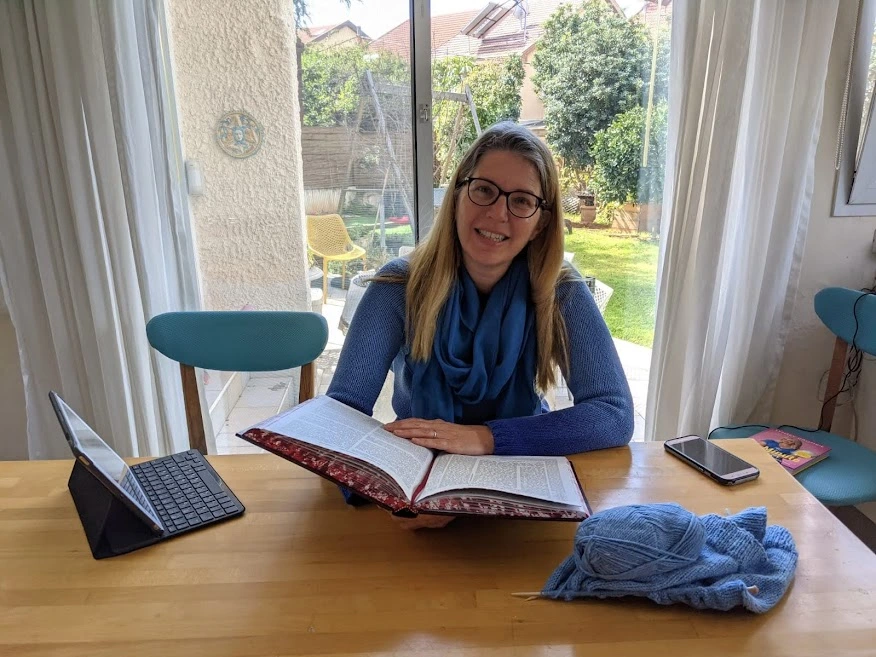
Emma Rinberg
Raanana, Israel
Geri Goldstein got me started learning daf yomi when I was in Israel 2 years ago. It’s been a challenge and I’ve learned a lot though I’m sure I miss a lot. I quilt as I listen and I want to share what I’ve been working on.

Rebecca Stulberg
Ottawa, Canada
I learned daf more off than on 40 years ago. At the beginning of the current cycle, I decided to commit to learning daf regularly. Having Rabanit Michelle available as a learning partner has been amazing. Sometimes I learn with Hadran, sometimes with my husband, and sometimes on my own. It’s been fun to be part of an extended learning community.

Miriam Pollack
Honolulu, Hawaii, United States
I began Daf Yomi with the last cycle. I was inspired by the Hadran Siyum in Yerushalayim to continue with this cycle. I have learned Daf Yomi with Rabanit Michelle in over 25 countries on 6 continents ( missing Australia)

Barbara Goldschlag
Silver Spring, MD, United States
I started learning on January 5, 2020. When I complete the 7+ year cycle I will be 70 years old. I had been intimidated by those who said that I needed to study Talmud in a traditional way with a chevruta, but I decided the learning was more important to me than the method. Thankful for Daf Yomi for Women helping me catch up when I fall behind, and also being able to celebrate with each Siyum!

Pamela Elisheva
Bakersfield, United States
When I began learning Daf Yomi at the beginning of the current cycle, I was preparing for an upcoming surgery and thought that learning the Daf would be something positive I could do each day during my recovery, even if I accomplished nothing else. I had no idea what a lifeline learning the Daf would turn out to be in so many ways.

Laura Shechter
Lexington, MA, United States
When I began the previous cycle, I promised myself that if I stuck with it, I would reward myself with a trip to Israel. Little did I know that the trip would involve attending the first ever women’s siyum and being inspired by so many learners. I am now over 2 years into my second cycle and being part of this large, diverse, fascinating learning family has enhanced my learning exponentially.

Shira Krebs
Minnesota, United States
A Gemara shiur previous to the Hadran Siyum, was the impetus to attend it.It was highly inspirational and I was smitten. The message for me was התלמוד בידינו. I had decided along with my Chahsmonaim group to to do the daf and take it one daf at time- without any expectations at all. There has been a wealth of information, insights and halachik ideas. It is truly exercise of the mind, heart & Soul
Phyllis Hecht
Hashmonaim, Israel
I started learning at the beginning of this cycle more than 2 years ago, and I have not missed a day or a daf. It’s been challenging and enlightening and even mind-numbing at times, but the learning and the shared experience have all been worth it. If you are open to it, there’s no telling what might come into your life.

Patti Evans
Phoenix, Arizona, United States
I LOVE learning the Daf. I started with Shabbat. I join the morning Zoom with Reb Michelle and it totally grounds my day. When Corona hit us in Israel, I decided that I would use the Daf to keep myself sane, especially during the days when we could not venture out more than 300 m from our home. Now my husband and I have so much new material to talk about! It really is the best part of my day!

Batsheva Pava
Hashmonaim, Israel
I am a Reform rabbi and took Talmud courses in rabbinical school, but I knew there was so much more to learn. It felt inauthentic to serve as a rabbi without having read the entire Talmud, so when the opportunity arose to start Daf Yomi in 2020, I dove in! Thanks to Hadran, Daf Yomi has enriched my understanding of rabbinic Judaism and deepened my love of Jewish text & tradition. Todah rabbah!

Rabbi Nicki Greninger
California, United States
After being so inspired by the siyum shas two years ago, I began tentatively learning daf yomi, like Rabbanut Michelle kept saying – taking one daf at a time. I’m still taking it one daf at a time, one masechet at a time, but I’m loving it and am still so inspired by Rabbanit Michelle and the Hadran community, and yes – I am proud to be finishing Seder Mo’ed.

Caroline Graham-Ofstein
Bet Shemesh, Israel
Ive been learning Gmara since 5th grade and always loved it. Have always wanted to do Daf Yomi and now with Michelle Farber’s online classes it made it much easier to do! Really enjoying the experience thank you!!

Lisa Lawrence
Neve Daniel, Israel
I started my journey on the day I realized that the Siyum was happening in Yerushalayim and I was missing out. What? I told myself. How could I have not known about this? How can I have missed out on this opportunity? I decided that moment, I would start Daf Yomi and Nach Yomi the very next day. I am so grateful to Hadran. I am changed forever because I learn Gemara with women. Thank you.

Linda Brownstein
Mitspe, Israel
I began Daf Yomi with the last cycle. I was inspired by the Hadran Siyum in Yerushalayim to continue with this cycle. I have learned Daf Yomi with Rabanit Michelle in over 25 countries on 6 continents ( missing Australia)
Barbara Goldschlag
Silver Spring, MD, United States
I had tried to start after being inspired by the hadran siyum, but did not manage to stick to it. However, just before masechet taanit, our rav wrote a message to the shul WhatsApp encouraging people to start with masechet taanit, so I did! And this time, I’m hooked! I listen to the shiur every day , and am also trying to improve my skills.

Laura Major
Yad Binyamin, Israel
I learned Talmud as a student in Yeshivat Ramaz and felt at the time that Talmud wasn’t for me. After reading Ilana Kurshan’s book I was intrigued and after watching the great siyum in Yerushalayim it ignited the spark to begin this journey. It has been a transformative life experience for me as a wife, mother, Savta and member of Klal Yisrael.

Elana Storch
Phoenix, Arizona, United States
Chullin 100
בריה שאני:
The Gemara answers that the sciatic nerve is a distinct entity, and therefore it is different in that it is not subject to nullification.
וכן חתיכה של נבלה [וכו’]: ותבטיל ברובא
§ The mishna states: And similarly, in the case of a piece of an animal carcass or a piece of non-kosher fish that was cooked with similar pieces of kosher meat or fish, when one identifies the forbidden piece and removes it, the rest of the meat or fish is forbidden only if the forbidden piece was large enough to impart flavor to the entire mixture. And if he does not identify and remove the forbidden piece, all the pieces are forbidden, due to the possibility that each piece one selects might be the forbidden piece. The Gemara challenges: Even if the piece of an animal carcass was not removed, let it be nullified by a simple majority, as the majority of the pieces are kosher.
הניחא למאן דאמר כל שדרכו לימנות שנינו אלא למ”ד את שדרכו לימנות שנינו מאי איכא למימר שאני חתיכה הואיל וראויה להתכבד בה לפני האורחים
The Gemara clarifies its challenge. This ruling works out well according to the one who said that we learned: Any item whose manner is to be counted, i.e., that is sometimes sold by unit rather than by weight or volume, is considered significant and therefore is not subject to nullification. But according to the one who said that we learned: It is only an item whose manner is exclusively to be counted, i.e., that is always sold by unit, that is considered significant, and is therefore not subject to nullification, what can be said? Since pieces of meat or fish are not always sold by unit, they should be subject to nullification. The Gemara answers: A piece of meat or fish is different, since it is suitable to give honor with it by placing it before guests. Therefore, due to its significance it is not subject to nullification.
וצריכא דאי אשמעינן גיד משום דבריה היא אבל חתיכה אימא לא
The Gemara adds: And it was necessary for the mishna to teach both the halakha that the sciatic nerve is not nullified and the halakha that a piece of non-kosher meat or fish is not nullified, as if the mishna had taught us only the case of a sciatic nerve, one might think that it is not nullified because it is a distinct entity, but in the case of a piece of non-kosher meat, say it is not significant, and it is subject to nullification.
ואי אשמעינן חתיכה הואיל וראויה להתכבד בה לפני האורחים אבל גיד אימא לא צריכא
And if the mishna had taught us the halakha only in the case of a piece of non-kosher meat or fish, one might think that it is not nullified since it is suitable to give honor with it by placing it before the guests. But in the case of a sciatic nerve, say it is not significant, and it is subject to nullification. Therefore it was necessary for the mishna to teach both cases.
דרש רבה בר בר חנה חתיכה של נבלה ושל דג טמא אינה אוסרת עד שתתן טעם ברוטב ובקיפה ובחתיכות
§ Rabba bar bar Ḥana taught: A piece of meat of an unslaughtered carcass or of a non-kosher species of fish that fell into a pot of kosher food does not render the contents of the pot forbidden unless it imparts flavor to the broth and to the deposits of food remaining in the pot and to the other pieces of food in the pot.
אוקי רב אמורא עליה ודרש כיון שנתן טעם בחתיכה חתיכה עצמה נעשת נבלה ואוסרת כל החתיכות כולן מפני שהן מינה
Rav disagreed with Rabba bar bar Ḥana and appointed a disseminator to stand before him and teach his statement to a wider audience, and he taught: Once the non-kosher meat or fish has imparted flavor to another piece in the pot, that second piece itself becomes non-kosher. And this second piece renders all the pieces of meat or fish in the pot forbidden, because they are of the same type; therefore, nullification does not apply.
אמר ליה רב ספרא לאביי מכדי רב כמאן אמרה לשמעתיה כרבי יהודה דאמר מין במינו לא בטיל מאי איריא כי נתן טעם אפילו כי לא נתן טעם נמי אמר ליה הכא במאי עסקינן בשקדם וסלקו
Rav Safra said to Abaye: Now, in accordance with whose opinion did Rav say his statement? It is in accordance with the opinion of Rabbi Yehuda, who says that a type of food mixed with food of its own type is not nullified. But if so, why does Rav state specifically that the non-kosher meat renders all the pieces forbidden only when it has imparted flavor to another piece? Even if it did not impart flavor to another piece it should render all the contents of the pot forbidden. Abaye said to him: Here we are dealing with a case where he cooked the non-kosher piece with one kosher piece and first removed the non-kosher piece before adding the other pieces. Consequently, the remaining pieces are forbidden only if the non-kosher piece imparted flavor to the piece it was cooked with.
רבא אמר
Rava said an alternate answer to Rav Safra’s challenge of Rav’s statement:
אפילו תימא לא קדם וסלקו הוי מין ומינו ודבר אחר
You may even say that it is referring to a case where he did not first remove the piece of non-kosher meat or fish. Nevertheless, this is a case of a mixture of one type of food with its own type of food and with something else, i.e., the spices and broth in the pot.
וכל מין ומינו ודבר אחר סלק את מינו כמי שאינו ושאין מינו רבה עליו ומבטלו:
And in any case of a type of forbidden food mixed with its own type of food and with something else, disregard the food that is its own type, as though it is not present in the mixture, and if the amount of permitted food that is not its own type is sixty times greater than the forbidden food, the permitted food nullifies it. Rav’s ruling applies to a case where the forbidden piece of meat or fish imparts flavor to another piece before the spices and broth are added, and there is a total volume sixty times greater than the original non-kosher piece. Consequently, even if the amount of spices and broth is eventually sixty times greater than the original non-kosher piece of meat or fish, the entire mixture is forbidden, as the spices and broth are not sixty times greater than the two pieces of meat or fish which are now non-kosher.
מתני׳ נוהג בטהורה ואינו נוהג בטמאה רבי יהודה אומר אף בטמאה אמר ר’ יהודה והלא מבני יעקב נאסר גיד הנשה ועדיין בהמה טמאה מותרת להן אמרו לו בסיני נאמר אלא שנכתב במקומו:
MISHNA: The prohibition of eating the sciatic nerve applies to a kosher animal and does not apply to a non-kosher animal. Rabbi Yehuda says: It applies even to a non-kosher animal. Rabbi Yehuda said in explanation: Wasn’t the sciatic nerve forbidden for the children of Jacob, as it is written: “Therefore the children of Israel eat not the sciatic nerve” (Genesis 32:33), yet the meat of a non-kosher animal was still permitted to them? Since the sciatic nerve of non-kosher animals became forbidden at that time, it remains forbidden now. The Rabbis said to Rabbi Yehuda: The prohibition was stated in Sinai, but it was written in its place, in the battle of Jacob and the angel despite the fact that the prohibition did not take effect then.
גמ׳ וסבר ר’ יהודה איסור חל על איסור והתניא ר’ יהודה אומר יכול תהא נבלת עוף טמא מטמא בגדים בבית הבליעה
GEMARA: The Gemara asks: And does Rabbi Yehuda hold that a prohibition takes effect where another prohibition already exists? But isn’t it taught in a baraita: Rabbi Yehuda says: One might have thought that the carcass of a non-kosher bird renders the garments of one who swallows it ritually impure when it is in the throat, similar to the carcass of a kosher bird.
תלמוד לומר (ויקרא כב, ח) נבלה וטרפה לא יאכל לטמאה בה מי שאיסורו משום בל תאכל נבלה יצא זה שאין איסורו משום בל תאכל נבלה אלא משום בל תאכל טמאה
Therefore the verse states concerning the impurity of carcasses of birds: “A carcass, or that which is torn of animals, he shall not eat to defile himself with it” (Leviticus 22:8). The verse indicates that only those birds that are forbidden specifically due to the prohibition: You shall not eat of a carcass, i.e., kosher birds that died without ritual slaughter, cause impurity in this manner. This serves to exclude any bird that is not forbidden due to the prohibition: You shall not eat of a carcass, but rather due to the prohibition: You shall not eat a non-kosher bird. This indicates that according to Rabbi Yehuda, the prohibition of eating a carcass does not take effect with regard to a non-kosher bird, because it is already subject to a different prohibition.
וכי תימא קסבר אין בגידין בנותן טעם ובטמאה נמי איסור גיד איכא איסור טומאה ליכא
The Gemara continues with its question: And if you would say that Rabbi Yehuda holds that sciatic nerves do not impart flavor, i.e., they do not have flavor and therefore are not classified as food, and even with regard to a non-kosher animal it is prohibited to eat the sciatic nerve because the general prohibition of eating a sciatic nerve applies, whereas the prohibition of eating non-kosher animals does not apply because the sciatic nerve is not considered food, this is untenable.
וסבר ר’ יהודה אין בגידין בנותן טעם והתניא האוכל גיד הנשה של בהמה טמאה ר’ יהודה מחייב שתים ור”ש פוטר
The Gemara explains: And does Rabbi Yehuda hold that sciatic nerves do not impart flavor? But isn’t it taught in a baraita: With regard to one who eats the sciatic nerve of a non-kosher animal, Rabbi Yehuda deems him liable to receive two sets of lashes, one for eating the sciatic nerve and one for eating the meat of a non-kosher animal, and Rabbi Shimon exempts him entirely from lashes. This indicates that Rabbi Yehuda holds that the sciatic nerve does have flavor.
לעולם קסבר יש בגידין בנותן טעם וקסבר נוהג בשליל דאיסור גיד ואיסור טומאה בהדי הדדי קאתי
The Gemara answers: Actually Rabbi Yehuda holds that sciatic nerves do impart flavor, and he also holds that the prohibition of eating the sciatic nerve applies to the sciatic nerve of an animal fetus. Consequently, although Rabbi Yehuda holds that a prohibition does not take effect where another already exists, one who eats the sciatic nerve of a non-kosher animal is flogged twice, because the prohibition of eating a sciatic nerve and the prohibition of eating meat from a non-kosher animal come into effect at the same time.
ומי מצית אמרת נוהג בשליל והתנן נוהג בשליל ר’ יהודה אומר אינו נוהג בשליל וחלבו מותר
The Gemara challenges this answer: And can you say that Rabbi Yehuda holds that the prohibition of eating a sciatic nerve applies to the sciatic nerve of a fetus? But didn’t we learn in a mishna (89b): The prohibition applies to a late-term fetus in the womb. Rabbi Yehuda says: It does not apply to a fetus, and similarly the fat of a fetus is permitted?
הני מילי גבי טהורה דרחמנא אמר (דברים יד, ו) כל בבהמה תאכלו אבל בטמאה נוהג
The Gemara answers: This statement, that the prohibition of eating the sciatic nerve does not apply to a fetus, is with regard to a kosher species of animal, because the Merciful One stated in the Torah: “And every animal that divides the hoof, and has the hoof wholly cloven in two, and chews the cud, among the animals [babehema], that you may eat” (Deuteronomy 14:6). The term babehema may also be translated as: Inside the animals, indicating that anything inside a kosher animal when it is slaughtered is permitted for consumption, including all parts of a fetus. But with regard to a non-kosher species of animal the prohibition applies.
ומי מצית אמרת דתרוייהו בהדי הדדי קאתו והתנן על אלו טומאות הנזיר מגלח על המת ועל כזית מן המת
The Gemara challenges the assertion that the prohibitions of eating the sciatic nerve and of eating non-kosher meat take effect at the same time. And can you say that they both come into effect at the same time? But didn’t we learn in a mishna (Nazir 49b): A nazirite shaves for having become impure from these following sources of ritual impurity: For having become impure with impurity imparted by a corpse; and for impurity imparted by an olive-bulk of a corpse.
וקשיא לן על כזית מן המת מגלח על המת כולו לא כ”ש וא”ר יוחנן לא נצרכא אלא לנפל שלא נתקשרו אבריו בגידין אלמא איסור טומאה קדים
And this poses a difficulty for us: If a nazirite shaves for becoming impure from an olive-bulk of a corpse, is it not obvious that all the more so he must shave for becoming impure from an entire corpse? And Rabbi Yoḥanan said: It is necessary only with regard to a miscarried fetus whose limbs have not yet become joined to its sinews. Although the fetus does not yet contain an olive-bulk of flesh, since it is a complete entity, it transmits impurity to anything under the same roof. Evidently, the limbs of the body are formed before the nerves and sinews, and therefore the prohibition of eating non-kosher meat takes effect prior to the prohibition of the sciatic nerve.
אע”ג דאיסור טומאה קדים אתי איסור גיד חייל עליה שכן איסורו נוהג בבני נח
The Gemara answers: Even though the prohibition of eating non-kosher meat takes effect prior to the prohibition of eating the sciatic nerve, the prohibition of the sciatic nerve also comes and takes effect upon a non-kosher animal because this prohibition applies to descendants of Noah, i.e., to gentiles. Since the prohibition of eating the sciatic nerve adds an additional stringency that did not exist with regard to non-kosher meat, it takes effect even though there was an already existing prohibition.
דיקא נמי דקתני א”ר יהודה והלא מבני יעקב נאסר גיד הנשה ועדיין בהמה טמאה מותרת להם
According to this answer, the language of the mishna is also precise, as it teaches: Rabbi Yehuda said: Wasn’t the sciatic nerve forbidden for the children of Jacob, as it is written: “Therefore the children of Israel eat not the sciatic nerve” (Genesis 32:33), yet the meat of a non-kosher animal was still permitted to them? This indicates that the basis of Rabbi Yehuda’s opinion is the fact that the sciatic nerve was forbidden to the children of Jacob, who had the status of descendants of Noah.
גופא האוכל גיד הנשה של בהמה טמאה רבי יהודה מחייב שתים
§ The Gemara returns to the matter itself cited above. With regard to one who eats the sciatic nerve of a non-kosher animal, Rabbi Yehuda deems him liable to receive two sets of lashes: One for eating the sciatic nerve and one for eating the meat of a non-kosher animal;
Follow

