









Makkot
Masechet Makkot is sponsored by Terri Krivosha and Rabbi Hayim Herring in loving memory of Terri’s father Judge Norman Krivosha, Nachum Meir ben David Beer v’Malka “who instilled in us a lifelong love of learning” and in honor of Dr. Judith Hauptman, “our first Talmud teacher, who was one of the pioneers to open the doors of Talmud study to women.”
This month’s learning is sponsored by Marci Glazer in loving memory of her teacher and chevruta, Rachel Brodie, Rachel Aviva bat Devora Chana, on her 4th yahrzeit. “She brought her love of Torah to thousands of people in her all-too-short life. A lover of Midrash, she still invited me on this Daf Yomi journey.”
Want to dedicate learning? Get started here:

Summary

Rav Yehuda said in the name of Rav that a conspiring witness pays according to his share. After four unsuccessful attempts to explain the meaning of his statement, they explain it to be a case where the witness said he was convicted and charged money in a court for being a conspiring witness. Based on his testimony, he can be obligated to pay his share, even though his testimony cannot incriminate the other witness.
If conspiring witnesses testify that a man divorced his wife and did not pay her the ketuba money, how is the payment for their punishment assessed, as they tried to obligate him to pay money that he may have had to pay later if he predeceases his wife or divorces her? If conspiring witnesses testify that a debtor who had a ten-year loan had a thirty-day loan, how is the payment for their punishment assessed? Both these cases are explained in the Mishna.
Rav Yehuda says in the name of Rav that a ten-year loan is canceled when the shmita year arrives. Rav Kahana raises a difficulty on his statement from the Mishna as it implies that a ten-year loan can be collected. Rava resolves the contradiction.
According to an alternative version of the sugya, Rav Yehuda said in the name of Rav the opposite – that a ten-year loan is collected. Rav Kahana supported his statement from our Mishna.Rava rejects the support from the Mishna.
Rav Yehuda says in the name of Shmuel that if one loans another upon the condition that the shmita year not cancel the loan, the loan is canceled anyway as the condition is invalid. However, this contradicts a different statement of Shmuel regarding ona’ah, that a condition that goes against the Torah is valid if the issue relates to money. How is this resolved?
Two other statements are brought by Rav Yehuda says in the name of Rav and Rav Kahana raises a difficulty against them – one about laws of Shabbat and one about laws of mikveh.
Today’s daily daf tools:
Makkot
Masechet Makkot is sponsored by Terri Krivosha and Rabbi Hayim Herring in loving memory of Terri’s father Judge Norman Krivosha, Nachum Meir ben David Beer v’Malka “who instilled in us a lifelong love of learning” and in honor of Dr. Judith Hauptman, “our first Talmud teacher, who was one of the pioneers to open the doors of Talmud study to women.”
This month’s learning is sponsored by Marci Glazer in loving memory of her teacher and chevruta, Rachel Brodie, Rachel Aviva bat Devora Chana, on her 4th yahrzeit. “She brought her love of Torah to thousands of people in her all-too-short life. A lover of Midrash, she still invited me on this Daf Yomi journey.”
Makkot 3
מַאי נִיהוּ, דְּלֹא עָשׂוּ מַעֲשֶׂה? הַיְינוּ דְּרַבָּה! אֵימָא: ״וְכֵן אָמַר רַב נַחְמָן״.
The Gemara is puzzled by this: What is the meaning of the statement: The money remains in the possession of the owner? It means that they did not perform an action. That is identical to the reasoning of Rabba, and it is not an additional explanation. The Gemara emends the formulation of the presentation of the statement. Say: And likewise Rav Naḥman says: Know that it is so, as the money remains in the possession of the owner. Rav Naḥman is not disagreeing with Rabba; he merely formulates the statement differently.
אָמַר רַב יְהוּדָה אָמַר רַב: עֵד זוֹמֵם מְשַׁלֵּם לְפִי חֶלְקוֹ. מַאי ״מְשַׁלֵּם לְפִי חֶלְקוֹ״? אִילֵּימָא דְּהַאי מְשַׁלֵּם פַּלְגָא וְהַאי מְשַׁלֵּם פַּלְגָא, תְּנֵינָא: מְשַׁלְּשִׁין בְּמָמוֹן, וְאֵין מְשַׁלְּשִׁין בְּמַלְקוֹת!
§ Apropos the statement of Rabbi Akiva in the baraita, Rav Yehuda says that Rav says: A conspiring witness pays according to his share. The Gemara asks: What is the meaning of: Pays according to his share? If we say that it means that this witness pays half of the sum that the set conspired to render another liable to pay with their testimony, and that witness pays the other half, we already learned this in a mishna (5a): When punishing conspiring witnesses, one divides the punishment of money among them, but one does not divide the punishment of lashes among them; each receives the full thirty-nine lashes.
אֶלָּא: כְּגוֹן דְּאִיתַּזּוּם חַד מִינַּיְיהוּ, דִּמְשַׁלֵּם פַּלְגָא דִידֵיהּ, וּמִי מְשַׁלֵּם? וְהָא תַּנְיָא: אֵין עֵד זוֹמֵם מְשַׁלֵּם מָמוֹן עַד שֶׁיִּזּוֹמּוּ שְׁנֵיהֶם!
Rather, the Gemara explains that the expression: Pays according to his share, means that in a case where only one of the set was rendered a conspiring witness, the halakha is that he pays his half of the sum. The Gemara asks: And does he pay at all in that case? But isn’t it taught in a baraita: A conspiring witness pays money only when both were rendered conspiring witnesses? If only one was rendered a conspiring witness, he does not pay.
אָמַר רָבָא: בְּאוֹמֵר ״עֵדוּת שֶׁקֶר הֵעַדְתִּי״. כֹּל כְּמִינֵּיהּ? כֵּיוָן שֶׁהִגִּיד שׁוּב אֵינוֹ חוֹזֵר וּמַגִּיד!
Rava says: The statement is not referring to a case of conspiring witnesses; rather, Rav’s statement applies to the case of one who says: It was false testimony that I testified. The Gemara asks: Is it in his power to have this statement accepted by the court? That runs counter to the principle: Once a witness stated his testimony he may not then state a revision of that testimony.
אֶלָּא בְּאוֹמֵר: ״הֵעַדְנוּ וְהוּזַמְנוּ בְּבֵית דִּין פְּלוֹנִי״. כְּמַאן – דְּלָא כְּרַבִּי עֲקִיבָא, דְּאִי כְּרַבִּי עֲקִיבָא, הָא אָמַר: אַף אֵינוֹ מְשַׁלֵּם עַל פִּי עַצְמוֹ!
The Gemara answers: Rather, Rav’s statement applies to the case of one who says: We testified and were rendered conspiring witnesses in such and such a court. Since he was already convicted as a conspiring witness, it is as though he is admitting an obligation to give monetary restitution, and he is therefore liable to pay his share. The Gemara asks: In accordance with whose opinion is this halakha? It is not in accordance with the opinion of Rabbi Akiva, since if it were in accordance with the opinion of Rabbi Akiva, doesn’t he say: A conspiring witness also does not pay based on his own admission?
אֶלָּא בְּאוֹמֵר ״הֵעַדְנוּ וְהוּזַמְנוּ בְּבֵית דִּין פְּלוֹנִי וְחוּיַּיבְנוּ מָמוֹן״.
The Gemara answers: Rather, Rav’s statement applies to the case of one who says: We testified and were rendered conspiring witnesses in such and such a court and we were rendered liable to pay a specific sum of money. In that scenario, Rabbi Akiva would concede that one pays on the basis of his own admission. Once the court rendered him liable to pay a specific sum, his admission is not that he is liable to pay a fine, in which case he would be exempt. Once the court actually instructed them to pay, the debt has the status of any other monetary restitution, and one does pay monetary restitution based on his own admission.
סָלְקָא דַּעְתָּךְ אָמֵינָא: כֵּיוָן דִּלְחַבְרֵיהּ לָא מָצֵי מְחַיֵּיב לֵיהּ, אִיהוּ נָמֵי לָא מִיחַיַּיב, קָא מַשְׁמַע לַן.
The Gemara explains the novel element in Rav’s statement: It might enter your mind to say that since he is unable to render his fellow witness liable to pay based on his admission, as only the testimony of two witnesses is capable of doing so, he too is not liable to pay based on that admission. To counter this, Rav teaches us that his admission that he owes money renders him liable to pay.
מַתְנִי׳ ״מְעִידִין אָנוּ אֶת אִישׁ פְּלוֹנִי שֶׁגֵּירַשׁ אֶת אִשְׁתּוֹ וְלֹא נָתַן לָהּ כְּתוּבָתָהּ״, וַהֲלֹא בֵּין הַיּוֹם וּבֵין לְמָחָר, סוֹפוֹ לִיתֵּן לָהּ כְּתוּבָתָהּ.
MISHNA: In the case of witnesses who said: We testify with regard to a man called so-and-so that he divorced his wife and did not give her payment of her marriage contract, and they were then rendered conspiring witnesses, the question arises with regard to the manner in which the sum of their payment is calculated. It is not possible to render the witnesses liable to pay the entire sum of the marriage contract, as they can claim: But isn’t it so that either today or tomorrow, i.e., at some point in the future, he may divorce his wife or die and ultimately he will be liable to give her payment of her marriage contract? That being the case, the witnesses did not conspire to render him liable to pay a sum that he would otherwise not be liable to pay.
אוֹמְדִין כַּמָּה אָדָם רוֹצֶה לִיתֵּן בִּכְתוּבָּתָהּ שֶׁל זוֹ, שֶׁאִם נִתְאַלְמְנָה אוֹ נִתְגָּרְשָׁה, וְאִם מֵתָה, יִירָשֶׁנָּה בַּעֲלָהּ.
The sum of their payment is calculated as follows: The court assesses how much money another person would be willing to give in order to purchase the rights to this woman’s marriage contract, cognizant of the uncertainty that if she was widowed or divorced the purchaser will receive payment of the marriage contract but if she dies, her husband will inherit from her, and the one who purchased her marriage contract will receive nothing.
גְּמָ׳ כֵּיצַד שָׁמִין? אָמַר רַב חִסְדָּא: בַּבַּעַל.
GEMARA: The mishna establishes that the payment of the conspiring witnesses is calculated based on the sum that one would be willing to pay for rights to payment of the marriage contract, taking into consideration the uncertainty whether he will ultimately receive that payment. The Gemara asks: How does the court assess that sum? Rav Ḥisda says: One calculates the sum in terms of the husband: How much would one be willing to pay for the husband’s rights to the marriage contract based on the likelihood that his wife will die first and he will inherit from her?
רַב נָתָן בַּר אוֹשַׁעְיָא אוֹמֵר: בָּאִשָּׁה.
Rav Natan bar Oshaya says: One calculates the sum in terms of the wife: How much would one be willing to pay for the wife’s rights to the marriage contract based on the likelihood that the husband will die first or divorce her?
אָמַר רַב פָּפָּא: בָּאִשָּׁה וּבִכְתוּבָּתָהּ.
Rav Pappa says: One calculates the sum in terms of the wife, as Rav Natan bar Oshaya said, and the assessment is done in terms of the sum of her marriage contract. One does not include in the calculation any usufruct property that the wife brought with her into the marriage, the profits of which belong to the husband, despite the fact that as a result of the testimony of the conspiring witnesses the husband would lose his rights to those profits. One calculates the sum only in terms of her marriage contract.
מַתְנִי׳ ״מְעִידִין אָנוּ בְּאִישׁ פְּלוֹנִי שֶׁהוּא חַיָּיב לַחֲבֵירוֹ אֶלֶף זוּז, עַל מְנָת לִיתְּנָן לוֹ מִכָּאן וְעַד שְׁלֹשִׁים יוֹם״, וְהוּא אוֹמֵר, ״מִכָּאן וְעַד עֶשֶׂר שָׁנִים״.
MISHNA: In the case of witnesses who said: We testify with regard to a man called so-and-so that he owes another person one thousand dinars that he borrowed on the condition that he is to give the money back to him from now until thirty days have passed, and the borrower says that he borrowed that sum but it was on the condition that he is to give the money back to him from now until ten years have passed, and they were rendered conspiring witnesses, here too, it is not possible to render the witnesses liable to pay the entire sum.
אוֹמְדִים כַּמָּה אָדָם רוֹצֶה לִיתֵּן וְיִהְיוּ בְּיָדוֹ אֶלֶף זוּז, בֵּין נוֹתְנָן מִכָּאן וְעַד שְׁלֹשִׁים יוֹם, בֵּין נוֹתְנָן מִכָּאן וְעַד עֶשֶׂר שָׁנִים.
Rather, the court estimates how much money a person would be willing to give so that he would keep a loan of one thousand dinars in his possession, and one calculates the difference between that sum in a situation where he would be required to give the money back from now until thirty days have passed, and that same sum in a situation where he would be required to give the money back from now until ten years have passed. That difference is the sum that the testimony of the conspiring witnesses sought to have the borrower lose; therefore, it is the sum that they must pay.
גְּמָ׳ אָמַר רַב יְהוּדָה אָמַר שְׁמוּאֵל: הַמַּלְוֶה אֶת חֲבֵירוֹ לְעֶשֶׂר שָׁנִים – שְׁבִיעִית מְשַׁמַּטְתּוֹ.
GEMARA: Rav Yehuda says that Shmuel says: In the case of one who lends money to another for a period of ten years, the Sabbatical Year abrogates the debt (see Deuteronomy 15:1–11) and absolves the borrower of the obligation to repay it.
וְאַף עַל גַּב דְּהַשְׁתָּא לָא קָרֵינַן בֵּיהּ ״לֹא יִגֹּשׂ״, סוֹף אָתֵי לִידֵי ״לֹא יִגֹּשׂ״.
And even though now, during the Sabbatical Year, we do not yet read concerning his loan the prohibition: “He shall not exact it of his neighbor and his brother, because the Lord’s release has been proclaimed” (Deuteronomy 15:2), as the time for repayment has not yet arrived, ultimately, when the time for repayment arrives, he will come to a situation where the prohibition “He shall not exact it” applies. Therefore, like all other debts it is abrogated by the Sabbatical Year.
מֵתִיב רַב כָּהֲנָא: אוֹמְדִים כַּמָּה אָדָם רוֹצֶה לִיתֵּן וְיִהְיוּ אֶלֶף זוּז בְּיָדוֹ בֵּין לִיתֵּן מִכָּאן וְעַד שְׁלֹשִׁים יוֹם, וּבֵין לִיתֵּן מִכָּאן וְעַד עֶשֶׂר שָׁנִים. וְאִי אָמְרַתְּ שְׁבִיעִית מְשַׁמַּטְתּוֹ – כּוּלְּהוּ נָמֵי בָּעֵי שַׁלּוֹמֵי לֵיהּ!
Rav Kahana raises an objection from the mishna: Rather, the court estimates how much money a person would be willing to give so that he would keep a loan of one thousand dinars in his possession, and one calculates the difference between that sum in a situation where he would be required to give the money back from now until thirty days have passed, and that same sum in a situation where he would be required to give the money back from now until ten years have passed. And if you say that the Sabbatical Year abrogates a ten-year loan, the conspiring witnesses need to pay the borrower the entire sum of the loan as well, as their testimony sought to render the borrower liable to pay a debt that by right should be entirely forgiven.
אָמַר רָבָא: הָכָא בְּמַאי עָסְקִינַן – בְּמַלְוֶה עַל הַמַּשְׁכּוֹן, וּבְמוֹסֵר שְׁטָרוֹתָיו לְבֵית דִּין. דִּתְנַן: הַמַּלְוֶה עַל הַמַּשְׁכּוֹן, וְהַמּוֹסֵר שְׁטָרוֹתָיו לְבֵית דִין – אֵין מַשְׁמִיטִין.
Rava said: What are we dealing with here in our mishna? We are dealing with debts that are not abrogated with the passing of the Sabbatical Year, e.g., in the case of one who lends money on the basis of collateral, or in the case of one who transfers his promissory notes to the court for collection. As we learned in a mishna (Shevi’it 10:2): In the cases of one who lends money on the basis of collateral and one who transfers his promissory notes to the court for collection, the Sabbatical Year does not abrogate those loans. In those cases, the debt would not have been forgiven during the Sabbatical Year. Therefore, the conspiring witnesses are not liable to pay the entire sum.
אִיכָּא דְּאָמְרִי, אָמַר רַב יְהוּדָה אָמַר שְׁמוּאֵל: הַמַּלְוֶה אֶת חֲבֵירוֹ לְעֶשֶׂר שָׁנִים – אֵין שְׁבִיעִית מְשַׁמַּטְתּוֹ. וְאַף עַל גַּב דְּאָתֵי לִידֵי ״לֹא יִגֹּשׂ״, הַשְׁתָּא מִיהָא לָא קָרֵינַן בֵּיהּ ״לֹא יִגֹּשׂ״.
There are those who state another version of this discussion: Rav Yehuda says that Shmuel says: In the case of one who lends money to another for a period of ten years, the Sabbatical Year does not abrogate the debt. And even though when the time for repayment arrives he will come to a situation where the prohibition “He shall not exact it” applies, now, in any event, during the Sabbatical Year we do not yet read the prohibition of “He shall not exact it” concerning his loan.
אָמַר רַב כָּהֲנָא: אַף אֲנַן נָמֵי תְּנֵינָא: אוֹמְדִין כַּמָּה אָדָם רוֹצֶה לִיתֵּן וְיִהְיוּ אֶלֶף זוּז בְּיָדוֹ, בֵּין לִיתֵּן מִכָּאן וְעַד שְׁלֹשִׁים יוֹם, וּבֵין לִיתֵּן מִכָּאן וְעַד עֶשֶׂר שָׁנִים. וְאִי אָמְרַתְּ שְׁבִיעִית מְשַׁמַּטְתּוֹ – כּוּלְּהוּ נָמֵי בָּעוּ שַׁלּוֹמֵי לֵיהּ.
Rav Kahana says: We learn this ruling in the mishna as well: The court estimates how much money a person would be willing to give so that a loan of one thousand dinars will be in his possession, and one calculates the difference between that sum in a situation where he would be required to give the money back from now until thirty days have passed, and that sum in a situation where he would be required to give the money back from now until ten years have passed. And if you say that the Sabbatical Year abrogates a ten-year loan, then the conspiring witnesses should pay the borrower the entire sum of the loan as well, as their testimony sought to render the borrower liable to pay a debt that by right should be entirely forgiven. The fact that they are not required to pay the entire sum proves that a ten-year loan is not abrogated by the Sabbatical Year.
אָמַר רָבָא: הָכָא בְּמַאי עָסְקִינַן – בְּמַלְוֶה עַל הַמַּשְׁכּוֹן, וּבְמוֹסֵר שְׁטָרוֹתָיו לְבֵית דִּין, דִּתְנַן: הַמַּלְוֶה עַל הַמַּשְׁכּוֹן, וְהַמּוֹסֵר שְׁטָרוֹתָיו לְבֵית דִין – אֵין מַשְׁמִיטִין.
Rava said: No proof may be cited from there, as what are we dealing with here in our mishna? We are dealing with debts that are not abrogated with the passing of the Sabbatical Year, e.g., in the case of one who lends money on the basis of collateral, or in the case of one who transfers his promissory notes to the court for collection. As we learned in a mishna (Shevi’it 10:2): In the cases of one who lends money on the basis of collateral and one who transfers his promissory notes to the court for collection, the Sabbatical Year does not abrogate those loans. In those cases, the debt would not have been forgiven during the Sabbatical Year. Therefore, the conspiring witnesses are not liable to pay the entire sum.
וְאָמַר רַב יְהוּדָה אָמַר שְׁמוּאֵל: הָאוֹמֵר לַחֲבֵירוֹ ״עַל מְנָת שֶׁלֹּא תְּשַׁמְּטֵנִי שְׁבִיעִית״ – שְׁבִיעִית מְשַׁמֶּטֶת. לֵימָא קָסָבַר שְׁמוּאֵל: מַתְנֶה עַל מָה שֶׁכָּתוּב בַּתּוֹרָה הוּא, וְכׇל הַמַּתְנֶה עַל מָה שֶׁכָּתוּב בַּתּוֹרָה – תְּנָאוֹ בָּטֵל?
§ And Rav Yehuda says that Shmuel says with regard to abrogation of debts: In the case of one who says to another the stipulation: I am lending you money on the condition that the Sabbatical Year will not abrogate my debt, even if the borrower agrees to that stipulation, the Sabbatical Year abrogates the debt. The Gemara suggests: Let us say that Shmuel holds that the lender who proposed that stipulation is one who stipulates counter to that which is written in the Torah, and in the case of anyone who stipulates counter to that which is written in the Torah, his stipulation is voided.
וְהָא אִיתְּמַר, הָאוֹמֵר לַחֲבֵירוֹ: ״עַל מְנָת שֶׁאֵין לְךָ עָלַי אוֹנָאָה״, רַב אוֹמֵר: יֵשׁ לוֹ עָלָיו אוֹנָאָה, וּשְׁמוּאֵל אוֹמֵר: אֵין לוֹ עָלָיו אוֹנָאָה.
The Gemara asks: But wasn’t it stated that there is a dispute between Rav and Shmuel concerning this matter? In the case of one who says to another the stipulation: I am selling you this item on the condition that you have no claim of exploitation against me if I charge you more than the item is worth, Rav says: The buyer has a claim of exploitation against him, as one cannot stipulate to waive the halakha of exploitation. And Shmuel says: He has no claim of exploitation against him. Apparently, according to Shmuel, one may stipulate to waive a Torah law in monetary matters, as it is tantamount to waiving his rights to money due him and it is not in effect counter to that which is written in the Torah.
הָא אִיתְּמַר עֲלַהּ, אָמַר רַב עָנָן: לְדִידִי מִפָּרְשָׁא לֵיהּ מִינֵּיהּ דִּשְׁמוּאֵל, ״עַל מְנָת שֶׁאֵין לְךָ עָלַי אוֹנָאָה״ – אֵין לוֹ עָלָיו אוֹנָאָה. ״עַל מְנָת שֶׁאֵין בּוֹ אוֹנָאָה״ – הֲרֵי יֵשׁ בּוֹ אוֹנָאָה.
The Gemara answers: Wasn’t it stated with regard to that halakha that Rav Anan said: It was explained to me personally by Shmuel himself that the matter depends on the formulation of the stipulation. If the seller stipulates: On the condition that you have no claim of exploitation against me, then the buyer has no claim of exploitation against him, as it is as though he is waiving his right to money due him. But if the seller stipulates: On the condition that there is no prohibition of exploitation in this transaction, there is a prohibition of exploitation in that transaction.
הָכָא נָמֵי, ״עַל מְנָת שֶׁלֹּא תְּשַׁמְּטֵנִי בַּשְּׁבִיעִית״ – אֵין שְׁבִיעִית מְשַׁמַּטְתּוֹ. ״עַל מְנָת שֶׁלֹּא תְּשַׁמְּטֵנִי שְׁבִיעִית״ – שְׁבִיעִית מְשַׁמַּטְתּוֹ.
Here too, if the lender stipulated to the borrower: I am lending you money on the condition that you will not abrogate the debt during the Sabbatical Year, the Sabbatical Year does not abrogate his debt, as the borrower is merely waiving money due him. But if he stipulated: On the condition that the Sabbatical Year will not abrogate my debt, the Sabbatical Year abrogates the debt, as that is a stipulation to nullify the halakha of the Sabbatical Year concerning that loan, and one may not stipulate counter to that which is written in the Torah.
תָּנָא: הַמַּלְוֶה אֶת חֲבֵירוֹ סְתָם – אֵינוֹ רַשַּׁאי לְתוֹבְעוֹ פָּחוֹת מִשְּׁלֹשִׁים יוֹם. סְבַר רַבָּה בַּר בַּר חַנָּה קַמֵּיהּ דְּרַב לְמֵימַר: הָנֵי מִילֵּי בְּמִלְוֶה בִּשְׁטָר, דְּלָא עֲבִד אִינִישׁ דְּטָרַח דְּכָתֵב שְׁטָר בְּצִיר מִתְּלָתִין יוֹמִין, אֲבָל מִלְוֶה עַל פֶּה – לָא. אֲמַר לֵיהּ רַב: הָכִי אָמַר חֲבִיבִי: אֶחָד הַמַּלְוֶה בִּשְׁטָר וְאֶחָד הַמַּלְוֶה עַל פֶּה.
§ Apropos the loan discussed in the mishna, the Gemara cites a Sage who taught: One who lends money to another for an unspecified period is not permitted to demand repayment from him less than thirty days after the loan took place. The Gemara comments: Rabba bar bar Ḥana, who was seated before Rav, thought to say: This statement applies only with regard to a loan with a promissory note, as a person does not typically exert himself to write a promissory note for a loan whose duration is less than thirty days. But with regard to a loan by oral agreement, no, it may be for less than thirty days. Rav said to him: This is what my uncle, Rabbi Ḥiyya, said: This halakha applies to both one who lends with a promissory note and one who lends by oral agreement. If one fails to establish a time for repayment of the loan, he may not demand repayment until thirty days have passed since the loan was given.
תַּנְיָא נָמֵי הָכִי: הַמַּלְוֶה אֶת חֲבֵירוֹ סְתָם – אֵינוֹ רַשַּׁאי לְתוֹבְעוֹ פָּחוֹת מִשְּׁלֹשִׁים יוֹם, אֶחָד הַמַּלְוֶה בִּשְׁטָר וְאֶחָד הַמַּלְוֶה עַל פֶּה.
The Gemara notes: That is also taught in a baraita: One who lends money to another for an unspecified period is not permitted to demand repayment from him less than thirty days after the loan took place, and that is the case with regard to both one who lends with a promissory note and one who lends by oral agreement.
אֲמַר לֵיהּ שְׁמוּאֵל לְרַב מַתְנָה: לָא תִּיתֵּיב אַכַּרְעָיךָ עַד דִּמְפָרְשַׁתְּ לָהּ לְהָא שְׁמַעְתָּא: מְנַָא הָא מִילְּתָא דַאֲמוּר רַבָּנַן: הַמַּלְוֶה אֶת חֲבֵירוֹ סְתָם אֵינוֹ רַשַּׁאי לְתוֹבְעוֹ פָּחוֹת מִשְּׁלֹשִׁים יוֹם, אֶחָד הַמַּלְוֶה בִּשְׁטָר וְאֶחָד הַמַּלְוֶה עַל פֶּה?
The Gemara relates: Shmuel said to Rav Mattana: You shall not sit on your feet until you have explained this halakha; explain it immediately. From where is this matter that the Sages stated derived: One who lends money to another for an unspecified period is not permitted to demand repayment from him less than thirty days after the loan took place, and that is the case with regard to both one who lends with a promissory note and one who lends by oral agreement?
אֲמַר לֵיהּ: דִּכְתִיב ״קָרְבָה שְׁנַת הַשֶּׁבַע שְׁנַת הַשְּׁמִטָּה״, מִמַּשְׁמַע שֶׁנֶּאֱמַר ״קָרְבָה שְׁנַת הַשֶּׁבַע״, אֵינִי יוֹדֵעַ שֶׁהִיא שְׁנַת שְׁמִטָּה? אֶלָּא מָה תַּלְמוּד לוֹמַר ״שְׁנַת הַשְּׁמִטָּה״? לוֹמַר לָךְ: [יֵשׁ] שְׁמִטָּה אַחֶרֶת שֶׁהִיא כָּזוֹ, וְאֵיזוֹ – זוֹ הַמַּלְוֶה אֶת חֲבֵירוֹ סְתָם, שֶׁאֵינוֹ רַשַּׁאי לְתוֹבְעוֹ בְּפָחוֹת מִשְּׁלֹשִׁים יוֹם. דְּאָמַר מָר: שְׁלֹשִׁים יוֹם בַּשָּׁנָה חָשׁוּב שָׁנָה.
Rav Mattana said to him that it is derived from a verse, as it is written: “The seventh year, the Sabbatical Year, approaches” (Deuteronomy 15:9). The question arises: From the fact that it is stated: “The seventh year…approaches,” don’t I know that it is the Sabbatical Year? Rather, why must the verse state: “The Sabbatical Year”? It is to tell you that there is another period that is like the Sabbatical Year; and which period is it? It is the period in the case of one who lends money to another for an unspecified period, who is not permitted to demand repayment from him less than thirty days after the loan took place. During that period, as during the Sabbatical Year, one may not exact payment for his loan. In what sense can that period be characterized as a year? It is as the Master said: Thirty days in a year are considered a year.
וְאָמַר רַב יְהוּדָה אָמַר רַב: הַפּוֹתֵחַ בֵּית הַצַּוָּאר בְּשַׁבָּת – חַיָּיב חַטָּאת. מַתְקֵיף לָהּ רַב כָּהֲנָא: וְכִי מָה בֵּין זֶה לִמְגוּפַת חָבִית? אֲמַר לֵיהּ: זֶה חִבּוּר, וְזֶה אֵינוֹ חִבּוּר.
§ And Rav Yehuda says that Rav says: One who unwittingly opens a new neck opening in a shirt on Shabbat by cutting through the fabric and threads that kept it closed is liable to bring a sin-offering. By creating the opening he renders the shirt fit to wear, thereby fashioning a utensil on Shabbat. Rav Kahana objects to this: And what is the difference between this and the stopper of a wine barrel, which the Sages permitted piercing on Shabbat in order to serve wine to guests? There too, by piercing the stopper he fashions a utensil. Rava said to him: The cases are not comparable: In this case, that of the neck opening of a shirt, the material closing the neck hole is considered a connecting element, i.e., it is an organic part of the weave of the fabric; and in that case, that of the stopper of the barrel, the stopper is not considered a connecting element, as its purpose is to be removed from the barrel.
וְאָמַר רַב יְהוּדָה אָמַר רַב: שְׁלֹשֶׁת לוּגִּין מַיִם שֶׁנָּפַל לְתוֹכָן קוּרְטוֹב שֶׁל יַיִן, וּמַרְאֵיהֶן כְּמַרְאֵה יַיִן, וְנָפְלוּ לְמִקְוֶה – לֹא פְּסָלוּהוּ. מַתְקֵיף לָהּ רַב כָּהֲנָא: וְכִי מָה בֵּין זֶה לְמֵי צֶבַע? דִּתְנַן: רַבִּי יוֹסֵי אוֹמֵר: מֵי צֶבַע פּוֹסְלִין אֶת הַמִּקְוֶה בִּשְׁלֹשֶׁת לוּגִּין. אֲמַר לֵיהּ רָבָא: הָתָם ״מַיָּא דְצִבְעָא״ מִקְּרֵי, הָכָא ״חַמְרָא מְזִיגָא״ מִקְּרֵי.
§ And Rav Yehuda says that Rav says: In the case of three log of drawn water into which one sixty-fourth of a log [kortov] of wine fell, and the color of the water is like the color of wine, and that liquid fell into a ritual bath containing less than forty se’a, although the Sages ruled that three log of drawn water invalidate a ritual bath, in this case the liquid does not invalidate it, because the halakhic status of the liquid that fell into the ritual bath is that of wine, and wine does not invalidate a ritual bath. Rav Kahana objects to this: And what is the difference between this case of water into which wine fell and the case of dye water, as we learned in a mishna (Mikvaot 7:3): Rabbi Yosei says: Dye water in the amount of three log invalidates a ritual bath? The wine, like the dye, colors the water. Rava said to him: The difference is that there the mixture is called dye water, where the water maintains the status of water; here it is called diluted wine.
וְהָתָנֵי רַבִּי חִיָּיא: הוֹרִידוּ אֶת הַמִּקְוֶה! אָמַר רָבָא: לָא קַשְׁיָא, הָא רַבִּי יוֹחָנָן בֶּן נוּרִי, הָא רַבָּנַן, דִּתְנַן: שְׁלֹשֶׁת לוּגִּין מַיִם
The Gemara asks with regard to Rav’s statement: But didn’t Rabbi Ḥiyya teach that three log of water into which a kortov of wine fell reduce the ritual bath into a state where it is no longer valid? Rava said that this baraita is not difficult, as this statement of Rav is in accordance with the opinion of Rabbi Yoḥanan ben Nuri, and that baraita taught by Rabbi Ḥiyya is in accordance with the opinion of the Rabbis, who disagree with Rabbi Yoḥanan ben Nuri. As we learned in a mishna (Mikvaot 7:5): In a case where there are three log of drawn water

Today’s daily daf tools:
Delve Deeper
Broaden your understanding of the topics on this daf with classes and podcasts from top women Talmud scholars.
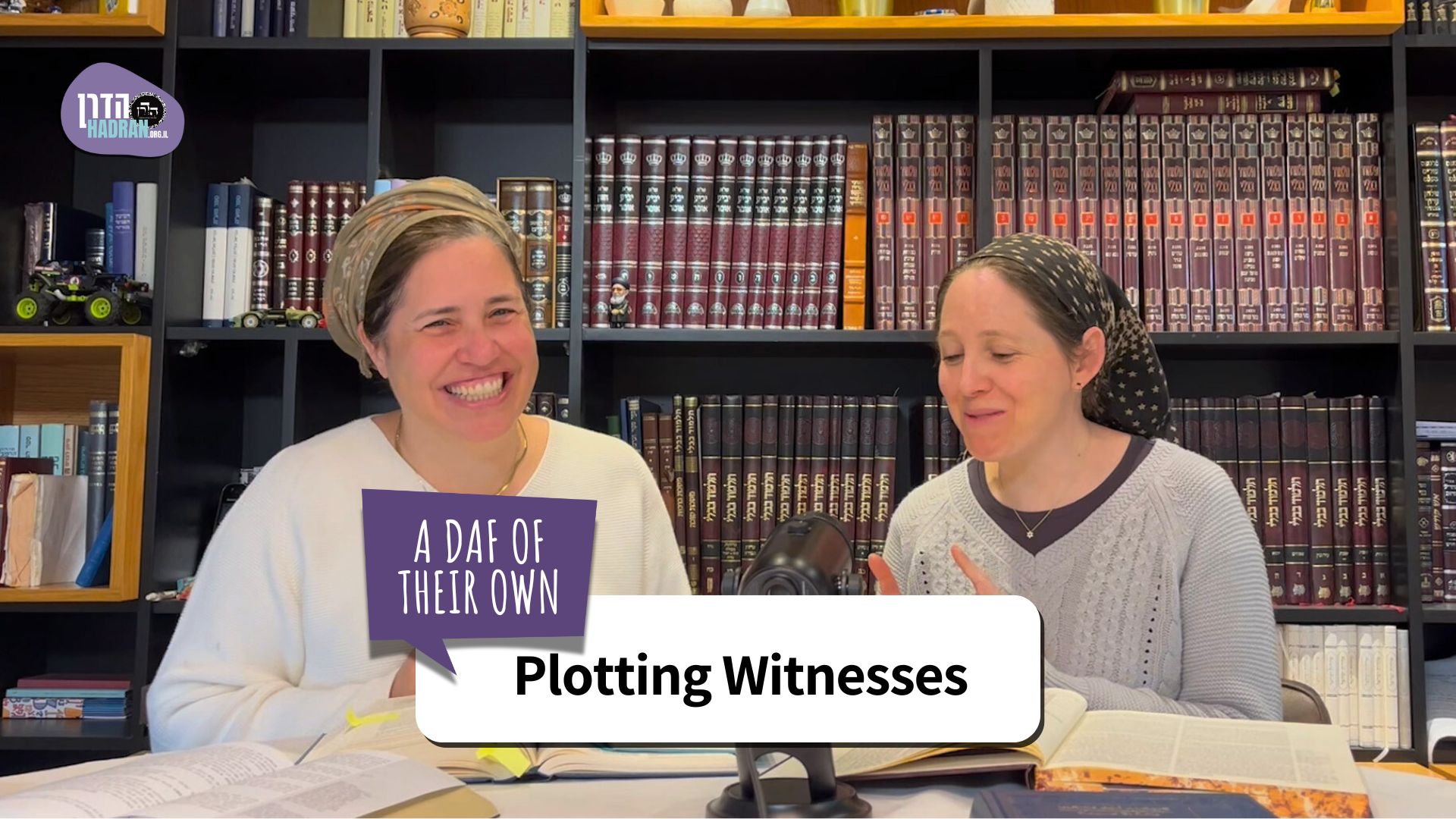
A Daf Of Their Own – Plotting Witnesses: Understanding Eidim Zomemim

New to Talmud?
Check out our resources designed to help you navigate a page of Talmud – and study at the pace, level and style that fits you.
The Hadran Women’s Tapestry
Meet the diverse women learning Gemara at Hadran and hear their stories.
I had never heard of Daf Yomi and after reading the book, The Weight of Ink, I explored more about it. I discovered that it was only 6 months before a whole new cycle started and I was determined to give it a try. I tried to get a friend to join me on the journey but after the first few weeks they all dropped it. I haven’t missed a day of reading and of listening to the podcast.

Elkins Park, United States
I decided to give daf yomi a try when I heard about the siyum hashas in 2020. Once the pandemic hit, the daily commitment gave my days some much-needed structure. There have been times when I’ve felt like quitting- especially when encountering very technical details in the text. But then I tell myself, “Look how much you’ve done. You can’t stop now!” So I keep going & my Koren bookshelf grows…

Huntington, United States
I LOVE learning the Daf. I started with Shabbat. I join the morning Zoom with Reb Michelle and it totally grounds my day. When Corona hit us in Israel, I decided that I would use the Daf to keep myself sane, especially during the days when we could not venture out more than 300 m from our home. Now my husband and I have so much new material to talk about! It really is the best part of my day!

Hashmonaim, Israel
Retirement and Covid converged to provide me with the opportunity to commit to daily Talmud study in October 2020. I dove into the middle of Eruvin and continued to navigate Seder Moed, with Rabannit Michelle as my guide. I have developed more confidence in my learning as I completed each masechet and look forward to completing the Daf Yomi cycle so that I can begin again!

San Diego, United States
I started learning daf in January, 2020, being inspired by watching the Siyyum Hashas in Binyanei Haumah. I wasn’t sure I would be able to keep up with the task. When I went to school, Gemara was not an option. Fast forward to March, 2022, and each day starts with the daf. The challenge is now learning the intricacies of delving into the actual learning. Hadran community, thank you!

Riverdale, NY, United States
Minnesota, United States
It has been a pleasure keeping pace with this wonderful and scholarly group of women.

Beit Shemesh, Israel
I started learning after the siyum hashas for women and my daily learning has been a constant over the last two years. It grounded me during the chaos of Corona while providing me with a community of fellow learners. The Daf can be challenging but it’s filled with life’s lessons, struggles and hope for a better world. It’s not about the destination but rather about the journey. Thank you Hadran!

אפרת, Israel
I attended the Siyum so that I could tell my granddaughter that I had been there. Then I decided to listen on Spotify and after the siyum of Brachot, Covid and zoom began. It gave structure to my day. I learn with people from all over the world who are now my friends – yet most of us have never met. I can’t imagine life without it. Thank you Rabbanit Michelle.
Raanana, Israel
A beautiful world of Talmudic sages now fill my daily life with discussion and debate.
bringing alive our traditions and texts that has brought new meaning to my life.
I am a מגילת אסתר reader for women . the words in the Mishna of מסכת megillah 17a
הקורא את המגילה למפרע לא יצא were powerful to me.
I hope to have the zchut to complete the cycle for my 70th birthday.

Jerusalem, Israel
Having never learned Talmud before, I started Daf Yomi in hopes of connecting to the Rabbinic tradition, sharing a daily idea on Instagram (@dafyomiadventures). With Hadran and Sefaria, I slowly gained confidence in my skills and understanding. Now, part of the Pardes Jewish Educators Program, I can’t wait to bring this love of learning with me as I continue to pass it on to my future students.

Pennsylvania, United States
Shortly after the death of my father, David Malik z”l, I made the commitment to Daf Yomi. While riding to Ben Gurion airport in January, Siyum HaShas was playing on the radio; that was the nudge I needed to get started. The “everyday-ness” of the Daf has been a meaningful spiritual practice, especial after COVID began & I was temporarily unable to say Kaddish at daily in-person minyanim.

Wynnewood, United States
Geri Goldstein got me started learning daf yomi when I was in Israel 2 years ago. It’s been a challenge and I’ve learned a lot though I’m sure I miss a lot. I quilt as I listen and I want to share what I’ve been working on.

Ottawa, Canada
Since I started in January of 2020, Daf Yomi has changed my life. It connects me to Jews all over the world, especially learned women. It makes cooking, gardening, and folding laundry into acts of Torah study. Daf Yomi enables me to participate in a conversation with and about our heritage that has been going on for more than 2000 years.
Skokie, IL, United States
I started last year after completing the Pesach Sugiyot class. Masechet Yoma might seem like a difficult set of topics, but for me made Yom Kippur and the Beit HaMikdash come alive. Liturgy I’d always had trouble connecting with took on new meaning as I gained a sense of real people moving through specific spaces in particular ways. It was the perfect introduction; I am so grateful for Hadran!

Minnesota, United States
I started learning Dec 2019 after reading “If all the Seas Were Ink”. I found
Daily daf sessions of Rabbanit Michelle in her house teaching, I then heard about the siyum and a new cycle starting wow I am in! Afternoon here in Sydney, my family and friends know this is my sacred time to hide away to live zoom and learn. Often it’s hard to absorb and relate then a gem shines touching my heart.

Dover Heights, Australia
I began Daf Yomi with the last cycle. I was inspired by the Hadran Siyum in Yerushalayim to continue with this cycle. I have learned Daf Yomi with Rabanit Michelle in over 25 countries on 6 continents ( missing Australia)

Silver Spring, MD, United States
I was moved to tears by the Hadran Siyyum HaShas. I have learned Torah all my life, but never connected to learning Gemara on a regular basis until then. Seeing the sheer joy Talmud Torah at the siyyum, I felt compelled to be part of it, and I haven’t missed a day!
It’s not always easy, but it is so worthwhile, and it has strengthened my love of learning. It is part of my life now.

Beit Shemesh, Israel
See video

Raanana, Israel
I started the daf at the beginning of this cycle in January 2020. My husband, my children, grandchildren and siblings have been very supportive. As someone who learned and taught Tanach and mefarshim for many years, it has been an amazing adventure to complete the six sedarim of Mishnah, and now to study Talmud on a daily basis along with Rabbanit Michelle and the wonderful women of Hadran.

Jerusalem, Israel
Makkot 3
מַאי נִיהוּ, דְּלֹא עָשׂוּ מַעֲשֶׂה? הַיְינוּ דְּרַבָּה! אֵימָא: ״וְכֵן אָמַר רַב נַחְמָן״.
The Gemara is puzzled by this: What is the meaning of the statement: The money remains in the possession of the owner? It means that they did not perform an action. That is identical to the reasoning of Rabba, and it is not an additional explanation. The Gemara emends the formulation of the presentation of the statement. Say: And likewise Rav Naḥman says: Know that it is so, as the money remains in the possession of the owner. Rav Naḥman is not disagreeing with Rabba; he merely formulates the statement differently.
אָמַר רַב יְהוּדָה אָמַר רַב: עֵד זוֹמֵם מְשַׁלֵּם לְפִי חֶלְקוֹ. מַאי ״מְשַׁלֵּם לְפִי חֶלְקוֹ״? אִילֵּימָא דְּהַאי מְשַׁלֵּם פַּלְגָא וְהַאי מְשַׁלֵּם פַּלְגָא, תְּנֵינָא: מְשַׁלְּשִׁין בְּמָמוֹן, וְאֵין מְשַׁלְּשִׁין בְּמַלְקוֹת!
§ Apropos the statement of Rabbi Akiva in the baraita, Rav Yehuda says that Rav says: A conspiring witness pays according to his share. The Gemara asks: What is the meaning of: Pays according to his share? If we say that it means that this witness pays half of the sum that the set conspired to render another liable to pay with their testimony, and that witness pays the other half, we already learned this in a mishna (5a): When punishing conspiring witnesses, one divides the punishment of money among them, but one does not divide the punishment of lashes among them; each receives the full thirty-nine lashes.
אֶלָּא: כְּגוֹן דְּאִיתַּזּוּם חַד מִינַּיְיהוּ, דִּמְשַׁלֵּם פַּלְגָא דִידֵיהּ, וּמִי מְשַׁלֵּם? וְהָא תַּנְיָא: אֵין עֵד זוֹמֵם מְשַׁלֵּם מָמוֹן עַד שֶׁיִּזּוֹמּוּ שְׁנֵיהֶם!
Rather, the Gemara explains that the expression: Pays according to his share, means that in a case where only one of the set was rendered a conspiring witness, the halakha is that he pays his half of the sum. The Gemara asks: And does he pay at all in that case? But isn’t it taught in a baraita: A conspiring witness pays money only when both were rendered conspiring witnesses? If only one was rendered a conspiring witness, he does not pay.
אָמַר רָבָא: בְּאוֹמֵר ״עֵדוּת שֶׁקֶר הֵעַדְתִּי״. כֹּל כְּמִינֵּיהּ? כֵּיוָן שֶׁהִגִּיד שׁוּב אֵינוֹ חוֹזֵר וּמַגִּיד!
Rava says: The statement is not referring to a case of conspiring witnesses; rather, Rav’s statement applies to the case of one who says: It was false testimony that I testified. The Gemara asks: Is it in his power to have this statement accepted by the court? That runs counter to the principle: Once a witness stated his testimony he may not then state a revision of that testimony.
אֶלָּא בְּאוֹמֵר: ״הֵעַדְנוּ וְהוּזַמְנוּ בְּבֵית דִּין פְּלוֹנִי״. כְּמַאן – דְּלָא כְּרַבִּי עֲקִיבָא, דְּאִי כְּרַבִּי עֲקִיבָא, הָא אָמַר: אַף אֵינוֹ מְשַׁלֵּם עַל פִּי עַצְמוֹ!
The Gemara answers: Rather, Rav’s statement applies to the case of one who says: We testified and were rendered conspiring witnesses in such and such a court. Since he was already convicted as a conspiring witness, it is as though he is admitting an obligation to give monetary restitution, and he is therefore liable to pay his share. The Gemara asks: In accordance with whose opinion is this halakha? It is not in accordance with the opinion of Rabbi Akiva, since if it were in accordance with the opinion of Rabbi Akiva, doesn’t he say: A conspiring witness also does not pay based on his own admission?
אֶלָּא בְּאוֹמֵר ״הֵעַדְנוּ וְהוּזַמְנוּ בְּבֵית דִּין פְּלוֹנִי וְחוּיַּיבְנוּ מָמוֹן״.
The Gemara answers: Rather, Rav’s statement applies to the case of one who says: We testified and were rendered conspiring witnesses in such and such a court and we were rendered liable to pay a specific sum of money. In that scenario, Rabbi Akiva would concede that one pays on the basis of his own admission. Once the court rendered him liable to pay a specific sum, his admission is not that he is liable to pay a fine, in which case he would be exempt. Once the court actually instructed them to pay, the debt has the status of any other monetary restitution, and one does pay monetary restitution based on his own admission.
סָלְקָא דַּעְתָּךְ אָמֵינָא: כֵּיוָן דִּלְחַבְרֵיהּ לָא מָצֵי מְחַיֵּיב לֵיהּ, אִיהוּ נָמֵי לָא מִיחַיַּיב, קָא מַשְׁמַע לַן.
The Gemara explains the novel element in Rav’s statement: It might enter your mind to say that since he is unable to render his fellow witness liable to pay based on his admission, as only the testimony of two witnesses is capable of doing so, he too is not liable to pay based on that admission. To counter this, Rav teaches us that his admission that he owes money renders him liable to pay.
מַתְנִי׳ ״מְעִידִין אָנוּ אֶת אִישׁ פְּלוֹנִי שֶׁגֵּירַשׁ אֶת אִשְׁתּוֹ וְלֹא נָתַן לָהּ כְּתוּבָתָהּ״, וַהֲלֹא בֵּין הַיּוֹם וּבֵין לְמָחָר, סוֹפוֹ לִיתֵּן לָהּ כְּתוּבָתָהּ.
MISHNA: In the case of witnesses who said: We testify with regard to a man called so-and-so that he divorced his wife and did not give her payment of her marriage contract, and they were then rendered conspiring witnesses, the question arises with regard to the manner in which the sum of their payment is calculated. It is not possible to render the witnesses liable to pay the entire sum of the marriage contract, as they can claim: But isn’t it so that either today or tomorrow, i.e., at some point in the future, he may divorce his wife or die and ultimately he will be liable to give her payment of her marriage contract? That being the case, the witnesses did not conspire to render him liable to pay a sum that he would otherwise not be liable to pay.
אוֹמְדִין כַּמָּה אָדָם רוֹצֶה לִיתֵּן בִּכְתוּבָּתָהּ שֶׁל זוֹ, שֶׁאִם נִתְאַלְמְנָה אוֹ נִתְגָּרְשָׁה, וְאִם מֵתָה, יִירָשֶׁנָּה בַּעֲלָהּ.
The sum of their payment is calculated as follows: The court assesses how much money another person would be willing to give in order to purchase the rights to this woman’s marriage contract, cognizant of the uncertainty that if she was widowed or divorced the purchaser will receive payment of the marriage contract but if she dies, her husband will inherit from her, and the one who purchased her marriage contract will receive nothing.
גְּמָ׳ כֵּיצַד שָׁמִין? אָמַר רַב חִסְדָּא: בַּבַּעַל.
GEMARA: The mishna establishes that the payment of the conspiring witnesses is calculated based on the sum that one would be willing to pay for rights to payment of the marriage contract, taking into consideration the uncertainty whether he will ultimately receive that payment. The Gemara asks: How does the court assess that sum? Rav Ḥisda says: One calculates the sum in terms of the husband: How much would one be willing to pay for the husband’s rights to the marriage contract based on the likelihood that his wife will die first and he will inherit from her?
רַב נָתָן בַּר אוֹשַׁעְיָא אוֹמֵר: בָּאִשָּׁה.
Rav Natan bar Oshaya says: One calculates the sum in terms of the wife: How much would one be willing to pay for the wife’s rights to the marriage contract based on the likelihood that the husband will die first or divorce her?
אָמַר רַב פָּפָּא: בָּאִשָּׁה וּבִכְתוּבָּתָהּ.
Rav Pappa says: One calculates the sum in terms of the wife, as Rav Natan bar Oshaya said, and the assessment is done in terms of the sum of her marriage contract. One does not include in the calculation any usufruct property that the wife brought with her into the marriage, the profits of which belong to the husband, despite the fact that as a result of the testimony of the conspiring witnesses the husband would lose his rights to those profits. One calculates the sum only in terms of her marriage contract.
מַתְנִי׳ ״מְעִידִין אָנוּ בְּאִישׁ פְּלוֹנִי שֶׁהוּא חַיָּיב לַחֲבֵירוֹ אֶלֶף זוּז, עַל מְנָת לִיתְּנָן לוֹ מִכָּאן וְעַד שְׁלֹשִׁים יוֹם״, וְהוּא אוֹמֵר, ״מִכָּאן וְעַד עֶשֶׂר שָׁנִים״.
MISHNA: In the case of witnesses who said: We testify with regard to a man called so-and-so that he owes another person one thousand dinars that he borrowed on the condition that he is to give the money back to him from now until thirty days have passed, and the borrower says that he borrowed that sum but it was on the condition that he is to give the money back to him from now until ten years have passed, and they were rendered conspiring witnesses, here too, it is not possible to render the witnesses liable to pay the entire sum.
אוֹמְדִים כַּמָּה אָדָם רוֹצֶה לִיתֵּן וְיִהְיוּ בְּיָדוֹ אֶלֶף זוּז, בֵּין נוֹתְנָן מִכָּאן וְעַד שְׁלֹשִׁים יוֹם, בֵּין נוֹתְנָן מִכָּאן וְעַד עֶשֶׂר שָׁנִים.
Rather, the court estimates how much money a person would be willing to give so that he would keep a loan of one thousand dinars in his possession, and one calculates the difference between that sum in a situation where he would be required to give the money back from now until thirty days have passed, and that same sum in a situation where he would be required to give the money back from now until ten years have passed. That difference is the sum that the testimony of the conspiring witnesses sought to have the borrower lose; therefore, it is the sum that they must pay.
גְּמָ׳ אָמַר רַב יְהוּדָה אָמַר שְׁמוּאֵל: הַמַּלְוֶה אֶת חֲבֵירוֹ לְעֶשֶׂר שָׁנִים – שְׁבִיעִית מְשַׁמַּטְתּוֹ.
GEMARA: Rav Yehuda says that Shmuel says: In the case of one who lends money to another for a period of ten years, the Sabbatical Year abrogates the debt (see Deuteronomy 15:1–11) and absolves the borrower of the obligation to repay it.
וְאַף עַל גַּב דְּהַשְׁתָּא לָא קָרֵינַן בֵּיהּ ״לֹא יִגֹּשׂ״, סוֹף אָתֵי לִידֵי ״לֹא יִגֹּשׂ״.
And even though now, during the Sabbatical Year, we do not yet read concerning his loan the prohibition: “He shall not exact it of his neighbor and his brother, because the Lord’s release has been proclaimed” (Deuteronomy 15:2), as the time for repayment has not yet arrived, ultimately, when the time for repayment arrives, he will come to a situation where the prohibition “He shall not exact it” applies. Therefore, like all other debts it is abrogated by the Sabbatical Year.
מֵתִיב רַב כָּהֲנָא: אוֹמְדִים כַּמָּה אָדָם רוֹצֶה לִיתֵּן וְיִהְיוּ אֶלֶף זוּז בְּיָדוֹ בֵּין לִיתֵּן מִכָּאן וְעַד שְׁלֹשִׁים יוֹם, וּבֵין לִיתֵּן מִכָּאן וְעַד עֶשֶׂר שָׁנִים. וְאִי אָמְרַתְּ שְׁבִיעִית מְשַׁמַּטְתּוֹ – כּוּלְּהוּ נָמֵי בָּעֵי שַׁלּוֹמֵי לֵיהּ!
Rav Kahana raises an objection from the mishna: Rather, the court estimates how much money a person would be willing to give so that he would keep a loan of one thousand dinars in his possession, and one calculates the difference between that sum in a situation where he would be required to give the money back from now until thirty days have passed, and that same sum in a situation where he would be required to give the money back from now until ten years have passed. And if you say that the Sabbatical Year abrogates a ten-year loan, the conspiring witnesses need to pay the borrower the entire sum of the loan as well, as their testimony sought to render the borrower liable to pay a debt that by right should be entirely forgiven.
אָמַר רָבָא: הָכָא בְּמַאי עָסְקִינַן – בְּמַלְוֶה עַל הַמַּשְׁכּוֹן, וּבְמוֹסֵר שְׁטָרוֹתָיו לְבֵית דִּין. דִּתְנַן: הַמַּלְוֶה עַל הַמַּשְׁכּוֹן, וְהַמּוֹסֵר שְׁטָרוֹתָיו לְבֵית דִין – אֵין מַשְׁמִיטִין.
Rava said: What are we dealing with here in our mishna? We are dealing with debts that are not abrogated with the passing of the Sabbatical Year, e.g., in the case of one who lends money on the basis of collateral, or in the case of one who transfers his promissory notes to the court for collection. As we learned in a mishna (Shevi’it 10:2): In the cases of one who lends money on the basis of collateral and one who transfers his promissory notes to the court for collection, the Sabbatical Year does not abrogate those loans. In those cases, the debt would not have been forgiven during the Sabbatical Year. Therefore, the conspiring witnesses are not liable to pay the entire sum.
אִיכָּא דְּאָמְרִי, אָמַר רַב יְהוּדָה אָמַר שְׁמוּאֵל: הַמַּלְוֶה אֶת חֲבֵירוֹ לְעֶשֶׂר שָׁנִים – אֵין שְׁבִיעִית מְשַׁמַּטְתּוֹ. וְאַף עַל גַּב דְּאָתֵי לִידֵי ״לֹא יִגֹּשׂ״, הַשְׁתָּא מִיהָא לָא קָרֵינַן בֵּיהּ ״לֹא יִגֹּשׂ״.
There are those who state another version of this discussion: Rav Yehuda says that Shmuel says: In the case of one who lends money to another for a period of ten years, the Sabbatical Year does not abrogate the debt. And even though when the time for repayment arrives he will come to a situation where the prohibition “He shall not exact it” applies, now, in any event, during the Sabbatical Year we do not yet read the prohibition of “He shall not exact it” concerning his loan.
אָמַר רַב כָּהֲנָא: אַף אֲנַן נָמֵי תְּנֵינָא: אוֹמְדִין כַּמָּה אָדָם רוֹצֶה לִיתֵּן וְיִהְיוּ אֶלֶף זוּז בְּיָדוֹ, בֵּין לִיתֵּן מִכָּאן וְעַד שְׁלֹשִׁים יוֹם, וּבֵין לִיתֵּן מִכָּאן וְעַד עֶשֶׂר שָׁנִים. וְאִי אָמְרַתְּ שְׁבִיעִית מְשַׁמַּטְתּוֹ – כּוּלְּהוּ נָמֵי בָּעוּ שַׁלּוֹמֵי לֵיהּ.
Rav Kahana says: We learn this ruling in the mishna as well: The court estimates how much money a person would be willing to give so that a loan of one thousand dinars will be in his possession, and one calculates the difference between that sum in a situation where he would be required to give the money back from now until thirty days have passed, and that sum in a situation where he would be required to give the money back from now until ten years have passed. And if you say that the Sabbatical Year abrogates a ten-year loan, then the conspiring witnesses should pay the borrower the entire sum of the loan as well, as their testimony sought to render the borrower liable to pay a debt that by right should be entirely forgiven. The fact that they are not required to pay the entire sum proves that a ten-year loan is not abrogated by the Sabbatical Year.
אָמַר רָבָא: הָכָא בְּמַאי עָסְקִינַן – בְּמַלְוֶה עַל הַמַּשְׁכּוֹן, וּבְמוֹסֵר שְׁטָרוֹתָיו לְבֵית דִּין, דִּתְנַן: הַמַּלְוֶה עַל הַמַּשְׁכּוֹן, וְהַמּוֹסֵר שְׁטָרוֹתָיו לְבֵית דִין – אֵין מַשְׁמִיטִין.
Rava said: No proof may be cited from there, as what are we dealing with here in our mishna? We are dealing with debts that are not abrogated with the passing of the Sabbatical Year, e.g., in the case of one who lends money on the basis of collateral, or in the case of one who transfers his promissory notes to the court for collection. As we learned in a mishna (Shevi’it 10:2): In the cases of one who lends money on the basis of collateral and one who transfers his promissory notes to the court for collection, the Sabbatical Year does not abrogate those loans. In those cases, the debt would not have been forgiven during the Sabbatical Year. Therefore, the conspiring witnesses are not liable to pay the entire sum.
וְאָמַר רַב יְהוּדָה אָמַר שְׁמוּאֵל: הָאוֹמֵר לַחֲבֵירוֹ ״עַל מְנָת שֶׁלֹּא תְּשַׁמְּטֵנִי שְׁבִיעִית״ – שְׁבִיעִית מְשַׁמֶּטֶת. לֵימָא קָסָבַר שְׁמוּאֵל: מַתְנֶה עַל מָה שֶׁכָּתוּב בַּתּוֹרָה הוּא, וְכׇל הַמַּתְנֶה עַל מָה שֶׁכָּתוּב בַּתּוֹרָה – תְּנָאוֹ בָּטֵל?
§ And Rav Yehuda says that Shmuel says with regard to abrogation of debts: In the case of one who says to another the stipulation: I am lending you money on the condition that the Sabbatical Year will not abrogate my debt, even if the borrower agrees to that stipulation, the Sabbatical Year abrogates the debt. The Gemara suggests: Let us say that Shmuel holds that the lender who proposed that stipulation is one who stipulates counter to that which is written in the Torah, and in the case of anyone who stipulates counter to that which is written in the Torah, his stipulation is voided.
וְהָא אִיתְּמַר, הָאוֹמֵר לַחֲבֵירוֹ: ״עַל מְנָת שֶׁאֵין לְךָ עָלַי אוֹנָאָה״, רַב אוֹמֵר: יֵשׁ לוֹ עָלָיו אוֹנָאָה, וּשְׁמוּאֵל אוֹמֵר: אֵין לוֹ עָלָיו אוֹנָאָה.
The Gemara asks: But wasn’t it stated that there is a dispute between Rav and Shmuel concerning this matter? In the case of one who says to another the stipulation: I am selling you this item on the condition that you have no claim of exploitation against me if I charge you more than the item is worth, Rav says: The buyer has a claim of exploitation against him, as one cannot stipulate to waive the halakha of exploitation. And Shmuel says: He has no claim of exploitation against him. Apparently, according to Shmuel, one may stipulate to waive a Torah law in monetary matters, as it is tantamount to waiving his rights to money due him and it is not in effect counter to that which is written in the Torah.
הָא אִיתְּמַר עֲלַהּ, אָמַר רַב עָנָן: לְדִידִי מִפָּרְשָׁא לֵיהּ מִינֵּיהּ דִּשְׁמוּאֵל, ״עַל מְנָת שֶׁאֵין לְךָ עָלַי אוֹנָאָה״ – אֵין לוֹ עָלָיו אוֹנָאָה. ״עַל מְנָת שֶׁאֵין בּוֹ אוֹנָאָה״ – הֲרֵי יֵשׁ בּוֹ אוֹנָאָה.
The Gemara answers: Wasn’t it stated with regard to that halakha that Rav Anan said: It was explained to me personally by Shmuel himself that the matter depends on the formulation of the stipulation. If the seller stipulates: On the condition that you have no claim of exploitation against me, then the buyer has no claim of exploitation against him, as it is as though he is waiving his right to money due him. But if the seller stipulates: On the condition that there is no prohibition of exploitation in this transaction, there is a prohibition of exploitation in that transaction.
הָכָא נָמֵי, ״עַל מְנָת שֶׁלֹּא תְּשַׁמְּטֵנִי בַּשְּׁבִיעִית״ – אֵין שְׁבִיעִית מְשַׁמַּטְתּוֹ. ״עַל מְנָת שֶׁלֹּא תְּשַׁמְּטֵנִי שְׁבִיעִית״ – שְׁבִיעִית מְשַׁמַּטְתּוֹ.
Here too, if the lender stipulated to the borrower: I am lending you money on the condition that you will not abrogate the debt during the Sabbatical Year, the Sabbatical Year does not abrogate his debt, as the borrower is merely waiving money due him. But if he stipulated: On the condition that the Sabbatical Year will not abrogate my debt, the Sabbatical Year abrogates the debt, as that is a stipulation to nullify the halakha of the Sabbatical Year concerning that loan, and one may not stipulate counter to that which is written in the Torah.
תָּנָא: הַמַּלְוֶה אֶת חֲבֵירוֹ סְתָם – אֵינוֹ רַשַּׁאי לְתוֹבְעוֹ פָּחוֹת מִשְּׁלֹשִׁים יוֹם. סְבַר רַבָּה בַּר בַּר חַנָּה קַמֵּיהּ דְּרַב לְמֵימַר: הָנֵי מִילֵּי בְּמִלְוֶה בִּשְׁטָר, דְּלָא עֲבִד אִינִישׁ דְּטָרַח דְּכָתֵב שְׁטָר בְּצִיר מִתְּלָתִין יוֹמִין, אֲבָל מִלְוֶה עַל פֶּה – לָא. אֲמַר לֵיהּ רַב: הָכִי אָמַר חֲבִיבִי: אֶחָד הַמַּלְוֶה בִּשְׁטָר וְאֶחָד הַמַּלְוֶה עַל פֶּה.
§ Apropos the loan discussed in the mishna, the Gemara cites a Sage who taught: One who lends money to another for an unspecified period is not permitted to demand repayment from him less than thirty days after the loan took place. The Gemara comments: Rabba bar bar Ḥana, who was seated before Rav, thought to say: This statement applies only with regard to a loan with a promissory note, as a person does not typically exert himself to write a promissory note for a loan whose duration is less than thirty days. But with regard to a loan by oral agreement, no, it may be for less than thirty days. Rav said to him: This is what my uncle, Rabbi Ḥiyya, said: This halakha applies to both one who lends with a promissory note and one who lends by oral agreement. If one fails to establish a time for repayment of the loan, he may not demand repayment until thirty days have passed since the loan was given.
תַּנְיָא נָמֵי הָכִי: הַמַּלְוֶה אֶת חֲבֵירוֹ סְתָם – אֵינוֹ רַשַּׁאי לְתוֹבְעוֹ פָּחוֹת מִשְּׁלֹשִׁים יוֹם, אֶחָד הַמַּלְוֶה בִּשְׁטָר וְאֶחָד הַמַּלְוֶה עַל פֶּה.
The Gemara notes: That is also taught in a baraita: One who lends money to another for an unspecified period is not permitted to demand repayment from him less than thirty days after the loan took place, and that is the case with regard to both one who lends with a promissory note and one who lends by oral agreement.
אֲמַר לֵיהּ שְׁמוּאֵל לְרַב מַתְנָה: לָא תִּיתֵּיב אַכַּרְעָיךָ עַד דִּמְפָרְשַׁתְּ לָהּ לְהָא שְׁמַעְתָּא: מְנַָא הָא מִילְּתָא דַאֲמוּר רַבָּנַן: הַמַּלְוֶה אֶת חֲבֵירוֹ סְתָם אֵינוֹ רַשַּׁאי לְתוֹבְעוֹ פָּחוֹת מִשְּׁלֹשִׁים יוֹם, אֶחָד הַמַּלְוֶה בִּשְׁטָר וְאֶחָד הַמַּלְוֶה עַל פֶּה?
The Gemara relates: Shmuel said to Rav Mattana: You shall not sit on your feet until you have explained this halakha; explain it immediately. From where is this matter that the Sages stated derived: One who lends money to another for an unspecified period is not permitted to demand repayment from him less than thirty days after the loan took place, and that is the case with regard to both one who lends with a promissory note and one who lends by oral agreement?
אֲמַר לֵיהּ: דִּכְתִיב ״קָרְבָה שְׁנַת הַשֶּׁבַע שְׁנַת הַשְּׁמִטָּה״, מִמַּשְׁמַע שֶׁנֶּאֱמַר ״קָרְבָה שְׁנַת הַשֶּׁבַע״, אֵינִי יוֹדֵעַ שֶׁהִיא שְׁנַת שְׁמִטָּה? אֶלָּא מָה תַּלְמוּד לוֹמַר ״שְׁנַת הַשְּׁמִטָּה״? לוֹמַר לָךְ: [יֵשׁ] שְׁמִטָּה אַחֶרֶת שֶׁהִיא כָּזוֹ, וְאֵיזוֹ – זוֹ הַמַּלְוֶה אֶת חֲבֵירוֹ סְתָם, שֶׁאֵינוֹ רַשַּׁאי לְתוֹבְעוֹ בְּפָחוֹת מִשְּׁלֹשִׁים יוֹם. דְּאָמַר מָר: שְׁלֹשִׁים יוֹם בַּשָּׁנָה חָשׁוּב שָׁנָה.
Rav Mattana said to him that it is derived from a verse, as it is written: “The seventh year, the Sabbatical Year, approaches” (Deuteronomy 15:9). The question arises: From the fact that it is stated: “The seventh year…approaches,” don’t I know that it is the Sabbatical Year? Rather, why must the verse state: “The Sabbatical Year”? It is to tell you that there is another period that is like the Sabbatical Year; and which period is it? It is the period in the case of one who lends money to another for an unspecified period, who is not permitted to demand repayment from him less than thirty days after the loan took place. During that period, as during the Sabbatical Year, one may not exact payment for his loan. In what sense can that period be characterized as a year? It is as the Master said: Thirty days in a year are considered a year.
וְאָמַר רַב יְהוּדָה אָמַר רַב: הַפּוֹתֵחַ בֵּית הַצַּוָּאר בְּשַׁבָּת – חַיָּיב חַטָּאת. מַתְקֵיף לָהּ רַב כָּהֲנָא: וְכִי מָה בֵּין זֶה לִמְגוּפַת חָבִית? אֲמַר לֵיהּ: זֶה חִבּוּר, וְזֶה אֵינוֹ חִבּוּר.
§ And Rav Yehuda says that Rav says: One who unwittingly opens a new neck opening in a shirt on Shabbat by cutting through the fabric and threads that kept it closed is liable to bring a sin-offering. By creating the opening he renders the shirt fit to wear, thereby fashioning a utensil on Shabbat. Rav Kahana objects to this: And what is the difference between this and the stopper of a wine barrel, which the Sages permitted piercing on Shabbat in order to serve wine to guests? There too, by piercing the stopper he fashions a utensil. Rava said to him: The cases are not comparable: In this case, that of the neck opening of a shirt, the material closing the neck hole is considered a connecting element, i.e., it is an organic part of the weave of the fabric; and in that case, that of the stopper of the barrel, the stopper is not considered a connecting element, as its purpose is to be removed from the barrel.
וְאָמַר רַב יְהוּדָה אָמַר רַב: שְׁלֹשֶׁת לוּגִּין מַיִם שֶׁנָּפַל לְתוֹכָן קוּרְטוֹב שֶׁל יַיִן, וּמַרְאֵיהֶן כְּמַרְאֵה יַיִן, וְנָפְלוּ לְמִקְוֶה – לֹא פְּסָלוּהוּ. מַתְקֵיף לָהּ רַב כָּהֲנָא: וְכִי מָה בֵּין זֶה לְמֵי צֶבַע? דִּתְנַן: רַבִּי יוֹסֵי אוֹמֵר: מֵי צֶבַע פּוֹסְלִין אֶת הַמִּקְוֶה בִּשְׁלֹשֶׁת לוּגִּין. אֲמַר לֵיהּ רָבָא: הָתָם ״מַיָּא דְצִבְעָא״ מִקְּרֵי, הָכָא ״חַמְרָא מְזִיגָא״ מִקְּרֵי.
§ And Rav Yehuda says that Rav says: In the case of three log of drawn water into which one sixty-fourth of a log [kortov] of wine fell, and the color of the water is like the color of wine, and that liquid fell into a ritual bath containing less than forty se’a, although the Sages ruled that three log of drawn water invalidate a ritual bath, in this case the liquid does not invalidate it, because the halakhic status of the liquid that fell into the ritual bath is that of wine, and wine does not invalidate a ritual bath. Rav Kahana objects to this: And what is the difference between this case of water into which wine fell and the case of dye water, as we learned in a mishna (Mikvaot 7:3): Rabbi Yosei says: Dye water in the amount of three log invalidates a ritual bath? The wine, like the dye, colors the water. Rava said to him: The difference is that there the mixture is called dye water, where the water maintains the status of water; here it is called diluted wine.
וְהָתָנֵי רַבִּי חִיָּיא: הוֹרִידוּ אֶת הַמִּקְוֶה! אָמַר רָבָא: לָא קַשְׁיָא, הָא רַבִּי יוֹחָנָן בֶּן נוּרִי, הָא רַבָּנַן, דִּתְנַן: שְׁלֹשֶׁת לוּגִּין מַיִם
The Gemara asks with regard to Rav’s statement: But didn’t Rabbi Ḥiyya teach that three log of water into which a kortov of wine fell reduce the ritual bath into a state where it is no longer valid? Rava said that this baraita is not difficult, as this statement of Rav is in accordance with the opinion of Rabbi Yoḥanan ben Nuri, and that baraita taught by Rabbi Ḥiyya is in accordance with the opinion of the Rabbis, who disagree with Rabbi Yoḥanan ben Nuri. As we learned in a mishna (Mikvaot 7:5): In a case where there are three log of drawn water

