Search

Bava Batra 109

Want to dedicate learning? Get started here:

podcast placeholder

0:00
0:00


Summary

Today’s daf is sponsored by Gitta and David Neufeld in loving memory of Meir ben Aryeh Leib HaLevi, Marvin Stokar. “Although his title of Zaidy was an honorary one, he and (lehavdil bein chayim lechayim) Bubby Fran were – and continue to be – an important part of our family. His love of all learning and of Eretz Yisrael were surpassed only by his love and care for our dear Bubby Fran. We are so grateful that we have now followed in their footsteps and made Aliya. May he continue to be a meilitz yosher for her and all of us!”

The Gemara raises questions on the braita from which they derived the father inherits after the children, before the brothers, suggesting that the braita could have derived it differently. Why doesn’t the drasha teach that the father inherits first, before the son or that the brothers inherit before the father? A different braita is brought which derives from a different source the same law that the father inherits if there are no children and before the brothers and paternal uncle. The Gemara questions the drasha as one can say otherwise – that the brother comes before the father and not the reverse? all of the above questions are answered.

Each of the two braitot used to prove that the father inherits after the children of the deceased uses a verse not used by the other. What does the author or each braita learn from the other verse?

Today’s daily daf tools:

Bava Batra 109

דְּהָכָא תַּרְתֵּי, וְהָכָא חֲדָא!

from the fact that here, there are two examples of the superiority of a son, designation and an ancestral field, and here, there is only one demonstration of the superiority of a brother, levirate marriage?

שְׂדֵה אֲחוּזָּה גּוּפַהּ, מֵהַאי טַעְמָא הוּא; דְּקָא קַיְימָא לֵיהּ לְתַנָּא – כְּלוּם יֵשׁ יִבּוּם אֶלָּא בְּמָקוֹם שֶׁאֵין בֵּן, הָא יֵשׁ בֵּן אֵין יִבּוּם.

The Gemara answers: With regard to an ancestral field itself, the tanna establishes his ruling from this same reason: Is there levirate marriage except in a case where there is no son? In a case where there is a son, there is no levirate marriage. The determination that the redemption of the ancestral field by a son is in place of the redemption of the field by the father, whereas the redemption of the field by a brother is not, is based on the reasoning that the halakha of levirate marriage is not an indication that a brother is a closer relative than a son. Therefore, the halakha of an ancestral field cannot be regarded as a second example of the son’s superiority, as it stems from the first example, that of levirate marriage.

אֵימָא: ״שְׁאֵרוֹ״ – זֶה הָאָב, מְלַמֵּד שֶׁהָאָב קוֹדֵם לַבַּת. יָכוֹל יַקְדִּים לַבֵּן? תַּלְמוּד לוֹמַר: ״הַקָּרוֹב״ – קָרוֹב קָרוֹב קוֹדֵם!

The Gemara suggests an alternative derivation: Why should the father of the deceased inherit before only the brothers? Say that he should inherit before the daughter of the deceased as well by interpreting the verse as follows: “His kinsman” (Numbers 27:11), this is referring to the father, and the Torah teaches that the father precedes the daughter of the deceased in inheriting from him. One might have thought that the father of the deceased should precede the son of the deceased in inheriting from him. The verse therefore states: “Next [hakkarov] to him,” teaching that the closer [karov] one is to the deceased, the earlier one is in the order of inheritance.

כֵּיוָן דִּלְעִנְיַן יִבּוּם – בֵּן וּבַת כִּי הֲדָדֵי נִינְהוּ; לְעִנְיַן נַחֲלָה נָמֵי, בֵּן וּבַת כִּי הֲדָדֵי נִינְהוּ.

This suggestion is rejected: Since with regard to the matter of levirate marriage a son and a daughter are equivalent, as levirate marriage is not performed if the deceased had either a son or a daughter, it stands to reason that with regard to the matter of inheritance as well, a son and a daughter are equivalent in that the father does not precede the daughter.

וְאֵימָא: ״שְׁאֵרוֹ״ – זֶה הָאָב, מְלַמֵּד שֶׁהָאָב קוֹדֵם לַאֲחֵי הָאָב. יָכוֹל יַקְדִּים לָאַחִין? תַּלְמוּד לוֹמַר: ״הַקָּרוֹב״ – קָרוֹב קָרוֹב קוֹדֵם!

The Gemara suggests an alternative derivation: Why should the father of the deceased inherit before the brothers of the deceased? Say that he should inherit only before his own brothers by interpreting the verse as follows: “His kinsman” ( Numbers 27:11), this is referring to the father, and the Torah teaches that the father precedes the father’s brothers in inheriting from the deceased. One might have thought that the father of the deceased should precede the brothers of the deceased in inheriting from him. The verse states: “Next [hakkarov] to him,” teaching that the closer [karov] one is to the deceased, the earlier one is in the order of inheritance.

אַחֵי הָאָב לָא צְרִיכִי קְרָא; אַחֵי הָאָב מִכֹּחַ מַאן קָא אָתוּ – מִכֹּחַ אָב; קָאֵי אָב, קָא יָרְתִי אַחֵי הָאָב?!

The Gemara responds: A verse is not necessary to teach that the father of the deceased inherits before the father’s brothers, for the following reason: By whose virtue do the father’s brothers come to inherit from the deceased? By virtue of the father, as their right to inherit is a result of their being brothers of the father of the deceased. Could it be that while the father is still alive, his brothers should inherit? The Gemara therefore concludes that the father precedes the brothers of the deceased.

וְהָא קְרָאֵי לָאו הָכִי כְּתִיבִי – דִּכְתִיב: ״וְאִם אֵין אַחִים לְאָבִיו וְגוֹ׳״! קְרָאֵי שֶׁלֹּא כְּסִדְרָן כְּתִיבִי.

The Gemara challenges: But the verses are not written that way, as it is written: “And if he has no brothers, then you shall give his inheritance to his father’s brothers” (Numbers 27:10), and only later is it written: “And if his father has no brothers, then you shall give his inheritance to his kinsman who is next to him” (Numbers 27:11), indicating that the father, whose right to inherit is derived from the term “kinsman,” inherits only after the brothers of the deceased and his own brothers. The Gemara explains: The verses are not written in order, since as explained earlier, it is not reasonable that the father’s brothers inherit before the father. Therefore, it must be that the inheritance of the father is not written in its proper place, and he may inherit even before the brothers of the deceased.

וְהַאי תַּנָּא מַיְיתֵי לַהּ מֵהָכָא – דְּתַנְיָא: אֶת זוֹ דָּרַשׁ רַבִּי יִשְׁמָעֵאל בְּרַבִּי יוֹסֵי: ״אִישׁ כִּי יָמוּת וּבֵן אֵין לוֹ וְגוֹ׳״ – בִּמְקוֹם בַּת אַתָּה מַעֲבִיר נַחֲלָה מִן הָאָב, וְאִי אַתָּה מַעֲבִיר נַחֲלָה מִן הָאָב בִּמְקוֹם אַחִין.

§ The Gemara records an additional derivation for the halakha that the father precedes the brothers of the deceased. And this tanna cites it from here, as it is taught in a baraita: Rabbi Yishmael, son of Rabbi Yosei, taught this halakha: It is written: “If a man dies, and has no son, then you shall pass his inheritance to his daughter” (Numbers 27:8). In the rest of the passage the verse employs the phrase “and you shall give.” It is only in this verse that it employs the phrase “and you shall pass.” Based on this, Rabbi Yishmael teaches that in a case where there is a daughter, you pass an inheritance to her from one who appears to have precedence, namely, the father, and by inference, you do not pass the inheritance from the father in a case where there are brothers of the deceased.

וְאֵימָא: בִּמְקוֹם בַּת אַתָּה מַעֲבִיר נַחֲלָה מִן הָאַחִין,

The Gemara asks: But why not say that in a case where there is a daughter, you pass the inheritance to her from the brothers,

וְאִי אַתָּה מַעֲבִיר נַחֲלָה מִן הָאָב אֲפִילּוּ בִּמְקוֹם בַּת! אִם כֵּן, לָא נִכְתּוֹב רַחֲמָנָא ״וְהַעֲבַרְתֶּם״!

but you do not pass an inheritance from the father even in a case where there is a daughter, so that the father precedes the daughter in the order of inheritance? The Gemara answers: If so, the Merciful One would not write: “Then you shall pass the inheritance to his daughter” (Numbers 27:8). This indicates that the logical order of inheritance is being overridden, as the fact that the daughter precedes the brothers of the deceased is due to her being a closer relative of his. It is obvious that the Torah intends that she precede even the father.

וּלְמַאן דְּנָפְקָא לֵיהּ מִ״וְהַעֲבַרְתֶּם״, הַאי ״שְׁאֵרוֹ״ מַאי עָבֵיד לֵיהּ? מִיבְּעֵי לֵיהּ לְכִדְתַנְיָא: ״שְׁאֵרוֹ״ – זוֹ אִשְׁתּוֹ, מְלַמֵּד שֶׁהַבַּעַל יוֹרֵשׁ אֶת אִשְׁתּוֹ.

Having quoted two derivations for the halakha that the father precedes the brothers, the Gemara proceeds to discuss them and asks: And according to the one who derives it from the term: “And you shall pass,” what does he do with this term: “His kinsman,” which was said to refer to the father? The Gemara answers: He requires it for that which is taught in a baraita: “His kinsman.” This is referring to his wife, and the Torah teaches that a husband inherits from his wife.

וּלְמַאן דְּנָפְקָא לֵיהּ מִ״שְּׁאֵרוֹ״, הַאי ״וְהַעֲבַרְתֶּם״ מַאי עָבֵיד לֵיהּ? מִיבְּעֵי לֵיהּ לְכִדְתַנְיָא – רַבִּי אוֹמֵר: בְּכוּלָּן נֶאֱמַר בָּהֶן ״נְתִינָה״, וְכָאן נֶאֶמְרָה בָּהֶן ״הַעֲבָרָה״; שֶׁאֵין לְךָ שֶׁמַּעֲבִיר נַחֲלָה מִשֵּׁבֶט לְשֵׁבֶט אֶלָּא בַּת, הוֹאִיל וּבְנָהּ וּבַעְלָהּ יוֹרְשִׁין אוֹתָהּ.

The Gemara asks: And according to the one who derives it from the term: “His kinsman,” what does he do with this term: “And you shall pass”? He requires it for that which is taught in a baraita, that Rabbi Yehuda HaNasi says: In the context of all of the relatives listed in the passage detailing the laws of inheritance, it is stated concerning them with the terminology of giving, and only here, in the context of daughters, it is stated concerning them with the terminology of passing. This teaches us that you have no one who passes an inheritance of land in Eretz Yisrael from one tribe to another except for a daughter, since her son and husband inherit from her.

וּמִמַּאי דִּ״שְׁאֵרוֹ״ זֶה הָאָב? דִּכְתִיב: ״שְׁאֵר אָבִיךָ הִיא״. אֵימָא: ״שְׁאֵרוֹ״ – זוֹ הָאֵם, דִּכְתִיב: ״שְׁאֵר אִמְּךָ הִיא״!

§ The Gemara returns to discuss the interpretation of the term: “His kinsman” (Numbers 27:11). And from where does one know to derive that with regard to the term: “His kinsman [she’ero],” this is referring to the father, as it is written in the context of forbidden sexual relations: “She is your father’s kinswoman [she’er]” (Leviticus 18:12)? Perhaps one should say instead: “His kinswoman,” this is referring to the mother, as it is also written: “For she is your mother’s kinswoman [she’er]” (Leviticus 18:13).

אָמַר רָבָא, אָמַר קְרָא: ״מִמִּשְׁפַּחְתּוֹ וְיָרַשׁ אֹתָהּ״; מִשְׁפַּחַת אָב קְרוּיָה ״מִשְׁפָּחָה״, מִשְׁפַּחַת אֵם אֵינָהּ קְרוּיָה ״מִשְׁפָּחָה״ – דִּכְתִיב: ״לְמִשְׁפְּחֹתָם לְבֵית אֲבֹתָם״.

Rava said in response that the verse states: “Then you shall give his inheritance to his kinsman who is next to him of his family, and he shall inherit it” (Numbers 27:11), emphasizing that “kinsman” is referring specifically to someone who is of his family, and it is the father’s family that is called one’s family, while one’s mother’s family is not called one’s family. Proof for this is found in another verse, as it is written: “By their families, by their fathers’ houses” (Numbers 1:2).

וּמִשְׁפַּחַת אֵם אֵינָהּ קְרוּיָה ״מִשְׁפָּחָה״?! וְהָא כְּתִיב: ״וַיְהִי נַעַר מִבֵּית לֶחֶם יְהוּדָה מִמִּשְׁפַּחַת יְהוּדָה, וְהוּא לֵוִי, וְהוּא גָר שָׁם״ – הָא גוּפָא קַשְׁיָא; אָמְרַתְּ ״וְהוּא לֵוִי״ – אַלְמָא מִלֵּוִי אָתֵי, ״מִמִּשְׁפַּחַת יְהוּדָה״ – אַלְמָא מִיהוּדָה אָתֵי! אֶלָּא לָאו דַּאֲבוּהּ מִלֵּוִי, וְאִימֵּיהּ מִיהוּדָה? וְקָאָמַר ״מִמִּשְׁפַּחַת יְהוּדָה״!

The Gemara raises a difficulty: And is one’s mother’s family indeed not called one’s family? But it is written in the episode of Micah forming an idol to be worshipped: “And there was a young man of Bethlehem in Judah of the family of Judah who was a Levite, and he sojourned there” (Judges 17:7). The Gemara explains the difficulty: This matter itself is difficult. You said: “Who was a Levite,” as apparently he came from the tribe of Levi, but the verse says: “Of the family of Judah,” so apparently he came from the tribe of Judah. Rather, is it not that his father was from the tribe of Levi and his mother was from the tribe of Judah, and yet the verse says that he was: “Of the family of Judah”? This appears to prove that one’s mother’s family is also called his family.

אָמַר רָבָא בַּר רַב חָנָן: לָא; גַּבְרָא דִּשְׁמֵיהּ לֵוִי. אִי הָכִי, הַיְינוּ דְּקָאָמַר מִיכָה: ״עַתָּה יָדַעְתִּי כִּי יֵיטִיב ה׳ לִי, כִּי הָיָה לִי הַלֵּוִי לְכֹהֵן״? אִין, דְּאִיתְרְמִי לֵיהּ גַּבְרָא דִּשְׁמֵיהּ לֵוִי.

Rava bar Rav Ḥanan said in response: No, the verse speaks of a man whose name was Levi, but his father was of the tribe of Judah. The Gemara asks: If that is so, how is that which Micah said when that man agreed to serve as his priest: “Now I know that the Lord will do me good, seeing that I have a Levite as my priest” (Judges 17:13), understood? It is understood only if he was an actual Levite, not if he was from the tribe of Judah and named Levi. Rava bar Rav Ḥanan responded: Yes, it is understood. Micah understood the fact that a man whose name is Levi happened upon him as an auspicious sign.

וְכִי לֵוִי שְׁמוֹ?! וַהֲלֹא יְהוֹנָתָן שְׁמוֹ, שֶׁנֶּאֱמַר: ״וִיהוֹנָתָן בֶּן גֵּרְשֹׁם בֶּן מְנַשֶּׁה, הוּא וּבָנָיו הָיוּ כֹהֲנִים לְשֵׁבֶט הַדָּנִי״! (אֲמַר לֵיהּ: וְלִיטַעְמָיךְ) וְכִי בֶּן מְנַשֶּׁה הוּא?! וַהֲלֹא בֶּן מֹשֶׁה הוּא, דִּכְתִיב: ״בְּנֵי מֹשֶׁה גֵּרְשׁוֹם וֶאֱלִיעֶזֶר״!

The Gemara asks further: But is it so that his name was indeed Levi; but wasn’t Jonathan his name, as it is stated: “And Jonathan, the son of Gershom, the son of Manasseh, he and his sons were priests to the tribe of the Danites” (Judges 18:30)? Rava bar Rav Ḥanan said to him: And according to your reasoning, that his name was not Levi but he was from the tribe of Levi, there is also a difficulty from that same verse: But is it so that he was the son of Manasseh; but wasn’t he the son of Moses, as it is written: “The sons of Moses: Gershom and Eliezer” (I Chronicles 23:15)?

אֶלָּא מִתּוֹךְ שֶׁעָשָׂה מַעֲשֵׂה מְנַשֶּׁה, תְּלָאוֹ הַכָּתוּב בִּמְנַשֶּׁה; הָכָא נָמֵי, מִתּוֹךְ שֶׁעָשָׂה מַעֲשֵׂה מְנַשֶּׁה – דְּאָתֵי מִיהוּדָה, תְּלָאוֹ הַכָּתוּב בִּיהוּדָה.

Rava bar Rav Ḥanan explains the verse: Rather, although he was the son of Moses, because he acted as Manasseh the king of Judah, who was notorious for idol worship, acted, the verse linked him to Manasseh by calling him “the son of Manasseh.” Here too, in the verse from which you seek to prove that one’s mother’s family is called one’s family, since he acted as Manasseh, who came from the tribe of Judah, acted, the verse linked him to Judah by stating that he was “of the family of Judah,” but he was, in fact, a Levite.

אָמַר רַבִּי יוֹחָנָן מִשּׁוּם רַבִּי שִׁמְעוֹן בֶּן יוֹחַי: מִכָּאן שֶׁתּוֹלִין אֶת הַקַּלְקָלָה בַּמְקוּלְקָל. רַבִּי יוֹסֵי בַּר חֲנִינָא אָמַר, מֵהָכָא: ״וְגַם הוּא טוֹב תֹּאַר מְאֹד, וְאֹתוֹ יָלְדָה אַחֲרֵי אַבְשָׁלוֹם״ – וַהֲלֹא אֲדֹנִיָּה בֶּן חַגִּית וְאַבְשָׁלוֹם בֶּן מַעֲכָה! אֶלָּא, מִתּוֹךְ שֶׁעָשָׂה מַעֲשֵׂה אַבְשָׁלוֹם – דְּמָרַד בַּמַּלְכוּת, תְּלָאוֹ הַכָּתוּב בְּאַבְשָׁלוֹם. הָכָא נָמֵי, מִתּוֹךְ שֶׁעָשָׂה מַעֲשֵׂה מְנַשֶּׁה – תְּלָאוֹ הַכָּתוּב בִּמְנַשֶּׁה.

In connection with this, Rabbi Yoḥanan says in the name of Rabbi Shimon ben Yoḥai: From here it is learned that corruption is linked to one who is corrupt, as this man was linked to Manasseh and Judah despite having no familial connection to them. Rabbi Yosei bar Ḥanina says: That concept can be seen from here, in the matter of Adonijah, the son of David: “And he was also a very handsome man; and she gave birth to him after Absalom,” (I Kings 1:6) but Adonijah wasn’t the son of Haggith and Absalom was the son of Maachah, so why does the verse state: “And she gave birth to him after Absalom,” as if they were sons of the same mother? Rather, since Adonijah acted in a manner fit for Absalom, who also rebelled against the monarchy, the verse linked him to Absalom, referring to him as his full brother. Here too, with regard to Jonathan, since he acted as Manasseh acted, the verse linked him to Manasseh.

אָמַר רַבִּי אֶלְעָזָר: לְעוֹלָם יִדְבַּק אָדָם בַּטּוֹבִים, שֶׁהֲרֵי מֹשֶׁה שֶׁנָּשָׂא בַּת יִתְרוֹ – יָצָא מִמֶּנּוּ יְהוֹנָתָן; אַהֲרֹן שֶׁנָּשָׂא בַּת עַמִּינָדָב – יָצָא מִמֶּנּוּ פִּנְחָס.

§ In connection with the story of Jonathan, son of Manasseh, the Gemara cites a related statement. Rabbi Elazar says: A person should always cleave to good people, meaning one should marry a woman from a good family, as this is beneficial for the offspring of that marriage. As in the case of Moses, who married a daughter of Yitro, who was a priest of idolatry, Jonathan, who was also a priest of idolatry, descended from him, while in the case of Aaron, who married the daughter of Amminadab, who was of distinguished lineage in the tribe of Judah, Pinehas descended from him.

וּפִנְחָס לָאו מִיִּתְרוֹ אָתֵי? וְהָא כְּתִיב: ״וְאֶלְעָזָר בֶּן אַהֲרֹן לָקַח לוֹ מִבְּנוֹת פּוּטִיאֵל לוֹ לְאִשָּׁה״; מַאי, לָאו דְּאָתֵי מִיִּתְרוֹ – שֶׁפִּיטֵּם עֲגָלִים לַעֲבוֹדָה זָרָה? לָא, דְּאָתֵי מִיּוֹסֵף – שֶׁפִּטְפֵּט בְּיִצְרוֹ.

The Gemara asks: And did Pinehas not also come from Yitro? But it is written: “And Elazar, Aaron’s son, took one of the daughters of Putiel as a wife; and she bore him Pinehas” (Exodus 6:25). What, is it not stating that Pinehas came from the family of Yitro, who was also called Putiel because he fattened [pittem] calves for idol worship? The Gemara answers: No, it is stating that he came from Joseph, who battled [shepitpet] with his desire by resisting the advances of Potiphar’s wife.

וַהֲלֹא שְׁבָטִים מְבַזִּים אוֹתוֹ, וְאוֹמְרִים: רְאִיתֶם ״בֶּן פּוּטִי״ זֶה – בֵּן שֶׁפִּיטֵּם אֲבִי אִמּוֹ עֲגָלִים לַעֲבוֹדָה זָרָה, יַהֲרוֹג נְשִׂיא שֵׁבֶט מִיִּשְׂרָאֵל?!

The Gemara asks: But didn’t the tribes denigrate him after he killed Zimri (see Numbers, chapter 25), and say of him: Have you seen this son of Puti, the son of he whose mother’s father fattened calves for idol worship? Should such a man kill a prince of a tribe of Israel?

Today’s daily daf tools:

Delve Deeper

Broaden your understanding of the topics on this daf with classes and podcasts from top women Talmud scholars.

For the Beyond the Daf shiurim offered in Hebrew, see here.

New to Talmud?

Check out our resources designed to help you navigate a page of Talmud – and study at the pace, level and style that fits you. 

The Hadran Women’s Tapestry

Meet the diverse women learning Gemara at Hadran and hear their stories. 

In early January of 2020, I learned about Siyyum HaShas and Daf Yomi via Tablet Magazine’s brief daily podcast about the Daf. I found it compelling and fascinating. Soon I discovered Hadran; since then I have learned the Daf daily with Rabbanit Michelle Cohen Farber. The Daf has permeated my every hour, and has transformed and magnified my place within the Jewish Universe.

Lisa Berkelhammer
Lisa Berkelhammer

San Francisco, CA , United States

Since I started in January of 2020, Daf Yomi has changed my life. It connects me to Jews all over the world, especially learned women. It makes cooking, gardening, and folding laundry into acts of Torah study. Daf Yomi enables me to participate in a conversation with and about our heritage that has been going on for more than 2000 years.

Shira Eliaser
Shira Eliaser

Skokie, IL, United States

In my Shana bet at Migdal Oz I attended the Hadran siyum hash”as. Witnessing so many women so passionate about their Torah learning and connection to God, I knew I had to begin with the coming cycle. My wedding (June 24) was two weeks before the siyum of mesechet yoma so I went a little ahead and was able to make a speech and siyum at my kiseh kallah on my wedding day!

Sharona Guggenheim Plumb

Givat Shmuel, Israel

It’s hard to believe it has been over two years. Daf yomi has changed my life in so many ways and has been sustaining during this global sea change. Each day means learning something new, digging a little deeper, adding another lens, seeing worlds with new eyes. Daf has also fostered new friendships and deepened childhood connections, as long time friends have unexpectedly become havruta.

Joanna Rom
Joanna Rom

Northwest Washington, United States

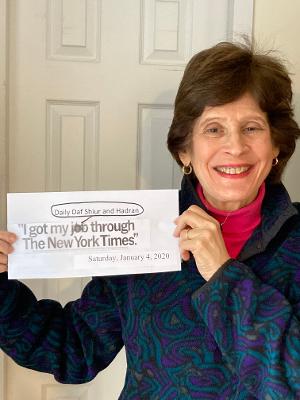
“I got my job through the NY Times” was an ad campaign when I was growing up. I can headline “I got my daily Daf shiur and Hadran through the NY Times”. I read the January 4, 2020 feature on Reb. Michelle Farber and Hadran and I have been participating ever since. Thanks NY Times & Hadran!
Deborah Aschheim
Deborah Aschheim

New York, United States

Margo
I started my Talmud journey in 7th grade at Akiba Jewish Day School in Chicago. I started my Daf Yomi journey after hearing Erica Brown speak at the Hadran Siyum about marking the passage of time through Daf Yomi.

Carolyn
I started my Talmud journey post-college in NY with a few classes. I started my Daf Yomi journey after the Hadran Siyum, which inspired both my son and myself.

Carolyn Hochstadter and Margo Kossoff Shizgal

Merion Station,  USA

Beit Shemesh, Israel

I started my journey on the day I realized that the Siyum was happening in Yerushalayim and I was missing out. What? I told myself. How could I have not known about this? How can I have missed out on this opportunity? I decided that moment, I would start Daf Yomi and Nach Yomi the very next day. I am so grateful to Hadran. I am changed forever because I learn Gemara with women. Thank you.

Linda Brownstein
Linda Brownstein

Mitspe, Israel

My family recently made Aliyah, because we believe the next chapter in the story of the Jewish people is being written here, and we want to be a part of it. Daf Yomi, on the other hand, connects me BACK, to those who wrote earlier chapters thousands of years ago. So, I feel like I’m living in the middle of this epic story. I’m learning how it all began, and looking ahead to see where it goes!
Tina Lamm
Tina Lamm

Jerusalem, Israel

I read Ilana Kurshan’s “If All the Seas Were Ink” which inspired me. Then the Women’s Siyum in Jerusalem in 2020 convinced me, I knew I had to join! I have loved it- it’s been a constant in my life daily, many of the sugiyot connect to our lives. My family and friends all are so supportive. It’s incredible being part of this community and love how diverse it is! I am so excited to learn more!

Shira Jacobowitz
Shira Jacobowitz

Jerusalem, Israel

I started learning at the beginning of this Daf Yomi cycle because I heard a lot about the previous cycle coming to an end and thought it would be a good thing to start doing. My husband had already bought several of the Koren Talmud Bavli books and they were just sitting on the shelf, not being used, so here was an opportunity to start using them and find out exactly what was in them. Loving it!

Caroline Levison
Caroline Levison

Borehamwood, United Kingdom

I started learning after the siyum hashas for women and my daily learning has been a constant over the last two years. It grounded me during the chaos of Corona while providing me with a community of fellow learners. The Daf can be challenging but it’s filled with life’s lessons, struggles and hope for a better world. It’s not about the destination but rather about the journey. Thank you Hadran!

Dena Lehrman
Dena Lehrman

אפרת, Israel

I started learning Daf in Jan 2020 with Brachot b/c I had never seen the Jewish people united around something so positive, and I wanted to be a part of it. Also, I wanted to broaden my background in Torah Shebal Peh- Maayanot gave me a great gemara education, but I knew that I could hold a conversation in most parts of tanach but almost no TSB. I’m so thankful for Daf and have gained immensely.

Meira Shapiro
Meira Shapiro

NJ, United States

I began learning the daf in January 2022. I initially “flew under the radar,” sharing my journey with my husband and a few close friends. I was apprehensive – who, me? Gemara? Now, 2 years in, I feel changed. The rigor of a daily commitment frames my days. The intellectual engagement enhances my knowledge. And the virtual community of learners has become a new family, weaving a glorious tapestry.

Gitta Jaroslawicz-Neufeld

Far Rockaway, United States

I began to learn this cycle of Daf Yomi after my husband passed away 2 1/2 years ago. It seemed a good way to connect to him. Even though I don’t know whether he would have encouraged women learning Gemara, it would have opened wonderful conversations. It also gives me more depth for understanding my frum children and grandchildren. Thank you Hadran and Rabbanit Michelle Farber!!

Harriet Hartman
Harriet Hartman

Tzur Hadassah, Israel

Geri Goldstein got me started learning daf yomi when I was in Israel 2 years ago. It’s been a challenge and I’ve learned a lot though I’m sure I miss a lot. I quilt as I listen and I want to share what I’ve been working on.

Rebecca Stulberg
Rebecca Stulberg

Ottawa, Canada

“I got my job through the NY Times” was an ad campaign when I was growing up. I can headline “I got my daily Daf shiur and Hadran through the NY Times”. I read the January 4, 2020 feature on Reb. Michelle Farber and Hadran and I have been participating ever since. Thanks NY Times & Hadran!
Deborah Aschheim
Deborah Aschheim

New York, United States

In early 2020, I began the process of a stem cell transplant. The required extreme isolation forced me to leave work and normal life but gave me time to delve into Jewish text study. I did not feel isolated. I began Daf Yomi at the start of this cycle, with family members joining me online from my hospital room. I’ve used my newly granted time to to engage, grow and connect through this learning.

Reena Slovin
Reena Slovin

Worcester, United States

I saw an elderly man at the shul kiddush in early March 2020, celebrating the siyyum of masechet brachot which he had been learning with a young yeshiva student. I thought, if he can do it, I can do it! I began to learn masechet Shabbat the next day, Making up masechet brachot myself, which I had missed. I haven’t missed a day since, thanks to the ease of listening to Hadran’s podcast!
Judith Shapiro
Judith Shapiro

Minnesota, United States

I’ve been studying Talmud since the ’90s, and decided to take on Daf Yomi two years ago. I wanted to attempt the challenge of a day-to-day, very Jewish activity. Some days are so interesting and some days are so boring. But I’m still here.
Wendy Rozov
Wendy Rozov

Phoenix, AZ, United States

When I began the previous cycle, I promised myself that if I stuck with it, I would reward myself with a trip to Israel. Little did I know that the trip would involve attending the first ever women’s siyum and being inspired by so many learners. I am now over 2 years into my second cycle and being part of this large, diverse, fascinating learning family has enhanced my learning exponentially.

Shira Krebs
Shira Krebs

Minnesota, United States

Bava Batra 109

דְּהָכָא תַּרְתֵּי, וְהָכָא חֲדָא!

from the fact that here, there are two examples of the superiority of a son, designation and an ancestral field, and here, there is only one demonstration of the superiority of a brother, levirate marriage?

שְׂדֵה אֲחוּזָּה גּוּפַהּ, מֵהַאי טַעְמָא הוּא; דְּקָא קַיְימָא לֵיהּ לְתַנָּא – כְּלוּם יֵשׁ יִבּוּם אֶלָּא בְּמָקוֹם שֶׁאֵין בֵּן, הָא יֵשׁ בֵּן אֵין יִבּוּם.

The Gemara answers: With regard to an ancestral field itself, the tanna establishes his ruling from this same reason: Is there levirate marriage except in a case where there is no son? In a case where there is a son, there is no levirate marriage. The determination that the redemption of the ancestral field by a son is in place of the redemption of the field by the father, whereas the redemption of the field by a brother is not, is based on the reasoning that the halakha of levirate marriage is not an indication that a brother is a closer relative than a son. Therefore, the halakha of an ancestral field cannot be regarded as a second example of the son’s superiority, as it stems from the first example, that of levirate marriage.

אֵימָא: ״שְׁאֵרוֹ״ – זֶה הָאָב, מְלַמֵּד שֶׁהָאָב קוֹדֵם לַבַּת. יָכוֹל יַקְדִּים לַבֵּן? תַּלְמוּד לוֹמַר: ״הַקָּרוֹב״ – קָרוֹב קָרוֹב קוֹדֵם!

The Gemara suggests an alternative derivation: Why should the father of the deceased inherit before only the brothers? Say that he should inherit before the daughter of the deceased as well by interpreting the verse as follows: “His kinsman” (Numbers 27:11), this is referring to the father, and the Torah teaches that the father precedes the daughter of the deceased in inheriting from him. One might have thought that the father of the deceased should precede the son of the deceased in inheriting from him. The verse therefore states: “Next [hakkarov] to him,” teaching that the closer [karov] one is to the deceased, the earlier one is in the order of inheritance.

כֵּיוָן דִּלְעִנְיַן יִבּוּם – בֵּן וּבַת כִּי הֲדָדֵי נִינְהוּ; לְעִנְיַן נַחֲלָה נָמֵי, בֵּן וּבַת כִּי הֲדָדֵי נִינְהוּ.

This suggestion is rejected: Since with regard to the matter of levirate marriage a son and a daughter are equivalent, as levirate marriage is not performed if the deceased had either a son or a daughter, it stands to reason that with regard to the matter of inheritance as well, a son and a daughter are equivalent in that the father does not precede the daughter.

וְאֵימָא: ״שְׁאֵרוֹ״ – זֶה הָאָב, מְלַמֵּד שֶׁהָאָב קוֹדֵם לַאֲחֵי הָאָב. יָכוֹל יַקְדִּים לָאַחִין? תַּלְמוּד לוֹמַר: ״הַקָּרוֹב״ – קָרוֹב קָרוֹב קוֹדֵם!

The Gemara suggests an alternative derivation: Why should the father of the deceased inherit before the brothers of the deceased? Say that he should inherit only before his own brothers by interpreting the verse as follows: “His kinsman” ( Numbers 27:11), this is referring to the father, and the Torah teaches that the father precedes the father’s brothers in inheriting from the deceased. One might have thought that the father of the deceased should precede the brothers of the deceased in inheriting from him. The verse states: “Next [hakkarov] to him,” teaching that the closer [karov] one is to the deceased, the earlier one is in the order of inheritance.

אַחֵי הָאָב לָא צְרִיכִי קְרָא; אַחֵי הָאָב מִכֹּחַ מַאן קָא אָתוּ – מִכֹּחַ אָב; קָאֵי אָב, קָא יָרְתִי אַחֵי הָאָב?!

The Gemara responds: A verse is not necessary to teach that the father of the deceased inherits before the father’s brothers, for the following reason: By whose virtue do the father’s brothers come to inherit from the deceased? By virtue of the father, as their right to inherit is a result of their being brothers of the father of the deceased. Could it be that while the father is still alive, his brothers should inherit? The Gemara therefore concludes that the father precedes the brothers of the deceased.

וְהָא קְרָאֵי לָאו הָכִי כְּתִיבִי – דִּכְתִיב: ״וְאִם אֵין אַחִים לְאָבִיו וְגוֹ׳״! קְרָאֵי שֶׁלֹּא כְּסִדְרָן כְּתִיבִי.

The Gemara challenges: But the verses are not written that way, as it is written: “And if he has no brothers, then you shall give his inheritance to his father’s brothers” (Numbers 27:10), and only later is it written: “And if his father has no brothers, then you shall give his inheritance to his kinsman who is next to him” (Numbers 27:11), indicating that the father, whose right to inherit is derived from the term “kinsman,” inherits only after the brothers of the deceased and his own brothers. The Gemara explains: The verses are not written in order, since as explained earlier, it is not reasonable that the father’s brothers inherit before the father. Therefore, it must be that the inheritance of the father is not written in its proper place, and he may inherit even before the brothers of the deceased.

וְהַאי תַּנָּא מַיְיתֵי לַהּ מֵהָכָא – דְּתַנְיָא: אֶת זוֹ דָּרַשׁ רַבִּי יִשְׁמָעֵאל בְּרַבִּי יוֹסֵי: ״אִישׁ כִּי יָמוּת וּבֵן אֵין לוֹ וְגוֹ׳״ – בִּמְקוֹם בַּת אַתָּה מַעֲבִיר נַחֲלָה מִן הָאָב, וְאִי אַתָּה מַעֲבִיר נַחֲלָה מִן הָאָב בִּמְקוֹם אַחִין.

§ The Gemara records an additional derivation for the halakha that the father precedes the brothers of the deceased. And this tanna cites it from here, as it is taught in a baraita: Rabbi Yishmael, son of Rabbi Yosei, taught this halakha: It is written: “If a man dies, and has no son, then you shall pass his inheritance to his daughter” (Numbers 27:8). In the rest of the passage the verse employs the phrase “and you shall give.” It is only in this verse that it employs the phrase “and you shall pass.” Based on this, Rabbi Yishmael teaches that in a case where there is a daughter, you pass an inheritance to her from one who appears to have precedence, namely, the father, and by inference, you do not pass the inheritance from the father in a case where there are brothers of the deceased.

וְאֵימָא: בִּמְקוֹם בַּת אַתָּה מַעֲבִיר נַחֲלָה מִן הָאַחִין,

The Gemara asks: But why not say that in a case where there is a daughter, you pass the inheritance to her from the brothers,

וְאִי אַתָּה מַעֲבִיר נַחֲלָה מִן הָאָב אֲפִילּוּ בִּמְקוֹם בַּת! אִם כֵּן, לָא נִכְתּוֹב רַחֲמָנָא ״וְהַעֲבַרְתֶּם״!

but you do not pass an inheritance from the father even in a case where there is a daughter, so that the father precedes the daughter in the order of inheritance? The Gemara answers: If so, the Merciful One would not write: “Then you shall pass the inheritance to his daughter” (Numbers 27:8). This indicates that the logical order of inheritance is being overridden, as the fact that the daughter precedes the brothers of the deceased is due to her being a closer relative of his. It is obvious that the Torah intends that she precede even the father.

וּלְמַאן דְּנָפְקָא לֵיהּ מִ״וְהַעֲבַרְתֶּם״, הַאי ״שְׁאֵרוֹ״ מַאי עָבֵיד לֵיהּ? מִיבְּעֵי לֵיהּ לְכִדְתַנְיָא: ״שְׁאֵרוֹ״ – זוֹ אִשְׁתּוֹ, מְלַמֵּד שֶׁהַבַּעַל יוֹרֵשׁ אֶת אִשְׁתּוֹ.

Having quoted two derivations for the halakha that the father precedes the brothers, the Gemara proceeds to discuss them and asks: And according to the one who derives it from the term: “And you shall pass,” what does he do with this term: “His kinsman,” which was said to refer to the father? The Gemara answers: He requires it for that which is taught in a baraita: “His kinsman.” This is referring to his wife, and the Torah teaches that a husband inherits from his wife.

וּלְמַאן דְּנָפְקָא לֵיהּ מִ״שְּׁאֵרוֹ״, הַאי ״וְהַעֲבַרְתֶּם״ מַאי עָבֵיד לֵיהּ? מִיבְּעֵי לֵיהּ לְכִדְתַנְיָא – רַבִּי אוֹמֵר: בְּכוּלָּן נֶאֱמַר בָּהֶן ״נְתִינָה״, וְכָאן נֶאֶמְרָה בָּהֶן ״הַעֲבָרָה״; שֶׁאֵין לְךָ שֶׁמַּעֲבִיר נַחֲלָה מִשֵּׁבֶט לְשֵׁבֶט אֶלָּא בַּת, הוֹאִיל וּבְנָהּ וּבַעְלָהּ יוֹרְשִׁין אוֹתָהּ.

The Gemara asks: And according to the one who derives it from the term: “His kinsman,” what does he do with this term: “And you shall pass”? He requires it for that which is taught in a baraita, that Rabbi Yehuda HaNasi says: In the context of all of the relatives listed in the passage detailing the laws of inheritance, it is stated concerning them with the terminology of giving, and only here, in the context of daughters, it is stated concerning them with the terminology of passing. This teaches us that you have no one who passes an inheritance of land in Eretz Yisrael from one tribe to another except for a daughter, since her son and husband inherit from her.

וּמִמַּאי דִּ״שְׁאֵרוֹ״ זֶה הָאָב? דִּכְתִיב: ״שְׁאֵר אָבִיךָ הִיא״. אֵימָא: ״שְׁאֵרוֹ״ – זוֹ הָאֵם, דִּכְתִיב: ״שְׁאֵר אִמְּךָ הִיא״!

§ The Gemara returns to discuss the interpretation of the term: “His kinsman” (Numbers 27:11). And from where does one know to derive that with regard to the term: “His kinsman [she’ero],” this is referring to the father, as it is written in the context of forbidden sexual relations: “She is your father’s kinswoman [she’er]” (Leviticus 18:12)? Perhaps one should say instead: “His kinswoman,” this is referring to the mother, as it is also written: “For she is your mother’s kinswoman [she’er]” (Leviticus 18:13).

אָמַר רָבָא, אָמַר קְרָא: ״מִמִּשְׁפַּחְתּוֹ וְיָרַשׁ אֹתָהּ״; מִשְׁפַּחַת אָב קְרוּיָה ״מִשְׁפָּחָה״, מִשְׁפַּחַת אֵם אֵינָהּ קְרוּיָה ״מִשְׁפָּחָה״ – דִּכְתִיב: ״לְמִשְׁפְּחֹתָם לְבֵית אֲבֹתָם״.

Rava said in response that the verse states: “Then you shall give his inheritance to his kinsman who is next to him of his family, and he shall inherit it” (Numbers 27:11), emphasizing that “kinsman” is referring specifically to someone who is of his family, and it is the father’s family that is called one’s family, while one’s mother’s family is not called one’s family. Proof for this is found in another verse, as it is written: “By their families, by their fathers’ houses” (Numbers 1:2).

וּמִשְׁפַּחַת אֵם אֵינָהּ קְרוּיָה ״מִשְׁפָּחָה״?! וְהָא כְּתִיב: ״וַיְהִי נַעַר מִבֵּית לֶחֶם יְהוּדָה מִמִּשְׁפַּחַת יְהוּדָה, וְהוּא לֵוִי, וְהוּא גָר שָׁם״ – הָא גוּפָא קַשְׁיָא; אָמְרַתְּ ״וְהוּא לֵוִי״ – אַלְמָא מִלֵּוִי אָתֵי, ״מִמִּשְׁפַּחַת יְהוּדָה״ – אַלְמָא מִיהוּדָה אָתֵי! אֶלָּא לָאו דַּאֲבוּהּ מִלֵּוִי, וְאִימֵּיהּ מִיהוּדָה? וְקָאָמַר ״מִמִּשְׁפַּחַת יְהוּדָה״!

The Gemara raises a difficulty: And is one’s mother’s family indeed not called one’s family? But it is written in the episode of Micah forming an idol to be worshipped: “And there was a young man of Bethlehem in Judah of the family of Judah who was a Levite, and he sojourned there” (Judges 17:7). The Gemara explains the difficulty: This matter itself is difficult. You said: “Who was a Levite,” as apparently he came from the tribe of Levi, but the verse says: “Of the family of Judah,” so apparently he came from the tribe of Judah. Rather, is it not that his father was from the tribe of Levi and his mother was from the tribe of Judah, and yet the verse says that he was: “Of the family of Judah”? This appears to prove that one’s mother’s family is also called his family.

אָמַר רָבָא בַּר רַב חָנָן: לָא; גַּבְרָא דִּשְׁמֵיהּ לֵוִי. אִי הָכִי, הַיְינוּ דְּקָאָמַר מִיכָה: ״עַתָּה יָדַעְתִּי כִּי יֵיטִיב ה׳ לִי, כִּי הָיָה לִי הַלֵּוִי לְכֹהֵן״? אִין, דְּאִיתְרְמִי לֵיהּ גַּבְרָא דִּשְׁמֵיהּ לֵוִי.

Rava bar Rav Ḥanan said in response: No, the verse speaks of a man whose name was Levi, but his father was of the tribe of Judah. The Gemara asks: If that is so, how is that which Micah said when that man agreed to serve as his priest: “Now I know that the Lord will do me good, seeing that I have a Levite as my priest” (Judges 17:13), understood? It is understood only if he was an actual Levite, not if he was from the tribe of Judah and named Levi. Rava bar Rav Ḥanan responded: Yes, it is understood. Micah understood the fact that a man whose name is Levi happened upon him as an auspicious sign.

וְכִי לֵוִי שְׁמוֹ?! וַהֲלֹא יְהוֹנָתָן שְׁמוֹ, שֶׁנֶּאֱמַר: ״וִיהוֹנָתָן בֶּן גֵּרְשֹׁם בֶּן מְנַשֶּׁה, הוּא וּבָנָיו הָיוּ כֹהֲנִים לְשֵׁבֶט הַדָּנִי״! (אֲמַר לֵיהּ: וְלִיטַעְמָיךְ) וְכִי בֶּן מְנַשֶּׁה הוּא?! וַהֲלֹא בֶּן מֹשֶׁה הוּא, דִּכְתִיב: ״בְּנֵי מֹשֶׁה גֵּרְשׁוֹם וֶאֱלִיעֶזֶר״!

The Gemara asks further: But is it so that his name was indeed Levi; but wasn’t Jonathan his name, as it is stated: “And Jonathan, the son of Gershom, the son of Manasseh, he and his sons were priests to the tribe of the Danites” (Judges 18:30)? Rava bar Rav Ḥanan said to him: And according to your reasoning, that his name was not Levi but he was from the tribe of Levi, there is also a difficulty from that same verse: But is it so that he was the son of Manasseh; but wasn’t he the son of Moses, as it is written: “The sons of Moses: Gershom and Eliezer” (I Chronicles 23:15)?

אֶלָּא מִתּוֹךְ שֶׁעָשָׂה מַעֲשֵׂה מְנַשֶּׁה, תְּלָאוֹ הַכָּתוּב בִּמְנַשֶּׁה; הָכָא נָמֵי, מִתּוֹךְ שֶׁעָשָׂה מַעֲשֵׂה מְנַשֶּׁה – דְּאָתֵי מִיהוּדָה, תְּלָאוֹ הַכָּתוּב בִּיהוּדָה.

Rava bar Rav Ḥanan explains the verse: Rather, although he was the son of Moses, because he acted as Manasseh the king of Judah, who was notorious for idol worship, acted, the verse linked him to Manasseh by calling him “the son of Manasseh.” Here too, in the verse from which you seek to prove that one’s mother’s family is called one’s family, since he acted as Manasseh, who came from the tribe of Judah, acted, the verse linked him to Judah by stating that he was “of the family of Judah,” but he was, in fact, a Levite.

אָמַר רַבִּי יוֹחָנָן מִשּׁוּם רַבִּי שִׁמְעוֹן בֶּן יוֹחַי: מִכָּאן שֶׁתּוֹלִין אֶת הַקַּלְקָלָה בַּמְקוּלְקָל. רַבִּי יוֹסֵי בַּר חֲנִינָא אָמַר, מֵהָכָא: ״וְגַם הוּא טוֹב תֹּאַר מְאֹד, וְאֹתוֹ יָלְדָה אַחֲרֵי אַבְשָׁלוֹם״ – וַהֲלֹא אֲדֹנִיָּה בֶּן חַגִּית וְאַבְשָׁלוֹם בֶּן מַעֲכָה! אֶלָּא, מִתּוֹךְ שֶׁעָשָׂה מַעֲשֵׂה אַבְשָׁלוֹם – דְּמָרַד בַּמַּלְכוּת, תְּלָאוֹ הַכָּתוּב בְּאַבְשָׁלוֹם. הָכָא נָמֵי, מִתּוֹךְ שֶׁעָשָׂה מַעֲשֵׂה מְנַשֶּׁה – תְּלָאוֹ הַכָּתוּב בִּמְנַשֶּׁה.

In connection with this, Rabbi Yoḥanan says in the name of Rabbi Shimon ben Yoḥai: From here it is learned that corruption is linked to one who is corrupt, as this man was linked to Manasseh and Judah despite having no familial connection to them. Rabbi Yosei bar Ḥanina says: That concept can be seen from here, in the matter of Adonijah, the son of David: “And he was also a very handsome man; and she gave birth to him after Absalom,” (I Kings 1:6) but Adonijah wasn’t the son of Haggith and Absalom was the son of Maachah, so why does the verse state: “And she gave birth to him after Absalom,” as if they were sons of the same mother? Rather, since Adonijah acted in a manner fit for Absalom, who also rebelled against the monarchy, the verse linked him to Absalom, referring to him as his full brother. Here too, with regard to Jonathan, since he acted as Manasseh acted, the verse linked him to Manasseh.

אָמַר רַבִּי אֶלְעָזָר: לְעוֹלָם יִדְבַּק אָדָם בַּטּוֹבִים, שֶׁהֲרֵי מֹשֶׁה שֶׁנָּשָׂא בַּת יִתְרוֹ – יָצָא מִמֶּנּוּ יְהוֹנָתָן; אַהֲרֹן שֶׁנָּשָׂא בַּת עַמִּינָדָב – יָצָא מִמֶּנּוּ פִּנְחָס.

§ In connection with the story of Jonathan, son of Manasseh, the Gemara cites a related statement. Rabbi Elazar says: A person should always cleave to good people, meaning one should marry a woman from a good family, as this is beneficial for the offspring of that marriage. As in the case of Moses, who married a daughter of Yitro, who was a priest of idolatry, Jonathan, who was also a priest of idolatry, descended from him, while in the case of Aaron, who married the daughter of Amminadab, who was of distinguished lineage in the tribe of Judah, Pinehas descended from him.

וּפִנְחָס לָאו מִיִּתְרוֹ אָתֵי? וְהָא כְּתִיב: ״וְאֶלְעָזָר בֶּן אַהֲרֹן לָקַח לוֹ מִבְּנוֹת פּוּטִיאֵל לוֹ לְאִשָּׁה״; מַאי, לָאו דְּאָתֵי מִיִּתְרוֹ – שֶׁפִּיטֵּם עֲגָלִים לַעֲבוֹדָה זָרָה? לָא, דְּאָתֵי מִיּוֹסֵף – שֶׁפִּטְפֵּט בְּיִצְרוֹ.

The Gemara asks: And did Pinehas not also come from Yitro? But it is written: “And Elazar, Aaron’s son, took one of the daughters of Putiel as a wife; and she bore him Pinehas” (Exodus 6:25). What, is it not stating that Pinehas came from the family of Yitro, who was also called Putiel because he fattened [pittem] calves for idol worship? The Gemara answers: No, it is stating that he came from Joseph, who battled [shepitpet] with his desire by resisting the advances of Potiphar’s wife.

וַהֲלֹא שְׁבָטִים מְבַזִּים אוֹתוֹ, וְאוֹמְרִים: רְאִיתֶם ״בֶּן פּוּטִי״ זֶה – בֵּן שֶׁפִּיטֵּם אֲבִי אִמּוֹ עֲגָלִים לַעֲבוֹדָה זָרָה, יַהֲרוֹג נְשִׂיא שֵׁבֶט מִיִּשְׂרָאֵל?!

The Gemara asks: But didn’t the tribes denigrate him after he killed Zimri (see Numbers, chapter 25), and say of him: Have you seen this son of Puti, the son of he whose mother’s father fattened calves for idol worship? Should such a man kill a prince of a tribe of Israel?

Want to follow content and continue where you left off?

Create an account today to track your progress, mark what you’ve learned, and follow the shiurim that speak to you.

Clear all items from this list?

This will remove ALL the items in this section. You will lose any progress or history connected to them. This is irreversible.

Cancel
Yes, clear all

Are you sure you want to delete this item?

You will lose any progress or history connected to this item.

Cancel
Yes, delete