










An unmarried woman whose father died can claim her dowry from up to one-tenth of the father’s estate. However, this amount can only be collected from 1/10 of the land of the father’s estate. Rav Nechemia, the son of Rav Yosef accorded a woman one-tenth of her father’s estate for her dowry and permitted the value of the estate to include moveable items that were attached to the ground as they are considered like land itself. Rav Ashi also included rental income from the father’s properties in the calculation for a daughter’s dowry. If one sold a courtyard, an olive press, or a bathhouse, what items are included in the sale, and what items are not included in the sale? Rabbi Eliezer disagrees with the mainstream opinion.
Bava Batra
Masechet Bava Batra is sponsored by Lori Stark in loving memory of her mother in law, Sara Shapiro z”l and her father Nehemiah Sosewitz z”l.
This month’s learning is sponsored by Marci Glazer in loving memory of her teacher and chevruta, Rachel Brodie, Rachel Aviva bat Devora Chana, on her 4th yahrzeit. “She brought her love of Torah to thousands of people in her all-too-short life. A lover of Midrash, she still invited me on this Daf Yomi journey.”
Want to dedicate learning? Get started here:

0:00
0:00
Today’s daily daf tools:
Bava Batra
Masechet Bava Batra is sponsored by Lori Stark in loving memory of her mother in law, Sara Shapiro z”l and her father Nehemiah Sosewitz z”l.
This month’s learning is sponsored by Marci Glazer in loving memory of her teacher and chevruta, Rachel Brodie, Rachel Aviva bat Devora Chana, on her 4th yahrzeit. “She brought her love of Torah to thousands of people in her all-too-short life. A lover of Midrash, she still invited me on this Daf Yomi journey.”
Bava Batra 67
אַגְבַּהּ עִישּׂוּר נִכְסֵי, אֲפִילּוּ מֵאִצְטְרוֹבְלֵי דְרֵיחַיִים. אָמַר רַב אָשֵׁי: כִּי הֲוֵינַן בֵּי רַב כָּהֲנָא, מַגְבֵּינַן אֲפִילּוּ מֵעַמְלָא דְבָתֵּי.
collect for her one-tenth of her father’s estate, in keeping with the rabbinic ordinance that states that if a man dies, his sons are obligated to give his daughter a tenth of his landed properties as a dowry, and collect it even from his immovable lower millstones, as they too are considered landed property. Rav Ashi said: When we were students in Rav Kahana’s house we would collect for this purpose even from the rent of houses; since this money is earned from real estate, it too has the status of landed property and is included in the dowry calculations.
מַתְנִי׳ הַמּוֹכֵר אֶת הֶחָצֵר – מָכַר בָּתִּים, בּוֹרוֹת, שִׁיחִין וּמְעָרוֹת; אֲבָל לֹא אֶת הַמִּטַּלְטְלִין. בִּזְמַן שֶׁאָמַר לוֹ: ״הוּא וְכׇל מַה שֶּׁבְּתוֹכוֹ״ – הֲרֵי כּוּלָּן מְכוּרִין. בֵּין כָּךְ וּבֵין כָּךְ – לֹא מָכַר לֹא אֶת הַמֶּרְחָץ, וְלֹא אֶת בֵּית הַבַּד שֶׁבְּתוֹכָהּ. רַבִּי אֱלִיעֶזֶר אוֹמֵר: הַמּוֹכֵר אֶת הֶחָצֵר – לֹא מָכַר אֶלָּא אֲוִירָהּ שֶׁל חָצֵר.
MISHNA: One who sells a courtyard without specifying what is included in the sale has sold with it the houses, pits, ditches, and caves found in the courtyard, but he has not sold the movable property. When the seller says to the buyer: I am selling you it and everything that is in it, all these components are sold along with the courtyard, even the movable property. Both in this case, where he executes the sale without specification, and in that case, where he adds the phrase that includes the movable property, he has not sold the bathhouse, nor has he sold the olive press that is in the courtyard, as each is an entity with a discrete purpose and not an integral part of the courtyard. Rabbi Eliezer says: One who sells a courtyard without specifying what is included in the sale has sold only the airspace, i.e., the open space, of the courtyard, but nothing found in the courtyard, not even the houses.
גְּמָ׳ תָּנוּ רַבָּנַן: הַמּוֹכֵר אֶת הֶחָצֵר – מָכַר בָּתִּים הַחִיצוֹנִים, וּבָתִּים הַפְּנִימִים, וּבֵית הַחוֹלְסָאוֹת. חֲנוּיוֹת פְּתוּחוֹת לְתוֹכָהּ – נִמְכָּרוֹת עִמָּהּ, וְשֶׁאֵין פְּתוּחוֹת לְתוֹכָהּ – אֵין נִמְכָּרוֹת עִמָּהּ. פְּתוּחוֹת לְכָאן וּלְכָאן – [אֵלּוּ] וְאֵלּוּ נִמְכָּרוֹת עִמָּהּ. רַבִּי אֱלִיעֶזֶר אוֹמֵר: הַמּוֹכֵר אֶת הֶחָצֵר – לֹא מָכַר אֶלָּא מִילוּסָא שֶׁל חָצֵר.
GEMARA: The Sages taught in a baraita (Tosefta, 3:1): One who sells a courtyard has sold with it the outer houses that can be accessed directly from the courtyard, and the inner houses that can be entered only via the outer houses, and the area of the sand fields [uveit haḥolsaot]. As for the stores, those that open into the courtyard are sold along with it; those that do not open into it, but rather open into the public domain, even if they are located in the courtyard, are not sold along with it; and those that open both into this courtyard and into that other public domain are grouped together with those that open into this courtyard alone, and both these and those are sold with it. Rabbi Eliezer says: One who sells a courtyard without specifying what is included in the sale has sold only the open space of the courtyard.
אָמַר מָר: פְּתוּחוֹת לְכָאן וּלְכָאן – נִמְכָּרוֹת עִמָּהּ. וְהָא תָּנֵי רַבִּי חִיָּיא: אֵין נִמְכָּרוֹת עִמָּהּ! לָא קַשְׁיָא; הָא דְּרוֹב תַּשְׁמִישְׁתַּיְיהוּ לְגוֹ, הָא דְּרוֹב תַּשְׁמִישְׁתַּיְיהוּ לְבַר.
The Master said in the baraita: Stores that open both into this courtyard and into that public domain are sold along with the courtyard. The Gemara raises an objection: But didn’t Rabbi Ḥiyya teach a baraita that states that such stores are not sold with the courtyard? The Gemara answers that this is not difficult: This baraita, that teaches that the stores are sold along with the courtyard, is referring to a case where the majority of their use is from within, i.e., the stores are mainly accessed from within the courtyard, while that baraita of Rabbi Ḥiyya, that teaches that the stores are not sold along with the courtyard, is referring to a case where the majority of their use is from without, i.e., the stores are accessed mainly from the public domain.
רַבִּי אֱלִיעֶזֶר אוֹמֵר: הַמּוֹכֵר אֶת הֶחָצֵר – לֹא מָכַר אֶלָּא אֲוִירָהּ שֶׁל חָצֵר. אָמַר רַבָּה: אִי דַּאֲמַר לֵיהּ: ״דֵּירְתָּא״ – דְּכוּלֵּי עָלְמָא לָא פְּלִיגִי דְּבָתֵּי מַשְׁמַע. כִּי פְּלִיגִי – דַּאֲמַר לֵיהּ: ״דָּרְתָּא״; מָר סָבַר: תַּרְבִּיצָא מַשְׁמַע, וּמָר סָבַר: בָּתֵּי מַשְׁמַע.
The mishna teaches, and it was similarly taught in the baraita, that Rabbi Eliezer says: One who sells a courtyard has sold only the airspace of the courtyard, and he has sold nothing found in the courtyard, not even the houses. To clarify the disagreement between the unattributed opinion in the mishna and Rabbi Eliezer, Rabba said: If the seller said to the buyer that he is selling him dirata, i.e., the place of residence, everyone agrees that he means to sell the houses and that they are also included in the sale. When they disagree, it is where he said to him that he is selling him darta, i.e., the courtyard. One Sage, Rabbi Eliezer, holds that he means to sell only the garden, i.e., the space between the houses, and one Sage, the unattributed first opinion in the mishna, holds that he means to sell also the houses.
אִיכָּא דְּאָמְרִי, אָמַר רַבָּה: אִי דַּאֲמַר לֵיהּ ״דָּרְתָּא״ – דְּכוּלֵּי עָלְמָא לָא פְּלִיגִי דְּבָתֵּי מַשְׁמַע. כִּי פְּלִיגִי, דַּאֲמַר לֵיהּ: ״חָצֵר״; מָר סָבַר: חָצֵר – אַוֵּירָא מַשְׁמַע, וּמָר סָבַר: כַּחֲצַר הַמִּשְׁכָּן.
Some state a different version of this discussion, according to which Rabba says: If the seller says to the buyer that he is selling him darta, everyone agrees that he means to sell also the houses and that they are included in the sale. When they disagree, it is where he said to him that he is selling him the ḥatzer, the Hebrew term for courtyard. One Sage, Rabbi Eliezer, holds that when he says ḥatzer, he means to sell him only the airspace, i.e., the open space of the courtyard itself, and one Sage, the unattributed first opinion in the mishna, holds that houses are also included in the sale, just as the courtyard of the Tabernacle included the Tabernacle itself.
וְאָמַר רַבָּה אָמַר רַב נַחְמָן: מָכַר לוֹ חוֹלְסִית וּמְצוּלָה; הֶחְזִיק בַּחוֹלְסִית – לֹא קָנָה מְצוּלָה, הֶחְזִיק בַּמְּצוּלָה – לֹא קָנָה חוֹלְסִית. אִינִי?! וְהָא אָמַר שְׁמוּאֵל: מָכַר לוֹ עֶשֶׂר שָׂדוֹת בְּעֶשֶׂר מְדִינוֹת, כֵּיוָן שֶׁהֶחְזִיק בְּאַחַת מֵהֶן – קָנָה כּוּלָּן!
§ And Rabba says that Rav Naḥman says: If one sold another a sand field for glass making, and a pond for fishing or some other purpose, if the buyer took possession of the sand field in order to finalize the transaction, he has not acquired the pond and must therefore perform a separate act of acquisition for it. Conversely, if he took possession of the pond, he has not acquired the sand field. The Gemara asks: Is that so? But doesn’t Shmuel say: If one sold another ten fields in ten different regions, all in a single bill of sale, once he takes possession of one of them, he has acquired them all; and the two cases seem to be analogous.
הָתָם הוּא דְּסַדָּנָא דְאַרְעָא חַד הוּא, וְכוּלַּהּ חֲדָא תַּשְׁמִישְׁתָּא הוּא; אֲבָל הָכָא – הָא תַּשְׁמִישְׁתָּא לְחוֹד, וְהָא תַּשְׁמִישְׁתָּא לְחוֹד.
The Gemara rejects the parallel: There, in the case of the ten fields, the land is all located in one geographic block, and it all has one use, i.e., to be farmed. The buyer, therefore, acquires all of the fields when he takes possession of one of them, even if they are not adjacent. But here, in the case of the sand field and the pond, this, the sand field, has a distinct use, i.e., to supply sand for glass making, and that, the pond, has a distinct use, i.e., for fishing. Therefore, taking possession of one of them does not effect a transfer of the other.
וְאִיכָּא דְּאָמְרִי,
And some state a different version of the previous discussion.
אָמַר רַבָּה אָמַר רַב נַחְמָן: הֶחְזִיק בַּחוֹלְסִית – קָנָה מְצוּלָה. פְּשִׁיטָא – דְּהָא אָמַר שְׁמוּאֵל: מָכַר לוֹ עֶשֶׂר שָׂדוֹת וְכוּ׳! מַהוּ דְּתֵימָא: הָתָם הוּא דְּסַדָּנָא דְאַרְעָא חַד הוּא, אֲבָל הָכָא – הָא תַּשְׁמִישְׁתָּא לְחוֹד, וְהָא תַּשְׁמִישְׁתָּא לְחוֹד; קָא מַשְׁמַע לַן.
Rabba actually said that Rav Naḥman said: If one sold another a sand field and a pond, and the buyer took possession of the sand field, he has also acquired the pond. The Gemara asks: This is obvious, as Shmuel says: If one sold ten fields to another in ten different regions, once he takes possession of one of them, he has acquired them all. The Gemara explains why Rav Naḥman’s statement was nevertheless necessary: It is necessary lest you say that there, in the case of the ten fields, the land is all located in one geographic block with a single use, and therefore all the fields are acquired together. But here, in the case of the sand field and the pond, this, the sand field, has a distinct use, and that, the pond, has a distinct use, and therefore taking possession of one of them should not effect acquisition of the other. Therefore, Rav Naḥman teaches us that if the buyer took possession of the sand field, he has acquired the pond as well.
מַתְנִי׳ הַמּוֹכֵר בֵּית הַבַּד – מָכַר אֶת הַיָּם וְאֶת הַמֶּמֶל וְאֶת הַבְּתוּלוֹת, אֲבָל לֹא מָכַר אֶת הָעֲבִירִים וְאֶת הַגַּלְגַּל וְאֶת הַקּוֹרָה. וּבִזְמַן שֶׁאָמַר לוֹ: ״הוּא וְכׇל מַה שֶּׁבְּתוֹכוֹ״ – הֲרֵי כּוּלָּן מְכוּרִין. רַבִּי אֱלִיעֶזֶר אוֹמֵר: הַמּוֹכֵר בֵּית הַבַּד – מָכַר אֶת הַקּוֹרָה.
MISHNA: One who sells an olive press without specifying what is included in the sale has sold with it the yam and the memel and the betulot, the immovable elements of the olive press. But he has not sold with it the avirim and the galgal and the kora, the movable utensils of the olive press. When the seller says to the buyer: I am selling you it and everything that is in it, all these components are sold along with the olive press, even the movable utensils. Rabbi Eliezer says: One who sells an olive press has sold the kora as well, as it is the most fundamental element of the olive press.
גְּמָ׳ ״יָם״ – טְלָפְחָא. ״מֶמֶל״ – אָמַר רַבִּי אַבָּא בַּר מֶמֶל: מַפְרַכְתָּא. ״בְּתוּלוֹת״ – אָמַר רַבִּי יוֹחָנָן: כְּלוֹנְסוֹת שֶׁל אֶרֶז, שֶׁמַּעֲמִידִין בָּהֶן אֶת הַקּוֹרָה. ״עֲבִירִים״ – כִּבְשֵׁי. ״גַּלְגַּל״ – חוּמַרְתָּא. ״קוֹרָה״ – קוֹרָה.
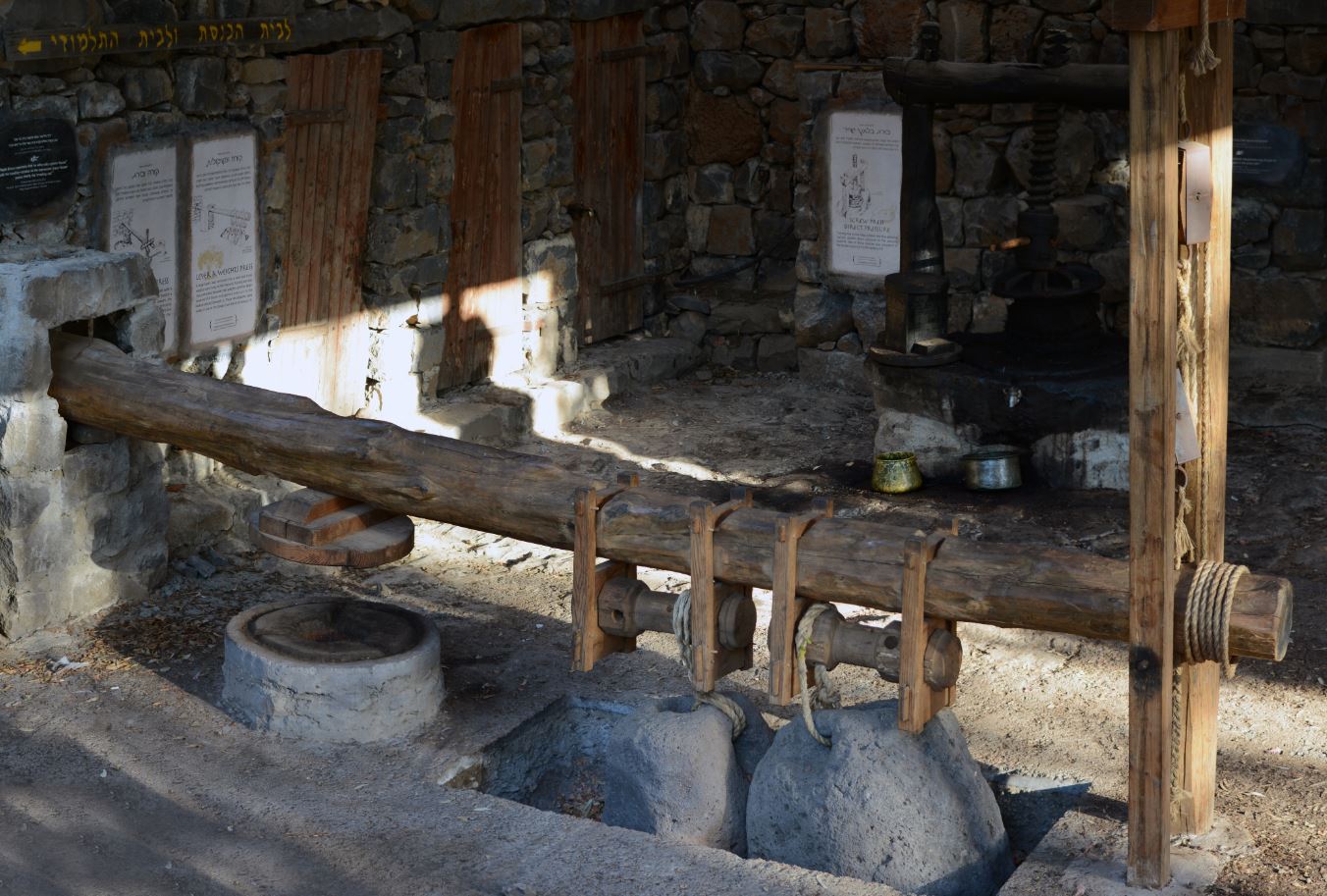
GEMARA: The Gemara explains the terms used in the mishna. The yam is the lentil, the round stationary container into which the olives are placed before being crushed. As for the memel, Rabbi Abba bar Memel said: This is the crusher, the utensil used to pound and crush the olives. As for the betulot, Rabbi Yoḥanan said: These are the cedar posts [klonsot] that support the beam of the olive press. The avirim are the pressers, wooden boards that are placed on top of the crushed olives, and upon which the beam is lowered in order to press the olives. The galgal is the ḥumrata, a round stone that is placed on the beam to weigh it down. The kora is the heavy wooden beam used to press down upon the olives and thereby extract the oil.
תָּנוּ רַבָּנַן: הַמּוֹכֵר בֵּית הַבַּד – מָכַר אֶת [הַ]נְּסָרִים, וְאֶת הַיְּקָבִים, וְאֶת הַמַּפְרֵכוֹת, וְאֶת הָרֵיחַיִם הַתַּחְתּוֹנוֹת – אֲבָל לֹא הָעֶלְיוֹנָה. וּבִזְמַן שֶׁאָמַר לוֹ: ״הוּא וְכׇל מַה שֶּׁבְּתוֹכוֹ״ – הֲרֵי כּוּלָּן מְכוּרִין. בֵּין כָּךְ וּבֵין כָּךְ – לֹא מָכַר לֹא אֶת הָעֲבִירִים, וְלֹא אֶת הַשַּׂקִּין, וְלֹא אֶת הַמַּרְצוּפִין.
The Sages taught in a baraita (Tosefta, 3:2): One who sells an olive press without specifying what is included in the sale has sold with it the boards that are fixed in place to hold the olives; and the vats for collecting the oil, and the crushers, used to pound and crush the olives before pressing them, and the lower millstone, i.e., the stationary millstone base; but not the upper millstone. But when the seller says to the buyer: I am selling you it and everything that is in it, all these components are sold. Both in this case, where he executes the sale without specification, and in that case, where he adds the phrase that he is selling everything that is in the olive press, he has not sold the wooden boards that are placed on top of the crushed olives when they are being pressed, nor has he sold the sacks, nor has he sold the leather bags for carrying the olives, as these are all movable goods that are not specifically part of the olive press.
רַבִּי אֱלִיעֶזֶר אוֹמֵר: הַמּוֹכֵר בֵּית הַבַּד – מָכַר אֶת הַקּוֹרָה, שֶׁלֹּא נִקְרָא בֵּית הַבַּד אֶלָּא עַל שׁוּם קוֹרָה.
Rabbi Eliezer says: One who sells an olive press has sold the heavy wooden beam used to press down upon the olives, as it is called an olive press [beit habad] only due to this beam, the most essential part of the press, and this beam is otherwise known as a bad.
מַתְנִי׳ הַמּוֹכֵר אֶת הַמֶּרְחָץ – לֹא מָכַר אֶת הַנְּסָרִין, וְאֶת הַסְּפָלִין, וְאֶת הַבֵּלָנִיּוֹת. בִּזְמַן שֶׁאָמַר לוֹ: ״הִיא וְכׇל מַה שֶּׁבְּתוֹכָהּ״ – הֲרֵי כּוּלָּן מְכוּרִין. בֵּין כָּךְ וּבֵין כָּךְ – לֹא מָכַר לֹא אֶת הַמְּגוּרוֹת שֶׁל מַיִם, וְלֹא אֶת אוֹצָרוֹת שֶׁל עֵצִים.
MISHNA: One who sells a bathhouse without specifying what is included in the sale has not sold with it the boards that are placed on the floor, nor has he sold the basins or the curtains [habilaniyot]. When the seller says to the buyer: I am selling you it and everything that is in it, all these components are sold along with the bathhouse. Both in this case, where he executes the sale without specification, and in that case, where he adds the phrase that he is selling everything that is in the bathhouse, he has not sold the tanks of water, nor has he sold the storerooms for wood, as an explicit sales agreement is required for these matters.
גְּמָ׳ תָּנוּ רַבָּנַן: הַמּוֹכֵר אֶת הַמֶּרְחָץ – מָכַר אֶת בֵּית הַנְּסָרִין, וְאֶת בֵּית הַיְּקָמִין, וְאֶת בֵּית הַסְּפָלִים, וְאֶת בֵּית הַוִּילָאוֹת; אֲבָל לֹא אֶת נְסָרִין עַצְמָן, וְלֹא יְקָמִין עַצְמָן, וְלֹא סְפָלִים עַצְמָן, וְלֹא וִילָאוֹת עַצְמָן. וּבִזְמַן שֶׁאָמַר לוֹ: ״הִיא וְכׇל מַה שֶּׁבְּתוֹכָהּ״ – הֲרֵי כּוּלָּן מְכוּרִין. בֵּין כָּךְ וּבֵין כָּךְ, לֹא מָכַר לוֹ אֶת הַבְּרֵיכוֹת הַמְסַפְּקוֹת לוֹ מַיִם – בֵּין
GEMARA: The Sages taught in a baraita (Tosefta, 3:3): One who sells a bathhouse without specifying what is included in the sale has sold with it the storeroom for the boards, and the storeroom for the implements called yekamin, and the storeroom for the basins, and the storeroom for the curtains [vilaot], but he has not sold the boards themselves, nor the yekamin themselves, nor the basins themselves, nor the curtains themselves. When the seller says to the buyer: I am selling you it and everything that is in it, all these components are sold along with the bathhouse. Both in this case, where he executes the sale without specification, and in that case, where he adds the phrase that he is selling everything that is in the bathhouse, he has not sold him the pools that supply him with water, whether
Follow 
Today’s daily daf tools:
Delve Deeper
Broaden your understanding of the topics on this daf with classes and podcasts from top women Talmud scholars.

New to Talmud?
Check out our resources designed to help you navigate a page of Talmud – and study at the pace, level and style that fits you.
The Hadran Women’s Tapestry
Meet the diverse women learning Gemara at Hadran and hear their stories.
I went to day school in Toronto but really began to learn when I attended Brovenders back in the early 1980’s. Last year after talking to my sister who was learning Daf Yomi, inspired, I looked on the computer and the Hadran site came up. I have been listening to each days shiur in the morning as I work. I emphasis listening since I am not sitting with a Gamara. I listen while I work in my studio.
Rachel Rotenberg
Tekoa, Israel
In early January of 2020, I learned about Siyyum HaShas and Daf Yomi via Tablet Magazine’s brief daily podcast about the Daf. I found it compelling and fascinating. Soon I discovered Hadran; since then I have learned the Daf daily with Rabbanit Michelle Cohen Farber. The Daf has permeated my every hour, and has transformed and magnified my place within the Jewish Universe.
Lisa Berkelhammer
San Francisco, CA , United States
Retirement and Covid converged to provide me with the opportunity to commit to daily Talmud study in October 2020. I dove into the middle of Eruvin and continued to navigate Seder Moed, with Rabannit Michelle as my guide. I have developed more confidence in my learning as I completed each masechet and look forward to completing the Daf Yomi cycle so that I can begin again!

Rhona Fink
San Diego, United States
When I began the previous cycle, I promised myself that if I stuck with it, I would reward myself with a trip to Israel. Little did I know that the trip would involve attending the first ever women’s siyum and being inspired by so many learners. I am now over 2 years into my second cycle and being part of this large, diverse, fascinating learning family has enhanced my learning exponentially.

Shira Krebs
Minnesota, United States
I started learning Daf Yomi in January 2020 after watching my grandfather, Mayer Penstein z”l, finish shas with the previous cycle. My grandfather made learning so much fun was so proud that his grandchildren wanted to join him. I was also inspired by Ilana Kurshan’s book, If All the Seas Were Ink. Two years in, I can say that it has enriched my life in so many ways.

Leeza Hirt Wilner
New York, United States
I LOVE learning the Daf. I started with Shabbat. I join the morning Zoom with Reb Michelle and it totally grounds my day. When Corona hit us in Israel, I decided that I would use the Daf to keep myself sane, especially during the days when we could not venture out more than 300 m from our home. Now my husband and I have so much new material to talk about! It really is the best part of my day!
Batsheva Pava
Hashmonaim, Israel
I started learning with rabbis. I needed to know more than the stories. My first teacher to show me “the way of the Talmud” as well as the stories was Samara Schwartz.
Michelle Farber started the new cycle 2 yrs ago and I jumped on for the ride.
I do not look back.

Jenifer Nech
Houston, United States
It has been a pleasure keeping pace with this wonderful and scholarly group of women.

Janice Block
Beit Shemesh, Israel
It happened without intent (so am I yotzei?!) – I watched the women’s siyum live and was so moved by it that the next morning, I tuned in to Rabbanit Michelle’s shiur, and here I am, still learning every day, over 2 years later. Some days it all goes over my head, but others I grasp onto an idea or a story, and I ‘get it’ and that’s the best feeling in the world. So proud to be a Hadran learner.

Jeanne Yael Klempner
Zichron Yaakov, Israel
I began daf yomi in January 2020 with Brachot. I had made aliya 6 months before, and one of my post-aliya goals was to complete a full cycle. As a life-long Tanach teacher, I wanted to swim from one side of the Yam shel Torah to the other. Daf yomi was also my sanity through COVID. It was the way to marking the progression of time, and feel that I could grow and accomplish while time stopped.
Leah Herzog
Givat Zev, Israel
Having never learned Talmud before, I started Daf Yomi in hopes of connecting to the Rabbinic tradition, sharing a daily idea on Instagram (@dafyomiadventures). With Hadran and Sefaria, I slowly gained confidence in my skills and understanding. Now, part of the Pardes Jewish Educators Program, I can’t wait to bring this love of learning with me as I continue to pass it on to my future students.

Hannah Greenberg
Pennsylvania, United States
I saw an elderly man at the shul kiddush in early March 2020, celebrating the siyyum of masechet brachot which he had been learning with a young yeshiva student. I thought, if he can do it, I can do it! I began to learn masechet Shabbat the next day, Making up masechet brachot myself, which I had missed. I haven’t missed a day since, thanks to the ease of listening to Hadran’s podcast!

Judith Shapiro
Minnesota, United States
It’s hard to believe it has been over two years. Daf yomi has changed my life in so many ways and has been sustaining during this global sea change. Each day means learning something new, digging a little deeper, adding another lens, seeing worlds with new eyes. Daf has also fostered new friendships and deepened childhood connections, as long time friends have unexpectedly become havruta.

Joanna Rom
Northwest Washington, United States
“I got my job through the NY Times” was an ad campaign when I was growing up. I can headline “I got my daily Daf shiur and Hadran through the NY Times”. I read the January 4, 2020 feature on Reb. Michelle Farber and Hadran and I have been participating ever since. Thanks NY Times & Hadran!

Deborah Aschheim
New York, United States
I started last year after completing the Pesach Sugiyot class. Masechet Yoma might seem like a difficult set of topics, but for me made Yom Kippur and the Beit HaMikdash come alive. Liturgy I’d always had trouble connecting with took on new meaning as I gained a sense of real people moving through specific spaces in particular ways. It was the perfect introduction; I am so grateful for Hadran!

Debbie Engelen-Eigles
Minnesota, United States
A friend mentioned that she was starting Daf Yomi in January 2020. I had heard of it and thought, why not? I decided to try it – go day by day and not think about the seven plus year commitment. Fast forward today, over two years in and I can’t imagine my life without Daf Yomi. It’s part of my morning ritual. If I have a busy day ahead of me I set my alarm to get up early to finish the day’s daf

Debbie Fitzerman
Ontario, Canada
I learned daf more off than on 40 years ago. At the beginning of the current cycle, I decided to commit to learning daf regularly. Having Rabanit Michelle available as a learning partner has been amazing. Sometimes I learn with Hadran, sometimes with my husband, and sometimes on my own. It’s been fun to be part of an extended learning community.

Miriam Pollack
Honolulu, Hawaii, United States
I started learning at the beginning of this Daf Yomi cycle because I heard a lot about the previous cycle coming to an end and thought it would be a good thing to start doing. My husband had already bought several of the Koren Talmud Bavli books and they were just sitting on the shelf, not being used, so here was an opportunity to start using them and find out exactly what was in them. Loving it!

Caroline Levison
Borehamwood, United Kingdom
I learned Talmud as a student in Yeshivat Ramaz and felt at the time that Talmud wasn’t for me. After reading Ilana Kurshan’s book I was intrigued and after watching the great siyum in Yerushalayim it ignited the spark to begin this journey. It has been a transformative life experience for me as a wife, mother, Savta and member of Klal Yisrael.
Elana Storch
Phoenix, Arizona, United States
Hearing and reading about the siyumim at the completion of the 13 th cycle Daf Yomi asked our shul rabbi about starting the Daf – he directed me to another shiur in town he thought would allow a woman to join, and so I did! Love seeing the sources for the Divrei Torah I’ve been hearing for the past decades of living an observant life and raising 5 children .

Jill Felder
Pittsburgh, Pennsylvania, United States
Bava Batra 67
אַגְבַּהּ עִישּׂוּר נִכְסֵי, אֲפִילּוּ מֵאִצְטְרוֹבְלֵי דְרֵיחַיִים. אָמַר רַב אָשֵׁי: כִּי הֲוֵינַן בֵּי רַב כָּהֲנָא, מַגְבֵּינַן אֲפִילּוּ מֵעַמְלָא דְבָתֵּי.
collect for her one-tenth of her father’s estate, in keeping with the rabbinic ordinance that states that if a man dies, his sons are obligated to give his daughter a tenth of his landed properties as a dowry, and collect it even from his immovable lower millstones, as they too are considered landed property. Rav Ashi said: When we were students in Rav Kahana’s house we would collect for this purpose even from the rent of houses; since this money is earned from real estate, it too has the status of landed property and is included in the dowry calculations.
מַתְנִי׳ הַמּוֹכֵר אֶת הֶחָצֵר – מָכַר בָּתִּים, בּוֹרוֹת, שִׁיחִין וּמְעָרוֹת; אֲבָל לֹא אֶת הַמִּטַּלְטְלִין. בִּזְמַן שֶׁאָמַר לוֹ: ״הוּא וְכׇל מַה שֶּׁבְּתוֹכוֹ״ – הֲרֵי כּוּלָּן מְכוּרִין. בֵּין כָּךְ וּבֵין כָּךְ – לֹא מָכַר לֹא אֶת הַמֶּרְחָץ, וְלֹא אֶת בֵּית הַבַּד שֶׁבְּתוֹכָהּ. רַבִּי אֱלִיעֶזֶר אוֹמֵר: הַמּוֹכֵר אֶת הֶחָצֵר – לֹא מָכַר אֶלָּא אֲוִירָהּ שֶׁל חָצֵר.
MISHNA: One who sells a courtyard without specifying what is included in the sale has sold with it the houses, pits, ditches, and caves found in the courtyard, but he has not sold the movable property. When the seller says to the buyer: I am selling you it and everything that is in it, all these components are sold along with the courtyard, even the movable property. Both in this case, where he executes the sale without specification, and in that case, where he adds the phrase that includes the movable property, he has not sold the bathhouse, nor has he sold the olive press that is in the courtyard, as each is an entity with a discrete purpose and not an integral part of the courtyard. Rabbi Eliezer says: One who sells a courtyard without specifying what is included in the sale has sold only the airspace, i.e., the open space, of the courtyard, but nothing found in the courtyard, not even the houses.
גְּמָ׳ תָּנוּ רַבָּנַן: הַמּוֹכֵר אֶת הֶחָצֵר – מָכַר בָּתִּים הַחִיצוֹנִים, וּבָתִּים הַפְּנִימִים, וּבֵית הַחוֹלְסָאוֹת. חֲנוּיוֹת פְּתוּחוֹת לְתוֹכָהּ – נִמְכָּרוֹת עִמָּהּ, וְשֶׁאֵין פְּתוּחוֹת לְתוֹכָהּ – אֵין נִמְכָּרוֹת עִמָּהּ. פְּתוּחוֹת לְכָאן וּלְכָאן – [אֵלּוּ] וְאֵלּוּ נִמְכָּרוֹת עִמָּהּ. רַבִּי אֱלִיעֶזֶר אוֹמֵר: הַמּוֹכֵר אֶת הֶחָצֵר – לֹא מָכַר אֶלָּא מִילוּסָא שֶׁל חָצֵר.
GEMARA: The Sages taught in a baraita (Tosefta, 3:1): One who sells a courtyard has sold with it the outer houses that can be accessed directly from the courtyard, and the inner houses that can be entered only via the outer houses, and the area of the sand fields [uveit haḥolsaot]. As for the stores, those that open into the courtyard are sold along with it; those that do not open into it, but rather open into the public domain, even if they are located in the courtyard, are not sold along with it; and those that open both into this courtyard and into that other public domain are grouped together with those that open into this courtyard alone, and both these and those are sold with it. Rabbi Eliezer says: One who sells a courtyard without specifying what is included in the sale has sold only the open space of the courtyard.
אָמַר מָר: פְּתוּחוֹת לְכָאן וּלְכָאן – נִמְכָּרוֹת עִמָּהּ. וְהָא תָּנֵי רַבִּי חִיָּיא: אֵין נִמְכָּרוֹת עִמָּהּ! לָא קַשְׁיָא; הָא דְּרוֹב תַּשְׁמִישְׁתַּיְיהוּ לְגוֹ, הָא דְּרוֹב תַּשְׁמִישְׁתַּיְיהוּ לְבַר.
The Master said in the baraita: Stores that open both into this courtyard and into that public domain are sold along with the courtyard. The Gemara raises an objection: But didn’t Rabbi Ḥiyya teach a baraita that states that such stores are not sold with the courtyard? The Gemara answers that this is not difficult: This baraita, that teaches that the stores are sold along with the courtyard, is referring to a case where the majority of their use is from within, i.e., the stores are mainly accessed from within the courtyard, while that baraita of Rabbi Ḥiyya, that teaches that the stores are not sold along with the courtyard, is referring to a case where the majority of their use is from without, i.e., the stores are accessed mainly from the public domain.
רַבִּי אֱלִיעֶזֶר אוֹמֵר: הַמּוֹכֵר אֶת הֶחָצֵר – לֹא מָכַר אֶלָּא אֲוִירָהּ שֶׁל חָצֵר. אָמַר רַבָּה: אִי דַּאֲמַר לֵיהּ: ״דֵּירְתָּא״ – דְּכוּלֵּי עָלְמָא לָא פְּלִיגִי דְּבָתֵּי מַשְׁמַע. כִּי פְּלִיגִי – דַּאֲמַר לֵיהּ: ״דָּרְתָּא״; מָר סָבַר: תַּרְבִּיצָא מַשְׁמַע, וּמָר סָבַר: בָּתֵּי מַשְׁמַע.
The mishna teaches, and it was similarly taught in the baraita, that Rabbi Eliezer says: One who sells a courtyard has sold only the airspace of the courtyard, and he has sold nothing found in the courtyard, not even the houses. To clarify the disagreement between the unattributed opinion in the mishna and Rabbi Eliezer, Rabba said: If the seller said to the buyer that he is selling him dirata, i.e., the place of residence, everyone agrees that he means to sell the houses and that they are also included in the sale. When they disagree, it is where he said to him that he is selling him darta, i.e., the courtyard. One Sage, Rabbi Eliezer, holds that he means to sell only the garden, i.e., the space between the houses, and one Sage, the unattributed first opinion in the mishna, holds that he means to sell also the houses.
אִיכָּא דְּאָמְרִי, אָמַר רַבָּה: אִי דַּאֲמַר לֵיהּ ״דָּרְתָּא״ – דְּכוּלֵּי עָלְמָא לָא פְּלִיגִי דְּבָתֵּי מַשְׁמַע. כִּי פְּלִיגִי, דַּאֲמַר לֵיהּ: ״חָצֵר״; מָר סָבַר: חָצֵר – אַוֵּירָא מַשְׁמַע, וּמָר סָבַר: כַּחֲצַר הַמִּשְׁכָּן.
Some state a different version of this discussion, according to which Rabba says: If the seller says to the buyer that he is selling him darta, everyone agrees that he means to sell also the houses and that they are included in the sale. When they disagree, it is where he said to him that he is selling him the ḥatzer, the Hebrew term for courtyard. One Sage, Rabbi Eliezer, holds that when he says ḥatzer, he means to sell him only the airspace, i.e., the open space of the courtyard itself, and one Sage, the unattributed first opinion in the mishna, holds that houses are also included in the sale, just as the courtyard of the Tabernacle included the Tabernacle itself.
וְאָמַר רַבָּה אָמַר רַב נַחְמָן: מָכַר לוֹ חוֹלְסִית וּמְצוּלָה; הֶחְזִיק בַּחוֹלְסִית – לֹא קָנָה מְצוּלָה, הֶחְזִיק בַּמְּצוּלָה – לֹא קָנָה חוֹלְסִית. אִינִי?! וְהָא אָמַר שְׁמוּאֵל: מָכַר לוֹ עֶשֶׂר שָׂדוֹת בְּעֶשֶׂר מְדִינוֹת, כֵּיוָן שֶׁהֶחְזִיק בְּאַחַת מֵהֶן – קָנָה כּוּלָּן!
§ And Rabba says that Rav Naḥman says: If one sold another a sand field for glass making, and a pond for fishing or some other purpose, if the buyer took possession of the sand field in order to finalize the transaction, he has not acquired the pond and must therefore perform a separate act of acquisition for it. Conversely, if he took possession of the pond, he has not acquired the sand field. The Gemara asks: Is that so? But doesn’t Shmuel say: If one sold another ten fields in ten different regions, all in a single bill of sale, once he takes possession of one of them, he has acquired them all; and the two cases seem to be analogous.
הָתָם הוּא דְּסַדָּנָא דְאַרְעָא חַד הוּא, וְכוּלַּהּ חֲדָא תַּשְׁמִישְׁתָּא הוּא; אֲבָל הָכָא – הָא תַּשְׁמִישְׁתָּא לְחוֹד, וְהָא תַּשְׁמִישְׁתָּא לְחוֹד.
The Gemara rejects the parallel: There, in the case of the ten fields, the land is all located in one geographic block, and it all has one use, i.e., to be farmed. The buyer, therefore, acquires all of the fields when he takes possession of one of them, even if they are not adjacent. But here, in the case of the sand field and the pond, this, the sand field, has a distinct use, i.e., to supply sand for glass making, and that, the pond, has a distinct use, i.e., for fishing. Therefore, taking possession of one of them does not effect a transfer of the other.
וְאִיכָּא דְּאָמְרִי,
And some state a different version of the previous discussion.
אָמַר רַבָּה אָמַר רַב נַחְמָן: הֶחְזִיק בַּחוֹלְסִית – קָנָה מְצוּלָה. פְּשִׁיטָא – דְּהָא אָמַר שְׁמוּאֵל: מָכַר לוֹ עֶשֶׂר שָׂדוֹת וְכוּ׳! מַהוּ דְּתֵימָא: הָתָם הוּא דְּסַדָּנָא דְאַרְעָא חַד הוּא, אֲבָל הָכָא – הָא תַּשְׁמִישְׁתָּא לְחוֹד, וְהָא תַּשְׁמִישְׁתָּא לְחוֹד; קָא מַשְׁמַע לַן.
Rabba actually said that Rav Naḥman said: If one sold another a sand field and a pond, and the buyer took possession of the sand field, he has also acquired the pond. The Gemara asks: This is obvious, as Shmuel says: If one sold ten fields to another in ten different regions, once he takes possession of one of them, he has acquired them all. The Gemara explains why Rav Naḥman’s statement was nevertheless necessary: It is necessary lest you say that there, in the case of the ten fields, the land is all located in one geographic block with a single use, and therefore all the fields are acquired together. But here, in the case of the sand field and the pond, this, the sand field, has a distinct use, and that, the pond, has a distinct use, and therefore taking possession of one of them should not effect acquisition of the other. Therefore, Rav Naḥman teaches us that if the buyer took possession of the sand field, he has acquired the pond as well.
מַתְנִי׳ הַמּוֹכֵר בֵּית הַבַּד – מָכַר אֶת הַיָּם וְאֶת הַמֶּמֶל וְאֶת הַבְּתוּלוֹת, אֲבָל לֹא מָכַר אֶת הָעֲבִירִים וְאֶת הַגַּלְגַּל וְאֶת הַקּוֹרָה. וּבִזְמַן שֶׁאָמַר לוֹ: ״הוּא וְכׇל מַה שֶּׁבְּתוֹכוֹ״ – הֲרֵי כּוּלָּן מְכוּרִין. רַבִּי אֱלִיעֶזֶר אוֹמֵר: הַמּוֹכֵר בֵּית הַבַּד – מָכַר אֶת הַקּוֹרָה.
MISHNA: One who sells an olive press without specifying what is included in the sale has sold with it the yam and the memel and the betulot, the immovable elements of the olive press. But he has not sold with it the avirim and the galgal and the kora, the movable utensils of the olive press. When the seller says to the buyer: I am selling you it and everything that is in it, all these components are sold along with the olive press, even the movable utensils. Rabbi Eliezer says: One who sells an olive press has sold the kora as well, as it is the most fundamental element of the olive press.
גְּמָ׳ ״יָם״ – טְלָפְחָא. ״מֶמֶל״ – אָמַר רַבִּי אַבָּא בַּר מֶמֶל: מַפְרַכְתָּא. ״בְּתוּלוֹת״ – אָמַר רַבִּי יוֹחָנָן: כְּלוֹנְסוֹת שֶׁל אֶרֶז, שֶׁמַּעֲמִידִין בָּהֶן אֶת הַקּוֹרָה. ״עֲבִירִים״ – כִּבְשֵׁי. ״גַּלְגַּל״ – חוּמַרְתָּא. ״קוֹרָה״ – קוֹרָה.
GEMARA: The Gemara explains the terms used in the mishna. The yam is the lentil, the round stationary container into which the olives are placed before being crushed. As for the memel, Rabbi Abba bar Memel said: This is the crusher, the utensil used to pound and crush the olives. As for the betulot, Rabbi Yoḥanan said: These are the cedar posts [klonsot] that support the beam of the olive press. The avirim are the pressers, wooden boards that are placed on top of the crushed olives, and upon which the beam is lowered in order to press the olives. The galgal is the ḥumrata, a round stone that is placed on the beam to weigh it down. The kora is the heavy wooden beam used to press down upon the olives and thereby extract the oil.
תָּנוּ רַבָּנַן: הַמּוֹכֵר בֵּית הַבַּד – מָכַר אֶת [הַ]נְּסָרִים, וְאֶת הַיְּקָבִים, וְאֶת הַמַּפְרֵכוֹת, וְאֶת הָרֵיחַיִם הַתַּחְתּוֹנוֹת – אֲבָל לֹא הָעֶלְיוֹנָה. וּבִזְמַן שֶׁאָמַר לוֹ: ״הוּא וְכׇל מַה שֶּׁבְּתוֹכוֹ״ – הֲרֵי כּוּלָּן מְכוּרִין. בֵּין כָּךְ וּבֵין כָּךְ – לֹא מָכַר לֹא אֶת הָעֲבִירִים, וְלֹא אֶת הַשַּׂקִּין, וְלֹא אֶת הַמַּרְצוּפִין.
The Sages taught in a baraita (Tosefta, 3:2): One who sells an olive press without specifying what is included in the sale has sold with it the boards that are fixed in place to hold the olives; and the vats for collecting the oil, and the crushers, used to pound and crush the olives before pressing them, and the lower millstone, i.e., the stationary millstone base; but not the upper millstone. But when the seller says to the buyer: I am selling you it and everything that is in it, all these components are sold. Both in this case, where he executes the sale without specification, and in that case, where he adds the phrase that he is selling everything that is in the olive press, he has not sold the wooden boards that are placed on top of the crushed olives when they are being pressed, nor has he sold the sacks, nor has he sold the leather bags for carrying the olives, as these are all movable goods that are not specifically part of the olive press.
רַבִּי אֱלִיעֶזֶר אוֹמֵר: הַמּוֹכֵר בֵּית הַבַּד – מָכַר אֶת הַקּוֹרָה, שֶׁלֹּא נִקְרָא בֵּית הַבַּד אֶלָּא עַל שׁוּם קוֹרָה.
Rabbi Eliezer says: One who sells an olive press has sold the heavy wooden beam used to press down upon the olives, as it is called an olive press [beit habad] only due to this beam, the most essential part of the press, and this beam is otherwise known as a bad.
מַתְנִי׳ הַמּוֹכֵר אֶת הַמֶּרְחָץ – לֹא מָכַר אֶת הַנְּסָרִין, וְאֶת הַסְּפָלִין, וְאֶת הַבֵּלָנִיּוֹת. בִּזְמַן שֶׁאָמַר לוֹ: ״הִיא וְכׇל מַה שֶּׁבְּתוֹכָהּ״ – הֲרֵי כּוּלָּן מְכוּרִין. בֵּין כָּךְ וּבֵין כָּךְ – לֹא מָכַר לֹא אֶת הַמְּגוּרוֹת שֶׁל מַיִם, וְלֹא אֶת אוֹצָרוֹת שֶׁל עֵצִים.
MISHNA: One who sells a bathhouse without specifying what is included in the sale has not sold with it the boards that are placed on the floor, nor has he sold the basins or the curtains [habilaniyot]. When the seller says to the buyer: I am selling you it and everything that is in it, all these components are sold along with the bathhouse. Both in this case, where he executes the sale without specification, and in that case, where he adds the phrase that he is selling everything that is in the bathhouse, he has not sold the tanks of water, nor has he sold the storerooms for wood, as an explicit sales agreement is required for these matters.
גְּמָ׳ תָּנוּ רַבָּנַן: הַמּוֹכֵר אֶת הַמֶּרְחָץ – מָכַר אֶת בֵּית הַנְּסָרִין, וְאֶת בֵּית הַיְּקָמִין, וְאֶת בֵּית הַסְּפָלִים, וְאֶת בֵּית הַוִּילָאוֹת; אֲבָל לֹא אֶת נְסָרִין עַצְמָן, וְלֹא יְקָמִין עַצְמָן, וְלֹא סְפָלִים עַצְמָן, וְלֹא וִילָאוֹת עַצְמָן. וּבִזְמַן שֶׁאָמַר לוֹ: ״הִיא וְכׇל מַה שֶּׁבְּתוֹכָהּ״ – הֲרֵי כּוּלָּן מְכוּרִין. בֵּין כָּךְ וּבֵין כָּךְ, לֹא מָכַר לוֹ אֶת הַבְּרֵיכוֹת הַמְסַפְּקוֹת לוֹ מַיִם – בֵּין
GEMARA: The Sages taught in a baraita (Tosefta, 3:3): One who sells a bathhouse without specifying what is included in the sale has sold with it the storeroom for the boards, and the storeroom for the implements called yekamin, and the storeroom for the basins, and the storeroom for the curtains [vilaot], but he has not sold the boards themselves, nor the yekamin themselves, nor the basins themselves, nor the curtains themselves. When the seller says to the buyer: I am selling you it and everything that is in it, all these components are sold along with the bathhouse. Both in this case, where he executes the sale without specification, and in that case, where he adds the phrase that he is selling everything that is in the bathhouse, he has not sold him the pools that supply him with water, whether
Follow

