Din & Daf: Conceptual Analysis of Halakha Through Case Study with Dr. Elana Stein Hain
The mishnah bases the prohibition to buy required korbanot from ma’aser sheni money (=i.e., money used to redeem ma’aser sheni produce) on the korban Pesach. After all, in both Egypt and in the desert, people did not yet separate ma’aser sheni, so they certainly did not use the money to buy the animals for these korbanot. This leads the Gemara into a discussion about the similarities between the Pesach in Egypt, known as Pesach Mitzraim, and the way Pesach is observed for all time, known as Pesach Dorot. In this shiur, we will examine layered relationship between the original Pesach and all Pesachim since! חג שמח!
Menachot 82
Questions? Comments? Email dinanddaf@gmail.com
- שמות יג:ה
וְהָיָ֣ה כִֽי־יְבִיאֲךָ֣ יְ-הֹוָ֡ה אֶל־אֶ֣רֶץ הַֽ֠כְּנַעֲנִ֠י וְהַחִתִּ֨י וְהָאֱמֹרִ֜י וְהַחִוִּ֣י וְהַיְבוּסִ֗י אֲשֶׁ֨ר נִשְׁבַּ֤ע לַאֲבֹתֶ֙יךָ֙ לָ֣תֶת לָ֔ךְ אֶ֛רֶץ זָבַ֥ת חָלָ֖ב וּדְבָ֑שׁ וְעָבַדְתָּ֛ אֶת־הָעֲבֹדָ֥ה הַזֹּ֖את בַּחֹ֥דֶשׁ הַזֶּֽה׃
So, when GOD has brought you into the land of the Canaanites, the Hittites, the Amorites, the Hivites, and the Jebusites, which was sworn to your fathers to be given you, a land flowing with milk and honey, you shall observe in this month the following practice:
- מנחות פב.-:
מַתְנִי׳ מִנַּיִן לָאוֹמֵר ״הֲרֵי עָלַי תּוֹדָה״, שֶׁלֹּא יָבִיא אֶלָּא מִן הַחוּלִּין? תַּלְמוּד לוֹמַר ״וְזָבַחְתָּ פֶּסַח לַה׳ אֱ-לֹהֶיךָ צֹאן וּבָקָר״. וַהֲלֹא פֶּסַח אֵין בָּא אֶלָּא מִן הַכְּבָשִׂים וּמִן הָעִזִּים, אִם כֵּן מָה תַּלְמוּד לוֹמַר ״צֹאן וּבָקָר״? לְהַקִּישׁ כׇּל הַבָּא מִן הַצֹּאן וּמִן הַבָּקָר לְפֶסַח: מָה פֶּסַח דָּבָר שֶׁבְּחוֹבָה וְאֵין בָּא אֶלָּא מִן הַחוּלִּין, אַף כׇּל דָּבָר שֶׁבְּחוֹבָה אֵין בָּא אֶלָּא מִן הַחוּלִּין.
MISHNA: From where is it derived with regard to one who says: It is incumbent upon me to bring a thanks offering, that he may bring it only from non-sacred money? It is derived from a verse, as the verse states: “And you shall sacrifice the Paschal offering to the Lord your God, of the flock and the herd” (Deuteronomy 16:2). The verse is difficult: Doesn’t the Paschal offering come only from lambs and goats? If so, why does the verse state: “The flock and the herd”? It is to juxtapose all offerings that come from the flock and from the herd to the Paschal offering, teaching that just as the Paschal offering is a matter of obligation and comes only from non-sacred money, so too any matter of obligation comes only from non-sacred money.
לְפִיכָךְ, הָאוֹמֵר ״הֲרֵי עָלַי תּוֹדָה״, ״הֲרֵי עָלַי שְׁלָמִים״, הוֹאִיל וּבָאִין חוֹבָה – לֹא יָבֹאוּ אֶלָּא מִן הַחוּלִּין, וּנְסָכִים בְּכׇל מָקוֹם – לֹא יָבֹאוּ אֶלָּא מִן הַחוּלִּין.
Therefore, in the case of one who says: It is incumbent upon me to bring a thanks offering, or: It is incumbent upon me to bring a peace offering, since these offerings come as an obligation due to his vow, they may be brought only from non-sacred money. And libations, in any case, may be brought only from non-sacred money, and not from second-tithe money, because second-tithe money must be used to purchase items eaten by people, while libations are poured out next to the altar.
גְּמָ׳ וּפֶסַח גּוּפֵיהּ מְנָא לַן? דְּתַנְיָא: רַבִּי אֱלִיעֶזֶר אוֹמֵר: נֶאֱמַר פֶּסַח בְּמִצְרַיִם, וְנֶאֱמַר פֶּסַח לְדוֹרוֹת, מָה פֶּסַח הָאָמוּר בְּמִצְרַיִם לֹא בָּא אֶלָּא מִן הַחוּלִּין, אַף פֶּסַח הָאָמוּר לְדוֹרוֹת לֹא בָּא אֶלָּא מִן הַחוּלִּין.
GEMARA: The mishna teaches that the halakha that any matter of obligation must be brought from non-sacred property is derived from the halakha of the Paschal offering. The Gemara asks: And concerning the Paschal offering itself, from where do we derive that it is brought only from non-sacred property? As it is taught in a baraita: Rabbi Eliezer says: “Paschal offering” is stated in the Torah with regard to the offering sacrificed in Egypt (see Exodus 12:3), and “Paschal offering” is stated with regard to the yearly obligation throughout the generations (see Exodus 12:25). Therefore, just as the Paschal offering stated with regard to Egypt was brought only from non-sacred property, as there was no second tithe in Egypt, so too the Paschal offering stated with regard to the obligation throughout the generations may be brought only from non-sacred property.
אָמַר לוֹ רַבִּי עֲקִיבָא: וְכִי דָּנִין אֶפְשָׁר מִשֶּׁאִי אֶפְשָׁר? אָמַר לוֹ: אַף עַל פִּי שֶׁאִי אֶפְשָׁר, רְאָיָיה גְּדוֹלָה הִיא, וְנִלְמַד הֵימֶנָּה.
Rabbi Akiva said to him: But does one derive the possible from the impossible? Does one derive the halakha with regard to the Paschal offering of the generations, when there exists the possibility of using second-tithe money, from the halakha with regard to the Paschal offering sacrificed in Egypt, when there was no second tithe? Rabbi Eliezer said to him: Even though it was impossible to bring the Paschal offering in Egypt from consecrated money, it is a great proof, and we shall derive this halakha from it.
חָזַר רַבִּי עֲקִיבָא וְדָנוֹ דִּין אַחֵר: מָה לְפֶסַח מִצְרַיִם, שֶׁכֵּן אֵין טָעוּן מַתַּן דָּמִים וְאֵימוּרִין לְגַבֵּי מִזְבֵּחַ,
Rabbi Akiva then presented a different logical derivation to reject the proof of Rabbi Eliezer: One cannot derive the halakha with regard to the Paschal offering of the generations from that of the Paschal offering in Egypt, as what is notable about the Paschal offering sacrificed in Egypt? It is notable in that it did not require the placement of blood on the altar nor that the sacrificial portions be consumed by the altar.
פ״ב ב
תֹּאמַר בְּפֶסַח דּוֹרוֹת שֶׁטָּעוּן מַתַּן דָּמִים וְאֵימוּרִין לְגַבֵּי מִזְבֵּחַ?
Can you say the same with regard to the Paschal offering of the generations, which requires the placement of blood on the altar and that the sacrificial portions be consumed by the altar?
אָמַר לוֹ: הֲרֵי הוּא אוֹמֵר: ״וְעָבַדְתָּ אֶת הָעֲבֹדָה הַזֹּאת בַּחֹדֶשׁ הַזֶּה״, שֶׁיִּהְיוּ כׇּל עֲבוֹדוֹת שֶׁל חוֹדֶשׁ הַזֶּה כָּזֶה.
Rabbi Eliezer said to him: The Paschal offerings should be compared, as the verse states with regard to the Paschal offering of the generations: “And it shall be when the Lord shall bring you into the land of the Canaanite, and the Hittite, and the Amorite, and the Hivite, and the Jebusite, which He swore to your fathers to give you, a land flowing with milk and honey, that you shall perform this service in this month” (Exodus 13:5). This indicates that all the services of this month for the generations shall be like this, the Paschal offering of Egypt.
- משנה פסחים ט:ה
מַה בֵּין פֶּסַח מִצְרַיִם לְפֶסַח דּוֹרוֹת, פֶּסַח מִצְרַיִם מִקָּחוֹ מִבֶּעָשׂוֹר, וְטָעוּן הַזָּאָה בַאֲגֻדַּת אֵזוֹב עַל הַמַּשְׁקוֹף וְעַל שְׁתֵּי מְזוּזוֹת, וְנֶאֱכָל בְּחִפָּזוֹן בְּלַיְלָה אֶחָד, וּפֶסַח דּוֹרוֹת נוֹהֵג כָּל שִׁבְעָה:
What are the differences between the Paschal lamb that the Jewish people offered in Egypt and the Paschal lamb offered in all later generations? The Paschal lamb the Jewish people offered in Egypt had to be taken from the tenth of the month of Nisan and required the people to sprinkle its blood with a bundle of hyssop, unlike the Paschal lamb in all later years, and its blood was also sprinkled upon the lintel and the two doorposts, and it was eaten with haste; in addition, the Paschal lamb in Egypt was only on one night, whereas the Paschal lamb throughout the generations is observed for seven days.
- שמות יב:ו-ז
וְהָיָ֤ה לָכֶם֙ לְמִשְׁמֶ֔רֶת עַ֣ד אַרְבָּעָ֥ה עָשָׂ֛ר י֖וֹם לַחֹ֣דֶשׁ הַזֶּ֑ה וְשָׁחֲט֣וּ אֹת֗וֹ כֹּ֛ל קְהַ֥ל עֲדַֽת־יִשְׂרָאֵ֖ל בֵּ֥ין הָעַרְבָּֽיִם׃
You shall keep watch over it until the fourteenth day of this month; and all the assembled congregation of the Israelites shall slaughter it at twilight.
וְלָֽקְחוּ֙ מִן־הַדָּ֔ם וְנָ֥תְנ֛וּ עַל־שְׁתֵּ֥י הַמְּזוּזֹ֖ת וְעַל־הַמַּשְׁק֑וֹף עַ֚ל הַבָּ֣תִּ֔ים אֲשֶׁר־יֹאכְל֥וּ אֹת֖וֹ בָּהֶֽם׃
They shall take some of the blood and put it on the two doorposts and the lintel of the houses in which they are to eat it.
- דברים טז:א-ב
שָׁמוֹר֙ אֶת־חֹ֣דֶשׁ הָאָבִ֔יב וְעָשִׂ֣יתָ פֶּ֔סַח לַי-הֹוָ֖ה אֱ-לֹהֶ֑יךָ כִּ֞י בְּחֹ֣דֶשׁ הָֽאָבִ֗יב הוֹצִ֨יאֲךָ֜ יְ-הֹוָ֧ה אֱ-לֹהֶ֛יךָ מִמִּצְרַ֖יִם לָֽיְלָה׃
Observe the month of Abib and offer a passover sacrifice to the ETERNAL your God, for it was in the month of Abib, at night, that the ETERNAL your God freed you from Egypt.
וְזָבַ֥חְתָּ פֶּ֛סַח לַי-הֹוָ֥ה אֱ-לֹהֶ֖יךָ צֹ֣אן וּבָקָ֑ר בַּמָּקוֹם֙ אֲשֶׁר־יִבְחַ֣ר יְ-הֹוָ֔ה לְשַׁכֵּ֥ן שְׁמ֖וֹ שָֽׁם׃
You shall slaughter the passover sacrifice for the ETERNAL your God, from the flock and the herd, in the place where GOD will choose to establish the divine name.
- תוספתא פסחים ח
אילו דברים שבין פסח מצרים לפסח דורות:
פסח מצרים אין חייבין עליו כרת, פסח דורות חייבין עליו כרת, פסח מצרים לא נהגו בו דקין, ותבלולים, אתנן ומחיר, מה שאין כן בפסח דורות.
פסח מצרים נאמ’ בו ולקח הוא ושכנו וגו’, מה שאין כן בפסח דורות.
ר’ שמעון או’ אומ’ אני אף בפסח דורות נאמ’ כן, וכל כך למה, כדי שלא יניח אדם שכנו הקרוב אל ביתו וילך ויעשה פסחו אצל חברו, לקיים מה שנ’ טוב שכן קרוב מאח רחוק.
פסח מצרים לא היה טעון דמים וחלבים לגבי מזבח, מה שאין כן בפסח דורות.
פסח מצרים נאמר בו והגעתם אל המשקוף ואל שתי המזוזות, מה שאין כן בפסח דורות.
פסח מצרים נאמ’ בו ואתם לא תצאו איש מפתח ביתו עד בקר, מה שאין כן בפסח דורות.
פסח מצרים כל אחד ואחד שוחט בתוך ביתו, פסח דורות כל ישראל שוחטין במקום אחד.
פסח מצרים מקום אכילה שם היתה לינה, פסח דורות אוכלין במקום אחד ולנין במקום אחר.
These are the variables that differ between the original Pesach in Egypt and Pesach for future generations:
- One would not get karet (spiritual excision) for not offering the paschal lamb in Egypt, whereas one would get karet for not offering future paschal lambs
- They did not disqualify paschal lambs if they were irregularly small, had a growth in their eye, (see Vayikra 21:20 for both) or an animal used as a harlot or dog’s wage (see Devarim 23:19 for both), which is not the case for future paschal lambs.
- Regarding the paschal lamb in Egypt it is said that a person on their neighbor will take it, which is not the case for future paschal lambs.
- R. Shimon says: the same applies to the future paschal lambs. And why is this written? So that a person wouldn’t leave their closeby neighbor and go do the paschal lamb with a friend (who lives further), to uphold that which is said: A closeby neighbor is better than a sibling far away.
- The paschal lamb in Egypt did not require blood or fats to be burned on the altar, which is not the case regarding future paschal lambs.
- Regarding the paschal lamb in Egypt, it is said: And you shall put them on the lintel and the two posts, which is not the case for future paschal lambs.
- Regarding the paschal lamb in Egypt, it is said: And you shall not leave your home until the morning, which is not the case for future paschal lambs.
אחד פסח מצרים ואחד פסח דורות, מי שהיו לו עבדים שלא מלו, ושפחות שלא טבלו, מעכבין אותו מלוכל בפסח, ר’ ליעזר בן יעקב אומ’, אומ’ אני בפסח מצרים הכתוב מדבר.
אילו דברים ששוה בהן פסח מצרים לפסח דורות:
פסח מצרים בשלש כתים ופסח דורות כיוצא בו,
פסח מצרים נאמ’ בו שה תמים זכר בן שנה, פסח דורות כיוצא בו.
פסח מצרים נאמ’ בו ולא תותירו ממנו עד בקר, פסח דורות כיוצא בו.
פסח מצרים נוהג כל שבעה, פסח דורות כיוצא בו, ר’ יוסה הגלילי אומ’, אומ’ אני שלא נאסר חמץ במצרים אלא יום אחד, שנ’ לא יאכל חמץ היום.
פסח מצרים טעון שיר, ופסח דורות טעון שיר
- Both Pesach in Egypt and in future generations: If one’s indentured servants had not been circumcised or immersed for conversation, they could not eat the Pesach. R. Eliezer ben Yaakov says this is only the case regarding the Pesach in Egypt.
The paschal lamb in Egypt and in future generations share the following aspects:
- Both were slaughtered in three shifts.
- Both required non-blemished male lamb within its first year.
- Both should not be left until morning.
- Both the holiday in Egypt and in future generations lasted seven days. R. Yose Hagelili says: I say that hametz was only prohibited for one day in Egypt, as is said: “no leaved bread shall be eaten (Shemot 13:3),” and the next verse begins with the word “today (Shemot 13:4).”
- For both, Hallel is required.
- ירושלמי פסחים ט:ה, לו עמ’ ד
שָׁלֹשׁ מִזְבְּחוֹת הָיוּ לַאֲבוֹתֵינוּ בְמִצְרַיִם. מַשְׁקוֹף וּשְׁתֵּי מְזוּזוֹת. אִית תַּנָּיֵי תַנֵּי. אַרְבָּעָה. סַף וּמַשְׁקוֹף וּשְׁתֵּי מְזוּזוֹת. אִית תַּנָּיֵי תַנֵּי. סַף כֶּלִי. אִית תַּנָּיֵי תַנֵּי. סַף אַסְקוּפָּה
Our ancestors in Egypt had three altars, the lintel and two door-posts. Some Tannaim state, four: the door-step, and the lintel, and two door-posts. Some Tannaim state, סַף is a vessel. Some Tannaim state, סַף is the door-step.
- פסחים צו.
מְנָא לַן? דִּכְתִיב: ״דַּבְּרוּ אֶל כׇּל עֲדַת יִשְׂרָאֵל לֵאמֹר בֶּעָשׂוֹר לַחֹדֶשׁ הַזֶּה וְיִקְחוּ״. זֶה מִקָּחוֹ מִבֶּעָשׂוֹר, וְאֵין פֶּסַח דּוֹרוֹת מִקָּחוֹ מִבֶּעָשׂוֹר.
GEMARA: From where do we conclude that the requirements of the Paschal lamb sacrificed in Egypt do not apply to later generations? As it is written: “Speak to all the congregation of Israel, saying: On the tenth day of this month they shall take to them every man a lamb, according to their fathers’ houses, a lamb for a household” (Exodus 12:3); and we derive from the superfluous word “this” that this Paschal lamb offered in Egypt had to be taken from the tenth of Nisan, and the Paschal lamb of later generations is not taken from the tenth of Nisan.
…
וּפֶסַח דּוֹרוֹת נָמֵי, הָכְתִיב: ״וְעָבַדְתָּ אֶת הָעֲבוֹדָה הַזֹּאת בַּחֹדֶשׁ הַזֶּה״, שֶׁיְּהוּ כׇּל עֲבוֹדוֹת חֹדֶשׁ זֶה — כָּזֶה.
Similarly, the Paschal lamb sacrificed in later generations also requires examination four days prior to slaughter, as it is written: “And it shall be when the Lord shall bring you into the land of the Canaanite, and the Hittite, and the Amorite, and the Hivite, and the Jebusite, which He swore to your fathers to give you, a land flowing with milk and honey, that you shall perform this service in this month” (Exodus 13:5). From here it is derived that all the services of this month for all later generations shall be like this, including examination of the animal four days prior to sacrifice. Despite the fact that the verse connects the Paschal lamb in later years to the Paschal lamb in Egypt, the requirement to take the animal on the tenth of Nisan applied only on the first Passover.
אֶלָּא הָהוּא ״הַזֶּה״ — לְמַעוֹטֵי פֶּסַח שֵׁנִי דִּכְווֹתֵיהּ.
Rather, what does that phrase: “this month,” stated with regard to the Paschal lamb sacrificed in Egypt, come to exclude? The Gemara answers that it comes to exclude the Paschal lamb of the second Pesaḥ, which is similar to it, as it is also limited to a one day celebration. The Paschal lamb of the second Pesaḥ does not require examination four days prior to its slaughter.
אֶלָּא מֵעַתָּה דִּכְתִיב: ״וְאָכְלוּ אֶת הַבָּשָׂר בַּלַּיְלָה הַזֶּה״, הָכִי נָמֵי דְּזֶה נֶאֱכָל בַּלַּיְלָה, וְאֵין אַחֵר נֶאֱכָל בַּלַּיְלָה?! אָמַר קְרָא: ״וְעָבַדְתָּ אֶת הָעֲבוֹדָה״.
Once again the Gemara questions its assertion that the phrase “this month” stated in the context of the Paschal lamb sacrificed in Egypt indicates that its halakhot are not relevant to other offerings. However, if that is so, with regard to that which is written: “And they shall eat the meat on that night” (Exodus 12:8), so too, should it be inferred that this Paschal lamb offered in Egypt was eaten at night and no other Paschal lamb offered in later generations must be eaten at night? The Gemara answers that the verse states: “You shall perform this service in this month” (Exodus 13:5), in order to teach that the halakhot of the Paschal lamb sacrificed in Egypt apply to later generations as well.
אֶלָּא ״הַזֶּה״ לְמָה לִי? לְכִדְרַבִּי אֶלְעָזָר בֶּן עֲזַרְיָה וְרַבִּי עֲקִיבָא.
The Gemara asks: Rather, if so, why do I need the word “this” stated with regard to the Paschal lamb sacrificed in Egypt if all the halakhot relevant to that offering apply to the Paschal lambs of later generations? The Gemara answers that the phrase is needed for the derivations cited by Rabbi Elazar ben Azarya and Rabbi Akiva (see Berakhot 9a) with regard to the length of time during which the Paschal lamb may be eaten.
אֶלָּא מֵעַתָּה דִּכְתִיב: ״וְכׇל עָרֵל לֹא יֹאכַל בּוֹ״, הָכִי נָמֵי דְּ״בוֹ״ אֵינוֹ אוֹכֵל, אֲבָל אוֹכֵל בְּפֶסַח דּוֹרוֹת?! אָמַר קְרָא: ״וְעָבַדְתָּ״.
The Gemara asks: However, if that is so, with regard to that which is written in the context of the Paschal lamb offered in Egypt: “And no uncircumcised person shall eat from it” (Exodus 12:48), so too, should it be inferred that the expression “from it” limits the application of the verse and teaches that “from it,” the Paschal lamb sacrificed in Egypt, he may not eat, but he may eat from the Paschal lamb sacrificed in later generations? The Gemara answers that the verse states: “You shall perform,” which teaches that the halakhot of the Paschal lamb sacrificed in Egypt apply to later generations as well.
אֶלָּא, ״בּוֹ״ לְמָה לִי? דְּ״בוֹ״ אֵינוֹ אוֹכֵל, אֲבָל הוּא אוֹכֵל בְּמַצָּה וּמָרוֹר.
The Gemara asks: But if so, why do I need the expression “from it” stated here? The Gemara answers that it teaches that from it, the Paschal lamb, he may not eat, but he eats from the matza and bitter herbs. An uncircumcised person is obligated to eat matza and bitter herbs on Passover, just like any other Jew.
- מכילתא ד”ר ישמעאל מסכתא דפסחא ד’
רַבִּי אֱלִיעֶזֶר אוֹמֵר: צֹאן לַפֶּסַח, וּבָקָר לַחֲגִיגָה. אַתָּה אוֹמֵר כֵּן, אוֹ אֶחָד זֶה וְאֶחָד זֶה בַּפֶּסַח? וּמָה אֲנִי מְקַיֵּם “שֶׂה תָמִים זָכָר בֶּן שָׁנָה יִהְיֶה לָכֶם”? פֶּסַח מִצְרָיִם, אֲבָל פֶּסַח דּוֹרוֹת, יָבִיא מִזֶּה וּמִזֶּה! תִּלְמֹד לוֹמַר: (שמות יב,כד) “וּשְׁמַרְתֶּם אֶת הַדָּבָר הַזֶּה לְחָק לְךָ”, הֲרֵי פֶּסַח דּוֹרוֹת אָמוּר. אִם כֵּן, מַה תִּלְמֹד לוֹמַר: (דברים טז,ב) “וְזָבַחְתָּ פֶּסַח לַי-י אֱ-לֹהֶיךָ צֹאן וּבָקָר”? צֹאן לַפֶּסַח, וּבָקָר לַחֲגִיגָה.
R. Eliezer says: Sheep for the Pesach and cattle for the chagigah. You say this, but perhaps both are for the Pesach? And how would I understand “an unblemished lamb, etc.”? As referring to the Pesach of Egypt, but for the Pesach of all the generations (I would say that he brings from both. It is, therefore, written (Ibid. 12:24) “And you shall keep this thing as a statute for you and for your children forever.” This refers to the Pesach of all the generations. How, then, am I to understand “And you shall slaughter the Pesach to the Lord your God, sheep and cattle”? Sheep for the Pesach and cattle for the chagigah.
- מכילתא ד”ר שמעון בר יוחאי י”ג
מכלל שנאמר (דברים ט”ז ב’) וזבחת פסח לה’ א-להיך צאן ובקר יכול יהא פסח דורות בא מן הצאן ומן הבקר ת”ל ועבדת את העבודה הזאת בחדש הזה מה פסח מצרים לא בא אלא מן הכבשים ומן העזים אף פסח דורות אינו בא אלא מן הכבשים ומן העזים:
Given that it is said: And you shall slaughter the Pesach sheep and cattle – perhaps the paschal lamb of future generation may come from sheep or cattle. Hence, it says: “And you shall perform this worship in this month” – just as the paschal lamb in Egypt came only from sheep or goats, so too regarding the paschal lambs in the future only come from sheep and goats.
- רב מרדכי ברויאר, פסח מצרים ופסח דורות, מגדים כ’ (תמוז תשנ”ג) עמ’ 17-18

There is an essential difference between the paschal lamb in Egypt and in future generations. For the paschal lamb in Egypt, the Israelites were close to God and were able to feel that they were at God’s table on their own, for God was going to pass in the land of Egypt and to strike the Egyptian firstborn. And at the time, God skipped over/protected the houses of the Children of Israel, because they are God’s nation and inheritance. Therefore, when they were sitting around the paschal table, awaiting God’s passing through – so they already saw themselves sitting at God’s table and eating of God’s meal.
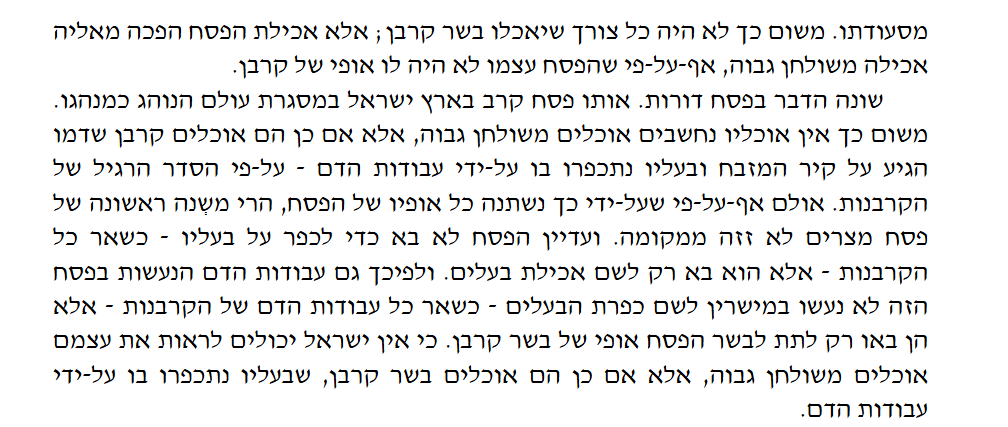
Therefore, they did not need to eat of a real korban. Thus, eating from the Pesach was automatically eating from the Divine table, though the Pesach itself did not have the character of a korban.
It is different when it comes to the paschal lamb for future generations: the pesach that was offered in Eretz Yisrael was in a context of the world working by its usual pattern (i.e., not in overt miracles). Therefore, people are not considered eating at God’s table, unless they eat a korban whose blood was placed on the wall of the altar, and whose owners could gain atonement through the actions done with the blood – based on the regular order of the sacrifices.