The Chumash presents the sin of piggul as eating a korban past its allotted time. Chazal, however, explain it as intending to eat (or do other parts of the worship) past the allotted time. How should we understanding this difference? In this shiur, we will examine a few approaches to the gap between peshat (=plain contextual meaning) and derash (=rabbinic interpretation) and will understand more about the world of korbanot in the process.
Menachot 11b, 13a
Questions? Comments? Email dinanddaf@gmail.com
- משנה מנחות א:ג
…הַקּוֹמֵץ אֶת הַמִּנְחָה…לֶאֱכֹל שְׁיָרֶיהָ לְמָחָר, אוֹ כַזַּיִת מִשְּׁיָרֶיהָ לְמָחָר, לְהַקְטִיר קֻמְצָהּ לְמָחָר, אוֹ כַזַּיִת מִקֻּמְצָהּ לְמָחָר, אוֹ לְהַקְטִיר לְבוֹנָתָהּ לְמָחָר, פִּגּוּל וְחַיָּבִין עָלָיו כָּרֵת. זֶה הַכְּלָל, כָּל הַקּוֹמֵץ, וְהַנּוֹתֵן בִּכְלִי, וְהַמְהַלֵּךְ, וְהַמַּקְטִיר, לֶאֱכֹל דָּבָר שֶׁדַּרְכּוֹ לֶאֱכֹל, וּלְהַקְטִיר דָּבָר שֶׁדַּרְכּוֹ לְהַקְטִיר…חוּץ לִזְמַנּוֹ, פִּגּוּל וְחַיָּבִין עָלָיו כָּרֵת, וּבִלְבַד שֶׁיִּקְרַב הַמַּתִּיר כְּמִצְוָתוֹ…
…With regard to one who removes a handful from the meal offering with the intent to partake of its remainder…on the next day or to partake of an olive-bulk of its remainder on the next day, to burn its handful on the next day or to burn an olive-bulk of its handful on the next day, or to burn its frankincense on the next day, the offering is piggul, and one is liable to receive karet for partaking of the remainder of that meal offering. This is the principle: In the case of anyone who removes the handful, or places the handful in the vessel, or who conveys the vessel with the handful to the altar, or who burns the handful on the altar, with the intent to partake of an item whose typical manner is such that one partakes of it, e.g., the remainder, or to burn an item whose typical manner is such that one burns it on the altar, e.g., the handful or the frankincense…beyond its designated time, the offering is piggul and one is liable to receive karet on account of it, provided that the permitting factor, i.e., the handful, was sacrificed in accordance with its mitzva…
2. משנה מנחות ב:א
הַקּוֹמֵץ אֶת הַמִּנְחָה לֶאֱכֹל שְׁיָרֶיהָ אוֹ לְהַקְטִיר קֻמְצָהּ לְמָחָר, מוֹדֶה רַבִּי יוֹסֵי בָּזֶה, שֶׁהוּא פִגּוּל וְחַיָּבִין עָלָיו כָּרֵת. לְהַקְטִיר לְבוֹנָתָהּ לְמָחָר, רַבִּי יוֹסֵי אוֹמֵר, פָּסוּל וְאֵין בּוֹ כָרֵת, וַחֲכָמִים אוֹמְרִים, פִּגוּל וְחַיָּבִין עָלָיו כָּרֵת. אָמְרוּ לוֹ, מַה שָּׁנָה זוֹ מִן הַזָּבַח. אָמַר לָהֶם, שֶׁהַזֶּבַח דָּמוֹ וּבְשָׂרוֹ וְאֵמוּרָיו אֶחָד, וּלְבוֹנָה אֵינָהּ מִן הַמִּנְחָה:
In the case of a priest who removes a handful from the meal offering with the intent to partake of its remainder or to burn its handful on the next day, Rabbi Yosei concedes in this instance that it is a case of piggul and he is liable to receive karet for partaking of it. But if the priest’s intent was to burn its frankincense the next day, Rabbi Yosei says: The meal offering is unfit but partaking of it does not include liability to receive karet. And the Rabbis say: It is a case of piggul and he is liable to receive karet for partaking of the meal offering. The Rabbis said to Rabbi Yosei: In what manner does this differ from an animal offering, where if one slaughtered it with the intent to sacrifice the portions consumed on the altar the next day, it is piggul? Rabbi Yosei said to the Rabbis: There is a difference, as in the case of an animal offering, its blood, and its flesh, and its portions consumed on the altar are all one entity. Consequently, intent with regard to any one of them renders the entire offering piggul. But the frankincense is not part of the meal offering.
3. Brown-Driver-Briggs Biblical Dictionary
פִּגּוּל n.m. Lv 7:18 foul thing, refuse, but only as term. techn. of unclean sacrificial flesh;—it is פ׳ if eaten on third day Lv 7:18 (P), 19:7 (H); cf. בְּשַׂר פ׳ Ez 4:14 (undefined); pl. מְרַק פִּגֻּלִים Is 65:4 broth of refuse things (Kt פרק), RSSem i. 325, 2nd ed. 343 thinks of flesh with the blood; Duad loc. of mice and other unclean animals.
4. רמב”ם הל’ פסולי המוקדשין יג:א
א שָׁלֹשׁ מַחְשָׁבוֹת הֵן שֶׁפּוֹסְלִין אֶת הַקָּרְבָּנוֹת. וְאֵלּוּ הֵן. מַחֲשִׁבֶת שִׁנּוּי הַשֵּׁם. וּמַחְשֶׁבֶת הַמָּקוֹם. וּמַחְשֶׁבֶת הַזְּמַן…
There are three improper intents that disqualify sacrifices. They are: the intent [to offer a sacrifice] for a different purpose, the intent [to offer or partake of the sacrifice] in an [improper] place, and the intent [to offer or partake of the sacrifice] at an [improper] time…(Refer back to opening Zevachim Din and Daf shiur about לשמה to refresh your memory!)
4. ויקרא ז:יז-יח
וְהַנּוֹתָ֖ר מִבְּשַׂ֣ר הַזָּ֑בַח בַּיּוֹם֙ הַשְּׁלִישִׁ֔י בָּאֵ֖שׁ יִשָּׂרֵֽף׃
What is then left of the flesh of the sacrifice shall be consumed in fire on the third day.
וְאִ֣ם הֵאָכֹ֣ל יֵ֠אָכֵ֠ל מִבְּשַׂר־זֶ֨בַח שְׁלָמָ֜יו בַּיּ֣וֹם הַשְּׁלִישִׁי֮ לֹ֣א יֵרָצֶה֒ הַמַּקְרִ֣יב אֹת֗וֹ לֹ֧א יֵחָשֵׁ֛ב ל֖וֹ פִּגּ֣וּל יִהְיֶ֑ה וְהַנֶּ֛פֶשׁ הָאֹכֶ֥לֶת מִמֶּ֖נּוּ עֲוֺנָ֥הּ תִּשָּֽׂא׃
If any of the flesh of the sacrifice of well-being is eaten on the third day, it shall not be acceptable; it shall not count for the one who offered it. It is an offensive thing, and the person who eats of it shall bear the guilt.
5. ויקרא יט:ה-ח
וְכִ֧י תִזְבְּח֛וּ זֶ֥בַח שְׁלָמִ֖ים לַי-הֹוָ֑ה לִֽרְצֹנְכֶ֖ם תִּזְבָּחֻֽהוּ׃
When you sacrifice an offering of well-being to God, sacrifice it so that it may be accepted on your behalf.
בְּי֧וֹם זִבְחֲכֶ֛ם יֵאָכֵ֖ל וּמִֽמׇּחֳרָ֑ת וְהַנּוֹתָר֙ עַד־י֣וֹם הַשְּׁלִישִׁ֔י בָּאֵ֖שׁ יִשָּׂרֵֽף׃
It shall be eaten on the day you sacrifice it, or on the day following; but what is left by the third day must be consumed in fire.
וְאִ֛ם הֵאָכֹ֥ל יֵאָכֵ֖ל בַּיּ֣וֹם הַשְּׁלִישִׁ֑י פִּגּ֥וּל ה֖וּא לֹ֥א יֵרָצֶֽה׃
If it should be eaten on the third day, it is an offensive thing, it will not be acceptable.
וְאֹֽכְלָיו֙ עֲוֺנ֣וֹ יִשָּׂ֔א כִּֽי־אֶת־קֹ֥דֶשׁ יְ-הֹוָ֖ה חִלֵּ֑ל וְנִכְרְתָ֛ה הַנֶּ֥פֶשׁ הַהִ֖וא מֵעַמֶּֽיהָ׃
And one who eats of it shall bear the guilt for having profaned what is sacred to God; that person shall be cut off from kin.
6. דברים יז:א
לֹא־תִזְבַּח֩ לַי-הֹוָ֨ה אֱ-לֹהֶ֜יךָ שׁ֣וֹר וָשֶׂ֗ה אֲשֶׁ֨ר יִהְיֶ֥ה בוֹ֙ מ֔וּם כֹּ֖ל דָּבָ֣ר רָ֑ע כִּ֧י תוֹעֲבַ֛ת יְ-הֹוָ֥ה אֱ-לֹהֶ֖יךָ הֽוּא׃ {ס}
You shall not sacrifice to your God the Lord an ox or a sheep that has any defect of a serious kind, for that is abhorrent to your God the Lord.
7. ספרי דברים שם
מנין לקדשים ששחטם חוץ לזמנם וחוץ למקומם שעובר בלא תעשה תלמוד לומר דבר שתלוי בדבר.
And whence is it derived that if one slaughtered them for the purpose of outside of their (proper) time or place that he transgresses a negative commandment? From “any thing (davar),” connoting anything which is dependent upon speech (dibbur [like “davar“], e.g., if one says: “I am slaughtering to perform this and this sacrificial service outside of its time or place”).
8. רמב”ם הלכות פסולי המוקדשין יג:ב
מִפִּי הַשְּׁמוּעָה לָמְדוּ שֶׁזֶּה שֶׁנֶּאֱמַר בַּתּוֹרָה (ויקרא ז יח) “וְאִם הֵאָכל יֵאָכֵל מִבְּשַׂר זֶבַח שְׁלָמָיו” אֵינוֹ מְדַבֵּר אֶלָּא בִּמְחַשֵּׁב בִּשְׁעַת הַקְרָבָה שֶׁיֹּאכַל מִמֶּנּוּ בַּשְּׁלִישִׁי. וְהוּא הַדִּין לְכָל קָרְבָּן שֶׁחִשֵּׁב עָלָיו בִּשְׁעַת מַעֲשָׂיו שֶׁיֹּאכַל מִמֶּנּוּ לְאַחַר זְמַן הָרָאוּי לַאֲכִילַת אוֹתוֹ קָרְבָּן. וְכֵן אִם חִשֵּׁב לְהַקְטִיר מִמֶּנּוּ בַּמִּזְבֵּחַ דָּבָר הָרָאוּי לְהַקְטָרָה [לְאַחַר זְמַן הָרָאוּי לְהַקְטָרָה]. כָּךְ לָמְדוּ מִפִּי הַשְּׁמוּעָה. אֶחָד אֲכִילַת אָדָם וְאֶחָד אֲכִילַת מִזְבֵּחַ. אִם חִשֵּׁב עֲלֵיהֶן אַחַר זְמַנָּן הֲרֵי הַקָּרְבָּן פִּגּוּל:
It was learned from oral tradition that the verse in Scripture, “And if any of the flesh of the sacrifice of his peace offering be eaten at all on the third day” (Vayikra 7:18), refers only to where there was an intention at the time of the offering that some of it will be eaten on the third day; and that the same law applied to any sacrifice… if there was an intention that they be performed after their proper time the offering was deemed to be piggul.
9. רשב”ם ויקרא ז:יח
חכמים עקרוהו מפשוטו ופירשוהו במחשב לאכול מזבחו ביום השלישי באחת מד’ עבודות, שחישב בשחיטה או בהולכת דם או בקבלה או בזריקה
The Rabbis uprooted this verse from its plain meaning and explained it as referring to someone who, while performing [in an appropriate manner] one of the four sacrificial duties – while slaughtering, or bringing the blood [to the altar], or collecting [the blood], or sprinkling [the blood] – thought that he would eat the sacrificial meat on the third day.
10. פירוש שד”ל (שמואל דוד לוצאטו (19th c.,Italy) ויקרא ז:יח
אם האכל יאכל מבשר זבח שלמיו ביום השלישי – אם המקריב יותיר מבשר הזבח עד היום השלישי ולא ישרפנו, אבל יאכל ממנו או יאכיל לאחרים שיאכלו ממנו ביום השלישי, אז לא יהיה קרבנו נחשב לו, אך פגול יהיה, וכל מי שיאכל מבשרו אפילו בתוך הזמן (ביום הראשון והשני) עונו ישא. זה הוא משמעות הכתוב,
If the person offering the sacrifice leaves over from the korban meat until the third day and does not burn it, but rather eats from it or feed others from it on the third day, then the korban does not count for him, rather it is piggul. And anyone who eats from its meat, even within the first and second day will bear sin. This is the (plain) meaning of the text.
אבל זו באמת חומרא גדולה, שמי שאכל מבשר הזבח בתוך הזמן ישא עונו כאילו אכל פגול, מפני שאחר כן לא נשרף הנותר יהיה כמי שאכל ממנו ביום השלישי; ועל זה תמה ר׳ אליעזר (זבחים כ״ט.): אחר שהוא כשר יחזור ויפסל? לפיכך הוצרכו חכמים להוציא הכתוב מפשוטו, ולפרש שאין הקרבן נפסל באכילת יום שלישי, אלא אם כן בשעת הקרבתו היתה כוונת הבעלים לאכלו בשלישי, ולכך דרשו המקריב אותו לא יחשב לו, אזהרה לבעלים שלא יחשבו בשעת הקרבה לאכול מבשרו ביום השלישי,והנפש האוכלת ממנו (אם קודם אכילה ידעה מחשבת הבעלים) עונה תשא.
But this is truly a great stringency, that one who ate of the flesh of his offering during its designated time will bear his iniquity as if he ate an abomination, that because what remained was not burned afterwards, he should be as one who ate of it on the third day…. The Sages were, therefore, forced to remove the text from its simple meaning, and explain that the offering does not become disqualified when it is eaten on the third day, but only if at the time of its offering the owner’s intention was to eat it on the third day.
אחרי כמה שנים שהייתי מתמיה על רז״ל, למה (כדברי רשב״ם) עקרו הכתוב הזה מפשוטו, היום (פורים, תר״ז) זכיתי להבין מה ראו על ככה. וכן בכל מקום שנטו רז״ל מפשט הכתובים, כשאין הדבר דעת יחיד, אבל הוא דבר מוסכם בלי חולק, איננו טעות שטעו, אבל הוא תקנה שתקנו, לפי צורך הדורות…
After several years during which I wondered, about our Rabbis of blessed memory, why (as in the words of the Rashbam) they uprooted Scripture from its plain sense, today (Purim, 1847) I merited to understand why they did this. And so too in all places where the Rabbis deviated from the simple meaning of Scripture, when it is not the opinion of a single authority, but rather the undisputed consensus, it is not a mistake, but rather an ordinance which they enacted in accordance with the needs of the generations…
11/ רב אלי חדד,”דין פיגול במקרא ובהלכה“, מתוך מגדים – ביטאון לענייני מקרא – גיליון נח (שבט תש”ף) – הוצאת תבונות
עתה אפשר לחזור ולבאר את פירושם של חז”ל לדין פיגול. כיוון שבפרשת ויקרא עבודת הדם מצויה במוקד עבודת הקרבנות, יוצא שברגע סיום עבודת הדם הקרבן השיג את תכליתו ונרצה. בניגוד לכך, כיוון שבפרשת צו אכילת הקרבן מצויה במוקד עבודת הקרבנות, רק לאחר שהקרבן נאכל הושגה תכליתו. פרשיות ויקרא וצו עומדות אפוא בסתירה זו לזו בנוגע לעבודת הקרבנות המרכזית, האם היא עבודת הדם או אכילת הקרבן. אם עבודת הדם היא קו פרשת המים של הקרבן הקובעת כשרותו, הרי גם אם יארע פסול לאחר מכן הקרבן נרצה ועלה לבעלים. מאידך גיסא, אם אכילת הקרבן היא קו פרשת המים שלו, הקרבן יוכשר רק לאחר אכילה כדין של בשר הזבח.
Now we can return to explaining the interpretation of the Sages on the law of piggul. Since in parshat Vayikra the worship done with the sacrificial blood is at the center of the sacrificial worship, it follows that once the work of the blood (i.e., placement of blood on the altar) is completed, the sacrifice has achieved its purpose and has been accepted (by God). In contrast, since in parshat Tzav the eating of the sacrifice is at the center of the sacrificial worship, only once sacrifice has been eaten has its purpose been achieved. The parshiot of Vayikra and Tzav therefore contradict each other regarding the central work of sacrifice, whether it is the work of the blood or the eating of the sacrifice. If the work of the blood is the watershed of the sacrifice that determines its validity, then even if something wrong happens afterwards, the sacrifice will be accepted and is credited to the owner. On the other hand, if the eating of the sacrifice is its watershed, the sacrifice will only be validated after the meat of the sacrifice has been lawfully eaten.
חכמים הכריעו למעשה, שעבודת הדם היא הפעולה המרכזית הקובעת את כשרות הקרבן.[34] לכן היו חייבים להוציא מפשוטם את הפסוקים הקובעים שאכילת בשר הזבח ביום השלישי מבטלת את הקרבן, שהרי לא יתכן ש”אחר שהוא כשר יחזור ויפסל”.[35] עם זאת, כדי לתת מקום גם לבחינה של פרשת צו הם לא עקרו דין זה לחלוטין. הם שילבו את בחינת האכילה לתוך בחינת עבודת הדם ופרשו, שמדובר במי שמחשב בשעת ביצוע עבודות הדם לאכול את בשר הזבח ביום השלישי. פירוש זה הוביל להרחבת דין פיגול לא רק ליום השלישי, אלא לכל מחשבה לאכול את בשר הקרבן חוץ לזמנו. שהרי אין מדובר באכילת הבשר אלא במחשבה על אכילתו.[36]
The Sages ruled practically that the blood ritual is the central act that determines the validity of the sacrifice.[34] Therefore, they had to remove from their plain meaning the verses that state that eating the meat of the sacrifice on the third day invalidates the sacrifice, since it is not possible that “after it is valid, it will regress to become invalid.”[35] However, in order to also make room for the perspective of parshat Tzav, they did not completely uproot this law. They integrated the dimension of eating into the dimension of the blood ritual and interpreted it as referring to someone who, while performing the blood ritual, intends to eat the meat of the sacrifice on the third day. This interpretation led to the extension of the law of piggul not only to the third day, but to any thought of eating the meat of the sacrifice outside of its time. After all, it is not about eating the meat, but rather thinking about eating it.[36]
12. רב אמנון בזק, פרשת צו: דין פיגול בפשוטו של מקרא ובמדרש ההלכה
Let us note that the entire discussion of the intentions of the offerer does not appear at all in Scripture, according to its plain sense. What then is the nature of this difference?
It seems that this difference reflects a significant transition with regard to the sacrifices, from action to thought. Whereas the Torah emphasizes the practical aspects of the offering of a sacrifice, Chazal place their emphasis on the question of the intentions of the one offering the sacrifice.
Its stands to reason that this difference stems from the well-known problem that accompanies the sacrificial service, the one that many of the prophets warned about, i.e., focusing on the sacrificial order without the requisite spiritual accouterment. Let us note, for example, the well-known words of the prophet Mikha (6:6-8) on this topic:
(6) With what shall I come before the Lord, and bow myself before the high God? Shall I come before him with burnt offerings, with calves of a year old? (7) Will the Lord be pleased with thousands of rams, or with ten thousands of rivers of oil? Shall I give my firstborn for my transgression, the fruit of my body for the sin of my soul? (8) He has told you, O man, what is good; and what does the Lord require of you, but to do justly and to love true loyalty, and to walk humbly with your God.[6]
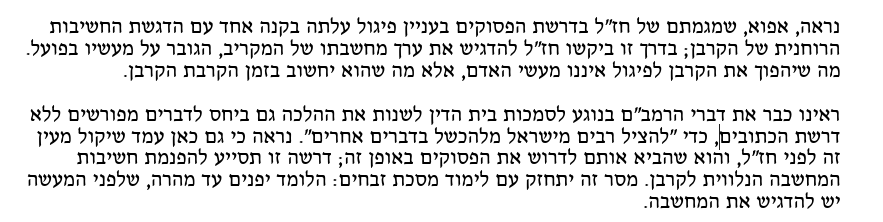
It seems then that Chazal’s inclination in their interpretation of the verses regarding piggul fits in well with this idea. In this way, Chazal tried to emphasize the value of the intentions of the one offering the sacrifices, which are more important than his actual actions. What turns an offering into a piggul is not what a person does, but what he thinks about at the time of the offering. We have already seen what the Rambam says regarding the High Court’s authority to change a law even in the case of explicit regulations that are not based on interpretations of the verses, “in order to bring back the multitudes to religion and save them from general religious laxity.” It would appear that here too a consideration of this sort stood before Chazal and brought them to interpret the verses as they did, in order to internalize the importance of the intentions that accompany sacrifices. This message is reinforced by a study of Massekhet Zevachim: such study quickly brings home the idea that greater emphasis should be placed on a person’s intentions than on his actions.
13. Dr. David Brodsky, “‘Thought Is Akin to Action’: The Importance of Thought in Zoroastrianism and the Development of a Babylonian Rabbinic Motif,” in Irano-Judaica VII: Studies relating to Jewish contacts with Persian culture throughout the ages, Eds. Julia Rubanovich and Geoffrey Herman, p166-67