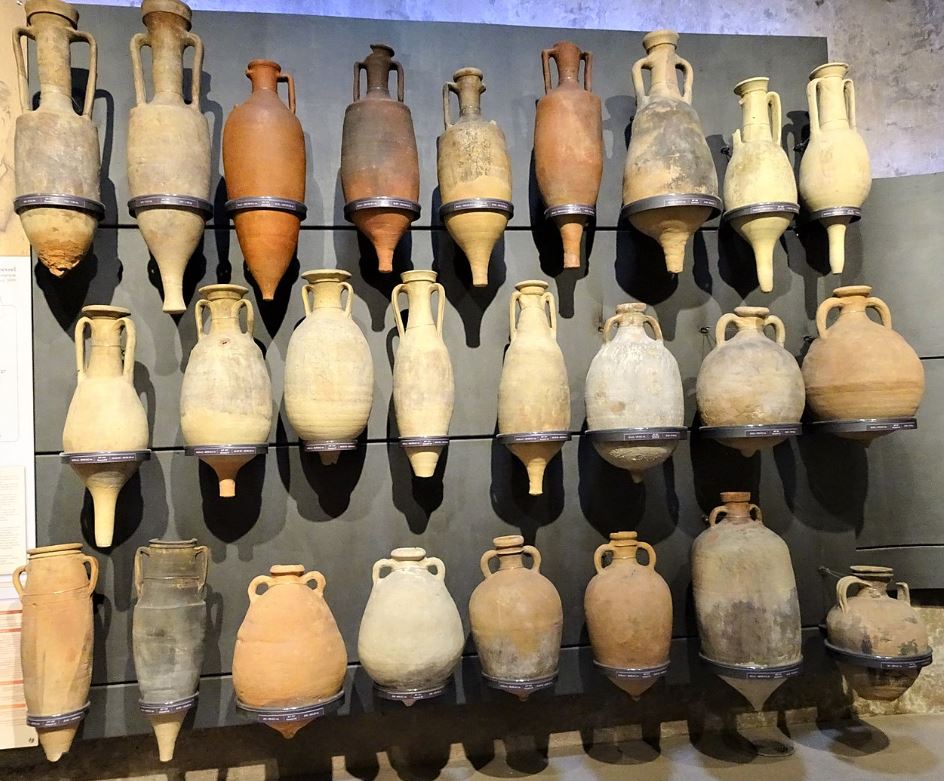
What do you like on your bagel: sesame, caraway, other seeds? The Gemara asks what would you like on your matza:
“Come and hear: [In the case of matza that one] seasoned with black cumin, with sesame, or with any type of spice, it is fit [to be eaten during the festival of Passover] as it is considered matza, but it is called seasoned matza.” (Menachot 23b)
Can sesame even be eaten on Passover? To answer that question let’s explore sesame. Sesame is a seed that grows in pods. The seeds are rich in oil. Sesame can grow under less than ideal conditions, with little water and in hot places. That explains why it is one of the earliest domesticated oil plants and today is grown primarily in Africa. Sesame was a well-known crop in ancient times. The Mishnah includes sesame oil in its list of oils that one may use to light Shabbat candles:
“And the Rabbis permit lighting with all oils; with sesame oil, with nut oil, with turnip oil, with fish oil, with gourd oil, with tar, and even with naphtha.” (Mishnah Shabbat 2:2)
The Talmud also uses sesame as a good example of a small measurement, something as small as a sesame seed. In discussing the precision of Rabbinic measurements, the sesame is meant to mean the tiniest bit:
“All the measures of the Sages are like this; [they are precise and exact.] . . . an egg-bulk of impure food can render other food ritually impure, but an egg-bulk less of a sesame seed does not render food ritually impure.” (Rosh HaShanah 13a)
Like all produce, sesame was vulnerable to insects. The Gemara uses this fact as a metaphor for destructive behaviors:
“Rav Ḥisda says: Licentious behavior in a home causes damage like a worm causes damage to sesame. And Rav Ḥisda says: Anger in a home causes damage like a worm causes damage to sesame.” (Sotah 3b)
Dr. Moshe Raanan explains that sesame was chosen by the Rabbis because it is small and so the worm can decimate a lot in a short time, just like anger can wreck a house quickly.
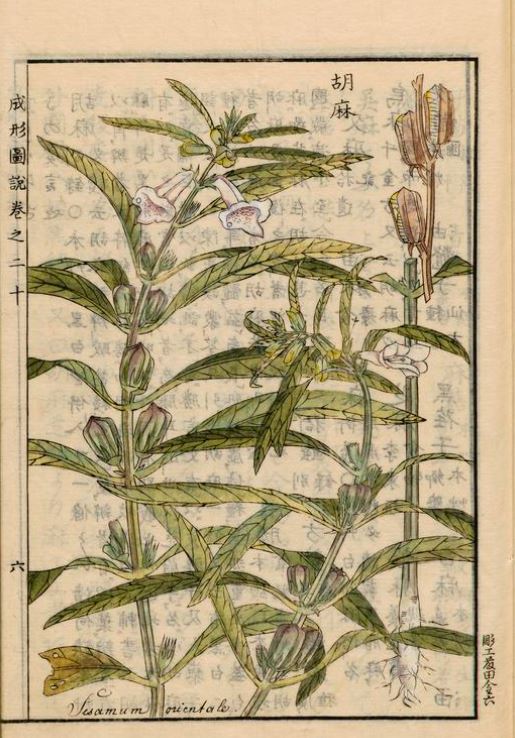
Leiden University Library, CC BY 4.0 <https://creativecommons.org/licenses/by/4.0>, via Wikimedia Commons
Sesame was a plant that was not used to make bread (i.e., it is not one of the five grains) and so in the time of the Mishnah and Gemara it was eaten, like other plants, on Passover. In the Middle Ages most Ashkenazi authorities began to forbid eating legumes (kitniyot) on Passover, for fear that grains would be mixed in with them. Is sesame a legume? Botanically it is not. Halachically however, there was a strong opinion that it should not be eaten on Passover, like real legumes. In the early twentieth century there was a factory in Jaffa that used a new process to make sesame oil, without any water. The factory owner came to the Rabbi of Jaffa, Rabbi Abraham Isaac HaCohen Kook and asked that this oil should be certified kosher for Passover. Rabbi Kook investigated the factory, the process and the sources and determined that there was no reason that the oil could not be used on Passover, and that is how he ruled. There was a backlash from the more conservative Jerusalem rabbis. Today there is still disagreement among Ashkenazim as to whether or not sesame oil can be used on Passover.
Today the world produces about six million tons of sesame, and the largest importer of it is Japan which uses lots of sesame in its cooking. Israel used to grow the crop in ancient times and even in the early years of the twentieth century it was grown here on a large scale. However, by the 1960s Israeli farmers stopped growing sesame because it must be harvested manually and that was not profitable. The reason for the intense manual labor is that when the seeds are ripe, the pods split open by themselves. Using a combine would lose many of the seeds. This may be the origin of that mysterious phrase from Ali Baba and the Forty Thieves, “Open, Sesame!”
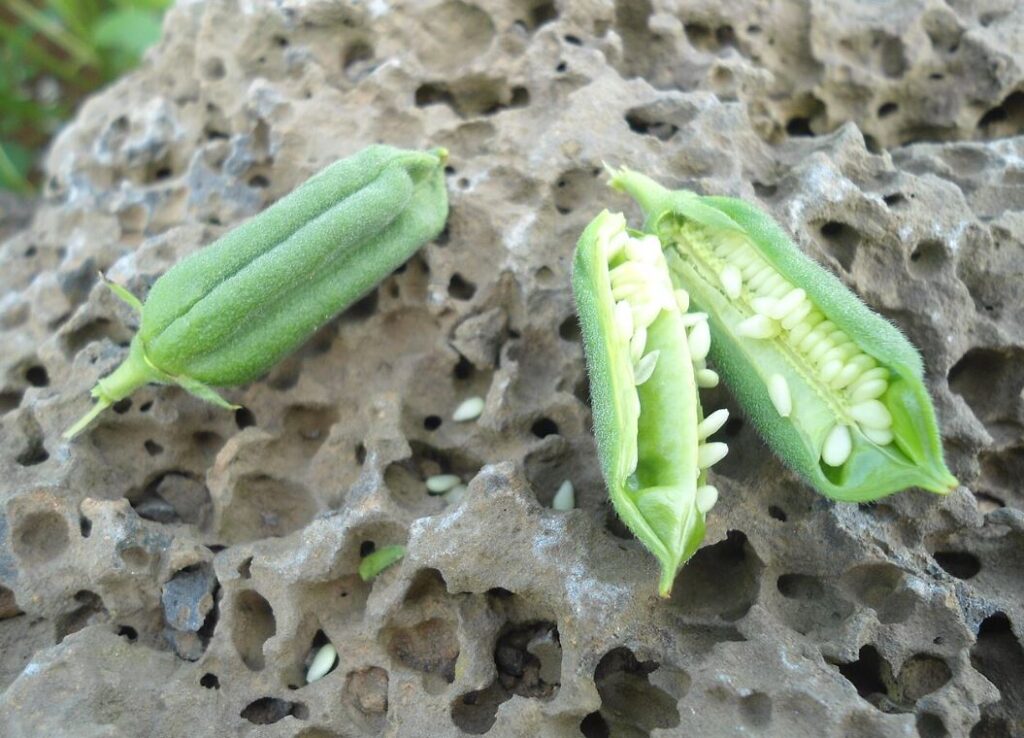
Anna Frodesiak, CC0, via Wikimedia Commons
However, a few years ago an Israeli scientist named Zvika Peleg became very interested in sesame. He went to Africa to study how to grow it and then he developed a new strain of sesame that not only yields three times as many seeds, but the pods do not open by themselves. Today his sesame is grown in Israel and is used to make uniquely Israeli techina.
While the rest of the world might make sesame oil, sesame candy or other delicacies, here in the Middle East sesame gets ground up to make tehina. Tehina comes from the Arabic word for grinding which is the same as the Hebrew word, ט ח נ. It was traditionally ground on huge stone grindstones and that is still the method in many places today, like the famous tehina factories in the Muslim Quarter of Jerusalem.
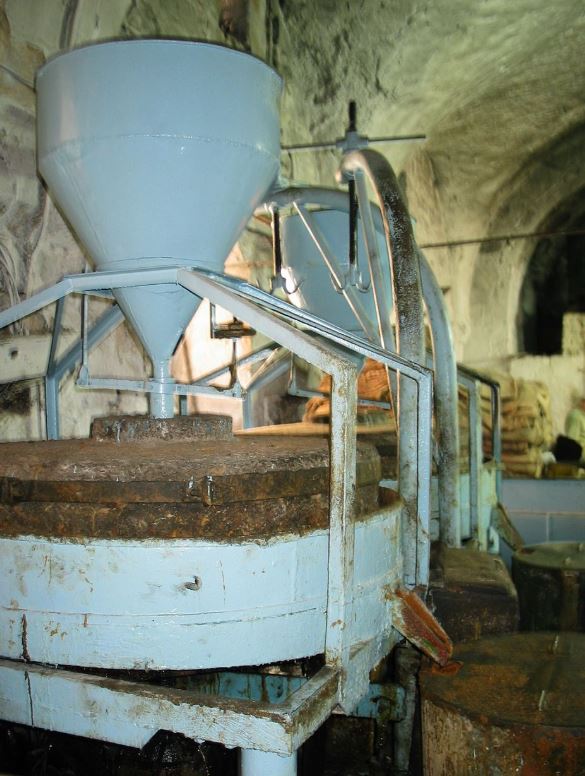
by Ester Inbar, available from https://commons.wikimedia.org/wiki/User:ST., Attribution, via Wikimedia Commons
One of the most interesting places to buy your tehina is the Har Bracha factory. This is a family owned business on Mount Gerizim in the Shomron, and the owners are Samaritans, a sect who broke away long ago from the Israelites and have their own law based on the Torah. They are a fascinating group to visit and their tehina is considered one of the best in Israel. You can smell the roasting sesame seeds long before you reach the factory and they give out samples warm from the press to drink, straight up.
Tehina is also used to make another Middle Eastern treat, halva. Although halva is a generic name for anything sweet made from oil (halva means sweet in Arabic) here in Israel it is usually made from sesame. According to Dr. Moshe Raanan, Roman soldiers ate halva to give them strength and Babylonian women ate it to preserve their youthful looks.
Oil, tehina, halva or just seeds on your pastries – sesame is versatile and delicious.
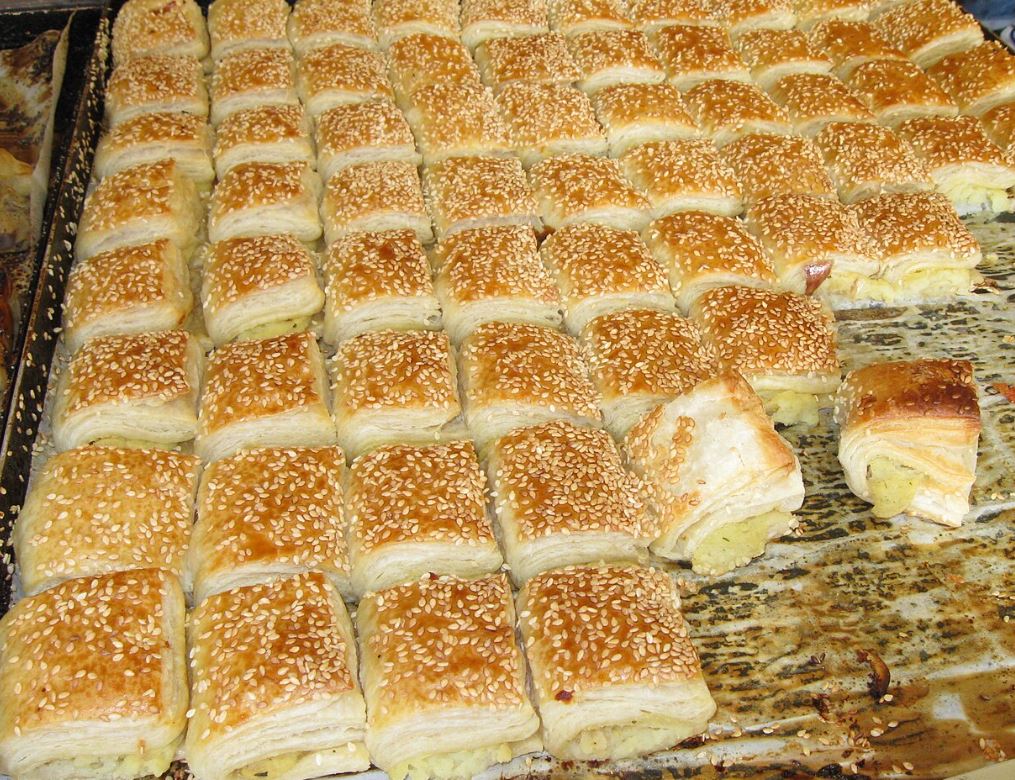
Yoninah, CC BY-SA 3.0 <https://creativecommons.org/licenses/by-sa/3.0>, via Wikimedia Commons