You see them on Jewish homes all over the world: big, small, ornate, simple. The mezuzah is the sign that Jews live here, as the Torah tells us:
“Bind them as a sign on your hand and let them serve as a symbol on your forehead; inscribe them on the doorposts of your house and on your gates” (Devarim 6:8-9)
The Sages interpreted these verses to mean that we must put the words of these texts on our doorposts. Karaites and Samaritans interpret the verse in a more metaphorical way and they will put any significant Biblical text above the door.
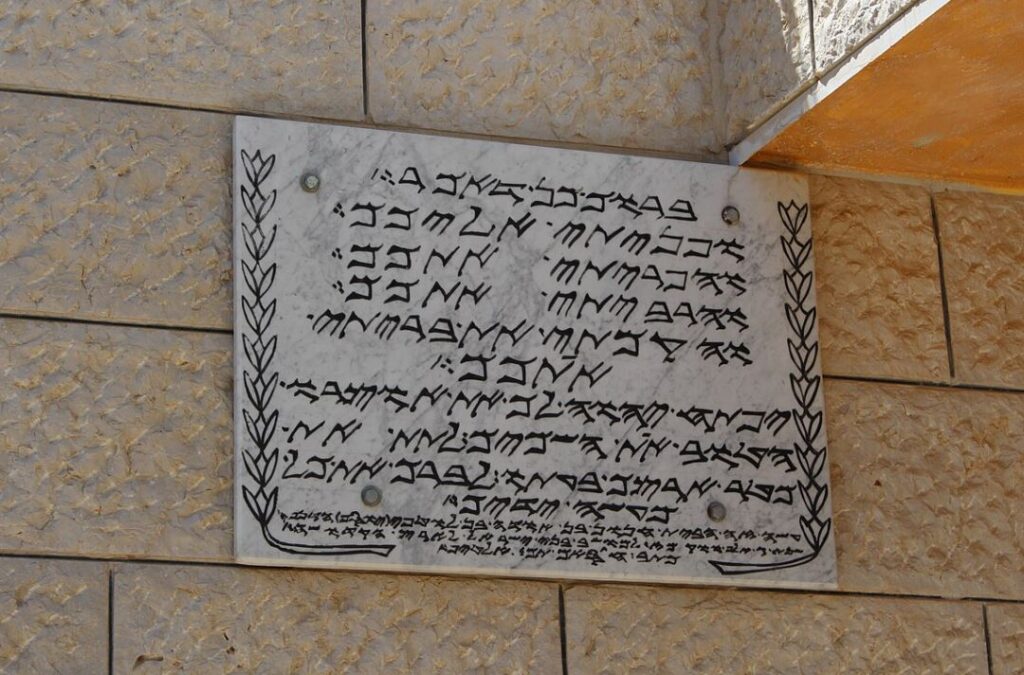
A Samaritan mezuzah
Deror_avi, CC BY-SA 3.0 <https://creativecommons.org/licenses/by-sa/3.0>, via Wikimedia Commons
The laws of mezuzah and what texts they must contain are addressed here in Menachot. We use the word mezuzah to mean the case and the parchment inside containing the first two paragraphs of Shema. But technically the word means the doorposts, or to use Biblical terms, the area between the threshold (סף) and the lintel (משקוף). The Torah tells us that the mezuzah, like tefillin, is meant to make you think always of God and the mitzvot. The Gemara expands this idea:
“Rabbi Eliezer ben Ya’akov says: Anyone who has phylacteries on his head, phylacteries on his arm, ritual fringes on his garment, and a mezuza on his doorway is strengthened from all sides so that he will not sin, as it is stated in the verse: “And a threefold cord is not quickly broken” (Ecclesiastes 4:12).” (Menachot 43b)
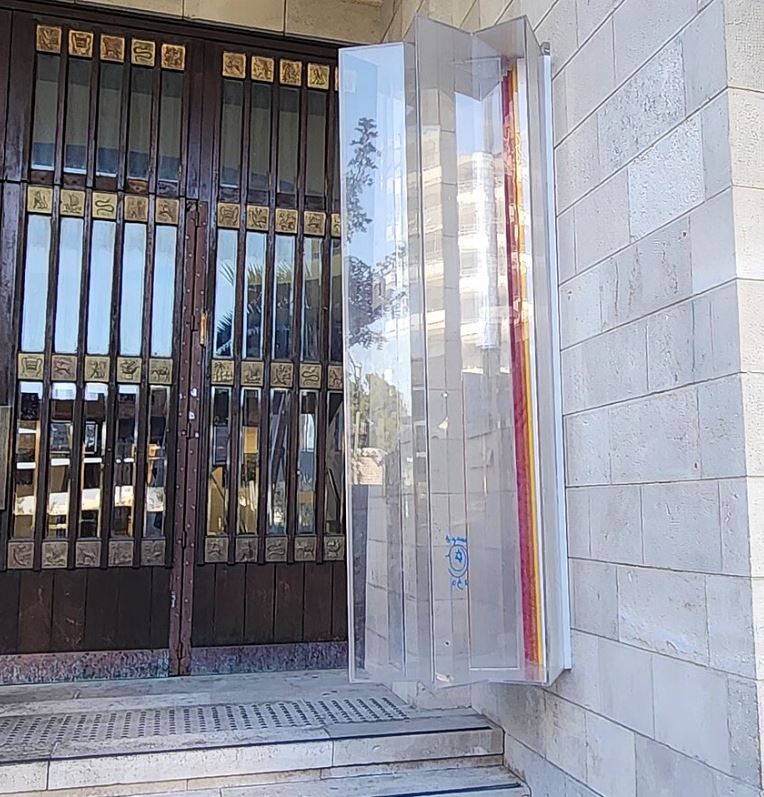
It would be hard not to notice this mezuzah
Baruch Niv Pikiwiki Israel, CC BY 2.5 <https://creativecommons.org/licenses/by/2.5>, via Wikimedia Commons
A person who is surrounded by reminders of God and the Torah will have a harder time sinning. Conversely, someone who lives in a world free from these reminders will come much closer to bad behavior:
“Seven are ostracized by Heaven: A Jew who does not have a wife; and one who has a wife but has no sons; and one who has sons whom he does not raise to engage in Torah study; and one who does not have phylacteries on his head, and phylacteries on his arm, and ritual fringes on his garment, and a mezuza in his doorway; and one who withholds shoes from his feet.” (Pesachim 113b)
The mezuzah is often seen as a way of protecting a home. The Gemara states this in a number of places, including on our daf:
“Rabbi Ḥanina says: Come and see that the attribute of flesh and blood is not like the attribute of the Holy One, Blessed be He. The attribute of flesh and blood is that a king sits inside and the people protect him from the outside, the attribute of the Holy One, Blessed be He, it is not so. Rather, His servants, the Jewish people, sit inside and He protects them from the outside.” (Menachot 33b)
However, just putting the mezuzah on your door is not enough. Its protection is only merited by someone who understands its deeper meaning – to remind you to keep mitzvot. This is the message behind a comparison of the protection in Egypt, where the blood was placed on the doorposts, to the protection of a mezuzah – the latter only protects if one does not sin. The Mechilta compares the blood placed on the doorposts in Egypt, which protected the Israelites from death, with the mezuzah. If the blood, which was only a temporary measure, could protect them, why doesn’t the mezuzah always protect us? The answer is simple:
“Our sins have prevented it.” (Mechilta deRabbi Yishmael 11:21)
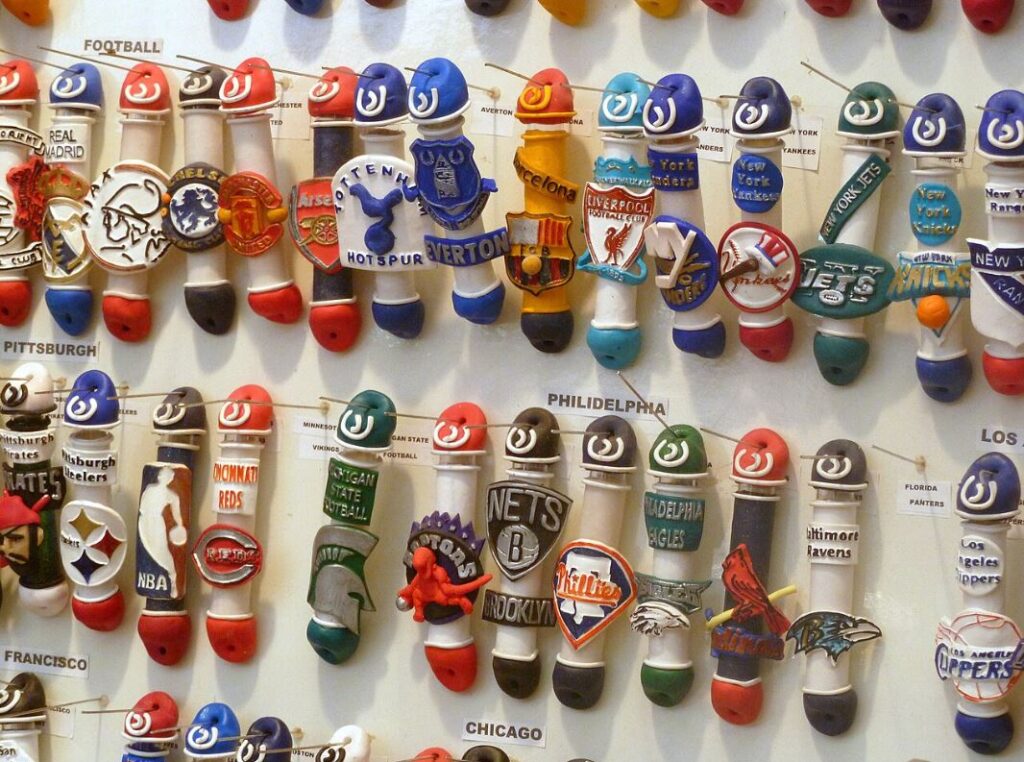
It’s what’s inside that counts
Laliv Gal Pikiwiki Israel, CC BY 2.5 <https://creativecommons.org/licenses/by/2.5>, via Wikimedia Commons
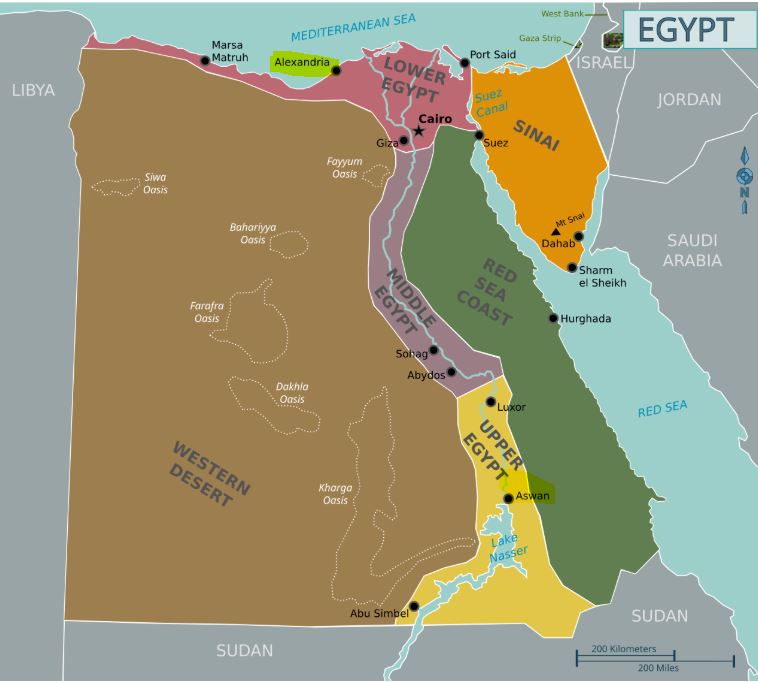
This brings us to another famous “mezuzah” tale – the blood on the doorposts in Egypt. Just before God takes the Israelites out of Egypt, he commands them to slaughter a lamb and put its blood on the doorposts and lintel of the house:
“And the blood on the houses where you are staying shall be a sign for you: when I see the blood I will pass over you, so that no plague will destroy you when I strike the land of Egypt” (Shmot 12:13)
As the midrash explains, God does not need the blood to identify the houses of the Israelites, He knows where they live. The blood is a sign to the Israelites themselves, to affirm their identity. This connects to what the Israelites would have seen in the world around them. Doorposts were used in the Ancient Near East to show the name or profession of the person who lived in the house. We have ossuaries and graves that show a doorway with a name or tools above the door. Doorposts of temples sometimes had the names of gods on them. A doorpost is a way to signal your identity to the world. Someone who wants to hide his or her identity will put their information inside the door, not on the outside, as one interpretation of this verse from Isaiah has it:
“Behind the door and doorpost
You have directed your thoughts; (Isaiah 57:8)
When God tells the Israelites to put blood on the doors, He is telling them to claim their identity as members of His nation. The commandment of mezuzah holds the same idea: put two formative passages of Torah on your doorposts to announce to the world who you are and what you believe in.
In our frightening post October 7th world, some Jews in the Diaspora have removed their mezuzot, afraid to proclaim their identity. Others (and some non-Jews as well, to identify with them) have gone in the other direction – put up a large mezuzah and don’t be afraid of the world, show them that you stand with God and His Torah. As the Yerushalmi puts it so beautifully in this story about a mezuzah sent by Rav to the Gentile ruler Artaban, the mezuzah, and our connection to God, are the ultimate protection:
“Artaban sent a priceless precious pearl to our holy teacher and said to him: Send me a thing of equal value. He sent him a mezuzah. He said to him: I sent you a priceless thing and you send me something worth a follis (small coin)! He said to him, your possessions and mine together are not equal to it! Not only that, but you sent me something that I have to watch over and I sent you something that watches over you while you are sleeping” (Yerushalmi Peah 1:1)
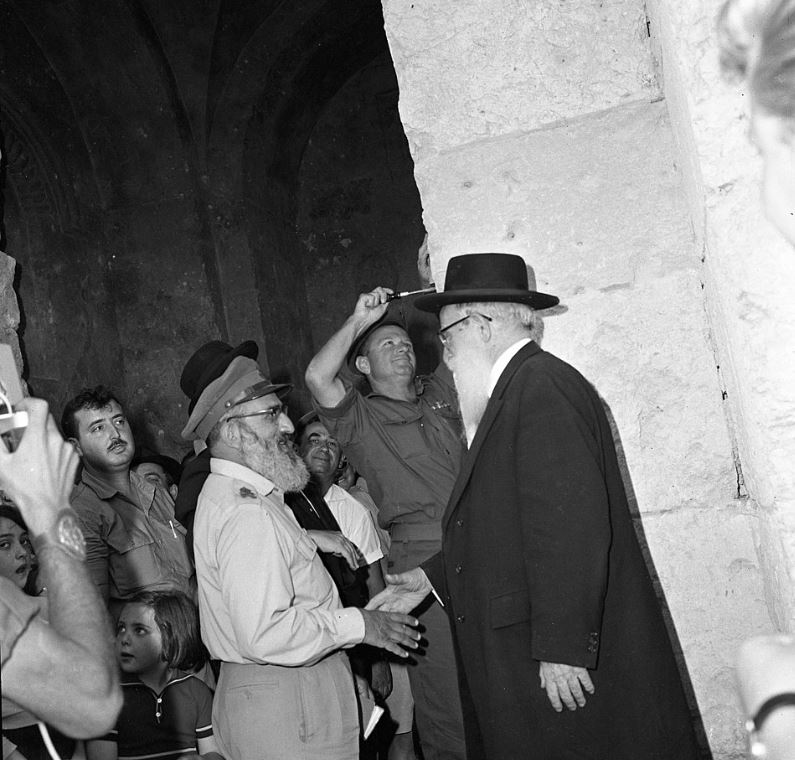
Affixing the mezuzah at Zion Gate in 1969
Benno Rothenberg /Meitar Collection / National Library of Israel / The Pritzker Family National Photography Collection, CC BY 4.0 <https://creativecommons.org/licenses/by/4.0>, via Wikimedia Commons