On Second Thought: Delving Into the Sugya with Rabbanit Yafit Clymer
The evolution of the golden Menorah from the Temple to the State of Israel and what does archaeology teach us about the shape of the Menorah?
Menachot 28-29
Sources:
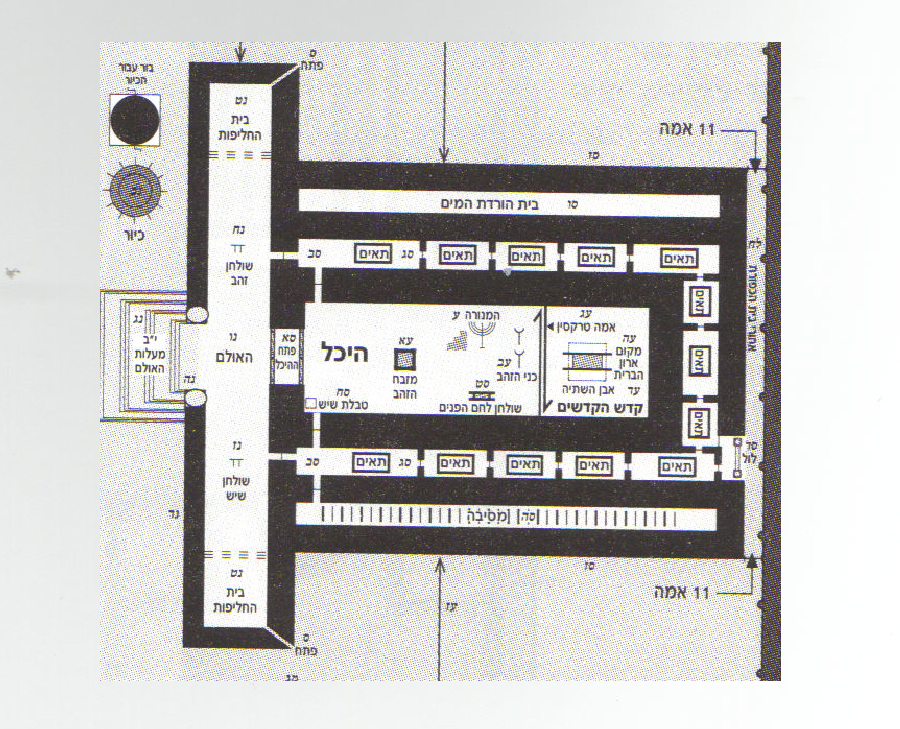
שמות כ״ה:ל״א – וְעָשִׂ֥יתָ מְנֹרַ֖ת זָהָ֣ב טָה֑וֹר מִקְשָׁ֞ה תֵּעָשֶׂ֤ה הַמְּנוֹרָה֙ יְרֵכָ֣הּ וְקָנָ֔הּ גְּבִיעֶ֛יהָ כַּפְתֹּרֶ֥יהָ וּפְרָחֶ֖יהָ מִמֶּ֥נָּה יִהְיֽוּ
You shall make a lampstand of pure gold; the lampstand shall be made of hammered work; its base and its shaft, its cups, calyxes, and petals shall be of one piece.
שמות לז יז – וַיַּ֥עַשׂ אֶת־הַמְּנֹרָ֖ה זָהָ֣ב טָה֑וֹר מִקְשָׁ֞ה עָשָׂ֤ה אֶת־הַמְּנֹרָה֙ יְרֵכָ֣הּ וְקָנָ֔הּ גְּבִיעֶ֛יהָ כַּפְתֹּרֶ֥יהָ וּפְרָחֶ֖יהָ מִמֶּ֥נָּה הָיֽוּ׃
He made the lampstand of pure gold. He made the lampstand—its base and its shaft—of hammered work; its cups, calyxes, and petals were of one piece with it.
במדבר ח׳:ד׳ – וְזֶ֨ה מַעֲשֵׂ֤ה הַמְּנֹרָה֙ מִקְשָׁ֣ה זָהָ֔ב עַד־יְרֵכָ֥הּ עַד־פִּרְחָ֖הּ מִקְשָׁ֣ה הִ֑וא כַּמַּרְאֶ֗ה אֲשֶׁ֨ר הֶרְאָ֤ה ה֙ אֶת־מֹשֶׁ֔ה כֵּ֥ן עָשָׂ֖ה אֶת־הַמְּנֹרָֽה׃ {פ}
Now this is how the lampstand was made: it was hammered work of gold, hammered from base to petal. According to the pattern that GOD had shown Moses, so was the lampstand made.
מלכים א ז מח-מט – וַיַּ֣עַשׂ שְׁלֹמֹ֔ה אֵ֚ת כׇּל־הַכֵּלִ֔ים אֲשֶׁ֖ר בֵּ֣ית ה’ אֵ֚ת מִזְבַּ֣ח הַזָּהָ֔ב וְאֶת־הַשֻּׁלְחָ֗ן אֲשֶׁ֥ר עָלָ֛יו לֶ֥חֶם הַפָּנִ֖ים זָהָֽב׃
וְאֶת־הַ֠מְּנֹר֠וֹת חָמֵ֨שׁ מִיָּמִ֜ין וְחָמֵ֧שׁ מִשְּׂמֹ֛אול לִפְנֵ֥י הַדְּבִ֖יר זָהָ֣ב סָג֑וּר וְהַפֶּ֧רַח וְהַנֵּרֹ֛ת וְהַמֶּלְקַחַ֖יִם זָהָֽב׃
And Solomon made all the furnishings that were in the House of GOD: the altar, of gold; the table for the bread of display, of gold;
the lampstands—five on the right side and five on the left—in front of the Shrine, of solid gold; and the petals, lamps, and tongs, of gold;
בבלי, מנחות כט.
תַּנְיָא, רַבִּי יוֹסֵי בְּרַבִּי יְהוּדָה אוֹמֵר: אָרוֹן שֶׁל אֵשׁ וְשֻׁלְחָן שֶׁל אֵשׁ וּמְנוֹרָה שֶׁל אֵשׁ יָרְדוּ מִן הַשָּׁמַיִם, וְרָאָה מֹשֶׁה וְעָשָׂה כְּמוֹתָם, שֶׁנֶּאֱמַר: ״וּרְאֵה וַעֲשֵׂה כְּתַבְנִיתָם אֲשֶׁר אַתָּה מׇרְאֶה בָּהָר״.
§ It is taught in a baraita: Rabbi Yosei, son of Rabbi Yehuda, says: An Ark of fire and a Table of fire and a Candelabrum of fire descended from the Heavens, and Moses saw their format and fashioned the vessels for the Tabernacle in their likeness. As it is stated after the command to fashion these items: “And see that you make them after their pattern, which is being shown to you in the mount” (Exodus 25:40).
תלמוד בבלי מסכת מנחות דף פו עמוד ב
שֻׁלְחָן בַּצָּפוֹן, וּמְנוֹרָה בַּדָּרוֹם – אָמַר רַבִּי זְרִיקָא, אָמַר רַבִּי אֶלְעָזָר: לֹא לַאֲכִילָה אֲנִי צָרִיךְ, וְלֹא לְאוֹרָה אֲנִי צָרִיךְ.
§ It is taught in a baraita: Rabbi Yosei, son of Rabbi Yehuda, says: An Ark of fire and a Table of fire and a Candelabrum of fire descended from the Heavens, and Moses saw their format and fashioned the vessels for the Tabernacle in their likeness. As it is stated after the command to fashion these items: “And see that you make them after their pattern, which is being shown to you in the mount” (Exodus 25:40).
וַיַּעַשׂ לַבָּיִת חַלּוֹנֵי שְׁקֻפִים אֲטֻמִים״ – תָּנָא: שְׁקוּפִין מִבִּפְנִים, וַאֲטוּמִים מִבַּחוּץ, לֹא לְאוֹרָה אֲנִי צָרִיךְ.
With regard the Temple built by King Solomon, the verse states: “And he made for the House, windows narrow and broad” (I Kings 6:4). The Sages taught in a baraita: Typically, windows are constructed to widen toward the inside in order that the light from the outside would be dispersed throughout the room. For the Temple, God said: Make the windows narrow within and broad without, as I do not require its illumination. On the contrary, the light of the Temple is to be radiated outward.
״מִחוּץ לְפָרֹכֶת הָעֵדוּת בְּאֹהֶל מוֹעֵד״ – עֵדוּת הוּא לְכׇל בָּאֵי עוֹלָם שֶׁהַשְּׁכִינָה שׁוֹרָה בְּיִשְׂרָאֵל.
God instructed Aaron to kindle the Candelabrum: “Outside the Curtain of the testimony in the Tent of Meeting” (Leviticus 24:3). The dividing curtain is referred to here as: The Curtain of the testimony, to indicate that the illumination of the Candelabrum is testimony to all of humanity that the Divine Presence rests among the Jewish people.
וְאִם תֹּאמַר: לְאוֹרָה אֲנִי צָרִיךְ? וַהֲלֹא כׇּל אַרְבָּעִים שָׁנָה שֶׁהָלְכוּ יִשְׂרָאֵל בְּמִדְבָּר לֹא הָלְכוּ אֶלָּא לְאוֹרוֹ!
אֶלָּא עֵדוּת הוּא לְכׇל בָּאֵי עוֹלָם שֶׁהַשְּׁכִינָה שׁוֹרָה בְּיִשְׂרָאֵל.
And if you question this and say: How is this testimony; perhaps the Candelabrum is lit for illumination? To this God would respond: Do I need its light? But isn’t it so that for all forty years that the Jewish people walked in the wilderness of Sinai until they entered Eretz Yisrael, they walked exclusively by His light, i.e., from the pillar of fire that guided them at night. If God provides light for others, he certainly does not need it Himself. Rather, evidently, the illumination of the Candelabrum is testimony to all of humanity that the Divine Presence rests among the Jewish people.
זכריה ד’ ב-ג (הפטרת בהעלותך ושבת ראשונה של חנוכה)
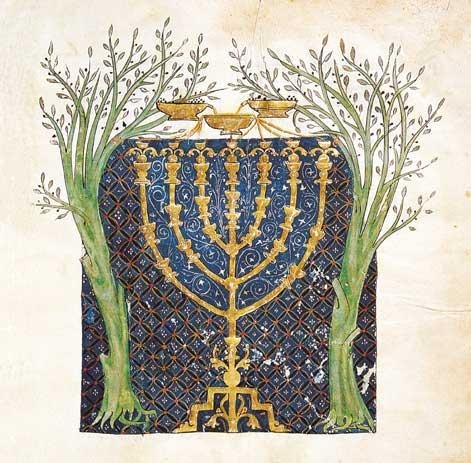
וַיֹּ֣אמֶר אֵלַ֔י מָ֥ה אַתָּ֖ה רֹאֶ֑ה (ויאמר) [וָאֹמַ֡ר] רָאִ֣יתִי ׀ וְהִנֵּ֣ה מְנוֹרַת֩ זָהָ֨ב כֻּלָּ֜הּ וְגֻלָּ֣הּ עַל־רֹאשָׁ֗הּ וְשִׁבְעָ֤ה נֵרֹתֶ֙יהָ֙ עָלֶ֔יהָ שִׁבְעָ֤ה וְשִׁבְעָה֙ מֽוּצָק֔וֹת לַנֵּר֖וֹת אֲשֶׁ֥ר עַל־רֹאשָֽׁהּ׃
He said to me, “What do you see?” And I answered, “I see a lampstand all of gold, with a bowl above it. The lamps on it are seven in number, and the lamps above it have seven pipes;
וּשְׁנַ֥יִם זֵיתִ֖ים עָלֶ֑יהָ אֶחָד֙ מִימִ֣ין הַגֻּלָּ֔ה וְאֶחָ֖ד עַל־שְׂמֹאלָֽהּ׃
and by it are two olive trees, one on the right of the bowl and one on its left.”
המנורה של זכריה – תחילת בית שני Zechariah’s Menorah – Beginning of the Second Temple
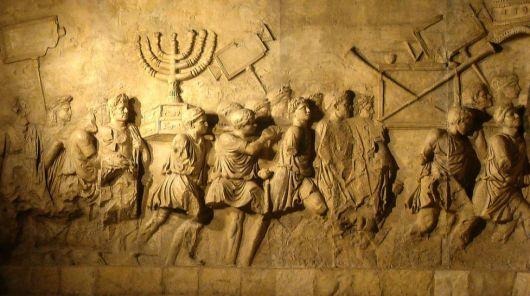
תקופת חורבן בית שני Period of the destruction of the Second Temple
“יוסף בן מתתיהו, תולדות מלחמת היהודים עם הרומאים, ספר ה, פרק ה, פסקה ה; תרגום יעקב נפתלי שמחוני.
הנרות רמזו לשבעת כוכבי הלכת, כי זה היה מספר הקנים היוצאים מן המנורה”
The candles alluded to the seven planets, because that was the number of branches coming out of the menorah.”
“יוסף בן מתתיהו, תולדות מלחמת היהודים עם הרומאים, ספר ז, פרק ה, פסקה ה; תרגום שמחוני
ואמנם שונה היתה מלאכת המנורה הזאת מדרך כל המנורות אשר בידינו. כי מן הבסיס התרומם הגזע בתווך, וממנו נטשו ענפים דקים, אשר דמו בצורתם לקלשון… בראש כל קנה מלמעלה נר-נחושת. ומספר הקנים היה שבעה לכבוד שבעת ימי השבוע אשר ליהודים”
And indeed, the workmanship of this menorah was different from that of all the menorahs that we have. For from the base the trunk rose in the middle, and from it thin branches, which in shape resembled a pitchfork… At the top of each branch was a bronze lamp. And the number of branches was seven in honor of the seven days of the week for the Jews.”
בבלי, מנחות כח: – שפודים של ברזל היו וחיפום בבעץ(רשי=בדיל) העשירו עשאום של כסף, חזרו והעשירו עשאום של זהב”
In the time of the Hasmoneans the Candelabrum was not fashioned from wood but from spits [shappudim] of iron, and they covered them with tin. Later, when they grew richer and could afford to fashion a Candelabrum of higher-quality material, they fashioned the Candelabrum from silver. When they again grew richer, they fashioned the Candelabrum from gold.
המנורה לפי דורא אירופוס, רשי והרמב”ם וחבד
The Menorah according to Dura Europus, Rashi, Maimonides, and Chabad
The Menorah as discovered throughout Israel in the first centuries CE
המנורה כפי שנתגלתה ברחבי א”י במאות הראשונות לספירה
1949 האחים גבריאל ומקסים שמיר
מזמור סז 67
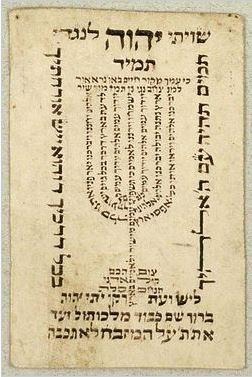
ר’ דוד בר’ יוסף, האבודרהם (ספרד מאה ה14 Spain ) – Rabbi David Bar Yosef, the Abudrahman
“הקורא אותו בכל יום, נחשב כמדליק המנורה הטהורה בבית המקדש, וכאלו מקבל פני שכינה”.
“He who reads it every day is considered to be lighting the pure menorah in the Temple, and thus receives the presence of the Divine Presence.”