Search

Bava Batra 33

Want to dedicate learning? Get started here:

podcast placeholder

0:00
0:00


Summary

More cases regarding disagreements about land ownership are discussed. Rava bar Sharshom was living on property that others claimed belonged to orphans. What did he do to try to prove he was the owner? Was his claim accepted? Another involved a disagreement about heirs – which was the closer relative who was supposed to inherit the property? Since neither had proof, one went to live on the land based on the principle of kol d’alim gvar, whoever is stronger, wins. When he later admitted he was not the closer relative, there was a debate about whether he needed to return all the produce he had eaten or to only return the land at the time of the admission.

A case is brought where the possessor brought testimony that he had eaten produce for two years and couldn’t produce a witness for the third year. Rav Nachman ruled that the possessor needed to return the land and the value of the produce he ate. Rav Zevid held that he did not need to return the value of the produce if he were to say that he possessed the right to eat the fruit (like a sharecropper) but not the land.

A case is brought where a possessor brought one witness to support his claim that he ate produce for three years. One witness’s testimony is not sufficient to prove ownership, but can the witness be used against him and the court will rule that he now needs to pay for the produce that he ate, based on the law that one witness requires him to swear, and since in this case he cannot swear (because he already said he ate the produce), he needs to pay? Is this like the case of the naska d’Rabbi Abba?

Today’s daily daf tools:

Bava Batra 33

זוּזִי אַחֲרִינֵי גַּבֵּיהּ, וַאֲכַלְתַּהּ שְׁנֵי מַשְׁכַּנְתָּא.

other money with him, i.e., he owed me money for a different reason, for which I had no collateral, and I profited from the land for the duration of the years of the collateral.

אָמֵינָא: אִי מַהְדַּרְנָא לַהּ אַרְעָא לְיַתְמֵי, וְאָמֵינָא דְּאִית לִי זוּזִי אַחֲרִינֵי גַּבֵּי דַּאֲבוּכוֹן – אֲמוּר רַבָּנַן: הַבָּא לִיפָּרַע מִנִּכְסֵי יְתוֹמִים – לֹא יִפָּרַע אֶלָּא בִּשְׁבוּעָה. אֶלָּא אֶכְבְּשֵׁיהּ לִשְׁטַר מַשְׁכַּנְתָּא, וְאוֹכְלַהּ שִׁיעוּר זוּזֵי, דְּמִיגּוֹ דְּאִי בָּעֵינָא אָמֵינָא לְקוּחָה הִיא בְּיָדִי – מְהֵימַנָּא, כִּי אָמֵינָא דְּאִית לִי זוּזִי גַּבַּיְיכוּ – מְהֵימַנְנָא.

I then said to myself: If I return the land to the orphans now that the years of collateral have finished, and I say that I have other money with your late father, I will not be able to collect it, as the Sages say that one who comes to collect a debt from the property of orphans can collect only by means of an oath, and I do not wish to take an oath. Rather than do that, I will suppress the document detailing the terms of the collateral, and profit from the land up to the measure of the money that their father owed me. This is legitimate, since if I so desire I can say: It is purchased, and that is why it is in my possession, and I would have been deemed credible, as I profited from the land for the years necessary to establish the presumption of ownership, so when I say that I have money with you, I am also deemed credible.

אֲמַר לֵיהּ: ״לְקוּחָה בְּיָדִי״ לָא מָצֵית אָמְרַתְּ – דְּהָא אִיכָּא עֲלַהּ קָלָא דְּאַרְעָא דְיַתְמֵי הִיא. אֶלָּא זִיל אַהְדְּרַהּ נִיהֲלַיְיהוּ, וְכִי גָּדְלִי יַתְמֵי – אִשְׁתַּעִי דִּינָא בַּהֲדַיְיהוּ.

Abaye said to Rava bar Sharshom: Your reasoning is incorrect. You would not have been able to say: It is purchased, and that is why it is in my possession, as there is publicity concerning it that it is land of orphans. Therefore, you are unable to collect your debt based on the fact that you could have made a more advantageous claim [miggo]. Rather, return the land to the orphans now, and when the orphans become adults, then litigate with them, as you have no other option.

קְרִיבֵיהּ דְּרַב אִידִי בַּר אָבִין שְׁכֵיב, וּשְׁבַק דִּיקְלָא. רַב אִידִי בַּר אָבִין אָמַר: אֲנָא קָרִיבְנָא טְפֵי; וְהָהוּא גַּבְרָא אֲמַר: אֲנָא קָרִיבְנָא טְפֵי. לְסוֹף אוֹדִי לֵיהּ דְּאִיהוּ קָרִיב טְפֵי, אוֹקְמַהּ רַב חִסְדָּא בִּידֵיהּ.

The Gemara relates: A relative of Rav Idi bar Avin died and left a date tree as an inheritance. Another relative took possession of the tree, claiming to be a closer relative than Rav Idi bar Avin. Rav Idi bar Avin said: I am closer in relation to the deceased than he, and that man said: I am closer in relation to the deceased than Rav Idi bar Avin. Ultimately, the other man admitted to Rav Idi bar Avin that, in fact, Rav Idi was closer in relation to the deceased. Rav Ḥisda established the date tree in the possession of Rav Idi bar Avin.

אֲמַר לֵיהּ: לַיהְדַּר לִי פֵּירֵי דַּאֲכַל מֵהָהוּא יוֹמָא עַד הַשְׁתָּא! אָמַר: זֶה הוּא שֶׁאוֹמְרִים עָלָיו אָדָם גָּדוֹל הוּא? אַמַּאן קָא סְמִיךְ מָר – אַהַאי; הָא קָאָמַר דַּאֲנָא מְקָרַבְנָא טְפֵי! אַבָּיֵי וְרָבָא לָא סְבִירָא לְהוּ הָא דְּרַב חִסְדָּא,

Rav Idi bar Avin said to Rav Ḥisda: The value of the produce that he consumed unlawfully from that day when he took possession of the tree until now should be returned to me. Rav Ḥisda said: Is this he about whom people say: He is a great man? On whom is the Master basing his claim to receive the value of the produce? On this other relative. But he was saying until this point: I am closer in relation to the deceased than he. Therefore, you have ownership of the tree only from the time of his admission, and not from when he took possession of the tree. The Gemara comments: Abaye and Rava do not hold in accordance with this opinion of Rav Ḥisda,

כֵּיוָן דְּאוֹדִי – אוֹדִי.

as they hold that once it is so that the other relative admitted that he is not a closer relative, he admitted that he never had any right to the produce of the tree. Therefore, by his own admission, he is liable to reimburse Rav Idi bar Avin.

זֶה אוֹמֵר: ״שֶׁל אֲבוֹתַי״, וְזֶה אוֹמֵר: ״שֶׁל אֲבוֹתַי״; הַאי אַיְיתִי סָהֲדִי דַּאֲבָהָתֵיהּ הוּא, וְהַאי אַיְיתִי סָהֲדִי דַּאֲכַל שְׁנֵי חֲזָקָה –

§ There was an incident where two people dispute the ownership of land. This one says: The land belonged to my ancestors and I inherited it from them, and that one says: The land belonged to my ancestors and I inherited it from them. This one brings witnesses that the land belonged to his ancestors, and that one brings witnesses that he worked and profited from the land for the years necessary for establishing the presumption of ownership.

אָמַר רַב חִסְדָּא: מָה לוֹ לְשַׁקֵּר? אִי בָּעֵי, אָמַר לֵיהּ: מִינָּךְ זְבֵינְתַּהּ וַאֲכַלְתִּיהָ שְׁנֵי חֲזָקָה. אַבָּיֵי וְרָבָא לָא סְבִירָא לְהוּ הָא דְּרַב חִסְדָּא – ״מָה לִי לְשַׁקֵּר״ בִּמְקוֹם עֵדִים – לָא אָמְרִינַן.

Rav Ḥisda said: The one who is in possession of the land is deemed credible due to the legal principle that if one would have been deemed credible had he stated one claim but instead stated another claim that accomplishes the same result, he has credibility, because why would he lie and state this claim? If he wants to lie, he could have said to him: I purchased it from you and I worked and profited from it for the years necessary for establishing the presumption of ownership. Abaye and Rava do not hold in accordance with this opinion of Rav Ḥisda, because they hold that we do not say that the principle of: Why would I lie, applies in a case where there are witnesses contradicting the claim he is stating, and in this case, witnesses testify that it belonged to the ancestors of the other claimant.

הָהוּא דַּאֲמַר לֵיהּ לְחַבְרֵיהּ: מַאי בָּעֵית בְּהַאי אַרְעָא? אֲמַר לֵיהּ: מִינָּךְ זְבַנִי, וַאֲכַלְתִּיהָ שְׁנֵי חֲזָקָה. אֲזַל אַיְיתִי סָהֲדִי דְּאַכְלַהּ תַּרְתֵּי שְׁנֵי. אָמַר רַב נַחְמָן: הָדְרָא אַרְעָא, וְהָדְרִי פֵּירֵי.

There was a certain person who said to another: What do you want with this land of mine? The possessor said to him in response: I purchased it from you and I worked and profited from it for the years necessary for establishing the presumption of ownership. He then went and brought witnesses that he had profited from the land for two years, but he was unable to bring witnesses to testify about a third year. Rav Naḥman said: The land reverts back to the prior owner, and payment for the produce consumed during those two years reverts to the prior owner. Since the possessor was unable to substantiate his claim to the land, the assumption is that he consumed the produce unlawfully.

אָמַר רַב זְבִיד: אִם טָעַן וְאָמַר ״לְפֵירוֹת יָרַדְתִּי״ – נֶאֱמָן. לָאו מִי אָמַר רַב יְהוּדָה: הַאי מַאן דְּנָקֵיט מַגָּלָא וְתוּבַלְיָא, וְאָמַר: אֵיזִיל אֶיגְדְּרֵיהּ לְדִיקְלָא דִפְלָנְיָא, דְּזַבְּנֵיהּ נִיהֲלִי – מְהֵימַן? אַלְמָא לָא חֲצִיף אִינִישׁ דְּגָזַר דִּיקְלָא דְּלָאו דִּילֵיהּ; הָכָא נָמֵי, לָא חֲצִיף אִינִישׁ לְמֵיכַל פֵּירֵי דְּלָאו דִּילֵיהּ.

Rav Zevid said: If initially, when questioned by the other, the one occupying the land claimed and said: I entered the land to consume its produce that I had purchased, he is deemed credible. After all, didn’t Rav Yehuda say: This one who is holding a sickle and rope [vetovelaya] and says: I will go cull [igderei] the dates from the date tree of so-and-so who sold it to me, is deemed credible that he has the right to do so? Apparently, a person is not so brazen that he would cull the dates of a date tree that is not his. Here too, in the case discussed by Rav Zevid, a person is not so brazen as to consume produce that is not his.

אִי הָכִי, אַרְעָא נָמֵי! אַרְעָא, אָמְרִינַן לֵיהּ: אַחְוִי שְׁטָרָךְ. אִי הָכִי, פֵּירֵי נָמֵי! שְׁטָרָא לְפֵירֵי לָא עָבְדִי אִינָשֵׁי.

The Gemara asks: If that is so, that the assumption is that he would not lie, let one be deemed credible with regard to the land as well. The Gemara answers: In terms of the land, we say to him: Show your bill of sale if you indeed purchased it. The Gemara challenges: If that is so, then in terms of the produce as well, let him be deemed credible only if he can produce documentation of his claim. The Gemara explains: It is not common for people to write documents to establish the right to consume produce alone, and one can therefore claim to have consumed the produce based on an oral agreement.

הָהוּא דַּאֲמַר לְחַבְרֵיהּ: מַאי בָּעֵית בְּהַאי אַרְעָא? אֲמַר לֵיהּ: מִינָּךְ זְבַנִית, וַאֲכַלְתִּיהָ שְׁנֵי חֲזָקָה. אַיְיתִי חַד סָהֲדָא דְּאַכְלַהּ תְּלָת שְׁנֵי. סְבוּר רַבָּנַן קַמֵּיהּ דְּאַבָּיֵי לְמֵימַר: הַיְינוּ נְסָכָא דְּרַבִּי אַבָּא –

There was a certain person who said to another: What do you want with this land of mine? The possessor said to him in response: I purchased it from you and I worked and profited from it for the years necessary for establishing the presumption of ownership. He then brought one witness who testified that he profited from the land for the necessary three years. The Rabbis who were studying before Abaye maintained that it made sense to say that the principle in this case is the same as that in the case of the piece of cast metal [naskha] adjudicated by Rabbi Abba.

דְּהָהוּא גַּבְרָא דַּחֲטַף נְסָכָא מֵחַבְרֵיהּ. אֲתָא לְקַמֵּיהּ דְּרַבִּי אַמֵּי, הֲוָה יָתֵיב רַבִּי אַבָּא קַמֵּיהּ. אַיְיתִי חַד סָהֲדָא דְּמִיחְטָף חֲטַפָא מִינֵּיהּ. אֲמַר לֵיהּ: אִין, חֲטַפִי – וְדִידִי חֲטַפִי. אָמַר רַבִּי אַמֵּי:

The Gemara now presents that case: As there was a certain man who snatched a piece of cast metal from another. The one from whom it was taken came before Rabbi Ami while Rabbi Abba was sitting before him, and he brought one witness who testified that it was, in fact, snatched from him. The one who snatched it said to him: Yes, it is true that I snatched it, but I merely snatched that which was mine. Rabbi Ami said:

Today’s daily daf tools:

Delve Deeper

Broaden your understanding of the topics on this daf with classes and podcasts from top women Talmud scholars.

For the Beyond the Daf shiurim offered in Hebrew, see here.

New to Talmud?

Check out our resources designed to help you navigate a page of Talmud – and study at the pace, level and style that fits you. 

The Hadran Women’s Tapestry

Meet the diverse women learning Gemara at Hadran and hear their stories. 

A Gemara shiur previous to the Hadran Siyum, was the impetus to attend it.It was highly inspirational and I was smitten. The message for me was התלמוד בידינו. I had decided along with my Chahsmonaim group to to do the daf and take it one daf at time- without any expectations at all. There has been a wealth of information, insights and halachik ideas. It is truly exercise of the mind, heart & Soul

Phyllis Hecht.jpeg
Phyllis Hecht

Hashmonaim, Israel

In early January of 2020, I learned about Siyyum HaShas and Daf Yomi via Tablet Magazine’s brief daily podcast about the Daf. I found it compelling and fascinating. Soon I discovered Hadran; since then I have learned the Daf daily with Rabbanit Michelle Cohen Farber. The Daf has permeated my every hour, and has transformed and magnified my place within the Jewish Universe.

Lisa Berkelhammer
Lisa Berkelhammer

San Francisco, CA , United States

I started learning when my brother sent me the news clip of the celebration of the last Daf Yomi cycle. I was so floored to see so many women celebrating that I wanted to be a part of it. It has been an enriching experience studying a text in a language I don’t speak, using background knowledge that I don’t have. It is stretching my learning in unexpected ways, bringing me joy and satisfaction.

Jodi Gladstone
Jodi Gladstone

Warwick, Rhode Island, United States

A friend mentioned that she was starting Daf Yomi in January 2020. I had heard of it and thought, why not? I decided to try it – go day by day and not think about the seven plus year commitment. Fast forward today, over two years in and I can’t imagine my life without Daf Yomi. It’s part of my morning ritual. If I have a busy day ahead of me I set my alarm to get up early to finish the day’s daf
Debbie Fitzerman
Debbie Fitzerman

Ontario, Canada

I am a Reform rabbi and took Talmud courses in rabbinical school, but I knew there was so much more to learn. It felt inauthentic to serve as a rabbi without having read the entire Talmud, so when the opportunity arose to start Daf Yomi in 2020, I dove in! Thanks to Hadran, Daf Yomi has enriched my understanding of rabbinic Judaism and deepened my love of Jewish text & tradition. Todah rabbah!

Rabbi Nicki Greninger

California, United States

I saw an elderly man at the shul kiddush in early March 2020, celebrating the siyyum of masechet brachot which he had been learning with a young yeshiva student. I thought, if he can do it, I can do it! I began to learn masechet Shabbat the next day, Making up masechet brachot myself, which I had missed. I haven’t missed a day since, thanks to the ease of listening to Hadran’s podcast!
Judith Shapiro
Judith Shapiro

Minnesota, United States

In my Shana bet at Migdal Oz I attended the Hadran siyum hash”as. Witnessing so many women so passionate about their Torah learning and connection to God, I knew I had to begin with the coming cycle. My wedding (June 24) was two weeks before the siyum of mesechet yoma so I went a little ahead and was able to make a speech and siyum at my kiseh kallah on my wedding day!

Sharona Guggenheim Plumb

Givat Shmuel, Israel

I graduated college in December 2019 and received a set of shas as a present from my husband. With my long time dream of learning daf yomi, I had no idea that a new cycle was beginning just one month later, in January 2020. I have been learning the daf ever since with Michelle Farber… Through grad school, my first job, my first baby, and all the other incredible journeys over the past few years!
Sigal Spitzer Flamholz

Bronx, United States

Studying has changed my life view on הלכה and יהדות and time. It has taught me bonudaries of the human nature and honesty of our sages in their discourse to try and build a nation of caring people .

Goldie Gilad
Goldie Gilad

Kfar Saba, Israel

A few years back, after reading Ilana Kurshan’s book, “If All The Seas Were Ink,” I began pondering the crazy, outlandish idea of beginning the Daf Yomi cycle. Beginning in December, 2019, a month before the previous cycle ended, I “auditioned” 30 different podcasts in 30 days, and ultimately chose to take the plunge with Hadran and Rabbanit Michelle. Such joy!

Cindy Dolgin
Cindy Dolgin

HUNTINGTON, United States

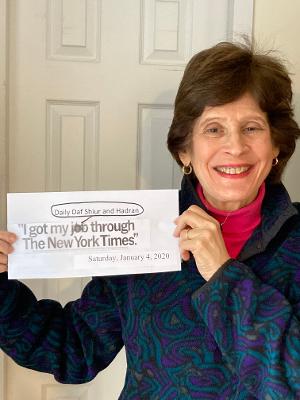
“I got my job through the NY Times” was an ad campaign when I was growing up. I can headline “I got my daily Daf shiur and Hadran through the NY Times”. I read the January 4, 2020 feature on Reb. Michelle Farber and Hadran and I have been participating ever since. Thanks NY Times & Hadran!
Deborah Aschheim
Deborah Aschheim

New York, United States

When I began the previous cycle, I promised myself that if I stuck with it, I would reward myself with a trip to Israel. Little did I know that the trip would involve attending the first ever women’s siyum and being inspired by so many learners. I am now over 2 years into my second cycle and being part of this large, diverse, fascinating learning family has enhanced my learning exponentially.

Shira Krebs
Shira Krebs

Minnesota, United States

I started learning Jan 2020 when I heard the new cycle was starting. I had tried during the last cycle and didn’t make it past a few weeks. Learning online from old men didn’t speak to my soul and I knew Talmud had to be a soul journey for me. Enter Hadran! Talmud from Rabbanit Michelle Farber from a woman’s perspective, a mother’s perspective and a modern perspective. Motivated to continue!

Keren Carter
Keren Carter

Brentwood, California, United States

Robin Zeiger
Robin Zeiger

Tel Aviv, Israel

It has been a pleasure keeping pace with this wonderful and scholarly group of women.

Janice Block
Janice Block

Beit Shemesh, Israel

I heard the new Daf Yomi cycle was starting and I was curious, so I searched online for a women’s class and was pleasently surprised to find Rabanit Michelle’s great class reviews in many online articles. It has been a splendid journey. It is a way to fill my days with Torah, learning so many amazing things I have never heard before during my Tanach learning at High School. Thanks so much .

Martha Tarazi
Martha Tarazi

Panama, Panama

As Jewish educator and as a woman, I’m mindful that Talmud has been kept from women for many centuries. Now that we are privileged to learn, and learning is so accessible, it’s my intent to complete Daf Yomi. I am so excited to keep learning with my Hadran community.

Sue Parker Gerson
Sue Parker Gerson

Denver, United States

I started learning at the beginning of the cycle after a friend persuaded me that it would be right up my alley. I was lucky enough to learn at Rabbanit Michelle’s house before it started on zoom and it was quickly part of my daily routine. I find it so important to see for myself where halachot were derived, where stories were told and to get more insight into how the Rabbis interacted.

Deborah Dickson
Deborah Dickson

Ra’anana, Israel

Studying has changed my life view on הלכה and יהדות and time. It has taught me bonudaries of the human nature and honesty of our sages in their discourse to try and build a nation of caring people .

Goldie Gilad
Goldie Gilad

Kfar Saba, Israel

I had no formal learning in Talmud until I began my studies in the Joint Program where in 1976 I was one of the few, if not the only, woman talmud major. It was superior training for law school and enabled me to approach my legal studies with a foundation . In 2018, I began daf yomi listening to Rabbanit MIchelle’s pod cast and my daily talmud studies are one of the highlights of my life.

Krivosha_Terri_Bio
Terri Krivosha

Minneapolis, United States

Bava Batra 33

זוּזִי אַחֲרִינֵי גַּבֵּיהּ, וַאֲכַלְתַּהּ שְׁנֵי מַשְׁכַּנְתָּא.

other money with him, i.e., he owed me money for a different reason, for which I had no collateral, and I profited from the land for the duration of the years of the collateral.

אָמֵינָא: אִי מַהְדַּרְנָא לַהּ אַרְעָא לְיַתְמֵי, וְאָמֵינָא דְּאִית לִי זוּזִי אַחֲרִינֵי גַּבֵּי דַּאֲבוּכוֹן – אֲמוּר רַבָּנַן: הַבָּא לִיפָּרַע מִנִּכְסֵי יְתוֹמִים – לֹא יִפָּרַע אֶלָּא בִּשְׁבוּעָה. אֶלָּא אֶכְבְּשֵׁיהּ לִשְׁטַר מַשְׁכַּנְתָּא, וְאוֹכְלַהּ שִׁיעוּר זוּזֵי, דְּמִיגּוֹ דְּאִי בָּעֵינָא אָמֵינָא לְקוּחָה הִיא בְּיָדִי – מְהֵימַנָּא, כִּי אָמֵינָא דְּאִית לִי זוּזִי גַּבַּיְיכוּ – מְהֵימַנְנָא.

I then said to myself: If I return the land to the orphans now that the years of collateral have finished, and I say that I have other money with your late father, I will not be able to collect it, as the Sages say that one who comes to collect a debt from the property of orphans can collect only by means of an oath, and I do not wish to take an oath. Rather than do that, I will suppress the document detailing the terms of the collateral, and profit from the land up to the measure of the money that their father owed me. This is legitimate, since if I so desire I can say: It is purchased, and that is why it is in my possession, and I would have been deemed credible, as I profited from the land for the years necessary to establish the presumption of ownership, so when I say that I have money with you, I am also deemed credible.

אֲמַר לֵיהּ: ״לְקוּחָה בְּיָדִי״ לָא מָצֵית אָמְרַתְּ – דְּהָא אִיכָּא עֲלַהּ קָלָא דְּאַרְעָא דְיַתְמֵי הִיא. אֶלָּא זִיל אַהְדְּרַהּ נִיהֲלַיְיהוּ, וְכִי גָּדְלִי יַתְמֵי – אִשְׁתַּעִי דִּינָא בַּהֲדַיְיהוּ.

Abaye said to Rava bar Sharshom: Your reasoning is incorrect. You would not have been able to say: It is purchased, and that is why it is in my possession, as there is publicity concerning it that it is land of orphans. Therefore, you are unable to collect your debt based on the fact that you could have made a more advantageous claim [miggo]. Rather, return the land to the orphans now, and when the orphans become adults, then litigate with them, as you have no other option.

קְרִיבֵיהּ דְּרַב אִידִי בַּר אָבִין שְׁכֵיב, וּשְׁבַק דִּיקְלָא. רַב אִידִי בַּר אָבִין אָמַר: אֲנָא קָרִיבְנָא טְפֵי; וְהָהוּא גַּבְרָא אֲמַר: אֲנָא קָרִיבְנָא טְפֵי. לְסוֹף אוֹדִי לֵיהּ דְּאִיהוּ קָרִיב טְפֵי, אוֹקְמַהּ רַב חִסְדָּא בִּידֵיהּ.

The Gemara relates: A relative of Rav Idi bar Avin died and left a date tree as an inheritance. Another relative took possession of the tree, claiming to be a closer relative than Rav Idi bar Avin. Rav Idi bar Avin said: I am closer in relation to the deceased than he, and that man said: I am closer in relation to the deceased than Rav Idi bar Avin. Ultimately, the other man admitted to Rav Idi bar Avin that, in fact, Rav Idi was closer in relation to the deceased. Rav Ḥisda established the date tree in the possession of Rav Idi bar Avin.

אֲמַר לֵיהּ: לַיהְדַּר לִי פֵּירֵי דַּאֲכַל מֵהָהוּא יוֹמָא עַד הַשְׁתָּא! אָמַר: זֶה הוּא שֶׁאוֹמְרִים עָלָיו אָדָם גָּדוֹל הוּא? אַמַּאן קָא סְמִיךְ מָר – אַהַאי; הָא קָאָמַר דַּאֲנָא מְקָרַבְנָא טְפֵי! אַבָּיֵי וְרָבָא לָא סְבִירָא לְהוּ הָא דְּרַב חִסְדָּא,

Rav Idi bar Avin said to Rav Ḥisda: The value of the produce that he consumed unlawfully from that day when he took possession of the tree until now should be returned to me. Rav Ḥisda said: Is this he about whom people say: He is a great man? On whom is the Master basing his claim to receive the value of the produce? On this other relative. But he was saying until this point: I am closer in relation to the deceased than he. Therefore, you have ownership of the tree only from the time of his admission, and not from when he took possession of the tree. The Gemara comments: Abaye and Rava do not hold in accordance with this opinion of Rav Ḥisda,

כֵּיוָן דְּאוֹדִי – אוֹדִי.

as they hold that once it is so that the other relative admitted that he is not a closer relative, he admitted that he never had any right to the produce of the tree. Therefore, by his own admission, he is liable to reimburse Rav Idi bar Avin.

זֶה אוֹמֵר: ״שֶׁל אֲבוֹתַי״, וְזֶה אוֹמֵר: ״שֶׁל אֲבוֹתַי״; הַאי אַיְיתִי סָהֲדִי דַּאֲבָהָתֵיהּ הוּא, וְהַאי אַיְיתִי סָהֲדִי דַּאֲכַל שְׁנֵי חֲזָקָה –

§ There was an incident where two people dispute the ownership of land. This one says: The land belonged to my ancestors and I inherited it from them, and that one says: The land belonged to my ancestors and I inherited it from them. This one brings witnesses that the land belonged to his ancestors, and that one brings witnesses that he worked and profited from the land for the years necessary for establishing the presumption of ownership.

אָמַר רַב חִסְדָּא: מָה לוֹ לְשַׁקֵּר? אִי בָּעֵי, אָמַר לֵיהּ: מִינָּךְ זְבֵינְתַּהּ וַאֲכַלְתִּיהָ שְׁנֵי חֲזָקָה. אַבָּיֵי וְרָבָא לָא סְבִירָא לְהוּ הָא דְּרַב חִסְדָּא – ״מָה לִי לְשַׁקֵּר״ בִּמְקוֹם עֵדִים – לָא אָמְרִינַן.

Rav Ḥisda said: The one who is in possession of the land is deemed credible due to the legal principle that if one would have been deemed credible had he stated one claim but instead stated another claim that accomplishes the same result, he has credibility, because why would he lie and state this claim? If he wants to lie, he could have said to him: I purchased it from you and I worked and profited from it for the years necessary for establishing the presumption of ownership. Abaye and Rava do not hold in accordance with this opinion of Rav Ḥisda, because they hold that we do not say that the principle of: Why would I lie, applies in a case where there are witnesses contradicting the claim he is stating, and in this case, witnesses testify that it belonged to the ancestors of the other claimant.

הָהוּא דַּאֲמַר לֵיהּ לְחַבְרֵיהּ: מַאי בָּעֵית בְּהַאי אַרְעָא? אֲמַר לֵיהּ: מִינָּךְ זְבַנִי, וַאֲכַלְתִּיהָ שְׁנֵי חֲזָקָה. אֲזַל אַיְיתִי סָהֲדִי דְּאַכְלַהּ תַּרְתֵּי שְׁנֵי. אָמַר רַב נַחְמָן: הָדְרָא אַרְעָא, וְהָדְרִי פֵּירֵי.

There was a certain person who said to another: What do you want with this land of mine? The possessor said to him in response: I purchased it from you and I worked and profited from it for the years necessary for establishing the presumption of ownership. He then went and brought witnesses that he had profited from the land for two years, but he was unable to bring witnesses to testify about a third year. Rav Naḥman said: The land reverts back to the prior owner, and payment for the produce consumed during those two years reverts to the prior owner. Since the possessor was unable to substantiate his claim to the land, the assumption is that he consumed the produce unlawfully.

אָמַר רַב זְבִיד: אִם טָעַן וְאָמַר ״לְפֵירוֹת יָרַדְתִּי״ – נֶאֱמָן. לָאו מִי אָמַר רַב יְהוּדָה: הַאי מַאן דְּנָקֵיט מַגָּלָא וְתוּבַלְיָא, וְאָמַר: אֵיזִיל אֶיגְדְּרֵיהּ לְדִיקְלָא דִפְלָנְיָא, דְּזַבְּנֵיהּ נִיהֲלִי – מְהֵימַן? אַלְמָא לָא חֲצִיף אִינִישׁ דְּגָזַר דִּיקְלָא דְּלָאו דִּילֵיהּ; הָכָא נָמֵי, לָא חֲצִיף אִינִישׁ לְמֵיכַל פֵּירֵי דְּלָאו דִּילֵיהּ.

Rav Zevid said: If initially, when questioned by the other, the one occupying the land claimed and said: I entered the land to consume its produce that I had purchased, he is deemed credible. After all, didn’t Rav Yehuda say: This one who is holding a sickle and rope [vetovelaya] and says: I will go cull [igderei] the dates from the date tree of so-and-so who sold it to me, is deemed credible that he has the right to do so? Apparently, a person is not so brazen that he would cull the dates of a date tree that is not his. Here too, in the case discussed by Rav Zevid, a person is not so brazen as to consume produce that is not his.

אִי הָכִי, אַרְעָא נָמֵי! אַרְעָא, אָמְרִינַן לֵיהּ: אַחְוִי שְׁטָרָךְ. אִי הָכִי, פֵּירֵי נָמֵי! שְׁטָרָא לְפֵירֵי לָא עָבְדִי אִינָשֵׁי.

The Gemara asks: If that is so, that the assumption is that he would not lie, let one be deemed credible with regard to the land as well. The Gemara answers: In terms of the land, we say to him: Show your bill of sale if you indeed purchased it. The Gemara challenges: If that is so, then in terms of the produce as well, let him be deemed credible only if he can produce documentation of his claim. The Gemara explains: It is not common for people to write documents to establish the right to consume produce alone, and one can therefore claim to have consumed the produce based on an oral agreement.

הָהוּא דַּאֲמַר לְחַבְרֵיהּ: מַאי בָּעֵית בְּהַאי אַרְעָא? אֲמַר לֵיהּ: מִינָּךְ זְבַנִית, וַאֲכַלְתִּיהָ שְׁנֵי חֲזָקָה. אַיְיתִי חַד סָהֲדָא דְּאַכְלַהּ תְּלָת שְׁנֵי. סְבוּר רַבָּנַן קַמֵּיהּ דְּאַבָּיֵי לְמֵימַר: הַיְינוּ נְסָכָא דְּרַבִּי אַבָּא –

There was a certain person who said to another: What do you want with this land of mine? The possessor said to him in response: I purchased it from you and I worked and profited from it for the years necessary for establishing the presumption of ownership. He then brought one witness who testified that he profited from the land for the necessary three years. The Rabbis who were studying before Abaye maintained that it made sense to say that the principle in this case is the same as that in the case of the piece of cast metal [naskha] adjudicated by Rabbi Abba.

דְּהָהוּא גַּבְרָא דַּחֲטַף נְסָכָא מֵחַבְרֵיהּ. אֲתָא לְקַמֵּיהּ דְּרַבִּי אַמֵּי, הֲוָה יָתֵיב רַבִּי אַבָּא קַמֵּיהּ. אַיְיתִי חַד סָהֲדָא דְּמִיחְטָף חֲטַפָא מִינֵּיהּ. אֲמַר לֵיהּ: אִין, חֲטַפִי – וְדִידִי חֲטַפִי. אָמַר רַבִּי אַמֵּי:

The Gemara now presents that case: As there was a certain man who snatched a piece of cast metal from another. The one from whom it was taken came before Rabbi Ami while Rabbi Abba was sitting before him, and he brought one witness who testified that it was, in fact, snatched from him. The one who snatched it said to him: Yes, it is true that I snatched it, but I merely snatched that which was mine. Rabbi Ami said:

Want to follow content and continue where you left off?

Create an account today to track your progress, mark what you’ve learned, and follow the shiurim that speak to you.

Clear all items from this list?

This will remove ALL the items in this section. You will lose any progress or history connected to them. This is irreversible.

Cancel
Yes, clear all

Are you sure you want to delete this item?

You will lose any progress or history connected to this item.

Cancel
Yes, delete