










If one misuses consecrated property unknowingly, one must repay the value and add one-fifth (chomesh). Rabbi Yehoshua ben Levi held that the additional one-fifth payment is not added if one is redeeming a secondary hekdesh, an item that was sanctified from an item that was already sanctified (via hatpasa). The Gemara questions a statement made in a braita that was brought to support Rabbi Yehoshua ben Levi and resolves it. Another braita is brought as support for Rabbi Yehoshua ben Levi. The Mishna lists the minimum amount of money for ona’ah and partial admission (modeh b’miktzat). It also lists five laws for which the minimum amount is a pruta. Levi has a different list of the five laws and the Gemara discusses why each list differs from the other. The Mishna lists 5 cases where one needs to add one-fifth. One of the items is d’mai – a case where there is reason to think that ma’asrot (tithes) may not have been taken and the rabbis required one to separate the tithes just in case. Rabbi Elazar questions why the Mishna lists that one would add one-fifth if a non-kohen ate truma taken from d’mai, which is only truma by rabbinic law. Why would it be treated as stringently as a Torah obligation? They answer that the Mishna is according to Rabbi Meir’s approach that the rabbis make their decrees as strong as the Torah as is proven from a case of divorce law where Rabbi Meir is stringent. However, they raise a difficulty with saying that this is Rabbi Meir’s position.
Bava Metzia
Masechet Bava Metzia is sponsored by Rabbi Art Gould in memory of his beloved bride of 50 years, Carol Joy Robinson, Karina Gola bat Huddah v’Yehuda Tzvi.
רבות בנות עשו חיל ואת עלית על־כלנה
This month’s learning is sponsored by Marci Glazer in loving memory of her teacher and chevruta, Rachel Brodie, Rachel Aviva bat Devora Chana, on her 4th yahrzeit. “She brought her love of Torah to thousands of people in her all-too-short life. A lover of Midrash, she still invited me on this Daf Yomi journey.”
Want to dedicate learning? Get started here:

Today’s daily daf tools:
Bava Metzia
Masechet Bava Metzia is sponsored by Rabbi Art Gould in memory of his beloved bride of 50 years, Carol Joy Robinson, Karina Gola bat Huddah v’Yehuda Tzvi.
רבות בנות עשו חיל ואת עלית על־כלנה
This month’s learning is sponsored by Marci Glazer in loving memory of her teacher and chevruta, Rachel Brodie, Rachel Aviva bat Devora Chana, on her 4th yahrzeit. “She brought her love of Torah to thousands of people in her all-too-short life. A lover of Midrash, she still invited me on this Daf Yomi journey.”
Bava Metzia 55
בְּאֶמְצַע הֶקְדֵּשׁ, לֵיתַהּ? אֲמַר לֵיהּ: לְפִי שֶׁאֵינָהּ בְּסוֹף הֶקְדֵּשׁ.
but it is not subject to an intermediate stage of consecration resulting from redemption? Ravina said to him: It is due to the fact that it is not subject to ultimate consecration. A non-kosher animal does not ultimately remain consecrated, as it is used neither as an offering nor in the upkeep of the Temple. Instead, it is redeemed and its value is consecrated.
אֲמַר לֵיהּ רַב אַחָא: מִדִּיפְתִּי לְרָבִינָא, בְּאֶמְצַע הֶקְדֵּשׁ מִיהָא אִיתַהּ, וְלוֹסֵיף נָמֵי חוֹמֶשׁ! אֲמַר לֵיהּ: הֲרֵי הוּא כְּסוֹף הֶקְדֵּשׁ, מָה סוֹף הֶקְדֵּשׁ אֵינוֹ מוֹסִיף חוֹמֶשׁ – אַף אֶמְצַע הֶקְדֵּשׁ אֵינוֹ מוֹסִיף חוֹמֶשׁ.
Rav Aḥa of Difti said to Ravina: It is subject, at least, to an intermediate stage of consecration; and in that case, let one add one-fifth as well. Ravina said to him: Its legal status is like that of ultimate consecration: Just as one does not add one-fifth with regard to a non-kosher animal in ultimate consecration, as that category does not exist in a non-kosher animal, so too, one does not add one-fifth in a case of intermediate consecration.
אֲמַר לֵיהּ רַב זוּטְרָא בְּרֵיהּ דְּרַב מָרִי לְרָבִינָא: מַאי חָזֵית דִּמְדַמֵּית לֵיהּ לְסוֹף הֶקְדֵּשׁ? נְדַמְּיֵיהּ לִתְחִילַּת הֶקְדֵּשׁ! אֲמַר לֵיהּ: מִסְתַּבְּרָא לְסוֹף הֶקְדֵּשׁ הֲוָה לֵיהּ לְדַמּוֹיֵי, שֶׁכֵּן נִתְפָּס מִנִּתְפָּס. אַדְּרַבָּה: לִתְחִילַּת הֶקְדֵּשׁ הֲוָה לֵיהּ לְדַמּוֹיֵי, שֶׁכֵּן דָּבָר שֶׁיֵּשׁ אַחֲרָיו קְדוּשָּׁה מִדָּבָר שֶׁיֵּשׁ אַחֲרָיו קְדוּשָּׁה!
Rav Zutra, son of Rav Mari, said to Ravina: What did you see that led you to liken the intermediate stage of consecration to ultimate consecration? Let us liken it to initial consecration. Ravina said to him: It stands to reason that he should liken it to ultimate consecration, as he thereby derives the halakha of an item consecrated by association with the sanctity of an item consecrated by association. The Gemara asks: On the contrary, he should have likened it to initial consecration, as he thereby derives the halakha of an item after which there is another stage of sanctity, the intermediate stage of consecration, from an item after which there is another stage of sanctity.
כִּדְאָמַר רָבָא ״הָעֹלָה״ – עוֹלָה רִאשׁוֹנָה. הָכִי נָמֵי ״הַטְּמֵאָה״ – טְמֵאָה רִאשׁוֹנָה.
The Gemara answers: It is as Rava says: “The burnt-offering” (Leviticus 6:2), employing the definite article, indicates that the reference is to the first burnt-offering. So too, when it is written: The non-kosher animal, the reference is to the initial consecration of the non-kosher animal, not the intermediate stage of consecration.
תַּנְיָא כְּווֹתֵיהּ דְּרַבִּי יְהוֹשֻׁעַ בֶּן לֵוִי: ״פָּרָה זוֹ תַּחַת פָּרָה שֶׁל הֶקְדֵּשׁ״, ״טַלִּית זוֹ תַּחַת טַלִּית שֶׁל הֶקְדֵּשׁ״ – הֶקְדֵּשׁוֹ פָּדוּי, וְיַד הֶקְדֵּשׁ עַל הָעֶלְיוֹנָה.
The Gemara comments: It is taught in a baraita in accordance with the opinion of Rabbi Yehoshua ben Levi: If one said that this cow is in place of that cow, which belongs to the Temple treasury, or this garment is in place of that garment, which belongs to the Temple treasury, his consecrated property is redeemed, and the treasurer of consecrated property is at an advantage. If the replacement item is equal to or more valuable than the original item, it belongs to the treasurer, and if it is less valuable, the one who consecrated it must pay the difference.
״פָּרָה זוֹ בְּחָמֵשׁ סְלָעִים תַּחַת פָּרָה שֶׁל הֶקְדֵּשׁ״, ״טַלִּית זוֹ בְּחָמֵשׁ סְלָעִים תַּחַת טַלִּית שֶׁל הֶקְדֵּשׁ״ – הֶקְדֵּשׁוֹ פָּדוּי. עַל הֶקְדֵּשׁ רִאשׁוֹן מוֹסִיף חוֹמֶשׁ, עַל הֶקְדֵּשׁ שֵׁנִי אֵין מוֹסִיף חוֹמֶשׁ.
If he said: This cow valued at five sela is in place of this cow, which belongs to the Temple treasury, or: This garment valued at five sela is instead of this garment, which belongs to the Temple treasury, his consecrated property is redeemed. Even if the second consecrated item is more valuable, it is not considered a consecration done in error. He will have to pay the difference. He adds one-fifth when redeeming the item that was the initial consecration, but when redeeming the item for which the initial consecration was redeemed, the second consecration, he does not add one-fifth.
מַתְנִי׳ הָאוֹנָאָה – אַרְבָּעָה כֶּסֶף, וְהַטַּעֲנָה – שְׁתֵּי כֶּסֶף, וְהַהוֹדָאָה – שָׁוֶה פְּרוּטָה.
MISHNA: The measure of exploitation is four silver ma’a from the twenty-four silver ma’a of a sela. And the smallest monetary claim in court for which a plaintiff can obligate a respondent to take an oath is two silver ma’a. And the smallest monetary admission for which that respondent takes the oath is an admission that one owes at least the value of one peruta.
חָמֵשׁ פְּרוּטוֹת הֵן: הַהוֹדָאָה שָׁוֶה פְּרוּטָה, וְהָאִשָּׁה מִתְקַדֶּשֶׁת בְּשָׁוֶה פְּרוּטָה, וְהַנֶּהֱנֶה בְּשָׁוֶה פְּרוּטָה מִן הַהֶקְדֵּשׁ מָעַל, וְהַמּוֹצֵא שָׁוֶה פְּרוּטָה חַיָּיב לְהַכְרִיז, וְהַגּוֹזֵל אֶת חֲבֵירוֹ שָׁוֶה פְּרוּטָה וְנִשְׁבַּע לוֹ, יוֹלִיכֶנּוּ אַחֲרָיו אֲפִילּוּ לְמָדַי.
On a related note, the tanna adds that there are five halakhic situations involving perutot: The admission to part of a claim must be that one owes at least the value of one peruta, and a woman is betrothed with the value of one peruta. And one who derives benefit of the value of one peruta from consecrated property has misused consecrated property and is liable to bring an offering, and one who finds an item that has the value of one peruta is obligated to proclaim that he found it. And with regard to one who robs from another an item that has the value of one peruta and took an oath to him that he robbed nothing, when he repents and seeks to return the stolen item he must take it and follow its owner even to Media. In that case, he may not return the item by means of a messenger; he must give it directly to its owner.
גְּמָ׳ תְּנֵינָא חֲדָא זִימְנָא: הָאוֹנָאָה אַרְבָּעָה כֶּסֶף מֵעֶשְׂרִים וְאַרְבָּעָה כֶּסֶף לַסֶּלַע, שְׁתוּת לְמִקָּח! הַטַּעֲנָה שְׁתֵּי כֶּסֶף וְהַהוֹדָאָה שָׁוֶה פְּרוּטָה אִצְטְרִיכָא לֵיהּ.
GEMARA: The Gemara asks: We already learned this on another occasion in an earlier mishna (49b): The measure of exploitation for which one can claim that he was exploited is four silver ma’a from the twenty-four silver ma’a in a sela, which is one-sixth of the transaction. The Gemara answers: It was necessary for the tanna to mention two halakhot: The smallest monetary claim in court for which a plaintiff can obligate a respondent to take an oath is two silver ma’a, and the smallest monetary admission for which that respondent takes the oath is an admission that one owes at least the value of one peruta. Therefore, the tanna cited the halakha of exploitation as well.
הָא נָמֵי תְּנֵינָא: שְׁבוּעַת הַדַּיָּינִין, הַטַּעֲנָה שְׁתֵּי כֶּסֶף וְהַהוֹדָאָה שָׁוֶה פְּרוּטָה! סֵיפָא אִצְטְרִיכָא לֵיהּ, דְּקָתָנֵי: חָמֵשׁ פְּרוּטוֹת הֵן.
The Gemara asks: That too we already learned in a mishna (Shevuot 38b): The oath for admission to part of a claim imposed by the judges is in a case where the claim is two silver ma’a, and the admission is the value of one peruta. The Gemara answers: It was necessary for the tanna to teach the latter clause of the mishna, as it teaches: There are five halakhic situations involving perutot, which is not taught elsewhere.
חָמֵשׁ פְּרוּטוֹת הֵן כּוּ׳. וְלִיתְנֵי נָמֵי הָאוֹנָאָה פְּרוּטָה? אָמַר רַב כָּהֲנָא: זֹאת אוֹמֶרֶת, אֵין אוֹנָאָה לִפְרוּטוֹת.
§ The mishna teaches: There are five halakhic situations involving perutot. The Gemara asks: And let the tanna also teach that the measure of exploitation is one peruta. Rav Kahana said: That is to say that there is no exploitation concerning perutot. Any disparity between value and price that is less than the value of the smallest silver coin, an issar, which is worth eight perutot, is not considered exploitation.
וְלֵוִי אָמַר: יֵשׁ אוֹנָאָה לִפְרוּטוֹת. וְכֵן תָּנֵי לֵוִי בְּמַתְנִיתֵיהּ: חָמֵשׁ פְּרוּטוֹת הֵן: הָאוֹנָאָה פְּרוּטָה, וְהַהוֹדָאָה פְּרוּטָה, וְקִדּוּשֵׁי אִשָּׁה בִּפְרוּטָה, וְגָזֵל בִּפְרוּטָה, וִישִׁיבַת הַדַּיָּינִין בִּפְרוּטָה.
And Levi says: There is exploitation even for perutot. And likewise, Levi taught in his version of the Mishna, which parallels the Mishna redacted by Rabbi Yehuda HaNasi, that there are five halakhic situations involving perutot: The measure of exploitation is one peruta, the admission is the value of one peruta, and the betrothal of a woman is with one peruta, and the halakha of one who takes an oath denying a robbery applies in the case where he denies having robbed another of at least one peruta, and the convening of judges to adjudicate a case of monetary law is in the case where the claim is at least one peruta.
וְתַנָּא דִּידַן, מַאי טַעְמָא לָא קָתָנֵי יְשִׁיבַת הַדַּיָּינִין? תְּנָא לֵיהּ גָּזֵל.
The Gemara asks: And with regard to the tanna of our mishna, what is the reason he does not teach the case of the convening of judges in his list of cases involving perutot? The Gemara answers: He taught the case of robbery, which includes all monetary claims one has against another.
וּמִי לָא תָּנֵי גָּזֵל וְקָתָנֵי אֲבֵידָה? הָנָךְ אִצְטְרִיכָא לֵיהּ: גָּזֵל – הַגּוֹזֵל מֵחֲבֵירוֹ שָׁוֶה פְּרוּטָה וְנִשְׁבָּע לוֹ, יוֹלִיכֶנּוּ אַחֲרָיו וַאֲפִילּוּ לִמְדִי. אֲבֵידָה – הַמּוֹצֵא אֲבֵידָה שָׁוֶה פְּרוּטָה חַיָּיב לְהַכְרִיז, וְאַף עַל גַּב דְּזַל.
The Gemara asks: But doesn’t the tanna teach the case of robbery and teach the case of lost property? Apparently, he lists monetary cases that are included under the rubric of robbery. The Gemara answers: With regard to these two cases, it was necessary for the tanna to teach them separately, as there is a novel element in each. The novel element in the case of robbery is not only that a robbery of one peruta is considered robbery, but also in the case of one who robs an item from another worth at least one peruta and then took an oath to him that he robbed nothing, he must carry the stolen item and follow its owner even to Media. The novel element in the case of lost property is that one who finds lost property the value of at least one peruta is obligated to proclaim that he found it, even though the lost article depreciated and is no longer worth one peruta.
וְלֵוִי, מַאי טַעְמָא לָא תָּנֵי אֲבֵידָה בִּפְרוּטָה? תְּנָא לֵיהּ גָּזֵל.
The Gemara asks: And as for Levi, what is the reason he does not teach that one is obligated to proclaim that he found lost property only if it is worth at least one peruta? The Gemara answers: He taught the case of robbery, which includes all monetary claims one has against another.
וּמִי לָא קָתָנֵי גָּזֵל וְקָתָנֵי יְשִׁיבַת הַדַּיָּינִין? יְשִׁיבַת הַדַּיָּינִין אִצְטְרִיכָא לֵיהּ, לְאַפּוֹקֵי מִדְּרַב קַטִּינָא, דְּאָמַר רַב קַטִּינָא: בֵּית דִּין נִזְקָקִין אֲפִילּוּ לְפָחוֹת מִשָּׁוֶה פְּרוּטָה.
The Gemara asks: But doesn’t he teach robbery and also teach the convening of judges? Apparently, he lists monetary cases that are included under the rubric of robbery. The Gemara explains: With regard to the convening of judges it was necessary for the tanna to specify the halakha to exclude the opinion of Rav Ketina, as Rav Ketina says: The court attends to monetary claims of even less than the value of one peruta. Anyone wronged by another is entitled to have his case adjudicated in court.
וְלֵוִי, מַאי טַעְמָא לָא קָתָנֵי הֶקְדֵּשׁ? בְּחוּלִּין קָמַיְירֵי, בְּקָדָשִׁים לָא קָמַיְירֵי.
The Gemara asks: And as for Levi, what is the reason he does not teach the peruta of misuse of consecrated property? The Gemara answers: He is speaking with regard to non-sacred property; he is not speaking with regard to consecrated property.
אֶלָּא תַּנָּא דִּידַן דְּקָא מַיְירֵי בְּקָדָשִׁים, נִתְנֵי מַעֲשֵׂר בִּפְרוּטָה? כְּמַאן דְּאָמַר אֵין בְּחוּמְשׁוֹ פְּרוּטָה. וְלִיתְנֵי חוֹמֶשׁ מַעֲשֵׂר בִּפְרוּטָה? בְּקַרְנָא קָא מַיְירֵי, בְּחוֹמֶשׁ לָא קָא מַיְירֵי.
The Gemara asks: But in the case of the tanna of our mishna, who is speaking with regard to consecrated property, let him teach the halakha that second tithe may be redeemed only if the produce is worth at least one peruta. The Gemara answers: This tanna holds in accordance with the one who says: Second tithe is redeemed only if its one-fifth, which one adds when redeeming his own produce, is worth at least one peruta. In other words, second tithe is redeemed only if it is worth at least four perutot. The Gemara asks: And let him teach that second tithe is redeemed only if its one-fifth, which one adds when redeeming his own produce, is worth at least one peruta. The Gemara responds: The tanna is speaking with regard to the principal; the tanna is not speaking with regard to the one-fifth.
גּוּפָא, אָמַר רַב קַטִּינָא: בֵּית דִּין נִזְקָקִין אֲפִילּוּ לְפָחוֹת מִשָּׁוֶה פְּרוּטָה. מֵתִיב רָבָא: ״וְאֵת אֲשֶׁר חָטָא מִן הַקֹּדֶשׁ יְשַׁלֵּם״,
§ With regard to the matter itself raised in the previous discussion, the Gemara elaborates. Rav Ketina says: The court attends to monetary claims of even less than the value of one peruta. Rava raises an objection from a baraita. It is written: “And he shall make restitution for that which he has done amiss in the sacred matter” (Leviticus 5:16).
לְרַבּוֹת פָּחוֹת מִשָּׁוֶה פְּרוּטָה לְהִישָּׁבוֹן. לְקֹדֶשׁ – אִין, אֲבָל לְהֶדְיוֹט – לָא.
This serves to include misuse of consecrated property less than the value of one peruta in the halakha of restitution to the Temple treasury. The Gemara infers: To the Temple treasury, yes, one must return that which he took; but to an ordinary person [hedyot], no, one need not pay restitution for theft of less than one peruta.
אֶלָּא, אִי אִתְּמַר הָכִי אִתְּמַר: אָמַר רַב קַטִּינָא, אִם הוּזְקְקוּ בֵּית דִּין לְשָׁוֶה פְּרוּטָה – גּוֹמְרִין, אֲפִילּוּ לְפָחוֹת מִשָּׁוֶה פְּרוּטָה. תְּחִילַּת הַדִּין בָּעֵינַן פְּרוּטָה, גְּמַר הַדִּין לָא בָּעֵינַן פְּרוּטָה.
Rather, if Rav Ketina’s ruling was stated, this is how it was stated: Rav Ketina says: If the court attends to a monetary claim of the value of one peruta, the judges conclude adjudicating and issue a ruling even if the item in question depreciated to less than the value of one peruta. For the beginning of the legal proceedings, we require a claim worth one peruta, whereas for the verdict, we do not require a claim worth one peruta.
מַתְנִי׳ חֲמִשָּׁה חוּמְשִׁין הֵן, אֵלּוּ הֵן: הָאוֹכֵל תְּרוּמָה, וּתְרוּמַת מַעֲשֵׂר, וּתְרוּמַת מַעֲשֵׂר שֶׁל דְּמַאי, וְהַחַלָּה, וְהַבִּכּוּרִים – מוֹסִיף חוֹמֶשׁ. וְהַפּוֹדֶה נֶטַע רְבָעִי וּמַעֲשֵׂר שֵׁנִי שֶׁלּוֹ – מוֹסִיף חוֹמֶשׁ. הַפּוֹדֶה אֶת הֶקְדֵּשׁוֹ – מוֹסִיף חוֹמֶשׁ. הַנֶּהֱנֶה שָׁוֶה פְּרוּטָה מִן הַהֶקְדֵּשׁ – מוֹסִיף חוֹמֶשׁ. וְהַגּוֹזֵל אֶת חֲבֵירוֹ שָׁוֶה פְּרוּטָה וְנִשְׁבַּע לוֹ – מוֹסִיף חוֹמֶשׁ.
MISHNA: In this mishna, as in the previous one, the tanna enumerates several halakhot that share a common element. There are five halakhic situations where one-fifth is added to the value of the principal, and these are they: A non-priest who eats either teruma, or teruma of the tithe, which the Levite separates from the first tithe and gives to a priest, or teruma of the tithe of demai, or ḥalla, or first fruits; in each of these cases, he adds one-fifth when paying restitution to the priest who owned the produce. And one who redeems his own fruit of a fourth-year sapling or second-tithe produce adds one-fifth. One who redeems his own consecrated property adds one-fifth. One who derives benefit worth one peruta from consecrated property adds one-fifth. And one who robs the value of one peruta from another and takes a false oath in response to his claim adds one-fifth when paying restitution.
גְּמָ׳ אָמַר רָבָא: קַשְׁיָא לֵיהּ לְרַבִּי אֶלְעָזָר תְּרוּמַת מַעֲשֵׂר שֶׁל דְּמַאי, וְכִי עָשׂוּ חֲכָמִים חִיזּוּק לְדִבְרֵיהֶם כְּשֶׁל תּוֹרָה?
GEMARA: Rava says: Rabbi Elazar found the halakha in the mishna with regard to teruma of the tithe of demai to be difficult. He asked: And since the obligation to tithe demai is by rabbinic law, did the Sages reinforce their pronouncements and render them parallel to Torah law by requiring the addition of one-fifth when paying restitution?
אָמַר רַב נַחְמָן אָמַר שְׁמוּאֵל: הָא מַנִּי – רַבִּי מֵאִיר הִיא, דְּאָמַר עָשׂוּ חֲכָמִים חִיזּוּק לְדִבְרֵיהֶם כְּשֶׁל תּוֹרָה. דְּתַנְיָא: הַמֵּבִיא גֵּט מִמְּדִינַת הַיָּם, נְתָנוֹ לָהּ וְלֹא אָמַר לָהּ ״בְּפָנַי נִכְתַּב וּבְפָנַי נֶחְתַּם״ – יוֹצִיא, וְהַוָּלָד מַמְזֵר, דִּבְרֵי רַבִּי מֵאִיר. וַחֲכָמִים אוֹמְרִים: אֵין הַוָּלָד מַמְזֵר. כֵּיצַד יַעֲשֶׂה? יִטְּלֶנּוּ מִמֶּנָּה וְיַחֲזוֹר וְיִתְּנֶנּוּ לָהּ בִּפְנֵי שְׁנַיִם, וְיֹאמַר לָהּ: ״בְּפָנַי נִכְתַּב וּבְפָנַי נֶחְתַּם״.
Rav Naḥman said that Shmuel said: In accordance with whose opinion is this mishna? It is in accordance with the opinion of Rabbi Meir, who says: The Sages reinforced their pronouncements and rendered them parallel to Torah law, as it is taught in a baraita: With regard to an agent who brings a bill of divorce from a country overseas, if he gave it to the woman but did not say to her: It was written in my presence and it was signed in my presence, as is the requirement by rabbinic ordinance, one who marries that woman must divorce her, and any offspring born of that marriage is a mamzer; this is the statement of Rabbi Meir. And the Rabbis say: Although he is in violation of the ordinance, the offspring is not a mamzer. How then should the agent proceed? He should take the bill of divorce from her and give it to her again, this time in the presence of two witnesses, and say to her: It was written in my presence and it was signed in my presence.
וּלְרַבִּי מֵאִיר, מִשּׁוּם דְּלֹא אָמַר לָהּ ״בְּפָנַי נִכְתַּב וּבְפָנַי נֶחְתַּם״, יוֹצִיא וְהַוָּלָד מַמְזֵר? אִין, רַבִּי מֵאִיר לְטַעְמֵיהּ, דְּאָמַר רַב הַמְנוּנָא מִשְּׁמֵיהּ דְּעוּלָּא: אוֹמֵר הָיָה רַבִּי מֵאִיר: כָּל הַמְשַׁנֶּה מִמַּטְבֵּעַ שֶׁטָּבְעוּ חֲכָמִים בְּגִיטִּין – יוֹצִיא, וְהַוָּלָד מַמְזֵר.
The Gemara asks: And according to Rabbi Meir, although the bill of divorce was otherwise valid, merely due to the fact that he did not say to her: It was written in my presence and it was signed in my presence, must he divorce her and the offspring is a mamzer? The Gemara answers: Yes, as Rabbi Meir conforms to his standard line of reasoning, as Rav Hamnuna says in the name of Ulla that Rabbi Meir would say: In the case of anyone who gives a bill of divorce that deviates from the formula coined by the Sages with regard to bills of divorce, one who then marries the divorced woman on the basis of that bill of divorce must divorce her, and the offspring is a mamzer. Concerning teruma of the tithe of demai as well, Rabbi Meir reinforced the pronouncements of the Sages and rendered them parallel to Torah law.
מֵתִיב רַב שֵׁשֶׁת: מְחַלְּלִין אוֹתוֹ כֶּסֶף עַל כֶּסֶף, נְחוֹשֶׁת עַל נְחוֹשֶׁת, כֶּסֶף עַל נְחוֹשֶׁת, וּנְחוֹשֶׁת עַל הַפֵּירוֹת, וְיַחְזוֹר וְיִפְדֶּה אֶת הַפֵּירוֹת – דִּבְרֵי רַבִּי מֵאִיר. וַחֲכָמִים אוֹמְרִים: יַעֲלוּ פֵּירוֹת וְיֹאכְלוּ בִּירוּשָׁלַיִם.
Rav Sheshet raises an objection to this principle from a mishna (Demai 1:2), which teaches: One may desacralize silver coins of second tithe of demai upon other silver coins, and copper coins upon copper coins, and silver coins upon copper coins, and copper coins upon produce, and he may then redeem that produce with money; this is the statement of Rabbi Meir. And the Rabbis say: That produce that redeemed the copper coins must be taken up and eaten in Jerusalem. It may not be redeemed again.
וּמִי מְחַלְּלִינַן כֶּסֶף עַל נְחוֹשֶׁת? וְהָא תְּנַן: סֶלַע שֶׁל מַעֲשֵׂר שֵׁנִי וְשֶׁל חוּלִּין שֶׁנִּתְעָרְבוּ, מֵבִיא בְּסֶלַע מָעוֹת וְאוֹמֵר: כׇּל מָקוֹם שֶׁיֶּשְׁנָהּ סֶלַע שֶׁל מַעֲשֵׂר שֵׁנִי, מְחוּלֶּלֶת עַל מָעוֹת הַלָּלוּ, וּבוֹרֵר אֶת הַיָּפֶה שֶׁבָּהֶן וּמְחַלְּלוֹ עָלֶיהָ.
Rav Sheshet continues: And can one desacralize silver coins with copper coins? But didn’t we learn in a mishna (Ma’aser Sheni 2:6): In the case of a silver sela of second tithe and a sela of non-sacred property that were intermingled, one brings copper ma’a equaling the value of a sela and says: Wherever there is a sela of second tithe among these two coins, it is redeemed upon these copper ma’a, which assume the sanctity of second tithe. And he selects the better-quality sela among the two and redeems the copper coins upon that sela. The result is that the better-quality sela is second tithe, while the other sela and the copper coins are non-sacred.

Today’s daily daf tools:
Delve Deeper
Broaden your understanding of the topics on this daf with classes and podcasts from top women Talmud scholars.
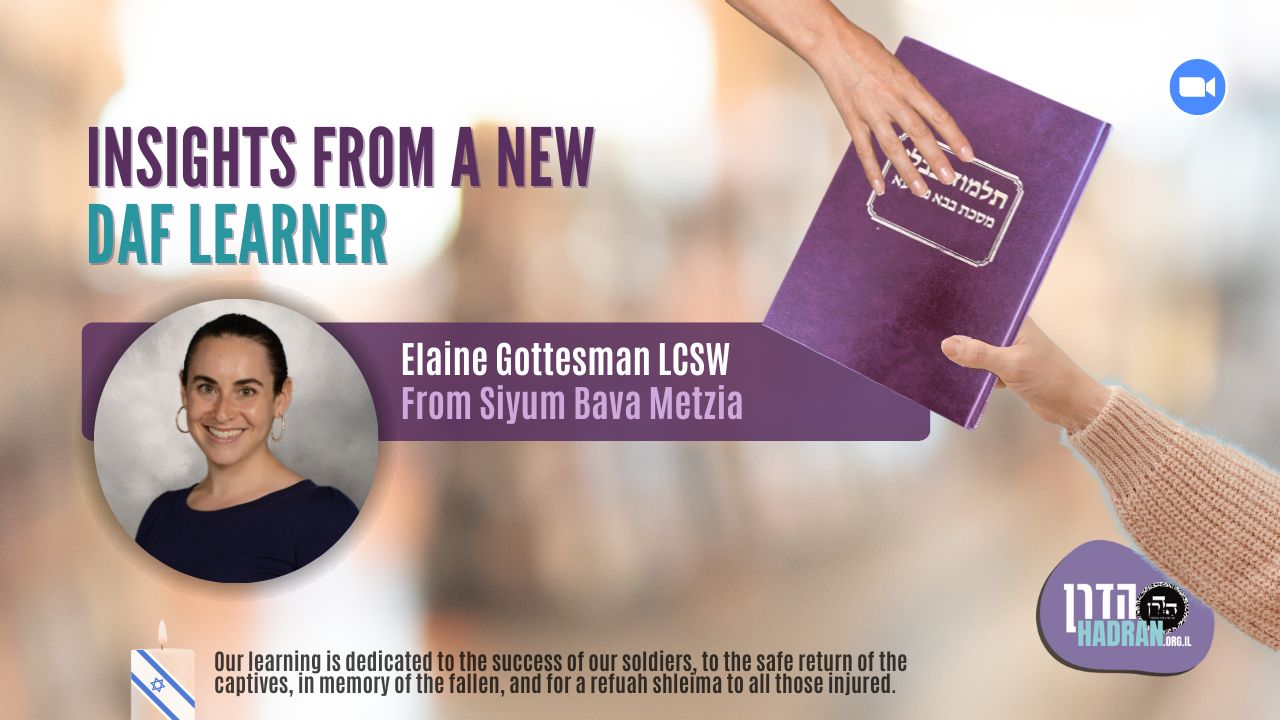
Insights from a New Daf Learner with Elaine Gottesman LCSW

Bava Metzia – 113-119 + Siyum – Daf Yomi: One Week at a Time
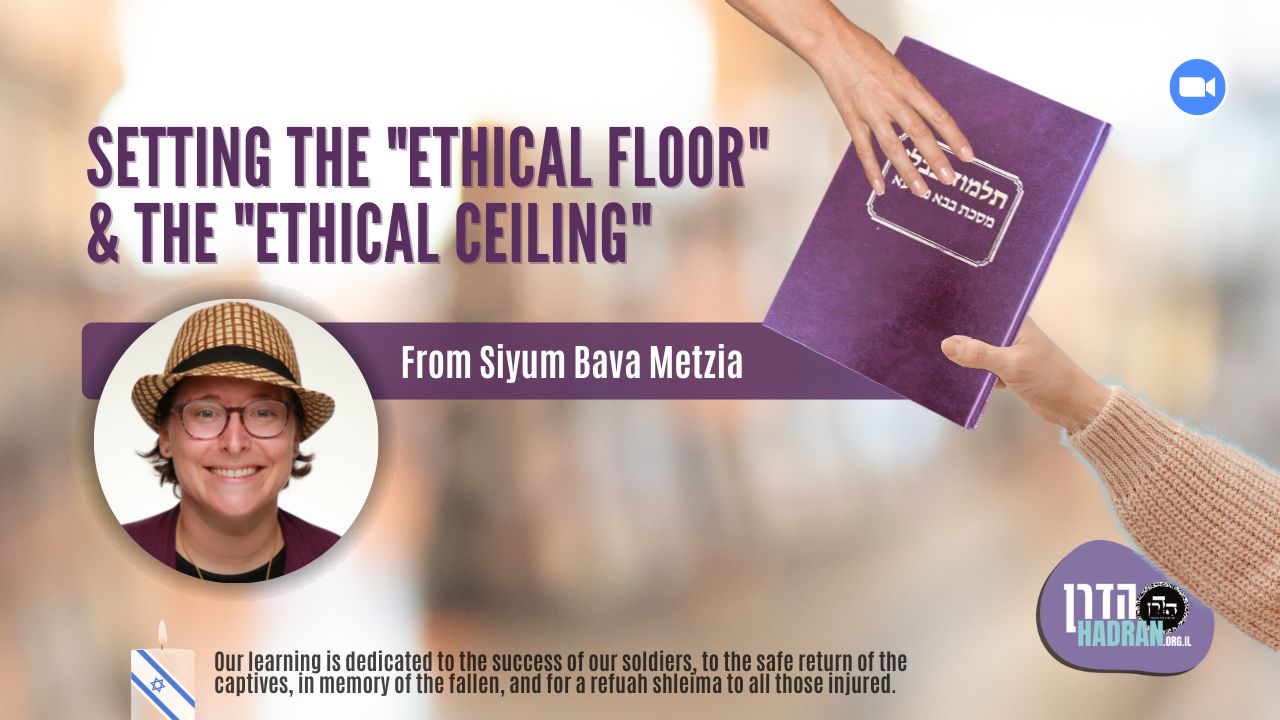
Din & Daf: Setting the “Ethical Floor” & the “Ethical Ceiling”







Bava Metzia – 106-112 – Daf Yomi: One Week at a Time


Din & Daf: A (Biblical) Loan is Tzedakah – Mashkon Limitations





New to Talmud?
Check out our resources designed to help you navigate a page of Talmud – and study at the pace, level and style that fits you.
The Hadran Women’s Tapestry
Meet the diverse women learning Gemara at Hadran and hear their stories.
In early January of 2020, I learned about Siyyum HaShas and Daf Yomi via Tablet Magazine’s brief daily podcast about the Daf. I found it compelling and fascinating. Soon I discovered Hadran; since then I have learned the Daf daily with Rabbanit Michelle Cohen Farber. The Daf has permeated my every hour, and has transformed and magnified my place within the Jewish Universe.

San Francisco, CA , United States

Blacksburg, United States
Geri Goldstein got me started learning daf yomi when I was in Israel 2 years ago. It’s been a challenge and I’ve learned a lot though I’m sure I miss a lot. I quilt as I listen and I want to share what I’ve been working on.

Ottawa, Canada
When I was working and taking care of my children, learning was never on the list. Now that I have more time I have two different Gemora classes and the nach yomi as well as the mishna yomi daily.

Jerusalem, Israel
It has been a pleasure keeping pace with this wonderful and scholarly group of women.

Beit Shemesh, Israel
I started learning Gemara at the Yeshivah of Flatbush. And I resumed ‘ברוך ה decades later with Rabbanit Michele at Hadran. I started from Brachot and have had an exciting, rewarding experience throughout seder Moed!

Maale Adumim, Israel
I am grateful for the structure of the Daf Yomi. When I am freer to learn to my heart’s content, I learn other passages in addition. But even in times of difficulty, I always know that I can rely on the structure and social support of Daf Yomi learners all over the world.
I am also grateful for this forum. It is very helpful to learn with a group of enthusiastic and committed women.

Beit Shemesh, Israel

Jerusalem, Israel
I started at the beginning of this cycle. No 1 reason, but here’s 5.
In 2019 I read about the upcoming siyum hashas.
There was a sermon at shul about how anyone can learn Talmud.
Talmud references come up when I am studying. I wanted to know more.
Yentl was on telly. Not a great movie but it’s about studying Talmud.
I went to the Hadran website: A new cycle is starting. I’m gonna do this

Cambridge, United Kingdom
I started learning Daf Yomi in January 2020 after watching my grandfather, Mayer Penstein z”l, finish shas with the previous cycle. My grandfather made learning so much fun was so proud that his grandchildren wanted to join him. I was also inspired by Ilana Kurshan’s book, If All the Seas Were Ink. Two years in, I can say that it has enriched my life in so many ways.

New York, United States
I am grateful for the structure of the Daf Yomi. When I am freer to learn to my heart’s content, I learn other passages in addition. But even in times of difficulty, I always know that I can rely on the structure and social support of Daf Yomi learners all over the world.
I am also grateful for this forum. It is very helpful to learn with a group of enthusiastic and committed women.
Beit Shemesh, Israel
I read Ilana Kurshan’s “If All the Seas Were Ink” which inspired me. Then the Women’s Siyum in Jerusalem in 2020 convinced me, I knew I had to join! I have loved it- it’s been a constant in my life daily, many of the sugiyot connect to our lives. My family and friends all are so supportive. It’s incredible being part of this community and love how diverse it is! I am so excited to learn more!

Jerusalem, Israel
It happened without intent (so am I yotzei?!) – I watched the women’s siyum live and was so moved by it that the next morning, I tuned in to Rabbanit Michelle’s shiur, and here I am, still learning every day, over 2 years later. Some days it all goes over my head, but others I grasp onto an idea or a story, and I ‘get it’ and that’s the best feeling in the world. So proud to be a Hadran learner.

Zichron Yaakov, Israel
I started learning Daf Yomi in January 2020 after watching my grandfather, Mayer Penstein z”l, finish shas with the previous cycle. My grandfather made learning so much fun was so proud that his grandchildren wanted to join him. I was also inspired by Ilana Kurshan’s book, If All the Seas Were Ink. Two years in, I can say that it has enriched my life in so many ways.
New York, United States
I began my Daf Yomi journey on January 5, 2020. I had never learned Talmud before. Initially it struck me as a bunch of inane and arcane details with mind bending logic. I am now smitten. Rabbanit Farber brings the page to life and I am eager to learn with her every day!

Highland Park, United States
Studying has changed my life view on הלכה and יהדות and time. It has taught me bonudaries of the human nature and honesty of our sages in their discourse to try and build a nation of caring people .

Kfar Saba, Israel
Having never learned Talmud before, I started Daf Yomi in hopes of connecting to the Rabbinic tradition, sharing a daily idea on Instagram (@dafyomiadventures). With Hadran and Sefaria, I slowly gained confidence in my skills and understanding. Now, part of the Pardes Jewish Educators Program, I can’t wait to bring this love of learning with me as I continue to pass it on to my future students.

Pennsylvania, United States
I started learning when my brother sent me the news clip of the celebration of the last Daf Yomi cycle. I was so floored to see so many women celebrating that I wanted to be a part of it. It has been an enriching experience studying a text in a language I don’t speak, using background knowledge that I don’t have. It is stretching my learning in unexpected ways, bringing me joy and satisfaction.

Warwick, Rhode Island, United States
I have joined the community of daf yomi learners at the start of this cycle. I have studied in different ways – by reading the page, translating the page, attending a local shiur and listening to Rabbanit Farber’s podcasts, depending on circumstances and where I was at the time. The reactions have been positive throughout – with no exception!

Guildford, United Kingdom
I began learning the daf in January 2022. I initially “flew under the radar,” sharing my journey with my husband and a few close friends. I was apprehensive – who, me? Gemara? Now, 2 years in, I feel changed. The rigor of a daily commitment frames my days. The intellectual engagement enhances my knowledge. And the virtual community of learners has become a new family, weaving a glorious tapestry.

Far Rockaway, United States
Bava Metzia 55
בְּאֶמְצַע הֶקְדֵּשׁ, לֵיתַהּ? אֲמַר לֵיהּ: לְפִי שֶׁאֵינָהּ בְּסוֹף הֶקְדֵּשׁ.
but it is not subject to an intermediate stage of consecration resulting from redemption? Ravina said to him: It is due to the fact that it is not subject to ultimate consecration. A non-kosher animal does not ultimately remain consecrated, as it is used neither as an offering nor in the upkeep of the Temple. Instead, it is redeemed and its value is consecrated.
אֲמַר לֵיהּ רַב אַחָא: מִדִּיפְתִּי לְרָבִינָא, בְּאֶמְצַע הֶקְדֵּשׁ מִיהָא אִיתַהּ, וְלוֹסֵיף נָמֵי חוֹמֶשׁ! אֲמַר לֵיהּ: הֲרֵי הוּא כְּסוֹף הֶקְדֵּשׁ, מָה סוֹף הֶקְדֵּשׁ אֵינוֹ מוֹסִיף חוֹמֶשׁ – אַף אֶמְצַע הֶקְדֵּשׁ אֵינוֹ מוֹסִיף חוֹמֶשׁ.
Rav Aḥa of Difti said to Ravina: It is subject, at least, to an intermediate stage of consecration; and in that case, let one add one-fifth as well. Ravina said to him: Its legal status is like that of ultimate consecration: Just as one does not add one-fifth with regard to a non-kosher animal in ultimate consecration, as that category does not exist in a non-kosher animal, so too, one does not add one-fifth in a case of intermediate consecration.
אֲמַר לֵיהּ רַב זוּטְרָא בְּרֵיהּ דְּרַב מָרִי לְרָבִינָא: מַאי חָזֵית דִּמְדַמֵּית לֵיהּ לְסוֹף הֶקְדֵּשׁ? נְדַמְּיֵיהּ לִתְחִילַּת הֶקְדֵּשׁ! אֲמַר לֵיהּ: מִסְתַּבְּרָא לְסוֹף הֶקְדֵּשׁ הֲוָה לֵיהּ לְדַמּוֹיֵי, שֶׁכֵּן נִתְפָּס מִנִּתְפָּס. אַדְּרַבָּה: לִתְחִילַּת הֶקְדֵּשׁ הֲוָה לֵיהּ לְדַמּוֹיֵי, שֶׁכֵּן דָּבָר שֶׁיֵּשׁ אַחֲרָיו קְדוּשָּׁה מִדָּבָר שֶׁיֵּשׁ אַחֲרָיו קְדוּשָּׁה!
Rav Zutra, son of Rav Mari, said to Ravina: What did you see that led you to liken the intermediate stage of consecration to ultimate consecration? Let us liken it to initial consecration. Ravina said to him: It stands to reason that he should liken it to ultimate consecration, as he thereby derives the halakha of an item consecrated by association with the sanctity of an item consecrated by association. The Gemara asks: On the contrary, he should have likened it to initial consecration, as he thereby derives the halakha of an item after which there is another stage of sanctity, the intermediate stage of consecration, from an item after which there is another stage of sanctity.
כִּדְאָמַר רָבָא ״הָעֹלָה״ – עוֹלָה רִאשׁוֹנָה. הָכִי נָמֵי ״הַטְּמֵאָה״ – טְמֵאָה רִאשׁוֹנָה.
The Gemara answers: It is as Rava says: “The burnt-offering” (Leviticus 6:2), employing the definite article, indicates that the reference is to the first burnt-offering. So too, when it is written: The non-kosher animal, the reference is to the initial consecration of the non-kosher animal, not the intermediate stage of consecration.
תַּנְיָא כְּווֹתֵיהּ דְּרַבִּי יְהוֹשֻׁעַ בֶּן לֵוִי: ״פָּרָה זוֹ תַּחַת פָּרָה שֶׁל הֶקְדֵּשׁ״, ״טַלִּית זוֹ תַּחַת טַלִּית שֶׁל הֶקְדֵּשׁ״ – הֶקְדֵּשׁוֹ פָּדוּי, וְיַד הֶקְדֵּשׁ עַל הָעֶלְיוֹנָה.
The Gemara comments: It is taught in a baraita in accordance with the opinion of Rabbi Yehoshua ben Levi: If one said that this cow is in place of that cow, which belongs to the Temple treasury, or this garment is in place of that garment, which belongs to the Temple treasury, his consecrated property is redeemed, and the treasurer of consecrated property is at an advantage. If the replacement item is equal to or more valuable than the original item, it belongs to the treasurer, and if it is less valuable, the one who consecrated it must pay the difference.
״פָּרָה זוֹ בְּחָמֵשׁ סְלָעִים תַּחַת פָּרָה שֶׁל הֶקְדֵּשׁ״, ״טַלִּית זוֹ בְּחָמֵשׁ סְלָעִים תַּחַת טַלִּית שֶׁל הֶקְדֵּשׁ״ – הֶקְדֵּשׁוֹ פָּדוּי. עַל הֶקְדֵּשׁ רִאשׁוֹן מוֹסִיף חוֹמֶשׁ, עַל הֶקְדֵּשׁ שֵׁנִי אֵין מוֹסִיף חוֹמֶשׁ.
If he said: This cow valued at five sela is in place of this cow, which belongs to the Temple treasury, or: This garment valued at five sela is instead of this garment, which belongs to the Temple treasury, his consecrated property is redeemed. Even if the second consecrated item is more valuable, it is not considered a consecration done in error. He will have to pay the difference. He adds one-fifth when redeeming the item that was the initial consecration, but when redeeming the item for which the initial consecration was redeemed, the second consecration, he does not add one-fifth.
מַתְנִי׳ הָאוֹנָאָה – אַרְבָּעָה כֶּסֶף, וְהַטַּעֲנָה – שְׁתֵּי כֶּסֶף, וְהַהוֹדָאָה – שָׁוֶה פְּרוּטָה.
MISHNA: The measure of exploitation is four silver ma’a from the twenty-four silver ma’a of a sela. And the smallest monetary claim in court for which a plaintiff can obligate a respondent to take an oath is two silver ma’a. And the smallest monetary admission for which that respondent takes the oath is an admission that one owes at least the value of one peruta.
חָמֵשׁ פְּרוּטוֹת הֵן: הַהוֹדָאָה שָׁוֶה פְּרוּטָה, וְהָאִשָּׁה מִתְקַדֶּשֶׁת בְּשָׁוֶה פְּרוּטָה, וְהַנֶּהֱנֶה בְּשָׁוֶה פְּרוּטָה מִן הַהֶקְדֵּשׁ מָעַל, וְהַמּוֹצֵא שָׁוֶה פְּרוּטָה חַיָּיב לְהַכְרִיז, וְהַגּוֹזֵל אֶת חֲבֵירוֹ שָׁוֶה פְּרוּטָה וְנִשְׁבַּע לוֹ, יוֹלִיכֶנּוּ אַחֲרָיו אֲפִילּוּ לְמָדַי.
On a related note, the tanna adds that there are five halakhic situations involving perutot: The admission to part of a claim must be that one owes at least the value of one peruta, and a woman is betrothed with the value of one peruta. And one who derives benefit of the value of one peruta from consecrated property has misused consecrated property and is liable to bring an offering, and one who finds an item that has the value of one peruta is obligated to proclaim that he found it. And with regard to one who robs from another an item that has the value of one peruta and took an oath to him that he robbed nothing, when he repents and seeks to return the stolen item he must take it and follow its owner even to Media. In that case, he may not return the item by means of a messenger; he must give it directly to its owner.
גְּמָ׳ תְּנֵינָא חֲדָא זִימְנָא: הָאוֹנָאָה אַרְבָּעָה כֶּסֶף מֵעֶשְׂרִים וְאַרְבָּעָה כֶּסֶף לַסֶּלַע, שְׁתוּת לְמִקָּח! הַטַּעֲנָה שְׁתֵּי כֶּסֶף וְהַהוֹדָאָה שָׁוֶה פְּרוּטָה אִצְטְרִיכָא לֵיהּ.
GEMARA: The Gemara asks: We already learned this on another occasion in an earlier mishna (49b): The measure of exploitation for which one can claim that he was exploited is four silver ma’a from the twenty-four silver ma’a in a sela, which is one-sixth of the transaction. The Gemara answers: It was necessary for the tanna to mention two halakhot: The smallest monetary claim in court for which a plaintiff can obligate a respondent to take an oath is two silver ma’a, and the smallest monetary admission for which that respondent takes the oath is an admission that one owes at least the value of one peruta. Therefore, the tanna cited the halakha of exploitation as well.
הָא נָמֵי תְּנֵינָא: שְׁבוּעַת הַדַּיָּינִין, הַטַּעֲנָה שְׁתֵּי כֶּסֶף וְהַהוֹדָאָה שָׁוֶה פְּרוּטָה! סֵיפָא אִצְטְרִיכָא לֵיהּ, דְּקָתָנֵי: חָמֵשׁ פְּרוּטוֹת הֵן.
The Gemara asks: That too we already learned in a mishna (Shevuot 38b): The oath for admission to part of a claim imposed by the judges is in a case where the claim is two silver ma’a, and the admission is the value of one peruta. The Gemara answers: It was necessary for the tanna to teach the latter clause of the mishna, as it teaches: There are five halakhic situations involving perutot, which is not taught elsewhere.
חָמֵשׁ פְּרוּטוֹת הֵן כּוּ׳. וְלִיתְנֵי נָמֵי הָאוֹנָאָה פְּרוּטָה? אָמַר רַב כָּהֲנָא: זֹאת אוֹמֶרֶת, אֵין אוֹנָאָה לִפְרוּטוֹת.
§ The mishna teaches: There are five halakhic situations involving perutot. The Gemara asks: And let the tanna also teach that the measure of exploitation is one peruta. Rav Kahana said: That is to say that there is no exploitation concerning perutot. Any disparity between value and price that is less than the value of the smallest silver coin, an issar, which is worth eight perutot, is not considered exploitation.
וְלֵוִי אָמַר: יֵשׁ אוֹנָאָה לִפְרוּטוֹת. וְכֵן תָּנֵי לֵוִי בְּמַתְנִיתֵיהּ: חָמֵשׁ פְּרוּטוֹת הֵן: הָאוֹנָאָה פְּרוּטָה, וְהַהוֹדָאָה פְּרוּטָה, וְקִדּוּשֵׁי אִשָּׁה בִּפְרוּטָה, וְגָזֵל בִּפְרוּטָה, וִישִׁיבַת הַדַּיָּינִין בִּפְרוּטָה.
And Levi says: There is exploitation even for perutot. And likewise, Levi taught in his version of the Mishna, which parallels the Mishna redacted by Rabbi Yehuda HaNasi, that there are five halakhic situations involving perutot: The measure of exploitation is one peruta, the admission is the value of one peruta, and the betrothal of a woman is with one peruta, and the halakha of one who takes an oath denying a robbery applies in the case where he denies having robbed another of at least one peruta, and the convening of judges to adjudicate a case of monetary law is in the case where the claim is at least one peruta.
וְתַנָּא דִּידַן, מַאי טַעְמָא לָא קָתָנֵי יְשִׁיבַת הַדַּיָּינִין? תְּנָא לֵיהּ גָּזֵל.
The Gemara asks: And with regard to the tanna of our mishna, what is the reason he does not teach the case of the convening of judges in his list of cases involving perutot? The Gemara answers: He taught the case of robbery, which includes all monetary claims one has against another.
וּמִי לָא תָּנֵי גָּזֵל וְקָתָנֵי אֲבֵידָה? הָנָךְ אִצְטְרִיכָא לֵיהּ: גָּזֵל – הַגּוֹזֵל מֵחֲבֵירוֹ שָׁוֶה פְּרוּטָה וְנִשְׁבָּע לוֹ, יוֹלִיכֶנּוּ אַחֲרָיו וַאֲפִילּוּ לִמְדִי. אֲבֵידָה – הַמּוֹצֵא אֲבֵידָה שָׁוֶה פְּרוּטָה חַיָּיב לְהַכְרִיז, וְאַף עַל גַּב דְּזַל.
The Gemara asks: But doesn’t the tanna teach the case of robbery and teach the case of lost property? Apparently, he lists monetary cases that are included under the rubric of robbery. The Gemara answers: With regard to these two cases, it was necessary for the tanna to teach them separately, as there is a novel element in each. The novel element in the case of robbery is not only that a robbery of one peruta is considered robbery, but also in the case of one who robs an item from another worth at least one peruta and then took an oath to him that he robbed nothing, he must carry the stolen item and follow its owner even to Media. The novel element in the case of lost property is that one who finds lost property the value of at least one peruta is obligated to proclaim that he found it, even though the lost article depreciated and is no longer worth one peruta.
וְלֵוִי, מַאי טַעְמָא לָא תָּנֵי אֲבֵידָה בִּפְרוּטָה? תְּנָא לֵיהּ גָּזֵל.
The Gemara asks: And as for Levi, what is the reason he does not teach that one is obligated to proclaim that he found lost property only if it is worth at least one peruta? The Gemara answers: He taught the case of robbery, which includes all monetary claims one has against another.
וּמִי לָא קָתָנֵי גָּזֵל וְקָתָנֵי יְשִׁיבַת הַדַּיָּינִין? יְשִׁיבַת הַדַּיָּינִין אִצְטְרִיכָא לֵיהּ, לְאַפּוֹקֵי מִדְּרַב קַטִּינָא, דְּאָמַר רַב קַטִּינָא: בֵּית דִּין נִזְקָקִין אֲפִילּוּ לְפָחוֹת מִשָּׁוֶה פְּרוּטָה.
The Gemara asks: But doesn’t he teach robbery and also teach the convening of judges? Apparently, he lists monetary cases that are included under the rubric of robbery. The Gemara explains: With regard to the convening of judges it was necessary for the tanna to specify the halakha to exclude the opinion of Rav Ketina, as Rav Ketina says: The court attends to monetary claims of even less than the value of one peruta. Anyone wronged by another is entitled to have his case adjudicated in court.
וְלֵוִי, מַאי טַעְמָא לָא קָתָנֵי הֶקְדֵּשׁ? בְּחוּלִּין קָמַיְירֵי, בְּקָדָשִׁים לָא קָמַיְירֵי.
The Gemara asks: And as for Levi, what is the reason he does not teach the peruta of misuse of consecrated property? The Gemara answers: He is speaking with regard to non-sacred property; he is not speaking with regard to consecrated property.
אֶלָּא תַּנָּא דִּידַן דְּקָא מַיְירֵי בְּקָדָשִׁים, נִתְנֵי מַעֲשֵׂר בִּפְרוּטָה? כְּמַאן דְּאָמַר אֵין בְּחוּמְשׁוֹ פְּרוּטָה. וְלִיתְנֵי חוֹמֶשׁ מַעֲשֵׂר בִּפְרוּטָה? בְּקַרְנָא קָא מַיְירֵי, בְּחוֹמֶשׁ לָא קָא מַיְירֵי.
The Gemara asks: But in the case of the tanna of our mishna, who is speaking with regard to consecrated property, let him teach the halakha that second tithe may be redeemed only if the produce is worth at least one peruta. The Gemara answers: This tanna holds in accordance with the one who says: Second tithe is redeemed only if its one-fifth, which one adds when redeeming his own produce, is worth at least one peruta. In other words, second tithe is redeemed only if it is worth at least four perutot. The Gemara asks: And let him teach that second tithe is redeemed only if its one-fifth, which one adds when redeeming his own produce, is worth at least one peruta. The Gemara responds: The tanna is speaking with regard to the principal; the tanna is not speaking with regard to the one-fifth.
גּוּפָא, אָמַר רַב קַטִּינָא: בֵּית דִּין נִזְקָקִין אֲפִילּוּ לְפָחוֹת מִשָּׁוֶה פְּרוּטָה. מֵתִיב רָבָא: ״וְאֵת אֲשֶׁר חָטָא מִן הַקֹּדֶשׁ יְשַׁלֵּם״,
§ With regard to the matter itself raised in the previous discussion, the Gemara elaborates. Rav Ketina says: The court attends to monetary claims of even less than the value of one peruta. Rava raises an objection from a baraita. It is written: “And he shall make restitution for that which he has done amiss in the sacred matter” (Leviticus 5:16).
לְרַבּוֹת פָּחוֹת מִשָּׁוֶה פְּרוּטָה לְהִישָּׁבוֹן. לְקֹדֶשׁ – אִין, אֲבָל לְהֶדְיוֹט – לָא.
This serves to include misuse of consecrated property less than the value of one peruta in the halakha of restitution to the Temple treasury. The Gemara infers: To the Temple treasury, yes, one must return that which he took; but to an ordinary person [hedyot], no, one need not pay restitution for theft of less than one peruta.
אֶלָּא, אִי אִתְּמַר הָכִי אִתְּמַר: אָמַר רַב קַטִּינָא, אִם הוּזְקְקוּ בֵּית דִּין לְשָׁוֶה פְּרוּטָה – גּוֹמְרִין, אֲפִילּוּ לְפָחוֹת מִשָּׁוֶה פְּרוּטָה. תְּחִילַּת הַדִּין בָּעֵינַן פְּרוּטָה, גְּמַר הַדִּין לָא בָּעֵינַן פְּרוּטָה.
Rather, if Rav Ketina’s ruling was stated, this is how it was stated: Rav Ketina says: If the court attends to a monetary claim of the value of one peruta, the judges conclude adjudicating and issue a ruling even if the item in question depreciated to less than the value of one peruta. For the beginning of the legal proceedings, we require a claim worth one peruta, whereas for the verdict, we do not require a claim worth one peruta.
מַתְנִי׳ חֲמִשָּׁה חוּמְשִׁין הֵן, אֵלּוּ הֵן: הָאוֹכֵל תְּרוּמָה, וּתְרוּמַת מַעֲשֵׂר, וּתְרוּמַת מַעֲשֵׂר שֶׁל דְּמַאי, וְהַחַלָּה, וְהַבִּכּוּרִים – מוֹסִיף חוֹמֶשׁ. וְהַפּוֹדֶה נֶטַע רְבָעִי וּמַעֲשֵׂר שֵׁנִי שֶׁלּוֹ – מוֹסִיף חוֹמֶשׁ. הַפּוֹדֶה אֶת הֶקְדֵּשׁוֹ – מוֹסִיף חוֹמֶשׁ. הַנֶּהֱנֶה שָׁוֶה פְּרוּטָה מִן הַהֶקְדֵּשׁ – מוֹסִיף חוֹמֶשׁ. וְהַגּוֹזֵל אֶת חֲבֵירוֹ שָׁוֶה פְּרוּטָה וְנִשְׁבַּע לוֹ – מוֹסִיף חוֹמֶשׁ.
MISHNA: In this mishna, as in the previous one, the tanna enumerates several halakhot that share a common element. There are five halakhic situations where one-fifth is added to the value of the principal, and these are they: A non-priest who eats either teruma, or teruma of the tithe, which the Levite separates from the first tithe and gives to a priest, or teruma of the tithe of demai, or ḥalla, or first fruits; in each of these cases, he adds one-fifth when paying restitution to the priest who owned the produce. And one who redeems his own fruit of a fourth-year sapling or second-tithe produce adds one-fifth. One who redeems his own consecrated property adds one-fifth. One who derives benefit worth one peruta from consecrated property adds one-fifth. And one who robs the value of one peruta from another and takes a false oath in response to his claim adds one-fifth when paying restitution.
גְּמָ׳ אָמַר רָבָא: קַשְׁיָא לֵיהּ לְרַבִּי אֶלְעָזָר תְּרוּמַת מַעֲשֵׂר שֶׁל דְּמַאי, וְכִי עָשׂוּ חֲכָמִים חִיזּוּק לְדִבְרֵיהֶם כְּשֶׁל תּוֹרָה?
GEMARA: Rava says: Rabbi Elazar found the halakha in the mishna with regard to teruma of the tithe of demai to be difficult. He asked: And since the obligation to tithe demai is by rabbinic law, did the Sages reinforce their pronouncements and render them parallel to Torah law by requiring the addition of one-fifth when paying restitution?
אָמַר רַב נַחְמָן אָמַר שְׁמוּאֵל: הָא מַנִּי – רַבִּי מֵאִיר הִיא, דְּאָמַר עָשׂוּ חֲכָמִים חִיזּוּק לְדִבְרֵיהֶם כְּשֶׁל תּוֹרָה. דְּתַנְיָא: הַמֵּבִיא גֵּט מִמְּדִינַת הַיָּם, נְתָנוֹ לָהּ וְלֹא אָמַר לָהּ ״בְּפָנַי נִכְתַּב וּבְפָנַי נֶחְתַּם״ – יוֹצִיא, וְהַוָּלָד מַמְזֵר, דִּבְרֵי רַבִּי מֵאִיר. וַחֲכָמִים אוֹמְרִים: אֵין הַוָּלָד מַמְזֵר. כֵּיצַד יַעֲשֶׂה? יִטְּלֶנּוּ מִמֶּנָּה וְיַחֲזוֹר וְיִתְּנֶנּוּ לָהּ בִּפְנֵי שְׁנַיִם, וְיֹאמַר לָהּ: ״בְּפָנַי נִכְתַּב וּבְפָנַי נֶחְתַּם״.
Rav Naḥman said that Shmuel said: In accordance with whose opinion is this mishna? It is in accordance with the opinion of Rabbi Meir, who says: The Sages reinforced their pronouncements and rendered them parallel to Torah law, as it is taught in a baraita: With regard to an agent who brings a bill of divorce from a country overseas, if he gave it to the woman but did not say to her: It was written in my presence and it was signed in my presence, as is the requirement by rabbinic ordinance, one who marries that woman must divorce her, and any offspring born of that marriage is a mamzer; this is the statement of Rabbi Meir. And the Rabbis say: Although he is in violation of the ordinance, the offspring is not a mamzer. How then should the agent proceed? He should take the bill of divorce from her and give it to her again, this time in the presence of two witnesses, and say to her: It was written in my presence and it was signed in my presence.
וּלְרַבִּי מֵאִיר, מִשּׁוּם דְּלֹא אָמַר לָהּ ״בְּפָנַי נִכְתַּב וּבְפָנַי נֶחְתַּם״, יוֹצִיא וְהַוָּלָד מַמְזֵר? אִין, רַבִּי מֵאִיר לְטַעְמֵיהּ, דְּאָמַר רַב הַמְנוּנָא מִשְּׁמֵיהּ דְּעוּלָּא: אוֹמֵר הָיָה רַבִּי מֵאִיר: כָּל הַמְשַׁנֶּה מִמַּטְבֵּעַ שֶׁטָּבְעוּ חֲכָמִים בְּגִיטִּין – יוֹצִיא, וְהַוָּלָד מַמְזֵר.
The Gemara asks: And according to Rabbi Meir, although the bill of divorce was otherwise valid, merely due to the fact that he did not say to her: It was written in my presence and it was signed in my presence, must he divorce her and the offspring is a mamzer? The Gemara answers: Yes, as Rabbi Meir conforms to his standard line of reasoning, as Rav Hamnuna says in the name of Ulla that Rabbi Meir would say: In the case of anyone who gives a bill of divorce that deviates from the formula coined by the Sages with regard to bills of divorce, one who then marries the divorced woman on the basis of that bill of divorce must divorce her, and the offspring is a mamzer. Concerning teruma of the tithe of demai as well, Rabbi Meir reinforced the pronouncements of the Sages and rendered them parallel to Torah law.
מֵתִיב רַב שֵׁשֶׁת: מְחַלְּלִין אוֹתוֹ כֶּסֶף עַל כֶּסֶף, נְחוֹשֶׁת עַל נְחוֹשֶׁת, כֶּסֶף עַל נְחוֹשֶׁת, וּנְחוֹשֶׁת עַל הַפֵּירוֹת, וְיַחְזוֹר וְיִפְדֶּה אֶת הַפֵּירוֹת – דִּבְרֵי רַבִּי מֵאִיר. וַחֲכָמִים אוֹמְרִים: יַעֲלוּ פֵּירוֹת וְיֹאכְלוּ בִּירוּשָׁלַיִם.
Rav Sheshet raises an objection to this principle from a mishna (Demai 1:2), which teaches: One may desacralize silver coins of second tithe of demai upon other silver coins, and copper coins upon copper coins, and silver coins upon copper coins, and copper coins upon produce, and he may then redeem that produce with money; this is the statement of Rabbi Meir. And the Rabbis say: That produce that redeemed the copper coins must be taken up and eaten in Jerusalem. It may not be redeemed again.
וּמִי מְחַלְּלִינַן כֶּסֶף עַל נְחוֹשֶׁת? וְהָא תְּנַן: סֶלַע שֶׁל מַעֲשֵׂר שֵׁנִי וְשֶׁל חוּלִּין שֶׁנִּתְעָרְבוּ, מֵבִיא בְּסֶלַע מָעוֹת וְאוֹמֵר: כׇּל מָקוֹם שֶׁיֶּשְׁנָהּ סֶלַע שֶׁל מַעֲשֵׂר שֵׁנִי, מְחוּלֶּלֶת עַל מָעוֹת הַלָּלוּ, וּבוֹרֵר אֶת הַיָּפֶה שֶׁבָּהֶן וּמְחַלְּלוֹ עָלֶיהָ.
Rav Sheshet continues: And can one desacralize silver coins with copper coins? But didn’t we learn in a mishna (Ma’aser Sheni 2:6): In the case of a silver sela of second tithe and a sela of non-sacred property that were intermingled, one brings copper ma’a equaling the value of a sela and says: Wherever there is a sela of second tithe among these two coins, it is redeemed upon these copper ma’a, which assume the sanctity of second tithe. And he selects the better-quality sela among the two and redeems the copper coins upon that sela. The result is that the better-quality sela is second tithe, while the other sela and the copper coins are non-sacred.

