










More discussions regarding which birds are kosher and which are not.
This week’s learning is sponsored for the merit and safety of Haymanut (Emuna) Kasau, who was 9 years old when she disappeared from her home in Tzfat two years ago, on the 16th of Adar, 5784 (February 25, 2024), and whose whereabouts remain unknown.
This week’s learning is dedicated of the safety of our nation, the soldiers and citizens of Israel, and for the liberation of the Iranian people. May we soon see the realization of “ליהודים היתה אורה ושמחה וששון ויקר”.
Want to dedicate learning? Get started here:

0:00
0:00
Today’s daily daf tools:
This week’s learning is sponsored for the merit and safety of Haymanut (Emuna) Kasau, who was 9 years old when she disappeared from her home in Tzfat two years ago, on the 16th of Adar, 5784 (February 25, 2024), and whose whereabouts remain unknown.
This week’s learning is dedicated of the safety of our nation, the soldiers and citizens of Israel, and for the liberation of the Iranian people. May we soon see the realization of “ליהודים היתה אורה ושמחה וששון ויקר”.
Chullin 62
היה בקי בהן ובשמותיהן עוף הבא בסימן אחד טהור לא היה בקי בהן ובשמותיהן בסימן אחד טמא בשני סימנין טהור והוא שיכיר עורב
If one is familiar with the non-kosher birds and their names, any bird that comes before him with only one sign is kosher, since he can be sure that it is not the peres or ozniyya, which have only one sign. If he is not familiar with them and their names, any bird that he finds with one sign is non-kosher, since it may be the peres or ozniyya. But if he finds a bird with exactly two signs, it is kosher, provided that he can recognize a crow, since the crow is the only non-kosher bird with exactly two signs.
עורב ותו לא והתניא עורב זה עורב למינו ר’ אליעזר אומר להביא את הזרזיר אמרו לו לר’ אליעזר והלא אנשי כפר תמרתא שביהודה היו אוכלים אותן מפני שיש להן זפק אמר להם אף הן עתידין ליתן את הדין
The Gemara asks: Must he recognize only the crow and nothing more? But isn’t it taught in a baraita: The verse states: “Every orev after its kinds” (Leviticus 11:15). With regard to the orev, this is the well-known crow; as for the phrase “after its kinds,” Rabbi Eliezer says: It is written to include the zarzir, another type of crow, to teach that it is non-kosher. The Sages said to Rabbi Eliezer: But wouldn’t the people of Kefar Temarta in Judea eat the zarzir, because it has a crop? Rabbi Eliezer said to them: They too will be judged in the future for their transgression.
דבר אחר למינהו להביא סנונית לבנה דברי ר”א אמרו לו והלא אנשי גליל העליון אוכלים אותו מפני שקרקבנו נקלף אמר להם אף הן עתידין ליתן את הדין אלא עורב וכל מין עורב
Alternatively, the phrase “after its kinds” is written to include the white senunit and teach that it is non-kosher; this is the statement of Rabbi Eliezer. The Rabbis said to him: But don’t the people of the upper Galilee eat it, because its gizzard can be peeled? Rabbi Eliezer said to them: They too will be judged in the future for their transgression. In any event, the baraita indicates that other non-kosher birds exist that have two signs, like the crow. The Gemara responds: Rather, Rav Naḥman must have meant that one must be able to recognize the well-known crow and all other species of crow.
אמר אמימר הלכתא עוף הבא בסימן אחד טהור והוא דלא דריס א”ל רב אשי לאמימר הא דרב נחמן מאי א”ל לא שמיע לי כלומר לא סבירא לי מאי איכא משום פרס ועזניה ליתנהו בישוב
Ameimar said: The halakha is: Any bird that comes before a person with one sign is kosher, provided that it does not claw its food. Rav Ashi said to Ameimar: What about that which Rav Naḥman said, that if one finds a bird with exactly one sign, he may eat it only if he can identify all the non-kosher birds in the Torah, to be sure that it is not one of them? Ameimar said to him: I did not hear this statement; that is to say: I do not hold accordingly. What concern is there? Is one concerned because of the peres and ozniyya, which have only one sign? They are not found in settled areas, and one need not be concerned about them.
אמר רב יהודה עוף המסרט כשר לטהרת מצורע וזו היא סנונית לבנה שנחלקו בה ר’ אליעזר וחכמים
§ Rav Yehuda says: The bird known as the scratching bird is fit for use in the purification of a leper, i.e., it is kosher. Only kosher birds are fit for this rite, as the verse states: “Then shall the priest command to take for him that is to be purified two living pure birds” (Leviticus 14:4). And this is the white senunit about which Rabbi Eliezer and the Rabbis disagreed in the baraita.
אמר אמימר בחיורא כרסה כולי עלמא לא פליגי דשריא כי פליגי בדירוקא כרסה ר”א אסר ורבנן שרו והלכתא כר”א
Ameimar said: There are two kinds of white senunit. With regard to the senunit with a white belly, everyone agrees that it is permitted for consumption. They disagree when discussing the kind with a yellow belly. Rabbi Eliezer prohibits it, and the Rabbis permit it. And the halakha is in accordance with the opinion of Rabbi Eliezer.
מר זוטרא מתני הכי בדירוקא כרסה כולי עלמא לא פליגי דאסיר כי פליגי בדחיורא כרסה ר”א אסר ורבנן שרו והלכתא כרבנן דשרו
Mar Zutra teaches the statement of Ameimar in this manner: With regard to the senunit with a yellow belly, everyone agrees that it is prohibited. They disagree when discussing the kind with a white belly. Rabbi Eliezer deems it prohibited, and the Rabbis deem it permitted. And the halakha is in accordance with the opinion of the Rabbis, who deem it permitted.
בשלמא למ”ד בחיורא כרסה פליגי היינו דקתני זו היא סנונית לבנה אלא למ”ד בדירוקא פליגי מאי זו היא סנונית לבנה לאפוקי דבתי דאוכמתי
The Gemara asks: Granted, according to the one who says that they disagree with regard to the kind with a white belly, this explanation is consistent with that which Rav Yehuda teaches: This is the white senunit about which Rabbi Eliezer and the Rabbis disagreed. But according to the one who says that they disagree with regard to the kind with a yellow belly, what is the meaning of the phrase: This is the white senunit? The Gemara responds: The phrase: White senunit, is used only to exclude the house senunit, which is black.
אמר רחבה אמר רבי יהודה תסיל פסול משום תורין וכשר משום בני יונה דאציפי ותורין של רחבה כשרין משום תורין ופסולין משום בני יונה מתיב רב דניאל בר רב קטינא כל העופות
§ Raḥava says that Rabbi Yehuda says: A young tasil, which is similar to a dove, is unfit for sacrifice as a dove, which is fit only when mature, but it is fit for sacrifice as a pigeon, which is fit only when immature. In other words, the tasil is considered a type of pigeon, not a dove. A mature datzifi bird, and mature doves of Reḥava, are fit as doves, but are unfit as pigeons, since they are types of doves. Rav Daniel bar Rav Ketina raises an objection from a mishna (Para 9:3): All birds
פוסלין מי חטאת חוץ מן היונה מפני שמוצצת ואם איתא ליתני חוץ מיונה ותסיל א”ר זירא זה מוצץ ומקיא וזה מוצץ ואינו מקיא
disqualify the water of purification, i.e., water in which ashes of the red heifer have been placed, by drinking from it. The water that entered the bird’s mouth is disqualified, and some of it drips back into the container, disqualifying the rest. This applies to all birds except for the pigeon, because it sips the water from the container and none falls back in from its mouth. But if it is so that the tasil is a type of pigeon, let the mishna teach: Except for the pigeon and the tasil. Rabbi Zeira said: Although the tasil is a type of pigeon and sips the water as well, this, the tasil, sips the water and spits part of it back, and therefore disqualifies the water of purification, and that, the pigeon, sips but does not spit.
אמר רב יהודה הני כופשני צוצייני כשרים לגבי מזבח והן הן תורין של רחבה מיתיבי (במדבר יט, ו) אזוב ולא אזוב יון ולא אזוב כוחלי ולא אזוב רומי ולא מדברי ולא כל אזוב שיש לו שם לווי
Rav Yehuda says: The tzutzeyanei doves are fit for sacrifice on the altar, and they are the doves of Reḥava mentioned earlier. The Gemara raises an objection from a mishna (Nega’im 14:6): The Torah requires hyssop for the purification of a leper. It must be standard hyssop, and neither a hyssop of Greece, nor stibium hyssop, nor Roman hyssop, nor desert hyssop, nor any other kind of hyssop whose name is accompanied by a modifier. Likewise, tzutzeyanei doves should be unfit for sacrifice, because they have a modifier in their name.
אמר אביי כל שנשתנה שמו קודם מתן תורה והקפידה תורה עליו יש לו שם לווי פסול והני לא נשתנו שמן קודם מתן תורה רבא אמר הני כופשני צוצייני באתרייהו סתמא קרי להו
Abaye said: Any item whose name was modified before the giving of the Torah, and concerning which the Torah was particular when naming it, is unfit if its name is accompanied by a modifier, since the language of the Torah was formulated to exclude it. But the name of these tzutzeyanei doves was not modified, i.e., the modifier tzutzeyanei was not applied to them, before the giving of the Torah. Even though it was applied to them later, they are still fit for sacrifice. Alternatively, Rava said: The tzutzeyanei doves are called simply doves in their place of habitation.
אמר רב יהודה הני כרזי דבי חילפי שרו ודבי כרבי אסירי אמר רבינא ומלקינן עלייהו משום שרץ העוף ואמר רב יהודה צרדא שרי ברדא אסיר וסימניך בר מיניה מרדא ספקא
Similarly, Rav Yehuda says: These grasshoppers found among the shrubs are kosher and permitted for consumption. And those found among the cabbages are forbidden. Ravina said: And we flog those who eat them on their account, due to the prohibition: “And all winged swarming things are impure unto you” (Deuteronomy 14:19). And Rav Yehuda says: The bird called tzarda is permitted for consumption, and the barda is prohibited. And your mnemonic to remember which is which is this: Eat any bird except [bar] for it. As for the marda, it is uncertain whether it is kosher.
אמר רב אסי שמונה ספיקות הן חובא חוגא סוגא והרנוגא תושלמי ומרדא כוחילנא ובר נפחא מאי ספיקייהו עופות טהורים קורקבנן נקלף וטמאין אין קורקבנן נקלף והני קורקבנן נקלף בסכינא
Rav Asi says: There are eight uncertain cases: The ḥuva, ḥuga, suga, and harnuga, tushelemi, and marda, kuḥilna, and bar nappaḥa. The Gemara explains: What is their uncertainty? The gizzard of kosher birds can be peeled, as mentioned in the mishna, and the gizzard of non-kosher birds cannot be peeled, but the gizzard of these birds can be peeled only with a knife.
והא ההיא בר אווזא דהוה בי מר שמואל דלא הוה קא מקלף קורקבניה ואותביה בשימשא וכיון דרפי איקליף התם כי רפי איקליף בידא הכא אע”ג דרפי לא מקליף אלא בסכינא
The Gemara asks: But why should these not be kosher? Wasn’t there a certain duck in the house of Mar Shmuel whose gizzard could not be peeled, and they set the gizzard in the sun, and once it softened it could be peeled? The Gemara responds: There, when it softened it could be peeled by hand. Here, in these eight cases, even when it softened it could be peeled only with a knife.
אמר אביי תרנגולא דאגמא חד משמונה ספיקות הוא והיינו מרדו אמר רב פפא תרנגולא דאגמא אסירא תרנגולתא דאגמא שריא וסימניך עמוני ולא עמונית דרש מרימר תרנגולתא דאגמא אסירא חזיוה דדרסה ואכלה והיינו גירותא
Abaye says: The swamp rooster is one of the eight uncertain cases, and this is the mardu, i.e., the marda mentioned earlier. Rav Pappa says: The swamp rooster is forbidden, but the swamphen is permitted. And your mnemonic to remember this is the statement of the Sages with regard to the verse: “An Ammonite or a Moabite shall not enter into the assembly of the Lord” (Deuteronomy 23:4), that an Ammonite man is unfit to enter the assembly, but not an Ammonite woman. Mareimar taught: The swamphen is forbidden, because the Sages saw that it claws its prey and eats it. And this is the giruta, a non-kosher bird (see 109b).
אמר רב שבור אנדרפטא שרי פירוז אנדרפטא אסור וסימניך פירוז רשיעא אמר רב הונא בוניא שרי פרוא אסיר וסימניך פרואה אמגושא
Rav says: The bird called the shavor anderafta is permitted, but the piruz anderafta is forbidden. And your mnemonic to remember this is the known personality Piruz the Evil. Rav Huna says: The bird called the bunya is permitted. The parva is forbidden. And your mnemonic to remember this is the known personality Parva’a the Sorcerer.
אמר רב פפא מרדו זגיד ואכיל שרי סגיד ואכיל אסור וסימניך (שמות לד, יד) לא תשתחוה לאל אחר אמר שמואל שתיא חמרא אסירא וסימניך שתויי יין פסולין לעבודה ואמר שמואל מזגא חמרא אסירא
Rav Pappa says: The bird known as the reclining and eating mardu is permitted, while the bowing and eating mardu is forbidden. And your mnemonic to remember this is the verse: “You shall bow down to no other god” (Exodus 34:14). Shmuel says: The bird called the wine drinker is forbidden. And your mnemonic to remember this is the halakha: Those who drank wine are unfit for service in the Temple. And Shmuel says: The bird called the wine pourer is forbidden.
Follow 
Today’s daily daf tools:
Delve Deeper
Broaden your understanding of the topics on this daf with classes and podcasts from top women Talmud scholars.

New to Talmud?
Check out our resources designed to help you navigate a page of Talmud – and study at the pace, level and style that fits you.
The Hadran Women’s Tapestry
Meet the diverse women learning Gemara at Hadran and hear their stories.
I attended the Siyum so that I could tell my granddaughter that I had been there. Then I decided to listen on Spotify and after the siyum of Brachot, Covid and zoom began. It gave structure to my day. I learn with people from all over the world who are now my friends – yet most of us have never met. I can’t imagine life without it. Thank you Rabbanit Michelle.
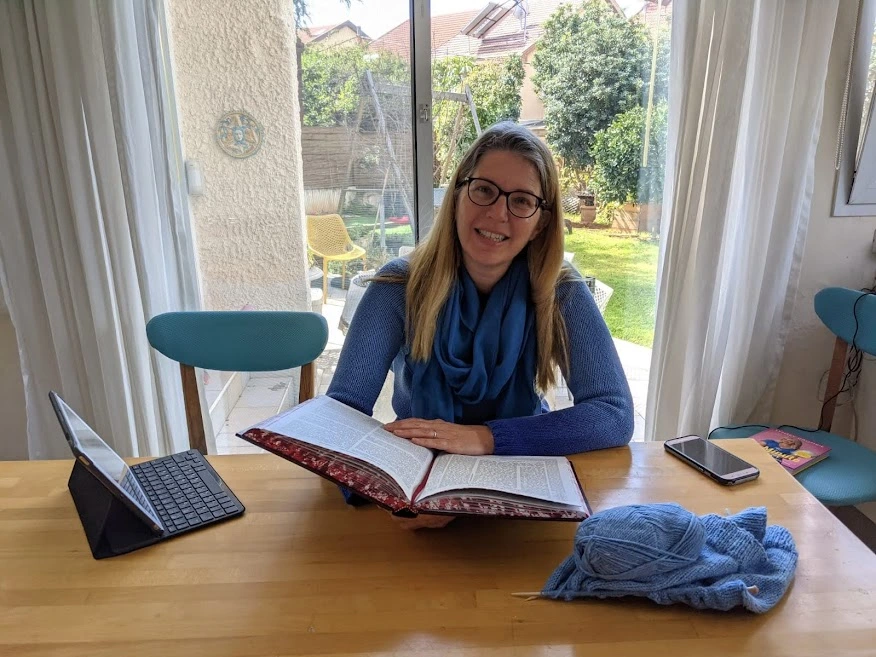
Emma Rinberg
Raanana, Israel
When I began learning Daf Yomi at the beginning of the current cycle, I was preparing for an upcoming surgery and thought that learning the Daf would be something positive I could do each day during my recovery, even if I accomplished nothing else. I had no idea what a lifeline learning the Daf would turn out to be in so many ways.

Laura Shechter
Lexington, MA, United States
I began my journey two years ago at the beginning of this cycle of the daf yomi. It has been an incredible, challenging experience and has given me a new perspective of Torah Sh’baal Peh and the role it plays in our lives
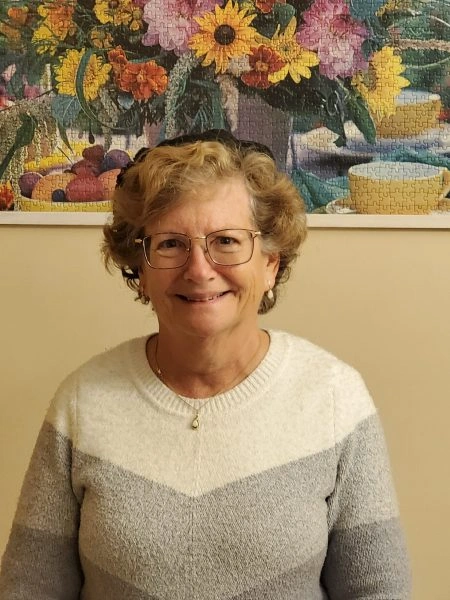
linda kalish-marcus
Efrat, Israel
“I got my job through the NY Times” was an ad campaign when I was growing up. I can headline “I got my daily Daf shiur and Hadran through the NY Times”. I read the January 4, 2020 feature on Reb. Michelle Farber and Hadran and I have been participating ever since. Thanks NY Times & Hadran!

Deborah Aschheim
New York, United States
In January 2020 on a Shabbaton to Baltimore I heard about the new cycle of Daf Yomi after the siyum celebration in NYC stadium. I started to read “ a daily dose of Talmud “ and really enjoyed it . It led me to google “ do Orthodox women study Talmud? “ and found HADRAN! Since then I listen to the podcast every morning, participate in classes and siyum. I love to learn, this is amazing! Thank you

Sandrine Simons
Atlanta, United States
I started last year after completing the Pesach Sugiyot class. Masechet Yoma might seem like a difficult set of topics, but for me made Yom Kippur and the Beit HaMikdash come alive. Liturgy I’d always had trouble connecting with took on new meaning as I gained a sense of real people moving through specific spaces in particular ways. It was the perfect introduction; I am so grateful for Hadran!

Debbie Engelen-Eigles
Minnesota, United States
I started learning Gemara at the Yeshivah of Flatbush. And I resumed ‘ברוך ה decades later with Rabbanit Michele at Hadran. I started from Brachot and have had an exciting, rewarding experience throughout seder Moed!

Anne Mirsky
Maale Adumim, Israel
I’ve been wanting to do Daf Yomi for years, but always wanted to start at the beginning and not in the middle of things. When the opportunity came in 2020, I decided: “this is now the time!” I’ve been posting my journey daily on social media, tracking my progress (#DafYomi); now it’s fully integrated into my daily routines. I’ve also inspired my partner to join, too!

Joséphine Altzman
Teaneck, United States
I’ve been learning since January 2020, and in June I started drawing a phrase from each daf. Sometimes it’s easy (e.g. plants), sometimes it’s very hard (e.g. korbanot), and sometimes it’s loads of fun (e.g. bird racing) to find something to draw. I upload my pictures from each masechet to #DafYomiArt. I am enjoying every step of the journey.

Gila Loike
Ashdod, Israel
A friend mentioned that she was starting Daf Yomi in January 2020. I had heard of it and thought, why not? I decided to try it – go day by day and not think about the seven plus year commitment. Fast forward today, over two years in and I can’t imagine my life without Daf Yomi. It’s part of my morning ritual. If I have a busy day ahead of me I set my alarm to get up early to finish the day’s daf

Debbie Fitzerman
Ontario, Canada
When I began the previous cycle, I promised myself that if I stuck with it, I would reward myself with a trip to Israel. Little did I know that the trip would involve attending the first ever women’s siyum and being inspired by so many learners. I am now over 2 years into my second cycle and being part of this large, diverse, fascinating learning family has enhanced my learning exponentially.

Shira Krebs
Minnesota, United States
I started with Ze Kollel in Berlin, directed by Jeremy Borowitz for Hillel Deutschland. We read Masechet Megillah chapter 4 and each participant wrote his commentary on a Sugia that particularly impressed him. I wrote six poems about different Sugiot! Fascinated by the discussions on Talmud I continued to learn with Rabanit Michelle Farber and am currently taking part in the Tikun Olam course.

Yael Merlini
Berlin, Germany
When I was working and taking care of my children, learning was never on the list. Now that I have more time I have two different Gemora classes and the nach yomi as well as the mishna yomi daily.

Shoshana Shinnar
Jerusalem, Israel
After enthusing to my friend Ruth Kahan about how much I had enjoyed remote Jewish learning during the earlier part of the pandemic, she challenged me to join her in learning the daf yomi cycle. I had always wanted to do daf yomi but now had no excuse. The beginning was particularly hard as I had never studied Talmud but has become easier, as I have gained some familiarity with it.

Susan Vishner
Brookline, United States
While vacationing in San Diego, Rabbi Leah Herz asked if I’d be interested in being in hevruta with her to learn Daf Yomi through Hadran. Why not? I had loved learning Gemara in college in 1971 but hadn’t returned. With the onset of covid, Daf Yomi and Rabbanit Michelle centered me each day. Thank-you for helping me grow and enter this amazing world of learning.

Meryll Page
Minneapolis, MN, United States
A Gemara shiur previous to the Hadran Siyum, was the impetus to attend it.It was highly inspirational and I was smitten. The message for me was התלמוד בידינו. I had decided along with my Chahsmonaim group to to do the daf and take it one daf at time- without any expectations at all. There has been a wealth of information, insights and halachik ideas. It is truly exercise of the mind, heart & Soul
Phyllis Hecht
Hashmonaim, Israel
My family recently made Aliyah, because we believe the next chapter in the story of the Jewish people is being written here, and we want to be a part of it. Daf Yomi, on the other hand, connects me BACK, to those who wrote earlier chapters thousands of years ago. So, I feel like I’m living in the middle of this epic story. I’m learning how it all began, and looking ahead to see where it goes!

Tina Lamm
Jerusalem, Israel
At almost 70 I am just beginning my journey with Talmud and Hadran. I began not late, but right when I was called to learn. It is never too late to begin! The understanding patience of staff and participants with more experience and knowledge has been fabulous. The joy of learning never stops and for me. It is a new life, a new light, a new depth of love of The Holy One, Blessed be He.

Deborah Hoffman-Wade
Richmond, CA, United States
I started learning at the beginning of the cycle after a friend persuaded me that it would be right up my alley. I was lucky enough to learn at Rabbanit Michelle’s house before it started on zoom and it was quickly part of my daily routine. I find it so important to see for myself where halachot were derived, where stories were told and to get more insight into how the Rabbis interacted.

Deborah Dickson
Ra’anana, Israel
I started learning Daf in Jan 2020 with Brachot b/c I had never seen the Jewish people united around something so positive, and I wanted to be a part of it. Also, I wanted to broaden my background in Torah Shebal Peh- Maayanot gave me a great gemara education, but I knew that I could hold a conversation in most parts of tanach but almost no TSB. I’m so thankful for Daf and have gained immensely.

Meira Shapiro
NJ, United States
Chullin 62
היה בקי בהן ובשמותיהן עוף הבא בסימן אחד טהור לא היה בקי בהן ובשמותיהן בסימן אחד טמא בשני סימנין טהור והוא שיכיר עורב
If one is familiar with the non-kosher birds and their names, any bird that comes before him with only one sign is kosher, since he can be sure that it is not the peres or ozniyya, which have only one sign. If he is not familiar with them and their names, any bird that he finds with one sign is non-kosher, since it may be the peres or ozniyya. But if he finds a bird with exactly two signs, it is kosher, provided that he can recognize a crow, since the crow is the only non-kosher bird with exactly two signs.
עורב ותו לא והתניא עורב זה עורב למינו ר’ אליעזר אומר להביא את הזרזיר אמרו לו לר’ אליעזר והלא אנשי כפר תמרתא שביהודה היו אוכלים אותן מפני שיש להן זפק אמר להם אף הן עתידין ליתן את הדין
The Gemara asks: Must he recognize only the crow and nothing more? But isn’t it taught in a baraita: The verse states: “Every orev after its kinds” (Leviticus 11:15). With regard to the orev, this is the well-known crow; as for the phrase “after its kinds,” Rabbi Eliezer says: It is written to include the zarzir, another type of crow, to teach that it is non-kosher. The Sages said to Rabbi Eliezer: But wouldn’t the people of Kefar Temarta in Judea eat the zarzir, because it has a crop? Rabbi Eliezer said to them: They too will be judged in the future for their transgression.
דבר אחר למינהו להביא סנונית לבנה דברי ר”א אמרו לו והלא אנשי גליל העליון אוכלים אותו מפני שקרקבנו נקלף אמר להם אף הן עתידין ליתן את הדין אלא עורב וכל מין עורב
Alternatively, the phrase “after its kinds” is written to include the white senunit and teach that it is non-kosher; this is the statement of Rabbi Eliezer. The Rabbis said to him: But don’t the people of the upper Galilee eat it, because its gizzard can be peeled? Rabbi Eliezer said to them: They too will be judged in the future for their transgression. In any event, the baraita indicates that other non-kosher birds exist that have two signs, like the crow. The Gemara responds: Rather, Rav Naḥman must have meant that one must be able to recognize the well-known crow and all other species of crow.
אמר אמימר הלכתא עוף הבא בסימן אחד טהור והוא דלא דריס א”ל רב אשי לאמימר הא דרב נחמן מאי א”ל לא שמיע לי כלומר לא סבירא לי מאי איכא משום פרס ועזניה ליתנהו בישוב
Ameimar said: The halakha is: Any bird that comes before a person with one sign is kosher, provided that it does not claw its food. Rav Ashi said to Ameimar: What about that which Rav Naḥman said, that if one finds a bird with exactly one sign, he may eat it only if he can identify all the non-kosher birds in the Torah, to be sure that it is not one of them? Ameimar said to him: I did not hear this statement; that is to say: I do not hold accordingly. What concern is there? Is one concerned because of the peres and ozniyya, which have only one sign? They are not found in settled areas, and one need not be concerned about them.
אמר רב יהודה עוף המסרט כשר לטהרת מצורע וזו היא סנונית לבנה שנחלקו בה ר’ אליעזר וחכמים
§ Rav Yehuda says: The bird known as the scratching bird is fit for use in the purification of a leper, i.e., it is kosher. Only kosher birds are fit for this rite, as the verse states: “Then shall the priest command to take for him that is to be purified two living pure birds” (Leviticus 14:4). And this is the white senunit about which Rabbi Eliezer and the Rabbis disagreed in the baraita.
אמר אמימר בחיורא כרסה כולי עלמא לא פליגי דשריא כי פליגי בדירוקא כרסה ר”א אסר ורבנן שרו והלכתא כר”א
Ameimar said: There are two kinds of white senunit. With regard to the senunit with a white belly, everyone agrees that it is permitted for consumption. They disagree when discussing the kind with a yellow belly. Rabbi Eliezer prohibits it, and the Rabbis permit it. And the halakha is in accordance with the opinion of Rabbi Eliezer.
מר זוטרא מתני הכי בדירוקא כרסה כולי עלמא לא פליגי דאסיר כי פליגי בדחיורא כרסה ר”א אסר ורבנן שרו והלכתא כרבנן דשרו
Mar Zutra teaches the statement of Ameimar in this manner: With regard to the senunit with a yellow belly, everyone agrees that it is prohibited. They disagree when discussing the kind with a white belly. Rabbi Eliezer deems it prohibited, and the Rabbis deem it permitted. And the halakha is in accordance with the opinion of the Rabbis, who deem it permitted.
בשלמא למ”ד בחיורא כרסה פליגי היינו דקתני זו היא סנונית לבנה אלא למ”ד בדירוקא פליגי מאי זו היא סנונית לבנה לאפוקי דבתי דאוכמתי
The Gemara asks: Granted, according to the one who says that they disagree with regard to the kind with a white belly, this explanation is consistent with that which Rav Yehuda teaches: This is the white senunit about which Rabbi Eliezer and the Rabbis disagreed. But according to the one who says that they disagree with regard to the kind with a yellow belly, what is the meaning of the phrase: This is the white senunit? The Gemara responds: The phrase: White senunit, is used only to exclude the house senunit, which is black.
אמר רחבה אמר רבי יהודה תסיל פסול משום תורין וכשר משום בני יונה דאציפי ותורין של רחבה כשרין משום תורין ופסולין משום בני יונה מתיב רב דניאל בר רב קטינא כל העופות
§ Raḥava says that Rabbi Yehuda says: A young tasil, which is similar to a dove, is unfit for sacrifice as a dove, which is fit only when mature, but it is fit for sacrifice as a pigeon, which is fit only when immature. In other words, the tasil is considered a type of pigeon, not a dove. A mature datzifi bird, and mature doves of Reḥava, are fit as doves, but are unfit as pigeons, since they are types of doves. Rav Daniel bar Rav Ketina raises an objection from a mishna (Para 9:3): All birds
פוסלין מי חטאת חוץ מן היונה מפני שמוצצת ואם איתא ליתני חוץ מיונה ותסיל א”ר זירא זה מוצץ ומקיא וזה מוצץ ואינו מקיא
disqualify the water of purification, i.e., water in which ashes of the red heifer have been placed, by drinking from it. The water that entered the bird’s mouth is disqualified, and some of it drips back into the container, disqualifying the rest. This applies to all birds except for the pigeon, because it sips the water from the container and none falls back in from its mouth. But if it is so that the tasil is a type of pigeon, let the mishna teach: Except for the pigeon and the tasil. Rabbi Zeira said: Although the tasil is a type of pigeon and sips the water as well, this, the tasil, sips the water and spits part of it back, and therefore disqualifies the water of purification, and that, the pigeon, sips but does not spit.
אמר רב יהודה הני כופשני צוצייני כשרים לגבי מזבח והן הן תורין של רחבה מיתיבי (במדבר יט, ו) אזוב ולא אזוב יון ולא אזוב כוחלי ולא אזוב רומי ולא מדברי ולא כל אזוב שיש לו שם לווי
Rav Yehuda says: The tzutzeyanei doves are fit for sacrifice on the altar, and they are the doves of Reḥava mentioned earlier. The Gemara raises an objection from a mishna (Nega’im 14:6): The Torah requires hyssop for the purification of a leper. It must be standard hyssop, and neither a hyssop of Greece, nor stibium hyssop, nor Roman hyssop, nor desert hyssop, nor any other kind of hyssop whose name is accompanied by a modifier. Likewise, tzutzeyanei doves should be unfit for sacrifice, because they have a modifier in their name.
אמר אביי כל שנשתנה שמו קודם מתן תורה והקפידה תורה עליו יש לו שם לווי פסול והני לא נשתנו שמן קודם מתן תורה רבא אמר הני כופשני צוצייני באתרייהו סתמא קרי להו
Abaye said: Any item whose name was modified before the giving of the Torah, and concerning which the Torah was particular when naming it, is unfit if its name is accompanied by a modifier, since the language of the Torah was formulated to exclude it. But the name of these tzutzeyanei doves was not modified, i.e., the modifier tzutzeyanei was not applied to them, before the giving of the Torah. Even though it was applied to them later, they are still fit for sacrifice. Alternatively, Rava said: The tzutzeyanei doves are called simply doves in their place of habitation.
אמר רב יהודה הני כרזי דבי חילפי שרו ודבי כרבי אסירי אמר רבינא ומלקינן עלייהו משום שרץ העוף ואמר רב יהודה צרדא שרי ברדא אסיר וסימניך בר מיניה מרדא ספקא
Similarly, Rav Yehuda says: These grasshoppers found among the shrubs are kosher and permitted for consumption. And those found among the cabbages are forbidden. Ravina said: And we flog those who eat them on their account, due to the prohibition: “And all winged swarming things are impure unto you” (Deuteronomy 14:19). And Rav Yehuda says: The bird called tzarda is permitted for consumption, and the barda is prohibited. And your mnemonic to remember which is which is this: Eat any bird except [bar] for it. As for the marda, it is uncertain whether it is kosher.
אמר רב אסי שמונה ספיקות הן חובא חוגא סוגא והרנוגא תושלמי ומרדא כוחילנא ובר נפחא מאי ספיקייהו עופות טהורים קורקבנן נקלף וטמאין אין קורקבנן נקלף והני קורקבנן נקלף בסכינא
Rav Asi says: There are eight uncertain cases: The ḥuva, ḥuga, suga, and harnuga, tushelemi, and marda, kuḥilna, and bar nappaḥa. The Gemara explains: What is their uncertainty? The gizzard of kosher birds can be peeled, as mentioned in the mishna, and the gizzard of non-kosher birds cannot be peeled, but the gizzard of these birds can be peeled only with a knife.
והא ההיא בר אווזא דהוה בי מר שמואל דלא הוה קא מקלף קורקבניה ואותביה בשימשא וכיון דרפי איקליף התם כי רפי איקליף בידא הכא אע”ג דרפי לא מקליף אלא בסכינא
The Gemara asks: But why should these not be kosher? Wasn’t there a certain duck in the house of Mar Shmuel whose gizzard could not be peeled, and they set the gizzard in the sun, and once it softened it could be peeled? The Gemara responds: There, when it softened it could be peeled by hand. Here, in these eight cases, even when it softened it could be peeled only with a knife.
אמר אביי תרנגולא דאגמא חד משמונה ספיקות הוא והיינו מרדו אמר רב פפא תרנגולא דאגמא אסירא תרנגולתא דאגמא שריא וסימניך עמוני ולא עמונית דרש מרימר תרנגולתא דאגמא אסירא חזיוה דדרסה ואכלה והיינו גירותא
Abaye says: The swamp rooster is one of the eight uncertain cases, and this is the mardu, i.e., the marda mentioned earlier. Rav Pappa says: The swamp rooster is forbidden, but the swamphen is permitted. And your mnemonic to remember this is the statement of the Sages with regard to the verse: “An Ammonite or a Moabite shall not enter into the assembly of the Lord” (Deuteronomy 23:4), that an Ammonite man is unfit to enter the assembly, but not an Ammonite woman. Mareimar taught: The swamphen is forbidden, because the Sages saw that it claws its prey and eats it. And this is the giruta, a non-kosher bird (see 109b).
אמר רב שבור אנדרפטא שרי פירוז אנדרפטא אסור וסימניך פירוז רשיעא אמר רב הונא בוניא שרי פרוא אסיר וסימניך פרואה אמגושא
Rav says: The bird called the shavor anderafta is permitted, but the piruz anderafta is forbidden. And your mnemonic to remember this is the known personality Piruz the Evil. Rav Huna says: The bird called the bunya is permitted. The parva is forbidden. And your mnemonic to remember this is the known personality Parva’a the Sorcerer.
אמר רב פפא מרדו זגיד ואכיל שרי סגיד ואכיל אסור וסימניך (שמות לד, יד) לא תשתחוה לאל אחר אמר שמואל שתיא חמרא אסירא וסימניך שתויי יין פסולין לעבודה ואמר שמואל מזגא חמרא אסירא
Rav Pappa says: The bird known as the reclining and eating mardu is permitted, while the bowing and eating mardu is forbidden. And your mnemonic to remember this is the verse: “You shall bow down to no other god” (Exodus 34:14). Shmuel says: The bird called the wine drinker is forbidden. And your mnemonic to remember this is the halakha: Those who drank wine are unfit for service in the Temple. And Shmuel says: The bird called the wine pourer is forbidden.
Follow

