Search

Eruvin 105

Want to dedicate learning? Get started here:

English
עברית
podcast placeholder

0:00
0:00


podcast placeholder

0:00
0:00


Summary

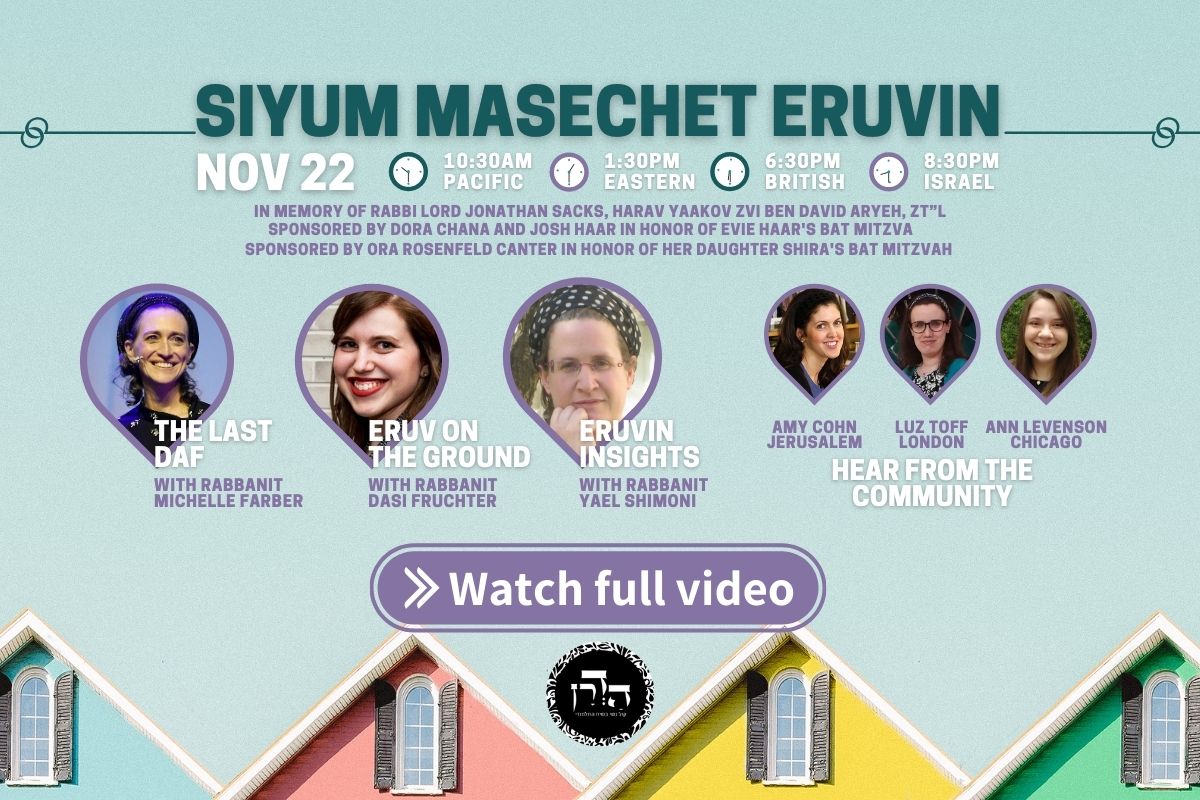
Click here for the text for the Siyum Ceremony

The siyum is dedicated in memory of Rabbi Jonathan Sacks zt”l.

It is also dedicated by Dora Chana and Josh Haar in honor of their daughter Evie’s bat mitzva. We are so happy that you are celebrating becoming a bat mitzva in a world with wonderful female role models like Rabbanit Farber, who make Torah accessible and inspiring for all. And by Ora Rosenfeld Canter in honor of her daughter, Shira’s bat mitzva. “I say a Shira of Thanks for you every day but the Torah itself is called Shira. As Rabbi Sacks A’H explains, it is because in order for Torah to penetrate and affect you spiritually ,it needs to sing to you. I know that as you watch me, toiling over Gemara for the first time in my life, R Akiva style, at age 40+, that you don’t always “get it.” My bracha to you at this special time is that in the merit of the tremendous effort of Torah study by all these incredible women, that you find your own melody of Torah that sings to you. Own it and make it your own and may Hashem grant me the privilege of humming along. I love you, Mommy.” Mazel tov to both of you! 

What is the source for Rabbi Shimon ben Nanas’ and Rabbi Akiva’s opinions regarding taking out a sheretz from the Temple. If the Temple needs repairs or building, who is allowed to go into sanctified areas to do it? Is a Levite or Israelite permitted to go? Is a blemished or impure priest allowed? The mishna ends with a cryptic statement of Rabbi Shimon. What does it mean? To what it is referring? And why is that the final line of the masechet?

https://www.facebook.com/hadranwomen/videos/369355357705168/

Today’s daily daf tools:

Eruvin 105

אָמַר רַבִּי יוֹחָנָן, וּשְׁנֵיהֶם מִקְרָא אֶחָד דָּרְשׁוּ: ״וַיָּבֹאוּ הַכֹּהֲנִים לִפְנִימָה בֵית ה׳ לְטַהֵר וַיּוֹצִיאוּ אֵת כׇּל הַטּוּמְאָה אֲשֶׁר מָצְאוּ בְּהֵיכַל ה׳ לַחֲצַר בֵּית ה׳ וַיְקַבְּלוּ הַלְוִיִּם לְהוֹצִיא לְנַחַל קִדְרוֹן חוּצָה״.

Rabbi Yoḥanan said: Both of them, Rabbi Shimon ben Nannas and Rabbi Akiva, derived their opinions from the same verse: “And the priests went into the inner part of the House of God, to cleanse it, and they brought out all the impurity that they found in the Temple of God into the courtyard of the House of God. And the Levites took it, to carry it out to the brook of Kidron” (II Chronicles 29:16).

מָר סָבַר: מִדְּאִשְׁתַּנִּי בַּעֲזָרָה בִּלְוִיִּם, טוּמְאָה בַּעֲזָרָה לֵיכָּא.

One Sage, Rabbi Shimon Ben Nannas, maintains: As there was a change from the priests who removed the ritual impurity from the inner part of the Temple to the Levites, who took over in the courtyard, this indicates that there is no obligation to remove impurity in the courtyard, and consequently the priests are not required to do so.

וּמָר סָבַר: עַד הֵיכָא דְּלָא אֶפְשָׁר בִּלְוִיִּם, מַפְּקִי כֹּהֲנִים. הַשְׁתָּא דְּאֶפְשָׁר בִּלְוִיִּם, תּוּ לָא מִטַּמְּאִי כֹּהֲנִים.

And one Sage, Rabbi Akiva, maintains: Up to where it is impossible for the task to be performed by the Levites, as it is prohibited for Levites to enter the Sanctuary, the priests took it out. However, now in the courtyard, where it is possible for the ritual impurity to be removed by the Levites, the priests no longer render themselves ritually impure, as they are prohibited from maintaining contact with ritual impurity for any longer than necessary. That is to say, the Levites removed it from any place where they were permitted to enter.

תָּנוּ רַבָּנַן: הַכֹּל נִכְנָסִין בַּהֵיכָל לִבְנוֹת לְתַקֵּן וּלְהוֹצִיא אֶת הַטּוּמְאָה, וּמִצְוָה בְּכֹהֲנִים. אִם אֵין שָׁם כֹּהֲנִים — נִכְנָסִין לְוִיִּם, אֵין שָׁם לְוִיִּם — נִכְנָסִין יִשְׂרְאֵלִים. וְאִידֵּי וְאִידֵּי, טְהוֹרִין — אִין, טְמֵאִין — לָא.

The Sages taught in a baraita: It is permitted for everyone to enter the Sanctuary to build, to repair, or to remove impurity from inside. However, wherever possible, the mitzva is for these tasks to be performed by priests. If no priests are available, Levites enter; if no Levites are available, Israelites enter. In both cases, if they are ritually pure, yes, they may enter, but if they are impure, no, they may not enter the holy place.

אָמַר רַב הוּנָא: רַב כָּהֲנָא מְסַיַּיע כָּהֲנֵי, דְּתָנֵי רַב כָּהֲנָא: מִתּוֹךְ שֶׁנֶּאֱמַר ״אַךְ אֶל הַפָּרוֹכֶת לֹא יָבֹא״, יָכוֹל לֹא יְהוּ כֹּהֲנִים בַּעֲלֵי מוּמִין נִכְנָסִין בֵּין הָאוּלָם וְלַמִּזְבֵּחַ לַעֲשׂוֹת רִיקּוּעֵי פַחִים —

Rav Huna said: Rav Kahana, who was a priest, supports priests by emphasizing their special sanctity. As Rav Kahana taught in a baraita: Since it is stated with regard to a priest who has a physical blemish, “Only he shall not go in unto the veil, nor come near to the altar, because he has a blemish, that he profane not My holy places; for I am the Lord who sanctifies them” (Leviticus 21:23), I might have thought that priests with blemishes may not enter the area between the Entrance Hall and the altar to manufacture beaten plates of gold for the Holy of Holies.

תַּלְמוּד לוֹמַר ״אַךְ״ — חִלֵּק: מִצְוָה בִּתְמִימִים, אֵין שָׁם תְּמִימִים — נִכְנָסִין בַּעֲלֵי מוּמִין. מִצְוָה בִּטְהוֹרִין, אֵין שָׁם טְהוֹרִין — נִכְנָסִין טְמֵאִין. אִידֵּי וְאִידֵּי, כֹּהֲנִים — אִין, יִשְׂרְאֵלִים — לָא.

Therefore, the verse teaches “only” as an expression of exclusion, which means that there is a distinction here: Although the mitzva should be performed with unblemished priests ab initio, if no unblemished priests are available, blemished ones may enter. Likewise, it is the duty of ritually pure priests; if no pure priests are available, impure ones may enter. In both cases, if they are priests, yes, they may enter, but if they are Israelites, no, they may not enter the holy place. According to Rav Kahana, ritually impure priests take precedence over ritually pure Israelites.

אִיבַּעְיָא לְהוּ: טָמֵא וּבַעַל מוּם, אֵיזוֹ מֵהֶן נִכְנָס? רַב חִיָּיא בַּר אָשֵׁי אָמַר רַב: טָמֵא נִכְנָס, דְּהָא אִישְׁתְּרִי בַּעֲבוֹדַת צִיבּוּר. רַבִּי אֶלְעָזָר אוֹמֵר: בַּעַל מוּם נִכְנָס, דְּהָא אִישְׁתְּרִי בַּאֲכִילַת קָדָשִׁים.

A dilemma was raised before the Sages: If one priest is ritually impure and another has a blemish, which of them should enter to perform repairs? Rav Ḥiyya bar Ashi said that Rav said: The impure one should enter, as he is permitted to participate in communal service. If the entire community is ritually impure, even impure priests may perform the service, whereas blemished priests may not serve under any circumstances. Rabbi Elazar says: The one with the blemish should enter, as he is permitted to eat consecrated foods, which indicates that he retains the sanctity of the priesthood despite his blemish. The Gemara leaves this question unresolved.

רַבִּי שִׁמְעוֹן אוֹמֵר וְכוּ׳. רַבִּי שִׁמְעוֹן הֵיכָא קָאֵי? הָתָם קָאֵי, דִּתְנַן: מִי שֶׁהֶחֱשִׁיךְ חוּץ לַתְּחוּם, אֲפִילּוּ אַמָּה אַחַת לֹא יִכָּנֵס. רַבִּי שִׁמְעוֹן אוֹמֵר: אֲפִילּוּ חֲמֵשׁ עֶשְׂרֵה אַמָּה יִכָּנֵס, לְפִי שֶׁאֵין הַמָּשׁוֹחוֹת מְמַצְּעִין אֶת הַמִּדּוֹת מִפְּנֵי הַטּוֹעִים.

We learned in the mishna that Rabbi Shimon says: Wherever the Sages permitted an action to you, they granted you only from your own. The Gemara asks: With regard to Rabbi Shimon, on the basis of what mishna did he formulate this principle? The Gemara answers: He taught this principle on the basis of the mishna there, as we learned: With regard to one for whom it grew dark while he was outside the Shabbat limit, even if he was only one cubit outside the limit he may not enter the town. Rabbi Shimon says: Even if he was fifteen cubits outside the limit, he may enter the town, because when the surveyors mark the Shabbat limit, they do not measure precisely. Rather they position the boundary mark within the two-thousand-cubit limit, because of those who err.

דְּקָאָמַר תַּנָּא קַמָּא לֹא יִכָּנֵס, וַאֲמַר לֵיהּ רַבִּי שִׁמְעוֹן יִכָּנֵס.

With regard to that which the first tanna said, i.e., that he may not enter, Rabbi Shimon said to the tanna: He may enter. His reason, as stated, is that the limit does in fact extend that far, as any area the Sages granted to a person was actually permitted to him by Torah law.

שֶׁלֹּא הִתִּירוּ לָךְ אֶלָּא מִשּׁוּם שְׁבוּת. הֵיכָא קָאֵי? הָתָם קָאֵי, דְּקָאָמַר תַּנָּא קַמָּא — קוֹשְׁרָהּ. וַאֲמַר לֵיהּ רַבִּי שִׁמְעוֹן — עוֹנְבָהּ.

Rabbi Shimon further said: As they permitted to you only activities prohibited due to rabbinic decree, but not actions prohibited by Torah law. The Gemara asks: On the basis of what teaching did he formulate this principle? The Gemara answers: He taught it on the basis of the mishna there, where the first tanna said with regard to a harp string in the Temple that broke on Shabbat, that one may tie it with a knot, and Rabbi Shimon said: He may form only a bow.

עֲנִיבָה, דְּלָא אָתֵי לִידֵי חִיּוּב חַטָּאת — שָׁרוּ לֵיהּ רַבָּנַן. קְשִׁירָה, דְּאָתֵי לִידֵי חִיּוּב חַטָּאת — לָא שָׁרוּ לֵיהּ רַבָּנַן.

The reason why only forming a bow is permitted, is that it cannot lead to liability for a sin-offering, as forming a bow cannot constitute a violation of the category of the prohibited labor of tying. Consequently, the Sages permitted it. However, with regard to tying a knot, which can lead to liability for a sin-offering when performed outside the Temple, the Sages did not permit it, as Rabbi Shimon maintains that the Sages permitted only activities whose prohibition involves a rabbinic decree.


הַדְרָן עֲלָךְ הַמּוֹצֵא תְּפִילִּין וּסְלִיקָא לָהּ מַסֶּכֶת עֵירוּבִין

Today’s daily daf tools:

Delve Deeper

Broaden your understanding of the topics on this daf with classes and podcasts from top women Talmud scholars.

For the Beyond the Daf shiurim offered in Hebrew, see here.

New to Talmud?

Check out our resources designed to help you navigate a page of Talmud – and study at the pace, level and style that fits you. 

The Hadran Women’s Tapestry

Meet the diverse women learning Gemara at Hadran and hear their stories. 

I began my journey two years ago at the beginning of this cycle of the daf yomi. It has been an incredible, challenging experience and has given me a new perspective of Torah Sh’baal Peh and the role it plays in our lives

linda kalish-marcus
linda kalish-marcus

Efrat, Israel

Hearing and reading about the siyumim at the completion of the 13 th cycle Daf Yomi asked our shul rabbi about starting the Daf – he directed me to another shiur in town he thought would allow a woman to join, and so I did! Love seeing the sources for the Divrei Torah I’ve been hearing for the past decades of living an observant life and raising 5 children .

Jill Felder
Jill Felder

Pittsburgh, Pennsylvania, United States

I started the daf at the beginning of this cycle in January 2020. My husband, my children, grandchildren and siblings have been very supportive. As someone who learned and taught Tanach and mefarshim for many years, it has been an amazing adventure to complete the six sedarim of Mishnah, and now to study Talmud on a daily basis along with Rabbanit Michelle and the wonderful women of Hadran.

Rookie Billet
Rookie Billet

Jerusalem, Israel

I started learning when my brother sent me the news clip of the celebration of the last Daf Yomi cycle. I was so floored to see so many women celebrating that I wanted to be a part of it. It has been an enriching experience studying a text in a language I don’t speak, using background knowledge that I don’t have. It is stretching my learning in unexpected ways, bringing me joy and satisfaction.

Jodi Gladstone
Jodi Gladstone

Warwick, Rhode Island, United States

I started learning at the beginning of this Daf Yomi cycle because I heard a lot about the previous cycle coming to an end and thought it would be a good thing to start doing. My husband had already bought several of the Koren Talmud Bavli books and they were just sitting on the shelf, not being used, so here was an opportunity to start using them and find out exactly what was in them. Loving it!

Caroline Levison
Caroline Levison

Borehamwood, United Kingdom

My Daf journey began in August 2012 after participating in the Siyum Hashas where I was blessed as an “enabler” of others.  Galvanized into my own learning I recited the Hadran on Shas in January 2020 with Rabbanit Michelle. That Siyum was a highlight in my life.  Now, on round two, Daf has become my spiritual anchor to which I attribute manifold blessings.

Rina Goldberg
Rina Goldberg

Englewood NJ, United States

In early 2020, I began the process of a stem cell transplant. The required extreme isolation forced me to leave work and normal life but gave me time to delve into Jewish text study. I did not feel isolated. I began Daf Yomi at the start of this cycle, with family members joining me online from my hospital room. I’ve used my newly granted time to to engage, grow and connect through this learning.

Reena Slovin
Reena Slovin

Worcester, United States

I start learning Daf Yomi in January 2020. The daily learning with Rabbanit Michelle has kept me grounded in this very uncertain time. Despite everything going on – the Pandemic, my personal life, climate change, war, etc… I know I can count on Hadran’s podcast to bring a smile to my face.
Deb Engel
Deb Engel

Los Angeles, United States

I started learning at the start of this cycle, and quickly fell in love. It has become such an important part of my day, enriching every part of my life.

Naomi Niederhoffer
Naomi Niederhoffer

Toronto, Canada

Retirement and Covid converged to provide me with the opportunity to commit to daily Talmud study in October 2020. I dove into the middle of Eruvin and continued to navigate Seder Moed, with Rabannit Michelle as my guide. I have developed more confidence in my learning as I completed each masechet and look forward to completing the Daf Yomi cycle so that I can begin again!

Rhona Fink
Rhona Fink

San Diego, United States

I started my journey on the day I realized that the Siyum was happening in Yerushalayim and I was missing out. What? I told myself. How could I have not known about this? How can I have missed out on this opportunity? I decided that moment, I would start Daf Yomi and Nach Yomi the very next day. I am so grateful to Hadran. I am changed forever because I learn Gemara with women. Thank you.

Linda Brownstein
Linda Brownstein

Mitspe, Israel

I tried Daf Yomi in the middle of the last cycle after realizing I could listen to Michelle’s shiurim online. It lasted all of 2 days! Then the new cycle started just days before my father’s first yahrzeit and my youngest daughter’s bat mitzvah. It seemed the right time for a new beginning. My family, friends, colleagues are immensely supportive!

Catriella-Freedman-jpeg
Catriella Freedman

Zichron Yaakov, Israel

Having never learned Talmud before, I started Daf Yomi in hopes of connecting to the Rabbinic tradition, sharing a daily idea on Instagram (@dafyomiadventures). With Hadran and Sefaria, I slowly gained confidence in my skills and understanding. Now, part of the Pardes Jewish Educators Program, I can’t wait to bring this love of learning with me as I continue to pass it on to my future students.

Hannah-G-pic
Hannah Greenberg

Pennsylvania, United States

In early 2020, I began the process of a stem cell transplant. The required extreme isolation forced me to leave work and normal life but gave me time to delve into Jewish text study. I did not feel isolated. I began Daf Yomi at the start of this cycle, with family members joining me online from my hospital room. I’ve used my newly granted time to to engage, grow and connect through this learning.

Reena Slovin
Reena Slovin

Worcester, United States

I LOVE learning the Daf. I started with Shabbat. I join the morning Zoom with Reb Michelle and it totally grounds my day. When Corona hit us in Israel, I decided that I would use the Daf to keep myself sane, especially during the days when we could not venture out more than 300 m from our home. Now my husband and I have so much new material to talk about! It really is the best part of my day!

Batsheva Pava
Batsheva Pava

Hashmonaim, Israel

What a great experience to learn with Rabbanit Michelle Farber. I began with this cycle in January 2020 and have been comforted by the consistency and energy of this process throughout the isolation period of Covid. Week by week, I feel like I am exploring a treasure chest with sparkling gems and puzzling antiquities. The hunt is exhilarating.

Marian Frankston
Marian Frankston

Pennsylvania, United States

The first month I learned Daf Yomi by myself in secret, because I wasn’t sure how my husband would react, but after the siyyum on Masechet Brachot I discovered Hadran and now sometimes my husband listens to the daf with me. He and I also learn mishnayot together and are constantly finding connections between the different masechtot.

Laura Warshawsky
Laura Warshawsky

Silver Spring, Maryland, United States

At almost 70 I am just beginning my journey with Talmud and Hadran. I began not late, but right when I was called to learn. It is never too late to begin! The understanding patience of staff and participants with more experience and knowledge has been fabulous. The joy of learning never stops and for me. It is a new life, a new light, a new depth of love of The Holy One, Blessed be He.
Deborah Hoffman-Wade

Richmond, CA, United States

Margo
I started my Talmud journey in 7th grade at Akiba Jewish Day School in Chicago. I started my Daf Yomi journey after hearing Erica Brown speak at the Hadran Siyum about marking the passage of time through Daf Yomi.

Carolyn
I started my Talmud journey post-college in NY with a few classes. I started my Daf Yomi journey after the Hadran Siyum, which inspired both my son and myself.

Carolyn Hochstadter and Margo Kossoff Shizgal

Merion Station,  USA

Beit Shemesh, Israel

With Rabbanit Dr. Naomi Cohen in the Women’s Talmud class, over 30 years ago. It was a “known” class and it was accepted, because of who taught. Since then I have also studied with Avigail Gross-Gelman and Dr. Gabriel Hazut for about a year). Years ago, in a shiur in my shul, I did know about Persians doing 3 things with their clothes on. They opened the shiur to woman after that!

Sharon Mink
Sharon Mink

Haifa, Israel

Eruvin 105

אָמַר רַבִּי יוֹחָנָן, וּשְׁנֵיהֶם מִקְרָא אֶחָד דָּרְשׁוּ: ״וַיָּבֹאוּ הַכֹּהֲנִים לִפְנִימָה בֵית ה׳ לְטַהֵר וַיּוֹצִיאוּ אֵת כׇּל הַטּוּמְאָה אֲשֶׁר מָצְאוּ בְּהֵיכַל ה׳ לַחֲצַר בֵּית ה׳ וַיְקַבְּלוּ הַלְוִיִּם לְהוֹצִיא לְנַחַל קִדְרוֹן חוּצָה״.

Rabbi Yoḥanan said: Both of them, Rabbi Shimon ben Nannas and Rabbi Akiva, derived their opinions from the same verse: “And the priests went into the inner part of the House of God, to cleanse it, and they brought out all the impurity that they found in the Temple of God into the courtyard of the House of God. And the Levites took it, to carry it out to the brook of Kidron” (II Chronicles 29:16).

מָר סָבַר: מִדְּאִשְׁתַּנִּי בַּעֲזָרָה בִּלְוִיִּם, טוּמְאָה בַּעֲזָרָה לֵיכָּא.

One Sage, Rabbi Shimon Ben Nannas, maintains: As there was a change from the priests who removed the ritual impurity from the inner part of the Temple to the Levites, who took over in the courtyard, this indicates that there is no obligation to remove impurity in the courtyard, and consequently the priests are not required to do so.

וּמָר סָבַר: עַד הֵיכָא דְּלָא אֶפְשָׁר בִּלְוִיִּם, מַפְּקִי כֹּהֲנִים. הַשְׁתָּא דְּאֶפְשָׁר בִּלְוִיִּם, תּוּ לָא מִטַּמְּאִי כֹּהֲנִים.

And one Sage, Rabbi Akiva, maintains: Up to where it is impossible for the task to be performed by the Levites, as it is prohibited for Levites to enter the Sanctuary, the priests took it out. However, now in the courtyard, where it is possible for the ritual impurity to be removed by the Levites, the priests no longer render themselves ritually impure, as they are prohibited from maintaining contact with ritual impurity for any longer than necessary. That is to say, the Levites removed it from any place where they were permitted to enter.

תָּנוּ רַבָּנַן: הַכֹּל נִכְנָסִין בַּהֵיכָל לִבְנוֹת לְתַקֵּן וּלְהוֹצִיא אֶת הַטּוּמְאָה, וּמִצְוָה בְּכֹהֲנִים. אִם אֵין שָׁם כֹּהֲנִים — נִכְנָסִין לְוִיִּם, אֵין שָׁם לְוִיִּם — נִכְנָסִין יִשְׂרְאֵלִים. וְאִידֵּי וְאִידֵּי, טְהוֹרִין — אִין, טְמֵאִין — לָא.

The Sages taught in a baraita: It is permitted for everyone to enter the Sanctuary to build, to repair, or to remove impurity from inside. However, wherever possible, the mitzva is for these tasks to be performed by priests. If no priests are available, Levites enter; if no Levites are available, Israelites enter. In both cases, if they are ritually pure, yes, they may enter, but if they are impure, no, they may not enter the holy place.

אָמַר רַב הוּנָא: רַב כָּהֲנָא מְסַיַּיע כָּהֲנֵי, דְּתָנֵי רַב כָּהֲנָא: מִתּוֹךְ שֶׁנֶּאֱמַר ״אַךְ אֶל הַפָּרוֹכֶת לֹא יָבֹא״, יָכוֹל לֹא יְהוּ כֹּהֲנִים בַּעֲלֵי מוּמִין נִכְנָסִין בֵּין הָאוּלָם וְלַמִּזְבֵּחַ לַעֲשׂוֹת רִיקּוּעֵי פַחִים —

Rav Huna said: Rav Kahana, who was a priest, supports priests by emphasizing their special sanctity. As Rav Kahana taught in a baraita: Since it is stated with regard to a priest who has a physical blemish, “Only he shall not go in unto the veil, nor come near to the altar, because he has a blemish, that he profane not My holy places; for I am the Lord who sanctifies them” (Leviticus 21:23), I might have thought that priests with blemishes may not enter the area between the Entrance Hall and the altar to manufacture beaten plates of gold for the Holy of Holies.

תַּלְמוּד לוֹמַר ״אַךְ״ — חִלֵּק: מִצְוָה בִּתְמִימִים, אֵין שָׁם תְּמִימִים — נִכְנָסִין בַּעֲלֵי מוּמִין. מִצְוָה בִּטְהוֹרִין, אֵין שָׁם טְהוֹרִין — נִכְנָסִין טְמֵאִין. אִידֵּי וְאִידֵּי, כֹּהֲנִים — אִין, יִשְׂרְאֵלִים — לָא.

Therefore, the verse teaches “only” as an expression of exclusion, which means that there is a distinction here: Although the mitzva should be performed with unblemished priests ab initio, if no unblemished priests are available, blemished ones may enter. Likewise, it is the duty of ritually pure priests; if no pure priests are available, impure ones may enter. In both cases, if they are priests, yes, they may enter, but if they are Israelites, no, they may not enter the holy place. According to Rav Kahana, ritually impure priests take precedence over ritually pure Israelites.

אִיבַּעְיָא לְהוּ: טָמֵא וּבַעַל מוּם, אֵיזוֹ מֵהֶן נִכְנָס? רַב חִיָּיא בַּר אָשֵׁי אָמַר רַב: טָמֵא נִכְנָס, דְּהָא אִישְׁתְּרִי בַּעֲבוֹדַת צִיבּוּר. רַבִּי אֶלְעָזָר אוֹמֵר: בַּעַל מוּם נִכְנָס, דְּהָא אִישְׁתְּרִי בַּאֲכִילַת קָדָשִׁים.

A dilemma was raised before the Sages: If one priest is ritually impure and another has a blemish, which of them should enter to perform repairs? Rav Ḥiyya bar Ashi said that Rav said: The impure one should enter, as he is permitted to participate in communal service. If the entire community is ritually impure, even impure priests may perform the service, whereas blemished priests may not serve under any circumstances. Rabbi Elazar says: The one with the blemish should enter, as he is permitted to eat consecrated foods, which indicates that he retains the sanctity of the priesthood despite his blemish. The Gemara leaves this question unresolved.

רַבִּי שִׁמְעוֹן אוֹמֵר וְכוּ׳. רַבִּי שִׁמְעוֹן הֵיכָא קָאֵי? הָתָם קָאֵי, דִּתְנַן: מִי שֶׁהֶחֱשִׁיךְ חוּץ לַתְּחוּם, אֲפִילּוּ אַמָּה אַחַת לֹא יִכָּנֵס. רַבִּי שִׁמְעוֹן אוֹמֵר: אֲפִילּוּ חֲמֵשׁ עֶשְׂרֵה אַמָּה יִכָּנֵס, לְפִי שֶׁאֵין הַמָּשׁוֹחוֹת מְמַצְּעִין אֶת הַמִּדּוֹת מִפְּנֵי הַטּוֹעִים.

We learned in the mishna that Rabbi Shimon says: Wherever the Sages permitted an action to you, they granted you only from your own. The Gemara asks: With regard to Rabbi Shimon, on the basis of what mishna did he formulate this principle? The Gemara answers: He taught this principle on the basis of the mishna there, as we learned: With regard to one for whom it grew dark while he was outside the Shabbat limit, even if he was only one cubit outside the limit he may not enter the town. Rabbi Shimon says: Even if he was fifteen cubits outside the limit, he may enter the town, because when the surveyors mark the Shabbat limit, they do not measure precisely. Rather they position the boundary mark within the two-thousand-cubit limit, because of those who err.

דְּקָאָמַר תַּנָּא קַמָּא לֹא יִכָּנֵס, וַאֲמַר לֵיהּ רַבִּי שִׁמְעוֹן יִכָּנֵס.

With regard to that which the first tanna said, i.e., that he may not enter, Rabbi Shimon said to the tanna: He may enter. His reason, as stated, is that the limit does in fact extend that far, as any area the Sages granted to a person was actually permitted to him by Torah law.

שֶׁלֹּא הִתִּירוּ לָךְ אֶלָּא מִשּׁוּם שְׁבוּת. הֵיכָא קָאֵי? הָתָם קָאֵי, דְּקָאָמַר תַּנָּא קַמָּא — קוֹשְׁרָהּ. וַאֲמַר לֵיהּ רַבִּי שִׁמְעוֹן — עוֹנְבָהּ.

Rabbi Shimon further said: As they permitted to you only activities prohibited due to rabbinic decree, but not actions prohibited by Torah law. The Gemara asks: On the basis of what teaching did he formulate this principle? The Gemara answers: He taught it on the basis of the mishna there, where the first tanna said with regard to a harp string in the Temple that broke on Shabbat, that one may tie it with a knot, and Rabbi Shimon said: He may form only a bow.

עֲנִיבָה, דְּלָא אָתֵי לִידֵי חִיּוּב חַטָּאת — שָׁרוּ לֵיהּ רַבָּנַן. קְשִׁירָה, דְּאָתֵי לִידֵי חִיּוּב חַטָּאת — לָא שָׁרוּ לֵיהּ רַבָּנַן.

The reason why only forming a bow is permitted, is that it cannot lead to liability for a sin-offering, as forming a bow cannot constitute a violation of the category of the prohibited labor of tying. Consequently, the Sages permitted it. However, with regard to tying a knot, which can lead to liability for a sin-offering when performed outside the Temple, the Sages did not permit it, as Rabbi Shimon maintains that the Sages permitted only activities whose prohibition involves a rabbinic decree.

הַדְרָן עֲלָךְ הַמּוֹצֵא תְּפִילִּין וּסְלִיקָא לָהּ מַסֶּכֶת עֵירוּבִין

Want to follow content and continue where you left off?

Create an account today to track your progress, mark what you’ve learned, and follow the shiurim that speak to you.

Clear all items from this list?

This will remove ALL the items in this section. You will lose any progress or history connected to them. This is irreversible.

Cancel
Yes, clear all

Are you sure you want to delete this item?

You will lose any progress or history connected to this item.

Cancel
Yes, delete