










Parts of the sacrifice that are leftover (notar), and bones and sinews must be burned, as since they cannot be eaten, they become leftover. But they are not to be burned on the fifteenth of Nissan as it is a Yom Tov, or on the sixteenth if it falls on a Shabbat. Rabbi Yitzchak said: Notar by rabbinic decree passes on impurity to hands that touch it, therefore also bones that have marrow from the Pesach sacrifice and cannot be eaten and thereby become leftover, since breaking the bones is forbidden, also pass on impurity to hands. The gemara tries to bring support for this and also raise a question against him. According to Rav, the sinews are considered meat, other than the sinews in the neck. The gemara raises a difficulty from our mishnah and brings some resolutions. Why is one not permitted to burn the leftovers on Shabbat / Yom Tov?
This week’s learning is sponsored by Tina Lamm for the refuah shleima for מעין ליאורה בת שלומית פייגא. “Our precious Maya”
Want to dedicate learning? Get started here:

Today’s daily daf tools:
This week’s learning is sponsored by Tina Lamm for the refuah shleima for מעין ליאורה בת שלומית פייגא. “Our precious Maya”
Pesachim 83
רַבָּה מוֹסִיף, אַף רַבִּי יוֹסֵי הַגְּלִילִי. דְּתַנְיָא, רַבִּי יוֹסֵי הַגְּלִילִי אוֹמֵר: כׇּל הָעִנְיָן כּוּלּוֹ אֵינוֹ מְדַבֵּר אֶלָּא בְּפָרִים הַנִּשְׂרָפִים וּבִשְׂעִירִין הַנִּשְׂרָפִין, לִשְׂרוֹף פְּסוּלֵיהֶן אַבֵּית הַבִּירָה, וְלִיתֵּן ״לֹא תַעֲשֶׂה״ עַל אֲכִילָתָן.
Rabba adds that these tanna’im were not the only ones who maintain this opinion; even Rabbi Yosei HaGelili agreed with them, as it was taught in a baraita that Rabbi Yosei HaGelili says: The entire matter that is stated in the verse: “Any sin-offering from which some blood has been brought to the Tent of Meeting, to make atonement in the sacred place, shall not be eaten; it shall be burned in fire” (Leviticus 6:23) is not stated with regard to a regular sin-offering improperly brought inside the Sanctuary; rather, it speaks only about bulls that are burned and goats that are burned. These are unique sin-offerings, and the Torah states that their blood should be brought inside the Sanctuary. The verse is stated with regard to these sin-offerings both in order to command the Jewish people to burn the disqualified ones in the place of the bira on the Temple Mount and in order to establish a prohibition with regard to their consumption.
אָמְרוּ לוֹ: חַטָּאת שֶׁנִּכְנַס דָּמָהּ לִפְנַי וְלִפְנִים מִנַּיִן? אָמַר לָהֶן: ״הֵן לֹא הוּבָא אֶת דָּמָהּ אֶל הַקֹּדֶשׁ פְּנִימָה״, מִכְּלָל דְּאִי נָפֵיק אִיהִי, אִי נָמֵי עָיֵיל דָּמָהּ — בִּשְׂרֵיפָה.
The Rabbis said to Rabbi Yosei HaGelili: If you expound the verse in this fashion, then with regard to a regular sin-offering whose blood entered inside the Sanctuary, from where is it derived that it must be burned? He said to them: It is derived from the verse: “Behold, its blood was not brought into the Sanctuary within” (Leviticus 10:18). This proves by inference that if the sin-offering is taken out of its permitted area, or alternatively, if its blood enters the Sanctuary, it must be burned immediately without waiting for decay of form.
וְרַבִּי יוֹחָנָן סָבַר: דָּם וּבָשָׂר חֲדָא מִילְּתָא הִיא. בְּעָלִים מִלְּתָא אַחֲרִיתִי הִיא.
The Gemara explains: And Rabbi Yoḥanan did not include Rabbi Yosei HaGelili because Rabbi Yoḥanan holds that there is a difference between the opinion of Rabbi Yosei HaGelili and those of Rabbi Yoḥanan ben Beroka and Rabbi Neḥemya. The reason for this difference is that impurity of blood and meat, about which Rabbi Yosei HaGelili was speaking, is one matter, and impurity of the blood can therefore be considered a disqualification in the animal itself, but disqualification of the owners is a different matter. Therefore, Rabbi Yosei HaGelili does not necessarily agree with the tanna’im who allow the offering to be burned immediately in the case of disqualification of the owners.
מַתְנִי׳ הָעֲצָמוֹת וְהַגִּידִין וְהַנּוֹתָר — יִשָּׂרְפוּ בְּשִׁשָּׁה עָשָׂר. חָל שִׁשָּׁה עָשָׂר לִהְיוֹת בְּשַׁבָּת — יִשָּׂרְפוּ בְּשִׁבְעָה עָשָׂר. לְפִי שֶׁאֵינָן דּוֹחִין לֹא אֶת הַשַּׁבָּת וְלֹא אֶת יוֹם טוֹב.
MISHNA: The bones of the Paschal lamb that contain edible marrow but cannot be eaten because it is prohibited to break the bones of the Paschal lamb; and the sinews; and the leftover meat should all be burned on the sixteenth of Nisan, immediately after the first day of the Festival. If the sixteenth occurs on Shabbat, they should be burned on the seventeenth, because the mitzva to burn them does not override Shabbat or the Festival. Therefore, they are burned on the first weekday.
גְּמָ׳ אָמַר רַב מָרִי בַּר אֲבוּהּ אָמַר רַבִּי יִצְחָק: עַצְמוֹת קָדָשִׁים שֶׁשִּׁימְּשׁוּ נוֹתָר — מְטַמְּאִין אֶת הַיָּדַיִם, הוֹאִיל וְנַעֲשָׂה בָּסִיס לְדָבָר הָאָסוּר. נֵימָא מְסַיַּיע לֵיהּ: הָעֲצָמוֹת וְהַגִּידִים וְהַנּוֹתָר — יִשָּׂרְפוּ לְשִׁשָּׁה עָשָׂר.
GEMARA: Rav Mari bar Avuh said that Rabbi Yitzḥak said: Bones of offerings that served as a base for leftover, meaning that they have leftover meat on them or inside them after the time of eating, render hands impure, just as the leftover sacrificial parts themselves render hands impure. Since the bones have become a base for an intrinsically prohibited object, they are treated in the same manner as the prohibited object itself. The Gemara suggests: Let us say that the following expression in the mishna supports him: The bones, and the sinews, and the leftover should be burned on the sixteenth of Nisan.
הָנֵי עֲצָמוֹת הֵיכִי דָמֵי? אִילֵּימָא דְּלֵית בְּהוּ מוֹחַ, לָמָּה בִּשְׂרֵיפָה? נִשְׁדִּינְהוּ! אֶלָּא פְּשִׁיטָא, דְּאִית בְּהוּ מוֹחַ.
The Gemara asks: What are the circumstances in which these bones must be burned? If we say that there is no marrow in them, why must they be burned? We should discard them, as the Torah requires that leftover parts of offerings be burned only when they are edible. Rather, it is obvious that we are dealing with bones that have marrow in them. The marrow is part of the meat of the offering, and in other offerings one would have broken the bones in order to eat the marrow.
אִי אָמְרַתְּ בִּשְׁלָמָא שִׁימּוּשׁ נוֹתָר מִילְּתָא הִיא, אַמְּטוּ לְהָכִי בָּעֵי שְׂרֵיפָה. אֶלָּא אִי אָמְרַתְּ שִׁימּוּשׁ נוֹתָר לָאו מִילְּתָא הִיא, לְמָה לְהוּ שְׂרֵיפָה? נִתְבְּרִינְהוּ וְנַחְלְצֵהּ לְמוֹחַ דִּידְהוּ וְנִשְׂרְפֵיהּ וְנִשְׁדִּינְהוּ לְדִידְהוּ. אֶלָּא לָאו שְׁמַע מִינַּהּ, שִׁימּוּשׁ נוֹתָר מִילְּתָא הִיא.
Granted, if you say that an item that serves as a base or container for leftover is something significant and becomes disqualified in the same manner as the leftover themselves, because of this it needs burning like the leftover itself. But if you say that serving as a base for leftover is nothing significant, why do these bones need to be burned? Let us break them, and remove their marrow, and burn the marrow, and discard the bones. Rather, must one not conclude from it that serving as a base for leftover is something significant, and the bones themselves become prohibited and impart ritual impurity due to their consecrated contents?
אָמְרִי: לָא, לְעוֹלָם אֵימָא לָךְ שִׁימּוּשׁ נוֹתָר — לָאו מִילְּתָא, וְקָסָבַר: ״בּוֹ״ בְּכָשֵׁר, וַאֲפִילּוּ בְּפָסוּל.
Say in refutation of this proof: No. Actually, I could say to you that serving as a base for leftover is nothing significant, and the tanna of the mishna holds that the prohibition stated in the Torah: “And you shall not break a bone in it” (Exodus 12:46), applies even to a disqualified Paschal lamb. The prohibition to break the bones of the Paschal lamb applies even when the Paschal lamb itself may no longer be eaten. Thus, the bones must be burned because there is no way to extract the marrow. They are not burned because they themselves have served as a base for the leftover marrow.
אֲפִילּוּ בְּפָסוּל סָלְקָא דַּעְתָּךְ? וְהָא תְּנַן: אֲבָל הַמּוֹתִיר בַּטָּהוֹר וְהַשּׁוֹבֵר בַּטָּמֵא אֵינוֹ סוֹפֵג אֶת הָאַרְבָּעִים! לָא קַשְׁיָא, כָּאן — שֶׁהָיְתָה לוֹ שְׁעַת הַכּוֹשֶׁר, כָּאן — שֶׁלֹּא הָיְתָה לוֹ שְׁעַת הַכּוֹשֶׁר.
The Gemara expresses surprise at the previous answer: Can it enter your mind to say that the prohibition applies even to a disqualified Paschal lamb? Didn’t we learn in a mishna: But one who leaves over part of a pure Paschal lamb or one who breaks the bone of a ritually impure Paschal lamb does not receive forty lashes, which indicates that the Torah prohibition to break a bone applies only to a Paschal lamb that is still valid? The Gemara responds: This is not difficult. Here, when the mishna indicates that it is prohibited to break even the bone of a disqualified Paschal lamb, it is referring to a case where it had a time when it was valid, such as leftover sacrificial meat, which was valid before it was left over, and the prohibition therefore became relevant when it was valid. There, when the other mishna stated that the prohibition does not apply, it is referring to sacrificial meat that did not have a time when it was valid.
וּמַאן תַּנָּא דְּשָׁנֵי לֵיהּ בֵּין שֶׁהָיְתָה לוֹ שְׁעַת הַכּוֹשֶׁר לְלֹא הָיְתָה לוֹ שְׁעַת הַכּוֹשֶׁר, רַבִּי יַעֲקֹב הִיא. דְּתַנְיָא: ״וְעֶצֶם לֹא תִשְׁבְּרוּ בוֹ״, ״בּוֹ״ בְּכָשֵׁר וְלֹא בְּפָסוּל. רַבִּי יַעֲקֹב אוֹמֵר: הָיְתָה לוֹ שְׁעַת הַכּוֹשֶׁר וְנִפְסַל — יֵשׁ בּוֹ מִשּׁוּם שְׁבִירַת הָעֶצֶם, לֹא הָיְתָה לוֹ שְׁעַת הַכּוֹשֶׁר — אֵין בּוֹ מִשּׁוּם שְׁבִירַת הָעֶצֶם. רַבִּי שִׁמְעוֹן אוֹמֵר: אֶחָד זֶה וְאֶחָד זֶה — אֵין בּוֹ מִשּׁוּם שְׁבִירַת הָעֶצֶם.
The Gemara adds: And who is the tanna who differentiates between a Paschal lamb that had a time when it was valid and one that did not have a time when it was valid? It is Rabbi Ya’akov, as it was taught in a baraita: The verse states: “And you shall not break a bone in it,” and the emphasis of the expression “in it” teaches that the prohibition applies only to a valid Paschal lamb and not to a disqualified one. Rabbi Ya’akov says: If an offering had a time when it was valid and then became disqualified, it is subject to the prohibition of breaking a bone; if it did not have any time when it was valid, it is not subject to the prohibition of breaking a bone. Rabbi Shimon says: With regard to both this and that, whether the offering was valid at some point or not, once it becomes disqualified it is not subject to the prohibition of breaking a bone.
מֵיתִיבִי: כׇּל עַצְמוֹת הַקֳּדָשִׁים אֵין טְעוּנִין שְׂרֵיפָה, חוּץ מֵעַצְמוֹת הַפֶּסַח מִפְּנֵי הַתַּקָּלָה. הָנֵי עֲצָמוֹת הֵיכִי דָּמֵי? אִילֵּימָא דְּלֵית בְּהוּ מוֹחַ, לְמָה לְהוּ שְׂרֵיפָה? אֶלָּא פְּשִׁיטָא דְּאִית בְּהוּ מוֹחַ, וְאִי סָלְקָא דַעְתָּךְ שִׁימּוּשׁ נוֹתָר מִילְּתָא הִיא — עַצְמוֹת קָדָשִׁים אַמַּאי אֵין טְעוּנִין שְׂרֵיפָה?
The Gemara raises an objection based on what was taught in the following baraita: No bones of offerings require burning except for the bones of the Paschal lamb, due to the possibility that leaving the bones around will lead to a mishap because one may eventually transgress the prohibition of breaking the bones. The Gemara asks: What are the circumstances in which these bones must be burned? If we say we are dealing with a case where there is no marrow in the bones, why must they be burned? They should simply be discarded. Rather, it is obvious that there is marrow in them. And if it should enter your mind that serving as a base for leftover meat of an offering is something significant, why do bones of other offerings not require burning? They are serving as a base for the leftover marrow in them.
אָמַר רַב נַחְמָן בַּר יִצְחָק: הָכָא בְּמַאי עָסְקִינַן? כְּגוֹן שֶׁמְּצָאָן חֲלוּצִין: עַצְמוֹת קָדָשִׁים, דְּאֵין בָּהֶן מִשּׁוּם שְׁבִירַת הָעֶצֶם — קַמֵּי דְּנֶהְווֹ נוֹתָר חַלְצִינְהוּ, וְלָא הָווּ שִׁימּוּשׁ נוֹתָר, וְלָא בָּעוּ שְׂרֵיפָה.
Rav Naḥman bar Yitzḥak said: With what are we dealing here? We are dealing with a special case where one finds bones from which the marrow had already been removed. Therefore, there is room to differentiate between the different cases: With regard to bones of other offerings, to which the prohibition of breaking a bone does not apply, one may presume that before they became leftover one removed the marrow from them and ate it. Therefore, these bones were not serving as a base for leftover sacrificial meat, and they do not require burning and may be discarded.
עַצְמוֹת הַפֶּסַח, דְּיֵשׁ בָּהֶן מִשּׁוּם שְׁבִירַת הָעֶצֶם — לְבָתַר דְּנֶהְווֹ נוֹתָר הוּא דְּחַלְצִינְהוּ, וְהָווּ לְהוּ שִׁימּוּשׁ נוֹתָר, וּבָעוּ שְׂרֵיפָה.
On the other hand, bones of the Paschal lamb, to which the prohibition of breaking a bone does apply, were certainly not broken while the prohibition applied; rather, it was after they became leftover that one removed the marrow from them, when the prohibition of breaking a bone no longer applied, according to the opinion of Rabbi Shimon above. In that case, the bones temporarily served as a base for leftover sacrificial meat, and therefore they require burning.
רַב זְבִיד אָמַר: הָכָא בְּמַאי עָסְקִינַן? כְּגוֹן
Rav Zevid said that one can answer in a different way: With what are we dealing here? We are dealing with a case such as
שֶׁמְּצָאָן צִבּוּרִין צִבּוּרִין, וּמֵהֶן חֲלוּצִין. עַצְמוֹת קָדָשִׁים דְּאֵין בָּהֶן מִשּׁוּם שְׁבִירַת הָעֶצֶם — לְכוּלְּהוּ הֲוָה חָלֵיץ לְהוּ וְאָכֵיל לְהוּ, וְלָא בָּעֵי שְׂרֵיפָה.
when one finds them in piles, and he sees that some of them have had their marrow removed. If these bones are bones of offerings to which the prohibition of breaking a bone does not apply, one can assume that the owner removed the marrow from all the bones before the marrow became leftover and ate it, and they do not require burning.
עַצְמוֹת הַפֶּסַח דְּיֵשׁ בָּהֶן מִשּׁוּם שְׁבִירַת הָעֶצֶם — דִּילְמָא הָנֵי דְּחַלְצִינְהוּ, וּלְהָנָךְ לָא חַלְצִינְהוּ, וּבָעֵי שְׂרֵיפָה.
On the other hand, with regard to the bones of the Paschal lamb, to which the prohibition of breaking a bone does apply, perhaps the owner removed the marrow from these, and from those he did not remove the marrow, and they require burning. Therefore, although one needs to check all the bones of the Paschal lamb he finds to ensure that they do not have marrow left in them, he does not need to burn them due to the unconfirmed possibility that the marrow was removed after it became leftover. The bones would need to be burned only if there was still marrow in them or if one knew for certain that they had served as a base for leftover sacrificial meat.
אָמַר רַב יְהוּדָה אָמַר רַב: כׇּל הַגִּידִין בָּשָׂר, חוּץ מִגִּידֵי צַוָּאר.
Rav Yehuda said that Rav said: All the sinews in an animal are considered like meat. Therefore, one can fulfill his obligation to eat the Paschal lamb by eating them and one can register for them, except for the sinews of the neck, which are so hard that they are not considered meat.
תְּנַן: הָעֲצָמוֹת וְהַגִּידִים וְהַנּוֹתָר יִשָּׂרְפוּ בְּשִׁשָּׁה עָשָׂר. הָנֵי גִּידִין הֵיכִי דָמֵי? אִילֵּימָא גִּידֵי בָשָׂר — נֵיכְלִינְהוּ? וְאִי דְּאִיתּוֹתַר — הַיְינוּ נוֹתָר? אֶלָּא פְּשִׁיטָא: גִּידֵי צַוָּאר.
We learned in the mishna: The bones, and the sinews, and the leftover shall be burned on the sixteenth. The Gemara asks: What are the circumstances in which these sinews must be burned? If we say they are sinews of meat, let us eat them. Why are they burned? And if they are sinews that were left over and not eaten for some other reason, they are leftover, so why does the mishna list sinews separately? Rather, it is obvious that the mishna is referring to sinews of the neck, which are different than other sinews and are therefore mentioned separately.
אִי אָמְרַתְּ בִּשְׁלָמָא בָּשָׂר נִינְהוּ, אַמְּטוּ לְהָכִי בָּעֵי שְׂרֵיפָה. אֶלָּא אִי אָמְרַתְּ לָאו בָּשָׂר נִינְהוּ — לְמָה לְהוּ שְׂרֵיפָה? אָמַר רַב חִסְדָּא: לֹא נִצְרְכָא אֶלָּא לְגִיד הַנָּשֶׁה, וְאַלִּיבָּא דְּרַבִּי יְהוּדָה.
Granted, if you say they are meat, due to that they require burning; but if you say they are not meat, why do they require burning? One should simply discard them like other waste. Rav Ḥisda said: The mishna’s mention of sinews is necessary only for the sciatic nerve, in accordance with the opinion of Rabbi Yehuda.
דְּתַנְיָא, רַבִּי יְהוּדָה אוֹמֵר: אֵינוֹ נוֹהֵג אֶלָּא בְּאַחַת, וְהַדַּעַת מַכְרַעַת שֶׁל יָמִין.
As it was taught in a baraita that Rabbi Yehuda said: The prohibition to eat the sciatic nerve according to Torah law applies only to the sciatic nerve in one of the animal’s thighs, and not to both, and logic dictates that it is the right thigh. However, since there is no absolute proof that this is correct, the sciatic nerve must be removed from both sides. Although in theory the forbidden sciatic nerve may be discarded and the permitted one may be eaten, since there is uncertainty as to which one is permitted, neither of them may be eaten. Both must be burned.
וְאֶלָּא תִּפְשׁוֹט דְּסַפּוֹקֵי מְסַפְּקָא לֵיהּ לְרַבִּי יְהוּדָה. דְּאִי מִיפְּשִׁיט פְּשִׁיטָא לֵיהּ, הָהִיא דְּהֶיתֵּירָא נֵיכְלֵיהּ, וּדְאִיסּוּרָא נִישְׁדְּיֵיהּ — לְמָה לֵיהּ שְׂרֵיפָה!
The Gemara asks: Shall we then conclude that Rabbi Yehuda was uncertain about which sciatic nerve is forbidden? The Sages were unsure whether Rabbi Yehuda was absolutely convinced that it is the sciatic nerve from the right side that is forbidden, or if he was saying that this would seem likely to be the case, but he was not certain. As, if it were clear to him that it is the sciatic nerve from the right thigh that is forbidden, the proper procedure would be different: The one that is permitted we should eat, and the one that is forbidden we should discard. Why should he require burning?
אָמַר רַב אִיקָא בַּר חִינָּנָא: כְּגוֹן שֶׁהוּכְּרוּ וּלְבַסּוֹף נִתְעָרְבוּ.
Rav Ika bar Ḥinnana said, in response to this attempted proof: The mishna addresses a case where the two sciatic nerves were known, but in the end became mixed together. In other words, at first it was known which was the forbidden right nerve and which was the permitted left nerve. However, they were then mixed together and can no longer be identified. Therefore, due to the uncertainty, they must both be burned.
רַב אָשֵׁי אָמַר: לֹא נִצְרְכָא אֶלָּא לְשֻׁמָּנוֹ דְּגִיד הַנָּשֶׁה. דְּתַנְיָא: שֻׁמָּנוֹ מוּתָּר, וְיִשְׂרָאֵל קְדוֹשִׁים הֵם וְנוֹהֲגִין בּוֹ אִיסּוּר.
Rav Ashi said: The mishna’s ruling that the sinews must be burned is necessary only with regard to the fat of the sciatic nerve, as it was taught in a baraita: The fat around the sciatic nerve is permitted according to Torah law, but the Jewish people are holy and treat it as forbidden. Since it is permitted according to Torah law, it has the status of meat and may not be simply discarded. However, since the Jewish people treat it as forbidden, they do not eat it even from the Paschal lamb. Therefore, it is left until after the time when the meat may be eaten and burned in accordance with the general halakha of leftover.
רָבִינָא אָמַר: בַּחִיצוֹן, וְכִדְרַב יְהוּדָה אָמַר שְׁמוּאֵל. דְּאָמַר רַב יְהוּדָה אָמַר שְׁמוּאֵל: שְׁנֵי גִידִין הֵן, פְּנִימִי הַסָּמוּךְ לָעֶצֶם — אָסוּר, וְחַיָּיבִין עָלָיו. חִיצוֹן הַסָּמוּךְ לַבָּשָׂר — אָסוּר, וְאֵין חַיָּיבִין עָלָיו.
Ravina said: This discussion pertains to the outer nerve, and it is in accordance with that which Rav Yehuda said that Shmuel said, as Rav Yehuda said that Shmuel said: There are two sinews in the sciatic nerve: The inner sinew that is next to the bone is forbidden according to Torah law, and one is liable to be flogged for eating it. The outer sinew that is next to the meat is forbidden by rabbinic law, and therefore one is not liable to be flogged for eating it. Since the outer sinew is permitted according to Torah law, it attains the status of leftover when it is not eaten.
חָל שִׁשָּׁה עָשָׂר וְכוּ׳. וְאַמַּאי? נֵיתֵי עֲשֵׂה וְיִדְחֵי לֹא תַּעֲשֶׂה!
It was taught in the mishna that if the sixteenth of Nisan occurs on Shabbat, the burning of the leftover does not override Shabbat, and they are burned on the seventeenth. The Gemara asks: And why isn’t the leftover of the Paschal lamb burned on the Festival day itself? The positive mitzva to burn the leftover should come and override the prohibition that prohibits the performance of labor on Festivals.
אָמַר חִזְקִיָּה, וְכֵן תָּנֵי דְּבֵי חִזְקִיָּה, אָמַר קְרָא: ״לֹא תוֹתִירוּ מִמֶּנּוּ עַד בֹּקֶר וְהַנּוֹתָר מִמֶּנּוּ עַד בֹּקֶר בָּאֵשׁ תִּשְׂרֹפוּ״, שֶׁאֵין תַּלְמוּד לוֹמַר ״עַד בֹּקֶר״, מָה תַּלְמוּד לוֹמַר ״עַד בֹּקֶר״ — לִיתֵּן לוֹ בֹּקֶר שֵׁנִי לִשְׂרֵיפָתוֹ.
Ḥizkiya said, and similarly, one of the Sages in the school of Ḥizkiya taught: The verse states: “And you shall not leave any of it until morning; and that which remains of it until morning you shall burn with fire” (Exodus 12:10). As there is no need for the verse to state “until morning,” and repeating that phrase adds nothing to the verse, what is the meaning when the verse states “until morning”? It is to give it a second morning for its burning. In other words, it comes to teach that the mitzva to burn the leftover does not apply on the first morning, i.e., the morning of the Festival when they become prohibited to eat, but on the second morning, the sixteenth of Nisan. However, when the sixteenth falls on Shabbat, the burning is delayed until the seventeenth.
אַבָּיֵי אָמַר, אָמַר קְרָא: ״עֹלַת שַׁבָּת בְּשַׁבַּתּוֹ״, וְלֹא עוֹלַת חוֹל בְּשַׁבָּת, וְלֹא עוֹלַת חוֹל בְּיוֹם טוֹב.
Abaye said: The reason is because the verse states: “The burnt-offering of each Shabbat on its Shabbat in addition to the continual burnt-offering and its libation” (Numbers 28:10). This indicates that the burnt-offering of Shabbat may be offered on the altar on Shabbat or burned if it is disqualified, but not the burnt-offering of a weekday on Shabbat, and not the burnt-offering of a weekday on a Festival. It is derived from here that one may not burn anything on Shabbat that is not an obligation of that day.
רָבָא אָמַר, אָמַר קְרָא: ״הוּא לְבַדּוֹ יֵעָשֶׂה לָכֶם״ — ״הוּא״ וְלֹא מַכְשִׁירָיו, ״לְבַדּוֹ״,
Rava said a different reason: The verse states concerning Festivals: “And on the first day there shall be a sacred convocation; no kind of labor shall be done on them, save that which every man must eat, only that may be done for you” (Exodus 12:16). From this verse one can infer the following: That, i.e., the food itself, you may prepare, but you may not perform acts that facilitate its preparation, which must be done beforehand. The word only is also exclusive; it indicates that only food preparation is permitted,

Today’s daily daf tools:
Delve Deeper
Broaden your understanding of the topics on this daf with classes and podcasts from top women Talmud scholars.
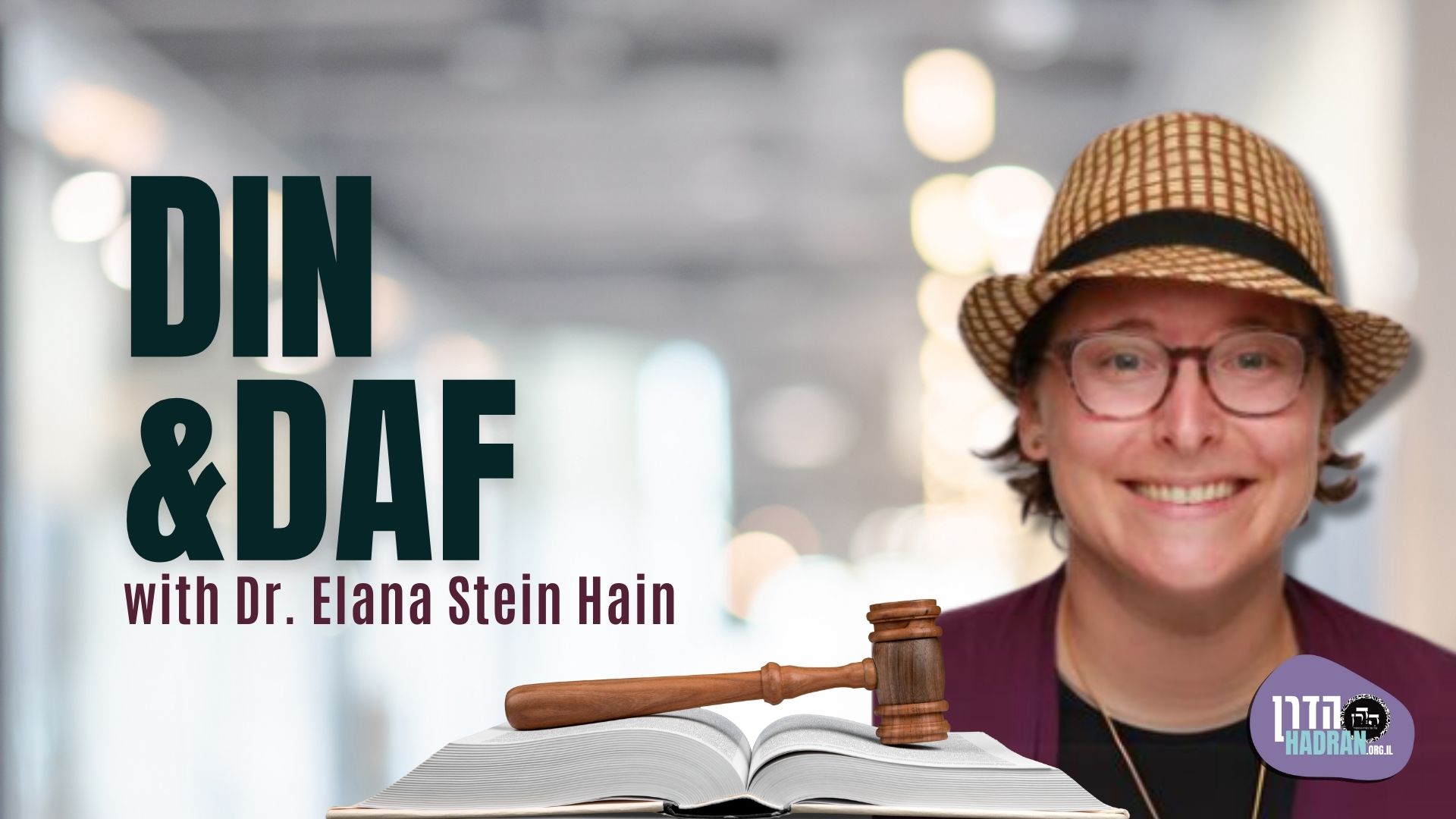
Selling Chametz on Pesach: What is the Halakhic Logic? – Din & Daf

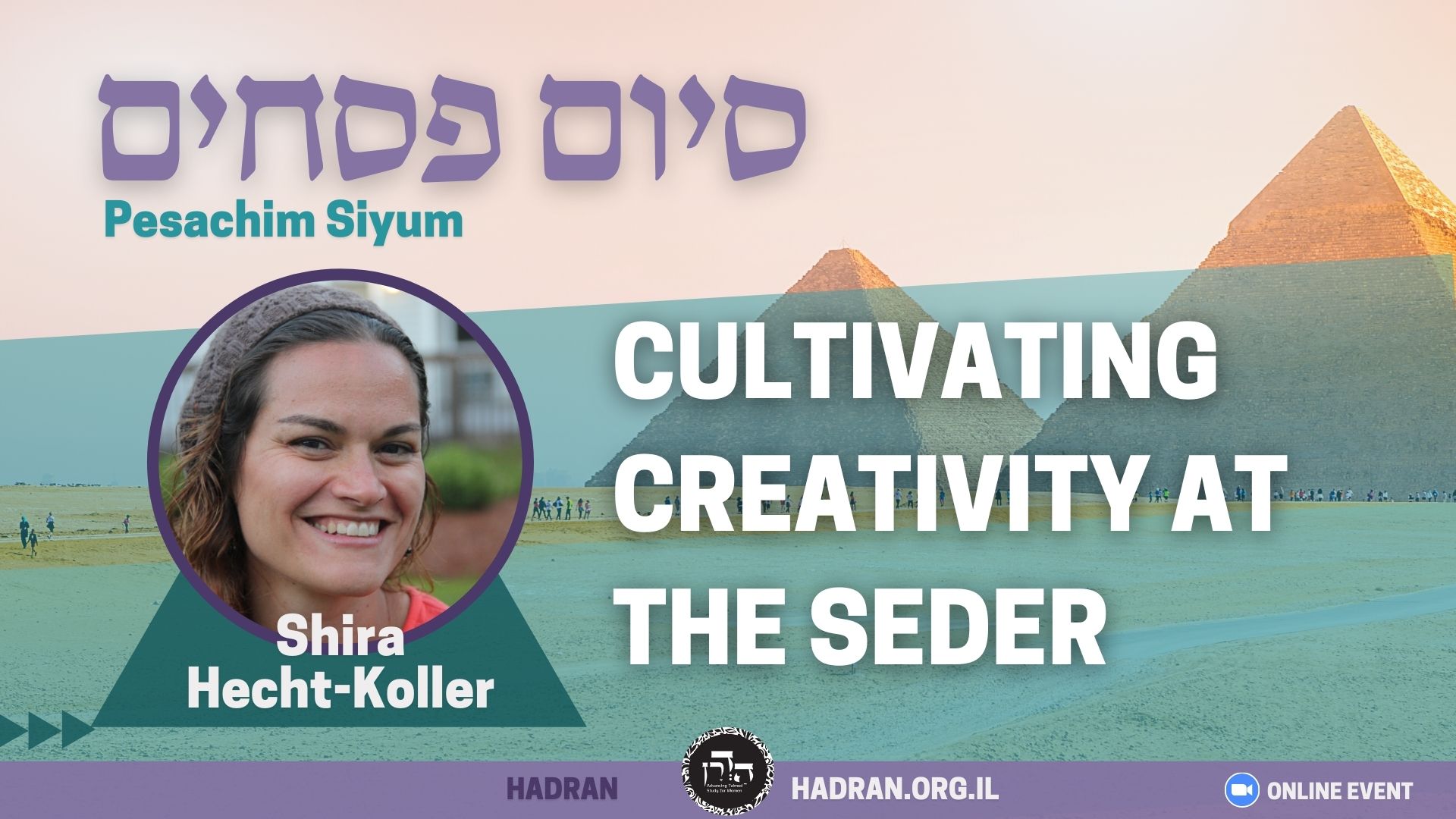
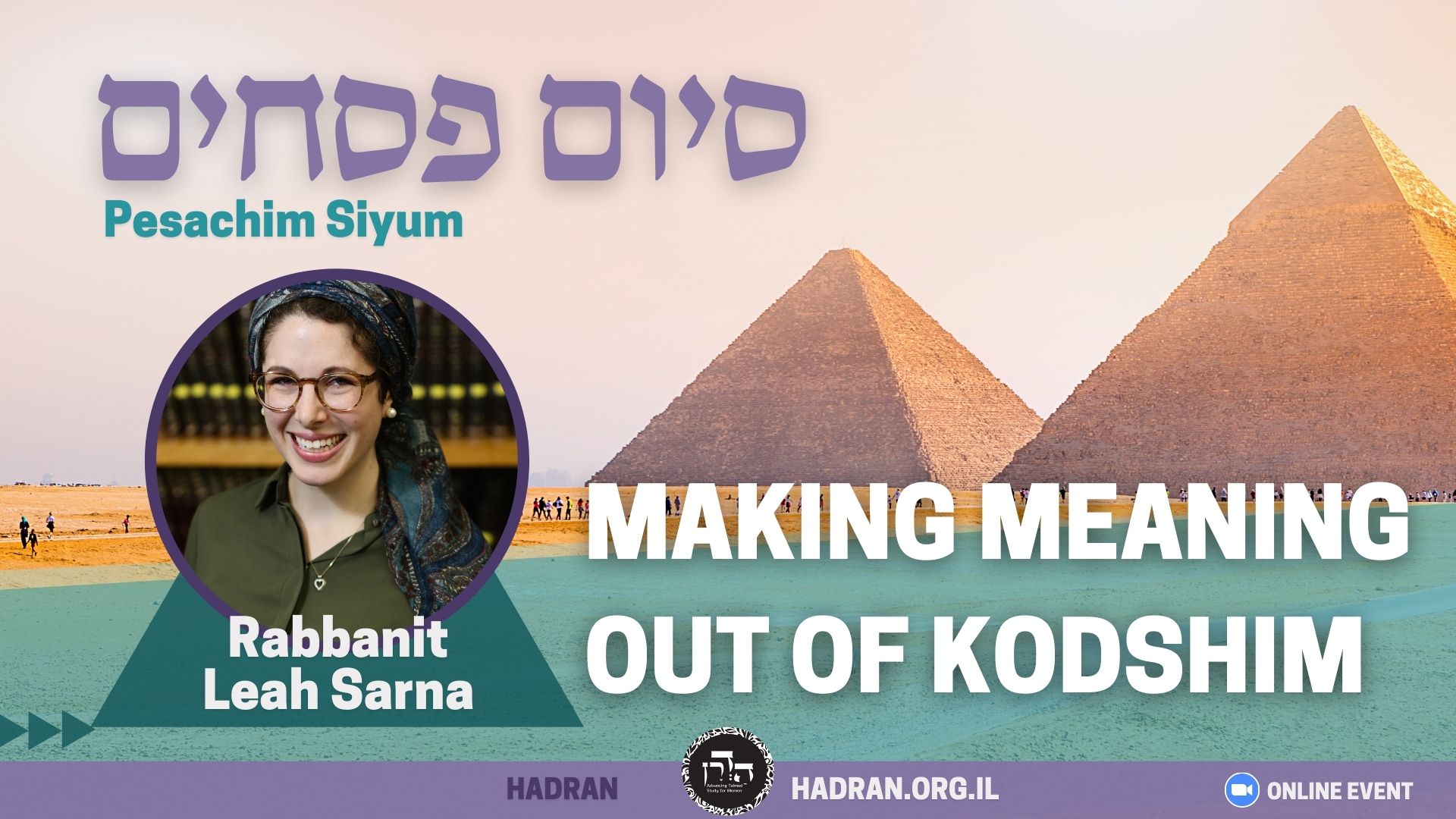
Pesachim 116-121 -(Siyum Masechet Pesachim) Daf Yomi: One Week at a Time

Pesachim 105: Shabbat Arrives When It Does, Like It or Not



Pesachim 100: If You Close Your Eyes, Tomorrow Never Comes
New to Talmud?
Check out our resources designed to help you navigate a page of Talmud – and study at the pace, level and style that fits you.
The Hadran Women’s Tapestry
Meet the diverse women learning Gemara at Hadran and hear their stories.
I began my Daf Yomi journey on January 5, 2020. I had never learned Talmud before. Initially it struck me as a bunch of inane and arcane details with mind bending logic. I am now smitten. Rabbanit Farber brings the page to life and I am eager to learn with her every day!

Highland Park, United States
I was exposed to Talmud in high school, but I was truly inspired after my daughter and I decided to attend the Women’s Siyum Shas in 2020. We knew that this was a historic moment. We were blown away, overcome with emotion at the euphoria of the revolution. Right then, I knew I would continue. My commitment deepened with the every-morning Virtual Beit Midrash on Zoom with R. Michelle.
Zichron Yaakov, Israel
I learned Mishnayot more than twenty years ago and started with Gemara much later in life. Although I never managed to learn Daf Yomi consistently, I am learning since some years Gemara in depth and with much joy. Since last year I am studying at the International Halakha Scholars Program at the WIHL. I often listen to Rabbanit Farbers Gemara shiurim to understand better a specific sugyiah. I am grateful for the help and inspiration!

Berlin, Germany
Margo
I started my Talmud journey in 7th grade at Akiba Jewish Day School in Chicago. I started my Daf Yomi journey after hearing Erica Brown speak at the Hadran Siyum about marking the passage of time through Daf Yomi.
Carolyn
I started my Talmud journey post-college in NY with a few classes. I started my Daf Yomi journey after the Hadran Siyum, which inspired both my son and myself.
Merion Station, USA
Beit Shemesh, Israel
Palo Alto, CA, United States
I began Daf Yomi with the last cycle. I was inspired by the Hadran Siyum in Yerushalayim to continue with this cycle. I have learned Daf Yomi with Rabanit Michelle in over 25 countries on 6 continents ( missing Australia)

Silver Spring, MD, United States
I started learning with rabbis. I needed to know more than the stories. My first teacher to show me “the way of the Talmud” as well as the stories was Samara Schwartz.
Michelle Farber started the new cycle 2 yrs ago and I jumped on for the ride.
I do not look back.

Houston, United States
I learned daf more off than on 40 years ago. At the beginning of the current cycle, I decided to commit to learning daf regularly. Having Rabanit Michelle available as a learning partner has been amazing. Sometimes I learn with Hadran, sometimes with my husband, and sometimes on my own. It’s been fun to be part of an extended learning community.

Honolulu, Hawaii, United States
I started at the beginning of this cycle. No 1 reason, but here’s 5.
In 2019 I read about the upcoming siyum hashas.
There was a sermon at shul about how anyone can learn Talmud.
Talmud references come up when I am studying. I wanted to know more.
Yentl was on telly. Not a great movie but it’s about studying Talmud.
I went to the Hadran website: A new cycle is starting. I’m gonna do this
Cambridge, United Kingdom
I started learning Daf Yomi inspired by תָּפַסְתָּ מְרוּבֶּה לֹא תָּפַסְתָּ, תָּפַסְתָּ מוּעָט תָּפַסְתָּ. I thought I’d start the first page, and then see. I was swept up into the enthusiasm of the Hadran Siyum, and from there the momentum kept building. Rabbanit Michelle’s shiur gives me an anchor, a connection to an incredible virtual community, and an energy to face whatever the day brings.

בית שמש, Israel
I started learning when my brother sent me the news clip of the celebration of the last Daf Yomi cycle. I was so floored to see so many women celebrating that I wanted to be a part of it. It has been an enriching experience studying a text in a language I don’t speak, using background knowledge that I don’t have. It is stretching my learning in unexpected ways, bringing me joy and satisfaction.
Warwick, Rhode Island, United States
When we heard that R. Michelle was starting daf yomi, my 11-year-old suggested that I go. Little did she know that she would lose me every morning from then on. I remember standing at the Farbers’ door, almost too shy to enter. After that first class, I said that I would come the next day but couldn’t commit to more. A decade later, I still look forward to learning from R. Michelle every morning.

Ra’anana, Israel
My Daf journey began in August 2012 after participating in the Siyum Hashas where I was blessed as an “enabler” of others. Galvanized into my own learning I recited the Hadran on Shas in January 2020 with Rabbanit Michelle. That Siyum was a highlight in my life. Now, on round two, Daf has become my spiritual anchor to which I attribute manifold blessings.

Englewood NJ, United States

Phoenix, Arizona, United States
It’s hard to believe it has been over two years. Daf yomi has changed my life in so many ways and has been sustaining during this global sea change. Each day means learning something new, digging a little deeper, adding another lens, seeing worlds with new eyes. Daf has also fostered new friendships and deepened childhood connections, as long time friends have unexpectedly become havruta.

Northwest Washington, United States

Raanana, Israel
I started learning Talmud with R’ Haramati in Yeshivah of Flatbush. But after a respite of 60 years, Rabbanit Michelle lit my fire – after attending the last three world siyumim in Miami Beach, Meadowlands and Boca Raton, and now that I’m retired, I decided – “I can do this!” It has been an incredible journey so far, and I look forward to learning Daf everyday – Mazal Tov to everyone!

Florida, United States
When I started studying Hebrew at Brown University’s Hillel, I had no idea that almost 38 years later, I’m doing Daf Yomi. My Shabbat haburah is led by Rabbanit Leah Sarna. The women are a hoot. I’m tracking the completion of each tractate by reading Ilana Kurshan’s memoir, If All the Seas Were Ink.

Pennsylvania, United States

Ontario, Canada
I began my Daf Yomi journey on January 5, 2020. I had never learned Talmud before. Initially it struck me as a bunch of inane and arcane details with mind bending logic. I am now smitten. Rabbanit Farber brings the page to life and I am eager to learn with her every day!
Highland Park, United States
Pesachim 83
רַבָּה מוֹסִיף, אַף רַבִּי יוֹסֵי הַגְּלִילִי. דְּתַנְיָא, רַבִּי יוֹסֵי הַגְּלִילִי אוֹמֵר: כׇּל הָעִנְיָן כּוּלּוֹ אֵינוֹ מְדַבֵּר אֶלָּא בְּפָרִים הַנִּשְׂרָפִים וּבִשְׂעִירִין הַנִּשְׂרָפִין, לִשְׂרוֹף פְּסוּלֵיהֶן אַבֵּית הַבִּירָה, וְלִיתֵּן ״לֹא תַעֲשֶׂה״ עַל אֲכִילָתָן.
Rabba adds that these tanna’im were not the only ones who maintain this opinion; even Rabbi Yosei HaGelili agreed with them, as it was taught in a baraita that Rabbi Yosei HaGelili says: The entire matter that is stated in the verse: “Any sin-offering from which some blood has been brought to the Tent of Meeting, to make atonement in the sacred place, shall not be eaten; it shall be burned in fire” (Leviticus 6:23) is not stated with regard to a regular sin-offering improperly brought inside the Sanctuary; rather, it speaks only about bulls that are burned and goats that are burned. These are unique sin-offerings, and the Torah states that their blood should be brought inside the Sanctuary. The verse is stated with regard to these sin-offerings both in order to command the Jewish people to burn the disqualified ones in the place of the bira on the Temple Mount and in order to establish a prohibition with regard to their consumption.
אָמְרוּ לוֹ: חַטָּאת שֶׁנִּכְנַס דָּמָהּ לִפְנַי וְלִפְנִים מִנַּיִן? אָמַר לָהֶן: ״הֵן לֹא הוּבָא אֶת דָּמָהּ אֶל הַקֹּדֶשׁ פְּנִימָה״, מִכְּלָל דְּאִי נָפֵיק אִיהִי, אִי נָמֵי עָיֵיל דָּמָהּ — בִּשְׂרֵיפָה.
The Rabbis said to Rabbi Yosei HaGelili: If you expound the verse in this fashion, then with regard to a regular sin-offering whose blood entered inside the Sanctuary, from where is it derived that it must be burned? He said to them: It is derived from the verse: “Behold, its blood was not brought into the Sanctuary within” (Leviticus 10:18). This proves by inference that if the sin-offering is taken out of its permitted area, or alternatively, if its blood enters the Sanctuary, it must be burned immediately without waiting for decay of form.
וְרַבִּי יוֹחָנָן סָבַר: דָּם וּבָשָׂר חֲדָא מִילְּתָא הִיא. בְּעָלִים מִלְּתָא אַחֲרִיתִי הִיא.
The Gemara explains: And Rabbi Yoḥanan did not include Rabbi Yosei HaGelili because Rabbi Yoḥanan holds that there is a difference between the opinion of Rabbi Yosei HaGelili and those of Rabbi Yoḥanan ben Beroka and Rabbi Neḥemya. The reason for this difference is that impurity of blood and meat, about which Rabbi Yosei HaGelili was speaking, is one matter, and impurity of the blood can therefore be considered a disqualification in the animal itself, but disqualification of the owners is a different matter. Therefore, Rabbi Yosei HaGelili does not necessarily agree with the tanna’im who allow the offering to be burned immediately in the case of disqualification of the owners.
מַתְנִי׳ הָעֲצָמוֹת וְהַגִּידִין וְהַנּוֹתָר — יִשָּׂרְפוּ בְּשִׁשָּׁה עָשָׂר. חָל שִׁשָּׁה עָשָׂר לִהְיוֹת בְּשַׁבָּת — יִשָּׂרְפוּ בְּשִׁבְעָה עָשָׂר. לְפִי שֶׁאֵינָן דּוֹחִין לֹא אֶת הַשַּׁבָּת וְלֹא אֶת יוֹם טוֹב.
MISHNA: The bones of the Paschal lamb that contain edible marrow but cannot be eaten because it is prohibited to break the bones of the Paschal lamb; and the sinews; and the leftover meat should all be burned on the sixteenth of Nisan, immediately after the first day of the Festival. If the sixteenth occurs on Shabbat, they should be burned on the seventeenth, because the mitzva to burn them does not override Shabbat or the Festival. Therefore, they are burned on the first weekday.
גְּמָ׳ אָמַר רַב מָרִי בַּר אֲבוּהּ אָמַר רַבִּי יִצְחָק: עַצְמוֹת קָדָשִׁים שֶׁשִּׁימְּשׁוּ נוֹתָר — מְטַמְּאִין אֶת הַיָּדַיִם, הוֹאִיל וְנַעֲשָׂה בָּסִיס לְדָבָר הָאָסוּר. נֵימָא מְסַיַּיע לֵיהּ: הָעֲצָמוֹת וְהַגִּידִים וְהַנּוֹתָר — יִשָּׂרְפוּ לְשִׁשָּׁה עָשָׂר.
GEMARA: Rav Mari bar Avuh said that Rabbi Yitzḥak said: Bones of offerings that served as a base for leftover, meaning that they have leftover meat on them or inside them after the time of eating, render hands impure, just as the leftover sacrificial parts themselves render hands impure. Since the bones have become a base for an intrinsically prohibited object, they are treated in the same manner as the prohibited object itself. The Gemara suggests: Let us say that the following expression in the mishna supports him: The bones, and the sinews, and the leftover should be burned on the sixteenth of Nisan.
הָנֵי עֲצָמוֹת הֵיכִי דָמֵי? אִילֵּימָא דְּלֵית בְּהוּ מוֹחַ, לָמָּה בִּשְׂרֵיפָה? נִשְׁדִּינְהוּ! אֶלָּא פְּשִׁיטָא, דְּאִית בְּהוּ מוֹחַ.
The Gemara asks: What are the circumstances in which these bones must be burned? If we say that there is no marrow in them, why must they be burned? We should discard them, as the Torah requires that leftover parts of offerings be burned only when they are edible. Rather, it is obvious that we are dealing with bones that have marrow in them. The marrow is part of the meat of the offering, and in other offerings one would have broken the bones in order to eat the marrow.
אִי אָמְרַתְּ בִּשְׁלָמָא שִׁימּוּשׁ נוֹתָר מִילְּתָא הִיא, אַמְּטוּ לְהָכִי בָּעֵי שְׂרֵיפָה. אֶלָּא אִי אָמְרַתְּ שִׁימּוּשׁ נוֹתָר לָאו מִילְּתָא הִיא, לְמָה לְהוּ שְׂרֵיפָה? נִתְבְּרִינְהוּ וְנַחְלְצֵהּ לְמוֹחַ דִּידְהוּ וְנִשְׂרְפֵיהּ וְנִשְׁדִּינְהוּ לְדִידְהוּ. אֶלָּא לָאו שְׁמַע מִינַּהּ, שִׁימּוּשׁ נוֹתָר מִילְּתָא הִיא.
Granted, if you say that an item that serves as a base or container for leftover is something significant and becomes disqualified in the same manner as the leftover themselves, because of this it needs burning like the leftover itself. But if you say that serving as a base for leftover is nothing significant, why do these bones need to be burned? Let us break them, and remove their marrow, and burn the marrow, and discard the bones. Rather, must one not conclude from it that serving as a base for leftover is something significant, and the bones themselves become prohibited and impart ritual impurity due to their consecrated contents?
אָמְרִי: לָא, לְעוֹלָם אֵימָא לָךְ שִׁימּוּשׁ נוֹתָר — לָאו מִילְּתָא, וְקָסָבַר: ״בּוֹ״ בְּכָשֵׁר, וַאֲפִילּוּ בְּפָסוּל.
Say in refutation of this proof: No. Actually, I could say to you that serving as a base for leftover is nothing significant, and the tanna of the mishna holds that the prohibition stated in the Torah: “And you shall not break a bone in it” (Exodus 12:46), applies even to a disqualified Paschal lamb. The prohibition to break the bones of the Paschal lamb applies even when the Paschal lamb itself may no longer be eaten. Thus, the bones must be burned because there is no way to extract the marrow. They are not burned because they themselves have served as a base for the leftover marrow.
אֲפִילּוּ בְּפָסוּל סָלְקָא דַּעְתָּךְ? וְהָא תְּנַן: אֲבָל הַמּוֹתִיר בַּטָּהוֹר וְהַשּׁוֹבֵר בַּטָּמֵא אֵינוֹ סוֹפֵג אֶת הָאַרְבָּעִים! לָא קַשְׁיָא, כָּאן — שֶׁהָיְתָה לוֹ שְׁעַת הַכּוֹשֶׁר, כָּאן — שֶׁלֹּא הָיְתָה לוֹ שְׁעַת הַכּוֹשֶׁר.
The Gemara expresses surprise at the previous answer: Can it enter your mind to say that the prohibition applies even to a disqualified Paschal lamb? Didn’t we learn in a mishna: But one who leaves over part of a pure Paschal lamb or one who breaks the bone of a ritually impure Paschal lamb does not receive forty lashes, which indicates that the Torah prohibition to break a bone applies only to a Paschal lamb that is still valid? The Gemara responds: This is not difficult. Here, when the mishna indicates that it is prohibited to break even the bone of a disqualified Paschal lamb, it is referring to a case where it had a time when it was valid, such as leftover sacrificial meat, which was valid before it was left over, and the prohibition therefore became relevant when it was valid. There, when the other mishna stated that the prohibition does not apply, it is referring to sacrificial meat that did not have a time when it was valid.
וּמַאן תַּנָּא דְּשָׁנֵי לֵיהּ בֵּין שֶׁהָיְתָה לוֹ שְׁעַת הַכּוֹשֶׁר לְלֹא הָיְתָה לוֹ שְׁעַת הַכּוֹשֶׁר, רַבִּי יַעֲקֹב הִיא. דְּתַנְיָא: ״וְעֶצֶם לֹא תִשְׁבְּרוּ בוֹ״, ״בּוֹ״ בְּכָשֵׁר וְלֹא בְּפָסוּל. רַבִּי יַעֲקֹב אוֹמֵר: הָיְתָה לוֹ שְׁעַת הַכּוֹשֶׁר וְנִפְסַל — יֵשׁ בּוֹ מִשּׁוּם שְׁבִירַת הָעֶצֶם, לֹא הָיְתָה לוֹ שְׁעַת הַכּוֹשֶׁר — אֵין בּוֹ מִשּׁוּם שְׁבִירַת הָעֶצֶם. רַבִּי שִׁמְעוֹן אוֹמֵר: אֶחָד זֶה וְאֶחָד זֶה — אֵין בּוֹ מִשּׁוּם שְׁבִירַת הָעֶצֶם.
The Gemara adds: And who is the tanna who differentiates between a Paschal lamb that had a time when it was valid and one that did not have a time when it was valid? It is Rabbi Ya’akov, as it was taught in a baraita: The verse states: “And you shall not break a bone in it,” and the emphasis of the expression “in it” teaches that the prohibition applies only to a valid Paschal lamb and not to a disqualified one. Rabbi Ya’akov says: If an offering had a time when it was valid and then became disqualified, it is subject to the prohibition of breaking a bone; if it did not have any time when it was valid, it is not subject to the prohibition of breaking a bone. Rabbi Shimon says: With regard to both this and that, whether the offering was valid at some point or not, once it becomes disqualified it is not subject to the prohibition of breaking a bone.
מֵיתִיבִי: כׇּל עַצְמוֹת הַקֳּדָשִׁים אֵין טְעוּנִין שְׂרֵיפָה, חוּץ מֵעַצְמוֹת הַפֶּסַח מִפְּנֵי הַתַּקָּלָה. הָנֵי עֲצָמוֹת הֵיכִי דָּמֵי? אִילֵּימָא דְּלֵית בְּהוּ מוֹחַ, לְמָה לְהוּ שְׂרֵיפָה? אֶלָּא פְּשִׁיטָא דְּאִית בְּהוּ מוֹחַ, וְאִי סָלְקָא דַעְתָּךְ שִׁימּוּשׁ נוֹתָר מִילְּתָא הִיא — עַצְמוֹת קָדָשִׁים אַמַּאי אֵין טְעוּנִין שְׂרֵיפָה?
The Gemara raises an objection based on what was taught in the following baraita: No bones of offerings require burning except for the bones of the Paschal lamb, due to the possibility that leaving the bones around will lead to a mishap because one may eventually transgress the prohibition of breaking the bones. The Gemara asks: What are the circumstances in which these bones must be burned? If we say we are dealing with a case where there is no marrow in the bones, why must they be burned? They should simply be discarded. Rather, it is obvious that there is marrow in them. And if it should enter your mind that serving as a base for leftover meat of an offering is something significant, why do bones of other offerings not require burning? They are serving as a base for the leftover marrow in them.
אָמַר רַב נַחְמָן בַּר יִצְחָק: הָכָא בְּמַאי עָסְקִינַן? כְּגוֹן שֶׁמְּצָאָן חֲלוּצִין: עַצְמוֹת קָדָשִׁים, דְּאֵין בָּהֶן מִשּׁוּם שְׁבִירַת הָעֶצֶם — קַמֵּי דְּנֶהְווֹ נוֹתָר חַלְצִינְהוּ, וְלָא הָווּ שִׁימּוּשׁ נוֹתָר, וְלָא בָּעוּ שְׂרֵיפָה.
Rav Naḥman bar Yitzḥak said: With what are we dealing here? We are dealing with a special case where one finds bones from which the marrow had already been removed. Therefore, there is room to differentiate between the different cases: With regard to bones of other offerings, to which the prohibition of breaking a bone does not apply, one may presume that before they became leftover one removed the marrow from them and ate it. Therefore, these bones were not serving as a base for leftover sacrificial meat, and they do not require burning and may be discarded.
עַצְמוֹת הַפֶּסַח, דְּיֵשׁ בָּהֶן מִשּׁוּם שְׁבִירַת הָעֶצֶם — לְבָתַר דְּנֶהְווֹ נוֹתָר הוּא דְּחַלְצִינְהוּ, וְהָווּ לְהוּ שִׁימּוּשׁ נוֹתָר, וּבָעוּ שְׂרֵיפָה.
On the other hand, bones of the Paschal lamb, to which the prohibition of breaking a bone does apply, were certainly not broken while the prohibition applied; rather, it was after they became leftover that one removed the marrow from them, when the prohibition of breaking a bone no longer applied, according to the opinion of Rabbi Shimon above. In that case, the bones temporarily served as a base for leftover sacrificial meat, and therefore they require burning.
רַב זְבִיד אָמַר: הָכָא בְּמַאי עָסְקִינַן? כְּגוֹן
Rav Zevid said that one can answer in a different way: With what are we dealing here? We are dealing with a case such as
שֶׁמְּצָאָן צִבּוּרִין צִבּוּרִין, וּמֵהֶן חֲלוּצִין. עַצְמוֹת קָדָשִׁים דְּאֵין בָּהֶן מִשּׁוּם שְׁבִירַת הָעֶצֶם — לְכוּלְּהוּ הֲוָה חָלֵיץ לְהוּ וְאָכֵיל לְהוּ, וְלָא בָּעֵי שְׂרֵיפָה.
when one finds them in piles, and he sees that some of them have had their marrow removed. If these bones are bones of offerings to which the prohibition of breaking a bone does not apply, one can assume that the owner removed the marrow from all the bones before the marrow became leftover and ate it, and they do not require burning.
עַצְמוֹת הַפֶּסַח דְּיֵשׁ בָּהֶן מִשּׁוּם שְׁבִירַת הָעֶצֶם — דִּילְמָא הָנֵי דְּחַלְצִינְהוּ, וּלְהָנָךְ לָא חַלְצִינְהוּ, וּבָעֵי שְׂרֵיפָה.
On the other hand, with regard to the bones of the Paschal lamb, to which the prohibition of breaking a bone does apply, perhaps the owner removed the marrow from these, and from those he did not remove the marrow, and they require burning. Therefore, although one needs to check all the bones of the Paschal lamb he finds to ensure that they do not have marrow left in them, he does not need to burn them due to the unconfirmed possibility that the marrow was removed after it became leftover. The bones would need to be burned only if there was still marrow in them or if one knew for certain that they had served as a base for leftover sacrificial meat.
אָמַר רַב יְהוּדָה אָמַר רַב: כׇּל הַגִּידִין בָּשָׂר, חוּץ מִגִּידֵי צַוָּאר.
Rav Yehuda said that Rav said: All the sinews in an animal are considered like meat. Therefore, one can fulfill his obligation to eat the Paschal lamb by eating them and one can register for them, except for the sinews of the neck, which are so hard that they are not considered meat.
תְּנַן: הָעֲצָמוֹת וְהַגִּידִים וְהַנּוֹתָר יִשָּׂרְפוּ בְּשִׁשָּׁה עָשָׂר. הָנֵי גִּידִין הֵיכִי דָמֵי? אִילֵּימָא גִּידֵי בָשָׂר — נֵיכְלִינְהוּ? וְאִי דְּאִיתּוֹתַר — הַיְינוּ נוֹתָר? אֶלָּא פְּשִׁיטָא: גִּידֵי צַוָּאר.
We learned in the mishna: The bones, and the sinews, and the leftover shall be burned on the sixteenth. The Gemara asks: What are the circumstances in which these sinews must be burned? If we say they are sinews of meat, let us eat them. Why are they burned? And if they are sinews that were left over and not eaten for some other reason, they are leftover, so why does the mishna list sinews separately? Rather, it is obvious that the mishna is referring to sinews of the neck, which are different than other sinews and are therefore mentioned separately.
אִי אָמְרַתְּ בִּשְׁלָמָא בָּשָׂר נִינְהוּ, אַמְּטוּ לְהָכִי בָּעֵי שְׂרֵיפָה. אֶלָּא אִי אָמְרַתְּ לָאו בָּשָׂר נִינְהוּ — לְמָה לְהוּ שְׂרֵיפָה? אָמַר רַב חִסְדָּא: לֹא נִצְרְכָא אֶלָּא לְגִיד הַנָּשֶׁה, וְאַלִּיבָּא דְּרַבִּי יְהוּדָה.
Granted, if you say they are meat, due to that they require burning; but if you say they are not meat, why do they require burning? One should simply discard them like other waste. Rav Ḥisda said: The mishna’s mention of sinews is necessary only for the sciatic nerve, in accordance with the opinion of Rabbi Yehuda.
דְּתַנְיָא, רַבִּי יְהוּדָה אוֹמֵר: אֵינוֹ נוֹהֵג אֶלָּא בְּאַחַת, וְהַדַּעַת מַכְרַעַת שֶׁל יָמִין.
As it was taught in a baraita that Rabbi Yehuda said: The prohibition to eat the sciatic nerve according to Torah law applies only to the sciatic nerve in one of the animal’s thighs, and not to both, and logic dictates that it is the right thigh. However, since there is no absolute proof that this is correct, the sciatic nerve must be removed from both sides. Although in theory the forbidden sciatic nerve may be discarded and the permitted one may be eaten, since there is uncertainty as to which one is permitted, neither of them may be eaten. Both must be burned.
וְאֶלָּא תִּפְשׁוֹט דְּסַפּוֹקֵי מְסַפְּקָא לֵיהּ לְרַבִּי יְהוּדָה. דְּאִי מִיפְּשִׁיט פְּשִׁיטָא לֵיהּ, הָהִיא דְּהֶיתֵּירָא נֵיכְלֵיהּ, וּדְאִיסּוּרָא נִישְׁדְּיֵיהּ — לְמָה לֵיהּ שְׂרֵיפָה!
The Gemara asks: Shall we then conclude that Rabbi Yehuda was uncertain about which sciatic nerve is forbidden? The Sages were unsure whether Rabbi Yehuda was absolutely convinced that it is the sciatic nerve from the right side that is forbidden, or if he was saying that this would seem likely to be the case, but he was not certain. As, if it were clear to him that it is the sciatic nerve from the right thigh that is forbidden, the proper procedure would be different: The one that is permitted we should eat, and the one that is forbidden we should discard. Why should he require burning?
אָמַר רַב אִיקָא בַּר חִינָּנָא: כְּגוֹן שֶׁהוּכְּרוּ וּלְבַסּוֹף נִתְעָרְבוּ.
Rav Ika bar Ḥinnana said, in response to this attempted proof: The mishna addresses a case where the two sciatic nerves were known, but in the end became mixed together. In other words, at first it was known which was the forbidden right nerve and which was the permitted left nerve. However, they were then mixed together and can no longer be identified. Therefore, due to the uncertainty, they must both be burned.
רַב אָשֵׁי אָמַר: לֹא נִצְרְכָא אֶלָּא לְשֻׁמָּנוֹ דְּגִיד הַנָּשֶׁה. דְּתַנְיָא: שֻׁמָּנוֹ מוּתָּר, וְיִשְׂרָאֵל קְדוֹשִׁים הֵם וְנוֹהֲגִין בּוֹ אִיסּוּר.
Rav Ashi said: The mishna’s ruling that the sinews must be burned is necessary only with regard to the fat of the sciatic nerve, as it was taught in a baraita: The fat around the sciatic nerve is permitted according to Torah law, but the Jewish people are holy and treat it as forbidden. Since it is permitted according to Torah law, it has the status of meat and may not be simply discarded. However, since the Jewish people treat it as forbidden, they do not eat it even from the Paschal lamb. Therefore, it is left until after the time when the meat may be eaten and burned in accordance with the general halakha of leftover.
רָבִינָא אָמַר: בַּחִיצוֹן, וְכִדְרַב יְהוּדָה אָמַר שְׁמוּאֵל. דְּאָמַר רַב יְהוּדָה אָמַר שְׁמוּאֵל: שְׁנֵי גִידִין הֵן, פְּנִימִי הַסָּמוּךְ לָעֶצֶם — אָסוּר, וְחַיָּיבִין עָלָיו. חִיצוֹן הַסָּמוּךְ לַבָּשָׂר — אָסוּר, וְאֵין חַיָּיבִין עָלָיו.
Ravina said: This discussion pertains to the outer nerve, and it is in accordance with that which Rav Yehuda said that Shmuel said, as Rav Yehuda said that Shmuel said: There are two sinews in the sciatic nerve: The inner sinew that is next to the bone is forbidden according to Torah law, and one is liable to be flogged for eating it. The outer sinew that is next to the meat is forbidden by rabbinic law, and therefore one is not liable to be flogged for eating it. Since the outer sinew is permitted according to Torah law, it attains the status of leftover when it is not eaten.
חָל שִׁשָּׁה עָשָׂר וְכוּ׳. וְאַמַּאי? נֵיתֵי עֲשֵׂה וְיִדְחֵי לֹא תַּעֲשֶׂה!
It was taught in the mishna that if the sixteenth of Nisan occurs on Shabbat, the burning of the leftover does not override Shabbat, and they are burned on the seventeenth. The Gemara asks: And why isn’t the leftover of the Paschal lamb burned on the Festival day itself? The positive mitzva to burn the leftover should come and override the prohibition that prohibits the performance of labor on Festivals.
אָמַר חִזְקִיָּה, וְכֵן תָּנֵי דְּבֵי חִזְקִיָּה, אָמַר קְרָא: ״לֹא תוֹתִירוּ מִמֶּנּוּ עַד בֹּקֶר וְהַנּוֹתָר מִמֶּנּוּ עַד בֹּקֶר בָּאֵשׁ תִּשְׂרֹפוּ״, שֶׁאֵין תַּלְמוּד לוֹמַר ״עַד בֹּקֶר״, מָה תַּלְמוּד לוֹמַר ״עַד בֹּקֶר״ — לִיתֵּן לוֹ בֹּקֶר שֵׁנִי לִשְׂרֵיפָתוֹ.
Ḥizkiya said, and similarly, one of the Sages in the school of Ḥizkiya taught: The verse states: “And you shall not leave any of it until morning; and that which remains of it until morning you shall burn with fire” (Exodus 12:10). As there is no need for the verse to state “until morning,” and repeating that phrase adds nothing to the verse, what is the meaning when the verse states “until morning”? It is to give it a second morning for its burning. In other words, it comes to teach that the mitzva to burn the leftover does not apply on the first morning, i.e., the morning of the Festival when they become prohibited to eat, but on the second morning, the sixteenth of Nisan. However, when the sixteenth falls on Shabbat, the burning is delayed until the seventeenth.
אַבָּיֵי אָמַר, אָמַר קְרָא: ״עֹלַת שַׁבָּת בְּשַׁבַּתּוֹ״, וְלֹא עוֹלַת חוֹל בְּשַׁבָּת, וְלֹא עוֹלַת חוֹל בְּיוֹם טוֹב.
Abaye said: The reason is because the verse states: “The burnt-offering of each Shabbat on its Shabbat in addition to the continual burnt-offering and its libation” (Numbers 28:10). This indicates that the burnt-offering of Shabbat may be offered on the altar on Shabbat or burned if it is disqualified, but not the burnt-offering of a weekday on Shabbat, and not the burnt-offering of a weekday on a Festival. It is derived from here that one may not burn anything on Shabbat that is not an obligation of that day.
רָבָא אָמַר, אָמַר קְרָא: ״הוּא לְבַדּוֹ יֵעָשֶׂה לָכֶם״ — ״הוּא״ וְלֹא מַכְשִׁירָיו, ״לְבַדּוֹ״,
Rava said a different reason: The verse states concerning Festivals: “And on the first day there shall be a sacred convocation; no kind of labor shall be done on them, save that which every man must eat, only that may be done for you” (Exodus 12:16). From this verse one can infer the following: That, i.e., the food itself, you may prepare, but you may not perform acts that facilitate its preparation, which must be done beforehand. The word only is also exclusive; it indicates that only food preparation is permitted,

