










What are the three cases in which Hillel and Shamai disagreed? Are there no other cases? Who exactly instituted the decree regarding the impurity of other countries? There are varying sources that attribute it to different time periods. How can all these sources be reconciled? Why did they institute that glass vessels can become impure.
Want to dedicate learning? Get started here:
English
עברית

0:00
0:00
0:00
0:00
Today’s daily daf tools:
Shabbat 15
שְׁלֹמֹה גְּזַר לְקׇדָשִׁים, וַאֲתוֹ אִינְהוּ וּגְזוּר אַף לִתְרוּמָה.
Solomon and decreed impurity on hands to prohibit contact with consecrated items, and Shammai, Hillel, and their disciples came and decreed impurity on hands even to prohibit contact with teruma.
גּוּפָא, אָמַר רַב יְהוּדָה אָמַר שְׁמוּאֵל: שְׁמֹנָה עָשָׂר גָּזְרוּ וּבִשְׁמֹנָה עָשָׂר נֶחְלְקוּ. וְהָתַנְיָא הוּשְׁווּ! בּוֹ בַּיּוֹם נֶחְלְקוּ, וּלְמָחָר הוּשְׁווּ.
As to the matter itself that was mentioned above in passing, Rav Yehuda said that Shmuel said: With regard to eighteen matters they issued decrees that day, and with regard to those eighteen matters they disagreed prior to that. The Gemara asks: Wasn’t it taught in a baraita that they reached a consensus in their opinions with regard to the eighteen decrees? They answer: On that day they disagreed, and the following day, after the matter was decided in a vote, they reached a consensus in their opinions.
גּוּפָא, אָמַר רַב הוּנָא: בִּשְׁלֹשָׁה מְקוֹמוֹת נֶחְלְקוּ שַׁמַּאי וְהִלֵּל. שַׁמַּאי אוֹמֵר: מִקַּב חַלָּה. וְהִלֵּל אוֹמֵר: מִקַּבַּיִים. וַחֲכָמִים אוֹמְרִים: לֹא כְּדִבְרֵי זֶה וְלֹא כְּדִבְרֵי זֶה, אֶלָּא קַב וּמֶחֱצָה חַיָּיב בַּחַלָּה. מִשֶּׁהִגְדִּילוּ הַמִּדּוֹת, אָמְרוּ חֲמֵשֶׁת רְבָעִים קֶמַח חַיָּיבִין בַּחַלָּה. רַבִּי יוֹסֵי אוֹמֵר: חֲמִשָּׁה פְּטוּרִין, חֲמִשָּׁה וְעוֹד חַיָּיבִין.
As to the matter itself that was mentioned above in passing, Rav Huna said: Shammai and Hillel disagreed in three places. The Gemara cites the disputes. One, Shammai says: From a kav of dough, one is required to separate ḥalla, the portion of the dough given to a priest. From any less than that measure there is no obligation to separate ḥalla, as that is not the measure alluded to in the verse: “The first of your dough” (Numbers 15:20), written with regard to the mitzva of separating ḥalla. And Hillel says: One must separate ḥalla only from two kav. And the Rabbis say: The halakha is neither in accordance with the statement of this one, who is stringent, nor in accordance with the statement of that one, who is lenient. Rather, one and a half kav is the measure from which one is obligated to separate ḥalla. Once the measures increased and the Sages recalculated the volume of a kav to be greater, they said that based on the measure of the new kav, five quarters of a kav of flour is the measure from which one is obligated to separate ḥalla. Rabbi Yosei says: Five quarters are exempt; only from dough the size of five quarters and a bit more is one obligated to separate ḥalla.
וְאִידַּךְ, הִלֵּל אוֹמֵר: מְלֹא הִין מַיִם שְׁאוּבִים פּוֹסְלִים אֶת הַמִּקְוֶה — שֶׁחַיָּיב אָדָם לוֹמַר בִּלְשׁוֹן רַבּוֹ. שַׁמַּאי אוֹמֵר: תִּשְׁעָה קַבִּין. וַחֲכָמִים אוֹמְרִים: לֹא כְּדִבְרֵי זֶה וְלֹא כְּדִבְרֵי זֶה. עַד שֶׁבָּאוּ שְׁנֵי גַרְדִּיִּים מִשַּׁעַר הָאַשְׁפָּה שֶׁבִּירוּשָׁלַיִם וְהֵעִידוּ מִשּׁוּם שְׁמַעְיָה וְאַבְטַלְיוֹן שֶׁשְּׁלֹשָׁה לוּגִּין מַיִם שְׁאוּבִין פּוֹסְלִים אֶת הַמִּקְוֶה, וְקִיְּימוּ חֲכָמִים אֶת דִּבְרֵיהֶם.
And another dispute between Hillel and Shammai is that Hillel says: A full hin, twelve log, of drawn water poured into a ritual bath in which there was not yet a full measure of forty se’a disqualifies the water of the ritual bath and accords even the water that had been there previously the status of drawn water. Even if water fit for a ritual bath is subsequently added to complete the measure of forty se’a, the ritual bath remains unfit for immersion. Hillel used the biblical measure, hin, because, when quoting one’s teacher, a person must speak employing the language of his teacher. Shammai says: Nine kav of water is enough to disqualify the ritual bath. And the Rabbis say: The halakha is neither in accordance with the statement of this one nor in accordance with the statement of that one. The Sages did not determine a measure for the water disqualifying a ritual bath until two weavers came from the Dung Gate in Jerusalem and testified in the name of Shemaya and Avtalyon that three log of drawn water disqualify the ritual bath, and the Rabbis upheld their statement against the opinions of the great Sages of Israel, Hillel and Shammai. The Gemara emphasized their occupation and the place that they lived to underscore that, despite the fact that their occupation was despised and their place was contemptible, there is no preferential treatment when it comes to Torah.
וְאִידַּךְ, שַׁמַּאי אוֹמֵר: כׇּל הַנָּשִׁים דַּיָּין שְׁעָתָן. וְהִלֵּל אוֹמֵר: מִפְּקִידָה לִפְקִידָה, וַאֲפִילּוּ לְיָמִים הַרְבֵּה. וַחֲכָמִים אוֹמְרִים: לֹא כְּדִבְרֵי זֶה וְלֹא כְּדִבְרֵי זֶה, אֶלָּא: מֵעֵת לְעֵת מְמַעֵט עַל יָד מִפְּקִידָה לִפְקִידָה, וּמִפְּקִידָה לִפְקִידָה מְמַעֵט עַל יָד מֵעֵת לְעֵת.
And another dispute between Hillel and Shammai is that Shammai says: All women, their time is sufficient, i.e., a woman who notices that she saw blood of menstruation but did not feel the flow beforehand, need not worry that perhaps the flow of blood began before she saw it, and it is sufficient if she assumes ritual impurity status beginning at that moment. Hillel says: From examination to examination, i.e., a woman who saw blood, if she does not know when the menstrual flow began, she is considered impure retroactive to the last time she examined herself and found herself to be ritually pure, and even if the examination took place several days earlier. Anything that she touched in the interim becomes ritually impure. And the Rabbis say: The halakha is neither in accordance with the statement of this one nor in accordance with the statement of that one; rather, the principle is: A full day, twenty-four hours, reduces the time from examination to examination, i.e., if her final self-examination took place a long time before, she need only concern herself with ritual impurity for the twenty-four hour period prior to noticing the blood. And from examination to examination reduces the time from a full day, i.e., if she examined herself in the course of the previous day and discovered no blood, she was certainly ritually pure prior to the examination.
וְתוּ לֵיכָּא? וְהָאִיכָּא הִלֵּל אוֹמֵר לִסְמוֹךְ, וְשַׁמַּאי אוֹמֵר שֶׁלֹּא לִסְמוֹךְ. כִּי קָאָמַר רַב הוּנָא, הֵיכָא דְּלֵיכָּא פְּלוּגְתָּא דְּרַבְּווֹתָא בַּהֲדַיְיהוּ.
The Gemara asks: And are there no more disputes between them? Isn’t there what we learned that Hillel says that it is permitted to lay hands on the heads of offerings sacrificed on a Festival, and one performs no prohibited labor and does not desecrate the Festival by doing so; and Shammai says not to lay hands? The Gemara answers: When Rav Huna said his statement, he was referring to disputes where there is no dispute between the great Sages who predated them concomitant with theirs. The dispute with regard to laying hands on the Festival is ancient, and their predecessors, Sages dating back to the beginning of the era of the pairs, already disputed it.
וְהָאִיכָּא הַבּוֹצֵר לַגַּת — שַׁמַּאי אוֹמֵר: הוּכְשַׁר, וְהִלֵּל אוֹמֵר: לֹא הוּכְשַׁר. בַּר מִינֵּיהּ דְּהַהִיא, דְּהָתָם קָא שָׁתֵיק לֵיהּ הִלֵּל לְשַׁמַּאי.
The Gemara asks further: Isn’t there also the dispute with regard to one who harvests grapes in order to take them to the press and stomp them as to whether or not the liquid that seeps out of the grapes is considered as having seeped out willfully and renders the grapes susceptible to impurity? Shammai says: It has become susceptible, and Hillel says: It has not become susceptible. The Gemara rejects this: Except for that one, as there, although they originally disagreed, ultimately Hillel was silent and did not respond to Shammai and ultimately accepted his opinion.
יוֹסֵי בֶּן יוֹעֶזֶר אִישׁ צְרֵידָה וְיוֹסֵי בֶּן יוֹחָנָן אִישׁ יְרוּשָׁלַיִם גָּזְרוּ טוּמְאָה עַל אֶרֶץ הָעַמִּים וְעַל כְּלֵי זְכוּכִית. וְהָא רַבָּנַן דִּשְׁמֹנִים שָׁנָה גְּזוּר! דְּאָמַר רַב כָּהֲנָא: כְּשֶׁחָלָה רַבִּי יִשְׁמָעֵאל בְּרַבִּי יוֹסֵי, שָׁלְחוּ לוֹ: רַבִּי, אֱמוֹר לָנוּ שְׁנַיִם וּשְׁלוֹשָׁה דְּבָרִים שֶׁאָמַרְתָּ לָנוּ מִשּׁוּם אָבִיךָ.
Earlier it was mentioned that Yosei ben Yo’ezer of Tzereida and Yosei ben Yoḥanan of Jerusalem decreed impurity upon the land of the nations and upon glass vessels. The Gemara asks: Was it these two Sages, who were among the first Sages in the era of the pairs, who issued these decrees? Wasn’t it the Sages who lived in the final eighty years of the Second Temple period who issued these decrees? As Rav Kahana said: When Rabbi Yishmael, son of Rabbi Yosei, fell ill, the Sages sent to him: Rabbi, tell us two or three statements that you once told us in the name of your father.
שָׁלַח לָהֶם, כָּךְ אָמַר אַבָּא: מֵאָה וּשְׁמֹנִים שָׁנָה עַד שֶׁלֹּא חָרַב הַבַּיִת, פָּשְׁטָה מַלְכוּת הָרְשָׁעָה עַל יִשְׂרָאֵל. שְׁמֹנִים שָׁנָה עַד שֶׁלֹּא חָרַב הַבַּיִת גָּזְרוּ טוּמְאָה עַל אֶרֶץ הָעַמִּים וְעַל כְּלֵי זְכוּכִית. אַרְבָּעִים שָׁנָה עַד שֶׁלֹּא חָרַב הַבַּיִת גָּלְתָה לָהּ סַנְהֶדְרִין וְיָשְׁבָה לָהּ בַּחֲנוּיוֹת. לְמַאי הִילְכְתָא? אָמַר רַבִּי יִצְחָק בַּר אַבְדִּימִי: לוֹמַר שֶׁלֹּא דָּנוּ דִּינֵי קְנָסוֹת. דִּינֵי קְנָסוֹת סָלְקָא דַּעְתָּךְ? אֶלָּא אֵימָא: שֶׁלֹּא דָּנוּ דִּינֵי נְפָשׁוֹת!
He sent to them: This is what my father said: One hundred and eighty years before the Temple was destroyed, the evil kingdom of Rome invaded Israel. Eighty years before the Temple was destroyed, they decreed impurity on the land of the nations and on glass vessels. Forty years before the Temple was destroyed, the Sanhedrin was exiled from the Chamber of Hewn Stones and sat in the stores on the Temple Mount. With regard to the last statement, the Gemara asks: What are the halakhic ramifications of this statement? Rabbi Yitzḥak bar Avdimi said: To say that they no longer judged cases of fines. The Gemara wonders: Does it enter your mind that they no longer judged cases of fines? Even several generations after the Temple was destroyed they continued to judge cases of fines in Eretz Yisrael. Rather, emend and say: That they no longer judged capital cases. The authority to impose the death penalty was stripped from the Sanhedrin, and therefore they willingly left the Chamber of Hewn Stone. Since the Sanhedrin no longer convenes in its designated place, the halakha is that it no longer has the authority to judge capital cases (Tosafot).
וְכִי תֵימָא בִּשְׁמֹנִים שָׁנָה נָמֵי אִינְהוּ הֲווֹ, וְהָתַנְיָא: הִלֵּל וְשִׁמְעוֹן, גַּמְלִיאֵל וְשִׁמְעוֹן, נָהֲגוּ נְשִׂיאוּתָן לִפְנֵי הַבַּיִת מֵאָה שָׁנָה. וְאִילּוּ יוֹסֵי בֶּן יוֹעֶזֶר אִישׁ צְרֵידָה וְיוֹסֵי בֶּן יוֹחָנָן הֲווֹ קָדְמִי טוּבָא!
In any case, we learned that the Sages of the last eighty years before the destruction are the ones who decreed impurity on the land of the nations. And if you say that Yosei ben Yo’ezer and Yosei ben Yoḥanan were also there during those eighty years, wasn’t it taught in a baraita: Hillel, and his son Shimon, and his grandson Gamliel, and his great-grandson Shimon filled their position of Nasi before the House, while the Temple was standing, for a hundred years, while Yosei ben Yo’ezer of Tzereida and Yosei ben Yoḥanan were much earlier than Hillel?
אֶלָּא: אֲתוֹ אִינְהוּ גְּזוּר אַגּוּשָּׁא לִשְׂרוֹף וְאַאֲוִירָא וְלֹא כְלוּם, וַאֲתוֹ רַבָּנַן דִּשְׁמֹנִים שָׁנָה גְּזוּר אַאֲוִירָא לִתְלוֹת.
Rather, this decree was issued in stages. First, Yosei ben Yo’ezer and Yosei ben Yoḥanan came and issued a decree that teruma that comes into contact with a clump of earth of the land of the nations is to be burned, and they decreed nothing with regard to teruma that enters into the air space of the land of the nations. The Sages of the final eighty years prior to the destruction of the Temple came and issued a decree with regard to teruma that enters into the air space of the land of the nations that its legal status is in abeyance, and it is not burned.
לְמֵימְרָא דַּחֲדָא גְּזֵירְתָא הֲוָה לִשְׂרֵיפָה? וְהָאָמַר אִילְפָא: יָדַיִם תְּחִלַּת גְּזֵירָתָן לִשְׂרֵיפָה! יָדַיִם הוּא דִּתְחִלַּת גְּזֵירָתָן לִשְׂרֵיפָה, הָא מִידֵּי אַחֲרִינָא — לָא.
The Gemara asks: Is that to say that there was one decree issued immediately to subject teruma to burning? Didn’t Ilfa say: With regard to hands, from the beginning their decree was that teruma that comes into contact with them is to be burned? The Gemara infers from this that, with regard to hands alone, the beginning of their decree was to render teruma that came into contact with them impure to the point of burning; however, with regard to other matters, they did not immediately issue so severe a decree.
אֶלָּא: אֲתוֹ אִינְהוּ גְּזוּר אַגּוּשָּׁא לִתְלוֹת וְאַאֲוִירָא וְלֹא כְלוּם, וַאֲתוֹ רַבָּנַן דִּשְׁמֹנִים שָׁנָה גְּזוּר אַגּוּשָּׁא לִשְׂרוֹף וְאַאֲוִירָא לִתְלוֹת.
Rather, the stages of the decree were as follows: Yosei ben Yo’ezer and Yosei ben Yoḥanan came and decreed that any item that came into contact with a clump of earth is to be in abeyance, and they decreed nothing with regard to teruma that enters into the air space of the land of the nations. The Sages of the last eighty years came and were stringent by one more level; they decreed that teruma that came into contact with a clump of earth of the land of the nations is to be burned, and, with regard to teruma that enters into the air space of the land of the nations, its legal status is in abeyance.
וְאַכַּתִּי, בְּאוּשָׁא גְּזוּר! דִּתְנַן: עַל שִׁשָּׁה סְפֵקוֹת שׂוֹרְפִין אֶת הַתְּרוּמָה: עַל סְפֵק בֵּית הַפְּרָס, וְעַל סְפֵק עָפָר הַבָּא מֵאֶרֶץ הָעַמִּים, וְעַל סְפֵק בִּגְדֵי עַם הָאָרֶץ, וְעַל סְפֵק כֵּלִים הַנִּמְצָאִין, וְעַל סְפֵק הָרוּקִּין, וְעַל סְפֵק מֵי רַגְלֵי אָדָם שֶׁכְּנֶגֶד מֵי רַגְלֵי בְּהֵמָה — עַל וַדַּאי מַגָּעָן וְעַל סְפֵק טוּמְאָתָן שׂוֹרְפִין אֶת הַתְּרוּמָה.
The Gemara asked further: And still is the matter clear? Didn’t the Sages issue this decree in Usha, many years after the destruction of the Temple? As we learned in a mishna: For six cases of uncertain impurity one burns the teruma which came into contact with them:
For the uncertain case of beit haperas, meaning teruma that entered a field where a grave was plowed and the location of the bones of the corpse is unknown, and it is uncertain whether or not the teruma became impure;
And for the uncertain case of earth that comes from the land of the nations, whose impurity itself has the status of uncertain impurity. Therefore, teruma that came into contact with it also has the status of uncertain impurity;
And for the uncertain case of the clothes of an am ha’aretz. Since an am ha’aretz is not careful with regard to purity, we are concerned lest a menstruating woman touch his clothes. Due to that uncertainty, his clothes are considered impure with a severe degree of impurity. If teruma came into contact with them there is uncertainty with regard to whether or not they became impure;
And for the uncertain case of vessels that are not his that are found. Since he does not know whether or not those vessels are impure, if teruma came into contact with them, there is uncertainty whether or not they are impure;
And for the uncertain case of spittle, as perhaps it is the spittle of a zav and transmits impurity by Torah law. If teruma came into contact with it there is uncertainty whether or not it is impure;
And for the uncertain case of a person’s urine, even though it was adjacent to the urine of an animal, there is room for concern that perhaps it is the urine of a zav, and impure by Torah law. If teruma came into contact with it, there is uncertainty whether or not it is impure.
In all of these cases, the Sages established that for their definite contact, when it is clear that these came into contact with teruma, and although there is uncertainty with regard to their essential impurity, i.e., it is uncertain whether or not these items are impure, one burns the teruma that came into contact with them.
רַבִּי יוֹסֵי אוֹמֵר: אַף עַל סְפֵק מַגָּעָן בִּרְשׁוּת הַיָּחִיד — שׂוֹרְפִין. וַחֲכָמִים אוֹמְרִים: בִּרְשׁוּת הַיָּחִיד תּוֹלִין, בִּרְשׁוּת הָרַבִּים — טְהוֹרִין.
Rabbi Yosei says: Even in a case of uncertain contact; if it was in the private domain one burns teruma that came into contact with it, as with regard to impurity by Torah law an uncertainty that developed in a private domain is also ruled impure. According to Rabbi Yosei, these decrees, even though they are fundamentally cases of uncertainty, are sufficiently stringent that the Sages applied Torah law to them. And the Rabbis say: Since these cases are only impure by rabbinic decree, in a case of uncertain contact in the private domain, one does not burn the teruma but rather places it in abeyance. While in the public domain, they are ritually pure.
וְאָמַר עוּלָּא: אֵלּוּ שִׁשָּׁה סְפֵיקוֹת בְּאוּשָׁא הִתְקִינוּ! אֶלָּא אֲתוֹ אִינְהוּ גְּזוּר אַגּוּשָּׁא לִתְלוֹת וְאַאֲוִירָא וְלֹא כְלוּם, וַאֲתוֹ רַבָּנַן דִּשְׁמֹנִים שָׁנָה גְּזוּר אִידֵּי וְאִידֵּי לִתְלוֹת, וַאֲתוֹ בְּאוּשָׁא גְּזוּר אַגּוּשָּׁא לִשְׂרוֹף, וְאַאֲוִירָא — כִּדְקָאֵי קָאֵי.
And Ulla said with regard to these six uncertain cases: In Usha they instituted how one must act in terms of practical halakha. If so, a clump of earth from the land of the nations transmits impurity from the time of the Usha ordinances and not from eighty years prior to the destruction of the Temple. Rather, Yosei ben Yo’ezer and Yosei ben Yoḥanan came and decreed that if teruma came into contact with a clump of earth from the land of the nations, its legal status is in abeyance and one does not burn it, and upon teruma that entered the air space of the land of the nations they decreed nothing. And the Sages of the last eighty years of the Temple came along and issued a decree upon this, earth, and upon that, air, that in both cases the teruma is in abeyance. And the Sages of the city of Usha came along and decreed that teruma that came into contact with a clump of earth from the land of the nations is burned. And teruma that entered the air space of the land of the nations, as it stood, it continues to stand in abeyance. They did not impose any greater stringency in this matter.
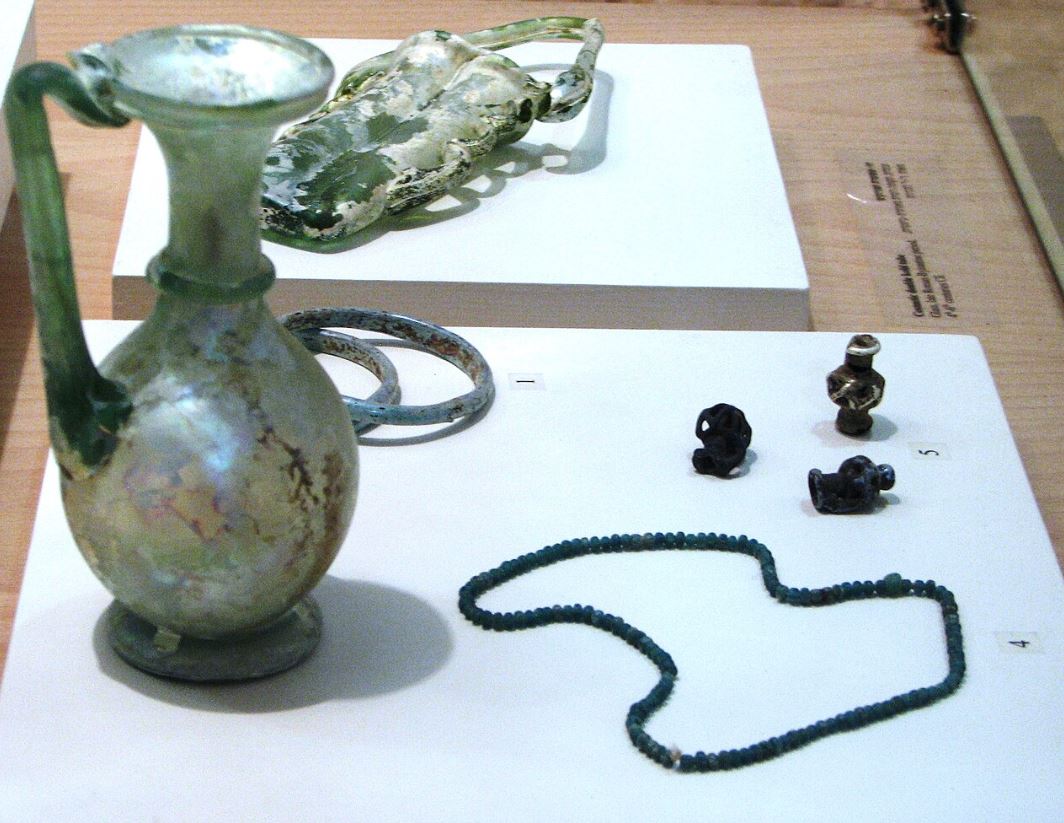
כְּלֵי זְכוּכִית — מַאי טַעְמָא גְּזוּר בְּהוּ רַבָּנַן טוּמְאָה? אָמַר רַבִּי יוֹחָנָן אָמַר רֵישׁ לָקִישׁ: הוֹאִיל וּתְחִלַּת בְּרִיָּיתָן מִן הַחוֹל שַׁוִּינְהוּ רַבָּנַן כִּכְלֵי חֶרֶס. אֶלָּא, מֵעַתָּה לֹא תְּהֵא לָהֶן טׇהֳרָה בְּמִקְוֶה. אַלְּמָה תְּנַן: וְאֵלּוּ חוֹצְצִין בְּכֵלִים — הַזֶּפֶת וְהַמּוֹר בִּכְלֵי זְכוּכִית!
One of the matters mentioned above was the decree of impurity on glass vessels. With regard to glass vessels, what is the reason that the Sages decreed impurity upon them? Rabbi Yoḥanan said that Reish Lakish said: Since the beginning of the manufacture of glass vessels is from sand, the Sages equated them to earthenware vessels. The Gemara asks: But if what you say is so, if the Sages truly equated the impurity of glass vessels to the impurity of earthenware vessels, there should not be purification in the ritual bath for glass vessels, just as there is no purification for earthenware vessels. Why, then, did we learn in a mishna with regard to the halakhot of immersing vessels: And these materials interpose in vessels, i.e., if they were stuck to the vessel when it was immersed the vessel is not purified: The pitch and the myrrh that were stuck on glass vessels obstruct their immersion. Apparently, glass vessels are purified in a ritual bath.
הָכָא בְמַאי עָסְקִינַן? — כְּגוֹן שֶׁנִּיקְּבוּ וְהִטִּיף לְתוֹכָן אֲבָר. וְרַבִּי מֵאִיר הִיא, דְּאָמַר הַכֹּל הוֹלֵךְ אַחַר הַמַּעֲמִיד. דְּתַנְיָא: כְּלֵי זְכוּכִית שֶׁנִּקְּבוּ וְהִטִּיף לְתוֹכָן אֲבָר, אָמַר רַבָּן שִׁמְעוֹן בֶּן גַּמְלִיאֵל: רַבִּי מֵאִיר מְטַמֵּא וַחֲכָמִים מְטַהֲרִין.
The Gemara answers that glass cannot usually be purified in a ritual bath. However, with what are we dealing here? With a special case where the glass vessels were perforated and he dripped molten lead into them to seal the hole. This halakha is in accordance with the opinion of Rabbi Meir, who said: Everything follows the nature of the facilitator, i.e., if an object that is not fit for use on its own is reinforced with a different material that facilitates its use, the entire object assumes the legal status of that material. Therefore, since the substance that sealed the holes in these glass vessels is lead, which can be purified through immersion like other metals, these glass vessels can also be purified in a ritual bath. As it was taught in a baraita: Glass vessels that were perforated and one dripped lead into them; Rabban Shimon ben Gamliel said that Rabbi Meir deems them ritually impure and the Rabbis deem them ritually pure.
אֶלָּא מֵעַתָּה
The Gemara asks further: But if that is so, and glass vessels are equated with earthenware vessels,
Follow 
Today’s daily daf tools:
Delve Deeper
Broaden your understanding of the topics on this daf with classes and podcasts from top women Talmud scholars.

New to Talmud?
Check out our resources designed to help you navigate a page of Talmud – and study at the pace, level and style that fits you.
The Hadran Women’s Tapestry
Meet the diverse women learning Gemara at Hadran and hear their stories.
I started the daf at the beginning of this cycle in January 2020. My husband, my children, grandchildren and siblings have been very supportive. As someone who learned and taught Tanach and mefarshim for many years, it has been an amazing adventure to complete the six sedarim of Mishnah, and now to study Talmud on a daily basis along with Rabbanit Michelle and the wonderful women of Hadran.

Rookie Billet
Jerusalem, Israel
I saw an elderly man at the shul kiddush in early March 2020, celebrating the siyyum of masechet brachot which he had been learning with a young yeshiva student. I thought, if he can do it, I can do it! I began to learn masechet Shabbat the next day, Making up masechet brachot myself, which I had missed. I haven’t missed a day since, thanks to the ease of listening to Hadran’s podcast!

Judith Shapiro
Minnesota, United States
I never thought I’d be able to do Daf Yomi till I saw the video of Hadran’s Siyum HaShas. Now, 2 years later, I’m about to participate in Siyum Seder Mo’ed with my Hadran community. It has been an incredible privilege to learn with Rabbanit Michelle and to get to know so many caring, talented and knowledgeable women. I look forward with great anticipation and excitement to learning Seder Nashim.
Caroline Ben-Ari
Karmiel, Israel
Retirement and Covid converged to provide me with the opportunity to commit to daily Talmud study in October 2020. I dove into the middle of Eruvin and continued to navigate Seder Moed, with Rabannit Michelle as my guide. I have developed more confidence in my learning as I completed each masechet and look forward to completing the Daf Yomi cycle so that I can begin again!

Rhona Fink
San Diego, United States
Hadran entered my life after the last Siyum Hashaas, January 2020. I was inspired and challenged simultaneously, having never thought of learning Gemara. With my family’s encouragement, I googled “daf yomi for women”. A perfecr fit!
I especially enjoy when Rabbanit Michelle connects the daf to contemporary issues to share at the shabbat table e.g: looking at the Kohen during duchaning. Toda rabba

Marsha Wasserman
Jerusalem, Israel

Jill Shames
Jerusalem, Israel
In early 2020, I began the process of a stem cell transplant. The required extreme isolation forced me to leave work and normal life but gave me time to delve into Jewish text study. I did not feel isolated. I began Daf Yomi at the start of this cycle, with family members joining me online from my hospital room. I’ve used my newly granted time to to engage, grow and connect through this learning.

Reena Slovin
Worcester, United States
In January 2020, my chevruta suggested that we “up our game. Let’s do Daf Yomi” – and she sent me the Hadran link. I lost my job (and went freelance), there was a pandemic, and I am still opening the podcast with my breakfast coffee, or after Shabbat with popcorn. My Aramaic is improving. I will need a new bookcase, though.
Rhondda May
Atlanta, Georgia, United States
I have joined the community of daf yomi learners at the start of this cycle. I have studied in different ways – by reading the page, translating the page, attending a local shiur and listening to Rabbanit Farber’s podcasts, depending on circumstances and where I was at the time. The reactions have been positive throughout – with no exception!

Silke Goldberg
Guildford, United Kingdom
A friend mentioned that she was starting Daf Yomi in January 2020. I had heard of it and thought, why not? I decided to try it – go day by day and not think about the seven plus year commitment. Fast forward today, over two years in and I can’t imagine my life without Daf Yomi. It’s part of my morning ritual. If I have a busy day ahead of me I set my alarm to get up early to finish the day’s daf

Debbie Fitzerman
Ontario, Canada
I began learning the daf in January 2022. I initially “flew under the radar,” sharing my journey with my husband and a few close friends. I was apprehensive – who, me? Gemara? Now, 2 years in, I feel changed. The rigor of a daily commitment frames my days. The intellectual engagement enhances my knowledge. And the virtual community of learners has become a new family, weaving a glorious tapestry.

Gitta Jaroslawicz-Neufeld
Far Rockaway, United States
I had tried to start after being inspired by the hadran siyum, but did not manage to stick to it. However, just before masechet taanit, our rav wrote a message to the shul WhatsApp encouraging people to start with masechet taanit, so I did! And this time, I’m hooked! I listen to the shiur every day , and am also trying to improve my skills.

Laura Major
Yad Binyamin, Israel
I’ve been wanting to do Daf Yomi for years, but always wanted to start at the beginning and not in the middle of things. When the opportunity came in 2020, I decided: “this is now the time!” I’ve been posting my journey daily on social media, tracking my progress (#DafYomi); now it’s fully integrated into my daily routines. I’ve also inspired my partner to join, too!

Joséphine Altzman
Teaneck, United States
I started learning Daf Yomi in January 2020 after watching my grandfather, Mayer Penstein z”l, finish shas with the previous cycle. My grandfather made learning so much fun was so proud that his grandchildren wanted to join him. I was also inspired by Ilana Kurshan’s book, If All the Seas Were Ink. Two years in, I can say that it has enriched my life in so many ways.

Leeza Hirt Wilner
New York, United States
When we heard that R. Michelle was starting daf yomi, my 11-year-old suggested that I go. Little did she know that she would lose me every morning from then on. I remember standing at the Farbers’ door, almost too shy to enter. After that first class, I said that I would come the next day but couldn’t commit to more. A decade later, I still look forward to learning from R. Michelle every morning.

Ruth Leah Kahan
Ra’anana, Israel
3 years ago, I joined Rabbanit Michelle to organize the unprecedented Siyum HaShas event in Jerusalem for thousands of women. The whole experience was so inspiring that I decided then to start learning the daf and see how I would go…. and I’m still at it. I often listen to the Daf on my bike in mornings, surrounded by both the external & the internal beauty of Eretz Yisrael & Am Yisrael!

Lisa Kolodny
Raanana, Israel
Since I started in January of 2020, Daf Yomi has changed my life. It connects me to Jews all over the world, especially learned women. It makes cooking, gardening, and folding laundry into acts of Torah study. Daf Yomi enables me to participate in a conversation with and about our heritage that has been going on for more than 2000 years.

Shira Eliaser
Skokie, IL, United States
A few years back, after reading Ilana Kurshan’s book, “If All The Seas Were Ink,” I began pondering the crazy, outlandish idea of beginning the Daf Yomi cycle. Beginning in December, 2019, a month before the previous cycle ended, I “auditioned” 30 different podcasts in 30 days, and ultimately chose to take the plunge with Hadran and Rabbanit Michelle. Such joy!

Cindy Dolgin
HUNTINGTON, United States
When I began learning Daf Yomi at the beginning of the current cycle, I was preparing for an upcoming surgery and thought that learning the Daf would be something positive I could do each day during my recovery, even if I accomplished nothing else. I had no idea what a lifeline learning the Daf would turn out to be in so many ways.

Laura Shechter
Lexington, MA, United States
I began my journey with Rabbanit Michelle more than five years ago. My friend came up with a great idea for about 15 of us to learn the daf and one of us would summarize weekly what we learned.
It was fun but after 2-3 months people began to leave. I have continued. Since the cycle began Again I have joined the Teaneck women.. I find it most rewarding in so many ways. Thank you

Dena Heller
New Jersey, United States
Shabbat 15
שְׁלֹמֹה גְּזַר לְקׇדָשִׁים, וַאֲתוֹ אִינְהוּ וּגְזוּר אַף לִתְרוּמָה.
Solomon and decreed impurity on hands to prohibit contact with consecrated items, and Shammai, Hillel, and their disciples came and decreed impurity on hands even to prohibit contact with teruma.
גּוּפָא, אָמַר רַב יְהוּדָה אָמַר שְׁמוּאֵל: שְׁמֹנָה עָשָׂר גָּזְרוּ וּבִשְׁמֹנָה עָשָׂר נֶחְלְקוּ. וְהָתַנְיָא הוּשְׁווּ! בּוֹ בַּיּוֹם נֶחְלְקוּ, וּלְמָחָר הוּשְׁווּ.
As to the matter itself that was mentioned above in passing, Rav Yehuda said that Shmuel said: With regard to eighteen matters they issued decrees that day, and with regard to those eighteen matters they disagreed prior to that. The Gemara asks: Wasn’t it taught in a baraita that they reached a consensus in their opinions with regard to the eighteen decrees? They answer: On that day they disagreed, and the following day, after the matter was decided in a vote, they reached a consensus in their opinions.
גּוּפָא, אָמַר רַב הוּנָא: בִּשְׁלֹשָׁה מְקוֹמוֹת נֶחְלְקוּ שַׁמַּאי וְהִלֵּל. שַׁמַּאי אוֹמֵר: מִקַּב חַלָּה. וְהִלֵּל אוֹמֵר: מִקַּבַּיִים. וַחֲכָמִים אוֹמְרִים: לֹא כְּדִבְרֵי זֶה וְלֹא כְּדִבְרֵי זֶה, אֶלָּא קַב וּמֶחֱצָה חַיָּיב בַּחַלָּה. מִשֶּׁהִגְדִּילוּ הַמִּדּוֹת, אָמְרוּ חֲמֵשֶׁת רְבָעִים קֶמַח חַיָּיבִין בַּחַלָּה. רַבִּי יוֹסֵי אוֹמֵר: חֲמִשָּׁה פְּטוּרִין, חֲמִשָּׁה וְעוֹד חַיָּיבִין.
As to the matter itself that was mentioned above in passing, Rav Huna said: Shammai and Hillel disagreed in three places. The Gemara cites the disputes. One, Shammai says: From a kav of dough, one is required to separate ḥalla, the portion of the dough given to a priest. From any less than that measure there is no obligation to separate ḥalla, as that is not the measure alluded to in the verse: “The first of your dough” (Numbers 15:20), written with regard to the mitzva of separating ḥalla. And Hillel says: One must separate ḥalla only from two kav. And the Rabbis say: The halakha is neither in accordance with the statement of this one, who is stringent, nor in accordance with the statement of that one, who is lenient. Rather, one and a half kav is the measure from which one is obligated to separate ḥalla. Once the measures increased and the Sages recalculated the volume of a kav to be greater, they said that based on the measure of the new kav, five quarters of a kav of flour is the measure from which one is obligated to separate ḥalla. Rabbi Yosei says: Five quarters are exempt; only from dough the size of five quarters and a bit more is one obligated to separate ḥalla.
וְאִידַּךְ, הִלֵּל אוֹמֵר: מְלֹא הִין מַיִם שְׁאוּבִים פּוֹסְלִים אֶת הַמִּקְוֶה — שֶׁחַיָּיב אָדָם לוֹמַר בִּלְשׁוֹן רַבּוֹ. שַׁמַּאי אוֹמֵר: תִּשְׁעָה קַבִּין. וַחֲכָמִים אוֹמְרִים: לֹא כְּדִבְרֵי זֶה וְלֹא כְּדִבְרֵי זֶה. עַד שֶׁבָּאוּ שְׁנֵי גַרְדִּיִּים מִשַּׁעַר הָאַשְׁפָּה שֶׁבִּירוּשָׁלַיִם וְהֵעִידוּ מִשּׁוּם שְׁמַעְיָה וְאַבְטַלְיוֹן שֶׁשְּׁלֹשָׁה לוּגִּין מַיִם שְׁאוּבִין פּוֹסְלִים אֶת הַמִּקְוֶה, וְקִיְּימוּ חֲכָמִים אֶת דִּבְרֵיהֶם.
And another dispute between Hillel and Shammai is that Hillel says: A full hin, twelve log, of drawn water poured into a ritual bath in which there was not yet a full measure of forty se’a disqualifies the water of the ritual bath and accords even the water that had been there previously the status of drawn water. Even if water fit for a ritual bath is subsequently added to complete the measure of forty se’a, the ritual bath remains unfit for immersion. Hillel used the biblical measure, hin, because, when quoting one’s teacher, a person must speak employing the language of his teacher. Shammai says: Nine kav of water is enough to disqualify the ritual bath. And the Rabbis say: The halakha is neither in accordance with the statement of this one nor in accordance with the statement of that one. The Sages did not determine a measure for the water disqualifying a ritual bath until two weavers came from the Dung Gate in Jerusalem and testified in the name of Shemaya and Avtalyon that three log of drawn water disqualify the ritual bath, and the Rabbis upheld their statement against the opinions of the great Sages of Israel, Hillel and Shammai. The Gemara emphasized their occupation and the place that they lived to underscore that, despite the fact that their occupation was despised and their place was contemptible, there is no preferential treatment when it comes to Torah.
וְאִידַּךְ, שַׁמַּאי אוֹמֵר: כׇּל הַנָּשִׁים דַּיָּין שְׁעָתָן. וְהִלֵּל אוֹמֵר: מִפְּקִידָה לִפְקִידָה, וַאֲפִילּוּ לְיָמִים הַרְבֵּה. וַחֲכָמִים אוֹמְרִים: לֹא כְּדִבְרֵי זֶה וְלֹא כְּדִבְרֵי זֶה, אֶלָּא: מֵעֵת לְעֵת מְמַעֵט עַל יָד מִפְּקִידָה לִפְקִידָה, וּמִפְּקִידָה לִפְקִידָה מְמַעֵט עַל יָד מֵעֵת לְעֵת.
And another dispute between Hillel and Shammai is that Shammai says: All women, their time is sufficient, i.e., a woman who notices that she saw blood of menstruation but did not feel the flow beforehand, need not worry that perhaps the flow of blood began before she saw it, and it is sufficient if she assumes ritual impurity status beginning at that moment. Hillel says: From examination to examination, i.e., a woman who saw blood, if she does not know when the menstrual flow began, she is considered impure retroactive to the last time she examined herself and found herself to be ritually pure, and even if the examination took place several days earlier. Anything that she touched in the interim becomes ritually impure. And the Rabbis say: The halakha is neither in accordance with the statement of this one nor in accordance with the statement of that one; rather, the principle is: A full day, twenty-four hours, reduces the time from examination to examination, i.e., if her final self-examination took place a long time before, she need only concern herself with ritual impurity for the twenty-four hour period prior to noticing the blood. And from examination to examination reduces the time from a full day, i.e., if she examined herself in the course of the previous day and discovered no blood, she was certainly ritually pure prior to the examination.
וְתוּ לֵיכָּא? וְהָאִיכָּא הִלֵּל אוֹמֵר לִסְמוֹךְ, וְשַׁמַּאי אוֹמֵר שֶׁלֹּא לִסְמוֹךְ. כִּי קָאָמַר רַב הוּנָא, הֵיכָא דְּלֵיכָּא פְּלוּגְתָּא דְּרַבְּווֹתָא בַּהֲדַיְיהוּ.
The Gemara asks: And are there no more disputes between them? Isn’t there what we learned that Hillel says that it is permitted to lay hands on the heads of offerings sacrificed on a Festival, and one performs no prohibited labor and does not desecrate the Festival by doing so; and Shammai says not to lay hands? The Gemara answers: When Rav Huna said his statement, he was referring to disputes where there is no dispute between the great Sages who predated them concomitant with theirs. The dispute with regard to laying hands on the Festival is ancient, and their predecessors, Sages dating back to the beginning of the era of the pairs, already disputed it.
וְהָאִיכָּא הַבּוֹצֵר לַגַּת — שַׁמַּאי אוֹמֵר: הוּכְשַׁר, וְהִלֵּל אוֹמֵר: לֹא הוּכְשַׁר. בַּר מִינֵּיהּ דְּהַהִיא, דְּהָתָם קָא שָׁתֵיק לֵיהּ הִלֵּל לְשַׁמַּאי.
The Gemara asks further: Isn’t there also the dispute with regard to one who harvests grapes in order to take them to the press and stomp them as to whether or not the liquid that seeps out of the grapes is considered as having seeped out willfully and renders the grapes susceptible to impurity? Shammai says: It has become susceptible, and Hillel says: It has not become susceptible. The Gemara rejects this: Except for that one, as there, although they originally disagreed, ultimately Hillel was silent and did not respond to Shammai and ultimately accepted his opinion.
יוֹסֵי בֶּן יוֹעֶזֶר אִישׁ צְרֵידָה וְיוֹסֵי בֶּן יוֹחָנָן אִישׁ יְרוּשָׁלַיִם גָּזְרוּ טוּמְאָה עַל אֶרֶץ הָעַמִּים וְעַל כְּלֵי זְכוּכִית. וְהָא רַבָּנַן דִּשְׁמֹנִים שָׁנָה גְּזוּר! דְּאָמַר רַב כָּהֲנָא: כְּשֶׁחָלָה רַבִּי יִשְׁמָעֵאל בְּרַבִּי יוֹסֵי, שָׁלְחוּ לוֹ: רַבִּי, אֱמוֹר לָנוּ שְׁנַיִם וּשְׁלוֹשָׁה דְּבָרִים שֶׁאָמַרְתָּ לָנוּ מִשּׁוּם אָבִיךָ.
Earlier it was mentioned that Yosei ben Yo’ezer of Tzereida and Yosei ben Yoḥanan of Jerusalem decreed impurity upon the land of the nations and upon glass vessels. The Gemara asks: Was it these two Sages, who were among the first Sages in the era of the pairs, who issued these decrees? Wasn’t it the Sages who lived in the final eighty years of the Second Temple period who issued these decrees? As Rav Kahana said: When Rabbi Yishmael, son of Rabbi Yosei, fell ill, the Sages sent to him: Rabbi, tell us two or three statements that you once told us in the name of your father.
שָׁלַח לָהֶם, כָּךְ אָמַר אַבָּא: מֵאָה וּשְׁמֹנִים שָׁנָה עַד שֶׁלֹּא חָרַב הַבַּיִת, פָּשְׁטָה מַלְכוּת הָרְשָׁעָה עַל יִשְׂרָאֵל. שְׁמֹנִים שָׁנָה עַד שֶׁלֹּא חָרַב הַבַּיִת גָּזְרוּ טוּמְאָה עַל אֶרֶץ הָעַמִּים וְעַל כְּלֵי זְכוּכִית. אַרְבָּעִים שָׁנָה עַד שֶׁלֹּא חָרַב הַבַּיִת גָּלְתָה לָהּ סַנְהֶדְרִין וְיָשְׁבָה לָהּ בַּחֲנוּיוֹת. לְמַאי הִילְכְתָא? אָמַר רַבִּי יִצְחָק בַּר אַבְדִּימִי: לוֹמַר שֶׁלֹּא דָּנוּ דִּינֵי קְנָסוֹת. דִּינֵי קְנָסוֹת סָלְקָא דַּעְתָּךְ? אֶלָּא אֵימָא: שֶׁלֹּא דָּנוּ דִּינֵי נְפָשׁוֹת!
He sent to them: This is what my father said: One hundred and eighty years before the Temple was destroyed, the evil kingdom of Rome invaded Israel. Eighty years before the Temple was destroyed, they decreed impurity on the land of the nations and on glass vessels. Forty years before the Temple was destroyed, the Sanhedrin was exiled from the Chamber of Hewn Stones and sat in the stores on the Temple Mount. With regard to the last statement, the Gemara asks: What are the halakhic ramifications of this statement? Rabbi Yitzḥak bar Avdimi said: To say that they no longer judged cases of fines. The Gemara wonders: Does it enter your mind that they no longer judged cases of fines? Even several generations after the Temple was destroyed they continued to judge cases of fines in Eretz Yisrael. Rather, emend and say: That they no longer judged capital cases. The authority to impose the death penalty was stripped from the Sanhedrin, and therefore they willingly left the Chamber of Hewn Stone. Since the Sanhedrin no longer convenes in its designated place, the halakha is that it no longer has the authority to judge capital cases (Tosafot).
וְכִי תֵימָא בִּשְׁמֹנִים שָׁנָה נָמֵי אִינְהוּ הֲווֹ, וְהָתַנְיָא: הִלֵּל וְשִׁמְעוֹן, גַּמְלִיאֵל וְשִׁמְעוֹן, נָהֲגוּ נְשִׂיאוּתָן לִפְנֵי הַבַּיִת מֵאָה שָׁנָה. וְאִילּוּ יוֹסֵי בֶּן יוֹעֶזֶר אִישׁ צְרֵידָה וְיוֹסֵי בֶּן יוֹחָנָן הֲווֹ קָדְמִי טוּבָא!
In any case, we learned that the Sages of the last eighty years before the destruction are the ones who decreed impurity on the land of the nations. And if you say that Yosei ben Yo’ezer and Yosei ben Yoḥanan were also there during those eighty years, wasn’t it taught in a baraita: Hillel, and his son Shimon, and his grandson Gamliel, and his great-grandson Shimon filled their position of Nasi before the House, while the Temple was standing, for a hundred years, while Yosei ben Yo’ezer of Tzereida and Yosei ben Yoḥanan were much earlier than Hillel?
אֶלָּא: אֲתוֹ אִינְהוּ גְּזוּר אַגּוּשָּׁא לִשְׂרוֹף וְאַאֲוִירָא וְלֹא כְלוּם, וַאֲתוֹ רַבָּנַן דִּשְׁמֹנִים שָׁנָה גְּזוּר אַאֲוִירָא לִתְלוֹת.
Rather, this decree was issued in stages. First, Yosei ben Yo’ezer and Yosei ben Yoḥanan came and issued a decree that teruma that comes into contact with a clump of earth of the land of the nations is to be burned, and they decreed nothing with regard to teruma that enters into the air space of the land of the nations. The Sages of the final eighty years prior to the destruction of the Temple came and issued a decree with regard to teruma that enters into the air space of the land of the nations that its legal status is in abeyance, and it is not burned.
לְמֵימְרָא דַּחֲדָא גְּזֵירְתָא הֲוָה לִשְׂרֵיפָה? וְהָאָמַר אִילְפָא: יָדַיִם תְּחִלַּת גְּזֵירָתָן לִשְׂרֵיפָה! יָדַיִם הוּא דִּתְחִלַּת גְּזֵירָתָן לִשְׂרֵיפָה, הָא מִידֵּי אַחֲרִינָא — לָא.
The Gemara asks: Is that to say that there was one decree issued immediately to subject teruma to burning? Didn’t Ilfa say: With regard to hands, from the beginning their decree was that teruma that comes into contact with them is to be burned? The Gemara infers from this that, with regard to hands alone, the beginning of their decree was to render teruma that came into contact with them impure to the point of burning; however, with regard to other matters, they did not immediately issue so severe a decree.
אֶלָּא: אֲתוֹ אִינְהוּ גְּזוּר אַגּוּשָּׁא לִתְלוֹת וְאַאֲוִירָא וְלֹא כְלוּם, וַאֲתוֹ רַבָּנַן דִּשְׁמֹנִים שָׁנָה גְּזוּר אַגּוּשָּׁא לִשְׂרוֹף וְאַאֲוִירָא לִתְלוֹת.
Rather, the stages of the decree were as follows: Yosei ben Yo’ezer and Yosei ben Yoḥanan came and decreed that any item that came into contact with a clump of earth is to be in abeyance, and they decreed nothing with regard to teruma that enters into the air space of the land of the nations. The Sages of the last eighty years came and were stringent by one more level; they decreed that teruma that came into contact with a clump of earth of the land of the nations is to be burned, and, with regard to teruma that enters into the air space of the land of the nations, its legal status is in abeyance.
וְאַכַּתִּי, בְּאוּשָׁא גְּזוּר! דִּתְנַן: עַל שִׁשָּׁה סְפֵקוֹת שׂוֹרְפִין אֶת הַתְּרוּמָה: עַל סְפֵק בֵּית הַפְּרָס, וְעַל סְפֵק עָפָר הַבָּא מֵאֶרֶץ הָעַמִּים, וְעַל סְפֵק בִּגְדֵי עַם הָאָרֶץ, וְעַל סְפֵק כֵּלִים הַנִּמְצָאִין, וְעַל סְפֵק הָרוּקִּין, וְעַל סְפֵק מֵי רַגְלֵי אָדָם שֶׁכְּנֶגֶד מֵי רַגְלֵי בְּהֵמָה — עַל וַדַּאי מַגָּעָן וְעַל סְפֵק טוּמְאָתָן שׂוֹרְפִין אֶת הַתְּרוּמָה.
The Gemara asked further: And still is the matter clear? Didn’t the Sages issue this decree in Usha, many years after the destruction of the Temple? As we learned in a mishna: For six cases of uncertain impurity one burns the teruma which came into contact with them:
For the uncertain case of beit haperas, meaning teruma that entered a field where a grave was plowed and the location of the bones of the corpse is unknown, and it is uncertain whether or not the teruma became impure;
And for the uncertain case of earth that comes from the land of the nations, whose impurity itself has the status of uncertain impurity. Therefore, teruma that came into contact with it also has the status of uncertain impurity;
And for the uncertain case of the clothes of an am ha’aretz. Since an am ha’aretz is not careful with regard to purity, we are concerned lest a menstruating woman touch his clothes. Due to that uncertainty, his clothes are considered impure with a severe degree of impurity. If teruma came into contact with them there is uncertainty with regard to whether or not they became impure;
And for the uncertain case of vessels that are not his that are found. Since he does not know whether or not those vessels are impure, if teruma came into contact with them, there is uncertainty whether or not they are impure;
And for the uncertain case of spittle, as perhaps it is the spittle of a zav and transmits impurity by Torah law. If teruma came into contact with it there is uncertainty whether or not it is impure;
And for the uncertain case of a person’s urine, even though it was adjacent to the urine of an animal, there is room for concern that perhaps it is the urine of a zav, and impure by Torah law. If teruma came into contact with it, there is uncertainty whether or not it is impure.
In all of these cases, the Sages established that for their definite contact, when it is clear that these came into contact with teruma, and although there is uncertainty with regard to their essential impurity, i.e., it is uncertain whether or not these items are impure, one burns the teruma that came into contact with them.
רַבִּי יוֹסֵי אוֹמֵר: אַף עַל סְפֵק מַגָּעָן בִּרְשׁוּת הַיָּחִיד — שׂוֹרְפִין. וַחֲכָמִים אוֹמְרִים: בִּרְשׁוּת הַיָּחִיד תּוֹלִין, בִּרְשׁוּת הָרַבִּים — טְהוֹרִין.
Rabbi Yosei says: Even in a case of uncertain contact; if it was in the private domain one burns teruma that came into contact with it, as with regard to impurity by Torah law an uncertainty that developed in a private domain is also ruled impure. According to Rabbi Yosei, these decrees, even though they are fundamentally cases of uncertainty, are sufficiently stringent that the Sages applied Torah law to them. And the Rabbis say: Since these cases are only impure by rabbinic decree, in a case of uncertain contact in the private domain, one does not burn the teruma but rather places it in abeyance. While in the public domain, they are ritually pure.
וְאָמַר עוּלָּא: אֵלּוּ שִׁשָּׁה סְפֵיקוֹת בְּאוּשָׁא הִתְקִינוּ! אֶלָּא אֲתוֹ אִינְהוּ גְּזוּר אַגּוּשָּׁא לִתְלוֹת וְאַאֲוִירָא וְלֹא כְלוּם, וַאֲתוֹ רַבָּנַן דִּשְׁמֹנִים שָׁנָה גְּזוּר אִידֵּי וְאִידֵּי לִתְלוֹת, וַאֲתוֹ בְּאוּשָׁא גְּזוּר אַגּוּשָּׁא לִשְׂרוֹף, וְאַאֲוִירָא — כִּדְקָאֵי קָאֵי.
And Ulla said with regard to these six uncertain cases: In Usha they instituted how one must act in terms of practical halakha. If so, a clump of earth from the land of the nations transmits impurity from the time of the Usha ordinances and not from eighty years prior to the destruction of the Temple. Rather, Yosei ben Yo’ezer and Yosei ben Yoḥanan came and decreed that if teruma came into contact with a clump of earth from the land of the nations, its legal status is in abeyance and one does not burn it, and upon teruma that entered the air space of the land of the nations they decreed nothing. And the Sages of the last eighty years of the Temple came along and issued a decree upon this, earth, and upon that, air, that in both cases the teruma is in abeyance. And the Sages of the city of Usha came along and decreed that teruma that came into contact with a clump of earth from the land of the nations is burned. And teruma that entered the air space of the land of the nations, as it stood, it continues to stand in abeyance. They did not impose any greater stringency in this matter.
כְּלֵי זְכוּכִית — מַאי טַעְמָא גְּזוּר בְּהוּ רַבָּנַן טוּמְאָה? אָמַר רַבִּי יוֹחָנָן אָמַר רֵישׁ לָקִישׁ: הוֹאִיל וּתְחִלַּת בְּרִיָּיתָן מִן הַחוֹל שַׁוִּינְהוּ רַבָּנַן כִּכְלֵי חֶרֶס. אֶלָּא, מֵעַתָּה לֹא תְּהֵא לָהֶן טׇהֳרָה בְּמִקְוֶה. אַלְּמָה תְּנַן: וְאֵלּוּ חוֹצְצִין בְּכֵלִים — הַזֶּפֶת וְהַמּוֹר בִּכְלֵי זְכוּכִית!
One of the matters mentioned above was the decree of impurity on glass vessels. With regard to glass vessels, what is the reason that the Sages decreed impurity upon them? Rabbi Yoḥanan said that Reish Lakish said: Since the beginning of the manufacture of glass vessels is from sand, the Sages equated them to earthenware vessels. The Gemara asks: But if what you say is so, if the Sages truly equated the impurity of glass vessels to the impurity of earthenware vessels, there should not be purification in the ritual bath for glass vessels, just as there is no purification for earthenware vessels. Why, then, did we learn in a mishna with regard to the halakhot of immersing vessels: And these materials interpose in vessels, i.e., if they were stuck to the vessel when it was immersed the vessel is not purified: The pitch and the myrrh that were stuck on glass vessels obstruct their immersion. Apparently, glass vessels are purified in a ritual bath.
הָכָא בְמַאי עָסְקִינַן? — כְּגוֹן שֶׁנִּיקְּבוּ וְהִטִּיף לְתוֹכָן אֲבָר. וְרַבִּי מֵאִיר הִיא, דְּאָמַר הַכֹּל הוֹלֵךְ אַחַר הַמַּעֲמִיד. דְּתַנְיָא: כְּלֵי זְכוּכִית שֶׁנִּקְּבוּ וְהִטִּיף לְתוֹכָן אֲבָר, אָמַר רַבָּן שִׁמְעוֹן בֶּן גַּמְלִיאֵל: רַבִּי מֵאִיר מְטַמֵּא וַחֲכָמִים מְטַהֲרִין.
The Gemara answers that glass cannot usually be purified in a ritual bath. However, with what are we dealing here? With a special case where the glass vessels were perforated and he dripped molten lead into them to seal the hole. This halakha is in accordance with the opinion of Rabbi Meir, who said: Everything follows the nature of the facilitator, i.e., if an object that is not fit for use on its own is reinforced with a different material that facilitates its use, the entire object assumes the legal status of that material. Therefore, since the substance that sealed the holes in these glass vessels is lead, which can be purified through immersion like other metals, these glass vessels can also be purified in a ritual bath. As it was taught in a baraita: Glass vessels that were perforated and one dripped lead into them; Rabban Shimon ben Gamliel said that Rabbi Meir deems them ritually impure and the Rabbis deem them ritually pure.
אֶלָּא מֵעַתָּה
The Gemara asks further: But if that is so, and glass vessels are equated with earthenware vessels,
Follow

