









Want to dedicate learning? Get started here:

Summary

After connecting a verse from Kohelet 10:10 to rain not coming, another explanation is brought, connecting that verse to Torah scholars. The importance of studying properly is stressed, as well as the importance of a teacher treating their students properly. What should be done if the people don’t pray properly for rain to come? Who is the right type of person whose prayers will be heard, and how important is intent in prayer? God is stricter with those who adhere strictly to God. When the rains are stopped, it is likened to labor pains. The Gemara cites three words used to describe a woman in childbirth or during pregnancy that are mentioned in the context of rain as well. One cannot pray for two things at the same time, so if there is a famine and a plague, what should one pray for? Why can’t one pray for two things at the same time? There was a time when fasts were prohibited by the gentile authorities. What did Rabbi Zeira suggest doing when there was no rain? On what basis? Rain is not always a good thing, as sometimes it makes things inconvenient for people. Miracles can only happen in a place that is hidden from the eye. Another reason why God doesn’t bring the rains is when people say they will give charity, but they don’t.
Today’s daily daf tools:
Taanit 8
שֶׁתַּלְמוּדוֹ קָשֶׁה עָלָיו כַּבַּרְזֶל — בִּשְׁבִיל מִשְׁנָתוֹ שֶׁאֵינָהּ סְדוּרָה עָלָיו, שֶׁנֶּאֱמַר: ״וְהוּא לֹא פָנִים קִלְקַל״.
whose studies are hard as iron for him, i.e., difficult to understand, this is due to his lack of familiarity with the Mishna, which is not organized for him. If the Mishna is unclear, any further study of Gemara is rendered all the more difficult, as it is stated: “And does not whet [kilkal] the edge [panim]” (Ecclesiastes 10:10). As panim can also mean surface, this indicates that the surface, i.e., the basic statements of the Mishna, is corrupted. As stated previously, kilkal can also mean corrupted.
מַאי תַּקַּנְתֵּיהּ — יַרְבֶּה בִּישִׁיבָה, שֶׁנֶּאֱמַר: ״וַחֲיָלִים יְגַבֵּר וְיִתְרוֹן הַכְשֵׁיר חׇכְמָה״. כׇּל שֶׁכֵּן אִם מִשְׁנָתוֹ סְדוּרָה לוֹ מֵעִיקָּרָא.
What is his remedy? He must increase the time he sits and studies, as it is stated: “Then must he increase his strength” (Ecclesiastes 10:10). The last part of the verse: “But wisdom is profitable to direct,” means that all the more so, if his study of the Mishna is organized for him from the beginning, he will avoid this trouble.
כִּי הָא דְּרֵישׁ לָקִישׁ הֲוָה מְסַדַּר מַתְנִיתֵיהּ אַרְבְּעִין זִמְנִין, כְּנֶגֶד אַרְבָּעִים יוֹם שֶׁנִּיתְּנָה תּוֹרָה, וְעָיֵיל לְקַמֵּיהּ דְּרַבִּי יוֹחָנָן. רַב אַדָּא בַּר אַהֲבָה מְסַדַּר מַתְנִיתֵיהּ עֶשְׂרִין וְאַרְבַּע זִמְנִין, כְּנֶגֶד תּוֹרָה נְבִיאִים וּכְתוּבִים, וְעָיֵיל לְקַמֵּיהּ דְּרָבָא.
That is like this practice of Reish Lakish, who would review his studies forty times, corresponding to the forty days in which the Torah was given to Moses at Sinai, and only afterward would he go before Rabbi Yoḥanan to study from his teacher. Similarly, Rav Adda bar Ahava would review his learning twenty-four times, corresponding to the twenty-four books in the Torah, Prophets, and Writings, i.e., the Bible, and only afterward go before Rava to study with him.
רָבָא אָמַר: אִם רָאִיתָ תַּלְמִיד שֶׁתַּלְמוּדוֹ קָשֶׁה עָלָיו כַּבַּרְזֶל — בִּשְׁבִיל רַבּוֹ שֶׁאֵינוֹ מַסְבִּיר לוֹ פָּנִים, שֶׁנֶּאֱמַר: ״וְהוּא לֹא פָנִים קִלְקַל״.
With regard to the aforementioned verse from Ecclesiastes, Rava said: If you see a student whose studies are as difficult for him as iron, this is due to his teacher, who does not show him a friendly countenance, but is overly strict with him. This practice inhibits the student’s learning, as it is stated: “And it has not whetted the surface [panim]” (Ecclesiastes 10:10). As explained previously, panim can also mean countenance.
מַאי תַּקַּנְתֵּיהּ — יַרְבֶּה עָלָיו רֵעִים, שֶׁנֶּאֱמַר: ״וַחֲיָלִים יְגַבֵּר וְיִתְרוֹן הַכְשֵׁיר חׇכְמָה״. כׇּל שֶׁכֵּן אִם הוּכְשְׁרוּ מַעֲשָׂיו בִּפְנֵי רַבּוֹ מֵעִיקָּרָא.
What is the remedy for this student? He must increase the number of friends he sends to the teacher to intercede for him, as it is stated: “Then must he increase his strength.” The term used for strength, ḥayalim, can also mean soldiers or colleagues. Nevertheless: “But wisdom is profitable to direct,” meaning that all the more so would he be spared this trouble if his deeds were properly directed before his teacher from the beginning.
וְאָמַר רַבִּי אַמֵּי, מַאי דִּכְתִיב: ״אִם יִשֹּׁךְ הַנָּחָשׁ בְּלוֹא לָחַשׁ וְאֵין יִתְרוֹן לְבַעַל הַלָּשׁוֹן״, אִם רָאִיתָ דּוֹר שֶׁהַשָּׁמַיִם מִשְׁתַּכִּין כִּנְחֹשֶׁת מִלְּהוֹרִיד טַל וּמָטָר — בִּשְׁבִיל לוֹחֲשֵׁי לְחִישׁוֹת שֶׁאֵין בַּדּוֹר.
§ The Gemara returns to the topic of rain. And Rabbi Ami said: What is the meaning of that which is written: “If the serpent [naḥash] bites [yishokh] before it is charmed [laḥash], then the charmer has no advantage” (Ecclesiastes 10:11)? If you see a generation for whom the heavens corrode [meshatkhin] like copper [neḥoshet], which prevents them from bringing down dew and rain, this is due to the lack of those who whisper quiet [loḥashei leḥishot] prayers in the generation.
מַאי תַּקָּנָתָן — יֵלְכוּ אֵצֶל מִי שֶׁיּוֹדֵעַ לִלְחוֹשׁ, דִּכְתִיב: ״יַגִּיד עָלָיו רֵעוֹ״, ״וְאֵין יתְרוֹן לְבַעַל הַלָּשׁוֹן״. וּמִי שֶׁאֶפְשָׁר לוֹ לִלְחוֹשׁ וְאֵינוֹ לוֹחֵשׁ, מָה הֲנָאָה יֵשׁ לוֹ?
What is their remedy? They should go to one who knows how to whisper prayers in the proper manner, as it is written: “Its noise tells concerning it” (Job 36:33). As for the phrase: “Then the charmer has no advantage,” this is referring to one who is able to whisper his prayers correctly and yet does not whisper them correctly. In this case, of what benefit to him is his ability to pray?
וְאִם לָחַשׁ וְלֹא נַעֲנָה, מַאי תַּקַּנְתֵּיהּ? יֵלֵךְ אֵצֶל חָסִיד שֶׁבַּדּוֹר, וְיַרְבֶּה עָלָיו בִּתְפִלָּה, שֶׁנֶּאֱמַר: ״וַיְצַו עָלֶיהָ בְּמַפְגִּיעַ״, וְאֵין פְּגִיעָה אֶלָּא תְּפִילָּה, שֶׁנֶּאֱמַר: ״וְאַתָּה אַל תִּתְפַּלֵּל בְּעַד הָעָם הַזֶּה וְאַל תִּשָּׂא בַעֲדָם רִנָּה וּתְפִלָּה וְאַל תִּפְגַּע בִּי״.
And if he whispered his prayers and yet was not answered, what is his remedy? He should go to the most pious individual of the generation, and this pious individual will increase his prayers on his behalf, as it is stated one verse earlier: “And He has commanded it due to imploring” (Job 36:32). And “imploring” means nothing other than prayer, as it is stated: “Therefore, do not pray you for this nation, neither lift up cry nor prayer for them, neither implore Me” (Jeremiah 7:16).
וְאִם לָחַשׁ וְעָלְתָה בְּיָדוֹ, וּמֵגִיס דַּעְתּוֹ עָלָיו — מֵבִיא אַף לָעוֹלָם, שֶׁנֶּאֱמַר: ״מִקְנֶה אַף עַל עוֹלֶה״.
And if he whispered his prayers for rain, and his prayers were successful, i.e., rain fell as he requested, and he becomes prideful as a result, he brings anger into the world, as it is stated: “The cattle [mikne] also [af ] concerning the rising storm [al oleh]” (Job 36:33). This verse can be read homiletically as: Anger [af ] is acquired [mikne] by one who raises [al oleh] his pride.
רָבָא אָמַר: שְׁנֵי תַּלְמִידֵי חֲכָמִים שֶׁיּוֹשְׁבִין בְּעִיר אַחַת וְאֵין נוֹחִין זֶה לָזֶה בַּהֲלָכָה — מִתְקַנְּאִין בָּאַף וּמַעֲלִין אוֹתוֹ, שֶׁנֶּאֱמַר: ״מִקְנֶה אַף עַל עוֹלֶה״.
Following the same interpretation of this verse, Rava said: If there are two Torah scholars who live in one city, and they are not courteous with one another in their discussions of halakha, they arouse anger upon the world and cause it to rise up, as it is stated: “Anger is acquired by one who raises his pride.”
אָמַר רֵישׁ לָקִישׁ, מַאי דִּכְתִיב: ״אִם יִשֹּׁךְ הַנָּחָשׁ בְּלוֹא לָחַשׁ וְאֵין יִתְרוֹן לְבַעַל הַלָּשׁוֹן״, לְעָתִיד לָבוֹא מִתְקַבְּצוֹת וּבָאוֹת כׇּל הַחַיּוֹת אֵצֶל הַנָּחָשׁ, וְאוֹמְרִים לוֹ: אֲרִי דּוֹרֵס וְאוֹכֵל, זְאֵב טוֹרֵף וְאוֹכֵל, אַתָּה מָה הֲנָאָה יֵשׁ לְךָ? אֹמֵר לָהֶם: ״וְאֵין יִתְרוֹן לְבַעַל הַלָּשׁוֹן״.
The Gemara cites another interpretation of the aforementioned verse. Reish Lakish said: What is the meaning of that which is written: “If the snake bites before it is charmed, then the charmer has no advantage” (Ecclesiastes 10:11)? In the future, all the animals will gather together and come to the snake and say to him: A lion mauls its prey and eats it; a wolf tears apart its prey and eats it; but you, what pleasure do you have when you bite a person, as you are incapable of eating him? The snake will say to them: “The charmer has no advantage.” The Hebrew phrase for snake charmer literally means the master of the tongue, and therefore the snake is saying that he has a more difficult question: What pleasure does a slanderer receive, as he inflicts more harm for which he obtains no physical enjoyment.
אָמַר רַבִּי אַמֵּי: אֵין תְּפִלָּתוֹ שֶׁל אָדָם נִשְׁמַעַת אֶלָּא אִם כֵּן מֵשִׂים נַפְשׁוֹ בְּכַפּוֹ, שֶׁנֶּאֱמַר: ״נִשָּׂא לְבָבֵנוּ אֶל כַּפָּיִם״, אִינִי?! וְהָא אוֹקֵים שְׁמוּאֵל אָמוֹרָא עֲלֵיהּ וּדְרַשׁ: ״וַיְפַתּוּהוּ בְּפִיהֶם וּבִלְשׁוֹנָם יְכַזְּבוּ לוֹ וְלִבָּם לֹא נָכוֹן עִמּוֹ וְלֹא נֶאֶמְנוּ בִּבְרִיתוֹ״, וְאַף עַל פִּי כֵן — ״וְהוּא רַחוּם יְכַפֵּר עָוֹן וְגוֹ׳״!
Rabbi Ami said: A person’s prayer is heard only if he places his soul in his palm, i.e., one must submit his entire soul with sincerity in his outstretched hands as he prays, as it is stated: “Let us lift up our heart with our hands” (Lamentations 3:41). The Gemara raises an objection: Is that so? But Shmuel once established for himself an interpreter to teach in public, and interpreted homiletically the verse: “But they beguiled Him with their mouth and lied to Him with their tongue, for their heart was not steadfast with Him, neither were they faithful to His covenant” (Psalms 78:36–37), and nevertheless the psalm continues: “But He, being full of compassion, forgives iniquity, and does not destroy” (Psalms 78:38). This indicates that all prayers are accepted, even if they lack sincerity.
לָא קַשְׁיָא: כָּאן בְּיָחִיד, כָּאן בְּצִבּוּר.
The Gemara responds: This is not difficult, as here Rabbi Ami is referring to an individual who prays without sincerity and consequently his prayer goes unheard, whereas there Shmuel is saying that when one prays with the community, even if his prayers are deficient, they are accepted in the merit of the congregation.
אָמַר רַבִּי אַמֵּי: אֵין גְּשָׁמִים יוֹרְדִין אֶלָּא בִּשְׁבִיל בַּעֲלֵי אֲמָנָה, שֶׁנֶּאֱמַר: ״אֱמֶת מֵאֶרֶץ תִּצְמָח וְצֶדֶק מִשָּׁמַיִם נִשְׁקָף״.
Rabbi Ami further said: Rain falls only due to faithful people, as it is stated: “Truth springs out of the earth, and righteousness has looked down from heaven” (Psalms 85:12). When “truth springs out of the earth,” i.e., if people are faithful, they will find that “righteousness,” in the form of rain “has looked down from heaven.”
וְאָמַר רַבִּי אַמֵּי: בֹּא וּרְאֵה כַּמָּה גְּדוֹלִים בַּעֲלֵי אֲמָנָה, מִנַּיִין — מֵחוּלְדָּה וּבוֹר. וּמָה הַמַּאֲמִין בְּחוּלְדָּה וּבוֹר — כָּךְ, הַמַּאֲמִין בְּהַקָּדוֹשׁ בָּרוּךְ הוּא — עַל אַחַת כַּמָּה וְכַמָּה.
And Rabbi Ami said: Come and see how great the faithful people are, and how God assists them. From where is it derived? From the story of the marten [ḥulda] and the pit. Once a young man saved a girl who had fallen into a pit. After rescuing her they swore to remain faithful to each other, and they declared the pit and a passing marten their witnesses. As time went by the young man forgot his vow and married another woman. They had two children, both of whom died tragically, one by falling into a pit and the other when he was bitten by a marten. Their unusual deaths led the young man to realize his error and he returned to the first woman. And if this is the outcome for one who believes in signs from a pit and a marten, all the more so for one who has faith in the Holy One, Blessed be He.
אָמַר רַבִּי יוֹחָנָן: כׇּל הַמַּצְדִּיק אֶת עַצְמוֹ מִלְּמַטָּה — מַצְדִּיקִין עָלָיו הַדִּין מִלְּמַעְלָה, שֶׁנֶּאֱמַר: ״אֱמֶת מֵאֶרֶץ תִּצְמָח וְצֶדֶק מִשָּׁמַיִם נִשְׁקָף״. רַבִּי חִיָּיא בַּר אָבִין אָמַר רַב הוּנָא, מֵהָכָא: ״וּכְיִרְאָתְךָ עֶבְרָתֶךָ״.
§ Rabbi Yoḥanan said: Whoever is exacting with himself, by striving to act righteously in every way on earth below, he is judged in an exact manner in Heaven above, in order to improve him further still, as it is stated: “Truth springs out of the earth, and righteousness has looked down from heaven” (Psalms 85:12). Rabbi Ḥiyya bar Avin said that Rav Huna said that this idea is derived from here: “And Your wrath is according to the fear that is due to You” (Psalms 90:11). The level of God’s wrath correlates with the offender’s fear of God.
רֵישׁ לָקִישׁ אָמַר מֵהָכָא: ״פָּגַעְתָּ אֶת שָׂשׂ וְעֹשֵׂה צֶדֶק בִּדְרָכֶיךָ יִזְכְּרוּךָ הֵן אַתָּה קָצַפְתָּ וַנֶּחֱטָא בָּהֶם עוֹלָם וְנִוָּשֵׁעַ״. אָמַר רַבִּי יְהוֹשֻׁעַ בֶּן לֵוִי: כׇּל הַשָּׂמֵחַ בְּיִסּוּרִין שֶׁבָּאִין עָלָיו — מֵבִיא יְשׁוּעָה לָעוֹלָם, שֶׁנֶּאֱמַר: ״בָּהֶם עוֹלָם וְנִוָּשֵׁעַ״.
Reish Lakish said that this principle is derived from here: “You took him away who joyfully performed righteousness, those who remembered You in Your ways, behold You were wroth, and we sinned, upon them have we stayed of old, that we might be saved” (Isaiah 64:4). This verse also teaches that God displays wrath specifically due to the transgressions of those who are accustomed to acting righteously. Rabbi Yehoshua ben Levi said concerning the same verse: Whoever is joyful in the suffering that comes upon him brings salvation to the world [olam], as it is stated: “Upon them have we stayed of old [olam], that we might be saved.”
אָמַר רֵישׁ לָקִישׁ, מַאי דִּכְתִיב: ״וְעָצַר אֶת הַשָּׁמַיִם״, בְּשָׁעָה שֶׁהַשָּׁמַיִם נֶעֱצָרִין מִלְּהוֹרִיד טַל וּמָטָר — דּוֹמֶה לְאִשָּׁה שֶׁמְּחַבֶּלֶת וְאֵינָהּ יוֹלֶדֶת. וְהַיְינוּ דְּאָמַר רֵישׁ לָקִישׁ מִשּׁוּם בַּר קַפָּרָא: נֶאֶמְרָה עֲצִירָה בִּגְשָׁמִים וְנֶאֶמְרָה עֲצִירָה בְּאִשָּׁה,
§ Returning to the topic of rain, Reish Lakish said: What is the meaning of that which is written: “And He will close up the heavens” (Deuteronomy 11:17)? This verse teaches that when the heavens are closed up from bringing down dew and rain, this is similar to a woman who has the pangs of labor and yet does not give birth, as the heavens themselves suffer from their inability to bring down rain and dew. And this is what Reish Lakish said in the name of bar Kappara: Closing up is stated with regard to rains, and closing up is likewise stated with regard to a woman.
נֶאֶמְרָה עֲצִירָה בְּאִשָּׁה, שֶׁנֶּאֱמַר: ״כִּי עָצֹר עָצַר ה׳ בְּעַד כׇּל רֶחֶם״, וְנֶאֶמְרָה עֲצִירָה בִּגְשָׁמִים, דִּכְתִיב: ״וְעָצַר אֶת הַשָּׁמַיִם״.
Reish Lakish elaborates: Closing up is stated with regard to a woman who cannot give birth, as it is stated: “For the Lord has fast closed up all the wombs” (Genesis 20:18), and closing up is stated with regard to rains, as it is written: “And He will close up the heavens” (Deuteronomy 11:17).
נֶאֱמַר לֵידָה בְּאִשָּׁה וְנֶאֱמַר לֵידָה בִּגְשָׁמִים, נֶאֱמַר לֵידָה בְּאִשָּׁה, דִּכְתִיב: ״וַתַּהַר וַתֵּלֶד בֵּן״, וְנֶאֱמַר לֵידָה בִּגְשָׁמִים, דִּכְתִיב: ״וְהוֹלִידָהּ וְהִצְמִיחָהּ״.
Likewise, an expression of giving birth is stated with regard to a woman, and an expression of giving birth is also stated with regard to rain. Specifically, giving birth is stated with regard to a woman, as it is written in the case of Rachel, when God had mercy on her: “And she conceived and gave birth to a son” (Genesis 30:23). And giving birth is stated with regard to rain, as it is written: “For as the rain comes down, and the snow from heaven, and does not return there, except it waters the earth and causes it to give birth and bud” (Isaiah 55:10).
נֶאֱמַר פְּקִידָה בְּאִשָּׁה, וְנֶאֱמַר פְּקִידָה בִּגְשָׁמִים. נֶאֱמַר פְּקִידָה בְּאִשָּׁה, דִּכְתִיב: ״וַה׳ פָּקַד אֶת שָׂרָה״, וְנֶאֱמַר פְּקִידָה בִּגְשָׁמִים, דִּכְתִיב: ״פָּקַדְתָּ הָאָרֶץ וַתְּשֹׁקְקֶהָ רַבַּת תַּעְשְׁרֶנָּה פֶּלֶג אֱלֹהִים מָלֵא מָיִם״.
Lastly, an expression of remembering is stated in connection with a woman, and an expression of remembering is also stated in connection to rain. Remembering is stated in connection with a woman, as it is written: “And the Lord remembered Sarah” (Genesis 21:1), and remembering is stated in connection to rain, as it is written: “You have remembered the earth and have watered it; greatly enriching it, with the pool of God that is full of water” (Psalms 65:10).
מַאי ״פֶּלֶג אֱלֹהִים מָלֵא מַיִם״? תָּנָא: כְּמִין קוּבָּה יֵשׁ בָּרָקִיעַ, שֶׁמִּמֶּנָּה גְּשָׁמִים יוֹצְאִין.
The Gemara asks a question with regard to this verse. What is the meaning of the phrase: “With the pool of God that is full of water”? The Gemara answers that it was taught in a baraita: There is a kind of vault [kuba] in the sky, out of which the rain falls.
אָמַר רַבִּי שְׁמוּאֵל בַּר נַחְמָנִי, מַאי דִּכְתִיב: ״אִם לְשֵׁבֶט אִם לְאַרְצוֹ אִם לְחֶסֶד יַמְצִאֵהוּ״. ״אִם לְשֵׁבֶט״ — בְּהָרִים וּבִגְבָעוֹת, ״אִם לְחֶסֶד יַמְצִאֵהוּ לְאַרְצוֹ״ — בְּשָׂדוֹת וּבִכְרָמִים.
Rabbi Shmuel bar Naḥmani said: What is the meaning of that which is written: “Whatever he commands them upon the face of the habitable world, whether it is for correction, or for His earth, or for mercy that He causes it to come” (Job 37:12–13)? The phrase “whether it is for correction” means that if the people are judged unfavorably, the rain will fall on the mountains and on the hills. The phrase “or for His earth” indicates that if they have been judged “for mercy,” He will cause it to come “for His earth,” on the fields and on the vineyards.
״אִם לְשֵׁבֶט״ — לְאִילָנוֹת, ״אִם לְאַרְצוֹ״ — לִזְרָעִים, ״אִם לְחֶסֶד יַמְצִאֵהוּ״ — בּוֹרוֹת שִׁיחִין וּמְעָרוֹת.
Alternatively, the phrase “whether it is for correction” means that the rain will provide benefit only for the trees; “or for His earth” indicates that rain will fall solely for the benefit of seeds; and “or for mercy that He causes it to come” means that rain will fill the cisterns, ditches, and caves with enough water to last the dry season.
בִּימֵי רַבִּי שְׁמוּאֵל בַּר נַחְמָנִי הֲוָה כַּפְנָא וּמוֹתָנָא, אָמְרִי: הֵיכִי נַעֲבֵיד? נִיבְעֵי רַחֲמֵי אַתַּרְתֵּי — לָא אֶפְשָׁר. אֶלָּא לִיבְעֵי רַחֲמֵי אַמּוֹתָנָא, וְכַפְנָא נִיסְבּוֹל. אֲמַר לְהוּ רַבִּי שְׁמוּאֵל בַּר נַחְמָנִי: נִיבְעֵי רַחֲמֵי אַכַּפְנָא, דְּכִי יָהֵיב רַחֲמָנָא שׂוּבְעָא — לְחַיֵּי הוּא דְּיָהֵיב, דִּכְתִיב: ״פּוֹתֵחַ אֶת יָדֶךָ וּמַשְׂבִּיעַ לְכׇל חַי רָצוֹן״.
§ The Gemara relates: In the days of Rabbi Shmuel bar Naḥmani there was a famine and a plague. The Sages said: What should we do? Should we pray for mercy for two troubles, both the famine and the plague? This is not possible, as it is improper to pray for the alleviation of two afflictions at once. Rather, let us pray for mercy for the plague, and as for the famine, we must bear it. Rabbi Shmuel bar Naḥmani said to them: On the contrary, let us pray for mercy for the famine, as when the Merciful One provides plenty, He gives it for the sake of the living, i.e., if God answers this prayer then he will certainly bring an end to the plague as well, as it is written: “You open Your hand and satisfy every living thing with favor” (Psalms 145:16).
וּמְנָלַן דְּלָא מְצַלִּינַן אַתַּרְתֵּי — דִּכְתִיב: ״וַנָּצוּמָה וַנְּבַקְשָׁה מֵאֱלֹהֵינוּ עַל זֹאת״, מִכְּלָל דְּאִיכָּא אַחֲרִיתִי. בְּמַעְרְבָא אָמְרִי מִשְּׁמֵיהּ דְּרַבִּי חַגַּי מֵהָכָא: ״וְרַחֲמִין לְמִבְעֵא מִן קֳדָם אֱלָהּ שְׁמַיָּא עַל רָזָא דְּנָה״, מִכְּלָל דְּאִיכָּא אַחֲרִיתִי.
The Gemara explains: And from where do we derive that one should not pray for two troubles simultaneously? As it is written: “So we fasted and beseeched our God for this” (Ezra 8:23). From the fact that the verse states: “For this,” it may be inferred that there is another trouble about which the people did not pray. In the West, Eretz Yisrael, they say in the name of Rabbi Ḥaggai that this idea comes from here: “That they might ask mercy of the God of Heaven concerning this secret” (Daniel 2:18). From the fact that the verse states: “This secret,” it may be inferred that there is another trouble about which they did not pray.
בִּימֵי רַבִּי זֵירָא גְּזוּר שְׁמָדָא, וּגְזוּר דְּלָא לְמֵיתַב בְּתַעֲנִיתָא. אֲמַר לְהוּ רַבִּי זֵירָא: נְקַבְּלֵיהּ עִילָּוַון, וּלְכִי בָּטֵיל שְׁמָדָא לֵיתְבֵיהּ.
In a similar vein, the Gemara relates: In the days of Rabbi Zeira a decree of religious persecution was decreed against the Jews. And as the decree was that they were not allowed to fast, the Jews were certainly unable to fast and pray for the nullification of the decree itself. Rabbi Zeira said to the people: Let us take a fast upon ourselves, despite the fact that in practice we cannot observe it, and when the decree of religious persecution is annulled we will observe the fast.
אָמְרִי לֵיהּ: מְנָא לָךְ הָא? אֲמַר לְהוּ, דִּכְתִיב: ״וַיֹּאמֶר אֵלַי אַל תִּירָא דָנִיֵּאל כִּי מִן הַיּוֹם הָרִאשׁוֹן אֲשֶׁר נָתַתָּ אֶת לִבְּךָ לְהָבִין וּלְהִתְעַנּוֹת לִפְנֵי אֱלֹהֶיךָ נִשְׁמְעוּ דְבָרֶיךָ״.
They said to him: From where do you know this, the fact that one may take a fast upon himself that he cannot observe? Rabbi Zeira said to them that the reason is as it is written: “Then he said to me: Fear not, Daniel, for from the first day that you set your heart to understand, and to fast before your God, your words were heard” (Daniel 10:12). This verse indicates that from the moment one turns his heart to fast, his prayers are heard.
אָמַר רַבִּי יִצְחָק: אֲפִילּוּ שָׁנִים כִּשְׁנֵי אֵלִיָּהוּ, וְיָרְדוּ גְּשָׁמִים בְּעַרְבֵי שַׁבָּתוֹת — אֵינָן אֶלָּא סִימַן קְלָלָה. הַיְינוּ דְּאָמַר רַבָּה בַּר שֵׁילָא: קָשֶׁה יוֹמָא דְמִיטְרָא כְּיוֹמָא דְּדִינָא. אָמַר אַמֵּימָר: אִי לָא דִּצְרִיךְ לִבְרִיָּיתָא, בָּעֵינַן רַחֲמֵי וּמְבַטְּלִינַן לֵיהּ.
The Gemara returns to the topic of rain. Rabbi Yitzḥak said: Even in years like the years of Elijah, when God decreed that no rain would fall, if rain falls on Shabbat eves it is nothing other than a sign of a curse, as the rain disrupts the preparations for Shabbat. This is the same as that which Rabba bar Sheila said: A rainy day is as difficult as a judgment day. Ameimar even said: Were it not for the fact that rain is needed by people, we would pray for mercy and to annul it, due to the nuisances that rain causes.
וְאָמַר רַבִּי יִצְחָק: שֶׁמֶשׁ בְּשַׁבָּת — צְדָקָה לַעֲנִיִּים, שֶׁנֶּאֱמַר: ״וְזָרְחָה לָכֶם יִרְאֵי שְׁמִי שֶׁמֶשׁ צְדָקָה וּמַרְפֵּא״. וְאָמַר רַבִּי יִצְחָק: גָּדוֹל יוֹם הַגְּשָׁמִים, שֶׁאֲפִילּוּ פְּרוּטָה שֶׁבַּכִּיס מִתְבָּרֶכֶת בּוֹ, שֶׁנֶּאֱמַר: ״לָתֵת מְטַר אַרְצְךָ בְּעִתּוֹ וּלְבָרֵךְ אֵת כׇּל מַעֲשֵׂה יָדֶךָ״.
And Rabbi Yitzḥak said: Sun on Shabbat is charity for the poor, who are then able to enjoy the outdoors without suffering from cold. As it is stated: “But for you who fear My name, the sun of righteousness shall arise with healing in its wings” (Malachi 3:20). And Rabbi Yitzḥak further said: The day of the rains is great, as even a peruta in one’s pocket is blessed on it, as it is stated: “To give the rain of your land in its due time, and to bless all the work of your hand” (Deuteronomy 28:12).
וְאָמַר רַבִּי יִצְחָק: אֵין הַבְּרָכָה מְצוּיָה אֶלָּא בְּדָבָר הַסָּמוּי מִן הָעַיִן, שֶׁנֶּאֱמַר: ״יְצַו ה׳ אִתְּךָ אֶת הַבְּרָכָה בַּאֲסָמֶיךָ״. תָּנָא דְּבֵי רַבִּי יִשְׁמָעֵאל: אֵין הַבְּרָכָה מְצוּיָה אֶלָּא בְּדָבָר שֶׁאֵין הָעַיִן שׁוֹלֶטֶת בּוֹ, שֶׁנֶּאֱמַר: ״יְצַו ה׳ אִתְּךָ אֶת הַבְּרָכָה בַּאֲסָמֶיךָ״.
And apropos blessings, Rabbi Yitzḥak said: A blessing is found only in an object that is hidden [samui] from the eye, not in an item visible to all, as public miracles are exceedingly rare. As it is stated: “The Lord will command His blessing upon you in your barns [ba’asamekha]” (Deuteronomy 28:8). Rabbi Yitzḥak’s exposition is based on the linguistic similarity between samui and asamekha. Likewise, the school of Rabbi Yishmael taught: A blessing is found only in an object that is not exposed to the eye, as it is stated: “The Lord will command His blessing upon you in your barns.”
תָּנוּ רַבָּנַן: הַנִּכְנָס לָמוֹד אֶת גׇּרְנוֹ, אוֹמֵר: ״יְהִי רָצוֹן מִלְּפָנֶיךָ ה׳ אֱלֹהֵינוּ שֶׁתִּשְׁלַח בְּרָכָה בְּמַעֲשֵׂה יָדֵנוּ״. הִתְחִיל לָמוֹד, אוֹמֵר: ״בָּרוּךְ הַשּׁוֹלֵחַ בְּרָכָה בַּכְּרִי הַזֶּה״. מָדַד וְאַחַר כָּךְ בֵּירַךְ — הֲרֵי זוֹ תְּפִלַּת שָׁוְא, לְפִי שֶׁאֵין הַבְּרָכָה מְצוּיָה לֹא בְּדָבָר הַשָּׁקוּל, וְלֹא בְּדָבָר הַמָּדוּד, וְלֹא בְּדָבָר הַמָּנוּי, אֶלָּא בְּדָבָר הַסָּמוּי מִן הָעַיִן.
The Sages taught: One who enters to measure produce in his granary recites: May it be Your will, Lord our God, that You send a blessing upon the work of our hands. After he has begun to measure, he recites: Blessed is He who sends a blessing upon this pile. If one first measured and afterward recited the blessing, it is a prayer in vain, as a blessing is not found either in an object that is weighed or in an object that is measured or in an object that is counted, as these would constitute open miracles. Rather, a blessing is found only in an object that is hidden from the eye.
קִבּוּץ, גְּיָיסוֹת, צְדָקָה, מַעֲשֵׂר, פַּרְנָס סִימָן. אָמַר רַבִּי יוֹחָנָן: גָּדוֹל יוֹם הַגְּשָׁמִים כְּיוֹם קִבּוּץ גָּלִיּוֹת, שֶׁנֶּאֱמַר: ״שׁוּבָה ה׳ אֶת שְׁבִיתֵנוּ כַּאֲפִיקִים בַּנֶּגֶב״, וְאֵין ״אֲפִיקִים״ אֶלָּא מָטָר, שֶׁנֶּאֱמַר: ״וַיֵּרָאוּ אֲפִקֵי יָם״.
§ The Gemara cites five statements of Rabbi Yoḥanan, in accordance with the following mnemonic: Ingathering; armies; charity; tithe; sustainer. Rabbi Yoḥanan said: The day of the rains is as great as the day of the ingathering of the exiles, as it is stated: “Turn our captivity, O Lord, as the streams in the dry land” (Psalms 126:4), and “streams” means nothing other than rain, as it is stated: “And the streams of the sea appeared” (II Samuel 22:16).
וְאָמַר רַבִּי יוֹחָנָן: גָּדוֹל יוֹם הַגְּשָׁמִים, שֶׁאֲפִילּוּ גְּיָיסוֹת פּוֹסְקוֹת בּוֹ, שֶׁנֶּאֱמַר: ״תְּלָמֶיהָ רַוֵּה נַחֵת גְּדוּדֶיהָ״. וְאָמַר רַבִּי יוֹחָנָן: אֵין הַגְּשָׁמִים נֶעֱצָרִין אֶלָּא בִּשְׁבִיל פּוֹסְקֵי צְדָקָה בָּרַבִּים וְאֵין נוֹתְנִין, שֶׁנֶּאֱמַר: ״נְשִׂיאִים וְרוּחַ וְגֶשֶׁם אָיִן אִישׁ מִתְהַלֵּל בְּמַתַּת שָׁקֶר״.
And Rabbi Yoḥanan said: The day of the rains is great, as even armies stop fighting on it due to the rain and mud. As it is stated: “Watering its ridges abundantly; settling down its furrows [gedudeha]” (Psalms 65:11). As the word gedudim can mean both furrows or armies and is spelled identically with each meaning, this alludes to the idea that during the rainy season soldiers become entrenched in place. And Rabbi Yoḥanan further said: Rain is withheld only due to those who pledge charity in public but do not give it, as it is stated: “As vapors and wind without rain, so is he who boasts of a false gift” (Proverbs 25:14).
וְאָמַר רַבִּי יוֹחָנָן, מַאי דִּכְתִיב:
And Rabbi Yoḥanan said: What is the meaning of that which is written:

Today’s daily daf tools:
Delve Deeper
Broaden your understanding of the topics on this daf with classes and podcasts from top women Talmud scholars.
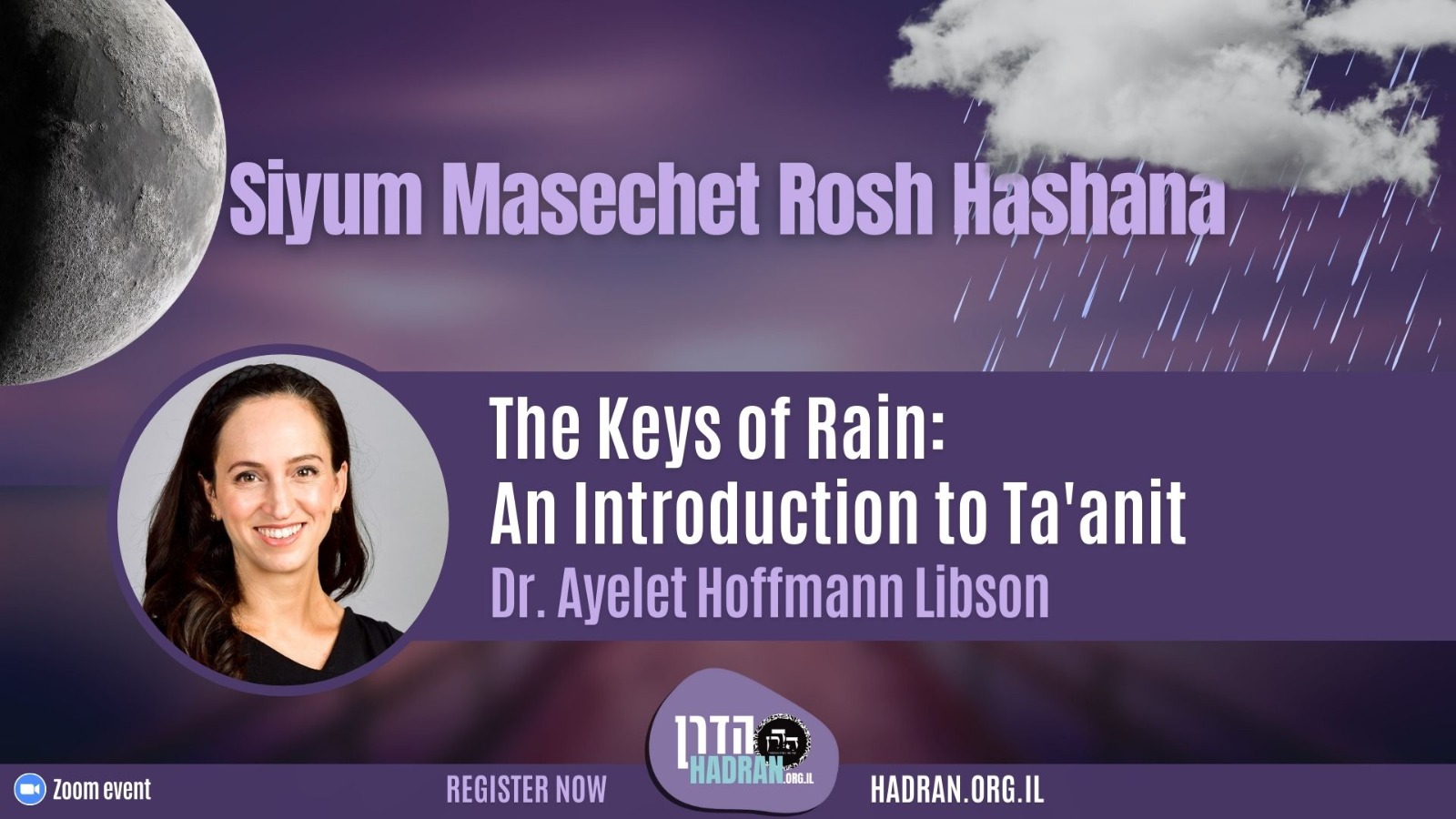
The Keys of Rain: An Introduction to Ta’anit
New to Talmud?
Check out our resources designed to help you navigate a page of Talmud – and study at the pace, level and style that fits you.
The Hadran Women’s Tapestry
Meet the diverse women learning Gemara at Hadran and hear their stories.
I heard the new Daf Yomi cycle was starting and I was curious, so I searched online for a women’s class and was pleasently surprised to find Rabanit Michelle’s great class reviews in many online articles. It has been a splendid journey. It is a way to fill my days with Torah, learning so many amazing things I have never heard before during my Tanach learning at High School. Thanks so much .

Panama, Panama
I started Daf during the pandemic. I listened to a number of podcasts by various Rebbeim until one day, I discovered Rabbanit Farbers podcast. Subsequently I joined the Hadran family in Eruvin. Not the easiest place to begin, Rabbanit Farber made it all understandable and fun. The online live group has bonded together and have really become a supportive, encouraging family.

Edmonton, Alberta, Canada
After all the hype on the 2020 siyum I became inspired by a friend to begin learning as the new cycle began.with no background in studying Talmud it was a bit daunting in the beginning. my husband began at the same time so we decided to study on shabbat together. The reaction from my 3 daughters has been fantastic. They are very proud. It’s been a great challenge for my brain which is so healthy!
Modi’in, Israel
I started learning at the beginning of this cycle more than 2 years ago, and I have not missed a day or a daf. It’s been challenging and enlightening and even mind-numbing at times, but the learning and the shared experience have all been worth it. If you are open to it, there’s no telling what might come into your life.

Phoenix, Arizona, United States

Los Angeles, United States
I am a Reform rabbi and took Talmud courses in rabbinical school, but I knew there was so much more to learn. It felt inauthentic to serve as a rabbi without having read the entire Talmud, so when the opportunity arose to start Daf Yomi in 2020, I dove in! Thanks to Hadran, Daf Yomi has enriched my understanding of rabbinic Judaism and deepened my love of Jewish text & tradition. Todah rabbah!

California, United States
I started learning on January 5, 2020. When I complete the 7+ year cycle I will be 70 years old. I had been intimidated by those who said that I needed to study Talmud in a traditional way with a chevruta, but I decided the learning was more important to me than the method. Thankful for Daf Yomi for Women helping me catch up when I fall behind, and also being able to celebrate with each Siyum!

Bakersfield, United States
When the new cycle began, I thought, If not now, when? I’d just turned 72. I feel like a tourist on a tour bus passing astonishing scenery each day. Rabbanit Michelle is my beloved tour guide. When the cycle ends, I’ll be 80. I pray that I’ll have strength and mind to continue the journey to glimpse a little more. My grandchildren think having a daf-learning savta is cool!

Jerusalem, Israel
I am grateful for the structure of the Daf Yomi. When I am freer to learn to my heart’s content, I learn other passages in addition. But even in times of difficulty, I always know that I can rely on the structure and social support of Daf Yomi learners all over the world.
I am also grateful for this forum. It is very helpful to learn with a group of enthusiastic and committed women.

Beit Shemesh, Israel
I had tried to start after being inspired by the hadran siyum, but did not manage to stick to it. However, just before masechet taanit, our rav wrote a message to the shul WhatsApp encouraging people to start with masechet taanit, so I did! And this time, I’m hooked! I listen to the shiur every day , and am also trying to improve my skills.

Yad Binyamin, Israel
I started my journey on the day I realized that the Siyum was happening in Yerushalayim and I was missing out. What? I told myself. How could I have not known about this? How can I have missed out on this opportunity? I decided that moment, I would start Daf Yomi and Nach Yomi the very next day. I am so grateful to Hadran. I am changed forever because I learn Gemara with women. Thank you.

Mitspe, Israel
Shortly after the death of my father, David Malik z”l, I made the commitment to Daf Yomi. While riding to Ben Gurion airport in January, Siyum HaShas was playing on the radio; that was the nudge I needed to get started. The “everyday-ness” of the Daf has been a meaningful spiritual practice, especial after COVID began & I was temporarily unable to say Kaddish at daily in-person minyanim.

Wynnewood, United States
I started learning Talmud with R’ Haramati in Yeshivah of Flatbush. But after a respite of 60 years, Rabbanit Michelle lit my fire – after attending the last three world siyumim in Miami Beach, Meadowlands and Boca Raton, and now that I’m retired, I decided – “I can do this!” It has been an incredible journey so far, and I look forward to learning Daf everyday – Mazal Tov to everyone!

Florida, United States
I decided to learn one masechet, Brachot, but quickly fell in love and never stopped! It has been great, everyone is always asking how it’s going and chering me on, and my students are always making sure I did the day’s daf.

Memphis, Tennessee, United States
Michelle has been an inspiration for years, but I only really started this cycle after the moving and uplifting siyum in Jerusalem. It’s been an wonderful to learn and relearn the tenets of our religion and to understand how the extraordinary efforts of a band of people to preserve Judaism after the fall of the beit hamikdash is still bearing fruits today. I’m proud to be part of the chain!

Raanana, Israel
I started learning Dec 2019 after reading “If all the Seas Were Ink”. I found
Daily daf sessions of Rabbanit Michelle in her house teaching, I then heard about the siyum and a new cycle starting wow I am in! Afternoon here in Sydney, my family and friends know this is my sacred time to hide away to live zoom and learn. Often it’s hard to absorb and relate then a gem shines touching my heart.

Dover Heights, Australia
I began learning with Rabbanit Michelle’s wonderful Talmud Skills class on Pesachim, which really enriched my Pesach seder, and I have been learning Daf Yomi off and on over the past year. Because I’m relatively new at this, there is a “chiddush” for me every time I learn, and the knowledge and insights of the group members add so much to my experience. I feel very lucky to be a part of this.
Karmiel, Israel

Palo Alto, CA, United States
It happened without intent (so am I yotzei?!) – I watched the women’s siyum live and was so moved by it that the next morning, I tuned in to Rabbanit Michelle’s shiur, and here I am, still learning every day, over 2 years later. Some days it all goes over my head, but others I grasp onto an idea or a story, and I ‘get it’ and that’s the best feeling in the world. So proud to be a Hadran learner.

Zichron Yaakov, Israel
I started learning daf in January, 2020, being inspired by watching the Siyyum Hashas in Binyanei Haumah. I wasn’t sure I would be able to keep up with the task. When I went to school, Gemara was not an option. Fast forward to March, 2022, and each day starts with the daf. The challenge is now learning the intricacies of delving into the actual learning. Hadran community, thank you!

Riverdale, NY, United States
Taanit 8
שֶׁתַּלְמוּדוֹ קָשֶׁה עָלָיו כַּבַּרְזֶל — בִּשְׁבִיל מִשְׁנָתוֹ שֶׁאֵינָהּ סְדוּרָה עָלָיו, שֶׁנֶּאֱמַר: ״וְהוּא לֹא פָנִים קִלְקַל״.
whose studies are hard as iron for him, i.e., difficult to understand, this is due to his lack of familiarity with the Mishna, which is not organized for him. If the Mishna is unclear, any further study of Gemara is rendered all the more difficult, as it is stated: “And does not whet [kilkal] the edge [panim]” (Ecclesiastes 10:10). As panim can also mean surface, this indicates that the surface, i.e., the basic statements of the Mishna, is corrupted. As stated previously, kilkal can also mean corrupted.
מַאי תַּקַּנְתֵּיהּ — יַרְבֶּה בִּישִׁיבָה, שֶׁנֶּאֱמַר: ״וַחֲיָלִים יְגַבֵּר וְיִתְרוֹן הַכְשֵׁיר חׇכְמָה״. כׇּל שֶׁכֵּן אִם מִשְׁנָתוֹ סְדוּרָה לוֹ מֵעִיקָּרָא.
What is his remedy? He must increase the time he sits and studies, as it is stated: “Then must he increase his strength” (Ecclesiastes 10:10). The last part of the verse: “But wisdom is profitable to direct,” means that all the more so, if his study of the Mishna is organized for him from the beginning, he will avoid this trouble.
כִּי הָא דְּרֵישׁ לָקִישׁ הֲוָה מְסַדַּר מַתְנִיתֵיהּ אַרְבְּעִין זִמְנִין, כְּנֶגֶד אַרְבָּעִים יוֹם שֶׁנִּיתְּנָה תּוֹרָה, וְעָיֵיל לְקַמֵּיהּ דְּרַבִּי יוֹחָנָן. רַב אַדָּא בַּר אַהֲבָה מְסַדַּר מַתְנִיתֵיהּ עֶשְׂרִין וְאַרְבַּע זִמְנִין, כְּנֶגֶד תּוֹרָה נְבִיאִים וּכְתוּבִים, וְעָיֵיל לְקַמֵּיהּ דְּרָבָא.
That is like this practice of Reish Lakish, who would review his studies forty times, corresponding to the forty days in which the Torah was given to Moses at Sinai, and only afterward would he go before Rabbi Yoḥanan to study from his teacher. Similarly, Rav Adda bar Ahava would review his learning twenty-four times, corresponding to the twenty-four books in the Torah, Prophets, and Writings, i.e., the Bible, and only afterward go before Rava to study with him.
רָבָא אָמַר: אִם רָאִיתָ תַּלְמִיד שֶׁתַּלְמוּדוֹ קָשֶׁה עָלָיו כַּבַּרְזֶל — בִּשְׁבִיל רַבּוֹ שֶׁאֵינוֹ מַסְבִּיר לוֹ פָּנִים, שֶׁנֶּאֱמַר: ״וְהוּא לֹא פָנִים קִלְקַל״.
With regard to the aforementioned verse from Ecclesiastes, Rava said: If you see a student whose studies are as difficult for him as iron, this is due to his teacher, who does not show him a friendly countenance, but is overly strict with him. This practice inhibits the student’s learning, as it is stated: “And it has not whetted the surface [panim]” (Ecclesiastes 10:10). As explained previously, panim can also mean countenance.
מַאי תַּקַּנְתֵּיהּ — יַרְבֶּה עָלָיו רֵעִים, שֶׁנֶּאֱמַר: ״וַחֲיָלִים יְגַבֵּר וְיִתְרוֹן הַכְשֵׁיר חׇכְמָה״. כׇּל שֶׁכֵּן אִם הוּכְשְׁרוּ מַעֲשָׂיו בִּפְנֵי רַבּוֹ מֵעִיקָּרָא.
What is the remedy for this student? He must increase the number of friends he sends to the teacher to intercede for him, as it is stated: “Then must he increase his strength.” The term used for strength, ḥayalim, can also mean soldiers or colleagues. Nevertheless: “But wisdom is profitable to direct,” meaning that all the more so would he be spared this trouble if his deeds were properly directed before his teacher from the beginning.
וְאָמַר רַבִּי אַמֵּי, מַאי דִּכְתִיב: ״אִם יִשֹּׁךְ הַנָּחָשׁ בְּלוֹא לָחַשׁ וְאֵין יִתְרוֹן לְבַעַל הַלָּשׁוֹן״, אִם רָאִיתָ דּוֹר שֶׁהַשָּׁמַיִם מִשְׁתַּכִּין כִּנְחֹשֶׁת מִלְּהוֹרִיד טַל וּמָטָר — בִּשְׁבִיל לוֹחֲשֵׁי לְחִישׁוֹת שֶׁאֵין בַּדּוֹר.
§ The Gemara returns to the topic of rain. And Rabbi Ami said: What is the meaning of that which is written: “If the serpent [naḥash] bites [yishokh] before it is charmed [laḥash], then the charmer has no advantage” (Ecclesiastes 10:11)? If you see a generation for whom the heavens corrode [meshatkhin] like copper [neḥoshet], which prevents them from bringing down dew and rain, this is due to the lack of those who whisper quiet [loḥashei leḥishot] prayers in the generation.
מַאי תַּקָּנָתָן — יֵלְכוּ אֵצֶל מִי שֶׁיּוֹדֵעַ לִלְחוֹשׁ, דִּכְתִיב: ״יַגִּיד עָלָיו רֵעוֹ״, ״וְאֵין יתְרוֹן לְבַעַל הַלָּשׁוֹן״. וּמִי שֶׁאֶפְשָׁר לוֹ לִלְחוֹשׁ וְאֵינוֹ לוֹחֵשׁ, מָה הֲנָאָה יֵשׁ לוֹ?
What is their remedy? They should go to one who knows how to whisper prayers in the proper manner, as it is written: “Its noise tells concerning it” (Job 36:33). As for the phrase: “Then the charmer has no advantage,” this is referring to one who is able to whisper his prayers correctly and yet does not whisper them correctly. In this case, of what benefit to him is his ability to pray?
וְאִם לָחַשׁ וְלֹא נַעֲנָה, מַאי תַּקַּנְתֵּיהּ? יֵלֵךְ אֵצֶל חָסִיד שֶׁבַּדּוֹר, וְיַרְבֶּה עָלָיו בִּתְפִלָּה, שֶׁנֶּאֱמַר: ״וַיְצַו עָלֶיהָ בְּמַפְגִּיעַ״, וְאֵין פְּגִיעָה אֶלָּא תְּפִילָּה, שֶׁנֶּאֱמַר: ״וְאַתָּה אַל תִּתְפַּלֵּל בְּעַד הָעָם הַזֶּה וְאַל תִּשָּׂא בַעֲדָם רִנָּה וּתְפִלָּה וְאַל תִּפְגַּע בִּי״.
And if he whispered his prayers and yet was not answered, what is his remedy? He should go to the most pious individual of the generation, and this pious individual will increase his prayers on his behalf, as it is stated one verse earlier: “And He has commanded it due to imploring” (Job 36:32). And “imploring” means nothing other than prayer, as it is stated: “Therefore, do not pray you for this nation, neither lift up cry nor prayer for them, neither implore Me” (Jeremiah 7:16).
וְאִם לָחַשׁ וְעָלְתָה בְּיָדוֹ, וּמֵגִיס דַּעְתּוֹ עָלָיו — מֵבִיא אַף לָעוֹלָם, שֶׁנֶּאֱמַר: ״מִקְנֶה אַף עַל עוֹלֶה״.
And if he whispered his prayers for rain, and his prayers were successful, i.e., rain fell as he requested, and he becomes prideful as a result, he brings anger into the world, as it is stated: “The cattle [mikne] also [af ] concerning the rising storm [al oleh]” (Job 36:33). This verse can be read homiletically as: Anger [af ] is acquired [mikne] by one who raises [al oleh] his pride.
רָבָא אָמַר: שְׁנֵי תַּלְמִידֵי חֲכָמִים שֶׁיּוֹשְׁבִין בְּעִיר אַחַת וְאֵין נוֹחִין זֶה לָזֶה בַּהֲלָכָה — מִתְקַנְּאִין בָּאַף וּמַעֲלִין אוֹתוֹ, שֶׁנֶּאֱמַר: ״מִקְנֶה אַף עַל עוֹלֶה״.
Following the same interpretation of this verse, Rava said: If there are two Torah scholars who live in one city, and they are not courteous with one another in their discussions of halakha, they arouse anger upon the world and cause it to rise up, as it is stated: “Anger is acquired by one who raises his pride.”
אָמַר רֵישׁ לָקִישׁ, מַאי דִּכְתִיב: ״אִם יִשֹּׁךְ הַנָּחָשׁ בְּלוֹא לָחַשׁ וְאֵין יִתְרוֹן לְבַעַל הַלָּשׁוֹן״, לְעָתִיד לָבוֹא מִתְקַבְּצוֹת וּבָאוֹת כׇּל הַחַיּוֹת אֵצֶל הַנָּחָשׁ, וְאוֹמְרִים לוֹ: אֲרִי דּוֹרֵס וְאוֹכֵל, זְאֵב טוֹרֵף וְאוֹכֵל, אַתָּה מָה הֲנָאָה יֵשׁ לְךָ? אֹמֵר לָהֶם: ״וְאֵין יִתְרוֹן לְבַעַל הַלָּשׁוֹן״.
The Gemara cites another interpretation of the aforementioned verse. Reish Lakish said: What is the meaning of that which is written: “If the snake bites before it is charmed, then the charmer has no advantage” (Ecclesiastes 10:11)? In the future, all the animals will gather together and come to the snake and say to him: A lion mauls its prey and eats it; a wolf tears apart its prey and eats it; but you, what pleasure do you have when you bite a person, as you are incapable of eating him? The snake will say to them: “The charmer has no advantage.” The Hebrew phrase for snake charmer literally means the master of the tongue, and therefore the snake is saying that he has a more difficult question: What pleasure does a slanderer receive, as he inflicts more harm for which he obtains no physical enjoyment.
אָמַר רַבִּי אַמֵּי: אֵין תְּפִלָּתוֹ שֶׁל אָדָם נִשְׁמַעַת אֶלָּא אִם כֵּן מֵשִׂים נַפְשׁוֹ בְּכַפּוֹ, שֶׁנֶּאֱמַר: ״נִשָּׂא לְבָבֵנוּ אֶל כַּפָּיִם״, אִינִי?! וְהָא אוֹקֵים שְׁמוּאֵל אָמוֹרָא עֲלֵיהּ וּדְרַשׁ: ״וַיְפַתּוּהוּ בְּפִיהֶם וּבִלְשׁוֹנָם יְכַזְּבוּ לוֹ וְלִבָּם לֹא נָכוֹן עִמּוֹ וְלֹא נֶאֶמְנוּ בִּבְרִיתוֹ״, וְאַף עַל פִּי כֵן — ״וְהוּא רַחוּם יְכַפֵּר עָוֹן וְגוֹ׳״!
Rabbi Ami said: A person’s prayer is heard only if he places his soul in his palm, i.e., one must submit his entire soul with sincerity in his outstretched hands as he prays, as it is stated: “Let us lift up our heart with our hands” (Lamentations 3:41). The Gemara raises an objection: Is that so? But Shmuel once established for himself an interpreter to teach in public, and interpreted homiletically the verse: “But they beguiled Him with their mouth and lied to Him with their tongue, for their heart was not steadfast with Him, neither were they faithful to His covenant” (Psalms 78:36–37), and nevertheless the psalm continues: “But He, being full of compassion, forgives iniquity, and does not destroy” (Psalms 78:38). This indicates that all prayers are accepted, even if they lack sincerity.
לָא קַשְׁיָא: כָּאן בְּיָחִיד, כָּאן בְּצִבּוּר.
The Gemara responds: This is not difficult, as here Rabbi Ami is referring to an individual who prays without sincerity and consequently his prayer goes unheard, whereas there Shmuel is saying that when one prays with the community, even if his prayers are deficient, they are accepted in the merit of the congregation.
אָמַר רַבִּי אַמֵּי: אֵין גְּשָׁמִים יוֹרְדִין אֶלָּא בִּשְׁבִיל בַּעֲלֵי אֲמָנָה, שֶׁנֶּאֱמַר: ״אֱמֶת מֵאֶרֶץ תִּצְמָח וְצֶדֶק מִשָּׁמַיִם נִשְׁקָף״.
Rabbi Ami further said: Rain falls only due to faithful people, as it is stated: “Truth springs out of the earth, and righteousness has looked down from heaven” (Psalms 85:12). When “truth springs out of the earth,” i.e., if people are faithful, they will find that “righteousness,” in the form of rain “has looked down from heaven.”
וְאָמַר רַבִּי אַמֵּי: בֹּא וּרְאֵה כַּמָּה גְּדוֹלִים בַּעֲלֵי אֲמָנָה, מִנַּיִין — מֵחוּלְדָּה וּבוֹר. וּמָה הַמַּאֲמִין בְּחוּלְדָּה וּבוֹר — כָּךְ, הַמַּאֲמִין בְּהַקָּדוֹשׁ בָּרוּךְ הוּא — עַל אַחַת כַּמָּה וְכַמָּה.
And Rabbi Ami said: Come and see how great the faithful people are, and how God assists them. From where is it derived? From the story of the marten [ḥulda] and the pit. Once a young man saved a girl who had fallen into a pit. After rescuing her they swore to remain faithful to each other, and they declared the pit and a passing marten their witnesses. As time went by the young man forgot his vow and married another woman. They had two children, both of whom died tragically, one by falling into a pit and the other when he was bitten by a marten. Their unusual deaths led the young man to realize his error and he returned to the first woman. And if this is the outcome for one who believes in signs from a pit and a marten, all the more so for one who has faith in the Holy One, Blessed be He.
אָמַר רַבִּי יוֹחָנָן: כׇּל הַמַּצְדִּיק אֶת עַצְמוֹ מִלְּמַטָּה — מַצְדִּיקִין עָלָיו הַדִּין מִלְּמַעְלָה, שֶׁנֶּאֱמַר: ״אֱמֶת מֵאֶרֶץ תִּצְמָח וְצֶדֶק מִשָּׁמַיִם נִשְׁקָף״. רַבִּי חִיָּיא בַּר אָבִין אָמַר רַב הוּנָא, מֵהָכָא: ״וּכְיִרְאָתְךָ עֶבְרָתֶךָ״.
§ Rabbi Yoḥanan said: Whoever is exacting with himself, by striving to act righteously in every way on earth below, he is judged in an exact manner in Heaven above, in order to improve him further still, as it is stated: “Truth springs out of the earth, and righteousness has looked down from heaven” (Psalms 85:12). Rabbi Ḥiyya bar Avin said that Rav Huna said that this idea is derived from here: “And Your wrath is according to the fear that is due to You” (Psalms 90:11). The level of God’s wrath correlates with the offender’s fear of God.
רֵישׁ לָקִישׁ אָמַר מֵהָכָא: ״פָּגַעְתָּ אֶת שָׂשׂ וְעֹשֵׂה צֶדֶק בִּדְרָכֶיךָ יִזְכְּרוּךָ הֵן אַתָּה קָצַפְתָּ וַנֶּחֱטָא בָּהֶם עוֹלָם וְנִוָּשֵׁעַ״. אָמַר רַבִּי יְהוֹשֻׁעַ בֶּן לֵוִי: כׇּל הַשָּׂמֵחַ בְּיִסּוּרִין שֶׁבָּאִין עָלָיו — מֵבִיא יְשׁוּעָה לָעוֹלָם, שֶׁנֶּאֱמַר: ״בָּהֶם עוֹלָם וְנִוָּשֵׁעַ״.
Reish Lakish said that this principle is derived from here: “You took him away who joyfully performed righteousness, those who remembered You in Your ways, behold You were wroth, and we sinned, upon them have we stayed of old, that we might be saved” (Isaiah 64:4). This verse also teaches that God displays wrath specifically due to the transgressions of those who are accustomed to acting righteously. Rabbi Yehoshua ben Levi said concerning the same verse: Whoever is joyful in the suffering that comes upon him brings salvation to the world [olam], as it is stated: “Upon them have we stayed of old [olam], that we might be saved.”
אָמַר רֵישׁ לָקִישׁ, מַאי דִּכְתִיב: ״וְעָצַר אֶת הַשָּׁמַיִם״, בְּשָׁעָה שֶׁהַשָּׁמַיִם נֶעֱצָרִין מִלְּהוֹרִיד טַל וּמָטָר — דּוֹמֶה לְאִשָּׁה שֶׁמְּחַבֶּלֶת וְאֵינָהּ יוֹלֶדֶת. וְהַיְינוּ דְּאָמַר רֵישׁ לָקִישׁ מִשּׁוּם בַּר קַפָּרָא: נֶאֶמְרָה עֲצִירָה בִּגְשָׁמִים וְנֶאֶמְרָה עֲצִירָה בְּאִשָּׁה,
§ Returning to the topic of rain, Reish Lakish said: What is the meaning of that which is written: “And He will close up the heavens” (Deuteronomy 11:17)? This verse teaches that when the heavens are closed up from bringing down dew and rain, this is similar to a woman who has the pangs of labor and yet does not give birth, as the heavens themselves suffer from their inability to bring down rain and dew. And this is what Reish Lakish said in the name of bar Kappara: Closing up is stated with regard to rains, and closing up is likewise stated with regard to a woman.
נֶאֶמְרָה עֲצִירָה בְּאִשָּׁה, שֶׁנֶּאֱמַר: ״כִּי עָצֹר עָצַר ה׳ בְּעַד כׇּל רֶחֶם״, וְנֶאֶמְרָה עֲצִירָה בִּגְשָׁמִים, דִּכְתִיב: ״וְעָצַר אֶת הַשָּׁמַיִם״.
Reish Lakish elaborates: Closing up is stated with regard to a woman who cannot give birth, as it is stated: “For the Lord has fast closed up all the wombs” (Genesis 20:18), and closing up is stated with regard to rains, as it is written: “And He will close up the heavens” (Deuteronomy 11:17).
נֶאֱמַר לֵידָה בְּאִשָּׁה וְנֶאֱמַר לֵידָה בִּגְשָׁמִים, נֶאֱמַר לֵידָה בְּאִשָּׁה, דִּכְתִיב: ״וַתַּהַר וַתֵּלֶד בֵּן״, וְנֶאֱמַר לֵידָה בִּגְשָׁמִים, דִּכְתִיב: ״וְהוֹלִידָהּ וְהִצְמִיחָהּ״.
Likewise, an expression of giving birth is stated with regard to a woman, and an expression of giving birth is also stated with regard to rain. Specifically, giving birth is stated with regard to a woman, as it is written in the case of Rachel, when God had mercy on her: “And she conceived and gave birth to a son” (Genesis 30:23). And giving birth is stated with regard to rain, as it is written: “For as the rain comes down, and the snow from heaven, and does not return there, except it waters the earth and causes it to give birth and bud” (Isaiah 55:10).
נֶאֱמַר פְּקִידָה בְּאִשָּׁה, וְנֶאֱמַר פְּקִידָה בִּגְשָׁמִים. נֶאֱמַר פְּקִידָה בְּאִשָּׁה, דִּכְתִיב: ״וַה׳ פָּקַד אֶת שָׂרָה״, וְנֶאֱמַר פְּקִידָה בִּגְשָׁמִים, דִּכְתִיב: ״פָּקַדְתָּ הָאָרֶץ וַתְּשֹׁקְקֶהָ רַבַּת תַּעְשְׁרֶנָּה פֶּלֶג אֱלֹהִים מָלֵא מָיִם״.
Lastly, an expression of remembering is stated in connection with a woman, and an expression of remembering is also stated in connection to rain. Remembering is stated in connection with a woman, as it is written: “And the Lord remembered Sarah” (Genesis 21:1), and remembering is stated in connection to rain, as it is written: “You have remembered the earth and have watered it; greatly enriching it, with the pool of God that is full of water” (Psalms 65:10).
מַאי ״פֶּלֶג אֱלֹהִים מָלֵא מַיִם״? תָּנָא: כְּמִין קוּבָּה יֵשׁ בָּרָקִיעַ, שֶׁמִּמֶּנָּה גְּשָׁמִים יוֹצְאִין.
The Gemara asks a question with regard to this verse. What is the meaning of the phrase: “With the pool of God that is full of water”? The Gemara answers that it was taught in a baraita: There is a kind of vault [kuba] in the sky, out of which the rain falls.
אָמַר רַבִּי שְׁמוּאֵל בַּר נַחְמָנִי, מַאי דִּכְתִיב: ״אִם לְשֵׁבֶט אִם לְאַרְצוֹ אִם לְחֶסֶד יַמְצִאֵהוּ״. ״אִם לְשֵׁבֶט״ — בְּהָרִים וּבִגְבָעוֹת, ״אִם לְחֶסֶד יַמְצִאֵהוּ לְאַרְצוֹ״ — בְּשָׂדוֹת וּבִכְרָמִים.
Rabbi Shmuel bar Naḥmani said: What is the meaning of that which is written: “Whatever he commands them upon the face of the habitable world, whether it is for correction, or for His earth, or for mercy that He causes it to come” (Job 37:12–13)? The phrase “whether it is for correction” means that if the people are judged unfavorably, the rain will fall on the mountains and on the hills. The phrase “or for His earth” indicates that if they have been judged “for mercy,” He will cause it to come “for His earth,” on the fields and on the vineyards.
״אִם לְשֵׁבֶט״ — לְאִילָנוֹת, ״אִם לְאַרְצוֹ״ — לִזְרָעִים, ״אִם לְחֶסֶד יַמְצִאֵהוּ״ — בּוֹרוֹת שִׁיחִין וּמְעָרוֹת.
Alternatively, the phrase “whether it is for correction” means that the rain will provide benefit only for the trees; “or for His earth” indicates that rain will fall solely for the benefit of seeds; and “or for mercy that He causes it to come” means that rain will fill the cisterns, ditches, and caves with enough water to last the dry season.
בִּימֵי רַבִּי שְׁמוּאֵל בַּר נַחְמָנִי הֲוָה כַּפְנָא וּמוֹתָנָא, אָמְרִי: הֵיכִי נַעֲבֵיד? נִיבְעֵי רַחֲמֵי אַתַּרְתֵּי — לָא אֶפְשָׁר. אֶלָּא לִיבְעֵי רַחֲמֵי אַמּוֹתָנָא, וְכַפְנָא נִיסְבּוֹל. אֲמַר לְהוּ רַבִּי שְׁמוּאֵל בַּר נַחְמָנִי: נִיבְעֵי רַחֲמֵי אַכַּפְנָא, דְּכִי יָהֵיב רַחֲמָנָא שׂוּבְעָא — לְחַיֵּי הוּא דְּיָהֵיב, דִּכְתִיב: ״פּוֹתֵחַ אֶת יָדֶךָ וּמַשְׂבִּיעַ לְכׇל חַי רָצוֹן״.
§ The Gemara relates: In the days of Rabbi Shmuel bar Naḥmani there was a famine and a plague. The Sages said: What should we do? Should we pray for mercy for two troubles, both the famine and the plague? This is not possible, as it is improper to pray for the alleviation of two afflictions at once. Rather, let us pray for mercy for the plague, and as for the famine, we must bear it. Rabbi Shmuel bar Naḥmani said to them: On the contrary, let us pray for mercy for the famine, as when the Merciful One provides plenty, He gives it for the sake of the living, i.e., if God answers this prayer then he will certainly bring an end to the plague as well, as it is written: “You open Your hand and satisfy every living thing with favor” (Psalms 145:16).
וּמְנָלַן דְּלָא מְצַלִּינַן אַתַּרְתֵּי — דִּכְתִיב: ״וַנָּצוּמָה וַנְּבַקְשָׁה מֵאֱלֹהֵינוּ עַל זֹאת״, מִכְּלָל דְּאִיכָּא אַחֲרִיתִי. בְּמַעְרְבָא אָמְרִי מִשְּׁמֵיהּ דְּרַבִּי חַגַּי מֵהָכָא: ״וְרַחֲמִין לְמִבְעֵא מִן קֳדָם אֱלָהּ שְׁמַיָּא עַל רָזָא דְּנָה״, מִכְּלָל דְּאִיכָּא אַחֲרִיתִי.
The Gemara explains: And from where do we derive that one should not pray for two troubles simultaneously? As it is written: “So we fasted and beseeched our God for this” (Ezra 8:23). From the fact that the verse states: “For this,” it may be inferred that there is another trouble about which the people did not pray. In the West, Eretz Yisrael, they say in the name of Rabbi Ḥaggai that this idea comes from here: “That they might ask mercy of the God of Heaven concerning this secret” (Daniel 2:18). From the fact that the verse states: “This secret,” it may be inferred that there is another trouble about which they did not pray.
בִּימֵי רַבִּי זֵירָא גְּזוּר שְׁמָדָא, וּגְזוּר דְּלָא לְמֵיתַב בְּתַעֲנִיתָא. אֲמַר לְהוּ רַבִּי זֵירָא: נְקַבְּלֵיהּ עִילָּוַון, וּלְכִי בָּטֵיל שְׁמָדָא לֵיתְבֵיהּ.
In a similar vein, the Gemara relates: In the days of Rabbi Zeira a decree of religious persecution was decreed against the Jews. And as the decree was that they were not allowed to fast, the Jews were certainly unable to fast and pray for the nullification of the decree itself. Rabbi Zeira said to the people: Let us take a fast upon ourselves, despite the fact that in practice we cannot observe it, and when the decree of religious persecution is annulled we will observe the fast.
אָמְרִי לֵיהּ: מְנָא לָךְ הָא? אֲמַר לְהוּ, דִּכְתִיב: ״וַיֹּאמֶר אֵלַי אַל תִּירָא דָנִיֵּאל כִּי מִן הַיּוֹם הָרִאשׁוֹן אֲשֶׁר נָתַתָּ אֶת לִבְּךָ לְהָבִין וּלְהִתְעַנּוֹת לִפְנֵי אֱלֹהֶיךָ נִשְׁמְעוּ דְבָרֶיךָ״.
They said to him: From where do you know this, the fact that one may take a fast upon himself that he cannot observe? Rabbi Zeira said to them that the reason is as it is written: “Then he said to me: Fear not, Daniel, for from the first day that you set your heart to understand, and to fast before your God, your words were heard” (Daniel 10:12). This verse indicates that from the moment one turns his heart to fast, his prayers are heard.
אָמַר רַבִּי יִצְחָק: אֲפִילּוּ שָׁנִים כִּשְׁנֵי אֵלִיָּהוּ, וְיָרְדוּ גְּשָׁמִים בְּעַרְבֵי שַׁבָּתוֹת — אֵינָן אֶלָּא סִימַן קְלָלָה. הַיְינוּ דְּאָמַר רַבָּה בַּר שֵׁילָא: קָשֶׁה יוֹמָא דְמִיטְרָא כְּיוֹמָא דְּדִינָא. אָמַר אַמֵּימָר: אִי לָא דִּצְרִיךְ לִבְרִיָּיתָא, בָּעֵינַן רַחֲמֵי וּמְבַטְּלִינַן לֵיהּ.
The Gemara returns to the topic of rain. Rabbi Yitzḥak said: Even in years like the years of Elijah, when God decreed that no rain would fall, if rain falls on Shabbat eves it is nothing other than a sign of a curse, as the rain disrupts the preparations for Shabbat. This is the same as that which Rabba bar Sheila said: A rainy day is as difficult as a judgment day. Ameimar even said: Were it not for the fact that rain is needed by people, we would pray for mercy and to annul it, due to the nuisances that rain causes.
וְאָמַר רַבִּי יִצְחָק: שֶׁמֶשׁ בְּשַׁבָּת — צְדָקָה לַעֲנִיִּים, שֶׁנֶּאֱמַר: ״וְזָרְחָה לָכֶם יִרְאֵי שְׁמִי שֶׁמֶשׁ צְדָקָה וּמַרְפֵּא״. וְאָמַר רַבִּי יִצְחָק: גָּדוֹל יוֹם הַגְּשָׁמִים, שֶׁאֲפִילּוּ פְּרוּטָה שֶׁבַּכִּיס מִתְבָּרֶכֶת בּוֹ, שֶׁנֶּאֱמַר: ״לָתֵת מְטַר אַרְצְךָ בְּעִתּוֹ וּלְבָרֵךְ אֵת כׇּל מַעֲשֵׂה יָדֶךָ״.
And Rabbi Yitzḥak said: Sun on Shabbat is charity for the poor, who are then able to enjoy the outdoors without suffering from cold. As it is stated: “But for you who fear My name, the sun of righteousness shall arise with healing in its wings” (Malachi 3:20). And Rabbi Yitzḥak further said: The day of the rains is great, as even a peruta in one’s pocket is blessed on it, as it is stated: “To give the rain of your land in its due time, and to bless all the work of your hand” (Deuteronomy 28:12).
וְאָמַר רַבִּי יִצְחָק: אֵין הַבְּרָכָה מְצוּיָה אֶלָּא בְּדָבָר הַסָּמוּי מִן הָעַיִן, שֶׁנֶּאֱמַר: ״יְצַו ה׳ אִתְּךָ אֶת הַבְּרָכָה בַּאֲסָמֶיךָ״. תָּנָא דְּבֵי רַבִּי יִשְׁמָעֵאל: אֵין הַבְּרָכָה מְצוּיָה אֶלָּא בְּדָבָר שֶׁאֵין הָעַיִן שׁוֹלֶטֶת בּוֹ, שֶׁנֶּאֱמַר: ״יְצַו ה׳ אִתְּךָ אֶת הַבְּרָכָה בַּאֲסָמֶיךָ״.
And apropos blessings, Rabbi Yitzḥak said: A blessing is found only in an object that is hidden [samui] from the eye, not in an item visible to all, as public miracles are exceedingly rare. As it is stated: “The Lord will command His blessing upon you in your barns [ba’asamekha]” (Deuteronomy 28:8). Rabbi Yitzḥak’s exposition is based on the linguistic similarity between samui and asamekha. Likewise, the school of Rabbi Yishmael taught: A blessing is found only in an object that is not exposed to the eye, as it is stated: “The Lord will command His blessing upon you in your barns.”
תָּנוּ רַבָּנַן: הַנִּכְנָס לָמוֹד אֶת גׇּרְנוֹ, אוֹמֵר: ״יְהִי רָצוֹן מִלְּפָנֶיךָ ה׳ אֱלֹהֵינוּ שֶׁתִּשְׁלַח בְּרָכָה בְּמַעֲשֵׂה יָדֵנוּ״. הִתְחִיל לָמוֹד, אוֹמֵר: ״בָּרוּךְ הַשּׁוֹלֵחַ בְּרָכָה בַּכְּרִי הַזֶּה״. מָדַד וְאַחַר כָּךְ בֵּירַךְ — הֲרֵי זוֹ תְּפִלַּת שָׁוְא, לְפִי שֶׁאֵין הַבְּרָכָה מְצוּיָה לֹא בְּדָבָר הַשָּׁקוּל, וְלֹא בְּדָבָר הַמָּדוּד, וְלֹא בְּדָבָר הַמָּנוּי, אֶלָּא בְּדָבָר הַסָּמוּי מִן הָעַיִן.
The Sages taught: One who enters to measure produce in his granary recites: May it be Your will, Lord our God, that You send a blessing upon the work of our hands. After he has begun to measure, he recites: Blessed is He who sends a blessing upon this pile. If one first measured and afterward recited the blessing, it is a prayer in vain, as a blessing is not found either in an object that is weighed or in an object that is measured or in an object that is counted, as these would constitute open miracles. Rather, a blessing is found only in an object that is hidden from the eye.
קִבּוּץ, גְּיָיסוֹת, צְדָקָה, מַעֲשֵׂר, פַּרְנָס סִימָן. אָמַר רַבִּי יוֹחָנָן: גָּדוֹל יוֹם הַגְּשָׁמִים כְּיוֹם קִבּוּץ גָּלִיּוֹת, שֶׁנֶּאֱמַר: ״שׁוּבָה ה׳ אֶת שְׁבִיתֵנוּ כַּאֲפִיקִים בַּנֶּגֶב״, וְאֵין ״אֲפִיקִים״ אֶלָּא מָטָר, שֶׁנֶּאֱמַר: ״וַיֵּרָאוּ אֲפִקֵי יָם״.
§ The Gemara cites five statements of Rabbi Yoḥanan, in accordance with the following mnemonic: Ingathering; armies; charity; tithe; sustainer. Rabbi Yoḥanan said: The day of the rains is as great as the day of the ingathering of the exiles, as it is stated: “Turn our captivity, O Lord, as the streams in the dry land” (Psalms 126:4), and “streams” means nothing other than rain, as it is stated: “And the streams of the sea appeared” (II Samuel 22:16).
וְאָמַר רַבִּי יוֹחָנָן: גָּדוֹל יוֹם הַגְּשָׁמִים, שֶׁאֲפִילּוּ גְּיָיסוֹת פּוֹסְקוֹת בּוֹ, שֶׁנֶּאֱמַר: ״תְּלָמֶיהָ רַוֵּה נַחֵת גְּדוּדֶיהָ״. וְאָמַר רַבִּי יוֹחָנָן: אֵין הַגְּשָׁמִים נֶעֱצָרִין אֶלָּא בִּשְׁבִיל פּוֹסְקֵי צְדָקָה בָּרַבִּים וְאֵין נוֹתְנִין, שֶׁנֶּאֱמַר: ״נְשִׂיאִים וְרוּחַ וְגֶשֶׁם אָיִן אִישׁ מִתְהַלֵּל בְּמַתַּת שָׁקֶר״.
And Rabbi Yoḥanan said: The day of the rains is great, as even armies stop fighting on it due to the rain and mud. As it is stated: “Watering its ridges abundantly; settling down its furrows [gedudeha]” (Psalms 65:11). As the word gedudim can mean both furrows or armies and is spelled identically with each meaning, this alludes to the idea that during the rainy season soldiers become entrenched in place. And Rabbi Yoḥanan further said: Rain is withheld only due to those who pledge charity in public but do not give it, as it is stated: “As vapors and wind without rain, so is he who boasts of a false gift” (Proverbs 25:14).
וְאָמַר רַבִּי יוֹחָנָן, מַאי דִּכְתִיב:
And Rabbi Yoḥanan said: What is the meaning of that which is written:

