חיפוש

יבמות צט

רוצה להקדיש שיעור?

podcast placeholder

0:00
0:00


תקציר

המצגת בפורמט pdf

הדף היום מוקדש להצלחת קמפיין גיוס ההמונים של קהילת שירת התמר באפרת ומתוך הערכה עמוקה לרבנית הקהילה שירה מרילי מירוויס.

ברייתא מפרטת כמה מקרים שבהם אדם עלול להיות חייב לעשות חליצה ​​לאמו, לאחותו או לבתו מתוך ספק. באילו נסיבות זה יקרה? מצבים ייחודיים נוספים מתוארים בברייתא אחרת – שבהם זוג יכול להביא חמישה ילדים, שלכל אחד מהם מעמד שונה – גר, גוי, עבד, ממזר וישראל. אֵיך? חידה נוספת – יכול להיות מצב שמישהו יצטרף למכור את אביו, שהוא עבד, כדי לקבל את הכתובה של אמו. אֵיך? מה זה מלמד אותך על מעמדם של עבדים והאם הם משועבדים לכתובה? המשנה תיארה עוד מצבים בהם מתערבבים בלידה שני ילדים שאחד הוא אחיינו של השני. מה הם הלכות יבום/חליצה ​​להם ולאחיהם? אם בן אשה נשואה לכהן התערבב עם בן שפחה בביתו, מה מותר/אסור לאותו בן לעשות? הוא נחשב כהן מחמת הספק ולכן הוא צריך להקפיד על חומרות של כהנים, אולם בכל הנוגע לסוגיות כספיות אנו מקילים על בסיס עקרון "המוציא מחברו עליו הראייה”, חובת ההוכחה היא על זה שמנסה לתבוע את הכסף. רבי יוסי ורבי יהודה חלוקים בשאלה האם עבד יכול לאסוף תרומה מהגורן. החשש הוא שאנשים יראו אותו ויחשבו שהוא כהן ויאפשרו לו להתחתן עם יהודיה, בלי להבין שהוא עבד כנעני שלא יכול להתחתן עם יהודיה. רבי יוסי מתיר כי בעירו, הם לא מתירים לאנשים להתחתן על סמך עדות שראו אותו בתור לאסוף תרומה. רבי יהודה כי במקומו היו מקבלים עדות לייחוס אם ראו אותו בתור בבית הגרנות לחלוקת תרומה לצורך נישואין. למי עוד אסור לאסוף תרומה מהגורן?

/


יבמות צט

תָּנוּ רַבָּנַן: יֵשׁ חוֹלֵץ לְאִמּוֹ מִסָּפֵק, לַאֲחוֹתוֹ מִסָּפֵק, לְבִתּוֹ מִסָּפֵק.

§ The Sages taught: There is a case in which one performs ḥalitza with his mother due to uncertainty, or with his sister due to uncertainty, or with his daughter due to uncertainty. This is the halakha despite the fact that a levirate bond cannot be created between these relatives.

כֵּיצַד? אִמּוֹ וְאִשָּׁה אַחֶרֶת, וְלָהֶן שְׁנֵי זְכָרִים, וְחָזְרוּ וְיָלְדוּ שְׁנֵי זְכָרִים בְּמַחֲבֵא, וּבָא בְּנָהּ שֶׁל זוֹ וְנָשָׂא אִמּוֹ שֶׁל זֶה, וּבְנָהּ שֶׁל זוֹ נָשָׂא אִמּוֹ שֶׁל זֶה, וּמֵתוּ בְּלֹא בָּנִים — זֶה חוֹלֵץ לִשְׁתֵּיהֶן, וְזֶה חוֹלֵץ לִשְׁתֵּיהֶן. נִמְצָא כׇּל אֶחָד וְאֶחָד חוֹלֵץ לְאִמּוֹ מִסָּפֵק.

How so? If his mother and another woman had two sons, one each, and they then gave birth to two other sons in hiding, whose identities were confused, such that their lineage was consequently indeterminate, and the known son of this woman came and married the mother of that other known son, and the known son of that woman married this son’s mother, and they died without children, the halakha is that this one of the mixed sons performs ḥalitza with both women, as it is unknown which is his mother and which his yevama, and that one likewise performs ḥalitza with both women. It is therefore found that each one of them performs ḥalitza with his mother, due to the uncertainty.

לַאֲחוֹתוֹ מִסָּפֵק כֵּיצַד? אִמּוֹ וְאִשָּׁה אַחֶרֶת שֶׁיָּלְדוּ שְׁתֵּי נְקֵבוֹת בְּמַחֲבֵא, וּבָאוּ אֲחֵיהֶן שֶׁלֹּא מֵאוֹתָהּ הָאֵם וּנְשָׂאוּם, וּמֵתוּ בְּלֹא בָּנִים — חוֹלֵץ לִשְׁתֵּיהֶן, נִמְצָא חוֹלֵץ לַאֲחוֹתוֹ מִסָּפֵק.

There is a case where a man performs ḥalitza with his sister due to uncertainty. How so? If his mother and another woman gave birth to two females in hiding, and they were mixed, and the paternal, but not maternal, half brothers of this man and of the son of the other woman came and married them, and those half brothers died without children, the halakha is that the living half brothers perform ḥalitza with both wives, each with his half sister-in-law. It is therefore found that one performs ḥalitza with his half sister due to uncertainty.

לְבִתּוֹ מִסָּפֵק כֵּיצַד? אִשְׁתּוֹ וְאִשָּׁה אַחֶרֶת שֶׁיָּלְדוּ שְׁתֵּי נְקֵבוֹת בְּמַחֲבֵא, וּבָאוּ אֲחֵיהֶן וּנְשָׂאוּם, וּמֵתוּ בְּלֹא בָּנִים — זֶה חוֹלֵץ לְבִתּוֹ מִסָּפֵק, וְזֶה חוֹלֵץ לְבִתּוֹ מִסָּפֵק.

There is a case where one performs ḥalitza with his daughter due to uncertainty. How so? If his wife and another woman gave birth to two females in hiding, and they were mixed, and his brothers and the brothers of the other woman’s husband came and married them, and they died without children, then this one performs ḥalitza with his daughter due to uncertainty, and that one also performs ḥalitza with his daughter due to uncertainty.

תַּנְיָא, הָיָה רַבִּי מֵאִיר אוֹמֵר: אִישׁ וְאִשָּׁה פְּעָמִים שֶׁמּוֹלִידִין חָמֵשׁ אוּמּוֹת.

§ Following the previous baraita, the Gemara cites two additional baraitot that discuss unusual family situations. It is taught in a baraita that Rabbi Meir would say: A man and a woman can sometimes bear children of five nations, i.e., of five separate categories of lineage.

כֵּיצַד? יִשְׂרָאֵל שֶׁלָּקַח עֶבֶד וְשִׁפְחָה מִן הַשּׁוּק, וְלָהֶן שְׁנֵי בָנִים, וְנִתְגַּיֵּיר אֶחָד מֵהֶן — נִמְצָא אֶחָד גֵּר וְאֶחָד גּוֹי. הִטְבִּילָן לְשֵׁם עַבְדוּת וְנִזְקְקוּ זֶה לָזֶה, הֲרֵי כָּאן גֵּר וְגוֹי וְעֶבֶד. שִׁחְרֵר אֶת הַשִּׁפְחָה וּבָא עָלֶיהָ הָעֶבֶד, הֲרֵי כָּאן גֵּר וְגוֹי וְעֶבֶד וּמַמְזֵר. שִׁחְרֵר שְׁנֵיהֶם, וְהִשִּׂיאָן זֶה לָזֶה — הֲרֵי כָּאן גֵּר וְגוֹי וְעֶבֶד וּמַמְזֵר וְיִשְׂרָאֵל.

How so? If a Jew bought a slave and a maidservant from the market, and the slave and maidservant had two children at the time, and one of these children converted, it is found that one child is a convert and the other one is a gentile. If the master immersed the slave and maidservant for the sake of giving them the status of slaves, and they engaged in intercourse with each other and had a child, here there are three children in the family who are a convert, and a gentile, and a slave. If he freed the maidservant, which renders her a Jewess, and her husband the slave engaged in intercourse with her, and they had another child, here there are a convert, a gentile, a slave, and a mamzer. The offspring of a slave and a Jewess, according to Rabbi Meir, have the same status as a son born from an incestuous or adulterous relationship. If the master subsequently freed both the maidservant and the slave and married them to each other and they had another child, here there are a convert, a gentile, a slave, a mamzer, and a regular Jew.

מַאי קָא מַשְׁמַע לַן — גּוֹי וְעֶבֶד הַבָּא עַל בַּת יִשְׂרָאֵל הַוָּלָד מַמְזֵר.

The Gemara asks: What is the baraita teaching us? The Gemara answers: It is teaching us that if a gentile or a slave engaged in intercourse with a Jewish woman, their offspring is a mamzer.

תָּנוּ רַבָּנַן: יֵשׁ מוֹכֵר אֶת אָבִיו לְהַגְבּוֹת אִמּוֹ כְּתוּבָּתָהּ. כֵּיצַד? יִשְׂרָאֵל לָקַח עֶבֶד וְשִׁפְחָה מִן הַשּׁוּק וְלָהֶם בֵּן. וְשִׁחְרֵר אֶת הַשִּׁפְחָה וּנְשָׂאָהּ, וְעָמַד וְכָתַב כׇּל נְכָסָיו לִבְנָהּ, נִמְצָא זֶה מוֹכֵר אֶת אָבִיו לְהַגְבּוֹת לְאִמּוֹ כְּתוּבָּתָהּ.

The Sages taught: There is a case in which a man sells his father in order to collect his mother’s marriage contract for her. How so? A Jew bought a slave and a maidservant from the market, and they had a son, and the master freed the maidservant and married her, and he arose and wrote that all his property should go to her son, including her son’s father, the slave. It is found that this son, after receiving the master’s property, might sell his father to collect for his mother her marriage contract.

מַאי קָא מַשְׁמַע לַן? כּוּלַּהּ רַבִּי מֵאִיר הִיא, וְעַבְדָּא מִטַּלְטְלֵי, וּמִטַּלְטְלֵי מִשְׁתַּעְבְּדִי לִכְתוּבָה. וְאִיבָּעֵית אֵימָא: הָא קָמַשְׁמַע לַן עַבְדָּא כִּמְקַרְקַע דָּמֵי.

The Gemara asks: What is the baraita teaching us? The Gemara answers: The entire baraita is the statement of Rabbi Meir, and it is teaching us that although the legal status of a slave is like that of movable property, and there are those who hold that movable property cannot be mortgaged, Rabbi Meir holds that movable property is mortgaged for a marriage contract. This is also Rabbi Meir’s ruling elsewhere. Therefore, one might be obligated to sell his slave to pay a marriage contract. And if you wish, say that it is teaching us this: The legal status of a slave is like that of real estate, and therefore, according to all opinions one is obligated to sell his slave to pay a marriage contract.

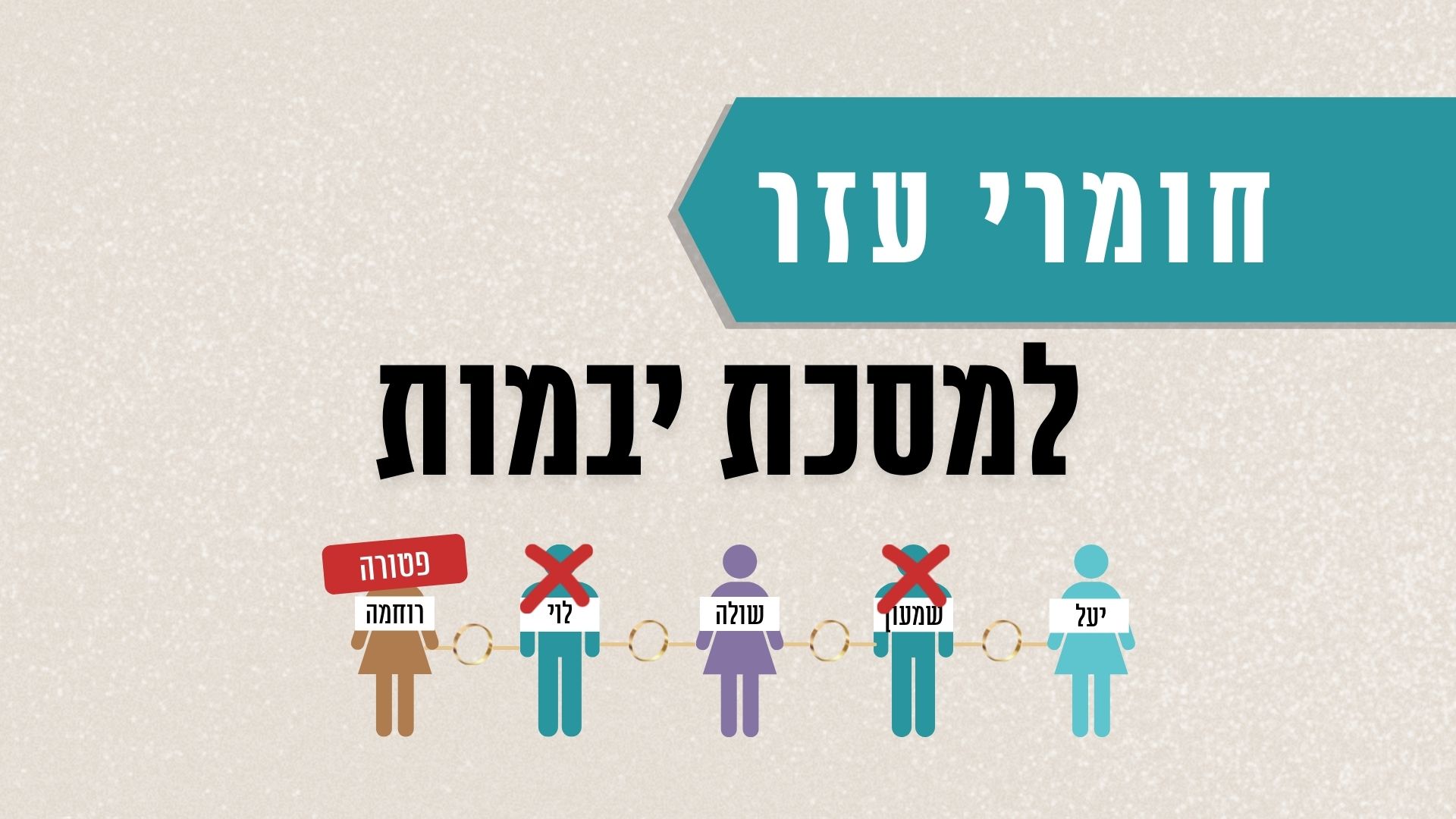
מַתְנִי׳ הָאִשָּׁה שֶׁנִּתְעָרֵב וְלָדָהּ בִּוְלַד כַּלָּתָהּ, הִגְדִּילוּ הַתַּעֲרוֹבוֹת וְנָשְׂאוּ נָשִׁים, וּמֵתוּ — בְּנֵי הַכַּלָּה חוֹלְצִין וְלֹא מְיַיבְּמִין, שֶׁהוּא סָפֵק אֵשֶׁת אָחִיו, סָפֵק אֵשֶׁת אֲחִי אָבִיו.

MISHNA: With regard to a woman whose offspring was mixed with the offspring of her daughter-in-law, and their lineage was consequently indeterminate, and the mixed sons matured and married women, and subsequently they died, the certain sons of the daughter-in-law perform ḥalitza with the wives, but not levirate marriage, as with regard to each wife it is uncertain whether she is his brother’s wife, and therefore his yevama, and uncertain whether she is his father’s brother’s wife, who is forbidden to him.

בְּנֵי הַזְּקֵנָה אוֹ חוֹלְצִין אוֹ מְיַיבְּמִין, שֶׁ[הוּא] סָפֵק אֵשֶׁת אָחִיו וְאֵשֶׁת בֶּן אָחִיו.

However, the certain sons of the elder woman, i.e., the mother-in-law, perform either ḥalitza or levirate marriage, as with regard to each wife it is uncertain whether she is his brother’s wife, in which case levirate marriage is valid, or his brother’s son’s wife, in which case she is permitted to him, after having performed ḥalitza with a son of the daughter-in-law.

מֵתוּ הַכְּשֵׁרִים, הַתַּעֲרוֹבוֹת לִבְנֵי הַזְּקֵנָה חוֹלְצִין וְלֹא מְיַיבְּמִין, שֶׁהוּא סָפֵק אֵשֶׁת אָחִיו וְאֵשֶׁת אֲחִי אָבִיו. לִבְנֵי הַכַּלָּה — אֶחָד חוֹלֵץ, וְאֶחָד מְיַיבֵּם.

If the sons of certain, unflawed lineage were the ones who died, then the mixed sons perform ḥalitza with the widows of the elder woman’s sons but not levirate marriage, as it is uncertain whether she is his brother’s wife or his father’s brother’s wife. With the widows of the certain sons of the daughter-in-law, one of the mixed sons performs ḥalitza, in case she is his brother’s wife. And the other one performs levirate marriage, as even if she is his brother’s son’s wife, she is permitted to him.

כֹּהֶנֶת שֶׁנִּתְעָרֵב וְלָדָהּ בִּוְלַד שִׁפְחָתָהּ — הֲרֵי אֵלּוּ אוֹכְלִים בִּתְרוּמָה — וְחוֹלְקִין חֵלֶק אֶחָד בַּגּוֹרֶן,

In the case of a priestess whose offspring was mixed with her maidservant’s offspring, they may partake of teruma, as both a priest and the slave of a priest partake of teruma. And they receive one share of teruma in the granary.

וְאֵינָן מִטַּמְּאִין לְמֵתִים. וְאֵינָן נוֹשְׂאִין נָשִׁים, בֵּין כְּשֵׁרוֹת בֵּין פְּסוּלוֹת. הִגְדִּילוּ הַתַּעֲרוֹבוֹת וְשִׁחְרְרוּ זֶה אֶת זֶה — נוֹשְׂאִין נָשִׁים רְאוּיוֹת לַכְּהוּנָּה.

And they may not become ritually impure with impurity imparted by a corpse, as each of them might be a priest. And they may not marry women, whether unflawed women, who may not marry a slave, or women unfit to marry into the priesthood, as with regard to each of them it is uncertain whether he is a priest or a slave. If the mixed sons matured and freed each other, they may marry women fit to marry into the priesthood, as a freed slave may marry such women. However, neither may marry a woman unfit for the priesthood, in case he is a priest.

וְאֵינָן מְטַמְּאִין לְמֵתִים, וְאִם נִטְמְאוּ — אֵינָן סוֹפְגִין הָאַרְבָּעִים. וְאֵינָן אוֹכְלִין בִּתְרוּמָה, וְאִם אָכְלוּ — אֵינָן מְשַׁלְּמִין קֶרֶן וָחוֹמֶשׁ. וְאֵינָן חוֹלְקִין עַל הַגּוֹרֶן. וּמוֹכְרִין אֶת הַתְּרוּמָה, וְהַדָּמִים שֶׁלָּהֶן.

And they may not become ritually impure with impurity imparted by a corpse, since they are uncertain priests. However, if they became impure, they do not receive the forty lashes, as each of them might not be priest. And they may not partake of teruma, as one of them is not a priest. However, if they ate teruma unwittingly they do not pay the principal and the additional fifth, as each of them might be a priest. And they do not receive a share of teruma in the granary, as neither can prove that he is a priest. However, they may sell the teruma that they remove from their own produce, and although they may not eat it, the money is theirs. Since it cannot be proven with regard to either of them that he is not a priest, teruma cannot be appropriated from them.

וְאֵינָן חוֹלְקִין בְּקׇדְשֵׁי הַמִּקְדָּשׁ, וְאֵין נוֹתְנִים לָהֶם קָדָשִׁים. וְאֵין מוֹצִיאִין שֶׁלָּהֶם מִידֵיהֶם.

And they do not receive a share of the consecrated offerings of the Temple, as each of them might not be a priest. And one may not give them consecrated offerings to sacrifice for the same reason. However, the hides of their own offerings may not be appropriated from their possession, as it cannot be proven with regard to either of them that he is not a priest.

וּפְטוּרִין מִן הַזְּרוֹעַ וּמִן הַלְּחָיַיִם וּמִן הַקֵּיבָה, וּבְכוֹרוֹ יְהֵא רוֹעֶה עַד שֶׁיִּסְתָּאֵב. וְנוֹתְנִין עָלָיו חוּמְרֵי כֹהֲנִים וְחוּמְרֵי יִשְׂרְאֵלִים.

And they are exempt from giving a priest the foreleg, and from giving him the jaw, and from giving him the maw of their non-consecrated kosher animals. And with regard to either of them, the firstling of his kosher animal should graze until it becomes unfit to be sacrificed, i.e., until it gets a blemish. It is against his interest to sacrifice the animal before it gets a blemish, thereby letting it be eaten by the priests. Once it gets a blemish, it cannot be appropriated from him. Since he is possibly a priest, he may claim that the animal is the property of a priest. The animal then becomes his private property, and he may eat it if he wishes. And in general, we place upon him both the stringencies of priests and the stringencies of Israelites.

גְּמָ׳ מֵתוּ הַכְּשֵׁרִים וְכוּ׳. אֶלָּא הָנָךְ, מִשּׁוּם דְּאִיעָרוּב לְהוּ הָווּ לְהוּ פְּסוּלִין? אָמַר רַב פָּפָּא, אֵימָא: וּמֵתוּ הַוַּדָּאִין.

GEMARA: It is stated in the mishna that if the sons of certain, unflawed lineage were the ones who died, the mixed sons perform ḥalitza with the widows of the elder woman’s sons, but not levirate marriage. The Gemara asks: Does this indicate that because these sons were mixed up they are rendered unfit? The fact that their lineage is unclear should not render them unfit. Rava Pappa said: Say that the correct wording is: And if the certain sons were the ones who died.

לִבְנֵי הַכַּלָּה אֶחָד חוֹלֵץ וְכוּ׳. דַּוְקָא מִיחְלָץ וַהֲדַר יַבּוֹמֵי, אֲבָל יַבּוֹמֵי בְּרֵישָׁא — לָא, דְּקָפָגַע בִּיבָמָה לַשּׁוּק.

It is stated in the mishna that with the widows of the certain sons of the daughter-in-law, one of the mixed sons performs ḥalitza and the other one performs levirate marriage. The Gemara comments that ḥalitza is specifically performed first, and afterward levirate marriage. However, levirate marriage is not performed first, because if she is not his own yevama but rather his brother’s daughter-in-law, doing so breaches the prohibition against a yevama engaging in intercourse with a member of the public.

כֹּהֶנֶת שֶׁנִּתְעָרֵב וְכוּ׳. חֵלֶק אֶחָד פְּשִׁיטָא! אֵימָא חֵלֶק כְּאֶחָד.

§ It is stated in the mishna that in the case of a priestess whose offspring was mixed with her maidservant’s offspring, they receive one share of teruma in the granary. The Gemara asks: Isn’t it obvious that they receive one share and no more? Rather, say that they receive a share as one, i.e., they receive a share at the granary only if they come together.

תְּנַן כְּמַאן דְּאָמַר אֵין חוֹלְקִין תְּרוּמָה לְעֶבֶד אֶלָּא אִם כֵּן רַבּוֹ עִמּוֹ. דְּתַנְיָא: אֵין חוֹלְקִין תְּרוּמָה לְעֶבֶד אֶלָּא אִם כֵּן רַבּוֹ עִמּוֹ, דִּבְרֵי רַבִּי יְהוּדָה. רַבִּי יוֹסֵי אוֹמֵר: יָכוֹל שֶׁיֹּאמַר, אִם כֹּהֵן אֲנִי — תְּנוּ לִי בִּשְׁבִיל עַצְמִי, וְאִם עֶבֶד כֹּהֵן אֲנִי — תְּנוּ לִי בִּשְׁבִיל רַבִּי.

The Gemara comments: According to this modification, we have learned in the mishna a ruling that is in accordance with the one who said that one may distribute teruma to a slave only if his master is with him, as it is taught in a baraita: One may distribute teruma to the slave of a priest who is possibly a priest himself only if his master is with him; this is the statement of Rabbi Yehuda. Rabbi Yosei says that teruma is distributed to him alone, even without the accompaniment of his master, as he can say: If I am a priest, give me teruma due to my own priesthood, and if I am the slave of a priest, give me due to my master.

בִּמְקוֹמוֹ שֶׁל רַבִּי יְהוּדָה הָיוּ מַעֲלִין מִתְּרוּמָה לְיוּחֲסִין. בִּמְקוֹמוֹ שֶׁל רַבִּי יוֹסֵי לֹא הָיוּ מַעֲלִין מִתְּרוּמָה לְיוּחֲסִין.

The Gemara explains the background behind this dispute: In Rabbi Yehuda’s place, they would elevate a person to the presumptive status of priesthood for the purpose of lineage on the basis of his having received teruma. If they saw a person receive teruma, they would assume that he is a priest and testify to that effect. Therefore, teruma was not distributed to someone who might be a slave, unless he was accompanied by his master, lest the slave be assumed to be a priest himself. Conversely, in Rabbi Yosei’s place they would not elevate a person to the presumptive status of priestly lineage on the basis of his having received teruma. Therefore, he was allowed to receive teruma independently.

תַּנְיָא, אָמַר רַבִּי אֶלְעָזָר בַּר צָדוֹק: מִיָּמַי לֹא הֵעַדְתִּי אֶלָּא עֵדוּת אֶחָד, וְהֶעֱלוּ עֶבֶד לַכְּהוּנָּה עַל פִּי.

It is taught in a baraita that Rabbi Elazar bar Tzadok said: In all my days I never had the opportunity to testify in court, besides one testimony, and they promoted a slave to the presumptive status of priesthood on the basis of my word. Although they presumably examined the matter carefully, an error occurred.

הֶעֱלוּ סָלְקָא דַּעְתָּךְ?! הַשְׁתָּא בְּהֶמְתָּן שֶׁל צַדִּיקִים אֵין הַקָּדוֹשׁ בָּרוּךְ הוּא מֵבִיא תַּקָּלָה עַל יָדָן, צַדִּיקִים עַצְמָן לֹא כׇּל שֶׁכֵּן!

The Gemara asks: Can it enter your mind that they actually promoted him? Now consider: If, even through the animals of the righteous, the Holy One, Blessed be He, does not bring about a stumbling block, then through the righteous themselves, all the more so is it not so that He does not bring about stumbling blocks?

אֶלָּא אֵימָא: בִּקְּשׁוּ לְהַעֲלוֹת עֶבֶד לַכְּהוּנָּה עַל פִּי. חֲזָא בְּאַתְרֵיהּ דְּרַבִּי יוֹסֵי — וַאֲזַל וְאַסְהֵיד בְּאַתְרֵיהּ דְּרַבִּי יְהוּדָה.

Rather, say that this is what Rabbi Elazar bar Tzadok meant: They sought to promote a slave to the presumptive status of priesthood on the basis of my word. How did this happen? Rabbi Elazar bar Tzadok saw a man receiving teruma in Rabbi Yosei’s locale and went and testified in Rabbi Yehuda’s locale about what he saw, not realizing that this testimony would be sufficient grounds to assume that the man is a priest. Since teruma is distributed there only to priests, the slave was almost promoted to the presumptive status of priesthood erroneously.

תָּנוּ רַבָּנַן: עֲשָׂרָה אֵין חוֹלְקִין לָהֶם תְּרוּמָה בְּבֵית הַגֳּרָנוֹת, וְאֵלּוּ הֵן: חֵרֵשׁ, שׁוֹטֶה, וְקָטָן, טוּמְטוּם, וְאַנְדְּרוֹגִינוֹס, וְהָעֶבֶד, וְהָאִשָּׁה, וְהֶעָרֵל, וְהַטָּמֵא, וְנוֹשֵׂא אִשָּׁה שֶׁאֵינָהּ הוֹגֶנֶת לוֹ. וְכוּלָּן מְשַׁגְּרִין לָהֶם לְבָתֵּיהֶם, חוּץ מִטָּמֵא וְנוֹשֵׂא אִשָּׁה שֶׁאֵינָהּ הוֹגֶנֶת לוֹ.

§ The Sages taught: There are ten types of priests to whom one may not distribute teruma in the granary, and they are: A deaf-mute, an imbecile, and a minor, a person whose sexual organs are concealed [tumtum], and a hermaphrodite, and a slave, and a woman, and an uncircumcised man, and a ritually impure man, and one who marries a woman who is unfit for him, i.e., who is unfit to marry a priest. And with regard to all of them, one may send teruma to them, to their homes, with the exception of a ritually impure man and one who marries a woman who is unfit for him.

בִּשְׁלָמָא חֵרֵשׁ שׁוֹטֶה וְקָטָן — לָאו בְּנֵי דֵּיעָה נִינְהוּ. טוּמְטוּם וְאַנְדְּרוֹגִינוֹס נָמֵי —

The Gemara asks: Granted, teruma may not be distributed to a deaf-mute, an imbecile, and a minor, as they are not competent, and it is unbecoming to give them teruma in public. It is also inappropriate to distribute teruma to a tumtum and a hermaphrodite,

העמקה

רוצה להבין מה באמת קורה מתחת לפני השטח של הסוגיה?
שיעורים, פודקאסטים והרחבות של מיטב המורות שלנו יפתחו לך עוד זוויות וכיווני חשיבה.

לשיעורי עוד על הדף באנגלית, לחצי כאן

חדשה בלימוד הגמרא?

זה הדף הראשון שלך? איזו התרגשות עצומה! יש לנו בדיוק את התכנים והכלים שיעזרו לך לעשות את הצעדים הראשונים ללמידה בקצב וברמה שלך, כך תוכלי להרגיש בנוח גם בתוך הסוגיות המורכבות ומאתגרות.

פסיפס הלומדות שלנו

גלי את קהילת הלומדות שלנו, מגוון נשים, רקעים וסיפורים. כולן חלק מתנועה ומסע מרגש ועוצמתי.

לצערי גדלתי בדור שבו לימוד גמרא לנשים לא היה דבר שבשגרה ושנים שאני חולמת להשלים את הפער הזה.. עד שלפני מספר שבועות, כמעט במקרה, נתקלתי במודעת פרסומת הקוראת להצטרף ללימוד מסכת תענית. כשקראתי את המודעה הרגשתי שהיא כאילו נכתבה עבורי – "תמיד חלמת ללמוד גמרא ולא ידעת איך להתחיל”, "בואי להתנסות במסכת קצרה וקלה” (רק היה חסר שהמודעה תיפתח במילים "מיכי שלום”..). קפצתי למים ו- ב”ה אני בדרך להגשמת החלום:)

Micah Kadosh
מיכי קדוש

מורשת, ישראל

התחלתי לפני 8 שנים במדרשה. לאחרונה סיימתי מסכת תענית בלמידה עצמית ועכשיו לקראת סיום מסכת מגילה.

Daniela Baruchim
דניאלה ברוכים

רעננה, ישראל

התחלתי ללמוד גמרא בבית הספר בגיל צעיר והתאהבתי. המשכתי בכך כל חיי ואף היייתי מורה לגמרא בבית הספר שקד בשדה אליהו (בית הספר בו למדתי בילדותי)בתחילת מחזור דף יומי הנוכחי החלטתי להצטרף ובע”ה מקווה להתמיד ולהמשיך. אני אוהבת את המפגש עם הדף את "דרישות השלום ” שמקבלת מקשרים עם דפים אחרים שלמדתי את הסנכרון שמתחולל בין התכנים.

Ariela Bigman
אריאלה ביגמן

מעלה גלבוע, ישראל

התחלתי ללמוד לפני כשנתיים בשאיפה לסיים לראשונה מסכת אחת במהלך חופשת הלידה.
אחרי מסכת אחת כבר היה קשה להפסיק…

Noa Gallant
נעה גלנט

ירוחם, ישראל

כבר סיפרתי בסיום של מועד קטן.
הלימוד מאוד משפיעה על היום שלי כי אני לומדת עם רבנית מישל על הבוקר בזום. זה נותן טון לכל היום – בסיס למחשבות שלי .זה זכות גדול להתחיל את היום בלימוד ובתפילה. תודה רבה !

שרה-ברלוביץ
שרה ברלוביץ

ירושלים, ישראל

My explorations into Gemara started a few days into the present cycle. I binged learnt and become addicted. I’m fascinated by the rich "tapestry” of intertwined themes, connections between Masechtot, conversations between generations of Rabbanim and learners past and present all over the world. My life has acquired a golden thread, linking generations with our amazing heritage.
Thank you.

Susan Kasdan
סוזן כשדן

חשמונאים, Israel

"התחלתי ללמוד דף יומי במחזור הזה, בח’ בטבת תש””ף. לקחתי על עצמי את הלימוד כדי ליצור תחום של התמדה יומיומית בחיים, והצטרפתי לקבוצת הלומדים בבית הכנסת בכפר אדומים. המשפחה והסביבה מתפעלים ותומכים.
בלימוד שלי אני מתפעלת בעיקר מכך שכדי ללמוד גמרא יש לדעת ולהכיר את כל הגמרא. זו מעין צבת בצבת עשויה שהיא עצומה בהיקפה.”

Sarah Fox
שרה פוּקס

כפר אדומים, ישראל

אחרי שראיתי את הסיום הנשי של הדף היומי בבנייני האומה זה ריגש אותי ועורר בי את הרצון להצטרף. לא למדתי גמרא קודם לכן בכלל, אז הכל היה לי חדש, ולכן אני לומדת בעיקר מהשיעורים פה בהדרן, בשוטנשטיין או בחוברות ושיננתם.

Rebecca Schloss
רבקה שלוס

בית שמש, ישראל

. לא תמיד נהניתי מלימוד גמרא כילדה.,בל כהתבגרתי התחלתי לאהוב את זה שוב. התחלתי ללמוד מסכת סוטה בדף היומי לפני כחמש עשרה שנה ואז הפסקתי.הגעתי לסיום הגדול של הדרן לפני שנתיים וזה נתן לי השראה. והתחלתי ללמוד למשך כמה ימים ואז היתה לי פריצת דיסק והפסקתי…עד אלול השנה. אז התחלתי עם מסכת ביצה וב”ה אני מצליחה לעמוד בקצב. המשפחה מאוד תומכת בי ויש כמה שגם לומדים את זה במקביל. אני אוהבת שיש עוגן כל יום.

Rebecca Darshan
רבקה דרשן

בית שמש, ישראל

אני לומדת גמרא כעשור במסגרות שונות, ואת הדף היומי התחלתי כשחברה הציעה שאצטרף אליה לסיום בבנייני האומה. מאז אני לומדת עם פודקסט הדרן, משתדלת באופן יומי אך אם לא מספיקה, מדביקה פערים עד ערב שבת. בסבב הזה הלימוד הוא "ממעוף הציפור”, מקשיבה במהירות מוגברת תוך כדי פעילויות כמו בישול או נהיגה, וכך רוכשת היכרות עם הסוגיות ואופן ניתוחם על ידי חז”ל. בע”ה בסבב הבא, ואולי לפני, אצלול לתוכו באופן מעמיק יותר.

Yael Bir
יעל ביר

רמת גן, ישראל

A life-changing journey started with a Chanukah family tiyul to Zippori, home of the Sanhedrin 2 years ago and continued with the Syum in Binanei Hauma where I was awed by the energy of 3000 women dedicated to learning daf Yomi. Opening my morning daily with a fresh daf, I am excited with the new insights I find enriching my life and opening new and deeper horizons for me.

Becky Goldstein
בקי גולדשטיין

Elazar gush etzion, Israel

לצערי גדלתי בדור שבו לימוד גמרא לנשים לא היה דבר שבשגרה ושנים שאני חולמת להשלים את הפער הזה.. עד שלפני מספר שבועות, כמעט במקרה, נתקלתי במודעת פרסומת הקוראת להצטרף ללימוד מסכת תענית. כשקראתי את המודעה הרגשתי שהיא כאילו נכתבה עבורי – "תמיד חלמת ללמוד גמרא ולא ידעת איך להתחיל”, "בואי להתנסות במסכת קצרה וקלה” (רק היה חסר שהמודעה תיפתח במילים "מיכי שלום”..). קפצתי למים ו- ב”ה אני בדרך להגשמת החלום:)

Micah Kadosh
מיכי קדוש

מורשת, ישראל

בתחילת הסבב הנוכחי הצטברו אצלי תחושות שאני לא מבינה מספיק מהי ההלכה אותה אני מקיימת בכל יום. כמו כן, כאמא לבנות רציתי לתת להן מודל נשי של לימוד תורה
שתי הסיבות האלו הובילו אותי להתחיל ללמוד. נתקלתי בתגובות מפרגנות וסקרניות איך אישה לומדת גמרא..
כמו שרואים בתמונה אני ממשיכה ללמוד גם היום ואפילו במחלקת יולדות אחרי לידת ביתי השלישית.

Noa Shiloh
נועה שילה

רבבה, ישראל

התחלתי ללמוד דף יומי באמצע תקופת הקורונה, שאבא שלי סיפר לי על קבוצה של בנות שתיפתח ביישוב שלנו ותלמד דף יומי כל יום. הרבה זמן רציתי להצטרף לזה וזאת הייתה ההזדמנות בשבילי. הצטרפתי במסכת שקלים ובאמצע הייתה הפסקה קצרה. כיום אני כבר לומדת באולפנה ולומדת דף יומי לבד מתוך גמרא של טיינזלץ.

Saturdays in Raleigh
שבות בראלי

עתניאל, ישראל

"התחלתי ללמוד דף יומי במחזור הזה, בח’ בטבת תש””ף. לקחתי על עצמי את הלימוד כדי ליצור תחום של התמדה יומיומית בחיים, והצטרפתי לקבוצת הלומדים בבית הכנסת בכפר אדומים. המשפחה והסביבה מתפעלים ותומכים.
בלימוד שלי אני מתפעלת בעיקר מכך שכדי ללמוד גמרא יש לדעת ולהכיר את כל הגמרא. זו מעין צבת בצבת עשויה שהיא עצומה בהיקפה.”

Sarah Fox
שרה פוּקס

כפר אדומים, ישראל

התחלתי ללמוד דף יומי בתחילת מסכת ברכות, עוד לא ידעתי כלום. נחשפתי לסיום הש״ס, ובעצם להתחלה מחדש בתקשורת, הפתיע אותי לטובה שהיה מקום לעיסוק בתורה.
את המסכתות הראשונות למדתי, אבל לא סיימתי (חוץ מעירובין איכשהו). השנה כשהגעתי למדרשה, נכנסתי ללופ, ואני מצליחה להיות חלק, סיימתי עם החברותא שלי את כל המסכתות הקצרות, גם כשהיינו חולות קורונה ובבידודים, למדנו לבד, העיקר לא לצבור פער, ומחכות ליבמות 🙂

Eden Yeshuron
עדן ישורון

מזכרת בתיה, ישראל

"
גם אני התחלתי בסבב הנוכחי וב””ה הצלחתי לסיים את רוב המסכתות . בזכות הרבנית מישל משתדלת לפתוח את היום בשיעור הזום בשעה 6:20 .הלימוד הפך להיות חלק משמעותי בחיי ויש ימים בהם אני מצליחה לחזור על הדף עם מלמדים נוספים ששיעוריהם נמצאים במרשתת. שמחה להיות חלק מקהילת לומדות ברחבי העולם. ובמיוחד לשמש דוגמה לנכדותיי שאי””ה יגדלו לדור שלימוד תורה לנשים יהיה משהו שבשגרה. "

Ronit Shavit
רונית שביט

נתניה, ישראל

A friend in the SF Bay Area said in Dec 2019 that she might start listening on her morning drive to work. I mentioned to my husband and we decided to try the Daf when it began in Jan 2020 as part of our preparing to make Aliyah in the summer.

Hana Piotrkovsky
חנה פיוטרקובסקי

ירושלים, Israel

My explorations into Gemara started a few days into the present cycle. I binged learnt and become addicted. I’m fascinated by the rich "tapestry” of intertwined themes, connections between Masechtot, conversations between generations of Rabbanim and learners past and present all over the world. My life has acquired a golden thread, linking generations with our amazing heritage.
Thank you.

Susan Kasdan
סוזן כשדן

חשמונאים, Israel

כבר סיפרתי בסיום של מועד קטן.
הלימוד מאוד משפיעה על היום שלי כי אני לומדת עם רבנית מישל על הבוקר בזום. זה נותן טון לכל היום – בסיס למחשבות שלי .זה זכות גדול להתחיל את היום בלימוד ובתפילה. תודה רבה !

שרה-ברלוביץ
שרה ברלוביץ

ירושלים, ישראל

יבמות צט

תָּנוּ רַבָּנַן: יֵשׁ חוֹלֵץ לְאִמּוֹ מִסָּפֵק, לַאֲחוֹתוֹ מִסָּפֵק, לְבִתּוֹ מִסָּפֵק.

§ The Sages taught: There is a case in which one performs ḥalitza with his mother due to uncertainty, or with his sister due to uncertainty, or with his daughter due to uncertainty. This is the halakha despite the fact that a levirate bond cannot be created between these relatives.

כֵּיצַד? אִמּוֹ וְאִשָּׁה אַחֶרֶת, וְלָהֶן שְׁנֵי זְכָרִים, וְחָזְרוּ וְיָלְדוּ שְׁנֵי זְכָרִים בְּמַחֲבֵא, וּבָא בְּנָהּ שֶׁל זוֹ וְנָשָׂא אִמּוֹ שֶׁל זֶה, וּבְנָהּ שֶׁל זוֹ נָשָׂא אִמּוֹ שֶׁל זֶה, וּמֵתוּ בְּלֹא בָּנִים — זֶה חוֹלֵץ לִשְׁתֵּיהֶן, וְזֶה חוֹלֵץ לִשְׁתֵּיהֶן. נִמְצָא כׇּל אֶחָד וְאֶחָד חוֹלֵץ לְאִמּוֹ מִסָּפֵק.

How so? If his mother and another woman had two sons, one each, and they then gave birth to two other sons in hiding, whose identities were confused, such that their lineage was consequently indeterminate, and the known son of this woman came and married the mother of that other known son, and the known son of that woman married this son’s mother, and they died without children, the halakha is that this one of the mixed sons performs ḥalitza with both women, as it is unknown which is his mother and which his yevama, and that one likewise performs ḥalitza with both women. It is therefore found that each one of them performs ḥalitza with his mother, due to the uncertainty.

לַאֲחוֹתוֹ מִסָּפֵק כֵּיצַד? אִמּוֹ וְאִשָּׁה אַחֶרֶת שֶׁיָּלְדוּ שְׁתֵּי נְקֵבוֹת בְּמַחֲבֵא, וּבָאוּ אֲחֵיהֶן שֶׁלֹּא מֵאוֹתָהּ הָאֵם וּנְשָׂאוּם, וּמֵתוּ בְּלֹא בָּנִים — חוֹלֵץ לִשְׁתֵּיהֶן, נִמְצָא חוֹלֵץ לַאֲחוֹתוֹ מִסָּפֵק.

There is a case where a man performs ḥalitza with his sister due to uncertainty. How so? If his mother and another woman gave birth to two females in hiding, and they were mixed, and the paternal, but not maternal, half brothers of this man and of the son of the other woman came and married them, and those half brothers died without children, the halakha is that the living half brothers perform ḥalitza with both wives, each with his half sister-in-law. It is therefore found that one performs ḥalitza with his half sister due to uncertainty.

לְבִתּוֹ מִסָּפֵק כֵּיצַד? אִשְׁתּוֹ וְאִשָּׁה אַחֶרֶת שֶׁיָּלְדוּ שְׁתֵּי נְקֵבוֹת בְּמַחֲבֵא, וּבָאוּ אֲחֵיהֶן וּנְשָׂאוּם, וּמֵתוּ בְּלֹא בָּנִים — זֶה חוֹלֵץ לְבִתּוֹ מִסָּפֵק, וְזֶה חוֹלֵץ לְבִתּוֹ מִסָּפֵק.

There is a case where one performs ḥalitza with his daughter due to uncertainty. How so? If his wife and another woman gave birth to two females in hiding, and they were mixed, and his brothers and the brothers of the other woman’s husband came and married them, and they died without children, then this one performs ḥalitza with his daughter due to uncertainty, and that one also performs ḥalitza with his daughter due to uncertainty.

תַּנְיָא, הָיָה רַבִּי מֵאִיר אוֹמֵר: אִישׁ וְאִשָּׁה פְּעָמִים שֶׁמּוֹלִידִין חָמֵשׁ אוּמּוֹת.

§ Following the previous baraita, the Gemara cites two additional baraitot that discuss unusual family situations. It is taught in a baraita that Rabbi Meir would say: A man and a woman can sometimes bear children of five nations, i.e., of five separate categories of lineage.

כֵּיצַד? יִשְׂרָאֵל שֶׁלָּקַח עֶבֶד וְשִׁפְחָה מִן הַשּׁוּק, וְלָהֶן שְׁנֵי בָנִים, וְנִתְגַּיֵּיר אֶחָד מֵהֶן — נִמְצָא אֶחָד גֵּר וְאֶחָד גּוֹי. הִטְבִּילָן לְשֵׁם עַבְדוּת וְנִזְקְקוּ זֶה לָזֶה, הֲרֵי כָּאן גֵּר וְגוֹי וְעֶבֶד. שִׁחְרֵר אֶת הַשִּׁפְחָה וּבָא עָלֶיהָ הָעֶבֶד, הֲרֵי כָּאן גֵּר וְגוֹי וְעֶבֶד וּמַמְזֵר. שִׁחְרֵר שְׁנֵיהֶם, וְהִשִּׂיאָן זֶה לָזֶה — הֲרֵי כָּאן גֵּר וְגוֹי וְעֶבֶד וּמַמְזֵר וְיִשְׂרָאֵל.

How so? If a Jew bought a slave and a maidservant from the market, and the slave and maidservant had two children at the time, and one of these children converted, it is found that one child is a convert and the other one is a gentile. If the master immersed the slave and maidservant for the sake of giving them the status of slaves, and they engaged in intercourse with each other and had a child, here there are three children in the family who are a convert, and a gentile, and a slave. If he freed the maidservant, which renders her a Jewess, and her husband the slave engaged in intercourse with her, and they had another child, here there are a convert, a gentile, a slave, and a mamzer. The offspring of a slave and a Jewess, according to Rabbi Meir, have the same status as a son born from an incestuous or adulterous relationship. If the master subsequently freed both the maidservant and the slave and married them to each other and they had another child, here there are a convert, a gentile, a slave, a mamzer, and a regular Jew.

מַאי קָא מַשְׁמַע לַן — גּוֹי וְעֶבֶד הַבָּא עַל בַּת יִשְׂרָאֵל הַוָּלָד מַמְזֵר.

The Gemara asks: What is the baraita teaching us? The Gemara answers: It is teaching us that if a gentile or a slave engaged in intercourse with a Jewish woman, their offspring is a mamzer.

תָּנוּ רַבָּנַן: יֵשׁ מוֹכֵר אֶת אָבִיו לְהַגְבּוֹת אִמּוֹ כְּתוּבָּתָהּ. כֵּיצַד? יִשְׂרָאֵל לָקַח עֶבֶד וְשִׁפְחָה מִן הַשּׁוּק וְלָהֶם בֵּן. וְשִׁחְרֵר אֶת הַשִּׁפְחָה וּנְשָׂאָהּ, וְעָמַד וְכָתַב כׇּל נְכָסָיו לִבְנָהּ, נִמְצָא זֶה מוֹכֵר אֶת אָבִיו לְהַגְבּוֹת לְאִמּוֹ כְּתוּבָּתָהּ.

The Sages taught: There is a case in which a man sells his father in order to collect his mother’s marriage contract for her. How so? A Jew bought a slave and a maidservant from the market, and they had a son, and the master freed the maidservant and married her, and he arose and wrote that all his property should go to her son, including her son’s father, the slave. It is found that this son, after receiving the master’s property, might sell his father to collect for his mother her marriage contract.

מַאי קָא מַשְׁמַע לַן? כּוּלַּהּ רַבִּי מֵאִיר הִיא, וְעַבְדָּא מִטַּלְטְלֵי, וּמִטַּלְטְלֵי מִשְׁתַּעְבְּדִי לִכְתוּבָה. וְאִיבָּעֵית אֵימָא: הָא קָמַשְׁמַע לַן עַבְדָּא כִּמְקַרְקַע דָּמֵי.

The Gemara asks: What is the baraita teaching us? The Gemara answers: The entire baraita is the statement of Rabbi Meir, and it is teaching us that although the legal status of a slave is like that of movable property, and there are those who hold that movable property cannot be mortgaged, Rabbi Meir holds that movable property is mortgaged for a marriage contract. This is also Rabbi Meir’s ruling elsewhere. Therefore, one might be obligated to sell his slave to pay a marriage contract. And if you wish, say that it is teaching us this: The legal status of a slave is like that of real estate, and therefore, according to all opinions one is obligated to sell his slave to pay a marriage contract.

מַתְנִי׳ הָאִשָּׁה שֶׁנִּתְעָרֵב וְלָדָהּ בִּוְלַד כַּלָּתָהּ, הִגְדִּילוּ הַתַּעֲרוֹבוֹת וְנָשְׂאוּ נָשִׁים, וּמֵתוּ — בְּנֵי הַכַּלָּה חוֹלְצִין וְלֹא מְיַיבְּמִין, שֶׁהוּא סָפֵק אֵשֶׁת אָחִיו, סָפֵק אֵשֶׁת אֲחִי אָבִיו.

MISHNA: With regard to a woman whose offspring was mixed with the offspring of her daughter-in-law, and their lineage was consequently indeterminate, and the mixed sons matured and married women, and subsequently they died, the certain sons of the daughter-in-law perform ḥalitza with the wives, but not levirate marriage, as with regard to each wife it is uncertain whether she is his brother’s wife, and therefore his yevama, and uncertain whether she is his father’s brother’s wife, who is forbidden to him.

בְּנֵי הַזְּקֵנָה אוֹ חוֹלְצִין אוֹ מְיַיבְּמִין, שֶׁ[הוּא] סָפֵק אֵשֶׁת אָחִיו וְאֵשֶׁת בֶּן אָחִיו.

However, the certain sons of the elder woman, i.e., the mother-in-law, perform either ḥalitza or levirate marriage, as with regard to each wife it is uncertain whether she is his brother’s wife, in which case levirate marriage is valid, or his brother’s son’s wife, in which case she is permitted to him, after having performed ḥalitza with a son of the daughter-in-law.

מֵתוּ הַכְּשֵׁרִים, הַתַּעֲרוֹבוֹת לִבְנֵי הַזְּקֵנָה חוֹלְצִין וְלֹא מְיַיבְּמִין, שֶׁהוּא סָפֵק אֵשֶׁת אָחִיו וְאֵשֶׁת אֲחִי אָבִיו. לִבְנֵי הַכַּלָּה — אֶחָד חוֹלֵץ, וְאֶחָד מְיַיבֵּם.

If the sons of certain, unflawed lineage were the ones who died, then the mixed sons perform ḥalitza with the widows of the elder woman’s sons but not levirate marriage, as it is uncertain whether she is his brother’s wife or his father’s brother’s wife. With the widows of the certain sons of the daughter-in-law, one of the mixed sons performs ḥalitza, in case she is his brother’s wife. And the other one performs levirate marriage, as even if she is his brother’s son’s wife, she is permitted to him.

כֹּהֶנֶת שֶׁנִּתְעָרֵב וְלָדָהּ בִּוְלַד שִׁפְחָתָהּ — הֲרֵי אֵלּוּ אוֹכְלִים בִּתְרוּמָה — וְחוֹלְקִין חֵלֶק אֶחָד בַּגּוֹרֶן,

In the case of a priestess whose offspring was mixed with her maidservant’s offspring, they may partake of teruma, as both a priest and the slave of a priest partake of teruma. And they receive one share of teruma in the granary.

וְאֵינָן מִטַּמְּאִין לְמֵתִים. וְאֵינָן נוֹשְׂאִין נָשִׁים, בֵּין כְּשֵׁרוֹת בֵּין פְּסוּלוֹת. הִגְדִּילוּ הַתַּעֲרוֹבוֹת וְשִׁחְרְרוּ זֶה אֶת זֶה — נוֹשְׂאִין נָשִׁים רְאוּיוֹת לַכְּהוּנָּה.

And they may not become ritually impure with impurity imparted by a corpse, as each of them might be a priest. And they may not marry women, whether unflawed women, who may not marry a slave, or women unfit to marry into the priesthood, as with regard to each of them it is uncertain whether he is a priest or a slave. If the mixed sons matured and freed each other, they may marry women fit to marry into the priesthood, as a freed slave may marry such women. However, neither may marry a woman unfit for the priesthood, in case he is a priest.

וְאֵינָן מְטַמְּאִין לְמֵתִים, וְאִם נִטְמְאוּ — אֵינָן סוֹפְגִין הָאַרְבָּעִים. וְאֵינָן אוֹכְלִין בִּתְרוּמָה, וְאִם אָכְלוּ — אֵינָן מְשַׁלְּמִין קֶרֶן וָחוֹמֶשׁ. וְאֵינָן חוֹלְקִין עַל הַגּוֹרֶן. וּמוֹכְרִין אֶת הַתְּרוּמָה, וְהַדָּמִים שֶׁלָּהֶן.

And they may not become ritually impure with impurity imparted by a corpse, since they are uncertain priests. However, if they became impure, they do not receive the forty lashes, as each of them might not be priest. And they may not partake of teruma, as one of them is not a priest. However, if they ate teruma unwittingly they do not pay the principal and the additional fifth, as each of them might be a priest. And they do not receive a share of teruma in the granary, as neither can prove that he is a priest. However, they may sell the teruma that they remove from their own produce, and although they may not eat it, the money is theirs. Since it cannot be proven with regard to either of them that he is not a priest, teruma cannot be appropriated from them.

וְאֵינָן חוֹלְקִין בְּקׇדְשֵׁי הַמִּקְדָּשׁ, וְאֵין נוֹתְנִים לָהֶם קָדָשִׁים. וְאֵין מוֹצִיאִין שֶׁלָּהֶם מִידֵיהֶם.

And they do not receive a share of the consecrated offerings of the Temple, as each of them might not be a priest. And one may not give them consecrated offerings to sacrifice for the same reason. However, the hides of their own offerings may not be appropriated from their possession, as it cannot be proven with regard to either of them that he is not a priest.

וּפְטוּרִין מִן הַזְּרוֹעַ וּמִן הַלְּחָיַיִם וּמִן הַקֵּיבָה, וּבְכוֹרוֹ יְהֵא רוֹעֶה עַד שֶׁיִּסְתָּאֵב. וְנוֹתְנִין עָלָיו חוּמְרֵי כֹהֲנִים וְחוּמְרֵי יִשְׂרְאֵלִים.

And they are exempt from giving a priest the foreleg, and from giving him the jaw, and from giving him the maw of their non-consecrated kosher animals. And with regard to either of them, the firstling of his kosher animal should graze until it becomes unfit to be sacrificed, i.e., until it gets a blemish. It is against his interest to sacrifice the animal before it gets a blemish, thereby letting it be eaten by the priests. Once it gets a blemish, it cannot be appropriated from him. Since he is possibly a priest, he may claim that the animal is the property of a priest. The animal then becomes his private property, and he may eat it if he wishes. And in general, we place upon him both the stringencies of priests and the stringencies of Israelites.

גְּמָ׳ מֵתוּ הַכְּשֵׁרִים וְכוּ׳. אֶלָּא הָנָךְ, מִשּׁוּם דְּאִיעָרוּב לְהוּ הָווּ לְהוּ פְּסוּלִין? אָמַר רַב פָּפָּא, אֵימָא: וּמֵתוּ הַוַּדָּאִין.

GEMARA: It is stated in the mishna that if the sons of certain, unflawed lineage were the ones who died, the mixed sons perform ḥalitza with the widows of the elder woman’s sons, but not levirate marriage. The Gemara asks: Does this indicate that because these sons were mixed up they are rendered unfit? The fact that their lineage is unclear should not render them unfit. Rava Pappa said: Say that the correct wording is: And if the certain sons were the ones who died.

לִבְנֵי הַכַּלָּה אֶחָד חוֹלֵץ וְכוּ׳. דַּוְקָא מִיחְלָץ וַהֲדַר יַבּוֹמֵי, אֲבָל יַבּוֹמֵי בְּרֵישָׁא — לָא, דְּקָפָגַע בִּיבָמָה לַשּׁוּק.

It is stated in the mishna that with the widows of the certain sons of the daughter-in-law, one of the mixed sons performs ḥalitza and the other one performs levirate marriage. The Gemara comments that ḥalitza is specifically performed first, and afterward levirate marriage. However, levirate marriage is not performed first, because if she is not his own yevama but rather his brother’s daughter-in-law, doing so breaches the prohibition against a yevama engaging in intercourse with a member of the public.

כֹּהֶנֶת שֶׁנִּתְעָרֵב וְכוּ׳. חֵלֶק אֶחָד פְּשִׁיטָא! אֵימָא חֵלֶק כְּאֶחָד.

§ It is stated in the mishna that in the case of a priestess whose offspring was mixed with her maidservant’s offspring, they receive one share of teruma in the granary. The Gemara asks: Isn’t it obvious that they receive one share and no more? Rather, say that they receive a share as one, i.e., they receive a share at the granary only if they come together.

תְּנַן כְּמַאן דְּאָמַר אֵין חוֹלְקִין תְּרוּמָה לְעֶבֶד אֶלָּא אִם כֵּן רַבּוֹ עִמּוֹ. דְּתַנְיָא: אֵין חוֹלְקִין תְּרוּמָה לְעֶבֶד אֶלָּא אִם כֵּן רַבּוֹ עִמּוֹ, דִּבְרֵי רַבִּי יְהוּדָה. רַבִּי יוֹסֵי אוֹמֵר: יָכוֹל שֶׁיֹּאמַר, אִם כֹּהֵן אֲנִי — תְּנוּ לִי בִּשְׁבִיל עַצְמִי, וְאִם עֶבֶד כֹּהֵן אֲנִי — תְּנוּ לִי בִּשְׁבִיל רַבִּי.

The Gemara comments: According to this modification, we have learned in the mishna a ruling that is in accordance with the one who said that one may distribute teruma to a slave only if his master is with him, as it is taught in a baraita: One may distribute teruma to the slave of a priest who is possibly a priest himself only if his master is with him; this is the statement of Rabbi Yehuda. Rabbi Yosei says that teruma is distributed to him alone, even without the accompaniment of his master, as he can say: If I am a priest, give me teruma due to my own priesthood, and if I am the slave of a priest, give me due to my master.

בִּמְקוֹמוֹ שֶׁל רַבִּי יְהוּדָה הָיוּ מַעֲלִין מִתְּרוּמָה לְיוּחֲסִין. בִּמְקוֹמוֹ שֶׁל רַבִּי יוֹסֵי לֹא הָיוּ מַעֲלִין מִתְּרוּמָה לְיוּחֲסִין.

The Gemara explains the background behind this dispute: In Rabbi Yehuda’s place, they would elevate a person to the presumptive status of priesthood for the purpose of lineage on the basis of his having received teruma. If they saw a person receive teruma, they would assume that he is a priest and testify to that effect. Therefore, teruma was not distributed to someone who might be a slave, unless he was accompanied by his master, lest the slave be assumed to be a priest himself. Conversely, in Rabbi Yosei’s place they would not elevate a person to the presumptive status of priestly lineage on the basis of his having received teruma. Therefore, he was allowed to receive teruma independently.

תַּנְיָא, אָמַר רַבִּי אֶלְעָזָר בַּר צָדוֹק: מִיָּמַי לֹא הֵעַדְתִּי אֶלָּא עֵדוּת אֶחָד, וְהֶעֱלוּ עֶבֶד לַכְּהוּנָּה עַל פִּי.

It is taught in a baraita that Rabbi Elazar bar Tzadok said: In all my days I never had the opportunity to testify in court, besides one testimony, and they promoted a slave to the presumptive status of priesthood on the basis of my word. Although they presumably examined the matter carefully, an error occurred.

הֶעֱלוּ סָלְקָא דַּעְתָּךְ?! הַשְׁתָּא בְּהֶמְתָּן שֶׁל צַדִּיקִים אֵין הַקָּדוֹשׁ בָּרוּךְ הוּא מֵבִיא תַּקָּלָה עַל יָדָן, צַדִּיקִים עַצְמָן לֹא כׇּל שֶׁכֵּן!

The Gemara asks: Can it enter your mind that they actually promoted him? Now consider: If, even through the animals of the righteous, the Holy One, Blessed be He, does not bring about a stumbling block, then through the righteous themselves, all the more so is it not so that He does not bring about stumbling blocks?

אֶלָּא אֵימָא: בִּקְּשׁוּ לְהַעֲלוֹת עֶבֶד לַכְּהוּנָּה עַל פִּי. חֲזָא בְּאַתְרֵיהּ דְּרַבִּי יוֹסֵי — וַאֲזַל וְאַסְהֵיד בְּאַתְרֵיהּ דְּרַבִּי יְהוּדָה.

Rather, say that this is what Rabbi Elazar bar Tzadok meant: They sought to promote a slave to the presumptive status of priesthood on the basis of my word. How did this happen? Rabbi Elazar bar Tzadok saw a man receiving teruma in Rabbi Yosei’s locale and went and testified in Rabbi Yehuda’s locale about what he saw, not realizing that this testimony would be sufficient grounds to assume that the man is a priest. Since teruma is distributed there only to priests, the slave was almost promoted to the presumptive status of priesthood erroneously.

תָּנוּ רַבָּנַן: עֲשָׂרָה אֵין חוֹלְקִין לָהֶם תְּרוּמָה בְּבֵית הַגֳּרָנוֹת, וְאֵלּוּ הֵן: חֵרֵשׁ, שׁוֹטֶה, וְקָטָן, טוּמְטוּם, וְאַנְדְּרוֹגִינוֹס, וְהָעֶבֶד, וְהָאִשָּׁה, וְהֶעָרֵל, וְהַטָּמֵא, וְנוֹשֵׂא אִשָּׁה שֶׁאֵינָהּ הוֹגֶנֶת לוֹ. וְכוּלָּן מְשַׁגְּרִין לָהֶם לְבָתֵּיהֶם, חוּץ מִטָּמֵא וְנוֹשֵׂא אִשָּׁה שֶׁאֵינָהּ הוֹגֶנֶת לוֹ.

§ The Sages taught: There are ten types of priests to whom one may not distribute teruma in the granary, and they are: A deaf-mute, an imbecile, and a minor, a person whose sexual organs are concealed [tumtum], and a hermaphrodite, and a slave, and a woman, and an uncircumcised man, and a ritually impure man, and one who marries a woman who is unfit for him, i.e., who is unfit to marry a priest. And with regard to all of them, one may send teruma to them, to their homes, with the exception of a ritually impure man and one who marries a woman who is unfit for him.

בִּשְׁלָמָא חֵרֵשׁ שׁוֹטֶה וְקָטָן — לָאו בְּנֵי דֵּיעָה נִינְהוּ. טוּמְטוּם וְאַנְדְּרוֹגִינוֹס נָמֵי —

The Gemara asks: Granted, teruma may not be distributed to a deaf-mute, an imbecile, and a minor, as they are not competent, and it is unbecoming to give them teruma in public. It is also inappropriate to distribute teruma to a tumtum and a hermaphrodite,

רוצה לעקוב אחרי התכנים ולהמשיך ללמוד?

ביצירת חשבון עוד היום ניתן לעקוב אחרי ההתקדמות שלך, לסמן מה למדת, ולעקוב אחרי השיעורים שמעניינים אותך.

לנקות את כל הפריטים מהרשימה?

פעולה זו תסיר את כל הפריטים בחלק זה כולל ההתקדמות וההיסטוריה. שימי לב: לא ניתן לשחזר פעולה זו.

ביטול
מחיקה

האם את/ה בטוח/ה שברצונך למחוק פריט זה?

תאבד/י את כל ההתקדמות או ההיסטוריה הקשורות לפריט זה.

ביטול
מחיקה