Is the wolf at your door? Are you afraid of the big bad wolf? Or maybe you were so hungry that you wolfed down your food?
Poor wolves, do they deserve the bad reputation our culture gives them? They are predators but not (normally) of people but of animals. The Gemara relates that a wolf scratch might render an animal a treifa, one that will inevitably die:
“an animal that was pierced by a thorn, [which does not render it a tereifa,] was intermingled with an animal that was clawed by a wolf, [which renders it a tereifa.]” (Zevachim 74b)
Wolves are part of the same family as dogs and man’s best friend evolved from the fearsome wolf. They are the largest members of this animal family and are taller and with longer legs and larger teeth than most dogs. Wolves are mainly carnivores who will eat most animals, either ones that they hunt themselves or carcasses that they find. They are not picky and will also eat fruit, bugs and garbage. Wolfing your food down is actually an expression grounded in wolf behavior. The lower ranking members of the pack will grab whatever food they can, swallow it and then later regurgitate it, chew it and swallow it again, all to make sure they get their share of the bounty.
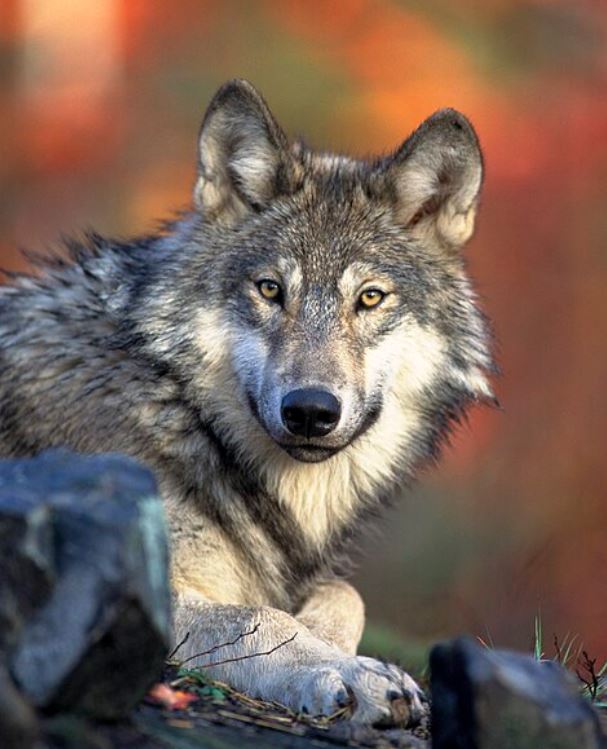
Gary Kramer, Public domain, via Wikimedia Commons
Wolves are commonly described as living in packs, although it would be more accurate to say they live in a family – an alpha male, an alpha female and kids. They work together to hunt more effectively and can communicate with each other through their howls. The wolf is an extremely adaptable creature, living in habitats that range from the desert to the forest to the tundra. Each species adapts in size and coat to its surroundings. In small Israel alone there are four distinct types of wolves, some live in the desert climate of the Arava, others in the (relative) cold of the Galilee and the Golan.

Red areas are ones where wolves used to live but have become extinct, green are where they live today
Tommyknocker at English Wikipedia, Public domain, via Wikimedia Commons
The wolf was well known to the people of ancient Israel. It appears in the Torah as a description for Benjamin, and becomes the symbol of that tribe:
Benjamin is a ravenous wolf; זאב יטרף
In the morning he consumes the foe,
And in the evening he divides the spoil (Bereshit 49:27)
Rashi explains that the word יטרף means to grab, לחטוף. The wolf quickly takes his prey to his lair to eat it, before a larger predator can take it from him. Rashi draws on the Midrash that explains that the descendants of Benjamin, Saul among them, are “grabbers.” The men of Benjamin grab wives (Judges 21) and Saul takes the kingship quickly, when really someone from the tribe of Judah should have been the ruler. The Ibn Ezra focuses on the wolf’s daring and bravery and compares it to the men of Benjamin, willing to take on the other eleven tribes in the civil war described at the end of the book of Judges.
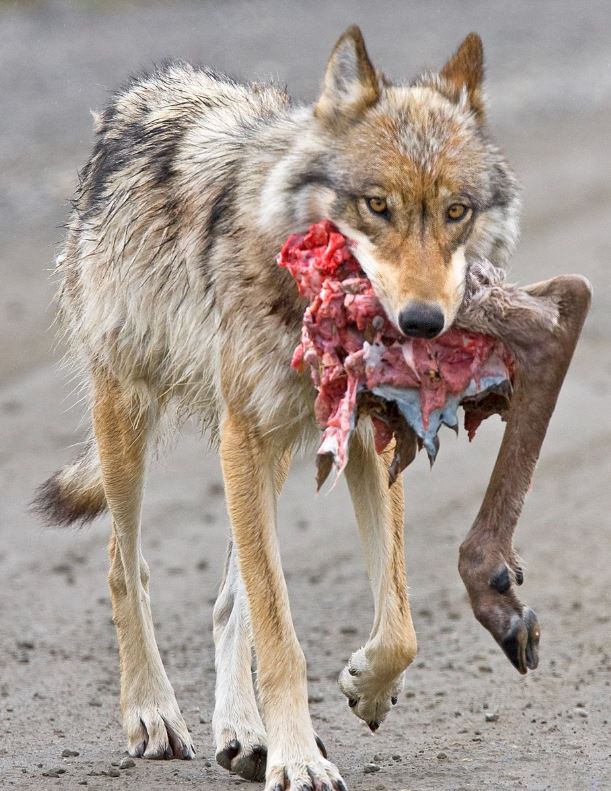
Denali NPS, Public domain, via Wikimedia Commons
Another famous wolf reference is in the book of Isaiah:
The wolf shall dwell with the lamb,
The leopard lie down with the kid;
The calf, the beast of prey, and the fatling together,
With a little child to herd them. (Isaiah 11:6)
The commentators disagree over whether this means that nature will fundamentally change in the days of the Messiah, and predators will no longer eat their prey, or if this is a parable for humans. Perhaps in Messianic times the righteous and the wicked will be able to get along.
The Rabbis see the wolf, like the lion and the snake, as a dangerous animal, one that is מועד, always considered a threat:
“The wolf; the lion; the bear; the leopard; the bardelas, and the snake. These are considered forewarned” (Bava Kamma 1:4)
The Sages also understood the power of the pack, and how it might embolden even a single wolf:
“Rabbi Yehuda says: At a time of wolf attacks, even an attack by one wolf is considered a circumstance beyond one’s control.” (Bava Metzia 7:9)
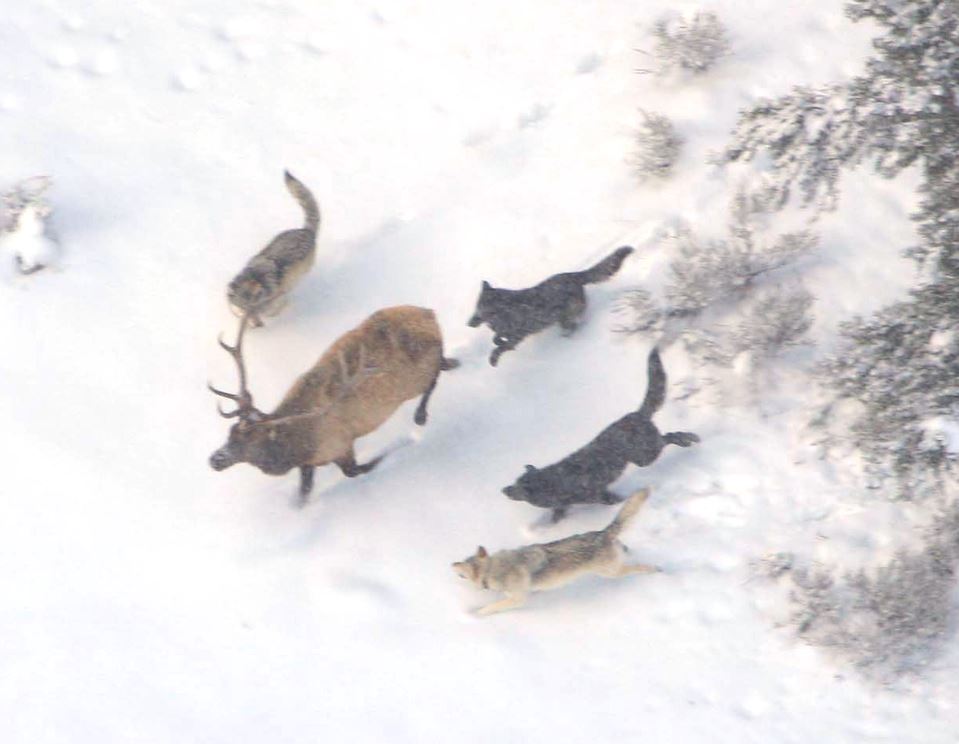
Doug Smith, Public domain, via Wikimedia Commons
And what of the fatal scratch of our Gemara? The wolf’s scratch דריסה is considered one of the sources of death in an animal because of its poison:
“Clawed by a wolf: that it scratched it with its fingernails and shot venom into it” (Rashi to Hullin 42a)
Dr. Moshe Raanan addresses the obvious question: a wolf is not a snake and does not release venom. What is the Mishnah referring to? He dismisses the apologetic answers that nature has changed or that there is a species of wolf that we have not discovered yet that is venomous. Instead, he suggests that ארס, usually translated as poison or venom, means something else here. A predator will often have remains of blood or rotten meat on its paws. When it scratches another animal, that material goes into the prey’s bloodstream, causing infection. The infection will eventually bring on the animal’s death, a perfect example of a treifa.
The wolf’s insatiable appetite is used in a fascinating way in a story about Miriam bat Bilga, a rebellious daughter of a Kohen family:
“There was an incident involving Miriam, the daughter of the Bilga watch, who apostatized and went and married a soldier of the Greek kings. When the Greeks entered the Sanctuary, she entered with them and was kicking with her sandal on the altar and said: Wolf, wolf [lokos, wolf in Greek], until when will you consume the property of the Jewish people, and yet you do not stand with them when they are in trouble?” (Sukkah 56b)
According to the Maharsha, she calls the altar wolf because it eats up the sheep offered as daily sacrifices. The Ben Yehoyada adds that the altar is located in Benjamin’s portion (see here) and Benjamin is a wolf. The Lubavitcher Rebbe teaches that despite Miriam’s apostasy, and her distaste for the Temple, she is still worried about her people, and concerned about them having to spend their money on the altar.
Wolves have always had a hold on the popular imagination, sometimes as evil creatures like in fairy tales, but other times as benefactors of an almost human sort. According to legend, Rome’s founders Romulus and Remus were abandoned at birth and kept alive by a she-wolf who suckled them. Many generations later, Rudyard Kipling adopted this idea in his tale The Jungle Book where the abandoned Mowgli is raised by a proud pack of wolves.
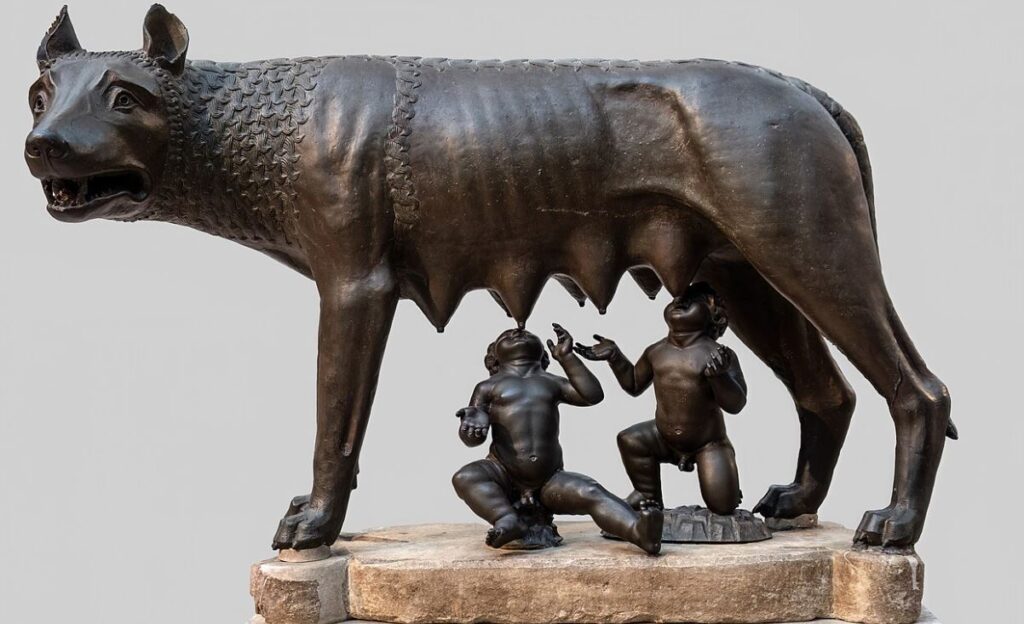
Romulus
Capitoline Museums, CC0, via Wikimedia Commons
Wolf – predator or man’s best friend?