Welcome to Masechet Menachot! But what is a mincha? Before we can delve into the details of the mincha offering, let’s understand the word itself.
Mincha can have a number of meanings in Tanakh. It can simply mean a sacrifice of any kind, as we see with the very first sacrifices recorded in the Torah, in the story of Cain and Hevel:
“In the course of time, Cain brought an offering מנחה to God from the fruit of the soil;” (Bereshit 3:3)
The term is narrowed down to mean grain offerings in VaYikra, the source of the halachot in our tractate:
“When a person presents an offering of meal to God: The offering shall be of choice flour; the offerer shall pour oil upon it, lay frankincense on it,” (VaYikra 2:1)
Mincha is also a time of day, late in the afternoon. We see the word in this meaning in the story of Elijah and the prophets of the Baal, who spend all day trying to call down fire onto their altar. Finally, in the late afternoon, Elijah builds his altar:
“So it was when noon had passed, they continued to prophesy until the time of bringing the afternoon sacrifice; but there was no voice and no answer, and no one was listening. Then Elijah said to all the people, “Come closer to me”; and all the people came closer to him. He repaired the damaged altar of God.” (Kings I 18:29-30)
The prayer of mincha, or the afternoon prayer, which is the most common use of the term today, comes from this meaning of time. Just as Shaharit is said with the shahar, the dawn, and Arvit is said in the erev, the evening, mincha is said in the late afternoon, when the sun is descending.

Beautiful sky by Mount Carmel, too late for mincha
מרכז להב”ה טירת כרמל מאלבומה של משפחת אדליס, CC BY 2.5 <https://creativecommons.org/licenses/by/2.5>, via Wikimedia Commons
Finally, mincha can mean a gift. Usually it is a gift from someone of low standing to someone more important and it is used to gain favor in their eyes. We have many examples of this kind of gift in the Torah. It may be from one person to another, as in the famous story of Jacob’s gifts to pacify his brother Esau:
“After spending the night there, he selected from what was at hand these presents מנחה for his brother Esau” (Bereshit 32:14)
It could be from a commoner or a nation to a king, to show loyalty and submission, as in the tribute sent by the nation to Eglon the king of Moav:
“He presented the tribute מנחה to King Eglon of Moab.” (Judges 3:17)
Various commentaries point out that the word mincha implies that the gift goes from a person of lower status to one who is higher on the social ladder. The Ktav veKabbalah (Rabbi Yaakov Zvi Mecklenburg, 19th century) looks at the root of the word mincha and contrasts it to another gift word, the משאת, masate. He explains that mincha comes from the root nach נח, to go down, as in להניח , to put something down (we see this also in Aramaic, as in the nehutei, those that went down from Israel to Babylonia). The giver of a mincha is of low status and he is showing submission to someone greater than him. In contrast, the word משאת comes from the root נשא, to raise up. It means a gift from someone of high status to someone lower, who is raised up by the honor of the gift. An illustration of this is the gifts given by King Achashverosh to his people at the banquet in honor of Esther:
“The king gave a great banquet for all his officials and courtiers, “the banquet of Esther.” He proclaimed a remission of taxes for the provinces and distributed gifts משאת as befits a king.” (Esther 2:18)
Rabbi Mecklenburg adds that the time meaning of mincha also connects to this root of lowering – when the sun is low in the sky, that is the time of mincha.
Sometimes the giver and the receiver are both of high status. In this case, the gift is meant to honor or to show respect. We have many gifts from one ruler to another, as when the Queen of Sheba arrives in the court of King Solomon bearing expensive gifts:
“She arrived in Jerusalem with a very large retinue, with camels bearing spices, a great quantity of gold, and precious stones.” (Kings I 10:2)
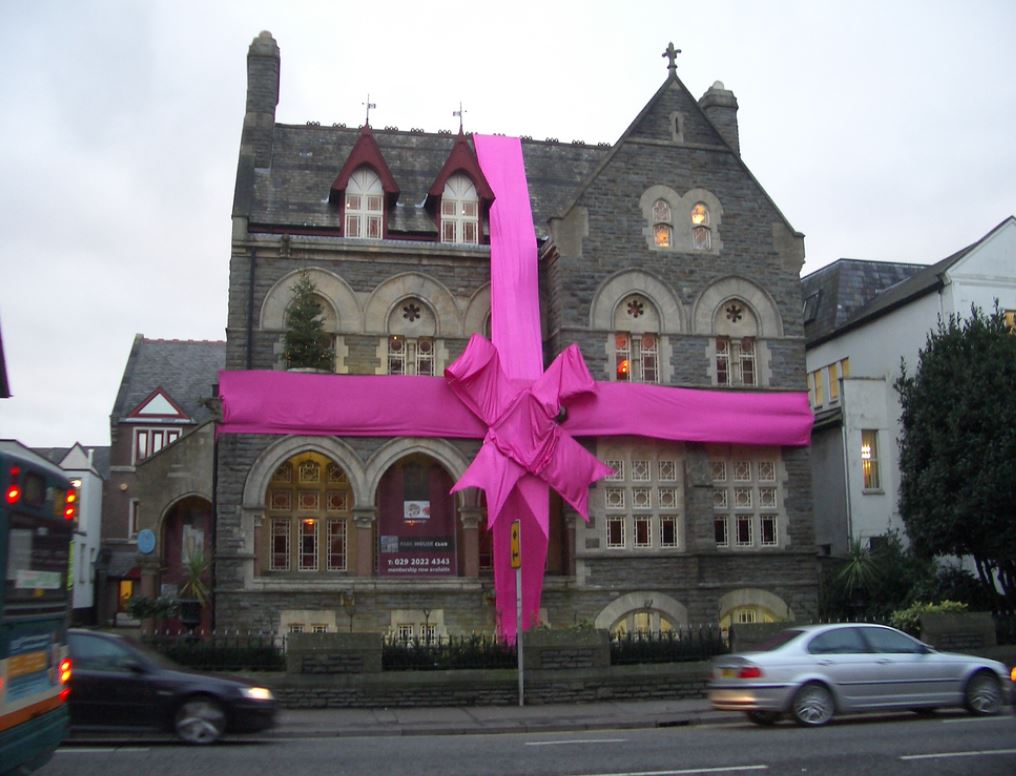
Just a small token of my affection
Howard Dickins from Cardiff, CC BY 2.0 <https://creativecommons.org/licenses/by/2.0>, via Wikimedia Commons
Solomon also sends the queen home with gifts (10:10). This mutual giving not only honors the visitor and the host but showcases their power and wealth. In other situations, the ruler’s gifts show submission. We see this with Hoshea ben Elah, the last king of Samaria, who sends a mincha to the king of Assyria:
“King Shalmaneser marched against him, and Hoshea became his vassal and paid him tribute.” (Kings II 17:3)
Israelite culture was part of the larger world of the ancient Near East. In Mesopotamia and Egypt gifts conveyed honor, created hierarchy and helped form alliances. The Israel Museum put on a wonderful exhibit a few years ago called The Feast. It showed how royal banquets, across ancient cultures, achieved political and social aims. The patron of the feast, usually the king, bore the cost of feeding huge numbers of guests. Ashurnasirpal II of Assyria (883 – 859 BCE) threw a party for 69,574 people, according to his records, with one thousand oxen and fourteen thousand sheep slaughtered, among many other items on the menu. In return, the guests brought gifts, ranging from cash (gold ingots) to food or luxury items like perfume, chariots or armor.
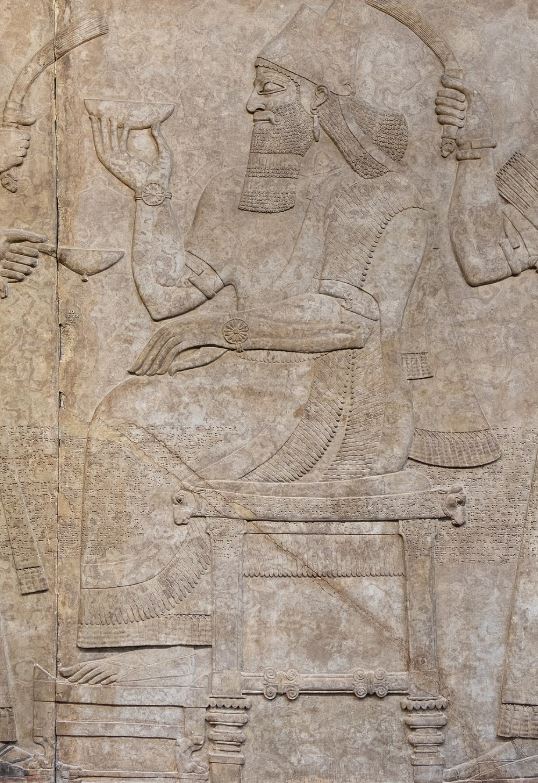
Ashurnasirpal II
wikipedia/commons/2/2c/Middle_East-_G9_Assyria_Nineveh_-_44841858665.jpg
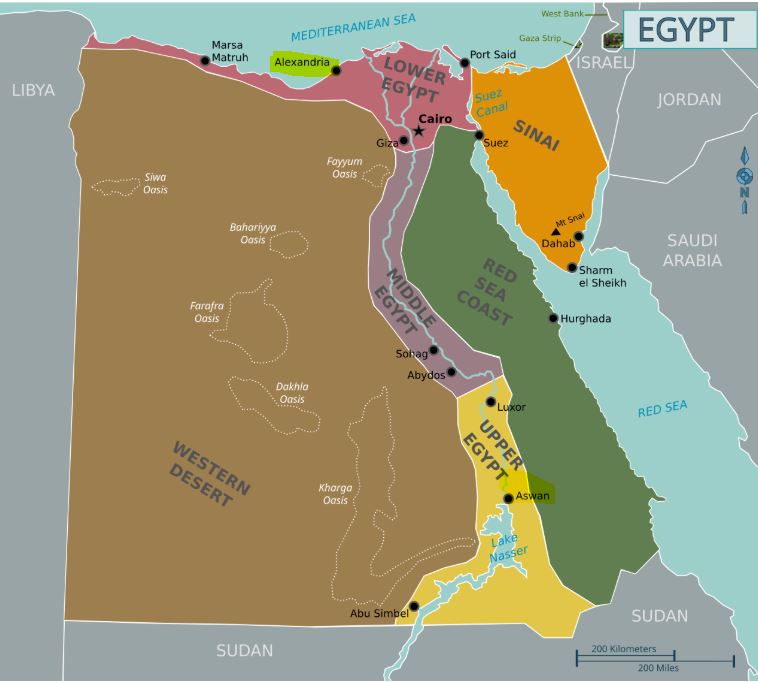
The Amarna letters (14th century BCE, Egypt) describe how messengers would bring gifts from the Egyptian Pharaoh to his allies and they would then be wined and dined in return.
How does all this connect back to our mincha sacrifice? If we read the words in VaYikra, the emphasis is on a poor person who brings from the little he has to show his submission and connection to God. Rashi focuses on the word nefesh, soul, used instead of adam, person:
“And when a person will offer — Nowhere is the word נפש employed in connection with free-will offerings except in connection with the meal-offering. For who is it that usually brings a meal-offering? The poor man! The Holy One, blessed be He, says, as it were, I will regard it for him as though he brought his very soul (נפש) as an offering” (Rashi to VaYikra 2:1)
In addition, the mincha cannot be leavened (VaYikra 2:11) and must have salt on it. These two elements emphasize the idea of the mincha as a way to reinforce the covenant between God and Israel. The prohibition of hametz, leavening, reminds us of the story of the Exodus, the foundational story of Israel’s becoming a nation. Salt is the sign of a brit, a covenant, as the verse says:
“You shall season your every offering of meal with salt; you shall not omit from your meal offering the salt of your covenant with God; with all your offerings you must offer salt.” (VaYikra 2:13)
A mincha is a sacrifice but at its root it is a gift, doing what gifts do – showing submission, giving honor and respect and cementing alliances.
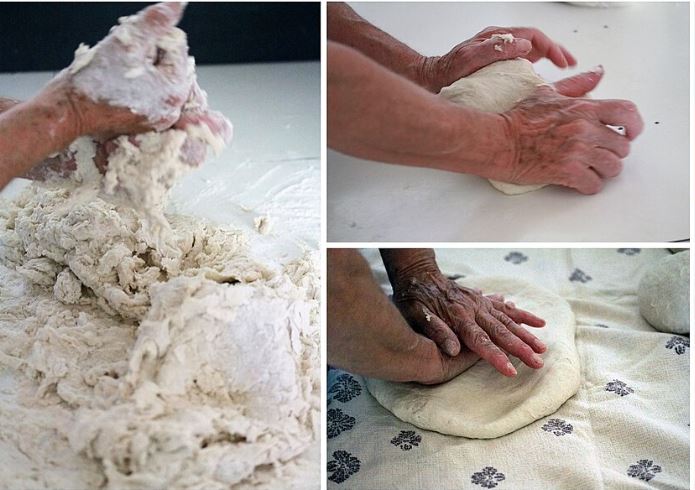
Claudio.Núñez, CC BY-SA 2.0 <https://creativecommons.org/licenses/by-sa/2.0>, via Wikimedia Commons