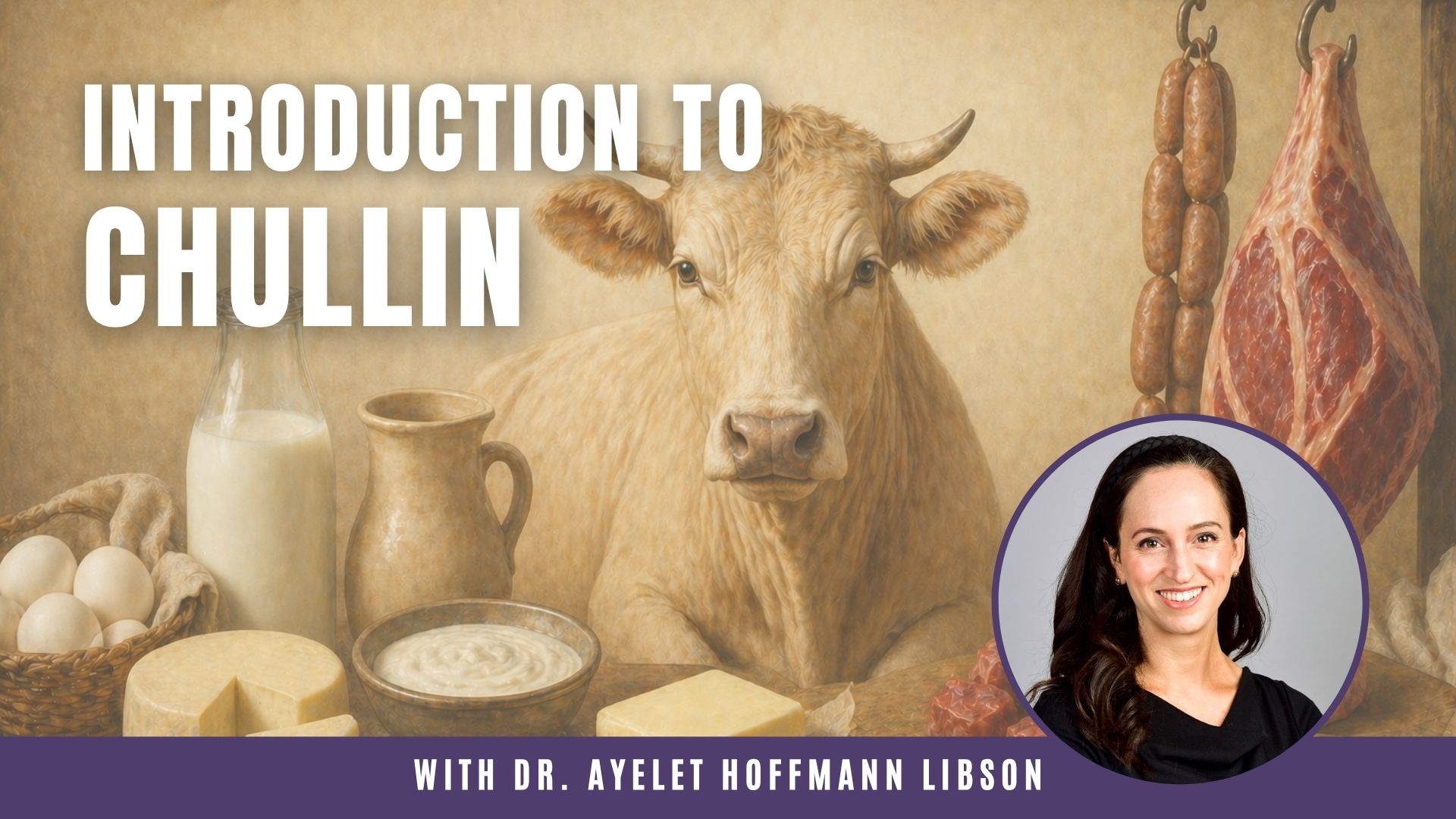
Masechet Chullin, the third masechet in Seder Kodashim, is unique in that, while embedded in the Seder which deals primarily with sacrificial law, Chullin addresses non-consecrated animals—that is, animals slaughtered and consumed in everyday life. Its subject matter forms the backbone of kashrut as practiced outside the Temple, making it one of the most practically relevant masechtot. While Kodashim might seem distant in a post-Temple reality, Chullin translates קדושה into daily action—what and how one eats.
At its core, Chullin develops the halakhic system governing shechita (ritual slaughter), expanding from the biblical verse “וְזָבַחְתָּ… כַּאֲשֶׁר צִוִּיתִיךָ” (“you shall slaughter… as I have commanded you,” Devarim 12:21). The Sefer HaChinuch (Mitzva 451) explains: The commandment of slaughter: That anyone who wants to eat ([domesticated] beast, [wild] animal or bird) meat first slaughter them as is fit, and that there not be [another way to] permit [it] besides slaughter. And about this is it stated (Deuteronomy 12:21), “you may slaughter from your cattle or your flock […], as I have commanded you, etc.” And the language of Sifrei Devarim 75:7,16 is, “Just like consecrated [animals] are with slaughter, so too are the non-sacred [animals] with slaughter. […] ‘As I have commanded you’ teaches us that Moshe, our teacher, was commanded as to the esophagus and the trachea and as to the [cutting of] the majority of one in a bird and the majority of two, in a beast.” The understanding is not that it be such from the understanding of the verse, but rather that upon this commandment came the tradition that it was like this that he was commanded about all the matters of slaughter — as is known to us about the knife, the place of the slaughter [on the animal] on the esophagus and the windpipe and the rest of the matters. In other words, all the laws of HOW to slaughter are Torah SheBaal Peh (Oral Law, transmitted from Moshe). These laws are elucidated in our Masechet.
Shechita (שחיטה)
Most of the discussions in our Masechet revolve around shechita (slaughter). Proper shechita requires:
- A qualified shochet
- A perfectly smooth knife (chalaf)
- A continuous cutting motion severing the סימנים (trachea and esophagus; literally, signs)
Five primary disqualifications (פסולי שחיטה) are noted:
- שהייה (Shehiyah) – pause during cutting
- דרסה (Derasah) – pressing instead of slicing
- חלדה (Chaladah) – hidden cutting
- הגרמה (Hagramah) – cutting outside the designated area
- עיקור (Ikkur) – tearing rather than cutting
Treifot (טריפות)
The word “treifa, while used in common parlance as the opposite of “kosher,” literally means “torn.” Treifot are the physical defects that render an animal non-kosher even after proper shechita. The general principle is that an animal with any of these conditions is considered halakhically non-viable, even if it may appear to live temporarily. The expression used is טריפה אינה חיה. Described in the third perek, there are 18 categories of treifot, which include:
- Issues of the respiratory or intake system (since life depends on nutrition and respiration):
- Esophagus (וושט)
- Perforation נקובת הוושט
- Cut or severed פסוקת הוושט
- Trachea קנה
- Perforation נקובת הקנה
- Severed פסוקת הקנה
- Lung ריאה
- Perforation חסרון בריאה (נקב בריאה), including issues like סירכות (adhesions) when they indicate holes
- Esophagus (וושט)
- Issues with the central nervous system (which controls all aspects of life):
- Brain membranes קרום המוח
- Perforation נקובת הקרום של המוח
- Spinal cord חוט השדרה
- Break in the spinal column that damages the spinal cord שבירת
- השדרה עם חוט השדרה
- Brain membranes קרום המוח
- Issues with the heart (circulation necessary for life):
- Heart לב
- Perforation that reaches the inner chamber of the heart נקובת הלב לבית חללו
- Heart לב
- Issues with the digestive system:
- Liver כבד
- Missing or insufficiently intact ניטל הכבד או נשתייר ממנו פחות מכזית
- Stomach קיבה
- Perforation in parts of the stomach system (ruminant compartments) נקיבת הקיבה / בית הכוסות
- Intestines מעיים
- Perforation נקיבת המעיים
- Gall bladder מרה
- Perforation נקיבת המרה
- Liver כבד
- Systemic trauma, which is NOT organ-specific, but reflects global physiological collapse
- Attacked by a predator in a way that introduces lethal internal damage (even if not externally visible) דרוסה
- Damage caused by a fall from a height leading to fatal internal injury נפולה
- Critical bones (especially ribs affecting vital organs) are broken in a life-threatening way שבורה
- Missing a vital organ (either congenital or due to injury) חסרה איבר
- Internal organs are crushed or disintegrated ריסוק
- A majority tear in the abdominal wall קרע רוב דופן הבטן
Nevela vs. Treifa
- Nevela: an animal that died without proper shechita
- Treifa: properly slaughtered but inherently unfit
Both are prohibited, but their halakhic consequences differ (e.g., tuma ramifications, benefit).
Basar BeChalav (בשר בחלב): Mixing milk and meat
The Biblical commandment of לא תבשל גדי בחלב אמו, not to cook a kid in its mother’s milk, repeated three times in the Torah, is explained as a three-fold prohibition: cooking, eating and benefiting. The prohibition against cooking and consuming meat with milk is treated extensively in our masechet, including its scope (domestic vs. wild animals), Rabbinic extensions (e.g., poultry with milk) and rules of absorption (ta’am ke’ikar).
Gid HaNasheh (גיד הנשה)
In Bereishit 32:33, we read:
עַל־כֵּן לֹא־יֹאכְלוּ בְנֵי־יִשְׂרָאֵל אֶת־גִּיד הַנָּשֶׁה אֲשֶׁר עַל־כַּף הַיָּרֵךְ עַד הַיּוֹם הַזֶּה כִּי נָגַע בְּכַף־יֶרֶךְ יַעֲקֹב בְּגִיד הַנָּשֶׁה׃
Therefore the children of Yisra᾽el eat not of the sinew of the vein, which is upon the hollow of the thigh, to this day: because he touched the hollow of Ya῾aqov’s thigh in the sinew of the vein.
The discussion in our masechet includes the identification and removal of what is commonly thought to be the sciatic nerve and the application of the prohibition to different species. There is also a discussion of whether this issur is one of eating only or also of hana’a (benefit).
Contents
| Perek/Dapim | Topics |
|---|---|
| 1 – 2a-26b – הכל שוחטין | Who is qualified to perform shechita Validity of shechita by various individuals Foundational laws of shechita |
| 2 – 27a-42a – השוחט | Disqualifications in the act of shechita Intent (לשמה vs. שלא לשמה)Improper methods and their consequences |
| 3 – 42a-67b – הכל שוחטין | Comprehensive classification of treifot Detailed anatomical discussions Criteria for fatal vs. non-fatal defects |
| 4 – 68a-78a – בהמה המקשה | Laws of animals giving birth during slaughter Status of fetus (ben peku’ah) Complex cases of partial viability |
| 5 – 78a-83b – אותו ואת בנו | Prohibition of slaughtering a parent and offspring on the same day Scope across species and contexts |
| 6 – 83b-89b – כסוי הדם | Obligation to cover blood after shechita Applicable species and materials Who is obligated |
| 7 – 89b-103b – גיד הנשה | Detailed treatment of the prohibition Anatomical identification Application to different animals |
| 8 – 103b-117b – כל הבשר | Laws of meat and milk Cooking, eating, and benefit prohibitions Rabbinic safeguards and mixtures |
| 9 – 117b-129b – העור והרוטב | Laws of mixtures (ta’arovot) Absorption and transfer of taste Status of skins, broths, and secondary substances |
| 10 – 130a-134b – הזרוע והלחיים | Priestly gifts from slaughtered animals |
| 11 – 135a-138b – ראשית הגז | Laws of first shearing (given to Kohen) Minimum quantitiesRecipients and timing |
| 12 – 138b-142a שילוח הקן | Laws of sending away the mother bird Ethical and symbolic interpretations |
The Ralbag (Gersonides, 1288-1344, Southern France), in his commentary to Devarim 11:26 states:
והוא מה שצונו לשחוט בהמה חיה ועוף כשנרצה לאכלם כמו שאמר וזבחת מבקרך ומצאנך וגו’ כאשר צויתיך וגו’ לפי מה שביארנו ביאור דבר זאת הפרשה והנה התועלת ב זאת המצוה הוא מצדדין רבים. האח ד כי בזה האופן יתכן יותר שיצא דם הבעלי חיים בעת שחיטתו ונהיה נשמרים יותר מפני זה מאכילת הדם. והשני כי בזה האופן עם שכבר ימותו בו הבעלי חיים בקלות יותר הנה אין בו מה מהקנאה לנפשותינו תכונת האכזריות כדי שיהיה זה כשאר מיני ההמתה כאלו תאמר ההכאה בקופיץ על ראש הבעלי חיים ומה שידמה לזה. והשלישי הוא יותר כולל הוא כי כאשר באה המצוה איך תעשה זאת ההמתה היקרה מזה לשוחט את הבעלי חיים שהוא לא יכוין להרוג את הבעלי חיים בעשותו זה הפעל אבל יהיה לבו איך יעשה זאת המצוה באו פן שצוה השם יתעלה וזה ממה שיהיה בו תועלת להמשך אליו הדבקות בשם יתעלה גם בעת עשותו זה להרחיק ממנו תכונת האכזריות לפי שהוא לא יכוין להרוג אך לעשות המצוה באופן שצוהו השם יתעלה.
And this is that which He commanded us: to slaughter domesticated animals, wild animals, and birds when we wish to eat them, as it says, ‘And you shall slaughter from your cattle and from your flock … as I have commanded you.’ According to what we have explained in clarifying this passage, the benefit of this commandment has many aspects. The first is that in this manner it is more possible for the blood of the animals to drain out at the time of slaughter, and thereby we are better protected from eating blood. The second is that although in this manner the animals die more easily, it does not implant within our souls the trait of cruelty, as would other forms of killing — for example, striking the animal on the head with an axe or similar methods. The third reason is more comprehensive: when there is a commandment prescribing how this killing is to be done, this is more precious to the one slaughtering the animal, because his intention in performing the act is not to kill the animal. Rather, his focus is on how to perform this commandment in the manner that God, may He be exalted, commanded. This brings benefit in drawing a person toward attachment to God, may He be exalted, even while performing this act, and in distancing him from the trait of cruelty, since his intention is not to kill, but to fulfill the commandment in the way God commanded him.