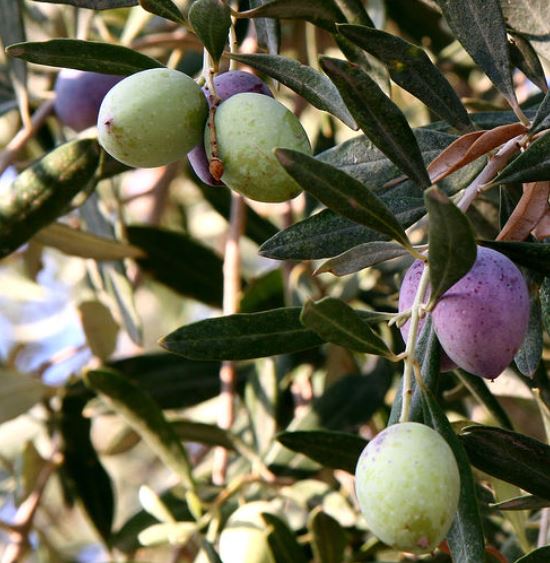
A special meal must be made with best ingredients. How much more so when it comes to the commodities used in the rituals of the Temple. Each item: flour, wine, oil, animals – must be of the highest quality possible, or as the Mishnah puts it, “alpha.” The ninth chapter of Menachot details where to source these best quality products:
“Makhnis and Zateḥa are the primary [alpha] source for fine flour.” (Menachot 83b)
“Tekoa is the primary source of oil. Abba Shaul says: Secondary to Tekoa is Regev on the east bank of the Jordan River.” (Menachot 85b)
“Keduḥim and Attulin are the primary sources for wine. Secondary to them is Beit Rima and Beit Lavan, located in the mountain, and the village of Signa, located in the valley” (Menachot 86a)
“rams from Moab; lambs from Hebron; calves from Sharon; fledglings, from the King’s Mountain.” (Menachot 87a)
The Temple was not only a huge repository of wealth, it also was a major consumer in the ancient Israelite economy. To have your produce chosen for the Temple service was not only prestigious, it was also profitable and it brought you alot of business. Who were the lucky suppliers to the Temple?
One school of thought suggests that all (or most) of the suppliers came from the Land of Judah. If the grain for the omer offering needed to be brought from a place close to Jerusalem (Mishnah Menachot 10:2), perhaps this was true for all the produce and animals for the sacrificial service. This is logical on the one hand – why travel great distances, through perhaps dangerous or unfriendly areas like Samaria, if you can provide the goods close to Jerusalem? On the other hand, some crops grow better in the Galilee, others in Judah and yet others in TransJordan. If the goal is to bring “the best of the best,” shouldn’t you source it where it grows best?
According to the Gemara, the best place for olive oil is Tekoa. There seem to have been (at least) two Tekoas and the likelihood is that the Galilean one would produce better olive oil (see here). When it comes to wine however, the area of choice would be Judea. We see it in Jacob’s blessing to Judah:
“Binding his foal to the vine, and his ass’s colt to the choice vine; he washes his garments in wine, and his clothes in the blood of grapes” (Bereshit 49:11)
We also see it in the plethora of places named for grapes and wine in the Judean hills and lowlands: Bet HaKerem, Ein Kerem, Nahal Sorek, Carmel. Today ,vineyards and wineries line the roads of Judea. The Yerushalmi tells us that all the wine for the Temple came from Judah:
“Rebbi Yehudah said, in earlier times, vinegar in Judea was exempt from tithes. Since they made all their wine in purity for Temple offerings, it never got sour; they made vinegar from the skins of grapes. But now, since wine turns sour, it is obligated” (Yerushalmi Demai 1:1)
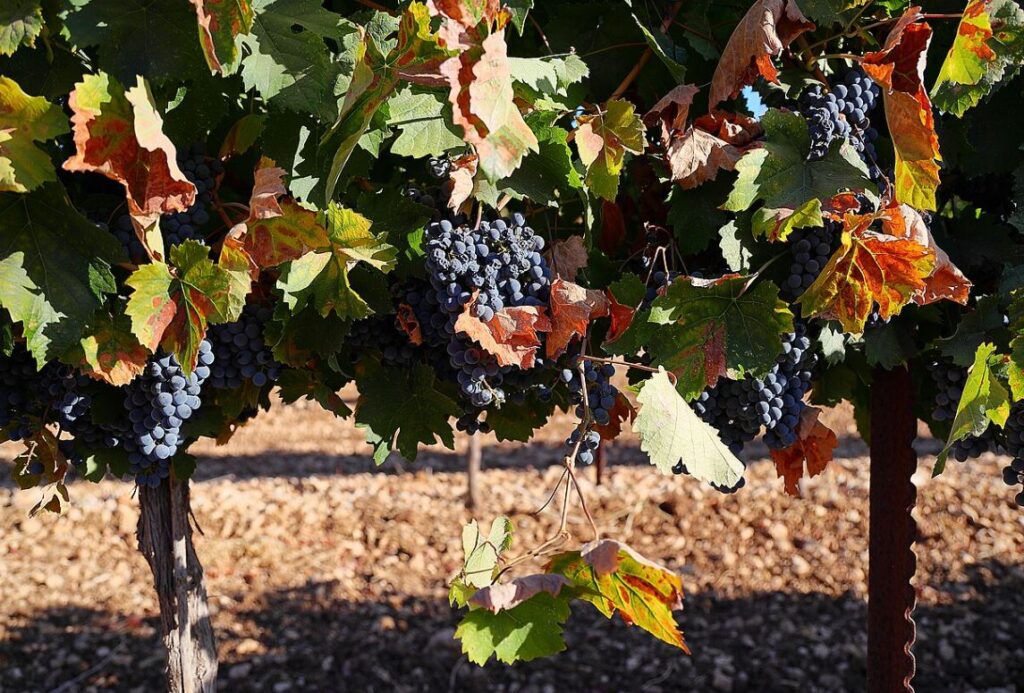
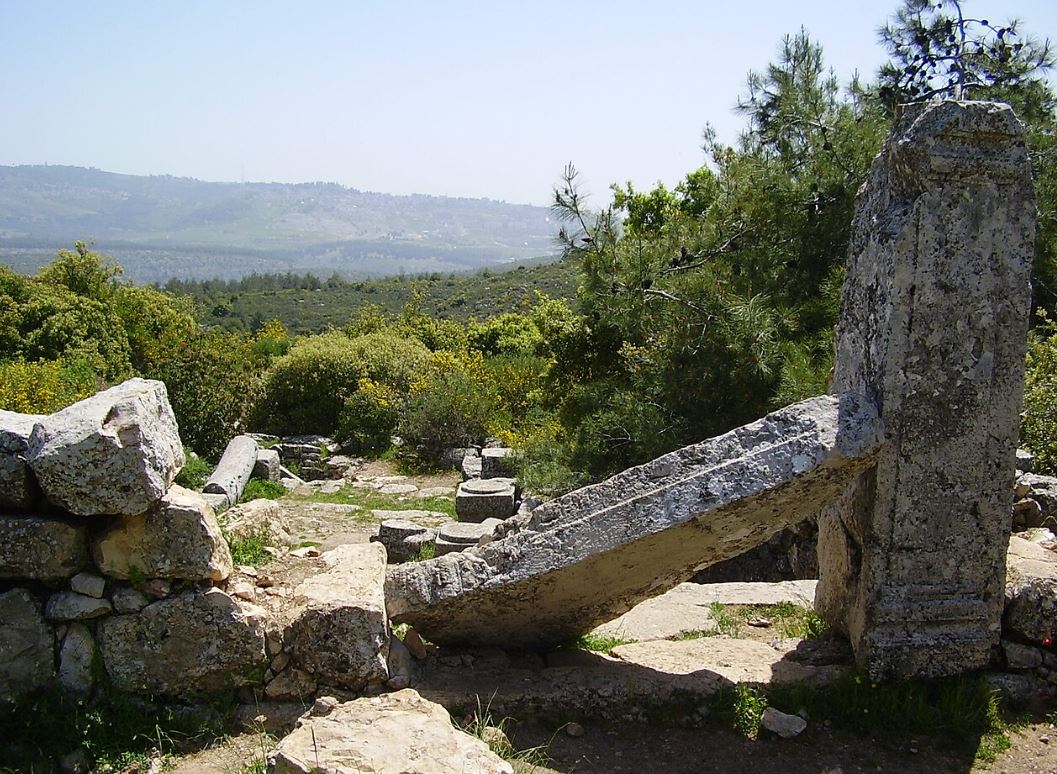
Lizzy Shaanan Pikiwiki Israel, CC BY 2.5 <https://creativecommons.org/licenses/by/2.5>, via Wikimedia Commons
Although we are not sure of the exact location, or even the accurate names of Keduhim/Kerutim/Kerutaim and Atulin/Hatulim/Atulaim (variations in the Mishnah and the Gemara), scholars assume that they are located in the land of Judah. Ben Zion Segal in his book The Geography of the Mishnah, identifies Kerutim with Kira, in the western Shomron, just east of Antipatris. Kira is an Arab village north of the modern city of Ariel that has remains from First Temple times and on. Just south of it is an Arab town called Bet Rima, the same name that appears in our Mishnah. While technically this is not the land of Judah but of Efraim, it is still relatively close to Jerusalem.
The Mishnah at the beginning of the chapter about the source of solet, the fine flour for the meal offerings, is even more confusing. The various spellings of the names – in different manuscripts of the Mishnah and of the Gemara and in Rashi – range from Makhnis and Zateha to Machmis and Zinha to Michmas and Ziniha. Most scholars today say that these refer to Michmas and Zanoach. The former was an important Biblical site east of Bet El, in the land of Benjamin, it appears in the story of Jonathan and his servant taking on the Philistine garrison alone (Samuel I 14). Zanoach is a town in the lowlands of Judah, it appears in the list of Judah’s tribal lands (Joshua 15:34). Michmas in particular seems an odd choice to be the “alpha” of flour. It sits on the edge of the Judean desert, not a classic place to grow wheat. The desert is better for a hardy crop like barley and Professor Safrai suggests that maybe it was the place for the omer, a barley offering, but not for the fine solet of the menachot.
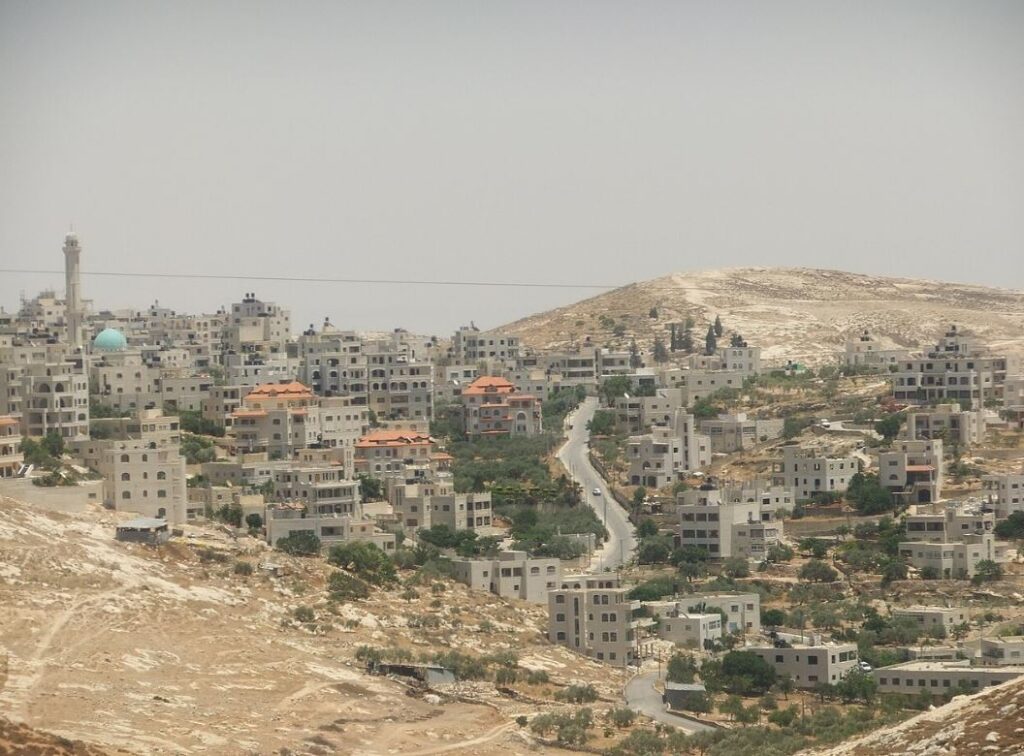
Muhmas today
יעקב, CC BY-SA 3.0 <https://creativecommons.org/licenses/by-sa/3.0>, via Wikimedia Commons
A more unusual approach to why Michmas was chosen is connected to an archaeological discovery. In the 1980s, seventy Jewish burial caves were discovered on the outskirts of the Arab town of Muhmas, the site of Biblical Michmas. These caves date to a period between the end of the Second Temple period and the Bar Kokhba Revolt (1st – 2nd century CE). Recently, archaeologist Dvir Raviv examined a find from one of these caves more closely. It is a graffito of a seven-branched menorah, thirty centimeters high, with a letter in ancient Hebrew script written above it. Looking at adjacent burial areas, he found these also had a few menorahs inscribed on the walls, along with a mikve and an inscription that names Yoezer and “guards” (matrana). Raviv connects all this to Kohanim, the priests of the Temple. They would need the ritual bath for purity, Yoezer is a classic priestly name and guards or mishmarot in Hebrew are what the groups that served in the Temple are called. The menorah, which became a ubiquitous Jewish symbol, in these early days was only a symbol of the Temple, and perhaps of its workers, the Kohanim.
If Raviv is correct, Michmas was a center for Kohanim and it was likely chosen to bring the solet because of that fact. Kohanim could be trusted to prepare the flour in purity. An intriguing source about Bet Rimah (one of the wine places) suggests that Kohanim lived there too:
“The story is told of a certain man of Beth Rimah who used to conduct himself in the strictest piety, that Rabban Joḥanan ben Zakkai once sent a disciple to him to test him in his conduct. When he arrived, he found that the man took some oil and set it on the oven-range [to be warmed], then he removed it from the range and poured it into a dish of crushed beans. On being asked what he was doing, the man replied, ‘I am a High Priest and I always eat terumah in conditions of cleanness’.” (Avot deRabbi Natan 12:13)
Perhaps the determining factor for which place was the best for Temple produce was not its location or its quality but rather if Kohanim lived there and could be relied on to harvest and prepare the items correctly.
As we count the omer in these fraught days, let’s pray for better times when we can gather in Jerusalem with our choice produce.
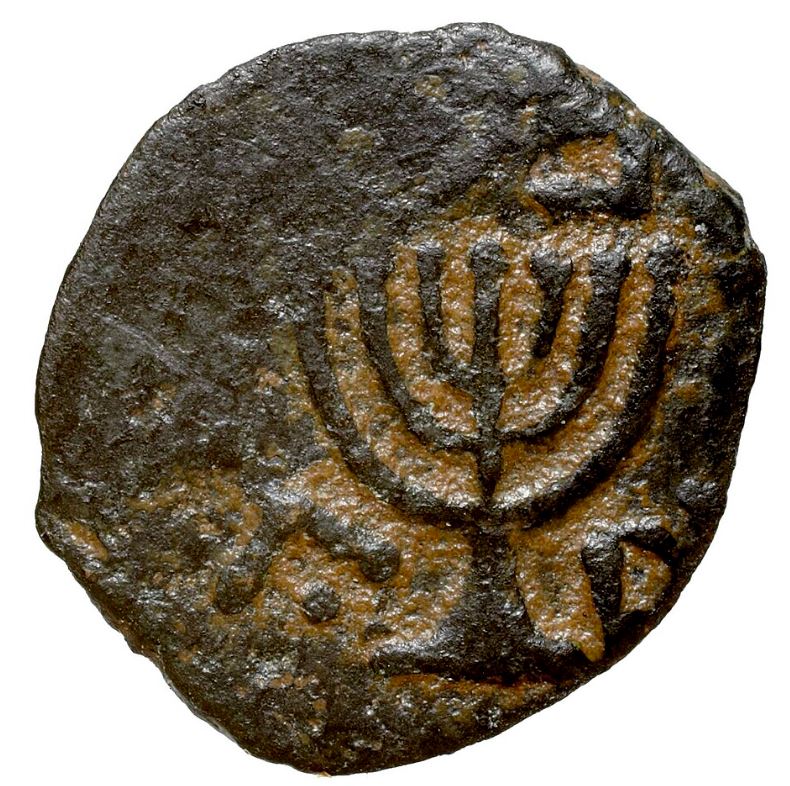
Menorah on a coin from the last Hasmonean king Mattityahu Antigonus
Bibliothèque nationale de France, Public domain, via Wikimedia Commons