Sometimes we want to keep things under wraps. Other times it is important to speak out and make a public display in order to show that we believe in what we are doing. That is what is going on in our Mishnah:
“Why do I [need those involved to publicize each stage of the rite] to that extent? Because of the Boethusians, as they would say: There is no harvest of the omer at the conclusion of the Festival day” (Menachot 65a)
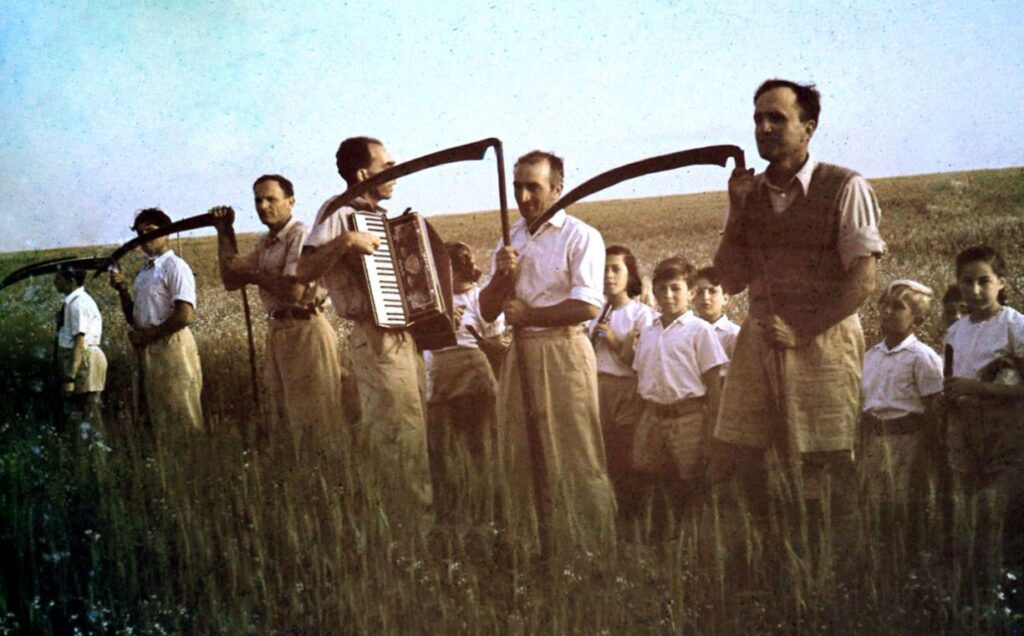
Omer ceremony at Kibbutz Givat Haim 1930s
אוטו גיל, Public domain, via Wikimedia Commons
All the clamor and repetition of the omer ceremony had one purpose: to show that the proper way to keep the law was the way of the Rabbis and not of the sect known as the Boethusians. Both groups looked at the verse in VaYikra that described the omer cutting and sacrifice and each came up with a different conclusion:
“And from the day on which you bring the sheaf of elevation offering—the day after the Sabbath—you shall count off seven weeks.” (VaYikra 23:15)
The key words in the verse are “the day after the Sabbath,” ממחרת השבת. While the Rabbis insisted that in this case Shabbat really meant Yom Tov, i.e. the day after the first day of Pesach (16 Nisan), other groups read the text more literally. The day after Shabbat is Yom Rishon, Sunday. This is a compelling idea that fits with the Torah text. The Oral Law interprets it differently and on our daf the Rabbis suggest various rationales why this is so. They also mock their sectarian adversaries who seem to suggest that the intention was to give the Israelites a long weekend:
“And there was no man who answered him, except for one elderly man who was prattling at him, and he said: Moses, our teacher, was a lover of the Jewish people and he knew that Shavuot is only one day. Therefore, he arose and established it after Shabbat, in order that the Jewish people would enjoy themselves for two days.” (Menachot 65a)
The date of the omer was one of the main sources of contention between the various groups that made up Second Temple Judaism. Sadducees and Boethusians believed that the omer should be brought on the first Sunday within the week of Passover. The Essenes thought it should be brought on the first Sunday after Passover. Since the holiday of Shavuot is fifty days after the omer is brought, each of these groups would celebrate their own Shavuot. Even today, Karaites and Samaritans start counting the omer on the first Sunday of Passover and Ethiopian tradition says that one counts from the day after the Passover holiday is finished! It is understandable why the Rabbis would want to end a situation that would create so much chaos and divide.
Who are the Boethusians? While the Sadducees are well known (see here), mentioned not only in Rabbinic literature but also in Josephus and in the Christian texts, Boethusians appear less often. One scholarly approach equated them with the Essenes, the people of the Dead Sea Scrolls. The Essenes are described by Josephus and yet do not appear in Rabbinic literature, meanwhile, the Rabbis mention the Boethusians, who do not appear in Josephus. Perhaps these are the same group with different names? This approach is unlikely since descriptions of the two are very different. While the Boethusians followed the Rabbinic (lunar) calendar, the Essenes had a completely solar calendar. The Boethusians were wealthy and involved in Temple life, the Essenes escaped to the desert and shunned the trappings and money of the Temple.
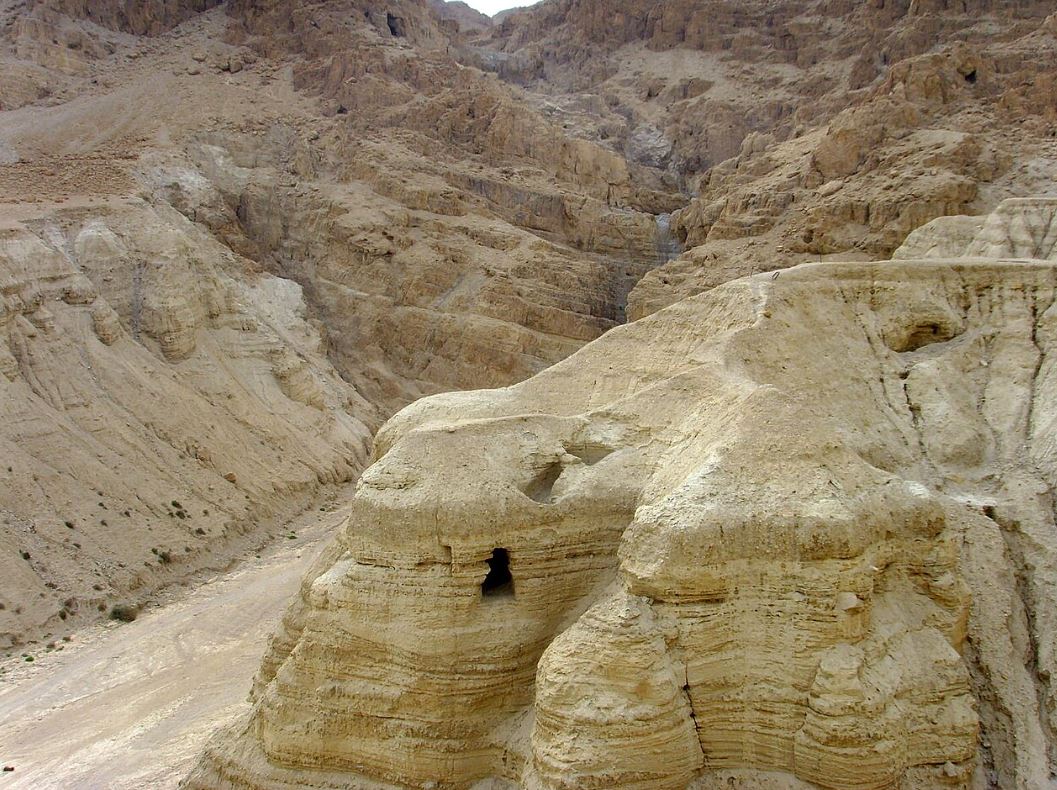
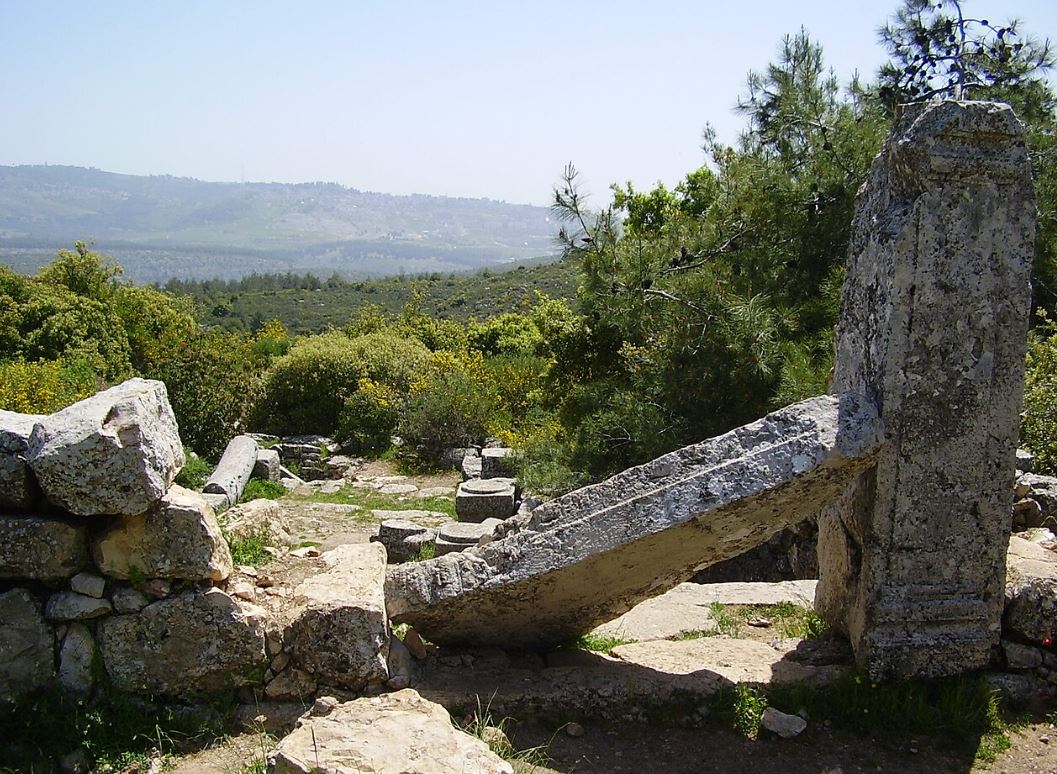
Effi Schweizer, Public domain, via Wikimedia Commons
Others suggest that the Boethusians are the same as the Sadducees and they do often seem similar or interchangeable in Rabbinic texts. However, as they are both mentioned it seems that they are two different groups. This possibly apocryphal account of their origins definitely makes it seem like they were separate groups:
“Antigonos of Socho said: Do not be like servants who serve their master for the sake of a reward. . .Antigonos of Socho had two disciples who repeated this doctrine to their disciples and their disciples to their disciples. They rose up and examined the matter, saying, ‘Why did our predecessors say this? Is it right for a laborer to toil all day and not receive his reward in the evening? Had our predecessors known that there was another world and that there would be the resurrection of the dead they surely would not have taught thus!’ So they arose and turned away from the Torah. Two sects sprang from them: the Sadducees and the Boethusians, the Sadducees named after Zadok and the Boethusians after Boethus.” (Avot deRabbi Natan 5)
The two groups were certainly similar – both were from wealthy and influential priestly families and it seems that they agreed on certain differences from Rabbinic law. Some argue that Sadducees were more involved in debating the law while the Boethusians took action against what they perceived as wrong Rabbinic ideas, like in this story:
“Once, the Boethusians tried to mislead the Sages [with regard to the day of the new moon.] They hired two people for four hundred dinars [to testify falsely]. . .” (Rosh HaShanah 22b)
The Boethusians were not only involved in sectarian disputes. They were one of the most prominent (and most corrupt) of the priestly families, as we see in this ditty from Masechet Pesachim:
“Abba Shaul ben Batnit said in the name of Abba Yosef ben Ḥanin: Woe is me due to the house of Boethus, woe is me due to their clubs.” (Pesachim 57a)
While the sectarian disputes of Second Temple times largely disappeared with the destruction of the Temple, the conundrum of “the day after the Sabbath” remains. Why would the Torah call Pesach Shabbat and not chag (holiday)? One fascinating suggestion was offered by Itamar Kislev in an article in Megadim (16, 1992). He connects the bringing of the omer to the momentous occasion when the Israelites first entered the land and began to eat its produce:
וַיֹּ֨אכְל֜וּ מֵעֲב֥וּר הָאָ֛רֶץ מִמׇּחֳרַ֥ת הַפֶּ֖סַח מַצּ֣וֹת וְקָל֑וּי בְּעֶ֖צֶם הַיּ֥וֹם הַזֶּֽה׃
“On the day after the Passover offering, on that very day, they ate of the produce of the country, unleavened bread and parched grain.” (Joshua 5:11)
While some commentaries equate this day with the omer day, the 16th of Nisan, if we look carefully at the text, that is incorrect. The people start to eat from the land ממחרת הפסח, the day after the Passover sacrifice which is given on the fourteenth of Nisan, so the next day is the fifteenth of Nisan. So it is not a proof for bringing the omer on the sixteenth. However, Kislev makes a different connection. The people start eating the produce of the land the day after the manna stops falling (Joshua 5:12). This is a momentous occasion, signifying the end of the desert period in Jewish history and the beginning of the transition to living a natural life in the Land of Israel. Kislev suggests that when we cut the omer on the sixteenth we are actually remembering that first time we ate from the produce of the land.
And why would that day be called the day after the Shabbat? The first time the word Shabbat is mentioned in the Torah is in connection to the manna:
“he said to them, “This is what God meant: Tomorrow is a day of rest, a holy Sabbath of God. Bake what you would bake and boil what you would boil; and all that is left put aside to be kept until morning.” (Shmot 16:23)
Manna and Shabbat are connected, as are manna and the omer: the Israelites are commanded to collect an omer of manna per person (Shmot 16:16) and they also set aside an omer of it for future generations (Shmot 16:32).
When the Torah says that the omer should be cut ממחרת השבת the implication is that this day is the day after the manna stops, the Shabbat (resting) of the manna. This day should be remembered forever. It is not commemorated on the actual day it happened because that is Pesach and it would have swallowed up the other event on that day. So we keep it the day after.
The Rabbis were aware of the tradition but perhaps forgot its source and so they have to figure out all sorts of other reasons why the day after the Sabbath means the day after Pesach. But if Shabbat = the day the manna stopped, the verse makes perfect sense. We celebrate our entrance into the land by eating the produce of the land.
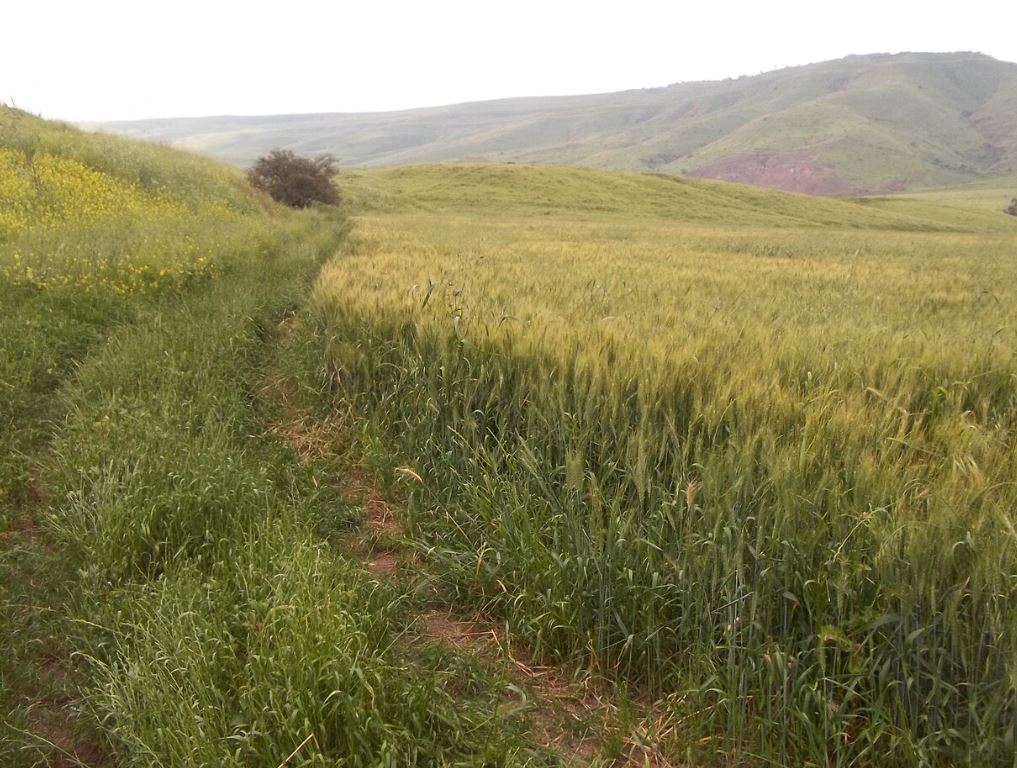
Barley field, ready for harvest
Daniel Ventura, CC BY-SA 4.0 <https://creativecommons.org/licenses/by-sa/4.0>, via Wikimedia Commons