Two sets of siblings are part of the fabric of the story of the Exodus. One set is well known – the brothers Moses and Aaron. The other set is more unusual, a brother and sister whose importance is only hinted at in the text. This is Nachshon the son of Amminadab and his sister Elisheva. Both appear here in our Gemara. Nachshon was the leader of the tribe of Judah, his sister Elisheva was married to the High Priest Aaron. Both were involved in the events of the inauguration of the Mishkan. Nachshon brought the first offering:
“The one who presented his offering on the first day was Nachshon son of Amminadab of the tribe of Judah” (Bamidbar 7:12)
The Gemara tells us that this sacrifice was not treated properly:
“ ‘And Moses diligently inquired for the goat of the sin offering,’ (VaYikra 10:16). “The goat,” this is the goat of Nachshon,“(Zevachim 101b)
On this day, the first of Nisan, after each tribal leader brought his sacrifice, the Mishkan was inaugurated. But in the midst of this great celebration, two other siblings, the children of Elisheva and Aaron, appear and choose to give their own offering, with devastating consequences:
“And Nadav and Avihu, the sons of Aharon, took each of them his censer, and put fire in it, and put incense on it, and offered strange fire before the Lord, which He commanded them not. And a fire went out from the Lord, and devoured them, and they died before the Lord.” (VaYikra 10:1-2)
The Gemara explains the highs and the lows of the day for Elisheva:
“Elisheva, had five more reasons for joy than the other daughters of Israel [on the day the Tabernacle was dedicated]: Her brother-in-law, [Moses] was a king; her husband, [Aaron] was the High Priest; her son, [Elazar] was the deputy High Priest; her son’s son, [Pinehas] was the priest anointed for war, ]; and her brother, [Nachshon], was the prince of the tribe of Judah. But [on that same day of joy] she was in mourning for her two sons,” (Zevachim 102a)
Who are these illustrious siblings and how does the midrash embellish their stories? They both appear in an early genealogy:
“Aaron took into his [household] as wife Elisheva, daughter of Amminadab and sister of Nachshon, and she bore him Nadab and Abihu, Eleazar and Ithamar “ (Shmot 6:23)
Nachshon is then mentioned as the leader of the tribe of Judah, one of the largest and most important tribes. Judah had the privilege of being first, in the dedication of the Mishkan and in the travels in the desert:
“the first standard to set out, troop by troop, was the division of Judah. In command of its troops was Nachshon son of Amminadab” (Bamidbar 10:14)
Why does Nachshon (and his tribe) merit being first? The midrash has a wonderful answer. The tribe of Judah were the first ones to brave the waters of the Red Sea, before God split it open, and Nachshon was their leader. The Gemara in Sotah offers two versions of the tale. Rabbi Meir says that all the tribes competed to enter the sea first. Benjamin went ahead, despite being the youngest tribe. Judah pushed them out of the way and entered first. Rabbi Judah offers a different, perhaps more realistic picture:
“Rather, this tribe said: I am not going into the sea first, and that tribe said: I am not going into the sea first. Then, in jumped the prince of Judah, Nachshon ben Amminadab, and descended into the sea first” (Sotah 37a)
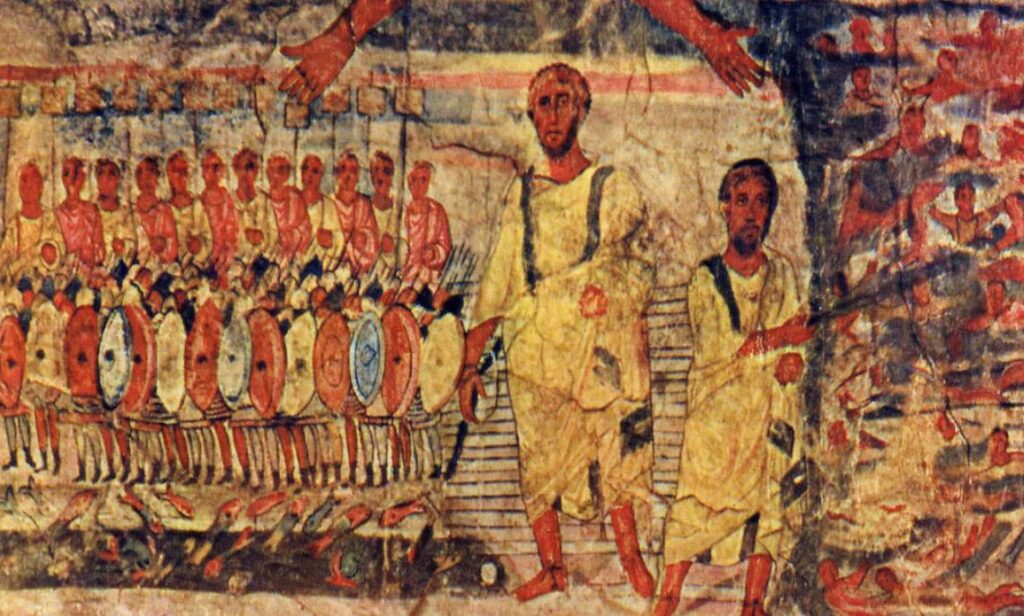
A depiction of the parting of the Red Sea, Dura Europos synagoue
Becklectic, Public domain, via Wikimedia Commons
All the Israelites were (understandably) hesitant to brave the waters of the sea. But Nachshon trusted in God and His miracles and forged ahead. As a reward, Nachshon merited the privilege of being first and became the ancestor of kings, as we see in this genealogy in the book of Ruth:
“This is the line of Perez: Perez begot Hezron, Hezron begot Ram, Ram begot Amminadab, Amminadab begot Nachshon, Nachshon begot Salmon, Salmon begot Boaz, Boaz begot Obed, Obed begot Jesse, and Jesse begot David.” (Ruth 4:18-22)
Nachshon became known in the Jewish world as the pioneer, moving forward with courage and conviction. In the War of Independence, the first operation to open up the road to Jerusalem was called Operation Nachshon. In youth groups and in the army, “Nachshonim” go first.
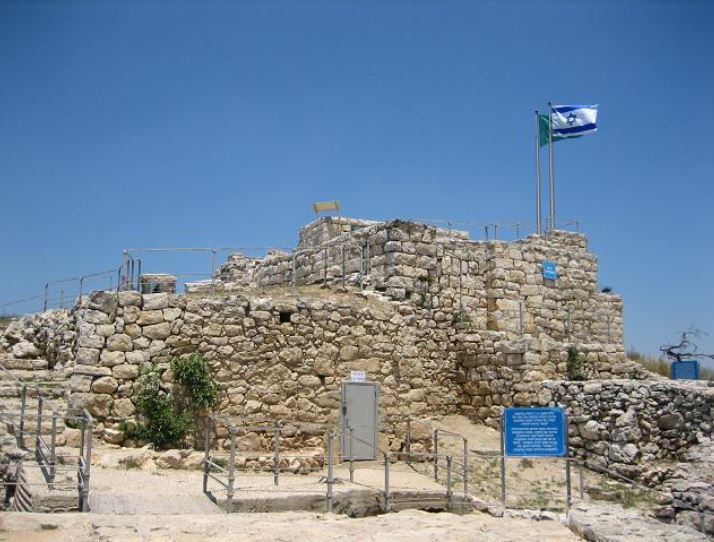
The Castel, taken in Operation Nachshon
אסף.צ at Hebrew Wikipedia, Public domain, via Wikimedia Commons
And what of Elisheva? Although the Torah only tells us about her illustrious connections, the midrash elaborates. One opinion about the identity of the midwives who saved Jewish babies in Egypt is that these were Elisheva and her mother in law Yocheved (Sotah 11a). As if that is not enough to show her virtue, we also hear of her lineage. The Gemara tells us that the Torah points out Elisheva’s brother because one should always inquire about the bride’s family, to make sure that they are of high quality:
“Rava says: One who marries a woman needs to first examine her brothers as it is stated: “And Aaron took Elisheva, the daughter of Amminadav, the sister of Nachshon” (Exodus 6:23). By inference from that which is stated: “The daughter of Amminadav,” do I not know that she is the sister of Nachshon? What is the meaning when the verse states: “The sister of Nachshon”? From here one learns that one who marries a woman needs to examine her brothers.” (Bava Batra 110a)
Elisheva is presented in the midrash as someone who was at the height of happiness on the day of the inauguration of the Mishkan and then falls into despair because of the death of her sons. Although the text does not mention her reaction, only her husband Aaron’s, the midrash feels it is necessary to talk about her sorrow and to use it as an example of how in this world joy can be transformed instantly into mourning:
“‘Of laughter, I said it is confounded’ (Kohelet 2:2) – how confounded is the laughter that the attribute of justice laughed at Elisheva bat Amminadab. Elisheva bat Amminadab experienced four celebrations on one day: Moses, her brother-in-law, was king; Nacḥshon, her brother, was the prince who was head of all the princes; Aaron, her husband, was the [High] Priest wearing the ephod stones; and her two sons were deputy High Priests. But when they entered [the Tabernacle] to burn incense without permission, they were burned and her celebration was transformed to mourning. That is, “and of joy, what does it accomplish,” (Kohelet Rabba 2:2).
In her marriage, Elisheva unites two great houses, that of the kingship (Judah) and the priesthood (Aaron). In that she is a precursor to another great dynasty that rules as well as serves in the Temple, the Hasmoneans.
Interestingly, there is a medieval tradition about where Elisheva is buried but not Nachshon. Elisheva is located near Tiberias, in the “Grave of the Mothers,” meaning Yocheved, Zippora, Miriam, and Elisheva, all important women and all connected to Moses and Aaron.
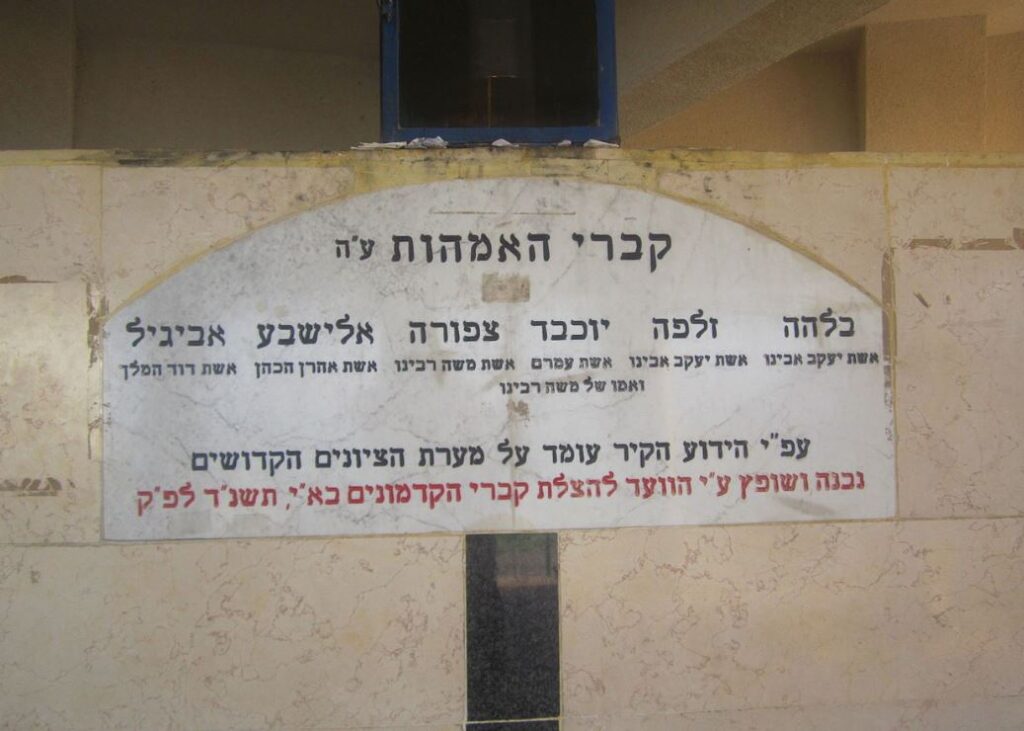
Almog, CC BY-SA 3.0 <https://creativecommons.org/licenses/by-sa/3.0>, via Wikimedia Commons
Nachshon and Elisheva: a power couple of siblings