









Masechet Chullin is sponsored by Judi Felber in honor of the Hadran Community. “During my first cycle of Daf Yomi, just as we began Masechet Chullin, my son was injured while serving in the IDF. Throughout those two and a half months of difficulty and uncertainty, my fellow learners never left my side. With profound gratitude to the community that held me, encouraged me, and ensured I could keep up with the Daf during those trying times.”
Want to dedicate learning? Get started here:

Summary

Rabbi Yehuda Hanasi decreed that produce in Beit Shean did not require tithing, as he ruled the area was not considered part of Israel for those specific purposes. This decision was based on the testimony of Rabbi Yehoshua ben Zeiruz, who observed Rabbi Meir eating a vegetable leaf without tithing it.
Rabbi Yirmia challenged this testimony, suggesting various reasons why Rabbi Meir might have eaten the leaf without realizing it was untithed or why it might have actually been tithed. In response, Rabbi Zeira argued that if God protects the animals of the righteous from inadvertent sin, then God certainly protects the righteous themselves.
The Gemara recounts the story of Rabbi Pinchas ben Yair’s donkey, which refused to eat untithed produce, to support Rabbi Zeira’s assertion. This episode is part of a larger narrative regarding Rabbi Pinchas ben Yair’s journey to redeem captives: the first part describes him splitting a river to cross; the middle section concerns the donkey’s refusal to eat; and the final part involves Rabbi Yehuda Hanasi inviting him to dine, an invitation he ultimately declined. Rabbi Pinchas ben Yair was exceptionally careful never to benefit from the food of others.
Today’s daily daf tools:
Masechet Chullin is sponsored by Judi Felber in honor of the Hadran Community. “During my first cycle of Daf Yomi, just as we began Masechet Chullin, my son was injured while serving in the IDF. Throughout those two and a half months of difficulty and uncertainty, my fellow learners never left my side. With profound gratitude to the community that held me, encouraged me, and ensured I could keep up with the Daf during those trying times.”
Chullin 7
אֶלָּא מָקוֹם הִנִּיחוּ לוֹ אֲבוֹתָיו לְהִתְגַּדֵּר בּוֹ, אַף אֲנִי מָקוֹם הִנִּיחוּ לִי אֲבוֹתַי לְהִתְגַּדֵּר בּוֹ.
Rather, it must be that in not eradicating the serpent, his ancestors left Hezekiah room through which to achieve prominence [lehitgader]. I too can say that my ancestors left me room through which to achieve prominence by permitting untithed produce from Beit She’an.
מִכָּאן לְתַלְמִיד חָכָם שֶׁאָמַר דְּבַר הֲלָכָה, שֶׁאֵין מְזִיחִין אוֹתוֹ, וְאָמְרִי לָהּ: אֵין מַזְנִיחִין אוֹתוֹ, וְאָמְרִי לָהּ: אֵין מַזְחִיחִין אוֹתוֹ.
The Gemara adds: From here one learns with regard to a Torah scholar who states a new matter of halakha that one does not move [meziḥin] him from his position; and some say: One does not disregard [mazniḥin] him; and some say: One does not attribute his innovative statement to his conceit [mazḥiḥin].
מַאן דְּאָמַר ״מְזִיחִין״ – כְּדִכְתִיב: ״וְלֹא יִזַּח הַחֹשֶׁן״, וּמַאן דְּאָמַר ״אֵין מַזְנִיחִין״ – דִּכְתִיב: ״כִּי לֹא יִזְנַח לְעוֹלָם ה׳״, וּמַאן דְּאָמַר ״מַזְחִיחִין״ – דִּתְנַן: מִשֶּׁרַבּוּ זְחוּחֵי הַלֵּב רַבּוּ מַחְלוֹקוֹת בְּיִשְׂרָאֵל.
The Gemara explains: With regard to the one who says meziḥin, it is as that which is written: “And the breastplate shall not be loosed [yizaḥ] from the ephod” (Exodus 28:28). And with regard to the one who says: One does not disregard [mazniḥin], it is as it is written: “For the Lord will not abandon [yizaḥ] forever” (Lamentations 3:31). And with regard to the one who says mazḥiḥin, it is as we learned in a baraita (Tosefta, Sota 14:9): From the time that those with conceited [zeḥuḥei] hearts proliferated, dispute proliferated among the Jewish people.
מַתְקֵיף לַהּ יְהוּדָה בְּרֵיהּ דְּרַבִּי שִׁמְעוֹן בֶּן פַּזִּי: וּמִי אִיכָּא לְמַאן דְּאָמַר דְּבֵית שְׁאָן לָאו מֵאֶרֶץ יִשְׂרָאֵל הִיא? וְהָכְתִיב: ״וְלֹא הוֹרִישׁ מְנַשֶּׁה אֶת בֵּית שְׁאָן וְאֶת בְּנוֹתֶיהָ וְאֶת תַּעְנַךְ וְאֶת בְּנֹתֶיהָ״!
Yehuda, son of Rabbi Shimon ben Pazi, objects to the basic halakha: And is there anyone who says that Beit She’an is not part of Eretz Yisrael? But isn’t it written: “And Manasseh did not drive out the inhabitants of Beth She’an and its towns, nor of Taanach and its towns” (Judges 1:27).
אִישְׁתְּמִיטְתֵּיהּ הָא דְּאָמַר רַבִּי שִׁמְעוֹן בֶּן אֶלְיָקִים, מִשּׁוּם רַבִּי אֶלְעָזָר בֶּן פְּדָת, שֶׁאָמַר מִשּׁוּם רַבִּי אֶלְעָזָר בֶּן שַׁמּוּעַ: הַרְבֵּה כְּרַכִּים כְּבָשׁוּם עוֹלֵי מִצְרַיִם, וְלֹא כְּבָשׁוּם עוֹלֵי בָּבֶל.
The Gemara answers: That which Rabbi Shimon ben Elyakim says in the name of Rabbi Elazar ben Pedat, who says in the name of Rabbi Elazar ben Shammua, escaped the attention of Yehuda: Many cities were conquered by those who ascended from Egypt to Eretz Yisrael, led by Joshua, son of Nun, and were not conquered by those who ascended from Babylonia to Eretz Yisrael in the return to Zion led by Ezra. Among those cities was Beit She’an.
וְקָסָבַר: קְדוּשָּׁה רִאשׁוֹנָה קִדְּשָׁה לִשְׁעָתָהּ וְלֹא קִדְּשָׁה לֶעָתִיד לָבֹא, וְהִנִּיחוּם כְּדֵי שֶׁיִּסְמְכוּ עֲלֵיהֶן עֲנִיִּים בַּשְּׁבִיעִית.
And Rabbi Yehuda HaNasi holds: The initial consecration with which Eretz Yisrael was sanctified during the era of Joshua, son of Nun, in terms of the obligation to fulfill land-based mitzvot, sanctified Eretz Yisrael for its time but did not sanctify it forever. Rather, the obligation lapsed with the exile to Babylonia. When those who ascended from Babylonia returned to Eretz Yisrael and sanctified the land, they left certain places unsanctified, so that the poor would rely upon them for sustenance during the Sabbatical Year, when produce is not plentiful. Since these areas were not sanctified, it is permitted to sow crops there during the Sabbatical Year, and the poor will not go hungry. Once Rabbi Yehuda HaNasi discovered that Beit She’an was one of those cities, he exempted it from land-based mitzvot.
אֲמַר לֵיהּ רַבִּי יִרְמְיָה לְרַבִּי זֵירָא: וְהָא רַבִּי מֵאִיר עָלֶה בְּעָלְמָא הוּא דְּאָכֵיל! אֲמַר לֵיהּ: מֵאֲגוּדָּה אַכְלֵיהּ, וּתְנַן: יָרָק הַנֶּאֱגָד מִשֶּׁיֵּאָגֵד.
Rabbi Yirmeya said to Rabbi Zeira: How did Rabbi Yehuda HaNasi rely on the testimony of Rabbi Yehoshua ben Zeruz to exempt from terumot and tithes produce that grows in Beit She’an? But wasn’t it merely a leaf that Rabbi Meir ate? It is permitted to eat untithed produce incidentally, not in the framework of a meal. Rabbi Zeira said to him: He ate the leaf from a bundle, and we learned in a mishna (Ma’asrot 1:5): With regard to a vegetable that is typically bound in a bundle, one is obligated to separate teruma and tithes from the moment that it is bound. From that point, one may not eat from it even incidentally before tithing.
וְדִלְמָא לָאו אַדַּעְתֵּיהּ? הַשְׁתָּא, בְּהֶמְתָּן שֶׁל צַדִּיקִים אֵין הַקָּדוֹשׁ בָּרוּךְ הוּא מֵבִיא תַּקָּלָה עַל יָדָן, צַדִּיקִים עַצְמָן לֹא כׇּל שֶׁכֵּן!
Rabbi Yirmeya said to Rabbi Zeira: And perhaps it was not on Rabbi Meir’s mind, and his attention was diverted when he ate the leaf. Rabbi Zeira answered: Now, since even with regard to the animals of the righteous, the Holy One, Blessed be He, does not generate mishaps through them, is it not all the more so true that the righteous themselves would not experience mishaps?
וְדִלְמָא עִישֵּׂר עֲלֵיהֶם מִמָּקוֹם אַחֵר? לֹא נֶחְשְׁדוּ חֲבֵרִים לִתְרוֹם שֶׁלֹּא מִן הַמּוּקָּף. וְדִלְמָא נָתַן עֵינָיו בְּצַד זֶה וְאָכַל בְּצַד אַחֵר? אֲמַר לֵיהּ: חֲזִי מַאן גַּבְרָא רַבָּה קָמַסְהֵיד עֲלֵיהּ.
Rabbi Yirmeya asked: And perhaps Rabbi Meir tithed those leaves from produce in another place. Rabbi Zeira answered: Ḥaverim are not suspected of separating teruma from produce that is not proximate to the produce for which it is being separated. Rabbi Yirmeya asked: And perhaps Rabbi Meir set his sight on this side of the vegetable with the intent of separating teruma and tithes, and ate a leaf on the other side. Rabbi Zeira said to him: See who the great man is who is testifying about Rabbi Meir. Certainly a man of the stature of Rabbi Yehoshua ben Zeruz accurately observed and reported Rabbi Meir’s actions.
מַאי בְּהֶמְתָּן שֶׁל צַדִּיקִים? דְּרַבִּי פִּנְחָס בֶּן יָאִיר הֲוָה קָאָזֵיל לְפִדְיוֹן שְׁבוּיִין, פְּגַע בֵּיהּ בְּגִינַּאי נַהֲרָא.
§ The Gemara asks: What is the reference to animals of the righteous, about whom it is stated that God does not generate mishaps through them? It is based on the incident where Rabbi Pineḥas ben Ya’ir was going to engage in the redemption of captives, and he encountered the Ginai River.
אֲמַר לֵיהּ: גִּינַּאי, חֲלוֹק לִי מֵימֶךָ וְאֶעֱבוֹר בָּךְ! אֲמַר לֵיהּ: אַתָּה הוֹלֵךְ לַעֲשׂוֹת רְצוֹן קוֹנֶךָ וַאֲנִי הוֹלֵךְ לַעֲשׂוֹת רְצוֹן קוֹנִי, אַתָּה סָפֵק עוֹשֶׂה סָפֵק אִי אַתָּה עוֹשֶׂה, אֲנִי וַדַּאי עוֹשֶׂה. אֲמַר לֵיהּ: אִם אִי אַתָּה חוֹלֵק גּוֹזְרַנִי עָלֶיךָ שֶׁלֹּא יַעַבְרוּ בְּךָ מַיִם לְעוֹלָם. חֲלַק לֵיהּ.
He said to the river: Ginai, part your water for me and I will pass through you. The river said to him: You are going to perform the will of your Maker and I am going to perform the will of my Maker, to flow in my path. With regard to you, it is uncertain whether you will perform His will successfully, and it is uncertain whether you will not perform His will successfully. I will certainly perform His will successfully. Rabbi Pineḥas ben Ya’ir said to the river: If you do not part, I will decree upon you that water will never flow through you. The river parted for him.
הֲוָה הָהוּא גַּבְרָא דַּהֲוָה דָּארֵי חִיטֵּי לְפִיסְחָא, אֲמַר לֵיהּ חֲלוֹק לֵיהּ נָמֵי לְהַאי, דִּבְמִצְוָה עָסֵיק. חֲלַק לֵיהּ. הֲוָה הָהוּא טַיָּיעָא דִּלְוָוה בַּהֲדַיְיהוּ, אֲמַר לֵיהּ חֲלוֹק לֵיהּ נָמֵי לְהַאי, דְּלָא לֵימָא: ״כָּךְ עוֹשִׂים לִבְנֵי לְוִיָּה״, חֲלַק לֵיהּ.
There was a certain man who was carrying wheat for the preparation of matza for Passover. Rabbi Pineḥas ben Ya’ir said to the river: Part your waters for that person too, as he is engaged in the performance of a mitzva. The river parted for him. There was a certain Arab [taya’a] who was accompanying them. Rabbi Pineḥas ben Ya’ir said to the river: Part your waters for that person too, so that he will not say: Is that what one does to a person who accompanies him? The river parted for him.
אָמַר רַב יוֹסֵף: כַּמָּה נְפִישׁ גַּבְרָא מִמֹּשֶׁה וְשִׁתִּין רִבְּוָון, דְּאִילּוּ הָתָם חַד זִימְנָא, וְהָכָא תְּלָתָא זִימְנִין. וְדִלְמָא הָכָא נָמֵי חֲדָא זִימְנָא? אֶלָּא כְּמֹשֶׁה וְשִׁתִּין רִבְּוָון.
Rav Yosef said: How great is this man, Rabbi Pineḥas ben Ya’ir, greater than Moses and the six hundred thousand who left Egypt, as there, at the Red Sea, the waters parted one time, and here the waters parted three times. The Gemara asks: And perhaps here too, the waters parted one time, and the river began to flow again only after all three of them passed. Rather, this man was as great as Moses and the six hundred thousand children of Israel.
אִקְּלַע לְהָהוּא אוּשְׁפִּיזָא, רְמוֹ לֵיהּ שְׂעָרֵי לְחַמְרֵיהּ, לָא אֲכַל.
After crossing the river, Rabbi Pineḥas ben Ya’ir happened to come to a certain inn [ushpiza]. His hosts cast barley before his donkey for him to eat. The donkey did not eat it.
חַבְטִינְהוּ, לָא אֲכַל. נַקְּרִינְהוּ, לָא אֲכַל. אֲמַר לְהוּ: דִּלְמָא לָא מְעַשְּׂרָן? עַשְּׂרִינְהוּ, וַאֲכַל. אָמַר: עֲנִיָּיה זוֹ הוֹלֶכֶת לַעֲשׂוֹת רְצוֹן קוֹנָהּ, וְאַתֶּם מַאֲכִילִין אוֹתָהּ טְבָלִים!
The hosts sifted the barley with a utensil, but the donkey did not eat it. They separated the chaff from the barley by hand, but the donkey did not eat it. They wondered why the donkey would not eat the barley. Rabbi Pineḥas ben Ya’ir said to his hosts: Perhaps the barley is not tithed. They tithed it and the donkey ate it. Rabbi Pineḥas ben Ya’ir said: This poor animal is going to perform the will of its Maker, and you are feeding it untithed produce? Rabbi Zeira was referring to this donkey when it spoke of God preventing mishaps from occurring through animals of the righteous.
וּמִי מִיחַיְּיבָא? וְהָתְנַן: הַלּוֹקֵחַ לְזֶרַע, וְלִבְהֵמָה, וְקֶמַח לְעוֹרוֹת, וְשֶׁמֶן לַנֵּר, וְשֶׁמֶן לָסוּךְ בּוֹ אֶת הַכֵּלִים – פָּטוּר מֵהַדְּמַאי.
The Gemara asks: And is one who purchases grain that is demai in order to feed his animal obligated to tithe it? But didn’t we learn in a mishna (Demai 1:3): One who purchases grain in the market for sowing or for feeding an animal, or flour to process animal hides, or oil to kindle a lamp, or oil to smear on vessels is exempt from the obligation of tithing demai?
הָתָם הָא אִתְּמַר עֲלַהּ, אָמַר רַבִּי יוֹחָנָן: לֹא שָׁנוּ אֶלָּא שֶׁלְּקָחָן מִתְּחִלָּה לִבְהֵמָה, אֲבָל לְקָחָן מִתְּחִלָּה לְאָדָם וְנִמְלַךְ עֲלֵיהֶם לִבְהֵמָה – חַיָּיב לְעַשֵּׂר. וְהָתַנְיָא: הַלּוֹקֵחַ פֵּירוֹת מִן הַשּׁוּק לַאֲכִילָה וְנִמְלַךְ עֲלֵיהֶן לִבְהֵמָה – הֲרֵי זֶה לֹא יִתֵּן לֹא לִפְנֵי בְּהֶמְתּוֹ וְלֹא לִפְנֵי בֶּהֱמַת חֲבֵרוֹ אֶלָּא אִם כֵּן עִישֵּׂר.
The Gemara answers: There, it was stated with regard to that mishna that Rabbi Yoḥanan says: They taught this only in a case where one purchased those items initially for the animal or for the other purposes enumerated in the mishna, but if he purchased them initially for a person and reconsidered his plans for them and decided to use them for an animal, he is obligated to tithe the demai. And it is taught in a baraita in support of that understanding: In the case of one who purchases produce from the market for human consumption, and he reconsidered his plans for it and decided to use it for an animal, that person may neither place it before his animal nor before the animal of another unless he tithed the produce.
שְׁמַע רַבִּי, נְפַק לְאַפֵּיהּ, אֲמַר לֵיהּ: רְצוֹנְךָ סְעוֹד אֶצְלִי? אָמַר לוֹ: הֵן. צָהֲבוּ פָּנָיו שֶׁל רַבִּי.
Rabbi Yehuda HaNasi heard that Rabbi Pineḥas ben Ya’ir arrived, and he emerged to greet him. Rabbi Yehuda HaNasi said to him: Is it your desire to dine with me? Rabbi Pineḥas ben Ya’ir said to him: Yes. Rabbi Yehuda HaNasi’s face beamed [tzahavu], as it was well known that Rabbi Pineḥas ben Ya’ir did not accept invitations to dine with others.
אָמַר לוֹ: כִּמְדוּמֶּה אַתָּה שֶׁמּוּדָּר הֲנָאָה מִיִּשְׂרָאֵל אֲנִי? יִשְׂרָאֵל קְדוֹשִׁים הֵן, יֵשׁ רוֹצֶה וְאֵין לוֹ, וְיֵשׁ שֶׁיֵּשׁ לוֹ וְאֵינוֹ רוֹצֶה, וּכְתִיב: ״אַל תִּלְחַם אֶת לֶחֶם רַע עָיִן וְאַל תִּתְאָיו לְמַטְעַמֹּתָיו כִּי כְּמוֹ שָׁעַר בְּנַפְשׁוֹ כֶּן הוּא אֱכוֹל וּשְׁתֵה יֹאמַר לָךְ וְלִבּוֹ בַּל עִמָּךְ״, וְאַתָּה רוֹצֶה וְיֵשׁ לְךָ.
Rabbi Pineḥas ben Ya’ir said to Rabbi Yehuda HaNasi: Are you under the impression that deriving benefit from the Jewish people is forbidden to me by vow? On the contrary, the Jewish people are holy. I avoid accepting invitations, as there is one who wants to invite guests to dine with him but he does not have the means, and I do not want to enjoy a meal that my host cannot afford. And there is one who has the means but does not want to host guests, and with regard to those people it is written: “Eat not the bread of him that has an evil eye, neither desire his delicacies. For as one that has reckoned within himself, so is he: Eat and drink, says he to you; but his heart is not with you” (Proverbs 23:6–7). But you want to invite guests to dine with you, and you have the means.
מִיהָא הַשְׁתָּא מְסַרְהֵיבְנָא, דִּבְמִלְּתָא דְּמִצְוָה קָא טָרַחְנָא, כִּי הָדַרְנָא אָתֵינָא עָיֵילְנָא לְגַבָּךְ.
But now I am rushing [mesarheivna], as I am engaged in the performance of a matter involving a mitzva. When I come back I will enter to dine with you.
כִּי אֲתָא, אִיתְרְמִי עָל בְּהָהוּא פִּיתְחָא דַּהֲווֹ קָיְימִין בֵּיהּ כּוּדַנְיָיתָא חִוָּורָתָא, אָמַר: מַלְאַךְ הַמָּוֶת בְּבֵיתוֹ שֶׁל זֶה וַאֲנִי אֶסְעוֹד אֶצְלוֹ?
When Rabbi Pineḥas ben Ya’ir came back, he happened to enter through that entrance in which white mules were standing. He said: The Angel of Death is in this person’s house, and I will eat with him? White mules were known to be dangerous animals.
שְׁמַע רַבִּי נְפַק לְאַפֵּיהּ, אֲמַר לֵיהּ: מְזַבֵּנְינָא לְהוּ, אֲמַר לֵיהּ: ״וְלִפְנֵי עִוֵּר לֹא תִתֵּן מִכְשֹׁל״.
Rabbi Yehuda HaNasi heard the comment of Rabbi Pineḥas ben Ya’ir and emerged to greet him. He said to him: I will sell the mules. Rabbi Pineḥas ben Ya’ir said to him: You will thereby violate the prohibition: “Nor place a stumbling block before the blind” (Leviticus 19:14), as it is prohibited for any Jew to keep a destructive animal in his possession.
מַפְקַרְנָא לְהוּ, מַפְּשַׁתְּ הֶיזֵּקָא. עָקַרְנָא לְהוּ, אִיכָּא צַעַר בַּעֲלֵי חַיִּים. קָטֵילְנָא לְהוּ, אִיכָּא ״בַּל תַּשְׁחִית״.
Rabbi Yehuda HaNasi said to him: I will declare the mules ownerless. Rabbi Pineḥas ben Ya’ir said to him: You will thereby increase the damage, as there will be no owner to restrain it. Rabbi Yehuda HaNasi said to him: I will remove their hooves so that they will be unable to kick and cause damage. Rabbi Pineḥas ben Ya’ir said to him: There is the requirement to prevent suffering to animals, and you will be violating it. Rabbi Yehuda HaNasi said to him: I will kill them. Rabbi Pineḥas ben Ya’ir said to him: There is the prohibition: Do not destroy items of value.
הֲוָה קָא מְבַתֵּשׁ בֵּיהּ טוּבָא, גְּבַהּ טוּרָא בֵּינַיְיהוּ, בָּכָה רַבִּי וְאָמַר: מָה בְּחַיֵּיהֶן כָּךְ, בְּמִיתָתָן עַל אַחַת כַּמָּה וְכַמָּה! דְּאָמַר רַבִּי חָמָא בַּר חֲנִינָא: גְּדוֹלִים צַדִּיקִים בְּמִיתָתָן יוֹתֵר מִבְּחַיֵּיהֶן, שֶׁנֶּאֱמַר: ״וַיְהִי הֵם קוֹבְרִים אִישׁ וְהִנֵּה רָאוּ הַגְּדוּד וַיַּשְׁלִיכוּ אֶת הָאִישׁ בְּקֶבֶר אֱלִישָׁע וַיֵּלֶךְ וַיִּגַּע הָאִישׁ בְּעַצְמוֹת אֱלִישָׁע וַיְחִי וַיָּקׇם עַל רַגְלָיו״.
Rabbi Yehuda HaNasi was greatly imploring him to enter his home until a mountain rose between them and Rabbi Yehuda HaNasi could no longer speak with him. Rabbi Yehuda HaNasi wept and said: If during their lifetimes it is so that the righteous are great, after their death it is all the more so true. The Gemara comments: This is as Rabbi Ḥama bar Ḥanina says: The righteous are greater after their death, more so than during their lifetimes, as it is stated: “And it came to pass, as they were burying a man, that they spied a raiding party; and they cast the man into the tomb of Elisha; and as soon as the man touched the bones of Elisha, he revived, and stood up on his feet” (II Kings 13:21).
אֲמַר לֵיהּ רַב פָּפָּא לְאַבָּיֵי: וְדִילְמָא לְקַיּוֹמֵי בֵּיהּ בִּרְכְּתָא דְּאֵלִיָּהוּ, דִּכְתִיב: ״וִיהִי נָא פִּי שְׁנַיִם בְּרוּחֲךָ אֵלָי״? אֲמַר לֵיהּ: אִי הָכִי, הַיְינוּ דְּתַנְיָא: עַל רַגְלָיו עָמַד, וּלְבֵיתוֹ לֹא הָלַךְ!
Rav Pappa said to Abaye: This proof from the case of Elisha that the righteous are greater after death is not valid. And perhaps this transpired to fulfill with regard to Elisha the blessing of Elijah, as it is written: “Please, let a double portion of your spirit be upon me” (II Kings 2:9). Elijah revived one dead person and this one is the second revived by Elisha. Abaye said to Rav Pappa: If so, is this consistent with that which is taught in a baraita: The dead person arose on his feet but he did not go to his home, indicating that he had not truly been revived?
אֶלָּא בְּמָה אִיקַּיַּים? כִּדְאָמַר רַבִּי יוֹחָנָן: שֶׁרִיפֵּא צָרַעַת נַעֲמָן, שֶׁהִיא שְׁקוּלָה כְּמֵת, שֶׁנֶּאֱמַר: ״אַל נָא תְהִי כַּמֵּת״.
The Gemara asks: But if that is the case, in what manner was Elijah’s blessing fulfilled? It is as Rabbi Yoḥanan says: The blessing was fulfilled when he cured the leprosy of Naaman, since a leper is equivalent to a dead person, as it is stated with regard to Miriam when she was afflicted with leprosy: “Please, let her not be as one dead” (Numbers 12:12).
אָמַר רַבִּי יְהוֹשֻׁעַ בֶּן לֵוִי: לָמָּה נִקְרָא שְׁמָן ״יֵמִים״ – שֶׁאֵימָתָם מוּטֶּלֶת עַל הַבְּרִיּוֹת, דְּאָמַר רַבִּי חֲנִינָא: מִיָּמַי לֹא שְׁאָלַנִי אָדָם עַל מַכַּת פִּרְדָּה לְבָנָה וְחָיָה. וְהָא קָחָזֵינָא דְּחָיֵי! אֵימָא: ״וְחָיָית״, וְהָא קָחָזֵינָא דְּמִיתַּסֵּי! דְּחִיוָּורָן רֵישׁ כַּרְעַיְיהוּ קָא אָמְרִינַן.
Apropos white mules, which were likened to the Angel of Death, Rabbi Yehoshua ben Levi says: Why are the mules called yemim (see Genesis 36:24)? It is because their terror [eimatam] is cast over all creatures, as Rabbi Ḥanina says: In all my days, no man has asked me about a wound caused him by a white mule and survived, indicating that they are extremely dangerous. The Gemara asks: But haven’t we seen that some people survive after being wounded by a white mule? The Gemara answers: Say instead, no man has asked me about a wound caused him by a mule and the wound healed. The Gemara asks: But haven’t we seen that such wounds heal? The Gemara answers: The wound that we say does not heal is one caused by a mule the top of whose legs are white.
״אֵין עוֹד מִלְּבַדּוֹ״ – אָמַר רַבִּי חֲנִינָא: וַאֲפִילּוּ כְּשָׁפִים. הָהִיא אִיתְּתָא דַּהֲוָת קָא מְהַדְּרָא לְמִישְׁקַל עַפְרָא מִתּוּתֵי כַּרְעֵיהּ דְּרַבִּי חֲנִינָא, אֲמַר לַהּ: שְׁקוּלִי, לָא מִסְתַּיְּיעָא מִילְּתִיךְ, ״אֵין עוֹד מִלְבַדּוֹ״ כְּתִיב. וְהָאָמַר רַבִּי יוֹחָנָן: לָמָּה נִקְרָא שְׁמָן כְּשָׁפִים – שֶׁמַּכְחִישִׁין פָּמַלְיָא שֶׁל מַעְלָה! שָׁאנֵי רַבִּי חֲנִינָא דִּנְפִישָׁא זְכוּתֵיהּ.
The Gemara relates other statements of Rabbi Ḥanina: With regard to the verse: “There is none else beside Him” (Deuteronomy 4:35), Rabbi Ḥanina says: And even sorcery is ineffective against the will of God. The Gemara relates: There was a certain woman who would try to take dust from beneath the feet of Rabbi Ḥanina in order to perform sorcery on him and harm him. Rabbi Ḥanina said to her: Take the dust, but the matter will be ineffective for you, as it is written: “There is none other beside Him.” The Gemara asks: But doesn’t Rabbi Yoḥanan say: Why is sorcery called keshafim? It is an acronym for makhḥishin pamalya shel mala, meaning: That they diminish the heavenly entourage [pamalya], indicating that they function contrary to the will of God. The Gemara answers: Rabbi Ḥanina is different, as, because his merit is great, sorcery has no effect on him.
וְאָמַר רַבִּי חֲנִינָא: אֵין אָדָם נוֹקֵף אֶצְבָּעוֹ מִלְּמַטָּה, אֶלָּא אִם כֵּן מַכְרִיזִין עָלָיו מִלְּמַעְלָה, שֶׁנֶּאֱמַר: ״מֵה׳ מִצְעֲדֵי גֶבֶר כּוֹנָנוּ וְאָדָם מַה יָּבִין דַּרְכּוֹ״. אָמַר רַבִּי אֶלְעָזָר: דַּם נִיקּוּף מְרַצֶּה כְּדַם עוֹלָה. אָמַר רָבָא: בְּגוּדָל יָמִין, וּבְנִיקּוּף שֵׁנִי, וְהוּא דְּקָאָזֵיל לִדְבַר מִצְוָה.
And Rabbi Ḥanina says: A person injures his finger below, on earth, only if they declare about him on high that he should be injured, as it is stated: It is of the Lord that a man’s goings are established; and a man, what does he understand of his way (see Psalms 37:23 and Proverbs 20:24). Rabbi Elazar says: The blood of a wound effects atonement like the blood of a burnt offering. Rava said: This is stated with regard to a wound on his right thumb, as one applies force with that thumb and the wound is consequently more severe; and it is also stated with regard to a second wound in the same place before the first has healed, and it is provided that he is wounded while going to perform a matter involving a mitzva.
אָמְרוּ עָלָיו עַל רַבִּי פִּנְחָס בֶּן יָאִיר: מִיָּמָיו לֹא בָּצַע עַל פְּרוּסָה שֶׁאֵינָהּ שֶׁלּוֹ, וּמִיּוֹם שֶׁעָמַד עַל דַּעְתּוֹ לֹא נֶהֱנָה מִסְּעוּדַת אָבִיו.
Apropos Rabbi Pineḥas ben Ya’ir, the Gemara notes that they said about Rabbi Pineḥas ben Ya’ir: In all his days he never broke bread and recited a blessing on a piece of bread that was not his, and from the day that he achieved cognition he did not benefit even from the meal of his father, because he eschewed benefit from everyone.

Today’s daily daf tools:
Delve Deeper
Broaden your understanding of the topics on this daf with classes and podcasts from top women Talmud scholars.




Hullin 7: A Righteous Donkey (and Animals of the Righteous)
New to Talmud?
Check out our resources designed to help you navigate a page of Talmud – and study at the pace, level and style that fits you.
The Hadran Women’s Tapestry
Meet the diverse women learning Gemara at Hadran and hear their stories.
In July, 2012 I wrote for Tablet about the first all women’s siyum at Matan in Jerusalem, with 100 women. At the time, I thought, I would like to start with the next cycle – listening to a podcast at different times of day makes it possible. It is incredible that after 10 years, so many women are so engaged!

Pittsburgh, United States
After all the hype on the 2020 siyum I became inspired by a friend to begin learning as the new cycle began.with no background in studying Talmud it was a bit daunting in the beginning. my husband began at the same time so we decided to study on shabbat together. The reaction from my 3 daughters has been fantastic. They are very proud. It’s been a great challenge for my brain which is so healthy!
Modi’in, Israel
Minnesota, United States
I attended the Siyum so that I could tell my granddaughter that I had been there. Then I decided to listen on Spotify and after the siyum of Brachot, Covid and zoom began. It gave structure to my day. I learn with people from all over the world who are now my friends – yet most of us have never met. I can’t imagine life without it. Thank you Rabbanit Michelle.
Raanana, Israel
The first month I learned Daf Yomi by myself in secret, because I wasn’t sure how my husband would react, but after the siyyum on Masechet Brachot I discovered Hadran and now sometimes my husband listens to the daf with me. He and I also learn mishnayot together and are constantly finding connections between the different masechtot.
Silver Spring, Maryland, United States

Oceanside NY, United States
Los Angeles, United States
I started learning at the beginning of the cycle after a friend persuaded me that it would be right up my alley. I was lucky enough to learn at Rabbanit Michelle’s house before it started on zoom and it was quickly part of my daily routine. I find it so important to see for myself where halachot were derived, where stories were told and to get more insight into how the Rabbis interacted.

Ra’anana, Israel
I started last year after completing the Pesach Sugiyot class. Masechet Yoma might seem like a difficult set of topics, but for me made Yom Kippur and the Beit HaMikdash come alive. Liturgy I’d always had trouble connecting with took on new meaning as I gained a sense of real people moving through specific spaces in particular ways. It was the perfect introduction; I am so grateful for Hadran!
Minnesota, United States
After reading the book, “ If All The Seas Were Ink “ by Ileana Kurshan I started studying Talmud. I searched and studied with several teachers until I found Michelle Farber. I have been studying with her for two years. I look forward every day to learn from her.
Virginia, United States
Shortly after the death of my father, David Malik z”l, I made the commitment to Daf Yomi. While riding to Ben Gurion airport in January, Siyum HaShas was playing on the radio; that was the nudge I needed to get started. The “everyday-ness” of the Daf has been a meaningful spiritual practice, especial after COVID began & I was temporarily unable to say Kaddish at daily in-person minyanim.

Wynnewood, United States
I started learning after the siyum hashas for women and my daily learning has been a constant over the last two years. It grounded me during the chaos of Corona while providing me with a community of fellow learners. The Daf can be challenging but it’s filled with life’s lessons, struggles and hope for a better world. It’s not about the destination but rather about the journey. Thank you Hadran!

אפרת, Israel
When the new cycle began, I thought, If not now, when? I’d just turned 72. I feel like a tourist on a tour bus passing astonishing scenery each day. Rabbanit Michelle is my beloved tour guide. When the cycle ends, I’ll be 80. I pray that I’ll have strength and mind to continue the journey to glimpse a little more. My grandchildren think having a daf-learning savta is cool!

Jerusalem, Israel
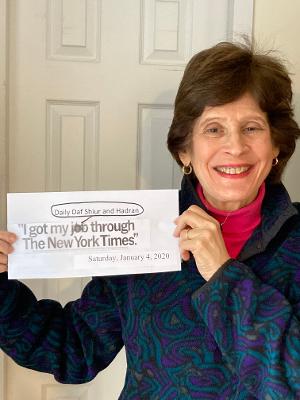
I had never heard of Daf Yomi and after reading the book, The Weight of Ink, I explored more about it. I discovered that it was only 6 months before a whole new cycle started and I was determined to give it a try. I tried to get a friend to join me on the journey but after the first few weeks they all dropped it. I haven’t missed a day of reading and of listening to the podcast.

Elkins Park, United States
See video

Raanana, Israel
New York, United States
I started at the beginning of this cycle. No 1 reason, but here’s 5.
In 2019 I read about the upcoming siyum hashas.
There was a sermon at shul about how anyone can learn Talmud.
Talmud references come up when I am studying. I wanted to know more.
Yentl was on telly. Not a great movie but it’s about studying Talmud.
I went to the Hadran website: A new cycle is starting. I’m gonna do this
Cambridge, United Kingdom
Phoenix, Arizona, United States
Ive been learning Gmara since 5th grade and always loved it. Have always wanted to do Daf Yomi and now with Michelle Farber’s online classes it made it much easier to do! Really enjoying the experience thank you!!

Neve Daniel, Israel
A beautiful world of Talmudic sages now fill my daily life with discussion and debate.
bringing alive our traditions and texts that has brought new meaning to my life.
I am a מגילת אסתר reader for women . the words in the Mishna of מסכת megillah 17a
הקורא את המגילה למפרע לא יצא were powerful to me.
I hope to have the zchut to complete the cycle for my 70th birthday.

Jerusalem, Israel
Chullin 7
אֶלָּא מָקוֹם הִנִּיחוּ לוֹ אֲבוֹתָיו לְהִתְגַּדֵּר בּוֹ, אַף אֲנִי מָקוֹם הִנִּיחוּ לִי אֲבוֹתַי לְהִתְגַּדֵּר בּוֹ.
Rather, it must be that in not eradicating the serpent, his ancestors left Hezekiah room through which to achieve prominence [lehitgader]. I too can say that my ancestors left me room through which to achieve prominence by permitting untithed produce from Beit She’an.
מִכָּאן לְתַלְמִיד חָכָם שֶׁאָמַר דְּבַר הֲלָכָה, שֶׁאֵין מְזִיחִין אוֹתוֹ, וְאָמְרִי לָהּ: אֵין מַזְנִיחִין אוֹתוֹ, וְאָמְרִי לָהּ: אֵין מַזְחִיחִין אוֹתוֹ.
The Gemara adds: From here one learns with regard to a Torah scholar who states a new matter of halakha that one does not move [meziḥin] him from his position; and some say: One does not disregard [mazniḥin] him; and some say: One does not attribute his innovative statement to his conceit [mazḥiḥin].
מַאן דְּאָמַר ״מְזִיחִין״ – כְּדִכְתִיב: ״וְלֹא יִזַּח הַחֹשֶׁן״, וּמַאן דְּאָמַר ״אֵין מַזְנִיחִין״ – דִּכְתִיב: ״כִּי לֹא יִזְנַח לְעוֹלָם ה׳״, וּמַאן דְּאָמַר ״מַזְחִיחִין״ – דִּתְנַן: מִשֶּׁרַבּוּ זְחוּחֵי הַלֵּב רַבּוּ מַחְלוֹקוֹת בְּיִשְׂרָאֵל.
The Gemara explains: With regard to the one who says meziḥin, it is as that which is written: “And the breastplate shall not be loosed [yizaḥ] from the ephod” (Exodus 28:28). And with regard to the one who says: One does not disregard [mazniḥin], it is as it is written: “For the Lord will not abandon [yizaḥ] forever” (Lamentations 3:31). And with regard to the one who says mazḥiḥin, it is as we learned in a baraita (Tosefta, Sota 14:9): From the time that those with conceited [zeḥuḥei] hearts proliferated, dispute proliferated among the Jewish people.
מַתְקֵיף לַהּ יְהוּדָה בְּרֵיהּ דְּרַבִּי שִׁמְעוֹן בֶּן פַּזִּי: וּמִי אִיכָּא לְמַאן דְּאָמַר דְּבֵית שְׁאָן לָאו מֵאֶרֶץ יִשְׂרָאֵל הִיא? וְהָכְתִיב: ״וְלֹא הוֹרִישׁ מְנַשֶּׁה אֶת בֵּית שְׁאָן וְאֶת בְּנוֹתֶיהָ וְאֶת תַּעְנַךְ וְאֶת בְּנֹתֶיהָ״!
Yehuda, son of Rabbi Shimon ben Pazi, objects to the basic halakha: And is there anyone who says that Beit She’an is not part of Eretz Yisrael? But isn’t it written: “And Manasseh did not drive out the inhabitants of Beth She’an and its towns, nor of Taanach and its towns” (Judges 1:27).
אִישְׁתְּמִיטְתֵּיהּ הָא דְּאָמַר רַבִּי שִׁמְעוֹן בֶּן אֶלְיָקִים, מִשּׁוּם רַבִּי אֶלְעָזָר בֶּן פְּדָת, שֶׁאָמַר מִשּׁוּם רַבִּי אֶלְעָזָר בֶּן שַׁמּוּעַ: הַרְבֵּה כְּרַכִּים כְּבָשׁוּם עוֹלֵי מִצְרַיִם, וְלֹא כְּבָשׁוּם עוֹלֵי בָּבֶל.
The Gemara answers: That which Rabbi Shimon ben Elyakim says in the name of Rabbi Elazar ben Pedat, who says in the name of Rabbi Elazar ben Shammua, escaped the attention of Yehuda: Many cities were conquered by those who ascended from Egypt to Eretz Yisrael, led by Joshua, son of Nun, and were not conquered by those who ascended from Babylonia to Eretz Yisrael in the return to Zion led by Ezra. Among those cities was Beit She’an.
וְקָסָבַר: קְדוּשָּׁה רִאשׁוֹנָה קִדְּשָׁה לִשְׁעָתָהּ וְלֹא קִדְּשָׁה לֶעָתִיד לָבֹא, וְהִנִּיחוּם כְּדֵי שֶׁיִּסְמְכוּ עֲלֵיהֶן עֲנִיִּים בַּשְּׁבִיעִית.
And Rabbi Yehuda HaNasi holds: The initial consecration with which Eretz Yisrael was sanctified during the era of Joshua, son of Nun, in terms of the obligation to fulfill land-based mitzvot, sanctified Eretz Yisrael for its time but did not sanctify it forever. Rather, the obligation lapsed with the exile to Babylonia. When those who ascended from Babylonia returned to Eretz Yisrael and sanctified the land, they left certain places unsanctified, so that the poor would rely upon them for sustenance during the Sabbatical Year, when produce is not plentiful. Since these areas were not sanctified, it is permitted to sow crops there during the Sabbatical Year, and the poor will not go hungry. Once Rabbi Yehuda HaNasi discovered that Beit She’an was one of those cities, he exempted it from land-based mitzvot.
אֲמַר לֵיהּ רַבִּי יִרְמְיָה לְרַבִּי זֵירָא: וְהָא רַבִּי מֵאִיר עָלֶה בְּעָלְמָא הוּא דְּאָכֵיל! אֲמַר לֵיהּ: מֵאֲגוּדָּה אַכְלֵיהּ, וּתְנַן: יָרָק הַנֶּאֱגָד מִשֶּׁיֵּאָגֵד.
Rabbi Yirmeya said to Rabbi Zeira: How did Rabbi Yehuda HaNasi rely on the testimony of Rabbi Yehoshua ben Zeruz to exempt from terumot and tithes produce that grows in Beit She’an? But wasn’t it merely a leaf that Rabbi Meir ate? It is permitted to eat untithed produce incidentally, not in the framework of a meal. Rabbi Zeira said to him: He ate the leaf from a bundle, and we learned in a mishna (Ma’asrot 1:5): With regard to a vegetable that is typically bound in a bundle, one is obligated to separate teruma and tithes from the moment that it is bound. From that point, one may not eat from it even incidentally before tithing.
וְדִלְמָא לָאו אַדַּעְתֵּיהּ? הַשְׁתָּא, בְּהֶמְתָּן שֶׁל צַדִּיקִים אֵין הַקָּדוֹשׁ בָּרוּךְ הוּא מֵבִיא תַּקָּלָה עַל יָדָן, צַדִּיקִים עַצְמָן לֹא כׇּל שֶׁכֵּן!
Rabbi Yirmeya said to Rabbi Zeira: And perhaps it was not on Rabbi Meir’s mind, and his attention was diverted when he ate the leaf. Rabbi Zeira answered: Now, since even with regard to the animals of the righteous, the Holy One, Blessed be He, does not generate mishaps through them, is it not all the more so true that the righteous themselves would not experience mishaps?
וְדִלְמָא עִישֵּׂר עֲלֵיהֶם מִמָּקוֹם אַחֵר? לֹא נֶחְשְׁדוּ חֲבֵרִים לִתְרוֹם שֶׁלֹּא מִן הַמּוּקָּף. וְדִלְמָא נָתַן עֵינָיו בְּצַד זֶה וְאָכַל בְּצַד אַחֵר? אֲמַר לֵיהּ: חֲזִי מַאן גַּבְרָא רַבָּה קָמַסְהֵיד עֲלֵיהּ.
Rabbi Yirmeya asked: And perhaps Rabbi Meir tithed those leaves from produce in another place. Rabbi Zeira answered: Ḥaverim are not suspected of separating teruma from produce that is not proximate to the produce for which it is being separated. Rabbi Yirmeya asked: And perhaps Rabbi Meir set his sight on this side of the vegetable with the intent of separating teruma and tithes, and ate a leaf on the other side. Rabbi Zeira said to him: See who the great man is who is testifying about Rabbi Meir. Certainly a man of the stature of Rabbi Yehoshua ben Zeruz accurately observed and reported Rabbi Meir’s actions.
מַאי בְּהֶמְתָּן שֶׁל צַדִּיקִים? דְּרַבִּי פִּנְחָס בֶּן יָאִיר הֲוָה קָאָזֵיל לְפִדְיוֹן שְׁבוּיִין, פְּגַע בֵּיהּ בְּגִינַּאי נַהֲרָא.
§ The Gemara asks: What is the reference to animals of the righteous, about whom it is stated that God does not generate mishaps through them? It is based on the incident where Rabbi Pineḥas ben Ya’ir was going to engage in the redemption of captives, and he encountered the Ginai River.
אֲמַר לֵיהּ: גִּינַּאי, חֲלוֹק לִי מֵימֶךָ וְאֶעֱבוֹר בָּךְ! אֲמַר לֵיהּ: אַתָּה הוֹלֵךְ לַעֲשׂוֹת רְצוֹן קוֹנֶךָ וַאֲנִי הוֹלֵךְ לַעֲשׂוֹת רְצוֹן קוֹנִי, אַתָּה סָפֵק עוֹשֶׂה סָפֵק אִי אַתָּה עוֹשֶׂה, אֲנִי וַדַּאי עוֹשֶׂה. אֲמַר לֵיהּ: אִם אִי אַתָּה חוֹלֵק גּוֹזְרַנִי עָלֶיךָ שֶׁלֹּא יַעַבְרוּ בְּךָ מַיִם לְעוֹלָם. חֲלַק לֵיהּ.
He said to the river: Ginai, part your water for me and I will pass through you. The river said to him: You are going to perform the will of your Maker and I am going to perform the will of my Maker, to flow in my path. With regard to you, it is uncertain whether you will perform His will successfully, and it is uncertain whether you will not perform His will successfully. I will certainly perform His will successfully. Rabbi Pineḥas ben Ya’ir said to the river: If you do not part, I will decree upon you that water will never flow through you. The river parted for him.
הֲוָה הָהוּא גַּבְרָא דַּהֲוָה דָּארֵי חִיטֵּי לְפִיסְחָא, אֲמַר לֵיהּ חֲלוֹק לֵיהּ נָמֵי לְהַאי, דִּבְמִצְוָה עָסֵיק. חֲלַק לֵיהּ. הֲוָה הָהוּא טַיָּיעָא דִּלְוָוה בַּהֲדַיְיהוּ, אֲמַר לֵיהּ חֲלוֹק לֵיהּ נָמֵי לְהַאי, דְּלָא לֵימָא: ״כָּךְ עוֹשִׂים לִבְנֵי לְוִיָּה״, חֲלַק לֵיהּ.
There was a certain man who was carrying wheat for the preparation of matza for Passover. Rabbi Pineḥas ben Ya’ir said to the river: Part your waters for that person too, as he is engaged in the performance of a mitzva. The river parted for him. There was a certain Arab [taya’a] who was accompanying them. Rabbi Pineḥas ben Ya’ir said to the river: Part your waters for that person too, so that he will not say: Is that what one does to a person who accompanies him? The river parted for him.
אָמַר רַב יוֹסֵף: כַּמָּה נְפִישׁ גַּבְרָא מִמֹּשֶׁה וְשִׁתִּין רִבְּוָון, דְּאִילּוּ הָתָם חַד זִימְנָא, וְהָכָא תְּלָתָא זִימְנִין. וְדִלְמָא הָכָא נָמֵי חֲדָא זִימְנָא? אֶלָּא כְּמֹשֶׁה וְשִׁתִּין רִבְּוָון.
Rav Yosef said: How great is this man, Rabbi Pineḥas ben Ya’ir, greater than Moses and the six hundred thousand who left Egypt, as there, at the Red Sea, the waters parted one time, and here the waters parted three times. The Gemara asks: And perhaps here too, the waters parted one time, and the river began to flow again only after all three of them passed. Rather, this man was as great as Moses and the six hundred thousand children of Israel.
אִקְּלַע לְהָהוּא אוּשְׁפִּיזָא, רְמוֹ לֵיהּ שְׂעָרֵי לְחַמְרֵיהּ, לָא אֲכַל.
After crossing the river, Rabbi Pineḥas ben Ya’ir happened to come to a certain inn [ushpiza]. His hosts cast barley before his donkey for him to eat. The donkey did not eat it.
חַבְטִינְהוּ, לָא אֲכַל. נַקְּרִינְהוּ, לָא אֲכַל. אֲמַר לְהוּ: דִּלְמָא לָא מְעַשְּׂרָן? עַשְּׂרִינְהוּ, וַאֲכַל. אָמַר: עֲנִיָּיה זוֹ הוֹלֶכֶת לַעֲשׂוֹת רְצוֹן קוֹנָהּ, וְאַתֶּם מַאֲכִילִין אוֹתָהּ טְבָלִים!
The hosts sifted the barley with a utensil, but the donkey did not eat it. They separated the chaff from the barley by hand, but the donkey did not eat it. They wondered why the donkey would not eat the barley. Rabbi Pineḥas ben Ya’ir said to his hosts: Perhaps the barley is not tithed. They tithed it and the donkey ate it. Rabbi Pineḥas ben Ya’ir said: This poor animal is going to perform the will of its Maker, and you are feeding it untithed produce? Rabbi Zeira was referring to this donkey when it spoke of God preventing mishaps from occurring through animals of the righteous.
וּמִי מִיחַיְּיבָא? וְהָתְנַן: הַלּוֹקֵחַ לְזֶרַע, וְלִבְהֵמָה, וְקֶמַח לְעוֹרוֹת, וְשֶׁמֶן לַנֵּר, וְשֶׁמֶן לָסוּךְ בּוֹ אֶת הַכֵּלִים – פָּטוּר מֵהַדְּמַאי.
The Gemara asks: And is one who purchases grain that is demai in order to feed his animal obligated to tithe it? But didn’t we learn in a mishna (Demai 1:3): One who purchases grain in the market for sowing or for feeding an animal, or flour to process animal hides, or oil to kindle a lamp, or oil to smear on vessels is exempt from the obligation of tithing demai?
הָתָם הָא אִתְּמַר עֲלַהּ, אָמַר רַבִּי יוֹחָנָן: לֹא שָׁנוּ אֶלָּא שֶׁלְּקָחָן מִתְּחִלָּה לִבְהֵמָה, אֲבָל לְקָחָן מִתְּחִלָּה לְאָדָם וְנִמְלַךְ עֲלֵיהֶם לִבְהֵמָה – חַיָּיב לְעַשֵּׂר. וְהָתַנְיָא: הַלּוֹקֵחַ פֵּירוֹת מִן הַשּׁוּק לַאֲכִילָה וְנִמְלַךְ עֲלֵיהֶן לִבְהֵמָה – הֲרֵי זֶה לֹא יִתֵּן לֹא לִפְנֵי בְּהֶמְתּוֹ וְלֹא לִפְנֵי בֶּהֱמַת חֲבֵרוֹ אֶלָּא אִם כֵּן עִישֵּׂר.
The Gemara answers: There, it was stated with regard to that mishna that Rabbi Yoḥanan says: They taught this only in a case where one purchased those items initially for the animal or for the other purposes enumerated in the mishna, but if he purchased them initially for a person and reconsidered his plans for them and decided to use them for an animal, he is obligated to tithe the demai. And it is taught in a baraita in support of that understanding: In the case of one who purchases produce from the market for human consumption, and he reconsidered his plans for it and decided to use it for an animal, that person may neither place it before his animal nor before the animal of another unless he tithed the produce.
שְׁמַע רַבִּי, נְפַק לְאַפֵּיהּ, אֲמַר לֵיהּ: רְצוֹנְךָ סְעוֹד אֶצְלִי? אָמַר לוֹ: הֵן. צָהֲבוּ פָּנָיו שֶׁל רַבִּי.
Rabbi Yehuda HaNasi heard that Rabbi Pineḥas ben Ya’ir arrived, and he emerged to greet him. Rabbi Yehuda HaNasi said to him: Is it your desire to dine with me? Rabbi Pineḥas ben Ya’ir said to him: Yes. Rabbi Yehuda HaNasi’s face beamed [tzahavu], as it was well known that Rabbi Pineḥas ben Ya’ir did not accept invitations to dine with others.
אָמַר לוֹ: כִּמְדוּמֶּה אַתָּה שֶׁמּוּדָּר הֲנָאָה מִיִּשְׂרָאֵל אֲנִי? יִשְׂרָאֵל קְדוֹשִׁים הֵן, יֵשׁ רוֹצֶה וְאֵין לוֹ, וְיֵשׁ שֶׁיֵּשׁ לוֹ וְאֵינוֹ רוֹצֶה, וּכְתִיב: ״אַל תִּלְחַם אֶת לֶחֶם רַע עָיִן וְאַל תִּתְאָיו לְמַטְעַמֹּתָיו כִּי כְּמוֹ שָׁעַר בְּנַפְשׁוֹ כֶּן הוּא אֱכוֹל וּשְׁתֵה יֹאמַר לָךְ וְלִבּוֹ בַּל עִמָּךְ״, וְאַתָּה רוֹצֶה וְיֵשׁ לְךָ.
Rabbi Pineḥas ben Ya’ir said to Rabbi Yehuda HaNasi: Are you under the impression that deriving benefit from the Jewish people is forbidden to me by vow? On the contrary, the Jewish people are holy. I avoid accepting invitations, as there is one who wants to invite guests to dine with him but he does not have the means, and I do not want to enjoy a meal that my host cannot afford. And there is one who has the means but does not want to host guests, and with regard to those people it is written: “Eat not the bread of him that has an evil eye, neither desire his delicacies. For as one that has reckoned within himself, so is he: Eat and drink, says he to you; but his heart is not with you” (Proverbs 23:6–7). But you want to invite guests to dine with you, and you have the means.
מִיהָא הַשְׁתָּא מְסַרְהֵיבְנָא, דִּבְמִלְּתָא דְּמִצְוָה קָא טָרַחְנָא, כִּי הָדַרְנָא אָתֵינָא עָיֵילְנָא לְגַבָּךְ.
But now I am rushing [mesarheivna], as I am engaged in the performance of a matter involving a mitzva. When I come back I will enter to dine with you.
כִּי אֲתָא, אִיתְרְמִי עָל בְּהָהוּא פִּיתְחָא דַּהֲווֹ קָיְימִין בֵּיהּ כּוּדַנְיָיתָא חִוָּורָתָא, אָמַר: מַלְאַךְ הַמָּוֶת בְּבֵיתוֹ שֶׁל זֶה וַאֲנִי אֶסְעוֹד אֶצְלוֹ?
When Rabbi Pineḥas ben Ya’ir came back, he happened to enter through that entrance in which white mules were standing. He said: The Angel of Death is in this person’s house, and I will eat with him? White mules were known to be dangerous animals.
שְׁמַע רַבִּי נְפַק לְאַפֵּיהּ, אֲמַר לֵיהּ: מְזַבֵּנְינָא לְהוּ, אֲמַר לֵיהּ: ״וְלִפְנֵי עִוֵּר לֹא תִתֵּן מִכְשֹׁל״.
Rabbi Yehuda HaNasi heard the comment of Rabbi Pineḥas ben Ya’ir and emerged to greet him. He said to him: I will sell the mules. Rabbi Pineḥas ben Ya’ir said to him: You will thereby violate the prohibition: “Nor place a stumbling block before the blind” (Leviticus 19:14), as it is prohibited for any Jew to keep a destructive animal in his possession.
מַפְקַרְנָא לְהוּ, מַפְּשַׁתְּ הֶיזֵּקָא. עָקַרְנָא לְהוּ, אִיכָּא צַעַר בַּעֲלֵי חַיִּים. קָטֵילְנָא לְהוּ, אִיכָּא ״בַּל תַּשְׁחִית״.
Rabbi Yehuda HaNasi said to him: I will declare the mules ownerless. Rabbi Pineḥas ben Ya’ir said to him: You will thereby increase the damage, as there will be no owner to restrain it. Rabbi Yehuda HaNasi said to him: I will remove their hooves so that they will be unable to kick and cause damage. Rabbi Pineḥas ben Ya’ir said to him: There is the requirement to prevent suffering to animals, and you will be violating it. Rabbi Yehuda HaNasi said to him: I will kill them. Rabbi Pineḥas ben Ya’ir said to him: There is the prohibition: Do not destroy items of value.
הֲוָה קָא מְבַתֵּשׁ בֵּיהּ טוּבָא, גְּבַהּ טוּרָא בֵּינַיְיהוּ, בָּכָה רַבִּי וְאָמַר: מָה בְּחַיֵּיהֶן כָּךְ, בְּמִיתָתָן עַל אַחַת כַּמָּה וְכַמָּה! דְּאָמַר רַבִּי חָמָא בַּר חֲנִינָא: גְּדוֹלִים צַדִּיקִים בְּמִיתָתָן יוֹתֵר מִבְּחַיֵּיהֶן, שֶׁנֶּאֱמַר: ״וַיְהִי הֵם קוֹבְרִים אִישׁ וְהִנֵּה רָאוּ הַגְּדוּד וַיַּשְׁלִיכוּ אֶת הָאִישׁ בְּקֶבֶר אֱלִישָׁע וַיֵּלֶךְ וַיִּגַּע הָאִישׁ בְּעַצְמוֹת אֱלִישָׁע וַיְחִי וַיָּקׇם עַל רַגְלָיו״.
Rabbi Yehuda HaNasi was greatly imploring him to enter his home until a mountain rose between them and Rabbi Yehuda HaNasi could no longer speak with him. Rabbi Yehuda HaNasi wept and said: If during their lifetimes it is so that the righteous are great, after their death it is all the more so true. The Gemara comments: This is as Rabbi Ḥama bar Ḥanina says: The righteous are greater after their death, more so than during their lifetimes, as it is stated: “And it came to pass, as they were burying a man, that they spied a raiding party; and they cast the man into the tomb of Elisha; and as soon as the man touched the bones of Elisha, he revived, and stood up on his feet” (II Kings 13:21).
אֲמַר לֵיהּ רַב פָּפָּא לְאַבָּיֵי: וְדִילְמָא לְקַיּוֹמֵי בֵּיהּ בִּרְכְּתָא דְּאֵלִיָּהוּ, דִּכְתִיב: ״וִיהִי נָא פִּי שְׁנַיִם בְּרוּחֲךָ אֵלָי״? אֲמַר לֵיהּ: אִי הָכִי, הַיְינוּ דְּתַנְיָא: עַל רַגְלָיו עָמַד, וּלְבֵיתוֹ לֹא הָלַךְ!
Rav Pappa said to Abaye: This proof from the case of Elisha that the righteous are greater after death is not valid. And perhaps this transpired to fulfill with regard to Elisha the blessing of Elijah, as it is written: “Please, let a double portion of your spirit be upon me” (II Kings 2:9). Elijah revived one dead person and this one is the second revived by Elisha. Abaye said to Rav Pappa: If so, is this consistent with that which is taught in a baraita: The dead person arose on his feet but he did not go to his home, indicating that he had not truly been revived?
אֶלָּא בְּמָה אִיקַּיַּים? כִּדְאָמַר רַבִּי יוֹחָנָן: שֶׁרִיפֵּא צָרַעַת נַעֲמָן, שֶׁהִיא שְׁקוּלָה כְּמֵת, שֶׁנֶּאֱמַר: ״אַל נָא תְהִי כַּמֵּת״.
The Gemara asks: But if that is the case, in what manner was Elijah’s blessing fulfilled? It is as Rabbi Yoḥanan says: The blessing was fulfilled when he cured the leprosy of Naaman, since a leper is equivalent to a dead person, as it is stated with regard to Miriam when she was afflicted with leprosy: “Please, let her not be as one dead” (Numbers 12:12).
אָמַר רַבִּי יְהוֹשֻׁעַ בֶּן לֵוִי: לָמָּה נִקְרָא שְׁמָן ״יֵמִים״ – שֶׁאֵימָתָם מוּטֶּלֶת עַל הַבְּרִיּוֹת, דְּאָמַר רַבִּי חֲנִינָא: מִיָּמַי לֹא שְׁאָלַנִי אָדָם עַל מַכַּת פִּרְדָּה לְבָנָה וְחָיָה. וְהָא קָחָזֵינָא דְּחָיֵי! אֵימָא: ״וְחָיָית״, וְהָא קָחָזֵינָא דְּמִיתַּסֵּי! דְּחִיוָּורָן רֵישׁ כַּרְעַיְיהוּ קָא אָמְרִינַן.
Apropos white mules, which were likened to the Angel of Death, Rabbi Yehoshua ben Levi says: Why are the mules called yemim (see Genesis 36:24)? It is because their terror [eimatam] is cast over all creatures, as Rabbi Ḥanina says: In all my days, no man has asked me about a wound caused him by a white mule and survived, indicating that they are extremely dangerous. The Gemara asks: But haven’t we seen that some people survive after being wounded by a white mule? The Gemara answers: Say instead, no man has asked me about a wound caused him by a mule and the wound healed. The Gemara asks: But haven’t we seen that such wounds heal? The Gemara answers: The wound that we say does not heal is one caused by a mule the top of whose legs are white.
״אֵין עוֹד מִלְּבַדּוֹ״ – אָמַר רַבִּי חֲנִינָא: וַאֲפִילּוּ כְּשָׁפִים. הָהִיא אִיתְּתָא דַּהֲוָת קָא מְהַדְּרָא לְמִישְׁקַל עַפְרָא מִתּוּתֵי כַּרְעֵיהּ דְּרַבִּי חֲנִינָא, אֲמַר לַהּ: שְׁקוּלִי, לָא מִסְתַּיְּיעָא מִילְּתִיךְ, ״אֵין עוֹד מִלְבַדּוֹ״ כְּתִיב. וְהָאָמַר רַבִּי יוֹחָנָן: לָמָּה נִקְרָא שְׁמָן כְּשָׁפִים – שֶׁמַּכְחִישִׁין פָּמַלְיָא שֶׁל מַעְלָה! שָׁאנֵי רַבִּי חֲנִינָא דִּנְפִישָׁא זְכוּתֵיהּ.
The Gemara relates other statements of Rabbi Ḥanina: With regard to the verse: “There is none else beside Him” (Deuteronomy 4:35), Rabbi Ḥanina says: And even sorcery is ineffective against the will of God. The Gemara relates: There was a certain woman who would try to take dust from beneath the feet of Rabbi Ḥanina in order to perform sorcery on him and harm him. Rabbi Ḥanina said to her: Take the dust, but the matter will be ineffective for you, as it is written: “There is none other beside Him.” The Gemara asks: But doesn’t Rabbi Yoḥanan say: Why is sorcery called keshafim? It is an acronym for makhḥishin pamalya shel mala, meaning: That they diminish the heavenly entourage [pamalya], indicating that they function contrary to the will of God. The Gemara answers: Rabbi Ḥanina is different, as, because his merit is great, sorcery has no effect on him.
וְאָמַר רַבִּי חֲנִינָא: אֵין אָדָם נוֹקֵף אֶצְבָּעוֹ מִלְּמַטָּה, אֶלָּא אִם כֵּן מַכְרִיזִין עָלָיו מִלְּמַעְלָה, שֶׁנֶּאֱמַר: ״מֵה׳ מִצְעֲדֵי גֶבֶר כּוֹנָנוּ וְאָדָם מַה יָּבִין דַּרְכּוֹ״. אָמַר רַבִּי אֶלְעָזָר: דַּם נִיקּוּף מְרַצֶּה כְּדַם עוֹלָה. אָמַר רָבָא: בְּגוּדָל יָמִין, וּבְנִיקּוּף שֵׁנִי, וְהוּא דְּקָאָזֵיל לִדְבַר מִצְוָה.
And Rabbi Ḥanina says: A person injures his finger below, on earth, only if they declare about him on high that he should be injured, as it is stated: It is of the Lord that a man’s goings are established; and a man, what does he understand of his way (see Psalms 37:23 and Proverbs 20:24). Rabbi Elazar says: The blood of a wound effects atonement like the blood of a burnt offering. Rava said: This is stated with regard to a wound on his right thumb, as one applies force with that thumb and the wound is consequently more severe; and it is also stated with regard to a second wound in the same place before the first has healed, and it is provided that he is wounded while going to perform a matter involving a mitzva.
אָמְרוּ עָלָיו עַל רַבִּי פִּנְחָס בֶּן יָאִיר: מִיָּמָיו לֹא בָּצַע עַל פְּרוּסָה שֶׁאֵינָהּ שֶׁלּוֹ, וּמִיּוֹם שֶׁעָמַד עַל דַּעְתּוֹ לֹא נֶהֱנָה מִסְּעוּדַת אָבִיו.
Apropos Rabbi Pineḥas ben Ya’ir, the Gemara notes that they said about Rabbi Pineḥas ben Ya’ir: In all his days he never broke bread and recited a blessing on a piece of bread that was not his, and from the day that he achieved cognition he did not benefit even from the meal of his father, because he eschewed benefit from everyone.

