










Rabbi Yochanan ben Gudgada testified about several laws, one pertaining to a takana, and the Gemara discusses each of the laws.
This month’s learning is sponsored by Marci Glazer in loving memory of her teacher and chevruta, Rachel Brodie, Rachel Aviva bat Devora Chana, on her 4th yahrzeit. “She brought her love of Torah to thousands of people in her all-too-short life. A lover of Midrash, she still invited me on this Daf Yomi journey.”
Want to dedicate learning? Get started here:
English
עברית

0:00
0:00
0:00
0:00
Today’s daily daf tools:
This month’s learning is sponsored by Marci Glazer in loving memory of her teacher and chevruta, Rachel Brodie, Rachel Aviva bat Devora Chana, on her 4th yahrzeit. “She brought her love of Torah to thousands of people in her all-too-short life. A lover of Midrash, she still invited me on this Daf Yomi journey.”
Gittin 55
וּמַאי שְׁנָא מִדְּרַבִּי אַמֵּי? הָתָם, אִיכָּא לְמֵימַר טָעֵי בִּדְרַבִּי יִרְמְיָה. הָכָא, כֵּיוָן דְּקָא מַפְסֵיד כּוּלֵּיהּ אַגְרֵיהּ – וַאֲתָא וַאֲמַר, אֵימוֹר קוּשְׁטָא קָאָמַר.
The Gemara asks: And in what way is this case different from the case in which Rabbi Ami said that the scribe is not deemed credible to disqualify the Torah scroll? The Gemara answers: There it can be said that the scribe was lying and merely wished to distress the purchaser of the Torah scroll. He claimed that he had written God’s names without the proper intention because he made the mistake of Rabbi Yirmeya. He thought, as Rabbi Yirmeya did, that as a result of his purported admission he would lose only his wage for writing the holy names, but he would still receive payment for the rest of the scroll. Here, by contrast, since the scribe knows that by claiming that he did not process the parchment with the proper intention, he causes the loss of his entire wage, and he nevertheless comes and says this, you should say that he speaks the truth and should be deemed credible. Since he is deemed credible and there is no concern that he merely wished to distress the purchaser, the Torah scroll is disqualified.
מַתְנִי׳ הֵעִיד רַבִּי יוֹחָנָן בֶּן גּוּדְגְּדָא עַל הַחֵרֶשֶׁת שֶׁהִשִּׂיאָהּ אָבִיהָ, שֶׁהִיא יוֹצְאָה בְּגֵט;
MISHNA: Rabbi Yoḥanan ben Gudgeda testified before the Sages about the case of a deaf-mute woman who was married off by her father when she was a minor, so that her marriage took effect by Torah law. He said that she can be released from her marriage through a bill of divorce, whether as a minor or after she reaches adulthood. Although as a deaf-mute woman she is not legally competent to give her consent, the divorce is effective because divorce does not require the woman’s consent.
וְעַל קְטַנָּה בַּת יִשְׂרָאֵל שֶׁנִּשֵּׂאת לְכֹהֵן, שֶׁאוֹכֶלֶת בִּתְרוּמָה, וְאִם מֵתָה – בַּעְלָהּ יוֹרְשָׁהּ;
And similarly, he testified about the case of the minor daughter of a non-priest who was orphaned from her father and then married off to a priest by her mother or brother, so that her marriage took effect by rabbinic law. He said that nevertheless she may partake of teruma, although by Torah law it is prohibited for one who is not in a priestly household to partake of teruma. And furthermore if this girl dies, then her husband inherits her estate. It is not said that because the validity of the marriage is by rabbinic law and not Torah law he is not entitled to inherit from her.
וְעַל הַמָּרִישׁ הַגָּזוּל שֶׁבְּנָאוֹ בְּבִירָה, שֶׁיִּטּוֹל אֶת דָּמָיו, מִפְּנֵי תַּקָּנַת הַשָּׁבִים;
And Rabbi Yoḥanan ben Gudgeda further testified about a stolen beam that was already built into a large building [bira], that the victim of the robbery receives only the value of the beam but not the beam itself, due to an ordinance instituted for the penitent. By Torah law, a robber is obligated to return any stolen item in his possession, provided that its form has not been altered. If one stole a beam and incorporated it into a building, then by Torah law he would have to destroy the building and return the beam. In order to encourage repentance, the Sages were lenient and allowed a robber to return the value of the beam.
וְעַל חַטָּאת הַגְּזוּלָה שֶׁלֹּא נוֹדְעָה לְרַבִּים – שֶׁהִיא מְכַפֶּרֶת, מִפְּנֵי תִּיקּוּן הַמִּזְבֵּחַ.
And lastly, Rabbi Yoḥanan ben Gudgeda testified about a sin-offering that was obtained through robbery but that was not publicly known to have been obtained in that manner. He said that it effects atonement for the robber who sacrifices it, for the benefit of the altar, as will be explained in the Gemara.
גְּמָ׳ אָמַר רָבָא: מֵעֵדוּתוֹ שֶׁל רַבִּי יוֹחָנָן בֶּן גּוּדְגְּדָא – אָמַר לְעֵדִים: רָאוּ גֵּט זֶה שֶׁאֲנִי נוֹתֵן לָהּ, וְחָזַר וְאָמַר לָהּ: כִּנְסִי שְׁטַר חוֹב זֶה – הֲרֵי זוֹ מְגוֹרֶשֶׁת. מִי לָא אָמַר רַבִּי יוֹחָנָן בֶּן גּוּדְגְּדָא לָא בָּעֵינַן דַּעְתַּהּ? הָכָא נָמֵי לָא בָּעֵינַן דַּעְתַּהּ.
GEMARA: Rava says: Learn from the testimony of Rabbi Yoḥanan ben Gudgeda in the mishna that if the husband secretly says to witnesses: See this bill of divorce that I am about to give to my wife, and then he says to his wife: Take this promissory note, then she is divorced even when she herself does not know that the document in her hand is a bill of divorce. Didn’t Rabbi Yoḥanan ben Gudgeda say that we do not require the woman’s consent for a bill of divorce, as the divorce takes effect even when she is a deaf-mute, who is not legally competent to give her consent? Here too, one should say that we do not require the woman’s consent.
פְּשִׁיטָא! מַהוּ דְּתֵימָא, כֵּיוָן דְּאָמַר: ״כִּנְסִי שְׁטַר חוֹב זֶה״, בַּטּוֹלֵי בַּטְּלֵיהּ; קָא מַשְׁמַע לַן, אִם אִיתָא דְּבַטְּלֵיהּ – לְעֵדִים הֲוָה אָמַר לְהוּ. וְהַאי דְּקָאָמַר הָכִי – מִשּׁוּם כִּיסּוּפָא.
The Gemara asks: Isn’t this obvious? Why would the divorce not be valid? The Gemara explains: Lest you say: Since he said to his wife: Take this promissory note, after talking to the witnesses, he meant to cancel the bill of divorce with these words, Rava therefore teaches us: If it is so that he meant to cancel the bill of divorce, he would have told the witnesses that this was his intention. The fact that he did not do so indicates that he had no intention of canceling it. And the reason he said to his wife that he was handing her a promissory note is due to embarrassment, as he was ashamed to tell her that he was giving her a bill of divorce. Consequently, he gave it to her in such a way that she did not immediately know that it was a bill of divorce that she received.
וְעַל קְטַנָּה בַּת יִשְׂרָאֵל: וְאִילּוּ חֵרֶשֶׁת – לָא אָכְלָה. מַאי טַעְמָא? גְּזֵירָה שֶׁמָּא יַאֲכִיל חֵרֵשׁ בְּחֵרֶשֶׁת.
§ The mishna teaches that Rabbi Yoḥanan ben Gudgeda testified about the case of a minor daughter of a non-priest who was married to a priest, and said that she may partake of teruma. The Gemara comments: This indicates that only the minor daughter can partake of teruma, while one can infer from this that a deaf-mute woman who was married to a priest may not partake of teruma. The Gemara explains: What is the reason for this? The Sages decreed that a deaf-mute woman married to a priest may not partake of teruma lest a deaf-mute priest come to feed teruma to his deaf-mute wife, as it is common for deaf-mute men to marry deaf-mute women, but their marriage is not effective by Torah law.
וְלֹיכֵול – קָטָן אוֹכֵל נְבֵלוֹת הוּא!
The Gemara asks: Why does this matter? And let him feed her teruma. Isn’t she like a minor who eats forbidden animal carcasses? Since the deaf-mute woman is not considered to be legally competent, she is not subject to the prohibition against partaking of teruma. As in the case of a minor who is eating forbidden food, there is no requirement to prevent her from doing so.
גְּזֵרָה שֶׁמָּא יַאֲכִיל חֵרֵשׁ בְּפִיקַּחַת.
The Gemara answers: Rather, the Sages decreed that a deaf-mute woman married to a priest may not partake of teruma lest a deaf-mute priest come to feed teruma to his halakhically competent wife. Since the validity of their marriage is by rabbinic law, it is therefore prohibited for the woman to partake of teruma, as by Torah law, she is not the wife of a priest. There is a concern that a distinction will not be made between the marriage of a halakhically competent man and deaf-mute woman, in which case the woman is permitted to partake of teruma, and the marriage of a deaf-mute man and a halakhically competent woman, in which case the woman is prohibited from partaking of teruma. Owing to this error, a deaf-mute man might come to feed his wife something that is forbidden to her.
וְלֹאכֵול בִּתְרוּמָה דְּרַבָּנַן! גְּזֵירָה שֶׁמָּא אָתֵי לְאוֹכוֹלֵי בִּתְרוּמָה דְּאוֹרָיְיתָא.
The Gemara asks: But let her partake of teruma that is defined as such by rabbinic law, as marriage that is valid by rabbinic law should suffice to permit partaking of such teruma. The Gemara answers: The Sages decreed that he may not feed her teruma even by rabbinic law, lest he come to feed her teruma by Torah law.
וְעַל הַמָּרִישׁ הַגָּזוּל שֶׁבְּנָאוֹ: תָּנוּ רַבָּנַן: גָּזַל מָרִישׁ וּבְנָאוֹ בְּבִירָה – בֵּית שַׁמַּאי אוֹמְרִים: מְקַעְקֵעַ כׇּל הַבִּירָה כּוּלָּהּ וּמַחְזִיר מָרִישׁ לִבְעָלָיו; וּבֵית הִלֵּל אוֹמְרִים: אֵין לוֹ אֶלָּא דְּמֵי מָרִישׁ בִּלְבַד, מִשּׁוּם תַּקָּנַת הַשָּׁבִין.
§ The mishna teaches that Rabbi Yoḥanan ben Gudgeda further testified about a stolen beam that was already built into a building and said that the injured party receives the value of the beam but not the beam itself. With regard to this, the Sages taught in a baraita (Tosefta, Bava Kamma 10:5): If one robbed another of a beam and built it into a building, Beit Shammai say: He must destroy the entire building and return the beam to its owners. And Beit Hillel say: The injured party receives only the value of the beam but not the beam itself, due to an ordinance instituted for the sake of the penitent. In order to encourage repentance, the Sages were lenient and required the robber to return only the value of the beam. The mishna was taught in accordance with the opinion of Beit Hillel.
וְעַל חַטָּאת הַגְּזוּלָה כּוּ׳: אָמַר עוּלָּא: דְּבַר תּוֹרָה, בֵּין נוֹדְעָה וּבֵין לֹא נוֹדְעָה – אֵינָהּ מְכַפֶּרֶת;
§ The mishna teaches that Rabbi Yoḥanan ben Gudgeda testified about a sin-offering that was obtained through robbery, and said that provided that it was not publicly known to have been obtained in that manner, it effects atonement for the robber. Ulla says: By Torah law, the halakha is as follows: Whether it is known or whether it is not known that the sin-offering was obtained through robbery, it does not effect atonement for the robber who sacrifices it.
מַאי טַעְמָא? יֵאוּשׁ כְּדִי לָא קָנֵי; וּמָה טַעַם אָמְרוּ: לֹא נוֹדְעָה מְכַפֶּרֶת? שֶׁלֹּא יְהוּ כֹּהֲנִים עֲצֵבִין.
What is the reason for this? The owner’s despair of recovering an article that was stolen from him does not by itself enable the robber to acquire the stolen item. Since the stolen animal was not altered in any way, it does not belong to the robber, and he cannot sacrifice it as an offering and achieve atonement through it. And what is the reason that the Sages said that if it was not publicly known that the sin-offering was obtained through robbery it effects atonement? It is so that the priests not be distraught about having sacrificed an animal unfit for the altar.
אָמְרִי לֵיהּ רַבָּנַן לְעוּלָּא: וְהָאֲנַן – ״מִפְּנֵי תִּיקּוּן הַמִּזְבֵּחַ״ תְּנַן? אָמַר לָהֶם: כֵּיוָן דְּכֹהֲנִים עֲצֵבִין, נִמְצָא מִזְבֵּחַ בָּטֵל.
The Rabbis said to Ulla: How can you explain the issue in this manner? But didn’t we learn in the mishna: It effects atonement for the benefit of the altar, which indicates that the halakha was enacted for the benefit of the altar, not for the benefit of the priests? Ulla said to them: When the priests are distraught, the altar is found idle. The priests will not sacrifice all of the offerings when they are distraught.
וְרַב יְהוּדָה אָמַר: דְּבַר תּוֹרָה, בֵּין נוֹדְעָה בֵּין לֹא נוֹדְעָה – מְכַפֶּרֶת; מַאי טַעְמָא? יֵאוּשׁ כְּדִי קָנֵי;
This is one explanation, but Rav Yehuda says: By Torah law, whether it is known or it is not known that the sin-offering was obtained through robbery, it effects atonement for the robber who sacrifices it. What is the reason for this? The owner’s despair of recovering an article that was stolen from him by itself enables the robber to acquire the stolen item. Once the owner despairs of regaining possession, the stolen item becomes the robber’s property and he can consecrate it. Therefore, the offering was sacrificed in a fitting manner, and it effects atonement for the robber.
וּמָה טַעַם אָמְרוּ נוֹדְעָה אֵינָהּ מְכַפֶּרֶת? שֶׁלֹּא יֹאמְרוּ מִזְבֵּחַ אוֹכֵל גְּזֵילוֹת.
And what is the reason that the Sages said that if it is known that the sin-offering was obtained through robbery, it does not effect atonement? It is so that people not say that the altar consumes stolen property.
בִּשְׁלָמָא לְעוּלָּא – הַיְינוּ דְּקָתָנֵי חַטָּאת. אֶלָּא לְרַב יְהוּדָה – מַאי אִירְיָא חַטָּאת, אֲפִילּוּ עוֹלָה נָמֵי!
The Gemara attempts to clarify the two explanations. Granted, according to the opinion of Ulla, that the concern stems from the fact that the priests will be distraught, this is the reason that the tanna teaches the halakha with regard to a sin-offering: The priests partake of the meat of a sin-offering. If they find out that they ate an animal that was forbidden to them, i.e., an offering slaughtered counter to halakha, they are likely to become distraught. But according to the opinion of Rav Yehuda, that the concern is about the honor of the altar, why does the mishna mention specifically the case of a sin-offering; shouldn’t the same concern apply to a burnt-offering, as well, as it too is burned on the altar?
לָא מִיבַּעְיָא קָאָמַר – לָא מִיבַּעְיָא עוֹלָה, דְּכָלִיל הִיא; אֶלָּא אֲפִילּוּ חַטָּאת נָמֵי, דְּחֵלֶב וָדָם הוּא דְּסָלֵיק לְגַבֵּי מִזְבֵּחַ, וְאִידַּךְ כֹּהֲנִים אָכְלִי לֵיהּ; אֲפִילּוּ הָכִי גְּזוּר, שֶׁלֹּא יֹאמְרוּ מִזְבֵּחַ אוֹכֵל גְּזֵילוֹת.
The Gemara answers: The mishna is speaking utilizing the style of: It is not necessary, and the mishna should be understood as follows: It is not necessary to teach the halakha in the case of a burnt-offering, which is entirely consumed on the altar. In that case, people will certainly say that the altar consumes stolen property. But even in the case of a sin-offering, where only the fat and the blood go up to be consumed on the altar and the rest is consumed by the priests, even so they issued a decree and said that the stolen sin-offering does not effect atonement, so that people should not say that the altar consumes stolen property.
תְּנַן: עַל חַטָּאת הַגְּזוּלָה שֶׁלֹּא נוֹדְעָה לְרַבִּים, שֶׁהִיא מְכַפֶּרֶת – מִפְּנֵי תִּיקּוּן הַמִּזְבֵּחַ. בִּשְׁלָמָא לְעוּלָּא – נִיחָא, אֶלָּא לְרַב יְהוּדָה – אִיפְּכָא מִיבְּעֵי לֵיהּ!
The Gemara further clarifies the two understandings: We learned in the mishna: Rabbi Yoḥanan ben Gudgeda testified about a sin-offering that had been obtained through robbery but that is not publicly known to have been obtained in that manner, and said that it effects atonement for the robber who sacrifices it, for the benefit of the altar. Granted, according to the opinion of Ulla, it works out well, as he understands that the Sages instituted that if it was not publicly known that the sin-offering was obtained through robbery, it does effect atonement. But according to the opinion of Rav Yehuda, it should have stated just the opposite, namely, that if it was publicly known that the sin-offering was obtained through robbery, it does not effect atonement.
הָכִי נָמֵי קָאָמַר: לָא נוֹדְעָה – מְכַפֶּרֶת, נוֹדְעָה – אֵינָהּ מְכַפֶּרֶת, מִפְּנֵי תִּיקּוּן הַמִּזְבֵּחַ.
The Gemara answers: That is also what the mishna is saying: If it is not known that the sin-offering was obtained through robbery, it effects atonement, but if this is known, it does not effect atonement, for the benefit of the altar.
מֵתִיב רָבָא: גָּנַב וְהִקְדִּישׁ, וְאַחַר כָּךְ טָבַח וּמָכַר – מְשַׁלֵּם תַּשְׁלוּמֵי כֶפֶל, וְאֵינוֹ מְשַׁלֵּם תַּשְׁלוּמֵי אַרְבָּעָה וַחֲמִשָּׁה. וְתָנֵי עֲלַהּ: בַּחוּץ כִּי הַאי גַוְונָא – עָנוּשׁ כָּרֵת. וְאִי אָמְרַתְּ יֵאוּשׁ כְּדִי לָא קָנֵי, כָּרֵת מַאי עֲבִידְתֵּיהּ?
Rava raises an objection from what was learned in a mishna (Bava Kamma 74a): If one stole an animal and consecrated it, and afterward he slaughtered or sold it, he pays double payment like a thief (see Exodus 22:3), but he does not pay fourfold or fivefold payment, as one must ordinarily pay when he slaughters or sells an ox or a sheep that he stole from another person (Exodus 21:37). And it is taught in a baraita with regard to this mishna: If one slaughtered an animal outside the Temple in a case like this, he is punishable by karet for having sacrificed an offering outside the Temple. And if you say that the owner’s despair of recovering an item that was stolen from him does not by itself enable the thief to acquire the stolen item, what is the relevance of mentioning karet? The punishment of karet should not apply, as the thief cannot consecrate an animal that does not belong to him.
אָמַר רַב שֵׁיזְבִי: כָּרֵת מִדִּבְרֵיהֶם. אַחִיכוּ עֲלֵיהּ – כָּרֵת מִדִּבְרֵיהֶם מִי אִיכָּא?! אֲמַר לְהוּ רָבָא: גַּבְרָא רַבָּה אָמַר מִילְּתָא, לָא תְּחוּכוּ עֲלַהּ; כָּרֵת שֶׁעַל יְדֵי דִּבְרֵיהֶן בָּאתָה לוֹ – אוֹקְמוּהָ רַבָּנַן בִּרְשׁוּתֵיהּ כִּי הֵיכִי דְּלִיחַיַּיב עֲלַהּ.
Rav Sheizevi said: This means that he is liable to receive karet by rabbinic law. Those who heard this laughed at him. Is there such a thing as karet by rabbinic law? Rava said to them: A great man has spoken, do not laugh at him. What Rav Sheizevi means is karet that comes to him through the words of the Sages, who declared that the thief’s consecration is valid. It is the Sages who placed the animal in his possession, so that he would become liable for it.
אָמַר רָבָא: הָא וַודַּאי קָא מִיבַּעְיָא לִי – כִּי אוֹקְמוּהָ רַבָּנַן בִּרְשׁוּתֵיהּ, מִשְּׁעַת גְּנֵיבָה אוֹ מִשְּׁעַת הֶקְדֵּישָׁהּ? לְמַאי נָפְקָא מִינַּהּ? לְגִיזּוֹתֶיהָ וּוַלְדוֹתֶיהָ. מַאי? הֲדַר אָמַר רָבָא: מִסְתַּבְּרָא – מִשְּׁעַת הֶקְדֵּישָׁהּ, שֶׁלֹּא יְהֵא חוֹטֵא נִשְׂכָּר.
Rava said: Although I agree with Rav Sheizevi, this matter is certainly a dilemma for me. When the Sages placed the animal in his possession, did they do so from the time of the theft or from the time of the consecration? What is the difference between these possibilities? There is a difference with regard to its wool and with regard to its offspring. If the animal was placed in his possession from the time of the theft, the wool that it grows and the offspring that it births are his, and he is not required to return them to the animal’s owner. But if the animal becomes his only when he consecrates it, he is required to return them. What is the halakha? Rava then said, in answer to his own question: It stands to reason that the Sages placed the animal in his possession from the time of the consecration. This is so that the sinner not profit from his crime. Otherwise, the thief would benefit from the rabbinic decree that was instituted to increase his liability.
מַתְנִי׳ לֹא הָיָה סִיקָרִיקוֹן בִּיהוּדָה בַּהֲרוּגֵי מִלְחָמָה. מֵהֲרוּגֵי הַמִּלְחָמָה וְאֵילָךְ, יֵשׁ בָּהּ סִיקָרִיקוֹן. כֵּיצַד? לָקַח מִסִּיקָרִיקוֹן, וְחָזַר וְלָקַח מִבַּעַל הַבַּיִת, מִקָּחוֹ בָּטֵל. מִבַּעַל הַבַּיִת, וְחָזַר וְלָקַח מִסִּיקָרִיקוֹן – מִקָּחוֹ קַיָּים.
MISHNA: The law of Sicarii [Sikarikon] did not apply in Judea in the time that people were being killed in the war. From the time that people were being killed in the war and onward, the law of Sicarii did apply there. What is this law of Sicarii? If one first purchased land from a Sicarius, who extorted the field from its prior owners with threats, and afterward the buyer returned and purchased the same field a second time from the prior landowner, his purchase is void. The prior owner of the field can say that he did not actually mean to sell him the field. By contrast, if he first acquired the field from the prior owner and afterward he returned and purchased the same field from a Sicarius, his purchase stands.
לָקַח מִן הָאִישׁ וְחָזַר וְלָקַח מִן הָאִשָּׁה – מִקָּחוֹ בָּטֵל. מִן הָאִשָּׁה וְחָזַר וְלָקַח מִן הָאִישׁ – מִקָּחוֹ קַיָּים. זוֹ מִשְׁנָה רִאשׁוֹנָה.
Similarly, if one first purchased from the husband the rights to use a field belonging to his wife, and afterward he returned and purchased the same field from the wife, so that if the husband were to predecease or divorce her, the purchaser would then own it fully, his purchase is void. The woman can claim that she did not wish to quarrel with her husband and to object to the transaction but that in truth she did not agree to the sale. By contrast, if he first acquired the field from the wife, and afterward he returned and purchased the same field from the husband, his purchase stands. This is the initial version of this mishna.
בֵּית דִּין שֶׁל אַחֲרֵיהֶם אָמְרוּ: הַלּוֹקֵחַ מִסִּיקָרִיקוֹן, נוֹתֵן לַבְּעָלִים רְבִיעַ. אֵימָתַי – בִּזְמַן שֶׁאֵין בְּיָדָן לִיקַּח, אֲבָל יֵשׁ בְּיָדָן לִיקַּח – הֵן קוֹדְמִין לְכׇל אָדָם.
Later, the court of those who came after the Sages who composed that mishna said: With regard to one who purchased a field from a Sicarius, he must give the prior owner one-fourth of the field’s value. When does this apply? At a time when the prior owner is unable to purchase the field himself. But if he is able to purchase it himself, he precedes anyone else.
רַבִּי הוֹשִׁיב בֵּית דִּין וְנִמְנוּ, שֶׁאִם שָׁהֲתָה בִּפְנֵי סִיקָרִיקוֹן שְׁנֵים עָשָׂר חֹדֶשׁ, כׇּל הַקּוֹדֵם לִיקַּח – זָכָה; אֲבָל נוֹתֵן לַבְּעָלִים רְבִיעַ.
Rabbi Yehuda HaNasi later convened a court, and they counted their votes and determined that if the field remained before, i.e., in the possession of, the Sicarius for twelve months, whoever first purchases the field acquires possession of it, but he must give the prior owner one-fourth of the field’s value.
גְּמָ׳ הַשְׁתָּא בַּהֲרוּגֵי הַמִּלְחָמָה לֹא הָיָה בָּהּ סִיקָרִיקוֹן, מֵהֲרוּגֵי מִלְחָמָה וְאֵילָךְ, יֵשׁ בָּהּ סִיקָרִיקוֹן?!
GEMARA: The Gemara challenges the mishna’s assertion that the law of Sicarii did not apply in Judea in the time that people were being killed in the war: Now if in the time that people were being killed in the war, there were no Sicarii stealing land, is it possible that from the time that people were being killed in the war and onward there were Sicarii?
אָמַר רַב יְהוּדָה: ״לֹא דָּנוּ בָּהּ דִּין סִיקָרִיקוֹן״ קָאָמַר. דְּאָמַר רַבִּי אַסִּי: שָׁלֹשׁ גְּזֵירוֹת גָּזְרוּ. גְּזֵרְתָּא קַמַּיְיתָא: כֹּל דְּלָא קָטֵיל – לִיקְטְלוּהּ. מְצִיעֲתָא: כֹּל דְּקָטֵיל – לַיְיתֵי אַרְבַּע זוּזֵי. בָּתְרָיְיתָא: כֹּל דְּקָטֵיל – לִיקְטְלוּהּ. הִלְכָּךְ, קַמַּיְיתָא וּמְצִיעֲתָא, כֵּיוָן דְּקָטְלִי – אַגַּב אוּנְסֵיהּ גָּמַר וּמַקְנֵי.
Rav Yehuda said: The mishna is saying that in the time that people were being killed in the war they did not apply the law of Sicarii, but rather they would confirm the purchases of land made from the Sicarii. The reason for this is in accordance with what Rabbi Asi said: The gentile authorities issued three decrees during and in the aftermath of the war that ended in the destruction of the Temple. The first decree was that anyone who does not kill a Jew should himself be killed. The second decree was that anyone who kills a Jew should pay four dinars as a fine. The last decree was that anyone who kills a Jew should himself be killed. Therefore, during the time of the first and second decrees, the time when people were being killed in the war, since the gentile would kill Jews, then the owner of the field, owing to the danger posed to his life, would fully transfer ownership of his field to the Sicarius.
בָּתְרָיְיתָא אָמְרִי: הָאִידָּנָא לִישְׁקוֹל, לִמְחַר תָּבַעְנָא לֵיהּ בְּדִינָא.
Then, during the time of the last decree, after the time when people were being killed in the war, anybody whose field was stolen by a Sicarius would say to himself: Now let him take the field; tomorrow I will claim it from him in court. Although the gentile had the advantage and could force the owner to give him the field, the assumption is that the owner did not fully transfer possession of the field to him, as he thought that he would still be able to recover it in court.
אָמַר רַבִּי יוֹחָנָן, מַאי דִּכְתִיב: ״אַשְׁרֵי אָדָם מְפַחֵד תָּמִיד וּמַקְשֶׁה לִבּוֹ יִפּוֹל בְּרָעָה״? אַקַּמְצָא וּבַר קַמְצָא חֲרוּב יְרוּשָׁלַיִם, אַתַּרְנְגוֹלָא וְתַרְנְגוֹלְתָּא חֲרוּב טוּר מַלְכָּא, אַשָּׁקָא דְרִיסְפַּק חֲרוּב בֵּיתֵּר.
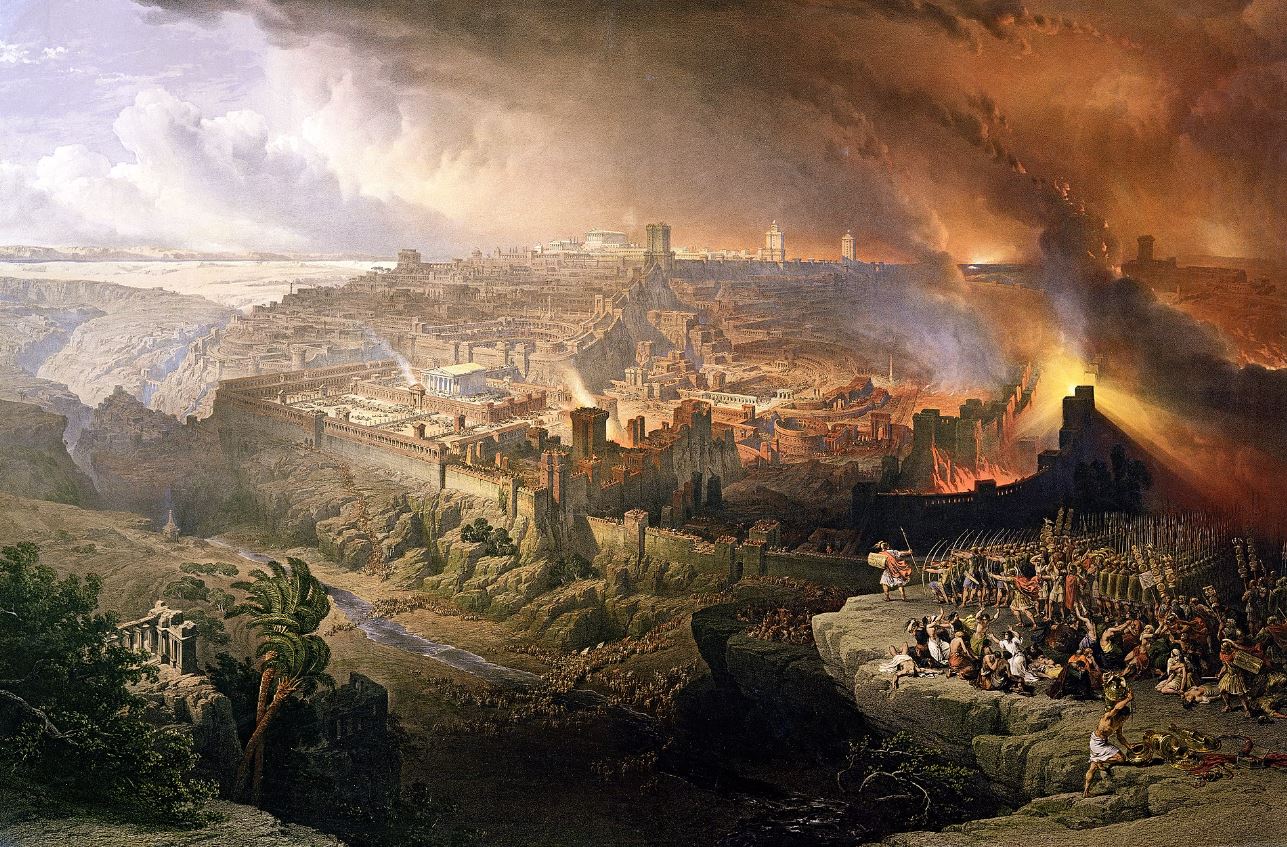
§ Apropos the war that led to the destruction of the Second Temple, the Gemara examines several aspects of the destruction of that Temple in greater detail: Rabbi Yoḥanan said: What is the meaning of that which is written: “Happy is the man who fears always, but he who hardens his heart shall fall into mischief” (Proverbs 28:14)? Jerusalem was destroyed on account of Kamtza and bar Kamtza. The place known as the King’s Mountain was destroyed on account of a rooster and a hen. The city of Beitar was destroyed on account of a shaft from a chariot [rispak].
אַקַּמְצָא וּבַר קַמְצָא חֲרוּב יְרוּשָׁלַיִם – דְּהָהוּא גַּבְרָא דְּרָחֲמֵיהּ קַמְצָא, וּבְעֵל דְּבָבֵיהּ בַּר קַמְצָא. עֲבַד סְעוֹדְתָּא, אֲמַר לֵיהּ לְשַׁמָּעֵיהּ: זִיל אַיְיתִי לִי קַמְצָא. אֲזַל אַיְיתִי לֵיהּ בַּר קַמְצָא.
The Gemara explains: Jerusalem was destroyed on account of Kamtza and bar Kamtza. This is as there was a certain man whose friend was named Kamtza and whose enemy was named bar Kamtza. He once made a large feast and said to his servant: Go bring me my friend Kamtza. The servant went and mistakenly brought him his enemy bar Kamtza.
אֲתָא, אַשְׁכְּחֵיהּ דַּהֲוָה יָתֵיב. אֲמַר לֵיהּ: מִכְּדֵי הָהוּא גַּבְרָא בְּעֵל דְּבָבֵאּ דְּהָהוּא גַּבְרָא הוּא, מַאי בָּעֵית הָכָא? קוּם פּוֹק! אֲמַר לֵיהּ: הוֹאִיל וַאֲתַאי, שִׁבְקַן וְיָהֵיבְנָא לָךְ דְּמֵי מָה דְּאָכֵילְנָא וְשָׁתֵינָא.
The man who was hosting the feast came and found bar Kamtza sitting at the feast. The host said to bar Kamtza. That man is the enemy [ba’al devava] of that man, that is, you are my enemy. What then do you want here? Arise and leave. Bar Kamtza said to him: Since I have already come, let me stay and I will give you money for whatever I eat and drink. Just do not embarrass me by sending me out.
Follow 
Today’s daily daf tools:
Delve Deeper
Broaden your understanding of the topics on this daf with classes and podcasts from top women Talmud scholars.

New to Talmud?
Check out our resources designed to help you navigate a page of Talmud – and study at the pace, level and style that fits you.
The Hadran Women’s Tapestry
Meet the diverse women learning Gemara at Hadran and hear their stories.
I started learning Jan 2020 when I heard the new cycle was starting. I had tried during the last cycle and didn’t make it past a few weeks. Learning online from old men didn’t speak to my soul and I knew Talmud had to be a soul journey for me. Enter Hadran! Talmud from Rabbanit Michelle Farber from a woman’s perspective, a mother’s perspective and a modern perspective. Motivated to continue!

Keren Carter
Brentwood, California, United States
I attended the Siyum so that I could tell my granddaughter that I had been there. Then I decided to listen on Spotify and after the siyum of Brachot, Covid and zoom began. It gave structure to my day. I learn with people from all over the world who are now my friends – yet most of us have never met. I can’t imagine life without it. Thank you Rabbanit Michelle.
Emma Rinberg
Raanana, Israel
My Daf journey began in August 2012 after participating in the Siyum Hashas where I was blessed as an “enabler” of others. Galvanized into my own learning I recited the Hadran on Shas in January 2020 with Rabbanit Michelle. That Siyum was a highlight in my life. Now, on round two, Daf has become my spiritual anchor to which I attribute manifold blessings.

Rina Goldberg
Englewood NJ, United States
Years ago, I attended the local Siyum HaShas with my high school class. It was inspiring! Through that cycle and the next one, I studied masekhtot on my own and then did “daf yomi practice.” The amazing Hadran Siyum HaShas event firmed my resolve to “really do” Daf Yomi this time. It has become a family goal. We’ve supported each other through challenges, and now we’re at the Siyum of Seder Moed!

Elisheva Brauner
Jerusalem, Israel
I began learning with Rabbanit Michelle’s wonderful Talmud Skills class on Pesachim, which really enriched my Pesach seder, and I have been learning Daf Yomi off and on over the past year. Because I’m relatively new at this, there is a “chiddush” for me every time I learn, and the knowledge and insights of the group members add so much to my experience. I feel very lucky to be a part of this.

Julie Landau
Karmiel, Israel
I saw an elderly man at the shul kiddush in early March 2020, celebrating the siyyum of masechet brachot which he had been learning with a young yeshiva student. I thought, if he can do it, I can do it! I began to learn masechet Shabbat the next day, Making up masechet brachot myself, which I had missed. I haven’t missed a day since, thanks to the ease of listening to Hadran’s podcast!

Judith Shapiro
Minnesota, United States
Michelle has been an inspiration for years, but I only really started this cycle after the moving and uplifting siyum in Jerusalem. It’s been an wonderful to learn and relearn the tenets of our religion and to understand how the extraordinary efforts of a band of people to preserve Judaism after the fall of the beit hamikdash is still bearing fruits today. I’m proud to be part of the chain!

Judith Weil
Raanana, Israel
I’ve been learning since January 2020, and in June I started drawing a phrase from each daf. Sometimes it’s easy (e.g. plants), sometimes it’s very hard (e.g. korbanot), and sometimes it’s loads of fun (e.g. bird racing) to find something to draw. I upload my pictures from each masechet to #DafYomiArt. I am enjoying every step of the journey.

Gila Loike
Ashdod, Israel
I was exposed to Talmud in high school, but I was truly inspired after my daughter and I decided to attend the Women’s Siyum Shas in 2020. We knew that this was a historic moment. We were blown away, overcome with emotion at the euphoria of the revolution. Right then, I knew I would continue. My commitment deepened with the every-morning Virtual Beit Midrash on Zoom with R. Michelle.

Adina Hagege
Zichron Yaakov, Israel
I started learning Daf in Jan 2020 with Brachot b/c I had never seen the Jewish people united around something so positive, and I wanted to be a part of it. Also, I wanted to broaden my background in Torah Shebal Peh- Maayanot gave me a great gemara education, but I knew that I could hold a conversation in most parts of tanach but almost no TSB. I’m so thankful for Daf and have gained immensely.

Meira Shapiro
NJ, United States
I started learning when my brother sent me the news clip of the celebration of the last Daf Yomi cycle. I was so floored to see so many women celebrating that I wanted to be a part of it. It has been an enriching experience studying a text in a language I don’t speak, using background knowledge that I don’t have. It is stretching my learning in unexpected ways, bringing me joy and satisfaction.

Jodi Gladstone
Warwick, Rhode Island, United States
What a great experience to learn with Rabbanit Michelle Farber. I began with this cycle in January 2020 and have been comforted by the consistency and energy of this process throughout the isolation period of Covid. Week by week, I feel like I am exploring a treasure chest with sparkling gems and puzzling antiquities. The hunt is exhilarating.

Marian Frankston
Pennsylvania, United States
I started last year after completing the Pesach Sugiyot class. Masechet Yoma might seem like a difficult set of topics, but for me made Yom Kippur and the Beit HaMikdash come alive. Liturgy I’d always had trouble connecting with took on new meaning as I gained a sense of real people moving through specific spaces in particular ways. It was the perfect introduction; I am so grateful for Hadran!

Debbie Engelen-Eigles
Minnesota, United States
I’ve been wanting to do Daf Yomi for years, but always wanted to start at the beginning and not in the middle of things. When the opportunity came in 2020, I decided: “this is now the time!” I’ve been posting my journey daily on social media, tracking my progress (#DafYomi); now it’s fully integrated into my daily routines. I’ve also inspired my partner to join, too!

Joséphine Altzman
Teaneck, United States
Hadran entered my life after the last Siyum Hashaas, January 2020. I was inspired and challenged simultaneously, having never thought of learning Gemara. With my family’s encouragement, I googled “daf yomi for women”. A perfecr fit!
I especially enjoy when Rabbanit Michelle connects the daf to contemporary issues to share at the shabbat table e.g: looking at the Kohen during duchaning. Toda rabba

Marsha Wasserman
Jerusalem, Israel
I started learning Talmud with R’ Haramati in Yeshivah of Flatbush. But after a respite of 60 years, Rabbanit Michelle lit my fire – after attending the last three world siyumim in Miami Beach, Meadowlands and Boca Raton, and now that I’m retired, I decided – “I can do this!” It has been an incredible journey so far, and I look forward to learning Daf everyday – Mazal Tov to everyone!

Roslyn Jaffe
Florida, United States
A few years back, after reading Ilana Kurshan’s book, “If All The Seas Were Ink,” I began pondering the crazy, outlandish idea of beginning the Daf Yomi cycle. Beginning in December, 2019, a month before the previous cycle ended, I “auditioned” 30 different podcasts in 30 days, and ultimately chose to take the plunge with Hadran and Rabbanit Michelle. Such joy!

Cindy Dolgin
HUNTINGTON, United States
After reading the book, “ If All The Seas Were Ink “ by Ileana Kurshan I started studying Talmud. I searched and studied with several teachers until I found Michelle Farber. I have been studying with her for two years. I look forward every day to learn from her.

Janine Rubens
Virginia, United States
Attending the Siyyum in Jerusalem 26 months ago inspired me to become part of this community of learners. So many aspects of Jewish life have been illuminated by what we have learned in Seder Moed. My day is not complete without daf Yomi. I am so grateful to Rabbanit Michelle and the Hadran Community.

Nancy Kolodny
Newton, United States
I had no formal learning in Talmud until I began my studies in the Joint Program where in 1976 I was one of the few, if not the only, woman talmud major. It was superior training for law school and enabled me to approach my legal studies with a foundation . In 2018, I began daf yomi listening to Rabbanit MIchelle’s pod cast and my daily talmud studies are one of the highlights of my life.

Terri Krivosha
Minneapolis, United States
Gittin 55
וּמַאי שְׁנָא מִדְּרַבִּי אַמֵּי? הָתָם, אִיכָּא לְמֵימַר טָעֵי בִּדְרַבִּי יִרְמְיָה. הָכָא, כֵּיוָן דְּקָא מַפְסֵיד כּוּלֵּיהּ אַגְרֵיהּ – וַאֲתָא וַאֲמַר, אֵימוֹר קוּשְׁטָא קָאָמַר.
The Gemara asks: And in what way is this case different from the case in which Rabbi Ami said that the scribe is not deemed credible to disqualify the Torah scroll? The Gemara answers: There it can be said that the scribe was lying and merely wished to distress the purchaser of the Torah scroll. He claimed that he had written God’s names without the proper intention because he made the mistake of Rabbi Yirmeya. He thought, as Rabbi Yirmeya did, that as a result of his purported admission he would lose only his wage for writing the holy names, but he would still receive payment for the rest of the scroll. Here, by contrast, since the scribe knows that by claiming that he did not process the parchment with the proper intention, he causes the loss of his entire wage, and he nevertheless comes and says this, you should say that he speaks the truth and should be deemed credible. Since he is deemed credible and there is no concern that he merely wished to distress the purchaser, the Torah scroll is disqualified.
מַתְנִי׳ הֵעִיד רַבִּי יוֹחָנָן בֶּן גּוּדְגְּדָא עַל הַחֵרֶשֶׁת שֶׁהִשִּׂיאָהּ אָבִיהָ, שֶׁהִיא יוֹצְאָה בְּגֵט;
MISHNA: Rabbi Yoḥanan ben Gudgeda testified before the Sages about the case of a deaf-mute woman who was married off by her father when she was a minor, so that her marriage took effect by Torah law. He said that she can be released from her marriage through a bill of divorce, whether as a minor or after she reaches adulthood. Although as a deaf-mute woman she is not legally competent to give her consent, the divorce is effective because divorce does not require the woman’s consent.
וְעַל קְטַנָּה בַּת יִשְׂרָאֵל שֶׁנִּשֵּׂאת לְכֹהֵן, שֶׁאוֹכֶלֶת בִּתְרוּמָה, וְאִם מֵתָה – בַּעְלָהּ יוֹרְשָׁהּ;
And similarly, he testified about the case of the minor daughter of a non-priest who was orphaned from her father and then married off to a priest by her mother or brother, so that her marriage took effect by rabbinic law. He said that nevertheless she may partake of teruma, although by Torah law it is prohibited for one who is not in a priestly household to partake of teruma. And furthermore if this girl dies, then her husband inherits her estate. It is not said that because the validity of the marriage is by rabbinic law and not Torah law he is not entitled to inherit from her.
וְעַל הַמָּרִישׁ הַגָּזוּל שֶׁבְּנָאוֹ בְּבִירָה, שֶׁיִּטּוֹל אֶת דָּמָיו, מִפְּנֵי תַּקָּנַת הַשָּׁבִים;
And Rabbi Yoḥanan ben Gudgeda further testified about a stolen beam that was already built into a large building [bira], that the victim of the robbery receives only the value of the beam but not the beam itself, due to an ordinance instituted for the penitent. By Torah law, a robber is obligated to return any stolen item in his possession, provided that its form has not been altered. If one stole a beam and incorporated it into a building, then by Torah law he would have to destroy the building and return the beam. In order to encourage repentance, the Sages were lenient and allowed a robber to return the value of the beam.
וְעַל חַטָּאת הַגְּזוּלָה שֶׁלֹּא נוֹדְעָה לְרַבִּים – שֶׁהִיא מְכַפֶּרֶת, מִפְּנֵי תִּיקּוּן הַמִּזְבֵּחַ.
And lastly, Rabbi Yoḥanan ben Gudgeda testified about a sin-offering that was obtained through robbery but that was not publicly known to have been obtained in that manner. He said that it effects atonement for the robber who sacrifices it, for the benefit of the altar, as will be explained in the Gemara.
גְּמָ׳ אָמַר רָבָא: מֵעֵדוּתוֹ שֶׁל רַבִּי יוֹחָנָן בֶּן גּוּדְגְּדָא – אָמַר לְעֵדִים: רָאוּ גֵּט זֶה שֶׁאֲנִי נוֹתֵן לָהּ, וְחָזַר וְאָמַר לָהּ: כִּנְסִי שְׁטַר חוֹב זֶה – הֲרֵי זוֹ מְגוֹרֶשֶׁת. מִי לָא אָמַר רַבִּי יוֹחָנָן בֶּן גּוּדְגְּדָא לָא בָּעֵינַן דַּעְתַּהּ? הָכָא נָמֵי לָא בָּעֵינַן דַּעְתַּהּ.
GEMARA: Rava says: Learn from the testimony of Rabbi Yoḥanan ben Gudgeda in the mishna that if the husband secretly says to witnesses: See this bill of divorce that I am about to give to my wife, and then he says to his wife: Take this promissory note, then she is divorced even when she herself does not know that the document in her hand is a bill of divorce. Didn’t Rabbi Yoḥanan ben Gudgeda say that we do not require the woman’s consent for a bill of divorce, as the divorce takes effect even when she is a deaf-mute, who is not legally competent to give her consent? Here too, one should say that we do not require the woman’s consent.
פְּשִׁיטָא! מַהוּ דְּתֵימָא, כֵּיוָן דְּאָמַר: ״כִּנְסִי שְׁטַר חוֹב זֶה״, בַּטּוֹלֵי בַּטְּלֵיהּ; קָא מַשְׁמַע לַן, אִם אִיתָא דְּבַטְּלֵיהּ – לְעֵדִים הֲוָה אָמַר לְהוּ. וְהַאי דְּקָאָמַר הָכִי – מִשּׁוּם כִּיסּוּפָא.
The Gemara asks: Isn’t this obvious? Why would the divorce not be valid? The Gemara explains: Lest you say: Since he said to his wife: Take this promissory note, after talking to the witnesses, he meant to cancel the bill of divorce with these words, Rava therefore teaches us: If it is so that he meant to cancel the bill of divorce, he would have told the witnesses that this was his intention. The fact that he did not do so indicates that he had no intention of canceling it. And the reason he said to his wife that he was handing her a promissory note is due to embarrassment, as he was ashamed to tell her that he was giving her a bill of divorce. Consequently, he gave it to her in such a way that she did not immediately know that it was a bill of divorce that she received.
וְעַל קְטַנָּה בַּת יִשְׂרָאֵל: וְאִילּוּ חֵרֶשֶׁת – לָא אָכְלָה. מַאי טַעְמָא? גְּזֵירָה שֶׁמָּא יַאֲכִיל חֵרֵשׁ בְּחֵרֶשֶׁת.
§ The mishna teaches that Rabbi Yoḥanan ben Gudgeda testified about the case of a minor daughter of a non-priest who was married to a priest, and said that she may partake of teruma. The Gemara comments: This indicates that only the minor daughter can partake of teruma, while one can infer from this that a deaf-mute woman who was married to a priest may not partake of teruma. The Gemara explains: What is the reason for this? The Sages decreed that a deaf-mute woman married to a priest may not partake of teruma lest a deaf-mute priest come to feed teruma to his deaf-mute wife, as it is common for deaf-mute men to marry deaf-mute women, but their marriage is not effective by Torah law.
וְלֹיכֵול – קָטָן אוֹכֵל נְבֵלוֹת הוּא!
The Gemara asks: Why does this matter? And let him feed her teruma. Isn’t she like a minor who eats forbidden animal carcasses? Since the deaf-mute woman is not considered to be legally competent, she is not subject to the prohibition against partaking of teruma. As in the case of a minor who is eating forbidden food, there is no requirement to prevent her from doing so.
גְּזֵרָה שֶׁמָּא יַאֲכִיל חֵרֵשׁ בְּפִיקַּחַת.
The Gemara answers: Rather, the Sages decreed that a deaf-mute woman married to a priest may not partake of teruma lest a deaf-mute priest come to feed teruma to his halakhically competent wife. Since the validity of their marriage is by rabbinic law, it is therefore prohibited for the woman to partake of teruma, as by Torah law, she is not the wife of a priest. There is a concern that a distinction will not be made between the marriage of a halakhically competent man and deaf-mute woman, in which case the woman is permitted to partake of teruma, and the marriage of a deaf-mute man and a halakhically competent woman, in which case the woman is prohibited from partaking of teruma. Owing to this error, a deaf-mute man might come to feed his wife something that is forbidden to her.
וְלֹאכֵול בִּתְרוּמָה דְּרַבָּנַן! גְּזֵירָה שֶׁמָּא אָתֵי לְאוֹכוֹלֵי בִּתְרוּמָה דְּאוֹרָיְיתָא.
The Gemara asks: But let her partake of teruma that is defined as such by rabbinic law, as marriage that is valid by rabbinic law should suffice to permit partaking of such teruma. The Gemara answers: The Sages decreed that he may not feed her teruma even by rabbinic law, lest he come to feed her teruma by Torah law.
וְעַל הַמָּרִישׁ הַגָּזוּל שֶׁבְּנָאוֹ: תָּנוּ רַבָּנַן: גָּזַל מָרִישׁ וּבְנָאוֹ בְּבִירָה – בֵּית שַׁמַּאי אוֹמְרִים: מְקַעְקֵעַ כׇּל הַבִּירָה כּוּלָּהּ וּמַחְזִיר מָרִישׁ לִבְעָלָיו; וּבֵית הִלֵּל אוֹמְרִים: אֵין לוֹ אֶלָּא דְּמֵי מָרִישׁ בִּלְבַד, מִשּׁוּם תַּקָּנַת הַשָּׁבִין.
§ The mishna teaches that Rabbi Yoḥanan ben Gudgeda further testified about a stolen beam that was already built into a building and said that the injured party receives the value of the beam but not the beam itself. With regard to this, the Sages taught in a baraita (Tosefta, Bava Kamma 10:5): If one robbed another of a beam and built it into a building, Beit Shammai say: He must destroy the entire building and return the beam to its owners. And Beit Hillel say: The injured party receives only the value of the beam but not the beam itself, due to an ordinance instituted for the sake of the penitent. In order to encourage repentance, the Sages were lenient and required the robber to return only the value of the beam. The mishna was taught in accordance with the opinion of Beit Hillel.
וְעַל חַטָּאת הַגְּזוּלָה כּוּ׳: אָמַר עוּלָּא: דְּבַר תּוֹרָה, בֵּין נוֹדְעָה וּבֵין לֹא נוֹדְעָה – אֵינָהּ מְכַפֶּרֶת;
§ The mishna teaches that Rabbi Yoḥanan ben Gudgeda testified about a sin-offering that was obtained through robbery, and said that provided that it was not publicly known to have been obtained in that manner, it effects atonement for the robber. Ulla says: By Torah law, the halakha is as follows: Whether it is known or whether it is not known that the sin-offering was obtained through robbery, it does not effect atonement for the robber who sacrifices it.
מַאי טַעְמָא? יֵאוּשׁ כְּדִי לָא קָנֵי; וּמָה טַעַם אָמְרוּ: לֹא נוֹדְעָה מְכַפֶּרֶת? שֶׁלֹּא יְהוּ כֹּהֲנִים עֲצֵבִין.
What is the reason for this? The owner’s despair of recovering an article that was stolen from him does not by itself enable the robber to acquire the stolen item. Since the stolen animal was not altered in any way, it does not belong to the robber, and he cannot sacrifice it as an offering and achieve atonement through it. And what is the reason that the Sages said that if it was not publicly known that the sin-offering was obtained through robbery it effects atonement? It is so that the priests not be distraught about having sacrificed an animal unfit for the altar.
אָמְרִי לֵיהּ רַבָּנַן לְעוּלָּא: וְהָאֲנַן – ״מִפְּנֵי תִּיקּוּן הַמִּזְבֵּחַ״ תְּנַן? אָמַר לָהֶם: כֵּיוָן דְּכֹהֲנִים עֲצֵבִין, נִמְצָא מִזְבֵּחַ בָּטֵל.
The Rabbis said to Ulla: How can you explain the issue in this manner? But didn’t we learn in the mishna: It effects atonement for the benefit of the altar, which indicates that the halakha was enacted for the benefit of the altar, not for the benefit of the priests? Ulla said to them: When the priests are distraught, the altar is found idle. The priests will not sacrifice all of the offerings when they are distraught.
וְרַב יְהוּדָה אָמַר: דְּבַר תּוֹרָה, בֵּין נוֹדְעָה בֵּין לֹא נוֹדְעָה – מְכַפֶּרֶת; מַאי טַעְמָא? יֵאוּשׁ כְּדִי קָנֵי;
This is one explanation, but Rav Yehuda says: By Torah law, whether it is known or it is not known that the sin-offering was obtained through robbery, it effects atonement for the robber who sacrifices it. What is the reason for this? The owner’s despair of recovering an article that was stolen from him by itself enables the robber to acquire the stolen item. Once the owner despairs of regaining possession, the stolen item becomes the robber’s property and he can consecrate it. Therefore, the offering was sacrificed in a fitting manner, and it effects atonement for the robber.
וּמָה טַעַם אָמְרוּ נוֹדְעָה אֵינָהּ מְכַפֶּרֶת? שֶׁלֹּא יֹאמְרוּ מִזְבֵּחַ אוֹכֵל גְּזֵילוֹת.
And what is the reason that the Sages said that if it is known that the sin-offering was obtained through robbery, it does not effect atonement? It is so that people not say that the altar consumes stolen property.
בִּשְׁלָמָא לְעוּלָּא – הַיְינוּ דְּקָתָנֵי חַטָּאת. אֶלָּא לְרַב יְהוּדָה – מַאי אִירְיָא חַטָּאת, אֲפִילּוּ עוֹלָה נָמֵי!
The Gemara attempts to clarify the two explanations. Granted, according to the opinion of Ulla, that the concern stems from the fact that the priests will be distraught, this is the reason that the tanna teaches the halakha with regard to a sin-offering: The priests partake of the meat of a sin-offering. If they find out that they ate an animal that was forbidden to them, i.e., an offering slaughtered counter to halakha, they are likely to become distraught. But according to the opinion of Rav Yehuda, that the concern is about the honor of the altar, why does the mishna mention specifically the case of a sin-offering; shouldn’t the same concern apply to a burnt-offering, as well, as it too is burned on the altar?
לָא מִיבַּעְיָא קָאָמַר – לָא מִיבַּעְיָא עוֹלָה, דְּכָלִיל הִיא; אֶלָּא אֲפִילּוּ חַטָּאת נָמֵי, דְּחֵלֶב וָדָם הוּא דְּסָלֵיק לְגַבֵּי מִזְבֵּחַ, וְאִידַּךְ כֹּהֲנִים אָכְלִי לֵיהּ; אֲפִילּוּ הָכִי גְּזוּר, שֶׁלֹּא יֹאמְרוּ מִזְבֵּחַ אוֹכֵל גְּזֵילוֹת.
The Gemara answers: The mishna is speaking utilizing the style of: It is not necessary, and the mishna should be understood as follows: It is not necessary to teach the halakha in the case of a burnt-offering, which is entirely consumed on the altar. In that case, people will certainly say that the altar consumes stolen property. But even in the case of a sin-offering, where only the fat and the blood go up to be consumed on the altar and the rest is consumed by the priests, even so they issued a decree and said that the stolen sin-offering does not effect atonement, so that people should not say that the altar consumes stolen property.
תְּנַן: עַל חַטָּאת הַגְּזוּלָה שֶׁלֹּא נוֹדְעָה לְרַבִּים, שֶׁהִיא מְכַפֶּרֶת – מִפְּנֵי תִּיקּוּן הַמִּזְבֵּחַ. בִּשְׁלָמָא לְעוּלָּא – נִיחָא, אֶלָּא לְרַב יְהוּדָה – אִיפְּכָא מִיבְּעֵי לֵיהּ!
The Gemara further clarifies the two understandings: We learned in the mishna: Rabbi Yoḥanan ben Gudgeda testified about a sin-offering that had been obtained through robbery but that is not publicly known to have been obtained in that manner, and said that it effects atonement for the robber who sacrifices it, for the benefit of the altar. Granted, according to the opinion of Ulla, it works out well, as he understands that the Sages instituted that if it was not publicly known that the sin-offering was obtained through robbery, it does effect atonement. But according to the opinion of Rav Yehuda, it should have stated just the opposite, namely, that if it was publicly known that the sin-offering was obtained through robbery, it does not effect atonement.
הָכִי נָמֵי קָאָמַר: לָא נוֹדְעָה – מְכַפֶּרֶת, נוֹדְעָה – אֵינָהּ מְכַפֶּרֶת, מִפְּנֵי תִּיקּוּן הַמִּזְבֵּחַ.
The Gemara answers: That is also what the mishna is saying: If it is not known that the sin-offering was obtained through robbery, it effects atonement, but if this is known, it does not effect atonement, for the benefit of the altar.
מֵתִיב רָבָא: גָּנַב וְהִקְדִּישׁ, וְאַחַר כָּךְ טָבַח וּמָכַר – מְשַׁלֵּם תַּשְׁלוּמֵי כֶפֶל, וְאֵינוֹ מְשַׁלֵּם תַּשְׁלוּמֵי אַרְבָּעָה וַחֲמִשָּׁה. וְתָנֵי עֲלַהּ: בַּחוּץ כִּי הַאי גַוְונָא – עָנוּשׁ כָּרֵת. וְאִי אָמְרַתְּ יֵאוּשׁ כְּדִי לָא קָנֵי, כָּרֵת מַאי עֲבִידְתֵּיהּ?
Rava raises an objection from what was learned in a mishna (Bava Kamma 74a): If one stole an animal and consecrated it, and afterward he slaughtered or sold it, he pays double payment like a thief (see Exodus 22:3), but he does not pay fourfold or fivefold payment, as one must ordinarily pay when he slaughters or sells an ox or a sheep that he stole from another person (Exodus 21:37). And it is taught in a baraita with regard to this mishna: If one slaughtered an animal outside the Temple in a case like this, he is punishable by karet for having sacrificed an offering outside the Temple. And if you say that the owner’s despair of recovering an item that was stolen from him does not by itself enable the thief to acquire the stolen item, what is the relevance of mentioning karet? The punishment of karet should not apply, as the thief cannot consecrate an animal that does not belong to him.
אָמַר רַב שֵׁיזְבִי: כָּרֵת מִדִּבְרֵיהֶם. אַחִיכוּ עֲלֵיהּ – כָּרֵת מִדִּבְרֵיהֶם מִי אִיכָּא?! אֲמַר לְהוּ רָבָא: גַּבְרָא רַבָּה אָמַר מִילְּתָא, לָא תְּחוּכוּ עֲלַהּ; כָּרֵת שֶׁעַל יְדֵי דִּבְרֵיהֶן בָּאתָה לוֹ – אוֹקְמוּהָ רַבָּנַן בִּרְשׁוּתֵיהּ כִּי הֵיכִי דְּלִיחַיַּיב עֲלַהּ.
Rav Sheizevi said: This means that he is liable to receive karet by rabbinic law. Those who heard this laughed at him. Is there such a thing as karet by rabbinic law? Rava said to them: A great man has spoken, do not laugh at him. What Rav Sheizevi means is karet that comes to him through the words of the Sages, who declared that the thief’s consecration is valid. It is the Sages who placed the animal in his possession, so that he would become liable for it.
אָמַר רָבָא: הָא וַודַּאי קָא מִיבַּעְיָא לִי – כִּי אוֹקְמוּהָ רַבָּנַן בִּרְשׁוּתֵיהּ, מִשְּׁעַת גְּנֵיבָה אוֹ מִשְּׁעַת הֶקְדֵּישָׁהּ? לְמַאי נָפְקָא מִינַּהּ? לְגִיזּוֹתֶיהָ וּוַלְדוֹתֶיהָ. מַאי? הֲדַר אָמַר רָבָא: מִסְתַּבְּרָא – מִשְּׁעַת הֶקְדֵּישָׁהּ, שֶׁלֹּא יְהֵא חוֹטֵא נִשְׂכָּר.
Rava said: Although I agree with Rav Sheizevi, this matter is certainly a dilemma for me. When the Sages placed the animal in his possession, did they do so from the time of the theft or from the time of the consecration? What is the difference between these possibilities? There is a difference with regard to its wool and with regard to its offspring. If the animal was placed in his possession from the time of the theft, the wool that it grows and the offspring that it births are his, and he is not required to return them to the animal’s owner. But if the animal becomes his only when he consecrates it, he is required to return them. What is the halakha? Rava then said, in answer to his own question: It stands to reason that the Sages placed the animal in his possession from the time of the consecration. This is so that the sinner not profit from his crime. Otherwise, the thief would benefit from the rabbinic decree that was instituted to increase his liability.
מַתְנִי׳ לֹא הָיָה סִיקָרִיקוֹן בִּיהוּדָה בַּהֲרוּגֵי מִלְחָמָה. מֵהֲרוּגֵי הַמִּלְחָמָה וְאֵילָךְ, יֵשׁ בָּהּ סִיקָרִיקוֹן. כֵּיצַד? לָקַח מִסִּיקָרִיקוֹן, וְחָזַר וְלָקַח מִבַּעַל הַבַּיִת, מִקָּחוֹ בָּטֵל. מִבַּעַל הַבַּיִת, וְחָזַר וְלָקַח מִסִּיקָרִיקוֹן – מִקָּחוֹ קַיָּים.
MISHNA: The law of Sicarii [Sikarikon] did not apply in Judea in the time that people were being killed in the war. From the time that people were being killed in the war and onward, the law of Sicarii did apply there. What is this law of Sicarii? If one first purchased land from a Sicarius, who extorted the field from its prior owners with threats, and afterward the buyer returned and purchased the same field a second time from the prior landowner, his purchase is void. The prior owner of the field can say that he did not actually mean to sell him the field. By contrast, if he first acquired the field from the prior owner and afterward he returned and purchased the same field from a Sicarius, his purchase stands.
לָקַח מִן הָאִישׁ וְחָזַר וְלָקַח מִן הָאִשָּׁה – מִקָּחוֹ בָּטֵל. מִן הָאִשָּׁה וְחָזַר וְלָקַח מִן הָאִישׁ – מִקָּחוֹ קַיָּים. זוֹ מִשְׁנָה רִאשׁוֹנָה.
Similarly, if one first purchased from the husband the rights to use a field belonging to his wife, and afterward he returned and purchased the same field from the wife, so that if the husband were to predecease or divorce her, the purchaser would then own it fully, his purchase is void. The woman can claim that she did not wish to quarrel with her husband and to object to the transaction but that in truth she did not agree to the sale. By contrast, if he first acquired the field from the wife, and afterward he returned and purchased the same field from the husband, his purchase stands. This is the initial version of this mishna.
בֵּית דִּין שֶׁל אַחֲרֵיהֶם אָמְרוּ: הַלּוֹקֵחַ מִסִּיקָרִיקוֹן, נוֹתֵן לַבְּעָלִים רְבִיעַ. אֵימָתַי – בִּזְמַן שֶׁאֵין בְּיָדָן לִיקַּח, אֲבָל יֵשׁ בְּיָדָן לִיקַּח – הֵן קוֹדְמִין לְכׇל אָדָם.
Later, the court of those who came after the Sages who composed that mishna said: With regard to one who purchased a field from a Sicarius, he must give the prior owner one-fourth of the field’s value. When does this apply? At a time when the prior owner is unable to purchase the field himself. But if he is able to purchase it himself, he precedes anyone else.
רַבִּי הוֹשִׁיב בֵּית דִּין וְנִמְנוּ, שֶׁאִם שָׁהֲתָה בִּפְנֵי סִיקָרִיקוֹן שְׁנֵים עָשָׂר חֹדֶשׁ, כׇּל הַקּוֹדֵם לִיקַּח – זָכָה; אֲבָל נוֹתֵן לַבְּעָלִים רְבִיעַ.
Rabbi Yehuda HaNasi later convened a court, and they counted their votes and determined that if the field remained before, i.e., in the possession of, the Sicarius for twelve months, whoever first purchases the field acquires possession of it, but he must give the prior owner one-fourth of the field’s value.
גְּמָ׳ הַשְׁתָּא בַּהֲרוּגֵי הַמִּלְחָמָה לֹא הָיָה בָּהּ סִיקָרִיקוֹן, מֵהֲרוּגֵי מִלְחָמָה וְאֵילָךְ, יֵשׁ בָּהּ סִיקָרִיקוֹן?!
GEMARA: The Gemara challenges the mishna’s assertion that the law of Sicarii did not apply in Judea in the time that people were being killed in the war: Now if in the time that people were being killed in the war, there were no Sicarii stealing land, is it possible that from the time that people were being killed in the war and onward there were Sicarii?
אָמַר רַב יְהוּדָה: ״לֹא דָּנוּ בָּהּ דִּין סִיקָרִיקוֹן״ קָאָמַר. דְּאָמַר רַבִּי אַסִּי: שָׁלֹשׁ גְּזֵירוֹת גָּזְרוּ. גְּזֵרְתָּא קַמַּיְיתָא: כֹּל דְּלָא קָטֵיל – לִיקְטְלוּהּ. מְצִיעֲתָא: כֹּל דְּקָטֵיל – לַיְיתֵי אַרְבַּע זוּזֵי. בָּתְרָיְיתָא: כֹּל דְּקָטֵיל – לִיקְטְלוּהּ. הִלְכָּךְ, קַמַּיְיתָא וּמְצִיעֲתָא, כֵּיוָן דְּקָטְלִי – אַגַּב אוּנְסֵיהּ גָּמַר וּמַקְנֵי.
Rav Yehuda said: The mishna is saying that in the time that people were being killed in the war they did not apply the law of Sicarii, but rather they would confirm the purchases of land made from the Sicarii. The reason for this is in accordance with what Rabbi Asi said: The gentile authorities issued three decrees during and in the aftermath of the war that ended in the destruction of the Temple. The first decree was that anyone who does not kill a Jew should himself be killed. The second decree was that anyone who kills a Jew should pay four dinars as a fine. The last decree was that anyone who kills a Jew should himself be killed. Therefore, during the time of the first and second decrees, the time when people were being killed in the war, since the gentile would kill Jews, then the owner of the field, owing to the danger posed to his life, would fully transfer ownership of his field to the Sicarius.
בָּתְרָיְיתָא אָמְרִי: הָאִידָּנָא לִישְׁקוֹל, לִמְחַר תָּבַעְנָא לֵיהּ בְּדִינָא.
Then, during the time of the last decree, after the time when people were being killed in the war, anybody whose field was stolen by a Sicarius would say to himself: Now let him take the field; tomorrow I will claim it from him in court. Although the gentile had the advantage and could force the owner to give him the field, the assumption is that the owner did not fully transfer possession of the field to him, as he thought that he would still be able to recover it in court.
אָמַר רַבִּי יוֹחָנָן, מַאי דִּכְתִיב: ״אַשְׁרֵי אָדָם מְפַחֵד תָּמִיד וּמַקְשֶׁה לִבּוֹ יִפּוֹל בְּרָעָה״? אַקַּמְצָא וּבַר קַמְצָא חֲרוּב יְרוּשָׁלַיִם, אַתַּרְנְגוֹלָא וְתַרְנְגוֹלְתָּא חֲרוּב טוּר מַלְכָּא, אַשָּׁקָא דְרִיסְפַּק חֲרוּב בֵּיתֵּר.
§ Apropos the war that led to the destruction of the Second Temple, the Gemara examines several aspects of the destruction of that Temple in greater detail: Rabbi Yoḥanan said: What is the meaning of that which is written: “Happy is the man who fears always, but he who hardens his heart shall fall into mischief” (Proverbs 28:14)? Jerusalem was destroyed on account of Kamtza and bar Kamtza. The place known as the King’s Mountain was destroyed on account of a rooster and a hen. The city of Beitar was destroyed on account of a shaft from a chariot [rispak].
אַקַּמְצָא וּבַר קַמְצָא חֲרוּב יְרוּשָׁלַיִם – דְּהָהוּא גַּבְרָא דְּרָחֲמֵיהּ קַמְצָא, וּבְעֵל דְּבָבֵיהּ בַּר קַמְצָא. עֲבַד סְעוֹדְתָּא, אֲמַר לֵיהּ לְשַׁמָּעֵיהּ: זִיל אַיְיתִי לִי קַמְצָא. אֲזַל אַיְיתִי לֵיהּ בַּר קַמְצָא.
The Gemara explains: Jerusalem was destroyed on account of Kamtza and bar Kamtza. This is as there was a certain man whose friend was named Kamtza and whose enemy was named bar Kamtza. He once made a large feast and said to his servant: Go bring me my friend Kamtza. The servant went and mistakenly brought him his enemy bar Kamtza.
אֲתָא, אַשְׁכְּחֵיהּ דַּהֲוָה יָתֵיב. אֲמַר לֵיהּ: מִכְּדֵי הָהוּא גַּבְרָא בְּעֵל דְּבָבֵאּ דְּהָהוּא גַּבְרָא הוּא, מַאי בָּעֵית הָכָא? קוּם פּוֹק! אֲמַר לֵיהּ: הוֹאִיל וַאֲתַאי, שִׁבְקַן וְיָהֵיבְנָא לָךְ דְּמֵי מָה דְּאָכֵילְנָא וְשָׁתֵינָא.
The man who was hosting the feast came and found bar Kamtza sitting at the feast. The host said to bar Kamtza. That man is the enemy [ba’al devava] of that man, that is, you are my enemy. What then do you want here? Arise and leave. Bar Kamtza said to him: Since I have already come, let me stay and I will give you money for whatever I eat and drink. Just do not embarrass me by sending me out.
Follow

