Search

Moed Katan 29

Want to dedicate learning? Get started here:

English
עברית
podcast placeholder

0:00
0:00


podcast placeholder

0:00
0:00


Summary

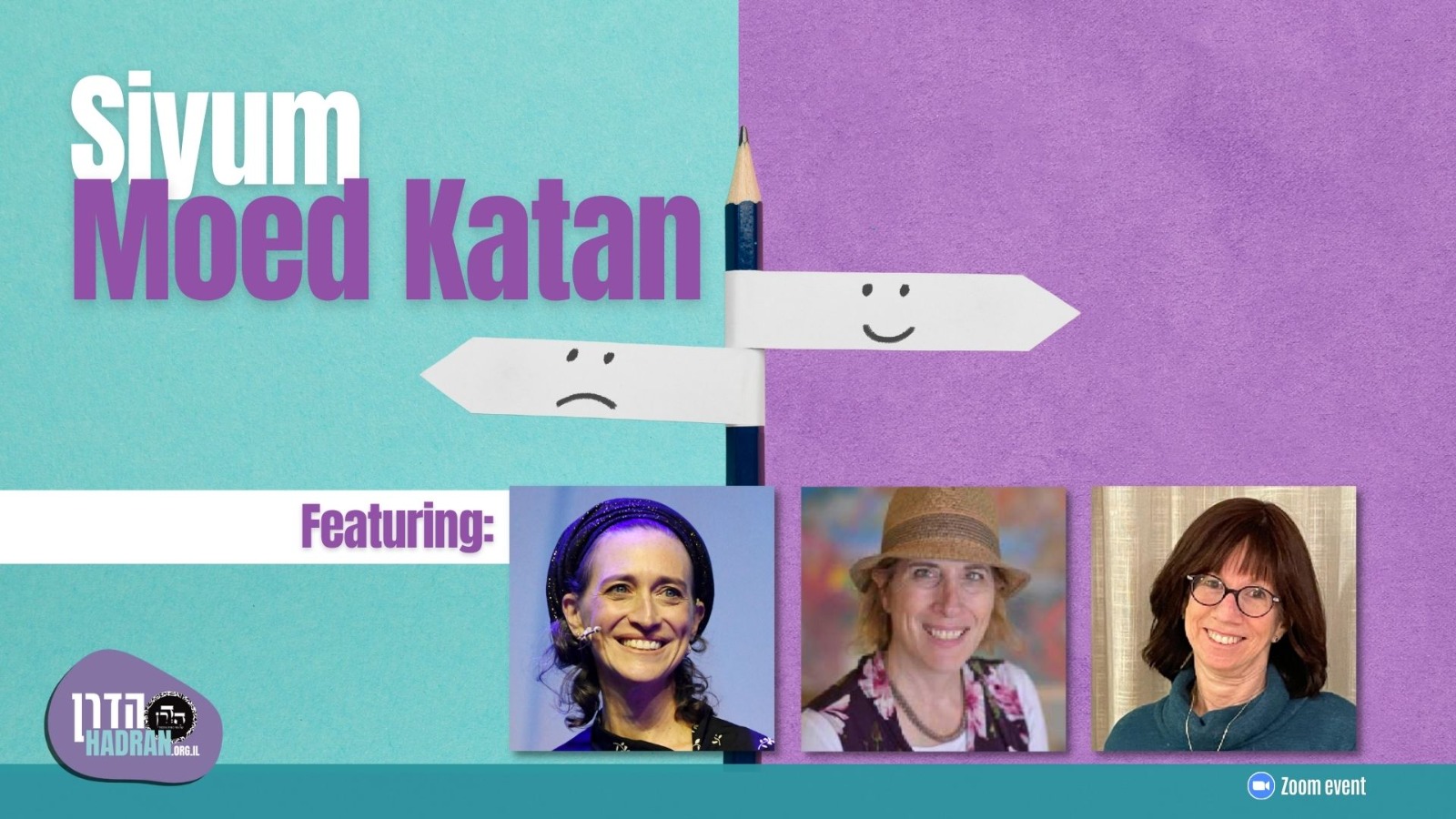
Siyum Masechet Moed Katan is sponsored by Miriam Tannenbaum l’iluy nishmat Jack Zemsky, her father, Yaakov Yitzhak ben Moshe Nachum HaLevi and Miriam Esther z”l, whose 18th yahrzeit was yesterday, the 8th of Adar. “Our father’s life, like Moed Katan encompassed both the twinning of and the dialectic between simcha & aveilut. In dealing with life’s challenges, he both confronted them and chose to live a life of simcha. His service of Hashem was heavily influenced by those experiences and the teachings and simcha of Chassidut. Upon his passing in Chodesh Adar only days before Purim (that year), we felt it timely—as though he would have wanted the sadness to be somewhat muted at this joyous time of year. Yehi Zichro Baruch.”

Siyum Masechet Moed Katan is sponsored by Sara Berelowitz in memory of her mother-in-law, Sarah Tyba bat David Shlomo z”l. 

The mourner gets treated with respect and is seated at the head – this derived from a verse in Job? A groom also sits at the head – this is derived from a verse comparing a groom to a kohen, who also sits at the head. The moment of death is described using imagery showing how difficult the moment is. What words should one use when parting with the dead? What words should be used when parting with one who is alive? These are derived from verses with God and Avraham, and Yitro and Moshe. The verse “Go from strength to strength” is explained in two different ways at the end of the Masechet – either one who goes from the shul to the Beit Midrash and the reverse or Torah scholars in general and it relates to this world and the next.

HADRAN ALACH MASECHET MOED KATAN – Download the text for the completion of the masechet: The Hadran.

Today’s daily daf tools:

Moed Katan 29

כְּצִיפּוֹרֵי בְּפִי הַוֶּושֶׁט. רַבִּי יוֹחָנָן אָמַר: כְּפִטּוּרֵי בְּפִי וֶושֶׁט.

as it is for a knotted rope [tzippori] to pass through an eye [veshet] in a ship’s rigging. Rabbi Yoḥanan said: It is as difficult as it is for a halyard [pitirei] to pass through an eye [veshet].

וְאָמַר רַבִּי לֵוִי בַּר חַיְתָא: הַנִּפְטָר מִן הַמֵּת, לֹא יֹאמַר לוֹ ״לֵךְ לְשָׁלוֹם״, אֶלָּא ״לֵךְ בְּשָׁלוֹם״. הַנִּפְטָר מִן הַחַי, לֹא יֹאמַר לוֹ ״לֵךְ בְּשָׁלוֹם״, אֶלָּא ״לֵךְ לְשָׁלוֹם״.

And Rabbi Levi bar Ḥayyata said: One who departs from the deceased should not say to him: Go to peace, but rather he should say: Go in peace. One who departs from the living should not say to him: Go in peace, but rather he should say: Go to peace.

הַנִּפְטָר מִן הַמֵּת, לֹא יֹאמַר לוֹ ״לֵךְ לְשָׁלוֹם״, אֶלָּא ״לֵךְ בְּשָׁלוֹם״, שֶׁנֶּאֱמַר: ״וְאַתָּה תָּבֹא אֶל אֲבוֹתֶיךָ בְּשָׁלוֹם״.

One who departs from the deceased should not say to him: Go to peace, but rather: Go in peace, as it is stated: “And you shall go to your fathers in peace; you shall be buried in a good old age” (Genesis 15:15).

הַנִּפְטָר מִן הַחַי, לֹא יֹאמַר לוֹ ״לֵךְ בְּשָׁלוֹם״, אֶלָּא ״לֵךְ לְשָׁלוֹם״, שֶׁהֲרֵי דָּוִד שֶׁאָמַר לְאַבְשָׁלוֹם ״לֵךְ בְּשָׁלוֹם״, הָלַךְ וְנִתְלָה, יִתְרוֹ שֶׁאָמַר לְמֹשֶׁה ״לֵךְ לְשָׁלוֹם״, הָלַךְ וְהִצְלִיחַ.

One who departs from the living should not say to him: Go in peace, but rather: Go to peace, as David said to Absalom: “Go in peace” (II Samuel 15:9), and he subsequently went and was hanged; whereas Jethro said to Moses: “Go to peace” (Exodus 4:18), and he went and was successful.

וְאָמַר רַבִּי לֵוִי: כׇּל הַיּוֹצֵא מִבֵּית הַכְּנֶסֶת לְבֵית הַמִּדְרָשׁ, וּמִבֵּית הַמִּדְרָשׁ לְבֵית הַכְּנֶסֶת, זוֹכֶה וּמְקַבֵּל פְּנֵי שְׁכִינָה, שֶׁנֶּאֱמַר: ״יֵלְכוּ מֵחַיִל אֶל חָיִל יֵרָאֶה אֶל אֱלֹהִים בְּצִיּוֹן״.

And Rabbi Levi said: Anyone who leaves from the synagogue and goes to the study hall or goes from the study hall to the synagogue, i.e., he goes from the mitzva of prayer to the mitzva of Torah study or vice versa, merits to receive the Divine Presence, as it is stated: “They go from strength to strength, every one of them appears before God in Zion” (Psalms 84:8).

אָמַר רַב חִיָּיא בַּר אָשֵׁי אָמַר רַב: תַּלְמִידֵי חֲכָמִים אֵין לָהֶם מְנוּחָה אֲפִילּוּ לָעוֹלָם הַבָּא, שֶׁנֶּאֱמַר: ״יֵלְכוּ מֵחַיִל אֶל חָיִל יֵרָאֶה אֶל אֱלֹהִים בְּצִיּוֹן״.

With regard to the same verse, Rav Ḥiyya bar Ashi said that Rav said: Torah scholars have no rest, even in the World-to-Come, as even there they remain in constant movement and ascent, as it is stated: “They go from strength to strength, every one of them appears before God in Zion.” Even when they are in the World-to-Come, they continue to go from strength to strength, until the final redemption will arrive in the end of days and God will appear in Zion.


הֲדַרַן עֲלָךְ וְאֵלּוּ מְגַלְּחִין וּסְלִיקָא לַהּ מַסֶּכֶת מוֹעֵד קָטָן

Today’s daily daf tools:

Delve Deeper

Broaden your understanding of the topics on this daf with classes and podcasts from top women Talmud scholars.

For the Beyond the Daf shiurim offered in Hebrew, see here.

New to Talmud?

Check out our resources designed to help you navigate a page of Talmud – and study at the pace, level and style that fits you. 

The Hadran Women’s Tapestry

Meet the diverse women learning Gemara at Hadran and hear their stories. 

I started learning at the beginning of the cycle after a friend persuaded me that it would be right up my alley. I was lucky enough to learn at Rabbanit Michelle’s house before it started on zoom and it was quickly part of my daily routine. I find it so important to see for myself where halachot were derived, where stories were told and to get more insight into how the Rabbis interacted.

Deborah Dickson
Deborah Dickson

Ra’anana, Israel

I started learning Daf Yomi inspired by תָּפַסְתָּ מְרוּבֶּה לֹא תָּפַסְתָּ, תָּפַסְתָּ מוּעָט תָּפַסְתָּ. I thought I’d start the first page, and then see. I was swept up into the enthusiasm of the Hadran Siyum, and from there the momentum kept building. Rabbanit Michelle’s shiur gives me an anchor, a connection to an incredible virtual community, and an energy to face whatever the day brings.

Medinah Korn
Medinah Korn

בית שמש, Israel

What a great experience to learn with Rabbanit Michelle Farber. I began with this cycle in January 2020 and have been comforted by the consistency and energy of this process throughout the isolation period of Covid. Week by week, I feel like I am exploring a treasure chest with sparkling gems and puzzling antiquities. The hunt is exhilarating.

Marian Frankston
Marian Frankston

Pennsylvania, United States

Inspired by Hadran’s first Siyum ha Shas L’Nashim two years ago, I began daf yomi right after for the next cycle. As to this extraordinary journey together with Hadran..as TS Eliot wrote “We must not cease from exploration and the end of all our exploring will be to arrive where we began and to know the place for the first time.

Susan Handelman
Susan Handelman

Jerusalem, Israel

I started learning at the beginning of this cycle more than 2 years ago, and I have not missed a day or a daf. It’s been challenging and enlightening and even mind-numbing at times, but the learning and the shared experience have all been worth it. If you are open to it, there’s no telling what might come into your life.

Patti Evans
Patti Evans

Phoenix, Arizona, United States

I tried Daf Yomi in the middle of the last cycle after realizing I could listen to Michelle’s shiurim online. It lasted all of 2 days! Then the new cycle started just days before my father’s first yahrzeit and my youngest daughter’s bat mitzvah. It seemed the right time for a new beginning. My family, friends, colleagues are immensely supportive!

Catriella-Freedman-jpeg
Catriella Freedman

Zichron Yaakov, Israel

Attending the Siyyum in Jerusalem 26 months ago inspired me to become part of this community of learners. So many aspects of Jewish life have been illuminated by what we have learned in Seder Moed. My day is not complete without daf Yomi. I am so grateful to Rabbanit Michelle and the Hadran Community.

Nancy Kolodny
Nancy Kolodny

Newton, United States

3 years ago, I joined Rabbanit Michelle to organize the unprecedented Siyum HaShas event in Jerusalem for thousands of women. The whole experience was so inspiring that I decided then to start learning the daf and see how I would go…. and I’m still at it. I often listen to the Daf on my bike in mornings, surrounded by both the external & the internal beauty of Eretz Yisrael & Am Yisrael!

Lisa Kolodny
Lisa Kolodny

Raanana, Israel

I began to learn this cycle of Daf Yomi after my husband passed away 2 1/2 years ago. It seemed a good way to connect to him. Even though I don’t know whether he would have encouraged women learning Gemara, it would have opened wonderful conversations. It also gives me more depth for understanding my frum children and grandchildren. Thank you Hadran and Rabbanit Michelle Farber!!

Harriet Hartman
Harriet Hartman

Tzur Hadassah, Israel

I’ve been wanting to do Daf Yomi for years, but always wanted to start at the beginning and not in the middle of things. When the opportunity came in 2020, I decided: “this is now the time!” I’ve been posting my journey daily on social media, tracking my progress (#DafYomi); now it’s fully integrated into my daily routines. I’ve also inspired my partner to join, too!

Joséphine Altzman
Joséphine Altzman

Teaneck, United States

After all the hype on the 2020 siyum I became inspired by a friend to begin learning as the new cycle began.with no background in studying Talmud it was a bit daunting in the beginning. my husband began at the same time so we decided to study on shabbat together. The reaction from my 3 daughters has been fantastic. They are very proud. It’s been a great challenge for my brain which is so healthy!

Stacey Goodstein Ashtamker

Modi’in, Israel

I tried Daf Yomi in the middle of the last cycle after realizing I could listen to Michelle’s shiurim online. It lasted all of 2 days! Then the new cycle started just days before my father’s first yahrzeit and my youngest daughter’s bat mitzvah. It seemed the right time for a new beginning. My family, friends, colleagues are immensely supportive!

Catriella-Freedman-jpeg
Catriella Freedman

Zichron Yaakov, Israel

I graduated college in December 2019 and received a set of shas as a present from my husband. With my long time dream of learning daf yomi, I had no idea that a new cycle was beginning just one month later, in January 2020. I have been learning the daf ever since with Michelle Farber… Through grad school, my first job, my first baby, and all the other incredible journeys over the past few years!
Sigal Spitzer Flamholz

Bronx, United States

I had no formal learning in Talmud until I began my studies in the Joint Program where in 1976 I was one of the few, if not the only, woman talmud major. It was superior training for law school and enabled me to approach my legal studies with a foundation . In 2018, I began daf yomi listening to Rabbanit MIchelle’s pod cast and my daily talmud studies are one of the highlights of my life.

Krivosha_Terri_Bio
Terri Krivosha

Minneapolis, United States

I started last year after completing the Pesach Sugiyot class. Masechet Yoma might seem like a difficult set of topics, but for me made Yom Kippur and the Beit HaMikdash come alive. Liturgy I’d always had trouble connecting with took on new meaning as I gained a sense of real people moving through specific spaces in particular ways. It was the perfect introduction; I am so grateful for Hadran!

Debbie Engelen-Eigles

Minnesota, United States

I’ve been studying Talmud since the ’90s, and decided to take on Daf Yomi two years ago. I wanted to attempt the challenge of a day-to-day, very Jewish activity. Some days are so interesting and some days are so boring. But I’m still here.
Wendy Rozov
Wendy Rozov

Phoenix, AZ, United States

When we heard that R. Michelle was starting daf yomi, my 11-year-old suggested that I go. Little did she know that she would lose me every morning from then on. I remember standing at the Farbers’ door, almost too shy to enter. After that first class, I said that I would come the next day but couldn’t commit to more. A decade later, I still look forward to learning from R. Michelle every morning.

Ruth Leah Kahan
Ruth Leah Kahan

Ra’anana, Israel

I learned Mishnayot more than twenty years ago and started with Gemara much later in life. Although I never managed to learn Daf Yomi consistently, I am learning since some years Gemara in depth and with much joy. Since last year I am studying at the International Halakha Scholars Program at the WIHL. I often listen to Rabbanit Farbers Gemara shiurim to understand better a specific sugyiah. I am grateful for the help and inspiration!

Shoshana Ruerup
Shoshana Ruerup

Berlin, Germany

I started learning after the siyum hashas for women and my daily learning has been a constant over the last two years. It grounded me during the chaos of Corona while providing me with a community of fellow learners. The Daf can be challenging but it’s filled with life’s lessons, struggles and hope for a better world. It’s not about the destination but rather about the journey. Thank you Hadran!

Dena Lehrman
Dena Lehrman

אפרת, Israel

I began to learn this cycle of Daf Yomi after my husband passed away 2 1/2 years ago. It seemed a good way to connect to him. Even though I don’t know whether he would have encouraged women learning Gemara, it would have opened wonderful conversations. It also gives me more depth for understanding my frum children and grandchildren. Thank you Hadran and Rabbanit Michelle Farber!!

Harriet Hartman
Harriet Hartman

Tzur Hadassah, Israel

Moed Katan 29

כְּצִיפּוֹרֵי בְּפִי הַוֶּושֶׁט. רַבִּי יוֹחָנָן אָמַר: כְּפִטּוּרֵי בְּפִי וֶושֶׁט.

as it is for a knotted rope [tzippori] to pass through an eye [veshet] in a ship’s rigging. Rabbi Yoḥanan said: It is as difficult as it is for a halyard [pitirei] to pass through an eye [veshet].

וְאָמַר רַבִּי לֵוִי בַּר חַיְתָא: הַנִּפְטָר מִן הַמֵּת, לֹא יֹאמַר לוֹ ״לֵךְ לְשָׁלוֹם״, אֶלָּא ״לֵךְ בְּשָׁלוֹם״. הַנִּפְטָר מִן הַחַי, לֹא יֹאמַר לוֹ ״לֵךְ בְּשָׁלוֹם״, אֶלָּא ״לֵךְ לְשָׁלוֹם״.

And Rabbi Levi bar Ḥayyata said: One who departs from the deceased should not say to him: Go to peace, but rather he should say: Go in peace. One who departs from the living should not say to him: Go in peace, but rather he should say: Go to peace.

הַנִּפְטָר מִן הַמֵּת, לֹא יֹאמַר לוֹ ״לֵךְ לְשָׁלוֹם״, אֶלָּא ״לֵךְ בְּשָׁלוֹם״, שֶׁנֶּאֱמַר: ״וְאַתָּה תָּבֹא אֶל אֲבוֹתֶיךָ בְּשָׁלוֹם״.

One who departs from the deceased should not say to him: Go to peace, but rather: Go in peace, as it is stated: “And you shall go to your fathers in peace; you shall be buried in a good old age” (Genesis 15:15).

הַנִּפְטָר מִן הַחַי, לֹא יֹאמַר לוֹ ״לֵךְ בְּשָׁלוֹם״, אֶלָּא ״לֵךְ לְשָׁלוֹם״, שֶׁהֲרֵי דָּוִד שֶׁאָמַר לְאַבְשָׁלוֹם ״לֵךְ בְּשָׁלוֹם״, הָלַךְ וְנִתְלָה, יִתְרוֹ שֶׁאָמַר לְמֹשֶׁה ״לֵךְ לְשָׁלוֹם״, הָלַךְ וְהִצְלִיחַ.

One who departs from the living should not say to him: Go in peace, but rather: Go to peace, as David said to Absalom: “Go in peace” (II Samuel 15:9), and he subsequently went and was hanged; whereas Jethro said to Moses: “Go to peace” (Exodus 4:18), and he went and was successful.

וְאָמַר רַבִּי לֵוִי: כׇּל הַיּוֹצֵא מִבֵּית הַכְּנֶסֶת לְבֵית הַמִּדְרָשׁ, וּמִבֵּית הַמִּדְרָשׁ לְבֵית הַכְּנֶסֶת, זוֹכֶה וּמְקַבֵּל פְּנֵי שְׁכִינָה, שֶׁנֶּאֱמַר: ״יֵלְכוּ מֵחַיִל אֶל חָיִל יֵרָאֶה אֶל אֱלֹהִים בְּצִיּוֹן״.

And Rabbi Levi said: Anyone who leaves from the synagogue and goes to the study hall or goes from the study hall to the synagogue, i.e., he goes from the mitzva of prayer to the mitzva of Torah study or vice versa, merits to receive the Divine Presence, as it is stated: “They go from strength to strength, every one of them appears before God in Zion” (Psalms 84:8).

אָמַר רַב חִיָּיא בַּר אָשֵׁי אָמַר רַב: תַּלְמִידֵי חֲכָמִים אֵין לָהֶם מְנוּחָה אֲפִילּוּ לָעוֹלָם הַבָּא, שֶׁנֶּאֱמַר: ״יֵלְכוּ מֵחַיִל אֶל חָיִל יֵרָאֶה אֶל אֱלֹהִים בְּצִיּוֹן״.

With regard to the same verse, Rav Ḥiyya bar Ashi said that Rav said: Torah scholars have no rest, even in the World-to-Come, as even there they remain in constant movement and ascent, as it is stated: “They go from strength to strength, every one of them appears before God in Zion.” Even when they are in the World-to-Come, they continue to go from strength to strength, until the final redemption will arrive in the end of days and God will appear in Zion.

הֲדַרַן עֲלָךְ וְאֵלּוּ מְגַלְּחִין וּסְלִיקָא לַהּ מַסֶּכֶת מוֹעֵד קָטָן

Want to follow content and continue where you left off?

Create an account today to track your progress, mark what you’ve learned, and follow the shiurim that speak to you.

Clear all items from this list?

This will remove ALL the items in this section. You will lose any progress or history connected to them. This is irreversible.

Cancel
Yes, clear all

Are you sure you want to delete this item?

You will lose any progress or history connected to this item.

Cancel
Yes, delete