








Zevachim 19

Share this shiur:
Masechet Zevachim
Masechet Zevachim is sponsored by Esther Kremer in loving memory of her father, Manny Gross on his third yahrzeit. “He exemplified a path of holiness and purity, living with kedushah in his everyday life.”
Want to dedicate learning? Get started here:

Summary

A Mishna is quoted from Masechet Eruvin 103, permitting a kohen to put on a bandage made from a reed on an injured finger while he is in the Temple, but not outside the Temple, as this is forbidden by rabbinic laws, and rabbinic laws are suspended in the Temple. However, if he intends to draw blood, that is forbidden as that is a Torah prohibition. Rabbi Yehuda, son of Rabbi Chiya, qualifies the Mishna that it is only relating to issues of Shabbat, but if the kohen put a sash around his finger, there would be an additional problem of wearing an extra garment. However, Rabbi Yochanan disagrees and only forbids an extra garment in a location where the special kohen clothes are meant to be. Rava disagrees with Rabbi Yochanan, as he holds even where there are no clothes, e.g., on a finger, there is still a prohibition, but distinguishes. If it is where the kohen wears his clothes, any side cloth will be problematic. If it is somewhere else, it will be prohibited if it is 3×3 fingers.
A second version of the three opinions are brought, in which it is clear that Rabbi Yochanan disagrees with Rabbi Yehuda, and that Rabbi Yochanan and Rava disagree, but the Gemara asks whether or not Rava and Rabbi Yehuda disagree, and they conclude that they do not disagree.
Rava asks six questions, Rav Ashi adds a seventh, and Rabbi Zeira an eighth relating to issues with the kohen’s clothing. An answer is brought only for the last question regarding tefillin, if they are considered a chatzitza (interposition) between the clothing and the kohen’s body. Two braitot are brought to raise a difficulty with the answer, but are resolved.
A source is brought for the disqualification of work performed in the Temple by a kohen who is mechusar kipuurim.
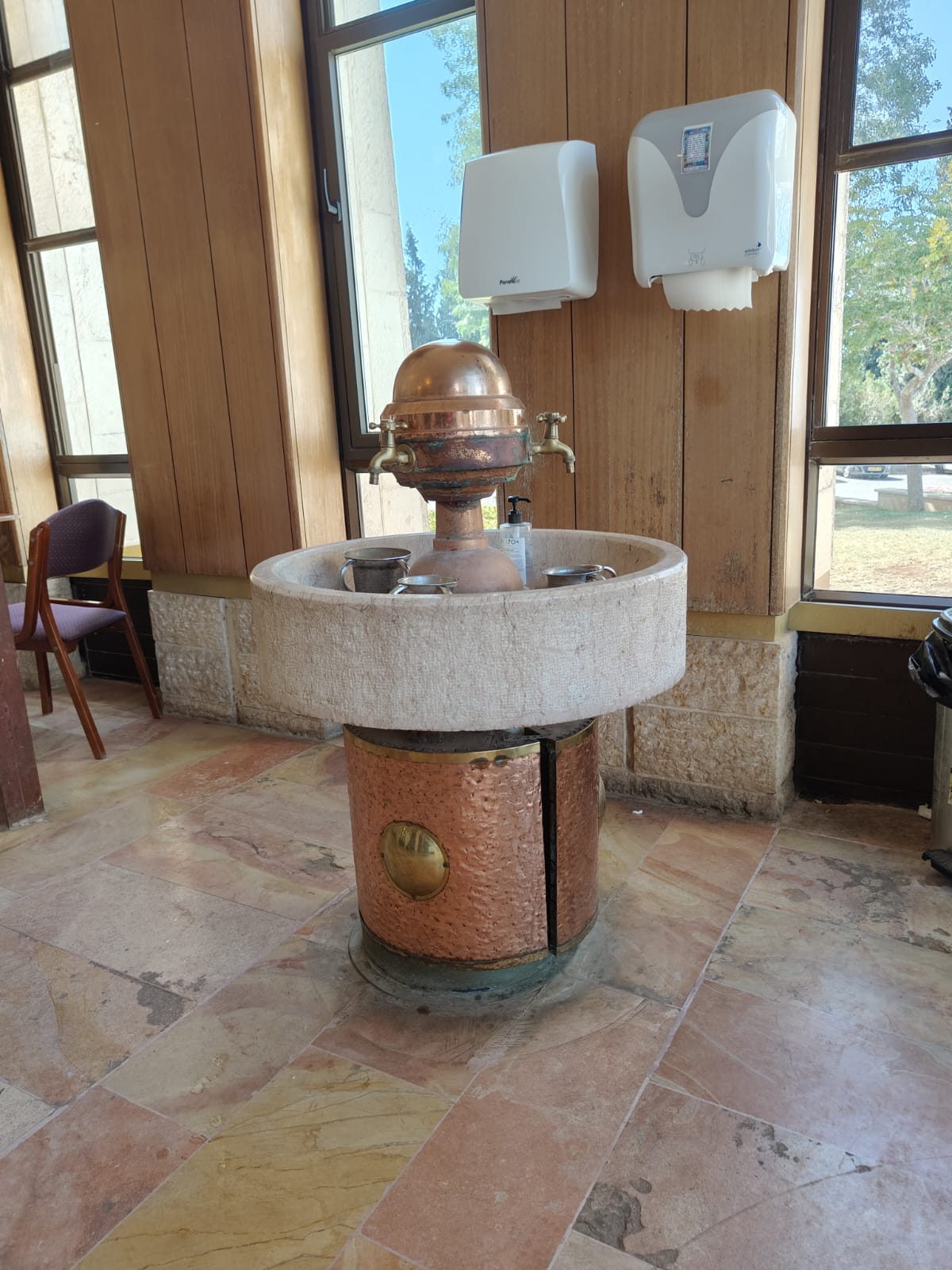
A source is brought for the disqualification of work performed in the Temple by a kohen who has not washed his hands and feet from the basin in the Temple beforehand.
A braita distinguishes between the washing of hands that the kohen gadol does on Yom Kippur before and after going in the mikveh when changing his clothes, which is not essential, and the washing done by the kohanim daily, which is essential. Why is there a distinction?
Today’s daily daf tools:
Masechet Zevachim
Masechet Zevachim is sponsored by Esther Kremer in loving memory of her father, Manny Gross on his third yahrzeit. “He exemplified a path of holiness and purity, living with kedushah in his everyday life.”
Today’s daf is sponsored by the Hadran Women of Long Island in honor of the Bar Mitzva of Aiden Lichtman, son of our friend and co-learner Sharon Gabin Lichtman, in Jerusalem. “May Aiden (and the entire family) continue to give you and Jay much nachat, channeling your love of learning, passion for justice, and search for truth. Mazal tov!”
Zevachim 19
כְּנֶגֶד אַצִּילֵי יְדֵיהֶן.
at the level of their elbows.
אָמַר רַב אָשֵׁי, אָמַר לִי הוּנָא בַּר נָתָן: זִימְנָא חֲדָא הֲוָה קָאֵימְנָא קַמֵּיהּ דְּאִיזְגַּדַּר מַלְכָּא וַהֲוָה מִדְּלֵי לִי הֶמְיָינַאי, וְתַיְתְיֵיהּ נִיהֲלֵיהּ, וַאֲמַר לִי: ״מַמְלֶכֶת כֹּהֲנִים וְגוֹי קָדוֹשׁ״ כְּתִיב בְּכוּ. כִּי אֲתַאי קַמֵּיהּ דְּאַמֵּימָר, אֲמַר לִי: אִקַּיַּים בְּךָ ״וְהָיוּ מְלָכִים אֹמְנַיִךְ״.
Rav Ashi says: Huna bar Natan said to me: Once, I was standing before Izgadar, king of Persia, and my belt was raised above its appropriate height, and he lowered it into place and said to me: “A kingdom of priests, and a holy nation” (Exodus 19:6), is written about you; therefore, you should always look dignified. When I came before Ameimar and recounted this incident, he said to me: With regard to you, God’s promise to Israel: “And kings shall be your foster fathers” (Isaiah 49:23), was fulfilled.
תְּנַן הָתָם: כֹּהֵן שֶׁלָּקָה בְּאֶצְבָּעוֹ – כּוֹרֵךְ עָלֶיהָ גֶּמִי בְּמִקְדָּשׁ, אֲבָל לֹא בַּמְּדִינָה. וְאִם לְהוֹצִיא מִמֶּנָּה דָּם – כָּאן וְכָאן אָסוּר.
§ With regard to the priestly vestments, we learned in a mishna elsewhere (Eiruvin 103b): A priest who was injured on his finger on Shabbat may temporarily wrap it with a reed so that his wound is not visible while he is serving in the Temple. This leniency applies in the Temple, but not in the rest of the country, as the reed also heals the wound, and medical treatment is prohibited on Shabbat by rabbinic decree. But if his intention is to draw blood from the wound, it is prohibited both here and there.
אָמַר רַבִּי יְהוּדָה בְּרֵיהּ דְּרַבִּי חִיָּיא: לֹא שָׁנוּ אֶלָּא גֶּמִי, אֲבָל צִילְצוֹל קָטָן – הָוֵי יִתּוּר בְּגָדִים. וְרַבִּי יוֹחָנָן אָמַר: לֹא אָמְרוּ יִתּוּר בְּגָדִים אֶלָּא בִּמְקוֹם בְּגָדִים, אֲבָל שֶׁלֹּא בִּמְקוֹם בְּגָדִים – לָא הָוֵי יִתּוּר.
Rabbi Yehuda, son of Rabbi Ḥiyya, says: They taught only that a reed is permitted. But a small sash [tziltzul] as a bandage is considered an extra garment and is therefore forbidden, since it is prohibited for a priest to add to the priestly vestments prescribed by the Torah. And Rabbi Yoḥanan says: They said that wearing extra garments is prohibited only if the extra garment is worn in a place on the priest’s body where the requisite vestments are worn. But if the sash is in a place on his body where the vestments are not worn, e.g., on his hand, it is not considered an extra garment.
וְתִיפּוֹק לֵיהּ מִשּׁוּם חֲצִיצָה! בִּשְׂמֹאל. אִי נָמֵי, שֶׁלֹּא בִּמְקוֹם עֲבוֹדָה.
The Gemara challenges: And let Rabbi Yoḥanan derive that a sash is prohibited because it acts as an interposition between the priest’s hand and the sacred vessel he grips, which disqualifies the service. The Gemara rejects this: Rabbi Yoḥanan is referring to a case where the wound is on the priest’s left hand. Since the entire service is performed exclusively with his right hand, a bandage on his left hand is not an interposition. Alternatively, the wound is on the priest’s right hand, but not in a place used for the service, such that the bandage does not interpose between his hand and the sacred vessel.
וּפְלִיגָא דְּרָבָא – דְּאָמַר רָבָא אָמַר רַב חִסְדָּא: בִּמְקוֹם בְּגָדִים – אֲפִילּוּ נִימָא אַחַת חוֹצֶצֶת. שֶׁלֹּא בִּמְקוֹם בְּגָדִים – שָׁלֹשׁ עַל שָׁלֹשׁ חוֹצְצוֹת, פָּחוֹת מִכָּאן אֵינָן חוֹצְצוֹת.
And Rabbi Yoḥanan disagrees with the opinion of Rava, as Rava says that Rav Ḥisda says: In a place on the priest’s body where the vestments are worn, even one extra thread interposes and is prohibited, whereas in a place on his body where the vestments are not worn, if the fabric is three fingerbreadths by three fingerbreadths it interposes, but if it is less than that it does not interpose.
אַדְּרַבִּי יוֹחָנָן – וַדַּאי פְּלִיגָא; אַדְּרַבִּי יְהוּדָה בְּרֵיהּ דְּרַבִּי חִיָּיא מִי לֵימָא דִּפְלִיגָא?
The Gemara notes: Rava certainly disagrees with the opinion of Rabbi Yoḥanan, who holds that fabric of any size that is in a place on his body where the vestments are not worn is not considered an interposition. Shall we say that he also disagrees with the opinion of Rabbi Yehuda, son of Rabbi Ḥiyya, who deems any sash an interposition, even one smaller than three by three fingerbreadths?
שָׁאנֵי צִילְצוֹל קָטָן, דַּחֲשִׁיב.
The Gemara responds: Even according to Rava, a small sash is different, as it is significant, and it is therefore considered a garment even if it is less than three by three fingerbreadths.
לִישָּׁנָא אַחֲרִינָא אָמְרִי לַהּ, אָמַר רַבִּי יְהוּדָה בְּרֵיהּ דְּרַבִּי חִיָּיא: לֹא שָׁנוּ אֶלָּא גֶּמִי, אֲבָל צִילְצוֹל קָטָן – חוֹצֵץ. וְרַבִּי יוֹחָנָן אָמַר: לֹא אָמְרוּ חֲצִיצָה בְּפָחוֹת מִשָּׁלֹשׁ עַל שָׁלֹשׁ – אֶלָּא בִּמְקוֹם בְּגָדִים, אֲבָל שֶׁלֹּא בִּמְקוֹם בְּגָדִים – שָׁלֹשׁ עַל שָׁלֹשׁ חוֹצְצוֹת, פָּחוֹת מִיכֵּן אֵינָהּ חוֹצֶצֶת. וְהַיְינוּ דְּרָבָא אָמַר רַב חִסְדָּא.
Some say that there is another version of the dispute: Rabbi Yehuda, son of Rabbi Ḥiyya, says that they taught only that a reed is permitted, but a small sash interposes. And Rabbi Yoḥanan says: They said that an item acts as an interposition when it is less than three by three fingerbreadths only in a place on the priest’s body where the vestments are worn. But in a place on his body where the vestments are not worn, the following distinction applies: If the fabric is three fingerbreadths by three fingerbreadths, it interposes, but if it is less than this, it does not interpose. And this is the same ruling that Rava says that Rav Ḥisda says.
לֵימָא פְּלִיגָא אַדְּרַבִּי יְהוּדָה בְּרֵיהּ דְּרַבִּי חִיָּיא? שָׁאנֵי צִילְצוֹל קָטָן, דַּחֲשִׁיב.
The Gemara suggests: Let us say that Rava disagrees with the opinion of Rabbi Yehuda, son of Rabbi Ḥiyya, who deems any sash an interposition, even one smaller than three fingerbreadths by three fingerbreadths. The Gemara rejects this: This is not necessarily so, as a small sash is different, since it is significant. It is therefore like a vestment, even if it is smaller than three fingerbreadths by three fingerbreadths.
וּלְרַבִּי יוֹחָנָן – מַאי אִירְיָא גֶּמִי? לַשְׁמְעִינַן צִילְצוֹל קָטָן! מִילְּתָא אַגַּב אוֹרְחֵיהּ קָא מַשְׁמַע לַן, דְּגֶמִי מַסֵּי.
The Gemara raises a question: And according to the opinion of Rabbi Yoḥanan, why does the mishna teach the halakha specifically with regard to a reed? Let the mishna teach us that a priest may wrap his wounded finger with a small sash, since this would teach the greater novelty that although a sash is significant, it does not constitute an interposition. The Gemara responds: It teaches us a matter in passing, that a reed heals.
בָּעֵי רָבָא: נִכְנְסָה לוֹ רוּחַ בְּבִגְדוֹ, מַהוּ? ״עַל בְּשָׂרוֹ״ בָּעֵינַן – וְהָא לֵיכָּא; אוֹ דִלְמָא דֶּרֶךְ לְבִישָׁה בְּכָךְ?
§ Rava raises a dilemma: If a gust of wind entered the priest’s vestment, raising it slightly off his body, what is the halakha? Do we require that the vestment be: “Upon his body” (Leviticus 6:3), in a literal sense, and this is not the case when the wind raises his vestment? Or perhaps the service is valid because this is the normal manner of wearing clothes.
כִּינָּה – מַהוּ שֶׁתָּחוֹץ?
Furthermore, what is the halakha with regard to a louse found under the priest’s vestments? Does it interpose between the vestments and his body, disqualifying the service?
מֵתָה לָא תִּבְּעֵי לָךְ, דְּוַדַּאי חָיְיצָא; חַיָּה מַאי? מִי אָמְרִינַן: כֵּיוָן (דאתא) [דְּאָתְיָא] וְאָזְלָא – רְבִיתָא הִיא וְלָא חָיְיצָא; אוֹ דִלְמָא, כֵּיוָן דְּקָפֵיד עֲלַהּ – חָיְיצָא?
The Gemara clarifies: Do not raise a dilemma with regard to a dead louse, as it certainly interposes, like any other item. Rather, what is the halakha with regard to a live louse? Do we say that since it comes and goes, i.e., it moves around on his body, it is like a growth and does not interpose? Or perhaps, since he objects to its presence, it interposes?
עָפָר – מַהוּ שֶׁיָּחוֹץ? עָפָר וַדַּאי חָיֵיץ! אֶלָּא אֲבַק עָפָר מַהוּ?
Furthermore, what is the halakha with regard to dirt found under the priest’s vestments? Does it interpose? The Gemara objects: But dirt certainly interposes. The Gemara clarifies: Rather, the question is: What is the halakha with regard to dust of dirt, i.e., a minute amount of dust?
בֵּית הַשֶּׁחִי – מַהוּ שֶׁיָּחוֹץ? ״עַל בְּשָׂרוֹ״ בָּעֵינַן – וְהָא לֵיכָּא; אוֹ דִּלְמָא דֶּרֶךְ לְבִישָׁה בְּכָךְ?
Furthermore, what is the halakha with regard to the gap between the underarm of the vestment and the priest’s armpit? Does it interpose? Do we require that the vestment is “upon his body” in a literal sense, and this is not the case? Or perhaps the service is valid since this is the normal manner of wearing clothes.
הִכְנִיס יָדוֹ לְתוֹךְ חֵיקוֹ, מַהוּ? גּוּפוֹ מִי חָיֵיץ, אוֹ לָא?
Furthermore, if the priest inserted his hand into his vestments and touched his chest, what is the halakha? Does his body interpose or not?
נִימָא – מַהוּ שֶׁתָּחוֹץ? נִימָא וַדַּאי חָיְיצָא! אֶלָּא נִימָא מְדוּלְדֶּלֶת מַהוּ?
Furthermore, what is the halakha with regard to a thread [nima]? Does it interpose? The Gemara interjects: But a thread certainly interposes. Rather, the question is: What is the halakha with regard to a thread that hangs off the vestment itself and will soon fall off? Is such a thread considered as though it has already detached from the vestment, in which case it interposes?
בָּעֵי מָר בַּר רַב אָשֵׁי: יָצָא שְׂעָרוֹ בְּבִגְדוֹ, מַהוּ? שְׂעָרוֹ כְּגוּפוֹ דָּמֵי, אוֹ לָאו כְּגוּפוֹ דָּמֵי?
Mar bar Rav Ashi raises a dilemma: If his hair emerged from his head and extended into his vestment and separated it from his skin, what is the halakha? Is his hair considered like his body, in which case it does not interpose, or is it not considered like his body?
בָּעֵי רַבִּי זֵירָא: תְּפִילִּין – מַהוּ שֶׁיָּחוֹצּוּ? אַלִּיבָּא דְּמַאן דְּאָמַר לַיְלָה לָאו זְמַן תְּפִילִּין הוּא – לָא תִּבְעֵי לָךְ; כֵּיוָן דְּלַיְלָה חָיְיצִי, יוֹם נָמֵי חָיְיצִי. כִּי תִּיבְּעֵי לָךְ – לְמַאן דְּאָמַר לַיְלָה זְמַן תְּפִילִּין; מַאי? מִצְוָה דְגוּפֵיהּ – חָיֵיץ אוֹ לָא חָיֵיץ?
Rabbi Zeira raises a dilemma: What is the halakha with regard to phylacteries? Do they interpose? The Gemara clarifies: According to the opinion of one who says that night is not an appropriate time to don phylacteries, do not raise the dilemma. Since they interpose at night, they also interpose during the day. Rather, when you raise the dilemma, do so according to the one who says that night is an appropriate time to don phylacteries. According to this opinion, what is the halakha? Does a mitzva that one fulfills with his body interpose, or does it not interpose?
אִיגַּלְגַּל מִילְּתָא, וּמְטָא לְקַמֵּיהּ דְּרַבִּי אַמֵּי. אֲמַר לֵיהּ: תַּלְמוּד עָרוּךְ הוּא בְּיָדֵינוּ: תְּפִילִּין חוֹצְצוֹת.
This matter circulated and eventually came before Rabbi Ami, who said to him: It is a settled tradition in our possession that phylacteries interpose.
מֵיתִיבִי: כֹּהֲנִים בַּעֲבוֹדָתָן ולְוִיִּם בְּדוּכָנָן וְיִשְׂרָאֵל בְּמַעֲמָדָן – פְּטוּרִין מִן הַתְּפִלָּה וּמִן הַתְּפִילִּין. מַאי, לָאו אִם הִנִּיחָן אֵינָן חוֹצְצוֹת? לָא, אִם הִנִּיחָן חוֹצְצוֹת.
The Gemara raises an objection from a baraita: Priests in their service; and Levites on their platform in the Temple, where they recite songs; and Israelites at their watches, where they observe the sacrifice of the daily offering, are all exempt from prayer and from donning phylacteries. What, is it not that the term: Exempt, indicates that if they donned phylacteries anyway, they do not interpose? Apparently, priests may wear phylacteries while performing the Temple service. The Gemara responds: No, if they donned phylacteries, they interpose.
אִי הָכִי, ״פְּטוּרִים״?! ״אֲסוּרִים״ מִיבְּעֵי לֵיהּ! כֵּיוָן דְּאִיכָּא לְוִיִּם וְיִשְׂרָאֵל – דְּלָא מַתְנוּ לֵיהּ ״אָסוּר״, מִשּׁוּם הָכִי תְּנָא ״פְּטוּרִין״.
The Gemara asks: If so, why does the baraita use the word: Exempt? It should have used the word: Prohibited, since wearing phylacteries disqualifies the priests’ service. The Gemara responds: Since there are also Levites and Israelites mentioned in the baraita, concerning whom the baraita could not teach the word: Prohibited, as it is permitted for them to don phylacteries, due to that reason the baraita taught the word: Exempt, which is applicable to all.
וְהָתַנְיָא: אִם הִנִּיחָן אֵינָן חוֹצְצוֹת! לָא קַשְׁיָא; הָא דְּיָד, הָא דְּרֹאשׁ.
The Gemara challenges: But isn’t it taught in a baraita: If a priest donned phylacteries they do not interpose? The Gemara responds: That is not difficult. This baraita, which teaches that phylacteries interpose is referring to the phylacteries of the hand, whereas that baraita, which teaches that they do not is referring to the phylacteries of the head.
מַאי שְׁנָא דְּיָד, דִּכְתִיב: ״יִלְבַּשׁ עַל בְּשָׂרוֹ״ – שֶׁלֹּא יְהֵא דָּבָר חוֹצֵץ בֵּינוֹ לִבְשָׂרוֹ; דְּרֹאשׁ נָמֵי, כְּתִיב: ״וְשַׂמְתָּ הַמִּצְנֶפֶת עַל רֹאשׁוֹ״!
The Gemara asks: What is different about the phylacteries of the hand that only they interpose? The verse indicates the difference, as it is written with regard to the vestments covering the body: “Shall he put upon his body” (Leviticus 6:3), indicating that nothing may interpose between the vestment and his body. The Gemara challenges: But there is also a verse written with regard to the head: “And you shall set the mitre upon his head” (Exodus 29:6), indicating that there must be no interposition between the mitre and the head. If so, the phylacteries of the head should be considered an interposition as well.
תָּנָא: שְׂעָרוֹ הָיָה נִרְאֶה בֵּין צִיץ לְמִצְנֶפֶת,
The Gemara responds: The Sages taught: The hair of the High Priest was visible between the frontplate and the mitre. The frontplate was set on the forehead, below the hairline, while the mitre was set above it;
שֶׁשָּׁם מַנִּיחִין תְּפִילִּין.
it was there that the High Priests would don their phylacteries. Consequently, the phylacteries of the head did not interpose between the mitre and the priest’s head.
מְחוּסַּר כִּיפּוּרִים מְנָלַן? אָמַר רַב הוּנָא, אָמַר קְרָא: ״וְכִפֶּר עָלֶיהָ הַכֹּהֵן וְטָהֵרָה״ – ״טָהֵרָה״ מִכְּלָל שֶׁהִיא טְמֵאָה.
§ The mishna teaches that rites performed by one who has not yet brought an atonement offering to complete the purification process are disqualified. The Gemara asks: From where do we derive this? Rav Huna says: The verse states with regard to the offering brought by a woman who has given birth: “And the priest shall make atonement for her, and she shall be pure” (Leviticus 12:8). Since the verse states: “And she shall be pure,” one learns by inference that she is ritually impure to some extent until she brings her offering, even though she has already immersed. Anyone who has not yet brought an atonement offering is likewise impure to some extent, and rites performed by one who is impure are disqualified (see 17a).
וְשֶׁלֹּא רָחוּץ יָדַיִם וְרַגְלַיִם. אָתְיָא ״חוּקָּה״–״חוּקָּה״ מִמְּחוּסַּר בְּגָדִים.
§ The mishna teaches that rites performed by one whose hands and feet are not washed are disqualified. The Gemara explains: This halakha is derived by verbal analogy between “statute” mentioned in this context and “statute” from the case of one lacking the requisite vestments, whose rites are disqualified (see 17b).
תָּנוּ רַבָּנַן: כֹּהֵן גָּדוֹל שֶׁלֹּא טָבַל וְשֶׁלֹּא קִידֵּשׁ בֵּין בֶּגֶד לְבֶגֶד וּבֵין עֲבוֹדָה לַעֲבוֹדָה, וְעָבַד – עֲבוֹדָתוֹ כְּשֵׁרָה. וְאֶחָד כֹּהֵן גָּדוֹל וְאֶחָד כֹּהֵן הֶדְיוֹט שֶׁלֹּא קִידֵּשׁ יָדָיו וְרַגְלָיו שַׁחֲרִית, וְעָבַד – עֲבוֹדָתוֹ פְּסוּלָה.
The Sages taught: With regard to a High Priest who did not immerse or did not sanctify his hands and feet during the Yom Kippur service between donning the golden garments and the white linen garments, or between performance of one rite and another rite, and he performed the service in this state, his service is valid after the fact. But with regard to either a High Priest or an ordinary priest who did not sanctify his hands and feet at all in the morning and performed the service, his service is disqualified.
אֲמַר לֵיהּ רַב אַסִּי לְרַבִּי יוֹחָנָן: מִכְּדִי חָמֵשׁ טְבִילוֹת וַעֲשָׂרָה קִדּוּשִׁין דְּאוֹרָיְיתָא, וְ״חוּקָּה״ כְּתִיב בְּהוּ – לִיעַכְּבוּ!
Rav Asi said to Rabbi Yoḥanan: Now, there are five immersions and ten sanctifications of the hands and feet during the Yom Kippur service by Torah law, and the word: “Statute” (Leviticus 16:34), is written with regard to them. Accordingly, they should be indispensable and should disqualify the service if not performed.
אֲמַר לֵיהּ, אָמַר קְרָא: ״וּלְבֵשָׁם״ – לְבִישָׁה מְעַכֶּבֶת, וְאֵין דָּבָר אַחֵר מְעַכֵּב.
Rabbi Yoḥanan said to him: After stipulating that the High Priest must wear the requisite vestments before performing the Yom Kippur service, the verse states: “And put them on” (Leviticus 16:4). This superfluous term serves to indicate that wearing the requisite vestments is indispensable, but nothing else is indispensable.
צָהֲבוּ פָּנָיו, אֲמַר לֵיהּ: וָי״ו אַאוּפְתָּא כְּתַבִי לָךְ – אִי הָכִי, דְּצַפְרָא נָמֵי.
Rav Asi’s face lit up with joy after hearing this response. Rabbi Yoḥanan said to him: I have merely written the letter vav on a piece of wood for you, i.e., I have not given you a satisfactory answer. As, if that is so, that only the wearing of the vestments is indispensable, then failure to sanctify the hands and feet in the morning should also not disqualify the service, yet according to the baraita it disqualifies the service.
אָמַר חִזְקִיָּה, אָמַר קְרָא: ״וְהָיְתָה לָהֶם חׇק עוֹלָם לוֹ וּלְזַרְעוֹ לְדֹרֹתָם״ – דָּבָר הַמְעַכֵּב בְּזַרְעוֹ, מְעַכֵּב בּוֹ; דָּבָר שֶׁאֵינוֹ מְעַכֵּב בְּזַרְעוֹ, אֵין מְעַכֵּב בּוֹ.
Ḥizkiyya says there is an alternative answer: The verse states with regard to sanctification of the hands and feet: “And it shall be a statute forever to them, even to him and to his seed throughout their generations” (Exodus 30:21). From the comparison of Aaron to his children one may derive that anything that is indispensable with regard to his seed, the priests, is indispensable with regard to him, the High Priest during the Yom Kippur service, which only he may perform. But anything that is not indispensable with regard to his seed is not indispensable with regard to him. Therefore, the sanctification of the hands and feet between each rite, which is unnecessary for priests during the daily service, does not disqualify the High Priest’s Yom Kippur service if not done.
רַבִּי יוֹנָתָן אָמַר מֵהָכָא: ״וְרָחֲצוּ מִמֶּנּוּ מֹשֶׁה וְאַהֲרֹן וּבָנָיו״ – דָּבָר הַמְעַכֵּב בְּבָנָיו מְעַכֵּב בּוֹ, דָּבָר שֶׁאֵינוֹ מְעַכֵּב בְּבָנָיו אֵין מְעַכֵּב בּוֹ.
Rabbi Yonatan says: The principle is derived from here: The verse states with regard to the Basin in the Temple: “That Moses and Aaron and his sons might wash their hands and their feet from it” (Exodus 40:31). One may derive from the verse that anything that is indispensable with regard to his sons is indispensable with regard to him. But anything that is not indispensable with regard to his sons is not indispensable with regard to him.
רַבִּי יוֹנָתָן מַאי טַעְמָא לָא אָמַר מִדְּחִזְקִיָּה? אָמַר לָךְ: הָהוּא לְדוֹרוֹת הוּא דִּכְתִיב.
The Gemara asks: What is the reason that Rabbi Yonatan did not say to derive this from the verse cited by Ḥizkiyya? The Gemara responds: Rabbi Yonatan could have said to you: That verse cited by Ḥizkiyya is written to teach that the halakha applies even for future generations, not to draw a parallel between the High Priest and ordinary priests.
וְאִידַּךְ – מַאי טַעְמָא לָא אָמַר מֵהַאי? מִיבְּעֵי לֵיהּ לְכִדְרַבִּי יוֹסֵי בְּרַבִּי חֲנִינָא – דְּאָמַר רַבִּי יוֹסֵי בְּרַבִּי חֲנִינָא: כׇּל כִּיּוֹר שֶׁאֵין בּוֹ כְּדֵי לְקַדֵּשׁ אַרְבָּעָה כֹּהֲנִים מִמֶּנּוּ – אֵין מְקַדְּשִׁין בּוֹ, שֶׁנֶּאֱמַר: ״וְרָחֲצוּ מִמֶּנּוּ מֹשֶׁה וְאַהֲרֹן וּבָנָיו״.
The Gemara asks: And the other Sage, Ḥizkiyya, what is the reason that he did not say to derive the halakha from that verse cited by Rabbi Yonatan? The Gemara responds: He requires that verse for the halakha taught by Rabbi Yosei, son of Rabbi Ḥanina. As Rabbi Yosei, son of Rabbi Ḥanina, says: With regard to any circumstance in which the Basin does not contain enough water for four priests to sanctify their hands and feet from it, the priests may not sanctify their hands and feet with it, as it is stated: “That Moses and Aaron and his sons might wash their hands and their feet from it.” Moses, Aaron, and Aaron’s two sons total four.
תָּנוּ רַבָּנַן: כֵּיצַד מִצְוַת קִידּוּשׁ? מַנִּיחַ יָדוֹ הַיְמָנִית עַל גַּבֵּי רַגְלוֹ הַיְמָנִית, וְיָדוֹ הַשְּׂמָאלִית עַל גַּבֵּי רַגְלוֹ הַשְּׂמָאלִית, וּמְקַדֵּשׁ. רַבִּי יוֹסֵי בְּרַבִּי יְהוּדָה אוֹמֵר: מַנִּיחַ שְׁתֵּי יָדָיו זוֹ עַל גַּב זוֹ, וְעַל גַּבֵּי שְׁתֵּי רַגְלָיו זוֹ עַל גַּבֵּי זוֹ, וּמְקַדֵּשׁ. אָמְרוּ לוֹ: הִפְלַגְתָּה, אִי אֶפְשָׁר לַעֲשׂוֹת כֵּן.
§ The Sages taught: How is the mitzva of sanctification of the hands and feet performed? The priest lays his right hand on top of his right foot, and his left hand on top of his left foot, and sanctifies them with the water flowing from the Basin. Rabbi Yosei, son of Rabbi Yehuda, says: He lays both his hands one on top of the other, and lays them together on top of both his feet, themselves laid one on top of the other, and sanctifies them. They said to him: You have gone too far; it is impossible to do so.
שַׁפִּיר קָאָמְרִי לֵיהּ! אָמַר רַב יוֹסֵף: וַחֲבֵירוֹ מְסַיְּיעוֹ.
The Gemara notes: They speak well to him; it seems impossible to assume such a position without losing one’s balance. Rav Yosef says: Rabbi Yosei, son of Rabbi Yehuda, meant that the priest would assume the position while another priest would help him maintain his balance.
מַאי בֵּינַיְיהוּ? אָמַר אַבָּיֵי: עֲמִידָה מִן הַצַּד אִיכָּא בֵּינַיְיהוּ.
The Gemara asks: What is the difference between the reasoning of the Sages and that of Rabbi Yosei, son of Rabbi Yehuda? Abaye says: The difference between them is their opinion with regard to standing with support from the side. According to the Sages, this is not considered standing and the priest may not sanctify his hands and feet while in such a position.
אֲמַר לֵיהּ רַב סַמָּא בְּרֵיהּ דְּרַב אָשֵׁי לְרָבִינָא: וְלִיתֵּיב מִיתָּב וּלְקַדֵּשׁ! אָמַר קְרָא: ״לְשָׁרֵת״ – וְשֵׁירוּת מְעוּמָּד הוּא.
Rav Samma, son of Rav Ashi, said to Ravina: And let him sit and sanctify his hands and feet while seated, and in this manner he may sanctify them all at once. Ravina said to him: The verse states: “When they go into the Tent of Meeting, they shall wash with water, that they not die; or when they come near to the altar to minister” (Exodus 30:20), and ministration is performed while standing, as the verse states: “To stand to minister” (Deuteronomy 18:5). Therefore, sanctification must also be performed while standing.
תָּנוּ רַבָּנַן: קִידֵּשׁ יָדָיו וְרַגְלָיו בַּיּוֹם – אֵין צָרִיךְ לְקַדֵּשׁ בַּלַּיְלָה, בַּלַּיְלָה – צָרִיךְ לְקַדֵּשׁ בַּיּוֹם, דִּבְרֵי רַבִּי; שֶׁהָיָה רַבִּי אוֹמֵר: לִינָה מוֹעֶלֶת בְּקִידּוּשׁ יָדַיִם וְרַגְלַיִם. רַבִּי אֶלְעָזָר בְּרַבִּי שִׁמְעוֹן אוֹמֵר: אֵין לִינָה מוֹעֶלֶת בְּקִידּוּשׁ יָדַיִם וְרַגְלַיִם.
§ The Sages taught: If a priest sanctified his hands and feet during the day, he does not need to sanctify them that night, but if he sanctified them at night, he must sanctify them during the following day. This is the statement of Rabbi Yehuda HaNasi, as Rabbi Yehuda HaNasi would say: The disqualification of being left overnight is determinative with regard to sanctification of the hands and feet, like any sacrificial item that is sanctified. Accordingly, once night has passed, the priest must sanctify them again. Rabbi Elazar, son of Rabbi Shimon, says: The disqualification of being left overnight is not determinative with regard to sanctification of the hands and feet. Therefore, as long as the priest continues to serve, he need not sanctify them again.
תַּנְיָא אִידַּךְ: הָיָה עוֹמֵד וּמַקְרִיב עַל גַּבֵּי מִזְבֵּחַ כׇּל הַלַּיְלָה לָאוֹרָה – טָעוּן קִידּוּשׁ יָדַיִם וְרַגְלַיִם. דִּבְרֵי רַבִּי. רַבִּי אֶלְעָזָר בְּרַבִּי שִׁמְעוֹן אוֹמֵר: כֵּיוָן שֶׁקִּידֵּשׁ יָדָיו וְרַגְלָיו מִתְּחִילַּת עֲבוֹדָה – אֲפִילּוּ מִיכָּן וְעַד עֲשָׂרָה יָמִים אֵינוֹ צָרִיךְ לְקַדֵּשׁ.
It is taught in another baraita: If the priest was standing and sacrificing offerings on top of the altar all night, in the morning he requires sanctification of the hands and feet again. This is the statement of Rabbi Yehuda HaNasi. Rabbi Elazar, son of Rabbi Shimon, says: Once he sanctified his hands and feet at the beginning of the service, even if he continues to perform rites for the next ten days, he does not need to sanctify them again.
וּצְרִיכָא; דְּאִי אַשְׁמְעִינַן קַמַּיְיתָא – בְּהַהִיא קָאָמַר רַבִּי, דִּפְסַק לֵיהּ מֵעֲבוֹדָה לַעֲבוֹדָה; אֲבָל בְּהָא, דְּלָא פְּסַק לֵיהּ – אֵימָא מוֹדֵי לֵיהּ רַבִּי לְרַבִּי אֶלְעָזָר בְּרַבִּי שִׁמְעוֹן. וְאִי אַשְׁמְעִינַן בְּהָא – בְּהָא קָאָמַר רַבִּי אֶלְעָזָר בְּרַבִּי שִׁמְעוֹן; אֲבָל בְּהָא – אֵימָא מוֹדֵי לֵיהּ לְרַבִּי; צְרִיכָא.
The Gemara notes: And both of the above baraitot are necessary, though they seem to present the same dispute. As, if it had taught us only the first baraita, one might have thought that Rabbi Yehuda HaNasi stated his opinion only with regard to that case, as there the priest paused between one rite and another rite. But in this case, i.e., the second baraita, where he did not pause between rites, say that Rabbi Yehuda HaNasi concedes to Rabbi Elazar, son of Rabbi Shimon, that the priest need not sanctify his hands and feet again. And conversely, if it had taught us only with regard to that case, i.e., the second baraita, one might have thought: Rabbi Elazar, son of Rabbi Shimon, stated his opinion only in that case. But in this case, say that he concedes to Rabbi Yehuda HaNasi. Therefore, both baraitot are necessary.
מַאי טַעְמָא דְּרַבִּי? דִּכְתִיב: ״בְּגִשְׁתָּם״. מַאי טַעְמָא דְּרַבִּי אֶלְעָזָר בְּרַבִּי שִׁמְעוֹן? דִּכְתִיב: ״בְּבוֹאָם״.
The Gemara asks: What is the reasoning of Rabbi Yehuda HaNasi? As it is written: The priests must sanctify their hands and feet: “When they come near to the altar to minister” (Exodus 30:20), i.e., when they begin the service in the morning. And what is the reasoning of Rabbi Elazar, son of Rabbi Shimon? As it is written in the same verse: “When they go into the Tent of Meeting,” indicating that one sanctification suffices for the duration of a priest’s service in the Tent of Meeting.
וְאִידַּךְ נָמֵי, הָא כְּתִיב ״בְּבוֹאָם״! אִי כְּתִיב ״בְּגִשְׁתָּם״ וְלָא כְּתִיב ״בְּבוֹאָם״ – הֲוָה אָמֵינָא: עַל כׇּל גִּישָׁה וְגִישָׁה; כְּתַב רַחֲמָנָא: ״בְּבוֹאָם״.
The Gemara asks: But according to the other Sage, Rabbi Yehuda HaNasi, as well, isn’t it written: “When they go into the Tent of Meeting”? How does he interpret this term? The Gemara responds: If only “when they come near” had been written, and “when they go into” had not been written, I would say that the priest must sanctify his hands and feet for each and every approach, i.e., every rite. Therefore the Merciful One wrote: “When they go into,” to indicate that it is necessary only once a day.
וְאִידַּךְ נָמֵי, הָא כְּתִיב ״בְּגִשְׁתָּם״! אִי כְּתִיב ״בְּבוֹאָם״ וְלָא כְּתִיב ״בְּגִשְׁתָּם״ – הֲוָה אָמֵינָא: אֲפִילּוּ אַבִּיאָה רֵיקָנִית.
The Gemara asks: But according to the other Sage, Rabbi Elazar, son of Rabbi Shimon, as well, isn’t it written: “When they come near”? How does he interpret this term? The Gemara responds: If only “when they go into” had been written, and “when they come near” had not been written, I would say that even for an entrance with no purpose, i.e., where the priest has no intention of performing rites, he must sanctify his hands and feet. Therefore, the Merciful One wrote: “When they come near.”
אַבִּיאָה רֵיקָנִית?! הָא כְּתִיב: ״לְשָׁרֵת״! אֶלָּא בְּגִשְׁתָּם מִיבְּעֵי לֵיהּ, לְכִדְרַב אַחָא בַּר יַעֲקֹב. דְּאָמַר רַב אַחָא בַּר יַעֲקֹב: הַכֹּל מוֹדִים בְּקִידּוּשׁ שֵׁנִי – כְּשֶׁהוּא לָבוּשׁ מְקַדֵּשׁ; דְּאָמַר קְרָא: ״אוֹ בְגִשְׁתָּם״ – מִי שֶׁאֵינוֹ מְחוּסָּר אֶלָּא גִּישָׁה בִּלְבַד, יָצָא זֶה שֶׁמְחוּסָּר לְבִישָׁה וְגִישָׁה.
The Gemara rejects this: How could one have thought that the priest must sanctify his hands and feet for an entrance with no purpose? Isn’t is written in the same verse: “To minister”? Rather, according to Rabbi Elazar, son of Rabbi Shimon, “when they come near” is necessary for the halakha taught by Rav Aḥa bar Ya’akov. As Rav Aḥa bar Ya’akov says: All concede with regard to the second sanctification performed by the High Priest on Yom Kippur after each immersion that he must sanctify his hands and feet while he is dressed in the priestly vestments, as the verse states: “Or when they come near to the altar to minister.” The verse indicates that one who is lacking only to come near to the altar, i.e., one who is in all other ways prepared for the service, may perform this sanctification. Excluded is this one, who is lacking both dressing and coming near.
״לְהַקְטִיר אִשֶּׁה״ לְמָה לִּי?
The Gemara asks: Why do I need the continuation of the verse: “To cause an offering by fire to smoke”?

Today’s daily daf tools:
Delve Deeper
Broaden your understanding of the topics on this daf with classes and podcasts from top women Talmud scholars.

Zevachim Daf 15-21 – Daf Yomi: One Week at a Time


New to Talmud?
Check out our resources designed to help you navigate a page of Talmud – and study at the pace, level and style that fits you.
The Hadran Women’s Tapestry
Meet the diverse women learning Gemara at Hadran and hear their stories.
I decided to learn one masechet, Brachot, but quickly fell in love and never stopped! It has been great, everyone is always asking how it’s going and chering me on, and my students are always making sure I did the day’s daf.

Memphis, Tennessee, United States
I was inspired to start learning after attending the 2020 siyum in Binyanei Hauma. It has been a great experience for me. It’s amazing to see the origins of stories I’ve heard and rituals I’ve participated in my whole life. Even when I don’t understand the daf itself, I believe that the commitment to learning every day is valuable and has multiple benefits. And there will be another daf tomorrow!

Jerusalem, Israel
In my Shana bet at Migdal Oz I attended the Hadran siyum hash”as. Witnessing so many women so passionate about their Torah learning and connection to God, I knew I had to begin with the coming cycle. My wedding (June 24) was two weeks before the siyum of mesechet yoma so I went a little ahead and was able to make a speech and siyum at my kiseh kallah on my wedding day!

Givat Shmuel, Israel
I was exposed to Talmud in high school, but I was truly inspired after my daughter and I decided to attend the Women’s Siyum Shas in 2020. We knew that this was a historic moment. We were blown away, overcome with emotion at the euphoria of the revolution. Right then, I knew I would continue. My commitment deepened with the every-morning Virtual Beit Midrash on Zoom with R. Michelle.

Zichron Yaakov, Israel
Ive been learning Gmara since 5th grade and always loved it. Have always wanted to do Daf Yomi and now with Michelle Farber’s online classes it made it much easier to do! Really enjoying the experience thank you!!

Neve Daniel, Israel
Since I started in January of 2020, Daf Yomi has changed my life. It connects me to Jews all over the world, especially learned women. It makes cooking, gardening, and folding laundry into acts of Torah study. Daf Yomi enables me to participate in a conversation with and about our heritage that has been going on for more than 2000 years.

Skokie, IL, United States

Blacksburg, United States
When I started studying Hebrew at Brown University’s Hillel, I had no idea that almost 38 years later, I’m doing Daf Yomi. My Shabbat haburah is led by Rabbanit Leah Sarna. The women are a hoot. I’m tracking the completion of each tractate by reading Ilana Kurshan’s memoir, If All the Seas Were Ink.

Pennsylvania, United States

Philadelphia, United States
I learned Mishnayot more than twenty years ago and started with Gemara much later in life. Although I never managed to learn Daf Yomi consistently, I am learning since some years Gemara in depth and with much joy. Since last year I am studying at the International Halakha Scholars Program at the WIHL. I often listen to Rabbanit Farbers Gemara shiurim to understand better a specific sugyiah. I am grateful for the help and inspiration!

Berlin, Germany
I started learning Daf in Jan 2020 with Brachot b/c I had never seen the Jewish people united around something so positive, and I wanted to be a part of it. Also, I wanted to broaden my background in Torah Shebal Peh- Maayanot gave me a great gemara education, but I knew that I could hold a conversation in most parts of tanach but almost no TSB. I’m so thankful for Daf and have gained immensely.

NJ, United States
My Daf journey began in August 2012 after participating in the Siyum Hashas where I was blessed as an “enabler” of others. Galvanized into my own learning I recited the Hadran on Shas in January 2020 with Rabbanit Michelle. That Siyum was a highlight in my life. Now, on round two, Daf has become my spiritual anchor to which I attribute manifold blessings.

Englewood NJ, United States

Richmond, CA, United States
When I started studying Hebrew at Brown University’s Hillel, I had no idea that almost 38 years later, I’m doing Daf Yomi. My Shabbat haburah is led by Rabbanit Leah Sarna. The women are a hoot. I’m tracking the completion of each tractate by reading Ilana Kurshan’s memoir, If All the Seas Were Ink.
Pennsylvania, United States
I started learning after the siyum hashas for women and my daily learning has been a constant over the last two years. It grounded me during the chaos of Corona while providing me with a community of fellow learners. The Daf can be challenging but it’s filled with life’s lessons, struggles and hope for a better world. It’s not about the destination but rather about the journey. Thank you Hadran!

אפרת, Israel
What a great experience to learn with Rabbanit Michelle Farber. I began with this cycle in January 2020 and have been comforted by the consistency and energy of this process throughout the isolation period of Covid. Week by week, I feel like I am exploring a treasure chest with sparkling gems and puzzling antiquities. The hunt is exhilarating.

Pennsylvania, United States
I was inspired to start learning after attending the 2020 siyum in Binyanei Hauma. It has been a great experience for me. It’s amazing to see the origins of stories I’ve heard and rituals I’ve participated in my whole life. Even when I don’t understand the daf itself, I believe that the commitment to learning every day is valuable and has multiple benefits. And there will be another daf tomorrow!
Jerusalem, Israel
I have joined the community of daf yomi learners at the start of this cycle. I have studied in different ways – by reading the page, translating the page, attending a local shiur and listening to Rabbanit Farber’s podcasts, depending on circumstances and where I was at the time. The reactions have been positive throughout – with no exception!

Guildford, United Kingdom
See video

Raanana, Israel
I began learning the daf in January 2022. I initially “flew under the radar,” sharing my journey with my husband and a few close friends. I was apprehensive – who, me? Gemara? Now, 2 years in, I feel changed. The rigor of a daily commitment frames my days. The intellectual engagement enhances my knowledge. And the virtual community of learners has become a new family, weaving a glorious tapestry.

Far Rockaway, United States
Zevachim 19
כְּנֶגֶד אַצִּילֵי יְדֵיהֶן.
at the level of their elbows.
אָמַר רַב אָשֵׁי, אָמַר לִי הוּנָא בַּר נָתָן: זִימְנָא חֲדָא הֲוָה קָאֵימְנָא קַמֵּיהּ דְּאִיזְגַּדַּר מַלְכָּא וַהֲוָה מִדְּלֵי לִי הֶמְיָינַאי, וְתַיְתְיֵיהּ נִיהֲלֵיהּ, וַאֲמַר לִי: ״מַמְלֶכֶת כֹּהֲנִים וְגוֹי קָדוֹשׁ״ כְּתִיב בְּכוּ. כִּי אֲתַאי קַמֵּיהּ דְּאַמֵּימָר, אֲמַר לִי: אִקַּיַּים בְּךָ ״וְהָיוּ מְלָכִים אֹמְנַיִךְ״.
Rav Ashi says: Huna bar Natan said to me: Once, I was standing before Izgadar, king of Persia, and my belt was raised above its appropriate height, and he lowered it into place and said to me: “A kingdom of priests, and a holy nation” (Exodus 19:6), is written about you; therefore, you should always look dignified. When I came before Ameimar and recounted this incident, he said to me: With regard to you, God’s promise to Israel: “And kings shall be your foster fathers” (Isaiah 49:23), was fulfilled.
תְּנַן הָתָם: כֹּהֵן שֶׁלָּקָה בְּאֶצְבָּעוֹ – כּוֹרֵךְ עָלֶיהָ גֶּמִי בְּמִקְדָּשׁ, אֲבָל לֹא בַּמְּדִינָה. וְאִם לְהוֹצִיא מִמֶּנָּה דָּם – כָּאן וְכָאן אָסוּר.
§ With regard to the priestly vestments, we learned in a mishna elsewhere (Eiruvin 103b): A priest who was injured on his finger on Shabbat may temporarily wrap it with a reed so that his wound is not visible while he is serving in the Temple. This leniency applies in the Temple, but not in the rest of the country, as the reed also heals the wound, and medical treatment is prohibited on Shabbat by rabbinic decree. But if his intention is to draw blood from the wound, it is prohibited both here and there.
אָמַר רַבִּי יְהוּדָה בְּרֵיהּ דְּרַבִּי חִיָּיא: לֹא שָׁנוּ אֶלָּא גֶּמִי, אֲבָל צִילְצוֹל קָטָן – הָוֵי יִתּוּר בְּגָדִים. וְרַבִּי יוֹחָנָן אָמַר: לֹא אָמְרוּ יִתּוּר בְּגָדִים אֶלָּא בִּמְקוֹם בְּגָדִים, אֲבָל שֶׁלֹּא בִּמְקוֹם בְּגָדִים – לָא הָוֵי יִתּוּר.
Rabbi Yehuda, son of Rabbi Ḥiyya, says: They taught only that a reed is permitted. But a small sash [tziltzul] as a bandage is considered an extra garment and is therefore forbidden, since it is prohibited for a priest to add to the priestly vestments prescribed by the Torah. And Rabbi Yoḥanan says: They said that wearing extra garments is prohibited only if the extra garment is worn in a place on the priest’s body where the requisite vestments are worn. But if the sash is in a place on his body where the vestments are not worn, e.g., on his hand, it is not considered an extra garment.
וְתִיפּוֹק לֵיהּ מִשּׁוּם חֲצִיצָה! בִּשְׂמֹאל. אִי נָמֵי, שֶׁלֹּא בִּמְקוֹם עֲבוֹדָה.
The Gemara challenges: And let Rabbi Yoḥanan derive that a sash is prohibited because it acts as an interposition between the priest’s hand and the sacred vessel he grips, which disqualifies the service. The Gemara rejects this: Rabbi Yoḥanan is referring to a case where the wound is on the priest’s left hand. Since the entire service is performed exclusively with his right hand, a bandage on his left hand is not an interposition. Alternatively, the wound is on the priest’s right hand, but not in a place used for the service, such that the bandage does not interpose between his hand and the sacred vessel.
וּפְלִיגָא דְּרָבָא – דְּאָמַר רָבָא אָמַר רַב חִסְדָּא: בִּמְקוֹם בְּגָדִים – אֲפִילּוּ נִימָא אַחַת חוֹצֶצֶת. שֶׁלֹּא בִּמְקוֹם בְּגָדִים – שָׁלֹשׁ עַל שָׁלֹשׁ חוֹצְצוֹת, פָּחוֹת מִכָּאן אֵינָן חוֹצְצוֹת.
And Rabbi Yoḥanan disagrees with the opinion of Rava, as Rava says that Rav Ḥisda says: In a place on the priest’s body where the vestments are worn, even one extra thread interposes and is prohibited, whereas in a place on his body where the vestments are not worn, if the fabric is three fingerbreadths by three fingerbreadths it interposes, but if it is less than that it does not interpose.
אַדְּרַבִּי יוֹחָנָן – וַדַּאי פְּלִיגָא; אַדְּרַבִּי יְהוּדָה בְּרֵיהּ דְּרַבִּי חִיָּיא מִי לֵימָא דִּפְלִיגָא?
The Gemara notes: Rava certainly disagrees with the opinion of Rabbi Yoḥanan, who holds that fabric of any size that is in a place on his body where the vestments are not worn is not considered an interposition. Shall we say that he also disagrees with the opinion of Rabbi Yehuda, son of Rabbi Ḥiyya, who deems any sash an interposition, even one smaller than three by three fingerbreadths?
שָׁאנֵי צִילְצוֹל קָטָן, דַּחֲשִׁיב.
The Gemara responds: Even according to Rava, a small sash is different, as it is significant, and it is therefore considered a garment even if it is less than three by three fingerbreadths.
לִישָּׁנָא אַחֲרִינָא אָמְרִי לַהּ, אָמַר רַבִּי יְהוּדָה בְּרֵיהּ דְּרַבִּי חִיָּיא: לֹא שָׁנוּ אֶלָּא גֶּמִי, אֲבָל צִילְצוֹל קָטָן – חוֹצֵץ. וְרַבִּי יוֹחָנָן אָמַר: לֹא אָמְרוּ חֲצִיצָה בְּפָחוֹת מִשָּׁלֹשׁ עַל שָׁלֹשׁ – אֶלָּא בִּמְקוֹם בְּגָדִים, אֲבָל שֶׁלֹּא בִּמְקוֹם בְּגָדִים – שָׁלֹשׁ עַל שָׁלֹשׁ חוֹצְצוֹת, פָּחוֹת מִיכֵּן אֵינָהּ חוֹצֶצֶת. וְהַיְינוּ דְּרָבָא אָמַר רַב חִסְדָּא.
Some say that there is another version of the dispute: Rabbi Yehuda, son of Rabbi Ḥiyya, says that they taught only that a reed is permitted, but a small sash interposes. And Rabbi Yoḥanan says: They said that an item acts as an interposition when it is less than three by three fingerbreadths only in a place on the priest’s body where the vestments are worn. But in a place on his body where the vestments are not worn, the following distinction applies: If the fabric is three fingerbreadths by three fingerbreadths, it interposes, but if it is less than this, it does not interpose. And this is the same ruling that Rava says that Rav Ḥisda says.
לֵימָא פְּלִיגָא אַדְּרַבִּי יְהוּדָה בְּרֵיהּ דְּרַבִּי חִיָּיא? שָׁאנֵי צִילְצוֹל קָטָן, דַּחֲשִׁיב.
The Gemara suggests: Let us say that Rava disagrees with the opinion of Rabbi Yehuda, son of Rabbi Ḥiyya, who deems any sash an interposition, even one smaller than three fingerbreadths by three fingerbreadths. The Gemara rejects this: This is not necessarily so, as a small sash is different, since it is significant. It is therefore like a vestment, even if it is smaller than three fingerbreadths by three fingerbreadths.
וּלְרַבִּי יוֹחָנָן – מַאי אִירְיָא גֶּמִי? לַשְׁמְעִינַן צִילְצוֹל קָטָן! מִילְּתָא אַגַּב אוֹרְחֵיהּ קָא מַשְׁמַע לַן, דְּגֶמִי מַסֵּי.
The Gemara raises a question: And according to the opinion of Rabbi Yoḥanan, why does the mishna teach the halakha specifically with regard to a reed? Let the mishna teach us that a priest may wrap his wounded finger with a small sash, since this would teach the greater novelty that although a sash is significant, it does not constitute an interposition. The Gemara responds: It teaches us a matter in passing, that a reed heals.
בָּעֵי רָבָא: נִכְנְסָה לוֹ רוּחַ בְּבִגְדוֹ, מַהוּ? ״עַל בְּשָׂרוֹ״ בָּעֵינַן – וְהָא לֵיכָּא; אוֹ דִלְמָא דֶּרֶךְ לְבִישָׁה בְּכָךְ?
§ Rava raises a dilemma: If a gust of wind entered the priest’s vestment, raising it slightly off his body, what is the halakha? Do we require that the vestment be: “Upon his body” (Leviticus 6:3), in a literal sense, and this is not the case when the wind raises his vestment? Or perhaps the service is valid because this is the normal manner of wearing clothes.
כִּינָּה – מַהוּ שֶׁתָּחוֹץ?
Furthermore, what is the halakha with regard to a louse found under the priest’s vestments? Does it interpose between the vestments and his body, disqualifying the service?
מֵתָה לָא תִּבְּעֵי לָךְ, דְּוַדַּאי חָיְיצָא; חַיָּה מַאי? מִי אָמְרִינַן: כֵּיוָן (דאתא) [דְּאָתְיָא] וְאָזְלָא – רְבִיתָא הִיא וְלָא חָיְיצָא; אוֹ דִלְמָא, כֵּיוָן דְּקָפֵיד עֲלַהּ – חָיְיצָא?
The Gemara clarifies: Do not raise a dilemma with regard to a dead louse, as it certainly interposes, like any other item. Rather, what is the halakha with regard to a live louse? Do we say that since it comes and goes, i.e., it moves around on his body, it is like a growth and does not interpose? Or perhaps, since he objects to its presence, it interposes?
עָפָר – מַהוּ שֶׁיָּחוֹץ? עָפָר וַדַּאי חָיֵיץ! אֶלָּא אֲבַק עָפָר מַהוּ?
Furthermore, what is the halakha with regard to dirt found under the priest’s vestments? Does it interpose? The Gemara objects: But dirt certainly interposes. The Gemara clarifies: Rather, the question is: What is the halakha with regard to dust of dirt, i.e., a minute amount of dust?
בֵּית הַשֶּׁחִי – מַהוּ שֶׁיָּחוֹץ? ״עַל בְּשָׂרוֹ״ בָּעֵינַן – וְהָא לֵיכָּא; אוֹ דִּלְמָא דֶּרֶךְ לְבִישָׁה בְּכָךְ?
Furthermore, what is the halakha with regard to the gap between the underarm of the vestment and the priest’s armpit? Does it interpose? Do we require that the vestment is “upon his body” in a literal sense, and this is not the case? Or perhaps the service is valid since this is the normal manner of wearing clothes.
הִכְנִיס יָדוֹ לְתוֹךְ חֵיקוֹ, מַהוּ? גּוּפוֹ מִי חָיֵיץ, אוֹ לָא?
Furthermore, if the priest inserted his hand into his vestments and touched his chest, what is the halakha? Does his body interpose or not?
נִימָא – מַהוּ שֶׁתָּחוֹץ? נִימָא וַדַּאי חָיְיצָא! אֶלָּא נִימָא מְדוּלְדֶּלֶת מַהוּ?
Furthermore, what is the halakha with regard to a thread [nima]? Does it interpose? The Gemara interjects: But a thread certainly interposes. Rather, the question is: What is the halakha with regard to a thread that hangs off the vestment itself and will soon fall off? Is such a thread considered as though it has already detached from the vestment, in which case it interposes?
בָּעֵי מָר בַּר רַב אָשֵׁי: יָצָא שְׂעָרוֹ בְּבִגְדוֹ, מַהוּ? שְׂעָרוֹ כְּגוּפוֹ דָּמֵי, אוֹ לָאו כְּגוּפוֹ דָּמֵי?
Mar bar Rav Ashi raises a dilemma: If his hair emerged from his head and extended into his vestment and separated it from his skin, what is the halakha? Is his hair considered like his body, in which case it does not interpose, or is it not considered like his body?
בָּעֵי רַבִּי זֵירָא: תְּפִילִּין – מַהוּ שֶׁיָּחוֹצּוּ? אַלִּיבָּא דְּמַאן דְּאָמַר לַיְלָה לָאו זְמַן תְּפִילִּין הוּא – לָא תִּבְעֵי לָךְ; כֵּיוָן דְּלַיְלָה חָיְיצִי, יוֹם נָמֵי חָיְיצִי. כִּי תִּיבְּעֵי לָךְ – לְמַאן דְּאָמַר לַיְלָה זְמַן תְּפִילִּין; מַאי? מִצְוָה דְגוּפֵיהּ – חָיֵיץ אוֹ לָא חָיֵיץ?
Rabbi Zeira raises a dilemma: What is the halakha with regard to phylacteries? Do they interpose? The Gemara clarifies: According to the opinion of one who says that night is not an appropriate time to don phylacteries, do not raise the dilemma. Since they interpose at night, they also interpose during the day. Rather, when you raise the dilemma, do so according to the one who says that night is an appropriate time to don phylacteries. According to this opinion, what is the halakha? Does a mitzva that one fulfills with his body interpose, or does it not interpose?
אִיגַּלְגַּל מִילְּתָא, וּמְטָא לְקַמֵּיהּ דְּרַבִּי אַמֵּי. אֲמַר לֵיהּ: תַּלְמוּד עָרוּךְ הוּא בְּיָדֵינוּ: תְּפִילִּין חוֹצְצוֹת.
This matter circulated and eventually came before Rabbi Ami, who said to him: It is a settled tradition in our possession that phylacteries interpose.
מֵיתִיבִי: כֹּהֲנִים בַּעֲבוֹדָתָן ולְוִיִּם בְּדוּכָנָן וְיִשְׂרָאֵל בְּמַעֲמָדָן – פְּטוּרִין מִן הַתְּפִלָּה וּמִן הַתְּפִילִּין. מַאי, לָאו אִם הִנִּיחָן אֵינָן חוֹצְצוֹת? לָא, אִם הִנִּיחָן חוֹצְצוֹת.
The Gemara raises an objection from a baraita: Priests in their service; and Levites on their platform in the Temple, where they recite songs; and Israelites at their watches, where they observe the sacrifice of the daily offering, are all exempt from prayer and from donning phylacteries. What, is it not that the term: Exempt, indicates that if they donned phylacteries anyway, they do not interpose? Apparently, priests may wear phylacteries while performing the Temple service. The Gemara responds: No, if they donned phylacteries, they interpose.
אִי הָכִי, ״פְּטוּרִים״?! ״אֲסוּרִים״ מִיבְּעֵי לֵיהּ! כֵּיוָן דְּאִיכָּא לְוִיִּם וְיִשְׂרָאֵל – דְּלָא מַתְנוּ לֵיהּ ״אָסוּר״, מִשּׁוּם הָכִי תְּנָא ״פְּטוּרִין״.
The Gemara asks: If so, why does the baraita use the word: Exempt? It should have used the word: Prohibited, since wearing phylacteries disqualifies the priests’ service. The Gemara responds: Since there are also Levites and Israelites mentioned in the baraita, concerning whom the baraita could not teach the word: Prohibited, as it is permitted for them to don phylacteries, due to that reason the baraita taught the word: Exempt, which is applicable to all.
וְהָתַנְיָא: אִם הִנִּיחָן אֵינָן חוֹצְצוֹת! לָא קַשְׁיָא; הָא דְּיָד, הָא דְּרֹאשׁ.
The Gemara challenges: But isn’t it taught in a baraita: If a priest donned phylacteries they do not interpose? The Gemara responds: That is not difficult. This baraita, which teaches that phylacteries interpose is referring to the phylacteries of the hand, whereas that baraita, which teaches that they do not is referring to the phylacteries of the head.
מַאי שְׁנָא דְּיָד, דִּכְתִיב: ״יִלְבַּשׁ עַל בְּשָׂרוֹ״ – שֶׁלֹּא יְהֵא דָּבָר חוֹצֵץ בֵּינוֹ לִבְשָׂרוֹ; דְּרֹאשׁ נָמֵי, כְּתִיב: ״וְשַׂמְתָּ הַמִּצְנֶפֶת עַל רֹאשׁוֹ״!
The Gemara asks: What is different about the phylacteries of the hand that only they interpose? The verse indicates the difference, as it is written with regard to the vestments covering the body: “Shall he put upon his body” (Leviticus 6:3), indicating that nothing may interpose between the vestment and his body. The Gemara challenges: But there is also a verse written with regard to the head: “And you shall set the mitre upon his head” (Exodus 29:6), indicating that there must be no interposition between the mitre and the head. If so, the phylacteries of the head should be considered an interposition as well.
תָּנָא: שְׂעָרוֹ הָיָה נִרְאֶה בֵּין צִיץ לְמִצְנֶפֶת,
The Gemara responds: The Sages taught: The hair of the High Priest was visible between the frontplate and the mitre. The frontplate was set on the forehead, below the hairline, while the mitre was set above it;
שֶׁשָּׁם מַנִּיחִין תְּפִילִּין.
it was there that the High Priests would don their phylacteries. Consequently, the phylacteries of the head did not interpose between the mitre and the priest’s head.
מְחוּסַּר כִּיפּוּרִים מְנָלַן? אָמַר רַב הוּנָא, אָמַר קְרָא: ״וְכִפֶּר עָלֶיהָ הַכֹּהֵן וְטָהֵרָה״ – ״טָהֵרָה״ מִכְּלָל שֶׁהִיא טְמֵאָה.
§ The mishna teaches that rites performed by one who has not yet brought an atonement offering to complete the purification process are disqualified. The Gemara asks: From where do we derive this? Rav Huna says: The verse states with regard to the offering brought by a woman who has given birth: “And the priest shall make atonement for her, and she shall be pure” (Leviticus 12:8). Since the verse states: “And she shall be pure,” one learns by inference that she is ritually impure to some extent until she brings her offering, even though she has already immersed. Anyone who has not yet brought an atonement offering is likewise impure to some extent, and rites performed by one who is impure are disqualified (see 17a).
וְשֶׁלֹּא רָחוּץ יָדַיִם וְרַגְלַיִם. אָתְיָא ״חוּקָּה״–״חוּקָּה״ מִמְּחוּסַּר בְּגָדִים.
§ The mishna teaches that rites performed by one whose hands and feet are not washed are disqualified. The Gemara explains: This halakha is derived by verbal analogy between “statute” mentioned in this context and “statute” from the case of one lacking the requisite vestments, whose rites are disqualified (see 17b).
תָּנוּ רַבָּנַן: כֹּהֵן גָּדוֹל שֶׁלֹּא טָבַל וְשֶׁלֹּא קִידֵּשׁ בֵּין בֶּגֶד לְבֶגֶד וּבֵין עֲבוֹדָה לַעֲבוֹדָה, וְעָבַד – עֲבוֹדָתוֹ כְּשֵׁרָה. וְאֶחָד כֹּהֵן גָּדוֹל וְאֶחָד כֹּהֵן הֶדְיוֹט שֶׁלֹּא קִידֵּשׁ יָדָיו וְרַגְלָיו שַׁחֲרִית, וְעָבַד – עֲבוֹדָתוֹ פְּסוּלָה.
The Sages taught: With regard to a High Priest who did not immerse or did not sanctify his hands and feet during the Yom Kippur service between donning the golden garments and the white linen garments, or between performance of one rite and another rite, and he performed the service in this state, his service is valid after the fact. But with regard to either a High Priest or an ordinary priest who did not sanctify his hands and feet at all in the morning and performed the service, his service is disqualified.
אֲמַר לֵיהּ רַב אַסִּי לְרַבִּי יוֹחָנָן: מִכְּדִי חָמֵשׁ טְבִילוֹת וַעֲשָׂרָה קִדּוּשִׁין דְּאוֹרָיְיתָא, וְ״חוּקָּה״ כְּתִיב בְּהוּ – לִיעַכְּבוּ!
Rav Asi said to Rabbi Yoḥanan: Now, there are five immersions and ten sanctifications of the hands and feet during the Yom Kippur service by Torah law, and the word: “Statute” (Leviticus 16:34), is written with regard to them. Accordingly, they should be indispensable and should disqualify the service if not performed.
אֲמַר לֵיהּ, אָמַר קְרָא: ״וּלְבֵשָׁם״ – לְבִישָׁה מְעַכֶּבֶת, וְאֵין דָּבָר אַחֵר מְעַכֵּב.
Rabbi Yoḥanan said to him: After stipulating that the High Priest must wear the requisite vestments before performing the Yom Kippur service, the verse states: “And put them on” (Leviticus 16:4). This superfluous term serves to indicate that wearing the requisite vestments is indispensable, but nothing else is indispensable.
צָהֲבוּ פָּנָיו, אֲמַר לֵיהּ: וָי״ו אַאוּפְתָּא כְּתַבִי לָךְ – אִי הָכִי, דְּצַפְרָא נָמֵי.
Rav Asi’s face lit up with joy after hearing this response. Rabbi Yoḥanan said to him: I have merely written the letter vav on a piece of wood for you, i.e., I have not given you a satisfactory answer. As, if that is so, that only the wearing of the vestments is indispensable, then failure to sanctify the hands and feet in the morning should also not disqualify the service, yet according to the baraita it disqualifies the service.
אָמַר חִזְקִיָּה, אָמַר קְרָא: ״וְהָיְתָה לָהֶם חׇק עוֹלָם לוֹ וּלְזַרְעוֹ לְדֹרֹתָם״ – דָּבָר הַמְעַכֵּב בְּזַרְעוֹ, מְעַכֵּב בּוֹ; דָּבָר שֶׁאֵינוֹ מְעַכֵּב בְּזַרְעוֹ, אֵין מְעַכֵּב בּוֹ.
Ḥizkiyya says there is an alternative answer: The verse states with regard to sanctification of the hands and feet: “And it shall be a statute forever to them, even to him and to his seed throughout their generations” (Exodus 30:21). From the comparison of Aaron to his children one may derive that anything that is indispensable with regard to his seed, the priests, is indispensable with regard to him, the High Priest during the Yom Kippur service, which only he may perform. But anything that is not indispensable with regard to his seed is not indispensable with regard to him. Therefore, the sanctification of the hands and feet between each rite, which is unnecessary for priests during the daily service, does not disqualify the High Priest’s Yom Kippur service if not done.
רַבִּי יוֹנָתָן אָמַר מֵהָכָא: ״וְרָחֲצוּ מִמֶּנּוּ מֹשֶׁה וְאַהֲרֹן וּבָנָיו״ – דָּבָר הַמְעַכֵּב בְּבָנָיו מְעַכֵּב בּוֹ, דָּבָר שֶׁאֵינוֹ מְעַכֵּב בְּבָנָיו אֵין מְעַכֵּב בּוֹ.
Rabbi Yonatan says: The principle is derived from here: The verse states with regard to the Basin in the Temple: “That Moses and Aaron and his sons might wash their hands and their feet from it” (Exodus 40:31). One may derive from the verse that anything that is indispensable with regard to his sons is indispensable with regard to him. But anything that is not indispensable with regard to his sons is not indispensable with regard to him.
רַבִּי יוֹנָתָן מַאי טַעְמָא לָא אָמַר מִדְּחִזְקִיָּה? אָמַר לָךְ: הָהוּא לְדוֹרוֹת הוּא דִּכְתִיב.
The Gemara asks: What is the reason that Rabbi Yonatan did not say to derive this from the verse cited by Ḥizkiyya? The Gemara responds: Rabbi Yonatan could have said to you: That verse cited by Ḥizkiyya is written to teach that the halakha applies even for future generations, not to draw a parallel between the High Priest and ordinary priests.
וְאִידַּךְ – מַאי טַעְמָא לָא אָמַר מֵהַאי? מִיבְּעֵי לֵיהּ לְכִדְרַבִּי יוֹסֵי בְּרַבִּי חֲנִינָא – דְּאָמַר רַבִּי יוֹסֵי בְּרַבִּי חֲנִינָא: כׇּל כִּיּוֹר שֶׁאֵין בּוֹ כְּדֵי לְקַדֵּשׁ אַרְבָּעָה כֹּהֲנִים מִמֶּנּוּ – אֵין מְקַדְּשִׁין בּוֹ, שֶׁנֶּאֱמַר: ״וְרָחֲצוּ מִמֶּנּוּ מֹשֶׁה וְאַהֲרֹן וּבָנָיו״.
The Gemara asks: And the other Sage, Ḥizkiyya, what is the reason that he did not say to derive the halakha from that verse cited by Rabbi Yonatan? The Gemara responds: He requires that verse for the halakha taught by Rabbi Yosei, son of Rabbi Ḥanina. As Rabbi Yosei, son of Rabbi Ḥanina, says: With regard to any circumstance in which the Basin does not contain enough water for four priests to sanctify their hands and feet from it, the priests may not sanctify their hands and feet with it, as it is stated: “That Moses and Aaron and his sons might wash their hands and their feet from it.” Moses, Aaron, and Aaron’s two sons total four.
תָּנוּ רַבָּנַן: כֵּיצַד מִצְוַת קִידּוּשׁ? מַנִּיחַ יָדוֹ הַיְמָנִית עַל גַּבֵּי רַגְלוֹ הַיְמָנִית, וְיָדוֹ הַשְּׂמָאלִית עַל גַּבֵּי רַגְלוֹ הַשְּׂמָאלִית, וּמְקַדֵּשׁ. רַבִּי יוֹסֵי בְּרַבִּי יְהוּדָה אוֹמֵר: מַנִּיחַ שְׁתֵּי יָדָיו זוֹ עַל גַּב זוֹ, וְעַל גַּבֵּי שְׁתֵּי רַגְלָיו זוֹ עַל גַּבֵּי זוֹ, וּמְקַדֵּשׁ. אָמְרוּ לוֹ: הִפְלַגְתָּה, אִי אֶפְשָׁר לַעֲשׂוֹת כֵּן.
§ The Sages taught: How is the mitzva of sanctification of the hands and feet performed? The priest lays his right hand on top of his right foot, and his left hand on top of his left foot, and sanctifies them with the water flowing from the Basin. Rabbi Yosei, son of Rabbi Yehuda, says: He lays both his hands one on top of the other, and lays them together on top of both his feet, themselves laid one on top of the other, and sanctifies them. They said to him: You have gone too far; it is impossible to do so.
שַׁפִּיר קָאָמְרִי לֵיהּ! אָמַר רַב יוֹסֵף: וַחֲבֵירוֹ מְסַיְּיעוֹ.
The Gemara notes: They speak well to him; it seems impossible to assume such a position without losing one’s balance. Rav Yosef says: Rabbi Yosei, son of Rabbi Yehuda, meant that the priest would assume the position while another priest would help him maintain his balance.
מַאי בֵּינַיְיהוּ? אָמַר אַבָּיֵי: עֲמִידָה מִן הַצַּד אִיכָּא בֵּינַיְיהוּ.
The Gemara asks: What is the difference between the reasoning of the Sages and that of Rabbi Yosei, son of Rabbi Yehuda? Abaye says: The difference between them is their opinion with regard to standing with support from the side. According to the Sages, this is not considered standing and the priest may not sanctify his hands and feet while in such a position.
אֲמַר לֵיהּ רַב סַמָּא בְּרֵיהּ דְּרַב אָשֵׁי לְרָבִינָא: וְלִיתֵּיב מִיתָּב וּלְקַדֵּשׁ! אָמַר קְרָא: ״לְשָׁרֵת״ – וְשֵׁירוּת מְעוּמָּד הוּא.
Rav Samma, son of Rav Ashi, said to Ravina: And let him sit and sanctify his hands and feet while seated, and in this manner he may sanctify them all at once. Ravina said to him: The verse states: “When they go into the Tent of Meeting, they shall wash with water, that they not die; or when they come near to the altar to minister” (Exodus 30:20), and ministration is performed while standing, as the verse states: “To stand to minister” (Deuteronomy 18:5). Therefore, sanctification must also be performed while standing.
תָּנוּ רַבָּנַן: קִידֵּשׁ יָדָיו וְרַגְלָיו בַּיּוֹם – אֵין צָרִיךְ לְקַדֵּשׁ בַּלַּיְלָה, בַּלַּיְלָה – צָרִיךְ לְקַדֵּשׁ בַּיּוֹם, דִּבְרֵי רַבִּי; שֶׁהָיָה רַבִּי אוֹמֵר: לִינָה מוֹעֶלֶת בְּקִידּוּשׁ יָדַיִם וְרַגְלַיִם. רַבִּי אֶלְעָזָר בְּרַבִּי שִׁמְעוֹן אוֹמֵר: אֵין לִינָה מוֹעֶלֶת בְּקִידּוּשׁ יָדַיִם וְרַגְלַיִם.
§ The Sages taught: If a priest sanctified his hands and feet during the day, he does not need to sanctify them that night, but if he sanctified them at night, he must sanctify them during the following day. This is the statement of Rabbi Yehuda HaNasi, as Rabbi Yehuda HaNasi would say: The disqualification of being left overnight is determinative with regard to sanctification of the hands and feet, like any sacrificial item that is sanctified. Accordingly, once night has passed, the priest must sanctify them again. Rabbi Elazar, son of Rabbi Shimon, says: The disqualification of being left overnight is not determinative with regard to sanctification of the hands and feet. Therefore, as long as the priest continues to serve, he need not sanctify them again.
תַּנְיָא אִידַּךְ: הָיָה עוֹמֵד וּמַקְרִיב עַל גַּבֵּי מִזְבֵּחַ כׇּל הַלַּיְלָה לָאוֹרָה – טָעוּן קִידּוּשׁ יָדַיִם וְרַגְלַיִם. דִּבְרֵי רַבִּי. רַבִּי אֶלְעָזָר בְּרַבִּי שִׁמְעוֹן אוֹמֵר: כֵּיוָן שֶׁקִּידֵּשׁ יָדָיו וְרַגְלָיו מִתְּחִילַּת עֲבוֹדָה – אֲפִילּוּ מִיכָּן וְעַד עֲשָׂרָה יָמִים אֵינוֹ צָרִיךְ לְקַדֵּשׁ.
It is taught in another baraita: If the priest was standing and sacrificing offerings on top of the altar all night, in the morning he requires sanctification of the hands and feet again. This is the statement of Rabbi Yehuda HaNasi. Rabbi Elazar, son of Rabbi Shimon, says: Once he sanctified his hands and feet at the beginning of the service, even if he continues to perform rites for the next ten days, he does not need to sanctify them again.
וּצְרִיכָא; דְּאִי אַשְׁמְעִינַן קַמַּיְיתָא – בְּהַהִיא קָאָמַר רַבִּי, דִּפְסַק לֵיהּ מֵעֲבוֹדָה לַעֲבוֹדָה; אֲבָל בְּהָא, דְּלָא פְּסַק לֵיהּ – אֵימָא מוֹדֵי לֵיהּ רַבִּי לְרַבִּי אֶלְעָזָר בְּרַבִּי שִׁמְעוֹן. וְאִי אַשְׁמְעִינַן בְּהָא – בְּהָא קָאָמַר רַבִּי אֶלְעָזָר בְּרַבִּי שִׁמְעוֹן; אֲבָל בְּהָא – אֵימָא מוֹדֵי לֵיהּ לְרַבִּי; צְרִיכָא.
The Gemara notes: And both of the above baraitot are necessary, though they seem to present the same dispute. As, if it had taught us only the first baraita, one might have thought that Rabbi Yehuda HaNasi stated his opinion only with regard to that case, as there the priest paused between one rite and another rite. But in this case, i.e., the second baraita, where he did not pause between rites, say that Rabbi Yehuda HaNasi concedes to Rabbi Elazar, son of Rabbi Shimon, that the priest need not sanctify his hands and feet again. And conversely, if it had taught us only with regard to that case, i.e., the second baraita, one might have thought: Rabbi Elazar, son of Rabbi Shimon, stated his opinion only in that case. But in this case, say that he concedes to Rabbi Yehuda HaNasi. Therefore, both baraitot are necessary.
מַאי טַעְמָא דְּרַבִּי? דִּכְתִיב: ״בְּגִשְׁתָּם״. מַאי טַעְמָא דְּרַבִּי אֶלְעָזָר בְּרַבִּי שִׁמְעוֹן? דִּכְתִיב: ״בְּבוֹאָם״.
The Gemara asks: What is the reasoning of Rabbi Yehuda HaNasi? As it is written: The priests must sanctify their hands and feet: “When they come near to the altar to minister” (Exodus 30:20), i.e., when they begin the service in the morning. And what is the reasoning of Rabbi Elazar, son of Rabbi Shimon? As it is written in the same verse: “When they go into the Tent of Meeting,” indicating that one sanctification suffices for the duration of a priest’s service in the Tent of Meeting.
וְאִידַּךְ נָמֵי, הָא כְּתִיב ״בְּבוֹאָם״! אִי כְּתִיב ״בְּגִשְׁתָּם״ וְלָא כְּתִיב ״בְּבוֹאָם״ – הֲוָה אָמֵינָא: עַל כׇּל גִּישָׁה וְגִישָׁה; כְּתַב רַחֲמָנָא: ״בְּבוֹאָם״.
The Gemara asks: But according to the other Sage, Rabbi Yehuda HaNasi, as well, isn’t it written: “When they go into the Tent of Meeting”? How does he interpret this term? The Gemara responds: If only “when they come near” had been written, and “when they go into” had not been written, I would say that the priest must sanctify his hands and feet for each and every approach, i.e., every rite. Therefore the Merciful One wrote: “When they go into,” to indicate that it is necessary only once a day.
וְאִידַּךְ נָמֵי, הָא כְּתִיב ״בְּגִשְׁתָּם״! אִי כְּתִיב ״בְּבוֹאָם״ וְלָא כְּתִיב ״בְּגִשְׁתָּם״ – הֲוָה אָמֵינָא: אֲפִילּוּ אַבִּיאָה רֵיקָנִית.
The Gemara asks: But according to the other Sage, Rabbi Elazar, son of Rabbi Shimon, as well, isn’t it written: “When they come near”? How does he interpret this term? The Gemara responds: If only “when they go into” had been written, and “when they come near” had not been written, I would say that even for an entrance with no purpose, i.e., where the priest has no intention of performing rites, he must sanctify his hands and feet. Therefore, the Merciful One wrote: “When they come near.”
אַבִּיאָה רֵיקָנִית?! הָא כְּתִיב: ״לְשָׁרֵת״! אֶלָּא בְּגִשְׁתָּם מִיבְּעֵי לֵיהּ, לְכִדְרַב אַחָא בַּר יַעֲקֹב. דְּאָמַר רַב אַחָא בַּר יַעֲקֹב: הַכֹּל מוֹדִים בְּקִידּוּשׁ שֵׁנִי – כְּשֶׁהוּא לָבוּשׁ מְקַדֵּשׁ; דְּאָמַר קְרָא: ״אוֹ בְגִשְׁתָּם״ – מִי שֶׁאֵינוֹ מְחוּסָּר אֶלָּא גִּישָׁה בִּלְבַד, יָצָא זֶה שֶׁמְחוּסָּר לְבִישָׁה וְגִישָׁה.
The Gemara rejects this: How could one have thought that the priest must sanctify his hands and feet for an entrance with no purpose? Isn’t is written in the same verse: “To minister”? Rather, according to Rabbi Elazar, son of Rabbi Shimon, “when they come near” is necessary for the halakha taught by Rav Aḥa bar Ya’akov. As Rav Aḥa bar Ya’akov says: All concede with regard to the second sanctification performed by the High Priest on Yom Kippur after each immersion that he must sanctify his hands and feet while he is dressed in the priestly vestments, as the verse states: “Or when they come near to the altar to minister.” The verse indicates that one who is lacking only to come near to the altar, i.e., one who is in all other ways prepared for the service, may perform this sanctification. Excluded is this one, who is lacking both dressing and coming near.
״לְהַקְטִיר אִשֶּׁה״ לְמָה לִּי?
The Gemara asks: Why do I need the continuation of the verse: “To cause an offering by fire to smoke”?

