








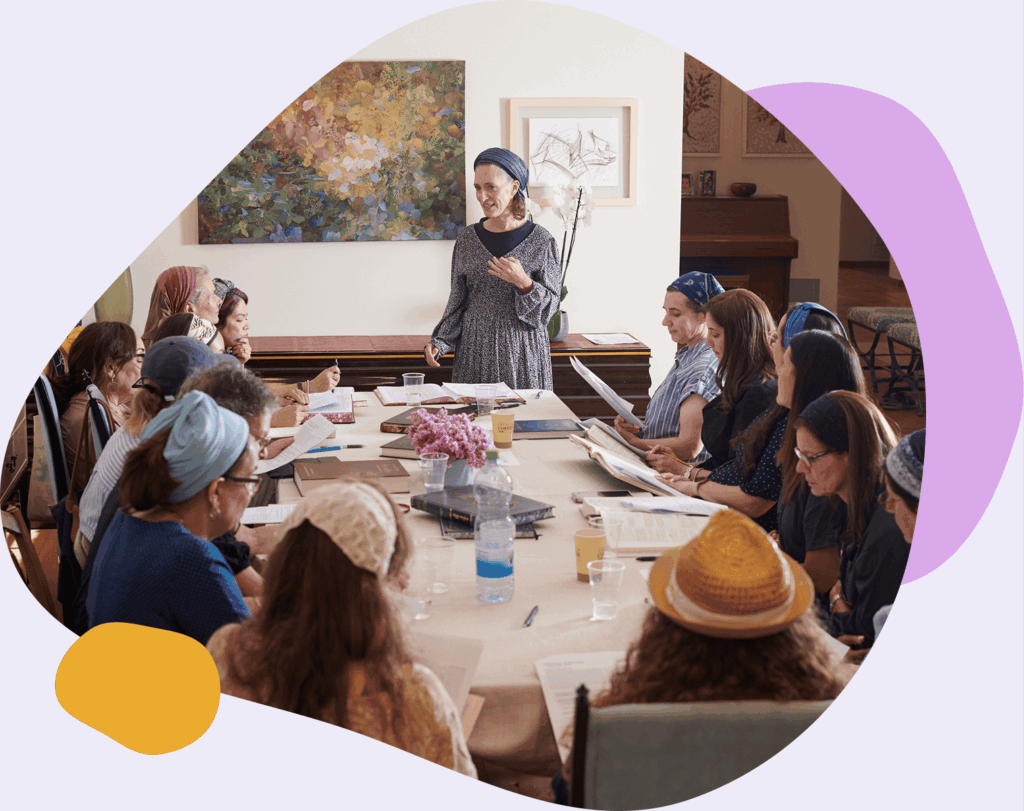
Hadran: Advancing Talmud Study for Women
Hadran supports Jewish women of all ages, backgrounds and skill levels with resources and inspiration to engage in Talmud study.
Zevachim 105

Rabbanit Michelle Farber
12.28.2025 | ח׳ בטבת תשפ״וStart Studying Talmud

Daf Yomi
Get ‘on the same page’ with Jews around the world on a daily basis.

Masechet
Select a section of the Talmud to suit your learning interests and schedule.

Beyond the Daf
Delve deep with weekly classes and podcasts from top women scholars.

Courses
Develop your Talmud study skills with self-paced online courses.
Circle of Friends
📣Please join Hadran’s Circle of Friends 2026!
As we approach the close of 2025, we pause to reflect with gratitude on the incredible year of Talmud learning we’ve shared together.
🌍Hadran is a growing community dedicated to making Talmud study part of daily life – rooted in tradition, driven by curiosity, and open to all – and YOU are an important part of it.
Support Hadran to keep Talmud learning accessible for thousands of women worldwide.
🎁Your gift empowers learners, yourself included, to become sources of inspiration, bringing Jewish knowledge and commitment into homes, conversations, and communities.
Together, we can make the study of the Talmud in 2026 more accessible to women, and more inspiring, and unifying than ever before.
💜Thank you for being part of our Hadran family!







The Value of Studying Talmud
Talmud is the foundation of Jewish practice and thought. Talmud study opens the door to a richer understanding of Jewish tradition, empowering women who engage in this study to become more effective community leaders and role models.
In order to actualize this potential, Hadran is dedicated to ensuring that Talmud study is accessible to Jewish women of all ages, backgrounds and skill levels.
Resources
Talmud, Your Way
Experience Talmud with daily or weekly shiurim from top women scholars, each with a different focus and flavor. There’s something here for everyone.






Recently added
Daf Yomi
Beyond the Daf
Din & Daf
A Daf of Their Own
Flashback
Gefet
On Second Thought
Daf Yomi: One Week at a Time
Talking Talmud
Beyond the Daf (HE)
Suggested for you

Your history

Talmud, Your Way
Experience Talmud with daily or weekly shiurim from top women scholars, each with a different focus and flavor. There’s something here for everyone.
Daf Yomi
Zevachim 105
Two additional questions are raised regarding the impurity status of those who handle the bull and goat offerings whose bodies are burned outside Jerusalem, but neither question receives a definitive answer.
Rabbi Meir and the rabbis disagree about the impurity of the scapegoat (se’ir la’azazel) that is sent off a cliff on Yom Kippur. While both sides agree that the red heifer and the bulls and goats burned outside Jerusalem impart impurity to food and drink, they dispute whether the scapegoat does the same. According to the rabbis, since the scapegoat is a live animal – and live animals generally do not become impure or transmit impurity – it does not impart impurity in this case either, even though the person who sends it off does become impure. Rabbi Meir, however, maintains that the scapegoat does transmit impurity, because anything destined to eventually acquire a severe level of impurity (i.e., the ability to transmit impurity to humans) already imparts impurity to food and drink even before reaching that stage.
The rabbis’ position is challenged based on a braita from the school of Rabbi Yishmael, who discusses a concept similar to Rabbi Meir’s in the context of the carcass of a kosher bird. Since the bird will eventually attain a severe level of impurity (when someone eats it), it already imparts impurity to food and drink beforehand. If the rabbis agree with Rabbi Yishmael, then this principle should apply to the scapegoat as well. But if they do not follow Rabbi Yishmael, then the red heifer and the bulls and goats burned outside the Temple should likewise not impart impurity to food and drink.
Rav Dimi resolves this by explaining Rabbi Yishmael’s view in a way that allows the rabbis to accept his principle while still excluding the scapegoat. Although items destined to eventually reach a severe level of impurity can already transmit impurity to food and drink, this applies only to items that are generally subject to impurity – namely, dead animals. It does not extend to live animals, such as the scapegoat.
Two questions are raised regarding Rabbi Yishmael’s principle that an item destined to eventually contract a severe level of impurity can already transmit impurity to food and drink. How do we define the phrase “they will ultimately contract severe impurity”? If an additional action is required before the item reaches that stage, this may prevent it from transmitting impurity, since it is still one step removed from becoming fully impure. The questions, therefore, focus on what qualifies as a “missing action.” Would the need to remove the item from the Azara count as such an action? What about the case of a kosher bird’s carcass held in one’s hand, the size of an olive, that is on the verge of being eaten?
Another issue discussed is whether this type of impurity renders food and drink a first-degree impurity or only a second-degree impurity.

Daf Yomi
Zevachim 103
The hide of burnt offerings is given to the kohanim, as stated in Vayikra 7:8. However, the Mishna explains that if the offering became disqualified before the blood was sprinkled, the kohanim do not receive the hide. If it was sacrificed for the sake of a different type of offering, since the sacrifice remains valid, the hide is given to the kohanim.
In addition to burnt offerings, the kohanim also receive the hides of all kodshei kodashim, such as guilt and sin offerings. This is derived through a kal va’chomer argument in the Mishna, but later a braita brings different opinions of how to derive this.
A braita records a debate between two tannaim regarding the phrase “the burnt offering of a man” in the verse that grants the kohen rights to the hide. One opinion says it excludes a burnt offering of hekdesh, property belonging to the Temple, while the other says it excludes the burnt offering of a convert. Three explanations are offered for what is meant by a burnt offering of hekdesh, and one explanation is given for the case of a convert, since a convert is certainly considered a “person.”
The three explanations of hekdesh are: a burnt offering brought from leftover funds of an offering; one who consecrates an offering for bedek habayit, the maintenance of the Temple; and one who consecrates all of their property, among which there were animals.
The exemption regarding a convert refers to a case where the convert designated a burnt offering and then died without heirs. Since the sacrifice is ownerless, it does not qualify as a “burnt offering of a man.”
A braita is cited to explain the derivation of the laws in the Mishna. Although the verse says “man,” the offerings of women and slaves are included as well, as is derived from a phrase in the verse. It also records a debate about how kodshei kodashim are included and kodashim kalim excluded from this law – whether it is learned from a kal va’chomer, from a verse, or whether no derivation is needed at all, since the hide always follows the meat, and the meat of other kodshei kodashim goes to the kohen.
The Mishna concludes that the determining factor for whether the hide goes to the kohen in a case where the meat was disqualified is whether the hide was still attached at the moment of disqualification.
Daf Yomi
Get ‘on the same page’ with Jews around the world on a daily basis.
Zevachim 105
Zevachim 103
Zevachim 102
Zevachim 101
Zevachim 100
Beyond the Daf
Explore relevant and thought-provoking topics that arise from the daf with fresh weekly Beyond the Daf content.

Zevachim Daf 94-101– Daf Yomi: One Week at a Time

Zevahim 101: Moshe, Aharon, and Inaugurating the Mishkan

Din & Daf
Conceptual Analysis of Halakha Through Case Study with Dr. Elana Stein Hain In each session, we will delve into conceptual explorations of halakhic phenomena.

Din & Daf: Aninut – Halakhah’s Immediate Response to Losing a Family Member

A Daf of Their Own
Thought-provoking Talmudic discussions in a friendly, accessible style with Rabbanit Shira Marili Mirvis and Rabbanit Hamutal Shoval



Flashback
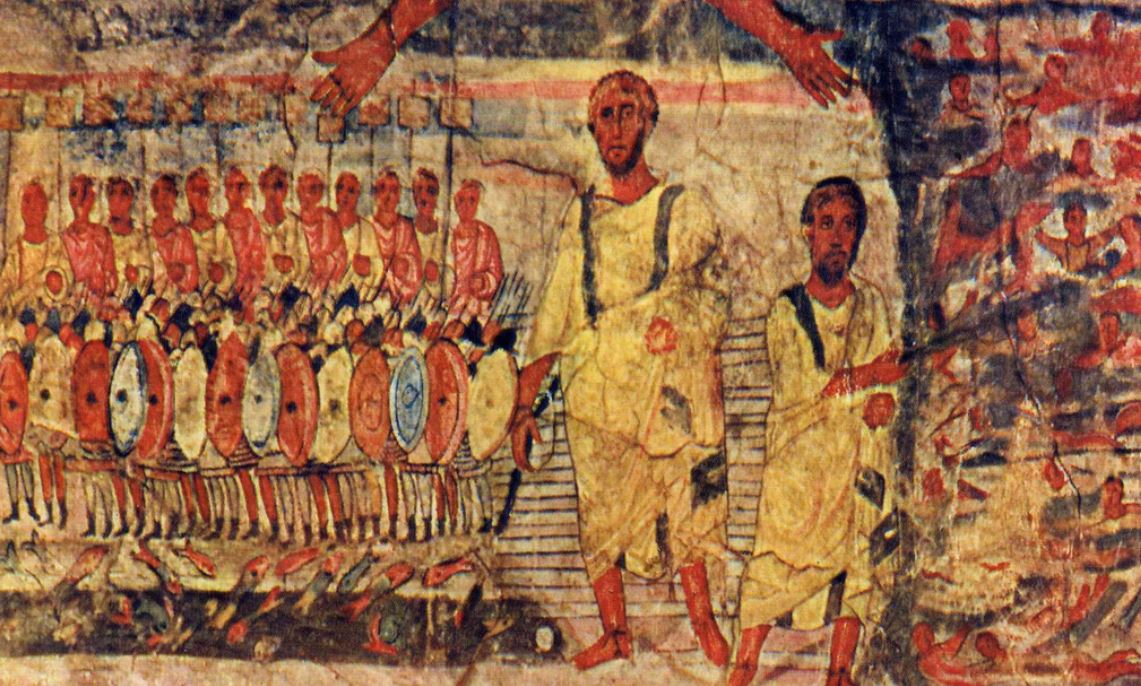
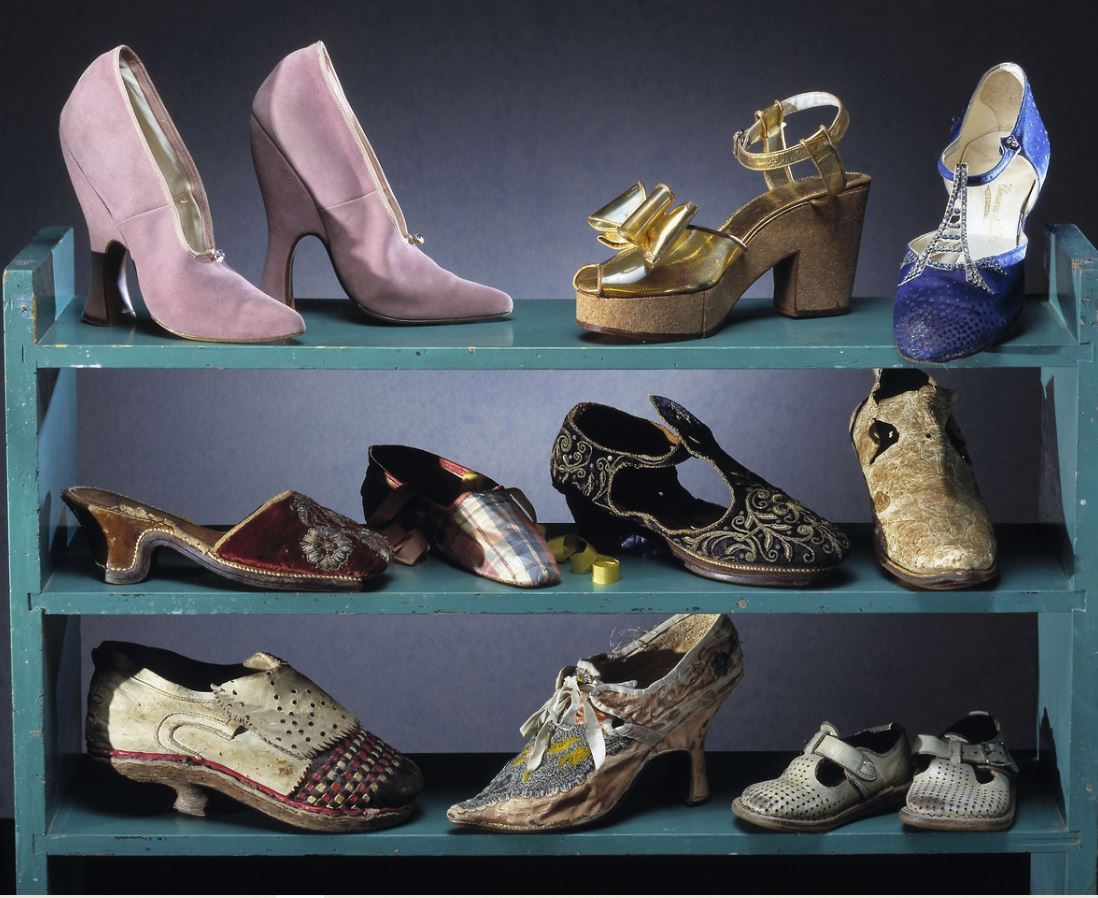
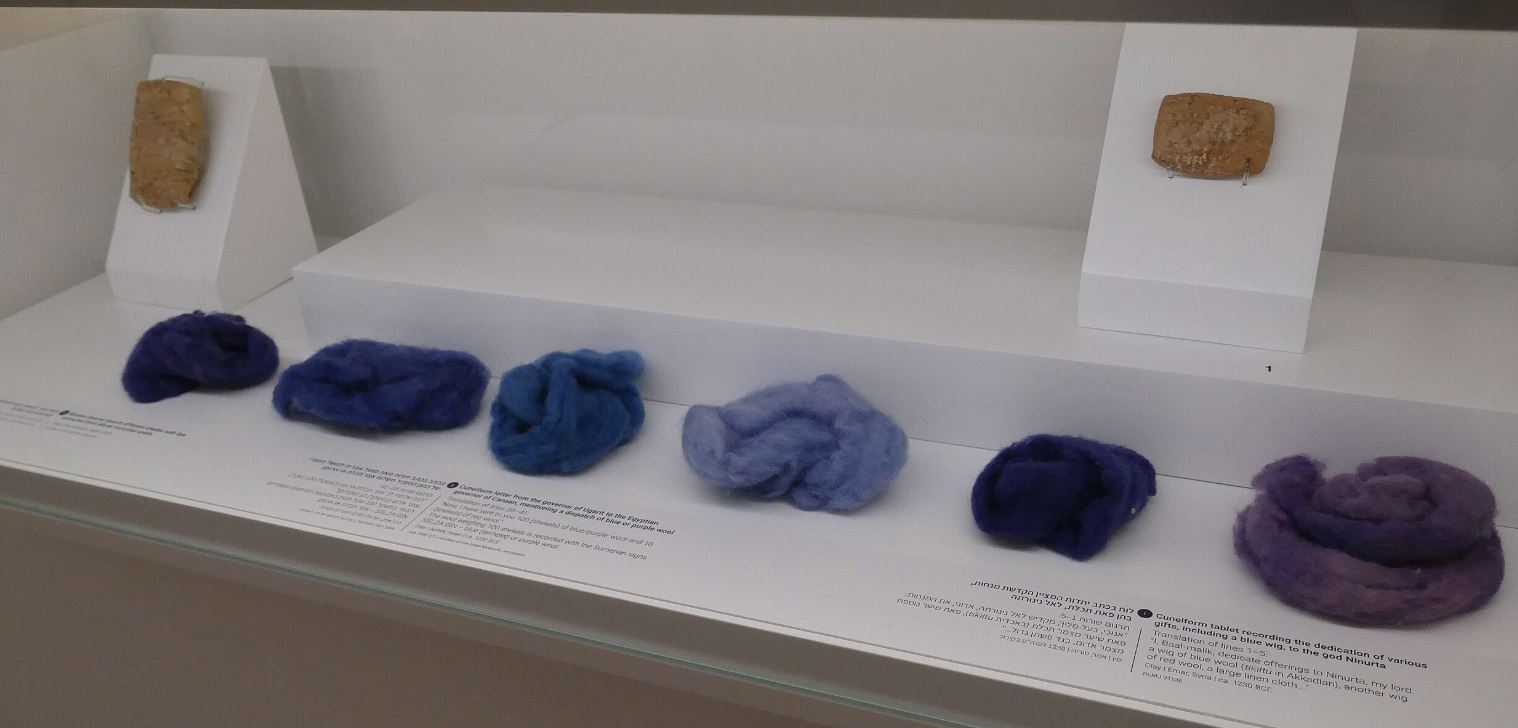
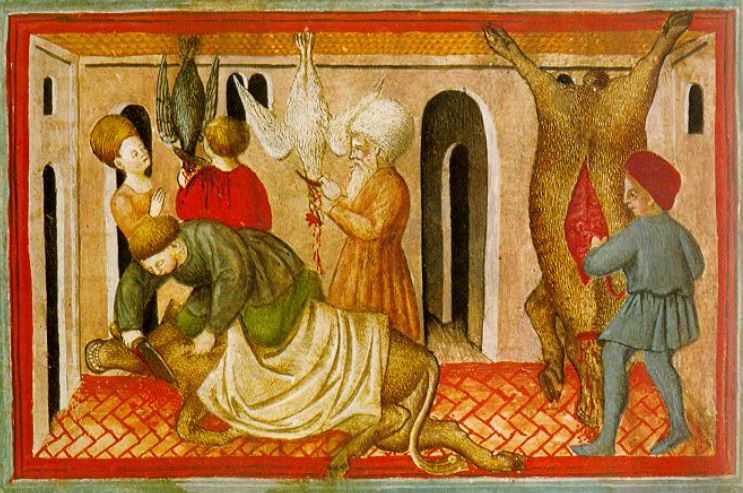
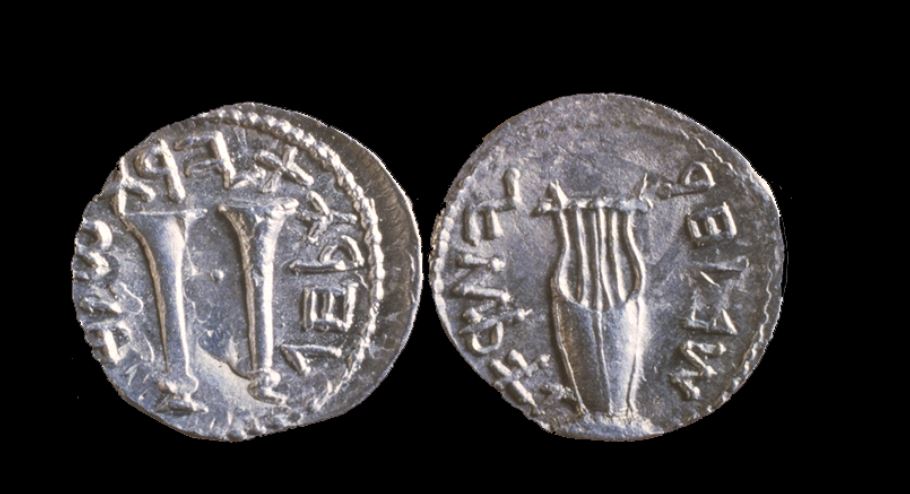
Flashback: a look into the reality of the Talmud. What was the time of the Talmud really like? How were the experiences different?


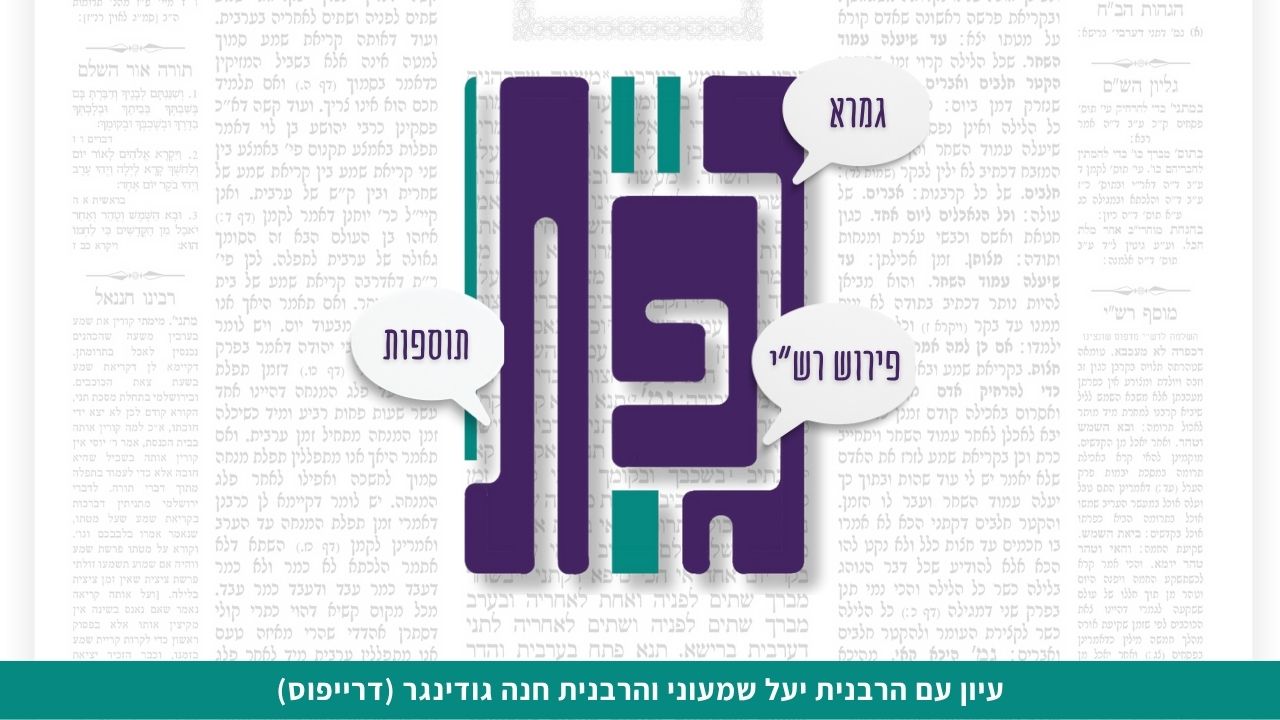
Gefet
Gemara, Perushim and Tosfot An in-depth (Iyun) Gemara shiur with Rabbanit Yael Shimoni and Shalhevet Schwartz Disclaimers: you do not have to be a daf learner to study Gefet. The texts are in Hebrew, the class teaching is in English. *In collaboration with Yeshivat Drisha


On Second Thought
On Second Thought: Delving Into the Sugya with Rabbanit Yafit Clymer
The Essence of the Incense and the Secret of the People

Spiritual Aspects of Korbanot: The Permission To Eat Meat
Spiritual Aspects of Korbanot: All About Blood
The Death Penalty in the Mishnah and Talmudic Era – On Second Thought
The Death Penalty in the Second Temple Period – On Second Thought
Daf Yomi: One Week at a Time
This shiur will allow you to connect to the worldwide phenomenon of Daf Yomi study, whether you learn the daf each day or just want to gain an overview of the entire Gemara.
Zevachim Daf 94-101– Daf Yomi: One Week at a Time
Zevachim Daf 87-93– Daf Yomi: One Week at a Time
Zevachim Daf 81-86– Daf Yomi: One Week at a Time
Zevachim Daf 74-80 – Daf Yomi: One Week at a Time
Zevachim Daf 66-73 – Daf Yomi: One Week at a Time
Zevachim Daf 58-65 – Daf Yomi: One Week at a Time
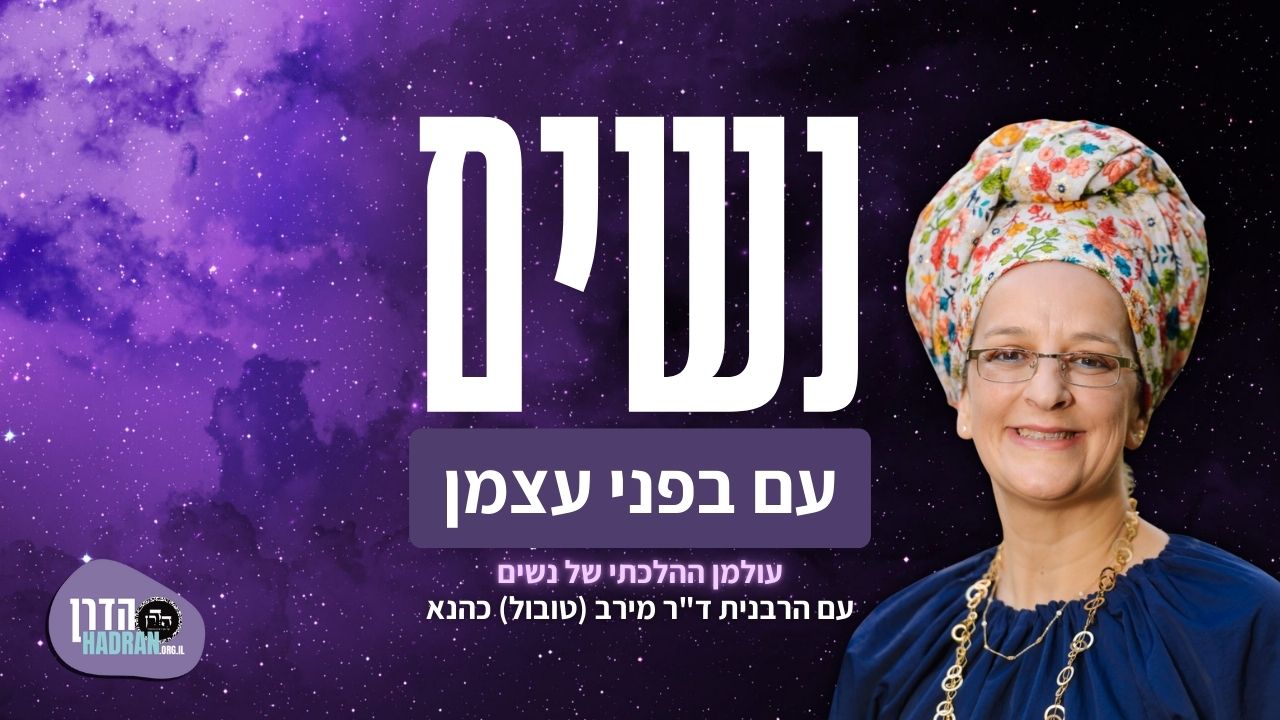
Talking Talmud
A conversation on the daf yomi with Anne Gordon and Yardaena Osband
Beyond the Daf (HE)
Explore weekly shiurim in Hebrew covering the most thought-provoking topics that arise from the daf.



Suggested for you
Your history
Courses
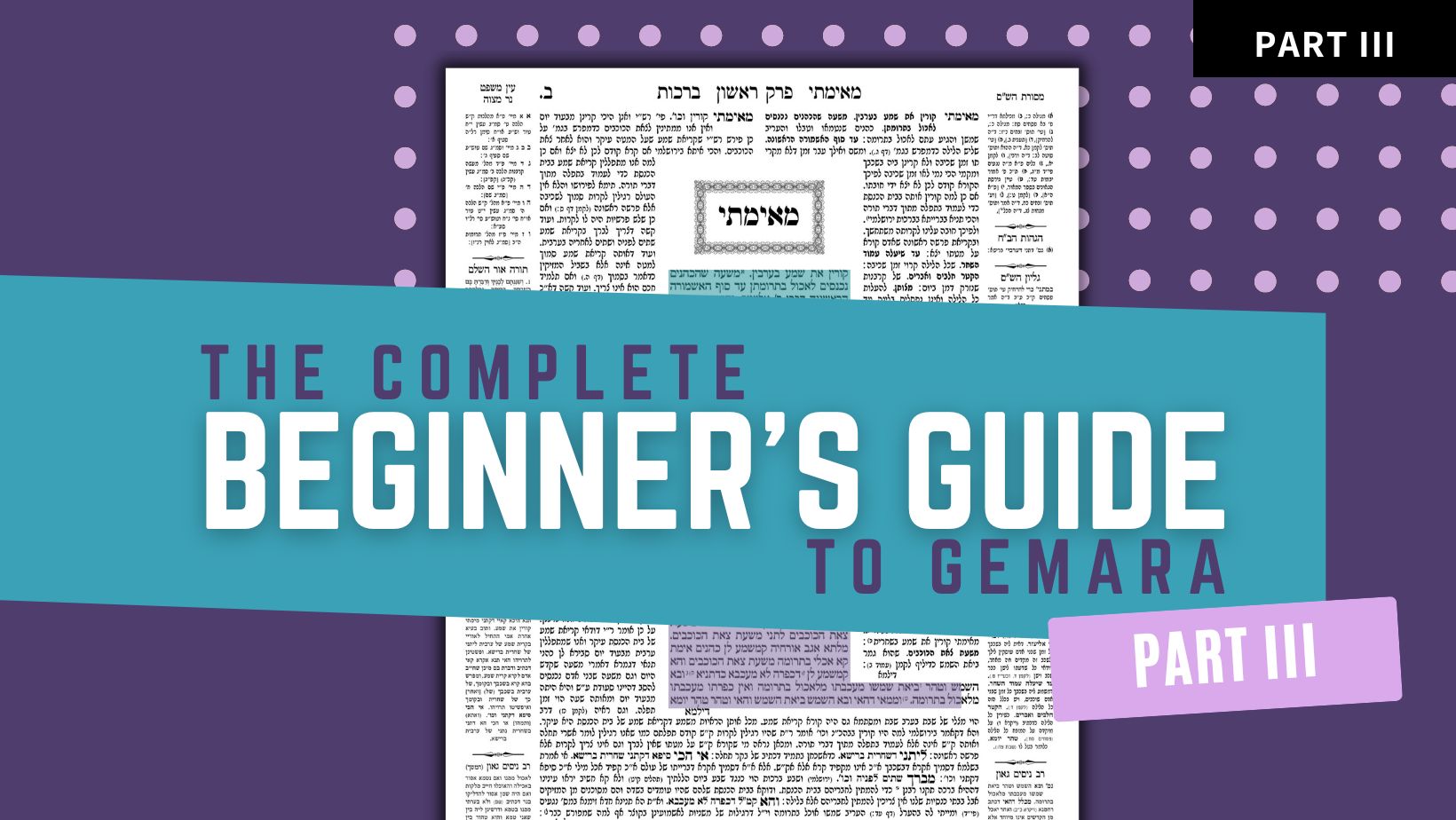
Take a Course
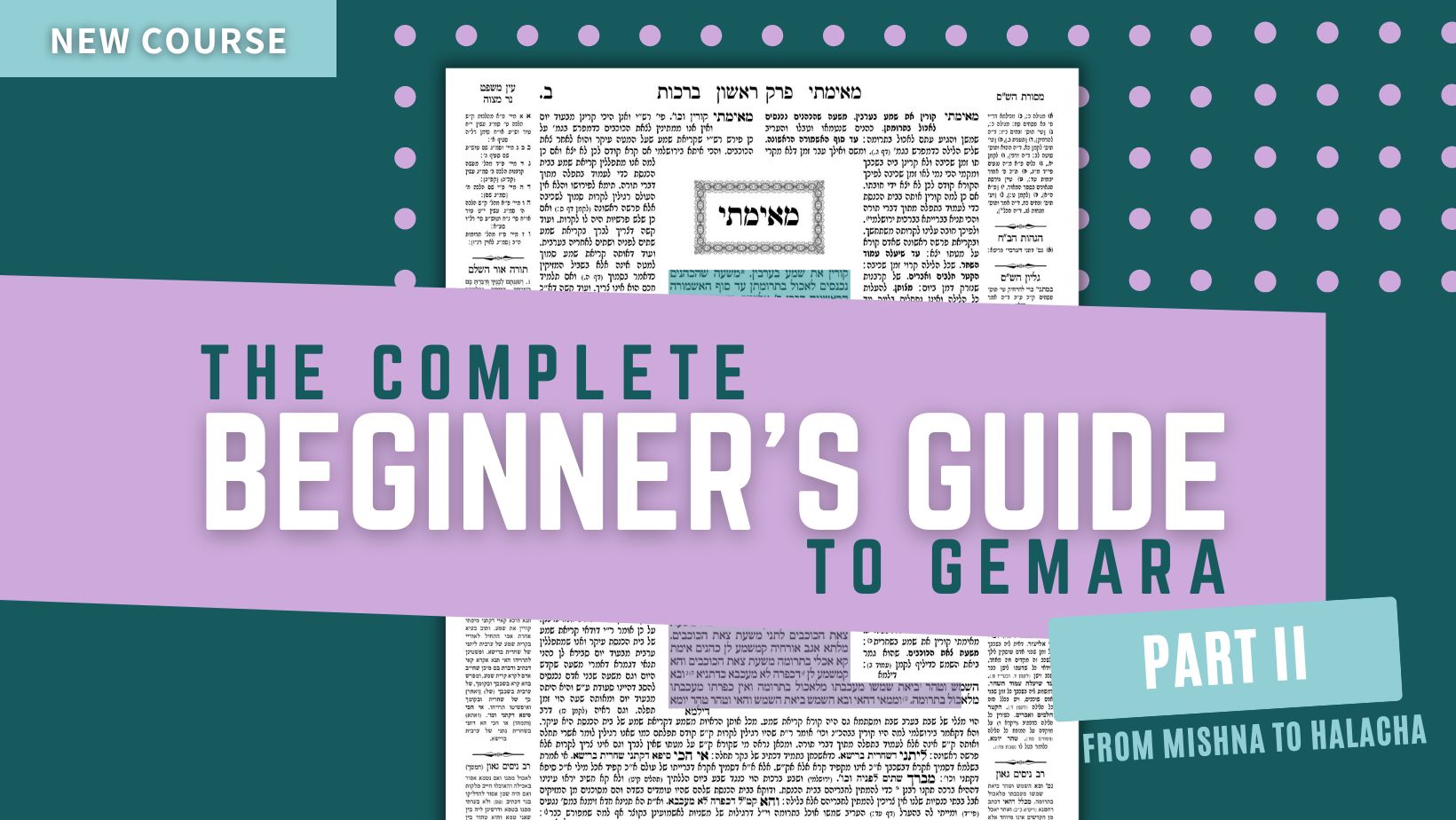
Develop your Talmud study skills with free, self-paced online courses by experienced Gemara teachers. All courses are designed to be relevant for beginners, as well as more advanced learners.


Masechtot
Learn a Masechet
Take a personalized, self-paced trip through Talmud study by choosing a masechet (tractate) that matches your interests and schedule.
 63 Dapim
31 Dapim
26 Dapim
30 Dapim
63 Dapim
31 Dapim
26 Dapim
30 Dapim
Support Women’s Talmud Study
Your donation to Hadran enables us to create more resources and to reach and inspire more women all over the world.

Sponsor a Daf
Dedicate a Hadran Daf Yomi shiur in memory of a loved one or in honor of a special individual.


Circle of Friends
We encourage all Hadran site users to support our programming. Empower us to empower you.

General Donation
Support Hadran to advance women’s Talmud study. We welcome and appreciate donations of any amount.
The Hadran Learners’ Tapestry
Meet the diverse women learning Gemara with Hadran.
Read their stories and add your own.




Margo
I started my Talmud journey in 7th grade at Akiba Jewish Day School in Chicago. I started my Daf Yomi journey after hearing Erica Brown speak at the Hadran Siyum about marking the passage of time through Daf Yomi.
Carolyn
I started my Talmud journey post-college in NY with a few classes. I started my Daf Yomi journey after the Hadran Siyum, which inspired both my son and myself.
Carolyn Hochstadter and Margo Kossoff Shizgal
Merion Station, USA
Beit Shemesh, Israel
In July, 2012 I wrote for Tablet about the first all women’s siyum at Matan in Jerusalem, with 100 women. At the time, I thought, I would like to start with the next cycle – listening to a podcast at different times of day makes it possible. It is incredible that after 10 years, so many women are so engaged!
Beth Kissileff
Pittsburgh, United States
Ive been learning Gmara since 5th grade and always loved it. Have always wanted to do Daf Yomi and now with Michelle Farber’s online classes it made it much easier to do! Really enjoying the experience thank you!!
Lisa Lawrence
Neve Daniel, Israel
I started learning daf yomi at the beginning of this cycle. As the pandemic evolved, it’s been so helpful to me to have this discipline every morning to listen to the daf podcast after I’ve read the daf; learning about the relationships between the rabbis and the ways they were constructing our Jewish religion after the destruction of the Temple. I’m grateful to be on this journey!
Mona Fishbane
Teaneck NJ, United States
I was inspired to start learning after attending the 2020 siyum in Binyanei Hauma. It has been a great experience for me. It’s amazing to see the origins of stories I’ve heard and rituals I’ve participated in my whole life. Even when I don’t understand the daf itself, I believe that the commitment to learning every day is valuable and has multiple benefits. And there will be another daf tomorrow!
Khaya Eisenberg
Jerusalem, Israel
I started Daf during the pandemic. I listened to a number of podcasts by various Rebbeim until one day, I discovered Rabbanit Farbers podcast. Subsequently I joined the Hadran family in Eruvin. Not the easiest place to begin, Rabbanit Farber made it all understandable and fun. The online live group has bonded together and have really become a supportive, encouraging family.
Leah Goldford
Edmonton, Alberta, Canada



Register your free learner account now
With your free Hadran account, you can keep track of your learning options, choices and progress.

Progress tracker
Keep track of where you are in courses and masechtot.

Content updates
Follow the teachers you like. Get notified when they release new content.

Learning reminders
Receive reminders to help you keep up with your learning goals.

Account settings
Update your user and contact information.

