
The Gemara discusses a debate over the concept of “the majority is like the whole.” Where does this principle come from, and what is it about?
Chullin 19
sources:
- משנה חולין א:ג
הַשּׁוֹחֵט מִתּוֹךְ הַטַּבַּעַת וְשִׁיֵּר בָּהּ מְלֹא הַחוּט עַל פְּנֵי כֻלָּהּ, שְׁחִיטָתוֹ כְשֵׁרָה. רַבִּי יוֹסֵי בַּר יְהוּדָה אוֹמֵר, מְלֹא הַחוּט עַל פְּנֵי רֻבָּהּ:
With regard to one who slaughters an animal from within the cricoid cartilage that forms a complete ring at the top of the windpipe and left a thread breadth over the surface of the ring in its entirety intact, as the knife did not go beyond the ring toward the head of the animal, his slaughter is valid. Rabbi Yosei, son of Rabbi Yehuda, says: It is valid even if he left a thread breadth over the majority of the surface of the ring.
- חולין יט.
אָמַר רַב הוּנָא אָמַר רַב אַסִּי: מַחְלוֹקֶת בְּשֶׁשָּׁחַט שְׁנֵי שְׁלִישׁ וְהִגְרִים שְׁלִישׁ, דְּרַבָּנַן סָבְרִי: כּוּלַּהּ שְׁחִיטָה בָּעֵינַן בְּטַבַּעַת גְּדוֹלָה, וְרַבִּי יוֹסֵי בְּרַבִּי יְהוּדָה סָבַר: רוּבּוֹ כְּכוּלּוֹ.
The mishna cited a dispute between the Rabbis, who hold that in a case where one slaughtered within the large upper ring and did not leave a thread breadth over the entire surface of the ring, the slaughter is not valid, and Rabbi Yosei, son of Rabbi Yehuda, who hold that even if one left a thread breadth over a majority of the surface of the ring, the slaughter is valid. Apropos to that, Rav Huna said that Rav Asi says: The dispute is only in a case where one cut two-thirds of the windpipe within the ring and then diverted the knife upward toward the head of the animal and cut the remaining one-third, as the Rabbis hold that we require the entire slaughter to be performed within the large ring, and Rabbi Yosei, son of Rabbi Yehuda, holds: The halakhic status of its majority is like that of its entirety.
Indications and Origins
- במדבר ו:ה
וְכִֽי־יָמ֨וּת מֵ֤ת עָלָיו֙ בְּפֶ֣תַע פִּתְאֹ֔ם וְטִמֵּ֖א רֹ֣אשׁ נִזְר֑וֹ וְגִלַּ֤ח רֹאשׁוֹ֙ בְּי֣וֹם טׇהֳרָת֔וֹ בַּיּ֥וֹם הַשְּׁבִיעִ֖י יְגַלְּחֶֽנּוּ׃
If someone dies suddenly nearby, defiling [a nazirite’s] consecrated hair, they shall shave their head at the time of becoming pure, shaving it on the seventh day.
- משנה נגעים יד:ד
שְׁלשָׁה מְגַלְּחִין וְתִגְלַחְתָּן מִצְוָה, הַנָּזִיר וְהַמְּצֹרָע וְהַלְוִיִּם. וְכֻלָּן שֶׁגִּלְּחוּ שֶׁלֹּא בְתַעַר אוֹ שֶׁשִּׁיְּרוּ שְׁתֵּי שְׂעָרוֹת, לֹא עָשׂוּ כְלוּם:
There are three who must shave their hair, and their shaving of it is a commandment: the nazirite, the metzora, and the Levites. If any of these cut their hair but not with a razor, or if they left even two remaining hairs, their act is of no validity.
- נזיר מב.
אָמַר מָר: וְכוּלָּם שֶׁגִּילְּחוּ שֶׁלֹּא בְּתַעַר, אוֹ שֶׁשִּׁיְּירוּ שְׁתֵּי שְׂעָרוֹת — לֹא עָשׂוּ וְלֹא כְלוּם. אָמַר רַב אַחָא בְּרֵיהּ דְּרַב אִיקָא: זֹאת אוֹמֶרֶת, רוּבּוֹ כְּכוּלּוֹ מִדְּאוֹרָיְיתָא.
§ The Gemara returns to the mishna that teaches that nazirites, lepers, and Levites must shave their hair. The Master said above: And with regard to all of them, if they shaved with an implement other than a razor, or if they left two hairs uncut, they have done nothing. Rav Aḥa, son of Rav Ika, said: That is to say that the principle: The majority of an entity is considered like all of it, applies by Torah law.
מִמַּאי — מִדְּגַלִּי רַחֲמָנָא גַּבֵּי נָזִיר ״בְּיוֹם הַשְּׁבִיעִי יְגַלְּחֶנּוּ״ — הָכָא הוּא דְּעַד דְּאִיכָּא כּוּלּוֹ. הָא בְּעָלְמָא: רוּבּוֹ כְּכוּלּוֹ.
The Gemara asks: From where do we learn this? The Gemara explains: This principle is derived from the fact that the Merciful One revealed in the Torah and specified with regard to a nazirite: “On the seventh day he shall shave it” (Numbers 6:9), despite the fact that the same verse already stated: “And he shall shave his head on the day of his cleansing.” This teaches that it is only in this case here that he does not fulfill the mitzva of shaving until there is the removal of all of it, i.e., shaving part of his head is insufficient. This shows that in general the majority of an entity is like all of it.
Different Types of Rov (Majority)
6. חידושי הגר”ח בבא קמא כ”ז
Rabbi Chaim HaLevi Soloveitchik (1853–1918), the founding architect of the “Brisker method” of Talmudic study.
דהנה ברובא איכא תרי גוונא א) שהוא מברר ומכריע את הספק ב) במידי דלא שייך כלל ספק כגון בשחיטת סמנים דקיי”ל רובו ככולו וכן בתערובות לח בלח דבטיל ברובא אע”ג דאינו ספק כלל דפשיטא לן דלא נחתכו מיעוט סימנים וכן פשיטא לן דאיכא הכא מיעוט איסור .
And there are two types of majority: a) that which clarifies and resolves doubt b) where there is no doubt at all, such as in the slaughter of “signs,” where we rule the majority is like the entirety, and in mixtures of liquid in liquid which are nullified by the majority – even though there is no doubt at all that a minority of the “signs” were cut, nor is there doubt that there is a minority amount of prohibited liquid is present.
ולכאורה תמוה היכן מצינו מקור לרוב כזה . ונראה דהנה מקור הדין דאזלינן בתר רוב הוא מאחרי רבים להטות , ושם מצינו שני דינים נפרדים ועל שניהם דין אחד מאחרי רבים להטות אף דעניניהם נפרדים המה, דהנה בדיני ממונות בעינן ג’ דיינים ובדיני נפשות כ”ג , והנה קשה איך אזלינן בתר רוב הא חסר מנין הסנהדרין וחסר מספר דיינים , ואפילו לו יהא דהדין באמיתתו כהרוב מ”מ הרי המיעוט דקאמרי להיפך אינם יודעים הדין ואינם מורים כן והרי חסר מנין של הב”ד , אלא ודאי פשיטא דכיון דאיכא גזה”כ דבעינן כך וכך סנהדרין וגם דין דאחרי רבים להטות יש לן א”כ ע”כ דיש להם צירוף וכולם ביחד גומרין את הדין וע”כ אמרינן בהך רובא ככולא וא”כ הרי איכא כבר כל מנין הסנהדרין , ונמצא למידין מהך דמהני רובא בסנהדרין וחשיב רובא ככולא ומיעוט נתהפך כמו הרוב ונעשה כהרוב…
And it seems puzzling – where we find a source for such a majority? And it seems that the source of the law that we follow the majority is “incline after the majority,” and there we find two separate laws…even though they are disparate: for in financial litigation, we require 3 judges and in capital punishment cases, we require 23 judges. And this is challenging – how do we follow the majority of the judges if we do not have the full number ruling the same way? And even if the truth corresponds to the belief of the majority of judges, there is still a minority of judges who rule the opposite and do not know it as law, nor do they guide people that way – thus, there is no full quorum of the required number for beit din. Rather, it is obvious that because there is a Scriptural decree that we require these numbers of judges and also “incline after the majority,” you have no choice but to say that there is an imagined synthesis between the majority who rule one way and the rest who rule another, and together they complete the judgment. And thus we must say here that the majority is like the whole – and therefore, there is a full quorum of the court, and this teaches that that we follow the majority of the court, and it is considered as the whole of the court, and the minority is transformed to be considered like the majority and becomes like it…
…ונתבאר דבסנהדרין איכא תרי רובא , חדא לענין עצם הדין ובירור אמיתת הדין אזלינן בתר רוב , ועוד לענין הדין של המספר כ”ג במי אזלינן בתר רוב משום רובו ככולו…
…And it is explained that regarding the Sanhedrin there are two “rov” concepts – one related to the essential ruling and clarifying the truth of the law in which we follow the majority, and the other regarding the ruling of the number 23 – we also follow the rov due to the principle of the majority being like the whole…
7. שו״ת חתם סופר אורח חיים סימן קמ
Rabbi Moshe Schreiber (Sofer), known as the Chatam Sofer, was the preeminent leader of Judaism in the Austro-Hungarian Empire during the first part of the 19th century.
ולפע”ד לא שייך רובו ככולו אלא מתוך כלו דמסנהדרין ילפינן דבעי’ רוב מתוך כל אבל אם לא נתועדו רק רוב סנהדרי’ אינו כלום וה”נ לעולם שדנין המיעוט בתר הרוב אבל כלו בפנינו כגון יו”ד הוה עדה לדבר שבקדושה ואם ז’ מהם לא שמעו קדיש וברכו נמשך המיעוט אחר הרוב אבל אם רק נתועדו ז’ לא אמרינן דבר שבקדושה…
(Regarding the fact that we do not rule that the majority is like the whole in measurements, such as requiring 40 se’ah for a mikvah): And in my humble opinion, the principle of the majority is like th whole only applies if it is within the whole. For we learn it from the Sanhedrin that we need the majority from among the whole. But if only the majority of the court assembled in the first place, it counts as nothing. And here too, we send the minority after the majority, but all of them are present – like if there are ten – it is a minyan for a davar she-bikdusha (e.g., Kadish, Barchu), and if 7 of them haven’t heard kaddish or barchu, the minority follows them. But if only seven showed up in the first place, we do not recite a davar she-bikdusha…
8. חידושי הגרי”ז זבחים כו
Rav Yitzchok Zev Halevi Soloveitchik also known as Rav Velvel (“Zev” means “wolf” in Hebrew, and “Velvel” is the diminutive of “wolf” in Yiddish) or the Brisker Rov (“rabbi of/from Brisk“, (19 October 1886 – 11 October 1959), was rosh yeshiva of the Brisk yeshiva in Jerusalem.
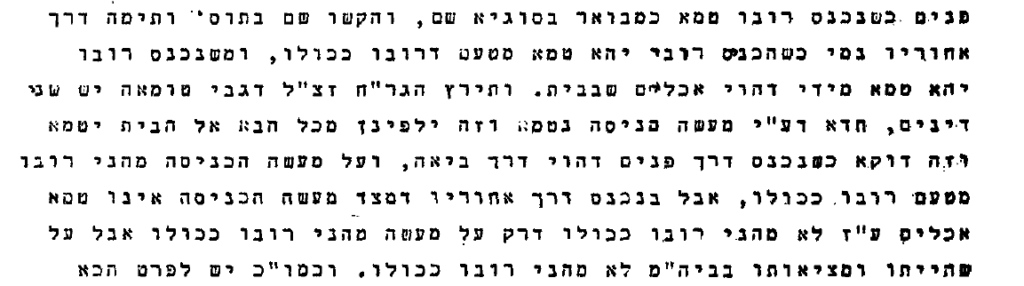
And Tosfot there challenge: It’s a wonder – why shouldn’t one become ritually impure also when the majority of one’s body enters going backwards based on the principle of “the majority is like the whole” – meaning that once the majority of one’s body enters (even walking backwards) one would become ritually impure just like the vessels that are in the home? And R. Hayyim – may the memory of the righteous be for blessing – answered that regarding ritual impurity in the leprous home, there are two legal rulings: 1) that through the act of entering the home, one becomes ritually impure – and we learn this from “all who enter the home will become ritually impure” – and this is specifically when one enters facing forward, as this is the general manner of entry; and on the act of entry, the majority of the body suffices to trigger it, as the principle of the majority is like the whole applies; 2) but when one enters walking backwards, which does not render one ritually impure because of an act of entry but rather because it is similar to the vessels sitting in the house, in this the majority is like the whole does not apply; for only regarding an action does this principle suffice, but regarding being present in the leprous home, the principle of the majority is like the whole does not apply.