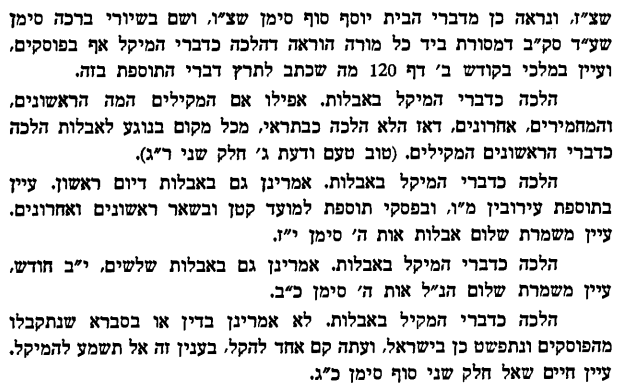
The Gemara on Chullin 50a raises the rule of thumb that the halacha follows the more lenient view in cases of mourning. What is the logic behind this halakhic orientation? Is it always followed
Chullin 50
sources:
- חולין נ.
אָמַר רַבִּי אַבָּא בְּרֵיהּ דְּרַבִּי חִיָּיא בַּר אַבָּא: הָכִי אָמַר רַבִּי חִיָּיא בַּר אַבָּא אָמַר רַבִּי יוֹחָנָן: הֲלָכָה כְּרַבָּן שִׁמְעוֹן בֶּן גַּמְלִיאֵל בִּטְרֵפָה, וַהֲלָכָה כְּרַבִּי שִׁמְעוֹן בְּאֵבֶל.
Rabbi Abba, son of Rabbi Ḥiyya bar Abba, said that this is what Rabbi Ḥiyya bar Abba says that Rabbi Yoḥanan says: The halakha is in accordance with the opinion of Rabban Shimon ben Gamliel with regard to a tereifa, and the halakha is in accordance with the opinion of Rabbi Shimon with regard to the halakhot of mourning.
הֲלָכָה כְּרַבָּן שִׁמְעוֹן בֶּן גַּמְלִיאֵל בִּטְרֵפָה – הָא דַּאֲמַרַן. כְּרַבִּי שִׁמְעוֹן בְּאֵבֶל, מַאי הִיא? דִּתְנַן: כׇּל שְׁלֹשָׁה יָמִים
הָרִאשׁוֹנִים, בָּא מִמָּקוֹם קָרוֹב – מוֹנֶה עִמָּהֶן.
The Gemara elaborates: The halakha is in accordance with the opinion of Rabban Shimon ben Gamliel with regard to a tereifa; this is the halakha that we stated above, that mucus forms an effective seal in the intestines. The halakha is in accordance with the opinion of Rabbi Shimon with regard to mourning; what is this halakha? As we learned in a baraita: If one learns of the death of an immediate relative after other relatives have already begun their period of mourning, the halakha is as follows: During the entire first three days of mourning, if a mourner comes to the house of mourning from a nearby place, he counts his days of mourning with the other mourners and completes his mourning with them.
מִמָּקוֹם רָחוֹק – מוֹנֶה לְעַצְמוֹ. מִכָּאן וְאֵילָךְ, אֲפִילּוּ בָּא מִמָּקוֹם קָרוֹב – מוֹנֶה לְעַצְמוֹ. רַבִּי שִׁמְעוֹן אוֹמֵר: אֲפִילּוּ בְּיוֹם הַשְּׁבִיעִי, בָּא מִמָּקוֹם קָרוֹב – מוֹנֶה עִמָּהֶן.
The baraita continues: If he came from a distant place, he counts seven days on his own from the time that he was informed of the death. From this point forward, i.e., after the first three days, even if he comes from a nearby place, he counts seven days on his own. Rabbi Shimon says: Even on the seventh day, if he comes from a nearby place, he counts and completes his mourning with the other mourners.
מַר מַאן דְּהוּא: אִיזְכֵּי וְאֶיסַּק וְאֶגְמְרַהּ לִשְׁמַעְתָּא מִפּוּמֵּיהּ דְּמָרַהּ. כִּי סְלֵיק, אַשְׁכְּחֵיהּ לְרַבִּי אַבָּא בְּרֵיהּ דְּרַבִּי חִיָּיא בַּר אַבָּא. אֲמַר לֵיהּ: אֲמַר מָר הֲלָכָה כְּרַבָּן שִׁמְעוֹן בֶּן גַּמְלִיאֵל בִּטְרֵפָה? אֲמַר לֵיהּ: הָא אֵין הֲלָכָה אֲמַרִי.
Someone whose name was not given said: May I merit to go up to Eretz Yisrael and learn this halakha from the mouth of its Master. When he went up from Babylonia to Eretz Yisrael, he found Rabbi Abba, son of Rabbi Ḥiyya bar Abba, and said to him: Is it true that the Master said that the halakha is in accordance with the opinion of Rabban Shimon ben Gamliel with regard to a tereifa? Rabbi Abba said to him: This is not true. Rather, I said just the opposite, that the halakha is not in accordance with Rabban Shimon ben Gamliel, and even if mucus seals the perforation of the intestine, the animal is a tereifa.
כְּרַבִּי שִׁמְעוֹן בְּאָבֵל, מַאי? אֲמַר לֵיהּ: פְּלוּגָתָא נִינְהוּ, דְּאִיתְּמַר: רַב חִסְדָּא אָמַר הֲלָכָה, וְכֵן אָמַר רַבִּי יוֹחָנָן הֲלָכָה, וְרַב נַחְמָן אָמַר אֵין הֲלָכָה.
The anonymous man asked Rabbi Abba again: What about the other ruling reported in your name, that the halakha is in accordance with the opinion of Rabbi Shimon with regard to mourning; is this accurate? Rabbi Abba said to him: There are conflicting opinions with regard to this matter, as it was stated that Rav Ḥisda says that the halakha is in accordance with the opinion of Rabbi Shimon, and so says Rabbi Yoḥanan: That is the halakha. But Rav Naḥman says: That is not the halakha.
וְאֵין הֲלָכָה כְּרַבָּן שִׁמְעוֹן בֶּן גַּמְלִיאֵל בִּטְרֵפָה, וַהֲלָכָה כְּרַבִּי שִׁמְעוֹן בְּאֵבֶל, דְּאָמַר שְׁמוּאֵל: הֲלָכָה כְּדִבְרֵי הַמֵּיקֵל בְּאֵבֶל.
The Gemara concludes: And the halakha is not in accordance with the opinion of Rabban Shimon ben Gamliel with regard to a tereifa, and the halakha is in accordance with the opinion of Rabbi Shimon with regard to mourning, in accordance with the statement of Shmuel, who says: The halakha is in accordance with the statement of the more lenient authority in matters relating to mourning.
- מועד קטן יז:-יח.
תָּנוּ רַבָּנַן: כְּשֵׁם שֶׁאָמְרוּ אָסוּר לְגַלֵּחַ בַּמּוֹעֵד, כָּךְ אָסוּר לִיטּוֹל צִפּוֹרְנַיִם בַּמּוֹעֵד, דִּבְרֵי רַבִּי יְהוּדָה. וְרַבִּי יוֹסֵי מַתִּיר.
The Sages taught the following baraita: Just as the Sages said that it is prohibited to cut one’s hair during the intermediate days of a Festival, so too it is prohibited to cut one’s nails during the intermediate days of a Festival; this is the statement of Rabbi Yehuda, whereas Rabbi Yosei permits cutting nails.
וּכְשֵׁם שֶׁאָמְרוּ אָבֵל אָסוּר לְגַלֵּחַ בִּימֵי אֶבְלוֹ — כָּךְ אָסוּר לִיטּוֹל צִפּוֹרְנַיִם בִּימֵי אֶבְלוֹ, דִּבְרֵי רַבִּי יְהוּדָה. וְרַבִּי יוֹסֵי מַתִּיר.
And just as the Sages said that a mourner is prohibited from cutting his hair during the period of his mourning, so too he is prohibited from cutting his nails during the period of his mourning; this is the statement of Rabbi Yehuda, whereas Rabbi Yosei permits a mourner to cut his nails.
אָמַר עוּלָּא: הֲלָכָה כְּרַבִּי יְהוּדָה בְּאֵבֶל, וַהֲלָכָה כְּרַבִּי יוֹסֵי בַּמּוֹעֵד.
Ulla said: The halakha is in accordance with the opinion of Rabbi Yehuda with regard to mourning, but the halakha is in accordance with the opinion of Rabbi Yosei with regard to the intermediate days of the Festival.
שְׁמוּאֵל אָמַר: הֲלָכָה כְּרַבִּי יוֹסֵי בַּמּוֹעֵד וּבְאֵבֶל, דְּאָמַר שְׁמוּאֵל: הֲלָכָה כְּדִבְרֵי הַמֵּיקֵל בְּאֵבֶל.
Shmuel said: The halakha is in accordance with the opinion of Rabbi Yosei with regard to the intermediate days of the Festival and with regard to mourning, as Shmuel said this general principle: The halakha is in accordance with the statement of the more lenient authority in matters relating to mourning.
פִּנְחָס אֲחוּהּ דְּמָר שְׁמוּאֵל אִיתְּרַע בֵּיהּ מִילְּתָא, עָל שְׁמוּאֵל לְמִישְׁאַל טַעְמָא מִינֵּיהּ. חֲזַנְהוּ לְטוּפְרֵי[הּ] דַּהֲווֹ נְפִישָׁן, אֲמַר לֵיהּ: אַמַּאי לָא שָׁקְלַתְּ לְהוּ? אֲמַר לֵיהּ: אִי בְּדִידֵיהּ הֲוָה, מִי מְזַלְזְלַתְּ בֵּיהּ כּוּלֵּי הַאי?
It was related that something unpleasant happened to Pineḥas, brother of Mar Shmuel, that is to say, one of his close relatives died. Shmuel entered to ask him the reason, i.e., to console him. He saw that Pineḥas’s nails were long, and said to him: Why do you not cut them? Pineḥas replied: If it were your relative who died, and you were in mourning, would you treat the matter so lightly and cut your nails?
הֲוַאי ״כִּשְׁגָגָה שֶׁיֹּצָא מִלִּפְנֵי הַשַּׁלִּיט״, וְאִיתְּרַע בֵּיהּ מִילְּתָא בִּשְׁמוּאֵל. עָל פִּנְחָס אֲחוּהּ לְמִישְׁאַל טַעְמָא מִינֵּיהּ. שַׁקְלִינְהוּ לְטוּפְרֵיהּ חַבְטִינְהוּ לְאַפֵּיהּ. אֲמַר לֵיהּ: לֵית לָךָ בְּרִית כְּרוּתָה לַשְּׂפָתַיִם?
Pineḥas’s words were: “Like an error that proceeds from a ruler” (Ecclesiastes 10:5). As soon as he uttered them they come true, even though he did not intend them. Shortly after Pineḥas made his comment, something unpleasant happened to Shmuel, and one of his close relatives died. Pineḥas, his brother, entered to ask him the reason, i.e., to offer words of comfort. Shmuel took his nails and cast them in Pineḥas’s face. Shmuel then said to him: Do you not know the principle that a covenant is made with the lips? In other words, do you not know that what one says influences future events?
- ירושלמי מועד קטן ג:א, פב.
שָׂפָם וּנְטִילַת צִפּוֹרְנַיִם. אִית תַּנָּיֵי תַנֵּי. בָּרֶגֶל מוּתָּר וּבָאֵבֶל אָסוּר. אִית תַּנָּיֵי תַנֵּי. בָּרֶגֶל אָסוּר וּבָאֵבֶל מוּתָּר. מָאן דְּאָמַר. בָּרֶגֶל מוּתָּר. בְּשֶׁיֵּשׁ שָׁם רֶגֶל. וּבָאֵבֶל אָסוּר. בְּשֶׁאֵין שָׁם רֶגֶל. מָאן דְּאָמַר. בְּרֶגֶל אָסוּר. בְּשֶׁיֵּשׁ שָׁם הַעֲרָמָה. בָּאֵבֶל מוּתָּר. בְּשֶׁאֵין שָׁם הַעֲרָמָה. רַב חִיָיה בַּר אַשִּׁי בְּשֵׁם רַב. הֲלְכָה כְדִבְרֵי מִי שֶׁהוּא מֵיקַל כָּאן וָכָאן. רִבִּי שִׁמְעוֹן בַּר אַבָּא בְּשֵׁם רִבִּי יְהוֹשֻׁעַ בֶּן לֵוִי. הֲלָכָה כְדִבְרֵי מִי שֶׁהוּא מֵיקַל בִהִילְכוֹת אֵבֶל.
Mustachios *Trimming them. and cutting fingernails. There are Tannaim who state, permitted on a holiday and forbidden in mourning. There are Tannaim who state, forbidden on a holiday and permitted in mourning. He who said permitted on a holiday (-different version: “He who said permitted in mourning”), if there happens to be a holiday; and forbidden in mourning, if there is no holiday. He who said forbidden on a holiday, if it involves trickery; and permitted in mourning, without trickery. Rav Ḥiyya bar Ashi in the name of Rav: practice follows him who is lenient at both occasions. Rebbi Simeon bar Abba in the name of Rebbi Joshua ben Levi: practice follows him who is lenient in the rules of mourning.
- מועד קטן כו:
תָּנוּ רַבָּנַן: אָמְרוּ לוֹ מֵת אָבִיו וְקָרַע, מֵת בְּנוֹ וְהוֹסִיף, תַּחְתּוֹן — מִתְאַחֶה, עֶלְיוֹן — אֵינוֹ מִתְאַחֶה.
The Sages taught the following baraita: If they first said to a person that his father died, and he rent his garment, and afterward they told him that his son died, and he added to the same rent, in such a case the lower portion of the rent that had been made for his son may be mended. This is because, after completing the period of mourning, one is permitted to mend a rent made for relatives other than one’s parents. However, the upper portion of the rent may not be mended, as a tear made for one’s father may never be carefully sewn back together.
מֵת בְּנוֹ וְקָרַע, מֵת אָבִיו וְהוֹסִיף, עֶלְיוֹן — מִתְאַחֶה, תַּחְתּוֹן — אֵינוֹ מִתְאַחֶה.
If, on the other hand, they said to him first that his son died, and he rent his garment, and afterward they told him that his father died, and he added to the same rent, then in that case the upper portion of the rent, which had been made for his son, may be mended, but the lower portion of the rent, which had been made for his father, may not be mended.
מֵת אָבִיו, מֵת אִמּוֹ, מֵת אָחִיו, מֵתָה אֲחוֹתוֹ — קוֹרֵעַ קֶרַע אֶחָד לְכוּלָּן. רַבִּי יְהוּדָה בֶּן בְּתִירָה אוֹמֵר: עַל כּוּלָּן קֶרַע אֶחָד, עַל אָבִיו וְאִמּוֹ קֶרַע אֶחָד, לְפִי שֶׁאֵין מוֹסִיפִין עַל קֶרַע אָבִיו וְאִמּוֹ.
If they said to him all at one time that his father died, his mother died, his brother died, and his sister died, then he may make one rent for all of them. Rabbi Yehuda ben Beteira says: For all of his other relatives he makes one rent, and for his father and mother he makes another rent, as one must not add to a rent made for his father and mother.
מַאי טַעְמָא? אָמַר רַב נַחְמָן בַּר יִצְחָק: לְפִי שֶׁאֵינָן בְּתוֹסֶפֶת.
The Gemara asks: What is the reason for Rabbi Yehuda ben Beteira’s opinion that one may not add to the rent torn for a mother or father? Rav Naḥman bar Yitzḥak said: Because they cannot be added; one has only one father and one mother and cannot add others.
אָמַר שְׁמוּאֵל: הֲלָכָה כְּרַבִּי יְהוּדָה בֶּן בְּתִירָה. וּמִי אָמַר שְׁמוּאֵל הָכִי? וְהָאָמַר שְׁמוּאֵל: הֲלָכָה כְּדִבְרֵי הַמֵּיקֵל בְּאֵבֶל! אֲבֵילוּת לְחוּד, קְרִיעָה לְחוּד.
Shmuel said: The halakha is in accordance with the opinion of Rabbi Yehuda ben Beteira. The Gemara asks: And did Shmuel actually say this? But didn’t Shmuel say the principle is that the halakha is in accordance with the statement of the lenient Sage with regard to mourning; yet here he rules in accordance with the more stringent opinion. The Gemara answers: The halakhot of mourning are discrete and the halakhot of rending are discrete, and it is only with regard to the halakhot of mourning that Shmuel rules consistently in accordance with the lenient opinion.
- רמב”ן תורת האדם עמ’ ריא
ומה שפסקו הלכה כדברי המיקל באבל, יש לומר מפני שלא מצאו מחלוקת שבאבל אלא בשל דבריהם, כגון במקצת שביעי ככולו, ובנטילת צפרנים, ובבא ממקום רחוק משלשה ואילך אם מונה עמהן, ובשמועה רחוקה. וכללו של דבר בדקדוקי סופרים שהחמירו על עיקר אבלות תורה…
And that which they ruled that “the law follows the lenient view in mourning,” some suggest that it is because we only find debates regarding laws of mourning that are rabbinic in nature, such as counting part of the seventh day as a full day, cutting fingernails, whether one who comes from a distance after the third day of shiv‘ah counts together with his relatives, a delayed report of the death, and generally regarding the rigors of the rabbis when they were stringent above and beyond the core avelut required by the Torah. . .
והאחרונים מחכמי הצרפתים ז”ל אמרו בתוספות דאפשר כשפסקו הלכה כדברי המיקל באבל לא מפני שהוא של דבריהם, אלא אפילו בשל תורה ואפילו בראשון פסקו כך, שאילו מטעם קולא של דבריהם יחיד במקום רבים הלכה כרבים כדמסקינן בפרק מי שהוציאוהו (מ”ו א’) וכאן אפילו יחיד במקום רבים…
But the later French rabbis, of blessed memory, wrote in Tosafot [Eiruvin 46a] that it is possible that when they ruled that “the law follows the lenient view in mourning,” it was not because these laws are rabbinic in nature. Rather, even when it comes to matters derived from the Torah, even on the first day of mourning, they ruled this way. Because if the leniency is rooted in the fact that the laws are rabbinic in nature, then the majority opinion would prevail . . . yet here, in the case of mourning, the minority view prevails…
- רבנית ד”ר חנה פרידמן, ‘וְהַחַי יִתֵּן אֶל לִבּוֹ’: עיצוב היחס לאבלות על ידי חז”ל (21st c. Israel)
https://gluya.org/sages-attitude-to-mourning
…הציוויים המפורשים ביחס לאבלות בתורה הם שליליים בלבד ודומה שנועדו למתוח קו ברור נגד פולחן המתים שנהג בעולם העתיק: איסור ההתגודדות, הקרחה, השרטת, ואולי גם איסור הקפת הראש ופאת הזקן. אולם ספק אם הם הצליחו למחוק כליל את השפעות עולם זה על היהדות המקראית. מצאנו מספר אזכורים של תשורות מזון למתים, כגון לשון המתוודה בווידוי מעשרות (דברים כו, יד): “לֹא אָכַלְתִּי בְאֹנִי מִמֶּנּוּ וְלֹא בִעַרְתִּי מִמֶּנּוּ בְּטָמֵא וְלֹא נָתַתִּי מִמֶּנּוּ לְמֵת” ויש הסוברים שמצוות נקמת הדם וטקס עגלה ערופה הם ביסודם קורבנות לנשמת הנרצח…
The explicit commands regarding mourning in the Torah are only negative and seem to have been intended to draw a clear line against the cult of the dead practiced in the ancient world: the prohibition of gatherings, shaving, scratching, and perhaps also the prohibition of circumcision of the head and beard. However, it is doubtful whether they succeeded in completely erasing the influences of this world on biblical Judaism. We have found several references to the customs of food offerings for the dead, such as the language of the confessor in the confession of tithes (Deuteronomy 26:14): “I have not eaten any of it, nor have I made myself unclean from it, nor have I given any of it to death” Some believe that the commandments of blood revenge and the ritual of the decapitated calf are fundamentally sacrifices for the soul of the murdered person.
מעיון בקובץ זה ניכר שלפנינו סיכום חלקי בלבד של הלכות אבלות, שמתמקד רק בריכוז הלכות אבלות במועד, ומכאן עולה התהייה, מדוע נמנעה המשנה כולה מעיסוק מסודר בהלכות אבלות כשלעצמן, ומה גרם לעורך המסכת שלנו להידרש דווקא למעמד האבלות במועד?
From a review of this collection (=the mishnayot of Moed Katan), it is clear that we have before us only a partial summary of mourning laws, which focuses only on the concentration of mourning laws on the occasion, and hence the question arises, why did the entire Mishnah refrain from systematically dealing with mourning laws per se, and what caused the editor of our tractate to specifically address the status of mourning on the occasion?
תשובה אפשרית לשאלה זו הוא מעמדן ההלכתי המעורער של הלכות האבלות. כפי שראינו, ספרות המקרא נמנעה מלהציג את מנהגי האבלות כחובה הלכתית, והתייחסה להן רק באופן מקוטע ואגבי, כמנהג עממי קיים שאליו ההלכה לפעמים מגיבה. על רקע זה, סובר אייזיק הירש וייס שגם עורך המשנה נמנע מלהציג את ענייני האבלות במסכת הלכתית מגובשת, “בהיות שעניין אלה ההלכות לא נחשב בעיניו כגופה של תורה כי רובן תלויות במנהג”. לפיכך נדרשה המשנה לאבלות רק במצבים שבהם השמירה על הנוהג הקיים התנגשה עם הלכה מחייבת, כדוגמת הרגלים וחול המועד.
A possible answer to this question is the uncertain halachic status of mourning laws. As we have seen, biblical literature refrained from presenting mourning customs as a halachic obligation, and referred to them only in a fragmented and incidental manner, as an existing folk custom to which the halachic law sometimes responds. Against this background, Isaac Hirsch Weiss believes that the editor of the Mishnah also refrained from presenting mourning matters in a coherent halachic tractate, “since these matters of mourning laws are not considered by him to be the body of Torah, since most of them depend on custom.” Therefore, the Mishnah for mourning was required only in situations where maintaining the existing custom conflicted with binding halakha, such as the observance of the custom and the holiday.
אפשרות אחרת היא שמאחורי הצגת הלכות אבלות מתוך הפרספקטיבה המצומצמת של אבלות במועד, עמדה גישה מכוונת שתכליתה למתן באופן כללי את האבלות וסממניה.
Another possibility is that behind the presentation of the laws of mourning from the narrow perspective of mourning on the holiday, there was a deliberate approach aimed at generally mitigating mourning and its symptoms.
…
יחסם של חז”ל לאבלות ולמוות – כפי שעולה מעיון במקורות השונים – מעלה תמונה מורכבת. לטענתי, מעמד ההלכות קרוב יותר למנהג מאשר להלכה מבחינות רבות: המקורות הקנוניים ממעטים לעסוק במוות, וכשהם עושים זאת – הדבר נעשה כבדרך אגב ובאופן מאולץ למדי, בהתבסס על מעשים וברייתות ומיעוט דיונים עקרוניים, ומתוך מגמה כללית של הקלה באבל. נראה שהדברים קשורים גם בנטייה העממית להעצים ולהרחיב את האבלות, ובצורך שמצאה התרבות העילית, כבר בימי המקרא, להגביל נטייה זו ולעקר את סממניה המיתיים והרגשיים כדי להבדיל ולהתרחק ממנהגי הגויים.
The attitude of the Sages towards mourning and death – as emerges from a study of the various sources – presents a complex picture. In my opinion, the status of the halakhah is closer to custom than to halakha in many respects: the canonical sources rarely deal with death, and when they do – it is done casually and in a rather forced manner, based on actions and rulings and a lack of principled discussions, and as part of a general trend of easing mourning. It seems that these things are also related to the popular tendency to intensify and expand mourning, and to the need that elite culture found, already in biblical times, to limit this tendency and uproot its mythical and emotional characteristics in order to differentiate and distance itself from the customs of the Gentiles.
האבלות בעיצוב החז”לי נועדה לעזור בריפוי האבל, להגן ולכפר עליו. הלכות האבלות בבבלי מובאות בקובץ נרחב ובסוגיה בודדת נוספת, סוגית ‘אבל מנודה ומצורע’ המציעה הסבר מגובש ביחס לאבלות ולתפקידיה תוך השוואתן להלכות המנודה והמצורע, שכן גם האבלות מבודדת את האבל מן החברה ומכל פעילות יוצרת, ונותנת ביטוי הלכתי-חיצוני לתחושות של ניכור ודחייה מן החברה ומכל עשייה אנושית. קובץ ההלכות הרחב, בניגוד לסוגיה, בנוי באופן ליקוטי שמעיד, בעיקר, על רצון לכנס ולשמר את החומרים הקדומים, אם כי ניתן לזהות מגמה של העורך לדחות מקורות שעוסקים במצבו של הנפטר וגלגוליו לטובת התמקדות באבל ובצרכיו. כמו כן, עיון בסוגיות השונות מלמד על הקלה מוצהרת של הבבלי בהלכות האבלות, מיתון רגשות הצער והאובדן, והתייחסות מפויסת למוות תוך הדגשת מות תלמידי חכמים כמודל.
Mourning, as designed by the Sages, is intended to help heal the grief, protect and atone for it. The Babylonian mourning laws are presented in an extensive collection and in a single additional issue, the issue of ‘Mourning for an Outcast and a Leper’, which offers a coherent explanation of mourning and its functions, while comparing them to the laws of the outcast and the leper, since mourning also isolates the mourner from society and from all creative activity, and gives external halachic expression to feelings of alienation and rejection from society and from all human endeavor. The extensive collection of laws, in contrast to the issue, is structured in a lictorial manner that primarily indicates a desire to gather and preserve ancient materials, although it is possible to identify a tendency on the part of the editor to reject sources that deal with the condition of the deceased and his reincarnations in favor of focusing on mourning and his needs. In addition, a study of the various issues indicates a declared lightness of the Babylonian mourning laws, a moderation of feelings of sorrow and loss, and a conciliatory attitude towards death while emphasizing death. Scholars as a model.
בתקופות מאוחרות יותר נוספו לאבלות מנהגים וטקסים אחרים – קטעי ליטורגיה הנאמרים בעת הקבורה וטקסי האבל; ימי הזיכרון (‘יארצייט’) והזכרת נשמות; ומנהגים שונים בתחום הקבורה שמעידים על תפיסה מפותחת ביחס לתפקיד האבלות בכפרה על הנפטר ובדאגה לעתיד נשמתו בעולם האמת. הדוגמה הבולטת ביותר בהקשר זה היא תפילת הקדיש, שהיא אולי הסמל המובהק ביותר בימינו לאבלות ולחובותיה, אולם בספרות חז”ל היא נזכרת רק ברמז. הרוח העולה מטקסים אלה שונה במהותה מן הרוח שאופפת את הלכות חז”ל, ולא כאן המקום להעמיק ולהאריך.
In later periods, other customs and rituals were added to mourning – liturgical passages recited at the time of burial and mourning ceremonies; days of remembrance (‘Yartzeit’) and remembrance of souls; and various customs in the field of burial that testify to a developed perception regarding the role of mourning in atonement for the deceased and in concern for the future of his soul in the afterlife. The most prominent example in this context is the Kaddish prayer, which is perhaps the most obvious symbol of mourning and its duties in our day, but in the literature of the Sages it is mentioned only in passing. The spirit that emerges from these rituals is essentially different from the spirit that surrounds the laws of the Sages, and this is not the place to delve into it further.
נדמה שחז”ל עמדו על הצורך לתחום את המוות בגבולות ברורים, ולא לאפשר לצורכי המת ולחלל שנפער עם מותו, לקבל ממדים מופרזים שיזעזעו יתר על המידה את חיי האבלים ואת החברה בכללותה.
It seems that the Sages emphasized the need to delimit death within clear boundaries, and not allow the needs of the deceased and the void that opened up with his death to assume excessive dimensions that would unduly shock the lives of the mourners and society as a whole.
- יקותיאל יהודה גרינוולד, כל בו אבלות, 257-8 (20th c. USA)